The first live evidence hearing of the Undercover Policing Inquiry’s ‘Tranche 3’ hearings took place on 17 October 2025 at the International Dispute Resolution Centre in London. ‘Sara’ (not her real name) gave evidence remotely and in order to protest her privacy the live stream was audio-only.
The Inquiry’s page for the day has the audio, a transcript, and links to many of the documents referred to.
Sara has also provided the Inquiry with a written witness statement [UCPI0000038210].
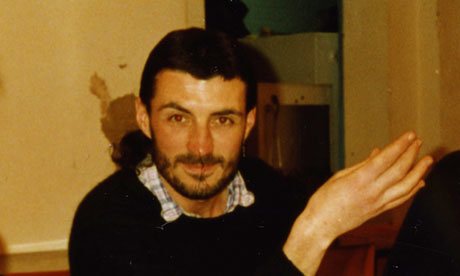
Sara was deceived into an intimate relationship by undercover officer HN16 James Thomson, who used the fictional cover name ‘James Straven’ and also stole the identity of a deceased child, Kevin Crossland.
The Undercover Policing Inquiry (UCPI) is an independent, judge-led inquiry into undercover policing in England and Wales. Its main focus is the activity of two units who deployed long-term undercover officers into a variety of political groups: the Special Demonstration Squad (SDS, 1968-2008) and the National Public Order Intelligence Unit (NPOIU, 1999-2011). Spycops from these units lived as activists for years at a time, spying on more than 1,000 groups.
This hearing was part of the Inquiry’s ‘Tranche 3 Phase 1’, which is examining the final 15 years of the Special Demonstration Squad, 1993-2008.
Sara was questioned for the Inquiry by Daisy Monahan, who referred to Thomson by his cover name, ‘James Straven’ for the first hour or so. The SDS created codenames for their undercovers in this period, and various reports from the time refer to him as ‘Magenta Triangle’. However, we will be using his real name throughout: James Thomson.
SARA’S BACKGROUND
Sara started as an animal rights activist giving out leaflets in the late 1990s, and she became involved in Croydon hunt saboteurs in 1998. She volunteered at the same animal hospital as ‘Wendy’ who Thomson also deceived into an intimate relationship, and who has also given evidence to the Inquiry.
In his written witness statement to the Inquiry [UCPI0000035553], Thomson describes Sara as:
‘an occasional hunt sab interested in animal rights but not an extremist.’
Monahan began by questioning Sara about the hunt sab group – how did she get involved? What did they do? The Inquiry appears to struggle with the voluntary and ad-hoc nature of so much of the activism targeted by the spycops.
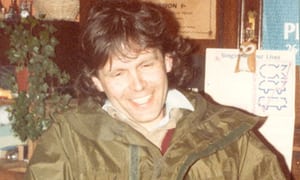
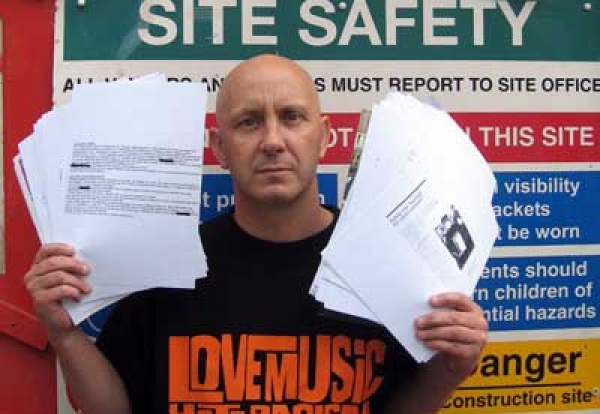
Spycop James Thomson
There was no recruitment process: people would just turn up and get involved. Sara explained that there was also a social scene.
They would all go to the pub together after protesting at a hunt, and the Croydon hunt sabs were a close knit group. She first met Thomson at one of those trips to the pub.
Sara told the Inquiry that she only took part in about 15 hunt sab actions, and she mostly did map reading in the van, because she wasn’t physically fit enough to keep up in the fields.
She said she stopped sabbing towards the end of 2000, before she left the country to live abroad.
EXAGGERATION AND LIES
James Thomson has described Sara as someone who was ‘prepared to risk arrest’ but not ‘fully committed to the violent struggle’ and not part of ‘any inner clique’.
His erroneous descriptions of rigid hierarchy and ready violence echo those made by other spycops. It may be due to a desire to seem like they were involved in activity that justified police interest.
Alternatively, it may be that because the police are an institution based on formal power structures imposed with the continual threat of violence, they simply project it on to everyone else.
Sara rejected the suggestion that an inner clique existed, or that anyone in the group was violent. Sara pointed out that hunt sabs were often violently attacked, and said that there was:
‘verbal shouting on either side, from us or the hunt.’
Monahan asked Sara a lot of questions about the group and what their actions were like, despite it being clear that she wasn’t actually present at most of the events she was being asked about.
For example, she never took part in any ‘home visits’ to hunt supporters (although Thomson says she did) so she said she could only imagine what they might have been like, and that people might have been ‘shouting abuse’. She never heard about anyone damaging property.
Hunt saboteurs and hunt supporters face to face. Pic: Andrew Testa
Looking at the secret police reports of the time, there is relatively little about Sara, and what there is appears to be inaccurate.
The first report highlighted by Monahan [MPS-0001923], dated 29 March 1999, mentions Sara’s work at an animal sanctuary, describing her as a ‘nurse’.
She says she wasn’t a nurse, she was an unqualified assistant. There are also two reports (including MPS-0745590, dated 8 September 1999) which claim that she’d sold her car to a hunt sab known as ‘L1’, and Sara says this isn’t true either.
Sara left the UK in 2001. She sold her flat before doing so, and says Thomson was aware of this.
However, the SDS management seem to have been told that she was renting the flat out and planned to return to it – this is detailed in an Appendix to their plan for ending his deployment,‘Magenta Triangle Extraction’ [MPS-0007389].
The same document also refers to her as a ‘one-time girlfriend’ of L1. She retorts that this was ‘absolute rubbish’. They were friends, but she was never his girlfriend.
Contrary to what Thomson said in one of his witness statements, she doesn’t believe Wendy had a sexual relationship with L1 either. This is all incredibly personal information of no obvious policing value, that the police have kept on file for almost thirty years, and they didn’t even get it right.
The SDS managers were aware that Thomson’s ex-wife and three children lived in Sutton, very close to Sara’s flat. The risk of a chance encounter is mentioned in a much earlier File Note about Thomson’s ‘extraction’ dated July 2000 [MPS-0749475], which suggests that HN58 (Thomson’s boss, a Detective Chief Inspector) was planning to research Sara’s ‘route to work etc’.
We then hear about a debrief written by Thomson after his undercover deployment was over, in which he states:
‘Due to circumstances beyond anyone’s control a peripheral member of my target group moved in around the corner from my ex-wife and children, who it had been my habit to visit regularly.
After I initially reported this I was informed that S squad would be tasked to follow the hood in question [redacted] so that we could assess the threat accurately. This was never done and the ‘follow’ was eventually performed by an ex-member of the branch.’
Sara was not the only one of Thomson’s targets to live or work in Sutton, so the Inquiry is not yet sure if she was the person trailed by a former Special Branch manager at Thomson’s behest.
She made the point:
‘The risk that he took in the first place of beginning a relationship with me when he knew that I lived two streets away from his ex and his children. That was a massive huge risk that was taken that needn’t have happened.’
In his witness statement, Thomson notes:
‘I have been referred to page 4 of what is titled ‘Magenta Triangle extraction’ … which refers to the threat posed by the proximity of “Sara” to where my “children’s mother and step-father now reside”. I am asked why, bearing in mind this “threat” did I enter into a sexual relationship with “Sara”. I can only say through stupidity.’
CROYDON HUNT SABS
Monahan then moved on, to ask Sara about Thomson’s involvement in the Croydon hunt sabs.
Sara agrees that Thomson was already ‘well-established’ in the group when she got involved, saying ‘it was clear that he had been there for a while’. She recalls that everyone knew him and liked him, and he often lent out his car.
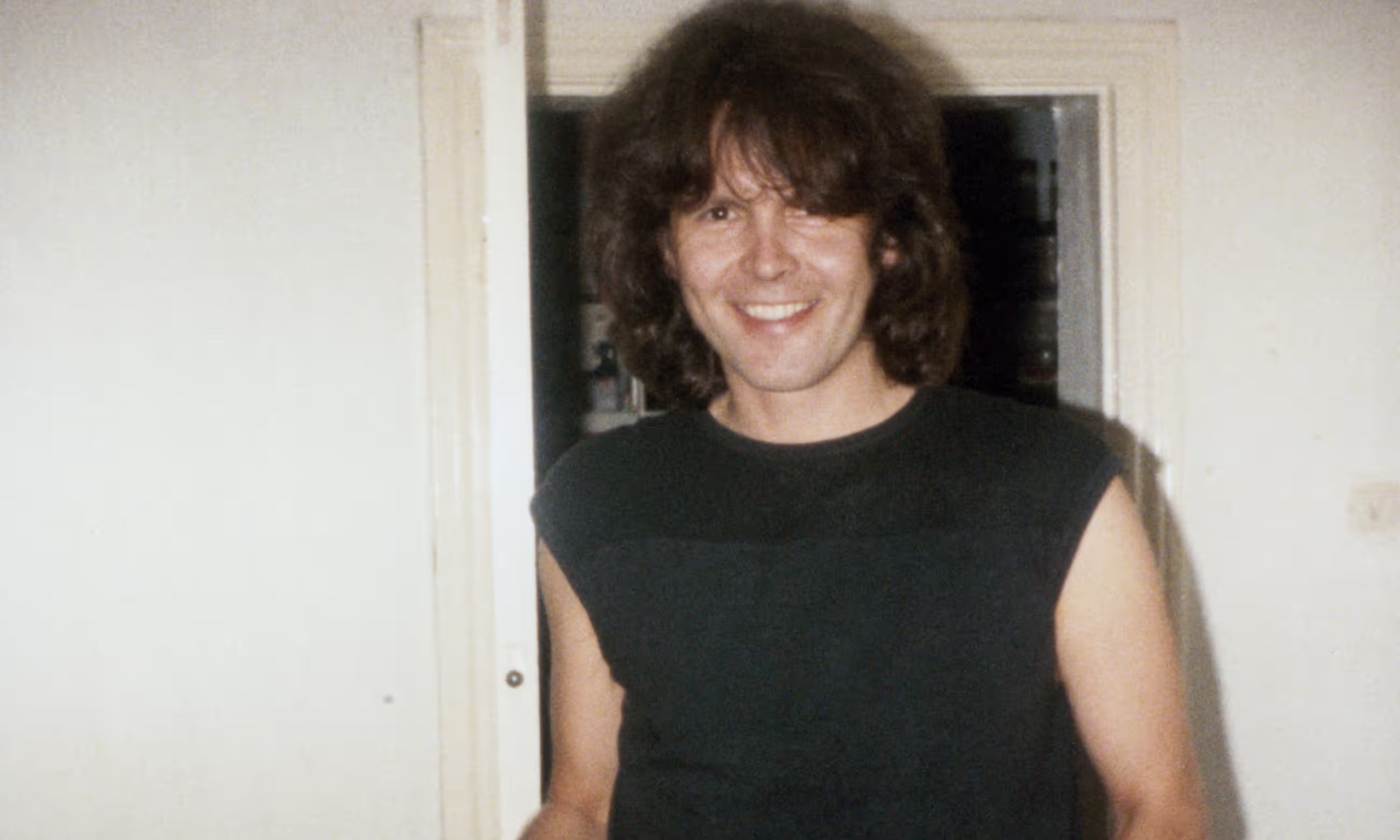
Spycop James Thomson
Thomson has claimed that he was part of the ‘second tier’ of the group but not the core. He’s said that he became ‘embedded’ in the group, and ‘included in their other protest activity’, as a result of helping with planning, organisation and logistics.
During her questioning, Monahan drew heavily on the work done by the Undercover Research Group, whose profile of Thomson mentions the group’s nicknames for him: ‘Posh Sab’ and ‘James Blond’ (Thomson has denied being aware of these nicknames).
Sara says she called him ‘James Blond’ to his face, so he definitely knew, but didn’t seem bothered about the name. She thinks it the name was because of his hair, not because anyone suspected him of being a spy.
According to the profile Thomson was considered a ‘strong fighter’, who didn’t shy away when the group was attacked by the police or hunt supporters.
Sara agreed that he had that reputation, and confirmed that he’d trained in some sort of martial art.
She was then asked a series of questions about her experiences of public disorder, and she recalled ‘scuffles’ and shouting, and instances of terrier men pushing sabs around, hunters using their whips to hurt sabs.
In November 1998, Thomson himself was attacked by hunt supporters armed with golf clubs and bats, who beat him around the head and body. Monahan produced an SDS File Note about this incident [MPS-0001577], and Thomson taking time off due to his injuries.
‘Wendy’ was attacked by the group too, and has described this in her written witness statement [UCPI0000038208]. However, Sara doesn’t remember this incident, and wasn’t there at the time.
We also heard about another report filed by Thomson in November 1998. In it he claims that the Croydon hunt sab group were planning to physically attack a fascist at his home.
Sara was involved in the group by this time, but says she didn’t know about this, and it doesn’t sound like the sort of thing they would do. She never saw the hunt sabs committing acts of violence, and doesn’t think that they ever carried weapons.
Thomson has made a number of claims about the group’s involvement in ‘criminal activity’ and public disorder. Sara doesn’t agree with his claim that they had ‘a broad anarchic agenda’.
She says some of them went on marches and protests for human rights as well as animal rights. She only went to one demo at Hillgrove (a farm where cats were bred for vivisection, which closed in August 1999 due to campaigning). Thomson told her that he was going to take part in some ‘home visits’, but didn’t share details of these with her.
Saboteurs from the New Forest and Winchester protect a fox earth from the New Forest Foxhounds
On 1 September 2000 another Croydon hunt sab, ‘L4’, was run over by a member of the Old Surrey and Burstow hunt in a 4-wheel-drive vehicle, and very nearly killed.
His injuries were so severe that he spent months in hospital, regularly visited by Thomson, who pretended to be a good friend.
In his report of the incident, Thomson wrote about the anger felt by the hunt sabs who witnessed this deliberate attack, and claimed that there was immediate talk of ‘reprisals’.
Sara was not there that day, but remembered how upset and outraged everyone was. In her witness statement she wrote about going along to a protest at the hunt’s kennels after this incident, but leaving early because of the atmosphere. There were very few police there, but 36 animal rights activists were arrested afterwards.
OPERATION LIME
Questioning then moved on to Sara’s holiday with Thomson in Bordeaux in January 2001. This was a fairly spontaneous, last-minute trip, proposed by Thomson, supposedly because he wanted to research a business venture involving golf carts, although as far as Sara was concerned it was ‘just a jolly’, a nice little break with friends.
Thomson and another sab, known in the Inquiry as ‘L3’, drove there together. Sara flew down to meet them a few days later.
Here, Monahan read from Sara’s witness statement:
‘He arrived at Bordeaux Airport to collect me in a hire car, saying his Land Rover had been stolen in Marseille.’
He didn’t seem particularly bothered about the loss of this vehicle and everything inside it. Sara doesn’t remember Thomson saying anything about looking for it, or reporting the theft.
Unsurprisingly Sara doesn’t remember much in the way of detail about what appeared to her to be an innocuous trip to France 25 years ago:
‘Nothing stands out… I can remember we had a walk around town, went for coffee and lunch and things like that, and we went to the beach at one point for a walk. And that’s all I can remember, really. I think we went to a… whether it was an Indian or vegetarian restaurant or something we found while we were there. That’s all I can really remember.’
However, documentary evidence reveals that this ‘holiday’ was in fact ‘Operation Lime’. The ‘theft’ of the Land Rover was engineered by Thomson’s police handlers, ostensibly to disrupt the procurement of a firearm in Marseille, for £700, by ‘L3’, who allegedly had criminal contacts in France. The gun was supposedly in the vehicle when it was ‘stolen’.
Q. Were you aware at any point of any what seemed to be secretive conversations between the two of them, of them nipping off for private conversations?
A. Not that I can recall…
Q. Just for the avoidance of doubt, just to be absolutely clear on your evidence, you have no recollection on that trip of anything being said about a firearm having been obtained in Marseille?
A. No. No, not at all.
Q. Nothing about the firearm being in the vehicle?
A. Nothing, no.
We heard from David Barr KC, Counsel to the Inquiry, during Opening Statements that even at this time, SDS managers were suspicious that this ‘plot’ might in fact have been a self-aggrandising tale made up by Thomson, planting a gun he had in order to make it seem like the animal rights activists were trying to buy one.
There is evidence that Thomson owned a firearm which he kept in a ‘deposit box’ in France, and Barr has made clear that the Inquiry will be investigating whether there was ‘a genuine plot which DS Thomson’s intelligence and actions thwarted, or was it all a deception on his part?’
Sara, who was present on the trip, clearly had no notion that there was any kind of plot involved.
Police photograph of the gun found in James Thomson’s car, January 2001 [MPS-0004963]
INTIMATE AND SEXUAL RELATIONSHIP
Monahan then moved on to ask ‘Sara’ about the things she is really here to give evidence about: the deceitful sexual relationship that James Thomson engineered with her.
Sara met Thomson in autumn 1998. She was in her early 30s at the time, and remembered:
‘We made each other laugh. I think we just had a lot… we just connected.’
She was interested in him, and discussed the idea with friends. At some point he called her, and arranged a dinner date at a vegetarian restaurant in Croydon. It went really well, and he called her almost immediately after to invite her on a day trip to France. It was clearly the start of something. They went to Calais and bought wine and cheese (she wasn’t vegan at this point).
Sara describes the relationship as affectionate, but quite chaste, for the first few weeks. They would spend the night together, but not have sex:
‘I know he was reticent that is true, at the beginning… he was holding back and wanted to wait…’
Q: Even though you weren’t having full sex with him, did you during this period of time consider yourself to be in a fully committed monogamous relationship?
‘From my point of view, yes, we were in a relationship at that point… Just the intimacy between us. I don’t mean just physically I mean in general, the connection that we had with each other.’
Like other officers, Thomson lied to Sara about his age, claiming to 33, five years younger than he really was.
Sara was specifically asked about this, as Thomson had told ‘Ellie’, a substantially younger woman he deceived into a relationship, that Sara had corrected his claim to be 33 and reminded him he was actually 36 (Ellie has also given evidence to the Inquiry).
Sara is certain this never happened:
‘No, because my understanding until I found out the truth was that he was two years younger than me, three years younger than me, I can’t remember exactly now, but he was younger than me. That would have made him older than me, so that wouldn’t have happened.’
In fact, he was neither 33 or 36 when he began his relationship with Ellie, but 37.
Thomson told Sara he was a location manager and scout for TV and films, and that meant he travelled a lot for work.
He also told her he had three children with an ex-partner, and made it clear that he was a devoted father; they were his priority.
Thomson claimed that his ex had tricked him into having the first child, and Sara says she found it odd that he had gone on to have two more children with the same woman if she had tricked him into having the first.
Not long after they became close, they did start having sex, and the relationship became more intense. They would see each other two or three times a week, generally at her house.
SOMETHING ISN’T RIGHT
Sara only stayed at Thomson’s place once. Her description is very similar to those given by numerous women deceived into relationships by other spycops:
‘It was totally not his style and it didn’t look lived in… it didn’t look like anybody lived there. I found it quite strange and I thought it was because he was travelling so much that it was just a touchdown base.’
Sara described the relationship:
‘I felt like I had met somebody who really got me, and who got my life on all levels, especially the spiritual aspect of my life that was happening, getting deeper at that time. We had a lot of fun together.
And there was just a connection… it felt for me like a soul connection, that’s the only way I can describe it, like somebody I had known a lot longer than I actually did, on some level. It was not just on the physical mental plane, there was something else for me going on there.’
They never had any rows or conflicts. She introduced him to her parents as her boyfriend. During a trip to the town of Glastonbury in the summer of 1999, he told her he loved her. She adored him.
‘It was a mutual thing for me, we just really enjoyed each other’s company and I was always over the moon to see him.’
‘His life was very compartmentalised. Something didn’t sit quite right. It was as if there was a part of him that was kept at bay.’
He met her friends. But she never met any of his, nor his family.
The mixed messages Sara received took up a lot of mental energy and were ultimately quite damaging to her:
‘I was very preoccupied with this, so much so that there were nights when I could not sleep and running it over in my mind and writing in my journal about it. However, I was totally in love with him and just thought that was how he was and that he was a very private person.’
She described one odd incident when he was away and she asked him for an address. She tried to send him flowers but the delivery failed. The address was a B&B and there was no James Straven known at that address.
However, he made up a complicated story about it being owned by his family and the staff not knowing he was there, and she gave him the benefit of the doubt. With hindsight she says she would always find a benign justification for the way he was behaving.
UNDERSTATEMENT AND LIES
Thomson has made several statements to the Inquiry, with differing accounts of his relationship with Sara. In his second witness statement [UCPI00000352], dated 17 April 2018, he claimed:
‘We had a brief sexual relationship over a few weeks.’
Monahan observed that ‘he’s very vague about the duration of your relationship’ and in his 2023 witness statement he says:
‘I cannot remember how long the sexual relationship lasted. We were good friends until she moved abroad.’
Sara testified that the sexual relationship had in fact lasted over a year.
It ended after Thomson had disappeared for around two weeks, during Christmas 1999:
‘At that time of year, it’s a time where, you know, intimacy can deepen or just you know you would expect to be hanging out a little bit with the person you’re in love with.
And usually if he’d gone away, if he was away with his kids or if he was away on a work assignment, I would know about it and roughly how long he would be and we were always in touch when he was away.
So the fact that he just totally disappeared, I got quite concerned about it as well, like, what’s happened to him?’
After two weeks of unexpected silence she was upset and confused, and for the first time ever, challenged him about his behaviour. His response was to show up at her house, hand-deliver a letter and leave her alone to read it.
ENDING IT
In her witness statement, Sara recalls Thomson’s stories in the letter:
‘He had difficulties maintaining intimate relationships for long periods of time due to traumatic childhood experiences. He said that when he had been at boarding school his best friend had been raped by the headmaster and had subsequently committed suicide…
He also said that his first sexual relationship had been with a 35-year old teacher from his school and that this had impacted him significantly.’
He returned to talk to her once she’d read it. He said that the trauma made sexual relationships very difficult for him.
Monahan asked Sara about her reactions to this letter, which were obviously complex. She spoke of compassion, empathy, but also some confrontation about why he had put her in that position:
‘I think there was that lot of mixed emotion going on there, because I think there was something that clicked about, “ah that makes sense”, to why he had been behaving like he had.
There was also, sure, some disappointment but there was that lot of hope also because that wasn’t the main part of our relationship.’
However Sara also pointed out:
‘That whole story was that all pre-planned so that it all made sense all the way down the line. All the jigsaw puzzle bits being put together way in advance of all of this happening.’
This degree of premeditated manipulation was not exclusive to Thomson, many spycops had elaborate stories of childhood abuse and trauma as part of the reasons why they could not continue being with people they deceived. They gave no consideration to the horrendous impacts this had.
Sara explained how Thomson asked told her not to tell anyone about the letter:
‘I have to say at this point that I did talk to people about that letter because it was necessary for me because the adjustment from going from that type of relationship to this…
One of the reasons for me that finding out [that he was a spycop] was such a relief, because I had so much guilt over that for years and I want to make it absolutely clear at this point that these relationships did not just affect us during the relationship…
Q. If this doesn’t seem like a silly question, but what was your understanding at the time of why he was asking you to keep the contents of the letter secret?
A. Probably because of… it’s not something he would have wanted widely known, that he had problems around sex.
Q. And because it was private information about painful past experiences?
A. Yes.
Q. Thinking about it now, “Sara”, do you have a view on why you think he swore you to secrecy, now you know the truth?
A. Because of the contents of that letter are outrageous. It’s an outrageous thing to have told me if that is not true. And maybe some part of him knew that it would come out at some point.
I don’t know. Maybe he wanted to have other sexual relationships and that wouldn’t have made sense. I don’t know…
Q. Again, at the risk of stating the obvious but now that you know that it was all fabricated, what is your feeling about this letter?
A. I don’t really have the words… I think you can understand how disgusted and outrageous it was to have written what he did and to put me under that sort of pressure, and a pressure that has lasted over 20 years of my life.’
In his witness statement Thomson claims:
‘The sexual relationship ended through mutual agreement. I realised it was getting serious and I recognised the difficulties that would cause for both of us.’
However Sara was adamant that there was no ‘mutual agreement’, saying:
‘It was definitely on his request that the sexual relationship ended.’
The sexual element of their relationship was over, but in the letter Thomson had written that he still wanted to spend time with Sara, and seems to have continued acting as if she was his girlfriend. She says:
‘For me, sex or no sex, it was still a very intimate and exclusive relationship.’
STAYING CLOSE
He admitted to her that he wouldn’t be happy about her getting together with someone else. They were still very close, in regular contact and emotionally intimate. He travelled to India to join her on holiday in Goa, where they shared a room. He bought her a birthday present.
Sara described her feelings about this new relationship status in her written statement:
‘After this, we continued to spend much time together for several months, although we were no longer having sex with each other. For me, it was possible to make the shift to a non-sexual relationship because our connection was so strong on so many levels.
We still delighted in each other’s company and, of course, the continued close relationship meant that I held on to a hope that he would change his mind with time or that we could somehow work it out. It was on my mind all the time.’
‘James Straven’ had been to Goa before – he’d gone there with some other hunt sabs back in 1999. That little jolly was authorised by the SDS. His handler, Sergeant Greaney, justified it in a document [MPS-0527635] claiming:
‘This trip offers him the greatest opportunity yet to bridge the final barriers and gain total acceptance into the inner sanctum and all the advantages that will entail.
In a neutral environment, away from the paranoid fears of police/state interference, it is probable that he will become privy to the past actions, present plans and future intentions of L2 and L1.’
However, it seems there was no such authorisation for the week he spent there with Sara. Asked why she thought he went, Sara replied:
‘I would say it was pleasure… we went to the beach, we travelled a bit. Yes, it was just like a fun time.’
Sara moved abroad in March 2001. Soon after she left she discovered that Thomson had started seeing ‘Ellie’.
‘Q. How did you feel when you found that out?
A. Shattered, if I am really honest. Confused, completely and utterly confused… in my mind it was like, if we were that close and it was a sexual thing that stopped the relationship, why wouldn’t he have carried on just seeing me? Why was he starting a relationship that I knew to be sexual with somebody else?…
And I also had deep concern for the fact that he was going to take somebody else down the path that he had taken me…
I emailed him about that and was like, “What the hell are you doing? It’s not fair if you are about to start down the same pathway as you did with me”.
So it caused a lot of confusion and a lot of angst… He didn’t reply and I never heard from him again.’
Sara also recounted an incident where Thomson found out about a casual relationship she had with another man months after Thomson had ended the physical relationship with her. In her written statement she describes how Thomson reacted:
‘He wrote to me when I had moved abroad and asked why I had shared a room with him in January 2000 on the Goa trip if I was seeing someone else. I was not seeing this man when I went away with him in 2000, James had the dates wrong.
In this email he basically questioned my morals, which now I know the truth I find abhorrent.’
Monahan goes even further to say that it sounds like Thomson was gaslighting Sara.
IMPACT
Sara was plagued by distressing and disturbing dreams about Thomson, long before she discovered he was an undercover officer.
Around 2013 she ended up ceremoniously burning all her journals, lots of photographs of him, the letter he’d written (in which he claimed to be a victim of sexual abuse) and anything else which related to him, in order to get him out of her system.
She eloquently explained to the Inquiry:
‘These relationships did not just affect us during the relationship and from the date we found out, that it has been ongoing in that period in between.’
It never occurred to her at the time that he was an undercover police officer. After the news broke about HN26 ‘Christine Green’, who also infiltrated hunt sab groups, somebody suggested to her that he might have been one too.
However Sara didn’t take this possibility seriously, saying ‘it sounded too far-fetched’. In the absence of concrete proof, she refused to believe it.
‘I didn’t really take it on board… It was to do with not just his closeness to me, but other people in our group as well. The fact that he was such an integrated part of our group.
And for me at that time it was, like, having had the letter about all his sexual difficulties and the abuse and everything else, it was like, well, that happens to people, and that could be why he compartmentalised sides of his life, it was a way of coping with what had happened. So for me it was like that could be completely plausible.’
The Inquiry contacted Sara for the first time in August 2018, and told her that Thomson had been an undercover police officer. She says she was shocked, angry and confused, but also relieved to realise that she wasn’t paranoid:
‘Well, you know, after years of confusion and trying to work out… it is like layers of an onion coming off, you know. It takes time to make that switch from what was to what is, it’s not overnight.
I would say it took months, years, whatever, it is still ongoing in some ways…
The psyche knows when something is off. It’s a subconscious thing. And I think there were times, you know when I burnt those journals it is like, am I nuts, why can’t I move on from this? Because it didn’t make sense. So I used to question my own like feelings and stuff around it.
I did feel crazy at times. So in a way there was a relief in finally knowing that there was a good reason why I felt like that.’
However, Sara was also very scared that she would bump into Thomson, or that he would turn up and threaten her into silence. The discovery has had a lasting impact on her:
‘It changed my behaviour. It changed my feeling of safety completely and until I moved a year ago, if ever anything disappeared in my house that I couldn’t find, my response was always “who’s been in my house?” And that is a really hard thing to live with. And something happens you just get used to it. It becomes a new norm.
And it is only when I have looked back that I realise how much of an impact that is… it’s completely and utterly annihilated any sense of trust. It’s annihilated my trust in the state, in the police, I don’t know where I would go if something happened to me…
It affected my mental health. It affected my concentration and ability to relax and that is ongoing to this day. That has never returned to the level that it was at before. And I just feel like my life has been invaded again and again and again.’
ABUSE AS TRADECRAFT
Monahan read out the now-infamous advice of HN2 Andy Coles that appears in the SDS’s ‘Tradecraft Manual’ [MPS-0527597]:
‘If you have no other option but to become involved with a weary you should try to have fleeting disastrous relationships with individuals who are not important to your sources of information.’
Sara said she found it ‘utterly misogynistic and outrageous’.
Monahan went on to explain about the SDS’s mentoring scheme. Thomson’s mentor was HN1 ‘Matt Rayner’, another officer who is now known to have deceived a woman, Denise Fuller, into a sexual relationship. (The Inquiry has granted him anonymity over his real name, despite the their earlier promises not to do so for such men).
HN1 ‘Matt Rayner’ also mentored HN14 Jim Boyling, who had three or four sexual relationships during his deployment.
In his witness statement to the Inquiry (which the Inquiry has not yet published), Boyling says that HN1 was ‘candid’ about the benefits of entering into relationships:
‘I remember him saying words to the effect that as an undercover you were never going to break through the glass ceiling of acceptance, you were never going to get the acceptance of the inner circle unless they had confidence in you and this would not be forthcoming if you were perceived to be a single man living alone. Confidence could come from seeing you in a relationship with a fellow activist.’
The Inquiry has seen evidence that HN1 ‘Matt Rayner’ knew about Boyling’s relationships, and was also aware of Thomson’s. He reported this to an SDS Inspector, HN53, in May 2002.
By then though, Thomson’s time in the field had been brought to an ignominious end. SDS managers carried out an investigation into his activities and concluded that as well as failing to deliver a decent amount of credible intelligence, he had committed a host of other disciplinary breaches, some of them criminal.
These included disobeying his managers, travelling abroad in defiance of orders, making fraudulent expenses claims, the misuse of unauthorised false identities and last but not least, some extremely shoddy tradecraft.
Following an interview in September 2002, Detective Chief Superintendent Colin Black noted in a document [MPS-0722289] that:
‘It is clear that he has entered into relationships during the course of his work which are inappropriate.’
After his SDS deployment ended, James Thomson became a VIP protection officer. He is photographed here (centre, Barbour jacket, looking at camera) with Tony Blair, Dublin, September 2010
CULTURE OF IMPUNITY
Thomson was never formally disciplined, or prosecuted, for his behaviour. The managers knew that taking action against errant officers would risk them becoming disgruntled and making the unit’s existence public.
Learning about all this now for the first time, Sara reacted:
‘For me it is just unbelievable that there was no consideration for the impact that would have on us whatsoever. There was no consideration given to their wives and partners…
[It was known] that he was having a relationship, though it was decided not to be divulged to us to protect the SDS. So for 17 years of my life earlier I could have known that and been saved quite a lot of distress…
But it seems that there is no importance given to the impact on us, whatsoever, in any of this, and I find that abhorrent and shocking.’
After Monahan had finished, Sara’s own barrister, Charlotte Kilroy KC, asked her if there was anything she wanted to add. She made a point about undercover policing today:
‘Shortly after the Sarah Everard case [a woman raped and killed by a Met officer] and there was talk about the Metropolitan Police putting undercover – I can’t even say this – they were going to put undercover officers in nightclubs to protect women.
And for me, I am like, really, please do not put those men in charge of our safety. Ever. And I just want to be clear on that. I found that so shocking, after what they have done to put them in charge of women’s safety anywhere is unthinkable.’
Sara ended with a plea on behalf of other women:
‘It has been a journey, you know, of recovery. And I thought I was getting there, but I see from today that the impact is still there, how deeply impacted my life has been…
And I am standing here for other women, and I wouldn’t be here for any other reason and please do not allow this to happen again.’
The Chair of the Inquiry, Sir John Mitting, thanked Sara for giving evidence, recognising that it has plainly been a very difficult process:
‘As I am sure you know, I am not in charge of policing and although I can make my own views clear to those who are, all I can do, like you, is to hope that your views and mine will be paid heed to.’
Tish and Sukhdev Reel giving evidence to the Undercover Policing Inquiry, 26 November 2025
On Wednesday 26 November 2025, the Undercover Policing Inquiry heard evidence from Sukhdev and Tish Reel. They are the mother and sister of Ricky Reel who died in 1997 following a racist attack.
The police did not take Ricky’s death seriously, and treated the family in a callous and overtly racist manner. The Reel family’s campaign for justice was spied on by the Special Demonstration Squad, notably officer HN81 ‘David Hagan’.
The Undercover Policing Inquiry (UCPI) is an independent, judge-led inquiry into undercover policing in England and Wales. Its main focus is the activity of two units who deployed long-term undercover officers into a variety of political groups: the Special Demonstration Squad (SDS, 1968-2008) and the National Public Order Intelligence Unit (NPOIU, 1999-2011). Spycops from these units lived as activists for years at a time, spying on more than 1,000 groups.
The Reels’ questioning is part of the Inquiry’s Tranche 3, examining the final 15 years of the Special Demonstration Squad, 1993-2008.
Sukhdev has given the Inquiry three written statements, and Tish has given one written statement.
The Reels gave evidence together. They were questioned for the Inquiry by Nazmeen Imambaccus.
RICKY REEL AND HIS FAMILY
The Inquiry started by establishing who Ricky was as a person.
Lakhvinder ‘Ricky’ Reel was born on 11 July 1977, the second of four children. The family lived in West London, where his mother Sukhdev was a housing officer for the Borough of Hounslow.
We’re shown a picture of him aged 20, shortly before he died, then one of him much younger with two of his siblings. Sukhdev is near to tears as she says the photo shows the cheeky grin he always had.
Ricky Reel aged 20, and as a child with his siblings
Sukhdev describes Ricky as a son any mother would be proud of. At primary school, instead of going out to play during breaks, he would often be found inside assisting kids who needed help.
In secondary school, Ricky developed skills with computers and taught Sukhdev how to use one. He was the first of his siblings to pass a driving test and so would help the family out with errands.
Despite his academic commitment, education wasn’t his highest priority. When Sukhdev became ill he drove her to hospital. She told him to leave her there as he had exams the next day. He refused, telling her:
‘No, mum. I can always take exams the next year but I won’t get another mum like you.’
He enrolled at Loughborough University in the Midlands, but found he disliked being away from home so transferred to study computer science at Brunel University in Uxbridge.
Ricky’s generous disposition extended well beyond his family. After he died, Sukhdev heard from many people who described him helping others. His work placement employer realised he’d been doing more work than he needed to. A neighbour who worked nights said that Ricky would see her coming home when he was out jogging and say ‘auntie, give me your bags, I’ll walk you home’.
Sukhdev said:
‘He was a responsible child I could rely on… he had a cheeky smile that attracted everyone… but at the same time he was very shy, he wasn’t the sort of person who was going out every time.
The one day he did come out – and I encouraged him to go out, I was pleased that he was finally going out – is the day he never came back, and I carry this guilt with me that I didn’t stop him going out that night. That guilt stays with me throughout my life.’
Before Ricky went missing the family had had no dealings with the police. Sukhdev had some interactions with police in her role as a senior homelessness officer, helping clients facing great distress and sometimes violence. She thought the police were there to help and support people in trouble.
DISAPPEARANCE
Sukhdev Reel with a portrait of Ricky Reel
Ricky went missing on 14 October 1997. He had gone out with three Asian friends to Kingston Upon Thames. They intended to go to a Diwali gig at Options nightclub. Ricky told his family he would be home by 1am.
He had never been late home before. Sukhdev spent the night waiting on the stairs. Fearing he may have been in a car accident, she rang hospitals to check if he’d been admitted.
The next morning, Sukhdev rang her local police station at West Drayton but was told that because Ricky was over the age of 18 he had to be gone for 24 hours before she could make a missing persons report.
When he still didn’t arrive home, Sukhdev contacted the police again, who sent an officer round. Sukhdev gave him the contact details for one of Ricky’s friends.
The officer spoke to the friend and was told that the group had been attacked. After they’d parked their car and were walking into Richmond town centre, two white men started shouting racial abuse at them. The men physically assaulted and punched them.
At this point, Ricky and his friends ran away, but in different directions. It was the last time Ricky’s friends saw him.
The officer then told Sukhdev what he’d heard. She asked him to investigate:
‘It’s common sense if four people are attacked, three are back at home, one’s missing, so that person is in danger.’
The officer refused to take it further, reiterating that he had to wait 24 hours to file a missing persons report.
As their local police station weren’t helping, Sukhdev’s husband and brother took Ricky’s friends to Kingston police station, as that was the nearest to the location of the attack.
Even though Ricky’s friends had visible facial injuries, they were waved away. The officer at the desk said that perhaps Ricky was running away from an arranged marriage, because that’s what Asian people do. Or perhaps he ran away because he was gay and doesn’t want his inevitably homophobic Asian family to know.
The officer then winked and suggested Ricky had a secret girlfriend that his Asian family wouldn’t approve of.
Sukhdev said the situation could not have been clearer:
‘From then on we knew a racist label was placed on our forehead. They were not interested in looking for Ricky, because Asian families in their opinion do not deserve justice, do not deserve the equal amount of investigation like anybody else.’
Realising they were on their own, the family created leaflets on Ricky’s computer and went to Kingston every day to hand them out.
They also contacted Suresh Grover of The Monitoring Group which assists families facing racial discrimination, especially those who’ve lost a loved one (Grover gave evidence to the Inquiry a week before the Reels).
‘Suresh came in, listened to us, and then he went and spoke to my MP John McDonnell. They both came in and they have been by my side ever since, and without their support I don’t think I would be sitting here today.’
This is in complete contrast to the spycop reports of the officer who spied on the Reels’ campaign, HN81 ‘Dave Hagan’, who falsely claimed that Grover’s support was inconsistent [MPS-0001370], and that Asian people didn’t like him supporting Black families [MPS-0748392].
The police appointed Family Liaison Officers who visited the family at their home. Sukhdev expected them to keep the family updated about the investigation but they never knew anything. Instead, they asked questions about exactly who else had been visiting.
In retrospect, they were spying on the family, just as the Family Liaison Officers had with Stephen Lawrence’s family a few years earlier.
Sukhdev noted that the officers had asked if they needed to take their shoes off entering an Asian household. She says it was part of the ‘othering’ that they experienced which underpinned all their dealings with the police.
‘So from very the beginning an ‘Asian woman, Asian family’ label was put on our heads, and that’s how they treated us.’
The police refused to treat the racist attack and Ricky’s disappearance as linked.
Two days later, a van of police arrived at the Reels’ house. Officers ran in and took Sukhdev’s husband Balwant into the garage to keep him out of the way while the rest of the house was searched.
Sukhdev was angry:
‘They thought we’ve hurt Ricky, we’re hiding him in our house. And then they searched the house, they searched the garage and they said “that’s fine, we’ve done our job”.’
The family were spending a lot of time leafleting in Kingston, but Sukhdev still couldn’t get officers there or at home to engage:
‘Whenever I contacted West Drayton I was told to ring Kingston, and when I rang Kingston they said, “No, it’s at West Drayton”, because each one were trying to save their resources.
And with Ricky missing, within 24 hours I was told by Kingston police that they have closed the investigation and I said, “Why? He’s still missing”. And they said, “We don’t have resources to investigate your son’s disappearance”.’
It was left to the family to get CCTV footage and search the streets. With their amateur lack of resources and equipment, the one place they couldn’t search was the river. They asked the police to do it several times, but nothing happened.
DISCOVERY
The police relented on 21 October 1997, a week after Ricky went missing, and undertook a search of the river Thames. Ricky’s body was found six minutes after the search began. Had they searched sooner, it would not only have saved a lot of anguish and effort for the Reel family, it would also have allowed police to secure better forensic evidence.
Sukhdev was with Suresh Grover at the Monitoring Group office, preparing a press release. She received a phone call saying the police had some news and were on their way. She hoped Ricky had been located in a hospital. She rang her home and spoke to her daughter, but then the line went dead.
Two police officers had entered the house and seen the children there, without their parents. Tish Reel, who was 17 at the time, recalled it:
‘The police officer pulled out the phone cord from the wall, which meant I hung up abruptly. The call was ended abruptly to my mum, which was quite distressing for both of us.
And then she turned to my siblings and I and said, quite callously and coldly without any emotion, using the exact words: “We found your brother’s body at the bottom of the river”…
Then she went to the corner of the room where I’d been sitting where the phone was, and her and the police constable were cracking jokes in the corner and laughing. I don’t know what was so humorous.
And whilst they did that I had an asthma attack, they didn’t bother to help me, I had to crawl up the stairs to go and get my asthma inhaler. My sister went into shock and my little brother was just walking around, didn’t know what to do, and my parents weren’t there.’
Back at The Monitoring Group office, the police arrived and told Sukhdev they’d found Ricky’s body. She passed out.
‘When I came round, I think it was my husband pulling me from under the table and his hands and his arms were shaking.
I was put in the car and all throughout the journey I was thinking about how I was going to break this news to my children, because I had been promising them that I will bring their brother home.
And when I got home, one look at their faces showed me that there was something wrong there.’
When Sukhdev arrived home she found the children devastated and the police inhuman:
‘The children told me what had happened, they couldn’t relate to the words used by the police to an 11-year-old child that, “The body of your brother”. “Body”…
[My son] just stood there and I went near him, he flinched, he was just like a stone standing there. My other daughter, elder daughter, was just standing there with a tray, glasses of water on a tray, didn’t know what she was doing.
And the two police officers laughing and joking as Tish told me that she had to crawl on the stairs like a dog to get her inhaler. She told the police officers where the inhaler was in her bedroom, could someone please get it, they didn’t. She would have died that day as well.
So I told them to get out of my house.’
Detective Superintendent Bob Moffat, the officer in charge of the investigation, told the press that Ricky had been found. He said the death was a tragic accident, that Ricky had unfortunately fallen into the river while urinating, and the case would be closed.
There had been no forensic examination of the scene or of Ricky’s body. Moffat told the pathologist that it had been an accident. The post-mortem did not examine Ricky’s body for signs of defensive injuries.
INVESTIGATIONS
The first investigation into Ricky’s death was performed by West Drayton and Kingston Upon Thames police stations. The police did not look at the CCTV footage from Richmond that contained clues. They took months to speak to witnesses.
On 20 November 1997, Sukhdev made a formal complaint to the Police Complaints Authority (PCA). Surrey police looked into the Met’s handling of the investigation. They also tried to do an investigation themselves but the Met refused to hand it over to them.
The PCA sent Sukhdev a letter on 15 February 1999 [UCPI0000038555] which upheld the family’s complaints:
‘There were weaknesses and flaws within the organisational structure… the investigation has found your allegations of neglect of duty in respect of Police Constable D, Police Constable H, and Detective Superintendent Moffat to be substantiated.’
Under a subheading ‘racial issues’, in classic ‘protect the guilty’ style, the letter said the failings were:
‘for the most part attributable to organisational failings, rather than to neglect on the part of any particular officer.’
Tish says the family were disgusted. Having spent over a year reliving experiences and believing they’d get redress, they were fobbed off with a letter, and were not allowed to see the PCA’s report.
Sukhdev condemns the fact that the PCA report is still under lock and key today, 28 years later. She herself has belatedly been shown a copy, but on strict condition that she does not discuss its contents with anyone, not even Tish or Balwant.
The Justice for Ricky Reel campaign attracted considerable support
The second main investigation into Ricky’s death overlapped with the PCA complaint. It was carried out by the Met’s Racial and Violent Crime Task Force, headed by Deputy Assistant Commissioner John Grieve, and it ran from 1 November 1998 to 12 March 1999. It found that all lines of enquiry had been exhausted, with no fresh leads or investigations to pursue. Sukhdev dismisses it as ‘a paper exercise’.
Grieve and the Racial and Violent Crime Task Force also eventually handled the investigation into the death of Michael Menson, after the original investigation was condemned by the PCA. Menson’s family were also spied on.
We have seen evidence [MPS-0748390] that Grieve was kept in the loop about spying on family justice campaigns, and he was closely linked to the Met’s handling of the Macpherson Inquiry at this time.
On 8 February 2000, Sukhdev made a complaint to the PCA about that second investigation, specifically the officer in charge, Detective Chief Inspector Sue Hill. This time the PCA found that misconduct proceedings were not justified.
With the first PCA complaint against him upheld, the detective in charge of the first investigation, Detective Superintendent Bob Moffat, was now facing disciplinary proceedings. In the time-honoured manner of guilty police officers, he promptly retired from the police to avoid any charges.
RACIST TREATMENT
Sukhdev recounts some of the discouragement and racism she was subjected to by the police:
‘I took six months off and I travelled all over the country attending meetings, conferences and everything, speaking about Ricky’s case.
And I was told by the police to return to work, look after my children. Because in their view they saw an Asian woman confronting them, and in their opinion Asian woman should be tied to the kitchen.’
She refers back to Ricky’s brother being so cruelly told about Ricky’s death, and points out that we never hear of white kids being treated that way.
Tish adds:
‘My dad speaks limited English, English is very much a second language for him. My mum was the one who was communicating to the police officers, talking to them.
But whenever they spoke to my parents they always addressed my dad and it was clear that they assumed that in Asian families you address the male, because the male is the head of the family.
They would look past my mum, speak over her, literally speak over because she’s so short, and it was clear that that was because they assumed this is how Asian families operate.’
The family’s leaflets and outreach started to pay off. They got support from some local groups, including the Socialist Workers Party (SWP). Sukhdev got a phone call from someone who said she’d given the SWP a piece of paper with an address on it of racists who may be connected with Ricky’s murder.
Sukhdev told the police who went and collected the paper and said they’d investigate:
‘So when we asked them what was the outcome of this investigation, they told us – honestly, I don’t know whether to laugh or cry – they told us, “yes, we visited the address, these are white educated people, their house is clean, they can’t be racist”.
So we were dealing with this type of behaviour, which has continued even after 28 years. So that’s the reason we are here. To find out why we are here.’
CAMPAIGNING
Two weeks after Ricky died, the family set up a campaign for to find out the truth about what had happened.
Sukhdev stresses that it’s not something done on a whim, it was a commitment to a lot of work. There would be meetings, petitions, research, vigils, working with other justice campaigns. It was done out of necessity, because it had already become clear that the police were uninterested and what little information they gave couldn’t be relied upon.
Tish expands on the point:
‘We knew that the police weren’t going to investigate this beyond assuming, as Moffat did, that it was a tragic accident. We were treated in a racist way, we were treated as if we weren’t people just because we had brown skin. Just because mum was a woman.
They didn’t want to give us information. Every time we asked them to do something it was too much trouble, there was an obstacle in the way, there wasn’t enough resources to do certain lines of investigation, to carry those out.’
The police were reluctant to share information, or to receive it. They were wholly avoidant of the issue of racism, whether it be acknowledging that it was a racist murder, or the fact that the family were being treated in an overtly racist manner.
The family realised that the police were not going to properly investigate and find out what had happened to Ricky, let alone bring the people responsible to account. The investigation was only interested in portraying it as an accident and was refusing to consider the evidence to the contrary.
After the post-mortem, the family were given Ricky’s clothes. Sukhdev noticed a rip in his shirt. On the advice of Grover, McDonnell and lawyers, the family commissioned a second post-mortem, which found the rip matched injuries on Ricky’s body.
Tish explains how vital it was to have a team to find the truth:
‘Without that co-ordinated approach from other people outside of the family, which would eventually turn into what is now called the Justice for Ricky Reel campaign, we wouldn’t have that evidence, and the police wouldn’t have benefited from that evidence, and we as a family wouldn’t have benefited from that evidence.’
Sukhdev received early support from Neville Lawrence, father of murdered teenager Stephen Lawrence, whose campaign had achieved national attention by that time. They’ve shared a platform innumerable times and support each other’s campaigns to this day. They were sat together at the first hearing of the Undercover Policing Inquiry.
‘Whenever we meet we don’t ask how you are, because we know how we are. He always said to me, “I’m here for you if you need support”, and I’ve always said the same.’
At Neville’s request, Sukhdev attended almost every day of the 1998 public inquiry into Stephen’s death. She was there to support the Lawrence family, and as the evidence was heard she was astonished at the similarities in the police’s treatment of Stephen and Ricky’s murders. It was literally agonising for her and there were times that she had to leave the room to be physically sick.
She was one of several representatives of family justice campaigns who gave evidence to the second part of the Lawrence inquiry as it examined wider issues of racism and policing.
This clearly didn’t sit well with police, who expended yet more resources in the wrong place. Sukhdev noticed an audible click at the end of phone calls. It was a common experience for activists in the 1990s, seemingly part of police phone-tapping operations. Police resources that should have been spent catching killers were instead being used to spy on victims.
POLICE SPYING
The Inquiry then went through a number of secret police reports made by Special Demonstration Squad officer HN81 ‘Dave Hagan’. He had infiltrated Movement For Justice which supported a number of causes including several family justice campaigns. From this position, he reported on the Reels and the Lawrences.
By his own recent admission, he exaggerated his involvement and influence in order to impress his bosses.
On 25 June 1998, Hagan filed a report [MPS-0001147]. Though primarily about a Newham Monitoring Group meeting about the Stephen Lawrence Inquiry, he also said that Movement For Justice may be turning their attention to the Reel campaign:
‘The case is still not recognised by the police either as murder or a racial killing… [despite] the fact that there appears to be good evidence of police mismanagement and racism in it.’
Hagan is on the ground, hearing the evidence. Surely this is the stuff that intelligence should be useful for. And yet he still styles the Reels’ campaign as a ‘campaign against the police’. This is a problem endemic to the police, and beyond into their satellite bodies and supporters.
An organisation interested in justice would want to find the truth, and to root out racism in its personnel and procedures. Instead, they close ranks around proven wrongdoers and portray any complaint, no matter how valid, as an objection to policing in general and every police officer as an individual. Then they wonder why people don’t trust them.
Spycop HN81 ‘Dave Hagan’ (left) undercover with Movement For Justice. A lot to answer for, but the Inquiry has excused him from giving evidence
Hagan submitted another report on 3 September 1998 [MPS-0001288]. It describes a meeting in Hackney organised by the Socialist Workers Party.
Sukhdev shared the platform with people from two other justice campaigns, Myrna Simpson (mother of Joy Gardner who had been killed by police), and George Silcott (brother of Winston Silcott who had been framed for the murder of a police officer).
The report describes Alex Owolade from Movement For Justice (MFJ) talking to Sukhdev, and the fact that she gave Owolade her mobile phone number.
Sukhdev describes the anger she felt, finding out she was being watched so closely. She says that Owolade getting her number was no accolade, she was giving it to anyone who may be able to help the campaign. She wonders if Hagan had it too.
The Inquiry turns to Sukhdev’s second, most substantial written statement [UCPI0000038548] in which she says she was wary of MFJ.
Asked about this, she recounts a public meeting with Neville Lawrence where Owolade made a contribution from the floor and Neville disliked it, saying that he could speak for himself. Like Neville, she strongly believes that family justice campaigns must be run and directed by the people at the centre.
WHO’S IN CONTROL
The Inquiry then showed a document from the same month titled ‘SDS intelligence update September 1998’ [MPS-0720946]. It was written by HN10 Bob Lambert, who was running the SDS at the time.
Lambert describes:
‘Another significant breakthrough for Movement for Justice: on Wednesday evening, 2 September they cemented good liaison contact with Sukhev Reels [sic], Ricky Reel’s mother, and are now planning to assist her in mounting a large-scale campaign against the police.
It is important to emphasise here the extent to which the Reels’s case has potential to cause police embarrassment on the same scale as the Lawrence case. Certainly, so far as Mrs Reel and the activists are concerned there are glaringly similar racist overtones between the police handling of both investigations.’
This is a thinly veiled admission of police culpability, like Hagan’s, and yet they’re trying to defend it. Like Hagan himself, Lambert characterises objection to police malpractice as ‘a campaign against the police’.
Bob Lambert ran the SDS in the late 1990s, overseeing spying on numerous family justice campaigns
Lambert’s report talks about Suresh Grover supporting the Reel campaign, and says the campaign is putting itself under ‘the Grover banner’. It shows the police believing that their regimented and hierarchical way of organising is the only way. They see everything in terms of factions, subterfuge, power struggles, and division.
Tish condemns the entire paradigm as dehumanising. It’s not how the campaigns were at all. It’s also nothing to do with public order problems that were supposedly the reason for the spying. Instead, Tish notes, it’s a management strategy attempting to steer the campaigns.
It’s notable that Lambert spells Sukhdev Reel as ‘Sukhev Reels’. Doreen Lawrence pointed out in her evidence to the Inquiry that police reports consistently spelt Stephen’s name wrong.
The misspelling of names of people and groups happens so frequently in spycops reports that it raises questions about how they could be searched as useful intelligence, and gives rise to a suspicion that it wasn’t an accident but was an in-joke among officers, another way to denigrate their targets.
It wasn’t just MFJ that the SDS viewed with suspicion. The Inquiry shows a report of Hagan’s dated 26 October 1998 which describes a march for Ricky in Kingston [MPS-0001462]. Hagan once again insinuates that a left-wing group is trying to get control of the campaign for nefarious purposes:
‘Socialist Workers Party are attempting to court Mrs Reel. However, their efforts are meeting with little success as Mrs Reel has indicated that she has concerns over the objectives of some political groups and she has been warned specifically about the Socialist Workers Party.’
Sukhdev is affronted at the very suggestion:
‘Nobody courted me. I’m a woman who speaks my mind.’
She says it’s untrue for Hagan to say she’d been warned about the SWP, and adds that she never had concerns about any group trying to exploit her campaign for another agenda. The family knew what they were campaigning for and wouldn’t have let anyone hijack the campaign, not that anyone tried.
The report claims that Grover’s address to the march was met with a lack of interest.
‘The Movement for Justice viewpoint was that the demonstration was a pitiful reflection of a year’s campaigning and how Mrs Reel’s case is being squandered by her reliance on Grover, whose main attention lies elsewhere.’
Tish says Grover was fully committed to the campaign at the time, as he has been continually from 1997. She says if the spycop was reporting that the campaign was dwindling to negligibility, there was no reason for the surveillance to continue. And yet it did.
Hagan’s report concluded:
‘Movement For Justice have grown weary of Mrs Reel’s fear of being seen to cause trouble so do not intend to waste too much time on this case.’
This is another slur on MFJ, implying that they were agitating for gratuitous confrontation and disorder.
Tish points out that it also confirms that the campaign was entirely peaceable, using law-abiding methods. There was no reason to be spying on them, apart from the fact that they were challenging the police’s lack of investigation and racism, and challenging police activity is seen as subversive.
Asked why Hagan spoke about the campaign in such terms, Sukhdev pointedly replies:
‘I don’t know why he wrote that. No, I don’t know. I think he needs to be here and you need to ask him.’
This is a dig at the Inquiry, which is refusing to compel Hagan to give evidence because he was diagnosed with PTSD in 2015 and says testifying would make him feel worse. Many victims of spycops suffer from PTSD and other psychological impacts of the abuse they received and are attending the Inquiry and reliving their trauma, yet this perpetrator is allowed to be absent.
INQUEST
On 1 November 1999, the inquest into Ricky’s death opened. It lasted six days. The family had been denied Legal Aid and had to fund their own representation.
Sukhdev and Balwant Reel arrived with Suresh Grover and Sukhdev’s brother, who had been supporting them throughout. Grover was familiar with the process of inquests. But he and Sukhdev’s brother were told to wait in another room. Sukhdev and her husband Balwant were alone in the middle of an unfamiliar procedure.
The coroner told her that he knew she’d attended the Stephen Lawrence inquiry a year earlier, and asked her who it was there that had put the idea in her head that Ricky had been murdered. He then joked that as Ricky’s friends had gone and got kebabs in Richmond they obviously couldn’t have been significantly hurt.
Tish Reel says they’d seen the bias coming and managed to mitigate:
‘We had to lobby extremely hard to get a jury inquest and to get funding for representation at that inquest, because jury inquests were not the norm.
And the reason we lobbied so hard is because we knew already, and by this time Grieve and his team were already on board and the signs were there that even the second investigation, like the first, was flawed and was racist in its approach.’
It became obvious at the inquest that the police investigation had been dire.
The family had gone to great lengths to supply the police with all relevant material. But at the inquest, investigative officer Bob Moffat – called to give evidence even though he’d retired – kept saying that he hadn’t seen certain pertinent documents, or that the Reels hadn’t told him specific facts that were contained in the documents.
It was clear from the police’s testimony that the second investigation under the Racial and Violent Crime Task Force was actually being directed by Moffat from the first investigation, and by his narrative that Ricky’s death had been a tragic accident as he tried to urinate in the river. The police wanted a verdict of accidental death.
It was also clear that there were lines of enquiry that hadn’t been followed, potential witnesses who had been ignored. The police had simply sat on the information for two years.
Moffat had arranged for a third post-mortem to be carried out on Ricky’s body, without the family’s knowledge. He had ordered that the entirety of Ricky’s skin be removed.
The family only became aware of this third post-mortem at the inquest. Although utterly horrified and astonished, Tish said it finally made one thing make sense:
‘We always wondered why, at Ricky’s funeral, which was only three weeks after he was found, when we went to go and see him, because he’d been in cold water he looked like Ricky, but when we saw him at the open casket funeral he was unrecognisable.
I couldn’t watch, I couldn’t stand by his – I promised myself I’d stay with him and I couldn’t, because I couldn’t look at what happened. I couldn’t understand the deterioration of his body.’
Witnesses had told the inquest that they and their families had been threatened and pressured not to testify. The three friends who were with Ricky on the evening of the racial attack said they had received death threats, and one had been kidnapped and assaulted on 3 November, the day of Ricky’s funeral. This is not what anyone would expect from an accidental death involving nobody else.
Tish says:
‘We had no confidence whatsoever in the police before we went into the inquest, we had even less when we left and they asked the jury to find accidental death verdict. But fortunately, because we had a jury, that was rejected.’
The jury returned an open verdict, meaning that the death is suspicious but the jury cannot conclusively reach any of the other available verdicts.
The inquest had a lot of publicity. There was a candlelit vigil on the first day, the public gallery was packed. And yet we haven’t seen a single spycop report mentioning it. Tish draws the obvious conclusion:
‘That, to me, speaks volumes – that there are documents that existed and have been shredded or haven’t been disclosed.’
AFTER THE INQUEST
After the open verdict, the family met with the Metropolitan Police on 4 February 2000. The police said they were prepared to investigate, but only if information was brought to them. They wouldn’t be proactive. This left it to the family to find leads, despite not having the skills or technology that the police are provided with.
The head of the first investigation, Bob Moffat, took it personally that the jury had rejected his theory of Ricky’s accidental death.
Some time later, Sukhdev was contacted by a reporter asking why she had given permission for Bob Moffat to print pictures of Ricky’s body in the third post-mortem. This was the first she’d heard of it.
Tish is incensed:
‘He had taken those photographs, stripping Ricky of his dignity completely, into his retirement, kept them at home with his personal belongings, where he and his family live. And he had contacted the reporter asking her to publish those photographs.’
Moffat had gone to the Mail on Sunday with a sense of grievance.
Mail on Sunday article of Bob Moffat’s claim that Ricky’s death was an accident
He told them that he had been hounded out of his job because he insisted Ricky’s death was an accident, and the family just couldn’t face the truth but were being indulged because they were Asian.
It was published under the headline ‘It is political correctness gone mad’.
Despite the jury disagreeing with Moffat’s theory, the Mail published the story sympathetically to Moffat.
On seeing the article, Sukhdev had suicidal impulses. She was intensely fearful of the impacts on her children if they saw it, or if people they knew saw it.
She couldn’t believe this was being done by the people who should have been finding Ricky’s attackers, but were instead carrying out a vendetta against victims:
‘If this the type of policing in this country, then who needs police officers?’
Suresh Grover saw the photos and contacted lawyers. Police then went to Moffat’s house and found the photos, yet no charges were ever brought against him.
During the hearing’s morning break, Tom Fowler discussed the evidence so far with ‘Alison’ from Police Spies Out of Lives:
FINDING OUT ABOUT THE SPYING
On 18 July 2014, the Reels met with officers from Operation Herne, the police’s internal investigation into spycops, at the office of the Reels’ MP and ally, John McDonnell [MPS-0738102].
The family are especially angry, not just about the spying but also about the false assurances they were given at the meeting.
They were told they weren’t directly spied upon, but officers infiltrating subversive organisations such as MFJ and the SWP had incidentally reported on the Reels in about ten reports. The family later found out that was all lies: they had been directly spied on and there were many reports that proved it.
Tish says the emotional impact was colossal:
‘It was re-traumatising, it just felt like we weren’t people. The way the police treated us during the initial two investigations completely dehumanised us because we had brown skin. It felt like that was happening all over again.
We couldn’t understand why it had taken so long for this information to come out. And we felt humiliated, we felt stripped yet again of our dignity, of whatever miniscule pieces of peace we’d managed to put back together in our lives, it completely derailed all of that.
I can’t, I can’t, it’s too – it’s so difficult to put into words the impact that that had.’
The impact on Sukhdev broke something inside her; she says the room went black. When she came to, she was repeatedly assured that it was only ‘collateral intrusion’, she wasn’t spied on personally.
‘I remember there sitting with my daughter and pulling my cardigan, I thought they could see through to me, I thought I was sitting there naked because of their spying, and since that day I keep on seeing eyes everywhere. I don’t know how I got home…
I didn’t think that things like this could happen. Especially to a family who has lost a child, who has never been given a time to grieve. 28 years I’ve been sitting here attending meetings, one after another, dealing with the paperwork, hell of a paperwork this Inquiry has produced and the case and everything.
I haven’t sat down for one day in the 28 years since then, I still put his dinner plate on the table thinking he will come and eat his dinner.’
She is near to tears as she says this.
Tish said that it made it even harder to reconcile the two sides of the police’s actions. The police were the only people with the financial resources, technology, training and skills to do a proper investigation.
On the one hand, the police were saying that they didn’t investigate certain elements because of a lack of resources. On the other, they were putting teams into spying on the family and analysing what they found.
DIRECT TARGETING, FOR A WIDE AUDIENCE
When they were told about the spying in 2014, the Reels asked to see the secret reports that mentioned them. The police refused, saying they concerned secret matters regarding public disorder.
September 1998 note from Colin Black, Special Branch’s Commander of Operations, saying the SDS’s spying on family justice campaigns and briefing other parts of the Met should be kept secret and unwritten
Now that the Undercover Policing Inquiry has disclosed them, it’s plain to see that they contain nothing of the sort. Mentions of public disorder are conspicuous by their complete absence. It was just another lie the police told the family in 2014, hoping that the truth wouldn’t come out. Even as they pretended to come clean, they were merely enacting the next stage of an exercise in damage limitation and reputation management.
Despite assuring the family that there was nothing personal in the reports – which Tish describes as being done ‘as if it was a professional courtesy to us, hand-holding, reassuring’ – the documents actually describe Sukhdev being very emotional and crying, and details about her personal health.
At the meeting in 2014, the family were also assured that the information was kept within Special Branch, that there were rigid barriers between them and the wider Met. That was another lie.
We now see documentation [MPS-0748390] proving that a line of communication was specifically made between Special Branch and Grieve, at the Met’s Racial and Violent Crime Task Force while the latter was conducting the second investigation into Ricky’s death.
A document from September 1998 [MPS-0720946] has a handwritten note from Colin Black, Commander of Operations for all of Special Branch including the SDS, talking about the SDS’s off-the-record briefings to Richard Walton of the Racial and Violent Crime Task Force. These briefings included details of family justice campaigns that were being spied on:
‘I have reiterated to him that it is essential that knowledge of the operation goes no further. I would not wish him to receive anything on paper.’
Tish says the deliberate avoidance of writing it down is proof of guilt:
‘They knew that their actions were not justified, they knew that this was not collateral damage, that this was a very deliberate, orchestrated chain of decision-making here, and they knew it wasn’t justified, they knew it wasn’t lawful, they knew we weren’t any threat to public disorder.’
The SDS prepared a document on 10 September 1998 [MPS-0748392] containing extensive profiles of the Stephen Lawrence and Ricky Reel campaigns. It detailed their history, personnel, allies and plans.
It stated that it was produced for the Commissioner, Deputy Assistant Commissioner Grieve, and Superintendent Thornton. This is the proof that it all went well beyond Special Branch and right to the top of the Met.
Unit manager Bob Lambert’s ‘SDS intelligence update September 1998’, mentioned earlier [MPS-0720946], not only contained details of spying on the Reels, it also said Hagan would be spying on the Reel campaign for months to come. The family definitely were directly targeted.
Sukhdev summarises the conclusion of Lambert’s report as saying to Hagan:
‘Here it is, the budget. You do what you want, make sure you destroy that campaign, make sure you do whatever you can, do whatever you want to destroy that campaign and cause as much damage as you can to the family.
That’s how it came across to me.’
THE DRIVE HOME
More than that, Hagan drove Sukhdev home from a meeting – just the two of them, alone in a car. It wasn’t necessary for him to do that, but a conscious and deliberate decision. It could scarcely be more personal and direct.
In 2013, the nation was shocked to learn that the Stephen Lawrence campaign had been spied on. The Home Secretary commissioned Mark Ellison KC to investigate. The Ellison team met with Hagan [MPS-0738122], who had spied on the Lawrences. He told them about his spying on the Reels, notably about the occasion when he drove Sukhdev home.
Hagan said that the leaders of MFJ met with Sukhdev, and he gave her a lift home afterwards. As with the rest of his description of his deployment in the interview, Hagan downplays this incident a lot.
He says he didn’t offer but was asked to do it (he doesn’t specify by who), that he ‘didn’t exploit the situation’, and that he refused her offer to come into the house because he knew that if she knew his real identity she wouldn’t want it.
Sukhdev is dismissive of this mitigated version of events. She is certain that she didn’t ask Hagan for a lift, and that he must have grasped the opportunity to get information from her.
It’s a perspective supported by Hagan’s own admissions. In another interview with Ellison in 2013 [MPS-0721973], Hagan defended reporting deeply personal information:
‘All intelligence is good.’
In his written witness statement to the Inquiry [MPS-0748738], Hagan reiterates his belief that ‘all intelligence is good’ and says he would have discussed the drive with his handler officer at the time. Yet no record of this has been located by the Inquiry.
If we don’t have a report about an event as significant as Hagan’s one-on-one conversation in the car with Sukhdev, it’s highly likely that the evidence of other key incidents is also missing.
Sukhdev talks about seeing Hagan’s admission of driving her home:
‘I don’t have the words to describe it, I really don’t. I felt sick. Humiliated. He took advantage of my vulnerability. He was writing reports that was no use to the inquiry, in the reports it was mentioned that I was relatively stressed, I had health problems, that my health was deteriorating. So he clearly knew I was vulnerable at the time…
Every time I think of this I see Sarah Everard in front of my eyes, and that’s the one thing that doesn’t let me sleep at night. She was in a police car, unmarked police car, and I think I was in a police car with a police officer who pretended to be a supporter of this campaign. Why did he not tell me who he was?’
Overcome by emotion, Sukhdev asks Tish to take over.
Tish talks of the imbalance of power, with only Hagan knowing what was really going on, and that we only have his word for it that he didn’t come into the family home that night.
Whatever the specifics, he took advantage of a vulnerable woman who was upset from talking about the death of her son and how the police had failed her. Hagan, from that same police force, chose to get Sukhdev on her own and spend time with her. They obviously will have talked about the family and the campaign. These were conscious choices on his part. It is targeted surveillance.
Finding this out has had devastating consequences for Sukhdev:
‘I invited him in. That’s what I was like before. I trusted everyone and I would say come home, and talk to people. I don’t trust anyone any more. He’s destroyed me, this Inquiry, all the revelations of what was going on, has destroyed my life, I’m not the same person anymore.’
Tish describes the horrendous damage that the spying has done to her mother:
‘I lived with her for many years after this, and I stay at her house sometimes with my children. She wakes up in her sleep screaming, and it’s kind of blood curdling and it wakes my nephew up, he lives with her and he’s seven, eight now. She screams in her sleep, but she doesn’t know she’s doing it. And one of us has to run in and wake her up.
You can hear in her sleep she’s saying, she’s talking about eyes, and when I wake her up she’s still half asleep and she’s talking about eyes following her.
And that’s the impact of this, it’s enduring, it’s not going to go away. It doesn’t impact just her, it has impacted generations – her, me, her grandson, are being impacted, still being impacted by the actions of those officers almost 25 years ago.’
If it hadn’t been for the Undercover Policing Inquiry, the Reels would have taken the ‘only incidental collateral reporting’ assurances in 2014 at face value. For 28 years, every time they’ve been told something conclusive, it’s turned out there was more to it. It makes them wonder what else there is that’s still not been disclosed.
Sukhdev’s brother remembers meeting Hagan at one of Ricky’s memorial lectures. Hagan was asking lots of questions about Ricky, the Reel family and the campaign. This is plainly direct targeting. There is no risk of public disorder. The incident is not recorded in any of the documents that the Inquiry has shown the family. What else is missing? How much more spying was there?
During the hearing’s lunchtime break, Tom Fowler discussed the eivdence so far with Dave Morris:
On 18 August 2014, a month after they’d met the Reels, Operation Herne officers met Hagan [MPS-0738094]. Hagan told them that the public claim not to have directly targeted families was untrue, not least because of his drive with Sukhdev. It was something he’d already told the Ellison Review team in 2013 [MPS-0738122].
Assistant Commissioner Martin Hewitt, who would later issue the apology to women deceived into relationships by spycops, explained to Hagan that he was already aware of the driving incident, and had been careful not to make particular suggestions. The Herne officers had meticulously phrased it, saying they hadn’t seen any SDS documents about direct targeting of families.
As Hagan’s admission to Ellison was only oral, the statement was technically true. Clearly, the police were deliberately misleading the families and the public.
The Reels themselves remained unaware of Hagan’s drive with Sukhdev until they recently received documents from the Undercover Policing Inquiry.
‘For 11 years they kept us in dark, not only us but the whole public. So their lies have continued, they started lying to us in 1997 and to this day they have been lying…
We had a meeting with the police only last year, Assistant Police Commissioner, and he lied to us as well, in Scotland Yard, saying “we don’t have the files”.
So this culture of the police lying, especially to Black families, not giving them justice, it just continues and I don’t think there is a police officer in the Met Police good enough, qualified enough, decent enough to give Ricky justice. I don’t think there is.’
Sukhdev is once more welling up as she concludes:
‘And I hold my head high now to say yes, my son, I can finally look in the mirror which I haven’t been able to do for the last 28 years, I can look in the mirror and say I’ve done all I can to get you justice, but the justice has been denied to you by the police.’
APOLOGIES FROM POLICE
On 2 January 2016, the Met sent the Reels an apology for the spying. Sukhdev dismisses it as inadequate.
On 31 October 2025, the Met sent another one [UCPI0000039435]. It sets out the apology that was detailed by the Met’s lawyer at the start of this Phase of the Undercover Policing Inquiry. It added that, without having heard what was coming at this set of Inquiry hearings, ‘it was considered premature to issue a full and personal apology at this stage.’
This apology turned out to be identical to one sent the same day to Michael Menson’s family, which his sister described as a ‘cut and paste job’.
Tish and Sukhdev agree that both letters are worthless, merely a private formality issued when the police had been caught out. Tish explains:
‘An apology is meaningless; it’s the action, it’s the lessons that are learnt, it’s the change in behaviour that matters to us, and to all the people that still contact us to say that what happened to us is still happening.’
TISH’S CLOSING SPEECH
With questioning over, Tish and Sukhdev were invited to make some concluding remarks. It was as powerful as anything we’ve heard in the long history of the Undercover Policing Inquiry.
This video has Tish’s closing statement in full:
She summarised the whole story. The family’s campaign was gruelling work, and has passed trauma down generations to kids who weren’t even born when Ricky was killed. But the family need and deserve the answers that the police are so determined not to give. It has meant retelling the story over and over again, reliving the trauma.
Tish dismissed the spycops’ suggestions that the campaign was somehow secretly controlled by devious subversives. She pulls attention back to the real point. The police spied on a grieving family because they feared the truth.
The police subjected the family to racism from the day Ricky went missing, and it runs through everything right up to today.
After the police’s first post-mortem, Tish and her sister washed Ricky’s clothes and found ripping that turned out to match his injuries.
‘We were just a normal family, we didn’t know anything about forensics, nothing at all. We didn’t even know to ask the question ‘have you done forensics on these clothes?’ Why should we?…
So we washed his clothes. All the forensic evidence was lost. That was the police’s job not ours, and that’s why campaigns like ours are set up.’
Sukhdev is in tears as Tish talks of apologising to Ricky for putting him through the indignity of a second post-mortem.
The Reels discovered that anti-terrorism police had collated a map of CCTV coverage in Kingston. The family used it to secure the CCTV footage. The police they dealt with apparently didn’t know about their own map. Footage seized at the family’s behest was destroyed without being viewed.
‘We had no control over the fact that someone took Ricky’s life, but the control we could and should have had in ensuring that Ricky’s killers were brought to justice was taken away from us by police officers who were racist, incompetent, and more interested in spying on us than actually looking at who did this and will they do it again.’
She is emphatic that the police targeted them because they stood up and were a threat to police credibility. The police were particularly worried that they were being supported by others, and that similarly affected families were working together. The SDS wanted to see division between the families.
The Met claimed to have learned lessons from the Stephen Lawrence case, but they absolutely had not. Instead, they doubled down on efforts to shut down any family who called them out for being racist or incompetent.
Tish says that the victims of police spying are coming to the Inquiry at great personal cost. She isn’t here for the campaign for the truth about what happened to Ricky. This Inquiry won’t help with that at all.
But she has a responsibility to find out why it happened, to show that it wasn’t incidental collateral spying but a direct attack on a family at its lowest ebb. She’s here to try to ensure it doesn’t happen to others in future.
She points the finger at Hagan. He has refused to attend the Inquiry as he has PTSD. Tish says that many of the witnesses have severe trauma. Sukhdev lost her son, forever, and reliving it is clearly excruciating, yet she’s on the stand. If she’s at the Inquiry then Hagan should be too.
The public gallery applauded.
SUKHDEV’S CLOSING STATEMENT
After this, Sukhdev read a prepared concluding statement. This video has it in full:
She opens with a description of how the loss and the police’s actions have devastated her daily life:
‘For nearly two decades, I have lived with grief, near and constant stress. I suffer from nightmares in which I see eyes watching me all the time.
I have insomnia, panic attacks and constant anxiety. The stress contributed to serious health problems and I’m not the same person I was before 1997.’
The police targeted her because they feared the way she challenged their failures. They lied to her when the fact that she’d been spied upon was revealed. Their actions were shaped by institutional racism and institutional sexism.
She lists the others who were spied upon, not just the family justice campaigns but women deceived into relationships and social justice campaigners, all of them treated as enemies of the state. Bereaved families should have been supported; instead they were targeted and undermined.
‘I want this Inquiry to do what the police have failed to do. Tell us the truth. I want it to acknowledge that my family was targeted and infiltrated. I want it to name the officers involved and explain what happened to all the documents which are missing.
I want to know whether intelligence about us was shared with the coroner or any other bodies and I want to see those reports, please.’
She says we won’t get the change that’s so desperately needed unless the truth is established, and the Inquiry has the courage to make bold decisions, conclusions, and recommendations.
But if the Inquiry minimises the profound wrongdoing, shields those responsible, or produces a report that just gathers dust, then a dangerous message will be sent. It will tell the public that even when the police gravely abuse their power, they get away with it. It will deepen the cynicism and disillusionment that many already feel, and will be yet another betrayal.
We are at a key moment when we decide what we will tolerate from those who police us. It is time to expose the cruelties and then consign them to the past.
There were tears in the public gallery as she finished her speech:
‘Above all, I want justice for Ricky. My son was a kind young man, he deserved to live, he deserved a proper investigation, he deserved respect. So did we.
I am speaking out not only for Ricky but all the families who have been spied upon and misled. We deserve accountability and we deserve change.
I ask this Inquiry to ensure that no other parent has to carry their child’s coffin, simply when he was killed because of his colour. And no parents stand where I’m standing today.’
There was an emotional ovation from the public gallery.
When it subsided, there was a shout of ‘call Dave Hagan’. The Inquiry’s Chair, Sir John Mitting, was flummoxed by this. Then he adjourned the hearing.
It had been a hugely emotional experience for those watching.
The next day, the Inquiry heard evidence from Bernard Renwick, brother of Roger Sylvester who was killed by police in 1999, and whose campaign for justice was also spied on.
At the end of the session, Mitting commended Renwick in terms that can only be seen as a conscious insult to Sukhdev and Tish Reel:
‘Mr Renwick, thank you for taking the trouble to make a witness statement and to attend the hearing, and to give oral evidence in the calm and reasonable manner that you have.
It is invariably impressive to hear people who have gone through great personal tragedies, like you and your family, be able to speak about them in a manner that doesn’t betray bitterness and rancour and excessive emotion, but calmness and reasonableness.’
At the end of the hearing, Tom Fowler discussed the day with Suresh Grover of The Monitoring Group:
On the afternoon of Thursday 27 November 2025, the Undercover Policing Inquiry heard evidence from two witnesses whose names are being kept private, ‘MSS’ and ‘MWS’.
They are the sister and brother of Michael Menson, a Black musician who died in 1997 following a horrific racist attack. They are here to give evidence about the family’s subsequent campaign for justice, which was spied on by the Special Demonstration Squad.
The Undercover Policing Inquiry (UCPI) is an independent, judge-led inquiry into undercover policing in England and Wales. Its main focus is the activity of two units who deployed long-term undercover officers into a variety of political groups: the Special Demonstration Squad (SDS, 1968-2008) and the National Public Order Intelligence Unit (NPOIU, 1999-2011). Spycops from these units lived as activists for years at a time, spying on more than 1,000 groups.
MSS and MWS have made two witness statements each to the Inquiry [MSS: UCPI0000038377 and UCPI0000039437, MWS: UCPI0000038379 and UCPI0000039441]. At the time of writing the Inquiry has yet to publish any of them.
The Inquiry’s page for the day has a transcript of the live session. In order to protect the family’s privacy, the video coverage was broadcast as audio-only.
Poulson began by asking about Michael’s life and his character, to understand the kind of person he was.
‘MSS: I was struck by his quietness, his gentleness… maybe as siblings we were laughing at another sibling and he was never involved in that, he would never join in any kind of teasing or anything…
Even though I was his older sister he would check in… that’s my childhood memory of him, always being thoughtful.
One of my brothers broke his leg and I remember Mike being really, you know, caring of him…
We were kind of all a bit weird and all loved school, and he enjoyed that. I remember him going to school one day when he wasn’t very well, he was just desperate to go…
He was a singer, we sang in a church choir… he often sang the solo… but was always really unassuming about that.
I remember an occasion where I was singing a solo and I had to sing the word “psalms”. And it begins with a p, and for some reason I kept reading it with the word p, and he came and helped me practise so I could get it right, just even though it would have made much more sense for him to have done it because his voice was better…
Those little things were examples of what he was like as a child and as a person…
We had a little car washing round, we’d go round with our bucket of water and wash cars for our neighbours and things, we just did gentle things.
We were quite a quiet family. We didn’t do lots of activities, but we entertained each other and played with each other… there were some traditional Ghanaian stories that we’d sometimes be told and we particularly loved and we’d rehearse them with each other.
He did well at school. He just wasn’t any trouble, ever.’
Michael became part of the music group Double Trouble who enjoyed considerable success as performers and producers, including the massive 1989 hit Street Tuff with Rebel MC. The family were surprised but delighted.
‘MSS: You could really see him come alive… We are a family of kind of quite high moral values, and a religious family, and he wanted to make sure that his music career was still in line with us as a family, and including us.
I remember myself and some of the siblings going to recordings. He was inclusive and joyful and I think to some degree he just was really grateful for the success that they had’
Michael suffered some mental health difficulties in his late 20s. The family would have to take him to hospital. He was sad and confused about it, desperate to get back on track in life, and always saying sorry. His sister says he was always determined that his mental health problems would not defeat him.
On 28 January 1997, Michael Menson was attacked by a racist gang. They robbed him, doused him in highly flammable accelerant and set him on fire. He was taken to hospital having suffered extremely severe burns.
THE FAILED POLICE INVESTIGATION
The police visited the family home that same night and told them Michael had set fire to himself. However, MWS was able to visit Michael in hospital.
‘MWS: My initial conversation with Michael was to see how he was, and I was shocked, he was lying in the hospital bed on his back, he was alert, awake, lucid…he said that he’d been attacked by some boys… near a phone box, he had tried to put himself out.
He asked “why did they do this to me?” He said he had walked to try and put himself out, he had rolled around on the ground and some people came to his aid.’
To this day, the family have not received an explanation as to why the police never took a statement from him in the two weeks before he died.
‘MWS: using the payphone at the hospital I called the Edmonton police… asked them to come to the hospital, told them what Michael had told me. And it was vastly different to what I had been told at the house… I urged them to come and investigate what was going on…
I was told that the information would be passed on to the appropriate team. I made multiple calls … sometimes multiple times in a day, in the morning or in the evening or in other parts of the day.
At all stages I was expecting them to arrive at any moment and ask Michael themselves…
Until this day I don’t understand why that opportunity wasn’t taken and I’ve not [been] provided with any adequate answer as to why that might be.’
There are police reports [UCPI0000038691 and UCPI0000038692] that say a Detective Roger Williams did visit the hospital, but he did not speak to Michael. MSW says he never saw him.
Michael lost consciousness after a week in hospital, and he died on 13 February 1997.
‘MSS: I was working overseas at the time… by the time I travelled he’d been unconscious for a few days and he never regained consciousness… I went straight to the hospital and we stayed there until he died…
Human memory isn’t perfect, but what I remember, the images that are in my mind, is coming home and… we looked on the news. It was the day that the Stephen Lawrence inquest was reported on and I remember the police coming and on that day, the next day, one of them turning to the television and then turning to me and saying, “Oh don’t worry this isn’t another Stephen Lawrence”…
I remember the first time I heard it and just looking at them and thinking we haven’t even said anything, we have been saying why on earth did you not go to the hospital to speak to Mike himself when he was lucid? And why did you not go to the hospital and speak to the staff when he was alive?’
MSS explained that when she saw the coverage of the Lawrence inquest she almost felt guilty because it meant they’d get the kind of proper police response that had been denied to the Lawrences:
‘“Guilty” isn’t quite the right word, but of course now they’re going to investigate, they’re going to redouble their efforts, they’re really going to prove the narrative wrong…
There were racial motivation for them not investigating Stephen Lawrence’s murder. I just thought there’s no human way that they won’t think, okay, “let’s show everyone wrong, let’s prove them wrong”. And I felt guilty that we were sort of benefiting from the timing. Only to find that actually it was absolutely not the case.’
The police were defensive and evasive. They suggested that the family just couldn’t accept that Michael had done this to himself, insisting there was nothing to suggest that anybody else was involved and they were running their investigation on that basis.
MWS met with DCI Scott about five times:
‘He didn’t enjoy being asked questions about how they were investigating and examining Michael’s death, what they were doing, what resources were being deployed, what information that had been received…
The meetings became extremely defensive on their part… they didn’t accept that we would dare to question them and question their authority and their assessment of what had happened.’
THE FAMILY TAKE THE INITIATIVE
We were shown a document [UCPI0000038692] that records how DCI Scott told the family that if they made a complaint it would result in the police ceasing to pursue the investigation. Officers would ‘lack motivation’ if they were criticised by the family.
‘MSS: I remember a sense of real disbelief that we were being told this, but also a real anxiety; what if this was the case, what if unintentionally we hampered things…
But in the end we decided this is insanity… And we couldn’t run the risk of just waiting, just being fobbed off by them and holding off from complaining. It was a risk that we had to take, because nothing was being done.’
They engaged a solicitor, Mike Schwarz at Bindmans, to try to make the police do their jobs and investigate Michael’s death. DCI Scott was furious. A report was sent to Assistant Commissioner Dunn describing the family of Michael Menson as ‘openly hostile’.
‘MSS: It’s shocking, but also, it’s really deeply hurtful. Rather than recognising that we were people who were asking legitimate questions in a legitimate manner, as time was running away… they chose to characterise us as hostile.
Not at any point did they do what any thoughtful sensible person will have asked, which was ask why, why is this family upset?…
It felt like they were manipulating our vulnerability and trying to make us feel afraid to speak up and to ask, to talk about it.’
The hearing took its lunch break, during which Tom Fowler discussed the evidence with Zoe Young from Campaign Opposing Police Surveillance:
MSS and MWS also gave evidence about how the police sought to undermine their family.
‘MSS: I think they intentionally tried to, you know, divide and rule, pick us off, pick me off… perhaps because I was… a public servant, maybe they thought well, this person will get it, maybe I was just gullible… the way they pulled me aside, like you’re reasonable… was incredibly manipulative.
It was only when I spoke to some of my other siblings I thought, this is absolute manipulation and we need to stand up against this…
I feel disgusted. I do absolutely admit I do feel ashamed, because it wasn’t as if instantly I thought no, this is nonsense. I did weigh it up, I contemplated, could there be any truth in this? Could we be unintentionally impeding things?…
They must just have looked at me and thought, you know, she’s a soft touch. “She’s a soft touch, we’ll pull her over on our side and we’ll get her to promulgate our narrative”. And that does not feel good.’
MEDIA APPEALS
The Menson family asked the police to appeal for witnesses, but they were told it would only hinder the investigation.
‘MSS: It became clear to us that they were more intent in getting information from us – what were we thinking, what were our concerns, what was our fears – rather than actually giving us information.
They should’ve been supporting us and updating us, but they were just trying to mine us for, sort of our position. And we saw nothing happening…
They said, “oh no, we’ll get so much, we’ll be inundated with information, it will put us off, it will squander resources, it will take us off track”
We thought, this is nonsense, they’re not doing anything, we have to take matters into our own hands.’
The family began to reach out to the media, and made their own appeal.
‘MWS: The reports in the media didn’t reflect at all what we knew. The actions of the police didn’t reflect an investigation, and so we came to the view that we would need to raise awareness, to gain information and collect any remaining available information that was out there.
And that was the sole purpose of the campaign, was to draw attention to the events of that night and to make sure that anybody who could assist us would assist us if they saw a media report or had been given a leaflet or had seen a radio interview.’
MWS says there was never any kind of political objective to the campaign. It was only ever about finding out what happened to Michael.
When the family contacted the media they discovered the police had got there before them. We were shown part of the Police Complaints Authority (PCA) report into the investigation into Michael’s death [UCPI0000038745].
The PCA concluded:
‘Deliberate steers were given to members of the media that Michael Menson had probably inflicted the injuries on himself…
Scott’s behaviour in his dealings with the family over media issues was, at best, disingenuous and, at worst, duplicitous, deceitful and untruthful…
His strategy to play the media low key for much of the first 12 months and principally to concentrate on local circulation was a serious flaw.’
MSS explained how at all times, and particularly throughout the inquest into Michael’s death, the police overtly lied to the family and kept them away from the press.
During the PCA process, Detective Chief Inspector Scott himself was interviewed about this by Cambridgeshire police for ten hours over four days, throughout which he refused to make any comment.
MSS has no doubt that DCI Scott misled and manipulated both the press and her family. She cannot understand why, as it must have been harder to do this than his actual job!
GATHERING ALLIES
The Menson family campaign was supported by Suresh Grover and The Monitoring Group, who had experience supporting families in a similar position.
‘MWS: I met with him. I examined the work that he’s been doing with other families and determined that it wasn’t political… there was caution applied to everybody we met to make sure that we weren’t derailed, either by design or by accident…
The request for information and Michael’s name was always at the forefront, because everything else was secondary…
There’s nobody else to wrest control from us, we took measures to make sure that we were the campaign. He [Suresh] introduced us to other families, which also enabled us to put into context what was happening to us… to see that we are not alone…
I attended many meetings, and I spoke at a number of meetings… Spoke with other families and saw the similarities with the problems they had, and drew energy from that to continue.’
At this point in the hearing, Poulson posed a series of those questions the Inquiry loves to ask about whether there was any disorder, confrontation or illegality involved.
This line of questioning felt particularly inappropriate in the light of the very measured evidence we had heard from the Menson family, of their genuine faith that the police would do their jobs properly and their absolute disbelief at what happened to them.
We were shown SDS reports that mischaracterised a number of justice campaigns as ‘disruptive’ [MPS-0001643], and ‘angry and confrontational’ [MPS-0001717]. The SDS described a demonstration in support of the family of Roger Sylvester who had been unlawfully killed by police in 1999:
‘The potential troublemakers were not members of any group but people from the local community and they proved impossible to control.
An example of this was when an unmarked police car was discovered, parked, with three officers inside it. It was immediately attacked by the crowd and the driver of the vehicle bid [sic] a hasty retreat. This incident highlighted the fact that the crowd were ready to attack the police, given an opportunity.’
MWS is asked what he thinks of this last report:
‘I didn’t see any attacks… I think it’s a fiction.’
In August 1997, the police submitted reports to the Met’s solicitors and the coroner which included shocking and disturbing claims about the family:
‘It has been clear from the outset of this enquiry that the Menson family will never accept any explanation other than murder.
Whether this is done to alleviate any senses of guilt for any perceived lack of family support while he was alive or is merely for future financial gain is unknown.
Without doubt though the family have attacked the police handling of the enquiry from the outset and in addition have attempted to initiate media criticism through their associates in the music and press world.’
THE INQUEST
Finally, in September 1998, there was an inquest into Michael Menson’s death. All the questioning was based on the idea that Michael had inflicted his injuries on himself. However, the jury reached a verdict of unlawful killing.
Double Trouble, featuring Michael Menson (centre), 1990. Pic: Adam Jones
The police were incensed that they had been exposed and found wanting, and that their attempts to shape the outcome had failed.
DCI Scott refused to change his mindset. Despite all the evidence to the contrary, he said he still believed that Michael Menson had killed himself.
We were shown a Channel 4 News interview on the day of the verdict with Mike Bennett of the Police Federation [UCPI0000038704].
Bennett had not been at the inquest to hear the evidence. He criticised the coroner’s verdict, alleged the family ‘crowded out the inquest’ and ‘intimidated’ the coroner, and claimed that ‘it stinks’.
The family’s solicitor Mike Schwarz is also interviewed. He corrected Bennett, pointing out he had been proven wrong and didn’t even attend the inquest. Bennett then criticised Schwarz and insulted the family.
After the inquest, the Metropolitan Police issued a statement admitting serious mistakes had been made during the first 12 hours of the investigation.
‘MSS: This phrase “the first 12 hours”… you do nothing at all for the first 16 days and you keep harking back to the fact that there was some failings in the first 12 hours.
It’s all minimising just how inadequate the investigation was… Let’s deny how wilfully we have chosen to protect ourselves rather than to investigate this crime…
This isn’t accidental… all those choices were kind of uphill choices, they weren’t easy, they actively chose to take a certain line and then stick to it. Despite repeated evidence and outcomes, such as the inquest, outcomes to the contrary…
Language really matters. I’ve talked about ‘hostile’, I’ve talked about ‘obstructive’, but there was all sorts of language like ‘flaws, failings, inept, inadequate’, those imply sort of accidental, incompetent sort of normal human failings of a public servant.
That’s not what was seen here, there’s more than enough evidence to show that these were intentional wilful lies that were told, and for which people have not been held and brought to account.’
On 25 September 1998, Bindmans solicitors submitted a complaint to the Police Complaints Authority. The Chief Constable of Cambridgeshire, Dennis ‘Ben’ Gunn, was appointed to investigate the family’s criticisms of the police’s investigation into Michael’s death.
The result of that investigation was the damning PCA report from which we have been shown extracts throughout the hearing.
On 3 November 1998, the family was invited to meet the then Home Secretary, Jack Straw:
‘MSS: We told him… how we’d been treated, how they tried to vilify us and imply that we were either mad or just or sad or guilty, that… we were trying to hide our own guilt or whatever…
He did look visibly shocked, he did look like [he had] a sense of oh my God, I can’t believe this is happening… what I remember was kind of the visceral sense that came from his voice, which was of shock.’
The following day it was decided that Michael’s case would be taken over by John Grieve and the Met’s newly-formed Racial and Violent Crime Task Force. Grieve met with the family, and told them his unit was going to take it from there.
He also told them that, first of all, they knew this was a murder, and secondly, they knew who did it.
‘MSS: When Area Major Incident Pool took over from the local team in Edmonton, they sort of said, “it’s okay, this is what we do, we’re the professionals, step back because we’ll do it all”.
So there was a bit of a sense of oh gosh not again, but also hope, real hope… I also had a sense that, you know, there was a possibility that this may be a bit of a trophy case, you know?
But to be honest… I was willing to live with that if they kind of said, “oh look we are, sort of knights in shining armour, we’ve solved it”. I was willing to live with it if it get to the truth.’
SPYING ON THE MENSON FAMILY
It is notable that when the Undercover Policing Inquiry heard evidence from Doreen Lawrence about the SDS spying on her family, John Grieve’s name also came up.
There is a briefing note about the Macpherson inquiry into Stephen Lawrence’s death [MPS-0720946] in which Operation Commander Colin Black comments:
‘SDS is, as usual, well positioned at the focal crisis points of policing in London…
I have established a correspondence route to Deputy Assistant Commissioner Grieve via Detective Sergeant McDowell, formerly of SO12 [Special Branch], and opened an SP file for copy correspondence with CO24 [Grieve’s Racial and Violent Crime Task Force].’
From November 1998 to March 1999, Grieve also ran the second investigation into the death of Ricky Reel. This was another racist murder that the police were denying. Grieve’s investigation in that case was a whitewashing exercise that confirmed the original inadequate conclusions.
Lakhvinder ‘Ricky’ Reel was also murdered by racists in 1997, and police refused to believe it
It is therefore significant that Grieve led the final investigation into Michael Menson’s murder, given that the Lawrence, Reel and Menson families were all targeted by the SDS.
Two arrests were finally made in March 1999. A third person fled to North Cyprus and was later arrested there. The court found that it had been a racially motivated attack. All three were convicted and sentenced to 10 to 14 years in prison. The family sat through the trials.
MSS explains to the hearing that her brother, MWS, stood firm because he had heard Michael say he’d been attacked. It was so much harder for her and she came close to giving up. She became very emotional describing this, and the Inquiry hearing took an unscheduled break.
MSW, Michael’s brother, first became aware that his family had been subjected to covert surveillance when it was mentioned during the trial of Michael’s murderers at the Old Bailey, in December 1999.
We were shown a Special Branch note on left wing activity in relation to the Stephen Lawrence inquiry. It mentions Michael Menson’s case, along with a handwritten note stating that John Grieve would be briefed on SDS intelligence [MPS-0748390]. This report is from some time in late 1998. It appears Grieve was being briefed by Special Branch about the family while he was investigating Michael’s case.
‘Q: How does it make you feel, at the point where you thought you were finally being taken seriously by the police, that it was seemingly the case that they were at the same time spying, or at the very least had knowledge of spying, by undercover officers on your family?
MSS: That sense of disbelief… to sweep in and say, you know, “We know it was murder, we know it was who it was”, but to conceal.
This wasn’t accidental omission, this was, you know, I’ve used the word “manipulation” so many times, but I can’t understand how this is anything other than intentional….
What if the trial hadn’t led to convictions? What if this stuff had got in the way of finding justice? … they risked so much… I cannot understand how people of this seniority think that’s okay.’
We were then shown further extracts from the PCA report, about the police’s attitude to the Menson family in March 1997.
The briefing note about Michael’s death that was prepared for Assistant Commissioner Dunn said of the family:
‘Their current attitude is now one of open hostility.’
On the same day this note was submitted, a message was entered onto HOLMES (the police internal database), which noted that Detective Superintendent Duffy had suggested that Special Branch background checks should be completed on all the Menson family prior to further interviews with them.
The PCA report notes:
‘An inference which could be drawn from that proposed line of enquiry is that the family of a murder victim were having security checks carried out on them with Special Branch to see if they had any involvement in extremist politics.
It is unclear precisely why such checks were made, but the description of the family as “hostile” may have inferred that such behaviour had some political motivation.’
Michael’s siblings are asked why they think the police put their family under surveillance.
‘MWS: This was a scheme to collect anything that can diminish us as a campaign and a family and find any information that they can use to discredit us, and use to shut down the family campaign by whatever means that they could find. That’s the conclusion I draw from that.
MSS: This has nothing to do with the case at hand, it was a diversion. We aren’t, we never have been, you know – what if we had been a family with a history as such? It still would’ve been completely irrelevant.
And what their duty was, was to investigate the crime or whatever they thought had happened, to find that out. And instead they were focusing energy and time and resources on this.’
INSTITUTIONAL RACISM
MWS explained to the Inquiry the function of the police using the word ‘hostile’ to describe the family. It dehumanised them and, by characterising them as difficult to work with, made it possible for successive police officers to dismiss them.
The PCA report notes:
‘The evidence indicates that the culture which served as the “sense-making and control mechanism” for the police officers dealing with the Menson case was one which sadly displayed the characteristics of institutional racism…
The shared belief system was evident in documents such as the draft report to the Home Office after the inquest and the failure of senior officers to challenge the views expressed.
There was an absence of the control mechanism that should have acted to check and challenge the mindset and/or behaviour of individual officers.
The organisational culture meant that essential critical questions were never asked, misrepresentations were perpetuated and initial failures were compounded rather than corrected.
In this case, it is judged that the initial racist stereotyping led inexorably to institutional discrimination.’
The police had put all their energy into smearing the family. The fact that they were a Black family played a significant role in the police response.
As awareness increased of the issues emerging from the Lawrence inquiry, instead of trying to correct the wrongs, the response became to try to discredit the Menson family in order to protect the Metropolitan Police from criticism.
The PCA report records not only institutional but also overt acts of racism. One officer is quoted as saying:
‘Why are you all making all this fuss? He’s only a fucking black schizophrenic.’
COLLATERAL INTRUSION
Neither MSS nor MWS recall knowing the spycops who reported on them (HN81 ‘Dave Hagan’ and HN43 Peter Francis). Like other grieving families, they have been told that the spying on them was ‘collateral intrusion’. MWS defined this in his witness statement as:
‘The routine gathering of private, often deeply personal information about individuals who are not suspected to have any wrongdoing.
This indiscriminate approach meant that campaigners, their families and even bystanders could find themselves under unwarranted scrutiny with little regard for their right to privacy.’
MSS says she was utterly shocked by the spycops revelations, and by this flimsy rationale for why they were spied on when they were most vulnerable.
‘It felt like a gut punch… no rationale was given to spying on us at a time when we were clearly at our most vulnerable….
It wasn’t collateral because it was targeted and intentional, there was nothing collateral about what I’ve seen.
But, secondly, that isn’t okay… if people are going to undertake undercover surveillance, there has to be a robust system to justify that it’s warranted and that it’s relevant, that it’s necessary, and that there aren’t any other routes. And none of those existed for us…
To exploit our vulnerability and to fish for anything you can use against us, it’s inhumane.’
EMPTY APOLOGIES
We were shown a letter of apology to MSS, signed by Deputy Assistant Commissioner Jon Savell, sent on 31 October 2025. It is placed alongside a letter sent to Sukhdev Reel and they are exactly the same.
MSS is furious:
‘What a copy and paste job to send to us! And 31 October, why send an apology now, in the middle of the Inquiry?
Where in the apology does it say what they are apologising for? Where in the apology does it actually give any sense of the scale of this, the who, when, why?
We know that documents were destroyed. There’s a vast amount that we know we don’t know that isn’t referred to there.
So this is a real sort of “I’m sorry you feel that way” apology, which is worse than apology, it makes absolutely no sense.’
MWS and MSS were asked about the long-term impacts of the spying on their family.
MSS explained that covert surveillance affects who you are to the core, and how you engage with the world. She felt real fear around her work, knowing the police were so intent to discredit them:
‘Would other people suffer because the Metropolitan Police Service was so intent in trying to find things to use against us?’
It took personal therapy for an extended period of time to come to terms with what was done, and to believe that people are good.
‘MSS: The costs to us individually and as a family has been huge. I’m not going to go into the detail of that because other family members haven’t been able to withstand this.
But it’s important to know that while partners, families, children, the time that we’ve spent in all of this, the impact of having to go back on this again, that impacts us, it changes, it affects who you are as a person, how you engage with people that you care for or love or are with. And that isn’t okay. That is absolutely not okay.
So yeah, to find ourselves in another inquiry, it’s hard, it’s really very, very difficult’
She also criticised the decision to allow SDS officer HN81 Dave Hagan to get out of appearing at the inquiry:
‘Why are you letting people not give evidence, people who should be called to account, not to give evidence?…
As I understand it, the reasoning is post-traumatic stress disorder. Did they not imagine we have post-traumatic stress from this whole experience that’s gone on for nearly 29 years?…
We are grateful for the invitation to appear at this Inquiry, but it was not an easy decision to make. At all…
We are here because we felt we had a really strong moral imperative to do so, to be willing to go through all of this again.’
They spoke about their expectations for the Inquiry:
MWS explained:
‘We need to know why, we need to know where, we need to know when, who authorised it, the chain of command that reviewed it, what level within the police, and who knew, who agreed it, who was happy to read those reports and who didn’t question.’
MSS said that she hopes the Inquiry is able to get to the truth to help the family come to a place of understanding:
‘One of the biggest pains that people can have is not understanding, not understanding why we as normal, quiet, publicly-minded lawful people were treated in this way…
It’s really important that this Inquiry isn’t another empty exercise. That even though records have been destroyed, even though people are allowed to say, “I’ve got post-traumatic stress, I’m not going to give evidence”, that’s not allowed to end there.
There has to be a way of ensuring that public-serving organisations learn. Nobody’s perfect, but there’s a difference between being imperfect and wilfully being harmful…
Let’s leave, all of us leave this, knowing that we’ve made a difference.’
The Inquiry’s Chair, Sir John Mitting, thanked them at the end. He said their evidence had made clear to him things which, as dramatic as they are on paper, have now been fully brought to life. He says he leaves with the hope that common humanity will eventually prevail.
At the end of the hearing, Tom Fowler discussed what had been said with Eveline Lubbers of the Undercover Research Group:
Blacklisted workers and their supporters outside the Royal Courts of Justice. Spycops reported on trade union activity and assisted with illegal employment blacklists.
INTRODUCTION
On the afternoon of Monday 17 November 2025, the Undercover Policing Inquiry heard evidence from Frank Smith.
Smith is a lifelong trade unionist and antifascist. His union activity got him blacklisted by an illegal employment organisation which Special Branch officers illegally supplied with personal details of trade unionists and other activists.
Smith has been given a high level of anonymity at the Inquiry. The public were excluded from the hearing, and he gave evidence with his face unseen and his voice modulated. The evidence was not given a video or audio broadcast, and no recording will be published. The only public record is a transcript published via the Inquiry’s page for the day.
The Undercover Policing Inquiry (UCPI) is an independent, judge-led inquiry into undercover policing in England and Wales. Its main focus is the activity of two units who deployed long-term undercover officers into a variety of political groups: the Special Demonstration Squad (SDS, 1968-2008) and the National Public Order Intelligence Unit (NPOIU, 1999-2011). Spycops from these units lived as activists for years at a time, spying on more than 1,000 groups.
Smith’s questioning is part of the Inquiry’s Tranche 3, examining the final 15 years of the Special Demonstration Squad, 1993-2008.
Smith has given the Inquiry a relatively short written witness statement [UCPI0000038182].
Smith joined the Labour Party Young Socialists at the age of 15. In the late 1980s, dissatisfied with the Labour Party’s rightward drift, he quit and joined Militant Labour (now called the Socialist Party).
Page from undercover officer Mark Jenner’s 1996 diary, showing his attendance at a UCATT meeting
When he was 16, Smith had joined the construction workers’ union UCATT (now part of Unite). He said that unionisation was essential at the time just to secure the basic facilities workers should expect, such as a canteen, toilets, and an organised bonus system.
Smith went on to have several formal roles in the union as a shop steward, safety officer, and branch secretary.
Safety was poor in the construction industry at the time. Three workers a week were killed in London alone, and employers’ liability was merely a civil offence.
A UCATT campaign succeeded in getting the law changed so that bosses of negligent companies became criminally responsible for deaths and injuries on site.
The campaign had involved working with MPs, getting articles in the press, and picketing sites known to have unsafe practices. Smith says that sometimes pickets were physically attacked by subcontractors.
‘Frank Smith was often upsetting the building trade on behalf of his union. He certainly was not a passive worker. I understood that intelligence I reported about Frank Smith agitating within the construction unions would go onto his Special Branch file.’
Smith derides such ‘Special Branch language’, and translates it. Francis is actually describing reasonable, lawful work to get decent standards of health and safety for workers, yet talking as if it’s all a subversive threat to the state.
THE AWAY TEAM
From around the late 1990s, Smith was active in No Platform, a group opposed to allowing fascists to spread their message. He explains that, at the time, anti-racist activities were being attacked by the British National Party and neo-Nazi group Combat 18, and there was a need for self-defence.
‘No Platform was formed in March/April 2000 in London by a group of disenchanted Anti-Fascist Action members and the Socialist Party ‘away team’, a militant stewarding group…
Initially the group was formed in London by Dan Gillman and Frank Smith of the Socialist Party “away team”.’
Soracchi said that the group was intended to bring people together from a range of political affiliations. It was prompted by a concern that the far-right’s move away from street presence to electoral politics was only temporary, and so the capacity for effective direct confrontation needed to be maintained.
Smith says that No Platform wasn’t a formal group, there was no membership structure, it was more of a common cause with different people coming to different events.
Whistleblower spycop HN43 Peter Francis: his spying on Smith contributed to illegal employment blacklisting
Similarly, he says that the term ‘away team’ was a loose term, humorously used, for stewards who ensure that anti-fascist and left wing marches and events passed off safely. It wasn’t a set group, the people in the role varied from one event to another. It was largely people from a trade union background, mixed gender but mostly men.
Bruce-Jones showed a clip from a World in Action documentary, ‘Violence With Violence’, broadcast on 15 November 1993. It describes the ‘away team’ as a clandestine violent organisation of 25 people within Youth Against Racism in Europe. Smith dismisses the claim outright.
The documentary then shows the British National Party (BNP) presence in Brick Lane, a multicultural area of East London with a large Bangladeshi community, on 19 September 1993. The BNP was faced by a counter-demonstration on the far side of the road.
Smith explains that it was a few days after the BNP had achieved a shock council election victory in East London. This had come after an increase in racist violence on the streets.
Antifascists made a concerted effort to oppose the planned BNP presence in the area. Smith was there on the day, stewarding the antifascist counter-protest, ready to defend it from fascist attack.
Bruce-Jones then showed a further part of the documentary where people from the counter-protest crossed the road and confronted the fascists. This is alleged to be the work of the away team.
Smith says that on that day the away team stewards were all white men, and the footage shows a lot of women and Asian people going to the fascists. He gets the Inquiry to take the video slowly, and points out that in the bit where a fascist is being kicked, the people responsible are two Bangladeshi women.
Smith explains that the stewards had received a report of a load of Combat 18 activists up the road, so they’d gone to see and found it was true. The stewards were attacked with bottles and bricks but, being burly construction workers, they weren’t cowed and managed to see the fascists off.
As they returned to the main protest, the police saw these big white men with short hair and ushered them to the fascists’ side of the road. Approaching the fascists, Smith gave warning:
‘I shouted to them, “Oi, come on then”, to let them know who we were, and to make them run. Which most of them did. And those who didn’t run were battered by the local community, as you see in the footage.’
Smith says that three people were arrested on the day. Two were discharged and one was given a bind over. The police and courts clearly didn’t think it was serious.
This same footage was shown when Dan Gillman and Lois Austin were at the Inquiry. If a minute of people chasing fascists down the road is the worst thing they can find, then even if this had been some wholly premeditated master plan it still wouldn’t warrant long-term undercover spying.
The Inquiry treated the documentary as if it were credible, even impartial. Yet its tales of the away team as a secret unit hidden within a respectable group, yearning for street violence, is at odds with all the evidence, including the footage itself. The only thing it tallies with is the spycops’ descriptions – which suggests that Special Branch was the journalists’ source.
Smith is asked whether he was a member of Anti-Fascist Action. He, once again, tries to get the Inquiry to see beyond its model of activism being formed of regimented organisations with formal membership. He explains that much of it was loose affiliations based on previous experience at similar events.
SELF-DEFENCE
He says that his stewarding role included self-defence if the group was attacked, describing it as the stewards’ duty to those present. The majority of events passed off without incident, precisely because they had been well stewarded.
The self-defence wasn’t just against overtly fascist groups. At the huge October 1993 protest against the BNP in Welling, South London, they were attacked by police.
Smith describes the events in his written witness statement:
‘At the Welling demonstration a section of the road was blocked by riot police, who then began attacking activists. As chief steward, my role was to direct those at the front of the march to link arms in order to protect others and discourage the police from charging through the crowd.
Our actions were always focused on keeping people safe, we never initiated violence or disorder.’
The tactic worked. The police withdrew, and the protesters negotiated for the march to leave the area. Smith says this reactive, defensive approach was what kept people safe. Despite the spycops’ depiction of the stewards as ruthless terrifying street fighters, there were no pitched battles with fascists. The only times he got hurt, it was by riot police.
THE SPYCOPS
Smith was asked about the Special Demonstration Squad officers who had reported on him.
He doesn’t remember seeing HN43 Peter Francis during the undercover deployment in the 1990s.
Regarding HN15 Mark Jenner ‘Mark Cassidy’, who was deployed 1995-2000, Smith describes him as being on the fringes of antifascist activity. Smith remembers meeting him through construction workers, as Jenner’s cover story was that he was a carpenter.
‘I actually offered to get him a job! He didn’t want it. I now know why. He wasn’t a real carpenter.’
Smith knew HN104 Carlo Soracchi best, as Soracchi had befriended some of his close friends, though Smith wasn’t actually close with him.
Soracchi’s cover story was that he was a locksmith. He told many of the activists he spied on, including Smith, that their locks were inadequate and that he’d fit them free upgrades. The activists accepted, meaning that Soracchi then had keys to all their homes.
It wasn’t Soracchi’s only unethical intrusion into Smith’s life:
‘I had been arrested by the police. I was suing them for a wrongful arrest. So Carlo was always interested in how my case was going. You know, so obviously I would tell him. He was always saying, “You should settle, you know, don’t let it drag on”.’
This is by no means an isolated incident. We have seen a number of instances of SDS officers reporting on or interfering in civil lawsuits, involving either the police or private companies.
It’s also worth pointing out that, despite all the spycop reports alleging Smith to be a violent street-fighting thug who was well known to police, that wrongful arrest is the only time he has ever been arrested.
Lois Austin, Smith’s contemporary in Militant Labour, leading the chants on a ‘Close Down the BNP’ protest, 1993
Bruce-Jones showed an SDS report on the Militant Labour national conference 1994 [MPS-0745874], attributed to Peter Francis. It lists Smith among the attendees and describes a resolution being put to the conference for the formal creation of the away team. Smith says it didn’t happen. He is certain he would remember it if it had.
This tallies with what Lois Austin said when asked about this report. It appears to be a spycop fiction invented to make the spied-upon group seem more dangerous, in order to impress the SDS’s managers.
Another report by Francis, dated 18 November 1994 [UCPI0000034521], describes 25 antifascists gathering to oppose the racist National Front laying a wreath at the Cenotaph during the Remembrance Day march in London. Francis describes ‘a skirmish’ when the fascists were ‘set upon’. He said several National Front members and two of the away team were arrested, and Frank Smith broke his ankle.
Smith says it’s more exaggeration and lies. He was there, but none of the stewards were arrested. His ankle injury hadn’t happened yet, it was a workplace accident that occurred on a later date.
In July 1995, a Special Demonstration Squad report was made [MPS-0245257] with a lot of personal details about Smith. It once again portrayed him as a keen and rugged street fighter:
‘It is guaranteed that Frank Smith will be in the forefront of any violence or disorder in which the away team is involved.
Smith lives at the above address with his current girlfriend and fellow Militant Labour activist, Lisa Teuscher.’
Smith is affronted at the inclusion of many personal details that have no policing value. He’s even more annoyed at the talk of the away team as if it’s some kind of established violent street gang.
A year later, on 1 May 1996, an updated personal profile was made [MPS-0246230]:
‘Frank Smith has been reappointed as the chief steward in charge of security at all Militant Labour youth events for the coming year.’
Smith says there was no such official position. He was chief steward at some events, but not at others.
The report continued:
‘He’s an active member of his local Militant Labour branch in Camden and he agitates within the construction unions on behalf of the party on matters related to the building trade, especially health and safety issues.’
Beyond the false image of regimentation, Smith also takes issue with the terminology; ‘agitate’ implies making trouble for its own sake, rather than being someone who, as the report itself says, is trying to ensure that the workplace is safe.
JENNER’S CARICATURE
Spycop Mark Jenner undercover
Bruce-Jones then went through a series of five reports about Smith made by Mark Jenner, all of which portray Smith as a volatile and violent person.
The first of these reports was submitted on 8 June 1998 [MPS-0001123]. It says that an individual involved in Anti-Fascist Action (AFA) has been approached by other members, including Smith, who want to break away and form a rival organisation.
Smith says it’s complete rubbish. He was never even in AFA. It also appears to be yet another example of spycops inventing stories of division and power struggles between groups which, in real life, are actually working towards the same ends.
A few months later, on 5 November 1998, Jenner filed another report [MPS-0001506] about someone from AFA approaching Smith and members of Workers Power.
‘Thus far little is known of this alliance other than its informality and its willingness to get involved in small one-off hits. They are not capable of mounting a serious split from AFA and are content with brawling around events that would normally attract the ANL [Anti-Nazi League].’
Smith entirely dismisses this report too, saying ‘it’s nonsense’. In phrasing such as ‘content with brawling’ we see yet more of that spycop use of language; a supercilious tone with implications of the subjects being people who just want some recreational violence.
The third report was dated 2 February 1999 [MPS-0001736]. In it, Jenner describes a split in London AFA. He says a couple of members are:
‘forming a closer working relationship with the recently revamped Socialist Party away team led by Frank Smith… [and are] trying to lure other south London Anti-Fascist Action members over to their side with promises of good information and direct action…
Together with Frank Smith’s team, they are capable of being an irritant at demonstrations.’
Smith is blunt: ‘this document is a lie’.
He goes through it point by point, saying that he was not an ‘irritant at demonstrations’, and was not known to incite or engage in violence at any time while stewarding.
The spycops’ characterisation of the steward’s role is completely wrong. This is evidenced by the fact that the majority of events went off entirely peaceably, and there are no spycop reports specifying any instances of the kind of violence that the dreaded away team are supposedly so keen to engage in.
The fourth report is from six weeks later, 17 March 1999 [MPS-0001900]. Jenner cooks up a spicy story:
‘The Socialist Party’s anti-fascist group, known as the ‘away team’, are re-emerging on the anti-fascist scene following years of inactivity following the Welling riot.
This group numbers only about a dozen people, with one of the leading members being Frank Smith. In the last 12 months, the away team are believed to be responsible for attacks on members of extreme right-wing groups in Walthamstow, London Bridge, after the Bloody Sunday demo, and in Bromley following a council by-election.
They will continue to concentrate on picking off individual right wingers, particularly politically active British National Party members.’
Once again, Smith denies that anything described ever happened. Bruce-Jones checks that he really means all of it:
Q: You say everything within this that names you is inaccurate?
A: Well, yes.
Q: Is there anything that could be accurate?
A: They got my name right.
Finally, Bruce-Jones brought out another Jenner report from the same week [MPS-0001983]. Jenner, himself also a member of UCATT in his undercover identity, accurately records Smith’s trade union activity and employment status.
He then goes on to say Smith has carried out a number of attacks on far-right activists in recent months:
‘Although short in stature, Smith is extremely violent and short tempered.’
As with getting his name right, Smith agrees that he is diminutive, but rejects the rest of the characterisation:
‘I don’t recognise that. Basically the whole tone of it is trying to make out I am someone I am not.’
Jenner’s report then gives Smith’s home address and phone number. This is something that makes him wonder:
‘During that time, when I was leading the joint site committee, I would regularly get phoned up with death threats. So maybe it was him.’
Asked why he thinks Jenner’s reports consistently describe him as such a volatile, criminal character, Smith replies:
‘He can’t write, like, “nothing happened, they are all, like, nice people, Frank’s very popular, nothing to report here”. He can’t write that because he would be out of a job. So he’s got to, like, make it sound like things happen.’
SEARCHLIGHT
Bruce-Jones asks about Searchlight, the antifascist magazine that reported on what far-right organisations were doing. Smith says he was on nodding terms with a couple of the people from it. He corrects Bruce-Jones for calling Searchlight a group. Once again, he has to explain that not everything with a name is a formal organisation with membership lists.
On 3 August 2000, Carlo Soracchi filed a report [MPS-0003753]:
‘Frank Smith, a member of the Socialist Party away team, currently receives information on extreme right wingers from Gerry Gable, the editor of Searchlight, and Smith has occasionally used this information in order to carry out serious assaults on right-wing activists.
A recent example of this was the unreported assault on two members of the British National Party whilst they were canvassing in the Slade Green council election.’
Smith rejects it all. He says he’s never even met Gerry Gable, did not receive information from him, and did not assault BNP canvassers. It’s notable that on this rare occasion when a spycop describes a specific instance of violence, it’s an ‘unreported assault’ so there’s no other documentation to verify that it ever happened.
Undercover officer Carlo Soracchi
Smith says that he and other antifascists were in Slade Green though, as they’d leaflet and canvas in areas where the BNP were likely to get a significant share of the vote.
Another Soracchi report, dated 21 March 2002 [MPS-0008373], gives a list of dates on which it says No Platform intend to hunt down BNP canvassers in Slade Green and Barking. It says that if information isn’t forthcoming from Searchlight then Smith would make direct contact.
Smith says it’s all fiction too, Soracchi inventing activity to justify his job.
Later that year, on 29 August 2002, Soracchi submitted a further report [MPS-0009985] saying Smith has become No Platform’s key point of contact with Searchlight. Smith dismisses this as ‘nonsense, absolute nonsense’.
With a proven record of safe, effective stewarding, Smith and his friends would sometimes train others, or be asked to steward events. Stop the War Coalition asked them to help out with the front of the massive London demonstration against the Iraq War on 15 February 2003.
Six weeks beforehand, Soracchi reported a version of the plan [MPS-0077368]. He said that Dan Gillman ‘and his cohort’ were asked to steward the front of the march:
‘Gillman advised his Socialist Party/No Platform cohort that it was very likely that a confrontation would take place between the stewards and any militant Muslim groups who attempt to hijack the front of the demonstration, as happened in the previous anti-war demo…
Gillman and Frank Smith will be the principal stewards on the day and Smith is already looking forward to having another confrontation with Muslim extremists, after he was butted in a dispute at the last anti-war demo.’
Smith says this is yet another embellishment, a spycop inventing conflict and division where none exists. He says there was no headbutt, nor any attempt to ‘hijack the front’ by anyone. He also objects to the characterisation of Muslim groups on the march as confrontational and violent. It was, he points out, a peace protest.
PERSONAL RELATIONSHIPS
Smith’s relationship with his partner Lisa Teuscher is repeatedly mentioned in spycop reports. It’s first mentioned on 21 June 1995 [MPS-0245210], in a report which has a range of personal details about her.
Nearly seven years later, on 29 January 2002, there’s a report titled ‘Frank Smith’s Domestic Breakup’ [MPS-0007725]. It’s notable that this is not on an SDS form but is on a form from the other main spycop unit, the National Public Order Intelligence Unit. It’s unclear whether this is actually the other unit also spying on Smith, or whether Soracchi was using their forms for some reason. Either way, it shows a significant degree of overlap between the units.
The report describes the separation in quite some detail, all of which Smith rejects as untrue. He is utterly disgusted, both at the intrusion and the falsehoods.
It claimed they’d been together for a year, and that he broke it off because he found her too bourgeois and unsupportive of his political activity. In case this isn’t patronising enough, the report concludes:
‘It is important, however, to point out that Smith finds middle-class women very attractive and will soon enough find another distraction that will divert him from his true revolutionary zeal.’
It didn’t end there. At the end of the year, on 2 December 2002, Soracchi reported [MPS-0077370]:
‘Frank Smith of No Platform and the Socialist Party is in love once again. He has fallen for an American female from San Francisco and is seriously contemplating relocating to the United States…
Frank is known to have a liking for American women and the country itself, (interesting considering he is a Trotskyist revolutionary supposedly).’
Soracchi details the couple’s time together and their future plans. Smith is affronted at the invasion of privacy involved. It contains nothing that could be considered of policing value, it’s purely gossip and personal information. Smith also takes issue with the use of ‘a liking for American women’, saying that this sneering allegation of superficiality is a slur.
Soracchi made a number of reports about this relationship. One of them, dated 20 July 2003 [MPS-0022072], contains personal details of several other activists. He says that one is being tested for prostate cancer and the man concerned has only told his partner and Soracchi.
It’s a stark illustration of how spycops inveigled themselves into the very core of people’s lives and then betrayed their trust. Even if the ‘friend’ being confided in was an undercover police officer, it should be reasonable to expect that very personal information like this would be kept private.
In the report, Soracchi also says Smith’s relationship is going well, despite her parents having a very different political disposition. The report says they want to be together but aren’t sure about the upheaval:
‘He has decided that he is far too old to contemplate relocating to the USA. Their long-term relationship and future fairytale happiness hinge on her decision.’
Smith is outraged. He never knew Soracchi well and is certain that they never discussed his relationships. The reference to his partner’s family stands out, and he wonders if they were being spied on too. And, again, he is disgusted not only by the content but also the tone of the reporting.
BLACKLISTING
Smith is one of thousands of people who were on the illegal construction industry blacklist run by a company called the Consulting Association.
Blacklisted workers outside the High Court
Most major construction firms supplied the blacklist with information on undesirable workers; those who were elected as union representatives, raised concerns about safety on site, submitted complaints to an employment tribunal, or took part in a protest.
Household names like Balfour Beatty, Laing O’Rourke, Costain, Skanska, Kier, AMEC and AMEY were all actively involved.
When a company was taking on new workers, they checked to see if the Consulting Association had a file. If so, the person was refused work.
The Consulting Association was raided by the Information Commissioner’s Office in 2009. They seized files on 3,213 people. Details in the files included not only names, addresses and National Insurance numbers, but photos, phone numbers, car registrations, and information about the subject’s medical history and family members.
To give an idea of scale, a blacklisting name-check cost £2.20. The 2009 Consulting Association invoices for Sir Robert McAlpine alone, when the company was building the Olympic Stadium, totalled £28,000. This wasn’t a few managers chatting after work, it was industrial-scale, systematic blacklisting of union activists.
The blacklist also included people who had never worked in construction, but were noted for being seen on anti-racist or environmental protests. How did they end up on the blacklist?
In 2012 David Clancy, the Information Commissioners Office investigations manager, said:
‘There is information on the Consulting Association files that I believe could only be supplied by the police or the security services.’
The Independent Police Complaints Commission later confirmed that every constabulary’s Special Branch routinely passed information to the blacklist.
In 2018, the Met finally admitted that their Special Branch had done so, and that it was a crime that could have led to officers being prosecuted (although none have been). This wasn’t police officers upholding the law, this was police officers breaking the law to maximise corporate profit.
Frank Smith was one of the blacklisted construction workers. Having seen his file, he knows that there is information in it that can only have come from the spycops. There are distinctive phrases that appear in both spycops’ reports and the file, incidents are logged that are nothing to do with construction work, and there is a note saying he is ‘under “constant watch” (officially) and seen as politically dangerous’.
In his written witness statement to the Inquiry [UCPI0000036012], spycop Peter Francis says he thinks his reporting contributed to Smith’s blacklist file. Francis is a little bit sorry about that:
‘I did not report that Frank Smith was an agitator so that he would be blacklisted. I reported on information about Frank because in my view he fitted the bill for subversion and he posed a public order threat as he was violent at the time and an organiser.’
Francis became a whistleblower on the SDS in 2010, giving a huge amount of shocking information to the media. Without him, it is very unlikely that there would be an Undercover Policing Inquiry.
Smith has since met him:
‘We had a big meeting at the House of Commons for the Blacklist Support Group. Pete Francis approached me and said “I apologise for everything I did to you”, and my reply was: “You owe me no apology. What you have done settles the score, you know”.’
But back in the 1990s, Smith went from being sought after for the calibre of his work and earning excellent money, to being unable to get steady work, or even any work at all unless he used a fake name.
It went on and on, and the stress of it directly led to the demise of his relationship with Lisa Teuscher. It wasn’t just himself that he was unable to support. Without employment, he could no longer be a shop steward.
‘I lost my ability to represent and support others in the workplace. What started with those reports ended up costing me not just a job, but also my voice and place in the movement.’
Spycops supplying information to the construction blacklist is a major scandal worthy of its own public inquiry. As Smith shows, people who had done nothing wrong were victimised, and their lives were ruined.
However, the Undercover Policing Inquiry has barely touched this topic. If, as it seems on course to do, the Inquiry ignores the blacklisting scandal in its final report then it will have failed.
Tranche 2 Phase 2, Days 43 & 44 29 & 30 January 2025
INTRODUCTION
HN109 is a former undercover police officer and manager with the Special Demonstration Squad (SDS). He has been granted full anonymity in the Undercover Policing Inquiry, we only have the cipher with which to refer to him.
HN109 gave evidence to the Inquiry on 29 and 30 January 2025 about his role as an SDS manager, a position he held from 1987 to 1990.
Due to the extent of the restriction order covering his identity, his evidence was not broadcast or open to the public. Those who attended the hearings in person were only permitted to hear his voice. Later, transcripts of the hearings were released. In support of this evidence, he had provided a second witness statement which at the time of writing has yet to be released to the public.
He had previously given evidence about his undercover work in the 1970s in the Inquiry’s Tranche 1 (covering the SDS 1968-82). This was done entirely in secret. We have no idea what he said or what his undercover deployment involved.
The Undercover Policing Inquiry (UCPI) is an independent, judge-led inquiry into undercover policing in England and Wales. Its main focus is the activity of two units who deployed long-term undercover officers into a variety of political groups: the Special Demonstration Squad (SDS, 1968-2008) and the National Public Order Intelligence Unit (NPOIU, 1999-2011). Spycops from these units lived as activists for years at a time, spying on more than 1,000 groups.
This hearing was part of the Inquiry’s ‘Tranche 2 Phase 2’, which mainly concentrated on examining the animal rights-focused activities of the SDS from 1983-92. He was questioned by Daisy Monahan, Counsel to the Inquiry.
The Inquiry’s pages for 29 January and 30 January have links to transcripts and many of the documents referred to.
It was two days of questioning, and managers cover a huge range of activity, so this is a long report. You can use the links below to jump to specific sections:
Background
What HN109 did in his police career and SDS roles
Managing the SDS
Recruitment and care of undercovers; theft of dead children’s identities and other tradecraft; visits from senior officers; trusting the spycops
Reporting
Undercovers writing reports with no way to verify; managers’ editing responsibilities; lechery in the reporting; spying on politicians, political parties, trade unions, and police accountability groups; officers contradicting each other; SDS relations with McDonald’s
Safe house meetings
How the spycops compared notes; dominant personalities; sexual and sexist banter; fear of the Inquiry
Debenhams
Spycop Bob Lambert’s involvement in placing timed incendiary devices and visiting his comrades in prison
Misconduct and sexual relationships
Spycops’ special opportunities for misconduct; the women deceived into relationships by Lambert, Dines and others; HN109’s rollercoaster ride of what he’ll admit, and other officers contradicting his denials
The Scutt affair and the Cabal
The peculiar story of the spycop who fell out with HN109 and disappeared; his discovery; conspiracy with MI5 to ensure the Home Office didn’t find out; the changes to the squad that followed
Background
HN109 became a Detective Inspector for the SDS, its second in command, on 19 October 1987. He served under Chief Inspector HN39 Eric Docker until November 1988 when Docker was replaced by HN51 Martin Gray. Docker had previously been the Detective Inspector for the unit and had just been promoted to the unit head.
HN109 remained at the SDS until 2 April 1990, when he was replaced in turn by HN86. Undercovers who were in the field when he started as a manager were:
As a result, he was present for events such as the Scutt affair and Dines’ targeting of Helen Steel and their subsequent long-term intimate relationship.
CAREER
HN109 joined the Metropolitan Police in the 1960s and transferred to Special Branch after five years, serving as an SDS undercover in the 1970s. Afterwards he was on various Special Branch squads including C Squad, which gathered intelligence on left-wing groups and was, along with MI5, the main recipient of SDS reports.
Though the reports were sanitised he was able to recognise which ones came from the SDS due to his experience. However, he said that there was no gossip or rumour about the existence of the SDS while he was on C Squad. They received the intelligence, and that was that; they were never questioned.
Some time after his time on the SDS, he moved to the Metropolitan Police’s Public Order Branch (then called TO20, but which previously had been A8 department). This branch was a key recipient of intelligence and threat assessments from C Squad, and because of his time in that squad, he understood how the assessments were created and the extent to which they were reliable or speculative.
HN109 states that SDS intelligence was an important component of those assessments, albeit forming less than 50% of them, but there was no question that it helped form an accurate threat assessment.
The reason SDS intelligence was more valuable than other forms was ‘because it was almost at source, if not at sources’, so easier to assess its quality than, say, a leaflet discovered by a local police commander. HN109 believed SDS intelligence was more reliable than intelligence from other sources.
Managing the SDS
GETTING RECRUITED TO THE SDS AS A MANAGER
According to his recollection, his recruitment to the SDS manager position was done informally – he was approached out of the blue by a senior officer who asked him if he wanted the role, and that they knew he had previously been undercover.
Counsel to the Inquiry pointed out a briefing note [MPS-076287] where Chief Superintendent Raymond Parker, the head of S Squad (under which the SDS sat at that time), was of the opinion that HN109 was:
‘The one man who could properly play the poacher turned gamekeeper role.’
HN109 didn’t recall this comment at the time, but on reflection, he thought it meant that ‘maybe things weren’t right on the SDS’. However, he was definite that this was not an impression he had been given at the time.
Counsel to the Inquiry noted that HN109 was considered a disciplinarian and a stickler for the rules within Special Branch. The former officer did not recall the point ever being raised with him, but conceded that he had an appetite for supervision and sticking to the rules and regulations.
He says he was happy to have been selected, as it may have shown additional confidence in his abilities. However, he says he did not see the SDS as an elite squad. It was rather that someone had recognised he had ‘the awareness and the ability to maintain [the] security’ that surrounded the SDS.
In general, he does not like the word elite being applied to the SDS and stepped away from it when it was brought up at other times.
There was no formal training for his managerial role. He notes that:
‘there was also a degree of similarity from when I was an undercover officer.’
However, his boss Eric Docker was careful to share his knowledge, albeit on an informal basis, and in an ad hoc, piecemeal fashion. He and Docker shared an office at Vincent Square, overheard each other’s phone calls, and discussed matters as they arose. This office was known as ‘the front office’ of the SDS, as opposed to the ‘back office’ where the administration sergeants and undercovers in training spent their time.
He thinks Docker would have given him a rundown on the squad as it was then and the different roles each of the staff had.
HN109’s boss Eric Docker giving evidence at the Undercover Policing Inquiry, 28 January 2025
Docker was also aware that HN109 had previously been undercover, and trusted him to be able to get on with the job because of this experience. As a result, there was an element of the operational side falling to HN109 while Docker took on the more managerial and administrative aspects.
On managing the unit, HN109 said he respected Docker, who had been in HN109’s new position previously.
Therefore he was more careful than usual in making changes to the conduct of the Detective Inspector role in case it was mistaken as a criticism of the senior officer.
However, he felt that Docker appreciated that HN109’s previous experience as an undercover would bring something to the SDS that had been lacking in management terms. The changes he made were introducing promotion classes and checks on cover accommodation, which were supported by Docker.
His primary responsibility was the day-to-day running of the SDS. This involved dealing with the undercovers themselves and the back office sergeants, while Docker dealt with other matters and liaised with senior officers back at New Scotland Yard.
If an undercover was having difficulty with their operation or needed advice, the idea was that they’d turn to HN109. However, there was no strict demarcation of his and Docker’s roles, and sometimes HN109 would also liaise with senior officers and MI5. For a period, he was also the acting head of the unit. As the senior manager, though, the buck stopped with Docker.
The SDS was less formal than other Special Branch squads in that managers would be spoken to in their real names; it had a more collective, chatty aspect compared to the more formal aspects in the rest of Special Branch.
NO PROBLEMS IN THE SDS
Spycop Bob Lambert deceived women into relationships, committed serious crime, caused miscarriages of justice and stole the identity of a dead child. He was then promoted.
When HN109 joined the SDS, Docker did not raise any areas within the squad that concerned him or problems to be aware of.
HN109 says he thought Docker was a good colleague, open with him, and wouldn’t have kept such ‘important and crucial information’ from him – HN109 would be disappointed if he had.
It has been acknowledged by Lambert that he had told Docker and HN109’s predecessors that he had fathered a child – known as TBS in the Inquiry – at the time. Lambert’s contemporary HN11 Mike Chitty ‘Mike Blake’ said Lambert bragged about having the child and it was common knowledge in the SDS.
HN109 thought knowing such information was important because it was ‘very relative’ to how an undercover was doing their duty. He also said that all undercovers would have been spoken to about avoiding relationships as it was a breach of regulations:
‘everyone was told that sexual relations while they were working on the SDS was something they should not engage in.’
However, HN109 claims Docker said nothing to him about undercovers engaging in sexual relationships.
RECRUITMENT OF UNDERCOVERS
HN109 agrees with a memo from Docker that Special Branch supervising officers were on the lookout for potential SDS undercovers. The operational secrecy of the SDS meant that a more open recruitment process was not possible, but this spotting of officers was true of Special Branch more generally as well. Often it was based on evaluation of the Annual Quality Review (AQR) reports.
Undercover HN122 ‘Neil Richardson’ and back office sergeant HN29 Dave Carson both reported it was HN109 who recruited them to the unit. HN109, however, does not remember this, and thinks they would have initially been proposed by others since he did not recall knowing them beforehand.
In his statement, HN109 problematised the recruitment process as it meant former undercovers were more likely to propose candidates who conformed to their own self-image:
‘In my view, this approach to recruitment discouraged diversity and potentially introduce issues of patronage and nepotism.’
He does not recall having access to personal files as part of the recruitment process, but they would be privy to more senior officers.
According to his statement, undercovers were recruited because they stood out among a dedicated and talented group of vetted individuals. In cross-examination, he says it was not because they were the best that Special Branch had to offer, but:
‘were good and sufficiently well considered to be recruited into a specialist organisation.’
He agrees that undercovers would have seen being selected for the SDS as a vote of confidence in their abilities, and that they were going into something special (though not ‘elite’).
HN109 said that when undercovers were recruited, managers already had the officer’s target groups for infiltration in mind, which would have been a factor in selection.
HOME VISITS TO UNDERCOVERS
Visits to the home of prospective undercovers were made before they were recruited. A section from a memo written by Docker [MPS-0726998] said the purpose of these home visits was to:
‘view the home surroundings and get a feel of the relationship.’
Asked about this, HN109 said that it was to ascertain if the officer was in a stable, loving relationship and if there was stability in the home generally; a joint mortgage was a good indicator of a settled relationship. HN109 doesn’t recall any specific home visits he did, though HN122 ‘Neil Richardson’ did recall that HN109 and another officer visited his home.
Docker also wrote that:
‘It is essential, in my opinion, that the wife or fiancée understands precisely what effect SDS work will have on her home life, and I need to be assured that the officer concerned has the full backing of his partner in his proposed specialist duties.’
HN109 agreed that Richardson’s recollection of the visit was putting this aspect into practice and that HN109 would have spelled out to him and his wife the strain that would have been put on their marriage.
HN109 agreed that he had appreciated that undercover deployments were difficult for the partners of undercover officers, and it was important to see how the potential undercover’s partner reacted to that information. He also agreed that a negative reaction from a partner would have dissuaded him from recruiting an officer.
Placards outside the Royal Courts of Justice calling for the truth about spycops
HN109 didn’t recall ever seeing such a negative reaction, but accepted that partners might be on their best behaviour during these visits, so their reaction was not a genuine one.
Docker also wrote that these visits helped establish a liaison between himself and the undercover’s partner, which could be used to clear up ambiguities or difficulties.
HN109 doesn’t recall what support was offered to an undercover officer’s partner and does not recall giving them a number to call in case of issues. Nor does he recall there being any issues caused by a disgruntled partner.
He denied that the purpose of the visits was to stop them getting cross and causing problems for the SDS.
WELFARE OF UNDERCOVERS
HN109 says he did speak to undercovers about their welfare. For him, such stresses would have included the hours they were working, including weekends being disrupted; establishing themselves in their target organisations; and the work they were carrying out.
Living a lie was stressful. They could also not engage with broader police-related social activities. He would have had these discussions with the undercovers who were new to the unit, before any of them entered the field.
He would reassure officers that if there were difficulties, such as threats or risks, they would be looked at. Difficulties would also include stresses in their home life because of arguments about never being at home. HN109 does not recall any undercover coming to confide in him because of issues in their home life.
He encouraged SDS officers to think of themselves as a team, and to see it as a welfare issue where they looked after each other, ensuring that they were thriving, not struggling.
BACK OFFICE SERGEANTS
During HN109’s tenure, these were HN61 Chris Hyde and HN108 Chris Sutcliffe, later succeeded by HN59 John Houchin and HN29 David Carson. They reported to both HN109 and Docker. Their responsibilities included processing the undercovers’ reports and expenses, maintaining a diary of forthcoming events, and also some open-source research. Knowledge of events was a way of keeping track of where an undercover might be.
At that time, most of the undercovers were sergeants, so of the same rank as the back office. HN109 agrees this could have created a sense of parity between back office sergeants and the undercovers.
SDS back office sergeant HN32 Michael Couch giving evidence to the UCPI, 23 January 2025
The back office sergeants did not have a supervisory responsibility for the undercovers, but it was part of their role to be alive to the undercover officer’s welfare. Due to the routine daily phone calls they had more contact with the undercovers, and hence a natural conduit for familiarity, or an easy listening ear.
HN109 agrees with one such back office sergeant, HN32 Michael Couch, that the undercovers would come first to the back office with any worries, and the sergeant would then escalate that to the inspector or chief inspector.
HN109 is asked if undercovers would mention things to the back office sergeants about their undercover work that they wouldn’t say to the manager directly. The example quoted is HN5 John Dines telling the back office he was squatting, which HN109 was not aware of.
HN109 says he would have expected the back office to report that to him if it were significant. He imagined the back office had a sense of responsibility to managers such as himself, but he didn’t explicitly tell the back office to report to him or other managers anything that could be concerning or could cause problems to operational security.
DEAD CHILDREN’S IDENTITIES
HN109 said in his statement to the inquiry that stealing dead children’s identities as the basis of an undercover’s fake persona provided a more secure method than other options. He did not address his mind to whether it was legal and did not seek reassurance from senior managers about its legality.
He guessed that the practice was well known to senior Special Branch management because it had been going on for so long, but couldn’t say specifically that they knew.
He did consider the ethics of this kind of exploitation of tragedy and said he had felt discomfort with it because it was an intrusive way of getting identities. In his statement he said:
‘As there was no expectation that the practice would come to light, only very limited consideration was given to the potential impact on the deceased children’s families.’
He acknowledged the distress of families contacted by the Inquiry but believed:
‘there was sufficient justification for the practice at the time.’
When put to him, HN109 agreed that whether something was right or wrong doesn’t depend on whether or not it became public. And that the police also have a responsibility to comply with moral and ethical mores in private as well as in public.
Beyond that, he’s wrong about the security of the practice. For the first five years of the SDS, officers simply made up names. Since the mid 1990s they have done the same. But for about 20 years after it was made to look suave in the book and film The Day of The Jackal, the SDS stole dead children’s identities, which left them vulnerable to suspicious activists investigating and finding the death certificate. This is exactly what happened, as HN109 knew full well.
Matthew Rayner, who died of leukaemia aged four, and whose identity was stolen by a spycop
In 1976, the fifth officer to steal a dead child’s identity, HN297 Richard Clark ‘Rick Gibson’, had been compromised when presented with his cover identity’s death certificate.
It is raised that there was a programme of action planned around the compromise of Clark, which ought to have caused HN109 to review practices, but he doesn’t think it made him reconsider this one.
HN109 says he is not aware of him or other managers ever considering the risk to the families of dead children of being visited by activists conducting checks on identities. He says that undercovers could opt out of the strategy and that at least one or two officers did so.
Later, he said he would have left it up to an undercover if they stole a dead child’s identity or not, but that the undercover would have needed proof of identity, such as a driving license.
Attention is drawn to HN56 ‘Alan Nicholson’ who joined the back office as a trainee undercover in August 1989, and wrote that HN109 was changing procedures because of issues affecting the unit (likely the Scutt affair), and that Nicholson adopted a fictitious identity, rather than stealing a real one, as a result.
HN109 is unable to shed light on this and disagreed that he was changing procedures. Officers after Nicholson continued to steal dead children’s identities.
Some officers did not just use a dead child’s birth certificate details. They visited the child’s home town to more fully take on their identity.
In his written statement to the Inquiry, HN109 says that undercovers were encouraged to create robust identities which were proof against coincidence, but did not require them to visit the areas referenced in their cover story. However, he says they were justified in undertaking fact-checking and familiarisation visits – and he would have encouraged this.
It was not a specific requirement to check if relatives were still living in the area. HN90 ‘Mark Kerry’ noted that the back office helped out with checks, such as speaking to local special branches to see if the family of the child had come to police notice.
This does not ring any bells with HN109, but he’s not surprised that it might have happened. He does not recall an instance of this but speculates it might have caused a reconsideration of that particular identity.
Asked if he took steps to ensure the investigation of the background of the dead child was only what was necessary in terms of research into their families, he says he does not recall saying anything specifically like that.
HN109 agrees with the Metropolitan Police’s apology regarding the tactic:
‘The Metropolitan Police Service accepts that the managers of the SDS failed to recognise the hurt, distress and anger that the use of DCIs [deceased children’s identities] would cause the families of the children and the public concern that would result if the practice had been revealed…
It also wishes to acknowledge that their distress will have been compounded by the revelation that some SDS officers behaved indefensibly while using their children’s names’
HN109 had left the SDS by then but said he ‘was staggered’ when he learned of it. He said he would not have authorised it and would have pursued the issue as the likelihood of any undercover needing a second false identity ‘was minimal’. He cannot think of circumstances under which he’d have permitted it.
Dines said having a second fake identity gave him credibility with the activists he was spying on, and such a tactic was common among them. HN109 disagreed and said he would have liked to know more about that and would have been interested:
‘if the people he was reporting on were going to the extent that he had gone to, to obtain that second ID.’
Undercovers were required to return their cover documents at the end of their deployment.
At the very end of his testimony, HN109’s own barrister, Oliver Sanders KC, asked if he had ever considered the legality of the tactic, to which he replied no, only whether it was ethical. Otherwise, he just continued the practice he had inherited.
COVER EMPLOYMENT
Former manager HN51 Martin Gray said it was preferable to have cover employment which gave officers plausible access to a van. They could then transport activists to demonstrations and overhear conversations.
It’s well established that having a van was so common among spycops that it was effectively standard practice. Activists with reliable vehicles were rare, so it meant the officer would know about any protest where transport was required.
Spycop HN14 Jim Boyling, deployed 1995-2000, with his van
Picking people up and dropping them off gave them the home details of those they spied on. It also made them seem generous and likeable. Several officers chose to drop people off last if they were trying to deceive them into an intimate relationship. This tactic meant they could then stay in the van talking or get invited in.
Additionally, being responsible for the group’s transport gave the spycops something to talk about with activists that didn’t require any political understanding. This last point also applies to them often taking on roles such as treasurer, and DJing.
HN109 clarified that it did not have to be a van, but any vehicle would make them useful; in some cases, a van would make them more useful, but the main thing was having a vehicle. He agreed that a van had the advantage of carrying more people and space for protest items, but also made the point that it might be harder to pick up information in a van than in a smaller vehicle.
COVER ACCOMMODATION
Undercovers were trusted to sort out a place to live for themselves. HN109 wanted to add that they would do so with the assistance of their colleagues. It was expected their colleague would guide them rather than letting the undercover ‘fly solo’.
For HN109, such assistance was a crucial part of the SDS. The need for guidance was so that the accommodation was as self-contained and anonymous as possible, meaning the undercover could come and go freely. They didn’t want the officer’s privacy impeded by cohabiting or living near those who could track their movements.
He did recall that, when he was a new manager, there was close contact between HN25 ‘Kevin Douglas’ and his landlord. It came up almost as an aside, that Douglas had been invited to the christening of the landlord’s child.
This had given rise to two concerns. One was for the officer’s security. The other was HN109’s disappointment that experienced undercovers had not directed Douglas away from forming such a relationship. HN109 expected that such advice would ‘happen almost by osmosis’.
Learning this, HN109 wanted to check out Douglas’s accommodation setup but without being intrusive with other undercovers. There was also the issue of the amount of the unit’s expenses going out on rent, so he also wanted to see rent books more generally. Doing this would give him insight into their cover accommodation situation too.
Douglas says HN109 came round to inspect his accommodation, and the landlord’s family was there. The manager does not recall this, but accepts it’s something he might have done, and that he would have been presented as a colleague from Douglas’s cover employment.
He concluded that Douglas was too close to the landlord’s family and probably said he should move, though he doesn’t recall specifically. Douglas said in his evidence that he was unhappy about the visit, but HN109 does not recall that.
HN109 believes he visited other cover accommodations to avoid singling out Douglas, but not the specifics of which. He notes in his written statement that there must have been a conversation about these visits, as undercover Stefan Scutt complained to Docker about HN109’s proposed checks.
He adds that Scutt was the only officer who made such an adverse comment. However, he accepts, when put to him, that Scutt may have been an unofficial spokesperson for others in this. For HN109, the adverse comment added to a wider concern about Scutt (of which more to come…).
Undercovers thought checks on accommodation were a security risk. HN109 did not agree this was necessarily the case, as it depended on factors such as their cover employment. The undercover would help shape the story for HN109’s visit to minimise risk, and it wouldn’t have been done without Docker’s approval. Later, HN109 notes that all rent books were checked and, as far as he can remember, were fine.
The Inquiry’s questioning did not bring up the issue of HN5 John Dines who was living in a squat, and where the money Dines was given for rent was actually going.
While the Inquiry was focused on the supposed and quite minimal risk to the undercovers, there was no attention paid to the facts that the undercovers were actually resisting their managers conducting oversight, that HN109 would have been well within his rights to do such checks, and even ought to have been doing them as standard.
In many ways, HN109’s evidence around respecting the sensitivity of the undercovers implicitly demonstrates the kid-glove treatment they received and how they were seemingly allowed to do what they wanted as long as they kept writing reports.
It also shows how claims of operational security were used to justify resistance to even the most basic checks by management. And from this, we get further insight into their resistance to the Inquiry process and the excessive demands for anonymity.
HN109 is asked if the situation with HN25’s cover accommodation revealed an issue with the method of expecting undercovers to rely on advice from their colleagues and whether that was adequate oversight. The manager dodges this issue, focusing not on managerial oversight but on that Douglas was let down by the other undercovers, even though the ‘tribal knowledge’ was there.
He does not recall there being advice on how long undercovers should spend at their cover address, but did say it should have been as little as possible as managers would have preferred them to go to their real family homes.
COVER ADDRESS – THE JOHN DINES SQUATTING ISSUE
HN109 was asked about undercovers claiming overtime for spending a night at their cover addresses, but said they couldn’t. He wouldn’t be told formally if an undercover was planning to spend the night at another address while undercover, but it was something he would want to know. Especially, how often it was occurring.
Spycop John Dines whilst undercover as ‘John Barker’
The first point of knowledge about this would probably be the daily phone calls to the back office sergeants. However, HN109 says he didn’t explicitly instruct the sergeants to feed that sort of information back to him.
From September 1988 to March 1990, HN5 John Dines was living in squats while undercover.
N109 says he was aware Dines was squatting but not to that extent. Dines had told managers he had to squat as it was in keeping with his target group, or it was too late at night to return home.
This did not cause HN109 any security concern, or concern that living in proximity to other activists could give rise to sexual activity. What did concern him was Dines’s time away from his real home, but he would have accepted it as part of Dines’ cover provided it was only occasionally.
He presumes that Dines would have maintained his cover accommodation and his rent book would have showed payments for it. HN109 does not recall Dines’ rent book but asserts that all rent books would have been checked and all of them were fine.
Later, towards the end of his evidence, HN109 agrees the main purpose of the twice daily phone calls of the undercovers to the SDS office was to ensure that they were safe. It is pointed out that he didn’t even seek to know nor instruct his back office staff to find out where the undercover spent the night. How then was he ensuring the officers were safe if he didn’t know who they were spending the night with, or where?
HN109 takes a while to understand the point, but accepts it was a blind spot at the time. He says today there’d be electronic solutions for locating an undercover. He says it was something managers had no control over without putting time and effort into following the undercovers, or having some kind of signal when they were at their cover address.
VISITS FROM SENIOR MET OFFICERS
When the spycops scandal broke in 2011, the Metropolitan Police was at pains to say that the SDS was a rogue unit, unknown to rest of the Met. The Inquiry has established that this is a lie. One Commissioner after another visited the SDS at the unit’s safe house to congratulate them on their work.
HN109 has general memories of senior officers meeting the unit, but nothing specific. The SDS team would sit in a circle with the senior officers. Individual undercovers would be asked about their work by the senior officers who had been briefed. Meetings focused on the work itself and the groups targeted. HN109 says it was without much detail and the meetings were ‘fairly short’.
He agreed with Docker that it boosted morale. Which was needed, he says, because the undercovers were doing a difficult job, isolated from their colleagues in the rest of the police, and it showed a recognition of their work. HN109 does not agree with Docker’s assessment that it was a ‘covering one’s arse’ exercise, where if the unit was exposed, Met management could not claim to be completely ignorant of it.
There were more regular visits from the management in Special Branch. The managers of S and C Squads which oversaw the SDS would visit the undercovers almost monthly. These meetings tended to be less formal but it would still be unusual for an undercover to raise an issue at them. Generally, a positive picture of life in the unit was presented but it was also for managers to get a sense of the undercovers and an opportunity to talk to them.
HN109 doesn’t recall there being a visit from a senior manager to boost morale following the Scutt Affair.
TRADECRAFT AND BEHAVIOUR
Though there was no formal training in the SDS, HN109 recalls there being a binder of accumulated information when he joined. However, he says he doesn’t recall looking at it, or even much about it, including what it might have said about sexual relationships.
He wrote up his experiences at the end of his time undercover and thought it would be a thing of good value to do generally, but says he doesn’t recall asking any undercovers to do it when he was a manager. It would have been to ‘add to informal tribal knowledge’.
It was impressed on undercovers when they first arrived at the back office that they were part of a disciplined police force and this was reinforced informally in conversations. If he didn’t think the message had landed, he would have pursued it.
For him it was self-evident that, except for slight exceptions for behaviour in role, policing regulations applied to undercovers – including those around discreditable conduct. Such conduct would include alcohol and drug abuse, sexual relations, assault, abusive language and other crimes.
There would be exceptions in his mind for minor criminality, soft drugs and minor public order offences as needed to maintain a cover.
‘I don’t recall it being spelt out. But I am sure that in general conversation those matters would’ve been fundamental. The officers should and would likely have been aware of them anyway.’
Undercovers were reminded repeatedly to not exercise too much influence on a group, formally or informally (e.g. if they didn’t have a formal position within them, but might do by force of personality). For HN109, the concern around this was not so much to do with a spycop steering a group’s direction:
‘I would’ve been more concerned about the officer becoming over-involved in something that they shouldn’t have done.’
He might have picked up on it in reading reports. He has a recollection of bringing up the issue of being an agent provocateur as something he needed to impress on undercovers, as well as not becoming involved in crime if they could avoid it. He hoped that if there was a likelihood of an undercover being involved in crime then they’d speak to managers first.
Even this seemingly upstanding approach allows the spycops too much latitude. The Home Office directive on the topic [MPS-0727104] was issued in 1969, the year after the SDS was founded. It is clear, emphatic and unequivocal. If the use of any kind of informant might lead to a court being misled, that person should be withdrawn or outed. The SDS just ignored this.
Reporting
HN109 had different levels of trust in undercovers when it came to evaluating their written reports and whether those reports got passed on to the wider Metropolitan Police. He might need to speak to an undercover directly to get a clearer picture about how the intelligence had been obtained and the risks that entailed.
MAKING IT UP
He thought some undercovers might exaggerate information or knowledge; he was asked to write those names down. Later we learned they are HN10 Bob Lambert, HN95 Stefan Scutt and an officer the Inquiry refuses to publicly identify.
In the following day’s evidence, HN109 said that it was not so much that the intelligence was wrong, but it was being elaborated on or there was a degree of theatre to it. On a number of occasions HN109:
‘felt unsure about elements of the information that was coming in.’
He didn’t follow up on this with the officers concerned and cannot say why not, adding:
‘I am now asking myself why not.’
This is at odds with many parts of his evidence where he asserts he would have followed up when something was amiss or missing regarding an undercover’s performance or behaviour. It appears clear that he didn’t think it was a big deal if an officer was exaggerating the information they reported, and it seems that he accepted it as part of the way the SDS functioned.
Counsel challenged HN109 on how he squared his statement that he believed Lambert was providing good, reliable, usable intelligence, with the assertion that he produced exaggerated intelligence. HN109’s response was that the exaggeration was in how he presented the intelligence, as opposed to the intelligence itself. He had no reason to believe the intelligence was wrong.
Spycop Bob Lambert whilst undercover, 1987 or 1988
So, despite having rowed to the edge of criticising Lambert’s intelligence over the course of the day, HN109 reversed in order to avoid actually criticising the undercover, despite the obvious facts staring everyone in the face. Not only would criticism be a breach of team loyalty, it would also be criticism of his own management of the unit.
HN25 ‘Kevin Douglas’ said that most of the time undercovers were under pressure to deliver a certain volume and quality of intelligence while deployed. HN109 said that was not the case, as the undercovers could only go as fast as they could. If there was potential disorder somewhere, ‘we would be asking for information and we were asking all of them’. Otherwise, HN109 says they did not apply pressure.
If there was no specific flashpoint event looming, he would expect reports on individuals, organisations and events. There was no particular expectation of a given volume of reports. He also denies HN5 John Dines’ statement that he felt obliged to report intelligence he was aware had little interest or value just to keep their numbers up.
If they noticed a sudden dip in the reporting pattern of an officer they would have talked with the undercover to understand the situation better, but he doesn’t really recall this happening.
HN25 ‘Kevin Douglas’ said he was redeployed from Troops Out Movement to the Irish Freedom Movement in spring 1989, and in dealing with this he came to feel it was not really possible to have a discussion with HN109. For his part, HN109 says that is not a fair comment.
HN109 says that following the Scutt Affair and the examination of the rent books there was an ‘attitude’ towards him, but he understands the undercovers’ point of view:
‘these are good people who are working out there on their own with little communication elsewhere, and I can understand the feeling. So from that perspective I can see that he could make a comment like that.’
MANAGERS EDITING REPORTS
HN109 agrees that the style of reporting from SDS undercovers was close to the Special Branch house style; there was little need to tutor the undercovers on this, albeit there was one who indulged in:
‘over elaboration and flowery language which wasn’t necessary and detracted from the importance of intelligence.’
Any corrections were to do with style rather than substance. Undercovers in training in the back office ‘topping and tailing’ reports would have also become familiar with SDS reporting content and style.
HN109 received undercovers’ draft reports in writing and would sometimes have to review them because they lacked precision or were not convertible into intelligence. He would remove these issues from the draft before it went to be typed. It was purely editorial and he would discuss significant queries with the undercover.
In his written statement to the Inquiry [MPS-0748825], HN109 cites one undercover who he had to frequently edit as they were prone to:
‘overly literary language, judgmental comments and occasional irrelevance.’
It’s unclear if this was the same officer as the one who used ‘flowery language’. As the description fits a significant proportion of spycops reports, it may well not be.
HN109 might combine reports from several undercovers into one where a single event was being discussed, or contrasting views between groups. Sometimes he’d help out the back office with the reports. Overall, only a few ever needed any editorial improvement.
He did not see all the draft reports; many went straight to the back office sergeants. He did see reports once they were typed up, in order to sign them off for distribution. Docker also saw some.
Returning later to the point about judgemental, irrelevant or imprecise language in the handwritten reports, HN109 says he probably would have spoken to the undercover in the first instance. He would have wanted to help the undercovers improve their reporting style ‘every time’. He recalls having to speak to undercovers about this issue.
Counsel then draws his attention to a report [UCPI0000026858] by John Dines in January 1990, on activist Gary Batchelor who had recently admitted himself to a psychiatric hospital. It contains a highly judgemental assessment of Batchelor.
It is signed by HN109’s superior, HN51 Martin Gray, rather than HN109 himself. Counsel asks HN109 to address the appropriateness of the tone. He agrees that there is over-elaboration and a contemptuous tone in places.
He disagrees that it shows a problematic attitude by Dines towards those he is reporting on. Rather, he says it’s unusual, and he is surprised as Dines was precise in his writing. He says that if he’d seen the report at the time he would have pulled Dines up on it.
‘I think I would’ve certainly discussed it with him. And looked at the wording,’
LECHERY IN REPORTING
Following this we were shown a report from June 1988 [MPS-0740559] by HN87 ‘John Lipscombe’ and signed by Docker, on the family life and sexual activity of a 16 year old girl who was an animal rights and anti-apartheid activist.
Firstly, HN109 admits there are no guidelines for reporting on children. In his witness statement, he argued the report was relevant as it highlighted a lack of parental control and her unusual independence and maturity. He says that her animal rights activity makes it legitimate to report even though she’s only 16. The groups she was getting involved in, and that she was trying to establish her own group:
‘would be indications that she could well be getting involved in matters of interest to the police, including disorder.’
He is challenged about the reporting on her sex life and lesbian affairs, which he accepts had no value around subversion or public order. His justification is that they are ‘relevant as far as her character is concerned’. And having a relationship with lesbians would have been unusual at the time.
Pressed on its intelligence value, he expands:
‘well it gives an idea of what her proclivities are, and it may be of interest at a later date. And I think with intelligence, the smallest details are sometimes very important.’
This canard of a justification is one multiple SDS officers have fallen back on, but the Inquiry has yet to tease out an answer on. Not least the question of just what sort of situation would make such information relevant.
He denies it was written for the purposes of titillation, asserting that HN87 ‘John Lipscombe’ wrote accurate reports. HN109 thinks the undercover was reporting a comprehensive picture of ‘this young lady’.
The Inquiry points out that HN87 ‘John Lipscombe’ has admitted to sexual activity while undercover. HN109 says he didn’t know that. The Inquiry says this is a surprising response, given that it was made clear to HN109 when he was given information and asked to make his written statement to the Inquiry (his Rule 9 request).
Asked if such a report ought to have been a red flag about the interest HN78 ‘John Lipscombe’ had in young women, HN109 responds:
‘I would have been more satisfied of that if I’d seen more than one report that indicated that, and I can’t recall that.’
Counsel seemed ready for this, bringing up [MPS-0743663], another report by HN87 ‘John Lipscombe’ and this time signed by HN109, which reports on the attractiveness of a hunt saboteur, including calling her ‘well built’.
HN109 dodges around the obvious implications that Lipscombe is sexually attracted to the subject, but does say ‘the wording doesn’t sound healthy.’ He is unable to say why he did not excise it from the report, limply falling back on ‘norms of the time’, and suggesting that perhaps he hadn’t noticed it.
This undermines his earlier lengthy justification on how he tried to shape the reports. He wants to say he was a good manager, but claims that time and again he didn’t notice deplorable content in his officers’ reports.
It’s pretty clear that he didn’t really care at the time. It seems that sexism and lechery were acceptable and accepted parts of spycops’ behaviour. HN109 had been an SDS undercover in the 1970s and was obviously well aware of the culture of the squad.
Counsel was not finished on this point. We were shown another report [UCPI0000032060], signed off by HN109, which describes a woman as ‘turning to fat’ and as having ‘generally plain unattractive looks.’
HN109 could not say what possible intelligence value this had:
‘It makes me feel uncomfortable looking at it again.’
As before, he would like to think that in hindsight he would excise these statements from the report. The implicit point is that he didn’t.
It is put to him that a woman’s attractiveness was considered an appropriate detail at the time. HN109 pleads that ‘it’s a descriptive’. He accepts it is not a neutral description, but something very subjective.
Counsel notes that Docker said there was probably some sexual banter in the office. HN109 agrees but says he can’t recall specific instances, or whether the attractiveness of women activists was ever the subject of banter.
Socialist Workers Party and Militant Labour placards on a march against the poll tax, 1990. Pic: Dave Sinclair
The Inquiry has already established that the SWP was probably the most infiltrated group in the history of the SDS. A significant proportion of officers got involved in their local branches, holding office and actively campaigning.
HN109 says the matters in this particular report don’t sound like subversive activity to him. The report is important, to his mind, because it shows what the SWP would be trying to do with various pressure organisations, their ‘entryism’ trying to turn the organisations extreme. He maintained that though the SWP were not subverting the organisations to their cause, it was still valid.
He can’t recall the SWP actually taking over a campaign, but relied on the fact that they could turn out in numbers. It was this which caused the fear that they could bring disorder to events.
He accepts that the reason for looking at the SWP and their involvement with other organisations was for public order intelligence, and their possible entryism; he disagrees with the positions of other managers that the reason for targeting the SWP was because they tried to hijack campaigns or trade union activity.
He is unable to explain why trade unions have Special Branch Registry Files on them, showing that trade unions were spied on in their own right. His rather weak response was that he could guess that there were individuals within those unions who have been involved in extremism or some form of subversion with the union. He is not able to answer why the unions themselves have a file, not just the individuals.
BLAIR PEACH JUSTICE CAMPAIGN
Blair Peach protest
Attention is drawn to a 1988 report from HN25 ‘Kevin Douglas’ [UCPI0000026097] submitting a leaflet on upcoming events to mark the ninth anniversary of Blair Peach being killed by police at an antifascist demonstration.
An internal police report at the time found that Peach had been killed by one of six officers of one of its Special Patrol Group units.
A search of the officers’ lockers found dozens of unauthorised weapons, and a search of one of their homes revealed more weapons and Nazi memorabilia. The report was kept secret for over 30 years before being published in 2010.
In his written statement, HN109 said the leaflet gave two weeks’ notice of the anniversary commemorative event. Given the understandable sensitivities around the anniversary, careful assessment and planning would have been required.
Asked what he meant by ‘understandable sensitivities’ he replies:
‘Blair Peach was killed and there was some suggestion that there was police involvement in that death.’
Counsel to the Inquiry replied ‘more than suggestion I think’ but HN109 failed to acknowledge that point. Instead, he continued:
‘His death attracted a lot of attention from across the left wing. And I think any demonstration in respect of Blair Peach’s death would attract factions which could cause disorder.’
Pressed on the propriety of an undercover officer reporting on a commemoration of a person who was killed by the police, HN109 maintains that it was about the risk of public disorder. He makes this claim despite the fact that there was never any disorder at a Blair Peach commemoration. He accepted that it was fair to say the SDS’ remit to produce intelligence to prevent disorder was paramount, taking precedence over all other considerations.
HACKNEY COMMUNITY DEFENCE ASSOCIATION
HN25 ‘Kevin Douglas’ reported on a 1989 public meeting of the Hackney Community Defence Association with touring Sinn Fein councillors, organised by the Troops Out Movement [UCPI0000023785].
The Inquiry focuses on an address by someone from the Defence Association on police brutality and specifically named officers at Dalston Police Station.
HN25 ‘Kevin Douglas’ calls the speech a tirade and refers to the speaker’s ‘unbounded enmity for the police’. HN109 denies the description is judgemental.
The names of the officers are not given in the report. HN109 says that is not of particular interest as he would not have been able to do anything with them. So if the names are not given nor wanted, there was no intelligence purpose in mentioning that they were named – nor even in being at the meeting at all, given that it was public and lawful.
The Metropolitan Police’s opening statement to Tranche 2 of the Inquiry admitted that reporting on the Hackney Community Defence Association was unnecessary as they did not present any risk of serious public disorder and where not engaged in any criminal or subversive activity.
It admitted that undercovers should not have obtained intelligence on the individuals involved and Special Branch should not have retained the reports, especially since the Home Office had unequivocally criticised this in 1983.
HN109 says he aligns himself with this. But, just as with the sexist reporting, it’s clear that he did not do so at the time and is just trying to make himself appear more reasonable than his own documents show him to be.
KEN LIVINGSTONE
Labour politician Ken Livingstone was spied on by the SDS. He is a core participant tat the Undercover Policing Inquiry
Another report from HN25 ‘Kevin Douglas’ [UCPI0000023802] is on a South London Labour Committee on Ireland public meeting in January 1988, which reports on a speech by Ken Livingstone in support of British withdrawal from Northern Ireland. Livingstone, former leader of the Greater London Council (GLC), was a Labour MP by then.
On being questioned about Livingstone being anti-establishment and having established the GLC Police Committee to monitor the Met police, HN109 denied there being any antipathy within Special Branch towards him.
HN109 says in his written witness statement that Special Branch policy was not to actively report on MPs, but there was no restriction on reporting on their attendance at events.
He justifies the level of detail that the report goes into on what Livingstone said, on the grounds that it was important to Special Branch as it could ‘engender feelings in organisations or individuals that could result in disorder’.
There was no consideration given to its propriety. HN109 says HN25 ‘Kevin Douglas’ simply detailed everything said at the meeting which could be relevant to the work of Special Branch – even though Livingstone had a wider platform already, in Parliament.
HN109’s claim is simply untenable. Numerous MPs were spied on by the SDS, and Jack Straw says his targeting began when he was Home Secretary after he ordered – against the wishes of the Met – a public inquiry into police handling of the racist murder of Stephen Lawrence.
TRESPASS
No consideration was given to the legality of undercovers entering people’s homes. HN109 says he cannot recall if any form of guidance was ever given on this. He tries to justify it by saying that in most cases they would have been invited, ignoring the obvious fact that they were operating under false identities like fraudsters who claim to be reading your gas meter as a pretext for nicking your jewellery.
HN122 ‘Neil Richardson’ said in his written statement and live evidence that he had been invited to do some carpet cleaning at an activist’s home and used the opportunity to collect the names of Revolutionary Communist Party branch members.
He couldn’t remember getting any authorisation but felt sure it happened. He said that because it was gathering intelligence rather than evidence, it was acceptable, and that:
‘Managers did not raise an issue with the way in which this information was obtained.’
HN109 thought at the time it would have been acceptable to him, though now:
‘I would say it was on the threshold for me at the minute, thinking about it.’
It is yet another instance of him showing that he accepted behaviour that he cannot defend.
HELEN STEEL IN TWO PLACES AT ONCE
Counsel to the Inquiry drew HN109’s attention to several reports relating to Helen Steel. She was a London Greenpeace activist, later one of the ‘McLibel Two’.
Bob Lambert had the habit of doing things and then reporting them by saying Steel had done them instead. It gave him things to write about while not appearing to his bosses as an agent provocateur.
Helen Steel at the Royal Courts of Justice
A report by Lambert dated 9 September 1988 and signed by Docker [MPS-0740518], says Helen Steel was in London on 13 August 1988, waiting to meet a comrade in relation to the ALF Supporters Group.
However, John Dines made a report on 16 August 1988 [MPS-0743632] which says Steel was in North Yorkshire on 11 to 13 August 1988 with hunt saboteurs for an action against a grouse shoot.
A third report, presumably also from Dines, [MPS-0744064] says Steel was at a meeting of the Federation of Animal Rights Group in Leeds, West Yorkshire, on 14 August.
The Inquiry wants to know how Lambert and Dines place her in two locations at once. It’s clear that one officer was not telling the truth.
HN109 embarrasses himself at this point by desperately trying to imply that she could have briefly gone back to London. In the end he has to accept it is vanishingly unlikely.
HN109 also notes that Lambert’s report had a substantial time-lag, some four weeks after the events being described. This was ‘very unusual’, and there would have been mention of it at the time to understand why there was such a delay.
Counsel presses him on this, reminding HN109 that he’d said he would seek where possible to establish whether intelligence was hearsay or something the undercover had witnessed directly, and that he would consult on this if the information was significant.
She pointedly asked HN109 if he would seek to understand or address the veracity of the intelligence. HN109’s underwhelming response:
‘I would like to think I would.’
It was clear by this point, the afternoon of the first of his two days, that HN109 was trying to present the management of the SDS in a more exalted light than it deserved, and that he had no real answer for the catalogue of serious deficiencies that were steadily being listed. In such cases he simply expressed disappointment, or fudged responses like ‘I would like to think I would’.
Counsel continued to pursue the matter, asking whether he would accept that because SDS intelligence was secret and, unlike other intelligence, not subjected to rigorous testing such as happens in court, and because he had faith in his undercovers:
‘that did make it easy for perhaps a less scrupulous officer to gild the lily in terms of their intelligence.’
HN109, hedging things as ever despite his earlier admissions, responds:
‘Potentially yes.’
He did acknowledge that he did not recognise it at the time but can now do so in retrospect.
Counsel then brings up the Special Branch Guidelines [UCPI0000004538], a Home Office document setting out the role and duties of all Special Branches which was issued in 1984 following concern about Special Branch’s impingement on civil liberties.
HN109 was aware of this while in C Squad. Particularly, paragraph 17 which stresses the importance of ensuring:
‘information recorded on an individual is authenticated and does not give a false or misleading impression. Care should be taken to ensure that only necessary and relevant information is recorded and retained.’
Counsel asks HN109 if SDS management failed to comply with this. He waffles, saying he agrees with the guidelines, but:
‘I’m thinking about how we could then have gained, if you like, information of evidential value that would show that these statements were correct or otherwise.’
He ends up accepting Counsel’s proposition that the guidelines were the standard to which intelligence was recorded, but there was a systemic problem with the SDS’s intelligence gathering in that it was difficult to meet that guideline due to the very nature of the operation.
While this might seem a dry point, it is one of the key exchanges in HN109’s evidence. By building on the clearly nonsensical Lambert report on Helen Steel being in London, Counsel drew out that there was no way to check the intelligence of the undercovers, and the degree to which everything was purely taken on faith was the norm – even when the managers felt there was an issue about reliability such as the one HN109 admitted about Lambert.
There was stylistic oversight up to a point, but next to nothing about the actual content. This line of questioning clearly exposes the degree to which the SDS intelligence gathering system was open to abuse. The spycops could report whatever they wanted, their bosses had no way to check it, and their targets would never know (at least, not until now).
MCDONALD’S
Sid Nicholson, McDonald’s head of security, had a two-way exchange of information with Special Branch
The feted McLibel trial turned out to be the longest court case in English history. Helen Steel and Dave Morris were the defendants.
The McLibel trial heard from Sid Nicholson, Vice President of McDonald’s UK and the company’s Head of Security. He had been a police officer for 31 years, starting in apartheid South Africa and retiring as a Chief Superintendent of the Met.
He said that his entire department was made up of ex-police officers which made it easy to establish a casual, two-way, illegal exchange of personal details about London Greenpeace activists.
He specifically told the court that Special Branch officers initiated contact with McDonald’s on occasion:
‘They telephoned me to ask me if I was aware that there was going to be a demonstration outside of our offices and then they indicated that they were interested in the organisation [London Greenpeace] and did I have a perch they could use, and a perch is police parlance for an observation post. I told them I was interested and… [allowed them to] make use of any facilities they wished.’
But when HN109 is asked if he had any knowledge of liaison between McDonald’s security and Special Branch or the SDS, he says absolutely not. Furthermore, he says he would have taken action to report it, if he had such knowledge.
It would have been ‘wholly inappropriate’ for anyone at the SDS to contact a private organisation and an issue for senior managers if information did need to be passed on and they disguised the fact that it came from the SDS.
Given that the facts about McDonald’s exchange of information with the police were established in court 30 years ago, it’s ridiculous that HN109 can claim such ignorance.
Spycop John Dines, who deceived Helen Steel into a long-term intimate relationship, told her on two occasions that he thought they were being followed, possibly by someone linked to McDonald’s. HN109 claims Dines never told him this.
Safe house meetings
The SDS management held twice-weekly meetings with all undercover officers at their safe house. There was no formal agenda, but they followed a routine.
Firstly, they dealt with admin, expenses and any forms that needed filling out, along with communication of police notices. This was followed by an informal round-robin where undercovers fed back what they had been doing. This helped the managers to get to know the undercovers and stay abreast of what they were up to, as well as keep an eye out for their welfare.
DOMINANT PERSONALITIES
In his written statement, HN109 noted:
‘certain key personalities dictated the tone… There was a degree to which they dominated proceedings.’
This group included HN10 Bob Lambert and HN5 John Dines. Counsel specifically excluded discussion of a third officer among these dominant personalities to focus on only on this pair.
HN109 says they were of strong character:
‘I think they were seen by some colleagues as individuals who could portray feelings or senses that were on the squad and would be happy to allow them to take the lead – which they did.’
They were self-appointed informal spokespeople for the undercovers:
‘I don’t think they were altogether representing the views or the health of the SDS.’
Asked about Lambert’s ‘strong character’, HN109 explained:
‘Bob was – he’s tall, and he was positive in what he said, how he said it, and was fairly unafraid to be frank, and I think having gained the reputation that he had in his work, I think some of the others looked up to him.’
He clarified that neither he nor his superior Eric Docker personally looked up to Lambert, though he felt that Docker’s successor, HN51 Martin Gray, might have done, as he had a willingness to engage more with Lambert. He believes Gray and Lambert had more one-to-one meetings than were being held with the other undercovers.
As for Dines, HN109 says he was quiet and serious, but appeared enthusiastic in what he did and how he did it. He was also happy to represent himself and others, but be balanced in what he said. He was a man of few words. All this combined to give the impression of someone who was confident. HN109 thinks other undercovers looked up to Dines both because of his work and his demeanour of calm assertiveness.
Spycop HN5 John Dines ‘John Barker’ while undercover
Asked if they ‘strutted about’, he says they did; Dines to a lesser extent, but they didn’t brag. He says Stefan Scutt was another like this. Their manner made it hard for other officers to relax because it brought an element of domination and there was an arrogance in it.
HN109 said Dines and Lambert held themselves out as setting the standard to which other undercovers should aspire. They did this not only by their attitude but also the information they were getting, which was something other undercovers would have aspired to.
Pressed on how this was conveyed, HN109 says it was through their written work that HN109 got the impression that others saw in them elements of excellence and good practice. This cannot have been the case. Undercovers wouldn’t have seen the written work of others. There is presumably something else that HN109 is not willing to go into regarding Dines and Lambert, around how they presented their achievements.
HN25 ‘Kevin Douglas’ said he thought Dines was a ‘gong-hunter’. HN109 says this is more applicable to Lambert. He says Dines and Lambert were not competitive with one other but were close.
Later, in light of the Scutt affair, HN109 will privately label this group, including Lambert and Dines, ‘the cabal’. He said they had an air of superiority and authority to the point that he feared:
‘it could get to tails wagging dogs… so an over-influence that would undermine management.’
THE REST OF THE SPYCOPS
Though HN109 skirted around issues with Lambert and Dines, he was more open about HN95 Stefan Scutt, who he said peacocked around and was a braggart.
Asked how this manifested, HN109 replies that Scutt was boastful about what he was doing and how he was doing it. Scutt engaged in self-promotion about his undercover work:
‘he took on a mantle of authority and seniority that was wholly unjustified, and also of excellence that was unjustified’.
He adds that in the round-robins, Scutt came across as quiet and unforthcoming, supporting the assertion of HN25 ‘Kevin Douglas’ that Scutt was very reticent. He notes that Scutt could be uncooperative, but that was not as evident as other characteristics.
HN25 ‘Kevin Douglas’ had also said the undercovers were siloed at the meetings and even regarded each other as a threat. HN109 is surprised to hear this. This is not necessarily contradictory, but perhaps indicative of how little control HN109 really had over the underlying dynamics, or that he was ill-equipped as a manager despite being a stickler for the rules.
HN109 says there was not a competitive atmosphere as the undercovers were not in the same groups or branches, so there was really nothing to compete on. Both he and Docker would have been against encouraging competition.
Asked about sexual activity, HN109 says the undercovers did not brag about it, and he claims it was never mentioned that Lambert had a child with a woman he spied on.
HN109 says there would have been a few one-to-one meetings with the undercovers, when they wanted to discuss specific elements of work and possible directions, or felt an issue was not right to discuss in front of the group as a whole. These meetings tended to be about operational matters rather than personal ones.
In a squad review at the time, ‘Special Demonstration Squad: Viability’, published in August 1988, unit manager Eric Docker wrote that:
‘great care is taken to establish a relaxed and convivial atmosphere where all aspects of squad work may be discussed.’
HN109 is asked how the managers sought to do that. He replies it was by having all the undercovers together in one place. The great care would come from observing what they were like, what and how they were doing at work, but also potentially socially as well.
For HN109, it was all about observing and taking in what they were doing, putting the bits together and seeing if they were OK.
‘The care I don’t think necessarily involved action to be taken.’
As with so many of HN109’s answers, he is not actually addressing the point. There is an illusion of doing something, but looked at squarely he is claiming that he, as a manager, was not actually doing anything other than convening the twice weekly meetings.
Asked if it was an opportunity to let their hair down a bit, he says yes and adds there was a lot of laughing and jokes.
SOCIALISING
HN109 doesn’t recall alcohol being consumed in the safe houses except occasionally when there might be a celebration or a longer period of time at the meetings. Alcohol was not routine in private unless it was a social event or a leaving lunch. After the meetings they would go to the pub.
An MI5 memo from 1985 [UCPI0000036109] describes their meetings with SDS managers and warns colleagues to ‘be prepared to drink lots of beer’ because of the SDS mangers’ macho drinking culture. But HN109 rejects this:
‘I think this says more about the writer than it does of the activity.’
In his written statement to the Inquiry, HN109 says that undercovers would sometimes stay over at the safe house when they’d drunk so much that they were unsafe to drive.
MI5 note warning its staff about the drinking culture of the SDS, 1985
Questioned about this, he’s at pains to downplay it as being a very rare occurrence.
Great store was set by undercovers being sociable with each other and having good social skills. This was because it is an important characteristic for a group that was otherwise isolated from other work colleagues, and vital for their wellbeing. It was important that they could talk about ordinary stuff among their colleagues.
It is clear that HN109 did go to the pub with the undercovers. When there were problems with officer HN95 ‘Stefan Scutt’, a report by Chief Superintendent Tony Evans (S Squad line manager for SDS) [MPS-0740925] noted that Scutt:
‘did not drink and did not socialise with them, or his supervising officers, outside of the office.
In his view this was one factor which distanced him from Detective Inspector [HN109] who appeared to enjoy the thrust and parry of lively verbal exchanges; this, however, was not his style and underlined the difference in temperament between them.’
HN109 doesn’t know what is meant by this, but says he enjoyed having discussions and that these allowed them to communicate with others – and allowed managers to see how:
‘they were managing themselves in a social atmosphere, removing them or trying to remove them as much as possible from their work in what’s pretty intense and sometimes awfully intense.’
He found it noticeable that Stefan Scutt avoided such socialising, though he denied taking a dim view of this. He says drinking alcohol was not a crucial element for the social aspect, and that he’s sure other undercovers didn’t drink at social occasions. Going further, he says he wouldn’t have allowed alcohol to be the sole purpose of engagement with the squad.
However, he says because Scutt was so reticent and reserved and didn’t participate, this made it harder for HN109 to get an insight into him.
SEXUAL BANTER AND IMPLAUSIBLE DENIAL
Counsel returned to the issue of the laughter and joking. HN109 doesn’t recall if there were jokes about sexual matters. If there were, this wasn’t a significant feature, but probably reflected the social atmosphere, and was nothing that would raise suspicions with managers.
In 2016, HN109 was interviewed by Operation Sparkler, a police investigation in relation to Bob Lambert’s role in placing incendiary devices in Debenhams shops while undercover in an Animal Liberation Front cell [MPS-0737160].
In the interview, HN109 said he was unaware of undercovers deceiving women into sexual relationships, but there had been jokes about high standards of intelligence to be gained from ‘horizontal politics’. The other standing joke was that Helen Steel, who Dines had deceived into a relationship, was not very attractive.
HN109 now says the ‘horizontal politics’ line was from when he was undercover in the 1970s and he never heard it when he was a manager at the SDS.
There’s no such excuse available for the derogatory comments about the attractiveness of Steel, who wasn’t spied on until the 1980s. Faced with the report of his own words from 2016, he flounders:
‘I have no recall of that. Clearly I must have said it. And looking at it, it makes me feel uncomfortable.’
Given how often he expresses discomfort during his evidence, one gets a sense that there is a lot for him to feel uncomfortable about now he’s forced to face up to the reality of how he managed the unit and what happened on his watch. All the more so, given that he was someone who portrayed himself as focused on the unit abiding by regulations. Either a lot slipped by him or he was willing to let a lot more go than he’d like us to believe, little of which stands the test of time.
It’s a pattern we’ve seen repeated over and over at the Inquiry. Confronted with the clear evidence of what the SDS did, denials are impossible. This leaves managers having to admit either to being corrupt or to being incompetent, so they opt for the latter and say they didn’t know about anything contentious. HN109 is no exception, and immediately give us more of it.
Counsel did not let him off the issue of the ‘standing joke’ about Helen Steel, stating that it’s not even a joke, but simply a nasty comment. HN109 has to accept it’s not a joke.
He says that he thinks he was repeating to Operation Sparkler what he had been told or heard from others. He then rows back entirely:
‘I certainly can’t recall it as being a standing joke. That would sort of indicate that it was something that came up on a fairly regular basis. I don’t recall anything like that.’
He also says he can’t remember who might have ever said it. Asked about how he would have responded on hearing such a remark he says he would have felt uncomfortable, but not reprimanded the officer:
‘maybe because it would be the sort of thing that would’ve been spoken about in [the] open and forgotten. I’m not sure.’
HN109 desperately hedges himself. But the implication is clear that this sort of banter went on and the managers either turned blind eye to it or simply didn’t recognise it as cruel. He then goes on to make it worse for himself.
Counsel continued to press, making the point that even with everything he’s just said, he thought the issue of comments about Steel’s appearance was significant enough to raise with a police officer from Operation Sparkler. He’s forced to concede that he must have thought it was of significance in 2016, even though he claims he can’t remember it at all now.
Asked if such comments on perceived sexual attractiveness at the safe house or in the pub are a red flag, he responds that ‘it’s not healthy’ and admits it’s demeaning.
However, despite his 2016 citing of the ‘standing joke’ and his admission that he wouldn’t have done anything about such comments, he refuses to concede that this meant there was a problem with the SDS:
‘Because I don’t think discussion like that, demeaning discussion, took place, either on males or females. It wasn’t, you know, there was no significance, it didn’t happen a lot, it wasn’t something in the culture of the group.’
He is asked by his own barrister about Operation Sparkler reporting that he’d told them:
‘there had been jokes made about high standards of intelligence being gained from “horizontal politics”.’
Having U-turned and run away on the unattractiveness comment, he does a similar move here, with an equally low level of plausibility.
‘”horizontal politics” in my Operation Sparkler interview was not a reference to relationships between undercover officers and activists but rather to the interactions between activists themselves.
There were frequent correlations between the internal dynamics of a group or branch and the sexual relationships that formed and broke down between its members.’
He claims to have only ever heard the phrase used once or twice, by one undercover.
He also asserted that he never heard any racist language used in the SDS offices or safe houses. Asked specifically about HN86/HN1361, a manager who succeeded him and who it has been suggested was racist, HN109 unsurprisingly says he can’t remember the officer ever doing anything like that.
One spycop after another has told the Inquiry that there was no verbal racism or sexism in the squad. They’re asking us to believe that they’re so decent that they wouldn’t think it or say it, yet somehow they put it in official written reports that managers were happy with. They are insulting our intelligence and lying under oath.
GUILTY CONSCIENCE
Counsel stayed on the topic of HN109’s Operation Sparkler interview. When first approached for an interview he told them he was willing to be questioned but wanted to know if anything would go to the Undercover Policing Inquiry. He was told that if anything of relevance to the Inquiry came to notice, the investigation team would have a duty to inform overarching police investigation Operation Herne and the Inquiry.
Asked if, at the time of the Sparkler interview, he thought engaging with the Inquiry was optional, he says he thought it was, and that the meeting with Sparkler was very informal.
He was concerned about where the information would go, but he wasn’t saying he didn’t want to engage with the Inquiry. He says he had nothing to hide when he met with officers from Sparkler, and it wasn’t because he had let his guard down with them.
On the second day of HN109’s evidence there was an announcement from the Chair, Sir John Mitting, that there had been a private hearing where HN109 explained his caution about engaging with Operation Herne and the Inquiry. Mitting said he already knew the reasons and was fine with them. We, however, are not told what they are.
Debenhams
In July 1987, SDS officer HN10 Bob Lambert was undercover in an Animal Liberation Front cell that placed timed incendiary devices in branches of Debenhams department stores that sold fur. They were set to go off in the dead of night, creating just enough smoke to trigger the sprinkler system and drench the stock.
Three shops were targeted simultaneously. Andrew Clarke and Geoff Sheppard were arrested and convicted for two of them. Both they, and numerous other people who knew Lambert at the time, say Lambert planted the third incendiary device, in the Harrow shop. There is no other credible explanation for the planting of the Harrow device.
Firefighter in the wreckage of Debenhams Luton store after an incendiary device was placed by Bob Lambert’s Animal Liberation Front cell, July 1987
Lambert denies it, and several of his contemporaries at the Inquiry have had convenient amnesia on the issue. Lambert’s involvement was kept secret from the court. This means that the defence did not have access to all evidence in the case. Therefore the convictions of Clarke and Sheppard were a miscarriage of justice.
HN109 joined the SDS six weeks after the arrest of Sheppard and Clarke. Though not gone into in detail in HN109’s testimony, this event was the basis for questioning on a number of topics.
HN109’s understanding of the root of Lambert’s success was that the undercover had become close to the people involved.
He agreed that morale in the unit was good as a result of the success of Lambert’s role in that operation. He also agrees with the Assistant Commissioner’s assessment that the arrests were a rare tangible result for the SDS. Additionally, he agrees with Counsel to the Inquiry’s proposition that it was so celebrated because it had actually led to a criminal prosecution.
However, the secrecy of the SDS, even with Special Branch, meant that HN109 didn’t believe there was a significant focus or an ability to contribute to the prosecution of crime. The Debenhams case was the exception in this.
They couldn’t get involved in prosecutions as it would potentially expose the undercovers, and hence compromise the secrecy of the squad. As a result, he speculated that the intelligence from Lambert about Sheppard and Clarke would have all been dealt with through C Squad to protect the SDS.
When it was put to him that protecting Lambert’s identity was more important than ensuring the defendants’ right to a fair trial, he did not give a clear answer. Furthermore, he says he could not recall any discussion about whether or not disclosing the undercover’s role might have impacted the fairness of Sheppard and Clarke’s trial, which took place during his tenure as manager.
HN109 accepts that Lambert would have been well regarded because of the Debenhams ‘triumph’. However, the nature of his target meant that Lambert would have developed specific characteristics to get close to them. This would not have been generally applicable to other deployments. Especially as the SDS was focused on gathering intelligence on public disorder, not combatting crime.
LEGAL PROFESSIONAL PRIVILEGE
Numerous spycops were involved in arrests and court cases. This didn’t just mean misleading courts and creating miscarriages of justice. It also meant they were party to the defendants’ discussions with lawyers. This is a gross breach of the principle of ‘legal professional privilege’, that lawyers must be able to speak to clients in confidence.
Geoff Sheppard (left) with friends Paul Gravett and a cat, 1980s
A 1987 report by Lambert on Sheppard and Clarke as they prepared their defence case in prison is raised, particularly a conversation between Clarke and his solicitor [MPS-0740050].
HN109 accepted this report contained information from a legal representative and says it is concerning ‘in hindsight’. Asked why he wasn’t bothered at the time, he limply suggests that perhaps he thought it would have been told to Lambert by someone else, not the solicitor themselves.
CLARKE IN PRISON
In February 1988, Lambert submitted a report [MPS-0744784] detailing Andrew Clarke supposedly being assaulted in prison for interfering with the genitals of a Black cell mate.
HN109 is questioned on why the ethnicity of the cell mate is important to report, and he says it’s a description of where Clarke was and what he was dealing with, and it gave an impression of what he was inclined to do, which might not have been something known previously.
Helen Steel, who was close to Clarke at the time, said she thinks this report was a fiction. HN109 maintains it was relevant information worth disseminating as – the line we’ve heard from so many spycops defending sharing information without any justification – it was something that might have been useful in some way in the future.
The report also discusses Sheppard and Clarke’s legal strategy for their upcoming trial and their different approaches. Despite the breach of legal professional privilege, HN109 is not troubled by this as it potentially indicates a split between the two activists. He thinks there is value in it as reported intelligence but, again, does not specify what that value might be.
He is challenged that the contents of the report come under the broad umbrella of legally privileged information that ought not to be further disseminated by the police. HN109 responds that it is only being disseminated to Special Branch. He eventually has to accept that he did not know where it might end up but he still thinks it was appropriate to report anyway.
Lambert’s planned exit strategy from his undercover deployment was that he was going on the run following a police raid on his house for his involvement in the Debenhams action.
It was pointed out that, for such a dramatic story to be plausible to his colleagues in the Animal Liberation Front, they would have to have known he was heavily involved in something seriously illegal. HN109 claims he does not recall, but thinks that’s correct. He says he had nothing to do with Lambert’s withdrawal.
He is asked outright if he thinks Lambert was involved in planting the 1987 incendiary devices at Debenhams. HN109 says he thinks Lambert could have been, from what he’s listened to and to what he knew of the undercover given what other stuff he had been hiding over a period of time.
‘I think he had the potential to get involved in something further for whatever purpose.’
Arrests, legal professional privilege and violence
If there was a risk of an undercover being arrested at an event, another SDS officer would be nearby to act as a cover officer to keep an eye on the undercover, especially if it was outside of the Metropolitan Police District.
HN109 says he did this about four times, though in his written statement he apparently indicated it was many times.
He’s asked if he agrees with HN51 Martin Gray’s comments to the police’s internal spycops inquiry Operation Herne that this was in part because there was a danger another police force might ‘fit up’ the undercover. HN109 thinks it was only a very small part of the need for the cover officer. Rather it was to keep an eye on the undercover and their welfare in case of an arrest.
SPYCOP JOHN DINES ARRESTED
Counsel discusses the arrest of HN5 John Dines on 9 January 1988 while on a hunt sab. Having been pointed out by a huntsman for his effective sabotage, Essex police took Dines into custody, supposedly to prevent a breach of the peace.
He was held for over two hours before being released. His false identity was then passed to the Animal Rights National Index (ARNI) by Essex constabulary’s Special Branch.
Four days later, on 13 January 1988, HN109 wrote a report [MPS-0526791]:
‘The integrity of the SDS operation was never in question…
Although the arrest of an SDS officer can be an unsettling experience for the administration as well as the officer, there is little doubt that in this type of case the operative’s credibility is greatly enhanced.
In a minor way this manifested itself in the large quantities of vegan food provided to the officer, while in custody, by his fellow saboteurs, concerned that the police would not adequately cater for his diet.’
HN109 says the criteria for having a cover officer was to do with whether there was likely to be disorder, which there certainly was at hunts at the time. He added that sometimes they liaised with local Special Branch, but sometimes not, instead just watching what was going on. He dressed to blend in to the occasion.
He is asked about Dines being singled out by huntsmen for arrest as a nuisance, and whether it was a common occurrence for hunts to give instructions to police on when to make arrests. Remarkably, HN109 gives a clear affirmative to this.
‘I think it was like a delay tactic to bring a halt to the disorder until normal service was resumed and then release those arrested.’
Asked if this kind of arrest was appropriate, he admits he didn’t agree with it.
There were mixed views within senior management about the arrest of undercovers. Generally, it was believed that if this could be avoided then it should be. If an arrest did happen, then the hope was that it would enhance credibility, though that was not always the case.
SPYCOP JOHN DINES ARRESTED AGAIN, WRONGFULLY
We are then taken to a second arrest of Dines, on 6 December 1988 at an animal rights protest at the Sun Valley poultry processing plant in Herefordshire. It is described in a report written on 7 December by SDS manager HN51 Martin Gray [MPS-0526792].
HN109 and back office sergeant HN61 Chris Hyde were there as cover officers for Dines. A lorry carrying live chickens was occupied and an attempt made to rescue the birds. Dines was one of 13 in the immediate vicinity who were arrested despite not doing anything to warrant it.
According to the report, the two SDS officers attended Hereford police station to monitor the situation but did not declare their interest in Dines nor reveal he was actually a police officer. Hence the SDS operation was not compromised.
The charges were dropped as no evidence was offered. Complaints were made about the lawfulness of the arrests. Dines went along with the complaints and, as a result, was interviewed by a Chief Superintendent from West Mercia Constabulary.
The issue of this complaint was addressed in Gray’s report. According to him, the complainants did not expect to succeed but viewed it as a way of inconveniencing police. Dines planned to attend but keep things so vague so that allegations are not pursued, and, despite the unlawful overreach:
‘certainly that no disciplinary action is taken against any West Mercia Constabulary officer.’
Another report, written by HN109 on 23 March 1989 [MPS-0526793], discusses the outcome of the interview. He wrote that Dines was interviewed for four hours and thinks he did it ambiguously enough that there’s unlikely to be further action.
HN109 says he doesn’t remember anything about this incident at all. However, he agrees that, from Gray’s report, it sounds like there was no proper grounds for Dines’ arrest, and that there might have actually been merit to the complaint.
He cannot recall having any qualms about Dines’ strategy.
In his witness statement, HN109 wrote what amounts to a frank admission that the SDS was a law unto itself, not especially concerned with legality or justice:
‘the primary consideration will have been Detective Sergeant Dines’s security and that of the SDS. Other considerations of propriety and legal professional privilege were managed but they were of secondary importance.’
Later, we’re shown a 6 April 1988 report by HN87 ‘John Lipscombe’, signed off by HN109 as manager [MPS-0743620]. It describes a hunt attacking hunt sabs and causing injuries to them, including a broken arm. HN109 is asked about whether violence towards hunt sabs concerned him as a police officer.
He seems unable to understand the point that this is a violent crime towards the sabs perpetrated by the hunt, written by a reliable witness. He says he would not have disseminated the report so that those responsible could be held to account:
‘it would have potentially presented security problems if the officer had to be called as a witness. I’d prefer that it didn’t happen. But I think there were more dangers involved for the squad than benefits.’
Patronisingly, he adds:
‘the poor soul who had their arm broken would be able or could or should be able to pursue it with the assistance of their colleagues.’
He admits he would not have even followed up on the incident as to whether there were criminal proceedings.
It’s clear throughout his evidence that HN109 thinks a lot of the police service as an institution, but when he makes statements like this, it’s equally clear how little he cared about its actual purpose – protecting the public.
Misconduct and sexual relationships
‘RULES ARE MEANT TO BE BROKEN’
Counsel raised another point in HN109’s written witness statement. HN109 and HN5 John Dines had worked together on Special Branch night duty prior to Dines joining the SDS, and Dines had told him that ‘rules are meant to be broken’.
HN109 said he was surprised that a junior Special Branch officer would say that to a superior. HN109 didn’t carry this over to his management of Dines in the SDS, as he apparently didn’t remember this statement until after he, HN109, had left.
Indeed, Dines at the SDS didn’t have a reputation as someone who disobeyed the rules. But it’s clear from examples already described at the hearing that Dines did indeed disdain the rules or, perhaps more accurately, that those rules weren’t really rules in the first place.
HN109 was asked if he’d made it clear to Dines not to have sexual relationships. He didn’t.
Instead, HN109 ‘hoped’ it would have been spoken about when Dines first arrived or before recruitment, and also during his service ‘on an informal basis’. The former manager skirts around the fact that making it clear was part of his responsibility. In his replies there’s a lot of hoping others would have done things, and it does not reflect kindly on his tenure.
HN109 says he only found out about Dines’s relationship with Helen Steel latterly from the newspapers. When asked if it was out of character, he answered with a customary sideways step, saying he was ‘shocked and disappointed’.
SPECIAL OPPORTUNITIES FOR MISCONDUCT
HN109 asserted there was a low incidence of disciplinary issues in Special Branch generally. This is, he says, was due to members being recruited to the Branch because:
‘they stood out among a dedicated and talented group of vetted individuals.’
HN109 is oblivious to how this sounds after so many days of evidence to the contrary, not to mention the Metropolitan Police’s own series of unprecedented apologies for the unit HN109 managed.
He also says there were fewer opportunities to misbehave than in other forms of police work. Special Branch, not being involved in crime or in the criminal world, were separate from that type of impropriety. Broadly, they were not in a place to be involved in corruption, taking backhanders, evidence tampering, etc.
Counsel punctured that balloon by pointing out that undercovers had numerous different opportunities that were not available to the average police officer, or even Special Branch officer. Particularly, they had a disproportionate number of opportunities to engage in sexual activity while on duty.
HN109 could only bring himself to ‘partly agree’, and wasn’t ‘inclined to say’ that undercovers were able to engage in sexual activity on duty more than other police.
Counsel pointed out that undercovers were going into groups as single men, socialising, drinking and forming relationships with people on the friendliest of terms, precisely as part of the intelligence gathering.
Again, H109 could only say that this ‘potentially’ offered greater opportunities for sexual misconduct. As with so many of the managers, HN109’s hedging and fudging in order avoid criticising the undercovers or his own management of them tended to fall flat. Instead, he came across as transparently dodging the issue.
He was reminded that he wrote in his witness statement that spycops having sexual relationships in their undercover identity was misconduct. He agreed that any sexual activity, including one night stands, was out of the question and amounted to discreditable conduct.
He explained that firstly officers were told this at the outset. They were also reminded afterwards (even though he just said he didn’t do this with Dines). There was also the moral issue that they’d selected undercovers who were already in stable relationships or married, compounded by the fact they were Special Branch officers.
HN109 emphasises it was a ‘betrayal’. Not of the women who were abused, but of the trust placed in the police as Special Branch officers.
In this, we get a real insight into HN109, a look at the complete picture which has been building up piecemeal; his loyalty is to the institution of Special Branch itself. It is an organisation he talks of in glowing terms, especially around how its officers are selected for being head and shoulders above others, vetted and held to a higher standard.
‘They had a responsibility, and the responsibility was not just to themselves but to the service, the Police Service and Special Branch and to the SDS.’
Asked about why married officers were preferred, he agreed it was believed that they were less likely to have sex with members of their target groups than single officers. He added that this belief went back to the 1970s and that he thought it was a sound principle.
He talks about there being loyalty to the undercover’s partner which allayed fears or considerations about spycops straying into other relationships. He accepts this wasn’t a guarantee, however.
‘AGAINST RULES, REGULATIONS AND MORALITY’
Counsel was allowed to quote from HN109’s earlier secret hearing about his time undercover in the 1970s, in which he said that senior officers had spoken about the dangers of sexual activity.
The primary danger was the security of the undercover and whether they were getting over-involved in their work. The other was the reputational danger for Special Branch and the wider Metropolitan Police should their undercover activity ever be made public. Again, there is no consideration whatsoever of the harm being done to the women they were abusing:
‘it was approached from the one-dimensional point of view of warning these experienced police officers that it was against rules, regulations, and against morality.’
In his written statement, HN109 said he almost certainly had a conversation with HN90 ‘Mark Kerry’ when that undercover was recruited because ‘Kerry’ was single and management would have wanted some reassurance that he understood the boundaries.
The boundaries were that he was a police officer doing work, that sexual relationships would have been wrong, and to make sure each officer knew that security was paramount. There was the danger, not just reputational, but that a breach would lead to all the squad’s infrastructure having to be changed so as to maintain overall operational security.
Counsel asks why, as ‘Mark Kerry’ was single, would it be morally wrong for him to have a relationship. HN109 says it’s because he would have been posing as someone else. Given that this applies to every spycop who deceived women into relationships, including all the married ones, it’s a truly startling admission.
Any hope of sustained candour is quickly snuffed out. When asked whether that moral reason would have been spelled out to ‘Kerry’, we get a repeat of the feeble avoidance of responsibility:
‘I would hope so.’
This is immediately picked up on. Counsel reminded HN109 he’d already said that all the undercovers were told and warned against sexual relationships, which he confirms. However, in his witness statement he said it was not something that seemed necessary for two other undercovers he recruited, HN122 ‘Neil Richardson’ and HN56 ‘Alan “Nick” Nicholson’, because they were married.
The apparent contradiction is pointed out. HN109 says it’s not a misrepresentation, but rather that he did not expand enough on the issue of sexual relationship with the married officers. For HN109, it is self-evident that married men should not have other relationships. Nevertheless, he says he is sure it would have been mentioned:
‘no-one to my knowledge escaped being told about how they should conduct themselves.’
It’s painfully obvious that despite his disclaimer there is a contradiction with his written evidence, and that his story has changed around this.
He ploughs on:
‘also I’m sure it would’ve been on my lips when something came up about, I don’t know, mention of females in the various groups if they were saying, either they were getting close.
I am positive that I’d say “well look, you’re going to have to be careful. We know we’ve got to be careful”. Along those lines.
So it was something, it was at the top of the list if you like in general warnings, as was agent provocateur.’
He would have done this as a ‘casual mentioning’ of something undercovers had to be careful of. He can’t recall a single specific incident of doing it, ‘but I know I would have said it many times’.
Counsel points out that HN5 John Dines was open about the fact that he was specifically targeting Helen Steel and planning to get close to her. HN109 says he would have ‘almost certainly’ warned Dines about not getting too close to her and not engaging in a sexual relationship. He never had any undercover object when he gave such a warning, it was done informally but:
‘purpose-built to get a message over. I shouldn’t have had to say it in the first place, actually.’
He then says he is now in fact certain he said it to Dines.
HE SAYS HE TOLD THEM, THEY SAY HE DIDN’T
It’s pointed out that HN122 ‘Neil Richardson’, an officer managed by HN109, contradicts this. He said in his evidence the only conversation he had about sexual relationships came from another undercover who simply said the opportunity would present itself, making him aware it was a situation he would likely encounter, but without advice or moral overtones.
Not for the first time, HN109 says he ‘would be surprised and disappointed’ if ‘Richardson’ had been told that by himself or Docker. As with telling undercovers not to be an agent provocateur, this was not a task for their colleagues but for the managers – in this case, HN109 and Docker – to do at the outset so the undercovers knew what the standards were.
HN109 says it would either have been done prior to the undercover coming to an interview, or informally when they reached the back office.
‘It was not something that was ignored.’
HN109 is reminded that he claimed he had issued clear instructions to undercovers both when they were recruited and when they were in the back office.
Counsel asks him how certain he is that clear instructions would have been given to undercovers he had not been involved in the recruitment of, and whether Docker would have told him that such instructions had been given.
We receive a nebulous non-answer that characterised much of HN109’s evidence when it came to such awkward questions:
‘Those other officers in the first instance would have had this matter mentioned to them. They would have had the information.
And as far as they were concerned, or as far as the group was concerned, if something came up, as I say, in conversation or in the paperwork, I wouldn’t take an officer aside and say it. It would just be mentioned in open forum. There was nothing to hide.
So in my mind, everybody would have known that this was how we had to operate.’
He’s clearly bullshitting us, trying to create an illusion of open effective management, where undercovers are gently nudged about not crossing the line. Counsel does not let up, picking up on the paperwork comment, asking what sort of detail in the paperwork would prompt him to caution an officer.
‘If there was some knowledge in there that gave an indication that they were getting close to females.’
Counsel suggests this might be sensitive personal information about the woman that would come from a close relationship. HN109 says possibly, but hopes any such close relationship would have been picked up before that. It seems there’s a lot of this kind of hope in HN109’s world.
Gamely he continues, finding more ways to tie himself up. He goes back to an example where an undercover reported that a woman he spied on was attractive. He says he wouldn’t assume they were forming a relationship, but he might casually say to the undercover to be careful.
He says he wouldn’t have assumed it was the undercover that was at fault, but the woman might be attracted to the undercover. If HN109 could only have accepted that some of his undercovers abused their position he’d have saved himself a lot of pain and getting into such ridiculous contortions at the Inquiry.
He concedes that the risk of sexual relationship was present for the undercovers, and it was known about at the time. But he still says he doesn’t remember discussing it or making it something formal to note.
HE SAYS HE DIDN’T TELL THEM, BUT NOW SAYS HE DID
Counsel goes back to HN109’s written statement:
‘Notwithstanding that there was the tacit understanding that undercover officers would not have relationships with activists, it was helpful for them to have thought through how they would resist any advances that they received.
I believe the tactic of building a deterrent into their legend was well established before I joined as Detective Inspector.’
She immediately points out that his live evidence contradicts this; he said that it wasn’t tacit, but explicitly imparted.
HN109 answers:
’They knew it. I would say there was a formality to them knowing the facts surrounding sexual relationships or any relationship really if it was an affair.’
He then tries to convince us that when an undercover was being examined as a potential recruit into the SDS, a senior officer would have overtly told them not to have sex with people they spied on. And even after they came to the unit, further comments to that effect that would have been made in conversation:
‘even these glancing comments that were made were serious in spite of the fact that it was informal.’
HN109 says he agrees that not being allowed to engage in sexual relationships meant all such relationships, not just ones of significance.
He goes on to cite HN10 Bob Lambert, who deceived four women into relationships and fathered a child with one of them during his deployment, which HN109 and Eric Docker oversaw the latter part of:
‘In his statement, [he] actually referred, when he was referring to himself and his relationships, he actually spoke about knowing that the system did not want him to engage.’
Counsel counters this by brings up Bob Lambert’s evidence to Operation Herne, the police’s major internal investigation into spycops. Lambert states:
‘What he also said, though, HN 109, was that there was a tacit acceptance from management that [sexual relationships] would happen, that they would never be formally authorised and that management would never give them an explicit thumbs up, but that there was a tacit acceptance, that they were going to happen.’
HN109 is somewhat affronted and says this was certainly not the case when he and Docker were managers.
Counsel returns to HN109’s written statement where he said that it was helpful for undercovers to think through how to resist advances and he believed that the tactic of building a deterrent into their legends was well-established by the time he became a manager. Such a deterrent to head off advances might be having a relationship already or claiming homosexuality.
HE SAYS HE DID, HIS BOSS SAYS HE DIDN’T
HN109 hastily admits there was no formal instruction about this, but says he’s nonetheless sure that he’d have said something to that effect when he was a manager. As so often with HN109, we’re left with a nice-sounding assertion that crumbles under the slightest scrutiny.
Counsel goes to Operation Herne’s interview with HN51 Martin Gray, who took over from Docker as head of the SDS in November 1988 while HN109 was still in the post [MPS-0723116].
On the subject of sexual relationships, Gray said undercovers were not told to abstain from relationships. He added that managers would emphasise the drawbacks of having affairs, such as the risk to the secrecy of the unit.
Counsel suggests that, given it contradicts HN109’s testimony, perhaps this indicates a change in policy under Gray, but HN109 denies this. HN109 says he can’t recall any discussion but he insists that he would have been forthright about his views:
‘It was something that came up and it was emphatic that it shouldn’t take place. The dangers were huge.’
Counsel makes the point that both Gray and HN109’s real concern was the threat relationships might pose to the SDS’ security. Asked about what if a relationship wasn’t a threat to security, HN109 insists he would still have ended the deployment:
‘It would be removal unless there were other circumstances. I can’t think at this moment of circumstances, and it’s something that I’ve thought since I started off with the Inquiry about this type of thing. I can’t think of circumstances where it would be possible to keep going if somebody had a sexual affair.
And the other thing is we’d have to be careful with someone saying it was just a one-night stand. How do we know? How is it possible to find out?’
As with SDS manager Eric Docker’s testimony to the Inquiry, HN109 is trying to say the unit was comprised of men of fine moral calibre while also saying that he assumes they’d lie outright to their managers.
SPYCOP LAMBERT’S RELATIONSHIPS: ‘JACQUI’
HN109 claims he had heard nothing whatsoever about Lambert’s considerable sexual activity while undercover, nor that of any other officer. He specifies that there were no rumours, no innuendo, nothing.
The grave of Mark Robert Robinson whose identity was stolen by spycop Bob Lambert. Branksome cemetery, Poole, Dorset
Lambert had a five-year relationship with a woman known as ‘Jacqui’. They had a son together, known as ‘TBS’. Jacqui gave evidence to the Inquiry on 28 November 2024.
Lambert had ended his deployment as ‘Bob Robinson’ – an identity stolen from a dead child – by having his flat raided by police.
They were supposedly looking for him following his involvement with the Debenhams incendiary devices, which had already seen Andrew Clarke and Geoff Sheppard go to jail. This gave ‘Bob Robinson’ the pretext to permanently flee the country.
Two of the women he deceived into relationships, Belinda Harvey and Jacqui, subsequently received letters from him sent from Spain. In reality he was back with his wife and family, and working at Scotland Yard.
When Jacqui and her new partner wanted to adopt TBS, they had to try to secure the agreement of the biological father ‘Bob Robinson’. However, he didn’t exist.
Social services asked after him at Lambert’s final undercover address at Seaton Point on the Nightingale Estate in Hackney. A Mrs Moseley said she’d shared the flat with ‘Robinson’ and that his whereabouts were unknown. ‘Mrs Moseley’ said that Bob was unlikely to surface in the future because of his intense political involvement with animal liberation movement activities.
It seems the SDS had quite an elaborate set of long-term measures in place to ensure that Jacqui and Belinda continued to believe in the fiction of Lambert’s undercover persona. It appears that ‘Mrs Moseley’ was part of this, another person who never existed getting involved in official proceedings about real lives.
It’s been suggested that using ‘Moseley’, the name of the British fascist leader, may have been an in-joke by the SDS.
HN109 was SDS manager for the final 15 months of Lambert’s undercover deployment, and for more than a year afterwards. Despite this he claims he doesn’t recall Lambert’s exit strategy or any of the arrangements being put in place for his exfiltration.
SPYCOP LAMBERT’S RELATIONSHIPS: BELINDA HARVEY
It is noted that by this time Lambert had begun his relationship with Belinda Harvey (who gave evidence on 26 November 2024) and was cohabitating with her.
Harvey’s witness statement [UCCPI000003701] describes their flat being raided:
‘In mid-November 1988 I went to Seaton Point after work as I often did, and found my old flatmate shaking and terrified. She told me that the flat had been raided by Special Branch officers who said they were looking for Lambert.
She told me that during the raid one of the officers had picked up a pair of my shoes and asked her who they belonged to, and that she had given them my first but not last name.’
HN109 says he may have been aware of the raid at the time:
‘I’ve got a feeling that I knew.’
He can’t remember being involved in the organisation of it in any way, and neither can he remember who was. He says SDS would not have had the capability to organise such a raid itself.
Spycop Bob Lambert undercover with Belinda Harvey, one of the women he deceived into a relationship
Asked if it was Special Branch or Anti-Terrorist Squad officers who would have carried it out, he apparently doesn’t know, but wonders if it was a Special Branch unit which was embedded in Anti-Terrorist Squad for liaison purposes.
He accepts that, given that one of the raiding officers was able to talk to a housemate of Harvey’s about a specific anarchist philosophy, that it was probably Special Branch officers, but he would not be more concrete than that.
Despite officers asking about Harvey’s shoes and being told her name, HN109 still insists that the first he heard about the relationship was from the newspapers years later after the scandal broke. Going further, he maintains that he never had any suspicions that any undercovers were ever having any sexual relationships.
We are then shown an extract from a statement to Operation Herne by one of the undercovers that HN109 managed, HN25 ‘Kevin Douglas’:
‘There was a regular occurrence in respect of sleeping with women. It wasn’t regarded as wrong and at the time the person would have to undertake a dynamic risk assessment.
I feel sorry for the woman Bob slept with who was not a target as such [Belinda Harvey]. The SMT [Senior Management Team] probably suspected these relationships took place and that it was not an issue.’
As one of the Senior Management Team, HN109 says this is not true.
Counsel then quotes from an apology by the Metropolitan Police:
‘Such conduct was a gross violation of the women’s privacy and human rights. It was abusive, deceitful, manipulative and wrong.’
HN109 says he agrees with it.
He is asked whether, given these abuses took place on his watch, he should have known they were happening. He replies with his characteristic lack of conviction and responsibility:
‘I think with hindsight, possibly.’
SPYCOP JOHN DINES’S RELATIONSHIP: HELEN STEEL
The Inquiry moved on to discuss HN5 John Dines, specifically the fact that he deceived Helen Steel into a long-term intimate relationship. HN109 was Dines’s manager for the majority of his undercover deployment.
HN109 is asked about comments made to Operation Herne by Detective Chief Inspector HN51 Martin Gray that Helen Steel was Dines’ ‘mucker’. It was recorded that they were inseparable.
HN109 said he didn’t realise at the time, but the description sounds ‘dangerously close’ for an SDS officer. Of course, he says he likes to think he would have investigated further had he known, which he somehow didn’t.
A report by Dines dated 20 February 1990 – so while HN109 was his manager – describes the sex lives of some of his targets, including Helen Steel. Once again, HN109 applies the standards he wants us to believe he had, but leaves us with the question of why he didn’t apply them at the time:
‘I’d like to think I would ask some questions about it, about the relationship.’
Counsel points out that HN109 has just told us he is certain he warned Dines off sexual relations. He is asked why he never mentioned that in his written statement. HN109 says he doesn’t know.
He then attempts to explain:
‘So it would have been informal. And I mean I didn’t mention, I don’t think, in my witness statement that on my lips – when necessary at meetings, or at joint meetings or just meeting with individuals – on my lips would be things like sexual encounters, not getting over-involved in organisations, and agent provocateur.
I mean those are the top three. They were always there so I just accepted that as being part of me and part of my communication with them. I didn’t see it as over-exceptional.’
It is very odd for someone who had no inkling that any of his officers were ever involved in sexual relationships to be constantly warning them not to do it. It’s equally peculiar that Lambert and Dines’s relationships were well known to many in the SDS but this knowledge somehow eluded HN109.
Asked about how he feels about it now, he says he has given it a lot of thought, and he thinks it’s ‘horrific’, and that it’s dreadful the Metropolitan Police has had to answer these questions:
‘when these individuals have let the system down so badly, with very little consideration of loyalty or trust.’
And does he take any responsibility for the likes of Lambert and Dines?
‘Yes, I do. But I only do retrospectively having made the decision to keep them on and trusting them at that point, and then later discovering that I was wrong’.
The Scutt Affair and the Cabal
We then come to the strange story of HN95 Stefan Scutt ‘Stefan Wesalowski’, the spycop who deceived his colleagues and left in disgrace.
The details of this undercover were also covered in the Tranche 2 Phase 1 hearings of July 2024, and in the evidence of Eric Docker.
Scutt infiltrated the Socialist Workers Party in 1985-88. In a complex story, HN109 and Docker became suspicious of Scutt’s output and started to question him. Relationships between Scutt and management deteriorated, particularly between him and HN109.
A group of Special Branch officers including Lambert and Dines were protective of Scutt. However, Scutt was nonetheless told to bring his undercover deployment to a swift end, something he was very unhappy about. He vanished.
Some time later, police in York discovered him in a park and, in custody, found documents that revealed his SDS role. All this caused a headache for the SDS. Scutt eventually left the police on medical grounds. All this occurred fairly early on in HN109’s tenure as a manager.
OFF TO A BAD START
HN109 says that within a fortnight of arriving at the SDS, Scutt had tried to flatter the him, offering him a gift of a bottle of whisky in a presentation box. Since he didn’t know Scutt at this point, HN109 felt he was being bought off, which concerned him.
HN109’s final impression of Scutt was overwhelmingly negative. At the time, he thought Scutt was doing well as an undercover, or at least that is what the SDS managers were telling MI5 [UCPI0000029287].
Within a few weeks, HN109 started to note that Scutt delivered less frequent reports and they were of a lower standard with a paucity of information. HN109 spoke to him about this in a friendly conversation, probably in early 1988.
However, as Docker had been managing the undercovers for some time already, HN109 was mindful of stepping on his toes. That said, he asserts that he’d have been keen to know why quality had dropped off.
HN25 ‘Kevin Douglas’ mentioned to HN109 that Scutt had told him he had a Special Forces background, and seemed enamoured of Scutt. HN109 was bothered by this; he thought there was a naivety to ‘Douglas’, but also that it seemed unlikely that Scutt had been in Special Forces.
This, along with concerns about Scutt’s reporting, prompted HN109 to check out Scutt’s military record through a Special Branch contact. He did this because he was worried Scutt was being disingenuous in what he was telling new undercovers, but also because it might reveal him as unreliable and indicate what else he might be lying about. It turned out that Scutt had a period of service in the Royal Army Medical Corps.
DODGY ACCOMMODATION
As noted earlier, Scutt had commented adversely to Docker regarding HN109’s checking into accommodation addresses. This made HN109 suspicious and he maintained a casual observation of Scutt’s cover address at 18 Walford Road, N16. It probably followed a comment by Scutt along the lines of him staying at that address.
For HN109, this was separate from the other concerns about cover accommodation, and all to do with Scutt. At one point he visited the address and asked for Scutt by his cover name. The caretaker said there was no record of him being there.
HN109 felt there was sufficient evidence to conclude Scutt had been falsifying his rent books and claiming those expenses fraudulently. It would have been an extremely serious crime for a serving police officer to be committing fraud. HN109 put this directly to Scutt, probably in March 1988. Scutt simply didn’t give the manager a response.
HN109 prepared a disciplinary report. However, this was done in secret, which is why, at the time, Scutt’s work was described to MI5 in positive terms. The issue wasn’t raised with Docker until the complaint was finished. HN109 says he wanted to keep Docker insulated from any potential criticism on how the investigation was conducted.
HN109 concluded that he had no confidence in Scutt being the right person to be undercover, something Docker supported him in. It was thought that the way to have Scutt discharged from the SDS was through the officer’s personal appraisal, the Annual Qualification Review (AQR). This was something they could present to more senior managers and so set the wheels in motion to have him transferred to another squad.
In the April 1988 AQR [MPS-0740925], HN109 describes Scutt as ‘working on a minimum requirement level’ below the standards his role required and as having ‘exhibited a divisive side to his character’. It was only when he started questioning Scutt’s fitness as an undercover that he paid closer attention to the intelligence Scutt had provided on the Socialist Workers Party and started finding issues with it.
Though not picked up in the hearing, this is a sharp counterpoint to what HN109 said previously about reporting. He described having to completely trust the undercovers, that there was no real corroboration or scrutiny of what was being provided, that undercovers could simply be relied on because, well, they were police officers.
By ‘divisive’, HN109 meant Scutt’s arrogance and having a superior approach; he exhibited a belief in having authority and status above his grade and capabilities. Also, though HN109 never specifically asked others on the SDS, he says it was clear to him that some there disliked Scutt.
Counsel asks why there is no mention in the AQR of HN109’s concerns about Scutt’s honesty or fraudulent rent claims. HN109 says he would have spoken to Docker and perhaps HN84 Chief Superintendent Ray Parker, the head of S Squad, about this, before making the AQR. It was decided that the two matters should be handled separately – ‘deal with the police element first’ – and the criminal or dishonest aspect afterwards. Disciplinary proceedings would have been considered.
He also sought the advice of another former S Squad and SDS officer, HN1668 Les Willingale, then on C Squad and whom he considered a mentor, before speaking to SDS line manager Ray Parker.
In a memo to Parker dated 20 April 1988 [MPS-0740927], the day after the damning AQR, Docker supports the view that Scutt is unsuitable for the SDS. Docker targets Scutt’s manipulative character which, Docker says, is used against colleagues and managers in that squad. There is focus by both HN109 and Docker on Scutt’s lack of self-motivation in relation to his work.
HN109 says he did talk to Scutt about the paucity of his intelligence, and notes it would have been a significant move to do that. However, the quality of his work is not addressed in the negative part of the AQR.
SACKING SCUTT
On 19 April 1988, Docker and HN109 presented Scutt with his AQR at an SDS safe house. Scutt was told they were recommending his immediate withdrawal from undercover work. It is clear Scutt blamed HN109 for this.
Scutt was given ten days to leave the field, after two and a half years of service. This is in stark contrast to other undercovers. Spycops often laid out plans for months or even years to ensure their excuse for leaving did not arouse suspicion among the people they spied on, as well as allowing the officer a period of psychological preparation and adjustment.
HN109 agrees that this is a shorter time than usual but this was not normal circumstances and Scutt had been found unsuitable for the job.
‘My view at the time and I would still say it now, is that it would have been less damaging pulling him off straight away than leaving him on.’
It is put to HN109 that such a rapid withdrawal for an officer whose cover hadn’t been blown would be humiliating and shameful for Scutt. The manager accepts it could be interpreted as that. He says he did think about how it would have an impact on Scutt’s emotional wellbeing but:
‘He was far too manipulative and conniving, as far as I was concerned, to leave him longer. It would have been unpredictable what would have happened.’
HN109 says he did not see any indications there was anything wrong with Scutt in terms of welfare. In any case, the risk to the SDS outweighed Scutt’s upset. He also thought that, prior to being presented with the AQR, Scutt had the impression something like this was being planned. That was why he was not shocked at the meeting in April.
Scutt’s words inferred that he believed HN109 was behind his removal, and gives the impression he thought HN109 had a vendetta against him. Though he accepts he was ‘pretty well solely responsible for it’, HN109 had Docker’s support, and he rejects characterising it as a vendetta. Rather, looking at Scutt’s character, he says Scutt describing it as such was a form of defence, trying to make the decision seem unfair.
S SQUAD BACKLASH
We are next drawn to the words of HN42 Superintendent Tony Evans, the deputy to Ray Parker in S Squad (the division of Special Branch that provided support to covert police operations).
In one document [MPS-0740925], Evans says he spoke to Scutt after the AQR had been given. He was ambivalent about HN109’s conclusions and spoke to him about it directly:
‘in the hope that it might have revealed other factors not reflected in his comments.’
HN109 recounted the meeting. Evans had phoned, asking to meet at Barons Court Station, which he had agreed to. It was the first time the two men spoke about the issue. HN109 recalls Evans being angry, defending Scutt and challenging the AQR, repeatedly asking what was really behind such a negative review.
HN109 says he held his ground, sticking to what was said in the AQR. The meeting finished with Evans walking off, saying HN109 should withdraw the review. There was no further contact between them on the topic. It is not explained why Evans wanted a one-on-one meeting away from the Special Branch offices.
Counsel asks HN109 why he did not tell Evans his concerns about Scutt’s dishonesty regarding expenses for the cover accommodation. HN109 admits Evans had a sense there was more going on. However, he had already told Chief Superintendent Parker about it. In particular, HN109 did not want the SDS team to know he had visited Scutt’s supposed cover address.
Later, when Evans was Chief Superintendent of C Squad (which monitors political groups and was a key ‘customer’ of SDS intelligence), he told MI5 he had known Scutt well and disagreed with the judgement of others, saying Scutt would never have betrayed his work.
After the SDS, HN109 would go on to serve under Evans at C Squad; he noted the previously good relationship he had with Evans, which had involved lots of laughter, but said that stopped as Evans cooled towards him. HN109 doesn’t think it actually caused problems though.
We’re shown a memo from Parker about the situation [MPS-0740892]. In it, he says that Docker and HN109 believed the situation needed immediate action. Docker had initially thought ten days was sufficient for withdrawal, but on subsequent reflection it was considered too short.
Parker said that despite Scutt’s sense of grievance, it was all his own fault for having taken:
‘what seems to have been a deliberately adopted stance to test the strength of management.
SDS is not a unit where such posturing can be tolerated and the punishment for such foolhardiness has to be, of necessity, to be administered quickly and, unfortunately, severe in its degree’.
Asked why Parker didn’t reference Scutt’s dishonesty, HN109 reiterates that he had told Parker about it in person.
Attention is drawn to Evan’s conclusion that the issue boiled down to a clash of personalities, something supported by one of the then-back office sergeants, HN61 Chris Hyde.
THE CABAL THREATEN THEIR BOSS
Spycop Bob Lambert (right) undercover at protest against dairy firm Unigate, 1980s
One of the most fascinating aspects of HN109’s written evidence is the reference to a cabal of undercovers (a term he uses to describe them), which included HN10 Bob Lambert, HN5 John Dines and HN8, as well as other officers over whom there is a restriction on mentioning.
Given the previous discussion of how Lambert and Dines dominated the safe house space, it is worth placing what follows in that context: their acting as self-appointed leaders of the undercovers, despite their own lack of morality. It is also after Lambert’s apparent success in the Debenhams arrests, when he was riding high in the squad.
HN109 says that Scutt’s leaving the unit was announced without ceremony at a safe house meeting. No details of what had been discovered were given to those present. Scutt was not there. HN109 thought it generated more surprise than ill-feeling among the undercovers at that point.
Lambert told HN109 he wanted to meet up, but was vague on the reason why. HN109 agreed, partly guessing what it was about, and thought it was just going to be a one-to-one meeting.
When he attended the pub in West Kensington near one of the SDS safe houses, HN8 and Dines were there along with Lambert. Scutt himself wasn’t present. HN109 offered to buy them a drink, which Lambert came to help with. HN109 described how, as they were returning to the table:
‘He touched my left-hand side and when I turned round he nudged me back towards the pillar. It wasn’t violent but it was positive. And he said to me something along the lines of, “If you leave Stefan we’ll leave you”…
He was giving me a message. And he looked upset or angry.’
After this, they continued to the table and chatted with the other undercovers, extending the time there. HN109 notes that Lambert used the same or similar words as Superintendent Tony Evans had done; what was behind the issue with Scutt, what else was there on him.
HN109 stuck to the same line, focusing on the AQR. All three undercovers made the point to him that Scutt should be given longer to withdraw. HN109 then left. The whole thing lasted ten to fifteen minutes.
HN109 reported it to Ray Parker. It’s very likely that he would have told Docker as well, though he doesn’t recall specifically doing it – it’s not something he would have kept from his boss who ought to be in the loop. Docker told the Inquiry he didn’t know anything about this, which surprises HN109. However, Counsel notes that Docker was possibly away on a course.
Parker was supportive of HN109, offering to also withdraw the undercovers in the pub, which indicates the seriousness of the incident. HN109 said he argued they should stay as the SDS was in a bad state because of what had happened with Scutt and he didn’t want to disturb or upset them further. He wanted to focus on keeping them as a cohesive team.
However, he was bothered by the incident and that they’d been asking if there was something else behind his giving Scutt such a bad review. He wondered if there was something else that had yet to turn up relating to those officers, that they too had something they might be hiding.
However, this was only an incidental thought and they all appeared to be good friends with Scutt. He says he had no evidence to suspect them of anything specific and was not tempted to look into their activities as he had with Scutt.
Counsel asked why he was not concerned about Lambert’s willingness to assault and threaten a senior officer. HN109 waffles, saying there was no good reason to look at them, and at the time there was a lot of pressure. It felt manageable because he had no significant evidence to the contrary. He stands by his decisions and says he was not frightened by the situation.
He is reminded about Lambert and Dines’ sexual relationships and asks if he regrets not having them removed from the unit at that point:
‘it’s probably the most regretful phase of my work.’
Counsel presses, asking why he feels that way. But HN109, now emotional, asks for a break.
SCUTT VANISHES
On 8 June 1988, Stefan Scutt vanished. Although it was some time after Scutt was told his undercover work had to come to an end, he had secured several extensions and was still deployed.
A memo from HN109 to Chief Superintendent Ray Parker [MPS-0740923] notes that Scutt was due to terminate his tour of duty on 10 June, but had failed to communicate with the SDS office on three pre-set times, his last contact being 6 June at 5pm. Nor had he spoken to any of his fellow undercovers. Detective Chief Inspector HN337, not then connected with the SDS, was appointed to investigate the disappearance.
HN109 is clear he thought that Scutt was attention-seeking and he had ‘minimal concern’ for the undercover’s mental state. He feels he had a measure of the man and still stands by what he said in the memo:
‘There is little doubt that the officer has been upset at his being withdrawn from the SDS and could be described as having exhibited signs of depression. In spite of this, however, DC Scutt has immense potential as far as deviousness is concerned.’
The ‘cabal’ of Lambert, Dines and others were willing to assist with the situation out of concern for Scutt. Lambert tracked down Scutt’s wife. HN109 saw this as a positive reaction from them. At this point Docker was still away on his course, but Parker was supportive through the whole matter.
Docker, on his return, was accepting of the situation. Scutt had visited him at his home address which had given Docker a new perspective. As a result, Docker fully supported the process that HN109 had started and was now completing.
SCUTT’S RISK TO THE SDS
On 12 June 1988, Scutt was found by police in York. He was sleeping rough with a copy of his AQR, leading to Special Branch being contacted. Following his discovery, Scutt was briefly admitted to the Metropolitan Police Service nursing home and subsequently discharged.
HN109 was glad Scutt had been found but was more concerned about what had happened between 8 and 12 June while he was missing, and whether the SDS was still secure.
An MI5 memo from a visit from HN109 on 15 June [UCPI0000024605] notes that following on from this and another fiasco the previous year (of which we aren’t given any details), the SDS are worried about their future, and that the Home Office (who directly funded the SDS and were given progress reports) had yet to be told about the issue.
HN109 says that’s an exaggeration but there was concern as the situation with Scutt was serious. The MI5 memo also notes that HN109 believes Scutt to be a conman who, having bluffed his way for a long time, is furious at becoming unstuck; and that he also assesses Scutt as a greedy man responsible for frauds.
He suspected that Scutt wanted an honourable medical discharge with a lump sum and enhanced pension. A question hung over what he would do if he was prosecuted.
Asked about why he thought this at the time, HN109 calls Scutt a chameleon, changing to get the best out of the new circumstances. HN109 was unaware that, around that time, another SDS undercover had also received an honourable medical discharge with lump sum and pension.
After Scutt was found, other transgressions came to light, such as coming to the attention of Norfolk police in his cover name ‘Stefan Wesolowski’, telling criminal contacts that he worked undercover for MI5 [MPS-0740898].
HN109 says that at the time he felt elated as it proved his suspicions were well-founded and confirmed that he was right in his actions. He was disappointed that disciplinary proceedings or a prosecution were not forthcoming, as the police as an institution had been let down by Scutt’s actions.
In hindsight, he sees the pragmatic reasons for not following such a course; if Scutt has been subjected to such proceedings he may have exposed the existence of the SDS. However, HN109 says at the time he was blind to this, and was sure of what he wanted. But by that stage things were no longer in his hands.
Asked why he has changed in hindsight, he says he was blinkered and ‘a trifle immature’ in not being able to see the bigger picture as more senior officers could. If there was a good enough deal then they could get away with it without breaches to the SDS or Special Branch. For the SDS, operational security was always top priority, far above legality, morality or justice.
SDS AND MI5: DON’T TELL THE HOME OFFICE
Scutt was medically discharged from the police on 17 November 1988.
An MI5 memo of a meeting with HN109 and Martin Gray (who’d succeeded Docker) gives the final convulsion in the affair [UCPI000030663].
The Home Office directly funded the SDS from its inception until changes brought in after the Scutt debacle
It notes that Special Branch do not want it being brought to the attention of the Home Office. The SDS was reliant on the Home Office for annually renewing their funding. If the Home Office knew they might pull the plug on the unit. Instead, the SDS wanted to lie and pretend things like the Scutt affair never went on.
HN109 says he wasn’t aware of any of this, or that the issue with the Home Office had surfaced with MI5.
MI5 were one of the main recipients of SDS reports, and sometimes gave the unit specific requests to spy on certain groups or individuals. They also held frequent meetings with SDS managers, and regarded the SDS as their footsoldiers.
In December 1988, the Scutt affair was still a point of discussion within MI5. A briefing was prepared for the Deputy Director General [UCPI0000024613], where it was maintained that MI5 would not say anything to the Home Office about the SDS’ internal difficulties in order to prevent the squad being shut down.
It’s quite extraordinary that the police and MI5 would collude to deceive their funders the Home Office for fear that the truth would be unacceptable. It’s a lot like the way individual spycops lied and exaggerated in their reports, but magnified up to an institutional level.
Though the MI5 briefing clearly stems from meeting HN109 and Martin Gray, HN109 denies that the SDS would have asked MI5 not to tell the Home Office. He says they didn’t have the power to make such a request. He adds that he saw it as an internal police disciplinary matter rather than something for the Home Office to be concerned with.
It is pointed out that six months later, in June 1989, it was decided that the SDS no longer had to seek annual authorisation from the Home Office to continue. Instead, it would be funded from the normal police budget and thus exempt from external scrutiny. The implication being that it might have been quite different had the Home Office known of the Scutt affair.
HN109 declares himself totally unaware of this major decision, even though he was still in post as an SDS manager until April 1990.
CHANGES AFTER SCUTT
Following the Scutt affair, HN109 was worried about security. The SDS stopped using the safe houses from Scutt’s time, and had the twice-weekly SDS meetings at HN109’s own house while new safe houses were found.
HN109 acknowledges there was a shock to the unit, and the uncertainty took a while to settle down. Things got better but HN109 acknowledged he was ‘never going to be anyone’s best friend’. People were probably nervous because they didn’t have the full picture.
In his evidence to the Inquiry, HN56 ‘Alan Nicholson’ said that before he was deployed he had a meeting with another undercover who wanted to reassure him about the unit because of the residual ill-feeling.
‘Nicholson’ also recounted an incident in a pub after one of the biweekly safe house meetings, where an angry Martin Gray had to tell HN109 to stop going on about Scutt.
HN109 says he does not recall this, but accepts he and Gray had differences – albeit which did not affect their managerial relationship. He thought that Gray identified more with the undercovers and was more in favour of narrowing the differences between them and the managers. Gray also took a friendlier approach and was less willing to engage in confrontation.
In his witness statement, HN109 says that with Gray in charge he was less able to pursue and challenge questionable behaviour from Lambert and Dines. Asked about this at the hearing, he says can’t remember what he meant about what that behaviour was, but he may have been bothered by the closeness the pair had.
At the very end of his testimony he is asked about this by his own barrister. HN109 says when he first joined the SDS as a manager he was reassured they were close to their targets but there were no close relationships, which was fine, but:
‘I sometimes got the impression that the intelligence was so good that maybe they were closer than I would have liked.’
But he says as he had nothing specific to look into and he didn’t feel disturbed enough to investigate further – yet another thing he says he regrets in hindsight.
When he first read about the spycops scandal in newspapers he felt disgusted:
‘I felt as if I hadn’t done my job right. I felt for the lassies involved. And I think the betrayal, [of] loyalty.’
With that, the hearing finished.
The Inquiry’s Chair, Sir John Mitting, thanked HN109 for:
‘the thoughtful and illuminating evidence that you have given to me…
It has been of the greatest assistance to me. If all the witnesses that I had heard had been of the same calibre my task could be a great deal easier’.
It was a jarring comment when HN109’s live evidence had contradicted his written statements and itself, and he was clearly being dishonest in trying to deflect blame from the undercovers he managed and from himself.
Was Mitting just being overly polite, or is he genuinely so gullible and/or biased towards police officers that he’s unable to spot the glaring problems with what he’d just heard?
Karen Doyle giving evidence to the Undercover Policing Inquiry, 25 November 2025
INTRODUCTION
On Tuesday 25 November 2025, the Undercover Policing Inquiry heard evidence from Karen Doyle.
Doyle was a student at Kingsway College in London in the 1990s when she got involved in its anti-racism group. She developed an interest in class politics and was part of Movement For Justice which was infiltrated by Special Demonstration Squad officer HN81 ‘David Hagan’.
The Undercover Policing Inquiry (UCPI) is an independent, judge-led inquiry into undercover policing in England and Wales. Its main focus is the activity of two units who deployed long-term undercover officers into a variety of political groups: the Special Demonstration Squad (SDS, 1968-2008) and the National Public Order Intelligence Unit (NPOIU, 1999-2011). Spycops from these units lived as activists for years at a time, spying on more than 1,000 groups.
Doyle’s questioning is part of the Inquiry’s Tranche 3, examining the final 15 years of the Special Demonstration Squad, 1993-2008.
She has given the Inquiry a written witness statement [UCPI0000038051] and a short supplementary statement [UCPI0000039407] though, at the time of writing, the Inquiry hasn’t published either of them.
Doyle’s family moved to London from Ireland in the mid 1980s when she was a small child. She was subjected to a lot of bullying for her Irishness, including teachers making her stand up and say words so that she could be shamed for her Irish accent.
Having tried to lose her Irish identity, in secondary school an inspirational teacher taught her not only about Irish history but also the Russian Revolution, the Indian independence struggle and apartheid in South Africa.
‘Then I saw the Guildford Four case and people who had been fitted up by the state and I made a decision to always stand on the side of the oppressed.
I became resolutely for Irish reunification, I became proudly Irish. I was someone who is going to stand against colonialism, I am going to be one of those people that I learnt about in history that stood for justice and freedom and equality.’
In autumn 1993 she enrolled at Kingsway College, joining its Students’ Union and the Kingsway Anti-Fascist Group.
The Kingsway Anti-Fascist Group (KAFG) aimed to stop racists by political campaigning, community self-defence, and occupying places fascists were intending to hold a rally, surrounding them to prevent others joining.
Protest against the British National Party, Welling, 16 October 1993
At the time Doyle first heard of KAFG, it was generating support for the large protest against the British National Party’s headquarters in Welling, South London, on 16 October 1993.
However, Doyle didn’t go to the protest. It was only a few weeks after she had started college; she was 16 and scared of confrontation with fascists and police.
Shortly after Doyle started at Kingsway College, a fellow student, 17 year old Shah Alam, was horrifically injured in a racist attack by a gang of a dozen white youths armed with bats and knives.
It was not long since Stephen Lawrence had been murdered by racists in South London. Doyle describes both incidents as part of a relentless pattern of racist violence at the time. Some of it got widespread publicity, some didn’t, but local people who were concerned, like Doyle, knew about it all.
There was a large meeting at the college with KAFG, the student union, and the family and friends of Shah Alam. There was a palpable urgent desire for practical action to protect the communities.
‘And I remember the moment that kind of sealed it for me was some member of a left group, can’t remember who exactly it was, but they got up and said, “No, what we really need, there’s going to be a massive Trades Union Congress demonstration in five months’ time, or three months’ time, we need to throw everything into building that demonstration because that’s the most important thing”.
And I just remember thinking, that’s ridiculous, I don’t want to do that. What we need is to solve the immediate need, and the immediate need is community defence.’
FOUNDING THE MOVEMENT FOR JUSTICE
The Shah Alam campaign organised a march, public meetings, press conferences and court pickets to get the racist attackers convicted. The campaign failed. The attackers walked free from court. However, the recognition that the attack and the response to it from state agencies were both facets of a wider problem led to the campaign becoming permanent as Movement For Justice (MFJ).
‘There had to be something more than a family campaign just responding to these racist deaths and deaths in custody. There had to be a movement that was much broader and bigger, and making the wider points about racism, because at that time everyone was losing in the courts.
Everyone was losing, all the victims of racist attacks, all the victims of police violence, everyone was losing in the courts, and we needed something more.’
Doyle was among the founder members of MFJ, along with several others who have appeared at the Inquiry including Alex Owolade and ‘Lewis’.
Doyle says MFJ’s membership and leadership was diverse:
‘It was kind of hardwired into the politics of Movement For Justice that we were an integrated organisation, committed to the leadership, developing the leadership, of our Black members, of our Asian members, of our gay members. We were a fully integrated organisation at all levels.’
By this time, Doyle had joined the Revolutionary Internationalist League (RIL), and she sustained her membership for many years. RIL was a Trotskyist political education group with a membership of five to ten people.
Movement For Justice picket of the Police Complaints Authority, 1998
Doyle says that, while people from RIL were in the MFJ leadership, MFJ itself was far larger and involved people of a range of political persuasions. Some of those agreed with RIL, some were wholly opposed.
Doyle points out that if, as spycops alleged, MFJ was just a front for RIL, then RIL would have been far bigger than it ever was.
MFJ’s stated aim was to bring together people of different backgrounds and perspectives to campaign together on the common ground of justice for victims of racism.
Yet the spycops wrote reports infused with the bizarre idea that people in the campaign who don’t believe in Trotskyism would suddenly pivot to believing in it if the people leading the campaign told them to.
It is a reflection of the police’s own structure in which instructions are given from on high and orders must be followed without question. The officers carrying out the orders don’t care if it makes sense, they don’t care if the orders do more harm than good, they don’t even care if the orders are the polar opposite of previous orders.
It stems from a complete faith in authority and a personal moral bankruptcy that is mercifully absent in most other organisations, and certainly in ones such as MFJ and family justice campaigns.
MOVEMENT FOR JUSTICE ACTIVITY
Doyle started as MFJ secretary, and was later treasurer. The group had no formal membership structure. Anyone who agreed with the campaign could come to meetings. The campaign’s three main concerns were police racism and deaths in police custody; justice for victims of racist attacks; and rights for immigrants and asylum seekers.
The meetings were held in Brixton on a weekly basis, attracting between six and thirty people. A number were students but the majority weren’t. It was a broad mix of people from different backgrounds.
MFJ also did a stall outside Brixton station every Saturday, handing out leaflets and talking to people. Everything they did was public.
Police officer using CS spray, 1996. Several forces refused to adopt it as, even when used correctly, it can cause serious health problems
They ran a campaign against the Metropolitan Police’s use of CS spray, and supported individuals who’d been attacked or harassed.
Their first major campaign was for non-co-operation with the 1995 Asylum and Immigration Bill which required landlords, employers, healthcare professionals and others to check the immigration status of the members of the public they dealt with.
The campaigning involved petitions, lobbying MPs, demonstrations, marches, stalls, and knocking door-to-door.
In November 1995, aged 18, Doyle was one of four people who threw paint and flour over Conservative Party chair Brian Mawhinney as he left the opening of parliament, in protest at his racist public pronouncements about ‘immigrants flooding the country’.
Although it attracted a lot of publicity, Doyle wasn’t prepared for the huge effort of the legal defence campaign and court case. She found it took time away from campaigning that had more tangible results, and the group did everything they could to avoid getting arrested again. Doyle hasn’t had any convictions since.
‘BY ANY MEANS NECESSARY’
Hemingway asks about the Movement For Justice’s prominent use of the term ‘by any means necessary’.
Doyle says it was added to the end of the group’s name a while after it was set up. It was lifted from Malcolm X and the American civil rights movement. MFJ were trying to find a way to mark themselves out as different, campaigning for real change on the ground and not having the local council or the state set the agenda and timetable.
Hemingway asks overtly: does the phrase imply use of violence? Doyle is categorical:
‘Never. Never in terms of any that was initiated by us; the only times that I can think where there was violence was instances of police violence, and this is the thing: when people talk about violence in the context of our movements, it completely ignores the absolutely extreme violence that Black and Asian communities were facing at that time, extreme violence from fascists.
Joy Gardner had 13 feet of tape wrapped around her head by immigration police. That’s violence.
The most that we did was on the frontline of a demonstration if there was a line of police we maybe didn’t move and we’d get pushed by the police. That’s it.’
That detailed and heartfelt answer would be enough to settle it for most people. But not for Hemingway, who asks the same question again. It is met with another clear answer from Doyle:
‘No. No, and if we were saying that we would’ve said that in our publicity. If that was our politics we would’ve said it…
I went through all of my documents that I had from back in the 1990s onwards, and I’ve supplied this Inquiry with reams of it. And nowhere do we promote or say that this is the method that we will use.’
It’s notable that the Inquiry has raised this point persistently with MFJ members, using it as part of their ongoing theme of ‘but you were secretly wanting violence weren’t you?’
And yet, Peter Francis has reported that the SDS unofficially also had the motto ‘by any means necessary’, but the Inquiry hasn’t dug into what exactly they meant by it. It hasn’t been used to imply a lust for violence among police officers.
And, unlike with civilian witnesses and protest violence, police witnesses have not been asked if they support any of the many instances of their side’s violence that have been recounted at the Inquiry.
It is yet another example of the Inquiry’s bias towards the police. If police officers do something, there’s probably a good reason, whereas if citizens oppose any police action they’re probably deranged thugs.
Doyle makes a distinction for self-defence and gives an example of what she means:
‘Derek Bennett was shot multiple times in the back on an estate in Brixton and murdered by police. We held a demonstration, after that demonstration there was an uprising by local youth. And Alex [Owolade from MFJ] was in the media the next day saying we want the charges dropped.
There is no comparison between people expressing their frustration, their anger, at police violence, at racist violence, at fascist violence, there is no equating that with someone being shot in the back multiple times, you can’t equate it.
We did a campaign to get all the charges dropped and we were actually successful, there was no one charged in the end for that.’
Hemingway, unrelenting, tries to summarise this as:
‘A certain amount of violence or physical confrontation is justified so long as it doesn’t meet the violence that police impose on others.’
Doyle says it’s not about scale, it’s about instigation versus what’s necessary for defence.
SECRET SUBVERSIVES
Spycops often portray large and/or more moderate groups as being secretly controlled by a dangerous and subversive small clique. This is pretty much never true.
Special Demonstration Squad officer HN81 ‘Dave Hagan’ infiltrated Movement For Justice. He made numerous allegations about who controlled it, and about MFJ seeking to control other groups such as the Stephen Lawrence family support campaign.
Long after his deployment, in 2013, Hagan spoke to the police’s internal investigation into the spycops scandal, Operation Herne [MPS-0721941]. He described MFJ as:
‘a Trotskyist organisation with the ultimate objective of revolution “by any means necessary”.’
Doyle scoffs at this and completely dismisses it. She reiterates that MFJ was about justice, and you don’t need a revolution to achieve justice.
Asked whether MFJ was subversive, defined as agitating for the overthrow of parliamentary democracy, Doyle is emphatic:
‘Movement For Justice stood in local elections. Movement For Justice attended police consultative group meetings that the police regularly attended. We met with chief police inspectors, we campaigned in elections. We lobbied MPs and met with MPs. We marched, we protested.
All of these things are deeply democratic endeavours. They are not subversive. So I absolutely reject the assertion.’
Doyle and MFJ were also reported on by SDS officer HN43 Peter Francis. Doyle has no memory of him at all, under any of his three pseudonyms.
In his written statement to the Inquiry, Francis says he knew about the plan to throw paint at Brian Mawhinney, and that he made sure the interests of the police were protected during the legal proceedings.
Doyle is disturbed by this, saying it’s hard to see his words as having any meaning other than intervening in the judicial process in some way.
SPYCOP HN81 ‘DAVE HAGAN’
We move on to look in detail at HN81 ‘Dave Hagan’. An SDS note dated 24 June 1997 [MPS-0247148] describes Hagan being given an extraordinary open-ended brief to infiltrate Brixton. No specific group, just the notably multicultural geographical area was felt to be suspicious enough to warrant a spycop.
Spycop HN81 ‘Dave Hagan’ (left) undercover with Movement For Justice
Hagan reported back that he’d discovered London Greenpeace. This was scarcely news as they had been spied on as far back as the early 1980s by numerous SDS spycops. London Greenpeace’s notorious McLibel trial, the longest court case in English history, had concluded just a few days earlier so they’d been in the press a lot too.
Hagan had also discovered Movement For Justice who, as mentioned, had already been spied on by Peter Francis.
The document says Hagan reported that MFJ was an entirely Black organisation, which is completely untrue. He also said he was keen to be deployed to the area.
Hagan’s own report on his findings [MPS-0000422], dated 24 June 1997, said the MFJ stall staff he encountered were only giving leaflets to ‘coloured passers by’.
Doyle, a mixture of disgusted and confused, says MFJ would never have done such targeting. She adds that if that were true then Hagan, as a white man, wouldn’t have got the leaflet he was given.
‘It shows their own obsession with race… the whole thing is just outrageous, it’s just wandering around Brixton and seeing who gives you a leaflet!’
She explains that this meant it was hardly an effort for Hagan to infiltrate MFJ. They would encourage people who took leaflets to come to meetings. Their activities were all publicly advertised and open to anyone. It’s a world away from the clandestine quasi-terrorist groups the SDS claim to have been infiltrating.
The group knew there was a possibility of police attending undercover, but as an open, mass, democratic public campaign, they felt they couldn’t do anything to prevent it. Occasionally someone would come who seemed like they might be an agent provocateur, disruptive and proposing violent things, and they were asked to leave.
Asked about Hagan’s demeanour, Doyle paints a vivid picture:
‘He was a very depressed person, he seemed down lot of the time. He was quite calm, he was quiet, most of the time.’
He said he’d come from Hereford which he’d found to be very racist. His story claimed that, once in London, he’d joined the Socialist Workers Party, become disillusioned and turned to anarchism, then became disillusioned with that too and arrived at MFJ.
He came to meetings and demonstrations, but didn’t do things like going door to door, and he never held a position of influence in MFJ.
The group didn’t socialise together, let alone have the vibrant array of sexual interactions that spycops have claimed is endemic to the left wing.
‘His laser focus was on police and fascism, he wasn’t remotely interested in our asylum work. Because we were a local-based organisation, we also supported campaigns, like against the cuts to the local playgrounds, to the adventure playgrounds, or to special educational needs provision and we’d go along with parents to lobbies of the council.
He wasn’t interested in any of that. It was overwhelmingly police and fascism. Even though we didn’t do much anti-fascist work actually in that period, he was always pushing us to do more.’
HAGAN’S LIES
The Inquiry showed the minutes of a Lambeth Movement For Justice meeting on 23 October 1997 [UCPI0000038054]. There was discussion of a local youth workers’ dispute. It records that Hagan then raised the danger of MFJ trying to take on too much and losing focus on police brutality.
Doyle confirms this was a common intervention he made when any other topic was discussed.
Hagan’s SDS report of the meeting [MPS-0000643], which gets the date wrong, says the three ongoing central themes of campaigning agreed by the meeting were:
1. opposition to police harassment and intimidation
2. opposition to racist asylum and immigration policies
3. support of ethnic minority issues
Doyle dismisses it as highly unrepresentative, and adds that the group was actually opposed to the term ‘ethnic minorities’. Hagan’s reports often noted the race and gender of attendees. It all shows him having an obsession with race, and concocting lies to impress his superiors.
Movement For Justice LGBT banner
Later in the same report, Hagan talks about MFJ having big ambitions for the group to spread nationally. This is further exaggeration.
Doyle confirms that, despite wider support from sympathisers, there were really only two branches. The Lambeth one would have a maximum of 30 people at meetings, the Kingsway College no more than 20. At this time the group as a whole had £61.
Three weeks later, on 17 November 1997, Hagan reported on an MFJ march [MPS-0000688]. Around 70 people attended, which was regarded as a good turnout. There were no arrests or disorder of any kind. Hagan said the main purposes of the march were to recruit and get money.
Doyle condemns the claim as ‘ridiculous’, and wryly notes that a drive for funds would have left them with more than £61 in the bank. She also takes issue with the term ‘recruit’. It’s another instance of spycops trying to portray political organisations as regimented and cult-like.
In reality, there was no formal membership of MFJ. People came and went, campaigned more on the things that mattered to them and less on the things that didn’t. There was no commitment or coercion of any kind.
STOP AND SEARCH
Hemingway moves on to ask about MFJ’s campaign ‘Don’t Walk On By’, encouraging people to observe and assist when they saw people stopped and searched by police in Brixton and Lambeth. We’re shown a leaflet they distributed [UCPI0000038060].
Movement For Justice ‘police video stalkers’ newsletter, 10 July 1999
There was some intensely racist use of ‘stop and search’ going on. Doyle recounted an instance of a 12 year old Black schoolboy who’d been stopped three times in one day, and described how being searched was a very isolating experience for anyone.
The campaign advised being calm and cooperative, and for witnesses to not impede but to observe and get the details of the person so they could be checked on to see if they were alright. This was something that people were already doing, and the MFJ campaign made it more conscious and commonplace.
Hemingway highlights the leaflet’s text saying ‘the police may threaten you with obstructing an arrest, but you have every right to observe what is going on’. She asks if this means MFJ were encouraging people to obstruct the police.
Doyle patiently explains that, as the leaflet says, they were not saying any such thing. Rather, police being observed would threaten the observers with arrest for obstruction to scare them away. MFJ were being clear that was an empty threat. As with other questions from Hemingway, Doyle points out that if that’s what MFJ were saying, you’d see it in what they were writing.
And, as with many of her previous queries, Hemingway responds to a clear reply by repeating the same question. Doyle says, again, that MFJ were absolutely not encouraging people to physically touch officers.
POLICE CONSULTATIVE GROUP
MFJ would also participate in the Lambeth community and police consultative group. This was an initiative set up after the Brixton uprisings of 1981 and the following Scarman report, wherein police would have an open forum to hear community concerns.
In July 1999, MFJ used this to ask Chief Superintendent Foy about the legality of Operation Shutdown, a police scheme to video people in public who were suspected of being criminals. He promised to respond at the next meeting.
Hagan reported on this and suggested that Brixton police ensure the questions were answered [MPS-0002285]:
‘Movement For Justice do not anticipate many people will attend this meeting in three week’s time, however if only 20 or 30 appear and Foy does not recognise their legitimacy or refuses to meet, he will be providing ammunition for the Movement For Justice to use in their propaganda campaign.’
After briefly taking issue with the connotations of ‘propaganda campaign’, Doyle was almost flummoxed by the fact that the spying was going on:
‘It blows my mind that Hagan was providing advice to the local police on how to interact with us and with members of the community who were raising legitimate concerns about police harassment.’
She points out that statistics already showed that stop and search was used disproportionality against Black and brown people, and that the practice did not reduce crime. They were simply asking that the police be lawful and fair.
Hagan’s report continued:
‘If Foy cannot provide effective answers he will be accused of not having control over his officers, who have proven to be institutionally racist.’
Hemingway asks if the argument of being institutionally racist was something MFJ were using to ‘batter’ Foy.
Doyle plainly says that the police were institutionally racist. This was not something MFJ were having to contrive or wield. And that being so, the stop and search and video activities were also racist:
‘It’s valid to say that an institutionally racist police force exercising discretion is going to exercise it in a racist manner. I mean, I think that’s fair comment.’
‘A ZERO POLICE TOLERANCE ZONE’
In his written statement to the Inquiry [MPS-0748738], Hagan asserts that his spying on MFJ was valid because the SDS were concerned with public order issues, and he reckons MFJ’s campaigning on stop and search was a public order issue.
There was no disorder around the campaign whatsoever.
Hagan continues with his fanciful justifications for infiltrating MFJ:
‘I do not believe that the suggestion of creating a zero police tolerance zone was lawful.’
Doyle is insulted and outraged:
‘It’s ridiculous! It’s ridiculous, we weren’t having a “zero police tolerance zone”, we weren’t creating no-go areas for the police.
We were creating a situation where the police couldn’t carry out racist harassment. It was a zero tolerance to police harassment campaign.
The fact that Hagan omits that from his report is telling about his intentions and the SDS’s intentions and their views.’
In his 2013 statement to Operation Herne [MPS-0721941], Hagan said that MFJ caused ‘most of the difficulties for the Brixton police’.
However, he says his reports meant the local uniformed police could ‘deal effectively with the chaos generated by MFJ’ whose campaigning on stop and search was ‘a vehicle to promote violent opposition to the police’.
Doyle bats it all away as ‘rubbish’. MFJ were publicly and peacefully holding the police to account for racist harassment, and asking them to do more for people who had been victims of racist attacks.
She cites a specific successful example, of a couple who were subjected to brutal racist attack which the police were reluctant to investigate. MFJ brought them to the police consultative meeting, took the Chief Inspector aside afterwards to speak to them, and this resulted in a prosecution.
At the Inquiry’s morning break, Tom Fowler discussed the hearing with Heather Mendick:
Doyle is disparaging of Hagan’s relentless implications of underhand behaviour and trying to cause gratuitous chaos:
‘Everything about the way these reports is phrased is through the institutionally racist lens of the SDS and their undercover officers. It does not reflect Movement For Justice’s beliefs, perspective or what we did.’
Hemingway asks if it was ever an aim for Movement For Justice to break down the relationship between police and local people.
‘It was already broken! It was broken years before Movement For Justice was set up…
It was broken by years, decades, of failures to go after the racists who were attacking people and brutalising people and murdering people… and years… of stop-and-search, of racist targeting of Black communities and fitting up of people. It was already broken’
A Hagan report of 22 May 2000 [MPS-0003397] stemmed from a London Tonight documentary that followed Brixton police around. A shop had been raided for handling stolen mobile phones, but there had been no evidence of the crime actually happening.
The business owner sought legal advice from Bindman’s solicitors, themselves the subject of Special Branch spying with their own Registry File, according to the witness statement of Peter Francis [UCPI0000036012]. Bindman’s recommended that the shop owner ask local Chief Superintendent Foy for a letter of apology. He also went to MFJ for advice.
Hagan reported:
‘Armed with such an apology they will then seek to sue the police for damages and should no such letter be forthcoming then they anticipate many years of legal wrangling with an uncertain result at the end.’
Hagan using ‘armed’ is yet another indicator of his gladiatorial approach to people trying to hold the police to account for demonstrable failings.
But more than that, this has nothing to do with the SDS remit. It’s Hagan attending meetings and gleaning details of a legal strategy concerning a citizen who’s done nothing wrong, and then trying to help shield the police from a damages claim.
Doyle is astonished:
‘He’s essentially telling the police, “Don’t do the letter of apology because if you do it opens you up to civil liability”. I mean, he’s giving the police [a] heads-up on a legal strategy that someone brought to our meeting, which is pretty disgraceful.’
CS SPRAY CAMPAIGN
Hemingway moved on to MFJ’s campaign to ban police CS spray, also known as tear gas, which restricts breathing and vision by severely irritating the mucous membranes and eyes.
Starting in 1998, this was a successful local campaign involving protests, lobbying the Lambeth community police consultative group, public meetings, lobbying MPs and suchlike.
CS spray had been given a six month trial by the Met, starting on 1 March 1996.
On 16 March, Ibrahima Sey died at Ilford police station. He had been detained under the Mental Health Act and cooperatively accompanied police.
When police refused to let his friend come in to the station, Sey objected and around six officers set upon him, dragging him to the ground and handcuffing his hands behind his back. They pulled him up to his knees and CS sprayed him in the face.
Sey was taken to the custody suite and put face down on the floor, where four to six officers held him down for at least 15 minutes, until he stopped breathing.
Ibrahima Sey’s case is one of those covered in the 2001 film Injustice, documenting a number of Black people’s deaths in police custody, and the campaigns for justice by their loved ones (see the full film on Vimeo).
A number of medical professionals said CS may well have contributed to Sey’s death. In October 1997, an inquest jury unanimously found that he had been unlawfully killed.
Where there is an unlawful killing, there is an unlawful killer. And yet, none of the officers who killed Sey was prosecuted. This increased the fear that police could use CS spray to kill with impunity again.
On 14 December 1997, Hagan reported [MPS-0000717] on a meeting of the Lambeth police consultative committee. MFJ were wanting to delay the issuing of CS spray to officers at Brixton police station until there had been a consultation.
Hagan says most of the attendees were happy for the consultation to happen after rollout, but ‘stoked by MFJ’, they became angered and turned against it:
‘The events were seen as a success by the Movement For Justice. Essentially, the meeting was paused. The disorder was pre-planned by them, with the main protagonists during the evening being “Lewis”, Karen Doyle, Tony Gard and Alex Owolade.’
Doyle is emphatic that it’s not exaggerated, it’s actually complete fiction:
‘There was no disorder! It’s completely false! We went there with a list of demands calling for CS spray to be withdrawn. The whole entire purpose of those Lambeth police community consultative groups is for people to intervene, and people frequently raise motions and raise demands and ask for things to be done. There was no disorder.’
Hagan wasn’t done. Ever keen to drop in words that intensify the sense of danger, he said:
‘Movement For Justice hope to mobilise public concern against the spray and build effective street opposition against it.’
Doyle is flummoxed:
‘What does it even mean? “Build effective street opposition”, what are they talking about? This bears no relation to what the Movement For Justice was doing.’
As antifascist Dan Gillman had highlighted at an earlier Undercover Policing Inquiry hearing about a different spycop, they throw in ‘street’ because it has connotations of street violence and riots. They do it even when, as in this instance, they’re talking about ordinary democratic lobbying of accountable people in authority.
In February 1998, Hagan reported [MPS-000833] on another consultative meeting. The police put a case for the spray. Alex Owolade then played a ten minute Channel 4 News report critical of the spray, after which a doctor specialising in cancer gave a damning analysis. The meeting held a vote, the result firmly called for the withdrawal of the spray.
Hagan said MFJ ‘view it as a fantastic propaganda base’. Again, he’s inserting connotations of inauthentic underhand behaviour.
Doyle says there wasn’t a single arrest during the campaign, no disorder, just universally acknowledged legitimate campaigning activities such as demonstrations, meetings, experts’ reports, and lobbying of MPs. She adds that this is what ‘by any means necessary’ is about, local campaigns using every democratic tool to achieve wins for the community.
BROOMFIELD SCHOOL 3
Next, Hemingway turned to the Broomfield School 3 campaign.
On 20 October 2000 a gang of armed men entered Broomfield School in North London and hospitalised a Black student.
Shortly afterwards, a group of students spotted the attacker and told a nearby police officer. When the officer was uninterested, they got angry. More police came and arrested the students. Several were charged.
There were meetings held to defend the students. In his written witness statement, Hagan recalls one:
‘While the meeting took place in a private home, it was a public meeting and I think about 20 people attended, including significant figures from the Socialist Workers Party.’
Doyle is completely certain that he’s wrong. She says there was no way a public meeting would have been held in a private home, as publicising the address would lay it open to fascist attacks.
Either way, it was a police officer in a private home without a warrant. That is unlawful.
Six weeks after the attack, on 1 December 2000, Hagan reported on the campaign [MPS-0004771]:
‘The agitating parent reported that many of the other parents are refusing to support them, but nevertheless they seem to be building a small but volatile support base and, especially with the input of Movement For Justice, the court hearing is likely to be confrontational.’
That one sentence has so many hallmarks of spycop exaggeration, inventing division and danger where none exists. MFJ are characterised as intrinsically hostile, bringing aggression wherever they go.
Doyle is affronted at the tone and insinuation:
‘This is another example of the deeply offensive reporting … parents of children who are facing life-altering criminal charges are reduced to “agitating parents”. It’s just despicable…
It’s denigrating parents and children who are facing racism and who have faced attack from both a racist and from the police, who denigrate them as just confrontational and violent, agitational. That’s fundamentally racism, the police throughout all of these reports, the focus on Black people.
There was a report where he talks about a demonstration and says, “Oh it was mostly white, so there will be no trouble on it”. All the reports drip with their prejudice.’
Predicting a guilty verdict for the children, Hagan says:
‘Unlike many cases that Movement For Justice have been involved with, there does not seem to be anything glaringly wrong with the police’s action.’
Doyle says this is a backhanded compliment, implicitly admitting that most of their cases had merit and merely sought justice for people mistreated by police.
LOOKING THROUGH A LENS OF RACISM
Doyle highlights further examples of Hagan’s skewed worldview when we see a report he filed on 2 December 1997 [MPS-0000740].
It concerns the Ivorian Relief Action Group, which met in the same building as MFJ and had similar politics. Its members had been in a militant student union in Cote d’Ivoire and came to the UK after being subjected to repression.
Hagan says:
‘If this association can be developed the Movement For Justice will stand much more of a chance of connecting with young black men (in the political sense).’
Doyle is exasperated. It’s another implication of people trying to gain power by nefarious means, it’s oblivious to the concepts of altruism and solidarity. She points out that Hagan’s own previous reports undermine what he’s trying to insinuate here:
‘It’s ridiculous, and again it’s this SDS obsession with race. That didn’t reflect the reality of what Movement For Justice was.
Movement For Justice was integrated, he’s just described multiple meetings that were actually majority Black! We didn’t have to “stand more of a chance”.
This is not us, this is Hagan, this is SDS, this is their delusion.’
Doyle is in full flow now, articulating her affronted disgust with eloquence and passion. She turns to another Hagan report [MPS-0006198] which describes MFJ as:
‘a white or mixed organisation headed by a homosexual, they have no standing among the young black community that they continue to target.’
Doyle rips into it:
‘It’s just deeply offensive, it’s offensive on so many levels! It’s offensive alleging that the Black community is somehow more homophobic than every other community.
It’s saying that Movement For Justice was a white organisation. It wasn’t a white organisation, it was an integrated organisation with Black leaders, with gay leaders, with lesbian leaders, that was what our organisation was.’
She attacks the ‘lens of racism’ through which the SDS peer, seeing Black people as intrinsically threatening, and MFJ as trying to recruit them.
She rattles off a list of white people harmed by police whose cases they supported. They were literally a Movement For Justice, for anybody who was subjected to unlawful police action.
ACTUAL DISORDER 1: REPORT OF INTENT TO TAUNT & SPIT
Hemingway asks about three instances where there was reported to be disorder at an event MFJ were part of.
Firstly, a Hagan report [MPS-0001769] on a stewards meeting for a national civil rights march in 1999. MFJ were hoping 500 people would attend.
Hagan wrote:
‘Certainly the crowd will be encouraged to voice their anger and taunting and spitting at the police will be acceptable.’
Doyle is unapologetically clear on the primary purpose:
‘All our demonstrations voiced anger, that’s the purpose of a demonstration, to voice anger.
We wouldn’t have told people to taunt police officers, we have chants. There’s a whole row of chants that we say and we have everyone focused on the chants, which usually have our demands in them if we can.’
As for spitting? ‘Absolutely not!’
But Hagan is deep into another familiar riff; there is no such thing as justified anger towards the police. Anyone expressing any criticism of police wrongdoing is considered to be opposing policing in general and all police officers personally.
The police are essentially saying they see the racism, brutality and corruption as integral to their role and institution.
Hagan does, however, concede that MFJ aren’t up for violence. Doyle re-emphasises that, saying it was counterproductive on several levels.
‘The goal of what we want in a demonstration, in a march, is for that march to feel powerful. We want it to feel strong.
That strength and power come from the size of the march, it comes from the demands of the march, it comes from the chanting of the march and it comes from the goal of the march…
Do those people go away feeling more powerful than they did before they went on that march? And do they go away with a plan of action for what else we can do to build our movement? That’s the purpose of a march.’
ACTUAL DISORDER 2: BEING PUSHED BY POLICE
Second in the disorder rundown, we’re shown Hagan’s report of 7 May 1999 [MPS-0002043].
The aftermath of the fascist bombing of the Admiral Duncan pub, 30 April 1999. Three people were killed and 70 more injured.
Doyle says that, having been given around 500 police documents pertaining to MFJ, this is the only one that could legitimately be said to describe any disorder.
It concerns that year’s May Day march in London celebrating workers’ rights. It was common for there to be several feeder marches that converged. That year, just before May Day, there had been three nail bombs planted in London by fascist David Copeland.
MFJ marched from their home territory in Brixton, where the market had been the site of the first bomb, to Old Compton Street where the Admiral Duncan LGBTQ pub had been bombed. Once there, they were to wait for another feeder march from East London, but the police told them it wasn’t coming so to go back to Trafalgar Square.
Part of the way back they saw the East London march, so went back to Old Compton Street. Doyle has read Hagan’s report and observed:
‘He calls it a mêlée, but he’s not specific. Like, what it would’ve been was the police trying to push us back and people standing still. That’s it. That’s the extent of it.
That incident was directly caused by the police intervention, by the police lying to us about this other march…
I don’t even class that as disorder, it’s just something that happens on demonstrations quite a lot. No-one’s throwing anything, no one’s getting injured.’
She adds that this wasn’t something that an intelligence officer could have foreseen. Hagan’s deployment was utterly pointless. Throughout its whole span, there were no arrests on any MFJ actions.
ACTUAL DISORDER 3: SPYCOP KICKS OFF AT COLLEAGUES
Finally, regarding actual public order issues, we turned to a National Front ‘Keep Bermondsey White’ protest on 7 April 2001. Several antifascist groups were there including MFJ, and Hemingway says they charged police lines.
Spycop ‘Dave Hagan’ (circled) being pulled back from uniformed police by Doyle (left), 7 April 2001
Doyle says that the point of being at an antifascist counter-protest is to stop the fascists marching, and if that fails then at least to make it hard for others to join them. Doyle said it’s never been properly confrontational, she’s never actually had contact with fascists at a demo.
She rejects the word ‘charging’ in this instance, saying it was more that they were up against a police line and both sides would have been pushing.
She vividly recalls having to grab hold of one MFJ comrade and pull him back from the police line because he was being extremely aggressive and risked arrest. That comrade? Dave Hagan.
There’s a photo of that moment [UCPI0000038672]. Hagan is facing the camera, identitifed with a red circle. Doyle is on the left in a light T shirt and glasses, with her arm on Hagan’s shoulder, pulling him away from the police lines. A uniformed police officer’s hand is on Hagan’s forearm, just below Doyle’s elbow, indicating that Hagan was close to arrest at this point.
A Hagan report of 14 May 2001 [MPS-0005927] says that later that day as the fascists dispersed into an estate, people from MFJ wanted to give chase with the intention of beating them up.
Doyle says only one of them was actually wanting to do that: Hagan. The rest all wanted to leave. Hagan called Alex Owolade a coward for not doing it.
During the lunch break at the hearing, Tom Fowler discussed the evidence with Zoe Young:
On 5 December 1998, Hagan reported [MPS-0001572] that a small group from MFJ and Class War were going to protest against a National Front rally in Dover. It’s not a grand claim, but even this was an exaggeration.
He had been talking to people individually, trying to get them to go, but nobody was interested. Doyle took pity on him:
‘I was trying to be supportive and encouraging of someone who wanted to do something and so I said, okay, I’ll go with you to Dover, and it was literally me and Hagan in his car and him driving us to Dover. The “small group” was me and Hagan, that’s it!’
It’s almost amusing, but when they arrived something more sinister happened.
‘We didn’t actually join the anti-fascist demonstration… We just kind of walked around the area, and I have a vivid memory of walking along the seafront with Hagan, and a senior police officer walking towards us and saying “Alright, Karen”.’
It was discombobulating for Doyle at the time, but now it seems obvious that uniformed police had been given a detailed briefing because Hagan’s report said the volatile and riotous MFJ were coming.
SLURS – VIOLENT USURPERS
In March 1998 Hagan reported [MPS-0001111] on what he described as an anti-IRA march in Whitehall:
‘A number of skirmishes developed through the course of events, primarily led by Karen Doyle and Alex Owolade, although nobody was either arrested or appeared badly hurt by the scuffles.’
Doyle highlights the contradiction: if there really were skirmishes and violence there would have been injuries and arrests, yet Hagan says there weren’t. If Doyle had ever thrown punches at police or told others to throw bricks then it would have been reported. But it wasn’t, because nothing like that ever happened.
A Special Branch note of 10 December 1998 [MPS-0748392] describes groups supporting the Stephen Lawrence campaign:
‘The Movement For Justice are not afraid to instigate disorder should it be politically advantageous…. they will call for “community action” against the five suspects.’
It’s an exaggerated lie with a bonus on top in the implication that when MFJ talks of ‘community action’, it’s a euphemism for serious violence.
The report continues with another misdefinition:
‘The Movement For Justice are not likely to seek to start disorder on the march. Rather, they are hoping to build a mood of militancy that will attract other extremist groups.’
Doyle picks up on the use of ‘militancy’ to mean something akin to a lust for violence. She cites Lois Austin’s eloquent evidence on this exact topic. Like Austin in Youth Against Racism in Europe, MFJ used the term in its labour movement context, defining those who weren’t afraid to have demonstrations, go on strike and stand on picket lines.
With the decline in trade unionism, particularly after the 1984-5 miners’ strike, it was no longer a part of the everyday lexicon and so, just like the Militant Tendency, MFJ stopped using it.
But whatever the definition, Doyle says it didn’t apply to MFJ’s support for the Lawrence campaign:
‘We were concerned with building a mass movement. We didn’t believe that change can come only from court hearings and public inquiries, we believed it took a molecular mass protest of people organising on all fronts to win justice, to win change. And history proves that truth.’
An SDS management document from 11 January 2001 [MPS-0004973] reiterates the view that MFJ aren’t ‘overtly’ violent but will encourage others to be violent and then join in, and are trying to use popular local issues to recruit people who aren’t aware of the hidden agenda.
Despite Hagan being part of the group for several years, no evidence appears in any of his reports to support such assertions.
Doyle says that MFJ were holding protests that challenged police wrongdoing, and this is regarded as actual disorder because we’re not supposed to challenge the police no matter what they’ve done.
She is infuriated by the slurs, not just because it’s so far from the truth but because it casts aspersions on the integrity of MFJ and the sincerity of its desire for justice.
She reels off a list of justice campaigns MFJ supported, saying they didn’t run any of them, nor seek to. Their role was to ‘signal boost’ them and to see the connections between others like them so that there would be a bigger campaign and better chance of justice being done.
‘Movement For Justice came out of the defeat of what was a family campaign for justice, the Shah Alam campaign. We lost. Movement For Justice didn’t want to lose, didn’t want anyone to lose. Movement For Justice wanted people to win.
We were just painfully aware that the problem that family campaigns often have is they’re thrown into this protracted and lengthy horrifying legal process that goes on for years, and then there’s the inquiries and they go on for years, and we firmly believe that justice delayed is justice denied…
But we were building a movement. A movement is not just one thing, it’s a molecular process. You’ve got the family campaigns, you’ve got Movement For Justice and what we were doing, you’ve got the police consultative group, you’ve got the youth workers who are organising, you’ve got the trade unions.
It’s like all of those component parts, that’s what wins in the end.’
Hemingway brings out a 2013 interview with notorious spycop HN10 Bob Lambert [MPS-0721934]. He was undercover in the 1980s, in which time he personally perpetrated all the main outrages for which the spycops are infamous. He was then promoted to being SDS manager in the 1990s.
Lambert described the typical demeanour of the left wing activist that he assumed for his undercover persona:
‘You were optimistic that there could be a flashpoint to trigger the level of public disorder which you as a revolutionary wanted, you believed that this was the prelude to the revolution that you lived and breathed. And so that was the world that the SDS field officers on the far left lived in.’
Doyle can’t contain her incredulous laughter. She apologises for laughing and says that, just taking facts from Hagan’s reports, MFJ were writing questions for the Chief Superintendent of Brixton police, meeting with police officers, going to Lambeth police community consultative group meetings, having a stall at the tube station.
And conversely, there is no report of anyone even being arrested. It’s hardly the fomenting of civil unrest that Lambert describes.
SUPPORT NOT CONTROL
Turning to the allegation of the whole campaign being a scheme to take over family justice campaigns to advance a different agenda, Doyle becomes much more serious.
The family campaigns that were spied on have been repeatedly told they weren’t directly targeted; it was just that there was legitimate spying on the dangerous groups who supported them, so the families were incidentally reported.
We’ve already seen that this is a lie. There was extensive direct reporting on family campaigns.
Doyle is outraged at the portrayal of MFJ as duplicitous feral thugs in order to excuse the SDS’s racist spying and avoid accountability:
‘We would never want to take over a family campaign, that was the polar opposite of why Movement For Justice was set up…
We didn’t win for Shah, his attackers walked free. We set up something that was about something different, that was about building a movement that could win justice, that could see Stephen’s murderers jailed, that could see Rolan Adams‘ murderers, more than one, jailed. That could see the victims of racism and racist attacks being treated as human beings and not criminals. And that’s what we wanted. That’s what we wanted.
It really upsets me that the family campaigns have been shown this evidence suggesting that this is what Movement For Justice’s aims were. It really upsets me that they would think that that’s our aim. It wasn’t. It wasn’t.
This is the SDS delusion and racism, and how they viewed the Black community. Movement For Justice is a convenient scapegoat, that’s all we are. And what the police have done when they’ve apologised to those Black families and they’ve said, “Oh we’re really sorry, but you were just collateral damage, it was this violent group over here”.
That is shameful gaslighting of those families, because it is not true. Those apologies mean nothing because it is not true. None of this is true about Movement For Justice’s intentions and our politics and what we did. And in fact, the reports back that up.’
At this, the public gallery burst into applause.
An SDS file on Hagan [MPS-0728625] says that it came to a point where MFJ was run by himself, Doyle, and Alex Owolade. Doyle stops herself from swearing, and declares it ‘absolute nonsense’.
Hagan himself denies steering MFJ to the Lawrence campaign but says it was valid policing [MPS-0721973]:
‘I didn’t suggest it, but I didn’t dissuade them from getting involved. It was really good news they were going to it. It was going to be valuable intelligence with regards to public order issues… All intelligence is good.’
In his 2013 interview for Operation Herne [MPS-0721026], Hagan said he was at the Lawrence inquiry to ‘stop the likes of MFJ taking over’.
Doyle says it shows their awareness of their guilt. They’re saying it because they knew spying on the Lawrences was wrong, and they were attempting to justify it, trying to defend the indefensible.
WHAT IS RACISM?
Hagan claimed he was selected for his undercover role precisely because he wasn’t racist. Doyle has no truck with this. She says that racism isn’t individual acts of conscious hatred. It’s pervasive, often unconscious, and in Hagan’s case it runs through his entire reporting.
She says that the police reporting on hunt saboteurs and Reclaim the Streets never said ‘this is a majority white meeting’. The reports on Black people mention race because the officer writing it is racist. The mentions of a protest being expected to be peaceful because it’ll only have white people; the ‘agitating parents’ of Black children; the continual insinuation of violence and volatility; it’s all racism.
To explain further, Doyle recounts a campaign against a racist white employer who was treating Black workers unfairly. The person concerned said she couldn’t be racist because she was married to a Black man.
‘Men marry women, they can still be sexist, misogynist and violent. The social proximity and your own perception of yourself does not make racism, racism is expressed in a million different kinds of social interactions and prejudices. Someone who considers themselves not racist can still be racist.’
Like many spycops, Hagan would report on hostility and confrontation between groups that were actually cooperating. He said that MFJ were ‘barely tolerated’ by the Lawrence campaign.
MFJ were invited to make a presentation to the Lawrence inquiry. Hagan forewarned his bosses [MPS-0001398]:
‘Owolade will use the opportunity to rubbish the inquiry and call for the formation of a civil rights movement. Shah Alam, a victim of racial violence, will take the microphone from Owolade in an attempt to advertise his case…
Any attempt to prevent Owolade or Shah Alam from speaking may be aggressively challenged.’
There’s a catalogue of loaded words there, ‘rubbish the inquiry’, ‘attempt to advertise’, ‘aggressively challenged’.
Doyle is again incensed and amazed at the disconnection from reality:
‘Why would we be prevented from speaking? We were invited to speak!’
She condemns the minimising language that belittles what happened to Shah Alam and by extension all those who experience racist violence.
She also berates the miserly poverty of mind that underpins the SDS’s attitude, with them seemingly unable to conceptualise anything outside of adversarial regimented organisations.
HOW MUCH WAS HE SPYING ON THE LAWRENCES?
Hagan told his bosses that the Lawrence campaign was taking up most of MFJ’s time. Doyle refutes this, pointing out that she’s supplied contemporaneous documents showing they had other campaigns going on including the CS spray one.
Doyle points out that most of Hagan’s reports on MFJ activity are only a couple of paragraphs, whereas the ones on the Lawrence campaign are multiple pages recording everything that everyone said. He did that even when nobody from MFJ spoke in the meeting.
‘This was not about Movement For Justice. This was a decision to spy on the Lawrence inquiry and the Lawrence family.’
Spying on the Lawrence family is one of the most controversial incidents in the whole spycops scandal. Within that, the standout element is Hagan’s meeting in August 1998 with Richard Walton from the team crafting the Met’s submissions to the Lawrence inquiry.
It was brokered by SDS manager HN10 Bob Lambert, and took place in his garden. Lambert reported [MPS-0728625]:
‘It was a fascinating and valuable exchange of information concerning an issue which according to RW [Richard Walton] continues to dominate the Commissioner’s agenda on a daily basis.
RW thanked WT [‘Windmill Tilter’, aka ‘Dave Hagan’] for his invaluable reporting on the subject in recent months. An in-depth discussion enabled him to increase his understanding of the Lawrences’ relationship with the various campaigning groups, like Movement For Justice.’
There was pretty much nothing for Hagan to have reported though. As we’ve seen, it was mostly exaggeration and lies. But Hagan knew what his bosses wanted to hear.
Paul Condon, Commissioner of the Metropolitan Police 1993-2000. He received SDS intelligence & personally visited the spycops to congratulate them, yet subsequently claimed to have never heard of the unit
Meeting a senior officer like Walton who says the Lawrence campaign ‘dominated the Commissioner’s agenda’ gave Hagan a huge incentive to come up with detailed reports. Like so many other spycops, he thought nobody would ever check the veracity of what he said. And he was right, at least until the recent inquiries looked into what he was doing.
The Commissioner, Paul Condon, was planning to hold public forums on the issue, with Lambeth town hall being one suggested venue. Hagan told Walton not to go to this one as it would be vulnerable to disruption from MFJ and ‘local Black youth’.
Doyle is annoyed by this smear, pointing out that MFJ never disrupted such activities. It’s just demonisation of the group and racist stereotyping of ‘local Black youth’ as a threat. She notes that, once again, Hagan’s threat assessment bears no relation to what his own reporting said actually happened.
Hagan himself has subsequently said [MPS-0721973] he was guilty of ‘bigging up’ his role to his superiors. He rejects the Ellison Review’s description of him as ‘a spy in the Lawrence family camp’.
It seems Ellison was going on what Hagan had told his superiors and what they believed. Hagan’s exaggeration of his role won him praise at the time, but it has latterly put him in a position of condemnation.
Having now heard testimony at the Undercover Policing Inquiry from the activists involved with Hagan and the Lawrences, it seems clear that he really wasn’t a ‘spy in the Lawrence family camp’.
He was, however, spying on the Lawrence inquiry and campaign. His fanciful intelligence fed into the Met’s response to the Lawrence inquiry.
As the inquiry took its afternnon break, Tom Fowler talked to Emily Apple about what they’d heard:
HAGAN’S EXIT
In accordance with standard practice for spycops, when it came time for Hagan’s deployment to end he feigned a mental breakdown. This gave officers a plausible excuse for disappearing from people’s lives.
After having to be dragged away from his confrontation with uniformed police at Bermondsey, he came to fewer events. In summer 2001, Doyle contacted him and found him profoundly depressed.
They met up and he confided in Doyle about his supposed depression and disillusionment. As was also standard for spycops, this lie had a significant emotional impact on the people they’d befriended. Doyle says:
‘He had the demeanour of someone who was potentially suicidal, to be honest…
I was worried for him. He sounded genuinely despondent and was talking about going back to a situation that I knew was really bad for him, and I felt bad for him.
I shared with him some of my own struggles with mental health. As a way of trying to encourage him to, I don’t know, keep going. I was genuinely worried about him.’
It turns out that Hagan reported Doyle’s mental health issues [MPS-0006208]. Doyle has had that section of the report redacted:
‘I went back and forth about that privacy redaction, because on the one the hand I’m not ashamed of the fact that I’ve had mental health struggles, and it’s something I’ve talked about a lot.
But the way he put it was so sarcastic and demeaning I kept the privacy notice of that in. I just found it demeaning, it’s horrible.’
Doyle notes the irony that Hagan is now using his own mental health issues as an excuse not to give evidence at the Inquiry.
His report also gave other personal details of Doyle’s, including her living circumstances, her parents and their employment, her childhood and more.
She is disgusted at this, saying it is deeply intrusive and wholly unnecessary for the stated purpose of the SDS. Huge amounts of personal information, with a variable level of accuracy, was being logged, seen and used by unknown people.
In truth, of course, Hagan wasn’t going back to Hereford, he was returning to Scotland Yard. His bosses recommended him for a Commendation. A document dated 2 October 2001 [MPS-0728625] mentions his key successes that warrant such an honour.
The first is ‘high-grade pre-emptive intelligence on a range of local extreme left-wing groups’.
Doyle says Hagan was a bit more anarchist than others in MFJ. He took MFJ leaflets to the Anarchist Bookfair and said he’d been on a Reclaim The Streets protest, but didn’t seem active in any other group.
Secondly, Hagan is given credit for providing uniformed police with daily indications of the ‘political temperature’ in Brixton.
Doyle is withering:
‘What an utter waste of resources. There were countless people telling the police what they were doing wrong with the Black community. There were countless people saying what was happening.’
Thirdly, Hagan is commended for his thorough interactions with the Met’s Stephen Lawrence review team tasked with damage limitation in that public inquiry, by reporting on what groups like MFJ thought.
But, Doyle points out, this wasn’t secret information that needed an undercover infiltrator, this was stuff that they were putting out on leaflets and posters, telling anyone who’d listen.
IMPACT
Asked about the impact of finding out about Hagan’s spying and lies, Doyle is overcome as she contemplates an answer.
She says the admin of it all has been a herculean task. The Inquiry sent her the police files, and before she could make sense of them she got out all her old MFJ documents, put them in order and created a timeline that she then compared against the police account.
The Inquiry gave her deadlines that were difficult to meet. The process took her four months, alongside her physically and emotionally demanding day job.
She was confounded by the police reports, repeated more recently in the media, that MFJ was a danger to everyone and that’s why it was the real intended target.
‘Family campaigns were being met with by the police and were being told that the real target was this violent subversive group and maybe shown some of these documents.
And then reading these documents that bear no relation to the reality of our politics and what we did and what we achieved during that period. I’m very, very proud of the work we did during that period.
It is horrible, it is genuinely horrible, and that label, violent, subversive, is on me now. And it bears no relation to who I am and the work that I’ve done. And the commitment that I have made in my life to stand against injustice and against racism.’
She says Hagan had no impact on MFJ’s work, he was only ever peripheral. The MFJ worked on many different issues, and she sees it as successful.
‘That whole movement during the whole period of the 1990s, it was successful at pushing back the racists, at making it known that the police are institutionally racist, making people afraid to be racist, people didn’t want to be racist.’
At the end, Doyle reiterated her central point: that the excuse for the SDS spying on justice campaigns was because of the support of the supposedly violent and subversive MFJ, which was absolutely untrue. This, then, meant the apologies to families are worthless because they maintain that lie. The lie itself is evidenced by Hagan’s own reporting which doesn’t record any violence or subversion.
HAGAN: SUCCESS IS FAILURE IF IT’S NOT VIOLENT
Doyle says there’s one additional point that hadn’t come up in her questioning, which she feels is an important illustration of the racism inherent in Hagan’s reporting.
MFJ held a demonstration in North London in support of the Saturday Mothers, a group who were campaigning about ‘disappearances’ of political dissidents in Türkiye, deaths in police custody and racist attacks. It brought the Turkish Kurd community and Black community together.
It was an important new alliance:
‘It was absolutely what we were trying to do. We were trying to bring people together in a united struggle, that we shouldn’t be fighting each other, that we should be fighting together for a better life, a better future. For justice.’
American newspaper cartoon depicting Martin Luther King as a leader of violent protest
Hagan’s report, however, said it was regarded as a terrible mistake for MFJ because it wasn’t militant enough for the young Black people who they were trying to recruit.
Doyle says this is emblematic of the ‘fundamental SDS delusion’ that left wing groups were obsessed with violence for its own sake, that Black people were intrinsically violent, and that the groups were trying to encourage it.
Doyle refers back to her political studies in MFJ and quotes from Martin Luther King’s Letter From a Birmingham Jail, which she says encapsulates MFJ’s perspective.
Though now feted as a champion of non-violence, when he was campaigning Martin Luther King was mischaracterised as too militant, and his confrontations were deemed violent and subversive.
In his letter, King wrote about how those who diagnose and tackle a problem are not responsible for causing it:
‘Actually, we who engage in non-violent direct action are not the creators of tension. We merely bring to the surface the hidden tension that is already alive. We bring it out in the open, where it can be seen and dealt with.
Like a boil that can never be cured so long as it is covered up but must be opened with all its ugliness to the natural medicines of air and light, injustice must be exposed, with all the tension its exposure creates, to the light of human conscience and the air of national opinion before it can be cured.’
Doyle’s enduring pride in MFJ’s work is apparent as she talks about its basis:
‘We did not shy away from the legitimate anger of victims of racism and police violence. It was not our job to calm people down and tell people to be quiet and wait for some later date or some far-away court hearing or the possibility of a public inquiry in the future. That was not our job.
Our job was to expose the truth of the racism that people were suffering and bring it to the air of national opinion. That’s why we engaged in the Lawrence Inquiry, because that’s what the Lawrence Inquiry did, it brought that truth to the surface…
I’m immensely proud of everything that we did in Movement For Justice and everything that we achieved. And the people that we helped along the way, the people that we empowered along the way to know that they weren’t alone and that their anger was justified. It was absolutely justified.’
For the second time that day, the public gallery applauded her.
See the full speech here:
The Inquiry’s Chair, Sir John Mitting, thanked Doyle for immense trouble she took in responding to it all. He said he wouldn’t offer her what he termed ‘a pointless apology’ for the scale of the task. Seemingly affronted by her criticism of the deadline she was given to process the files and respond, he insists that the Inquiry team are doing their best.
He adds that he is very grateful that she stepped up to the task, and thanks her for giving evidence with such determination.
After the hearing finished, Tom Fowler discussed it with Donal O’ Driscoll.
Doreen Lawrence giving evidence to the Undercover Policing Inquiry, 20 November 2025
INTRODUCTION
On the afternoon of Thursday 20 November 2025, the Undercover Policing Inquiry heard evidence from Baroness Doreen Lawrence, the mother of murdered teenager, Stephen Lawrence.
This was a key evidence day for the Inquiry. The Lawrence family’s campaign for justice for their son shone a light on institutional racism in the Metropolitan Police.
The revelation, in 2014, that the Met had sent spies to report on the Lawrence family was the straw that broke the camel’s back in the spycops scandal. It was the trigger that prompted the then Home Secretary, Theresa May, to set up the Undercover Policing Inquiry (UCPI), an independent, judge-led inquiry into undercover policing in England and Wales.
The main focus of the UCPI is the activity of two units who deployed long-term undercover officers into a variety of political groups: the Special Demonstration Squad (SDS, 1968-2008) and the National Public Order Intelligence Unit (NPOIU, 1999-2011). Spycops from these units lived as activists for years at a time, spying on more than 1,000 mostly left-wing, progressive groups.
Baroness Lawrence has given the Inquiry a written witness statement [UCPI0000038014].
The hearing room was more packed than usual, with several media outlets present, leading to widespread coverage of the hearing at the end of the day (ITVX, The Guardian, The Express).
BACKGROUND – ALL THE INVESTIGATIONS
The Lawrence family have been fighting for justice for Stephen for 32 years. There have been numerous investigations, inquests and inquiries into Stephen’s death and the police response.
In November 1993 there was the Barker review (mentioned in more detail below). An inquest opened on 21 December 1993 which was suspended after new leads came to light. It resumed in February 1997 and found that Stephen had been:
‘unlawfully killed by five white youths in an unprovoked racist attack.’
The family brought their own private prosecution of the five killers at the Old Bailey. On 22 April 1995, the second anniversary of Stephen’s death, a judge issued summonses and warrants to arrest the named suspects.
Doreen Lawrence speaks outside the private prosecution of three of Stephen’s killers
She told this Inquiry that she went into court believing they stood a chance, but it was clear from the first day that the judge was unsympathetic. He did not allow the jurors to hear much of the evidence.
Most of the trial was taken up with technical legal arguments, and the jury were instructed to reach a not guilty verdict. The case was dismissed in April 1996.
Hemingway pointed out that the judge in that case was not criticised in the Macpherson report published at the end of the 1997-8 public inquiry. Lawrence replied: ‘He should have been’.
In 1997, Kent police conducted an independent review of the Met’s murder investigation, following the family’s the formal complaint to the Police Complaints Authority.
Then, in July 1997, the Home Secretary ordered a public inquiry, chaired by Sir William Macpherson.
Macpherson published the Lawrence inquiry’s report in February 1999, and found that the Metropolitan Police were institutionally racist. He defined that as:
‘The collective failure of an organisation to provide an appropriate and professional service to people because of their colour, culture or ethnic origin.
It can be seen or detected in processes, attitudes and behaviour, which amount to discrimination through unwitting prejudice, ignorance, thoughtlessness and racist stereotyping which disadvantage minority ethnic people.’
That definition was raised by the Undercover Policing Inquiry’s Chair, Sir John Mitting, during opening statements to this phase of hearings. He shocked core participants by saying he doubts whether it applies to the work of the SDS because they don’t directly provide a service to members of the public.
Stephen Lawrence as a young child
In January 2012, there was a further review of the killing including fresh evidence. Consequently two of the five killers, Gary Dobson and David Norris, were tried and convicted of Stephen’s murder, almost 20 years after the event.
After several years of shocking revelations in the spycops scandal, in June 2013 it was revealed that the Lawrences had been targeted by undercover officers.
In response, the government set up the Ellison Review into Met corruption in the handling of the Lawrence investigation and the Macpherson inquiry.
The Review confirmed the spying had happened. The fact that it hadn’t been mentioned in any previous proceedings was indefensible. It was the trigger that led to the Undercover Policing Inquiry being announced.
In September 2025, over three decades after Stephen’s murder, the College of Policing was commissioned by the Metropolitan Police to conduct an independent review of the investigation into Stephen’s murder, to determine if there are any outstanding relevant lines of inquiry which can be pursued.
THE UNDERCOVER POLICE
Baroness Lawrence arrived at the UCPI to give evidence to her third public inquiry into the police handling of her son’s death.
The decade that we have all had to wait for this Inquiry to reach this stage pales into insignificance in the face of the thirty years and counting that the Lawrence family have been fighting for truth and justice. Her courage, tenacity and above all, endurance should be an inspiration to us.
Given the number of investigations surrounding the case, Hemingway had to make clear the role of this Inquiry:
‘We have a long line of different investigations, different events that have happened, and it is evident that you are still fighting for justice for Stephen all these years later.
I won’t go into any detail on those previous investigations as I’ve said, but the Inquiry won’t seek to go behind those findings either…
What this Inquiry is interested in is the extent to which matters concerning you, your family, the Stephen Lawrence campaign which was then set up to try to bring his killers to justice, and the groups surrounding the campaign, were reported on by undercover officers.’
Hemingway began by asking Lawrence about her personal background, growing up in Jamaica and coming to London as a child in the 1950s. After leaving school she worked in banking.
Stephen Lawrence, 1992
She was also asked about Stephen as a little boy. He liked cars, drawing and reading. As he got older he wanted to be an architect. There weren’t many Black children at Stephen’s school, so the majority of his friends were white.
Stephen was just 18 years old when he was murdered in a racially motivated attack while waiting at a bus stop on Well Hall Road in Eltham on the evening of 22 April 1993.
Before going on to look at the police response to the murder, the Inquiry asked Lawrence to explain where she was that night. She explained that she was on a study group field trip to the Black Country as part of a humanities degree.
This question was motivated by a claim made by Special Demonstration Squad officer HN43 Peter Francis in his written witness statement to the Inquiry [UCPI0000036012]. He says he received information that ‘could discredit Doreen Lawrence’ which he passed on to his manager, HN86 (but didn’t write up in a report). The ‘information’ was merely a rumour that she had been out partying the night Stephen died.
The suggestion that her attending a party while her 18-year-old son was doing something else could possibly discredit her is, in itself, offensive, but in any case, it was clearly not true.
POLICE RACISM IN RESPONSE TO MURDER
Lawrence said that she did experience racism in her life. She described the racial prejudice that halted her career progression in banking. However, she had not had any dealings with the police before Stephen was murdered, and nothing had prepared her for what was to come.
Doreen Lawrence found out through Stephen’s friends that, after the murder, the police were going to his school and questioning people: Why was he out that night? Where was he on the way home from? What was he doing?
‘The assumption is that, you know, my son must been a criminal, and that was what they kept bringing up.’
Stephen was a young man with no criminality. The police could not believe that a Black family had had no engagement with the police before their son was murdered. It is perhaps unsurprising. Their racist policing puts so many innocent Black youths in the frame that Stephen must have been comparatively rare.
‘When I heard about the stabbing, the main artery that was severed. I just thought that they would be so outraged that they would want to do whatever they could to bring Stephen’s killers to justice…
They showed no interest whatsoever. And if we hadn’t kept speaking out and challenging what was happening, I think to this day we would never have got any conviction whatsoever…
This is when they start thinking about the racism, because had Stephen been white they would have looked at it completely different.’
MARCHES AGAINST THE BNP IN THE AREA
Remember Rohit Duggal poster
Stephen was not the only victim of a racist stabbing in the area around that time. Rolan Adams, Gurdeep Bhangal, and Rohit Duggal were all named as victims.
At the UCPI, we have heard from witnesses like Lois Austin, Alex Owolade and Karen Doyle about the impact of the presence of the British National Party (BNP) in East London.
All spoke of the efforts of the community to protect themselves against a growing fascist threat, including the 1993 demonstrations against the BNP headquarters in Welling.
During Lawrence’s evidence we heard how Stephen’s friend, Duwayne Brooks, who had been with Stephen that night and survived the attack, was arrested after one of those demonstrations.
Brooks attended the Welling demonstration on 8 May 1993 and SDS officers were asked to identify him from photos. He was then arrested for violent disorder. Lawrence pointed out how inappropriate this was:
‘Rather than them investigating Stephen’s murder they wanted to discredit Duwayne…
Duwayne was the witness, then he should be able to tell the police exactly what happened on the night and so by singling him out in the way in which they did, what they’re trying to do is to discredit anything that he had to say.’
Brooks was twice prosecuted on charges so ludicrous that the case was dismissed by the judge as an abuse of process without Brooks having to even speak. This is so exceptional that there is no other person known to have had this type of dismissal twice.
OVERT RACISM IN THE SDS
Regarding anti-racists and anti-fascists as a problem rather than racism and fascism has been a baked-in feature from the start of the Special Demonstration Squad. It has deployed many more officers into anti-racist groups than into racist ones, and even targeted campaigns against apartheid in South Africa.
We saw evidence of overtly racist comments being made by SDS managers like HN86 and his boss, HN593 Superintendent Bob Potter.
In his written witness statement to the Inquiry [UCPI0000036012], whistleblower SDS officer HN43 Peter Francis maintains:
‘The Special Branch attitude towards the Lawrence family was 100% racist. They were viewed as unable to think for themselves or come up with and run their campaign themselves.’
Francis describes management using horrifically racist language, referring to Black justice campaigners as ‘monkeys’. He claims HN86 said the Lawrence family were being led by their lawyer Imran Khan KC ‘by the rings through their noses’.
Lawrence was asked whether she recalls any overt racism from the police. She says they may not have used that language to her face, but their dismissive attitude spoke volumes about their beliefs:
‘I think they believe that as a Black you can’t string two sentences together, and that many times I think they believe that Mr Khan had to had to speak on my behalf and tell me what to say, which is so further from the truth.
So I think that they have this opinion of what a Black person is like or what a Black family is like. So that seems to influence the way in which they think about people…
I think the police is always very clever and not able to speak in those terms. But by their actions you can always determine exactly what they’re saying to you… they’re so dismissive of anything that you have to say…
Nobody can ever say I’ve been disrespectful to any officer, all my questioning has always been in a way in which I expect them to have respect for me as I have respect for them. And so that’s always been my way of behaving. But I don’t feel as if I’ve always had that from police officers.’
The police have claimed they had to spy on the Lawrence family to prevent supposedly subversive political groups from manipulating or controlling them. However, it is obvious that Baroness Lawrence was very clear in her own objectives and more than capable of managing her own campaign. The family were not about to be influenced or overrun by anyone else.
PREJUDICE IN THE POLICE RESPONSE
In the aftermath of Stephen’s murder, two Family Liaison Officers (FLO), Linda Holden and Steve Bevan, were assigned to the family. Lawrence feels that they did not do their job.
She explained that at the time she had no real understanding of what FLOs were supposed to do, but she now knows:
‘They should be informing us about how the investigation is going, and we didn’t get that sense at all from them.’
Instead, it seemed they were suspicious of the family and surveilling them. Many people visited the Lawrence home to pay their respects and offer support. The FLOs asked the family for the names of everyone who visited in the days after Stephen’s death.
We were shown witness interviews with both FLOs. Holden explained that names would be taken down and recorded [UCPI000003258]. Bevan described his role as being there to investigate a crime [UCPI000003259]:
‘If anything comes up that, in my experience as a detective, needs to be addressed then it would have been reported back and to hell with the consequences, to be quite honest…
The family had been taken over, had been overtaken by plenty of different factions trying to obviously make a political point.’
It is evident that, from the very start, the police took a political approach to the Lawrence family.
Paul Condon was the Met Commissioner from 1993 to 1999, including the time of Stephen’s murder and the Macpherson public inquiry. In October 2013, he spoke to the Ellison review [UCPI000003255].
Condon went so far as to try and blame the failures of the police on the presence of political campaign groups. He described:
‘a sense that this was very crowded airspace in terms of campaigners. At the time you had, in no particular order, the Anti-Nazi League, the Anti-Racist Alliance, the Socialist Workers Party, you had Militant tendency, you had, I think, something called YRE, which was Youth Against Racism in Europe…
Most of that was incredibly good people trying to do good things; a tiny, tiny, tiny minority really of bad people hell bent on revolution and anarchy.’
POLICE BLAME AN EXCESS OF SUPPORT
Condon said that the police investigation was being inhibited because there were too many civilians supporting the family:
‘It became apparent very early on that this was not a sort of street fight or rival gangs or whatever, this was a nasty vicious murder of an innocent young man, who was brutally killed.
As Commissioner, I had a sense that there was a frustration that they [the police] could not get close to the family to support them. That seemed to be inhibiting the inquiry.’
Lawrence says that isn’t true, the FLOs and the police had plenty of opportunity to talk to the family and to properly investigate the murder:
‘We have, especially myself, tried at every attempt to support the police in their investigation by passing on information that came to us. We did not withhold anything from them. And when the liaison officer came to our house, we would give them those information.
What they didn’t do was to inform us as to what happened to that information that we had passed on. So there was nothing that came back to us. We were the ones that kept giving, giving, giving.
Nothing was reported back to us and to say that others were impeding the investigation, I would say that’s not true…
I think they read into whatever they wanted to read into it. Because if they were really looking to solve Stephen’s murder, they would concentrate on the investigation and the information that they were given. And obviously they weren’t doing that.’
Spycop Peter Francis says he received a list of names derived from the lists made by the FLOs and he was asked to establish whether these people were ‘known to the SDS’, what their political affiliations were, and whether they could pose an issue for public order.
He says the list was stapled in his diary. He would regularly refer to it during the early months of his deployment, which began in September 1993, five months after Stephen was killed.
Lawrence explained that she doesn’t really know who was at her house at that time, she had just lost her son and she was mostly shut up in her room grieving, but she does recall the FLOs asking who all the visitors were. She says that the people who came to her house were there to support them, whereas the FLOs were not asking about Stephen or even about the family.
Nelson Mandela greets Doreen Lawrence, 6 May 1993
FLO Bevan said when interviewed that the Anti-Racist Alliance and African National Congress were both present in the house. Doreen has no recollection of the latter ever being there.
However, she did meet the ANC’s Nelson Mandela in London during his visit to the UK. He spoke out after the meeting to say that, while he knew Black lives were cheap in apartheid South Africa, he did not expect it to also be the case in London.
That publicity actually led to some arrests being made for the murder, but prosecutors later dropped the charges.
The family’s lawyer, Imran Khan KC, tried to get answers on behalf of the family about why the police were so interested in whoever was providing support. He was met with a wall of silence.
Many groups organised vigils and demonstrations in the aftermath of Stephen’s death. Lawrence pointed out that she was not concerned with anyone’s political agenda. She wanted the focus to be on Stephen, so they set up the Lawrence family campaign. They had a number of key members, including Khan, and they also had links to trade unions.
They also set up the Stephen Lawrence Charitable Trust in his memory. The Trust initially focused on Jamaica and South Africa, supporting young people who, like Stephen, wanted to be architects.
We saw SDS reports about alleged tensions between some of the political groups that were supporting the Lawrence campaign, for example over whether to hold demonstrations in central or South East London. Lawrence made clear she was not a part of this:
‘I don’t like marches, so I don’t go on marches. I don’t feel that at times that really benefits you in a way.’
She was also still working and bringing up her two surviving children. In any case, she was abroad, burying her son, when the demonstration in question took place. Nevertheless, the family was blamed for the disorder that occurred near the BNP headquarters in Welling, South London on 16 October 1993.
Lawrence was asked what she knew about some of the people who supported her family’s campaign, such as Asad Rehman and the Newham Monitoring Group, Alex Owolade and the Movement for Justice, and groups like the Nation of Islam, the Anti-Nazi League and the Socialist Workers Party.
She says she didn’t really know them, she had heard of some of them but had made clear that she was not about to support the other aspects of their campaigning as she was only interested in justice for Stephen.
From the start, the Lawrence family fought to get justice for Stephen. In 1993, they met Peter Lloyd, Minister of State at the Home Office, and asked him for a public inquiry into the handling of Stephen’s case.
He said they didn’t have the evidence to support an inquiry. Lawrence pointed out that this was because:
‘They did not collect the evidence. And if they did, they did nothing with it…
The struggle that we had to go through, it’s like an everyday thing the police did not want to know. People in authority did not want to know. You know, it’s just another Black boy’s been murdered. You know. So what?
We were constantly being ignored. Even though we raised our concerns, nobody was listening to us.’
In fact, it is not entirely true to say the Lawrence family campaign was being ignored. In private, the police were listening, and they were furious with the family for calling them to account and putting pressure on them.
Deputy Assistant Commissioner David Osland was in charge of the area where the family lived. He wrote of his irritation to Commissioner Paul Condon as early as 8 September 1993:
‘Our patience is wearing thin on 3 Area [south-east London], not only with the Lawrence family and their representatives, but also with self-appointed public and media commentators.’
Osland insisted:
‘I am totally satisfied that the Lawrence family have received a professional, sensitive and sympathetic service from the police’
In autumn 1993, the police commissioned an ‘independent’ review of the case, conducted by Detective Chief Superintendent John Barker (who was an officer in the Met, so hardly independent). He also concluded:
‘The investigation has progressed satisfactorily and all lines of enquiry were correctly pursued.’
He went on to blame the ‘involvement of active politically motivated groups’ for the bad press and public relations the police were suffering around the case.
Lawrence pointed out that if they actually had investigated properly, she would not be here 32 years later, giving evidence to her third public inquiry.
Leaflet for march against racist murders, 12 June 1993
In fact, the family were not even told the conclusions of the Barker review at the time. The Macpherson inquiry described the Barker report as factually incorrect, inadequate, flawed and indefensible.
Lawrence says that with each new inquiry she discovered things about the investigation that the police should have told her before but had not.
In December 1997, Kent police published the result of their investigation into police procedures in the Lawrence investigation. It identified weaknesses, omissions and lost opportunities. Nearly five years after the murder, it was the first time Lawrence had heard that, within 24 hours of Stephen being attacked, someone had walked into a police station to give names but was turned away.
During the first inquest they discovered that Stephen did not really receive first aid at the scene. A qualified first aider came and offered to help but the police didn’t let her. Lawrence recalls this being because they were afraid of ‘a black man’s blood’.
Over and over again we heard how the police failed to keep the family informed about their botched investigation.
SPYCOPS ON THE LAWRENCE CAMPAIGN
SDS spying and reporting on the family began in earnest around 1998, while the Macpherson inquiry was taking place.
The first phase of the inquiry was looking at Stephen’s death and investigation. A second phase examined wider issues of racism in the community, and other justice campaigns.
After the announcement of the Macpherson inquiry, the focus of the Lawrence family campaign shifted to mobilising around it. They were a small group, involved in organised, lawful and public campaigning.
They held regular press conferences, encouraged people to attend the hearings, produced a booklet about what was going on, and linked with other families and organisations to make submissions in the second phase. There was nothing about the campaign that was not either very public or, for very good reason, private as it involved their family life.
The Undercover Policing Inquiry has SDS reports about the Stephen Lawrence campaign set up by the family, the wider Lawrence family support group, and the Stephen Lawrence public inquiry itself. It even has some personal reporting on Doreen and her then husband Neville.
The reports reflect the same racist attitudes we saw in the early days of the police investigation. In January 1998, HN15 Mark Jenner reported [MPS-0000794] that groups like the Anti-Racist Alliance and Movement For Justice supported families like the Lawrences because they aimed to ‘influence the naive from within,’ describing a ‘left-wing scramble for recruitment amongst victim families’.
Spycop HN81 ‘Dave Hagan’ (left) undercover with Movement For Justice. He was ther main spy on the Lawrence campaign.
It’s part of an unyielding narrative in SDS reporting: Black and brown people are gullible and easily manipulated, and left wing groups are trying to take over their campaigns in order to gain political power for themselves.
Lawrence says that if she was naive about anything, it was her expectations of the police and how Stephen’s murder would be investigated. She never felt she was being recruited for anything by political groups.
The undercovers’ reports we saw were about groups trying to prevent racist attacks (something which should have been the job of the police). The tone is derisory, implying that preventing racist attacks is somehow a bandwagon and not a legitimate aim.
Most of the reporting on the Lawrences comes from HN81 ‘Dave Hagan’. His deployment was ironically code-named ‘Windmill Tilter’, a reference to Don Quixote bravely attacking windmills, mistaking them for giants. This suggests that, even at the time, the police were aware that his intelligence was exaggerated and wilfully misinterpreted the groups he targeted.
Hagan mainly infiltrated Movement For Justice (MFJ) which, as the name suggests, campaigned on a range of social injustices. For this they were deemed a subversive threat by the paranoid SDS. Hagan, true to type, continually exaggerated their intentions.
Hagan submitted reports on groups attending the Lawrence inquiry hearings, and his handwritten note on one of them [MPS-0721970] claimed:
‘It was MFJ’s intention to openly or covertly influence the campaign. It was a high profile opportunity to attack the “state”.’
It was quite unnerving to be sat in this Undercover Policing Inquiry hearing, a public inquiry into police wrongdoing, listening to evidence of how the police treat attendance at such public hearings as though it were a subversive or criminal act.
Hagan’s reports, such as one filed on 25 June 1998 [MPS-0001147], note the race and gender of the people attending the Macpherson inquiry hearing.
Lawrence pointed to that report to say that, six years after Stephen died, these so-called police intelligence gatherers had not even bothered to learn how to correctly spell his name, always using a ‘v’ instead of a ‘ph’.
Again, this is a consistent part of spycop reporting, getting the names of the people and groups they spy on wrong. It happens so much that it becomes hard to believe they could be this incompetent, and perhaps instead it’s another way to denigrate those they spied on.
In the hearing’s lunch break, Tom Fowler made two reaction videos. The first was with James and Lauren from Bristol Counterfire:
The second was with John Burke-Monerville whose family camapign for justice is parallel to the Lawrences:
KILLERS TAKE THE STAND
We were shown an extract from the 2018 BBC documentary ‘Stephen: The Murder that Changed a Nation’, which included footage from 29 June 1998, the first day the five men who murdered Stephen attended the inquiry to give evidence. The killers were met with widespread anger from the crowd.
Stephen Lawrence’s killers at the public inquiry, 1998
There is a lot of spycops reporting focused on that day. People were understandably frustrated that these men were still free, and many people wanted to be present in the public gallery for their evidence.
SDS reporting prior to the event [MPS-0001129] describes plans for a demonstration involving people turning their backs on the five killers, and holding two minutes’ silence in memory of Stephen.
The BBC clip played on, showing Commissioner Paul Condon refusing to resign after the Macpherson report was published in 1999. He challenged the finding of institutional racism and refused to accept that his force was racist.
We saw Doreen Lawrence being interviewed at the time, pointing out:
‘for Condon to say it was just a few bad apples… It wasn’t just a few. There were hundreds of them.’
A statement that is as true now, about the events being examined at this current Inquiry and the Metropolitan Police of today, as it was at the end of the 1990s.
Asked if she remembers the events outside the Macpherson inquiry on 29 June 1998, Lawrence pointed out she was inside, so she didn’t witness it. However, it was the arrogant and disrespectful attitude of the five killers as they walked in (which is evident in the video clips) that provoked the crowd.
A key point for this Inquiry, about that day, is that undercover officer HN81 ‘Dave Hagan’ was in the crowd, and he has admitted to taking part in the disorder, joining in with the pushing and shoving.
Lawrence was clearly angered by the SDS attitude to breaking the law:
‘If you are a police officer you should not be engaged in those activities. And yes, he said he was undercover, but why did he feel it was right for him to engage in those activities? You are supposed to uphold the law and there clearly shows that he wasn’t on that day.’
She also pointed out that, given the level of public interest in that hearing, a second public gallery with video link-up should have been installed from the start, which would have made the protests unnecessary.
SUPPORT GROUPS UNDER SUSPICION
Hemingway showed us report after report, mostly filed by Hagan, about groups like the Nation of Islam and the Movement For Justice, their campaigning activities and their relationship with the Lawrence family and the Lawrence campaign.
Lawrence was quite dismissive of these reports:
‘The campaign was just seeking for justice, to get those individuals who murdered my son to be locked away, and that’s the only purpose of what the campaign was there for. What these other groups were there doing, I cannot say.’
In response to questions about whether she disapproved of groups like the Nation of Islam, she pointed out that while she was aware of them, she didn’t have strong opinions, and doesn’t believe anyone else in the family disapproved of them either.
Likewise Movement For Justice:
‘I was not aware of what the Movement For Justice and what their position has been, because it wasn’t anything that I was part of. So I can’t answer anything to do with them.’
She also pointed out that the police focus on these groups was all wrong:
‘To be told how many years later, after Stephen has been killed, that this was going on, it’s just to show the disregard for us as a family and it is more important for them to look into other groups.
We weren’t concerned about other groups. What we were concerned about is how the investigation was being carried out.’
However, the police even treated Lawrence’s indifference to these groups with suspicion. One report [MPS-0001129] included a handler’s speculation:
‘It is not beyond the realms of possibility that the inactivity of the Lawrence family in not supporting the various groups is that they have been spoken to at a senior level and been promised some sort of carrot. (Perhaps a resignation).’
Lawrence responded that she never received any such promise:
‘It was suggested to me about we should ask for the Commissioner to stand down and I felt at the time it wasn’t for me to ask the Commissioner, it is for the Commissioner himself to know his role and for him to step down on his own accord and not for me to suggest to him. That’s how I felt at the time.’
In fact, despite intense public pressure and the long procession of shocking revelations, there were no resignations over the handling of Stephen Lawrence’s murder.
She was asked about the accuracy of SDS speculation in their reporting about the levels of activity in the Lawrence family campaign. Lawrence brought us all sharply back to the reality of what was happening to her at the time and the utter lack of humanity displayed by the police in spying on her family:
‘It weighed heavily on me, trying to manage my life, my children, as well as all this was going on. It’s really difficult, and we shouldn’t have to be put through all of this.
As a family we should not have gone through this. We’ve not had an opportunity to grieve over our son, because we are constantly battling, fighting for something that should be there readily for us.’
Her answers also exposed the inherent sexism in the reporting which described her as ‘less politicised’ than her husband. She pointed out that she was simply unable to attend a lot of meetings because she had to be there for her children. She is angry that the police tried to pit her against her husband:
‘They saw Neville as being more reasonable than I was. Because I was asking intrusive questions, because I wanted to know more than what they were telling us.
And they seemed to feel that I was probably too inquisitive, whatever, I don’t know. But I know they were trying to pit us against each other. So they see Neville as quite being reasonable and me not so.’
PERSONAL INTRUSION
The reporting also touched on her private life. On 24 July 1993, Hagan recorded in an intelligence report [MPS-0001212] that Neville and Doreen Lawrence were separated.
SDS officers and reports have variously claimed that this information came from Suresh Grover (who denies it could have come from him), or that they heard it from Duwayne Brooks.
Interviewed in 2013 for the Ellison review [MPS-0721973], Hagan defended the fact that he reported it on the grounds that:
‘All intelligence is good.’
This incredibly intrusive reporting of Lawrence’s private life is of particular concern to the Inquiry because the information ended up in the press.
Lawrence says she has no idea how the police or the press would have come to know that. She recalls having confidential meetings with the police and then hearing what was said in the media. There were so many leaks to the press, she couldn’t trust anyone.
She also reminded Hemingway that, as well as being spied on by the Metropolitan Police, her family was also targeted by the press in the phone hacking scandal. However, wherever the information that she and her husband were separated came from, she made clear:
‘Our family life is private and should not be in a police report.’
Asked about the allegations that the SDS tried to find information to discredit the family, Lawrence replied:
‘I wasn’t looking for special treatment. Somebody had died. It is your job to investigate that murder. And that’s all I was asking for, nothing else.
And so to spend their time looking to smear and to find things to destroy us as a family. As I say it’s hard to believe that people go to that extreme.’
In the afternoon break at the hearing, Tom discussed the evidence with Heather Mendick:
RACIST SPYING ALL THE WAY TO THE TOP
Once she had finished presenting the SDS intelligence reports about the Lawrence family, Hemingway moved on to examine the attitudes of SDS managers to campaigns for justice, and the Lawrence campaign in particular.
We were shown a management document dated 1 July 1998 about Hagan’s deployment [MPS-0748092], which described him as being ‘in a unique position to report on the “victims” of deaths in police custody’, sneeringly putting the word victims in quotes.
Bob Lambert, 2013. As SDS manager in 1998, he vetoed the suggestion to tell the Lawrence inquiry about the unit’s spying on the family
We also saw a Special Branch note [MPS-0748392] which referred to ‘perceived police corruption and racism’, demonstrating the police attitude that the very real grievances being highlighted by these campaigns didn’t really exist.
Lawrence was asked about the 1997-1998 SDS Annual Report [MPS-0728620], which indicated a shift in focus towards spying on community-based groups in areas like Brixton, groups like the Movement For Justice and their supposed threat to public order.
She says there is nothing that would justify reporting on her and her family. They had done nothing that could give cause for concern for public order.
HN10 Bob Lambert was an SDS undercover officer who gave evidence about his deployment in tranche 2 of the Undercover Policing Inquiry in 2024. After his time undercover ended, he was promoted to running the unit. He became its controller of operations from 1993 to 1998, a few months after Stephen’s murder to the middle of the Macpherson inquiry.
In an interview in 2013 [MPS-0722549], Lambert claimed his spies were actually there to protect the Lawrence family from campaigners.
Lawrence says if that was their aim, why weren’t they communicating that with the family?
‘Those who were doing things against us, they were well protected. And who was there to protect us? You know, there is no one out there to protect the family.
So it goes at the beginning when Stephen was killed, and the fact that we were sort of thrust into the limelight of things happening, there was nobody supporting the family. We were just left exposed, constantly.’
CORRUPT OFFICERS FALL UPWARDS
However, perhaps the most shocking aspect of the spying on the Lawrence family is the fact that the Stephen Lawrence Review Team, the senior police team producing the Commissioner’s submissions to the Macpherson inquiry, were making use of the SDS spies.
Richard Walton from the Review Team met with HN81 ‘Dave Hagan’ in Bob Lambert’s garden on 14 August 1998 to get information about the Lawrence family supporters’ campaign.
Immediately afterwards, Bob Lambert described that meeting as follows [MPS-0728625]:
‘It was a fascinating and valuable exchange of information concerning an issue which, according to RW [Richard Walton], continues to dominate the Commissioner’s agenda on a daily basis.
RW thanked WT [‘Windmill Tilter’, aka HN81 ‘Dave Hagan] for his invaluable reporting on the subject in recent months. An in-depth discussion enabled him to increase his understanding of the Lawrences’ relationship with the various campaigning groups (like MFJ).
This, he said, would be of great value as he continued to prepare a draft submission to the Inquiry on behalf of the Commissioner. MFJ’s future plans were also discussed at some length.
RW explained a lot of the behind the scenes politics involving the Home Office. It emerged that there is great sensitivity around the Lawrence issue with both the Home Secretary and the Prime Minister extremely concerned that the Metropolitan Police could end up with its credibility – in the eyes of London’s black community – completely undermined.’
Lawrence pointed out that the concerns of the Prime Minister and the Home Secretary were well founded:
‘At the end of the day, within the Black community, the police had no credibility in how they police us and how, you know, what’s happened over the years.
So, yes, in fact rather than doing things to make it better, or to make sure [people] within the Black community they feel supported, what they were doing is the complete opposite.’
When the meeting that Lambert brokered between Richard Walton and HN81 ‘Dave Hagan’ was revealed in March 2014, there was major outrage. Not only did the government set up the Undercover Policing Inquiry but Walton, who had risen to be head of Counter-Terrorism Command, was removed from his post.
Seven months later, despite a pending report from the Independent Police Complaints Commission, the Met reinstated him. Less than a week after the damning report was published in January 2016, Walton resigned, thus avoiding misconduct proceedings.
Lambert had retired from the police in 2007 and had two academic posts teaching new generations of police managers and spycops. He resigned from them both just before the Independent Police Complaints Commission report was published. He retains his MBE awarded for services to policing.
KEEPING IT ALL SECRET
Another briefing note from the time of the Macpherson inquiry [MPS-0720946] contains comments from Operation Commander Colin Black to the Detective Superintendent of Special Branch’s S Squad.
He says:
‘SDS is, as usual, well positioned at the focal crisis points of policing in London. I am aware that Detective Inspector Richard Walton of CO24 [the Met’s race and violent crime task force] receives ad hoc off-the-record briefings from the SDS.
I have reiterated to him that it is essential that the knowledge of the operation goes no further. I would not wish him to receive anything on paper.
I have established a correspondence route to Deputy Assistant Commissioner Grieve via Detective Sergeant McDowell, formerly of SO12, and opened an SP file for copy correspondence with CO24.
It will, of course, fall to C Squad to provide the bulk of that material. They will undoubtedly consult SDS as appropriate.’
It is evident that SDS reporting on the Lawrence campaign was going to the very top of the Met at the time, and that they planned to keep spying on the family and their supporters for quite some time. This is a long way indeed from the police’s claim that it was just a bit of incidental reporting because of other groups that supported the campaign.
It’s also clear that the senior officers knew at the time that it was wrong, as evidenced by requests for the operation to be kept secret and nothing to be put in writing.
Asked how she feels about this, Lawrence almost seemed to deliberately misinterpret the question:
‘It seems as if all during Stephen’s case that senior officers had been informed or continued to be informed about Stephen’s case, but none of that was ever communicated to us. No information was shared to us for us to understand how they are working.
And to say whether or not there was anything to come out of the work that they are doing… Were they looking to arrest any of these individuals?’
She reminded Hemingway that she was never even kept informed by the police about how the murder investigation into her son’s death was going, so she certainly never knew anything about the rest of their activities.
She then cut to the heart of the matter:
‘It just seems as if they are just trying to cover themselves, protect themselves from criticism.’
Had the police put as much resources and attention into this case when Stephen was murdered as they did into spying on the family at this late stage, they would have caught the killers.
Worse, had the police put the resources in finding the gang the first time they attacked someone, they wouldn’t have been still on the street and able to kill Stephen.
STILL AVOIDING THE TRUTH
At the end of her evidence, Lawrence was re-examined by her own counsel, Imran Khan KC, who has been with her since the very beginning of her campaign. There was a marked difference between Hemingway’s persistent queries about disorderly intent and Khan’s connection with the outrageous truths of the issue.
His questions gave a mother, very clearly still grieving her murdered son, an opportunity to tell the Met Police how she really felt.
She pointed out that the police knew who was carrying out racist attacks in the area at the time:
‘Those individuals were known to the police before Stephen’s murder… and the local people within the area knew of them and were giving as much information as they could to the police. And the mere fact that they did nothing with those information.
Q. Would it be fair to say that had they put resources into looking at the previous murders and the racism in the area, do you think that might have made any difference to Stephen and what happened to him?
A. Definitely… if that had been a Black family who the police knew about, they would leave no stone unturned in either to arrest them and to make sure that those individuals were brought to justice.
But when it comes to a Black individual that has been murdered by whites, it’s as if they don’t care. His death is meaningless and that’s why I was just so adamant in making sure that Stephen’s name is never forgotten, because he did nothing wrong.’
She expressed her anger at Sir Paul Condon, who knew all about the police failures and the spying. He entered the House of Lords before she did and she says he cannot even look at her when she is there:
‘He’s never approached me. And even if he walked past in the corridor, he would just hold his head straight, he would never communicate with me.’
Khan asked her about her meetings with successive Home Secretaries. Michael Howard was Home Secretary from the time Stephen was murdered until just before the Macpherson inquiry was announced four years later. He did not meet with her.
But in 2014, just after the Undercover Policing Inquiry was announced, he requested an urgent meeting in which he eagerly assured her that he had known nothing about the spying.
‘He’s the one who invited me to a meeting and he was quite keen to express that he knew nothing about the undercover policing that was happening around my family…
But I don’t believe anything that he was saying, because I think as a Home Secretary, between the Commissioner, so they report to each other, they have conversations, so he would have known about what was happening. I don’t believe that he didn’t know.’
He is now Lord Howard, and Lawrence notes that, like Paul Condon, he studiously ignores her in the House of Lords:
‘We pass each other in the corridor and he’s never spoken to me. So that was the very first time, when he invited me to a meeting. And since then, he hasn’t spoken to me again.’
Her message to the Home Office was this:
‘I would say that the Home Secretary, whoever they are, they have a duty of care. You know, they are there to – especially around the police – there to protect society. And I am part of that society. And none of that took place for us.’
She said the Home Office needs to come and give evidence and explanations to this Inquiry.
She pointed out that, despite it all, she is there giving evidence:
‘It’s something that I am obliged to do. And I think if I was to turn around and say, “I don’t want to be here”, I am sure there would be eyebrows raised saying I have been very critical but yet I am not here in person to give evidence. I don’t like being in the spotlight, I really don’t like it.’
And she had a very clear message for the SDS officers accused of racism and spying on her family, HN86 and HN81 ‘Dave Hagan’, who are both refusing to come to the Inquiry:
‘The least you can do, and have that respect, is to come and give your evidence in public.’
TRUTH MUST ACCOMPANY APOLOGIES
Lawrence spoke about institutional racism, an issue she has worked on for many years and clearly understands deeply. She made clear that the failure to investigate Stephen’s murder was driven by institutional racism, a fact firmly supported by the findings of the Macpherson inquiry.
‘Stephen was a Black young man and in their eyes he must be a criminal. He must be up to something. He cannot be innocent.
And so they set about in whatever they are doing is to undermine we, as individuals, that we do have feelings…
I thought they would be so disgusted in how Stephen was murdered that they would want to do all that they could to bring his killers to justice. And the reality is no, they weren’t interested.’
She also made clear that the attitudes of the SDS in assuming she was being led by others, or that she was not particularly intelligent, or that they were seeking to protect her so they put resources into the undercover operations, were all driven by institutional racism as well:
‘I find it quite insulting really, for them to think that I couldn’t string two sentences together, and also the fact that they needed to protect me.
Yes, they needed to protect me, because I am part of society. They needed to protect my son, which they didn’t do…
It is what followed that, that their intent was completely different.’
Lawrence received an apology from the Met Commissioner Bernard Hogan-Howe on 27 March 2014 for the spying on the family.
Deputy Assistant Commissioner John Saville attended this Inquiry in person on the day she gave her evidence, to apologise to her again. He apologised in private, but Lawrence spoke publicly to him from the witness box:
‘I would welcome the apologies, because I think I have had so many over the years, you know, when is an apology going to be where I feel satisfied that they understand what has happened, and it has taken 32 years for us to get to this point…
It’s like when things become in the public domain, they feel that they need to apologise, that’s the thing…
Whatever happens out of this Inquiry, this now, is for the truth to be heard and to be published…
So I would like, at the end of this, is the report should be shown that what had happened to us was so wrong; and not just apologies just for the sake of apology, it must be meant that way.’
Doreen Lawrence ended her evidence by talking about her son Stephen:
‘Stephen was a decent young man. He like most young people growing up, you know, cheeky, has his faults about him. But at the end of the day he was respectful. He was respectful. He would never have gone out of his way to hurt anyone… nobody had a bad word to say about him. Nobody.
And the mere fact that his life was taken and to have these people who are supposed to be there to protect him and look after and to make sure that whatever happened to him, they did nothing…
For the past 32 years I haven’t had opportunity to grieve my son properly because I have to challenge every step of the way what has happened to him…
Your skin colour should have nothing to do with it. When somebody has done something wrong, they need to be punished. Stephen did nothing wrong, but we have been punished for the past 32 years.’
The Inquiry’s Chair, Sir John Mitting, thanked Doreen Lawrence at the end, not only as a judge, but as a father:
‘I am the father of three sons. I would understand if something had happened to them of the kind which has happened to yours. Thank you for putting yourself through what I know has been a difficult experience and giving evidence to me. Thank you.’
It was an astonishing admission that he’d missed the whole point. Doreen Lawrence wasn’t here because her son died. Rather, it was because of a vast range of racist actions, from the murder itself, through the decades of police reponses to the failure of official procedures and state agencies. These things would never happen to a white family, let alone one where the dad is a knighted judge.
Mitting’s family cannot and will not ever experience what Lawrence has been through. It’s only possible to portray it as the simple loss of a son if you haven’t understood anything about the institutional racism that you’ve just spent the day having laid bare in front of you.
After the hearing ended, Tom Fowelr and Kate Wilson reflected on it:
Suresh Grover giving evidence to the Undercover Policing Inquiry, 19 November 2025
INTRODUCTION
On Wednesday 19 November 2025, the Undercover Policing Inquiry heard evidence from Suresh Grover.
Grover is a long-term campaigner against racism. He has worked with the Southall Monitoring Group (later called The Monitoring Group) to help victims of racist violence and their families. Grover was pivotal to the campaign for justice by the family of Stephen Lawrence, a teenager who was murdered by racists in 1993.
This work has led to him being spied on for decades. Released documents show that the Met’s Special Branch opened a file on Grover in the mid 1970s. He was spied on for nearly 20 years before Stephen Lawrence was murdered. The Inquiry ignored this, focusing instead on the 1990s, when Grover was primarily spied on by Special Demonstration Squad officer HN81 ‘David Hagan’.
The Undercover Policing Inquiry (UCPI) is an independent, judge-led inquiry into undercover policing in England and Wales. Its main focus is the activity of two units who deployed long-term undercover officers into a variety of political groups: the Special Demonstration Squad (SDS, 1968-2008) and the National Public Order Intelligence Unit (NPOIU, 1999-2011). Spycops from these units lived as activists for years at a time, spying on more than 1,000 groups.
Grover’s questioning is part of the Inquiry’s Tranche 3, examining the final 15 years of the Special Demonstration Squad, 1993-2008.
Grover has given the Inquiry a written witness statement [UCPI0000038013].
Grover’s family came from Kenya in 1966 and settled in Nelson, Lancashire. As a teenager in the early 1970s, he was racially attacked and stabbed by skinheads.
‘I was not conscious about racism at that time, but it was a telling moment for me in my life, because before that I didn’t see myself as very different from any other student or kid of my generation.’
The perpetrator was well known. The Grovers had to see him around town, and yet the police refused to even take a statement from him.
‘It really drove me to look at racism and the impact of racism on our communities.’
In the mid 1970s, Grover moved to Southall in West London. Another pivotal moment on his path to activism occurred on 4 June 1976 outside the Dominion cinema on Southall High Street.
‘There was a reporting on the radio that somebody had been murdered, a young student called Gurdip Singh Chaggar, and I saw a police officer at the pool of blood and I went to him and asked him what happened and he just said to me, “Look this is Indian blood, just go away”. The way he said it was as if it was dirty blood.
That inspired a lot of young people in Southall to set up the Southall Youth Movement and come out on the streets against racial violence, because Chaggar’s murder was not the first one.’
THE MURDER OF BLAIR PEACH
On 23 April 1979, the National Front intended to hold a meeting at Southall Town Hall.
‘A public meeting openly calling for repatriation of anybody who was Black or brown or migrant, erasing Southall as a town and creating an English hamlet. That’s how they phrased it.’
There was a huge protest against the meeting, drawing people from many different communities. Police saw the anti-racist protesters as the enemy. Grover was there on the day and describes the scene:
‘A very militaristic occupation of Southall, resulting in 800 people being arrested, who were demonstrating peacefully. In a matter of four hours, 345 people were charged, there were serious injuries.’
One of the antifascists, 33 year old teacher Blair Peach, was killed by police. The Met knew precisely who was responsible yet did nothing.
An investigation by Commander John Cass of the Metropolitan Police’s Complaints Investigation Bureau identified the six officers who had, as a group, attacked Peach. Their lockers were searched and unauthorised weapons were found. One of them had Nazi memorabilia.
Cass’s report was not published at the time (it was eventually published 30 years later in 2010). However, it was available at the time to John Burton, the coroner who conducted the inquest. But Burton was very keen to toe the establishment line.
The Met claimed that Peach had an unusually thin skull. Despite 14 witnesses seeing the assault, Burton questioned whether police were involved at all. Grover was aghast:
‘It wasn’t just the ferocity of the blow, but because somehow he was responsible for having a thin cranium. That outraged a lot of us, and then Dr John Burton kind of out of nowhere created this theory that Blair Peach may have been killed by a left-wing activist to make him a martyr. There is no evidence of it whatsoever.’
The scale of the violence had shocked Grover, and seeing yet another blatant injustice outraged him. He set up the Southall Monitoring Group, embedded in the Asian and African-Caribbean communities to challenge racism, communal violence between religious groups, and domestic violence too:
‘When we set up the Southall Monitoring Group, I remember the first 50 cases that we got, out of which 39 were domestic violence cases. That’s because there was very strong patriarchy in our community and we wanted to challenge these young people.
We wanted to support women unconditionally if they wanted to leave their husbands because of violence. They wanted to set up and support women’s organisations who wanted to develop things autonomously in a self-organised way, so the Southall Black Sisters came out of the women of the Southall Monitoring Group.
It was not possible for us to live in a society where women were treated unequally, and they were part and parcel of the struggle that was taking place for equality and justice and not just against racism.’
Asked about the term and concept of ‘monitoring’, Grover explained that it came from the Black Panther Party in the USA. They were young Black activists who were campaigning against racism, brutality and poverty. As part of this, they would identify particular racist police activity and officers and hold them to account.
SUPPORTING THE TRAUMATISED
Grover says that The Monitoring Group has provided support to over 300 families who have lost a loved one, and given trauma support to over 1,500 victims of racism in the last decade.
He described how the impact of racism is emotional as well as physical, and not just for the person attacked but for whole families, friends and classmates. An instance can impact a whole community, especially when it’s a death.
‘It was about offering professional needs-based culturally-based service to victims of racism. Especially if they had suffered serious offences or were unable to navigate their life because of mental breakdowns or mental health problems, or because the impact was so severe they couldn’t have a meaningful quality of life.
We worked with a lot of psychologists, we created a programme of counselling… and we offered recovery plans to people. It was very private, very confidential.’
After the Stephen Lawrence inquiry in 1998, the Southall Monitoring Group received thousands of enquiries from all over the country. They responded to every one. They realised that they were no longer just for Southall, so changed their name to The Monitoring Group.
Lakhvinder ‘Ricky’ Reel died after a racist attack in 1997. Grover has helped the family campaign for justice ever since.
Grover is asked about the Ricky Reel campaign. Ricky died after being attacked by racists in October 1997. The police didn’t take his disappearance seriously, instead coming up with racist suggestions such as him running away to escape an arranged marriage.
Grover emphasises that, as always, the campaign was led by the family and he was just someone who supported them. He got local MP John McDonnell involved, organised search parties and had meetings with the police. When, after a week, they persuaded the police to search and directed them to likely places, Ricky’s body was found within a few minutes.
Grover also helped Michael Menson’s family. Menson had died in horrific circumstances in January 1997, the victim of an extremely violent racist attack which included him being set on fire. The police repeatedly suggested he must have done it to himself.
Michael’s family faced police indifference, and a refusal to investigate his death properly. The media were fed misinformation by officers, including smears about Michael’s mental health.
The family contacted The Monitoring Group when it came to Menson’s inquest. The jury reached a verdict of unlawful killing. Despite this, senior police officers continued to insist that the injuries were self-inflicted and that the coroner was wrong. The racist murder was eventually proved and three men were convicted.
Grover also supported Francis and Berthe Climbié after their eight year old daughter Victoria had been tortured and killed by a great-aunt. A great many agencies and professionals had been warned of the danger the girl was in, but they had failed to do anything about it. The ensuing public inquiry brought about major changes to child protection policy in the UK.
Grover described what his support role entailed:
‘Understanding the trauma they are suffering and then creating support around them unconditionally, be available with them on a 24-hour basis. Devise a strategy where we can get answers, whether it is from the police or [to] locate them if they are missing. Develop a campaign around them, using press and media…
It’s not about holding hands, it’s never been that. You know, most people who suffer racism or domestic violence are very conscious of what is the problem. It’s about offering them information and knowledge of what the legal process is and what the campaigning strategy can be. But they are the centre, they make the decisions, and you have to be quite selfless to allow that to happen.’
He said the Group never took charge of a campaign, nor stopped a family from involving whoever else they wanted to involve.
In 1989, Grover was made aware that he was being spied on. Investigative journalist David Rose had covered some of the work Southall Monitoring Group were doing supporting a family in Hounslow that was the target of ongoing racism. The local council had rebuffed The Monitoring Group’s representations and were passing information to the police. The Group was under surveillance by Special Branch.
There were some overt knock-on effects. Grover recounted how local politicians were discouraged from referring cases to The Monitoring Group following discussions with senior police officers. Funders said they were reluctant to allocate money because they’d been told the Group was ‘anti police’.
There were numerous break-ins at the office and to Grover’s car, where nothing of value was stolen, only documents. He was repeatedly stopped and searched by uniformed officers. These things tended to happen when he was involved with cases that had developed a high profile, including that of Stephen Lawrence.
Ramble brings up a Special Branch document from 10 September 1998, concerning the Stephen Lawrence campaign [MPS-0748392], which reported that the anger aroused by such issues could lead to public disorder, adding:
‘A number of groups and individuals see this issue as a natural platform from which to further their own (often extreme) political agenda.’
This is a running theme in spycops reports. They seem unable to comprehend the concept of solidarity, or even that someone could be genuinely anti-racist if they were not personally subjected to racism. Instead, they depict it all as something underhand, a jockeying for power.
Time and again we see the police expressing a belief that the people who say they want political change don’t genuinely mean it. This offers a powerful insight into the hierarchical and devious culture of undercover policing, and how the secret political police (who now openly admit they suffered from failures of ethical judgement) view humanity.
Grover agrees that there were some groups around the Lawrences trying to take advantage, including mainstream political parties. But the Lawrence family were always absolutely clear that they would not tolerate any public disorder on their behalf.
As for the wider potential for disorder, Grover agrees but gives it a different emphasis:
‘There is a lot of suspicion that this issue of racism and police racism won’t be dealt with. And that’s where the anger is coming from.
I think what’s happening is that the Lawrence case is seen as an example or a face of a greater tragedy that the Black communities and brown communities have suffered over decades, if not centuries.
So there is frustration that we are in 1998/1999 and the British state still doesn’t acknowledge that problem of racism. And it has a potential to lead to public disorder depending on what happens, yes.’
‘A CHEQUERED PAST’
The document mentions Grover by name:
‘Suresh Grover, who is the spokesman of the campaign, has long been the de facto head of the Southall Monitoring Group (now simply known as The Monitoring Group). He has a chequered past, involving a number of Trotskyist groups, and a high profile amongst the west London Asian community.’
It’s notable that not only is Trotskyism held to be intrinsically bad, but being Asian apparently ranks alongside it. Grover seems almost bewildered by the accusations:
‘I think it is so shallow, it doesn’t bear any resemblance to the reality… I have never been a member of any political party ever. I have obviously, during the course of campaigns, whether it is the Reel campaign or the campaigns you mentioned, met people from groups that are Trotskyist groups.
I don’t have an issue with talking to people. I have always talked to them. I don’t even have a problem with Trotskyist groups. I have worked with them. I have read Trotsky. It’s not an issue for me, but I have never belonged to them.’
The report continues:
‘Grover has been successful in maintaining the campaign in the public eye. However, he is in danger of losing some support amongst his Asian power base, as many feel he has aligned himself too closely with what they perceive as an Afro-Caribbean dominated campaign.
Furthermore, Grover has had to exercise restraint in his public pronouncements in order to retain his public funding.’
There it is again, the spycop belief that different groups must be in competition with one another, that campaigners are trying to amass personal power, that they all have much more sinister motives than they’re prepared to admit. And now they can apparently be bought off too.
Grover is agog:
‘I don’t think I had a public profile!’
The families he worked with always took the lead and the attention. As for the idea of Asian people not liking campaigns for families of another ethnicity, or The Monitoring Group choosing campaigns on the basis of race:
‘It is just cloud cuckoo land. Families come to us, they can be any race or nationality and we will support them if we have the resources and we believe that we have the capability and the expertise to do that.
So it just happened that I was dealing with the Lawrences, who were from the Caribbean origin, Michael Menson, who is African, and Ricky Reel, who is Asian. The Asian community actually supported the Lawrence campaign. They didn’t see it as different from their own experiences.’
The document also says Grover is about to turn his focus to the Ricky Reel campaign which will give him ‘the opportunity to win back support from his Asian constituency’.
Grover sounds equally disgusted and weary as he dismisses it:
‘I think it is racist stereotyping of me… I am not ambulance chasing different people of different nationalities suffering murder. The Ricky Reel family contacted me, I didn’t contact them.’
As for the suggestion that Asians would only support other Asians:
‘I actually call myself black, because I believe in the word ‘”political black”, I don’t know whether I need to explain that. We called ourselves the black community, which meant a mixture of anybody who had come from colonial countries and suffered racism, including Irish people…
We have never, ever, thought of this as a political campaign for gaining support from people on a Machiavellian basis. This has been purely to support a family because of the injustice that they have suffered.’
The document hasn’t finished with smearing Grover. It continues:
‘Grover privately agrees that the militancy that the [Stephen Lawrence] Inquiry has generated must be built on and he has promised the MFJ [Movement For Justice] leadership a place on the organising committee for the national civil rights march, planned for later this year.’
Grover says it is simply not true.
THE STEPHEN LAWRENCE CAMPAIGN
Grover was initially approached by a member of the Lawrence family for assistance. He helped them set up a campaign during the private prosecution of Stephen’s killers. He knew Stephen’s parents, Neville and Doreen, well, and was in daily contact with them. The friendship became deeper due to the intensity of the campaign.
‘I would have done anything for them… you want to ensure that people are strong, you make them strong by offering them support.’
He attended all 60 days of the 1998 public inquiry, liaising with the various groups and individuals who attended to show support.
He says at such times campaigns take over his whole life. The state has limitless resources while you have almost none. For the five years between the inquest and the 1998 inquiry, the Lawrences did not even get Legal Aid.
What they did have was a passionate, committed team who knew it was not just about the family themselves but about what it meant to others and what effects success might have:
‘People see their own experience through the tragedy that the Lawrences are suffering and they want things to change.’
OPPORTUNITY FOR CHANGE
With people having been failed by so many state agencies, there was some feeling that the 1998 Lawrence inquiry would be another pointless exercise. Grover knew it presented new opportunities to achieve explicit acknowledgement of institutional racism. The family gave him a de facto role of generating publicity.
Stephen Lawrence was murdered in 1993. Grover was the family’s campaign co-ordinator
He literally stood on a box in South London’s Elephant and Castle shopping centre talking to the general public about the case. He and others from the group leafleted and gave talks.
On the first day of the inquiry, only about a dozen people were in the public gallery. Grover knew that had to change. He wanted people to see the process for themselves, and he also wanted to show the media and inquiry that the public were watching. From there, the wider public discussion and awareness would develop.
The family started the inquiry by asking the Chair, Sir William Macpherson, to step down. They had seen his record in immigration cases. It showed he would not have the understanding of racism required to get to the truth. Their request demonstrated to the world that the Lawrence family were not going to sit by but were actively and uncompromisingly demanding the full truth. This garnered attention and support.
In the end, Macpherson did not step down, and in some ways that may have helped. He was so affronted at police behaving in a corrupt and untrustworthy manner that he came down on it at least as hard as a more liberal judge.
Ramble asks about the involvement of Alex Owolade from Movement For Justice (MFJ). Grover met him at the first week of the Lawrence inquiry and spoke to him no more than five times. MFJ were not part of the campaign.
Ramble brings up the written witness statement of HN43 Peter Francis [UCPI0000036012], who was infiltrating MFJ as well. Francis describes MFJ activist ‘Lewis’ passing on negative personal information about Doreen Lawrence that he’d heard from Grover.
Grover says it is scandalous to even suggest he would spread rumours about Doreen Lawrence, let alone to someone from MFJ who, contrary to Francis’s claims, he was never close to.
‘I am not close to the Movement For Justice. I am listening to them, I respect what they are saying, I am not agreeing with them. And I have a totally different ethos and philosophy and strategy at the inquiry than they do.
But that doesn’t mean that they shouldn’t be there, that they shouldn’t be engaged. It’s not a problem for me and I am not dismissive of them…
I always thanked people for coming to the inquiry, regardless of what their views were, because I think people taking their time out to support the Lawrence Inquiry is very important.
But I would never, ever and I haven’t ever, spoken about people’s personal issues – especially the Lawrences or any other family member – or any rumours that may be spread to people that I am not close to.’
He adds that he knows what the rumour is, knows it’s nonsense, and that it’s ludicrous to attribute it to him.
SPYCOP ‘DAVE HAGAN’
Ramble moved on to a pivotal SDS officer, HN81 ‘Dave Hagan’, who was deployed 1996-2002.
Spycop HN81 ‘Dave Hagan’ (left) undercover with Movement For Justice
Much of the Special Branch intelligence on the Lawrence family campaign came from ‘Hagan’. He infiltrated Movement For Justice and, from there, spied on campaigns MFJ supported, including the Lawrences.
Hagan features prominently in the 2014 Stephen Lawrence Independent Review, which quotes a document written by his manager HN10 Bob Lambert saying that Hagan had persistently tried to have MFJ gain influence and steer the Lawrence campaign, despite the family’s attempt to prevent such groups doing it.
The 2014 Review revealed that in 1998, as the Lawrence public inquiry neared its end, Lambert brokered a meeting between Hagan and Richard Walton. Walton was a senior officer from the team crafting the Met’s institutional response to the inquiry. The Review describes Hagan as being, at the time, a police ‘spy in the Lawrence family camp’.
The outrage in 2014 was such that the Home Secretary was forced to set up the Undercover Policing Inquiry, mentioning Hagan four times in her explanation of why the Inquiry is necessary.
On the afternoon following Grover’s evidence to the Undercover Policing Inquiry, during the questioning of Doreen Lawrence, we learned that the SDS withdrawal strategy document for Hagan [MPS-0728625] says it had been his role to get Movement For Justice to support the Lawrence campaign.
If true, it is a devastating revelation. Movement For Justice was (wrongly) deemed to be a subversive threat to the state. The state sent in an agent who says he steered this ‘bad’ organisation towards the Lawrence campaign, then justified spying on the Lawrences because it was close to the ‘bad’ group.
Hagan has subsequently said it’s not true. He now says he was lying to his managers about his work and achievements. If this version is true, then the spying on the Lawrences and other justice campaigns wasn’t due to their adjacency to subversive groups. It means that the campaigns were, contrary to what the Met has said, spied on as independent targets. This is also a devastating revelation.
It is very disappointing that this wasn’t mentioned during the questioning of Grover about his role within the Lawrence campaign.
The Undercover Policing Inquiry wanted to question Hagan but has excused him as he has PTSD from his deployment and answering questions might make him feel worse.
Yet again, the Inquiry has prioritised the comfort of perpetrators above establishing the truth and giving answers to the victims.
Neville and Doreen Lawrence holding a press conference, 1999
Grover has no memory of ever meeting Hagan, and only became aware of him years later when Peter Francis became a whistleblower.
This tallies with what Hagan himself says in his written witness statement [MPS-0748378]. He rejects the label of ‘spy in the family camp’ and says he was much more peripheral than the 2014 Review claims and that MFJ was ‘barely tolerated’ by the Lawrence campaign.
But if this is true, it places him at odds with what his manager Bob Lambert said about a great swathe of Hagan’s reporting while undercover. Either Hagan lied to Lambert, Lambert lied to his superiors, or Hagan is lying now.
Grover says that Hagan wasn’t ‘in the family camp’, but stresses the need to differentiate between that small group around the family and a wider support group which included organisations like MFJ and the Anti-Nazi League as well as many unaffiliated individuals.
He affirms that there was pressure from such organisations who tried to influence him toward their ideas and methods, such as whether to hold demonstrations or whether to call for the Commissioner to resign.
REPORTING GOSSIP
In 2013, Hagan was questioned by Mark Ellison KC who was conducting the Stephen Lawrence Independent Review. A document from that meeting [MPS-0721026] records Hagan saying he never had a personal meeting with the Lawrences but did with Grover and the Lawrence’s lawyer Imran Khan KC. Grover doesn’t think this meeting actually happened.
Ellison asked Hagan why he reported personal details, such as Doreen and Neville Lawrence separating.
Hagan says something we’ve heard from countless spycops at the Inquiry, that they were told to get all information no matter how irrelevant or unjustified:
‘Part of being an intel officer, all information was valuable. Why did I report why they were going to get divorced? I was told that.’
He went on to claim that the divorce could somehow have led to public order problems which would come within his legitimate remit, and anyway he never thought anyone outside the police would find out.
He said there were ‘wolves circling the Lawrences’ who would try to take over the campaign.
Grover absolutely dismisses this:
‘I think the people who were getting nervous about the Lawrences were the Metropolitan Police, not the “wolves” that he described.’
He finds it shocking that Hagan would imply that the Lawrences were unable to discern who was a friend, or be incapable of running their own campaign. It is yet another example of one of the racist tropes common in SDS reporting, seeing Black people as gullible and needing to be led.
It is extraordinary that police officers who grew up in Britain when dozens of colonies were winning independence, and were undercover in groups studying and taking inspiration from Martin Luther King, Malcolm X and Gandhi, could believe that Black and brown people were incapable of organising themselves effectively. The racism was so deep-set that it overpowered the evidence of their own eyes.
The Inquiry took a break, during which Tom Fowler discussed the hearing with Zoe Young of Campaign Opposing Police Surveillance:
CHALLENGING HAGAN’S LIES
Much of the hearing was taken up by running through a catalogue of Hagan’s reports on Grover, asking if what was said in them was true.
On 5 June 1998, Hagan filed a report of a public meeting of the informal group of Lawrence family supporters [MPS-0001129]. It was an opportunity for those, like Grover, who had been at the public inquiry, to relay what had gone on that week and what was coming up.
The gang of five who killed Stephen were due to appear at the inquiry. Hagan wrote:
‘The group intend to let the five make a statement, but if they do not give the answers they want, i.e. confessions, then anything could happen. Given the paucity of policing within the room, disorder should be expected.’
Ramble says that this description makes the report fall within the SDS’s legitimate area of public order intelligence. Grover is having none of it:
‘It is an outrageous statement. Because there was never any contemplation of any disorder within the room, by anyone. There was never even a thought there would be disorder.’
Grover says they didn’t expect any admissions from the murderers. So the campaign planned to turn their backs on them as they entered. They were going to wear T shirts with Stephen’s photo on them in order to humanise him and bring his presence into the room.
Grover says it appears to be another example of a common spycop activity; exaggerating and inventing threats, instead of admitting their deployment was actually needlessly intrusive in citizens’ lives.
‘It is really meant for his superiors to think that he’s doing good work rather than resembling any real possibility [of disorder] taking place.’
He says that the public gallery was always very disciplined. Even when there was frustration it was never expressed with anger or shouting. They were well aware that the murderers’ attendance was going to be exceptional and worked with the inquiry and police to prevent disorder. He is absolutely outraged at Hagan’s suggestion that he was planning the opposite.
On the same day as the last report, Hagan filed another [MPS-0001134] about Grover speaking at a meeting organised by the Socialist Workers Party.
‘Grover, more outspoken than on previous occasions, stressed the importance of Monday and Tuesday when the five accused would be appearing. He was particularly angry over the treatment of Stephen Lawrence’s mother, who had been searched that day prior to going into the inquiry.
He argued that the police’s incompetence was an attempt to cover up their systematic racism and corruption… Grover did not elaborate on plans for within the Inquiry room on Monday…
The general mood of those present was very angry. If similar numbers attend on Monday there is potential for severe public disorder when the five appear.’
Grover makes no apology for his impassioned speeches. Nor for the factual accuracy of what he said, much of which had already been admitted by police. But he had already made plans for the day, as described. He had organised for the hearing to be in a larger room to allow the expected numbers in to witness it.
Once again, Hagan had cherry-picked a couple of sentences and spun them to imply plans for gratuitous violence. This was an example of another common SDS racist trope: seeing Black people as savages who need to be contained and subdued.
‘I think there is an assumption here that when Black people come together there is bound to be public disorder. That’s what I am objecting to.’
CONCOCTING DRAMA
Hagan’s report of 28 June 1998 [MPS-0001145] is the first in a series of reports describing escalating tensions and differences between MFJ and the Lawrence family campaign, with MFJ seeking more militancy. Grover says it was never the issue:
‘We are both angry about state institutions who do not want to acknowledge racism in any way or do not want to acknowledge the violence that is being used on a daily basis on Black communities, and lack of investigation in race murders.
The difference is there is an approach from some groups, where they believe they are the vanguard of a resistance that is taking place, and us, who are saying, “Actually, ordinary people can effect change”…
Anyone, whether it is a mother or a brother or a sister, who experiences this injustice has the capacity to run a campaign and effect change as fearlessly and as audaciously as anybody else.’
He says that this is more concocted drama by Hagan to justify his deployment to his superiors. It may well be that MFJ was getting frustrated that it was unable to influence the Lawrence family campaign – especially as Hagan was tasked to steer MFJ towards it – but Grover says the family had their own strategy.
On 29 June 1998, Hagan reported on the five murderers’ appearance at the Lawrence inquiry [MPS-0001154]. Hagan says 500-600 people were there. Grover thinks it was even more:
‘People were there because they had seen this epic battle between a Black family and the Metropolitan Police…
I think everybody was conscious that this is not time for violence. This is actually the first opportunity over decades, if not centuries, to convince a public judicial inquiry that there is the existence and prevalence of racism within the police force. And for that to be acknowledged would be historic, because it would potentially create a sea change in the police.’
He only had to dissuade around ten people from ideas about disorder, the rest were very disciplined. The factor that was beyond his control was the behaviour of the murderers.
Hagan referred to the Nation of Islam, a Black nationalist group popularised among African-Americans.
‘The appearance of a strike force from the Nation of Islam, who hitherto had played no part in the campaign, was viewed with dismay in many quarters, especially amongst the Lawrence family who strongly disapprove of them.
It is believed that Suresh Grover, who had been unsuccessful in obtaining volunteers to steward the protest, had allowed a small number of NoI [Nation of Islam] members to take on the stewarding role.’
Grover is absolutely baffled by this nonsense. He understood that the Nation had been in contact with Neville Lawrence who was happy for them to attend, the same as any other group or individual. Grover had already sorted out stewarding without them.
Furthermore, the use of ‘strike force’ is nothing more than a hackneyed spycop embellishment to make it sound like they’re working among violent groups.
Hagan said the Nation:
’emerged from the Inquiry building and took up a thoroughly menacing stance, as if stewarding the protesters. Then, when matters had calmed down, they attempted to re-enter the building only to be denied access. It was at this point that the trouble started up once more and resulting in the police resorting to the use of CS gas in their efforts to restore order.’
Grover wasn’t there as he was in the hearing. Someone from the Nation came in and said they’d been CS gassed and the hearing took a break.
Hagan said that as the murderers left the inquiry a group of around 50 protesters tried to attack them, and the five were covered in spittle.
‘The suspects came out spitting at people. I remember them spitting at members of the Southall Monitoring Group at the entrance…
I was quite shocked about their attitude, to be honest. They are street fighters. I had never seen them before. They came out running, spitting…
Yes, there were people who threw cans at them. But there were barriers, they couldn’t be hit.’
Grover spoke to the police officer in charge who agreed nothing serious had happened. This is not the kind of significant public disorder that could ever be used to justify an undercover infiltration. At the various public procedures in the Lawrence campaign, Grover has always worked with uniformed police to ensure things passed off safely.
THE FILTHY LUCRE THAT NEVER WAS
A report of Hagan’s about the Lawrence campaign, dated 21 July 1998 [MPS-0001191], asserted:
‘Groups such as the Newham Monitoring Project (NMP) and Southall Monitoring Group (SMG) may stay within the campaign as they are both in receipt of council funding regarding the inquiry.’
Once again, we see spycops implying that campaigners have their own reasons for their work, that it’s about material gain or personal power rather than genuine principle and solidarity. Grover dismisses it unequivocally:
‘It’s totally inaccurate and made up.’
Newham Monitoring Project weren’t funded at the time of the inquiry, and in fact Grover and others raised money for one of their members! And the Southall Monitoring Group never applied for funding to do Lawrence campaign work either. But beyond the inaccuracy is the slur on Grover’s integrity:
‘The issue of our funding and me using it as a veto not to develop a campaign is insidious and is just shocking.’
Two days later, on 23 July 1998, Hagan submitted a report [MPS-0001212] in which he extends his stories of power struggles. Hagan claims that not only are the MFJ at odds with the Lawrences, but the Southall Monitoring Group and Newham Monitoring Project are also at odds with them, but for different reasons: Neville and Doreen Lawrence being duplicitous in order to maintain public sympathy.
It’s a lot of volatile reporting about what was, in fact, a meeting at the end of the first part of the inquiry, where tickets for a social event to thank the supporters of the Lawrence campaign were given out.
DIVORCE GOSSIP
Hagan claimed that the monitoring groups wanted outside organisations in the campaign but were pretending not to because they had to go along with the Lawrences’ wishes in order to get council funding. He says that Grover has told everyone that Neville and Doreen have separated, and goes on to say they will continue working together as ‘a front for the campaign’.
Grover wholly rejects this drama, and is again especially affronted at the accusation of spreading gossip about the Lawrences’ personal lives.
Hagan said Grover had claimed:
‘There was someone very close to the Lawrence family who was an ‘Uncle Tom’ and as a police agent was actively advising the Lawrences against any real action.’
This, too, is lies. Grover had no such suspicions about anyone, and wouldn’t use the term ‘Uncle Tom’. And, in Hagan’s use of ‘real action’, we see again the implication that there’s a secret lust for violence.
The Inquiry’s Chair, Sir John Mitting, made a rare personal interjection to ask about this point. He said that Hagan must have found out from someone about the Lawrences separating, so if it wasn’t Grover, then who was it?
Grover replied:
‘It’s not me, sir. I can guarantee that it’s not me. I would never say it in a public meeting. It’s not relevant to what I am doing at that meeting. I can’t answer that question.’
You would be forgiven for thinking that would be the end of it. But Mitting spent a further six minutes on this point. Who else spoke at the meeting? Might they have said it? Who knew about the separation at that time, though? Did you say it in the heat of the moment and not remember?
There was an implication that if Grover couldn’t point the finger at anyone else then it must have been him and he’s lying about it.
It didn’t seem to occur to Mitting that Hagan might, like other spycops before and since, have used a report to put a fact gleaned elsewhere into the mouth of an activist. Grover had to give twelve separate iterations of saying it wasn’t him before Mitting relented.
INVENTING SCHISMS
We returned to Hagan’s reports. When the Lawrence inquiry restarted, MFJ held a demonstration and Hagan filed a report about it on 17 September 1998 [MPS-0001314] saying the low turnout was in part because:
‘Suresh Grover had sown confusion by telling other parties, such as [privacy], that he had organised a meeting with the judge the following week.’
Grover has no idea what this is referring to, and says there was no such meeting. Hagan continued:
‘Grover has decided to distance himself from the MFJ in an attempt to keep in favour with Neville Lawrence.’
All of this assumes it’s a power play, where everyone has hidden motives as they try to become more dominant, rather than having any moral motivation or genuine cooperation. Grover is clear:
‘It is utterly wrong. As I said, I was the campaign coordinator for the Lawrence family. I don’t need to get favours from Mr Neville Lawrence, I agreed with his proposition on how things should move. I don’t need to distance myself from the Movement For Justice.’
He emphasises that he was not opposed to MFJ’s motivation or their support for the Lawrence campaign, although he wanted to ensure that any protest done specifically for the Lawrence campaign was done with the family’s consent.
‘If you want to have an anti-racist demonstration, Movement For Justice, please go ahead and do it, I have no issue with that. So I am not stopping them doing things, but I am asking them to respect the Lawrence family if they are using Stephen’s name.’
Hagan expanded on his list of supposed rivalries in a report he wrote the following month, October 1998 [MPS-0001370], in which he alleged that the family of Ricky Reel were annoyed with Grover and using MFJ to try to get his attention:
‘Mrs Reel had asked the MFJ to attend the Southall Monitoring Group annual general meeting on Monday, 5 October to speak to Suresh Grover about the need for the march. Grover himself appears to have lost some of his interest in the Reels’ case in favour of concentrating his efforts on the Menson case.’
Grover is astonished not just at the allegations but at the obvious contradiction. A couple of weeks earlier Hagan had said that Grover had committed to the Reel case in order to reinforce his standing within his ‘Asian power base’, but is now also saying that he’s not really involved in the campaign.
‘I am just horrified that he suggests that. I don’t know whether he’s doing it deliberately to tell his managers that he’s needed and he’s looking at the differences taking place… It is just full of lies.’
In reality, Grover has worked with the Reel family since the day they called him. Indeed some of them are with him at the Undercover Policing Inquiry, sitting in the public gallery as he speaks.
It’s something Sukhdev Reel herself confirmed when she spoke to Tom Fowler in the lunch break:
A NEW CIVIL RIGHTS MOVEMENT
Hagan reported, on 13 October 1998 [MPS-0001402], that the Lawrences’ barrister Michael Mansfield KC was intending to start a ‘civil rights movement’.
Grover explains that they were looking ahead to the conclusion of the Lawrence inquiry. There would be a report with recommendations for the future.
‘There are many examples of reports that have been completed, recommendations are made and they just end up on a shelf without any kind of audit or accountability or enforcement.
So the Lawrence campaign has always been embedded in communities, supporting families, and this would be an ideal opportunity for us to bring [together] hundreds of families who had become invigorated by the revelations in the Stephen Lawrence Inquiry and saw the possibility of change and wanted to be part of that process.’
They took ideas from campaigns in South Africa, the USA, Ireland and India. This was to be something stemming from those who’d supported the Lawrence campaign, though whether the Lawrences themselves would be involved was up to the family. It would combine the families, lawyers and activists to make something that would sustain.
Hagan said that MFJ had always wanted a mass demonstration along with forming such a movement, and so they might insert themselves into this one.
Grover confirms that they’d wanted the demonstration but there had been no mention of the movement.
‘We were not thinking of a demonstration… we wanted a people-led movement to take ownership post-Lawrence on the anti-racist agenda. That’s how we were trying to build it.’
‘A great opportunity is seen to have been lost due to the infighting within these disparate groups. Had the Lawrences called for a civil rights march then it is not unrealistic to imagine that 100,000 people may have taken to the streets.’
Grover confirms that some groups such as the Socialist Workers Party wanted a big protest march to coincide with the inquiry’s report.
‘Was it a missed opportunity to have a march? Possibly. But you have to have a demand which people rally round. It’s not sufficient just to say, “Oh, the Lawrence Inquiry has found this to be institutional racism”, that in itself will bring people together but is not a demand to change something effectively.’
Grover says that they were considering whether to call for the resignation of the Met Commissioner, and this prospect petrified undercover officers, yet they were reporting on peripheral issues like whether to have a march.
Ramble is startled by the use of a word as strong as ‘petrified’, so Grover unpacks his point.
‘Just imagine, the publication of the report finds, as we know, the failure to investigate properly is really to do with three things; lack of senior leadership, institutional racism, and failures due to different missed opportunities.
For the first time, if the Metropolitan Police are found to be institutionally racist, that legitimises years and years of failures and legitimises the struggles that Black and brown people have carried over decades.
And if that led to the dismissal of the Commissioner, I think there was concern within the central government, as well as the senior political reaches, that would seriously damage the Metropolitan Police’s credibility and even create greater distrust between Black communities and the police forces. That’s actually what petrified them.’
A SIMPLE REQUEST
In January 1999, Hagan submitted a report [MPS-0001707] describing Grover as ‘the main mouthpiece and communicator for Neville Lawrence’. Hagan further embellishes his fantasy of Grover being a secret thug who was playing along with the Lawrence family for money and status:
‘Although privately he would favour a more vociferous confrontational approach with groups such as Movement For Justice, he is dictated to by Neville and sees a safer long-term future under the Lawrence umbrella.’
Grover says that he was never a ‘mouthpiece’ for Neville Lawrence, who in fact communicates very well himself and ‘probably better than me, as far as his pain and campaign is concerned’.
He says again that he doesn’t object to MFJ’s support but has never thought that he could align with them strategically for the task in hand, which he eloquently summarises:
‘I am just asking very simple thing, which is that police officers get rid of their bias and racism or misogyny, and act as professional individuals when they put their uniform on. That’s a basic thing that we are asking.
But there is a culture of racism steeped in the Metropolitan Police and other police forces, which is so difficult to eradicate; and unless you put it out in the open and reveal it and expose it, it’s very difficult to change it.’
The same report claims that Southall and Newham monitoring groups fund many of the family campaigns but have threatened to withhold money if these campaigns have MFJ on board. Grover is categorical:
‘It is absolute rubbish.’
He points out that MFJ were involved in supporting Duwayne Brooks, Stephen’s friend who was also attacked and became the main witness to the murder. He was vilified by police and needed support. Grover says that if Brooks wanted MFJ to support him that was no problem.
Again, we see that Hagan was infiltrating MFJ to spy on the Lawrences, so his reporting depicts everything as a power struggle between the two groups.
Later that month, on 24 January 1999, Hagan submitted a report [MPS-0001717] on a march calling for justice for Roger Sylvester who had recently been killed by police (the Undercover Policing Inquiry also heard evidence from Roger’s brother Bernard Renwick on 27 November 2025).
Hagan said that MFJ’s Alex Owolade:
‘appeared to gain the respect of those on the demonstration for his display of leadership. Suresh Grover from The Monitoring Group and Asad from the Newham Monitoring Group followed the march from the sidelines and heckled Owolade’s attempt at attempting to wrest control of the march.’
Once again, Hagan portrays it as a power struggle between the two groups. Grover, once again, seems to be a mix of baffled and offended by the report:
‘It is a total fabrication. I have never heckled Alex at a march. I would have no interest in wresting control of a march.’
Hagan goes on and says it overtly:
‘The petty jealousy that currently exists between The Monitoring Groups and Movement For Justice will continue for the foreseeable future as each side seeks to manoeuvre their own group into a position of influence with any family campaign or victims of perceived police brutality.’
Grover reiterates his respect for MFJ and their right to advocate for what they want, and that his concern is supporting families in a way that they want. It is not and never has been about doing anything for credibility, leverage or power over others.
Grover has no memory of ever meeting Hagan. When prompted, he says that perhaps Hagan was among a small group from MFJ and the Socialist Workers Party who spoke to him once at the end of the Lawrence inquiry.
THE IMPORTANCE OF RECOGNISING INSTITUTIONAL RACISM
The Lawrence inquiry report by Sir William Macpherson famously concluded the Met were institutionally racist, which he defined as:
‘The collective failure of an organisation to provide an appropriate and professional service to people because of their colour, culture, or ethnic origin. It can be seen or detected in processes, attitudes and behaviour which amount to discrimination through unwitting prejudice, ignorance, thoughtlessness and racist stereotyping which disadvantage minority ethnic people.’
This has become a contentious point at the Undercover Policing Inquiry. At the start of the current hearings, Imran Khan KC (representing the Lawrences among others) said that institutional racism was entrenched in every aspect of the Special Demonstration Squad’s operations – the management, authorisation and oversight of the spycops – and so this inquiry’s final report must adopt the definition of institutional racism given in 1999.
The Inquiry’s Chair, Sir John Mitting, interrupted Khan to say it doesn’t apply because the SDS were not directly providing a service to members of the public. He appears to have a view that racism is limited to individual acts of deliberate hatred.
Sir William Macpherson, chair of the Sthephen Lawrence inquiry, who declared the Met institutionally racist
He also has an extremely narrow definition of ‘service’. Policing is a service paid for by the public for their own protection. The Metropolitan Police Service is a very large organisation. Much of its work stems from decisions taken by people who do not deal directly with the public. The racism Macpherson described was not limited to those having direct contact with members of the Lawrence family.
And even with a reductive view of racism as being solely about direct personal interactions, the spycops still count. The Met were deploying these officers into individuals’ lives, and their actions had quantifiable impacts. Just because the citizen is unaware of it does not make it any less real, nor the citizen any less subject to the racism of that individual officer.
In 1998, as the Lawrence inquiry went on, it was obvious that there were failures in the process, and in the behaviour and attitudes of police officers. But more than that, the failures stemmed from an established police culture that treats Black communities differently and adversely.
Black people are more likely to be searched, and if searched they are more likely to be arrested than white people. If arrested, they’re more likely to be charged; more likely to be convicted; more likely to be imprisoned. The attitudes that cause this increased likelihood are replicated in other public services, and even suffered by Black officers within the police service itself.
Grover talks about the pivotal moment of the finding of institutional racism being accepted not just by that inquiry but much more broadly too:
‘It comes up with a definition, which by the way is accepted by the Government. It is lauded by the Home Secretary, it is accepted by all public authorities and it talks about the collective failures of an organisation to provide a professional service to BME communities.
It looks at how that can be detected through the process, through attitudes and behaviours, and it tries to mitigate the racism and bias within the police force.
It also tries to explain the elements of unwitting racism that may exist, or unconscious bias that may exist in the police service.’
Grover then cites the 2023 Casey Review, which found that the Met was still institutionally racist, as well misogynist and homophobic. He lists Casey’s four tests for institutional racism:
Are there racist and prejudiced attitudes within the police force, does that exist?
Are officers from racialised groups suffering racism, and is that routinely ignored, dismissed or not even spoken about?
Are racism and racial bias reinforced within the organisation through lack of action or otherwise?
Is the police force overzealous when it comes to crimes committed by Black people or Black communities or racialised groups and they are under-protected when the crimes against them take place?
A NEW HOPE
Grover describes the sense of progress and optimism that followed the publication of Sir William Macpherson’s Lawrence inquiry report in 1999.
Legislation was changed and Home Secretary Jack Straw told parliament that the changes would make Britain a beacon on race relations to the whole world. (Straw later discovered that, despite being in charge of the ministry in charge of the police, he was spied on by the SDS from the time he commissioned the Lawrence inquiry). There was a clear drive to change the culture within the police.
This, Grover says, completely changed after the 9/11 attacks. Police resources were diverted from racial violence into counter-terrorism. Jack Straw was succeeded as Home Secretary by David Blunkett who, even by the standards of holders of that office, was markedly regressive. While some individual officers had improved, the institution did not. Once again, it fell to people like the Southall Monitoring Group to try to convince police to take cases seriously.
In the longer term, we got the Brexiteer Tory governments who actively corroded the progress that had been made. Seemingly in reference to Mitting’s reluctance to consider institutional racism at the Undercover Policing Inquiry, Grover says:
‘It is absolutely necessary to look at the prevalence of racism in society at every different level, especially institutional and state racism. And it is not possible to understand the motives of public officers like undercover officers – who served the public – their motives, their behaviour, their decisions, unless you look at the institutional racism.’
Thirty years since the Lawrence inquiry, Grover is at another one. He is asked what, with his experience, he would advise the Undercover Policing Inquiry to do to ensure it creates effective change.
He is upfront that the Lawrence inquiry covered a lot of the same ground – how police respond to Black communities – and so if this inquiry doesn’t come to the same conclusion of institutional racism being a cause, it would be profoundly disappointing and the inquiry should have to explain itself.
‘Everybody keeps saying “I understand the pain”. Yes, you do, and I am grateful that you do, but how do you want the pain to stop? You can’t just put an Elastoplast on it, you have to change the culture that causes that pain. And if you don’t address it at an institutional structure level, you don’t deal with the causes of it.’
He refers back to the four tests in the Casey, telling Mitting to look at Casey and apply the four tests she specifies. Did spycops have racist views? There are plenty of examples. Are there complaints in how they regard Black communities? HN81 describes Mr Lawrence as ‘a boring speaker’. In fact, he is father who’s inspired thousands, not just talking about grief but how to change. Yet he is always looked upon as a problem.
‘The state saw black people as a problem, not racism. We had to change that culture. And HN81 describing Mr Lawrence as a boring speaker totally diminishes his contribution to bringing the inquiry to the forefront of British society’
Grover points out that by saying that to the managers, HN81 is effectively telling his managers, ‘Mr Lawrence cannot think for himself’.
In Francis’s written statement to the Inquiry [UCPI0000036012], he says that the Lawrence inquiry was supposed to be a watershed where the Met came clean:
‘My view was that the Inquiry should be made aware of the parameters of my deployment and the fact I had been tasked, from 1993, to gather any intelligence to help put a stop to the anti-racist campaigns, in particular the Stephen Lawrence family campaign, because of the concerns about public order and subversion surrounding the campaigns.’
He says his manager, HN10 Bob Lambert, overruled any suggestion of telling the Macpherson Inquiry about the spying, in discussions that were ‘hostile and heated’.
Grover says the Lawrence inquiry should absolutely have been told.
‘It would have had an impact on the definition of institutional racism for example, because is no longer unwitting racism, this is a police force who not just has let the family down but actually has decided to spy on it, and it is a conscious decision to subvert the campaign.’
Francis mentions an SDS manager, known only as HN86/HN1361, describing him as:
‘incredibly racist. His view of the Black justice campaigns was that they were unable to think for themselves and therefore they must all be being led by the more radical left-wing groups looking to advance their own agendas. In private he was always referring to Black people as “monkeys”.’
Later on in his statement, Francis says that the spying was ordered from on high:
‘I was asked to find out any information that could be used to stop or subvert the campaigns. That tasking came directly from HN86, but was also repeated to me higher up, by Chief Superintendent [HN593] Bob Potter.
Bob Potter was also a horribly racist person. He would come to the SDS meetings and then we would have one-to-one discussions. He would use the n-word to describe the campaigns and impress on me the importance of stopping these ‘effing’ and then the n-word…
Both HN86 and Potter made clear to me that higher up they wanted the campaigns to go away.’
Grover is stunned and appalled:
‘I don’t know what to say, because if this is accurate, and I have no reason to believe it’s not accurate, then there is no difference between Bob Potter using the n-word and the people who killed Stephen Lawrence.’
Francis quotes more extreme racism from Potter, although he is emphatic that he did not hear such terminology from any other SDS managers:
‘In the extremely racist words of HN86, there was a fear that the “monkeys were being organised” and that it was our job to stop it “before all the monkeys in London got out of their trees”.’
Grover is for once struggling for words. He recounts racist behaviour from police officers, drawing the National Front logo in their car window condensation, showing the ace of spades (a reference to a racist slur) to Black people, and says that these add up and consolidate a culture of racism:
‘Unless that’s addressed openly, it just lingers and thrives secretly within the force, especially when it is very hierarchical and militaristic in its formations. So junior officers can do what they want and if senior officers have these attitudes, it gives the junior officers the carte blanche or the openness to be even more racist.’
The Inquiry asked about several other spycops who spied on Grover to a lesser extent.
SPYCOP MARK JENNER
Spycop Mark Jenner undercover
Although Grover has no memory of ever meeting HN15 Mark Jenner ‘Mark Cassidy’, he appears in a number of the spycop’s reports.
The first is on a meeting in March 1999 [MPS-0001935] about the formation of an organising committee for a new civil rights movement.
Once we get beyond Jenner’s standard spycop sneering and supercilious tone, Grover agrees with the factual content but points out that there was no relevance to public order.
Six months later, Jenner reported on Grover and the new civil rights movement again [MPS-0002165]:
‘The movement is run in a dictatorial fashion by Suresh Grover, who has the support of the majority Black Asian community groups and white left-wing groups, who are only too happy to be seen being politically correct.’
Yet again, the spycops see everything as being a game of power, using inauthentic underhand behaviour to appear to be what others would want.
Grover rejects it entirely:
‘I have never run organisations in a dictatorial fashion. In fact I have been criticised for being too democratic and too inclusive…
The way I conduct a meeting is actually to give everybody a chance to speak, no matter how long it takes, especially marginalised people. So if giving women the chance to speak is politically correct, I am not going to apologise for that.’
Jenner doubles down on his theme:
‘Victims will be encouraged to talk to the NCRM [new civil rights movement] before going to the police. So that a fully investigated documented case can be put to the authorities.
While sounding laudable, there is little doubt that the hidden agenda is to further weaken black and Asian trust in the police and to highlight their perceived weakness in dealing with racial crime.’
Grover says the aim was actually to empower victims and families to be able to speak out for themselves.
‘There is nothing in the programme or the strategy which says the reason why we are doing this is to undermine police, [and] confidence between them and the Black communities. You know, we don’t have to do that. The police do that very well themselves…
If women come to us, suffering sexual violence or rape which is racially motivated, you are going to get asked to support these women and expose why those failures were taking place. So I am not going to apologise about that. I wish it didn’t take place. I want to live in a society which is equal.’
SPYCOP CARLO SORACCHI
Spycop Carlo Soracchi undercover
HN104 Carlo Soracchi ‘Carlo Neri’ was deployed 2000-2006. As with Jenner, Grover has no memory of meeting him but he nonetheless appears in the officer’s reports.
On 16 October 2000, Soracchi filed a report [MPS-0004301] saying that people were scathing of Grover, blaming him for the low turnout at a civil rights march.
Once again, the view is that left wing groups are a violent threat, and family justice campaigns are gullible, incompetent and ripe for takeover by socialists.
Grover highlights the way spycops are trying to use their image of violent socialists as an excuse for spying on the campaigns socialists supported. He is emphatic that MFJ, his supposed violent rival, has never advocated anything violent in front of him at all.
He rejects not only the caricature but also the schism:
‘When we were experiencing serious racial violence in our towns, the only groups that turned up to support were far-left groups and we developed a relationship with them. But we didn’t necessarily join their political groups…
For example, we know in Southall we consider Blair Peach to be our brother. We never met him. We have no problem that he was a member of Anti-Nazi League. The reason why we remember him is because of the way he was killed. We think solidarity is an essential aspect of civilised, just society.’
There was a break in the hearing, during which Tom Fowler and Heather Mendick discussed what we’d heard.
SPYCOP ‘SIMON WELLINGS’
HN118 ‘Simon Wellings’ was deployed 2001-2008, infiltrating the Socialist Workers Party and Globalise Resistance.
In November 2001, Wellings wrote a report [MPS-0007284] saying South London Stop the War Coalition were planning a meeting with Grover as one of the speakers, and another report a week later [MPS-0007351] on how the meeting went. It’s factually accurate but has nothing to do with public order.
DISCOVERY
Grover was stunned when he first received evidence that he’d been spied on:
‘I was actually angry and devastated. I was. Because the work we’ve done, I think, is totally legitimate. It’s totally lawful. It’s raising issues and cases to the extreme levels so the State begins to respond to it, because otherwise [the State] is totally oblivious to the concerns of people who are suffering injustices.
Yes, we are vocal, we can be fearless, we can be audacious, and sometimes we are deliberately that, but it is within the parameters of being totally lawful.’
Asked about the impact of the spying on him and his work, Grover is damning:
‘It is devastating to know that we live in a liberal democracy and there are decisions made by a police force which is there to protect you or deal with issues to do with crime, consciously deciding to spy on families whose only crime seems to have been asking questions which are legitimate… families whose children have been murdered. That is soul destroying.
But, you know, you have to keep on going. You have to be strong for other families and I think the impact on them is much greater than on me, and I don’t want to make it about what the impact on the Southall Monitoring Group is.
But we know as The Monitoring Group and the Southall Monitoring Group, that it has had serious consequences on what we are able to achieve and not achieve, because of the way that they have spied on us.’
He expresses disappointment that he has not received more documents from the Inquiry.
He realises that it has harmed his work and the people he helps. When he meets with senior police as an advocate for a family who’ve suffered injustice, it is plain that the police feel he has a hidden agenda that is different from that of the family. It is equally plain that the officers will get that impression from the fanciful, libellous smears peddled by spycops.
He cites an example of Bob Lambert specifically talking about the Hounslow Monitoring Group, which Grover coordinated, as being ‘anti-police’. He also mentions meeting Commander John Grieve during the Lawrence inquiry and being specifically asked if he or The Monitoring Group were opposed to working with the police.
It’s clear that the police do not recognise The Monitoring Group as legitimate. The claim that they were only spied on because of adjacency to fearsome socialists is plainly untrue. They were targeted as a Black-led group for the work they did in exposing police failings.
‘The real danger they see within the Lawrence campaign and other campaigns is that we are trying to project that the Lawrence case is not exceptional but it is a part of culture, and that threatens them.’
Grover asks the big question underneath the whole scandal:
‘The issue here is why they were doing it, where the information was going to, who was controlling that information, what the strategies were to get more surveillance on us. What was the point of it? What did they want to achieve in the end?’
Grover concludes with a statement he prepared in the afternoon break a few minutes earlier.
Watch a video of that statement in full:
He says that the state has failed to destroy the campaigns it has spied on. He criticises the Undercover Policing Inquiry for creating obstacles to the truth, and for giving preferential treatment to police wanting anonymity.
He says the period we’re talking about, the 1990s, was less perilous than today when we recently saw a far-right march 150,000 strong.
‘Racial incidents have spiralled nationally; Islamophobia, attacks on Black people, antisemitic attacks. The far right want our community to feel afraid and isolated, and these groups have been emboldened by global funding and the political establishment that seeks to scapegoat migrants, particularly Muslims. The austerity which has been manufactured by successive governments has plunged vast sections of society into poverty and in effect can be mobilised against migrants.’
He highlights the use of sexual violence as a tool of racism, and the hypocrisy of racist ‘save our women and children’ protests that include people with records of criminal violence against women and children.
‘We have to condemn sexual violence no matter the race of the perpetrator, because misogyny and sexism are not confined in any one race or community, but embedded in patriarchal systems of power and deeply intertwined with racism and economic inequality… To achieve true justice we must dismiss these intersecting systems of oppression.’
He condemns escalating repression and limits on the right to protest, and praises the tenacity and strength of the spied upon in their engagement with the Inquiry and the wider campaign, the women deceived into relationships, blacklisted workers, and the justice campaigns.
‘There is one lesson that we need to learn from all this, is that we need to be more vociferous in trying to convince the Chair about dealing with the issue of institutional racism and misogyny and what the women have classified as institutional sexism, and we really need to ensure that the Inquiry does not waver when it comes to ensuring that the right of protest and the right of assembly remain intact in this society.’
After the hearing, Tom Fowler discussed the day with Eveline Lubbers of the Undercover Research Group:
Spycop chief HN143 Ben Gunn at the Undercover Policing Inquiry, 20 October 2025
INTRODUCTION
Spycop boss HN143 Dennis ‘Ben’ Gunn gave evidence to the Undercover Policing Inquiry on 20 October 2025 at the International Dispute Resolution Centre in London.
Though the Inquiry has started its ‘Tranche 3 Phase 1’ hearings, examining the final 15 years of the Special Demonstration Squad 1993-2008, Gunn was actually a holdover from Tranche 2, which covered 1983-1992.
Gunn was commander of operations for the Metropolitan Police Special Branch from February 1988 to November 1991. This meant he had oversight of all the operational work of the various Special Branch squads, including the Special Demonstration Squad (SDS).
The Undercover Policing Inquiry (UCPI) is an independent, judge-led inquiry into undercover policing in England and Wales. Its main focus is the activity of two units who deployed long-term undercover officers into a variety of political groups: the Special Demonstration Squad (SDS, 1968-2008) and the National Public Order Intelligence Unit (NPOIU, 1999-2011). Spycops from these units lived as activists for years at a time, spying on more than 1,000 groups.
Gunn is in his 80s but comes across as someone still sharp, though there are some blanks in his memory. He demonstrated the attitude of someone certainly used to wielding authority, not used to being questioned. He is not afraid to express his opinions on matters.
He could also be quite patronising and talked down to Simcock when she drilled down into the version of events that he wanted to present.
This is a long report, use the links to jump to a specific topic:
The Scutt Affair – Reputations At Stake
Stefan Scutt, the spycop who went off the rails. His breakdown and the desperate measures taken to protect the secrecy of the unit
Spycops Methods
Oversight, stealing dead children’s identities, operating beyond the law
Relationships
Officers deceiving women into long-term intimate relationships
Criminal Spycops
Officers arrested under false names, deceiving courts, and their managers’ efforts to protect them
Sarah Simcock, who questioned Gunn for the Inquiry
As commander of operations for the Metropolitan Police’s Special Branch (February 1988 to November 1991) Gunn was in charge of many intelligence gathering units, including the SDS. He had not formally played a role in the SDS prior to this, but that did not stop him having very firm opinions about it all.
It is worth nothing that from the outset at the Inquiry, Gunn exhibited a tone that we have not seen before. He wasn’t combative, but at times he bordered on the aggressive, leaning forward and displaying anger. Particularly so when lines of questions took him into areas where he had strong views on the appropriateness of matters.
Repeatedly, he would return to restate points such as how upset he was that interviews given to Operation Herne, the Metropolitan Police’s internal investigation into the spycops scandal, had been given to the UCPI.
GUNN RIDES TO THE DEFENCE OF THE SDS
Gunn’s took the position it was only ten or so officers who had let the side down, and the Inquiry was simply not hearing about all the great stuff the SDS had achieved to prevent the collapse of civilisation.
He was determined to be the voice of all the SDS officers he considered as having been wronged. It became clear that he is following the Inquiry closely, listening to much of the testimony.
If officers such as HN10 Robert Lambert ‘Bob Robinson’, or HN78 Trevor Morris ‘Anthony “Bobby” Lewis’ came off as tone deaf, Gunn took it another step forward. It was difficult listening. However, in his eagerness to defend the SDS, he also let a lot out of the bag in the process, demonstrating the value of hearing such witnesses live rather than just taking written statements.
Being questioned about events from forty years ago while now an elderly man, Gunn could be expected to have poor recollection. There were things he could firmly answer, but there were quite a few topics where he simply had no recollection whatsoever, not even vaguely, which he said bothered him. However, he was clear he stood by his decisions at the time and the minutes that went with them.
PROTECT THE POLICE
He didn’t shy away from anything in this respect and felt able to justify why decisions were made as they were back then. Pretty much that came down to the need to protect the police, the Home Office and government more generally from embarrassment had certain matters being made public at the time – which included even the existence of the SDS.
This embarrassment was another regular theme of his: he was determined to ensure that the good, honest, hard-working police officers of Special Branch were not going to take the blame for just doing what they had been told to do by their political masters.
It was clear he had come with points to make, and he would make them at every opportunity. In the process, he would demonstrate his annoyance with the questions coming from Simcock that made him repeat what was so obvious to him. For him, it was all part of the Inquiry having the wrong approach and not considering all the laudable work that the SDS had done.
One came away from his evidence with a sense that there is disquiet among the former Special Branch managers that the Metropolitan Police has been shifting its stance to condemn the SDS.
At the outset of the scandal, the MPS relied on the ‘rogue agent, bad apple’ excuse. However, as more became exposed, it was the undercovers to blame. As the managers gave evidence, even that limited damage control became untenable with the managers increasingly shown to be incompetent or turning a blind eye.
Finally, the Met seem to have begun washing their hands of the entity of the SDS as the evidence has become overwhelming. At the beginning of Tranche 3 they conceded it was ‘a dysfunctional unit’, an admission forced by the Inquiry’s publication of the Met’s damning internal Closing Report [MPS-0722622] written when the SDS was shut down back in 2009.
Now the senior managers from the time, such as Gunn, can apparently see the spotlight slowly shifting to them, and with it the entire reputation of their dearly beloved Special Branch. As such, his fighting approach can be seen in this context.
OPENING SALVOS
The first question from Simcock is whether Gunn spoke to other current or former police officers before making his witness statement.
Gunn is quick to set the tone, rushing ahead with:
‘If I could just explain: I was a coordinator of a group of former senior Metropolitan Police Special Branch officers. That group, of which there were 15 of us when we started, sadly there are only seven left, that group was formed and I coordinated it to help this Inquiry with factual information of the background to the SDS.
Under no circumstances did we collude in any way, shape or form on the evidence presented or would be presented by potential witnesses.’
He added he had spoken to Piers Doggart, Solicitor to the Inquiry, to whom he had:
‘made it absolutely clear that whatever we discussed in terms of former colleagues it was not about the evidence, it was about process, facts and help.’
This included his close friend and colleague HN587 Peter Phelan. A Special Branch officer who was Gunn’s predecessor as Commander of Operations, for a time Phelan was directly above Gunn as Deputy Assistant Commissioner – Specialist Operations/ Security (DACSO).
Phelan was due to give evidence in the same week as Gunn but was withdrawn due to ill-health. We have been told he will be rescheduled.
Gunn says he is in contact with Phelan:
‘but under no circumstances would either of us talk about the evidence. And we were absolutely sacrosanct in making that distinction when we spoke to one another. We are friends and former colleagues, but under no circumstances did I collude in any way talking about the evidence that either he or I give.’
Simcock then points out that the Inquiry asked both Gunn and Phelan the same questions about knowledge of relationships.
Gunn’s responses to them are at paragraphs 131 to 133 of his statement, and Phelan’s at 144 to 146 of his statement [MPS-0749627]. She notes that they are similarly worded and in fact, bar one word, the middle paragraph is identical.
Gunn says he’s unsurprised because the question was the same, and again denies any collusion with Phelan.
CAREER
Gunn had been Detective Chief Superintendent in charge of R Squad, that part of the Metropolitan Police Special Branch which dealt with policy, communications and statutory powers.
Protest against Huntingdon Life Sciences vivisection laboratories in Cambridgeshire, where Gunn was Chief Constable
Unfortunately, this is all we learned as, despite questions being submitted by core participants, the Inquiry didn’t feel the need to explore this aspect more.
It is hard to see how R Squad is not relevant, as this department was not just responsible for overseeing policy and statutory powers, but was also where top-secret policy files were kept. Even if it is not of direct concern, why it didn’t play a role in oversight of the SDS ought to have been explored.
Following this Gunn did a stint as a uniformed Chief Superintendent in Area 6 (West London) from 1986 to 1987. This was something senior officers did as part of their progression to higher positions.
From February 1988 he succeeded Phelan as Special Branch’s Commander of Operations.
In late 1991, Gunn left the Metropolitan Police, having been appointed Deputy Chief Constable of Cambridgeshire Police – going on to become Chief Constable. There, among other issues, he dealt with hunt saboteurs and animal rights campaigns, particularly in relation to the notorious vivisection laboratories at Huntingdon Life Sciences.
COMMANDER OF OPERATIONS
It is Gunn’s time as Commander of Operations that is of most relevance to the Inquiry. He is the first officer to give testimony who held this senior position.
He did not really have a handover from Phelan, but didn’t need one as they had worked closely together for 30 years and he knew what the job entailed. If he had any questions, they had adjoining offices so could speak at any time. Had there been anything sensitive to know about S Squad, they would probably have discussed it, but he doesn’t recall any specifics.
At the time the Deputy Assistant Commissioner – Security was the Head of Special Branch, with the Commander of Operations (also at this time at commander rank) being the effective deputy.
Commander Ops, as it was known, had responsibility for all operational work carried out by the Met’s Special Branch. This included the SDS, which sat in S Squad but moved to C Squad (which monitored left wing political activism) in 1988. Alongside him was Commander Administration – at that time HN295 Don Buchanan who would later succeed Gunn as Commander Ops.
Every morning at 10am, all the senior managers, including Phelan, Gunn and Buchanan, met with the Detective Chief Superintendents of each of the Special Branch squads. Also there was George Churchill-Coleman, the Commander of SO13 Anti-Terrorist Branch. They discussed the business of the day as it affected the different squads, and made decisions (this was the ‘prayer meetings’ mentioned by other senior Special Branch managers).
Gunn is questioned on who would have known of the SDS at this rank. He replied that until an officer reached Commander rank, most Special Branch officers ‘did not appreciate the full remit or the existence of the SDS’.
He is certain the senior ranks of Assistant Commissioner, Specialist Operations (ACSO) and the Commissioner of the Metropolitan Police were aware of the unit, in the sense of what they were doing, though not about the day-to-day running or the techniques and tactics used.
It is at this point, only 15 minutes in, that Gunn makes a statement he would return to repeatedly:
‘And don’t forget we did this work on behalf of the State. We were asked to do this by the Home Secretary in 1968, when the febrile atmosphere of demonstrations and extremism in this country was much greater than it is today.
And I don’t know how many of the Inquiry team were experienced and understand what we went through in the 1960s, 1970s and 1980s. But it was important that the Commissioner, who was asked by the Home Secretary in 1968 to get our act together on the intelligence side, we were performing those duties on behalf of the State. For the State.
And don’t forget, we had no statutory power to do what we were doing at the time. We were operating in a statutory vacuum – and that meant we had to make decisions on what we did from our own pragmatic knowledge, staying within the law.’
OVERSIGHT OF THE SDS
The SDS, a small unit in itself, was accordingly a relatively small part of Gunn’s responsibilities as Commander Ops. He had other issues such as terrorism to deal with. He didn’t ignore the SDS, but left it to the Chief Superintendent of S Squad to inform him of operational and reputational matters.
Hence, Gunn did not involve himself in the day-to-day management of the SDS, but had an oversight role. Asked that that oversight meant, he replies:
‘Well, the oversight of the SDS was demanding that they stayed within the law, that they perform their duties properly. Both from a discipline and criminal law aspect and any matters that affected the reputation of the Metropolitan Police would obviously need to be brought to my intention…
But I would have been informed in any matters that affected the reputation and the operational credence of such a unit.’
Hence, he only became involved in SDS matters when they were referred to him. He didn’t have a daily meeting with the Chief Superintendent of S Squad about the SDS (HN103 David Smith, HN115 Tony Wait), and Gunn had sufficient confidence in them to be telling him what he needed to know. They were in charge and he, Gunn, relied on their operational judgement.
Matters he would expect to be referred to him were:
any arrest of an undercover, whether in real or cover identity
any prospective disciplinary issue
any substantial increase to the public risk to an undercover officer, whether as a result of suspicion by targets or otherwise
any welfare issues that required the support of the wider Met or outside agencies
It is only 19 minutes in, and Gunn interjects into the questioning to make the second of the points he was determined to hammer home throughout his evidence:
‘Could I just put into context some of what you are asking? The matters of the SDS, it was a highly sensitive and secret operation [redacted] and it was on behest of the Government and the Home Office that we performed such duties.
An overriding consideration for all matters affecting the SDS was the reputation of the Metropolitan Police and the Home Office and the Government, that these very sensitive issues are not traded about daily so that it would become an embarrassment to the Home Office and Government.
We were operating under that pressure, when everything we did we had to bear in mind the fact: was the reputation of the Metropolitan Police going to be in jeopardy if information leaked on some of the things we were doing?
And that to some extent explains some of the rationale that I put later when dealing with the arrest of people, undercover officers and/or informing or not informing the court.’
He is asked who within the Met would see the SDS Annual Reports. Phelan did, and if necessary the Commissioner himself. Ask why the Commissioner would see them, he is back on his hobby-horse:
‘Because, as I explained, the delicacy and sensitivity of much of the work we were doing on SDS was unique. It had not been done before. It’s helpful to the Inquiry to distinguish between undercover policing as we knew it at the time and the new form of undercover, deep-cover policing, that occurred with the SDS.
The two are different and I am not absolutely sure that this Inquiry has entirely understood the difference between what we started to do uniquely in 1968 and what was going on in terms of the normal undercover work in respect of crime.’
Gunn brushes over the fact that the SDS had been going twenty years by the time he came along, and predated the formalisation of undercover work elsewhere in policing including the Met. But the point he wants to drive home here, as well as later, is that the Inquiry doesn’t understand how special and unique the SDS were.
The Scutt Affair – Reputations At Stake
Even by SDS standards, the actions of HN95 Stefan Scutt, ‘Stefan Wesolowski’, was one of the lowest points in the unit’s history. Infiltrating the Socialist Workers Party in 1988, this undercover went off the rails spectacularly.
His withdrawal from the field appears to have tipped him over the edge, causing him to act erratically and eventually leading to him retiring on medical grounds – rather than facing disciplinary proceedings for his actions.
It created an existential crisis for the SDS, which it ought to have learned lessons from. However, such lessons were not really learned. As such it has been a point of focus by the Inquiry when questioning multipleofficers, particularly how decisions were made and especially what motivations underlay choices made by senior managers.
Gunn was closely involved at the time as Special Branch sought to contain the fall-out. However, he states he has no recollection of it whatsoever. He doesn’t deny he was involved in the decision making process and involved in the aftermath, but just doesn’t recall any of it and he cannot understand why he does not remember, and is troubled by that.
However, having read the documents, he does not think he would have done anything differently. Regardless of this, he’s asked questions and his responses are illuminating in their own way, not least in how his answers demonstrate his mindset as a manager.
Issues such as possible criminality by spycops, welfare and disciplinary matters would have been decided as a whole rather than being compartmentalised. They would be part of the totality of the decision-making process.
Counsel to the Inquiry asks if there was generally a prioritising of SDS operational security and the secrecy of the unit over potential disciplinary or criminal investigation of an undercover.
‘Ms Simcock, as I mentioned in an earlier answer, there was an overriding concern that the secrecy of the SDS and the classification of the work of the SDS should be kept to an absolute close need to know. And, yes, it would have been a consideration in making judgements on whether or not a discipline or a criminal case would follow a particular incident.’
Counsel does not rise to his patronising tone, and asks whether there was a concern that if the Scutt affair became public there was a risk the SDS would have been closed down.
‘Well, it just wasn’t Scutt. Any detail in respect of the work of the SDS – and I can’t emphasise highly enough it was a top secret unit operating in a statutory vacuum at the behest of the Government/Home Office.
And as far as the [Special] Branch were concerned, any handling of SDS information, intelligence, et cetera, had to be at the highest and most discreet level because of the embarrassment it could have been caused to the Home Office and to the Government if the work and understanding of the SDS had been made public at that time.’
Pressed on this, he says that maintaining the secrecy and operational security of the SDS was not a deciding factor in decision-making, but it was a significant one. He and the head of S Squad would have taken into account:
‘the need for the utmost secrecy of this operation. And I can’t emphasise that enough. And that was not our doing, that was the Government and the Home Office wish.’
COVERING UP CRIMINALITY
Counsel asks about whether there was a concern that a culture of covering up criminality had developed in Special Branch, and whether that was a necessary consequence of the level of secrecy.
Gunn says no, he doesn’t think there was such a culture of secrecy to avoid doing things or admitting things. Rather the culture of secrecy was about the very existence of the work of the SDS:
Q: But if criminality or misconduct on behalf of undercover officers became public, that secrecy would be in jeopardy and therefore the unit itself and its existence could be in jeopardy?
A: Obviously. And that was part of the decision-making process that I and others had to make when it came to the delicate area of undercover officers committing criminal offences.
And we had to take into account not just the circumstances of the case, the overriding need of the interests of justice, but also the overriding need of the Government and the Home Office that whatever action we took should not jeopardise the publicity of SDS activities. And I can’t emphasise that enough.
Asked why he would have recommended Scutt be removed from the list of authorised firearms officers, he explains:
‘Well, obviously, we were taking into account the risk [Scutt] posed to himself and to the organisation in respect of the activities or alleged activities.’
It’s extraordinary seeing a high ranking police officer admit that the SDS was operating outside of any legal basis, its officers were permitted to commit crimes because disciplining them would risk them becoming disgruntled and exposing the unit’s existence, and yet he talks about this as if it were all right and proper.
TO DISCIPLINE OR TO RETIRE
Gunn stands by the judgement to let Scutt retire on an ill-health pension rather than following a disciplinary route. He states that welfare considerations at the time in the police were not sophisticated, and they didn’t know the potential psychological damage undercover work was doing to the officers. That said, he suspects they wouldn’t have dealt with Scutt differently if they’d known, but they would have been forewarned.
It’s also clear from his contemporary minutes to Phelan that Gunn preferred to take the medical route rather than disciplinary in dealing with Scutt. This was apparently less about the welfare needs of the troubled undercover, than, as Gunn recorded at the time [MPS-0740892]:
‘the very real possibility of compromising his position in his covert role and possibly other S Squad activities. I did not feel it prudent indeed practical to launch into a discipline investigation at that time’.
Counsel asks about the thinking behind him writing that, to which he responds:
‘Well, I think as I have already explained in some detail, there was an overriding need to protect the security, sensitivity and classification of the SDS’s activities. It would have been a feature and a very strong feature in my decision, as indeed was shown by the minutes…
I felt it was best for Scutt and it was best for the Metropolitan Police, and, I have to say, it was best for the Home Office and Government, that he should be allowed to retire in a dignified and quiet way, rather than the paraphernalia of a discipline case which would have attracted huge publicity.’
He is pressed if publicity was an overriding factor. He says no, but it was nonetheless a powerful factor in the consideration.
Could he have done both disciplinary proceedings and ill-health retirement at the same time? No, he responds, because it would not have solved the issue of publicity. It was agreed by him and other senior managers that ill-health was best for all concerned. And he wouldn’t change that now.
It is clear that Gunn has, in his own mind, made a distinction between cover-up and keeping things secret – the latter being the way he can justify dubious decisions – and he will not deviate from this. It is his version of plausible deniability that he will rely on to justify his management of situations as the issues on his watch mount up.
It’s noted that after this decision was made Gunn met with medical professionals involved with treating Scutt. He says he would not have brought pressure to bear to go down that route, and that would have been ‘wholly improper’.
OUR SIDE OF THE BREAKDOWN
Counsel notes that Gunn had minuted to Phelan that he had spoken with the consultant psychiatrist treating Scutt and emphasised ‘our side of the case’.
He is asked what that might mean, to which he answers that would have been about the sensitivity of what Scutt had been doing.
‘I don’t think he would probably have been aware, but the sensitivities of explaining the background to the work the officers were doing, which I say again was unique, we haven’t done this before, we were on the rim and the outside of the law on many occasions and these issues had to be based upon judgement taken in good faith at the time.
And 40 or 30 years later, trying to rewrite history and/or reassess the circumstances that we were under then I think is not particularly fair.’
There he is again, even more clearly admitting that he knew the spycops’ remit was unlawful, but claiming it’s unfair for the Inquiry to objectively judge what they did.
Continuing with Gunn’s reaction to Scutt’s breakdown, Counsel notes that he recorded at the time:
‘I reiterated to the doctor our concern in this case both about the sensitivity of the issue… and the need to protect our continuing operations. I also mentioned our concern about the alter ego problem.’
The note recorded that a consulting psychiatrist, Dr Farewell, had told Gunn that given his condition, Scutt should not be seen by any police officers until further notice.
Counsel points out that he ignored this advice and got Phelan’s permission for SDS manager HN337 to visit Scutt to recover documents relating to his cover role.
She said that the Inquiry understood their recovery was necessary to prevent compromise of Scutt’s undercover work and SDS operations more generally and to protect the safety of his colleagues still deployed.
She asked if that was right, to which he answered:
‘I think that’s entirely sensible.’
Once HN337 had successfully done this did Gunn instruct that no other police officer should contact Scutt, as he was concerned about Scutt’s mental health and welfare.
Gunn met with the Met’s Chief Medical Officer, Dr Bott, and the consulting psychiatrist, Dr Farewell. Following this meeting, they agreed [MPS-0740892]:
‘The pressing operational need to assess potential damage limitation factors overrode potential concern for Scutt.’
Gunn recorded that Dr Bott was happy with Special Branch’s actions to date in a memo to Phelan, adding:
‘I am now confident that adequate damage limitation measures have been taken to protect SDS activities and I am hopeful that that aspect of the Scutt affair has been resolved.’
ABSCONDING TO YORK
As part of his breakdown on being told his deployment was ending, Scutt vanished, only to turn up in a distressed state in York. He was detained by local police there, who found his Met personnel assessment paperwork.
Gunn visited North Yorkshire Police to find out what they had on Scutt. He is troubled he cannot remember this, but thinks he must have seen someone at assistant chief constable level or higher, and have been driven to Yorkshire and back.
He adds:
‘But whatever happened it would have been for the specific purpose of maintaining the security of the SDS in respect of the reputation of the Metropolitan Police and the need to know.
And if we had information around Scutt’s activities in North Yorkshire or elsewhere, then we would need to verify and/or try and minimise the damage that could potentially have been caused from that.’
Counsel notes that records say North Yorkshire Police agreed to destroy records. Gunn doesn’t recall that, and doesn’t know why he would have wanted the paperwork destroyed:
‘We weren’t trying to hide anything. But again, if I said that, I can’t recall why.’
He agrees that he likely sought assurance that they wouldn’t disseminate anything they’d been told further.
Shortly afterwards, Gunn adds:
‘It is unfortunate that Scutt not only broke his cover but also reprehensibly gave details of the nature of his SDS work to unauthorised persons.
I fear that little will be achieved in pursuing any disciplinary action against Scutt. Indeed, we have more to lose.
Suitable damage limitation has been taken in respect of North Yorkshire Police Force and I feel this particular facet of the Scutt saga must rest there.’
Why did you consider there was little to be achieved by pursuing disciplinary action? Again, Gunn is emphatic that going down the disciplinary route would risk the severe downside of publicity.
‘I stand by the judgement I made in respect of the sensitivity and security needs of the work that Scutt was involved in, and the potential for that matter becoming public with the huge danger and difficulty it would create both politically and police-wise for us and Government.’
GOVERNMENT INVOLVEMENT
It’s only an hour in to his day at the Inquiry, but it is already apparent that Gunn is very keen to bring the Government in whenever he can.
He does however accept that the reputation of the Met would have been an issue for making that judgement and agrees that if the Scutt affair had become public the SDS’ existence would have been in jeopardy.
In a regular feature of his evidence, he immediately adds:
‘The efficiency and effectiveness of the SDS at the time in terms of the information it was providing, the intelligence it was providing, was crucial to the Home Office, to the Government, to the Security Service at the time.
So it wouldn’t just have been a question of the SDS folding. That vital intelligence that we were asked to gain – which we did over the years – would have gone. Where is the vacuum that would have filled that? And I think we are viewing some of that today with the mismatch between intelligence and public order problems.’
We see again his determination to defend the SDS and what it was doing, bigging up (without ever substantiating) the value of its work.
Gunn’s eagerness to say that the government directed the spycops is startling. Other police witnesses at the Inquiry have downplayed everything and refused to point the finger of blame higher up the command chain.
The Home Office: set up and funded the SDS for 20 years, received annual reports, yet retained no documents whatsoever.
Gunn is so emphatic that it’s easy to read it as an attempt to avoid the blame, and maybe that’s all it is. But then again, it does fill a few of the major blanks.
The big question, far beyond what the spycops did, is who ordered it. The Home Office set up the SDS and directly funded it for the first 20 years. It received annual reports detailing what was done. The funding was renewed annually.
Right at the start, government documents showed that they felt the secrecy about the SDS’s existence was paramount, fearing ’embarrassment to the Home Secretary and HM government’.
So, they knew the public would be outraged, and they knew they wanted plausible deniability.
Despite two decades of working for the Home Office, a search of all Home Office archives found that not one document about the SDS has been retained. This can only be to ensure that if – as has happened – the public did find out about the SDS, the blame stays with the police rather than their paymasters.
AND MI5 TOO
It’s not just the government that Gunn has his eye on. When the interest of MI5 in the Scutt affair is raised, he cant recall the detail, but is quick to declare:
‘The Security Service knew exactly what we were doing in the SDS. They lived off the product. They enjoyed the product. They even targeted and helped targeting. So it’s important that the Security Service were part of the equation when it came to decision-making process on all matters dealing with SDS that might affect the Security Service work.
And it is no good saying, “I was upstairs collecting fares at the time”. They were involved in most of the work of the SDS, particularly in the early days when we were dealing with subversion, extremism left, which was the Security Service’s province.
And I think I have to say, having listened to each of the tranches, every bit of evidence that’s been delivered to this Inquiry so far, I don’t see much from the Security Service in terms of supporting or justifying what we did in those days. And I think that is a matter of concern.’
Gunn doesn’t like to miss an opportunity to make criticisms of the Inquiry’s approach to things. It’s clear he has been following the Inquiry’s progress avidly and is not happy with its conduct, not least because the fine men of the SDS are not getting the credit he thinks they deserve, while the government and MI5 don’t get the same scrutiny.
Counsel ask if, at the time, there was any consideration that the influence secrecy and security of operations had over decision-making was setting a dangerous precedent?
‘Well, Special Branch had many experienced and diligent officers at all levels. Although you would be surprised thinking it from some of the details that have been presented to this Inquiry.
But the experience of the Special Branch officers – particularly the managers – in conjunction with the Home Office, in conjunction with the Security Service, there was a common agreement. And I can’t emphasise this enough.
There was a common agreement that the secrecy and confidentiality and knowledge of the work of the SDS should be kept to an absolute need to know. And that need to know, I don’t think has fully been explained yet to this Inquiry.’
Gunn is the man to do that, apparently. Though no other manager has said nearly as much as he has done. In his determination to defend the SDS and by extension Special Branch, he is content to throw everyone else under the bus. Seemingly, as we’ll see, because in his eyes that’s what’s happening to them.
Before the Stefan Scutt debacle, there had been the case of HN155 ‘Phil Cooper’, who was also retired on ill-health. He had infiltrated the Socialist Workers Party 1980-84, and was on close terms with some MPs. He wrote a letter to the Commissioner complaining about his treatment in his disciplinary case.
Gunn is asked about whether there would have been a concern about someone like this raising a disciplinary matter with the Home Secretary.
He answers that it was not about the individual case but any disciplinary inquiry would have been public and hence the exposed the SDS:
‘It was about the circumstances that the Home Office would need to have known if there was a reputational issue coming their way.’
SCUTT, MI5 AND THE HOME OFFICE
Counsel returns to MI5’s interest in the Scutt affair, and a note of a meeting they had with SDS managers. In it they note that nobody was going to say anything about the matter to the Home Office [UCPI0000030663].
In his written statement to the Inquiry, Gunn said Scutt would have been an operational matter for the Met police not the Home Office whose role was just policy and funding, so Scutt’s removal and welfare concerns were matters that were solely the concerns of the Met.
He adds, unprompted:
‘And I think it underlines again what I tried to say earlier, that the Security Service were head and shoulders and above dealing with these matters in respect of keeping the secrecy of this operation sacrosanct and we, in addition to the Security Service, would take into account the position of the Home Office and Government in making those judgements. And that, I believe, is the clear implication of those minutes.’
Counsel presses whether the real reason is the Home Office would have cut funding if they found out. Gunn doesn’t like the question.
‘No, that’s your judgement and I don’t agree with it. It would have been an issue. And, as I’ve said, the Home Office was very sensitive about the activities of the SDS and how we controlled the need to know.’
He doesn’t think it would have necessarily cost the SDS its funding, adding:
‘The [Home Office] knew that these were very sensitive, difficult operational matters. So the line between operations and policy in respect of the police, the Security Service and the Home Office was a thin one, but it was very important.
And we had to take into account the sensitivities of each of those players, if I can put it that way, in respect of any action that was taken by the SDS.’
He’s asked directly if the Home Office should have been told of the Scutt affair. He tries to manoeuvre around the question. Counsel does not let go, saying that given it was known in Special Branch that the secrecy and operational security of the SDS was a primary concern to the Home Office, surely they should have been notified.
Gunn caves and says once more that he was between a rock and a hard place, and made that judgement, though he doesn’t recall it. Again, he doesn’t think he would have changed the decision he made at the time.
At the end of the morning session, the Inquiry Chair, Sir John Mitting, intervened to ask questions. He had picked up on what Gunn said about details of the Scutt affair being detailed up to the Deputy Assistant Commissioner level and beyond. He wanted to know who he meant by ‘beyond’?
Gunn says depending on the seriousness and jeopardy it would have gone up the line of command in the Metropolitan Police. He cannot recall at all, but thinks in the circumstances it would have gone as high as the Commissioner, or very close to him.
Mitting notes that the Commissioner at the time was Sir Peter Imbert, prompting Gunn to state:
‘Ah, well, I would have thought almost certainly it would have gone to Sir Peter because he was a former Special Branch officer. He would have been trusted and understood the security of the operation of the SDS.’
Gunn probably didn’t realise how big a statement he just made, both on knowledge of issues in the SDS, but that there was corollary to his words, that Commissioners might not have been trusted. But that Special Branch men trusted one another to a degree that wasn’t extended to outsiders, even if they were their superior officers.
That is quite a position to have, demonstrating the sheer arrogance of Special Branch towards the rest of the Metropolitan Police, let alone the rest of the human race.
Spycops Methods
Eric Docker giving evidence at the Undercover Policing Inquiry, 28 January 2025
Following the Scutt affair, Gunn had asked HN39 Eric Docker, then the Detective Chief Inspector running the SDS, to conduct a review [MPS-0726998].
Docker’s report made a number of recommendations, among them was one for psychiatric testing of SDS candidates at the recruitment stage, and of former undercover officers as part of the post-SDS procedure.
Gunn says that was a sensible reaction to the Scutt affair, that he was trying to learn lessons and correct things.
In his reponse to Docker’s review [MPS-0726998], Gunn had expressed concern about the ‘necessarily long reins of supervision given to field officers’ and said they needed to be tightened. Counsel wants to know what the concern was here.
OVERSIGHT ISSUES
Gunn responds that normal undercover work was short-lived and focused on getting evidence to charge someone. The SDS deployments were different.
‘It was built upon the same – this is a point that’s not necessarily I think been understood by the Inquiry. Undercover policing is all about deception, deceit, intrigue. I am sorry, but that’s the reality of what undercover policing is.
When you have officers dealing with that, there is a sensitivity that they should understand the problems that they are going to face, which we tried in terms of management, but the SDS officers who were undercover were out on their own in the field, sometimes in dangerous circumstances, and their command was back in the office.
I thought at the time, was there some way we could put at management level or a supervision level to shorten the lines of communication between the poor – the undercover officers out there on their own in dangerous circumstances and the back office in respect of supervision.’
Gunn wanted closer links between the back office and the undercovers, not just for the officer’s welfare but also overseeing some of the behaviours:
‘I mean, these officers were out on their own and sadly some of them transgressed. That’s a matter of huge regret, but it happened. If there had been a closer supervision from the office to the field, it is possible we could have obviated the need for the distress that that caused.’
He adds that one shouldn’t expect someone who’s at the head of the organisation, as he was, to know all the details of the SDS’s operational activities. They inevitably had a lot on their plate. With a bit of buck passing, he reiterates that he relied on all the levels of the chain of command that stretched between him and the undercovers.
In a telling way, as he answers this point it’s clear he sees those undercovers as somehow victims in all this:
‘But the idea in that minute of closer supervision was to shorten the line of command between those in a difficult position and those in the office.’
This tightening of the leash never took place. Instead, as Gunn acknowledged in his witness statement, the intended level of senior oversight never materialised. He attributes that to a looser attitude towards supervision at that time, in the SDS chain of command and higher up.
THE VALUE OF THE SDS: THE REDS ARE STILL UNDER THE BED
Docker wrote at the time:
‘Officers of the Special Demonstration Squad are in a prime position to be able to report on any threat from London’s principal subversive groups and it is therefore essential that the SDS be allowed to continue its role as hitherto.’
Gunn agreed with that and had given no consideration to closing the unit down. In any case, such a decision would have involved the Commissioner, the Home Office and the Security Service.
Counsel drew attention to a 1988 MI5 briefing on the reduced threat from subversion. Gunn recalled it followed a change in the definition of subversion to the ‘Harris Definition’:
‘Those which threaten the safety or well-being of the State, and which are intended to undermine or overthrow Parliamentary democracy by political, industrial or violent means.’
MI5 took the view that they would not be so interested in public order issues in future. Special Branch command, including Gunn, took a wider, more pragmatic view of public order.
‘We did not accept that certain elements of the activity that caused public order wasn’t described as subversion.’
‘It is still a matter that was burning into our souls at the time that we were taking on, without necessarily the support or encouragement of the Security Service, on public order matters.’
DEAD CHILDREN’S IDENTITIES
Gunn says that the theft of dead children’s identities as the basis for undercover personae was a well established practice when he became Commander Ops.
Faith Mason and her son Neil Martin whose identity was stolen by officer HN122 while Gunn was in charge of Special Branch operations
He’s asked what he understood about the legal basis of this. He says the subject troubles him greatly, but then goes on a historical digression in order to demonstrate that Special Branch didn’t invent the tactic. They didn’t invent burglary or mugging either, but those would still be crimes if they committed them. A crime doesn’t become legal just because it’s committed by a police officer.
He understands the distress it would have caused the families had the information got out at the time, something that’s hard to justify.
Similarly, the current distress they have is, he says, a matter of personal regret for him. He acknowledges some of the evidence heard by the Inquiry from the families affected, calling it heartrending, and ‘that’s a great burden’.
Gunn could have stopped there, but he wants to defend the SDS. He says the practice was ‘necessary because we needed secure legends for our undercover officers’.
He points out that the decision to adopt this practice was made before his time, saying he believes that two or three undercovers using purely fictitious ‘legends’ had been compromised as a result. This method was judged to be better for for the interest and safety of the officers. Gunn makes it clear that he considers this to have been the right decision: ‘necessary operationally’.
Asked for more details about these compromised undercovers, Gunn says he can’t remember the details. He says he was aware it was part of the rationale that the use of birth certificates as officers had been compromised in the past.
There is no evidence to show these ‘two or three’ exposed officers existed. However, the fifth SDS officer to steal a dead child’s identity, HN297 Richard Clark ‘Rick Gibson’, was investigated by suspicious members of the group he’d infiltrated and confronted with ‘his’ death certificate. Despite this, the tactic continued for another 20 years, into Gunn’s time and well beyond.
Counsel points out that HN56 ‘Alan Nicholson’, an undercover deployed during his period as Commander Ops, had used a completely fictitious identity. Gunn says he can’t remember him.
Gunn isn’t stopping with that fictional excuse for identity theft. He adds that it was 40 years ago, without issues of computerisation. He marches on with his tone deaf defence, blaming the fact that this secret eventually got out as the real cause of the families’ pain.
‘And if I could just say, we did not believe with the secret nature of the work and the tactic, we did not believe that would ever get into the public domain. It didn’t get into the public domain from the SDS or the police. And I will leave the judgment as to how it got into the public domain for others to make.
But it was that that caused the stress, hurt and unhappiness of the poor families. Not our particular specific use of the tactic, although obviously the use exacerbated the problem.
But it was a very difficult and a very stressful time for officers and commanders and senior officers, and with the benefit of hindsight we would never use it again. We wouldn’t need to use it again. And I personally apologise to the families that were involved in that, because there were some heartrending cases.’
NO LEGAL BASIS
He’s asked what the legal basis for the tactic and he responds with one of the stand-out quotes of his already spectacular evidence:
‘Well, there was no legal basis for it, as I understood. And indeed there was no legal basis for a lot of the work we were doing…
We had no statutory backing for what we were doing until the Regulation of Investigatory Powers Act, in 2000. We had no authority, legal authority, to have covert human intelligence sources until that Act. We were operating in a statutory vacuum.
We had very little statutory backing for what we did. It was fly by the seat of your pants and make judgements on difficult political operational decisions in everything we did.’
Gunn is on a roll, back where he wants to be, defending the brave SDS, constantly referring to them as ‘we’, as he identifies himself with them.
‘And, I think in 40 years of activity, I think we did that. We achieved – and this is another thing that I don’t think this Inquiry has fully covered – the importance of the work and the results that were achieved by our brave officers, who didn’t go off piste, who didn’t engage in sexual relationships, and that’s regrettable and should never have happened.
Where have we heard about all the excellent undercover operational work that took place for 40 years? Where have we heard that in this Inquiry?
I accept entirely that much of it is secret and will probably be held in camera, but that will never reach the public domain.
What the public have heard and will hear is the mistakes, the cock ups, the faults, the damages of the people who did wrong. And that’s wrong, and I take full responsibility as Commander Ops for whatever happened on my watch.’
Counsel notes his 2013 statement [MPS-0723255] to the Met’s own internal spycops investigation, Operation Herne, on the topic where he said:
‘I am not aware that the identities of dead children were used in creating the false identities and do not believe that to be so.’
After going off on one about Herne (see below), he claims that this was incorrect and he had said so at the time. In his written statement, he tries to explain this away by saying that to the best of his knowledge, he had never signed off on an application for a birth certificate of a dead child while he was Commander Ops.
Czechoslovakian spy Vaclav Jelinek, whose theft of a dead child’s identity was big news in 1977.
He tries to claim that his straightforward, unequivocal, total denial actually just meant he didn’t believe he answered any queries about it or approved any applications.
He doesn’t recall when he first learned of the tactic, but he can say it was not common knowledge in Special Branch. He accepts that as Commander Ops he could have ended the practice but the issue was never raised with him.
He is asked why he would need to wait for the issue to be raised with him.
He replies that it was considered operationally necessary, plus it hadn’t leaked into the public domain and caused any problems, so seemed the most suitable method. He says if the legality or propriety of it had been raised, he would have taken inquiries, but it wasn’t and hence it wasn’t a burning issue, and he never thought to question the legality of identity theft himself.
He accepts that with hindsight it would have been better had he taken a closer look, but can’t help having another dig at the Inquiry for having exposed the tactic.
NO ETHICAL CONSIDERATIONS
Earlier Gunn had raised the case of Vaclav Jelinek, a Czechoslovakian spy who also stole an identity in this way.
Jelinek received wide publicity when he was exposed in 1977, and it caused huge distress to the family of the child whose identity he’d stolen. Why did that not give Gunn pause for thought to its moral and ethical implications?
As usual when he’s annoyed, Gunn employs Counsel’s name in a patronising way:
‘Well, as I have tried to explain, Ms Simcock, it was morally wrong. We shouldn’t necessarily have used that tactic in terms of the distress and hurt that it has caused, and I accept that entirely.
All I can say is in terms of the torrid period we were in, in the 1970s and 1980s and some of the 1990s, the security and safety of our officers undercover was of great importance.’
He says that judgement is supported by the fact that not only did everyone think the tactic would never would get out, but also that it shouldn’t have got out.
Counsel ask what might have happened if in the process of unmasking an undercover the tactic was discovered by activists. Was that consideration at the time?
‘Yes, it was a constant concern and the matter was continually considered as to whether or not the tactic should remain.’
The careful listener probably picked up on this inconsistency in his evidence. For someone who didn’t have involvement with SDS until he became Commander Ops, and said that he left all such matters to the Squad’s managers, Gunn betrays here and elsewhere a deeper role than he wants to let on.
Such a review of identity theft was because of its unethical nature and the Met would do everything in its power to keep it secret. If they could have done without it, they would have.
This is nonsense. In the early years of the SDS officers simply made up names. Then the tactic was described in spy thriller book and film The Day of The Jackal, after which SDS officers started doing it.
CHANGE TO CREATION
From the mid 1990s onwards, they reverted to making up names. They themselves proved they could do without it.
Gunn says that at the time it was an appropriate and necessary means to protect undercover officers:
‘We did take into account, I am absolutely certain, and I was at the time troubled if this ever got out it was going to be extremely embarrassing, not just for the police but for the Home Office and the Government. But it didn’t get out.
Now that’s not justification, I understand, for using it. But it is a consideration in terms of context and proportionality of the risk that we faced and how we deal with that risk.’
So the concern at the time was only for state actors, not for the bereaved families.
He reiterates his apology to the families. It is clear this topic troubles him a lot, but he cannot stop himself trying to square it with appeals to necessity and the belief it would never get out to the public. Even though it had done so, thanks to both the Jelinek case and The Day of the Jackal.
Our attention is taken to the 1990-1991 SDS Annual Report [MPS-0728958]. It noted that creating cover backgrounds became increasingly difficult as public records were computerised.
Was this not an opportunity to reconsider the necessity of the theft of dead children’s identities? Gunn says he would have seen the report, but was busy dealing with Irish and international terrorism. However, he accepts, with hindsight, that he should have acted on it.
He can’t say if he knew whether the Home Office was aware of the tactic. He says he doesn’t recall them being involved with the SDS while he was Commander Ops. He states that Home Office support of this tactic would have helped clarify the judgement of the officers who took the initial decision on the use of stolen identities. He says that given that the unit existed for 50 years, the Home Office must have been aware of these undercover operations.
He says he can’t confirm the exact degree of knowledge officers above him in the Metropolitan Police hierarchy had. However he finds it difficult to believe that they didn’t know about the spycops unit, particularly the ‘Assistant Commissioner Specialist Operations’.
HORRIBLE HERNE
Operation Herne is another bugbear of Gunn’s, and he is determined that the Inquiry will hear his views on it repeatedly. Herne was the Metropolitan Police’s own investigation into the spycop scandal, set up when the story first broke in 2011 and focusing on the SDS.
Counsel draws his attention to the statement he gave Herne in 2013 [MPS-0723255]. Gunn is glad she’s raised this as apparently Herne has been troubling him, and other officers involved in the Inquiry, ‘quite considerably’.
He points out that when they gave their interviews to Herne’s investigating officers, it was to provide them with a history of the unit, because they had no idea. It was done from memory, without looking at any documents, and they made ‘mistakes’. Gunn is very upset that the details have since been released into the public domain by the Inquiry.
‘They were notes of interviews that were never, ever signed by the officer who made them. That is wrong and I don’t believe it should have happened.’
This is odd, as every page of his own Herne statement has a line at the bottom marked ‘witness signature’, and on each page it has been signed. He put his signature on it seven times. The Inquiry has redacted the signature but marked it as his.
One of seven instances of Gunn’s signature (redacted by the Inquiry) on his statement to Operation Herne. He told the Inquiry under oath that no officer ever signed their Herne statement.
He is not the first officer to be upset at the Herne statements being used in the Inquiry and made public.
It seems a lot of officers lied to Herne because they didn’t think anyone would check the plausibility and veracity of their claims, such as Gunn’s blanket denial of the theft of dead children’s identities.
Others went the other way and, in being interviewed by fellow police officers, were more frank and forthcoming than they’ve been at this Inquiry.
The Herne statements were, Gunn said, made for a different purpose and a different reason and not under caution. Counsel points out that he signed it with a statement of truth.
Later in the hearing he will bring this subject up again, referring to the statements (which he refers to as ‘unsigned notes’) and the outrage he feels about them appearing in the public domain thanks to the Inquiry.
Relationships
Another of Docker’s recommendations was:
‘Whenever possible, only married officers with a stable family background should be selected for SD duties. Although there should not be a total bar on the recruitment of single officers who may be deemed especially suitable.’
Gunn supported these recommendations at the time, and emphasised:
‘Only in wholly exceptional cases should single officers be considered, and then only after prior discussion with the candidate’s squad chief superintendent and Commander Ops.’
He doesn’t recall it.
Earlier, Counsel had pointed out that at the time of the Scutt affair, Gunn had stressed [MPS-740892] that:
‘There was a concern that the role of having an alter ego as an undercover became an easy excuse for any SDS officer to put forward whenever he experienced a professional/domestic problem.’
She asks about what sort of domestic problem such a defence would apply to.
Gunn explains that the undercovers were operating under extreme stress, but that it wasn’t really understood at the time:
‘They were living a lie. They were living a different world to their home life with their family, and we didn’t fully understand that, I am quite sure. It is a matter of regret, but it’s a fact of life 30, 40 years ago, I am afraid.’
He’s pressed about whether the reference to ‘domestic problem’ meant undercovers having sexual relationships outside marriage.
‘Yes, well, obviously. There was obviously a risk that any extra-marital sexual relationships of the undercover officers would affect their marriage. And taking into account the interests of the family was part of the process. But it probably didn’t — obviously didn’t work, because it wasn’t good.’
Pressed again whether it was an acknowledgement of the risk of deceitful sexual relations, he answers:
‘I don’t think it’s an acknowledgement. I think it’s an accepted risk.’
He didn’t explain what the difference was. Once again, the nuances that are apparent in Gunn’s mind are lost on the rest of us.
ANOTHER SPYCOP BOSS WHO DIDN’T KNOW
He claims that he wasn’t aware of any allegations of sexual relationships by undercovers at any time during his tenure as Commander Ops.
He says it was wrong and had he known it would hopefully have been stopped. He says ‘hopefully’ because he’d have had to take into account the circumstances.
‘And I apologise again, as everyone else seems to apologise, but I do it sincerely in respect of the sexual activity.’
But he wants to immediately add ‘context and proportionality’:
‘Nine or ten people allegedly transgressed in my period. What about all the dozens of other good, brave, intelligence-gathering undercover officers who didn’t go off piste, who didn’t go on a journey of their own and commit sexual offences. When have we heard about those?
All I am saying, Ms Simcock, is there is some balance that is not being drawn upon this and I want to put the context and balance, without in any way justifying the activity. Because it shouldn’t have happened.’
He is clear that when one of his chief superintendents was alleged to have known of a sexual relationship that officer should have told him. And likewise, that such knowledge should have been passed up the chain to him more generally. He is definitive that it was known to be wrong:
‘It is self-evident that that behaviour jeopardised the security and classification secret of that operation. The dangers that those officers exposed themselves to by that behaviour was paramount in terms of the whole exercise being revealed.
You don’t need police discipline regulations to know that unauthorised sexual activity in the job, when we were dealing with targets, is wrong, not right. They knew that. They must have known that.
But each one had circumstances which may or may not have put a different shade to it. I am not saying that. I am not suggesting that it justified the behaviour at all. But it should have come to the knowledge of Commander Ops.’
He is declaring the relationships to be wrong because of the operational problems they might cause for the spycops. There is, even this late on, still no consideration of the harm that was done to the women.
Counsel notes that Scutt had alleged that another undercover was having a sexual relationship, but the investigation of his claim was left to two SDS managers. And given all that had happened, they were unlikely to have believed him.
Spycop Bob Lambert deceived Belinda Harvey into a relationship during Gunn’s tenure as commander of Special Branch operations. Gunn says he had no idea about it.
Gunn’s answer is telling. He asks what the alternative would have been, asking if he was supposed ‘to bring in an outsider into the SDS to deal with matters that were highly secret’. For him it was proper to do the initial inquiry in-house, to see if there was anything behind this allegation. He doesn’t recall how this inquiry concluded.
It appears from contemporary documents that the undercover was exonerated. No action was taken.
However, Gunn accepts that this could have been because of the need to keep SDS operations secret. Such a decision would have to happen at commander level, but he doesn’t recall it coming to him.
Asked what he’d have done at the time, he says he would have considered all of the circumstances and sought the views of the SDS managers and line-managers. He would have made a judgement, ‘taking into account the wider issues involved, including reputation, security and all the other matters’.
It’s a non-answer with no actual action described, but given his earlier emphasis on the need to keep the SDS secret and avoid officers being disgruntled, it’s easy for us to imagine what he would have done.
SYMPATHY FOR ABUSERS
He’s taken to his Herne interview again (which he moans about some more). It gives an impression that he sympathised with the undercovers who entered into deceitful relationships:
‘I am conscious of the extreme pressures on the undercover officers and it may well be that, to maintain their deep cover, some officers may have engaged in sexual activity.’
Gunn disagrees, saying he didn’t sympathise, and repeats that this conduct was wrong and shouldn’t have happened. He does acknowledge that there was a risk of it happening, that had to be analysed alongside all the other risks.
He says his response would have depended on the circumstances. He claims that if the allegation was true, the undercover would likely have been removed from the field. Their continuing such a relationship could have risked not just their own cover, but the security of the entire spycops operation. Again, there is no mention that these officers were violating citizens they were supposed to protect.
Counsel points out that HN10 Bob Lambert and HN5 John Dines both had long-term sexual relationships on his watch. Gunn claims not to have been aware of this sexual activity at the time. Why does he say (in his witness statement) that he doesn’t consider this to be ‘a failure of oversight by senior managers’?
He accepts that, again with the benefit of hindsight, this issue should have been treated more seriously, but he wants to remake his point that the Inquiry is concentrating here just on the ‘miscreants who misbehaved’.
‘In terms of context and balance, all I can say is it is regrettable, seriously regrettable, that these officers went off piste and engaged in that behaviour. But there are so many others that did not, and I cannot emphasise that enough in terms of balance, proportionality and context.’
Counsel notes that Lambert disclosed his relationship to his manager, HN115 Tony Wait, at the time, and the latter took no action. Was that a failure of oversight?
Certainly, say Gunn. He adds that he should have been told at the time and would have done something. Counsel then asks how does he know that was an exception, as Gunn seems to rely on, rather than standard practice for managers?
Gunn admits he can’t be certain, but that doesn’t mean that senior managers would have known of the other relationships. He points out that the undercovers may not have all made such disclosures to their managers; after all they must have known these relationships were wrong. He claims to find it ‘distressing and almost unbelievable’ that he had no knowledge of this when he was in charge.
Later it is brought to his attention that, in his evidence, Wait said he reported Lambert’s relationship to his superior HN113 Ray Tucker. Gunn says he does not recall Tucker being associated with the SDS.
DECEIT, SUBTERFUGE, CONFUSION
In his written statement, Gunn states that the undercovers were aware that if such inappropriate sexual activity was discovered, the consequences could well be ‘career-ending’ for them. He says that this, combined with their skills in subterfuge, explains why they ensured that their managers didn’t discover these relationships.
Surely the managers should have overseen the deployments more closely, precisely because the undercovers had those skills in subterfuge?
‘Yes, well, I have already said, the whole essence of undercover work is based upon deceit, subterfuge, confusion. And it is quite clear that officers who had the skills and the ability to do that sort of work don’t grow on trees. But it is also quite clear that they all knew that they had to stay within the boundaries of the law.
But I have also explained, the boundaries of the law as far as SDS was concerned in the first 30 years of its operations were very sketchy. And you don’t need a law to say officers on duty shouldn’t engage in unwanted sexual behaviour.’
He accepts, though, that there was a risk. For him, this is yet another opportunity to make a point about how the Inquiry is failing to recognise how great the undercovers were for not commiting even more sexual misconduct!
Gunn is certain that the undercovers really suffered, repeatedly using words like ‘extreme’ to characterise their deployments. Bear in mind he’s largely talking about people leafleting McDonald’s and going to Socialist Workers Party meetings.
He does not excuse the officers who did engage in deceitful relationships, but he wants the other undercovers to be recognised for managing not to:
‘If you put a man and woman together in the circumstances that these officers were actually acting under, it was clearly a risk. These officers were going to squats, sleeping on mattresses, rooms full of individuals. The context of exactly what happened has not been properly discovered by this Inquiry, as far as I am concerned.
The circumstances – we put those officers in that position. We must take the responsibility for that. Not because they misbehaved – they should not have misbehaved – but we put them there and they behaved in the vast majority of cases properly, with integrity, with honesty and not a little bravery. And I don’t think that has been understood.’
In his statement, he says such relationships would have fallen under the definition of ‘disreputable conduct’. Does that not understate the seriousness of it?
‘Yes, it does. But let’s go to context again, Ms Simcock. I am trying to illustrate the boundaries within which managers’ and officers’ work within the SDS were very close to the limits of the law.’
The world was a different place back then, he reminds us.
MARRIED MEN ONLY
Counsel returns to the recommendations made in Docker’s report, especially the one about not deploying single men except in exceptional cases. Gunn agrees that the rationale for this was to mitigate the risk of sexual relationships, admitting that at the time, it was acknowledged as a risk that needed mitigation.
He agreed with Docker that a stable family background was an important anchor for the undercovers. Inappropriate sexual activity was not foremost in his mind but it was a consideration. It was not a priority for him. He says he had other concerns, especially in the aftermath of the Lockerbie bombing in December 1988.
Shouldn’t it have been acknowledged that some risk still existed, even if officers were in a supposedly stable relationship, such as marriage? Gunn claims this must have been considered, but agrees that they got it wrong.
He doesn’t recall any other action being taken to mitigate the risk of inappropriate relationships. He doesn’t think these could have been prevented by additional training, and says that any closer supervision would have meant undercover monitoring of the SDS undercovers.
Later on he’s asked whether he would have taken any steps to inform the woman being deceived, had he discovered such a relationship? He says that’s a difficult question, falling back to say that he would have needed to take all the circumstances into consideration first.
He says again that such relationships were wrong and shouldn’t have happened. He adds that he watched the recent TV show on the women affected, The Undercover Police Scandal: Love and Lies Exposed, and it was clear that the women were hurt, and this tugged at the heartstrings.
However, in their cases the relationships were not casual. He says the undercovers were certainly not directed to seduce the women in order to gather intelligence. It’s clear from how he says it, that for him there is a difference between a sexual encounter and a long-term affair.
Criminal Spycops
Every week, Gunn signed the diaries of the undercovers. He told Herne that the spycops’ accounts and expenses were strictly controlled. In testimony, Gunn says this was not unique to the SDS, it was ‘part of the general operational supervision in Special Branch’.
Every Friday, Branch officers submitted their diaries, which recorded what they had been up to, as well as their expenses claims. Usually it was signed off at Chief Superintendent (head of Squad) level, but for the SDS it went higher, to Gunn, because of the sensitivity involved. This was also done by Gunn’s predecessor as Commander Ops, Peter Phelan.
Could a more thorough examination of this kind of administrative paperwork have helped mitigate the risk of relationships and/or lead to their discovery? Gunn says it’s possible but notes that he had a lot of responsibilities:
‘And some of the matters you are raising in the cold light of day here – which are important and I don’t decry that – but actually they may pale into insignificance slightly when you’ve got a Lockerbie.’
ARRESTS OF UNDERCOVERS
Home Office Circular No. 35 from 1986 [MPS-0727412] sets out unequivocal rules:
‘The police must never commit themselves to a course which, whether to protect an informant or otherwise, will constrain them to mislead a court in any subsequent proceedings.
If his use in the way envisaged will or is likely to result in its being impossible to protect him without subsequently misleading the court, that must be regarded as a decisive reason for his not being used or not being protected.
The prosecution should be informed of the fact and of the part that the informant took in the commission of the offence.’
Gunn says he was aware of all this at the time. He says it applied to the SDS but that it was guidance only. He says there were only two undercovers who were arrested on his watch. One (HN4) was for drink-driving.
The other was HN5 John Dines, who was not only arrested in the 1990 Poll Tax riot but also wrote an article bragging about it.
In his written statement, Gunn said that as a starting point, the undercovers were supposed to avoid involvement in criminality, and anything beyond that was supposed to considered and authorised by managers.
Did that always apply, irrespective of the kind of group or activity the undercover was being deployed into?
Gunn responds more broadly:
‘Well, it was in part consideration of the circumstances involved in each incident. I had to make a judgement as Commander Ops as to whether or not the guidance was followed to the letter or whether the guidance was followed to the spirit.
On occasions I found myself between a rock and a hard place. John Dines was a classic example of a rock and a hard place, not so the previous drunk drive.
But I took the action I took in the best interests (1) justice, (2) the reputation and safety of the officer, (3) the reputation of the Metropolitan Police. And I had to make a judgement.’
‘We never had that. But I had to do and take the spirit of the recognition that sometimes you are on the edge of the law.
And I was on the edge of the law but made that decision in the full cognisance of the guidance, my judgement against the circumstances of the time.’
The controversial law was opposed by many human rights advocates including Amnesty International, Reprieve, the Pat Finucane Centre, Privacy International and the Centre for the Administration of Justice.
Gunn says he was not aware of an acknowledgement within the SDS at the time that those targeting animal rights groups would inevitably need to participate in criminal activity.
He says he doesn’t recall any discussion with the Security Service about the difficulties of infiltrating the animal rights movement. Or the possibility that doing so might necessitate committing criminal offences, in order to gain acceptance from ‘hardened activists’.
He agrees though that this is highly likely, as animal extremists were seen as a much greater threat than many other target groups:
‘Not too many people remember the febrile atmosphere there was in this country at that time concerning animal extremism and the threat and risks that this country faced from those elements at the time.
They were extraordinary circumstances and we had to use extraordinary measures to deal with them. And animal extremism in respect of potential for criminal offences would have been top of the list.’
He rejects Counsel’s suggestion that perhaps there was an acknowledged risk that in such cases, the Home Office Circular’s directions wouldn’t necessarily be followed.
‘What I did was take into account the principles of the decision and the guidance, match it against the principles of the circumstances, and come to a judgement. And as I said: sometimes it’s a rock and a hard place.’
In his written statement, Gunn says he believed that the SDS had a process in place (to assess the involvement of undercovers in criminality) that appeared to work. Undercovers would inform the SDS if they were arrested and the managers would monitor the case as it went through the judicial system. They would report to the S Squad chief. Gunn says that as Commander Ops he would expect to also be made aware of the case.
He maintains that this process was entirely appropriate, even though it meant that the police got to decide what the courts were allowed to know. Gunn is not happy about such abuses of the judicial system being regarded today as ‘miscarriages of justice’:
‘As I have said, we were faced with circumstances that we had to deal with according to the law as it stood at that time – and I emphasise “at that time” – and the circumstances of the offence. And I go back to what I said earlier this morning about the need for security of the operation in respect of the Government, the Home Office and others.’
Essentially, he seems to be saying that if the law didn’t allow them to do what they wanted, then they’d ignore the law and do it anyway, because it was the law that was wrong.
TELL ME ABOUT IT
Gunn says he would expect to be informed of criminal activity carried out by an undercover even when it didn’t lead to their arrest. He cannot think of any offences or arrests Commander Ops should not have been told about, or any circumstances that would warrant not telling him.
In this, he includes criminal activity which the undercover was involved in, or on the periphery of, which led to the arrest of other people. He says he would expect to be informed of any charges or prosecution which followed, and if any undercover was expected to appear as a defence witness.
He states (in his witness statement) that if operationally necessary, it was acceptable for an undercover to commit minor offences, such as bill posting. However more serious offences were unacceptable.
When would it be considered ‘operationally necessary’? What would you have classed as ‘more serious’?
He says this means ‘offences which involved public safety, injury to others, serious criminal damage’, then, exhibiting another one of the nuanced differences that exist only in his head, adds:
‘The circumstances of the offence is pertinent to the decision on whether or not to follow the strict guidance of the Home Office or the spirit of the guidance of the Home Office.’
In this, he evidences how he and Special Branch granted themselves and the SDS a lot of latitude, which they clearly took up whether or not they were allowed to. Sadly, this is something Counsel did not really go into.
Any decision not to take action against an undercover had to be made by an officer of appropriate rank (thus Commander and above) and properly recorded. He claims there was no culture of turning a blind eye, as his actions in the Scutt affair showed.
When might they have decided not to take action? He gives the now familiar response: that where there was a danger of exposure to the work of the SDS or a threat to the safety of the undercover, these would be taken into account.
But any action against an undercover presented a danger of exposure. And indeed, we’ve already seen from a vast number of other witnesses that this is precisely why SDS undercovers were allowed to violate laws and citizens with impunity.
Gunn affirms that it was SDS policy for undercovers to give their cover names when they were arrested, in order to maintain their cover. And that Commander Ops would retain discretion over what to disclose and to whom.
This also applied to cases when the undercover was involved in criminality but not arrested, but would depend on the level of criminality. Commander Ops would have to make a decision, balancing the risk to the SDS of an undercover appearing in open court versus the interests of justice and the seriousness of the offence.
Gunn seems to miss the point:
‘There are circumstances where it’s a fact of life: undercover officers may get caught up in the criminality and/or public order issues of their colleagues’.
He is plainly going against the Home Office guidance, which required him to either withdraw the officer from the group or have them admit their identity to the court.
He then added the incredible justification – and this as someone who served as a Chief Constable – that deceving the infiltrated group was more important than being honest with a court:
‘I tried to explain earlier that undercover policing, its very essence is deceit, deception and subterfuge. It is unsurprising that those undercover officers give the name which would be deceitful to the criminal justice system, but which for their compatriots and co-extremists was essential, because they are hardly likely to turn round, “I am Police Constable Bloggs”.’
THE PROBLEM OF JOHN DINES
Gunn says he was not aware of the relationship between HN5 John Dines ‘John Barker’ and Helen Steel. He says that her name and contact details appearing on Dines’s vehicle rental didn’t prove anything, although he concedes that ‘possibly’ it should have prompted some investigation.
He is not aware of ‘Operation Muscat’ [MPS-0706718], in which the police were still watching Steel as she began her efforts to trace Dines after his disappearance from her life.
In 2002, she tracked him down to New Zealand and the Met, aware of her journey, spent taxpayers’ money relocating him to a different country.
DINES’ FIRST ARREST
Gunn was in office when Dines was arrested at an animal rights protest targeting a livestock transporter in Herefordshire on 6 December 1988. Dines was prosecuted and convicted as ‘John Barker’.
Documents from the time show Gunn was briefed and kept informed throughout [MPS-0526792]. Deputy Assistant Commissioner Phelan was also informed.
1990 Poll Tax riot poster – ‘Disarm Authority Arm Your Desires’ – designed & distributed by spycop John Dines to raise funds for those who, like him, were arrested at the Trafalgar Square demo
Gunn does not recall this incident, but stands by what was written at the time and the decisions he made as Commander Ops. As he has said so often, this involved weighing up the issues: an undercover facing prison for his actions or the definite exposure of the SDS in court hearings.
In Gunn’s mind, Dines’ criminality was not serious, so his accepting a bind over from the courts was fine.
He acknowledged that the SDS managers did not declare an interest to the courts or otherwise intervene, and it was good fortune the prosecution did not offer any evidence. He feels that the matter resolved itself.
He would have discussed it with Phelan as he was in the next room. This was a serious matter as it could potentially cause reputational risk for the police, or, even worse, the exposure of the SDS.
Did he consider the rights of the other arrestees? Gunn ‘would like to think’ that he did, and that he ‘hopefully’ also considered the law and the Home Office guidance. However it is clear that he believes it was fine to sometimes ignore this guidance.
‘Q: Because the guidance would have directed that his identity should be disclosed?
A: Yes. But there is no guidance in my submission that can cover every eventuality of the sort of situation we were in, extraordinary situation dealing with extraordinary threats to the country. No guidance from the Home Office or anywhere else can cover every aspect of that.’
He’s talking about a very minor offence that the court felt warranted no more than a promise to behave in future. His follow-up response tells us a lot about Gunn. For him, it was a war:
‘We have to deal with the circumstances we are faced with at the time and sometimes in the heat of battle decisions are made that you might change later. On this occasion, I wouldn’t have changed it.’
He simply does not recognise how his own mindset coloured so many of his actions.
Counsel asks whether he saw this lack of disclosure to the court as problematic?
‘In the circumstances of the incident, no. The greater good – the greater risk of disclosure in that case to me didn’t match the activity alleged.’
He asserts that he does understand that misleading the court is problematic, because in a previous case, that of an undercover drink-driving, he took action which recognised exactly that.
The activists arrested with Dines made an official complaint, which resulted in West Mercia Police needing to interview all the arrestees, including the undercover. Gunn agreed to this interview taking place, as it was the only viable option if Dines was to maintain his cover.
He says he can’t tell us what else he considered at the time, as he can’t now recall this incident. Was telling the West Mercia force the truth about Dines an option? He agrees it was an option, but insists that this risked exposing Dines and the entire SDS.
DINES’ SECOND ARREST
On 31 March 1990, Dines was arrested again, using a different false name, ‘Wayne Cadogan’, at a Poll Tax demonstration. He was charged with threatening violent disorder for assaulting uniformed police officers.
Gunn agrees that this constitutes a serious offence. Dines stated his intention to go to court and plead not guilty. However, Gunn and Phelan authorised him to instead skip bail. He notes that Dines could have been sent to prison if found guilty:
‘We were going to prejudice possibly the interests of justice, whichever course of action we took. If John Dines had been allowed to go to court in his cover name, that’s misleading the court. If John Dines skipped bail, that’s misleading the court.
But the lesser of those two evils, given into account all of the issues we had to consider and I keep coming back to the range of issues that we had to administer in these circumstances, the lesser of those two evils in my judgement was he skipped bail.
So, there was an implicit interference with justice on that occasion, but not as implicit as putting him before the court and going through a whole trial with duff details.’
He says it was ‘a rock and a hard place’ again, ignoring the fact that there was a third place – telling the truth. He stands by his decisions right or wrong:
‘Sometimes you have to make decisions which in the cold light of today may not appear justified. Well, so be it.’
Unfortunately there are redactions which cover the reason why he approached Detective Chief Superintendent Ramm, overseeing the investigations, to have the warrants against Dines cancelled. Gunn is able to confirm that Phelan knew all about this case too; he recalls that dealing with this arrest ‘severely’ taxed them.
PROTECT THE CRIMINAL
Gunn personally supervised the actions needed to protect Dines from legal repercussions, particularly in light of the redacted issue. This included discussing his approach with Deputy Assistant Commissioner Meynell (head of Area 8, overseeing the Poll Tax prosecutions) He says they took ‘an appropriate and principled approach to an intractable problem’.
Asked what principle this was, he replies:
‘Well, the principle was the greater evil would have been for John Dines to have appeared before the court. So the principle was accepting and acknowledging that whatever decision we took on that was going to, in some sense, transgress and almost alter – not alter but go against – the Home Office guidance. Again, we had to make a decision.’
Gunn tries to justify this dishonesty and lack of integrity. He insists that sometimes when making decisions about the SDS, he found himself ‘on the boundaries of the law’, but claims to have operated with ‘honesty, commitment and integrity’. He then doubles down, saying that on this occasion, he didn’t think he got it wrong.
Counsel presses Gunn on whether revealing to the court that Dines was undercover was an option.
‘There was an option, and there was a consideration, and if it had been normal undercover policing in respect of usual crime, as opposed to this extraordinary version of undercover policing that we had, that’s what happened.
You normally inform the court and the court makes the decision as to whether or not it progresses, and the prosecuting authority makes the decision as to whether they pull the case.
In essence, what I was doing was short circuiting that and pulled the case. Now, I accept in the strict letter of the law that shouldn’t apply.’
It is a remarkable admission for a chief police officer, that he is in effect acting as judge and jury, that he feels he had the right to circumvent due process whenever it was more convenient to do so.
That he does not reflect on what this says about how police viewed things, that it was okay to mislead the court, is equally extraordinary and telling.
Did he consider disciplining Dines for the behaviour that led to his arrest in the first place? This provides us with more insight into Gunn’s approach: he felt this was a war, in which rules needn’t apply, as your side’s survival is all that matters:
‘Well, I come back to what undercover policing is all about. It’s not pussy footing around in terms of a court proceedings; it’s about being out in muck and bullets flying with circumstances and potential risks and threats to the individual according to whatever they are doing.’
In Gunn’s world, the undercovers were constantly at risk of serious harm and violence (when not inflicting it themselves on uniformed officers). This is why they need him to stand up for all these brave agents, who could do no wrong.
It is unclear if this is really how he saw it at the time, or whether this is just a persona he’s presenting to the Inquiry to justify the egregious decisions he made.
Either way, and unfortunately for him, his world-view does not match with the evidence of the undercovers and the paperwork. And even if that was the case, where was the close oversight that such risk ought to have entailed?
He doesn’t realise that the reverse side of this approach is that it demonstrates how reckless they were to send undercovers out, with such poor oversight. It is clear that, despite all his protestations that everything was considered, the reputation of the police was always going to trump in his decision-making.
‘WAYNE CADOGAN’
Though he’d already stolen the name and identity of John Barker, a boy who’d died of leukaemia aged 8, Dines also created ‘Wayne Cadogan’ as a second false identity some time prior to his arrest. It is known that Gunn was aware of this as he mentioned it to DACSO Phelan [MPS-0526796].
Gunn is asked if he had a problem with this? Yes, Gunn is definite:
‘The policy was quite strict in fact on undercover identities. With all the rigmarole and security measures we put into place to create a cover identity, it wouldn’t seem a lot of sense or point to change that identity on a whim.’
He speculates:
‘I suspect this was John Dines thinking on his feet when approached by his cohorts, giving another false name against his false name. And he wasn’t the only one that did that.
In animal rights activity, extremism around the country at the time, I understand that it was common practice that if you got nicked by Old Bill you didn’t give your right name, you gave a different name. Well, his right name wasn’t his right name, it was a wrong name.
But Dines at the time that he was at the Poll Tax demonstration, when there was absolute mayhem as you may or may not remember, it’s not surprising that he used that tactic. Wrong, but not surprising.’
This wasn’t just making a name up on the spot though. Counsel mentions that it too was stolen from a dead child, and Dines already held a driving licence in this name. He had clearly set it up quite some time beforehand.
Gunn accepts that this wouldn’t have been authorised at the time. He doesn’t recall how this was dealt with, saying it would have been something for the Chief Superintendent of S Squad to handle. He goes on to claim that if other undercovers had created and used unauthorised false identities, they’d probably been withdrawn from the field. And yet Dines wasn’t.
But Gunn is keen to excuse Dines for going against the law, Home Office guidance and SDS policy all at once:
‘I keep coming back to the fact, the essence of undercover policing is deceit, deception and subterfuge.
And the tactics that go with that in terms of operational, at-the-coalface police activity, necessarily mean that some tactics aren’t quite as comfortable in the cold light of this room.
And I have to say also when judging those matters, we didn’t get it all right. But we neither got it all wrong.’
Counsel makes the point that when Dines was instructed to skip bail, those he was arrested with would have understood it meant he was going on the run due to the outstanding warrants. She notes that Helen Steel certainly understood it that way.
Gunn says he was unaware of who Helen Steel was at that time, and had no idea there was a sexual relationship between her and Dines, or that she was being targeted by the SDS.
HN4 DRINK DRIVING
This charming undercover has been granted full anonymity in the Inquiry, despite admitting that he is not at risk from the people he spied on. We are not given his real name, his cover name, the group he infiltrated, nor even the years he was deployed (apart from ‘late 1980s and early 1990s’). The Inquiry has not divulged its reasons for this level of secrecy.
HN4 was arrested in his cover name, for drink-driving. He gave his real identity at the police station. Coincidentally, 20 years earlier HN339 ‘Stewart Goodman’ had done the exact same thing during his deployment spying on anti-apartheid activists.
Gunn was called at home, at 3am, to be told about HN4. When the case reached trial, Gunn attended in person and spoke with the stipendiary magistrate, explaining the circumstances. They agreed HN4 could appear in court in his cover name as he would be accompanied by his ‘fellow extremist demonstrators’:
‘That it was in the interests of the safety of the officer and also I explained, without going into the detail, the secrecy of the operation to the stipendiary magistrate.
The stipendiary magistrate discussed it with his chief clerk, I think, and they agreed that they were happy to hear the case in the cover name.’
HN4 pled guilty, using his cover name, and was disqualified from driving for a year. Gunn confiscated his real licence for that period.
As standard by now, he added his view of being comfortable as all arms of the judicial process:
‘It’s an example, if I may put it, of pragmatism against strict legal process – but a lot of the work we were dealing with, I am afraid, was on the boundary.’
Counsel points out that Gunn and Pheland discussed this case, and the risk that if HN4 lost his job, he might turn against Special Branch. It was proposed that representations be made to John Howley, Assistant Commissioner of Specialist Operations, that no disciplinary charges should be brought against the officer.
Gunn accepts that this was an example of them prioritising operational security and secrecy over disciplining this type of behaviour. As the Goodman case had shown barely two years after the SDS was formed in 1968, this was fairly standard spycops practice. Gunn doesn’t consider the court to have been misled.
DEBENHAMS
In 1987, spycop HN10 Bob Lambert had helped create an Animal Liberation Front cell which placed timed incendiary devices in branches of Debenhams department stores that sold fur.
Firefighter in the wreckage of Debenhams Luton store after 1987 timed incendiary device placed by Bob Lambert’s Animal Liberation Front cell
They were set to go off in the dead of night and create just enough smoke to trigger the sprinkler system, which would douse the stock and render it unsaleable.
Three stores were targeted on the same day, with Lambert planting the device in the Harrow store. The men who planted the other two, Geoff Sheppard and Andrew Clarke, were later arrested, thanks to Lambert’s intelligence and evidence, and they both received lengthy prison sentences.
Gunn says he was aware of the case but was not involved in the disclosure decisions or the prosecution of Sheppard and Clarke. He knew from reading the paperwork at the time that Bob Lambert was involved in intelligence gathering. As with all these things, he claims that he doesn’t really recall it now.
He asserts that the Metropolitan Police Special Branch had no involvement in the prosecution, as it was the operational responsibility of Anti-Terrorist Branch. Likewise, Gunn, as Commander Ops, had no role in the prosecution itself or any disclosure relating to it.
Counsel asks why, given all he has said today about the role of Commander Ops in decision-making, he was not more involved in the case.
‘Because there is a demarcation line between intelligence and evidence. Intelligence is the role of the Special Branch. Evidence was the role of the Anti-Terrorist Branch and there is a corridor of air between the two so that intelligence can be protected and the propriety of the evidence given in a criminal trial is not jeopardised by intelligence issues.’
And if you believe that, we’ve got a bridge to sell you.
Counsel didn’t follow this up, though it raised the question what the intelligence was actually for. Given that Debenhams led to one of the SDS’s supposed greatest successes, an actual prosecution of an ALF cell, Gunn’s account glib demarcation really does not have the ring of truth to it.
Should he have had greater involvement, given Lambert’s role? He accepts that, with hindsight, closer involvement would have been prudent.
SDS Targeting Strategy
Gunn was aware of the various groups and fields that undercovers were being deployed into. The Met would have had reasons for targeting organisations, but he confirma that the Security Service absolutely influenced the spycops’ targeting.
He was not routinely in receipt of SDS intelligence. He expected the Chief Superintendents (and those below them) to deal with any inappropriate material.
He says he was kept updated by the SDS Annual Reports. He didn’t see anything in them that he considered unjustified or inappropriate. He didn’t think it was necessary for Commander Ops to be involved in that layer of decision-making, saying cases would only be referred to him if there was a particular concern about a target. However he can’t recall this ever actually happening.
Gunn is happy to maintain the fine Special Branch tradition of passing the buck to someone else, as we’ve seen so many managers do at the Inquiry.
What action would you have taken had you thought that the targeting of a particular group wasn’t justifed? He says that he would have sought more information about why this decision had been made in the first place, by the commander of S Squad and other ‘experienced Special Branch officers’ (a phrase we’ve heard multiple times from other managers). He would not be consulted.
Gunn didn’t query any of these. He seems to believe they all deserved it.
Counsel raises the fact that Eric Docker’s report noted that final decisions regarding targeting rested with the Chief Superintendent of S Squad in consultation with Commander Ops, namely Gunn. She also notes that HN115 Tony Wait told the Inquiry that Gunn would have been consulted, and effectively authorised decisions on targeting. Gunn can only respond with: ‘That’s not unfair’.
However, in his witness statement Gunn claimed he was only ‘rarely, if ever, required to intervene’ in SDS targeting decisions. He says he had confidence in his senior officers and their ability to make such judgement calls; he doesn’t recall ever querying their justifications.
He now accepts that he might in fact have had more involvement than this, which is what other managers have said. However he claims not to properly recall. He says it would have been exceptional for him to get involved. This wasn’t something he did as a matter of course or practice.
The main criteria for a group being targeted for infiltration by an undercover would have related to the ‘coverage’ already in place, and risks to public order. Gunn repeated that there was an intense febrile atmosphere in the country in the 1970s and 1980s. Public order was a major problem.
In Gunn’s mind, the public disorder seen at the racist British National Party’s headquarters in Welling proved that the police:
‘needed to have extraordinary measures to deal with extraordinary problems, and that’s what happened.’
You have to wonder what existential threat he imagined was posed to the state by CND, London Greenpeace, et al, that justified extraordinary measures. For all his bombast, Gunn simply never addresses the many groups which were plainly inappropriate targets for SDS reporting.
Instead, he gets out another of his axes to grind. He’s not happy that the current Metropolitan Police Commissioner has apologised for the targeting of justice campaigns. Like others, he tries to re-write things:
‘I agree in principle they shouldn’t have been targeted and they weren’t targeted. It was the extremist groups and agitators around those justice campaigns that were targeted. And there is a misunderstanding that we targeted the justice campaign itself. We did not.’
Gunn fails to see how the reports of his own era contradict his own point. And one has to wonder what political activity wasn’t extremist in his worldview. At this point, he comes across as someone who would report you as ‘subversive’ for reading The Guardian or The Mirror.
WE DON’T NEED NO GUIDELINES, WE KNOW BEST
Counsel is not deterred by Gunn’s increasingly narky manner and sense of entitlement. She points out that the 1984 Home Office Guidelines for Special Branch [UCPI000004584] state:
‘Senior officers must exercise strict control over the selection of targets for investigation when the current activities of an organisation are legitimate and peaceful.’
Gunn addressed this contradiction in his written statement by claiming the guidelines clearly only referred to mainstream inquiries rather than undercover intelligence operations. Once again, the rules simply didn’t apply to the SDS. This was nothing to do with their work being dangerous. It was simply that the unit was reactionary, paranoid, and primarily concerned with its own perpetuation.
Gunn is unperturbed by the SDS apparently assuming greater powers than it should have had. He claims that they were gathering intelligence for the ‘safety and security of the state’. He once again tries to dodge the issue by appealing to the words of Jonathan Hall on subversion.
However, Counsel is not having it, and asks him directly why the 1984 Guidelines shouldn’t have applied to the SDS.
The former Commander Ops fell back on the ‘I knew best’ argument, demonstrating his very poor skills in self-reflection:
‘Well, I am not sure whether the Home Office fully understood at that time exactly the operations of the SDS…
All I would say in respect of those matters is we targeted what we felt was necessary. The SDS was a completely new range of activity. And I don’t think that has been completely and fully understood and, it’s not for me to say, it may not have been understood at the time the Home Office made those guidelines, the extraordinary activity that the SDS was involved in. I don’t think that was fully understood.’
But, an undeterred Counsel points out, the 1984 Guidelines were not precluding undercover policing. Rather, they specifically addressed the work:
‘Special Branch investigations into subversive activities in particularly sensitive fields, for example in educational establishments, in trade unions, in industry and among racial minorities must be conducted with particular care so as to avoid any suggestion that Special Branches are investigating matters involving the legitimate expression of views.’
That applies to SDS undercover deployments, doesn’t it?
In response, he says yes, claiming the guidelines were applied. Counsel points out that the SDS were involved in pretty sensitive fields, and Gunn has to agree with her.
She continues to press her point, quoting another paragraph of the Guidelines:
‘It is not the function of the force Special Branch to investigate individuals and groups merely because their policies are unpalatable, or because they are highly critical of the police, or because they want to transform the present system of police accountability.’
Gunn says he agrees with this too. So then, Counsel asks, was the risk of interference recognised at the time? Wasn’t there a risk of interference with civil and political liberties?
Gunn fudges, trying to create a straw man argument rather than deal with the point face on:
‘Well, sometimes there is a thin line drawn between protest legal and protest illegal, and public order problems, and it’s not always possible to delineate exactly where the line is.’
EVEN IF WE WERE WRONG WE WERE STILL RIGHT
But Gunn does agree that there was a risk. He also acknowledges that ‘collateral intrusion’ or ‘damage’ (reporting on non-targets, just because they’re adjacent to the target) was a real risk, given the nature of SDS activities.
Gunn says he is confident that this issue would have been considered by the SDS, and if necessary referred to him as Commander Ops. Funnily enough though, the SDS managers haven’t seen it like that.
What guidance was given to the spycops about where that line was drawn? Gunn is narked:
‘This again – and it’s been a recurring theme in this Inquiry so far – doesn’t entirely understand intelligence gathering as it was in those days. What appears to be, as it has been remarked many times on SDS reporting, why do you need to report that, what’s to do with the colour of their eyes, what’s this – each scrap of information needs to be brought together, assessed, collated.
All intelligence is information. But all information is not intelligence. And the process for dealing with intelligence, in gathering scraps of information that go together and form a jigsaw, a puzzle that comes together maybe much later than the apparent information that’s been offered, is something which I think has not been understood.
There is an assumption that intelligence-gathering only involves and should have only involved pure intelligence. Well, it’s not. It’s about information that is converted to intelligence by an assessment made by others. And that’s the back office.
The officers and the squad, they had their experience in Special Branch to go on. But they did not make the decision as to whether the information they were reporting was intelligence or information that needed to be assessed.’
To be fair, Gunn is right on this, we’ve seen very little of what actually happened with the SDS intelligence in the Inquiry.
However, he – like many Special Branch undercovers and managers – is content to rely on the gathering of information in case it might be useful, to speak in terms of generalities and suppositions. They’d be far better providing examples of where it was actually used, but there might be an uncomfortable reason for why any evidence of this is so thin on the ground.
For a unit which had so many resources poured into it, on which so much time was spent, all apparently at such great risk to the reputation of the Met and the Government, there is remarkably little to show.
Gunn would have been better reflecting on the Met’s own internal Closing Report into the SDS [MPS-0722622] and its damning conclusions.
HOME OFFICE
Gunn is asked about what influence the Home Office had on targeting. As this has been one of the points he’s been at pains to emphasise, it’s not surprising that we get a nice long answer.
He talks about the Home Office, along with the police and other agencies, being members of a national security committee. They would not necessarily have a role in operational matters. However, this provided them with a way of raising with the police any political concerns about activity which threatened the state.
He says such ‘advice’ would be taken into account but the targeting decisions were made elsewhere (by Special Branch and the Security Service). He doesn’t accept that the Metropolitan Police Special Branch deferred to that sort of influence.
He notes that both the Home Office and Prime Minister Margaret Thatcher were aware of the SDS and its stressful work.
Apparently, in June 1988, Thatcher was talking to her Principal Private Secretary Robin Butler about the threat of animal rights activism. She was glowing in her praise of the police, but wondered if they had considered mounting undercover operations.
Gunn describes the scene:
‘Happily, we were able to tell the Home Office, who were also involved in the tripartite chat, that we had been doing it for 25 years. And actually, thank you very much for your support.
That is why at Prime Minister level, at Government level, they knew – and you didn’t have to be at Prime Minister level, because the threat to the street to the fur trade, to the calf trade, all sorts of things, was indicative of the need for some form of intelligence to combat the threat…
I read Margaret Thatcher’s enthusiastic praise as being a tick in the right box.’
Later, Gunn recalls giving a briefing on the SDS to the senior Home Office official John Chilcot, probably on an issue of funding.
He may have mentioned the case of HN155 ‘Phil Cooper’ (see below) while there. He says he only went to the Home Office two or three times in total.
He repeats:
‘Because the SDS was an operational police unit, but because it was part funded by the Home Office, there was a Home Office interest. And I have to say also, as I have said repeatedly today, the sensitivity of the work of the SDS was considerable. Political damage that could have been done by exposure of the work was ever present.’
Counsel notes that HN295 Don Buchanan, who succeeded Gunn, told Operation Herne that he and Gunn had stood up to the Home Office, and as a result, were not popular there.
Gunn goes off again on the Inquiry’s use of Herne statements. Asked again about the accuracy of Buchanan’s words he sulkily replies: ‘I have no comment at all.’
POLICE ACCOUNTABILITY GROUPS
He is also asked about the targeting of police accountability groups and a notorious 1983 Special Branch report which emerged in Tranche 2, profiling such groups: ‘Political Extremism and the Campaign for Police Accountability within the Metropolitan Police District’ [MPS-0748355].
Newham Monitoring Project banner at a protest. It was one of several police accountability groups spied on by the SDS.
Gunn said these groups were in danger of crossing the border from political activity to disorder, disarray and subversion, because there were left-wing groups involved. And where that alleged disorder arose, the police needed intelligence. He is completely unapologetic about this.
He seems incapable of recognising that these groups were not giving rise to disorder but responding to police violence.
Unfortunately, Counsel didn’t ask him for any examples of police accountability groups causing such terrifying violence.
He admits that such groups would have been of interest to Special Branch because of the nature of what they did – they wanted to watch and report on Metropolitan Police activity – and this would have influenced undercover deployments.
He insists that this was about public disorder, and other activities threatening the state were being brought in for political reasons. He maintains that reporting on such groups was justified solely on grounds of public order, not that they were anti-police.
Eventually he is directed to the fact that in 1988 the Security Service said they were not interested in receiving more reports on such groups as they were not considered subversive.
Once again he falls back on a ‘we knew best’ reply which, having already put the SDS at odds with the courts, the Home Office, and the law itself, now put the unit at odds with MI5 too:
‘Well, I have tried to explain that in previous answers. They may not have been overtly subversive in the definition strictly as it stood, which is why the Security Service stood back from public order problems.
But a more pragmatic view of these issues by Special Branch and by our uniformed colleagues indicated there was still a need to go for intelligence on areas which were a threat to public order. And if that included police monitoring groups, so be it.’
TARGETING JUSTICE CAMPAIGNS
In his written witness statement Gunn says:
‘A targeting decision had to fulfil either the policing requirement of preserving the Queen’s peace or supporting the Security Service in its counter-subversion task.’
What care was taken to ensure that Special Branch weren’t ‘investigating and reporting on the legitimate expression of views’, rather than fulfilling ‘a proper policing purpose’?
Gunn claims they did not target the social justice campaign itself. Then he goes back to talking up the disorder supposedly created by extremists in the 1970s and 1980s, groups who latched on to such campaigns for their own political or extremist causes.
But, Counsel presses, what consideration was there to safeguarding against collateral intrusion into those social justice and defence campaigns?
Gunn repeated the line that many managers have used in the Inquiry, that they could rely on the rectitude and integrity of their men.
‘Well, the operational directions and the nous of the individuals that were undertaking this work understood that there were boundaries that they had to stay within.
Sometimes they may have strayed outside. Obviously they did from some of the details presented to this Inquiry. But they understood their role. And it was, as far as possible, dealing with extremism, subversion and those issues. Not social justice.’
It is a significant gap in the Inquiry’s exploration around this that we have seen very little of the actual training that Special Branch officers had at the time. It is clear from other evidence that the undercovers and managers had no real training in the SDS, so what understanding they had was coming from elsewhere in Special Branch.
One also has a sense that Gunn’s confidence in his work being valid and right rests on a very idealised image of the officers under him, or perhaps he’s frightened of acknowledging that one of the places where the buck stopped was actually with him and his fellow senior managers.
SPYING ON VICTIMS OF RACIST VIOLENCE
When it came to racial justice campaigns, Gunn says the reason for reporting on them was the fringe groups and individuals that latched on to those organisations.
He is also asked about his awareness of racist violence in London at the time. He says it was there from way back, endemic in society. However, Special Branch was tasked to provide intelligence on extremism in whatever form it reared.
Counsel follows up by asking whether or not he was aware of the criticisms made of the Met’s (inadequate) responses to racial violence. Gunn says there’s no way he couldn’t have been aware of this.
What steps did you take to address those concerns?
‘Well, I would reiterate with the Chief Superintendent and the teams to tell the troops when they were being at meetings, advised on the areas where they go and importantly areas where they don’t go.
So, there were personal briefings from the team in the back office to the front-line officers and they would then use their own initiative as to when that may have happened or not.’
He agrees that a high incidence of racially motivated crime was understood to represent a particular public order risk when he was Commander Ops. And that would make policing more difficult and dangerous for uniformed police.
Asked if it was in everyone’s interest to address these concerns, he gives the rather strange response:
‘I think the Welling demonstration in 1991 illustrated that amply. Because there was a racial influence from the Anti-Racist League [sic] in there and the [British National Party] bookshop, where there was mayhem, absolute mayhem.’
He was aware that racism was something police needed to deal with sensitively, properly and firmly, but he says never saw any overt racism in Special Branch or when a uniformed chief superintendent at Ruislip. There clearly was some, but he never witnessed it personally.
He is asked about HN593 Bob Potter, the racist Chief Superintendent. He goes off on one, clearly annoyed, on how ill the man was and once he had to save him from jumping in front of a tube train.
‘I will not accept Bob Potter being used as a thrust to demonstrate that there was racial activity in Special Branch, just because one man who was seriously unwell did what he did, which was an outrageous behaviour if I remember it rightly.’
He wasn’t aware that reports from Family Liaison Officers at the homes of bereaved Black families were being passed to Special Branch and the SDS. When pressed, Gunn admits such a practice would not have been justified.
SPYING ON ELECTED POLITICIANS
In summary, Gunn reckons spycops reporting on elected politicians was valid if what they were saying came within the definition of public order, subversion or something untoward.
‘Then, where the safety or security of the State may have been threatened, whatever the person’s status as an elected representative, they still had a responsibility to comply with the law. And the police had a responsibility to report where there was potential threat to the law.’
He then says some of the politicians’ comments were on the borderline of stirring up unrest.
Ken Livingstone, spied on by the SDS
However, in all the reporting of elected representatives carried out by the SDS and Special Branch, there is nothing that illustrates this ever happening. Counsel doesn’t point this out though. Gunn is clearly simply assuming a post-facto justification for what was obviously standard Special Branch practice.
It would have been interesting to specify what Gunn’s own politics were, as the way he constantly spoke about extremism on the left the listener with a sense that he really didn’t like the left-wing, and that this coloured all his decision-making.
This became clear when he was asked about Ken Livingstone, saying he considered Livingstone to ‘espouse some extreme views at times’.
Livingstone was a Labour MP who went on to become Leader of the Greater London Council 1981-86, then Mayor of London 2000-2008.
Gunn claims that reporting on him would have been justified, but:
‘Only if it threatened public order or was subversive. And I keep repeating, we did not and should not have interfered with the genuine political activity of Members of Parliament or elected members of councils.’
The Inquiry misses this opportunity to ask Gunn to explain what he considered to be ‘genuine political activity’, and how he was made such judgements. Almost all of the spycops’ reports on Livingstone and other polticians fails to meet that definition. It is clear that the police regarded any advocating of significant social change as a form of ‘subversion’.
A lot of things seem to have slipped through on Gunn’s watch. How much did the ideological outlook of officers such as him shape the environment around the SDS, its managers and its reporting?
MCLIBEL
Dave Morris and Helen Steel celebrate the end of the McLibel trial, 1997
Gunn is also asked a few questions about the McLibel case and the implications of the police’s collusion with the McDonalds corporation.
The tiny London Greenpeace group had produced a leaflet entitled ‘What’s Wrong With Mcdonald’s?’. This was co-written by one of the spycops who’d infiltrated the group, HN10 Bob Lambert. It was then passed to McDonald’s, who threatened to sue for libel.
Two of the group, Helen Steel and Dave Morris, refused to back down. McDonald’s pressed ahead and it became the longest trial in English history.
Just before the writs were served, another spycop inside London Greenpeace, HN5 John Dines, deceived Steel into a long-term intimate relationship. The role of spycops – indeed, their very existence – was kept secret from the defendants and the court.
Gunn is condescending, praising the defendants then justifiying the spying:
‘I take my hat off to Helen Steel and Dave Morris for their tenacity, because it took nine years to solve that case…
But let me say this: it was good practice for police in possession of intelligence about threats to industry, commerce and whatever, to share that information with those potentially affected.’
He says there is no mention of him or of Special Branch in that matter; he’s not saying he wasn’t involved but he can’t recall it.
What he knew he mostly learned afterwards, most of it through this Inquiry. He says he only became interested in the topic after Dave Morris gave evidence. This evidence included that SDS reporting was passed to McDonald’s, the corporation knew Dines was an undercover, and that it had campaigners followed by private investigators.
He sneers about Morris giving evidence and:
‘waving a bit of paper in the air like Chamberlain, as if it was damning evidence of something’
Having tacitly admitted it was the SDS’s role to undermine campaigns because they threatened corporate profits, Gunn claimed this was also about damage to property, citing firebombs supposedly being set in Oxford Street.
Sid Nicholson, police officer in apartheid South Africa and Brixton before becoming McDonald’s head of security
The relationship between Special Branch and private companies that were the subject of protests was not, he said, a commercial arrangement, but a security decision to prevent harm. Decisions around it would have been made at the Chief Superintendent level, not at his level. It might have been referred to him if it was something contentious.
Gunn says he didn’t know that the Met had intervened to stop spycop Dines being named on the writ of defamation served by McDonald’s in 1990, on Helen Steel, Dave Morris and other activists, which led to the trial.
Counsel reminds him that spycops manager HN115 Tony Wait said that this would have needed Commander Ops authorisation. Gunn says he doesn’t recall seeing it. As ever, any decision would have considered the reputation of the Met Police, the Home Office and the Government.
McDonald’s security department at the time was run by Sid Nicholson and his deputy, Terry Carroll. They had both previously been senior Met officers, based in Brixton.
Nicholson told the McLibel trial that everyone employed in the security department was a former police officer, and that this helped them to access information (illegally, from the police). Gunn denied knowing either Nicholson or Carroll.
Public Disclosure
TRUE SPIES
Counsel asks about the 2002 BBC documentary on the SDS, True Spies, which revealed a huge amount of detail about the unit, its methods and history.
It is immediately clear that Gunn has a lot he wants to say on this topic.
‘I have waited 25 years to have an explanation of what went on on the True Spies, which was grossly distorted because of the lack of actually what happened as opposed to what people thought happened.
I have lost a few friends in the past because they considered my decision was wrong. It may well be, with the benefit of hindsight, but I stand by it, because the greater evil would have been not to have cooperated with the programme.’
He says he was approached by Peter Taylor of the BBC’s premier documentary programme Panorama, who he had worked with previously on Irish terrorism. In fact, he was probably the first person to be approached by Taylor:
‘Peter had never let me down and I trusted him’
However, what Taylor said on this occasion made Gunn’s jaw drop.
‘I was terrified at what he was telling me and it was clear he had been well briefed by somebody connected with the SDS either past or present…
Some of the information that he was passing to me, not just the fact that they were known as the hairies, everybody I think probably knew that by that time, but some of the information of the contacts, the informants, if that had been published would have done lasting damage not just to us but to the Government, to the Security Service and to us.’
He took the position that they had to either cooperate with Taylor to minimise this or let his programme go ahead and do the damage.
He discussed it with both the Assistant Commissioner Specialist Operations HN144 David Veness and the then-Commissioner of the Metropolitan Police, John Stevens, telling them all held would break loose and bring down the government:
‘It was that serious.’
Of course, Gunn doesn’t let on what could be so powerful about the SDS that it could bring down the government of Tony Blair.
They were able to influence Taylor sufficiently, to ensure that the most damaging parts were left out. He was not aware of any other meetings within the Metropolitan Police about it, as by this time his role was as Chair of the Association of Chief Police Officers’ Terrorism and Allied Matters Committee (ACPO-TAM). This oversaw the other main spycops unit, the National Public Order Intelligence Unit).
Taylor asked Gunn if he would contact former members of the SDS to see if they would cooperate with the programme, to which Gunn said absolutely not.
He says there were two officers – one from Metropolitan Police Special Branch, the other from West Midlands – featured on the programme who ‘went off piste’, in a way which was potentially damaging.
This has clearly been bothering him. He provides the following lengthy response:
‘The Commissioner’s statement, at the end of last Monday, I thought was sad and unnecessary, and not in any sense denigrating his rightful say of apologising to all and sundry. That was right. And I join his apology in that.
What the Commissioner didn’t say – and this is grievous in respect of the truth – of the other side to this story, the other part of the story, all those officers that put their lives on the line in the interests of the state has not been discovered.
And for the Commissioner to say that the SDS was a dysfunctional unit carte blanche, for 40 years, when we know the Home Office funded it for 25. We know the Security Services and the Home Office were complicit in most of what they did I think is an appalling stretch of the truth.
And I fear that that damning statement that it was a dysfunctional unit was grossly unfair and there are a lot of people that have contacted me from the undercover officers who feel grievously hurt that their reputation has been traduced and besmirched by, sadly, a Commissioner giving half a story.
I know Mark Rowley [the Commissioner], he’s a very fair and reasonable man. But he didn’t, sadly, use the whole – or inform the whole story. He threw us all under the bus for the sake of eight or nine miscreants. That’s unfair.’
Dan Gillman giving evidence to the Undercover Policing Inquiry, 14 November 2025
On the afternoon of Thursday 14 November 2025, the Undercover Policing Inquiry heard evidence from Dan Gillman. He is a teacher, socialist, social justice campaigner and blacklisted trade unionist.
The Inquiry’s interest is because in the 1990s and 2000s he was part of Youth Against Racism in Europe, No Platform, and other anti-racist groups. Gillman was spied on by several Special Demonstration Squad officers, particularly HN104 Carlo Soracchi ‘Carlo Neri’.
At the time of writing a lot of the related documents are not yet published on the UCPI website. The Inquiry is very behind on this. Soracchi himself is not scheduled to give evidence until the week of 2 March 2026 and the documents will probably go online then.
The Undercover Policing Inquiry (UCPI) is an independent, judge-led inquiry into undercover policing in England and Wales. Its main focus is the activity of two units who deployed long-term undercover officers into a variety of political groups: the Special Demonstration Squad (SDS, 1968-2008) and the National Public Order Intelligence Unit (NPOIU, 1999-2011). Spycops from these units lived as activists for years at a time, spying on more than 1,000 groups.
Gillman has given the Inquiry a written witness statement [UCPI0000037751].
Sarah-Simcock, who questioned Gillman for the Inquiry
Gillman became an active trade unionist as soon as he started working and has been a member of numerous unions over the years.
When he was 15 he worked for the company with the contract to clean the carpets at Chequers, the official country residence of the Prime Minister.
His boss was contacted and told that Gillman was active in anti-apartheid and CND campaigning, and the company would lose the Chequers contract if they continued to employ the teenager. It was then that Gillman realised the scope and scale of employment blacklisting.
Gillman later found out that he has been on that blacklist since 1999. That is odd, given that he has never been a construction worker. His file was purely about being on demonstrations in 1999. Who could have known about that and supplied it to the blacklist?
The illegal collusion of spycops with the equally illegal activity of blacklisting is being practically ignored at the Undercover Policing Inquiry. Blacklisted worker Dave Smith is the pre-eminent authority on the scandal, and yet the Inquiry is refusing to call him to give evidence. Smith has launched legal proceedings to force them to hear his testimony. Gillman says Smith should be sitting in the witness’s chair in his place.
When the Information Commissioner’s Office raided the Consulting Association, they only had a warrant to seize the construction industry files. Those for other industries were left alone. Gillman believes that if he was put in an unrelated industry like construction then he was presumably in the files for other industries too.
Dave Smith with his blacklist file
Despite being a qualified teacher, every time he applied for a job in his borough he was turned down. This happened so many times that he applied for a job outside his borough and was immediately successful and has held the position ever since. This indicates that someone had told the local authority not to employ him.
The police claim spycops weren’t meant to spy on unions but it was clearly a routine part of the job. HN15 Mark Jenner was a member of builders’ union UCATT. HN104 Carlo Soracchi mentioned Gillman’s membership of the National Union of Teachers in secret reports.
Gillman’s involvement in the trade union movement had nothing to do with public order, proving that the spycops had other reasons for their spying.
Gillman’s blacklist file at the Consulting Association had references to ‘the Socialist Party Away Team (SPAT)’. This is not a name those involved ever used about themselves. It was only used by the spycops. This surely shows that the spycops were the source of the entry.
The Inquiry’s Chair, Sir John Mitting, asks Gillman about it. Mitting is conscious that his remit only covers the SDS, not the whole of the police. He needs to be sure that the information on the blacklist came from SDS officers. He says that all but one entry could be from uniformed police (who may have been prompted by SDS reporting).
Quite how uniformed police might have recognised Gillman and report their sighting to Special Branch isn’t explained.
YOUTH AGAINST RACISM IN EUROPE
Gillman was a member of Militant Labour (later called the Socialist Party) from 1993 to 2015. He was active in the party as a branch secretary, national committee member, youth organiser, chief steward and local election candidate. This led to him stewarding at demonstrations by Youth Against Racism in Europe (YRE), whose leadership included Militant members.
Asked about the stewarding role, he explains that because YRE were encouraging people to come on demonstrations, they had a responsibility to ensure those people were safe. Stewards are there to defend the demonstration and make sure people are looked after, keeping to the agreed route with ready access to first aid care and legal advice.
‘They have a very committed, clear picture of what you need to do to run protests properly and efficiently and not get assaulted by the police and by fascists. So it was about being very proactive in your defence. That means you have your stewards at your meeting and then stewards also watching just down the road to make sure your meeting is going to be safe.
So it is a really good professional approach to stewarding that other groups didn’t have. That’s what attracted me towards Youth Against Racism in Europe.’
Gillman explained that the stewarding was never about attacking anyone. It was just about defending communities and one another, spotting problems before they happened and keeping things running smoothly. The YRE was made up of thousands of young people and Gillman says stewarding was comparable to the safeguarding role he currently has as a teacher.
Dan Gillman stewarding a National Education Union picket
YRE activists would work with other anti-fascist groups including Anti-Fascist Action, the Anti-Nazi League and others. They were regulars in the notably multicultural Brick Lane in East London where the fascist British National Party (BNP) would often make its presence known.
Gillman says he was involved in challenging canvassers for the BNP during election campaigns, telling them to leave the area. He rejects the idea that he was involved in attacking anyone. He says it was necessary to physically challenge fascism. If you politically oppose it, they will assault you; you have to defend yourself.
Gillman was an active member of Kent Anti-Fascist Alliance committee, which he says was largely run by YRE people and had a broader agenda than some other organisations. They used the slogan ‘jobs and homes not racism’, seeing that basic material security diminished the fear that contributed to racist sentiment.
Talking about the No Platform network, Gillman describes it as a coming together of various anti-fascist groups. There wasn’t any vetting, and they didn’t tell each other what to do. Despite it being made up of separate groupings, it was still much smaller than the YRE.
With the Inquiry repeatedly asking the same question about whether they were ever instigators of violence, Gillman explains it as a core principle:
‘The point about being a socialist is you believe in social justice and in fairness above all else. Assaulting someone is not fair. That is why we are socialists, because we are against unfairness and using violence. So you wouldn’t be a socialist if you were out there to cause violence.’
Seemingly unsatisfied with Gillman’s explanations, Simcock quotes from his written statement to the Inquiry:
‘Fascists are only interested in winning power through violence. In the end, they can only be opposed in the same way and that fighting fascism politically by the very character of its ideology means that you have to be prepared to fight it physically too.’
Ignoring the statement’s point about it only ever being a reaction to fascist-instigated violence, Simcock asks if it means that YRE was pre-emptive with violence. Displaying admirable patience, Gillman explains:
‘You have missed out the context of that paragraph. The point is that Churchill wasn’t a pre-emptive violent person. My grandad wasn’t. They were forced into that situation by the nature of fascism.
Millions of men and women died in the wars against fascism because people hadn’t earlier on clocked on you had to stand up to them.
So, the nature of fascism means unless you challenge them, unless you stop them giving out their racist and fascist filth, they just grow and they grow and they grow, and the earlier you intervene, the less disruptive they are, the less death there is.’
THE AWAY TEAM
Gillman is asked about the ‘Away Team’. He says it was never a formal group, just a term for the YRE stewards who were willing taking the risk of being attacked by fascists or the police.
Gillman says that the away team, such as it was, was predominantly male. Though the wider stewarding group was more mixed, he says he feels a bit guilty about how male dominated it was. He sadly acknowledges that the labour movement is dominated by men.
A report [UCPI0000034442] contains a supposed list of away team members, describing it as:
‘The Militant Labour stewarding group which can be called upon if trouble is anticipated. All away team members are trusted street activists.’
Gillman says it’s accurate, but with misleading implications:
‘Take out the word “street”, I think street has connotations about street violence. But the word about “trusted”, people who have been stewards week in week out, know what to do in a difficult situation, are prepared to put themselves in the line of risk, that is fairly accurate. It is informal.’
A spycop report by Soracchi [MPS-0071194] claims the away team was:
‘A stewarding group that worked closely with AFA [Anti-Fascist Action] on its actions and had been involved in mass disorder…
The away team also undertook actions on its own initiative, usually involving small BNP [British National Party] electioneering groups. The group would attack canvassers, destroying their material and using violence to convince the extreme right-wing activists of the error of their ways.’
Gillman flatly denies attacking, saying they only ever took defensive action.
‘We never attacked canvassers. We didn’t use violence. But if you ever tried to have a conversation with a fascist, it never goes very well.
There is no political debate you can have with a fascist. You don’t say “excuse me young man, you can’t give out your racist material” because they just punch you.
So if we were in community campaigns, defending communities from fascists spewing their racist filth through letterboxes, you would approach them and say “you need to not do that down this street, mate. You are not welcome, racists aren’t welcome here, you need to move on.”
The fascist response is to assault you. That is the nature of fascism. So you are put in a situation where you self-defend yourself. You defend the community you are in, you defend your other stewards with you, you defend yourself.’
We’re shown a clip from a World in Action documentary, ‘Violence With Violence’, broadcast on 15 November 1993. It shows a YRE and Anti-Nazi League protest across the road from a British National Party presence in Brick Lane amongst its Bangladeshi community.
At the protest a group of antifascists were thought to be fascists by the police and steered towards the BNP. The antifascists promptly chased the fascists off.
Simcock says that some of away team were ‘dressed as fascists’ there. Gillman says he has short hair and is wearing normal clothes, the same as those men. The police just made wrong assumptions about stereotypes of working class men.
Gillman squarely rejects the idea that the BNP were being attacked. He says the BNP were attacking the community in Brick Lane. Anti-racists drove the BNP away from the streets. This is not violence.
‘Youth Against Racism in Europe and all the antifascist groups were in Brick Lane for week after week, because the Brick Lane community were trying hard to eject the racists and fascists from their community.’
Gillman has continued to support antifascist groups such as Unite Against Fascism and has been a steward for Searchlight and Hope Not Hate. He has acted as chief steward for Black Lives Matter and for protests opposing the English Defence League.
An SDS report by Soracchi [MPS-00073304] says that Anti-Fascist Action was very successful in preventing any Nazi music gigs from happening in London. Gillman says it’s true, and he is proud that he helped prevent fascists from having a relaxing bonding session after a day of being violent thugs.
SPYCOP SORACCHI’S CATALOGUE OF LIES
Special Demonstration Squad officer HN104 Carlo Soracchi ‘Carlo Neri’ homed in on Gillman and filed numerous reports about him.
One Soracchi report, dated 19 December 2000 [MPS-00004904], described a fascist protest outside the Cock Tavern pub in Euston. It claimed Gillman and another person from No Platform ‘expressed satisfaction at the recent attack by their group on the right-wing demonstration’.
This simply isn’t true, says Gillman. On the contrary, No Platform defended the pub at the request of the landlord when an Irish music event was happening there and fascists had amassed outside in opposition. Police had arrived but were doing nothing to defend the pub from the fascists.
‘When they are about to throw bricks and things through the window and about to assault the pub, you stand in front of the pub and say “this is not going to happen. You are not going to attack this community pub. We have been asked here by the landlord to defend this event. This is a completely legitimate event. We are here to defend that event.”
When the fascists attack it, you stand in the way. But when you stand in front of fascists they start to assault you…
As I keep saying, if you are committed to promote the labour movement and communities and defend them from fascism, the nature of fascism means that they are going to assault you. And so, violence erupts because the fascists bring that violence with them.’
Soracchi submitted a report on 13 January 2001 [MPS-0004991] describing No Platform activists meeting outside a pub to ambush a National Front demonstration. There is no exaggeration in this, says Gillman. Rather, it is a complete fiction, it did not happen at all.
Spycop HN104 Carlo Soracchi ‘Carlo Neri’
Four days later, on 17 January 2001, Soracchi reported [MPS-0004993] that No Platform would not be stewarding the Bloody Sunday march as there was going to be a major police presence. This is just more rubbish. Gillman says they didn’t go because the organisers said they would not be needed.
Soracchi’s claim that they were discouraged by police presence is clearly intended to imply they only attend to commit crimes. It is yet another smear. Soracchi’s running theme of YRE and No Platform seeking pre-emptive violence is undermined by a paucity of reports of them ever actually doing it.
Soracchi filed a report on 9 February 2001 [MPS-0005305] claiming that Gillman, as a supposed leading light of No Platform, was approached by Irish Anti-Fascist Action to provide security for a benefit gig they were organising in Brixton on 10 February. Soracchi says Gillman agreed ‘as he is keen to develop closer links with Anti-Fascist Action.’
‘That’s just not true. We ran it. It was our event. We got all the proceeds… We stewarded it. We booked the bands. It was nothing to do with Anti-Fascist Action.’
Anti-Fascist Action were seen by the SDS as the more confrontational group. This report appears to be Soracchi providing yet another example of a spycop inventing links between the people they spied on and the groups who were perceived as dangerous, in order to make their deployment look more valid.
Gillman says he was never willing to join Anti-Fascist Action because they were prepared to put themselves in a higher level of risk than he was. He was only interested in safe events, and defending community and himself where necessary.
Soracchi made a report on 4 May 2001 [MPS-00005831], detailing antifascist activity against a National Front march in Leicester. Gillman says this too is nonsense. The march was actually the first Gay Pride in Leicester. They stewarded the march to protect it from fascist attack. The report is pure fiction.
SORACCHI LYING TO PROTECT HIS CUSHY JOB
Another Soracchi report, dated 18 June 2001 [MPS-0006121], claims Gillman wanted to gather intelligence in order to target and attack far right activists. This is made up nonsense, says Gillman.
It’s Soracchi once again trying to justify his deployment by reporting things that sound dangerous. Gillman completely rejects the idea they would incite violence from neo-Nazi group Combat 18:
‘If you have ever seen Combat 18, the last thing you want to do is provoke them into a fight. No, we have never tried to provoke these great big Nazi thugs into a fight. It is just not a wise thing to do.’
Asked why Soracchi would want to paint a dishonest picture, Gillman points to the self-interest:
‘What a cracking job. He’s getting paid to go out drinking with his mates and having fun. He has to justify the millions of pounds being spent on him and his nice flat and everything else spent on him.
He has to justify that, so he has to create this picture that’s just not a real picture. It is just there to try to justify the immorality of what he’s doing.’
On 8 October 2001, Soracchi reported [MPS-0006937] about a No Platform action to oppose the far right on Remembrance Sunday:
‘The leading faces in NP such as Dan Gillman and ‘Mario’ will be used as a decoy for the police spotters by going to an unconnected location, possibly Hyde Park or Green Park.
Dan Gillman will use his phone, which he believes to be monitored, to suggest that the NP meeting point will be at this unconnected location…
It is hoped that this will give the NP the breathing space away from police attention that they need to organise an attack on the right-wing.’
This too is twaddle. Gillman explains that Soracchi has described the actual plan and added an invented secret plan for violence that never happened:
‘That was the meeting point! We were going to meet at Green Park, which is just around the corner from the Cenotaph and we were, as antifascists do every single year, going to protest at fascists celebrating at our Cenotaph.’
Asked if he did believe his phone to be monitored, Gillman says there was no element of mere belief, he was certain. His phone number, and his wife’s, were recorded by spycops and illegally passed to employment blacklisters. Why else would the police do that?
He says he was nonetheless happy to use his phone. They never did anything illegal, none of them were ever arrested, and they had nothing to hide.
Soracchi reported on 31 March 2003 [MPS-00011626] that they’d attacked a BNP meeting in Crouch End on 4 February 2003. This is batted away by Gillman who points out that they never attacked any BNP meetings.
In fact, they prevented the BNP attacking left wing meetings. It was common for the BNP to attack many kinds of meetings: socialists, trade unions, LGBTQ, Black and Asian community meetings, all sorts of things.
Spycop Carlo Soracchi on holiday in Bologna at taxpayers’ expense while undercover
On this occasion, he was outside the town hall to defend a left wing meeting which fascists had threatened to turn up to.
In the end the fascists never showed. Not only was there no BNP meeting, there were no BNP people. The report is more inflammatory lies and nonsense.
Gillman addresses the continual theme in Soracchi’s reports about him: the allegations that he sought out members of the far right for personal violence. He points out that there is no evidence of him ever doing anything violent, despite Soracchi being beside him for the whole period in question.
A spycops report [MPS-0004158] about ‘No Platform’ is shown, describing Gillman and Frank Smith leading a group of 20 to 30 No Platform activists to an anti-fascist protest in Berlin. Gillman says it was actually only three people – him, Frank and Joe Batty – going to a Committee for a Workers’ International event, a meeting of socialist parties of which they were all members.
On 9 August 2001, Soracchi filed a report [MPS-0006444] claiming No Platform was going to disrupt the BNP’s Red White and Blue festival in Wales. It said they were going to take advantage of the fact that BNP leader Nick Griffin would be away at the festival as an opportunity to attack his house. Soracchi seems unaware that the festival was actually held at Griffin’s house and land.
Gillman confirms that No Platform did intend to disrupt the festival, but there was no violence planned. He admits some damage was intended, but says the report is a massive exaggeration. The more lurid claims, such as intent to sabotage the water supply, are simply lies.
Gillman highlights that this was the same time that fascists were planting nail bombs which were killing people in London. It was ridiculous that police were driving from Wales to his house in London to serve notice on him for protesting a fascist festival.
He adds that the far right had a website, ‘Redwatch’, that had lists of names and photographs of left wing activists to attack. There was no such version run by the left to attack the far right.
THE FIREBOMB PLOT THAT NEVER WAS
Gillman says Carlo Soracchi tried to convince him to petrol bomb a fascist-owned shop. Soracchi claims it was all Gillman’s plan.
Soracchi told Gillman he had been involved in the Red Brigades in Italy, a communist group responsible for murder, kneecapping and kidnapping. The group was just beginning a resurgence at the time. Soracchi said he was up for some more extreme action.
During a party on New Year’s Eve 2002, Soracchi took Gillman and some other partygoers to a charity shop owned by Italian fascist leader Roberto Fiore, who was using the shop as a fascist front. Soracchi told them of the link and suggested petrol bombing it. The friends said that wasn’t their style at all, and they were more interested in going back to the party.
A few days later, Soracchi encouraged Gillman and Joe Batty back to the shop. Asked why they went along, Gillman explained:
‘If you try to organise left-wing groups or antifascist groups, getting active enthusiastic people is a really hard thing to do. We had a really enthusiastic keen young man wanting to help and get involved, so you want to nurture that, you want to go with that.
So we didn’t want to knock it on the head there and then. We wanted to encourage his enthusiasm, but then you would use your political persuasion in that conversation to sort of direct him, that that isn’t really what we do.’
It appears that Soracchi reported every single conversation he had with Gillman, apart from the one where Gillman told him not to petrol bomb a shop.
Gillman quit being chief steward for No Platform in 2002 when his teaching career and family responsibilities made him less comfortable with taking personal risks. Carlo Soracchi became chief steward in his place.
In a report of 16 October 2003 [MPS-0029382], Soracchi said Gillman was being an ordinary steward; he wasn’t getting involved in any criminal activity because he was now a teacher and was being pressured by his wife.
Gillman says it’s nonsense on several levels – his partner has always been supportive of his political work, and he’s never been involved in criminality.
A written operational review of Soracchi’s deployment by supervising ‘cover officer’ HN9 [MPS-00748418] says Gillman had been effectively removed from active political organising due to SDS intelligence. Gillman says this is nonsense. He just got a new job, and continued to be politically active which indeed he is to this day.
Soracchi even reported later activity, such as Gillman stewarding at a 2005 Stop the War demonstration [MPS-0064059]. Though why Soracchi would do this is another matter, as Gillman noted:
‘These are massive demonstrations, completely legal. I don’t get why he’s bothering to make reports on them.’
Gillman takes issue with the personal details in the spycop files that have no policing value. In April 2006, Soracchi reported the fact that Gillman and his partner were expecting their first child [MPS-0064264]. Another report gives details of his family moving house. A further report records his wife’s phone number.
‘What on earth has my family or my wife got to do with Carlo’s placement, that he’s publishing her phone number to a bunch of misogynistic sexist policemen?’
Gillman and his wife were very close friends with the man they knew as ‘Carlo Neri’, the spycop Carlo Soracchi. They took his fake persona at face value.
Spycop HN104 Carlo Soracchi and Donna McLean
They had no reason to doubt his story that he was a locksmith. Saying it was a favour to his comrades, Soracchi upgraded their locks, and those of some of their friends. It meant he and Special Branch had keys to the houses of many Socialist Party activists.
Soracchi had a year-long relationship with Socialist Party member ‘Lindsey’, starting soon after his deployment began.
Shortly after that ended, Gillman introduced Soracchi to his good friend Donna McLean. McLean wasn’t an activist. Soracchi started a sexual relationship with her very quickly. They had a whirlwind romance.
Only three months after meeting, Soracchi proposed to McLean at the same New Year’s party where he tried to get Gillman and others to burn the fascist’s shop. Soracchi and McLean got engaged and moved in together. In reality, he was already married.
He then used the relationship with McLean to get closer to Gillman and his wife. Gillman is clearly emotional as he describes feeling guilty and responsible for Soracchi’s abuse of McLean. If she had not been his friend, she would never have suffered the colossal emotional and sexual abuse from Soracchi.
Soracchi betrayed Gillman on a deeply personal level. It has not affected his political beliefs, but it has destroyed any faith he might have had in the commitment of the police to keep families like his safe.
Gillman ends his evidence with a moving and insightful prepared statement. This is the text in full:
‘I want to say it because I think I have answered all your questions and I felt there was a direction they kind of went. The direction was to try and present me and others as a bunch of thugs; and the more that we were seen as a bunch of thugs, the more you could justify the social and sexist abuse of young women, the spying on us, the using dead children’s identities, the blacklisting of us, and the spying on victims of racial abuse rather than protecting them.
And yet, I am proud of what we have done. I am proud of all the things we talked about today. I have tried to explain: we have never chosen violence, never chosen criminality; it has always been forced upon us by the fascists.
When we all, 10,000 people, went out on to Hoe Street in Walthamstow recently, we didn’t choose violence, we didn’t choose criminality, but every single one of us was breaking a public order law, every single one of us was prepared to put our body in the way of a fascist boot or a fascist fist. That is No Platform. That is anti-fascism. But when you stand there, the fascists don’t turn up. They disappear into the ether.
Again, I think I said today that I have always defended democracy. I have not firebombed it, like Carlo tried to make us do. It is a different democracy to what Carlo believes in. It is a democracy where we defend families of colour who want to go out on the streets, rather than defending the fascists when they goosestep up and down Whitehall. It is a democracy where we arrest the fascists. We don’t arrest a thousand old ladies who are in Palestine Action T-shirts.
I am a history teacher and I teach 1000 years of mostly British history. Most of it the kids find a bit annoying and it is a bit embarrassing, nothing much I am proud of. But I am proud that this country has a proud history of standing up to fascism. I think I am a small part of that.
No Platform didn’t achieve much but we had a go, we picked up the baton, and if I see my grandads, I can say well, I did my bit. I am not sure Carlo, Mark and Peter can say the same.
No pasaran!’
This drew a round of applause from the public gallery.
The Inquiry’s Chair, Sir John Mitting, thanked Gillman for his evidence.
This website uses cookies to improve your experience. We'll assume you're ok with this, but you can opt-out if you wish.AcceptRejectRead More
Privacy & Cookies Policy
Privacy Overview
This website uses cookies to improve your experience while you navigate through the website. Out of these, the cookies that are categorized as necessary are stored on your browser as they are essential for the working of basic functionalities of the website. We also use third-party cookies that help us analyze and understand how you use this website. These cookies will be stored in your browser only with your consent. You also have the option to opt-out of these cookies. But opting out of some of these cookies may affect your browsing experience.
Necessary cookies are absolutely essential for the website to function properly. This category only includes cookies that ensures basic functionalities and security features of the website. These cookies do not store any personal information.
Any cookies that may not be particularly necessary for the website to function and is used specifically to collect user personal data via analytics, ads, other embedded contents are termed as non-necessary cookies. It is mandatory to procure user consent prior to running these cookies on your website.



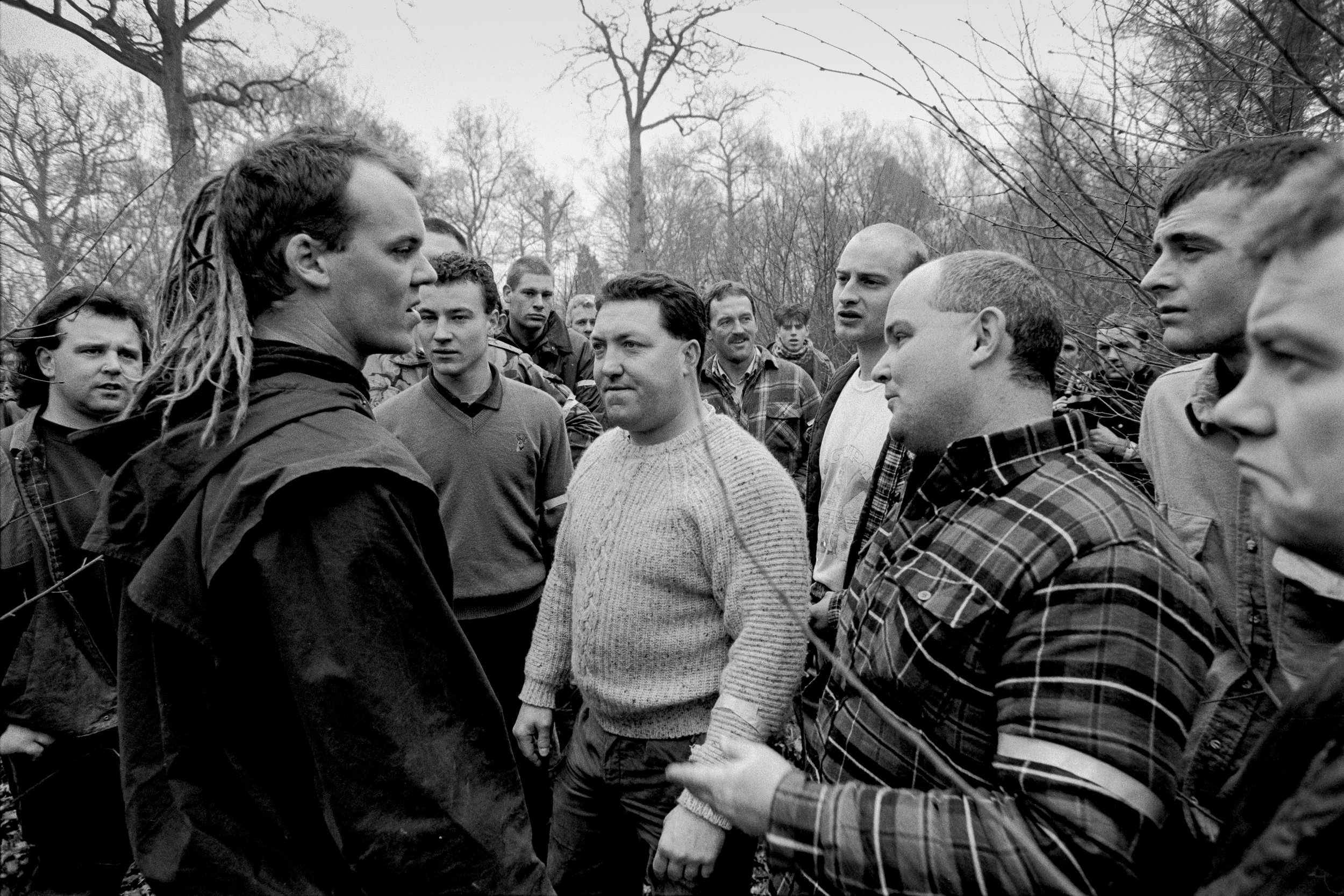

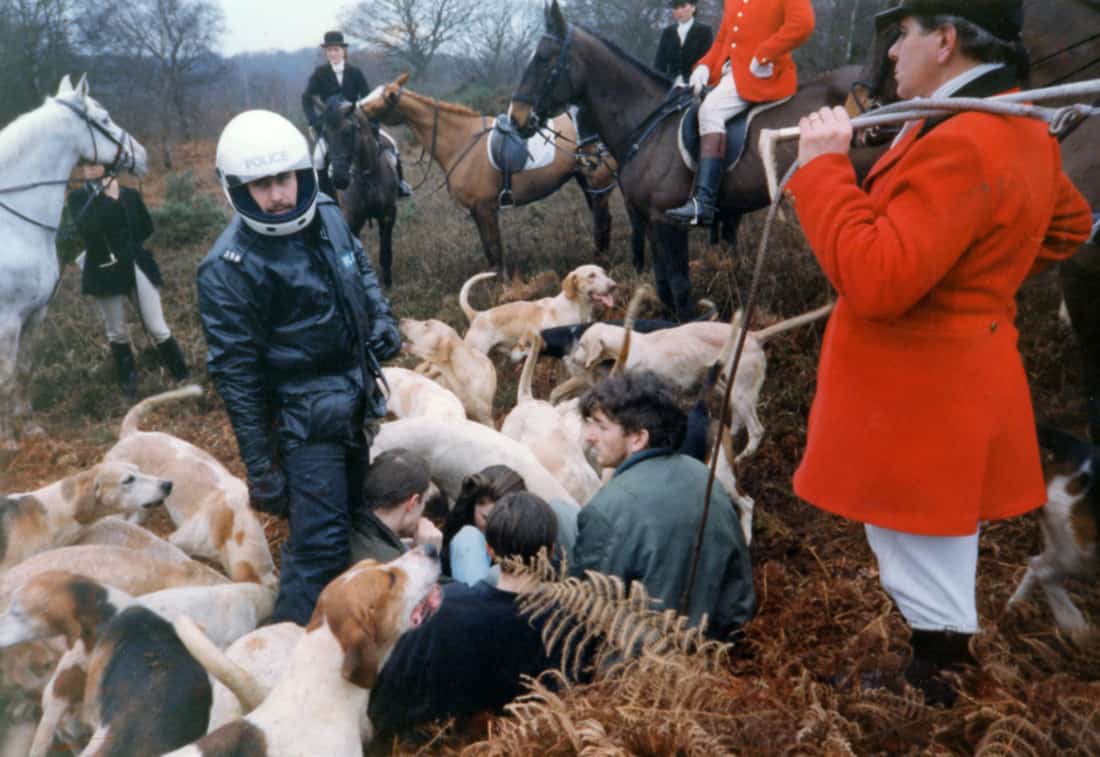
![Police photograph of the gun found in James Thomson's car, January 2001 [MPS-0004963]](https://campaignopposingpolicesurveillance.com/wp-content/uploads/2025/11/L3-gun-MPS-0004963-scaled.jpg)


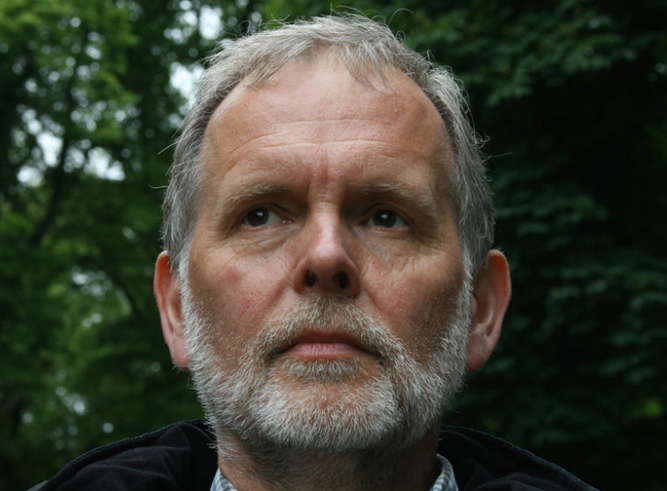


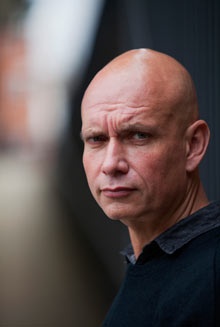
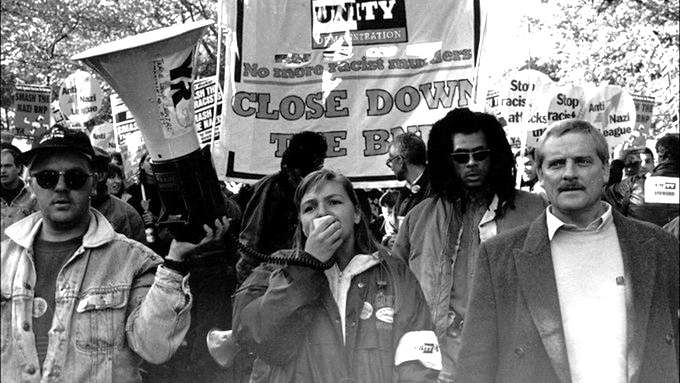


 INTRODUCTION