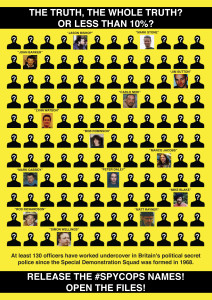
UCPI Daily Report, 24 Feb 2026: Donna McLean evidence
Tranche 3 Phase 2, Day 8
24 February 2026

Spycop HN104 Carlo Soracchi and Donna McLean
Content warning: this report contains a graphic description of child sexual abuse.
On Tuesday 24 February 2026, Donna McLean gave evidence to the Undercover Policing Inquiry (UCPI). From 2003 to 2005 she was deceived into a two-year cohabiting relationship by undercover police officer HN104 Carlo Soracchi ‘Carlo Neri’. He was deployed from 2000 to 2005, infiltrating socialist and antifascist groups in London.
The UCPI is an independent, judge-led inquiry into undercover policing in England and Wales. Its main focus is the activity of two units who deployed long-term undercover officers into a variety of political groups: the Special Demonstration Squad (SDS, 1968-2008) and the National Public Order Intelligence Unit (NPOIU, 1999-2011). Spycops from these units lived as activists for years at a time, spying on more than 1,000 groups.
McLean’s evidence was given as part of the UCPI’s ‘Tranche 3 Phase 2’ hearings, examining the final 15 years of the Special Demonstration Squad (1993-2008). McLean was not a member of any group targeted by spycops, she was a trade unionist who was friends with some of the people Soracchi spied on.
In 2022 she published a memoir about the relationship, Small Town Girl: Love, Lies and the Undercover Police. The book was used as evidence in the hearing, with McLean clarifying that its account is true but not exhaustive. She has also provided a short written statement to the Inquiry [UCPI0000039712].
McLean was questioned by Sarah Simcock, second junior Counsel to the Inquiry.
BACKGROUND
McLean begins by confirming that she wasn’t a political activist in the 1990s. She grew up in a Scottish, working class socialist family. She became an outreach worker in mental health, homelessness and substance abuse treatment.
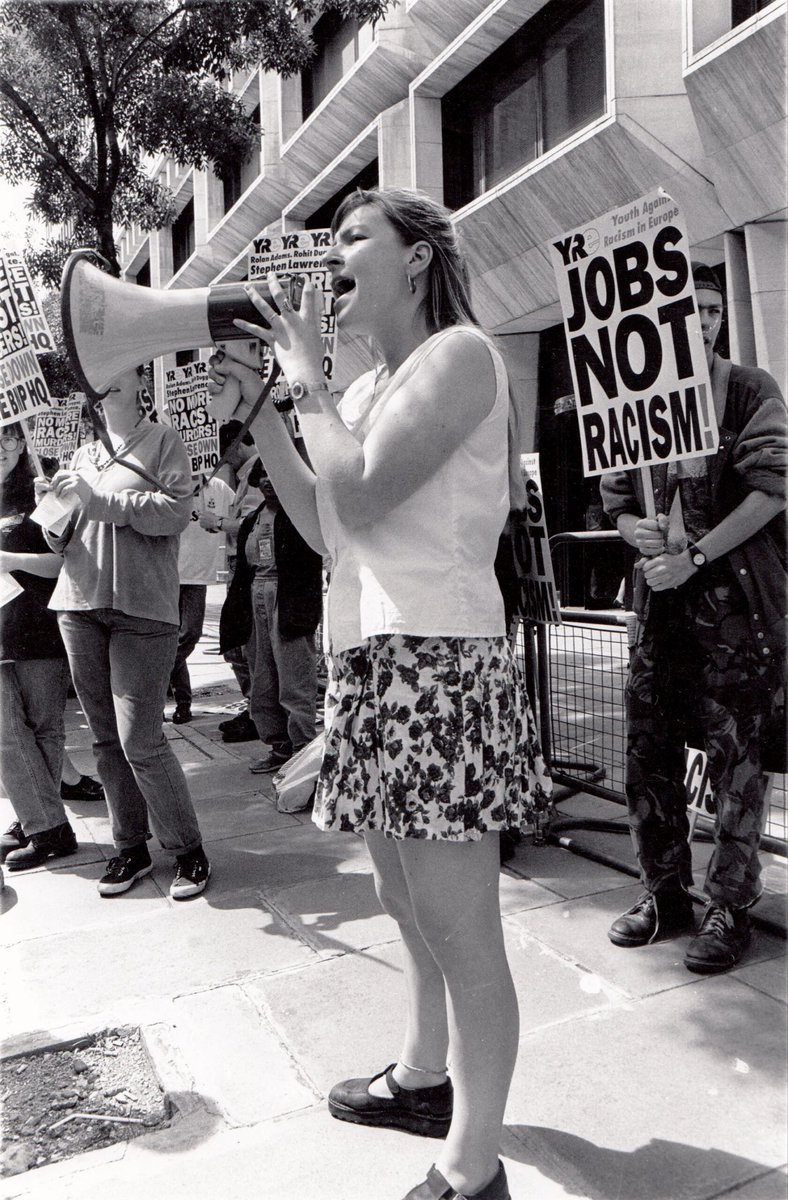
The vocation committed her to social justice, and to justice for the under-served. There was a general left-wing slant to those involved, and a great sense of camaraderie among her coworkers. She became particularly good friends with one of them, Dan Gillman, a socialist and antifascist who was spied on by Soracchi (and who gave evidence to the UCPI in November 2025).
She was briefly a trade union representative, as was Joe Batty, who she met on a training course as they worked in similar jobs. Batty was also spied on by Soracchi (and gave evidence to the UCPI earlier in February 2026).
MEETING CARLO
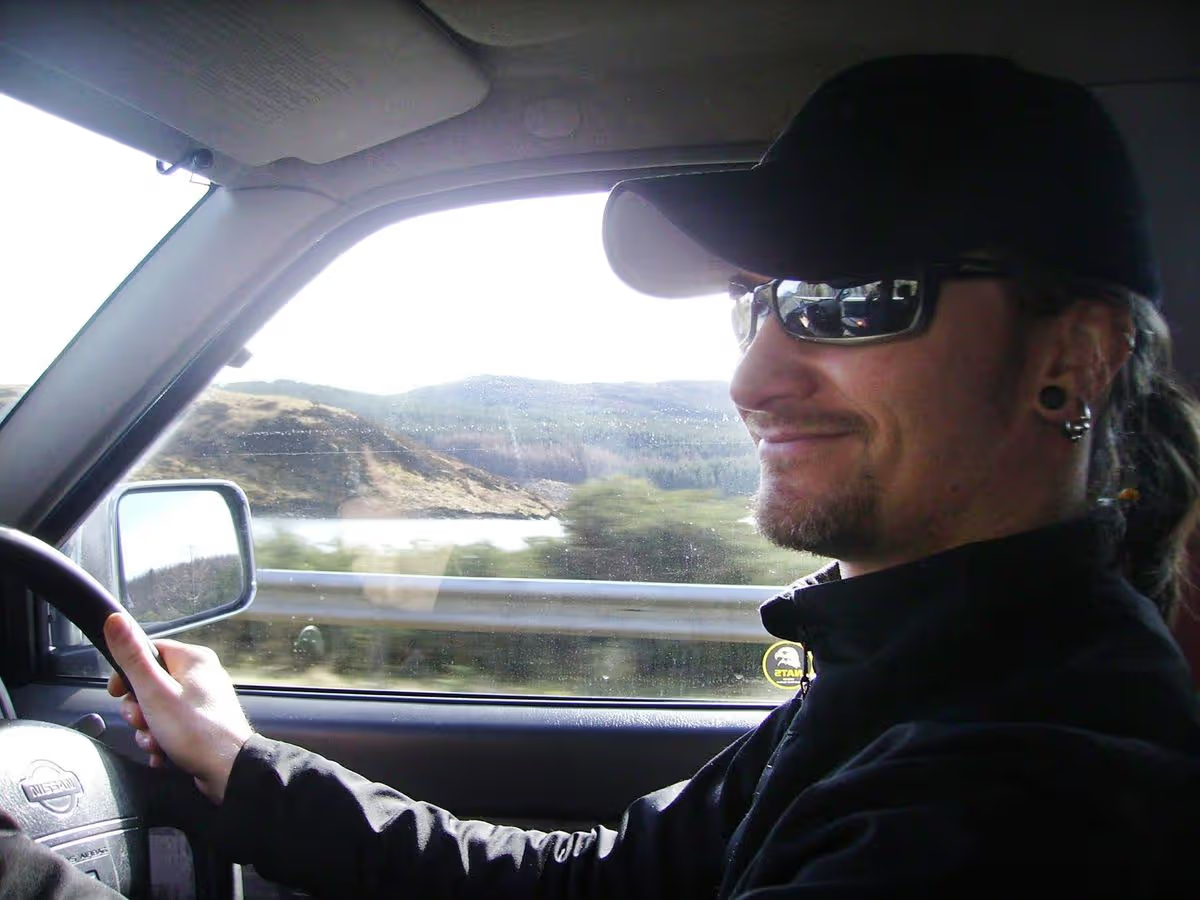
The very first time McLean met Soracchi was brief and uneventful. In early 2002, Gillman had borrowed some boxes from McLean as he was moving house. Soracchi, as was standard for spycops, had been equipped with a large vehicle to make himself useful and ingratiate himself into his target group. He gave Gillman a lift to McLean’s to return the boxes.

Special Demonstration Squad officer Carlo Soracchi
McLean first met Soracchi properly on 28 September 2002, when she went to a huge protest in London against the Iraq War.
She had intended to find friends from her union but the crowd was too large. Gillman and Batty were often stewards for socialist and union groups on demonstrations, and this occasion was no exception. McLean spotted Gillman in his hi-vis and stayed with him and the other stewards, who included Soracchi in his undercover guise as ‘Carlo Neri’ the socialist, antifascist and locksmith.
After the demo ended they all went to the pub together, then out for dinner. A few of them went on to a bar afterwards, and gradually the group dissipated down to just McLean and Soracchi.
They went back to hers together. The sexual relationship began that night. Soracchi stayed over, briefly popped back to his own flat the next day to get clean clothes, then came back and stayed a second night.
FULL SPEED AHEAD
It was the start of a whirlwind romance that got very serious very quickly, as McLean explained:
‘We got on really, really well. I had just come out of a 12-year relationship, I had no expectation that I would meet someone that I really liked…
But I think when I met Carlo, I was just surprised…
We agreed on so much. We liked talking about the same things, he was very family orientated, we liked music, we liked films, and it just felt that he was right. It felt like we were right together.
In a way that was surprising, but I also didn’t question it, I trusted it.’
This is a common story among women deceived into intimate relationships by spycops. The officers had been trained to ‘mirror’ people, responding with the same tastes and preferences so that an instant bond of recognition and trust is created.
Whistleblower spycop HN43 Peter Francis has described how officers would sometimes be briefed in advance of meeting a target so that they’d immediately have subtle but powerful points of personal connection.
Even by the standards of the spycops, Soracchi’s targeting of McLean is extraordinary. His first interaction with McLean was on 28 September 2002, and by New Year they were living together and engaged to be married. In actuality, he was already married.
In contrast to all this, Soracchi’s witness statement to the UCPI [UCPI0000035550] denies a lot of the facts in an attempt to downplay what he did.
He says he expected it to be a one night stand but McLean kept contacting him after. He says he can’t even remember if they actually had sex that first night.
McLean is affronted at this. She points out that they weren’t drunk from some kind of pub crawl, they’d been for a meal. They’d had a conversation about old relationships and contraception. His witness statement claims he used condoms; she says he never did.
McLean goes on to say that they were instantly effectively cohabiting as a couple at her flat:
‘He “went to work” in the day, I went to work in the day, and every evening and weekend we spent together.
So my expectation was that this was a very quick but very, very solid and very grounded relationship. Because he seemed like a very grounded person. He seemed like a very loving and caring and generous person.’
She says he told her he loved her every day. It felt like it would last forever.
Soracchi’s witness statement openly admits that McLean was not part of any groups he was spying on, and says he was just using her for comfort:
‘The motivation for starting a relationship with Donna McLean was that it was shortly after the death of my mother and I was at a low ebb and not thinking very clearly at the time.
I sort of fell into it with Donna. She was a nice person. She was not a political activist as far as I knew and she provided me with a bit of solace at a time when I needed it.’
He goes on to say he thinks it is merely ‘unlikely’ that she would have had the relationship if she’d known the truth about who he was.
Again, McLean is aghast at his gall. She says it was obvious that she’d have never let him near her if she’d known he was an undercover police officer.
She adds that Soracchi wasn’t just deceiving her for his comfort, either. It was also that she was an established, trusted friend of people he was spying on. Being her partner gave him a kind of credibility and made him more readily accepted.
PART OF THE FAMILY
Their relationship wasn’t just between them domestically and seeing friends socially. Soracchi rapidly and eagerly integrated himself into McLean’s extended family.
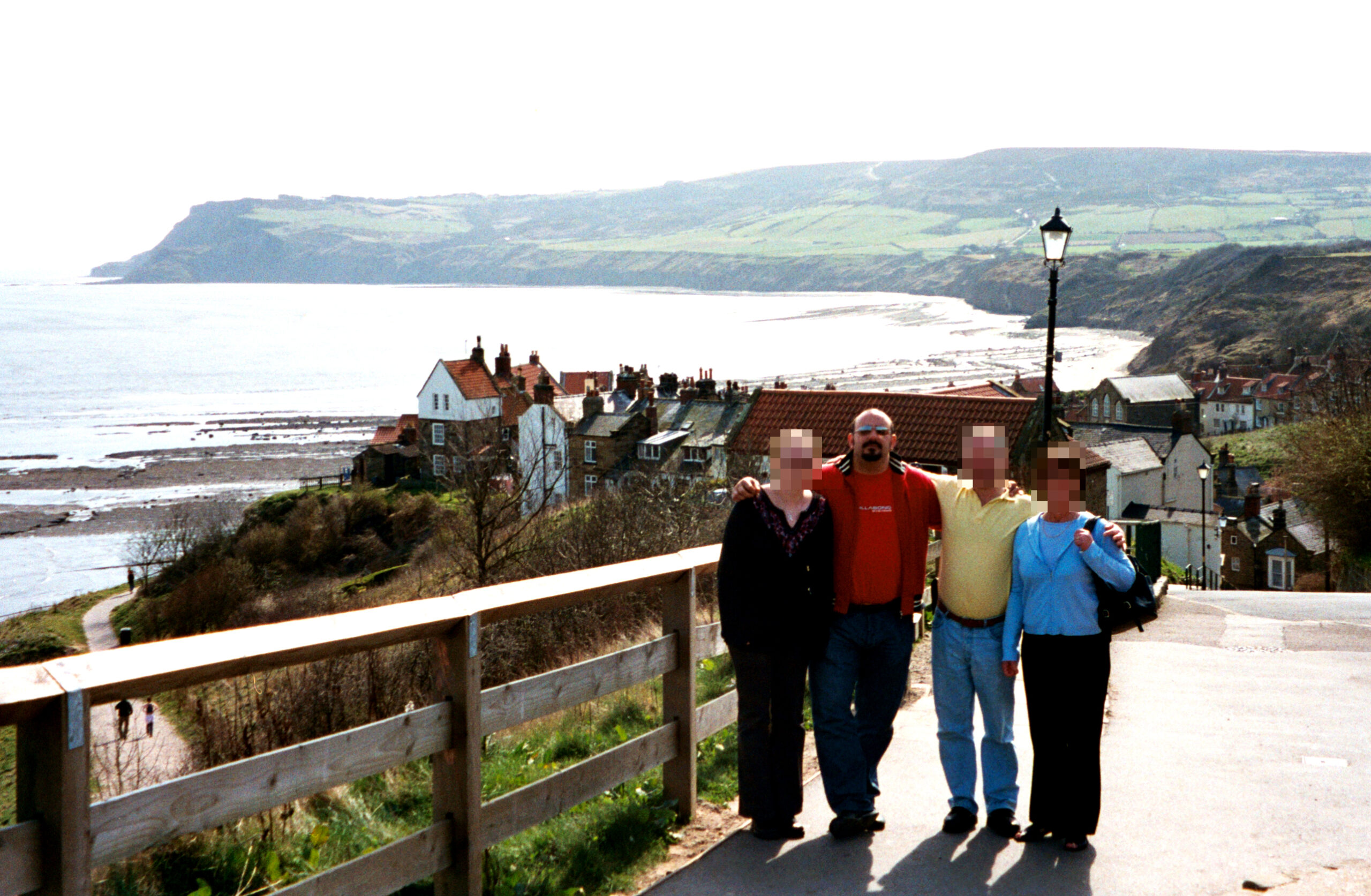
Carlo Soracchi with Donna McLean’s sister, stepfather and mother, Robin Hood’s Bay, Yorkshire, March 2003.
McLean told him that she’d had a violent abusive father, he’d said his father had been like that too. She says this created empathy and a bond. It made them feel closer to one another.
Soracchi was keen to meet her extended family. He would instigate phone calls with them and spend a long time talking to them.
They first went to Scotland together to visit McLean’s family around the time they started living together, in November 2002. Her relatives were still in shock from the recent death of her grandmother. Soracchi immediately blended in with them, taking a three year old relative off to read stories while the family discussed a choice of headstone.
The child asked him about his favourite children’s books. His description of The Story of the Little Mole Who Knew It Was None of His Business was met with enormous enthusiasm. A few weeks later, on his next visit to Scotland with McLean, he brought the child a copy.
McLean is horrified:
‘I think it’s incredible that he could do it. That this was actually part of his work. This level of intrusion and this complete disregard for any safeguarding of anybody or anything.’
This is another one of the many things Soracchi denies in his witness statement: he says he was never left with a child in the absence of a parent. McLean says he’s lying, as numerous family members involved can readily confirm.
Her family had been surprised that McLean was in such a serious relationship so soon after the end of her previous one, but Soracchi’s warmth, generosity and openness made them completely accept him and be genuinely happy for her.
However, Soracchi did embarrass himself at McLean’s sister’s graduation ceremony. When God Save The Queen was played, Soracchi reflexively stood up.
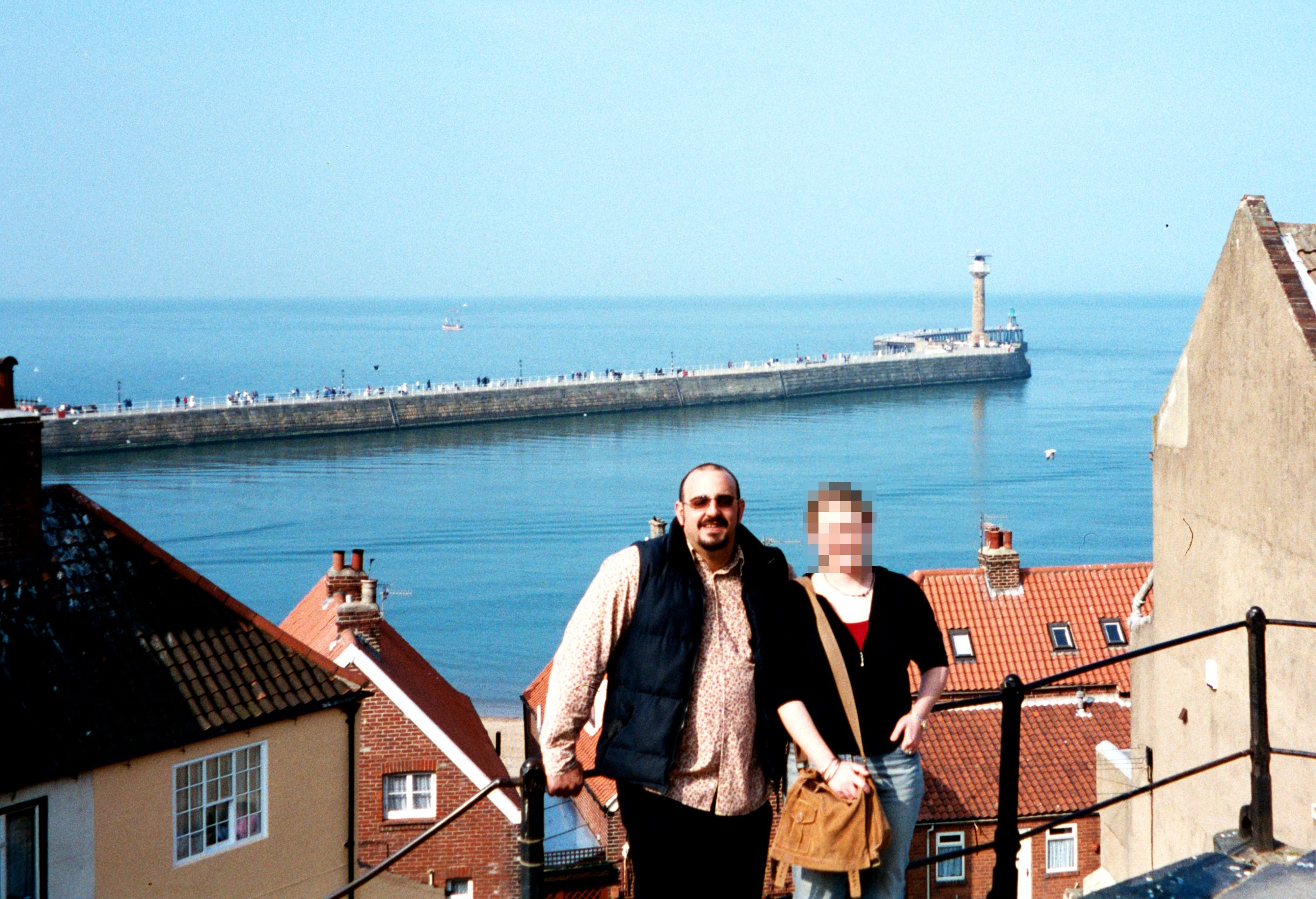
Carlo Soracchi at Whitby harbour with Donna McLean’s sister, March 2003.
Nonetheless, he was welcomed into the family. He collected snowglobes from around the world. McLean’s mother started getting ones for him from places she went.
Later in the year, Soracchi drove McLean and others to see a Stiff Little Fingers gig in Scotland. They could have gone to the London date, but Soracchi said it would be good to see her family again as they were still dealing with the bereavement. As with the previous time, they stayed at McLean’s mother’s house.
When on this second trip to Scotland, staying with her family, he started crying during a cab ride. He told McLean that he had an estranged son, and said wanted to tell her because his relationship with her was becoming serious.
He said he wanted to be able to be able to put pictures of his kid up in McLean’s flat. During that night’s deep conversation, McLean says she suggested moving in as he was there all the time anyway. He moved in a few days later. It was late November or early December. They had been seeing each other about two months.
In contrast, Soracchi’s witness statement claims he only stayed at McLean’s ‘on occasion’ prior to fully moving in with her in January 2003. This, she says, is another lie. He was there full-time and gave up his own flat before Christmas 2002. She is certain of this, remembering him being insistent that they had a real Christmas tree.
COVER STORY
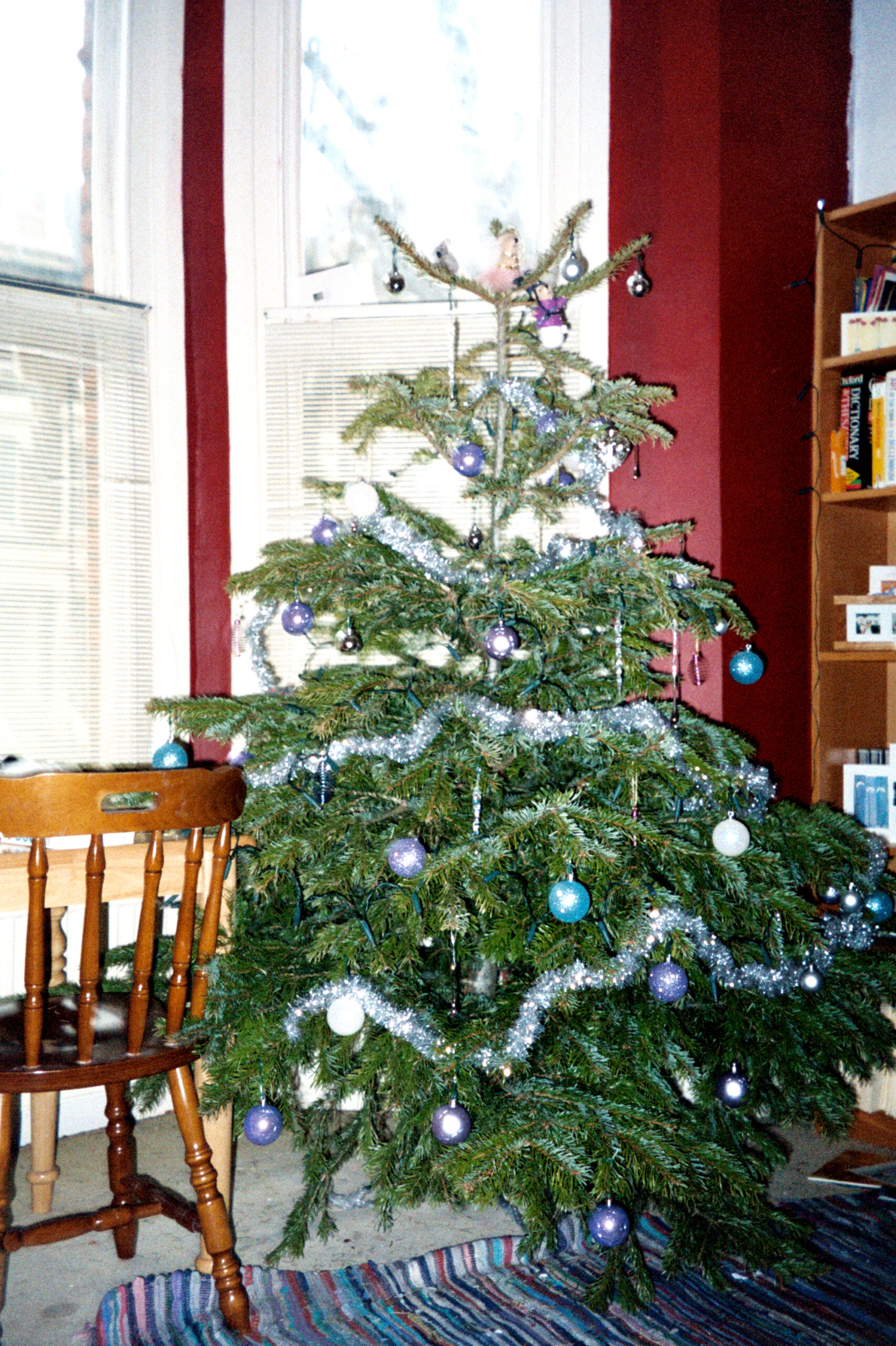
The Christmas tree Carlo Soracchi insisted he and Donna had, 2002. He now denies even living with her at the time.
The backstory Soracchi told McLean wasn’t just vaguely drawn from his real life. He actively included the true specific details of a lot of it. Having told her he had a son, he put a photo of the child on the bookcase in her flat. It was his real son, and he used the boy’s real forename.
He put more photos up, too: his real father feeding his real son spaghetti in Italy, his mother, his sister. In the end, there were pictures of all his actual close family, apart from his wife.
He said that his son had been born from a brief fling. The mother had become pregnant and wanted to keep the baby but be wholly independent of Soracchi, not having a relationship or receiving financial support from him.
Soracchi, playing the role of the caring, emotionally mature man, said he was trying to resolve the difficulties with the mother so he could build relationship with his son. He went away one weekend a month, supposedly see the child in Cornwall.
In reality, he was making the short journey across London to his wife and son. He made his wife pregnant with their second child while he was in the relationship with McLean.
McLean is astonished at his brazenness, that he took her to places where his real family could have seen them, as well as the depths of his dishonesty:
‘It’s hard to find a word that’s strong enough, because “fraudulent” just doesn’t quite match it.’
Soracchi talked to McLean a lot about his sister. As with his son, he had a picture of her on display in the flat and used her real forename. He said she lived in Peterborough, and was isolated and depressed. He would go away saying he was visiting her, but always giving an excuse why McLean couldn’t accompany him. Presumably these were in fact more visits to his wife and son.
After she found out the truth of who Soracchi was, McLean readily found his sister on Facebook. His sister has a successful career and seemingly happy family, the complete opposite of the impression Soracchi had given.
Soracchi, his father, his sister and her husband are all directors of the family’s Italian food import business and an associated deli. The public details were easily found, and the forenames matched those that Soracchi had told McLean.
Beyond the personal deception, McLean says it is proof that the spycops’ existence was based on a lie. They claimed to be monitoring these quasi-terrorist subversives who’d maim their enemies given half a chance. Yet spycops like EN12 Mark Kennedy, HN15 Mark Jenner and particularly Carlo Soracchi needlessly left huge clues to their real identities with the women they deceived into relationships.
McLean scoffs at them:
‘I had all that information because he gave it to me. The idea that we are somehow dangerous people, us trade unionists and people on the left are dangerous – he gave me all that stuff.
He made it part of our lives for his own benefit and he was using them as well.’
THE RENT SCAM
There was an unexpected moment of real courtroom drama when Counsel tried to clarify the date that Soracchi moved in with McLean. Counsel said that Soracchi was added to the rental agreement in January 2003.
McLean said there was no rental agreement for him to be added to. She was subletting from a person who was abroad for three years, it was approved by the housing association that owned the flat, but there was no formal documentation.
Counsel said:
‘Maybe we are talking at cross-purposes. The rent book, his name was put on the -’
McLean interrupted to say there was no rent book either. Nothing official was written.
Counsel looked perplexed and brought up a rent book that the Inquiry has been given among Special Demonstration Squad papers [MPS-0527068].
McLean has never seen it before. Counsel says it was found in an SDS filing cabinet. It should have been included in the documents shown to McLean before the hearing, but the Inquiry is increasingly failing to function properly, especially in showing civilian witnesses the documents that pertain to them.
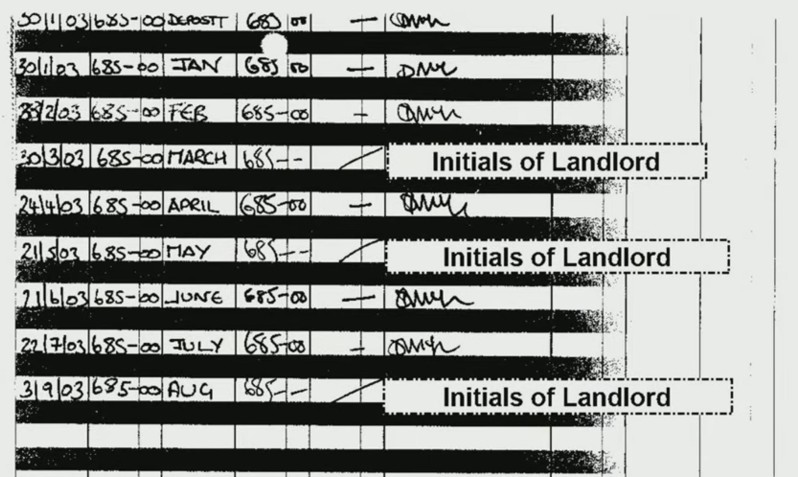
Page from Carlo Soracchi’s rent book, 2003. It shows £685 per month, and huge differences in the way Donna McLean’s initials are written.
The rent book is labelled ‘Tenant: Carlo Neri’ and dated 30 January 2003. Under ‘rent collector’, it names both the landlord and McLean. The landlord’s name is spelt incorrectly.
There are payments of a month’s deposit of £685, and monthly rent payments thereafter up to October 2003. They are initialled as received by McLean and the landlord.
But McLean’s landlord was in the USA for the entire duration of her tenancy. She never met him, neither did ‘Carlo Neri’. The rent on the flat was actually only £320 per month. It was paid by standing order from McLean’s bank account. There was no deposit.
The only explanation is that Soracchi created this rent book and used it to fraudulently claim the rent on his expenses.
McLean laughs at the poor quality of Soracchi’s forgery of her signature. Each iteration of the D is different.
Soracchi never formally paid rent to her. Instead he gave a variable amount, around £150, to McLean in cash every month or so.
He was already being paid overtime to live with someone who wasn’t an activist and who provided no intelligence. He then forged a rent book and fiddled his expenses to increase his wages still further.
The complete lack of integrity, the remorseless corruption of spycops is truly astonishing. They betray their targets, their families and the police themselves.
Soracchi’s relationship with McLean was characterised by his seeming generosity, bringing home many items of quality and taste. He often bought her jewellery, as well as high-value items for the kitchen, laying flooring and installing blinds.
McLean is shocked and still laughing at the shoddiness of the rent book forgery. Then she wryly observes:
‘I know where my presents came from now.’
HOLIDAYS AND KIDS
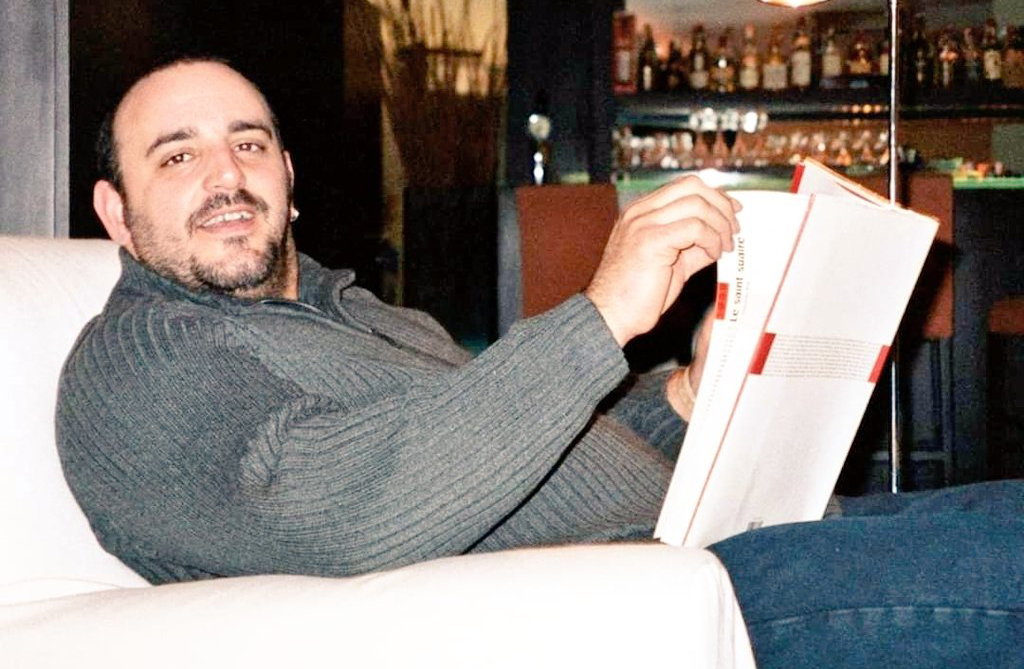
Spycop Carlo Soracchi on holiday in Bologna, February 2003.
The couple went on holiday to Bologna in February 2003 for Valentine’s Day. As Soracchi had said it was his birthday on 12 February, McLean paid for the trip.
In reality, his birthday was in January and, as was standard tradecraft for spycops, his fake age was younger than his real age.
They stayed in a high-class hotel in the city centre. The itinerary was all down to Soracchi as he knew the city well and spoke Italian.
McLean recounts sightseeing, including a visit to the railway station where a plaque commemorates the victims of the 1980 bombing of the station by fascists. The trip involved lots of gourmet food at Soracchi’s favourite restaurants and bars.
McLean says Soracchi was in his element:
‘He acted as he always did, very caring, very warm, very loving. He seemed very happy to be there.’
Soracchi had said his father lived an hour or so away. Despite him being a frequent and capable driver, they didn’t visit him. Soracchi said the family had some significant problems and he didn’t want it to spoil the romantic holiday. McLean was annoyed about the excuses.
The following month, March 2003, they went to Whitby on the North Yorkshire coast for McLean’s birthday. Her family came down from Scotland and they all stayed in one house together.
Soracchi was once again the genial host, in charge of music and drinks, generous and compliant with whatever the rest of the party wanted to do.
During this visit he told McLean’s mother that he wanted to have a child with Donna. Her mother thought this was great, though Donna herself said she wanted to wait until they had a more stable life and accommodation. This prompted them to discuss getting a more permanent home together.
Once again, this is something Soracchi denies in his witness statement:
‘Donna McLean claims that I encouraged her to have a child. I did not. I was with Donna for a period of approximately 14 months. I made it clear at that time that I was not interested in having any more children.’
LYING THEN, LYING NOW
It is extraordinary that Soracchi is trying to downplay a few details as if that will somehow make it alright. And expressing a wish to have children with McLean is no small detail.
It’s something we’ve seen from many of the spycops giving evidence. They don’t seem to realise that even if all their minimisations were somehow taken as wholly true and accepted, it’s tinkering at the edges. What they admit they did was still totally unjustifiable, appalling, unlawful and cruel.
As it is, it’s obvious that they’re lying, so by making these claims they change their status from ‘inexcusable scumbag’ to ‘inexcusable scumbag liar’. More, they’re not just exposed as having been deceitful, self-serving and arrogant decades ago as undercover officers, they’re showing themselves to be of the same disposition today.
In Soracchi’s particular case, McLean is incredulous at his denials as they are about things he said in front of numerous witnesses. He actually told her family that he wanted to have three children. She says it was a subject that they spoke about frequently.
He even contradicts himself. His claim to only have been with McLean for 14 months is undermined in the same witness statement that concurs with the timeline McLean has recounted. They both say it started in September 2002 and ended in November 2004.
McLean emphasises the totality of his integration into her family:
‘People – and I am talking about my family members and I am also talking about close friends – they were sharing really intimate details of their lives.
They were talking about how they felt after bereavements, friends talking about how they felt after a relationship break up.
They would cry in front of him. He would comfort them. He would be there to comfort people when they needed help…
It’s not just a social thing, it goes much deeper, it’s a real emotional intimacy…
Trying to explain how bizarre that is in this context is really difficult, because it’s so enmeshed. And there is no understanding of why he needed to do that to all these people.’
For his part, Soracchi’s witness statement resorts to a term beloved of spycops, ‘collateral intrusion’. It’s used when they’ve invaded lives and events that not even they can claim had any policing value:
‘I accept that coming into contact with Donna’s family was to some extent collateral intrusion. At the time I felt that there was very little if anything I could do about that to avoid risking compromising my cover.’
McLean rejects both the assertion and its minimising terminology. Far from merely ‘coming into contact’, he had chosen to move in with someone he wasn’t actually spying on, and then actively embedded himself into her extended family.
McLean points out that Soracchi’s excuse doesn’t even make sense on its own terms. Lots of people’s partners don’t want to go to every occasion with their in-laws, so there was no need for Soracchi to do so to make himself seem plausible.
She picks out the term itself with particular revulsion, saying it is trying to cloak what is actually an admission of guilt:
‘This “collateral intrusion”, it is a term that I really detest. I find it very, very offensive and very upsetting, because there is a recognition there that you have done things to people very, very much unnecessarily.’
THE REAL TARGET – DAN GILLMAN
The couple visited Cornwall twice in the first half of 2003, with Soracchi wilfully intruding into another family’s life. Dan Gillman and his partner wanted to visit Gillman’s dying mother, so Soracchi drove them and McLean all the way there.
McLean believes Soracchi targeted her because of her closeness with Gillman. Having heard Gillman’s testimony to the Inquiry recently, and that of others who knew him, she is more sure of this than ever.
Soracchi seemed very close with Gillman, and also with Joe Batty and Frank Smith. McLean admired Soracchi for his male friendships, it indicated that he was capable of emotional openness and closeness which made him seem very grounded and sound.
After their first two months together, Soracchi told McLean he was going to Italy for Christmas without her. In reality, he will presumably have been with his wife and son.
NEW YEAR’S PROPOSALS OF MARRIAGE AND ARSON
He returned for New Year’s celebrations. At his suggestion, the couple had a New Year’s Eve party at their flat, which was attended by about 20 friends. Soracchi proposed marriage to her at it.
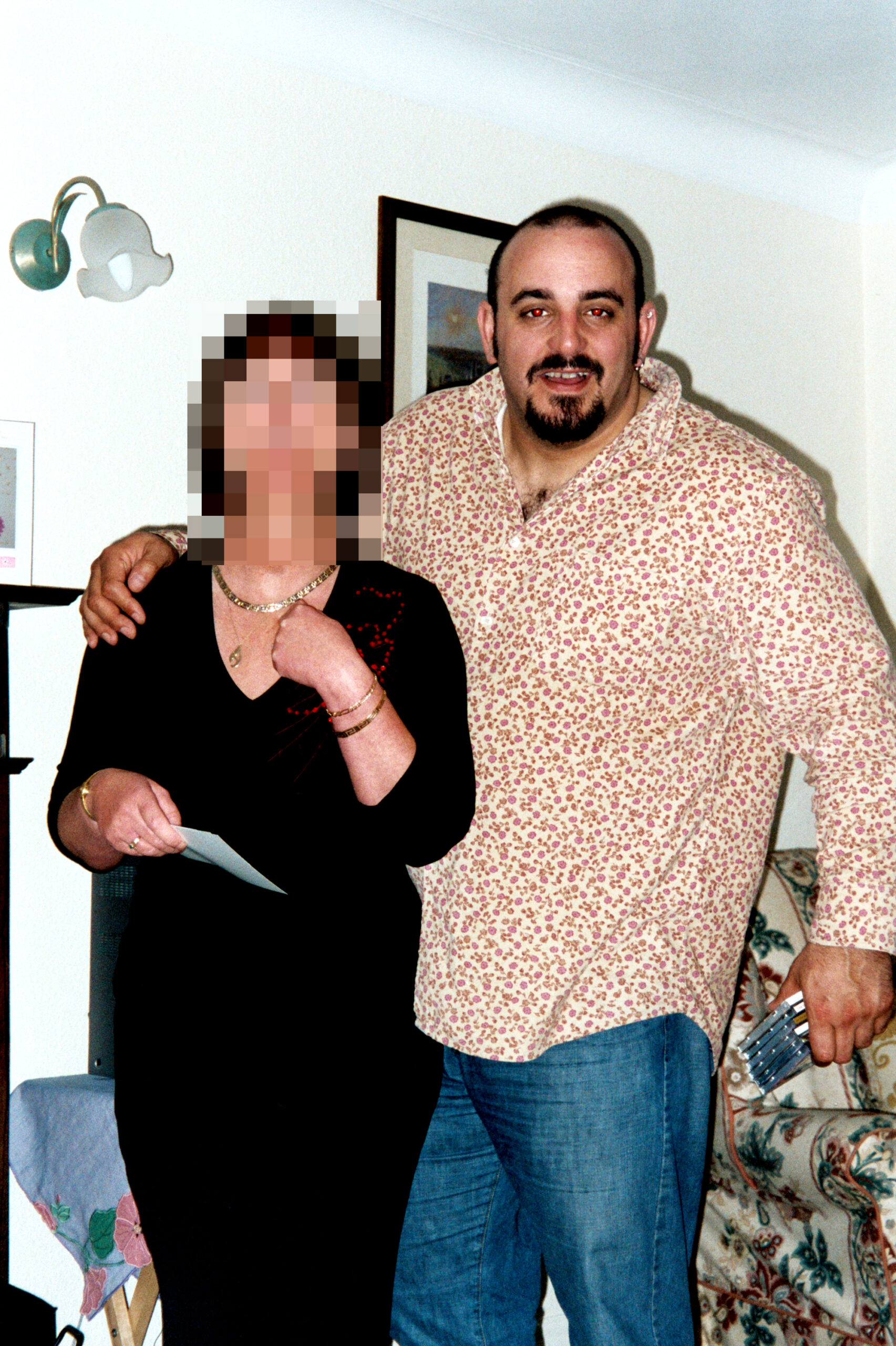
Carlo Soracchi with Donna McLean’s mother, March 2003.
He went down on one knee and asked ‘will you marry me?’. She said yes, he stood up and picked her up. People gathered around them. Soracchi then said they should phone McLean’s mother to tell her the good news.
In the aftermath, Soracchi said he and a friend of McLean’s would choose an engagement ring for her, as this was the traditional Italian way of the bride-to-be getting her ring.
The couple received cards from numerous friends and co-workers, and witnesses have told the Inquiry under oath that they witnessed the proposal.
Soracchi now denies it all in his witness statement, and says he never proposed to McLean at any time. He claims he was not even at the party on New Year’s Eve.
He has other reasons for denying even his presence there. As Batty and Gillman have told the Inquiry in some detail, at the party Soracchi got a few of them together and went out to a nearby charity shop which he said was owned by Italian fascist leader Roberto Fiore, who was using the shop as a fascist front. Soracchi suggested petrol bombing it.
The friends said that wasn’t their style at all, and they were more interested in going back to the party.
It seems Soracchi was acting as an agent provocateur, trying to set up Gillman and others with an arson charge. It’s something that his boss, HN10 Bob Lambert, had done to people he spied on when he was undercover in the 1980s.
McLean remembers Soracchi taking people into the bedroom without her and that he looked at her strangely as he went. She suspects the proposal may have been to distract her from asking about it.
The Inquiry took a break, during which Tom Fowler made this video with Zoe Young of Campaign Opposing Police Surveillance:
In early 2003, Soracchi and McLean talked a lot about their wedding and plans for living together afterwards. They contemplated moving up to Scotland, but they also had to accommodate Soracchi supposedly building a relationship with his son.
He said he wanted to introduce the boy to McLean, and have him come to stay regularly. McLean was keen for this to happen, so they knew they’d need a two-bedroom place to live.
The couple had planned a fortnight’s holiday for July 2003, following the Tour de France:
‘This was something he liked, it was not something I was particularly interested in but I loved France so it sounded like a really, really nice plan.
And also it was going to be a two-week trip, which was quite a significant chunk of time so that had been booked off work.’
Soracchi told her he’d booked everything. But the day before they’d been due to go, he said that his father had had a stroke and he was going to Italy instead. Soracchi rang McLean every day and promised to make it up to her.
In retrospect, it seems likely that this was time he planned to spend with his real family and no holiday with McLean was ever booked.
As the relationship went on, Soracchi said he’d changed jobs. He had originally told everyone he was a locksmith. He would say to activists that their locks were substandard and then he’d change them as a favour. Thus, he was able to give keys to Special Branch and whatever other government agencies might want to unlawfully enter the homes undetected.
After a while, again drawing on his real family, he said he was working in his family’s Italian food import and export business. He would bring a lot of gourmet foods back to his home with McLean. Knowing the truth as we now do, and in light of his rent fraud, we have to wonder whether he was claiming that on expenses, diverting police funds into his and his family’s pockets. Or perhaps he was stealing from his family as well.
By the end of 2003, their wedding was still on the cards, but finding new place to live had become the main priority. McLean was getting restless, wanting to meet his son and integrate that side of his life. She says it was altering the nature of the relationship:
‘I think there was a small shift, but it wasn’t enough to make me alarmed. It just was not progressing quite the way I wanted it to, or expected it to.’
ABUSE ABOUT ABUSE
For the festive season Soracchi said he was going to Italy to see his supposedly ailing father for Christmas and then return to be with McLean for New Year again. Over Christmas he rang to say he would be staying in Italy longer as his father was more unwell than he’d realised. In the early hours of New Year’s Day, Soracchi phoned McLean at a party at Gillman’s house to say that his father had died.
It was all a lie. McLean later found documents showing that Soracchi’s father was still alive and well, living in London in 2011.
But back then in the first few hours of 2004, she was devastated. She offered to go over but Soracchi said to stay in England and he’d come back after the funeral. She forced herself to accept it:
‘It was a huge thing, but it was also a continuation of the not being involved in his family life, when he was so embedded in my family life, and that just felt a bit lopsided.’
Soracchi had sounded genuinely on edge and upset in the phone calls, as was to be expected from someone who was supposedly bereaved.
When he returned to McLean a fortnight later, in mid-January, he didn’t just sound different:
‘He didn’t even look like himself, and this was the thing that really struck me. He looked a bit haggard. He’d let his beard grow out, and he always had his hair quite closely cropped, he’d let it grow out as well. So he looked a bit dishevelled.
He looked like he had lost weight and he also just looked – it’s weird – his eyes looked different, there was kind of a glaze to them, like he wasn’t quite there, he wasn’t quite present.’
He was much less affectionate and tactile with McLean. Then he revealed why. He told her that after the funeral, his sister revealed that their father had sexually abused her as an adolescent. He was very specific about his sister’s abuse, saying his father had raped her anally and orally in order to avoid pregnancy.
He specifically told McLean not to tell anyone else. She says it is difficult to contain such traumatic knowledge, but she honoured his request and kept it to herself. She later found out he’d told the story to Joe Batty as well.
He’d said all along his that father had been violent to his mother, but this was something entirely new. He added that it explained his sister’s self-isolation and depression.
He also described feeling bad about himself, that he felt guilty for not having prevented the abuse and protected his sister. He used the words ‘dirty’, ‘broken’ and ‘guilty’ a lot.
He told her he was no longer the person she’d fallen in love with, that he needed space, but also that it was only temporary and she should wait for his recovery, saying:
‘I still love you, we’ll get through this because I love you so much.’
MALICIOUS CRUELTY IS TRADECRAFT
McLean was hugely concerned about his mental state. She needn’t have been. Astonishing as it sounds, this was standard spycop tradecraft.
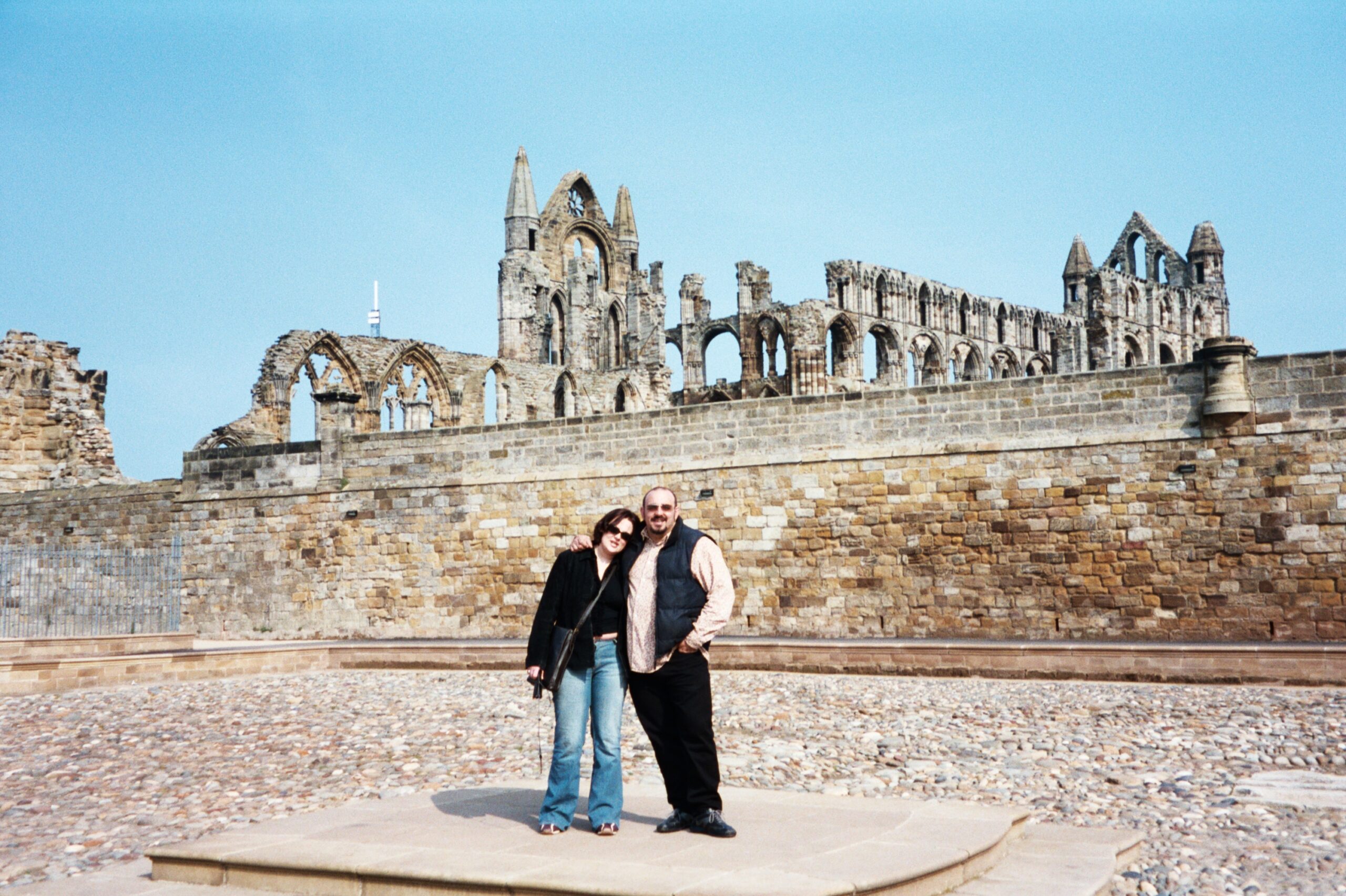
Donna McLean and Carlo Soracchi at Whitby Abbey
The spycops invent details about abuse in their family for several reasons. It gives the person being told a sense of intimacy and trust, which encourages them to trust the spycop in return. It also gives the spycop an excuse for not introducing people to relatives.
Additionally, it feeds into the tactic Soracchi was using here, feigning severe mental distress as an excuse to end a relationship and leave at the end of his deployment.
We have heard extensive evidence about this tactic. How they keep up the charade continuously for months on end, convincing all those around them that something is very, very wrong.
Having little understanding of empathy, it doesn’t seem to occur to them that their behaviour will provoke intense worry in the partners and friends they have curated under their false identities.
When other spycops have used this tactic prior to their deployment ending, it’s resulted in worried ex-partners ended up travelling the world to search for them afterwards, hoping to help, not realising they’re looking for a person that never actually existed, a fictional character with a false name played by someone living with a family a few miles away in London.
McLean is utterly disgusted with Soracchi for this outrage:
‘I think it’s one of the cruellest things that he did, actually. I think it’s a real cruel thing, I think it’s really malicious. And I think when Carlo uses terms like “collateral intrusion” – that’s not collateral intrusion, that’s deliberate psychological harm being inflicted.’
Soracchi denies that it was all his doing, and that he ever mentioned sexual violence, let alone in such horrendous detail. His witness statement asserts:
‘The breakdown of our relationship was a two-way thing…
I told Donna that my sister had suffered violence at the hands of my father, but I did not say to Donna this was sexual violence… I did say that I was going through a lot of mental anguish. This was partially true, but also partially a part of my exfiltration strategy.’
She’s emphatic that the relationship breakdown was all his doing, and that she didn’t want it to end at all. She, again, points out that this was something witnessed by others, so his recent denial is provably a lie.
When he said he wanted to move out in May 2004 he repeatedly reiterated that he still loved her, they’d work it out, and it definitely wasn’t the end of the relationship.
A few days later, McLean came home from work and he had gone. He had taken everything he’d bought, apart from flooring, blinds and a dressing table. Not just his clothes, books and CDs but a vast amount of kitchen equipment, even the cabinet that the TV stood on.
This, too, is met by a pointless downplay in Soracchi’s witness statement, claiming he only took ‘a few books, some clothes and some cooking utensils’.
HE’S GONE, BUT HE HASN’T
McLean had no contact from him for two weeks after he left. Then he rang and said he really missed her and wanted to meet up. After that, they saw each other two or three times a week. He was very affectionate again, saying he wanted to sort it out and asked for her patience. They restarted the sexual relationship. She thought he might move back in.
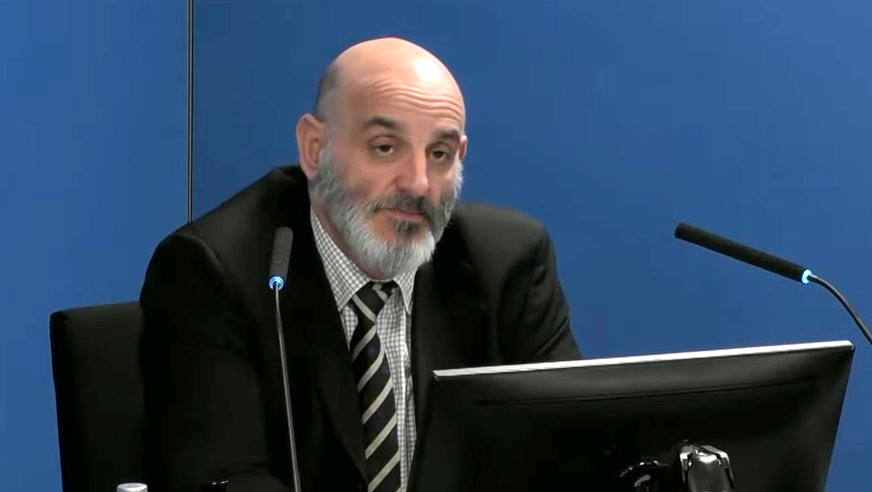
Carlo Soracchi giving evidence at the Undercover Policing Inquiry, 3 March 2026
McLean had to move out as her tenancy was up, and Soracchi helped her move in to stay with a friend. After three months there she moved to another friend’s. He helped her move again.
She believed the massive trauma he’d described would take a long time to resolve. She knew that she would have to put the time in and be patient. But his behaviour consistently gave her solid grounds for hope. He was still affectionate, he talked about their future together, he was buying her presents again. There was no indication he wanted to end it.
They talked at length about his discovery of sister’s supposed abuse. McLean still believed she was the only one that this poor man was opening up to, so she did her best to support him, but it made her mental state increasingly fragile.
McLean last saw Soracchi in November 2004. They’d been to see a film together, an Italian one he’d chosen. She’d anticipated that, as usual, they’d decide to go back to one or other of their homes afterwards. Instead, he called her a cab:
‘He put me in the taxi and then he threw some money at me for the taxi. And it was like, “what is this? What is this behaviour?”
It was so kind of off and so dismissive. It was horrible and I felt horrible.’
Shortly afterwards, he sent a short email to her work address. He said the relationship was over, he couldn’t make it work so he was moving on, adding ‘I loved you more than you will ever know.’
McLean was shattered. Despite his unbalanced behaviour and the taxi incident, she’d believed the problems were all external to their relationship, so it was not in peril.
Two weeks later she received an envelope and recognised his handwriting immediately. Inside was a note saying he would always love her and a voucher for an expensive spa day.
Five months after that she emailed him as she was going to Italy, asking for travel advice. He just replied saying he had none. That was their final contact.
DISCOVERING THE TRUTH
In 2014, a friend of McLean’s came to stay. She was reading a book, Undercover: The True Story of Britain’s Secret Police by Rob Evans and Paul Lewis, the Guardian journalists who’d broken a vast range of stories in the spycops scandal.
The friend passed the book to McLean who found it not just compelling but chillingly familiar. The hairs on the back of her neck stood up as she read about the detective work of women who’d been deceived into relationships by spycops and she realised it sounded like her Carlo. He had everything from the love bombing, the childhood trauma, and being useful with a large vehicle to the breakdown prior to leaving – but why on earth would he have targeted McLean, who wasn’t an activist?
The following year, in 2015, McLean met up with Gillman and some of the others who’d known Soracchi. They had amassed convincing evidence and were certain he had been a spycop.
Asked about the impact, McLean says that the disjointedness of a spycop’s life becomes contagious:
‘It’s mind blowing, because you have kind of got two lives. You have got the life that you have lived believing that that was the relationship and that was how it ended. And then you have the retrospective life of going back and saying, actually, this was the life.
So it’s like someone with a dual identity has created a dual life for you, and you have to try to piece that together. And it’s so hard.’
She says her family and friends are still having realisations that certain things they did or places they went weren’t of their own making but were manipulated by Soracchi. They’re all still trying to figure out how much of their lives were real and their own.
She had never suspected anything about Soracchi and, as a mental health professional, felt foolish at being duped by his feigned breakdown. Though it has to be said, out of all the suspicions that spied-on people have reported having about spycops, nobody saw through that part. They were phenomenally, and frankly disturbingly, convincing at behaving in a profoundly unbalanced way, as if they were finally letting some genuine warped feelings manifest.
McLean dug deep into the spycops scandal, obsessively searching for the details. She wanted to know his real name.
It took its toll on her health:
‘Having an autoimmune disease, there are several factors that impact on it, and stress is one of the biggest ones.
And that stress was so huge and so sudden and so bizarre, that that just kind of sent my immune system – because my immune system attacks itself.
So my body attacks me basically, so I had a huge flare and I was very physically unwell, but also mentally very fragile at the same time, which is not a good combination.’
Over the years that followed, she suffered nightmares and intrusive thoughts, became distant from her children, and struggled working with people with mental health problems. Counsel adds McLean’s concern at being followed to the list of paranoid reactions, but she’s clear that was no illusion. She really was followed.
She also noticed logins on her Facebook account in Bury St Edmunds, a place she’s never been to. She remembered seeing on the news that the Anonymous activist hacker Lauri Love’s computers were taken to the police IT headquarters at Bury St Edmunds. If they’ll get into your life, your home, your bed and your body, then your social media accounts are not beyond their bounds.
‘IT DOESN’T MAKE SENSE, TO ANYONE’
In her book Small Town Girl, McLean declares:
‘My body was used against my will. I did not consent to being a sexual experiment. I did not consent to being a mistress, I did not consent to being fucked all over the world by a man who did not exist.’
Asked if she feels the same way today, she says more than ever as she see that it happened to so many others as part of an overarching strategy.
‘I think angry wouldn’t be a strong enough word. It’s malicious and cruel and unnecessary, and a deceit that’s just beyond anything that we understand to be human or humane.
My personal belief is that the level of the intrusion of this entire scandal is very underestimated by people outside rooms like this, because they don’t see how deep it is, and they don’t see how the impact just goes on and on and on. Because it doesn’t make any sense, to anyone.’
That concluded the questions in the morning’s public hearing.
McLean was asked if she had anything to add that hadn’t been properly covered. She replied with characteristic insight:
‘Our bodily autonomy was stolen from us. And not just in the fact that we did not give consent, but also the time that we chose to have children, whether we have children, how difficult that became, the relationships that we ended up in, the issues of trust that came for that, and that spans your whole life. It doesn’t stop.
There is the period of the relationship itself. There is the period when you find out. There is the aftermath. There is, you know, doing all this stuff [the public inquiry], which is quite difficult.
But the entire autonomy of your own body has been stolen in a way that was strategic, and I think that’s something I just want to highlight as an overarching thing.’
The Inquiry then took a break, during which Tom Fowler made this video with Dan Gillman:
Much of the afternoon hearing was held in secret as it dealt with private matters.
During this, Tom Fowler made another video, this time with Chris Brian from the Undercover Research Group:
When it was made public again there was some discussion of the detail of Soracchi’s fraudulent rent book.
After this, the Inquiry’s Chair, Sir John Mitting, concluded the hearing and thanked McLean effusively:
‘I can only express my admiration for the good humour with which you’ve fulfilled this difficult task.’
After the hearing finished Tom Fowler made this video with Lois Austin who was a political comrade of Dan Gillman’s and other friends of McLean’s: