Content tagged with "Jim Boyling"

UCPI Daily Report, 4 Feb 2026: ‘GRD’ evidence

Tranche 3 Phase 2, Day 3
4 February 2026

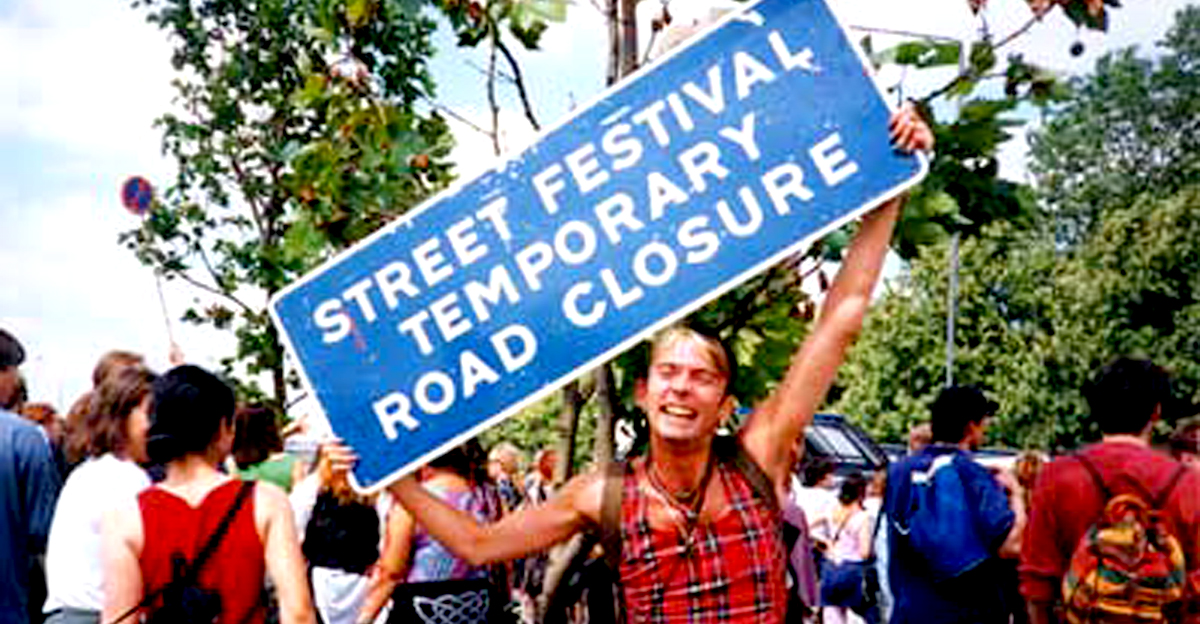
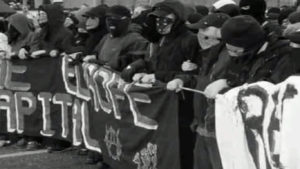
J18: anti-capitalist protesters in the City of London on 18 June 1999 (pic: Andrew Wiard)

J18: anti-capitalist protesters in the City of London on 18 June 1999 (Pic: Andrew Wiard)

On the afternoon of Wednesday 4 February 2026, the Undercover Policing Inquiry (UCPI) heard from a person known at the Inquiry as ‘GRD’. He was a hunt saboteur and London Greenpeace activist who was spied on by undercover officer HN14 Jim Boyling ‘Jim Sutton’ in the 1990s.

GRD has been granted core participant status at the Inquiry, and also a significant degree of anonymity. He is referred to only by the intials, and his evidence was broadcast audio-only, without his face being seen.

Don Ramble

Don Ramble

The UCPI is an independent, judge-led inquiry into undercover policing in England and Wales. Its main focus is the activity of two units who deployed long-term undercover officers into a variety of political groups: the Special Demonstration Squad (SDS, 1968-2008) and the National Public Order Intelligence Unit (NPOIU, 1999-2011). Spycops from these units lived as activists for years at a time, spying on more than 1,000 groups.

GRD was questioned by Don Ramble as Counsel to the Inquiry.

GRD has produced a written statement for the Inquiry [UCPI0000037735], which was read into the evidence.

Additionally, he is a signatory to the Good Easter hunt sab group witness statement, a case that appears to be a miscarriage of justice due to spycop Jim Boyling’s involvement and his evidence being withheld from the subsequent court case.

However, GRD was not present for the events involving Boyling on that day, and Ramble made clear they would not be asking about that statement in this hearing.

In sharp contrast to Roger Geffen’s evidence earlier in the day, GRD’s answers were short and to the point. It was clear that he had little time for the Inquiry asking nonsense questions that sought to justify the deployment of undercover cops.

HUNT SABBING AND VIOLENCE

GRD first met SDS officer Jim Boyling with the East London hunt saboteurs in 1995 when they travelled together in a minibus. They really got to know each other on 17 February 1996 on a large sabotage of the Duke of Beaufort hunt, when they became separated from the rest of their group:

‘It was right at the beginning of the meet. And I don’t think either of us realised how many riders and supporters there were with this particular hunt.

So, we were holding the gate closed for a very long time and the whole field, as it’s referred to, kind of rode over us…

You get spat on, getting hit with whip and sworn at… And that’s the first time I kind of really had any real connection with him.’

GRD didn’t see Boyling again after that incident until more than a year later, in the summer of 1997. Nevertheless, Ramble asks him a series of questions about his activities while sabbing and any possible justifications for police spies targeting the hunt sabs.

GRD got involved in the Harlow hunt sabs in 1992. He started the North London hunt sab group a year or two later and remained involved until 2006. He is clear that the only violence he ever saw while sabbing was by hunters, hunt supporters and the police – especially in Essex:

‘We would generally not sab them. It was too dangerous, too risky…

It’s just too violent, you’d get your vehicle smashed up or the police operation would be so considerable that you’d all be arrested by midday.’

This was was exactly what happened on the day of the Good Easter arrests, 10 February 1996. GRD witnessed the arrest of a fellow core participant at the Inquiry, Brendan Mee, but not the arrests of Ben Leamy, Brendan Delaney and Simon Taylor who were with Boyling that day.

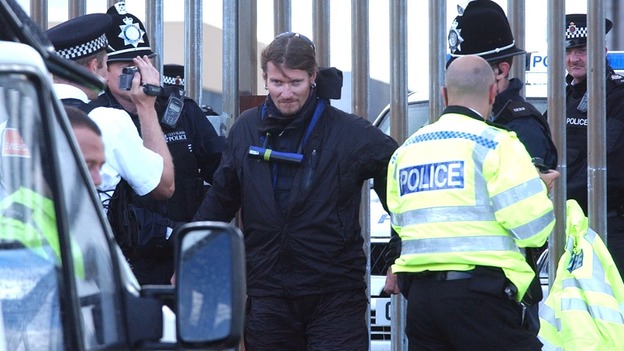
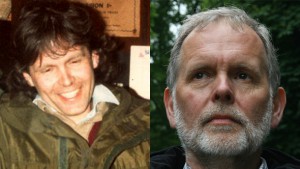
Jim Boyling whilst undercover in the 1990s

Spycop Jim Boyling whilst undercover in the 1990s

The Inquiry will need to ask Boyling about his role in those arrests and also his offer to act as a witness on behalf of the defendants whose lawyer was Keir Starmer, a name that just keeps coming up in the Inquiry files.

GRD is also asked about links between the hunt sabs and the Animal Liberation Front (ALF). The ALF was a clandestine group that broke into farms and laboratories, liberating animals and damaging property. They were seen by the police as the apex of the animal rights movement, and were portrayed as something akin to terrorists.

A document recording Boyling’s initial deployment into the East London hunt sabs said that he ‘will be following an essential and authentic route towards acceptance by ALF activists’.

The targeting strategy document for SDS officer HN16 James Thomson ‘James Straven’ [MPS-0526929], whose was deployed into hunt sabs slightly later, further refers to Boyling’s deployment as follows:

‘originally earmarked for long-term deployment in the ALF and he has provided first rate intelligence on violent hunt saboteurs based in East London and Essex and indeed valuable assistance to Operation GANT and SO-13 investigation into a series of crude ALF incendiaries in East London.’

GRD says that doesn’t make sense, he doesn’t know any sabs who associated with the ALF and the hunt sabs never used, or planned to use, incendiary devices. He rejects the idea that sending an officer to infiltrate the hunt sabs was justified.

MCLIBEL SUPPORT GROUP

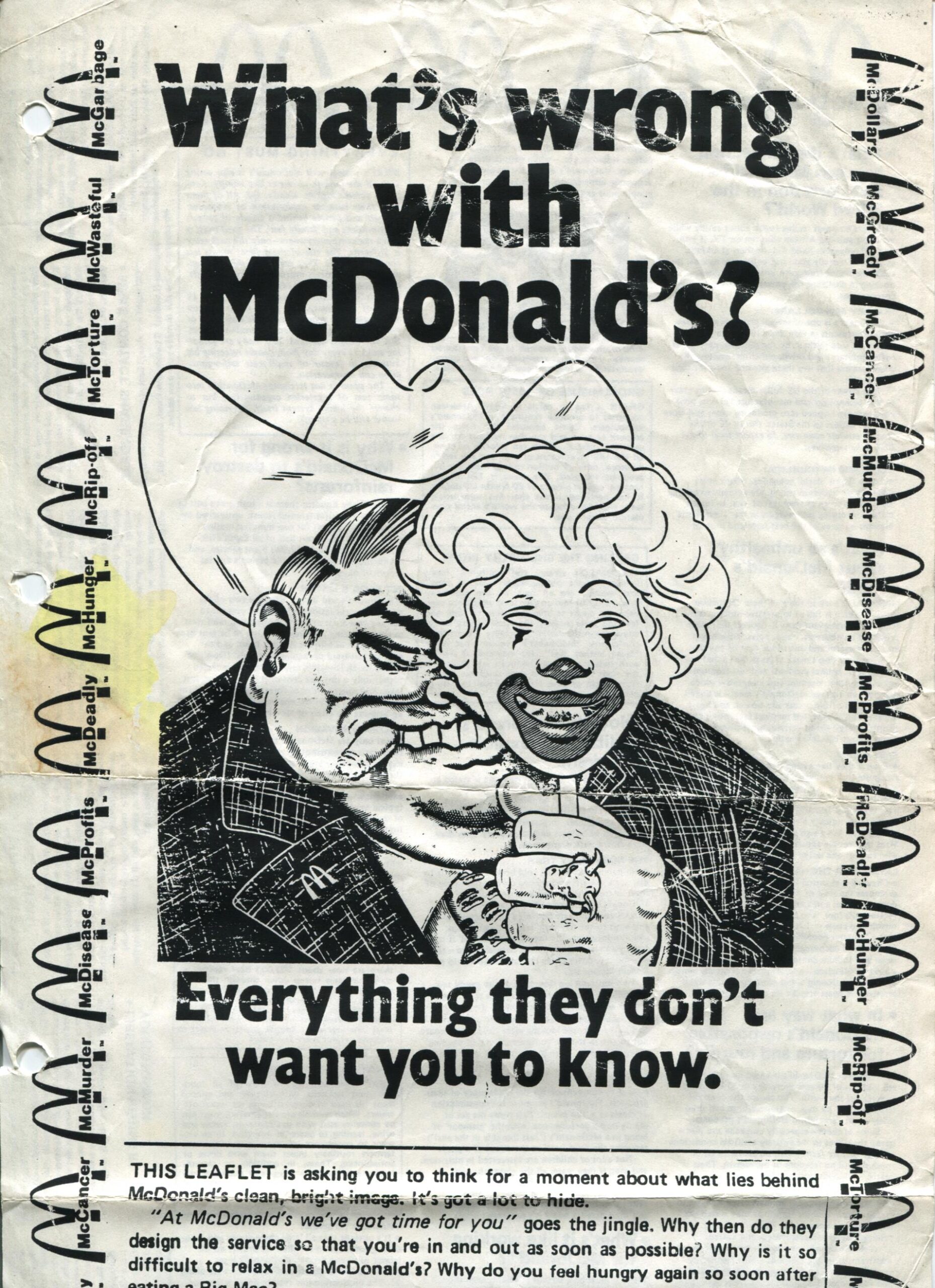
In 1990, McDonald’s brought legal proceedings against London Greenpeace for the claims made in a factsheet titled ‘What’s Wrong With McDonald’s?’ that detailed the company’s appalling environmental, employment, animal welfare and marketing practices.

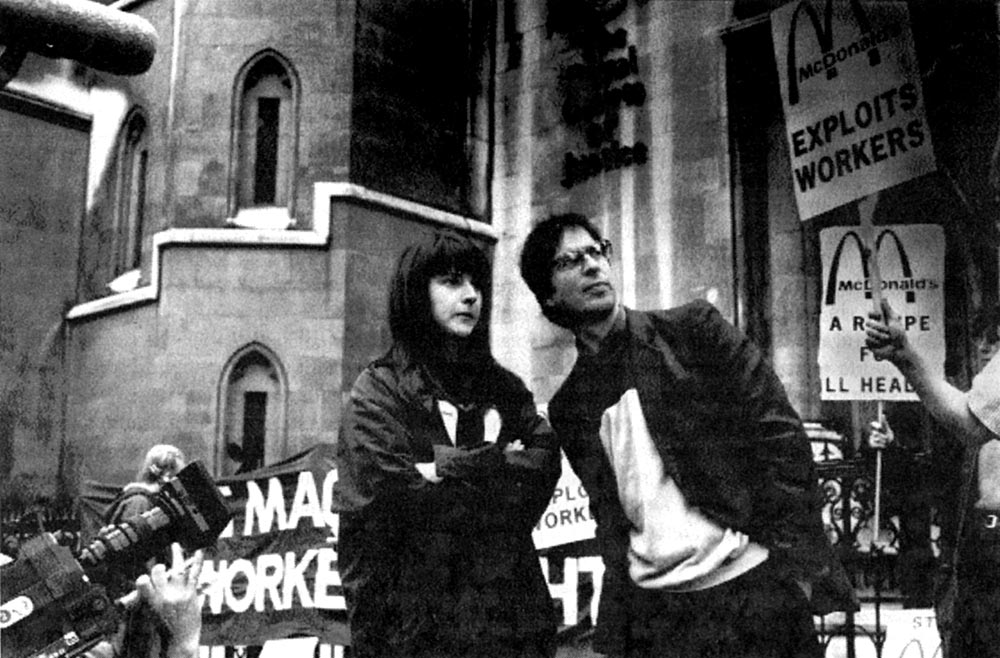
The McLibel 2, Helen Steel and Dave Morris, at the Royal Courts of Justice (Pic: Nick Cobbing)

The McLibel 2, Helen Steel and Dave Morris, at the Royal Courts of Justice (Pic: Nick Cobbing)

The ensuing court case took seven years, with the defendants attracting huge support and backfiring badly on McDonald’s. It was revealed that McDonald’s had sent two separate lots of private detectives to infiltrate London Greenpeace who were unaware of one another.

The court did not learn that multiple SDS officers also infiltrated the group, and indeed the factsheet at the core of the court case was co-written by an SDS infiltrator, HN10 Bob Lambert ‘Bob Robinson’.

GRD first became involved in the McLibel support campaign in 1995 due to fellow hunt sabs being involved in the McSpotlight website. The McLibel Support Group office ended up being in GRD’s flat at one point. He says it was mostly a storage headache, as storing all the T-shirts and other merchandise took up space.

He met Boyling again while he was running a McLibel Support Campaign stall at the 1997 Glastonbury festival.

‘He was there with Reclaim The Streets and they were on the other side of the Green Futures Field… it had a lot of activism, eco-activism, and animal rights campaigns, veganism, vegetarianism…

Jim used to come over and hang out in the McLibel Support stall, tent as it was, for most of the days, from my memory.’

GRD hadn’t seen Boyling since they were attacked by hunters together in early 1996, but after Glastonbury they continued to bump into each other at squats and events around London.

The last time GRD saw Boyling was in a squat in December 1999. The intense experience they had together as hunt sabs meant that GRD considered Boyling a friend. He trusted him and they would socialise together.

GRD describes these encounters in his written statement:

‘We were a little bitchy about other activists and like to take the mickey out of them, but not to their face. We had a laugh together like mates.’

Looking back on this he finds it depressing and feels betrayed. He also points out that this piss-taking could be weaponised as a means of sowing division.

Boyling claims he had no inside knowledge of the McLibel matter, but GRD says that’s untrue. After Glastonbury 1997 he would have had access to all the materials which were often scattered around GRD’s flat:

‘I was uploading daily material onto the McSpotlight website… So I’d have stuff all over the place. I’d have correspondence, and I would have you know other stuff associated with the campaign.’

LONDON GREENPEACE

London Greenpeace (a small group unrelated to Greenpeace International) campaigned on a broad range of environmental and social justice issues. GRD describes himself as a key London Greenpeace activist and he ended up running the office, because he lived very nearby.

What's Wrong With McDonalds? leaflet

London Greenpeace’s ‘What’s Wrong With McDonalds?’ leaflet which triggered the longest trial in English history

We are shown an intelligence report by Boyling [MPS-040634] dated 31 October 1997, which refers to a meeting to ‘relaunch’ of London Greenpeace.

GRD says that Boyling would have been aware that London Greenpeace was restarting from the conversations they had at Glastonbury festival in 1997. The ‘source comment’ from Boyling on the report ironically notes that the relaunch will include all the old members ‘though presumably not the private detectives’.

This seems to be the only one of Boyling’s reports that references GRD, something he found surprising. He would have thought he’d be mentioned more, given his long-term involvement with Boyling.

EARTH FIRST! AND GENETIC MODIFICATION

In 1998 Jim Boyling and others gathered at GRD’s squat in King’s Cross to discuss the feasibility of liberating ‘Dolly’, the world’s first genetically modified sheep.

Looking back, GRD says he thinks Jim was trying to get him on board for future plans he might have had. In his reporting, Boyling describes GRD as a hunt sab organiser in North London, and a McLibel and occasional Earth First! activist.

GRD says only the first two are correct. He was also active in the Genetic Engineering Network (GEN) between 1997 and 2002. There was some crossover between GEN and Earth First! Nevertheless, his only connection to Earth First! was through things that Jim Boyling organised.

Around the same time as the meeting about Dolly the sheep, GRD recalls that Boyling asked him to drive Boyling to collect some Reclaim the Streets posters from the printers. When he got home his flat had been burgled. A camera and some two-way radios used for hunt sabbing were taken, along with some pictures, some cash, and GRD’s turntables.

‘There was only one person knew that I was going to be out all day, and that was Jim.’

Another action Boyling was involved in organising was the first ever destruction of a field of genetically modified crops in Ireland. Ramble tells GRD that the Inquiry is not interested in what happened in Ireland as it falls outside of the Inquiry’s Terms of Reference, which are limited to events in England and Wales. However, this is certainly an interesting and significant action nonetheless.

In his written statement to the Inquiry [UCPI0000036294], Boyling says he destroyed a genetically modified crop in Ireland when he had no other option than to participate or being exposed.

GRD says this is not true, and that the action in Ireland would not have happened if Boyling had not done the planning and logistics, both in the UK before travelling and in Ireland, pushing the group to do it.

GRD is very clear that Boyling would have found it very easy to back out of the genetics action, even once they were in Ireland. The UK group wasn’t even meant to carry out the action, and there were too many people in the van so it would have been easier, logistically, to have fewer people.

RECLAIM THE STREETS

Although GRD attended a great number of Reclaim The Streets (RTS) public events, he only attended two of the group’s meetings.

Boyling, in contrast, claims to have been involved in the core organising group. He insists he walked a fine line, as an undercover officer, taking part in meetings without suggesting or proposing any specific action. GRD says this is completely false and contradicts his experience of Boyling.

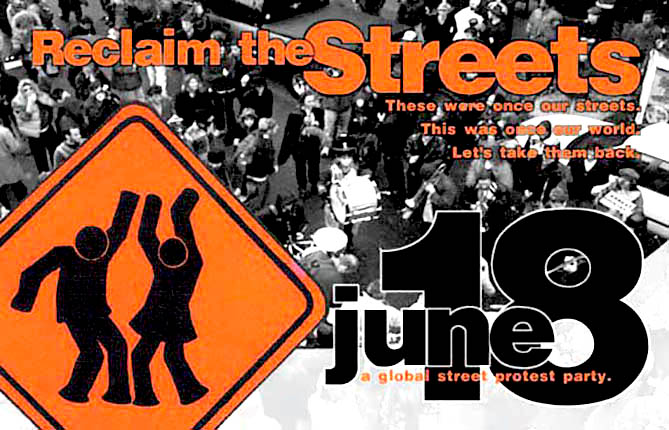
Leaflet promoting J18, the Carnival Against Capitalism in the City of London and around the world

Leaflet promoting J18, the Carnival Against Capitalism in the City of London and around the world

Boyling approached GRD in 1999 and asked if he could hold an important meeting at GRD’s flat. It was about driving vehicles into the city of London for the J18 Carnival Against Capitalism to be held on 18 June 1999.

There were four people present, Boyling, GRD and two others, and Boyling set out his plan, which was to use cars to block two roads. This was entirely Boyling’s idea, and no one else in the meeting had been involved in coming up with it.

After the meeting they got in a vehicle and drove the routes the cars would take. Boyling encouraged them all to wear hi-vis jackets and walk the routes regularly to memorise them.

Boyling said he had purchased four cars and four pay-as-you-go-phones with enough credit for use on the day. He handed them all a phone.

The night before ‘J18’, each of the drivers stayed in new and unknown locations organised for them by Boyling in order to prevent police following them on the day. They were directed by Boyling to park the cars at specific car parks prior to driving them to the action.

On the day, GRD and another activist blocked the road by crashing the cars together at one end of the street, while Boyling and one other did the same at the other end of the street.

GRD is very clear he would have never been involved in the car action if he had not been approached by Boyling. He wasn’t really involved in Reclaim The Streets at the time. He says once he had completed his mission of crashing the cars, he spent the rest of J18 partying.

'Let London Sprout' - the Reclaim the Streets guerilla gardening event, Parliament Square, 1 May 2000

‘Let London Sprout’ – the Reclaim the Streets guerilla gardening event, Parliament Square, 1 May 2000

The Inquiry played footage of the J18 Carnival Against Capitalism, featuring the cars Boyling organised to block the road.

Ramble listed titbits of events that happened on the day, most of which GRD only heard about afterwards, and there were lots of happy memories for those of us in the public gallery.

Ramble then put it to GRD that is was justified to deploy Boyling into the groups organising J18. GRD replies that Boyling himself was integral to the organising of J18.

On 21 June 1999, Boyling filed a report titled ‘Debrief – Stop The City – June 18’ [MPS-0302210] which says the organisers were pleased with the outcome. GRD says he can’t say he was an organiser, but it was very good day.

It is very frustrating that none of the people who did organise the event have been asked to give oral evidence by the Inquiry.

‘JASON BISHOP’ AND MAYDAY 2000

GRD is also asked about another SDS officer, HN3 ‘Jason Bishop’, who was deployed 1998-2005.

GRD says he met him in the Reclaim the Streets office, and saw him around at RTS parties and activist events. Bishop also borrowed GRD’s van twice.

Most significantly, on 1 May 2000, Bishop was arrested in GRD’s van. He was stopped while transporting manure and seeds on his way to the Reclaim The Streets ‘guerrilla gardening’ event in Parliament Square.

The van was seized by police, and GRD describes getting it back:

‘I just packed my kit in it, loaded it up and then drove off to Hampshire… driving down the motorway, [the wheels] just felt odd and a bit weird…

The vehicle was in a very good condition when lent to HN3. It is possible the wheels were loosened during its time in the Met Police pound.

The experience left me distressed as I thought I was not going to be able to turn up for my first big event with the new lighting company… it was a very well maintained Mercedes panel van. It’s not usual for a considerable amount of the wheel nuts to be loose all at the same time.’

IMPACT

GRD says it was always Boyling who approached him to take part in actions, not the other way around, and he would have never suspected he was a cop.

He was shocked to hear that there was even a suggestion that ‘Jim Sutton’ had been an undercover officer. He didn’t believe it at first – activists can be paranoid – but it turns out they were right.

He had found Boyling convincing because of the human connection they had. He trusted him, and he feels set up and used. He has developed trust issues as a result, and he says it is difficult to put it into words. He feels cheated.

Asked if there is anything else he would like to tell the inquiry, GRD is characteristically succinct:

‘I’m alright, thanks.’

The Inquiry’s Chair, Sir John Mitting, thanked GRD for giving evidence and the hearing closed for the day.

UCPI Daily Report, 4 Feb 2026: Roger Geffen evidence

Tranche 3 Phase 2, Day 4
4 February 2026

Roger Geffen giving evidence to the Undercover Policing Inquiry, 4 February 2026

Roger Geffen giving evidence to the Undercover Policing Inquiry, 4 February 2026

Roger Geffen gave evidence to the Undercover Policing Inquiry (UCPI) on the morning of Wednesday 4 February 2026.

Geffen is a long-standing environmental campaigner who was involved in the anti-roads movements and groups like Earth First! and Reclaim the Streets from their inception in the early 1990s, as well as more conventional campaigning for the rights of cyclists and sustainable transport.

His campaigning activities led to him being awarded an MBE for services to cycling. They also led to him being spied on by SDS officer HN14 Andrew James Boyling ‘Jim Sutton’, NPOIU officer EN12 Mark Kennedy ‘Mark Stone’, and probably other undercover officers over the past thirty years.

The UCPI is an independent, judge-led inquiry into undercover policing in England and Wales. Its main focus is the activity of two units who deployed long-term undercover officers (or ‘spycops’) into a variety of political groups: the Special Demonstration Squad (SDS, 1968-2008) and the National Public Order Intelligence Unit (NPOIU, 1999-2011). Spycops from these units lived as activists for years at a time, spying on more than 1,000 groups.

INQUIRY CHAOS

The barrister acting for the Inquiry (known as the Counsel to the Inquiry) who questioned Geffen was Lennart Poulsen, who appeared to be very unprepared.

That is not entirely surprising as the Inquiry has gone ahead with these hearings when they have barely processed the evidence. In his Opening Statement to this phase of hearings, David Barr KC (lead Counsel to the Inquiry) noted:

‘Numerous and considerable challenges have led to the preparation of the T3P2 Hearing Bundle taking longer than planned.

We recognise that this has meant that documents have not been circulated to core participants as soon as we would have wished and that the process of circulating documents to core participants and publishing them on our website is taking place over an extended period.’

As is so often the case with public statements by the Inquiry about its work, this actually significantly understates the utter chaos surrounding disclosure, where much of the evidence has not yet been circulated to Core Participants preparing their evidence, and that has evidently also impacted on the ability of the Inquiry’s own barristers to prepare.

Geffen has produced a witness statement [UCPI0000038772] and he also contributed to the Reclaim the Streets (RTS) witness statement [UCPI0000038295]. Both were read into the evidence at the start of the hearing, and you can hear Geffen and other core participants involved in drafting the RTS witness statement talking about that process in episode 47 of the Spycops Info podcast:

Spycops Info · Episode 47: Reclaim The Streets statement

Geffen’s evidence began with how he became involved in environmental activism. After leaving university he began working as a classical music record producer. He moved to South East London in the late 1980s and became a cyclist.

London traffic was wildly congested and dangerous at that time and he became involved in the London Cycling Campaign, and later a campaign against plans to build a road through Oxleas Wood, a piece of 8000-year-old ancient woodland close to where he lived.

‘This was an interesting time in environmental politics because the year after I got involved in London Cycling Campaign in 1989, was the year at that climate change really first came into public consciousness when the then Prime Minister, Margaret Thatcher, went to the United Nations Summit and declared that, as a scientist, she was convinced of the need to take action on climate change, but her government then announced what they called “the biggest road-building programme since the Romans”.’

Poulsen asks how Geffen became involved in direct action and he answers, explaining that he was influenced by Gandhi:

‘I’d seen the film Gandhi earlier in my teens and the idea was that there are times when you do need to break the law in order for justice to prevail.’

He also explains what direct action meant to him:

‘When the system of democracy and public input and all the rest of it breaks down… you just have to effectively take action directly… to highlight the problem to confront it directly and thus push for a resolution… you look to confront the root causes of the problem directly’

TWYFORD DOWN

One of the first schemes from the government’s 1989 road programme to start construction was the joining up of two sections of the M3 through Twyford Down, a heavily protected area of chalk downland just outside Winchester in southern England.

Protesters had set up a small camp on the route of the road, which Geffen visited in December 1992.

Twyford was a defining experience for Geffen. He began organising minibuses to take people from London to support the campaign and his first ever arrest occurred while taking action there.

He explains how that experience empowered him to take direct action:

‘I realised that the world hadn’t ended… and I felt proud of what I had done.’

He has seen very little reporting about the Twyford Down campaign, however he points out that the Inquiry’s disclosure of police documents indicates a Special Branch Registry File was opened on him in 1993, which coincided with his actions at Twyford Down and the early months of No M11 Link Road campaign.

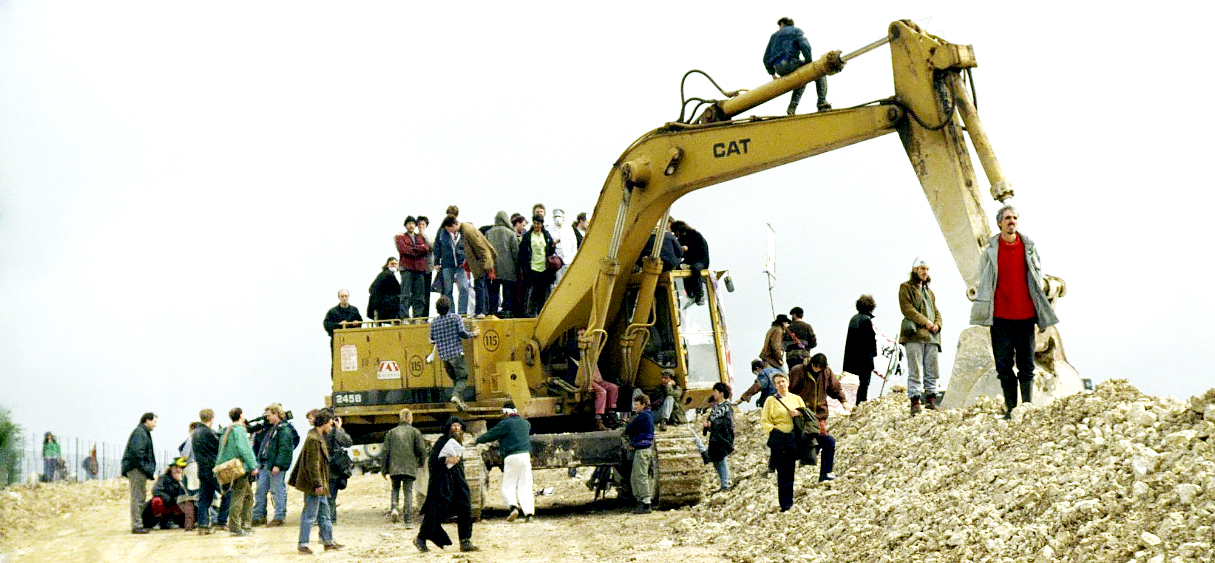
Protesters occupy excavating machinery, Twyford Down, early 1990s

Protesters occupy excavating machinery, Twyford Down, early 1990s

He points out that neither he nor anyone else involved in this Inquiry has received sight of those Special Branch Registry Files, and it is evident that there is more to be discovered about the extent of the spying than is apparent on the face of the disclosure he has seen.

Geffen therefore poses a number of questions for the Inquiry:

His name was on the Consulting Association’s ‘green list’ (an illegal employment blacklist of environmental campaigners). It is known that a private detective firm, Bray’s, was employed to spy on protesters at Twyford Down – filming and keeping files on those regularly taking part.

Geffen asks the Inquiry to consider what kind of collaboration existed between private companies like Bray’s or the Consulting Association and the Special Demonstration Squad at this time.

Geffen also points out that the Secretary of State applied for an injunction against a large number of activists, seeking to prevent them from trespassing on the worksite at Twyford Down. What role did the SDS play in that process? Or in the proposed civil action, suing protestors for damages, which should theoretically have followed on from the injunction but which the Government never pursued.

Here, Poulsen points out that six activists were jailed for breaking that injunction. Geffen agrees and talks us through the appeal of those injunction breakers against the length of their sentence:

‘It was before Lord Justice Hoffman and he came out with a wonderful quote … that really kind of solidified my own understanding of what I doing.

He talked about “the honourable tradition of civil disobedience in this country” and he added that “those who take part in it may well be vindicated by history”…

It wasn’t my words, but I think that very much crystallises the philosophy that led me to do what I was doing.’

Indeed, the road protesters of the 1990s certainly were vindicated by history. In Geffen’s words:

‘Twyford Down ended up being a noisy defeat for the direct action movement, and Oxleas Wood became one of the first of a large number of quiet victories.’

Two-thirds of the government’s proposed new roads were ultimately dropped, and it is clear that Geffen is still very proud of the role he played in those campaigns.

NO M11 LINK ROAD

After Twyford Down, Geffen and others’ campaigning focus shifted back to London, and the campaign against the M11 Link Road.

Geffen describes this as a ‘Cinderella project’ because unlike Twyford Down, Oxleas Wood, or the later Newbury Bypass, this was not a road that was set to destroy precious natural habitats. Instead it was being run through a residential community that had been purposefully run down by government compulsory purchase of the houses.

As such, the No M11 Link Road campaign moved the debate about road building on. Rather than just being about protecting the natural environment, it also became focused on the destruction of communities and the choices we make about the use of our urban space.

Geffen talks the Inquiry through a number of the actions and strategies that the campaign used, such as ‘Operation Roadblock’ and the squatting of Claremont Road.

Operation Roadblock was a plan to hold daily direct action on the worksites of the M11 Link Road, coordinating people coming from all over the country. Each day was preceded by a brief training session on the principles, practicalities and legal implications of non-violent direct action. This enabled and empowered people to make informed decisions about how far they were prepared to go to stop the diggers:

‘We were exhausted by the end.’

Claremont Road was the last fully intact street on the route. All the houses on the street had been compulsorily purchased, bar one.

Dolly Watson was 93 years old. She had been born in that street and she wanted to die there. One by one, protesters squatted the homes around her, creating a little self-contained car-free community, and she welcomed them into her road. Geffen explained:

‘Defending Claremont Road would be strategically crucial.’

With the homes being decorated and children playing in the street, it became a rolling street party that lasted for six months, and something of a prototype for the concept of Reclaim The Streets.

Claremont Road E11, occupied by anti-road protesters, mid 1990s

Claremont Road E11, occupied by anti-road protesters, mid 1990s

Poulsen was not very interested in the power of the community campaign, however, and instead pressed Geffen about any possibility of criminality, asking him about the times he was arrested.

Geffen very sensibly wrote his own statements about these arrests at the time, to support his defence. He has exhibited these to his statement to the Inquiry and is able to take Poulsen through the reasons why he considers them wrongful arrests. When charges were brought at all, he was found ‘not guilty’ over and over again.

A Special Branch report [MPS-0739546] describes one of the arrests, and Poulsen asks Geffen about the mood of the security guards on the day.

Geffen explains that some were very confrontational, while others were sympathetic and were just doing a job.

Protesters made friends with some of the security, but sadly it was the aggressive and confrontational guards who got promoted, so the make-up of the security team got worse over time.

Poulsen points out that the SDS report that ‘police conduct in the circumstances was restrained’. Asked if he agrees, Geffen’s short, dry, understated, ‘no’ was met with laughter from those in the public gallery who had been at present at the protests.

Geffen did a great deal of police liaison throughout the M11 campaign and says the police sergeant in question was quite honest in how he portrayed the campaign, in sharp contrast to the much of the SDS’s ‘intelligence’.

‘Q. Neither he nor other officers involved in the last phase of the M11 campaign tried to present you as anything but peaceful. Is that right?

A. Yes.

Q. And do you accept that those officers’ observations contrast with some of the SDS reports about you and the group’s actions?

A. Absolutely… and I think that would be a really good question to put to the SDS’s management. Why was it that they were so out to smear us, tarnish us with this label of being violent when we absolutely were not?’

Poulsen exhibited a flyer from the No M11 Link Road campaign, for an action on 22 January 1994. The image appeared on two dozen computer monitors all over the room, creating a beautiful juxtaposition between the raw energy of the campaigns Geffen was talking about and the sterility of the hearing room.

No M11 link road campaign leaflets, December 1993 and January 1994

No M11 link road campaign leaflets, December 1993 and January 1994

However, Poulsen’s concern is that fliers like these might have encouraged ‘activists of a more militant and violent persuasion’ to get involved.

Geffen points out that things like that may or may not have been discussed at the time, but the key point is that it never happened.

The next exhibit was an iconic image of a banner action on the roof of the home of the then Transport Secretary, John MacGregor.

‘While we were out taking direct action on one of their work sites [the contractors] effectively came behind our backs and took the roof off one of the houses on Claremont Road…

We had this conversation where somebody kind of laughing said, “Oh, we should go and smash up the roof of John MacGregor”.

They weren’t serious, but you know it kind of prompted this idea that we should do that symbolically, by painting this banner that you can see there that effectively showed a road going through John MacGregor’s own home.

So, yeah, this was a piece of direct action that worked incredibly well in in media terms… peaceful direct action on the roof of the Transport Secretary on whose behalf bailiffs were smashing up other people’s homes um to really just highlight the injustice of what the Transport Secretary was doing.’

Poulsen asks how Geffen knew the address of John MacGregor and suggests that he was creating a security issue for the Transport Secretary’s family.

Geffen points out that the action was a peaceful protest that called attention to the very real violence being faced by the residents of communities affected by the M11 Link Road.

‘After all, cabinet level secretaries are expected to have a certain amount of thick skin and they’ve got the weight of the state behind them to protect them, whereas the residents of Claremont Road had nothing of the sort.’

Poulsen again tries to suggest the action was reckless:

‘What steps did you take to ensure no one would destroy his property?’

He suggests to Geffen that this action was ‘going too far’. However, again, Geffen simply points to what actually happened on the day. Although those arrested were charged with causing alarm, harassment and distress, they were found not guilty, because:

‘This had been an entirely peaceful protest that had been conducted safely, precautions had been taken, and this was again in that “honourable tradition of civil disobedience”, confronting the root cause of the problem in a peaceful way.’

Geffen also describes another similar protest against the Criminal Justice Act, which took place in the garden of the then Home Secretary, Michael Howard, noting that both actions attracted very positive media coverage, and stressing that:

‘Our networks were very solid on that common philosophy of believing in non-violent direct action.’

QUESTIONS ABOUT VIOLENCE

Twyford Down after the road was cut through it. (Pic: Jim Champion, licensed under GFDL and CC-By-SA-2.5)

Twyford Down after the road was cut through it. (Pic: Jim Champion, used under GFDL and CC-By-SA-2.5)

Nevertheless, Poulson repeatedly presses Geffen on the question of violence, in between reprimanding him for giving overly complex answers to what are in fact very open questions about topics like the philosophy of direct action, attitudes towards breaking the law, violence and non-violence, and even whether activists ‘wasting’ the government’s road building budget had considered the affect that might have on the public purse.

Geffen points out in answer to this last question that, although additional policing and security was estimated to cost around £2m, they actually helped save the public purse around £18bn as a result of road building schemes being cancelled, not to mention the additional carbon emissions that were prevented as a result.

Poulsen asks a number of direct questions about ‘attitudes towards violence’ in Earth First! and Reclaim the Streets, and about Geffen’s own belief in the rule of law, before delivering what he appears to think is a ‘gotcha’ moment, saying that despite claiming to believe in the law, Geffen has supported people who have broken it.

Geffen is unfazed by these questions and simply explains again:

‘I believe that the rule of law is an important principle, but I also believe – and I do not believe there is a contradiction – that there are times when when the rule and the process of law and of public inquiries ultimately fails and that bad laws sometimes need to be broken.’

Poulsen continues to complain that Geffen’s answers are too long, and observers in the public gallery began to wonder whether the problem is that Poulsen lacks the attention to listen to long answers.

He is certainly doing the Inquiry no favours with this approach, and the overall impression is of a barrister tied to his list of questions, unable to adapt to thoughtful answers to what are obviously complex questions, instead just asking the same questions over and over again in different forms.

We are well into the questioning by this point, but Poulsen has not asked a single question about the undercover police infiltration of these groups or the behaviour of the spycops.

EARTH FIRST!

The Earth First! (EF!) network was very prominent at Twyford Down, where the focus was on the defence of beautiful landscapes and ancient woodlands.

As a group, EF! was infiltrated by a great number of undercover officers, including:

HN2 Andy Coles, who claims to have been a ‘founder member’
HN14 Jim Boyling
HN3 ‘Jason Bishop’
EN32/HN596 ‘Rod Richardson’
EN12 Mark Kennedy
EN1/HN519 ‘Marco Jacobs’
EN34 ‘Lynn Watson’

EF! applied for Core Participant status in this Inquiry but it was refused, and the group has not been given disclosure in this Tranche. Poulsen nevertheless asks Geffen not only about his own role in EF! but also about the wider attitudes and actions of the network.

Geffen offers a short history of how Earth First! came to be launched in the UK and the close relationship with Reclaim the Streets, saying is was often the same people wearing different hats. He explains both groups were non-violent.

RECLAIM THE STREETS

Geffen first met with Reclaim the Streets (RTS) in 1992 when they were planning a sit-down protest on Waterloo Bridge in London. He attended this action, but didn’t feel confident enough to sit down in the road and face arrest.

There were a number of actions after that, including stunts at the Birmingham and London motor shows and painting cycle lanes onto roads in Lambeth where the council had neglected to do so.

Geffen explains the aims of some of these actions:

‘to highlight the problems of a society that is overdominated by dependence on motor vehicles and lacks sustainable transport alternatives to enable people to get around without depending on motor vehicles…

alternatives that would be better for our health, better for our air quality, better for our climate, better for social justice, better in so many ways, and yet the motor manufacturers sell us this dream that we all have to depend on our cars…

[while the way] the government spends its transport budget is contingent on perpetuating car culture rather than providing the alternatives.’

Geffen explains that Reclaim the Streets paused its activities in summer 1993 to focus on the No M11 Link Road campaign, but re-emerged in 1995.

At this point, Poulsen finally asks his first question about an undercover officer, establishing that Jim Boyling attended his first weekly meeting of Reclaim the Streets in November 1995.

Geffen rejects Boyling’s claim that these meetings were closed, and is very clear that they were open to anyone to attend. He suggests Boyling be questioned about this when the Inquiry brgins the spycop in for questioning.

During a break in the hearing, Tom Fowler made this reaction video:

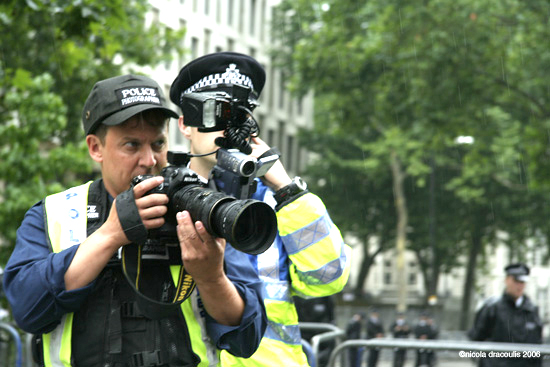
In the early 1990s, the Metropolitan Police started deploying Forward Intelligence Teams, groups of officers with very high quality film and video camera who would document people attending political events.

We hear how Geffen was followed by members of the Met’s Forward Intelligence Team to his workplace. They then arrested him there on a dubious pretext, so they could offer him the opportunity to become a police informant.

Metrpolitan Police forward Intelligence Team, an intimidating presence at political events in the 1990s and 2000s. (Pic: Nicky Dracoulis, shared under CC BY-SA 2.0 license)

A Metrpolitan Police Forward Intelligence Team, an intimidating presence at political events in the 1990s and 2000s. (Pic: Nicky Dracoulis, used under CC BY-SA 2.0)

This was shortly before Boyling began attending RTS meetings and Geffen suggests the Inquiry investigate the relationship between this failed attempt to recruit him as an informant and the decision to deploy Boyling into the group.

Geffen points out there were other police informants in the movement, and asks what the relationship was between them and the undercover police.

Geffen talks us through the tactics used by RTS, such as taking two old cars to be crashed into each other to block the street and make it safe for party-goers. RTS parties were incredible, vibrant, family-friendly events.

However, on a number of occasions they were attacked by riot police late in the day when people began to disperse. Poulsen incredibly asked Geffen whether he accepts that the police had a duty to ‘pick a fight’ with RTS in order to reopen the road.

Geffen disagrees, pointing to the nature of the events and the disproportionate levels of violence used by the police:

‘With hindsight, one of the things we learnt was that we should have made sure we had a plan for how how to end without allowing the police to do that.’

He adds that in fact that is exactly what RTS did at the next street party event on the M41.

Poulsen nevertheless asks (for the sixth time!) whether Reclaim the Streets street parties were violent or disorderly. He uses the fact that RTS would warn party-goers about the possibility of police violence or arrest, as though that somehow demonstrated that they were not themselves peaceful. It was incredibly frustrating to listen to, but each time these questions are asked, Geffen offered a sensible, detailed and patient response.

HN14 JIM BOYLING IN RECLAIM THE STREETS

It is remarkable how few questions Poulsen asked Geffen about the role of the undercover officer Jim Boyling who, using the name ‘Jim Sutton’, was tasked to spy on Reclaim the Streets.

Spycop Jim Boyling with his van. Vans were commonly used by spycops as a way to make themselves useful to a group to the point of indispensability

Spycop Jim Boyling. Vans were commonly used by spycops as a way to make themselves useful to a group to the point of indispensability

Poulsen did refer to some of Boyling’s reporting and Geffen sets out in detail how inaccurate some of it was, highlighting ‘sexed up’ intelligence which pretended that RTS were attempting far more dangerous or disruptive actions than was in fact the case.

Geffen also points out how Boyling exaggerated disputes within RTS, noting that the spycops seemed obsessed with trying to drive wedges within the movement.

One example of this is a report claiming that Geffen was ‘excluded’ from a meeting about the Selar open cast coal mine.

Geffen says he has no recollection of this, but would have had no interest in attending that meeting if he had known about it, as he had no local knowledge to contribute to the discussion.

This is pattern also emerged in the evidence of ‘Monica’, with Boyling’s reports emphasising and exaggerating divisions within the group that the genuine people who were there simply do not recognise.

Boyling was far from unique among spycops. The Inquiry has seen that one spycop after another exaggerated the danger they were in, and exaggerated or simply invented the plans of the infiltrated group. These lies were further exaggerated by office staff who collated the reports, which in turn were exaggerated to an even greater degree by managers seeking to impress the Met’s top brass and the Home Office.

RTS IN LATER YEARS

Cover of spoof newspaprt Evading Standards, produced by Reclaim the Streets, April 1997

Cover of spoof newspaprt Evading Standards, produced by Reclaim the Streets, April 1997

Asked about anti-capitalist activism in the late 1990s, Geffen explains how as time went on, Reclaim The Streets sought to widen the agenda from car culture to the fossil fuel economy and capitalism more generally.

It forged links between the environmental direct action movement and related workers’ struggles such as the striking Liverpool dockers, or London Underground workers campaigning against the privatisation of the tube.

However, Geffen stresses that he himself was not very involved in those later years. He points out that while he is grateful for the opportunity to give evidence, he feels that the Inquiry has failed to call the people who are best positioned to speak about that period when SDS spying on the group was at its most intense.

We do get to hear about yet another wrongful arrest though, when Geffen and two others received several thousand pounds in compensation after being arrested while preparing to distribute a spoof newspaper, the ‘Evading Standards’, on the eve of the March for Social Justice, shortly before the 1997 general election.

All 10,000 copies of the paper were seized and destroyed by police, and Geffen points out the seriousness of the police taking this kind of action simply to prevent a political group distributing its ideas.

‘It does look like another act of political policing – not the only one in Reclaim the Streets’ history – where the purpose of the arrest seems to have been to prevent us from getting our message out, rather than to prevent disorder.’

Poulsen seeks to ask Geffen about preparations for ‘J18’, the Carnival Against Capitalism in the City of London on June 18 1999, and Boyling’s role in it, including the purchase of several cars that were crashed to block the street. But Geffen again points out that he is not the correct witness to talk about this.

The Inquiry should be asking Jay Jordan, one of Geffen’s co-authors of the RTS witness statement to the Inquiry, who has important evidence to give about a number of issues.

Jordan worked on the production of the ‘Evading Standards’ newspaper, they were arrested and prosecuted alongside Boyling (who was using his false name ‘Jim Sutton’, even in court!) and they worked closely alongside Boyling throughout 1998 and 1999 on the planning of J18. It is hard to comprehend why Jordan has not been called to give evidence.

Nevertheless, we will undoubtedly hear more about SDS spying during those later years of RTS when questions are put to Boyling himself.

MARK KENNEDY AND CLIMATE CAMP

Mark Kennedy’s deployment will not be investigated until the Inquiry examines the SDS’s parallel unit, the National Public Order Intelligence Unit. These hearings, ‘Tranche 4’, have no date set but are not expected until the second half of 2027 at the earliest.

It is unusual for the Inquiry to question witnesses about other tranches. Nonetheless, Poulsen does ask some questions about Geffen’s role in the Climate Camp (or Camp for Climate Action, to give it its proper name), and his interactions with Kennedy there.

Geffen offers a potted history of the progression towards the Climate Camp, setting out how J18 influenced anti-capitalist movements targeting the summit meetings of global capitalist institutions like the International Monetary Fund, World Trade Organization and the G8, leading to the camp against the 2005 G8 meeting in Scotland.

Spycop Mark Kennedy witha bicycle D-lock round his neck locking him to the gates of Hartlepool nuclear power station, 29 August 2006

Spycop Mark Kennedy with a bicycle D-lock round his neck locking him to the gates of Hartlepool nuclear power station, 29 August 2006

In turn, that experience led to action camps being adopted as as tactic by climate change campaigners, and Camps for Climate Action took place outside Drax Power Station (2006), Heathrow Airport (2007), Kingsnorth Power Station (2008), the financial centre of London (2009) and the Royal Bank Of Scotland’s headquarters (2010).

The early Climate Camps were in fact targeted by officers from both the SDS and the NPOIU, and the Climate Camp legal team is a core participant in the Inquiry, and has submitted a witness statement for Tranche 3.

Geffen is just asked about NPOIU officer Mark Kennedy, then known to everyone at the Camps as ‘Mark Stone’. Kennedy was involved in the Climate Camp’s land group, the core secret subgroup that identified sites for the camps. Geffen says he was unaware of this at the time.

Kennedy was based in Nottingham while Geffen was based in London, so he did not know Kennedy well beyond being a familiar face.

Geffen was part of the Climate Camp legal team at the inaugural Drax camp in North Yorkshire, taking care of anyone arrested at the event. Kennedy was part of a large group of people at an action a long way away, at Hartlepool nuclear power station.

Kennedy had locked himself to the gates and was among those arrested. They were released very late at night, and Geffen organised the transport to get them all back.

Geffen says it is highly likely Kennedy was party to conversations between activists about their arrests:

‘Particularly given that he was arrested himself at this action… I’ve little doubt that he was party to conversations with his co-arrestees about the circumstances of their arrest.

And I would really urge the Inquiry to ask him what information he gleaned from conversations like that because I’ve little doubt that would have taken place.’

When they arrived back at the camp from Hartlepool, Kennedy was driving, and he drove the van straight at a police officer standing in the gateway, forcing him to run out of the way for his own safety.

Geffen says he didn’t confront Kennedy over his behaviour, but it did strike him as odd.

‘It just struck me as: he is showing off…

he was known for regularly wanting to kind of incite more disorder, a more confrontational attitude, and this was just a part of a pattern of Mark Kennedy’s behaviour.’

Like Boyling, Kennedy’s traits were not unique. The Inquiry has heard numerous descriptions of undercover officers being more aggressive than the rest of the group, and being disparaging about those who are less bellicose.

Geffen is also asked about the second Climate Camp, which took place at Heathrow in 2007. BAA, the owners of the airport, took out an injunction, which Geffen describes as:

‘another example of a strategic law suit against public participation…

it included injuncting people and organisations who were involved… which included groups like the National Trust – Patron, the Queen.

It would have ultimately meant that the Queen was not allowed to travel on the Piccadilly line to Heathrow…

It was that absurd in the scope of what was prohibited under the injunction.’

This use of civil law and injunctions to prevent protest is an important theme that emerges in the Inquiry’s Tranche 3 era (1993-2008), and non-state Core Participants have asked the Inquiry to really look at the appropriateness of any role undercover officers might have played in these processes.

Finally, Poulsen asked Geffen about the raid of school in Nottinghamshire where 114 people had assembled for a briefing, prior to a planned action at Ratcliffe-on-Soar Power station.

Spycop Mark Kennedy under arrest, Nottingham, April 2009

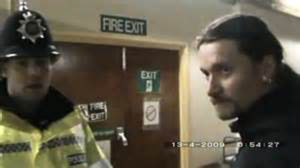
Spycop Mark Kennedy under arrest in the Ratcliffe power station protest planning venue, Nottingham, 13 April 2009

Geffen was arrested there, alongside spycop Mark Kennedy, and 112 others.

Geffen points out that most of these people were not charged with anything, presumably to hide that fact that one of the arrestees was a police officer – prosecuting him would have presented problems for the police so, despite his key role, Kennedy was not charged.

Twenty people were convicted though, but their convictions were later quashed when it emerged that the prosecution had deliberately withheld recordings made at the briefing by Kennedy. These would have supported their defence that they were genuinely seeking to prevent carbon dioxide emissions by shutting down the power station.

It is noteworthy that the Director of Public Prosecutions at the time was Keir Starmer, who helped ensure that CPS staff and spycops avoided accountability for orchestrating these wrongful convictions – a number of core participants, including Geffen, have called for Starmer to give evidence to the Inquiry.

A significant number of core participants were arrested at Ratcliffe and it is likely to be a significant issue for the Inquiry in when it covers Kennedy’s deployment in Tranche 4.

OTHER QUESTIONS

Geffen is asked a number of other questions, such as whether he knew undercover officer HN78 Trevor Morris. Geffen has no memory of him, however it is evident that Morris reported on him, including recording his bank details.

This prompted Geffen to ask further questions about whether there is other relevant reporting from other spycops such as Morris, HN2 Andy Coles or HN43 Peter Francis that the Inquiry has not shown him.

Poulsen also asks about a spycop’s report stating that Geffen once gave the judge a Nazi salute in court. He explains that this was a reaction to an abuse of process where the magistrate repeatedly extended their bail conditions, and questions why this petty anecdote is being raised at all:

‘I do wonder firstly, why is that question relevant to an inquiry on police spying? Was a rather silly gesture of contempt for the magistrate a justification for undercover policing?

And secondly, who was the police officer who recorded the intelligence about that and… what legally privileged information he might also have been party to on that occasion.’

Asked whether he ever used pseudonyms, Geffen explains that it was common practice for pseudonyms to be used when talking to the media in order to avoid stories becoming personalised or focusing on the individuals rather than the issues.

Finally, Geffen is asked about the impact of being spied on. He explains that it’s unsettling, especially knowing that they were right at the heart of our social networks, and again he wonders why some of the people who were much more closely affected have not been called to give evidence.

CLOSING SPEECH

At the end of his evidence Geffen delivers a very eloquent speech setting out all the questions he feels the Inquiry has not addressed, which we encourage you to watch in full:

He talks about police informers, particularly the convicted paedophile Edward Nicholas Gratwick who infiltrated environmental campaigns in the 1990s and 2000s. Geffen asks how much the police knew about the child abuse offences their employee was engaged in.

He asks the Inquiry to investigate the police tactic of confiscating huge numbers of leaflets, not only in the Evading Standards incident, but also in the run up to Reclaim the Streets’ Mayday 2000 demonstration where disclosure of police fiels reveals a detailed police plot to harass and specifically target RTS’s printed material, even contemplating raiding the print shop where the material was being produced.

Geffen asks why the police created so much disruption and discord, and why the police repeatedly tried to conflate Reclaim the Streets with terrorism, citing an incident where police planted an incendiary devices on an activist which went off in his home, following a protest against the Terrorism Bill.

The media were given detailed, entirely fabricated, stories along these lines. The Sunday Times reported that, ahead of a protest on 30 November 1999:

‘At least 34 containers of CS gas and four stun guns capable of delivering a 50,000 volt electric shock were purchased by Reclaim the Streets.’

RTS took the issue to the Press Complaints Commission who agreed there was no basis for the story but, as RTS wasn’t a formal organisation, it couldn’t be defamed and so rejected the complaint.

Leaflet for Carnival Against Capitalism, June 18 1999 in the City of London. Spycop Jim Boylinjg was a planner yet his information wasn't passed to City of London police.

Leaflet for Carnival Against Capitalism, organised by Reclaim the Streets on June 18 1999 in the City of London. Spycop Jim Boylinjg was a planner yet his information wasn’t passed to City of London police.

Geffen also sets out the evidence (examined in more detail in the RTS witness statement to the Inquiry) that the police were actually using the intelligence gathered by the SDS to make disorder more likely.

Why was evidence collected by Boyling about the plan for J18 not passed on to City of London police who were responsible for public order policing on the ground?

Geffen asks the Inquiry to call police force commanders of the time, such as Anthony Speed and Perry Nove from the Met and City of London police respectively, to explain what happened.

Geffen concludes by saying that there was simply no justification at all for what the SDS did. They knew the intentions of the RTS to hold family-friendly events, yet they acted as agent provocateurs and painted us as terrorists.

He points out that only a week ago the government had to publish a report from its own national security services about the grave security implications of the current climate and ecological crisis – a report that the government had balked at publishing due to the severity of the facts, and had been forced into releasing a redacted version by concerned citizens using a Freedom of Information process.

Geffen asserts that the real threat to national security was the SDS who went to such lengths for so long to prevent us from getting our message across.

The Inquiry’s Chair, Sir John Mitting, rather awkwardly thanks Roger Geffen for attending, adding:

‘We’re a free country. Um, despite all the difficulties that, uh, I am examining. Thank you.’

This was met with laughter from the public gallery.

Immediately after the hearing concluded, Geffen spoke to Tom Fowler:

Deceived Woman’s Bid to Have Spycops Prosecuted

MonicaA woman who was deceived into a relationship by an undercover police officer is bringing a legal case to have him charged with Misconduct in Public Office as well as sexual offences, including rape.
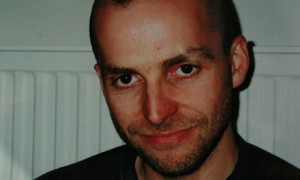
Monica‘ was deceived into a relationship by undercover officer Jim Boyling when he was infiltrating Reclaim The Streets in the late 1990s.

She told the BBC:

‘At the time I thought he had genuine feelings for me. But now I look at that and I think actually this man was trained. He was a successful police officer. He was duping us all.

‘And I was encouraged to be intimate and sexual with somebody who I would never ever have got involved with if I had known who he was: if I had known his true motives and his true identity.’

In August 2014 the Crown Prosecution Service announced that it would not be charging Boyling or other spycops with misconduct or sexual offences. Monica is now taking the CPS to court to challenge that decision with a judicial review.

REVISITING THE FACTS

Jim Boyling whilst undercover in the 1990s

Jim Boyling whilst undercover in the 1990s

Monica began a civil claim against the Met in early 2016, in the mould of those already brought by other women who had been similarly deceived who have received an unpredented apology from the police. Whether what the officers did constitutes rape is a separate matter from such civil cases.

The fact that the women consented to sexual relationships at the time they happened is irrelevant – consent can be vitiated by later knowledge. There are several recent instances of women deceiving other women into having sex by pretending to be men, all of which have ended in convictions, including some with lengthy prison sentences.

Those circumstances are uncommon, but Monica’s situation is even more unusual. What these undercover police officers did is so rare – and its exposure rarer still – that we haven’t got a common perception of it, nor an established legal position.

Monica’s lawyer Harriet Wistrich compared it to the women who were convicted for sexual deceit:

‘At the time that relationship was a genuine relationship but subsequently the other person discovered who they really were. Those women were prosecuted by the CPS and imprisoned for those offences. We’re saying, what is the essential difference in a case like this?

Indeed, Wistrich says the spycops are even more culpable for their actions:

‘In this case the officers knew full well what they were doing, they weren’t mentally vulnerable, they were using the resources given to them by the state for an improper purpose, ie for their own gratification, to advance their career, and to make their undercover operation successful.’

In 2014, the CPS cited case law it considered before making its decision. They mentioned that a court decided that a man’s failure to use a condom after he’d said he would could be rape and he should be brought to trial. In another case where a man promised to withdraw before ejaculation, but failed to, it was also decided as being capable of amounting to rape. These cases give us an indication of the threshold of criminal sexual deceit, yet they said the spycops’ deceit wasn’t of the same ilk.

In other words, the CPS expected us to believe that Jim Boyling’s profound, prolonged sexual deception of three women is not worthy of a court case, but that they would prosecute him if he had once failed to use a condom as promised.

It’s plainly nonsense, insulting the intelligence of those who hear it. It betrays the women who were abused and a society that wants to see sexual abuse taken seriously.

BOYLING v POLICE

After his relationship with Monica, Boyling began another relationship with ‘Rosa‘. After his spying ended and he left, a distraught Rosa looked for him for a considerable time.

After she found him he admitted being an undercover police officer:

‘The new tales he told me – of being the partner I knew and slept next to every night, the misunderstanding of his deployment, that he was the only one, that our country doesn’t spy on peace or green movements, of being a turncoat and needing my help to escape the police – they were more believable than the truth.’

‘The unlikely truth was this: my life partner was fabricated by the state. He never existed. I was pregnant within two weeks of his reappearance and bore children by the actor, a random police officer, who had played my partner.’

They rapidly married and had two children. The marriage broke down quickly as he was controlling and physically violent. She fled with the children to a women’s shelter.

When the spycops scandal broke in early 2011 and Boyling’s relationship with Rosa was made public, he was suspended from the police. He faces disciplinary charges for not informing his managers of the extent of the relationship and for revealing secret information to her.

This week, more than seven years into his suspension, his disciplinary hearing is going ahead. He has chosen not to attend, nor contest the charges in any way.

However, he has given an angry interview to Police Community (for the website’s account-holders, but readable here without signing up), saying:

‘The disciplinary charge from the Met specifies that I had a relationship which constituted misconduct because it was ‘without a police purpose’. The position of the Met appears to be that a relationship entered into as an operational tactic is acceptable, but a genuine one resulting in marriage and children constitutes misconduct.’

As Boyling well knows, even with his glossing of the facts, no form of relationship between undercover officers and the women they spy on is acceptable.

Chief Constable Mick Creedon unequivocally explained in 2014:

‘There are and never have been any circumstances where it would be appropriate for such covertly deployed officers to engage in intimate sexual relationships with those they are employed to infiltrate and target.

‘Such an activity can only be seen as an abject failure of the deployment, a gross abuse of their role and their position as a police officer and an individual and organisational failing.’

The Met have since gone further, conceding that these relationships were a violation of human rights, including the right to privacy and the right to freedom from torture, inhuman or degrading treatment.

With such a shocking admission, it is outrageous that nobody is being held responsible. If these men were not police officers they would surely already be in jail.

Monica said:

‘I am appalled by the hypocrisy of police and government, who on one hand wring their hands, apologise, say this was terrible and must never happen again, yet on the other provide no disclosure, protect the perpetrators, and hold no one to account. The whitewashing of these serious human rights abuses must stop.’

Spycops Demand Freedom from Accountability

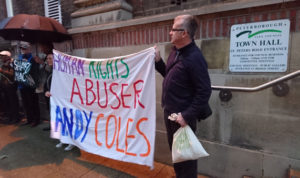
Demonstration against Andy Coles, Peterborough Town Hall ,11 Oct 2017

Demonstration against Andy Coles, Peterborough Town Hall, 11 October 2017

Former undercover officers from Britain’s political secret police are demanding anonymity from the public inquiry.

They claim having their real names published puts them at risk of harassment and physical harm from those they spied on, and also presents ‘a real risk to employment and reputation’.

Though police give the media details of countless accused but unconvicted citizens every day, they seem to feel officers from these disgraced units are a breed apart who deserve much greater privacy.

The spycops say they fear they may become the target of the kind of harassment experienced by exposed officers Bob Lambert, Andy Coles and Jim Boyling. Except this is not harassment.

Boyling has not been subjected to any organised campaigning. Rather, he complains that on two occasions people he spied on have bumped into him and briefly remonstrated with him, and even he says that isn’t actually intimidation, let alone violence. He suggests that when two cars in his street got damaged it might have been the work of vengeant activists, even though there was nothing to indicate who did it or that it was aimed at him.

ORGANISED CAMPAIGNS

Bob Lambert and Andy Coles have both been the subjects of organised campaigns. The focus has not been them as individuals, but them being in roles which are wholly inappropriate – the list of incidents compiled by the police’s own lawyers plainly shows this.

Meanwhile, Lambert complains that he has been called a rapist. Whether his, and other spycops’, sexual abuse amounts to rape is something that is still untested in law. However, many of the deceived women have made it clear that they did not and could not give informed consent.

Jacqui, who was deceived by Lambert into a two year relationship and having a child, said:

‘I was not consenting to sleeping with Bob Lambert, I didn’t know who Bob Lambert was… it is like being raped by the state. We feel that we were sexually abused because none of us gave consent.’

The rest of the things on Lambert’s list of supposed intimidation he’s suffered all happened to him in his public roles, with the possible exception of two incidents of being ‘confronted by hostile activists while travelling to work’. He says himself that, like Boyling, he has not been subjected to any violence.

It seems both Lambert and Coles failed to tell their employers about their past, implying that they knew the people hiring them would take a dim view of it. In other words, they know the reasonable citizen is likely to see them as abusers. As soon as he was exposed in May this year, Coles resigned as Cambridgeshire’s Deputy Police and Crime Commissioner without any prompting.

This is not about officers being hounded by rabid activists out for revenge, it’s an unwillingness to face the justified shame and scorn they would receive as people who have committed appalling acts.

We don’t see people in other walks of life even attempting this sort of thing. No bank robber has been found guilty and then asked to be kept anonymous as it will upset them if their neighbours find out or it might make future employers think they’re untrustworthy. The spycops aren’t asking for protection from harassment, they are really demanding immunity from accountability.

AFTER THE SPYCOPS

When he was exposed in 2011, Lambert was teaching a new generation of police managers at universities (he resigned in 2015). Coles, who sexually groomed a teenager whilst undercover, is a City Councillor and school governor.

Another one is John Dines, who abused Helen Steel whilst undercover in the 1990s. Because she knows his real name, Steel discovered he is training political undercover police in Australia.

Helen Steel confronts John Dines, 2016

Helen Steel (right) confronts ex-spycop John Dines, March 2016

These men all grossly abused their positions of power to violate the citizens they are supposed to protect and undermine the democracy they are supposed to serve. No other public servant could act so shamefully, so far from the intended purpose of their agency, and expect to be shielded from the discomfort of public opprobrium.

The other exposed officers, despite having perpetrated similar abuses which many would think justifies their being confronted, have been not challenged like this at all – quite the opposite.

The activists who exposed Mark Kennedy went to great lengths to protect the identities of his family (which Kennedy then published when he sold his story to the Mail on Sunday). The group who exposed Carlo Neri withheld his real name to protect his children. They have even withheld the full cover names of officers ‘RC‘, Gary R and Abigail L.

Numerous officers’ current whereabouts are known to activists and researchers. As far as we know, none of them have been threatened with any physical harm and no effort has been made to confront them in their private life. They have only been targeted if they are in roles for which, as one journalist put it, they are ‘uniquely unqualified‘.

If anything, the campaigners have engaged in the lawful democratic processes that the spycops sought to suppress and undermine. The institutions Lambert and Coles are involved in have been leafleted and spoken to, dealing in facts. Since Lambert resigned from his teaching roles he appears to have been left alone. The same is likely to happen to Andy Coles once he bows to the inevitable and relinquishes his remaining positions of civic trust.

THE TRUTH, THE WHOLE TRUTH

Publishing a spycop’s cover name still leaves the officer hidden, but it lets those who knew them while undercover come forward and tell us what happened. It is the essential prerequisite to getting the truth.

Just having a cover name published does not lead to an officer’s real identity being known. Indeed, that is the whole point of a fake identity. Long-exposed officers such as Rod Richardson and Lynn Watson are still living in anonymity because, unlike the others, they did not give their real names. But when an officer remains unknown to the public, what else is being hidden?

Without the real names, we would never have known that Lambert was using his disgraced past as a platform to pass on his ideas to his successors. We would not know that Andy Coles, who groomed a naive teenager for sex, has positioned himself in inappropriate roles in which he’s endorsing agencies trying to protect older teenagers at risk of sexual exploitation. Who knows how many other ex-spycops are still perpetuating their abuses?

The Catholic church has been condemned for its former practice of dealing with abusive priests by paying off victims and moving the offender to a new parish where the unaware congregation was left vulnerable to further abuse. Withholding spycops’ real names has a similar effect.

Even if we believe exposing them really would put them at risk, it is still not necessarily a reason to grant them anonymity. As Phillippa Kaufmann QC pointed out to the Inquiry last month, the state is used to dealing with such things in witness protection schemes, providing assured security for people at far greater risk – and a lot less guilty – than spycops.

Doreen Lawrence, whose family’s campaign was spied on, said:

‘They were doing the deception. Why should they be allowed to be anonymous while people like me had their faces all over the newspapers ? These people were not innocent. They knew what they were doing.’

Those officers who have done nothing wrong have nothing to fear. Those who have done wrong should be held to account. It cannot begin to happen without the release of the cover names. It cannot properly happen without the release of the real names.

Spycops in Ireland: Secret Report With More Questions Than Answers

Gardai in uniformShortly after the truth about undercover officer Mark Kennedy hit the headlines in January 2011, officials from many of the 11 countries he visited wanted answers. In Ireland, the Minister of Justice asked the police to write a report on his visits.
They refused to make it public but last week, following tenacious work by Ellen Coyne at the Times, it was released under Freedom of Information and The Canary published it in full.

In the report – little more than a fob-off letter – the Gardai don’t deny authorising Kennedy’s visits, and they defend their decision to keep it secret from their own government. Kennedy visited the country many times, committing human rights abuses, inciting action and getting arrested under a false identity.

The release of the report raises more questions than it answers. Who authorised his visits? What remit was he given? What oversight did they have on what he actually did? What did other British spycops do in Ireland?

MARK KENNEDY IN IRELAND

Mark Kennedy made at least five undercover visits to Ireland, taking on many different roles. In spring 2004 he was part of an info-tour raising awareness of the upcoming G8 meeting in Scotland and visited the Shell To Sea gas pipeline protest in Co Mayo. On Mayday 2004 he was part of a Dublin black bloc demo against an EU summit where he was attacked by police and needed hospital treatment. He was arrested, held for five hours and released.

In June 2004 he participated in the demonstration against George Bush’s visit to Dromoland Castle. He made at least two other visits to Ireland over the next two years, including acting as a trainer on a programme for anarchist activists later in 2004 on civil disobedience.

Mark Kennedy and Sarah Hampton in Dublin 2005

Mark Kennedy (left) and Sarah Hampton (right) in Dublin 2005

Kennedy was at the European Youth for Action’s April 2005 meeting in Co Clare to establish a European network of anti-war and peace activists.

He drove to Dublin in March 2006 to attend the Anarchist Bookfair. UK activists gave him publications to take which he reported as confiscated by UK border officials. He later went back to the Shell to Sea protest.

A second report – also a police self-investigation for the Ministry of Justice – was commissioned last year yet, despite demands from Irish parliamentarians, they are still keeping that one secret. Having hidden the truth from the government for so long, the Gardai are still keeping it from the public. Does it contain any answers about Kennedy’s activities? What are they hiding?

Even then, the two reports are focussed on Mark Kennedy’s visits to Ireland. There are even bigger questions. Which other British spycops came to Ireland to undermine campaigns and abuse citizens? Did any come from other countries? What exactly were they there for, and what did they end up doing?

NOT JUST KENNEDY

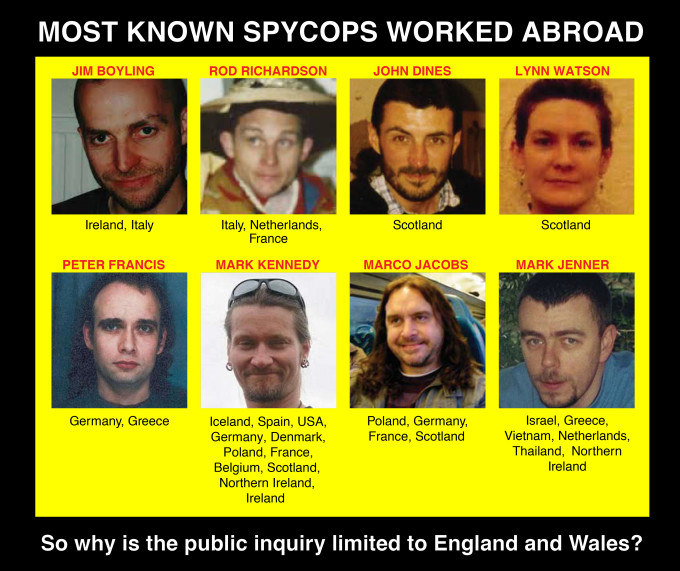
Although we only know about 18 officers of Britain’s political secret police – around 10% of the total – it’s already established that other officers visited the Republic; Mark Jenner, John Dines and Jim Boyling were also there, the four of them covering a period of 15 years.

Mark Jenner drove activists to Belfast and Derry in August 1995, and took part in street fighting when nationalists clashed with the loyalist Apprentice Boys of Derry march on 12 August. The Police Service of Northern Ireland say that police there were ‘completely blind’ to the presence of Met spycops, and that deploying them without training or oversight was ‘an act of madness’. Whilst in the North, Jenner also visited the Republic. It would be astonishing if, as the Gardai imply was the case with Kennedy, the Met informed them and got the visit authorised yet kept police in the North in the dark.

Jim Boyling visited Ireland in 1997 and is reported to have participated in the destruction of an experimental genetically modified crop. John Dines went to Ireland in late 1991/early 1992 during the final stages of his deployment.

HOW MUCH MORE?

Like Kennedy, Jenner, Boyling and Dines were the subjects of legal action by women they abused through relationships, something which the Met themselves have conceded was ‘a violation of the women’s human rights, an abuse of police power and caused significant trauma’. All but Boyling committed these abuses in Ireland, and Kennedy did so with several women.

This week, four of the women affected wrote to the Irish government asking

  • Who authorised these undercover operations in Ireland?

  • Do Irish police hold files on us, and when will we be given access to those files?

  • How does the Irish state justify foreign police officers having deceptive intimate relationships with women, in violation of our human rights and bodily integrity?

  • How many more UK police officers operated in Ireland and how many more women were abused by the police on Irish soil?

Did the Gardai know about this aspect of the British spycops’ activities? If so, they were complicit in human rights abuses. If not, it shows that their oversight was grossly incompetent and therefore warrants proper independent investigation.

Other questions should be answered to. When did it start? Is it still going on? Which Irish campaigns were targeted and stymied? Which citizens were abused?

Their cavalier approach to transparency and legality raises other questions. In the UK, spycops including Kennedy and Boyling engineered dozens of wrongful convictions for the people they spied on. Did the same thing happen in Ireland?

Even with the handful of officers exposed, it is clear there was long-term, systematic abuse. Most of the known officers went abroad. We can be sure that there are many, many more similar outrages and abuses committed by the as-yet unknown officers. The forthcoming British public inquiry will only look at actions in England and Wales.

NO EXCUSES, NO MORE DELAYS

We already know that the Gardai authorised foreign secret police to come to Ireland and spy on people, including inciting them to action, whilst there they committed human rights abuses, and it was kept secret from the government. The Gardai used their power in sinister and disturbing ways, facilitating numerous abusive officers. It beggars belief that anyone would dare to suggest a self-investigation into one officer would be sufficient, let alone accept it and fend off calls for anything more rigorous, yet this is what the Justice Minister is doing.

It shouldn’t take legal action by journalists to force admission of what’s already known. We shouldn’t rely on victims to do their own research into what was done to them and have pleas for answers go unanswered. If officials in government and police believed in justice they would be revealing the truth rather than hiding it.

Update on Seeking Spycops Justice Outside England & Wales

Most Known Spycops Worked Outside England & WalesAs children in school we are taught that the best way to organise a nation in the interest of its citizens is with a democratic system, and that this system can’t be flawed because of its checks and balances. Yet recently the Irish government has been proving that the opposite is true, it is operating to protect itself and its security apparatus against the best interests of the people.
This situation has arisen after British police admitted human rights abuses done by their undercover police officers who violated human rights of a number of women by having intimate relations with them during operations.

Four of these officers so far have also been exposed as having operated in Ireland, and victims now demand answers about who was responsible for such international political policing. Yet despite being confronted on the topic by oppositional MPs, Irish government representatives repeatedly say that the issue of exposing the truth and having a transparent inquiry into the abuse ‘does not arise’. Such a position made by any elected official can only serve to chip away at faith in the system they represent.

The continually growing secret policing scandal led then-UK Home Secretary Theresa May to create the Undercover Policing Inquiry (UCPI) to look into two political undercover policing units, but with a remit limited to England and Wales. It had also been revealed that most outed undercover officers had operated abroad in a total of at least 17 countries, including the officers who were in Ireland: Mark Kennedy, John Dines, Jim Boyling and Mark Jenner.

Among targeted Irish groups were those opposed to genetically engineered crop testing and Shell to Sea, a group concerned with protecting fisheries and the environment in County Mayo.

Despite the fact that most known officers went abroad, due to its remit the UCPI refuses to properly examine activity outside England and Wales. Civil rights campaigners and parliamentarians outside England and Wales have responded with demands for answers.

On 8 February 2017 the Irish Justice Minister Francis Fitzgerald replied to a Parliamentary Question by answering

‘should anything emerge from the findings of the UK’s Undercover Policing Inquiry that would be relevant to policing in this jurisdiction I will consider it fully and take any action that may be required’.

However, the minister is either bluffing or is not aware that nothing relating to any events occurring outside England and Wales will be investigated by the UCPI, thus rendering her argument meaningless.

Further problems have arisen from excluding jurisdictions outside England and Wales. High-level German interest in being included in the UCPI stems from scandal around illegal activities by undercover officer Mark Kennedy. On this basis, German MPs Andrej Hunko and Hans-Christian Stroebele moved to have the Home Office include Germany in the UCPI.

The Home Office Minister of State for Policing, Mike Penning, responded on 13 November 2015. He referred to the original terms being limited to England and Wales, and continued,

‘The Inquiry team has confirmed that they would encourage witnesses to provide a complete picture when submitting their evidence, although they will need to consider evidence against the terms of reference’.

This clearly meant evidence of events occurring outside England and Wales could be submitted, but would not be examined fully by the Inquiry. More, it meant that issues around activity abroad cannot be mentioned if they don’t directly connect with actions in England and Wales.

After further scandal about UK undercover operations in Germany were exposed in the press and questioned in Parliament, the German Interior Ministry confirmed that on 31 May 2016 they had formally asked the UK Home Office to extend to the UCPI to include British undercover operations in Germany.

However on 14 September 2016 the German Interior Ministry wrote to MPs Hunko and Stroebele, saying that he had received a communication from Brandon Lewis in the UK Home Office stating that in order to prevent further delay to the UCPI and improve public trust in the work of the police, they refused to include undercover operations in Germany into the remit of the Inquiry.

A legal action was begun in Germany by UCPI witness and Core Participant Jason Kirkpatrick on 20 July 2016, based upon Kirkpatrick’s having been targeted numerous times in Germany by Mark Kennedy. The UK government flatly refused to extend the UCPI to Germany, stating:

‘The particular high profile allegations which prompted the decision to commence an Inquiry were primarily if not exclusively about events said to have originated from English and Welsh police forces, and alleged to have occurred in England and Wales. They were about alleged miscarriages of justice, alleged sexual relationships between male undercover officers and members of the public’.

The sexual relationships are, by the police’s own admission, a violation of human rights and an abuse of police power. The fact that women (British and otherwise) have suffered the same abuse outside of England and Wales appears to be something the Home Secretary hopes to not hear, see or speak of.

Education of the Irish Justice Minister is ongoing, and it is hoped she will also soon request inclusion in the UCPI just as her German, Northern Irish and Scottish counterparts have done.

Despite Irish government intransigence and the UK’s rebuffing of German and Scottish attempts to be included in the UCPI, there is still hope elsewhere. A case brought in Northern Ireland recently has led to judicial review of the British government’s refusal to widen the UCPI. That court date is expected to be towards the end of 2017.

Amidst growing concern about whether the UCPI would ‘follow the evidential trail’ beyond England and Wales, solicitors for the activist Core Participants in the Inquiry recently sought clarification from UCPI staff. On 1 November 2016 the UCPI solicitor Piers Doggert wrote,

‘it is likely that the activities of some of the undercover police who will be examined by the Inquiry will have taken them outside of the jurisdiction of England and Wales during the period in question. They may have travelled with other non-state witnesses and both may wish in due course to give evidence about this. In so far as what occurred during that period forms part of the wider narrative of tasking of the officer, or the relationship under consideration, then that evidence will be received by the Inquiry and may form part of the narrative within the final report.

‘However, the Inquiry will not attempt to form any judgement about the legality or propriety within a jurisdiction outside of England and Wales of the actions of an undercover police officer from England and Wales; the terms of reference preclude it from doing so’.

In other words, no matter what crimes and abuses an officer committed abroad, if it can’t be made to relate to actions in England and Wales the Inquiry won’t even hear it; and even the deeds they do hear about cannot be properly taken into account.

Clearly this situation is absolutely unacceptable. If justice is to be done by the UCPI, then it needs to truly follow the evidential trail wherever these spycops have committed their abuses. To force this to happen, more victims of their spying will have to continue telling their stories to the press, speaking out in public, pushing supportive politicians to fight for us, and bringing forward legal actions.

As the public continues to hear our stories and our voices grow stronger, we can already start to savour a taste of the justice that we can create for ourselves, as we begin to see this corrupt political policing house of cards tumbling down.

Law Unto Themselves: Spycops & Miscarriages of Justice

Undercover officer Mark Kennedy, under arrest in 2009

Undercover officer Mark Kennedy, under arrest in 2009

Officers from Britain’s political secret police lived for years among the people they spied on. They had to truly become activists, not just participating but instigating.

They made a personality trait out of berating people for not being hardcore enough, persuading comrades to take more serious action which was often organised by the officers themselves. They planned illegal activity, marshalled people to it, and were even prosecuted under their false identities.

None of this was meant to happen. In 1969, a year after the Special Demonstration Squad (SDS) was formed, the Home Office issued explicit instructions

‘No member of a public authority or source (informant) should counsel, incite or procure the commission of a crime’.

They were just as unequivocal about the possibility of coming to court.

‘The police must never commit themselves to a course which, whether to protect an informant or otherwise, will constrain them to mislead a court in subsequent proceedings. This must always be regarded as a prime consideration when deciding whether, and in what manner, an informant may be used and how far, if at all, he is allowed to take part in an offence.’

Mark Kennedy was one of the small, tight-knit group that organised an attempt to shut down Ratcliffe on Soar coal-fired power station in April 2009. The night before the action, police raided the preparatory meeting and 114 people, including Kennedy, were arrested. Twenty were convicted before a further six were prosecuted in a separate trial.

In legal cases, the prosecution have a duty to disclose anything that may be helpful to the defence. By the time the Ratcliffe 6 came to court, Mark Kennedy had been exposed as a police officer, so they asked to see his evidence. Rather than hand it over, the state dropped the charges. The other twenty then had their convictions quashed.

A year earlier, Kennedy had been a driver for 29 people who had stopped a train of coal on its way to Drax power station in Yorkshire. They were convicted but have now also had their convictions wiped. This brings Kennedy’s personal total to 49.

If the other 150 or so officers have similar tallies, it means about 7,000 wrongful convictions are being left to stand. Even if we conservatively estimate just one false conviction per officer per year of service, it adds up to about 600. It may well be that spycops are responsible for the biggest nobbling of the judicial system in English history.

Some spycops went all the way to court themselves. They would swear to tell the truth, the whole truth and nothing but the truth and, from the first question asking their name, they lied and lied and lied. This fits anyone’s definition of perjury and perverting the course of justice.

OFFICERS PROSECUTED

Jim Boyling infiltrated Reclaim the Streets and was one of a group of people arrested on a protest at a Transport for London office in 1996. He was then in meetings with other defendants and party to the defence lawyer’s advice, a direct breach of lawyer-client privilege. Most of the group were acquitted but one, John Jordan, was convicted. After Boyling’s exposure in 2011, Jordan embarked on a three year battle to successfully clear his name.  Despite the victory, the judge refused to release any papers that explained why the conviction was overturned.

Following the 1997 court case, Boyling and Jordan went on to be part of the small, secret ‘logistics group’ who organised the tactics for the June 18th 1999 Carnival Against Capitalism in the City of London which ended in substantial property damage. The police’s slow response on the day is baffling, given it is now clear that they knew – indeed, helped draw up – the plans.

Bob Lambert, an SDS officer who later went on to run the unit, admitted he was arrested ‘four or five’ times whilst undercover and that he appeared in court in 1986 for a ‘minor public order offence’, understood to be leafleting outside a shop. He bizarrely claims not to remember if he was actually convicted.

Among the raft of reports into spycops, one of the few that has any credibility is Mark Ellison’s review of spying on the family of Stephen Lawrence. In researching it, he came upon such compelling evidence of miscarriages of justice that he did a second investigation. He faced many hurdles – the report begins with a description of the police not supplying him with the necessary staff or even any office space.

Beyond that, Ellison faced problems with the files. The Metropolitan Police recently described their record keeping as ‘chaotic and dysfunctional’, and this is before we consider the fact that secret units by their nature did not leave paper trails, and the police do not like to admit their corruption. As Lambert told Ellison:

‘we were part of a ‘black operation’ that absolutely no one knew about and only the police had actually agreed that this was all OK’.

Even with the spycops’ pathological reluctance to write anything down and their enthusiasm for shredding, Ellison found records of 26 SDS officers being arrested on 53 occasions. He has ensured 83 people’s convictions will be reviewed.

WHO PROSECUTES THE PROSECUTORS?

The problem is that they’re going to be looked at by the Crown Prosecution Service, the agency who helped secure many of the wrongful convictions. Piecing together facts from two different reports into the Mark Kennedy/Ratcliffe debacle, it’s clear the police and CPS colluded to engineer a miscarriage of justice.

Rather than a crime being committed and the police passing evidence to the CPS, the CPS knew the details of the action before it happened, indeed before many of the activists themselves.

We know the case was overseen by Nick Paul, the CPS’ Domestic Extremism Co-ordinator. It’s alarming that they have someone with that job title, given that ‘domestic extremism’ is a term with no meaning in law, it’s just used for police convenience to smear dissenters with overtones of terrorism. Nick Paul was also the CPS’s chief for the Drax coal train miscarriage of justice. The CPS refused to answer a Freedom of Information request on what other cases he handled.

Bob Lambert has suggested that he might not have committed perjury when prosecuted as the court may have been secretly told he was a police officer and played along. Mark Ellison found this kind of thing had indeed happened. If this was standard practice it is even more worrying as it adds the courts to the list of agencies that have contravened their fundamental purpose to help entrap citizens.

Is this really the biggest corruption of the judicial system in history? We don’t know. We only have details of 17 exposed officers from the political secret police units. We have no idea what the other 90% did. The Kennedy cases are the only ones where we’ve secured significant release of papers and investigations, and they certainly point to blasé, systemic abuse.

The only way to find the truth is to publish details of all officers from the disgraced units. Only then can people come forward with their stories of being duped, cajoled and convicted. At the moment, the police flatly refuse to do so and the achingly slow public inquiry, delayed before it even begins, has not provided any new information. Justice delayed is justice denied.


What Spycops Did Next

Although it may be hard to feel sympathy for the officers of Britain’s political secret police units, there’s no doubt the enacted split in their lives and values caused them severe psychological stress. In a less understanding era, and amidst the inherently macho police culture, such damage was seen as a personal weakness, but since the mid 1990s a few have successfully forced payments out of the Met for PTSD and other harms.

All spycops had to be married. Having a family was thought to give them an anchor in their ‘real’ life – something to come back out for, to prevent them getting lost in their activist social circles or to prohibit temptation to switch sides. Still, the strain on relationships – the secrecy, absence, the warping of personality caused by having two characters inhabiting one mind – has broken one family after another.

Whilst the shocking accounts of activist women abused by spycops have come to light, we are yet to hear from the damaged families also caught up in these stories, though this may change as the forthcoming public inquiry has granted several members of officers’ families ‘core participant’ status.

Beyond their ruined families, after long-term niche activity, spycops aren’t qualified for much else. So what did they do afterwards? Most of the 150 or so spycops are unknown, though the few we have identities of point us to examples of what their lives look like.

Mark Kennedy, 2011

Mark Kennedy, 2011

Mark Kennedy’s deployment ended in late 2009 and even before he left the police he had signed a contract to do the same spying under the same false identity this time for a private firm.

He was hired by Global Open, a company set up by another former Special Branch officer, Rod Leeming, who had taken knowledge and contacts from the police’s Animal Rights National Index and was using it to provide spies for institutions targeted by animal liberation campaigners. Kennedy – without fake ID or his team of police handlers, strategists and psychologists – soon came unstuck and was exposed by activists.

Prone to self-aggrandising claims, in February 2013 he told the Home Affairs Select Committee  he worked for the Los Angeles Sheriff’s Department, adding that he had just taken a security job with a large leisure firm. It’s comforting to imagine this means he is doing nightwatch in a leaky caravan at Center Parcs.

Bob Lambert then and now

Bob Lambert then and now

Bob Lambert had been undercover in animal rights groups in the 1980s. He set people up for jail, had numerous sexual relationships including fathering a child, and allegedly burned down a department store.

His was ‘hands down regarded as the best tour of duty ever’, leading to promotion as head of the Special Demonstration Squad (SDS) from 1993-1998, deploying a new generation of officers who took his methods as a template.

It’s not clear what he did from 1999-2001, though it’s notable that this is when the other spycops unit, the National Public Order Intelligence Unit (NPOIU), was established.

In 2002 he set up the Muslim Contact Unit. It’s very odd that the Met’s Special Branch, as intelligence gatherers, would run a community outreach project. It’s even more fishy that they did so using their most effective infiltrators who had no other obvious skillset. Why use spies, unless you’re spying?

Lambert left the police in 2007, collecting an MBE ‘for services to policing’ on his way out. He then gained several academic posts and began writing and speaking on counter-extremism, notably regarding Islam. After his past was revealed by activists in 2011, he swiftly resigned from his planned ten-year project at Exeter University and stopped his public appearances.

He continued to lecture at the University of St Andrews and London Metropolitan University, training a new generation of police managers. Following a series of protests at both institutions, including talks to staff and students, and with the excoriating IPCC report on Lawrence family spying pending, he resigned from both positions in December 2015.

Mike Chitty undercover in the 1980s

Mike Chitty undercover in the 1980s

Mike Chitty was the first SDS officer tasked with infiltrating the animal rights movement. Rather than inveigling himself into hardcore activism he was ineffectual and only ever managed to be a peripheral member of animal welfare groups. Like many undercover officers, he moved on to police VIP protection work.

Two years later, in 1989, Chitty secretly returned to his old targets. He wasn’t interested in the politics but rekindled friendships and romantic relationships. He would change his clothes, swap cars and become ‘Mike Blake’ again.

After a further two years, his bosses wondered why his claims for travel expenses were so much higher than his colleagues and why he was working in Wiltshire but buying petrol in Surrey. His superiors sent Bob Lambert to investigate.

Lambert spent 18 months feigning friendship and persuading the disgruntled Chitty not to take action against the police or go to the press. In May 1994, Lambert presented his report to his bosses at Special Branch. Suitably impressed, they made him Head of Operations in the SDS by the end of the year.

The following year Chitty finally brought a claim against the Met, but dropped it when he was awarded an ill-health pension. He ended his four-year double life and emigrated to South Africa.

Helen Steel confronts John Dines, 2016

Helen Steel confronts John Dines, 2016

John Dines, who overlapped with Lambert infiltrating London Greenpeace, began a relationship with Helen Steel shortly before McDonald’s served the McLibel writs. They lived together for two years.

Steel tenaciously investigated and exposed Dines in 2013, but this was not the end of it.

She also discovered he is now working at an Australian university, training officers in political secret police work.

Visiting Sydney to confirm it, Steel confronted him personally and ensured he was covered by Australian media and politicians.

Former SDS officer Peter Francis

Former SDS officer Peter Francis

Peter Francis spied on racial justice campaigns in the 1990s. He became disenchanted with the purpose of the work, and, after his deployment, brought a claim for PTSD. In 2010, months before any spycops had been outed, he did an anonymous interview with The Observer. He used the article to tout for a book deal but no publisher thought the issue would be interesting to readers.

Following Mark Kennedy’s unmasking, Francis – under the pseudonym Pete Black – guardedly gave more information to Guardian journalists Rob Evans and Paul Lewis. The wealth of material formed the core of their definitive book Undercover: The True Story of Britain’s Secret Police.

In June 2013, Francis finally came out of the shadows and was interviewed for the explosive Dispatches documentary which revealed he had been ordered to discredit Stephen Lawrence’s family.

Unique so far among the spycops, he has subsequently given statements which have been helpful to justice campaigners rather than himself. It’s surprising that he has only been the subject of one smear piece in the Daily Mail, though they may be saving more to discredit his testimony in the pending public inquiry.

Roger Pearce, 2013

Roger Pearce, 2013

Roger Pearce is something of an outlier in terms of our knowledge. Rather than being exposed by those he spied on, we only have a tapestry of his own admissions (so much for the Special Branch’s ‘sacred’ policy of Neither Confirm Nor Deny’).

Pearce was an undercover SDS officer from 1978-1980 and went on to run the unit in the mid 80s, overseeing Lambert and Chitty. He stayed with the Met’s Special Branch and was its head for the final years of his police career, 1999-2003, which were the first four years of the NPOIU. He then took a counter-terrorism post with the Foreign Office before moving on to be European Security Director for GE Capital.

In recent years, he has published two police spy novels, Agent of the State (which, according to his website is being adapted for TV), and The Extremist.

Since the spycops scandal saturated the headlines, he has made a number of media appearances to defend spying on the Lawrence family and stealing dead children’s identities. He has also refused to condemn the use of sexual relationships or the fathering of children.

Jim Boyling whilst undercover in the 1990s

Jim Boyling whilst undercover in the 1990s

Jim Boyling was the star protégé of his manager, Bob Lambert. Undercover from 1995-2000 – during which time he had two children with Rosa, a women he spied on – he was still a serving police officer when he was exposed in January 2011. His behaviour, though typical of spycops and well known to his superiors, was indisputably serious and he was suspended pending an investigation into his professional conduct. In what is, even by corrupt police cover-up standards, an astonishing feat of procrastination, six years later the investigation is understood to be still in its preliminary stages.

The Crown Prosecution Service looked into whether Boyling and other officers should face criminal charges. They appear to have taken Boyling’s version of events at face value and not bothered  talking to anyone he targeted. In September 2014 they decided not to charge any officers with anything.

More than six years since the scandal broke, no spycops have even faced disciplinary proceedings, let alone criminal prosecution.

Originally published by Real Media, 18 January 2017

Ireland Commissions Another Police Self-Investigation

Mark Kennedy (centre) at Shell to Sea protest in Co Mayo

Mark Kennedy (centre) at Shell to Sea protest in Co Mayo

The Irish government has ordered a report on British undercover officer Mark Kennedy’s activity in the Republic. Any hope that this might be useful is obliterated by the most cursory look at the detail.

The police will investigate this police wrongdoing. They will only look at Kennedy, even though three of the other 16 known officers – John Dines, Jim Boyling and Mark Jenner – were also in Ireland. Who knows how many of the remaining 100+ unknown officers went there too?

This self-investigation mirrors the Scottish government’s recent announcement – get implicated police to investigate, give them a narrow remit that is incapable of seeing the full picture, nobody gets disgraced by their systematic human rights abuses being exposed.

The same pattern was followed in Britain five years ago. A year after Kennedy was exposed in 2010 there were 12 separate inquiries going on, all of them run by police or their satellite bodies such as the Independent Police Complaints Commission. None of them were allowed an overview to see systemic issues, even if they had been that way inclined. It was designed to protect the people in charge and portray Kennedy as a rogue officer.

Ireland’s justice minister Frances Fitzgerald asked the gardai to investigate this month. However, the Department of Justice already have a report. In 2011 they got the gardai to investigate Kennedy’s actions. They’ve had the completed report for over five years but are refusing to publish it.

WHAT WAS KENNEDY DOING THERE?

Ms Fitzgerald gave some detail of the secret report to the Dail last month, responding to questions from Sinn Fein.

Refusing to even name Mark Kennedy, she said

‘The report indicated that An Garda Siochana was aware of the presence of the person in question on a number of occasions between 2004 and 2006. They had established no evidence that while in this jurisdiction the person in question was involved in criminal activities’

The claim is somewhat tenuous. Kennedy was arrested during the 2004 Mayday demonstration in Dublin. In his excruciating 2011 documentary he points himself out in a newspaper clipping of black bloc demonstrators.

‘There’s a photograph of me in one of the Sunday newspapers, the headline says something like “Anarchist Terrorists Come to Dublin”, and there’s like five of us in this picture linking arms.’

Mark Kennedy at Dublin May Day protest, 2004

Mark Kennedy at Dublin May Day protest, 2004

Kennedy was back in the Republic in June 2004 for protests at George Bush’s presence in the country.

He visited several more times over the following two years, including participating in the Shell to Sea gas pipeline protest in Co Mayo.

Commissioning the new report is proof that the Irish government is under pressure and feels it must respond. But, as with the Scottish investigation, and the heap of earlier ones from the same mould, it is not credible.

BIGGER QUESTIONS

Frances Fitzgerald is meeting British Home Secretary Amber Rudd this month. Dublin MEP Lynn Boylan has asked for Rudd to be questioned about British spycops in the Republic. Specifically:

  • Who authorised Mark Kennedy’s trips to Ireland?
  • Who sanctioned the list of Irish campaign groups that were to be targeted?
  • Were any convictions in Ireland secured by evidence or actions carried out by undercover British police officers?

How much were the gardai involved? They have already admitted they approved Kennedy’s visits in advance (though claim they did not direct him), unlike the Police Service of Northern Ireland who say they were kept unaware of Special Demonstration Squad officers in their jurisdiction.

Did police in the Republic merely rubberstamp all British requests without asking what they were authorising? Or did they – like German police – have a contract and pay for Kennedy to be in their country?

Whose orders was Mark Kennedy acting on? What about the other British spycops? Which Irish citizens were spied on? Which Irish campaigns were stifled? How much Irish taxpayers’ money was spent getting British agents to undermine the work of Irish citizens?

STARTING WITH THE WRONG ANSWER

The Irish government’s decision to keep their 2011 report secret indicates that the new one for public consumption will omit important details. Looking only at Kennedy plays into the myth of him as an isolated figure. The truth is that there’s nothing Mark Kennedy did as a police officer that wasn’t done by others before him. Far from being rogue, he was textbook.

We need to know about the creation of the archtype and the actions of all those who lived it. They were part of a long-term strategy approved from on high. That is now understood as a plain fact. It is why we are having Lord Pitchford’s public inquiry. That only covers events in England and Wales, but the same officers committed the same abuses elsewhere, and it should be taken just as seriously.

We do not need to be insulted by yet another report saying that Kennedy did some bad things but there was no systemic problem. We cannot be placated by more assurances from the abusive organisations that there was nothing malicious in their intent, lessons have been learned and we can all move on. The more they give us decoys and keep secrets, the more guilty they look.

We need to know the names of the groups that were targeted. We need to know who gave the orders and why. Anything less from state agencies is collusion with the counter-democratic deeds of the spycops.

How Many Spycops Have There Been?

Poster of 14 exposed spycops among 140 silhouettes

Political spying is not new. The Metropolitan Police founded the first Special Branch in 1883. Initially focusing on Irish republicanism in London, it rapidly expanded its remit to gather intelligence on a range of people deemed subversive. Other constabularies followed suit.

But in 1968, the Met did something different. The government, having been surprised at the vehemence of a London demonstration against the Vietnam War, decided it had to know more about political activism. The Met were given direct government funding to form a political policing unit, the Special Demonstration Squad (SDS).

About twelve officers at a time would change their identities, grow their hair and live among those they spied on for years at a time. They would ‘become’ activists, each infiltrating a particular group on the far left, far right or in other areas of dissent such as the peace movement and animal rights. They were authorised to be involved in minor crime.

The police and the secret state have always used informers, and even private investigators, as part of their surveillance work. However, the SDS was unique in being a police unit set up to focus on political groups with extended periods of deployment. The model was rolled out nationally in 1999 with the creation of the SDS off-shoot, the National Public Order Intelligence Unit (NPOIU).

The Campaign Opposing Police Surveillance is primarily concerned with these dedicated political secret police – the long-term, deep-cover officers of the SDS, the NPOIU, and the successor units that subsumed them and their roles.

It’s generally accepted that there have been around 150 of these undercover officers since the SDS was formed in 1968. This figure comes from work by the Undercover Research Group and activists, and extrapolation from details in official reports.

Operation Herne, the Met’s self-investigation into the spycops scandal, said in July 2013

‘To date Operation Herne has verified one hundred and six (106) covert names that were used by members of the SDS.’

This is just the SDS. Last year, Mark Ellison’s report into spycops causing miscarriages of justice asked about the NPOIU, which ran from 1999-2011.

‘Operation Herne has identified fewer than 20 NPOIU officers deployed over that period’

However,

‘Operation Herne’s work to investigate the nature and extent of the undercover work of the NPOIU was only able to begin in November 2014 and has barely been able to ‘scrape the surface’ so far’.

There may well be more spycops from either or both units.

Other, similarly hazy, approaches arrive at a similar number. The SDS ran for 40 years and is understood to have had around 12 officers deployed at any given time, usually for periods of four years. This would make a total of 96 undercover officers. However, it’s known that some officers were active for a fraction of the usual time, so the real figure will be somewhat higher.

Assuming the same scale for the NPOIU gives a total of 36 officers. That is a fuzzy guess though – the NPOIU was a new, national unit and may have deployed more officers.

[UPDATE July 2019: There are now known to have been at least 139 undercover officers – see detail at the end of this article]

The Operation Herne report from 2013 said that, of the 106 identified SDS officers, 42 stole the identity of a dead child, 45 used fictitious identities, and 19 are still unknown. The practice of stealing identities was mandatory in the unit for about 20 years until the mid-1990s. The NPOIU, starting in 1999, is only known to have stolen a dead child’s identity for one officer, Rod Richardson.

WHAT HAPPENED NEXT?

There are certainly some more spycops from the successor units.

The Met merged its Special Branch (including subsidiaries like the SDS) with its Anti-Terrorist Branch in October 2006 to form Counter Terrorism Command. They reviewed and shut down the SDS in 2008.

Although the NPOIU used a number of Met Special Branch officers, from 2006 it was overseen by the Association of Chief Police Officers as part of their National Domestic Extremism Unit (NDEU). In 2012, the NDEU was also absorbed into the Met’s Counter Terrorism Command. At the same time, the NDEU changed its name and stopped having any responsibility for undercover officers.

Last November the Met’s Assistant Commissioner Martin Hewitt issued an abject apology to eight women deceived into relationships with undercover officers. Two months later Carlo Neri, another officer who had similar relationships, was exposed. Assistant Commissioner Hewitt assured the BBC that the Met

‘no longer carries out ‘long-term infiltration deployments’ in these kinds of groups but would accept responsibility for past failings’

That appears to contradict a 2013 report by HM Inspectorate of Constabulary. It plainly says today’s spycops are deployed by the Met’s Counter Terrorism Command and similar regional units.

‘The NDEU restructured in January 2012, and now operates under the umbrella of the MPS Counter Terrorism Command (which is known as SO15). NDEU has also recently been renamed, and is now called the National Domestic Extremism and Disorder Intelligence Unit (NDEDIU)…

‘The NDEU’s remit changed at the same time as its restructure and no longer carries out any undercover operations. All deployments of undercover officers which target the activity of domestic extremists are coordinated either by the SO15 Special Project Team (SPT), or by one of the regional SPTs…

‘The SPTs are in the North West, North East and West Midlands Counter Terrorism Units, and the Counter Terrorism Command in London.’

HOW MANY SPYCOPS ARE KNOWN?

There are 17 [UPDATE September 2019: now 76] spycops who have been named. There are strong suspicions about several more. Fifteen of the seventeen have been exposed by their victims. One has been exposed by journalists, one by the officer himself – Peter Francis, the only whistleblower. None have come from the police.

Journalists – notably Rob Evans and Paul Lewis at the Guardian – have substantially fleshed out the activists’ research. The Met recently claimed to be having trouble even sorting their records into order.  If that is true then perhaps the best bet would be to allow these tenacious activists and journalists, who have done such sterling work despite police obstructions, to come and have a go.

Although the 17 spycops’ identities are properly established, with most of them having extensive details and numerous photos in the public domain, the Met are reluctant to give any further information.

Until the cover names are known, the majority of people targeted don’t even know it happened. Waiting for victims to investigate and gather evidence is a denial of justice. This is why most people granted ‘core participant’ status at the forthcoming public inquiry – mostly activists confirmed as significantly affected – have called for the release of all cover names and the names of the groups who were spied upon.

The Met say they must ‘neither confirm nor deny’ that anybody was ever an undercover officer (for a demolition of their ‘policy’ of Neither Confirm Nor Deny, you cannot do better than Helen Steel’s superb speech to the Pitchford Inquiry into undercover policing). On many occasions they have even refused to refer to Mark Kennedy by name, as if it’s still a secret. This came long after he hired Max Clifford to sell his story for a tabloid front page splash, which is about as unsecret as it’s possible to get.

After three years of legal wrangling, in August 2014 courts forced the Met to admit that Jim Boyling and Bob Lambert were spycops (again, long after both officers had personally talked to the media).

In March 2014 the Met’s Operation Herne produced an 84 page report concerning SDS whistleblower Peter Francis’ revelations about spying on the family of Stephen Lawrence. It said it

‘will not confirm or deny if Peter Francis was an undercover police officer’

As if they might devote all that time and effort to the ramblings of a fantasist.

It’s an insult to those who have been abused. It’s also a double injustice familiar to other victims of state wrongdoing – there’s what the state does, then how it pours resources to smear, lie and obstruct justice for its victims.

This doesn’t bode well for the forthcoming public inquiry.

Today, Kennedy, Lambert and Boyling are still the only three spycops the Met will officially admit to. Here is the list of 17.

WHO ARE THE SPYCOPS?

  1. Peter Francis AKA ‘Peter Daley’ or ‘Pete Black’, 1993-97.
    SDS. Self-disclosed. Initial exposure March 2010, real name given June 2013
  2. Jim Boyling AKA ‘Jim Sutton’, 1995-2000.
    SDS. Exposed by activists, January 2011
  3. ‘Marco Jacobs’, 2004-09.
    NPOIU Exposed by activists, January 2011
  4. Mark Jenner AKA ‘Mark Cassidy’, 1995-2000
    SDS. Exposed by activists, January 2011. Real name given March 2013
  5. Bob Lambert AKA ‘Bob Robinson’, 1984-89.
    SDS. Exposed by activists, October 2011
  6. ‘Lynn Watson’, 2002-08
    NPOIU Exposed by activists, January 2011
  7. ‘Simon Wellings’, 2001-07.
  8. SDS. Exposed by activists 2005, publicised March 2011
  9. ‘Rod Richardson’, 1999-2003.
    NPOIU. Exposed by activists, February 2013
  10. John Dines AKA ‘John Barker’, 1987-91.
    SDS. Exposed by activists, February 2013
  11. ‘Matt Rayner‘, 1991-96.
    SDS. Exposed by activists, 2013
  12. Mike Chitty AKA ‘Mike Blake’, 1983-87.
    SDS. Exposed by journalists, June 2013
  13. ‘Jason Bishop’, 1998-2006.
    SDS. Exposed by activists, July 2013
  14. ‘Carlo Soracchi’ AKA ‘Carlo Neri’, 2000-06.
    SDS. Exposed by Undercover Research Group in conjunction with activists, January 2016
  15. ‘RC’ (full alias withheld), 2002-06.
    NPOIU? Exposed by Undercover Research Group in conjunction with activists, February 2016
  16. ‘Gary R’ (full alias withheld), 2006-10.
    NPOIU? Exposed by Undercover Research Group in conjunction with activists, July 2016
  17. ‘Abigail L’ (full alias withheld), 2006-08.
    NPOIU? Exposed by Undercover Research Group in conjunction with activists, July 2016

UPDATE March 2017:

18. Roger Pearce AKA ‘Roger Thorley’, 1979-84.
SDS. Self-disclosed under real name 2013, full identity confirmed by UndercoverPolicing Inquiry, March 2017

UPDATE May 2017:

19. Andy Coles AKA ‘Andy Davey’, 1991-95.
SDS. Exposed by Undercover Research Group in conjunction with activists, May 2017

UPDATE July 2017:

20. ‘Mike Ferguson’
SDS. Exposed in BBC True Spies documentary, 2002 [transcript, video]

UPDATE August 2017:

21. ‘John Graham’, 1968-69.
SDS. Exposed by Undercover Policing Inquiry, August 2017

22. ‘Rick Gibson’, 1974-76.
SDS. Exposed by Undercover Policing Inquiry, August 2017

23. ‘Doug Edwards’, 1968-71.
SDS. Exposed by Undercover Policing Inquiry, August 2017

UPDATE October 2017:

24. ‘William Paul ‘Bill’ Lewis’, 1968-69.
SDS. Exposed by Undercover Policing Inquiry, October 2017

UPDATE February 2018:

25. ‘John Clinton’, 1971-74.
SDS. Exposed by Undercover Policing Inquiry, February 2018

26. ‘Alex Sloan’, 1971-73.
SDS. Exposed by Undercover Policing Inquiry, February 2018

27. ‘Christine Green’, 1994-99.
SDS. Exposed by Undercover Research Group in conjunction with activists, February 2018

28. ‘Bob Stubbs’, 1971-76.
SDS. Exposed by Undercover Policing Inquiry, February 2018

29. ‘Dick Epps’, 1969-72.
SDS. Exposed by Undercover Policing Inquiry, February 2018

UPDATE March 2018:

30. ‘Don de Freitas’, 1968.
SDS. Exposed by Undercover Policing Inquiry, March 2018

31. ‘Margaret White’, 1968.
SDS. Exposed by Undercover Policing Inquiry, March 2018

32. ‘Michael Scott’, 1971-76.
SDS. Exposed by Undercover Policing Inquiry, March 2018

UPDATE April 2018:

33. ‘Peter Fredericks’, 1971.
SDS. Exposed by Undercover Policing Inquiry, April 2018

34. ‘Stewart Goodman’, 1970-71.
SDS. Exposed by Undercover Policing Inquiry, April 2018

35. ‘David Robertson’, 1970-73.
SDS. Exposed by Undercover Policing Inquiry, April 2018

36. ‘Bill Biggs’, 1977-82.
SDS. Exposed by Undercover Policing Inquiry, April 2018

37. ‘Alan ‘Nick’ Nicholson’, 1990-91.
SDS. Exposed by Undercover Policing Inquiry, April 2018

38. ‘Dave Hagan’, 1996-2001.
SDS. Exposed by Undercover Policing Inquiry, April 2018

39. ‘Jacqueline Anderson’, 2000-05.
SDS. Exposed by Undercover Policing Inquiry, April 2018

40. ‘Ross ‘RossCo’ MacInnes’, 2007.
SDS. Exposed by Undercover Policing Inquiry, April 2018

UPDATE May 2018:

41. ‘Barry Morris’, 1968.
SDS. Exposed by Undercover Policing Inquiry, May 2018

42. ‘Gary Roberts’, 1974-78.
SDS. Exposed by Undercover Policing Inquiry, May 2018

43. ‘Tony Williams’, 1978-82.
SDS. Exposed by Undercover Policing Inquiry, May 2018

44. ‘Malcolm Shearing’, 1981-85.
SDS. Exposed by Undercover Policing Inquiry, May 2018

45. ‘Dave Evans’, 1998-2005.
SDS. Exposed by activists, February 2014

46. ‘Mike Hartley’, 1982-85.
SDS. Exposed by Undercover Policing Inquiry, May 2018

UPDATE JUNE 2018:

48. ‘Darren Prowse’ (apparently never deployed), 2007.
SDS. Exposed by Undercover Policing Inquiry, June 2018

49. ‘Phil Cooper’, 1979/80-83.
SDS. Exposed by Undercover Policing Inquiry, June 2018

50. ‘Peter Collins’, 1973-77.
SDS. Exposed by Undercover Policing Inquiry, June 2018

51. ‘Alan Bond’, 1981-86.
SDS. Exposed by Undercover Policing Inquiry, June 2018

52. ‘Sean Lynch’, 1968-74.
SDS. Exposed by Undercover Policing Inquiry, June 2018

53. ‘John Kerry’, 1980-84.
SDS. Exposed by Undercover Policing Inquiry, June 2018

54. ‘Jeff Slater’, 1974-45.
SDS. Exposed by Undercover Policing Inquiry, June 2018

55. ‘Vince Miller’, 1976-79.
SDS. Exposed by Undercover Policing Inquiry, June 2018

56. ‘Colin Clark’, 1977-82.
SDS. Exposed by Undercover Policing Inquiry, June 2018

57. ‘Timothy Spence’, 1983-87.
SDS. Exposed by Undercover Policing Inquiry, June 2018

58. ‘Mark Kerry’, 1988-92.
SDS. Exposed by Undercover Policing Inquiry, June 2018

59. ‘Barry Tompkins’, 1979-83.
SDS. Exposed by Undercover Policing Inquiry, June 2018

60. ‘Alan Nixon’, 1969-72.
SDS. Exposed by Undercover Policing Inquiry, June 2018

UPDATE JULY 2018:

61. ‘Kathryn Lesley (‘Lee’) Bonser’ 1983-87.
SDS. Exposed by Undercover Policing Inquiry, July 2018

62. ‘Michael James’ 1978-83.
SDS. Exposed by Undercover Policing Inquiry, July 2018

62. ‘Graham Coates’ 1976-79.
SDS. Exposed by Undercover Policing Inquiry, July 2018

63. ‘Kevin Douglas’ 1987-91.
SDS. Exposed by Undercover Policing Inquiry, July 2018

64. ‘Roger Harris’ 1974-77.
SDS. Exposed by Undercover Policing Inquiry, July 2018

65. ‘Desmond Loader’ / ‘Barry Loader’ 1977-78.
SDS. Exposed by Undercover Policing Inquiry, July 2018

UPDATE AUGUST 2018:

66. ‘Nicholas Green’ 1982-86.
SDS. Exposed by Undercover Policing Inquiry, August 2018

UPDATE SEPTEMBER 2018:

66. ‘Ian Cameron’ 1971-72.
SDS. Exposed by Undercover Policing Inquiry, September 2018

67. ‘James Straven’ / ‘Kevin Crossland’ 1997-2002.
SDS. Exposed by Undercover Policing Inquiry, September 2018

UPDATE DECEMBER 2018:

68. ‘Rob Harrison’ 2004-07
SDS. Exposed by Undercover Policing Inquiry, December 2018

69. ‘David Hughes’ 1971-76
SDS. Exposed by Undercover Policing Inquiry, December 2018

UPDATE JANUARY 2019:

70. ‘Edward David Jones’ aka ‘Edge’, ‘Dave’ & ‘Bob the Builder’ 2005-07.
SDS & NPOIU. Exposed by Undercover Policing Inquiry, January 2019

UPDATE FEBRUARY 2019:

71. ‘Neil Richardson’ 1989-93
SDS. Exposed by Undercover Policing Inquiry, February 2019

UPDATE MARCH 2019:

72. ‘Stefan Wesolowski’ 1985-88.
SDS. Exposed by Undercover Policing Inquiry, March 2019

UPDATE MAY 2019:

73. ‘Geoff Wallace’ 1975-78.
SDS. Exposed by Undercover Policing Inquiry, May 2019

74. ‘Paul Gray’ 1977-82.
SDS. Exposed by Undercover Policing Inquiry, May 2019

UPDATE JULY 2019:

75. ‘Anthony “Bobby” Lewis’ 1991-95.
SDS. Exposed by Undercover Policing Inquiry, July 2019

UPDATE SEPTEMBER 2019:

76. ‘Jim Pickford’ 1974-76
SDS. Exposed by Undercover Policing Inquiry, September 2019


UPDATE July 2017: How many spycops have there been?

In February 2017 the National Police Chiefs Council told the Inquiry

The current position is that there are believed to have been 118 undercover officers engaged in the SDS, and a further up to 83 management and ‘backroom’ staff.

In April 2017 the Inquiry said

The Inquiry has written to 54 former members of the National Public Order Intelligence Unit who are believed to have been either undercover police officers or cover officers (26 undercover officers and 28 cover officers).

This makes a total of at least 144 undercover officers in the two units (it should be noted that the Inquiry may not have written to all NPOIU officers).

UPDATE JULY 2019:

The Undercover Policing Inquiry’s Eighth Update Note said there were 117 undercover officers in the SDS, and a further 22 in the NPOIU, making a total of 139.