Content tagged with "Bob Lambert"

UCPI – Daily Report: 28 November 2024 – ‘Jacqui’
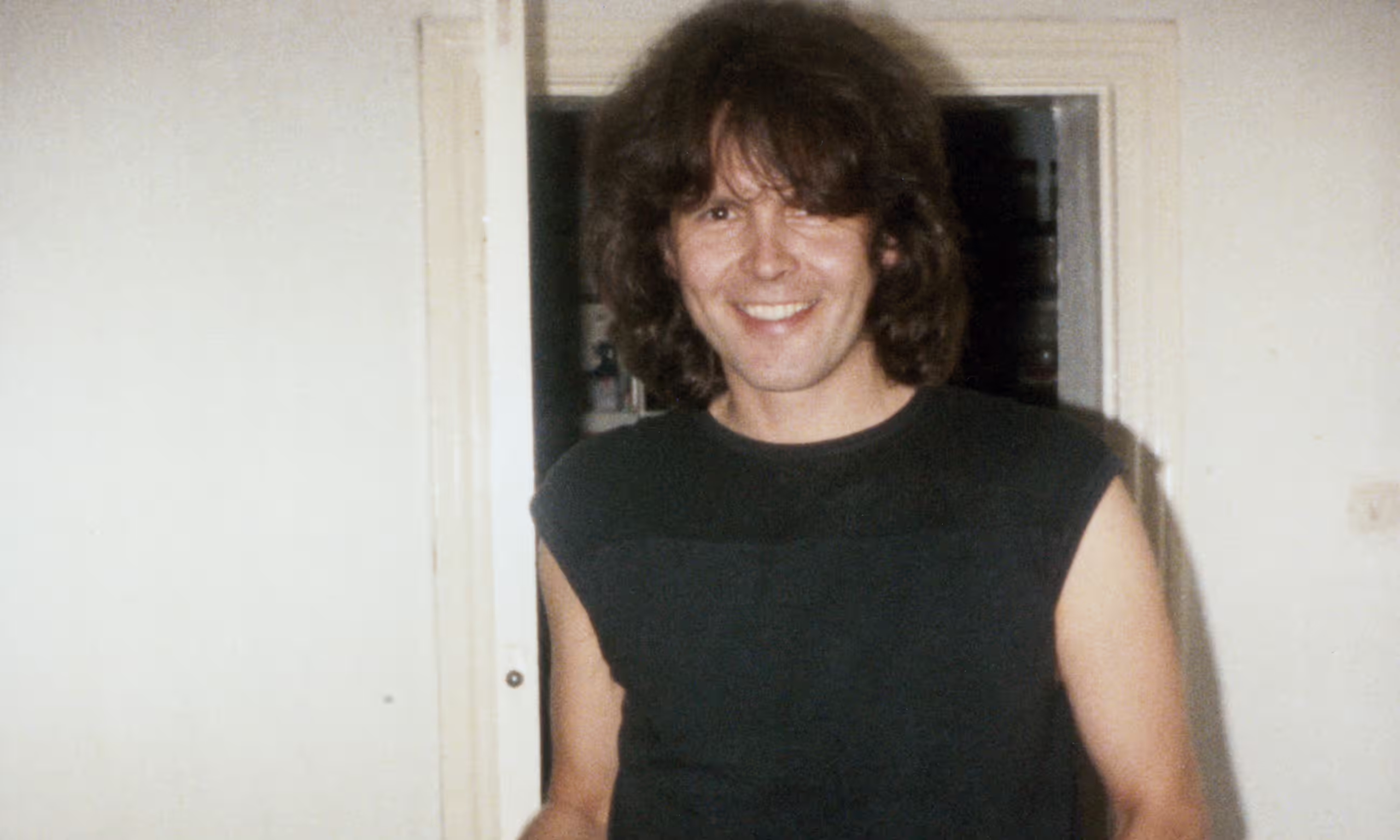
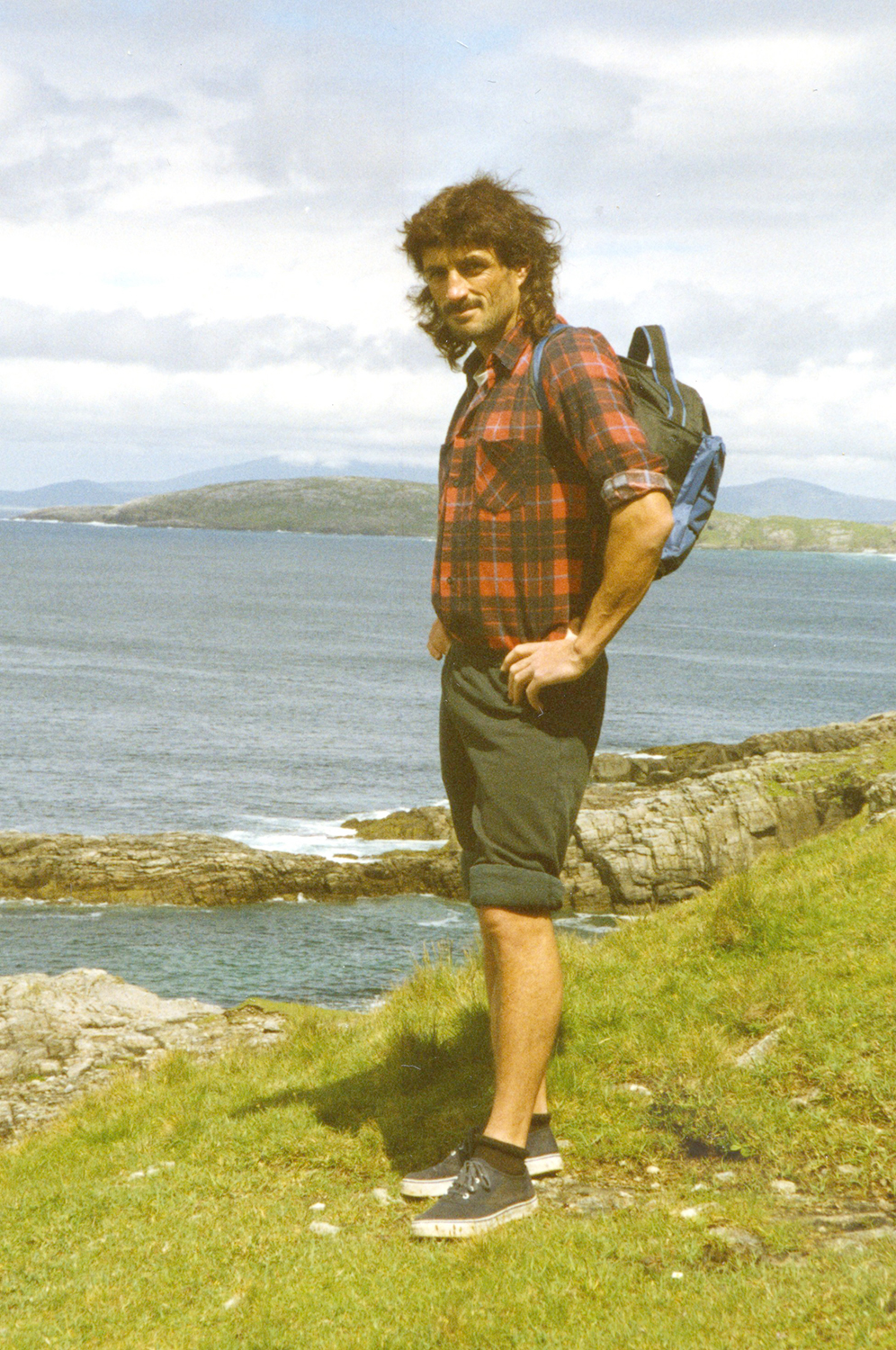
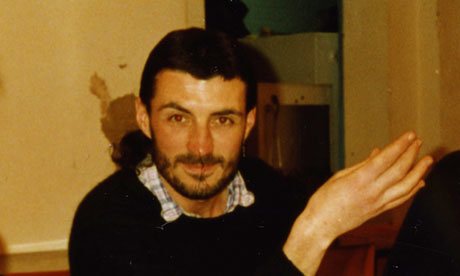
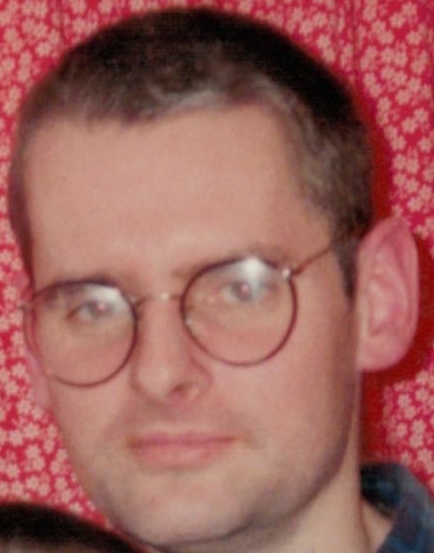
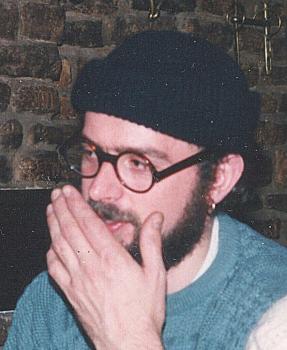
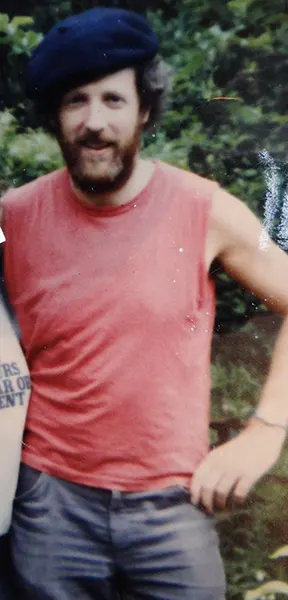
Spycop Bob Lambert whilst undercover, 1987 or 1988

Spycop Bob Lambert whilst undercover, 1987 or 1988

On Thursday 28 November 2024 the Undercover Policing Inquiry took evidence from a woman known as ‘Jacqui’.

She was an animal rights activist in the 1980s and was deceived into a relationship by undercover officer HN10 Bob Lambert ‘Bob Robinson’. They had a child together, even though Lambert knew he’d abandon them both when his deployment ended a couple of years later.

Jacqui was questioned by Daisy Monahan for the Inquiry.

This is a long report. You can use the links below to jump to specific sections:

Activism
Leafleting and hunt sabbing, the ALF’s Wickham raid, Lambert creating division and suspicion

Meeting Lambert
Lambert’s activism and undercover persona, their relationship, his other secret relationships, Jacqui’s employment

Parenthood
Their planned baby, the birth, Lambert avoiding being named as father, their move to Dagenham, and the relationship’s end

Debenhams
The plan, the arrests, Lambert leaving

Impact
The effects of Lambert’s desertion, hardship, discovery of the truth and untold ire for the Met

The UCPI is an independent, judge-led inquiry into undercover policing in England and Wales. Its main focus is the activity of two units who deployed long-term undercover officers into a variety of political groups: the Special Demonstration Squad (SDS, 1968-2008) and the National Public Order Intelligence Unit (NPOIU, 1999-2011). Spycops from these units lived as activists for years at a time, spying on more than 1,000 groups.

This hearing was part of the Inquiry’s ‘Tranche 2 Phase 2’, which mainly concentrated on examining the animal rights-focused activities of the SDS from 1983-92.

Click here for the day’s page on the Inquiry website.

ACTIVISM

Jacqui was inspired to become active in animal rights campaigning when she saw The Animals Film on Channel 4 in 1982. She was 20 years old and living alone in Hackney, East London.

The Animals Film cinema poster

The Animals Film cinema poster

The animal rights movement was growing at the time, with lots of young people getting involved. Jacqui recalls going to protests at several places around London.

One was an open market in Club Row, off Petticoat Lane, where puppies and kittens were sold. There was also the Leyden Street chicken slaughterhouse nearby, where customers selected their own bird and watched it being killed.

She met people who had been campaigning for years, and one of them told her about East London Animal Rights (ELAR) and hunt sabbing.

EAST LONDON ANIMAL RIGHTS

ELAR was a small, informal group. Meetings were ad-hoc and held at people’s homes. They would usually be attended by fewer than ten people, mostly women. Those involved understood that their aims were to let people know about how animals were treated. They often gave out leaflets in shopping centres.

Asked about her membership of these groups she explained that it wasn’t so formal – ‘you didn’t sign in!’ -they were loose aggregations of people who did different things together.

Jacqui stresses that she went to numerous meetings, and they were so informal that they often didn’t have a group name. This runs contrary to the police reports in which officers, from their uniquely regimented perspective, named and described groups and the supposed hierarchies within.

In his witness statement to the Inquiry, Lambert described Jacqui as ‘a leading member of ELAR’, but she says this isn’t true at all:

‘I was one of six or whatever that turned up. No. There wasn’t an East London Animal Rights to be a leading member [of]…

It’s like they are trying to put a square peg into round holes and they are forcing it in to make it fit their narrative. Because, yes, news to me. This is all news to me, that we belonged to East London Animal Rights.’

Asked if there was any sort of group mission statement she scoffs:

‘Mission statement? It was more like Carry On Animal Rights.’

As well as her day job in the City, Jacqui worked in pubs a few nights a week in order to make ends meet:

‘Different pubs I have worked in. I got sacked from every single one of them. I am not good at customer service.

And, yes, so I used to do two or three nights in a pub. Because working in a pub, you could usually get someone to buy you – this is how bad, this is what I am talking about – is that you could usually get somebody to take you out. That means you get to eat that night. And yes, that was the point.’

Jacqui became very committed to animal rights, and would prioritise hunt sabs and demos over casual shifts in the pub, even if it meant she got sacked for refusing work.

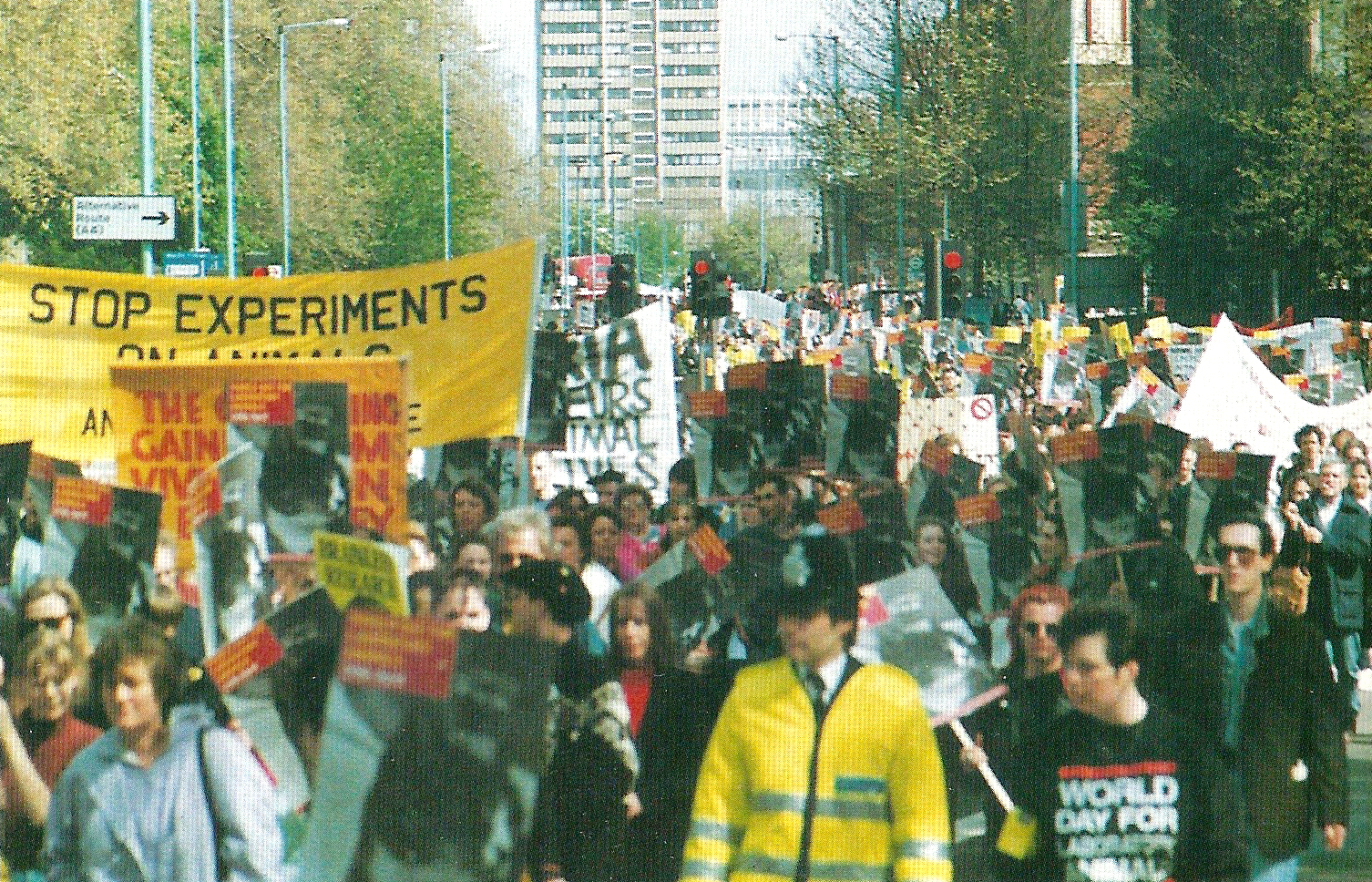
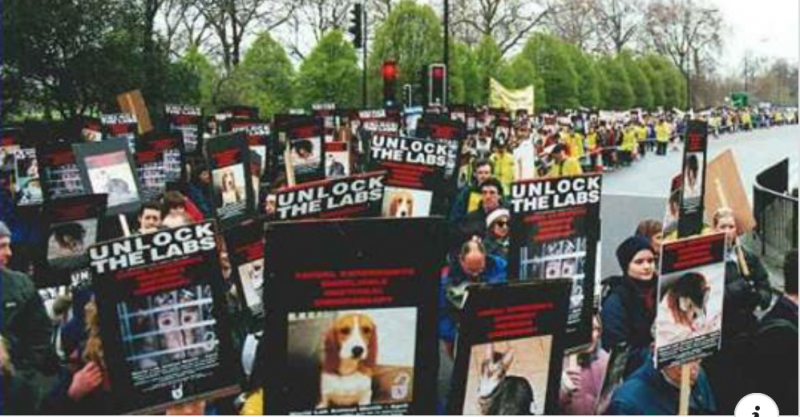
Asked to describe the demos outside Leyden Street slaughterhouse, Jacqui recalls that by the time she joined in, these protests had been going on for years – she says there were maybe 10-20 protesters there. They would be chanting and shouting slogans at customers.

She found the slaughterhouse profoundly distressing:

‘I used to end up in bits – really, really upset’

There was no violence or police presence, although the slaughterhouse staff would wave their knives and threaten them for putting off customers.

They were usually there on Sunday mornings for a few hours until the market closed at lunchtime.

This controversial slaughterhouse was eventually closed down. The council shut down the sale of puppies and kittens in Club Row too.

Asked if ELAR ever did ‘oversee or organise any sort of direct action’ – the Inquiry still not grasping the nature of these activists – Jacqui was clear that there was no liberating of animals, nor serious criminal damage.

She did admit she ‘might’ have sprayed graffiti on occasion, recounting one time she was passing a railway line in Hornsey:

‘Lots of advertising hoardings on it, but then there was a great big blank space where they had not renewed the advertising thing. And I thought, blank space. So I must have had, or someone must have had spray, I really can’t remember…

We would have done the A with the circle, something like that. I have only recently found out that the A means anarchist. I used to think it meant animals.’

In her statement to the Inquiry, Jacqui describes the animal rights activist movement she worked with:

‘It comprised compassionate tender-hearted people who simply had a deep fondness for animals. They would take in stray dogs or do other animal rescue work. Some were middle-aged or elderly women who would get together for tea and cake. Others were harmless eccentrics. None of them posed any threat to the state.’

Sylvia Martin used to host some of the meetings. She was older, around her 60s. An ex-actress and model, Jacqui remembers her as glamorous, flamboyant, posh, outspoken, and absolutely no danger to anyone.

Jacqui laughs at the description of Sylvia’s Fur Action Group as an ‘offshoot’ of ELAR:

‘You are talking as if we were a corporation, you know, with a financial officer and – alright, call it an offshoot. Or a cell. Sometimes you call them cells, don’t you? We were a cell.’

This drew much laughter from the public gallery.

FUR ACTION GROUP
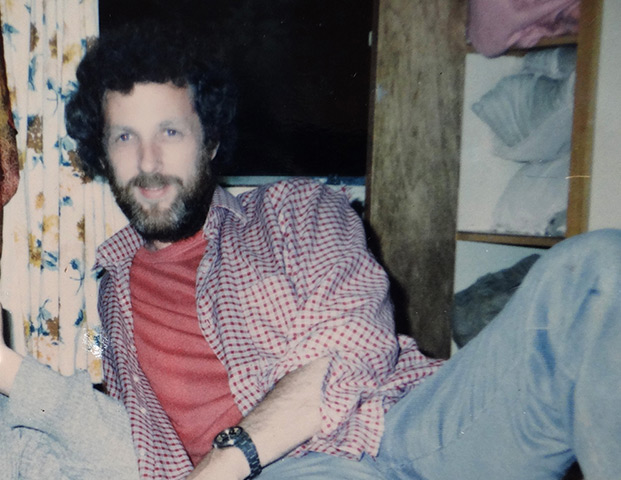
Mike Chitty undercover in the 1980s

Spycop HN11 Mike Chitty ‘Mike Blake’ undercover in the 1980s

We’re shown a spycops report written by HN11 Mike Chitty ‘Mike Blake’, dated 12 December 1984 [UCPI0000014820] about the activities of the Fur Action Group.

It names Jacqui as one of a number of people who had protested at the Leyden Street market and then, having seen a newspaper article about a fur fashion show at the Cafe Royal, went there and held a sit-in.

Asked if it was peaceful, she says she can’t clearly remember it so, given that disorder would have stuck in her mind, she’s confident it won’t have gone beyond ‘a bit of verbal’.

Chitty reported on Jacqui numerous times. Despite her now seeing contemporaneous photos, she doesn’t remember him at all.

He’s described one of the women on the demo as ‘attractive’.

Jacqui mentions that she herself is described as ‘reasonably attractive’ in another report and, after an aside to say she was actually gorgeous at the time, she is blunt:

‘I am angry that women are described by the way they look. And when they get to a certain age they are invisible. So you are either a bit of totty or you are invisible. Otherwise, you have no role.’

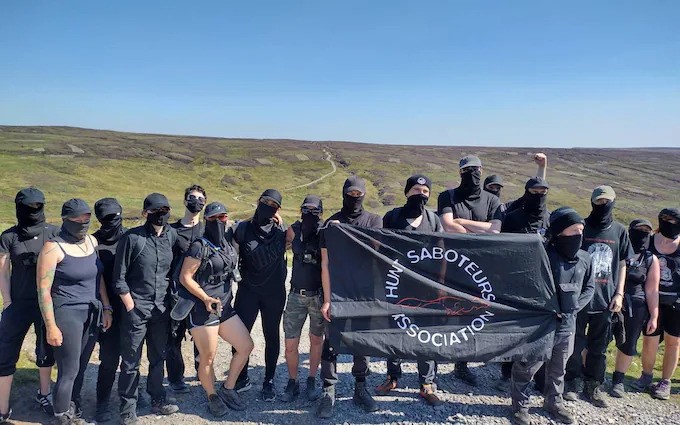
HUNT SABOTEURS

Like many young animal rights activists, Jacqui became a hunt saboteur:

‘You can do something direct, and obviously I am on the right side of history because hunting is illegal now, or it is supposed to be.’

Her prime motivation was to save foxes, but she also highlighted the mistreatment of hunting hounds.

She was part of a group that targeted the Surrey Union hunts which she said rarely caught foxes. It seemed that trying to fight hunt sabs was more of a sport to its supporters and terriermen:

‘It come as a shock to me how physical it is. How you are running really, really, round big swathes of land and those swathes of land might have posts, they might have hedges.

You have to get across those, and obviously you have loads of horses coming towards you, which is quite scary and therefore, yes, you got to be fit – and I quite liked that out in the countryside. Yes, I really liked it.’

SOUTH EAST ANIMAL LIBERATION LEAGUE

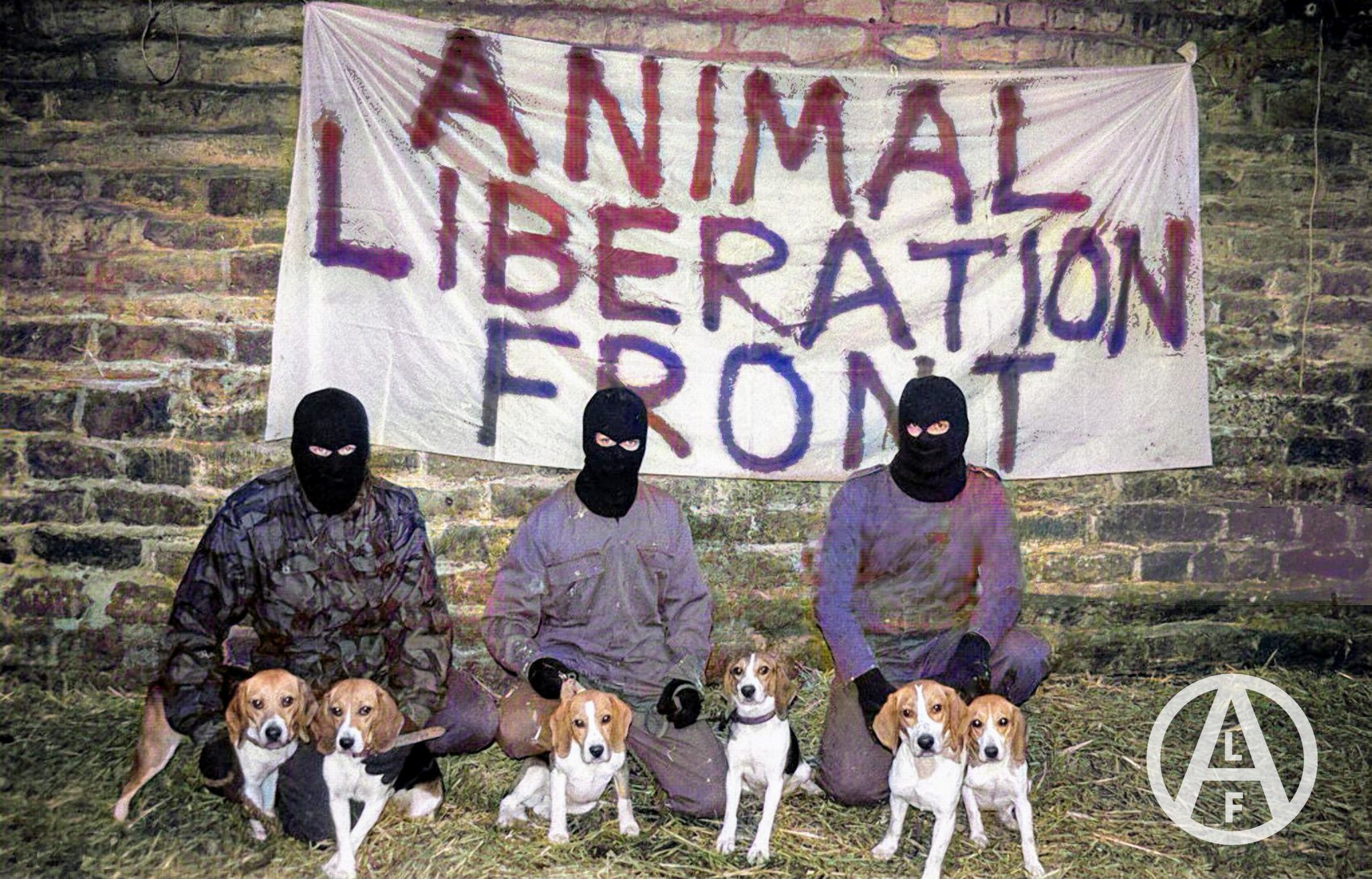
She went out sabbing with South East Animal Liberation League (SEALL), and says that they – another loose group of about ten people who were good friends, not ‘members’ as such – were more focussed on direct action than ELAR. As well as sabbing they would liberate animals:

‘I didn’t consider myself a member of any group. It’s the way you have structured it in terms of for the Inquiry is to put them into groups. But I would never have described myself as I am sort of a ‘member of’ this – it’s not like being member of a knitting circle or a member of the Women’s Institute or something like that. It wasn’t like that.’

Jacqui went sabbing most Saturdays from 1982 to 1985, until she was heavily pregnant.

She was wholeheartedly committed to helping the animals, but she also spoke movingly about how the social aspect was meaningful too, especially for someone who had been estranged from her family since she was 17:

‘Suddenly I had a group, and a group of friends who cared about and had the same values as me. So, when you sort of feel like you’re the only person who thinks like that, so there must be something wrong with you, because no one else seems to care, you give out these leaflets and they just get dropped on the floor. No one seems to really care. You try to make them aware of what’s going on and they are not interested.

And then you meet a group of friends, of like-minded people, similar age, and from that it’s going to be a social life attached to it.

So I was like this little urchin, sort of – I was completely solo from 17, with no education whatsoever. I didn’t go to school when I was after 15… I didn’t have any education to back me up, to progress in any way. And they filled a void for me, yes. They were friends.’

She says there was little in the way of security precautions among the group. There wasn’t much to hide – and they couldn’t bug her phone because she didn’t have one. Anyway, hunt sabbing was public and lawful:

‘I hadn’t been to law school at that time, like I have now… I think we all sort of assumed it was legal. You wouldn’t believe it by the way we were treated by the police, even when we were assaulted.’

She remembers the sabs making up spray bottles of citronella and using this to put the hounds off the scent of the fox.

She says the hunts’ terriermen were the ‘real muscle’ – intimidating, violent ‘meat-heads’ whose role was to send dogs down holes after foxes (and sometimes badgers, which were supposed to be a protected species) and ‘tear them to pieces’.

Jacqui described with revulsion the hunting tradition of ‘blooding’ – when a child first goes on a hunt, the blood of the killed animal is wiped on the child’s face.

Sabs were ‘seen as the plebs, scumbags’ whereas the hunters were part of the Establishment, which succeeded in delaying the hunting ban for years.

VIOLENCE AGAINST HUNT SABS
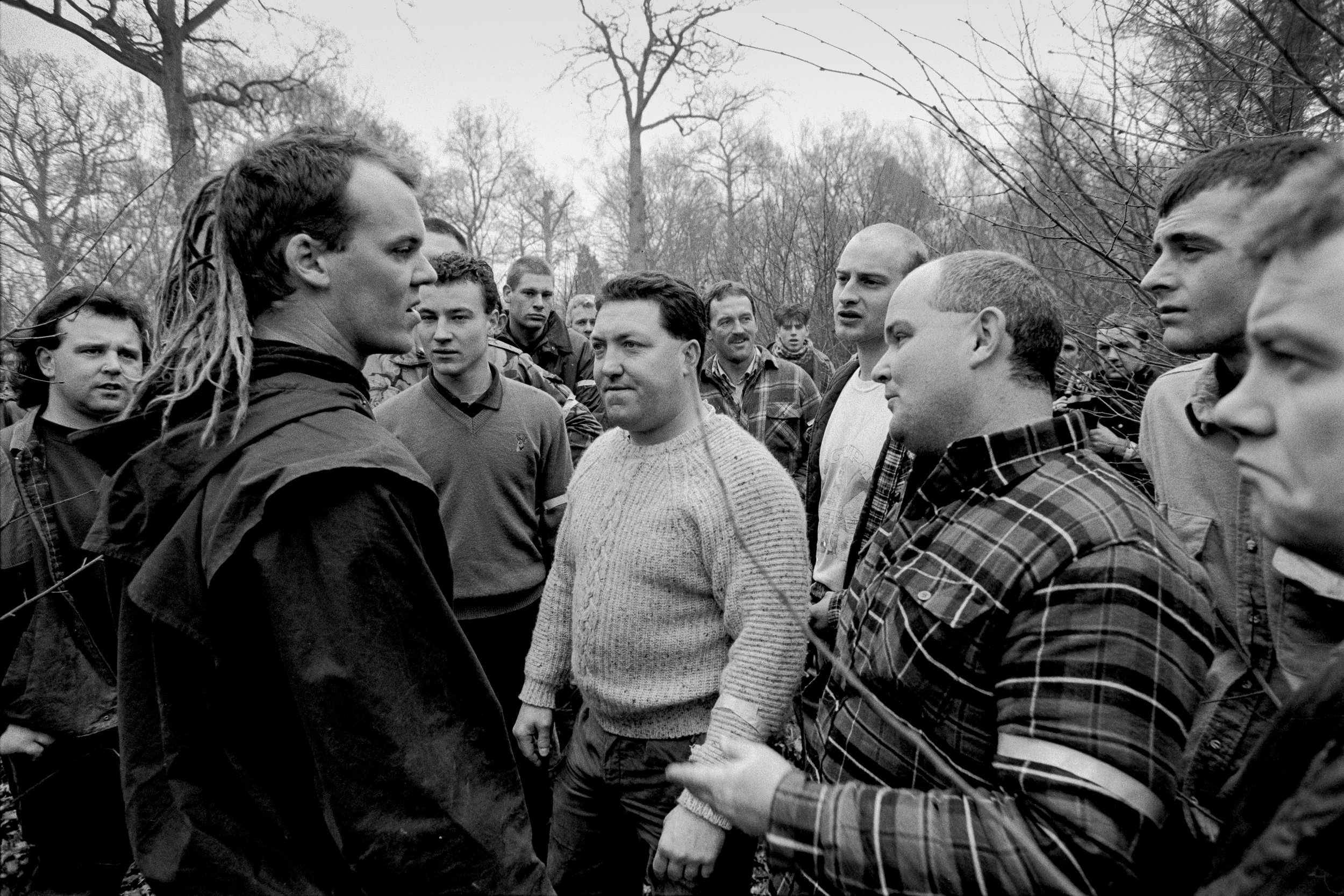
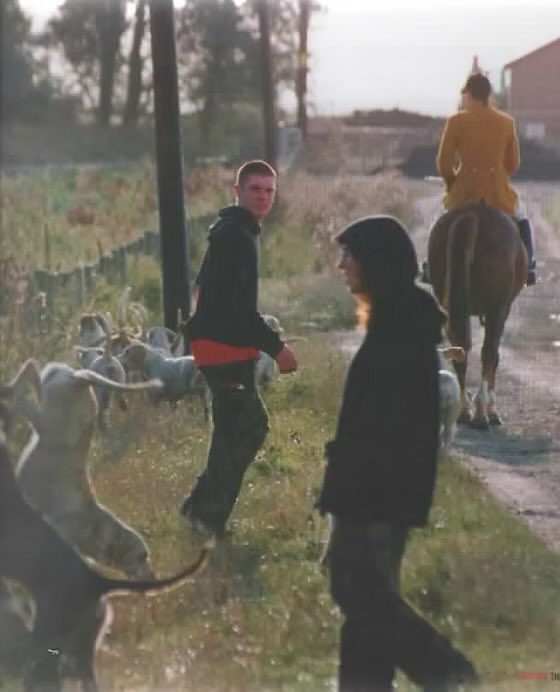
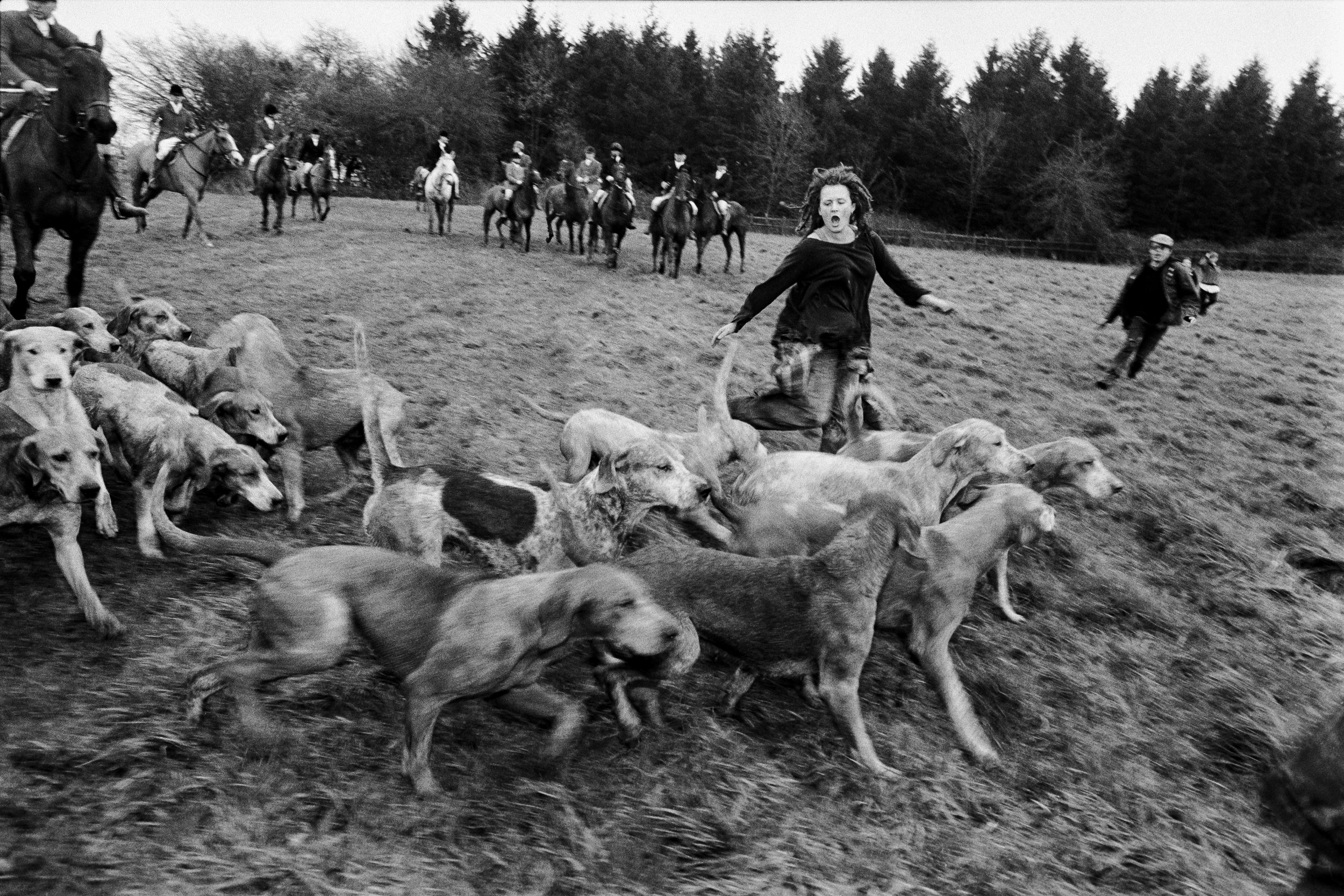
Hunt saboteurs and hunt supporters face to face. Pic: Andrew Testa

Hunt saboteurs and hunt supporters face to face. Pic: Andrew Testa

The hunt sabs were frequently threatened by hunt supporters. Women hunt sabs were threatened with sexual assault – she recalls that this always ‘loomed over you’. Supporters would also drive vehicles directly at hunt sabs.

She recalls one incident when she was caught. One of the hunters fell from his horse. The sabs saw hunt supporters pointing at them, and ran away. Jacqui was separated from the others and caught by at least four of these men. There was more than one on each limb and they threw her into a lake.

It was a freezing winter’s day, the deep water was so cold that it stung on contact, and the men who threw her didn’t even know if she could swim. She couldn’t get out and the men just walked off laughing.

She was rescued by other sabs. Soaking wet, she walked with them back to the pub where the hunt had started from. The landlord told her that she deserved it, so they had to walk on to find somewhere to shelter. It was a long journey home to London.

‘It was part of a game to them… there was quite a few times that they never killed a fox. But sometimes that was because they was concentrating on hunting us. So it is almost like they sort of enjoyed it. They used to have a big smile on their face when we turned up.

She said sabs were constantly attacked, frequently with horse whips that left physical injuries. She notes that almost every attack she can think of happened to a woman sab.

‘I was whipped loads of times. They got a thing about whipping, those sorts of people. Strange, isn’t it? Public schoolboys and their whips.’

Asked if she reported it to the police, she patiently explained that police were never interested in violence against sabs:

‘We were the baddies, according to them.’

She explained that the police would be on good terms with their local well-to-do hunters. She would see police mingling with hunters as they convened. It was plain that they were firmly on one side:

Q: The police didn’t come to your aid, is that right?

Jacqui: Well, Bob did. But I didn’t know he was a policeman until 2012.

Asked if sabs were ever violent to hunters, Jacqui points out the impracticality of taking on mounted shotgun owners:

‘They were on great big hunting horses that are bred especially for that! Have you seen the size of them? They are on those and we are not.’

THE SECRET ORGANISER

As to whether the sabs ever brought weapons or organising violence, she refers to ‘He Who Can’t Be Named’ (someone who came to sab the Surrey Union Hunt, whose identity is protected by the Inquiry) getting hold of walkie talkies for the sabs to communicate with each other. Those and the bottles of citronella, that was as organised as they got.

She got to know ‘He Who Cannot Be Named’. She describes him as intelligent, charismatic, and with an air of authority.

He gave evidence to the Inquiry and said he only went to the Surrey Union hunt two or three times. Jacqui incredulously dismisses his claim:

Jacqui: Sorry, I was going to swear then. Rubbish.

Q: How many times did you see him?

Jacqui: Every time. He’s the one that got the walkie-talkies and everything. As if we’d be organised enough to do that!

She says he was the ‘self-appointed’ press officer of SEALL, arranging their demonstrations, sabs, and raids to liberate animals:

‘If you wanted to have arrangements for something then he was the person who had all the arrangements and he’d be the one organising it. So if you had a question about it, he was the person you would go to.’

Jacqui was friends with his girlfriend, and they tended to each have one of the group’s walkie talkies. As an illustration of how seriously he took everything, she recalled him angrily telling her off for not saying ‘roger and out’ when ending a walkie-talkie conversation.

She remembers Ronnie Lee – an animal rights activist who’d received a long jail sentence – wasn’t around at this time, and He Who Cannot Be Named said he wanted to ‘take it further than what Ronnie Lee did’.

In his evidence to the Inquiry, He Who Cannot Be Named said his role spearheading SEALL’s actions was earlier, in 1983 and early 1984. However, Jacqui remembers introducing him to Bob Lambert, and she only met Lambert in the summer of 1984.

At the time, Lambert was in a relationship with a woman known as CTS, which ended when CTS went to university in September 1984.

Just like He Who Cannot Be Named, Lambert has his own version of the timing too – he says he first met Jacqui later, at a demo in the winter at the end of 1984! She’s absolutely certain this isn’t true either. Not only was CTS gone in September, but she can remember she was wearing summer clothes when they met.

As for He Who Cannot Be Named, Jacqui is confident he was sabbing much later than he claims:

‘I would put him there until I stopped going, which would have been some time in mid-1985’

She can pinpoint that date as she stopped due to being pregnant with Lambert’s child, known as TBS.

Jacqui is sure that she introduced He Who Cannot Be Named to Lambert, but says the two men didn’t become friends. He knew she and Lambert were a couple, and he regarded her as a friend.

In both his written statement and his live evidence, He Who Cannot Be Named says he has no recollection of Jacqui whatsoever. Is she surprised about this?

‘Oh, no, no, no! I am not surprised. Because he says he doesn’t remember anything about anything about anything!’

THE WICKHAM RAID

Though she’s confident she introduced Lambert to He Who Cannot Be Named, there’s an element of doubting her own memory because of the extent of Lambert’s deceit and abuse:

‘That’s what I have always believed. But remember there is a lot of things I believed and they are complete and utter bollocks.’

She elaborates that the fact of having TBS and, since they discovered Lambert’s true identity in 2012, supporting TBS in his desire to get to know Lambert means that she’s had her memory altered by more recent discussions:

‘I still see Bob Lambert now. And I have seen him since 2012. So obviously we have had lots and lots and lots and lots, hours and hours and hours of conversations about things then. So that can mean sometimes your memory – there is the memory of what I have from back in the 1980s but then that is obviously going to be tainted…

So sometimes it can be almost like a false memory, because what you are remembering is what you know now, really.’

Jacqui was approached on a hunt sab by someone who was recruiting for a raid on Wickham Laboratories, an animal research and testing facility in Hampshire. It was what she’d yearned to do all along:

‘I wanted to rescue animals. That’s it. You know, I am completely non-violent and I’ve just got this empathy for children and animals that are just like, yes, vulnerable. So, yes, I would have been up for it.’

We’re shown a Lambert police report, dated 23 October 1984 [UCPI0000014858]. It says that He Who Cannot Be Named is organising an unspecified action for 28 October, and Jacqui will be participating. This is the Wickham raid, which became notorious for the severity of sentences meted out to its participants.

He Who Cannot Be Named has told the Inquiry he may have known that an action would happen at Wickham, but he had no part in organising it. Jacqui says that on the contrary, this is nonsense and the information in Lambert’s report is correct.

As for He Who Cannot Be Named, she says:

‘I am a bit scared of him actually… If anything happens to me from now on, you all know
where to look. If something happens to me.’

Lambert’s police report says that Jacqui planned to travel with a friend who had a car, after further briefing from He Who Cannot Be Named. She was invited to a meeting point, but she wouldn’t have known the target location, and wouldn’t have asked, and knew not to tell anyone. This security culture was well established. As a ‘foot soldier’ she wouldn’t expect to know where she was going until she actually got there.

It seems that Lambert’s report may have been based on information Jacqui had given him. She’s distraught at the possibility that she might have inadvertently aided the imprisonment of people she cared about, who were taking action she supported.

She says she has talked with Lambert about it and he’s told her this is not the case:

‘He assured me that there was so many spycops out there. He said it was the sort of leakiest operation ever. There were so many reports that this was going to happen, that he didn’t need to be the person. But he might have been saying that to try to make me feel better…

It is the reason why they were with us, was to get information, and unknowingly we were giving information because we were in intimate relationships with them.’

She explains that Lambert was older than her. He was manipulating her trust and therefore she wanted to share things with him. She feels that she probably did give him the information about Wickham. She says sorry. Monahan, the lawyer representing the Inquiry, tells her not to worry, but she replies:

‘No, I meant sorry to all the activists.’

LAMBERT’S REACTION AND ESCALATION

Asked about Lambert’s reaction at the time to her telling him about the plan, she gives significant insight into his undercover persona:

‘Well, he didn’t go “Ooh, I am a cop”. Obviously, he reacted how he had been trained to react…

He would have wanted to get involved. He would have liked all that stuff. Because he used to mock that all I did was going to those meetings… that, you know, bunny hugging wasn’t going to get anywhere. And also he said he was an anarchist and, therefore, he didn’t believe in the system.’

At the time, she countered by highlighting to him the Labour Party’s promise to ban fox hunting (which it eventually did). But Lambert retorted that it wouldn’t affect vivisection or other forms of animal abuse:

‘I thought he lived off the grid and at that sort of time I would have been passionate about him then. I thought he was wonderful. Especially as he was that much older than me. And I have never had a good father/daughter relationship.’

This dynamic, combined with Lambert’s overt exhortations, encouraged her to feel she was ready to participate in more radical action. She says He Who Cannot Be Named had a similar effect on her too.

We’re shown a police note of a phone message from Lambert on the morning 26 October 1984 [MPS-0746925], two days before the raid, saying Jacqui and her friend were withdrawing from the action.

RAID CONFUSION

Jacqui says that she’d long believed she was on the Wickham raid:

‘I always thought I was on Wickham, you know. I always, in my memory, until 2012, I thought I was on Wickham. And I obviously was getting that mixed up with something else that I was on. Because Bob assures me he made sure I didn’t go on Wickham.

He said he can’t remember what, but he made sure that he distracted me with something else so that I didn’t go near Wickham because he knew that it was going to be – the police knew about it…

‘And I did ask him what – how did you manage to do that? Because I was passionate about it. And it would have been my first proper action, apart from sabbing. So, yes, I asked him what and obviously he can’t remember. Bob’s got a lot of plates to spin as we now know.’

It does sound like it might be Lambert rewriting her memories but, as she describes the event, it becomes clear that she is confusing Wickham with an abortive raid she went on:

‘I was on an action where you meet and then you go to one place and then you go to another place and all that. And I was. And we finally got to our final destination. I can’t even remember what part of the country. As I have said, I have gone all these years thinking it was Wickham…

We got to this place which was apparently a laboratory. I thought I would rescue animals but there was no animals in there. But what there was, was some sort of equipment that like that scientists use where they put their hands in like gloves and I suppose handle the animals. It was like a glass thing where I suppose you would have animals in there and you do your procedures on it…

I found it really chilling, just seeing the equipment even though there was not any animals there. And I think we damaged the equipment. But an alarm went off… then we all had to leg it’

This description of an empty lab cannot be Wickham, which was very much an active vivisection laboratory at the time.

We’re next shown a Lambert report dated 20 November 1984 [UCPI0000014769]. It encloses a SEALL leaflet asking people to donate to the Wickham defence fund, helping families to visit imprisoned activists and to buy them vegan food.

Jacqui remembers fund-raising by going around the pubs collecting:

‘Men would say I’ll give you money for a kiss’.

OSTRACISING AN ACTIVIST

Lambert’s report goes on to say that several activists think there was a security problem, and that one person is accused of giving names to the police:

‘A hitherto energetic and respected campaigner is now shunned by the whole animal rights movement.’

Regarding the same person, a further Lambert report dated 3 December 1984 [UCPI0000014790] says:

‘Defending himself against the charge of giving names to the police, he claims that police officers obtained names of animal rights activists from private correspondence seized at his home address at the time of his arrest.

However, he is a demoralised man, much frightened by the prospect of a prison sentence, unlikely to return to the position of trust and respect with which he was once held.’

Jacqui is still really distraught by the man’s plight:

‘This is shameful… he was just the loveliest gentlest man. He probably wasn’t very bright. Very vulnerable. And he was just a really lovely empathetic man and he wanted to please and he certainly thought Bob was wonderful.

I was just quite close to him because he was so gentle and such a sort of honest soul, you know. A beautiful soul.’

She says that Lambert told her at the time this man’s address book had got everyone arrested, that he was an informer and that she wasn’t to speak to him anymore. She then told others the same story.

Now she wonders whether there even was an address book, or whether it was Lambert covering his tracks as the mole, and sowing discord among a group the spycops didn’t like:

‘We were served up a patsy’

She really liked the man and didn’t think he would have spoken to the police. She trusted him with a key to her flat, and the feeding of her cats – ‘they were like my babies at the time’ – and she also saw that his compassion for animals, shared with the group, was his social life as well as his moral concern.

She says that when she found out the truth about Lambert in 2012, concern for this man was among her first thoughts.

Jacqui says he was a broken man, completely devastated. People were horrible to him, it was the worst accusation possible. Lambert would have known all this. She is very, very angry.

CREATING DIVISION

In her witness statement she says it’s just one example of Lambert fostering division among the activists. Asked about other instances of him sowing such discord, she says:

‘He was always telling me that some people couldn’t be trusted. So he sort of made me paranoid. He would always tell me that this person was a wrong ‘un, and this person wasn’t right, and you are too trusting, and you know – he was always stirring the pot.

It’s why loads of groups broke up, because when you get to the root of it, these cops were there and they were making us paranoid that people that we thought could be trusted couldn’t be trusted, and no one could be trusted.’

She reflects on the extent of the spying on her, and the exaggeration and tone of the police reports:

‘You read some of this stuff, it makes me sound like I am Mr Big on top of a big cocaine ring, you know, organised crime group. You know, I am second in line in ISIS or something. I was just a dopey bird, right? A dopey bird who was doing her best and trying to survive in a world full of sharks. Full of male sharks.’

MEETING LAMBERT

We’re shown the first Lambert report that mentions Jacqui, dated 19 October 1984 [UCPI0000020318]. Jacqui confirms she was in a relationship with Lambert by this time (though he claims it happened later).

He says that through her work at a financial company she got hold of secret financial information about multinational chemical firm ICI and passed it to the Animal Liberation Front, enabling a raid on an ICI research centre.

Jacqui dismisses the claim as ‘ridiculous’:

‘Look at my age and what a junior position I would have had! I worked for temp agencies, so if I was there at this place I was there as a temp. You know, they didn’t invite me in and start showing me all their financial documents.’

She says she might have said something like it to try to impress Lambert but if she did, he should have known full well that she wasn’t going to be privy to such information.

As for passing it on, the Inquiry asks whether it has anything to do with an April 1984 raid on an ICI facility in Alderley Edge, Cheshire, claimed by the Northern Animal Rights League:

‘Never heard of them.’

She points out that she didn’t even have a phone at the time. When Monahan inquires further about whether she would have been in communication with the group, Jacqui interrupts:

‘What would I have had? Crystal balls?’

LAMBERT’S TWO PARTNERS

‘CTS’ and Jacqui were around the same age as each other at the time, 19 or 20. Lambert didn’t tell Jacqui he was in a relationship with CTS:

‘Well, he’s not going to tell me the truth, is he? Because he was sniffing around me at the time. So he’s not going to be telling me that.’

Lambert says there was no overlap and he met Jacqui later, at a demo outside Hackney Town Hall, and describes Jacqui wearing an Avis car rental worker’s outfit. She says that happened, but wasn’t their first meeting.

‘I met him on the Essex hunt sabbing. But he tells me, no, it was that. And you know how truthful he is’

We are shown a Lambert report dated 20 November 1984 [UCPI0000014938] about a planned protest at the Hackney Town Hall, where Jacqui is reported to have told people to bring banners about the fur trade. Jacqui says that was a different event.

There is also a Lambert report of 3 December 1984 [UCPI0000014790] about demo outside a full council meeting at Hackney Town Hall, about the proposal that they adopt an ‘animal charter’ bringing in a number of measures such as a ban on animal circuses. Islington councillor Jeremy Corbyn had worked hard to get that passed in his borough, and they were hoping to get it replicated in Hackney – which indeed it was.

Jacqui is certain this is the one Lambert’s referring to. And she’s just as certain that she already knew him well before that.

She says that she only knew about his simultaneous relationship with CTS via other people.

LAMBERT AND BELINDA HARVEY

She hadn’t even known about the existence of Belinda Harvey, with whom Lambert had an additional relationship, until after the whole scandal came to light in 2012:

‘Never heard of her, nothing. Never mentioned it. Even though she had been to my house and I didn’t know, even though she had been with my son and I didn’t know.’

Once the spycops scandal was exposed, CTS came forward and made herself known to the lawyers representing women deceived into relationships. However, she has not taken any legal action, nor participated in the Inquiry.

‘She didn’t want to join the other women as an action, because obviously years ago, she’s got on with her life. She lives abroad now, she has a family and all the rest of it. She doesn’t want anything to do with it.

To tell you the truth, if I didn’t have TBS nor would I. I wouldn’t have put myself through all this for nothing. Because it certainly isn’t for money. The only reason I thought was because I have six foot of Bob Lambert’s DNA walking around who wants to be reunited with him.’

We break for lunch. Jacqui has been giving it both barrels all morning. It’s been impressive to hear her, she has no filter and is not holding back anything as she speaks very frankly and directly. And despite the horrendous subject matter, she’s introduced numerous notes of wit and humour too.

FIRST DATES

Jacqui is very clear when she went on her first dates with Lambert, and it was not in the winter as he claims:

‘I remember seeing him dressed for the summer… Not the first time, but like a date that I went on to a restaurant with him and things like that. I was definitely dressed for the summer’

Monahan points out that Jacqui’s witness statement says that, since speaking to Lambert in recent years, she’s come to believe they did meet that day in November outside Hackney Town Hall.

Monahan asks if Lambert has influenced her memory of when they first met.

Jacqui responds, very slowly saying:

‘I suspect he’s influenced me more than I will ever know about things, but yes… He still influences me. But yes. He still influences me.’

Lambert has told the Inquiry he became an active hunt sab in 1985, but Jacqui is certain he was involved before that:

‘He just suddenly started appearing everywhere. So I don’t know whether that was because of me or whatever.’

Monahan asks if Lambert was enthusiastic:

‘About sabbing or about me?’

Monahan is amused and says ‘good question’. Jacqui clarifies that it was both.

She never saw him get assaulted while sabbing, but he was a big man and hunters tended to go for women – and indeed, Lambert saw Jacqui being assaulted by hunters.

LAMBERT’S ACTIVISM
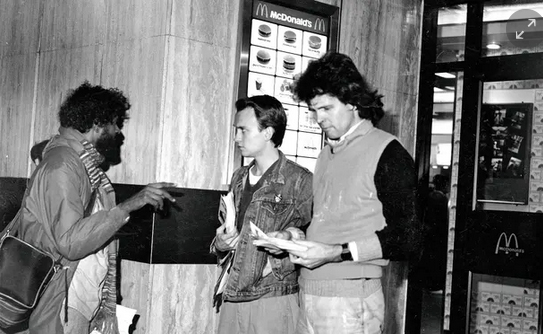
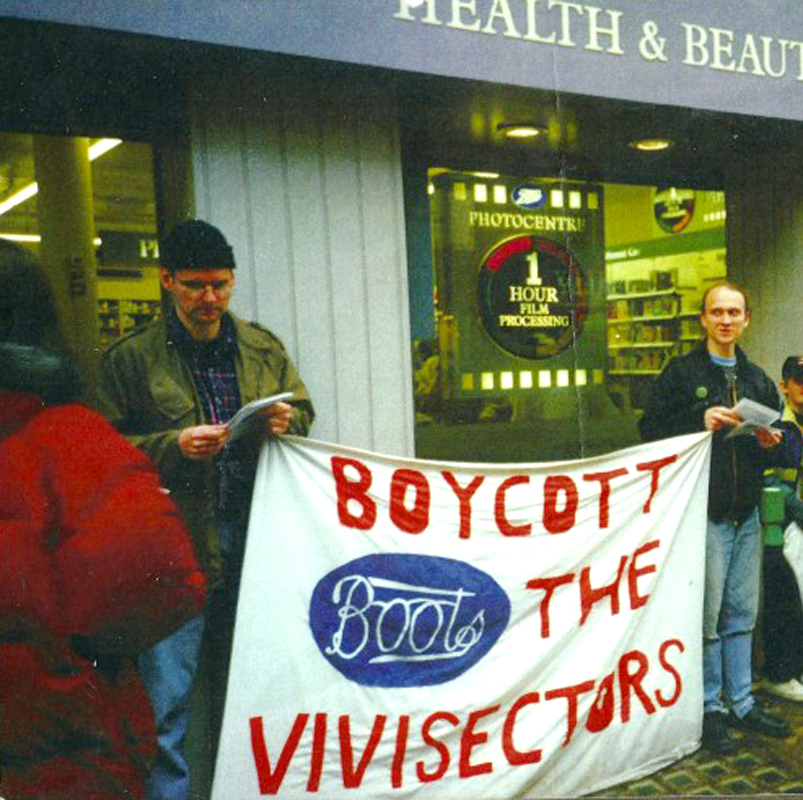
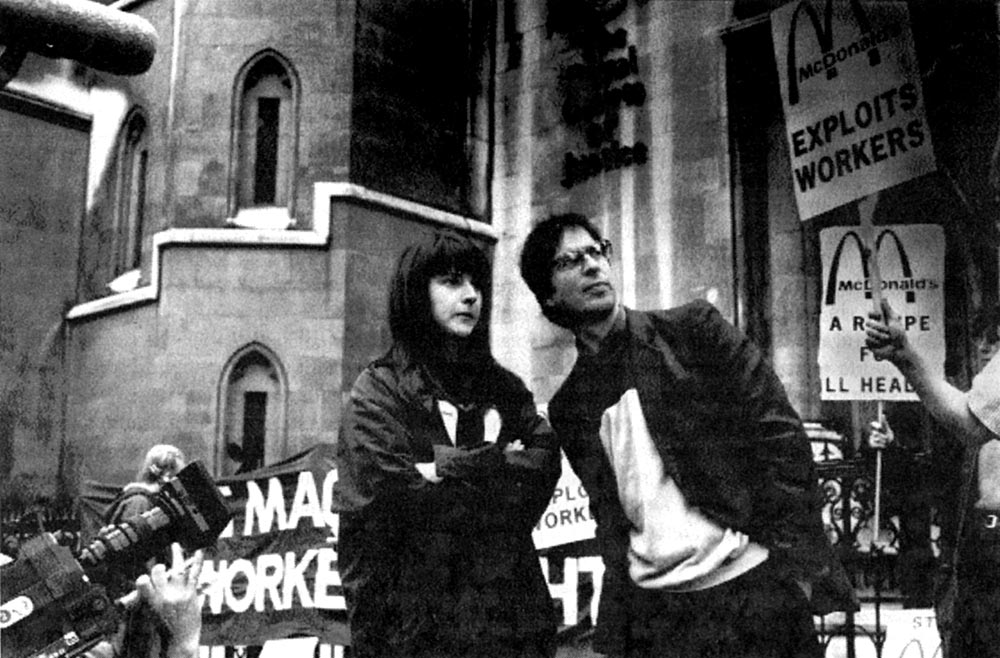
Paul Gravett (centre) & spycop HN10 Bob Lambert 'Bob Robinson' (right) handing out the McLibel leaflet Lambert co-wrote, McDonald's Oxford St, London, 1986

Paul Gravett (centre) & spycop HN10 Bob Lambert ‘Bob Robinson’ (right) handing out the McLibel leaflet Lambert co-wrote. McDonald’s Oxford Street, London, 1986

Lambert seemed to be very knowledgeable about London Greenpeace.

Jacqui knew that he wrote some of the group’s leaflets and she thought he was very well-read about anarchism and the civil war in Spain, and ‘he seemed to be all up on the theory’.

She got the impression he was the brains of the group, though this was purely based on what he told her. She found him eloquent and persuasive.

She remembers being in awe of Helen Steel. She had heard about her reputation before meeting her, and saw her as some kind of ‘senior figure’ in the movement.

She went out leafleting with Lambert a number of times, outside the McDonald’s in the Strand. She recalls that Lambert didn’t just co-write the anti-McDonald’s leaflet, he wrote other animal rights leaflets too. She has a clear memory of one of these: the leaflet used for the demo at Murray’s Meat Market in Brixton, which featured an image of a human baby in a butcher’s shop.

She says that Lambert produced printed material for a number of Animal Liberation Front type of things.

Established animal welfare organisation British Union for the Abolition of Vivisection (now called Cruelty Free International) had a printer and would let other activists use it. Jacqui remembers that in return they used to help with the group’s admin and office tasks.

Much later, she followed the McLibel case from a very unlikely perspective:

‘I ended up working for the solicitors that were the lawyers for McDonald’s…

So I knew, it wasn’t just the McLibel case; anybody, no matter how famous they were, if they said something – obviously I know the names of people, really famous people, pop stars or whatever – if they basically said anything about McDonald’s, that’s it, you would get a desist letter straight away.

And I remember that everybody, no matter how wealthy they were, they would say sorry and desist. So they were really powerful.’

She has no idea how she managed to get that job – it may have been He Who Cannot Be Named or Lambert using their influence to ease her path.

Jacqui only went to one London Greenpeace meeting with Lambert, in 1984. He told her she’d find it interesting because there was lots of animal rights discussion:

‘That’s when he said the bunny-hugging thing. And he said if you come along to London Greenpeace, you can get properly involved because there’s a lot goes down there.’

She knew of London Greenpeace but hadn’t felt any affinity with it, and the meeting didn’t change that:

‘I had seen all that anarchist scene and it wasn’t for me. They were mainly quite sort of upper class. Well, they weren’t upper class. You got to remember, my mum and dad, underclass, right. So to me they seemed like they were just playing at it a bit.’

It was clear to her that Lambert was very involved and respected among the group.

RELATIONSHIP

Asked about her sexual relationship with Lambert, Jacqui is not able to pin down the exact date it started. He used to ‘make a beeline for me’ at events, she says.

Asked if she was a vulnerable person when Lambert targeted her, Jacqui deftly makes the distinction between how she felt then and a clearer, more objective view she has now:

Q: Would you have described yourself as vulnerable at that time?

Jacqui: No. I thought I had it all sussed. Like most young people do, I thought I had it all sussed.

Q: Looking back now, would you describe yourself as vulnerable then?

Jacqui: Yes.

She explains that she left home at 17 and was estranged from her family, with no support network. She lived in bedsits, lying about her age as she could only sign tenancies and get jobs if she said she was 18.

She said Lambert’s advances were appealing to her:

‘Because he was older. And because he seemed quite educated. I found that really attractive. It didn’t bother me about the money thing until later on.

And also, I thought I could change him. I thought, once he has a baby, he’ll settle down and he’ll get a proper job. And the amount of times I told him about getting a proper job.’

She points out the irony of her being unaware that he had the proper job of being a detective sergeant spying on her.

She doesn’t remember the chemistry between them, but says starting a sexual relationship felt mutual.

Jacqui describes Lambert as captivating when he talked to her about anarchism. He came across as an intellectual, and was different from other men she knew, who were only interested in making money.

Lambert dropped Jacqui off last when giving lifts home to a group of people. He might have asked her out then, it was all very quick, it might have been a day or two later at most.

They went to a Lebanese restaurant in Stoke Newington High Street which served vegan food (the same place Belinda describes him taking her, presumably). He was friendly with the owner.

Jacqui says that Lambert was a committed vegan, and she is repulsed at the idea of a relationship with a meat eater:

‘God, no! They sweat it and everything. No!’

In his witness statement, Lambert says the sexual relationship began after she invited him back to hers.

She confirms ‘might have done,’ with a smile.

Interviewed in 2013 by Operation Herne [MPS-0722577], an internal police investigation into spycops, Lambert is very cagey indeed and fumbles his language about the first date:

‘I think that people that knew me at the time say if anything I was probably a little bit reticent, you know. But again, you know, one thing leads to another, you know, you go to the pub and then oh well, erm, you know, especially the things like, you know, having a lift home’

Jacqui guffaws:

‘I take back what I said about he’s articulate and educated! I think my bulldog could have written that if you sat him at a computer for long enough!’

As for the substance of his rambling, that it was Jacqui who initiated the relationship:

‘I was such a scarlet woman, I was… No, he was like a rat up a drainpipe!’

LAMBERT’S LIFESTYLE

He told her about doing cash-in-hand work as a gardener and tree surgeon, working for rich people in Hampstead. He said he did enough to run his van and not much more because a frugal lifestyle fitted with his unmaterialistic ethos and left him more time to devote to activism.

She knew he was 32 years old. She visited his (cover) address in Highgate. She found his flat sparse, but not suspiciously so. He had a sizeable record collection, all of it at variance with her soul preferences:

‘He liked Leonard Cohen, which I used to call music to commit suicide by. He used to like all that.

And he also saw himself as Van Morrison. He loved Van Morrison. And if you look at what he looked like back in the day, there is a similarity. That’s kind of what he thought he was, cool and all that. So he had all his music there. He played The Doors. Not my sort of music.’

She asked about his name – why would your parents call you Robert Robinson?

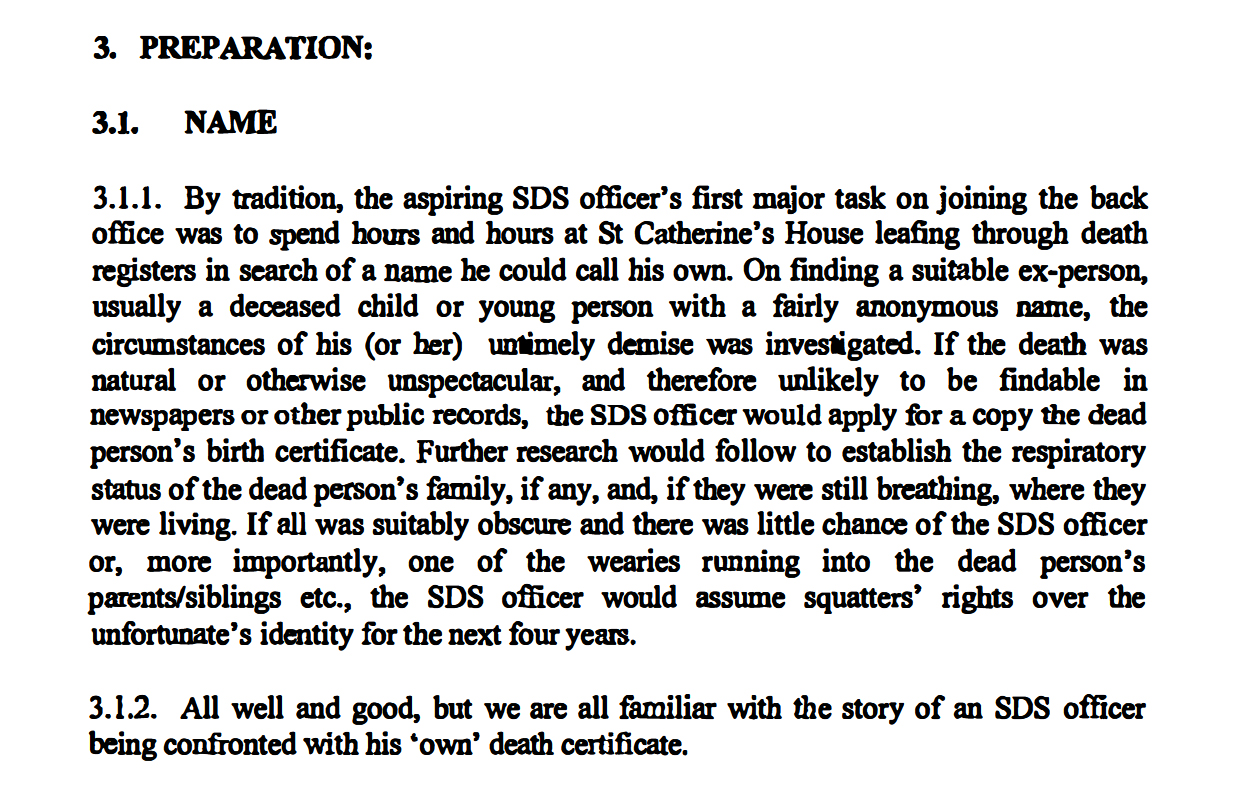
He explained that Robert was his middle name, he was actually Mark Robert Robinson. In truth, Mark Robert Charles Robinson had died aged seven of a heart condition, and Lambert had stolen his identity.

Shortly afterwards, she saw his driving license in the name of Mark R Robinson:

‘Probably in hindsight he left it out for me to see. I didn’t think at the time, I thought I was a right secret squirrel and I found it…

I didn’t mention that I had seen it. I thought oh, he was telling me the truth. He already said to me that was his real name and I thought, having seen the driving licence.’

She now realises it was him dealing with her querying his name.
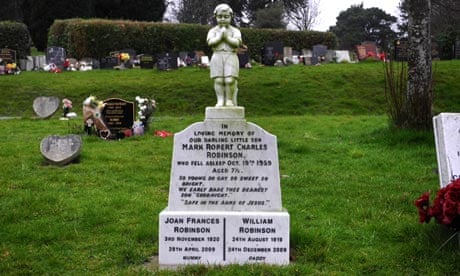
Mark Robert Robinson's grave, Branksome cemetery, Poole, Dorset

The grave of Mark Robert Robinson whose identity was stolen by spycop Bob Lambert. Branksome cemetery, Poole, Dorset

Lambert told her that he already had another child, living in Australia. This was one of a number of lies he told that made her feel sorry for him. He also told her that his mother had died of cancer when he was seven years old.

This story of a troubled upbringing is common among spycops. It not only gives them a reason why their partners can’t meet their parents, it also makes their partners feel trusted and intimate.

Jacqui later learned that Lambert’s mother actually lived till old age.

Additionally, Lambert told her that his dad had dementia and wouldn’t recognise him, and that he was in a care home in Cumbria:

‘I don’t know if there was anything in Cumbria or that was just him disappearing to his family. I have no idea.’

The dementia was later used as an excuse to refuse Jacqui’s requests to meet her son’s grandfather, as his condition was supposedly too advanced and meeting her and TBS would only confuse him.

Jacqui offers a bit of advice to make sure you meet someone’s family and friends before you have a baby with them:

‘If they have no friends and they have no roots, there is a reason for that.’

Jacqui says that when she would nag Lambert for money or other things, he would look sad and defeated like a scolded puppy. Her mum told her this was because he’d never had a mother figure, and that she should go easy on him.

Lambert is ten years older than Jacqui, and Jacqui’s mum wasn’t much older than that, so they were close in age and would talk and connect. She told Jacqui to make allowances for him. It’s easy to imagine this is what Lambert intended from the conversations.

RELATIONSHIP ESCALATION

When it’s suggested that the relationship got intense quite quickly, Jacqui disagrees:

‘I wouldn’t say that. I always thought that he was more into me than I was him. You know there is always like an imbalance, even if people won’t admit it. And I always thought that I had the upper hand. I know that is odd now, but I always thought that I held that balance of power.’

They spent about half their nights together, and they were openly a couple among friends, displaying affection. He declared love for her and she reciprocated.

She believed they were in an exclusive relationship. She didn’t think he had the time to see someone else because they spent so much time together:

‘You didn’t keep track on people remember, like you do now. You didn’t have apps where you could see where someone was and things like that. I wish I did. I so much wish. I wish I hired a cab and said follow that car, follow that van, and found out where he went. But I didn’t.’

She recalls being a little envious of Lambert’s good friend and fellow London Greenpeace activist CTS. She believed that the pair were very bonded intellectually and didn’t want to believe they were in a sexual relationship. Lambert also downplayed any indications of the truth.

He told her that CTS returned to London some time later and met up with him, ‘to say goodbye’. It was when Jacqui was pregnant, and they had just been to an antenatal clinic. He told her ‘I want to be totally honest with you’ – Jacqui cracks up laughing at this, incredulously repeating the phrase twice.

Even then, he assured her it wasn’t sexual with CTS. Jacqui remembers feeling insecure, and him being very emphatic about it.

PICKING A PET TOGETHER

Lambert said he knew the person who was running a local cat rescue. They went there together and got Winston:

‘I picked him out, because he only had one eye and I felt a bit sorry for him. And also I thought she was going to have real trouble homing him because he wasn’t really friendly or anything like that. And he was really skittish, because I don’t know what had happened, I don’t know if he was semi feral or whatever.

I said which one, and Bob said as well, pick the one that no one else is going to want, because, you know, we will be all right. And that’s what we did… so we got Winnie Woo. Winston was his name, but Winnie Woo, we used to call him.’

A while later, Winston was hit by a car. The vet said the necessary surgery would cost £350.

‘He might have said it was going to be a million. I had no chance.’

But Lambert said he would pay the bill:

‘I was really worried because I thought if he’s finding that, that’s going to come out of something else we are going to need… I asked him loads of times where it was, but he said, just going “don’t worry about it, look just don’t worry about it”, and he wanted the conversation to finish. He didn’t want me to keep on about it.’

In hindsight, Jacqui realises that Lambert was never short of money.

JACQUI’S EMPLOYMENT

Jacqui worked as a waitress at a restaurant called School Dinners in Chancery Lane:

‘They had on the menu things like jam roly-poly, things that posh boys would have got at boarding school… around that time in the 80s, there was a lot of judges and everything – sorry! – ‘

She interjects the apology, realising the hearing is chaired by a former High Court judge, Sir John Mitting.

‘I did all sorts of jobs like that. I was a hostess at one point. I have done all sorts of jobs. I have been horribly exploited by old white rich men since I was 17. How do you think I survived? It wasn’t sex work. Never ever. I was a waitress’

She says Lambert knew about this work and seemed to find it titillating:

‘At the time I would never have said I was being exploited. I thought I had the upper hand. I thought, god, these blokes! The amount of tips I was getting and things like that, this is brilliant. These stupid fools giving me all this money just for caning them. My thinking has now been turned round and I can see that I was being exploited.’

This is especially distressing to hear, coming so soon after her comments about how she thought she held the power when Lambert deceived her into a relationship.

As the hearing takes a break, Mitting, has a brief word with Jacqui about her job caning men of his profession, assuring her that he hadn’t been one of her clients:

‘Don’t worry about legal London in the 1980s, I wasn’t here then.’

PARENTHOOD

In her witness statement, Jacqui has said that she talked to Lambert many times in detail about how much she wanted to have a baby, and how worried she was about not being able to conceive.

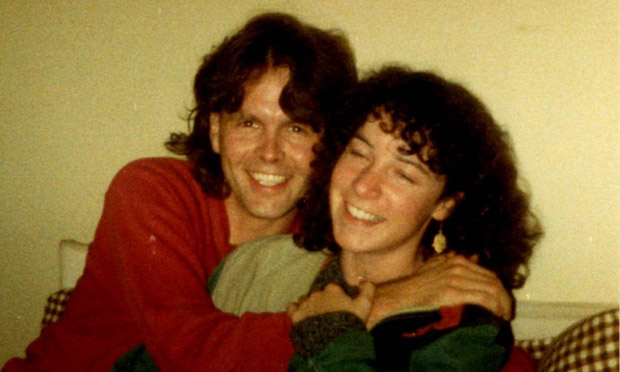
Bob Lambert and Belinda Harvey

Bob Lambert and Belinda Harvey

She didn’t use any contraception until after TBS was born, and Lambert never suggested doing so either.

TBS was not a mistake and Jacqui was elated when she found out she was pregnant.

Jacqui now knows that Lambert told Belinda that he’d been tricked into this pregnancy by Jacqui. Belinda says he claimed Jacqui had lied and told him she was on the pill.

Belinda’s friend Simon Turmaine has given a witness statement to the Inquiry [MPS-0723092] testifying that Lambert told him the same thing.

Additionally, whistleblower spycop Peter Francis – one of the officers Lambert oversaw as a manager – also says Lambert would refer to a prior instance of an undercover officer being tricked into fatherhood.

In his witness statement to the Inquiry, Lambert denies ever saying this. However, Jacqui believes Belinda and seems angry with Lambert:

‘He said to me he would never say anything like that about me.’

She also says Lambert wasn’t unique in this abdication of responsibility:

‘It’s something men say sometimes. They will say that, you know. They just do, to excuse what – to make the girlfriend they are with, I don’t know, feel better. So even in normal life, not spycops life, that sort of happens.’

Jacqui says that Lambert appeared to share her joy at becoming pregnant.

Lambert told Jacqui he didn’t believe in marriage and that married people were conforming to a patriarchal society. This hadn’t been as part of any discussion about them, just him holding forth on his supposed views.

He’d also said that he didn’t believe in having pets, despite taking Jacqui to get a cat. And indeed, having another cat with the woman he was patriarchy-conformingly married to.

Jacqui says that she shared his view on marriage, but then reconsiders and speaks movingly of her journey and her shifts in perspective:

‘Nor did I, really, though – well, I don’t know. Perhaps I did. Perhaps I did want that security, perhaps I did really, but obviously I wanted to please him. I was pregnant with his child and therefore, yes.

You have to remember a completely different person sits here… I absolutely see things completely different. Because for a while, I would have preferred to have believed his version than Belinda’s. And I have done a complete 180 on that…

I did think “he must have loved me, there must have been something there”. Almost like he was forced into this situation that he found himself in… I was proper angry with him. Like I proper wanted to tie him to something and torture him until he told me the truth.

But that is so negative. All it does is sort of like poisons me. So I don’t feel anything like that any more. But I am really angry about this whole situation, the whole situation. Especially when an innocent child was involved.’

Although she wasn’t seeking marriage, she did want TBS to have his father’s supposed surname ‘Robinson’. She squirms as she says this. She thought she would be with them both long-term as a family.

We are shown Lambert’s 2013 statement to Operation Herne about Jacqui [MPS-0722588]. He claims he told Jacqui on learning of her pregnancy that, while he would provide support, he would not ‘be with her in any sense as a partner’.

‘News to me,’ says Jacqui, who then detailed how Lambert came with her to all her antenatal appointments.

She also recounted how he’d lovingly reassured her that he’d told CTS he wasn’t single any more because he’d made his choice, he’d been clear that he was with Jacqui and she was pregnant with his child. He acted in every way like he was a committed partner ready to be a father.

BIRTH

Just before Jacqui’s due date, Lambert suddenly announced that he had to go away to Cumbria where his father was supposedly in care. She believed him, but didn’t understand why – given that he said his dad didn’t recognise him anymore, what could be so urgent?

Also, not having given birth before, she didn’t realise how intense an experience it was and thought she’d breeze through it, so didn’t mind him leaving.

Jacqui says she got back in contact with her parents once she was pregnant with TBS, and her mum was excited at the prospect of being a grandmother. When Lambert decided to go away suddenly, he called Jacqui’s mum to come down in case she went into labour. Jacqui remembers that her parents were unimpressed about him going off like this.

Lambert had told Jacqui that he would be back on the Sunday night, so her mum left during the daytime on Sunday. She could see Jacqui wasn’t alright and wanted to stay, but Jacqui’s father pressurised her to go. Jacqui went into labour when she was alone.

She wasn’t too worried; she had her friend Sylvia nearby, who hadn’t had children but did have lots of experience of helping cats give birth to kittens, so thought she’d know what to do!

‘I have never known pain like it. I thought I was dying. Everyone told me it would be bad period pain. It’s not. I thought I was dying. I thought why didn’t anyone tell me the truth?’

She got to Sylvia’s house and the two of them went to hospital in an ambulance. Sylvia ensured there was a message left at Jacqui’s for Lambert. Somewhere in her fourteen and a half hour labour, Lambert arrived at the hospital.

He held Jacqui’s hand and was supportive through the difficult birth. He cut the umbilical cord himself:

‘He was there for it all. When you go to have a baby, you leave your dignity on the doorstep and you pick it up on the way out, don’t you? You don’t expect a man there sharing that really important part of womanhood, especially your first, and there is all that yuck all over the place.’

Jacqui lost so much blood that she was given a transfusion.

She gave birth at lunchtime on the Monday. Her parents visited that evening. Lambert stayed throughout:

‘I thought he had a child that had gone to Australia and that he thought this was his next chance at fatherhood and he was absolutely [there], yes. Shaking the hands of the obstetricians afterwards and all that, afterwards, they were saying to him “well done”.’

The Inquiry have a photo her mum took of Lambert holding TBS. Jacqui asks them not to show it. She gave it to the Guardian to use and is upset that it has since then been reused in so many media articles. In the photo, Lambert is holding TBS and looking very happy:

‘I was obviously trying to get some sleep and all the rest of it. And, you know, all the time I was like that, he was holding TBS, alright. And bonding with TBS. Because I was like out of it. He was bonding with TBS. Cuddling him. Swaddling him, doing all the things that you do.’

Later on, Lambert told her he told her he was going off to meet some London Greenpeace friends to ‘wet the baby’s head’ with a few pints, then feed their cats, and would come back the next day. He was every inch the devoted new father.

NAMING THE FATHER

It was important to Jacqui that TBS’s birth certificate listed the names of both parents – she didn’t want the father part being left blank. At first Lambert acted like this was not a problem, but when the registrar came round, he disappeared.

She found out that, as they weren’t married, she couldn’t put his name down without him being present.

They had 42 days to get TBS registered, so she tried to arrange this. Lambert agreed to meet at the registry. It was quite a mission for Jacqui:

‘I had to get ready, get baby ready, get on the bus, get all the stuff. Make sure I have the bag with the nappy change and everything in it, and all the rest of it. And I was breast feeding and in those days you didn’t just get it out anywhere’

She waited outside the office for over an hour in the cold. Lambert didn’t show up.

She was furious. Lambert gave an excuse – she can’t remember but thinks it was something about rescuing some animals so she’d empathise – and they set a new date. He did it again.

Jacqui was livid. She pushed for them to go together in his van but he made excuses.

On the 42nd day’s deadline, she went and registered TBS by herself. The people at the office told her not to worry – it could be changed later if she came back with the father:

‘And then that is when he sort of made me feel like I was the one making a big fuss over a piece of paper. He didn’t agree with all that, people registered and things like that. That wasn’t the way he lived.’

He pointed out that, as the registrar had said, he could go back any time and sort it out. But he never did.

She says he was a good father to TBS, before he left. He was hands-on and confident with the baby, readily changing nappies. She now knows it was because he already had children with his wife.

He brought thoughtful gifts, and got someone from London Greenpeace to do an extensive astrological chart for the boy.

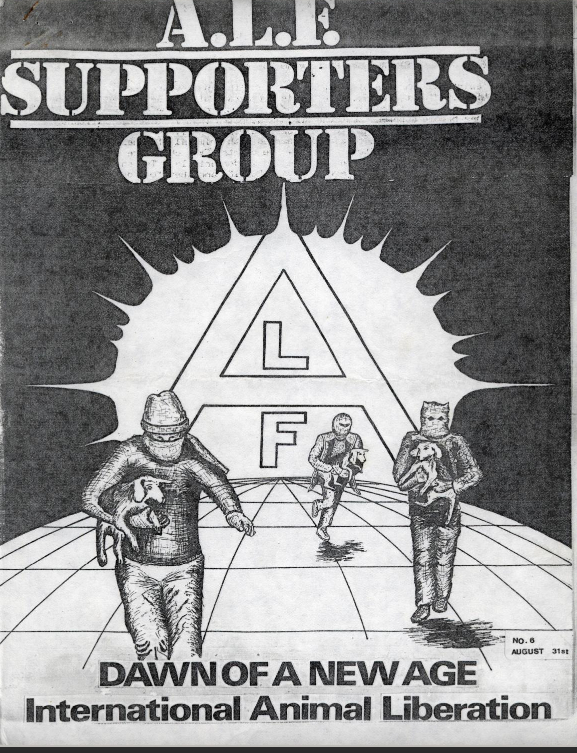
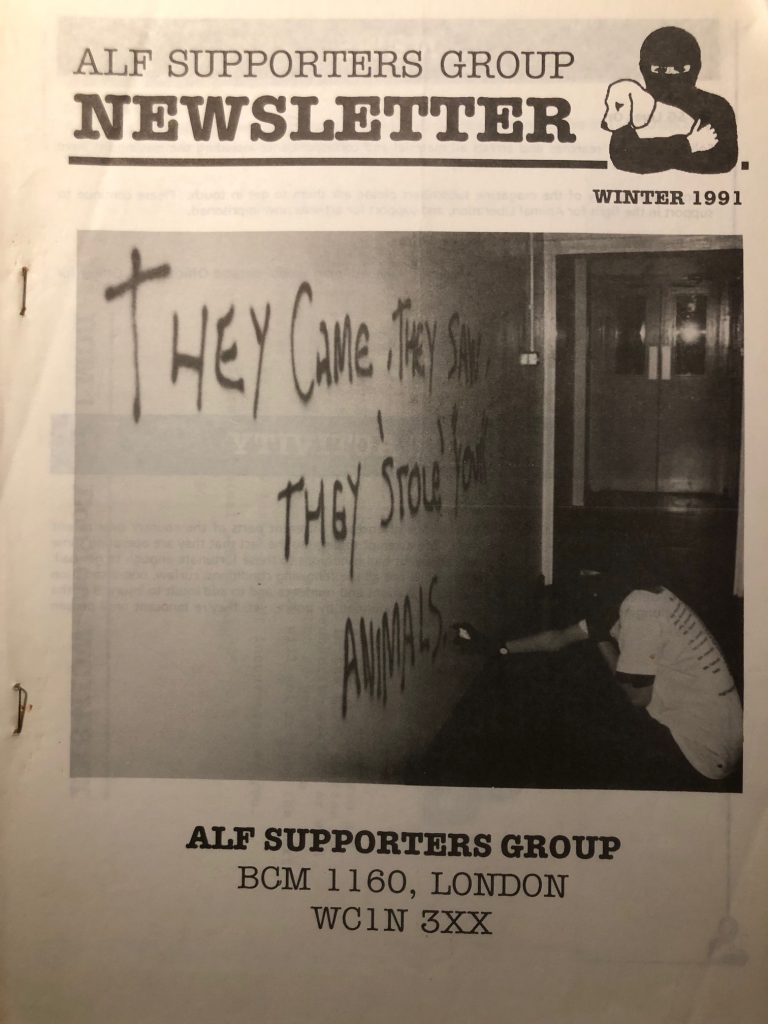
When she became a mother, her life completely changed. She wanted the best for her baby son. She decided that, though she couldn’t have weekends free or risk arrest, she could contribute to the animal rights movement in other ways. From mid-1985 to around 1987 she helped the Animal Liberation Front Supporters Group (ALFSG).

She understood it to be raising money for rehoming liberated animals, supporting prisoners, and for direct action. On that last point Jacqui is clear she doesn’t mean hurting people but, in line with the Animal Liberation Front principles, of committing criminal damage as economic sabotage:

‘Get them where it hurts, in their pockets! They love money so much they would stoop to that level, let them! Let them pay for it!’

She’s unsure whether the work the ALFSG did was legal or illegal.

MOVE TO DAGENHAM

In the spring of 1986, when their son was about six months old, Lambert took Jacqui and her possessions to move into her nan’s house in Dagenham. Her nan had moved out, Jacqui would claim housing benefit and pay it to her dad, but not have to pay any rent of her own.

The plan was that the young family would live there together. Lambert was supposedly a poor cash-in-hand gardener. The arrangement seemed ideal.

She says the house was quite basic and unmodernised, but far better than where she’d been living. It had a garden and seemed a much more secure place to bring up their son.

Lambert gave Jacqui frequent payments. There was no set amount, there would occasionally be more if she had a particular bill to pay.

Lambert says these payments were made by cheque but Jacqui scoffs at the very notion of it:

‘He didn’t even believe in birth certificates! How about chequebooks? Chequebooks? …

It doesn’t fit in, does it, with the anarchists. But anyway, no. Absolutely I would have fallen over in shock if he had said, I have a cheque, with a bank. Because he was so against all that.’

She is certain that he gave her regular payments in cash. It’s notable that the Special
Demonstration Squad expenses were paid out to officers in cash, and this may be the source of the money.
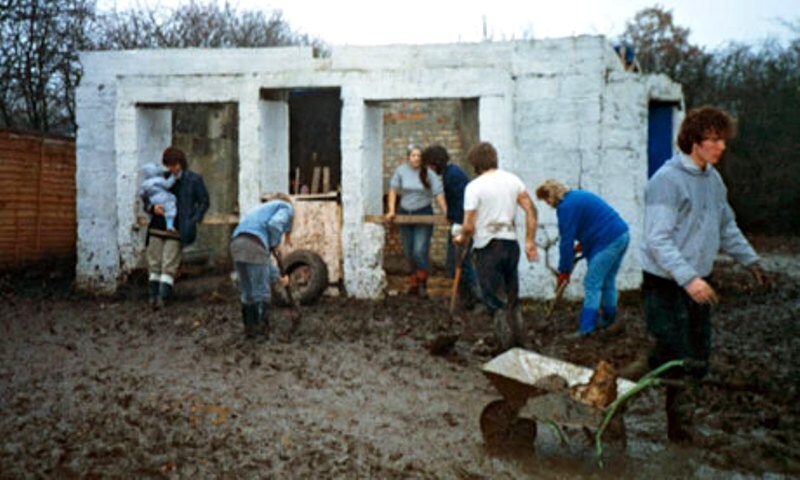
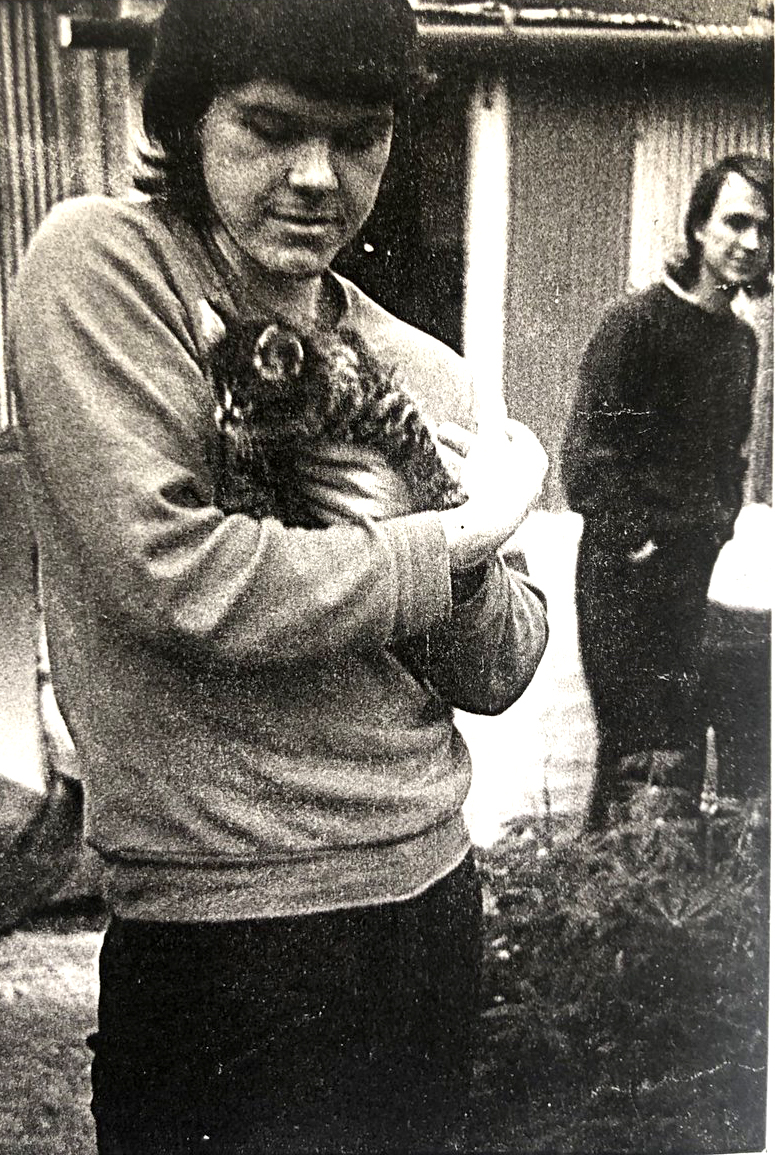
Bob Lambert (far left) with baby TBS at Hopefield animal sanctuary

Bob Lambert (far left) with baby TBS at Hopefield animal sanctuary

She thought he was a loving, present and committed father. She trusted him to take TBS out to animal sanctuaries and other places. She trusted Lambert not to take him anywhere risky, and that the people at animal sanctuaries were compassionate and loving.

There are photos showing TBS with Lambert and other activists at Hopefield Animal Sanctuary. Jacqui describes one Lambert had taken for her of TBS on a Shetland pony.

Jacqui went away to Italy for a week with a friend, and left TBS with Lambert. She is still mystified about how this worked – he had a child for a week, he surely must have stayed away from work and his family the whole time, presumably being paid overtime.

She was increasingly bothered by his apparent immaturity and deliberately living in poverty, something she’d had no choice about growing up in:

‘I thought he needed to get a proper job. You know, I thought, God, you’re like 30 – how long is this going to go on for, you living like this? And things that I found romantic and this like Van Morrison thing, I found irritating.’

As their relationship they deteriorated, they argued more. Lambert would tend to walk away and Jacqui would feel very guilty, as it seemed like she was letting her son down by pushing his father away.

Jacqui would get annoyed by Lambert’s apparent aimlessness. They would argue and he would leave. She would go back to him, and the cycle would then repeat.

ENDING

She ended their relationship at the start of 1987, or possibly earlier:

‘It didn’t suddenly stop. There was no big row or anything like that. It was like a damp squib really.’

She was keenly aware of the difficulties and stigma faced by single mothers – they were a favourite tabloid bogeyman at the time, relentlessly portrayed as a feckless drain on society – and this is why she didn’t end it sooner.

Jacqui says Lambert seemed very distraught by it ending and yet also resigned to it. He said ‘it had happened again’, a reference to his story about having another ex-partner and child living in Australia.

Jacqui was very clear that she wanted him to stay in his child’s life, and that he was always welcome to be in contact, whatever else happened in future.

Lambert would pick TBS up from nursery or Jacqui’s parents and take care of him.

Lambert and Jacqui still had a sexual relationship after this split. He would offer to babysit TBS while she went out with friends:

‘And then, obviously, I had had a drink, there was one double bed. I would get in the bed and, well, you can make up your own – it just sort of happened. And I might regret it the next day, but that’s how it happened.’

Other times, Lambert would offer to bring round a takeaway and she understood this to mean that he would turn up with an Indian meal and a bottle of wine, then stay overnight.

LAMBERT AND BELINDA

Lambert met Belinda Harvey in April 1987 and they soon began a sexual relationship.

Jacqui assumed that he was seeing other people by this time:

‘I sort of guessed. I was as well.’

However, she didn’t know of Belinda’s existence until the truth all came out in 2012. She says she wouldn’t have been jealous of Belinda at all:

‘I wouldn’t have been angry that my son’s father was seeing another woman. I have had other children since and I have split up, and those men have gone on to make new relationships and I have always been happy – I have always tried to love my children more than I hate whatever it is with their dad.’

Beyond her personal feeling, she wouldn’t have had any jealousy about Belinda spending time with TBS, either:

‘I would have been more relieved with that than that he was with some of the activists!’

Belinda gave evidence to the Inquiry in November 2024, the same week as Jacqui.

DEBENHAMS

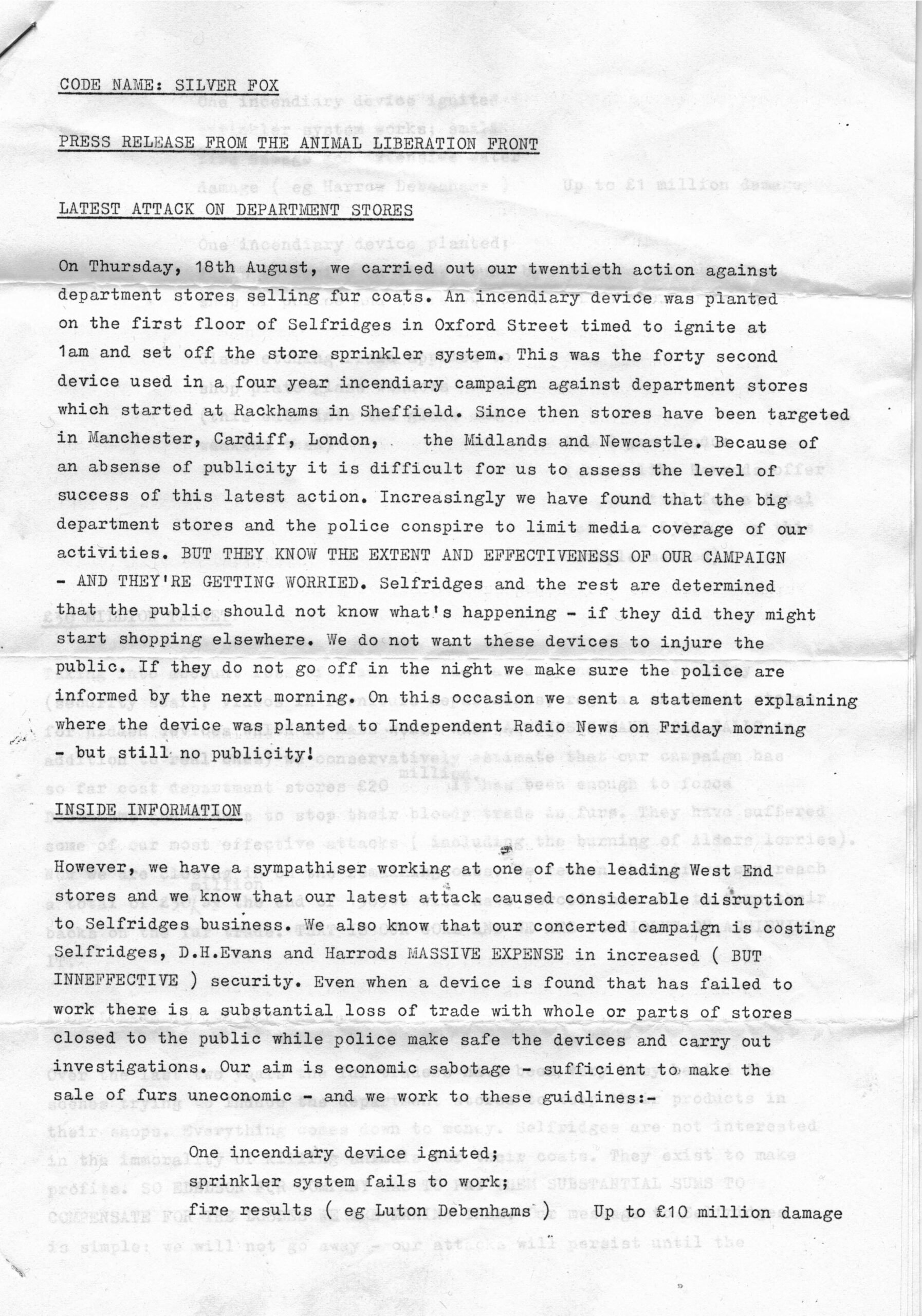
We move on to the subject of the Debenhams attacks. In July 1987, an Animal Liberation Front cell that Lambert was infiltrating planted three timed incendiary devices in Debenhams department stores in protest at their sale of fur. They were designed to go off late at night and cause just enough smoke to set off the sprinkler systems, and ruin stock with the water damage.

At one store, in Luton, the sprinkler system wasn’t working so the fire took hold and caused extensive damage.

Before we even start discussing it, Jacqui is weary of the topic:

‘Bloody Debenhams. Debenhams is used as an excuse for all this. Never has so much been discussed and money spent on so much to do with something that nobody was hurt.’

By this time, Lambert and Jacqui were no longer a couple but they were still co-parenting their son:

‘Looking back now I think Bob was keeping me out the way. For obvious reasons. Because things that I know about, that – he doesn’t seem to have reported on me. I mean there is no reports on me after TBS is born.’

This is true even when she was with him at events he reported on, such as a picket in the Wapping printers’ dispute. She assumes this is because if she was arrested and imprisoned like other activists there wouldn’t have been anyone to look after their son.

He occasionally brought activists to the house, mostly when she was out at work. He had always had a key.

She knew some of them – she saw Geoff Sheppard and Paul Gravett there, who are confirmed as being part of the cell. She remembers that Lambert really liked Sheppard and spent a lot of time with him, but she found this ‘bromance’ puzzling.

She thought that Sheppard and Gravett both looked up to Lambert, who appeared to ‘be the brains’ of the group.

SHE KNEW THE PLAN

Jacqui knew that Debenhams had been given a warning not to sell furs, and she knew that the plan was to set incendiary devices in the shops to set the sprinkler systems off.

Asked who she heard it from, she goes uncharacteristically quiet, and says she helped the ALF Supporters Group, and also heard things from activists back in Hackney via Lambert who was still living among the activists.

Though Jacqui approved of the Debenhams campaign, she wasn’t happy about the cell having meetings in her house. She was worried, partly because of the prison sentences being given to animal rights activists and partly because she didn’t want her son to be anywhere near where devices were being manufactured:

‘I didn’t want TBS around them, because he was a toddler, yes, and he was coming up to two. And I didn’t want him around where things like that were being made. Because he’s a toddler. He could just grab something, right. They can just grab a hot cup of tea and that is it, they are scalded for the rest of their life.

So although I was supportive, I didn’t want TBS around it. And I didn’t want Bob, the risk of Bob, and he assured me that he wouldn’t be. Although Bob was helping with the organisation and things like that, he wouldn’t do it and he says he didn’t do it.’

So if she was insisting on such assurances from Lambert, it means she knew that he was involved in making these devices?

‘I must have done.’

SUPPORTING THE ACTION

Jacqui makes it clear that she is ‘proper anti-violence’ and would never have been supportive of any action that would harm anyone. She supported the action against Debenhams because it was an attempt to stop them selling fur coats. And it worked!

Lambert told her he was significantly involved in organising the campaign but assured her that he wasn’t ‘stupid enough to get nicked’. She presumed that he would just be driving, and points out that she wasn’t aware at the time that he would still be guilty of conspiracy.

Pushed on this point by Monahan, Jacqui pushes back because Lambert has subsequently told his account to her and may have altered her memory:

‘I can’t force a memory because I now have all my “2012 memories” where obviously I have had this discussion.’

Asked why she never tried to talk Lambert out of it, Jacqui bluntly says she supported the action. Responding to whether she was impressed by Lambert, she considers her later career and elaborates:

‘I admire all the animal rights people that have done prison sentences for what they did. Because the prison sentence is completely disproportionate to the sort of sentences that I was dealing with when I was doing child protection and child abusers. Completely disproportionate. So I am impressed with them and I would try to do my best to send money to supporters’ funds and everything like that’

Asked who was in the cell, she confirms the names Lambert told her – Sheppard, Gravett, Andrew Clarke and Helen Steel, who Lambert frequently reported as being involved in things she had nothing to do with. She says she saw all of them meeting at her house except Steel.

She’s said that people didn’t usually talk about their involvement in ALF actions:

‘But I was the mother of his child and I thought I was trusted.’

She knew the three stores that would be targeted, but says she only heard about the fourth one more recently (Paul Gravett told the Inquiry that he was assigned to Debenhams in Reading but, due to train delays, had been unable to get there before closing time so dumped his devices in a canal).
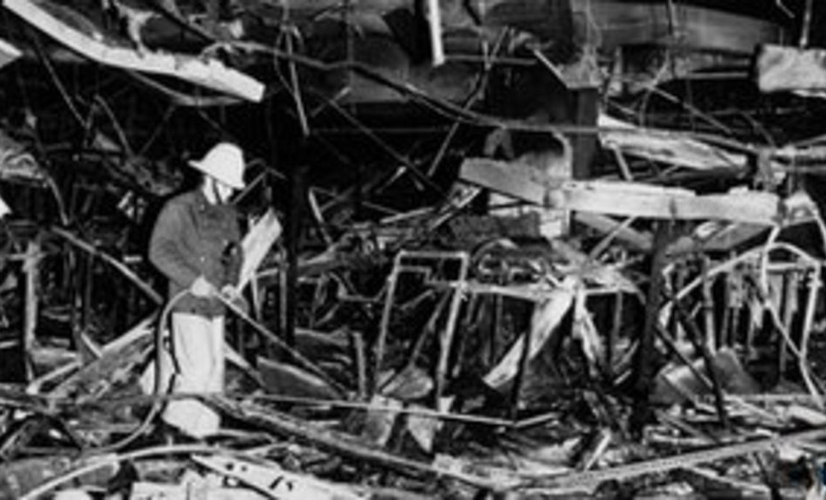
Firefighter in the wreckage of Debenhams Luton store after 1987 incendiary device placed by Bob Lambert's Animal Liberation Front cell

Firefighter in the wreckage of Debenhams Luton store after 1987 incendiary device placed by Bob Lambert’s Animal Liberation Front cell

On the day of the attacks, Jacqui remembers that Sylvia Martin rang and told her to turn on her ‘wireless’, saying ‘it’s happened’. This implies Sylvia knew about it in advance too.

One of the stores was Jacqui’s local Debenhams, in Romford, only ten minutes away from her house. She raises the possibility that perhaps that’s why it was chosen, because it was convenient for Lambert to evaluate.

As soon as she learned that the Luton store had been seriously damaged because the sprinklers weren’t working and the fire had spread, she feared there might be serious repercussions for the activists.

She says she was ‘frantic’ and ‘desperate’ to get hold of Lambert, but couldn’t. He eventually arrived at Jacqui’s:

‘It was weird. He was sort of cool really. He wasn’t like flustered. He was sort of confident.’

Asked what Lambert specifically said to her, Jacqui responds haltingly:

‘That he, that, that – that it wasn’t him.

He just assured me that I had nothing to worry about. Nothing was going to come back to me or TBS. We weren’t in the thick of it where the police might start knocking down doors and things like that… he said it in such a way that I just assumed it was the truth.’

AFTERMATH – PREPARING TO LEAVE

Jacqui says Lambert wasn’t the same man after Debenhams. It seems he moved into the phase near the end of a spycops’ deployment where they feign a breakdown as a prelude to having a plausible reason to move away forever:

‘He was having a breakdown and I weren’t noticing it, that’s how I would have said it now. Obviously he had to make me more aware to get my attention.’

He was always telling her that he was troubled, and he’d never do anything to put her or TBS at risk. He’d suddenly look off into the distance, and when asked what was wrong, he’d talk in a very slow and stuttery way, saying his head was all over the place.

He told her about doors being kicked down in police raids. But never his own, she didn’t even know about his Graham Road address that was raided.

He still came round two or three times a week to take care of TBS. However, there was a period when he didn’t show up for a couple of weeks. She remembers her mother – usually a meek person – having a go at him for this, saying it was a very long time in the life of a toddler. But TBS was very pleased to see his dad and ran over for a cuddle.

She notes that TBS wasn’t talking yet, and that will have made things easier for Lambert:

‘I expect now in hindsight it was getting to the stage where that was going to change. TBS would like start telling me he had been to Belinda’s, or he had been there. He would start telling me things he [Lambert] didn’t want me to know.’

The Inquiry Chair, Sir John Mitting, asks Jacqui to be specific about how she knew Lambert was involved in the incendiary device campaign:

‘Because he told me.’

Mitting wants her to explain how she can be so certain:

‘That is what we would talk about, when we finished talking about TBS or whatever else was going on. I still saw it as his – obviously I didn’t know he was a police officer – but I used to see it as that was sort of his job.

It was the reason why everything that had happened in our relationship, including not being there to register our son’s birth, was because he was so committed to activism, namely anarchism and animal rights.

So therefore, it would have been – I mean, to me he seemed to have given up me and almost his son for it. So I just knew that was something he was passionate about. So I would ask him about it. Like partners ask each other about hobbies or whatever, and I was interested to know. And he knew that.’

Speaking about Lambert’s role, Jacqui once again stumbles to say it to the end:

‘He did lead me to believe that he was not – not – because he named who was. He was not – that it was going to be three shops.’

Mitting draws her back and asks her to say it in full, which she does:

‘He was not going to be the person planting the devices…

And I, you know, it’s irrelevant, but I still sort of, I still believe that. But then obviously I could have been gaslit.’

Monahan picks up this point, asking Jacqui about her discussions with Lambert since finding out the truth in 2012:

‘I can only say what he told me. And you know, we are talking about a professional liar.

Since 2012, he has promised me over and over again, and in the presence of his wife, with both of us interrogating him, right… But he’s said he’s been truthful. And that’s it. But I do know he’s a very skilful liar. Obviously, I am not that stupid…

I am no good judge of character, look what has happened to me… But things that he said and the way he said it, I believe him.’

She says Lambert has not rowed back on admitting his organisational involvement in the Debenhams attacks.

But if he didn’t plant the Harrow device, who did? There would have to be another mystery member of the cell that nobody has mentioned at all.

AFTER THE ARRESTS, ABANDONMENT

Geoff Sheppard and Andrew Clarke were arrested for the Debenhams attacks on 9 September 1987.

Jacqui recalls that, in mid-October, Lambert had taken TBS out and said he wanted to talk to Jacqui when he got back. He told her he was leaving because people were being arrested for the Debenhams campaign and it was only a matter of time before they came for him. She said that he shouldn’t worry because he hadn’t planted the devices, but he said ‘the police will fit you up’.

Lambert told Jacqui that he had lots of anarchist contacts in Spain. She got the impression it was Barcelona, though a letter later arrived from Valencia. He told her he was going on the run immediately:

‘My mindset was everyone was making a big fuss over nothing. Right. It wasn’t their fault that the store burnt down. Their sprinkler system should have been working…

I never thought for one second he would cut himself off from TBS. I never, ever thought. If he distanced himself from me a bit, it almost like at that point was sort of oh, that’s good, I wouldn’t have him bothering me. I honestly thought that he would, because that’s what he told me, he would lay low for a little while and then he would appear.’

She says this would only be an extension of what was already happening:

‘I could never get in contact with him anyway. He was always missing. He was always missing, by that time. Because he was a busy boy, wasn’t he? He had all these others. He had Belinda.’

When he last saw Jacqui, he left her a contact address:

‘He gave me an address where, if there was an emergency – and I expect he meant an emergency with TBS – that someone from there would be able to contact him and obviously if it was like a life and death emergency, I assume he would appear. But I always thought he was going to appear anyway. But, yes, he gave me this address.’

It was the Seaton Point flat, where he lived with Belinda Harvey for several more months.

Lambert’s witness statement to the Inquiry says:

‘The payment, ie the regular contributions, continued until about October 1987. In October 1987 I received a letter from ‘Jacqui’ in which she told me that she was getting married and that she and her husband-to-be wanted to bring up the child as their own. I was asked if I would consent to her husband adopting the child and I agreed. It was after this that I stopped making the monthly payment with ‘Jacqui’s’ agreement.’

Jacqui says it’s total nonsense. She didn’t even meet her future husband until February 1988.

She also describes how the adoption took a lot of time and effort because the biological father had not given permission and a huge investigation took place to try to find him.

Mitting interjects to assure her that there’s no dispute over who’s telling the truth here:

‘Plainly you know the details of your own life. Of course you do.’

IMPACT

It was devastating for her and TBS. She tried hard to find ‘Bob Robinson’ over the years. Some while later, after her husband died and TBS lost a second father figure, the boy developed a deep yearning to find his biological father.

The law firm she worked for used ex-cop private detectives in personal injury claims, and she got one of them to look for ‘Robinson’, believed to be among Barcelona anarchists.

The detective told her there was a European arrest warrant out for ‘Robinson’ which made it impossible to track him down.

Monahan pushes on this point, confirming Jacqui’s certainty, as it seems to be the first anyone’s heard of such a thing and it would have meant the police misleading the warrant’s authorities about the identity of ‘Robinson’. Perhaps they did that, or perhaps it’s just something Special Branch told the detective to keep him from looking further.

DISCOVERY

Helen Steel was one of those who’d exposed Lambert in October 2011. She tried to find Jacqui to tell her, but found no leads. Shortly after his exposure, Lambert made a public apology to London Greenpeace and a woman he had a relationship with, but not to Jacqui. He did not contact her himself.

By 2012, Jacqui had long since graduated from law school and was teaching. She was approaching her 50th birthday, her kids were more or less grown up, she saw some peace coming. Then everything was shattered again:

‘14 June 2012 at about 4 o’clock when I got home from work. As it was June, it was nice, and I saw his picture in the paper and that was him. And that’s the first I heard.

Nobody from the police had contacted me to say this was out there and this was going to happen, and everything. No one let me down gently.’

She was on her own. She rang her parents who got the same newspaper. They dug out their photos of TBS and found the ones with TBS and Lambert, and confirmed it was him.
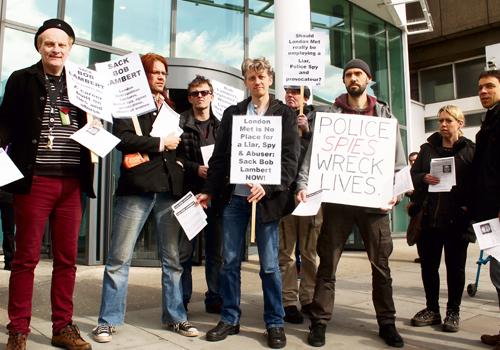
Protest against Bob Lambert's employment at London Metropolitan University, March 2015

Protest against Bob Lambert’s employment at London Metropolitan University, March 2015

The newspaper article had been prompted by Caroline Lucas MP naming Lambert as being behind the burning of Harrow Debenhams.

Jacqui tried to phone Lucas at the Houses of Parliament.

She googled Lambert and saw he was a lecturer at London Metropolitan and St Andrews universities. She watched videos of his recent talks on Islamophobia. It was undeniably her man.

Jacqui didn’t sleep the night she found out.

The next morning, she rang the University of St Andrews and spoke to Lambert’s office. Ten minutes later he rang her back. ‘How’s it going?’ was his opening gambit.

Asked how finding out the truth about Lambert affected her, Jacqui describes:

‘A big boot coming down from heaven and just destroying everything. Because I had been through the trauma of being widowed so young.’

Though she knows rationally she did nothing wrong, emotionally she feels like she’s failed her kids by choosing fathers who didn’t stay around.

WHY DIDN’T THEY ADMIT IT?

Jacqui is furious with the Met for trying to have TBS’s claim against them struck out, adding further distress at huge public expense to try to deny what everyone knew was true. The physical similarity of TBS and Lambert was so plain to see in court:

‘All the times we have been dragged through courts because the Metropolitan Police had tried to get it struck out, and even though my son was on Legal Aid, because he was a student, the Metropolitan Police brought the big guns in, the KCs to try to say we were talking rubbish.

To get it struck out twice before the High Court and then they appealed. So we were dragged along. But all the lawyers in the court could see, looking at him, people were going “Bloody hell, don’t they – they do, they really, really look alike”.’

At this point the hearing was reminded that the building was about to close. Mitting says that Jacqui had already written eloquently about the impact of finding out the truth in her witness statement, so needn’t continue.

But Jacqui isn’t finished. She wants to know how long she was spied on after Lambert disappeared from her life. She said Lambert knew things from after his deployment ended. He knew her married name, and that her husband had died, which didn’t happen until 1993. It seems he hasn’t told Jacqui how he knew these things.

She saw this in emails he’d sent to Guardian journalists who were covering the spycops scandal. Lambert’s son had died six months earlier of a genetic condition and he was asking the journalists to help trace TBS to warn him to get tested for the condition.

It’s worth mentioning that Lambert could have hired a private detective who would do a better job than newspaper reporters, and that he’d had six months to do so.

WHY DIDN’T THEY EVEN TELL HER?

Jacqui launches into an electrifying impassioned plea for truth:

‘But no one bothered to come and find me. This was out for months and months and months and nobody – it really wasn’t the journalist’s job to do that. At no time. It was the Metropolitan Police’s job to do that and not to let me find out and to let TBS find out that way as well. It wasn’t just me…

Everything about my life has just been absolutely ruined. I will never get over it. I don’t really have a life any more…

I want to know who knew at the Metropolitan Police, and who was organising this. Now I have asked Bob and he always says nothing – everything he did was authorised. And all he will say, he won’t obviously give me names because he’s signed the Official Secrets Act or whatever. He said it went to the highest level. And I can work out for myself what that, but, he knew. He just knew.

He was spying on me. He must have. Because how does he know these things? He may not have been doing it himself, but someone was in the Metropolitan Police. So why couldn’t someone have contacted me when this all started to hit the press in 2011 and allow me to find out the way I did? That’s my question.’

Sir John Mitting points out a representative of the Metropolitan Police is in the room. He tells her to answer Jacqui’s question. The lawyer says it will take some time.

This wasn’t enough to placate Jacqui:

‘Why didn’t they bring it out in the high court then? Why did they try to strike it off? Why didn’t your KC -’

But Mitting interrupts her, saying ‘we can’t conduct an exchange of this kind’. He assures Jacqui that he knows the Met lawyer is a person of integrity and that answers will be forthcoming.

He thanks Jacqui for her long day of evidence and the hearing is over.


Lambert’s undercover deployment was regarded very highly by the Metropolitan Police. After it ended, he was promoted to running the SDS. One of the officers he deployed, HN43 Peter Francis, said Lambert ‘did what is hands down regarded as the best tour of duty ever’.

Lambert received a commendation, and an MBE for ‘services to policing’. He then went on to hold academic positions at two universities. After the truth about his role as a spycop was revealed, he resigned both posts in 2015.

UCPI – Daily Report: 26 November 2024 – Belinda Harvey

Bob Lambert and Belinda Harvey

Spycop Bob Lambert with Belinda Harvey during their relationship, 1987 or 1988

Belinda Harvey was deceived into a long-term intimate relationship in the late 1980s by undercover officer HN10 Bob Lambert ‘Bob Robinson’.

She is one of the group of eight women who took the first legal action against the Metropolitan Police for spycops’ abuses.

She is also one of the five women who told their stories in the book and documentary series The Undercover Police Scandal: Love and Lies Exposed.

Belinda was questioned by the Undercover Policing Inquiry on Tuesday 26 November 2024.

Hearing Belinda’s evidence was a useful reminder that it wasn’t just ‘activists’ whose human rights were abused by the spycops.

Belinda’s background

She tells the story of being a young woman in London in the 1980s, a recent graduate starting out on her career, who met a man at a party and, in her words, ‘fell head over heels’ in love with him.

She is adamant that she was not an activist at all. She had opinions, and enjoyed talking about politics with her friends. She even went on a few Campaign for Nuclear Disarmament (CND) and anti-apartheid marches, but this kind of thing was not central to her life in the way that it was for many of the other Inquiry witnesses we’ve heard from.

Belinda came from a Northern working class family, and recalls how her life changed when she went to Lancaster University. This was where she first met people with different backgrounds and perspectives from her own.

She found it a stimulating time. She was interested by all the new and different ideas she encountered. She met vegetarians, and having learnt about factory farming, became a vegetarian herself.

She also came across the women’s liberation movement, and says of these women’s groups:

‘They were too radical for me. For instance they used to have parties where like men weren’t allowed, which is to me just, you know, anathema, why would I want to go to a party where there is no men?’

These remarks were greeted with amusement in the hearing room.

She threw herself into university life, with its lively social scene, and made lots of new friends. One of them was a politics student called Simon Turmaine, who became one of her best friends. They both enjoyed discussing political issues and the state of the world.

After graduating, she spent a year working in the United States, and then moved to London. She moved into a large shared house in Margery Park Road, in Stratford/ Forest Gate, with many of her friends from university. Simon was one of these housemates.

They were all working. Belinda was ambitious and focussed on her career. She’d got a job at the Central Electricity Board, and worked her way up a position in its payroll department. Her manager there promoted her and encouraged her to study to become a qualified accountant.

The Party

She was 24 years old when she met ‘Bob Robinson’ at a party in spring 1987. She recounted the chain of events that led to this meeting.

Bob Lambert and Belinda Harvey by a lake, 1987 or 1988

Bob Lambert and Belinda Harvey by a lake, 1987 or 1988

Simon invited her to come to the party with him. It was held at the house of someone they both knew from Lancaster, a woman who Simon was interested in. Belinda was a bit reluctant as it was a Monday night, and she had work the next day. However she was young and single, and enjoyed parties, so he managed to persuade her to go.

She and Simon had planned to catch the bus home, and as it got late, he went off to speak to the woman he was keen on, leaving Belinda alone for a while. She’d noticed a man looking over at her, and remembers thinking he had a ‘really nice smile’. She was pleased that Bob came over to talk to her, says he was ‘tall and good looking’, and also confident and charming. It was clear that they were interested in each other.

They fell into easy conversation – ‘no silences or anything like that’ – about music and political issues, and she says they had ‘real chemistry’ and rapport.

By this time she’d missed the last bus home, but rather than having to get a taxi, she and Simon were given a lift home by Bob. She sat in the front of the van with him. She remembers telling him her age, and finding out that he was 29, the same age as her big sister.

She is surprised to be told by the Inquiry’s lawyer that Lambert was actually 35 years old at this time (both his real age but also his ‘cover age’ used in his fake identity). She says she never realised there was such a big gap between them – adding that this ‘would have been a sort of red flag’.

She still has her diaries from this period, and knows that she wrote Bob’s birthday in one of them, but doesn’t remember them celebrating his 30th.

During that van journey he also told her that he was a vegan, which was still very unusual at the time.

‘I remember being quite taken aback. Because I didn’t really know anyone else who was a vegan.’

When he dropped her off they kissed, and arranged to see each other again soon. She doesn’t think he came in that night, but it was clear that this was potentially the start of an exciting new relationship, something she was very happy, and hopeful, about. She’d suffered heartbreak before this, and was very keen to find a life partner.

The Lies Begin

In his witness statement to the Inquiry, Lambert tells a different story, saying

‘That was the beginning of a friendship that developed into a sexual relationship subsequently’.

Belinda says it was

‘Never a friendship, no way.’

Lambert also claimed in his statement that he met Belinda ‘at a social gathering organised by the squatting community’.

She says ‘it didn’t look like a squat at all’; if it was, she had no idea. She remembers it being ‘quite nice’, and just like other large shared Victorian houses where people like her lived. She didn’t really know anyone at the house party apart from Simon, but says some of the people seemed to be a bit ‘alternative’, and Bob himself was ‘scruffily dressed’.

Lambert also claimed that she was ‘connected to his target group’, meaning London Greenpeace (LGP). He didn’t ask her if she was an activist during that first conversation.

She recalls that she and Simon discussed this before Simon’s death, trying to work out if the woman who held the party was maybe involved in animal rights or LGP, but could never be sure.

In his 2013 interviews with ‘Operation Herne’ (the police’s in-house investigation of the spycops units), Lambert went even further, claiming that when he first met Belinda,

‘She was, you know, perhaps unusual in she was squatting. It turned out she was squatting at a house around Stoke Newington/Hackney, and then she moved to another squat, so she was kind of an established member of that squatting scene.’

He refers to them as forming a ‘kind of anarchist squatting Animal Liberation Front supporting environment’.

She says this is absolutely not true. She lived in a house in Forest Gate, paying rent.

‘I had never even been to Stoke Newington at that time.’

She provided a letter from Bob as an exhibit [MPS-0737136] to ‘Operation Sparkler’ (another internal police inquiry, this time into the allegations of Lambert’s involvement in the use of incendiary devices):

It says ‘Tuesday evening’ at the top (i.e. the day after the party) and although he says ‘I’ll limp downstairs to the letterbox and post this card to you’, she remembers being told by Simon that it had been hand-delivered to the house the next day. She says she was ‘absolutely delighted’ to hear from Bob so soon.

Dinner Date in Stoke Newington

Bob Lambert's first letter to Belinda Harvey

Bob Lambert’s first letter to Belinda Harvey

Lambert rang her up straight after this and they arranged to go out for dinner together. He took her to a Lebanese restaurant in Stoke Newington Church Street that served vegetarian and vegan food. She describes this dinner date as ‘wonderful’ in her statement, and says the evening was romantic; they held hands after leaving the restaurant. She paid for her half of the dinner, as being an independent woman was important to her.

He told her more about his activism during dinner – that he was involved in London Greenpeace (LGP) and explained how it was a bit different from the mainstream ‘Greenpeace’, an organisation which, like CND, she felt broadly supportive of.

Asked by the Inquiry if he’d said he supported the Animal Liberation Front, Belinda said she couldn’t remember. Did he tell you he was an anarchist? She thinks he might have said something about not voting. She had been brought up to believe strongly in the importance of voting, and thought the anarchist habit of not voting was ‘stupid, really’.

However, she wasn’t put off by his politics. She says she was ‘quite impressed’ that he had principles, but also she was ‘quite impressionable’. She sometimes felt guilty about not going to as many marches as she felt she should.

Belinda says ‘he kind of drip fed’ her information about what he did for a living; early on he mentioned sometimes driving someone else’s minicab; later on he told her about casual gardening jobs. According to him, campaigning for animal rights was the most important thing he did.

She talked about how her working class background meant that earning a decent salary was important to her; she didn’t have the middle-class luxury of parental support for an alternative lifestyle.

She didn’t tell him about her job at the electricity board (with its nuclear power stations) at first;

‘It was going so well that I didn’t really want to spoil it.’

She remembers feeling relieved when she finally told him and he didn’t seem to have a problem with it.

She suspected that he, like some of the students she’d met at Lancaster, was pretending to have less money and be more working class than he really was. ‘He seemed fairly middle class and well educated’ she recalls. In some ways, she thought he didn’t mean everything he said – ‘I thought a lot of it’s just bragging’ – and would grow out of it.

She agreed to go home with him, to his flat in Graham Road, Hackney. This was a bedsit above a barber’s shop. She was quite shocked by its grubbiness: ‘It wasn’t very nice’. She recalls a single mattress on the floor, a tiny kitchen shared with someone else, a geyser for hot water, filthy windows.

She says it didn’t match his persona; it seemed ‘poverty stricken’ but he didn’t. She tried not to let him see how shocked and horrified she was. She much preferred spending time at her own house, as it was so much nicer, so didn’t go to the bedsit very often.

McLibel Leaflets

She remembers seeing huge piles of ‘What’s Wrong with McDonald’s?’ leaflets there. She picked up one, and at first glance, thought it ‘a bit far-fetched and quite funny’.

After some research, she realised that it was generally truthful. However she didn’t think McDonald’s were intrinsically worse than any other multinational company.

What's Wrong With McDonalds leaflet

‘What’s Wrong With McDonalds?’ – the leaflet that caused the McLibel trial

He brought some of these leaflets round to her house and she says ‘everyone laughed at them and thought they were funny’. She has heard recently that there were different versions of this leaflet but only remembers that one.

Sometime that summer, whilst walking in the park with her, Bob ‘started laughing’ as he told her that he, along with one other person, had actually written it. She didn’t understand why he thought it was so ‘hilarious’ and he never explained. However she wasn’t surprised, or bothered.

McDonald’s were given copies of the leaflet and sued London Greenpeace for libel. It was the longest trial in English history (see the McLibel documentary for more). The fact of Lambert’s involvement, and of spycops infiltrating London Greenpeace, were kept secret from the court.

In her statement to the Inquiry, Belinda says was quite impressed by him writing the leaflet; at least he wasn’t a ‘shrinking violet’. Lambert also told Simon that he’d been responsible for writing them.

Belinda doesn’t remember him explicitly telling her not to tell people he’d written it, but got the impression that he didn’t want this info shared as it was meant to be a more collective effort and he wasn’t big headed.

Their Relationship

Belinda remembers Bob being very demonstrative, kind and loving. She remembers their relationship as ‘idyllic’, and Bob displaying a lot of empathy and emotional intelligence. He was always interested in her. He never disagreed with her. They never argued. She thought they were soulmates, ‘so well matched’, and that this feeling was mutual.

She now says in her statement that this seemingly ‘idyllic’ relationship gave her warped, completely unrealistic ideas about relationships, that nobody in future could possibly live up to. For years afterwards, she found herself comparing partners to Bob, who was ‘perfect’ in so many ways.

She is asked if she and Bob discussed contraception before becoming intimate. She told him she was using contraception; he never used condoms with her.

There was an incident that occurred early in their relationship in which Bob’s behaviour was not so perfect: he suddenly told her that he needed to have a serious conversation with her, and began insisting that she should be ‘faithful’ to him.

She recalls being surprised by this, because to her it went without saying (she spent so much of her time with him and had no intention of going with anyone else) but she was also offended, because he said he didn’t want to get HIV (the public awareness of which was growing at the time).

Bob told her about the relationship he’d had with the woman known at the Inquiry as ‘CTS’ – who was also much younger than him – and Belinda got the impression that he had ‘proper feelings for her’. That relationship ended when CTS went away to university, and supposedly they planted a tree together to mark its end. Belinda considered this a bit ‘soppy’.

Belinda gave Bob a key to her home, and he spent a lot of time there, four or five nights a week, sometimes disappearing in the evening – she thought he was off driving the cab.

He often hung out with Simon and chatted about politics, without Belinda always being there. Simon liked Bob, and thought he was interesting. She and Simon had a platonic ‘brother-sister relationship’.

Simon wasn’t so happy to come home one day and find Bob using their house to hold an activist meeting, without asking first. Belinda says she wasn’t as bothered about this as Simon and her other housemates, but recalls that there were a lot of people there, and she told Bob it couldn’t happen again.

Bob Meets Her Family

Belinda took Bob to Wales to meet her parents. She recalls that he looked a bit scruffy, and they were concerned to realise that he didn’t have stable employment. However, they accepted him, because it was clear that she really loved him.

‘My mum went out of her way to find vegan recipes for him. It was a joke’.

Belinda really wanted Bob to meet her granny, who was 99 years old and living in an old people’s home by the time, so took him there too.

‘It was really important to me that he met her and she met him, because I thought he was going to be my life partner and I wanted them to meet. You know, because I thought this was my future.’

She’s provided the Inquiry with some photos [UCPI0000037012], including one of Bob with her younger sister, who they stayed with. She got a good impression of Bob at first.

‘Then she said she didn’t really like Bob. Well she was the first person who has ever said that to me, but I should have listened. She said she thought he was a bit false and over jolly.’

There’s also a photo of Lambert at Glastonbury Festival in 1987.

She remembers him smoking roll-ups made with licorice papers, but never smoking weed around her. He told her he didn’t like the effect. He didn’t drink much either.

They also went to Cambridge Folk Festival together, in July 1988. She has some photos of them there with friends but she doesn’t like looking at these images – she recalls him doing something to her that weekend which she hadn’t consented to, and looking back she says:

‘I would almost say it was an assault, actually. I would put it that strongly’.

Bob’s Child with Jacqui

At some point, Bob told her that he had a young son – who’s now known to the Inquiry as ‘TBS’ – but felt guilty that he wasn’t a good dad. TBS lived with his mum, ‘Jacqui’.

Bob Lambert with Belinda Harvey's sister, 1987 or 1988. They stayed at her house together several times.

Bob Lambert with Belinda Harvey’s younger sister, 1987 or 1988. They stayed at her house together several times.

Bob used to go and pick him and take him out for the day. Belinda recalls that he did this often, about three times a week, in the summer of 1987. He often brought TBS, a toddler at the time, to her house, so she spent a lot of time with them both.

The Inquiry say they understand that this level of contact between Bob, Jacqui and their son stopped around October of that year, and Belinda agrees that sounds about right.

She’s not sure whose decision that was, and is unwilling to speculate. By this time he told Belinda that Jacqui had met someone else. Belinda got the impression Bob thought this supposed new man would be a better father figure for TBS, so was ‘quite pleased’.

At the time he told Belinda and Simon that Jacqui had ‘tricked’ him into the pregnancy, and said ‘he wasn’t ready for another one’. She thinks he wanted to discourage her from any ideas of having a child with him herself. She is now aware that he is a ‘total liar’.

Evidence from Jacqui and others has established that Lambert maintained a sexual relationship with her while he was with Belinda.

He used to ask Belinda to wait around the corner from Jacqui’s house if she accompanied him to drop off or pick up TBS, telling her that Jacqui might ‘kick off’ if she saw her. At the time she interpreted this to mean that Jacqui wasn’t entirely comfortable with the idea of her son spending time with another woman.

She and Jacqui have since met. Jacqui says she didn’t know that Bob was with Belinda at all. Belinda says that Bob told her the relationship with Jacqui had ‘only lasted a couple of months’ adding that:

‘It never crossed my mind that they were still having a relationship, in a million years’.

Bob’s Bachelor Lifestyle

Bob also ‘drip fed’ her information about his involvement in direct action. By the time he did this, she was already ‘head over heels in love’ with him, and imagined they’d be together forever. She thinks he mentioned hunt sabbing first. He didn’t mention more serious stuff like criminal damage until later, in 1988.

She thought a lot of what he said as ‘bravado’, so didn’t take it too seriously at first. She recalls that he told her about breaking butchers’ windows, something she considered pointless ‘vandalism’. She got the impression that he was a bit uncomfortable, not really into it, and thought maybe this was something he did in order to impress his activist friends.

She had concerns but thought, or hoped, this was ‘just a phase’ that he would get over, with her help.

‘To me he hadn’t quite grown up yet. Some men are like that, they don’t grow up until they are quite old’.

He told her very little about his family. She got the impression that he didn’t really have one, that one of his parents had died and the other had dementia. There were always excuses or reasons why she couldn’t join him on visits to the care home where his relative (either his dad or his uncle; it wasn’t clear to her which) stayed.

‘I should have been more inquisitive than I was’

She just accepted what he told her, and felt sorry for him. She thought he’d just ‘gone down the wrong path’ and that she could help him sort his life out.

Bob Working Away

Bob claimed to have a casual (and dodgy) arrangement to drive his mate Terry’s minicab sometimes, when Terry wasn’t using it himself, usually at night.

He told her that he wasn’t supposed to be driving it, and if he was ever stopped he would have to pretend to be its licensed owner.

Final page of a letter from Bob Lambert to Belinda Harvey with his map of their significant places

Final page of a letter from Bob Lambert to Belinda Harvey with his map of their significant places

As well as claiming to tout for trade illegally at Heathrow airport, he once told her that he had to go to court, as ‘Terry’, for a case which resulted in a fine (centred on the police stopping him in the cab one day and finding a load of stolen hairdryers in the boot).

It’s unclear how much of this story was true, and why he told her all this. But, as someone who did get prosecuted under a false identity as ‘Bob Robinson’, he had plenty of material to draw this anecdote from.

He also pretended to do gardening and landscaping work, and sometimes these jobs entailed working in other parts of the country. He once sent Belinda a letter [MPS-0737136] from Kings Lynn in Norfolk. His excuse for not phoning was that he’d left her number behind.

The letter included a hand-drawn map of London, with various places highlighted, including the Hammersmith Odeon. Belinda recalls that they went to see lots of live music together; she kept all the ticket stubs. The September 1987 gig referred to on the map was REM, one of her favourite bands at the time.

She really missed him while he was away, and loved receiving this letter, with its in-jokes and pictures, as she thought it showed how much he cared about her.

She missed him the next time he went away, this time for weeks, in the spring of 1988. He told people that he had a job planting trees by the motorway in Cambridgeshire. He sent a chatty letter to fellow London Greenpeace activist Helen Steel at this time, [UCPI0000037425] claiming to be in Ely.

There was one ‘work trip’ which lasted longer – at least a month – in the summer of 1988. Belinda thinks he might have phoned her this time (she doesn’t have any letters from this period). She completely trusted him.

‘I never, ever disbelieved anything he said.’

She found out since that Lambert went away on holiday with his real family on this occasion. She felt

‘So betrayed, just so naive, so stupid and naive’.

How Belinda Feels Now

She says ‘it’s unfathomable’ that he was being paid to work while he was spending time with her. She was utterly shocked that her taxes were being used by the police for this.

She still struggles to understand it now. The personal betrayal ‘is bad enough in itself’ she says, but she recalls that when she first found out who he’d really been she still thought there was some genuine feelings on his part:

‘At first we all thought, well, they did love us really, it was a genuine relationship. You know, it was genuine, they must, they loved, we loved each other. You know, for all of us it was very special relationships and then it was kind of a gradual realisation.’

Like the other women, she has since realised just how cruel and manipulative these men were. It’s only recently that she’s started to understand just how bad Lambert’s behaviour was.

‘I didn’t fully realise what he was capable of and how bad it was, to be honest. And even until just a couple of years ago I still thought there was some genuineness in the relationship’

Bob Amongst the Activists

She didn’t usually go to meetings with him, but did witness how Bob behaved in the company of activists. She saw how influential he was, especially with the younger ones.

‘You got the feeling people looked up to him and wanted to impress him’.

He was personable, articulate and ‘very confident’. He laughed and smiled a lot. She witnessed people ‘hanging on to his every word’ in social situations, and treating him as a ‘leader’.

Spycop Bob Lambert (right) at protest against dairy firm Unigate, 1980s.

Spycop Bob Lambert (right) at protest against dairy firm Unigate, 1980s.

It appears that Bob was keen to portray Belinda as an ‘activist’. In his Operation Herne interviews in 2013, he claimed she attended animal rights meetings with him.

She says he was always trying to persuade her to attend London Greenpeace (LGP) meetings, and there was one time when he essentially tricked into one. It was already underway, she only stayed out out of politeness, and she thinks she was there for less than half an hour. This was more than long enough for her!

He mentioned her in some of his reports, and we saw one example [MPS-0740045], about a big animal rights meeting at Manchester University in September 1987. This was held by the Federation of Local Animal Rights Groups, and as well as this Saturday meeting, there was some kind of party.

Belinda says she had very little interest in the animal rights movement – considering it a ‘waste of time’ – but remembers going to Manchester with him once. She thinks he might have been going to speak at a meeting, and she might have gone along to be supportive, but doesn’t remember what was said at it, or if she was even there.

In his report, Lambert said that local activists hosted the people who’d come from elsewhere, and there were opportunities for ‘experienced animal rights extremists’ to conspire. Belinda remembers the party, but no mention of the Animal Liberation Front or anything like that.

She had an old school friend who lived in Manchester, and thinks she spent time with her that weekend. She and Bob probably both stayed at hers.

She tells us that she also went out once with a hunt sab group, but spent the entire day in the Land Rover and didn’t do any sabbing. She remembers it as ‘social event’ and her motivations for this:

‘I wanted to impress Bob, to be honest’.

What She Knew about Debenhams

Firefighter in the wreckage of Debenhams Luton store after an incendiary device was placed by Bob Lambert's Animal Liberation Front cell, 1987

Firefighter in the wreckage of Debenhams Luton store after an incendiary device was placed by Bob Lambert’s Animal Liberation Front cell, 1987

One of the most serious elements of Lambert’s deployment was his role in an Animal Liberation Front cell. The group placed timed incendiary devices in Debenhams department stores that sold fur.

Belinda says that Lambert told her about the planned action at Debenhams stores about a month beforehand.

Bob explained to her that people he knew had managed to manufacture an incendiary device, and went on to tell her what their plans were, along the names of the other people involved in the ‘cell’. She says she didn’t really know Geoff Sheppard and Andrew Clarke.

She did know Paul Gravett, as Bob had introduced them to each other. However Bob gave her the impression at some point that Paul had been involved in the initial stages, and then had ‘dropped out’ or become less involved. There was something about Paul possibly being a police informer, but Belinda can’t remember exactly what was said about this. She thought there were three of them: Bob, Geoff and Andrew.

She knew that they planned to target four branches of Debenhams, and place one device in each, probably inside the sofas in their fur departments. She was told that these devices would be set off, but thought ‘they weren’t designed to set on fire, they were designed to let off smoke’ and this would set off the sprinklers, damaging the fur coats and rendering them unsellable.

His story was consistent every time he talked about it over the course of that month.

‘I have tried to dissuade him and he’s insisted that it was only going to let off smoke… the whole point was to set off the sprinklers, not start a fire’.

To her it sounded dangerous and she worried that somebody might get hurt. She remembers asking about this, and if there were security guards. Bob was ‘very insistent’ that there was no chance of anything going wrong. She says she was worried about him, and encouraged him to talk to Simon about these plans too, but doesn’t know if he ever did.

‘I didn’t even want to hear about it, but he used to talk about it a lot.’

He told her a lot of detail, far more than she wanted to know, and even showed her sheets with instructions of how these devices were made. She didn’t approve of the idea at all, but at the time thought that his over-sharing was a sign that he really loved her.

She remembers him saying ‘I’m in it too deep’, and now wonders if he was secretly hoping that she would try harder to dissuade him, or report her concerns to someone else. She says she would never have broken his confidence, because she loved him and was a loyal person. She didn’t even talk to her best friend Simon about it.

Bob told her not to let on to Geoff or Andrew that she knew anything about the trio’s plans, saying that they’d be annoyed if they found out that Bob had spilled the beans.

She didn’t know exactly when they planned to do it, but recalls that late one Friday night, as she was getting into bed, Bob suddenly announced that he was going off to meet the other two in a park, and ‘do this thing’. He put on his coat and left her house.

She was shocked, upset and worried. She didn’t sleep well that night, and listened to the radio to see if it came on the news.

The devices were actually planted while the stores were open, on the Saturday afternoon. She still wasn’t sure if anything had actually happened. She didn’t try to contact Bob, and didn’t see him again until almost a week later.

After the Fire

After this weekend, he seemed to be his normal self, but they didn’t talk much about what had taken place.

‘He talked about it more before than he did after.’

Belinda never saw any news reports, so had doubts about whether or not it even happened. It was only when the trial started at the Old Bailey that she realised the action had definitely gone ahead.

At some point Lambert told her that one of the devices hadn’t gone off as it was meant to. She didn’t want to know who had planted the devices in which store. He never mentioned any ‘spare device’.

Mark Robert Robinson's grave

The grave of Mark Robert Robinson whose identity was stolen by spycop Bob Lambert for his undercover persona. Branksome cemetery, Poole, Dorset.

Lambert didn’t tell her that the Luton store had burnt down because the sprinkler system wasn’t working. This is something she only found out about many years later, after finding out that he had been a police officer.

Geoff and Andrew were arrested on 9 September 1987. Belinda remembers Bob telling her about this at a concert (probably the REM gig on the 12 September).

Lambert’s bedsit in Graham Road was also ‘raided’ by the police around this time, to make it look like he was under suspicion (and not an officer himself). Belinda doesn’t remember knowing about the raid.

It is obvious that Belinda found it hard to believe that Bob was serious about using incendiary devices, and that she still feels shame and guilt that she didn’t do more to stop him. She says ‘I’m not proud of it’ and ‘obviously it doesn’t reflect very well on me, at all’.

In his witness statement to the Inquiry, Lambert has denied any involvement in these actions, and denied any discussions of them with Belinda.

Bob’s Relationship with the Cell’s Other Members

In her witness statement Belinda has written about Bob ‘going dewy eyed when he talked about Geoff’.

She thought that he admired Geoff Sheppard, and they were very close friends. She assumed that after Geoff’s arrest, he felt a bit guilty that he hadn’t been imprisoned himself, adding ‘but he didn’t seem as bothered about Andrew for some reason’.

She hadn’t met these two men before their arrests, just heard their names a lot. They were held in police custody at first, and she recalls visiting them inside with Bob one night. She says they were on their way home from a gig (again, maybe the REM one?) when Bob suggested that they try to visit them.

She’d never been in a police station before, and can’t remember which one it was. They didn’t get to see Geoff, but got about five minutes with Andrew: this was the first time she met him. She remembers going with Bob to visit Geoff in prison later, taking vegan food and cigarettes to him. There was no legal discussion while she was there.

She found Bob’s interest in the trial ‘a bit intense’ and thought it was a bit strange of him to spend as much time at it.

Did he talk much about how the trial was going? Not to her, no. She can’t remember if she ever visited them in prison after they were convicted. But she does remember Lambert coming home from a visit acting ‘gloomy’. He was visiting as a friend, not as part of ALF Supporters Group.

Belinda’s Move to Seaton Point

Belinda’ s tenancy in Forest Gate came to an end. Bob told her that he had a friend called ‘Howard’, who lived in a flat in Seaton Point, on Hackney’s Nightingale estate, and suggested she move in there.

Bob was friends with both Howard and ‘Natalie’, who already lived there, and after Belinda moved in, he spent many evenings there. This wasn’t a squat; she paid a third of the rent, and bills.

SDS officer HN5 John Dines 'John Barker', on holiday while undercover

SDS officer HN5 John Dines ‘John Barker’, on holiday while undercover

Howard worked at Housmans bookshop, and is described in Lambert’s report as a ‘leading anarchist’.

Belinda disputes this, but admits she ‘doesn’t really know what an anarchist is’.

She knows Howard was connected to the Peace News collective through his work, and definitely knew anarchists. He was quite a private, secretive person. But she saw him most evenings and knows he wasn’t particularly active, wasn’t going out to meetings, etc.

‘Natalie North’ is another pseudonym (someone known as ‘Greta’ in the book ‘The Undercover Police Scandal: Love and Lies Exposed‘). Belinda found her strange and a bit ‘cold’, and recalls that she often walked around naked in the flat. Natalie got on well with Bob, ‘a bit too well in my opinion’, and Belinda says she never got to know her well.

By this time, Bob had introduced Belinda to many people in the squatting community, and she had friends in the estate and local area. They went to each others’ houses and she often went without Bob (as he was off ‘driving his taxi’).

She remembers meeting another spycops, HN5 John Dines ‘John Barker’, around this time (March 1988). She has a clear memory of him and Bob greeting each other extremely warmly, ‘like brothers’. Bob told her John was an old friend.

She liked John. She found him friendly and good company. They got on well. She was introduced as Bob’s girlfriend so she has no doubt that John knew about their relationship!

Belinda has her diary from June 1988, and was asked if she can explain something like looks like a phone message on one page [UCPI0000037014]. She recalls that it seemed to be very important at the time – it was someone she didn’t know asking that ‘Bob or friend John’ call him back ‘urgently’.

Bob Moves in with Her

Bob moved into the flat in Seaton Point with her in the spring of 1988, maybe May. Belinda had suggested living together a few months earlier but he hadn’t wanted to. She didn’t know why he suddenly changed his mind but was ‘delighted’ when he did.

She helped him move his stuff from Graham Road to the flat. Again, he had a key. She can’t remember if he contributed towards the rent and bills.

There’s also a diary entry from May 1988 [UCPI0000037011], supposedly written the week he was due to move in, in which Belinda wrote about a ‘nagging feeling that Bob is not good for me’. She had doubts about ‘the stuff he was up to’ and was worried that he’d get into trouble.

She added a note addressed to Bob to her journal entry. Did she think he read it? Yes, she certainly thought he might. She used to leave it lying around in their bedroom, and he sometimes wrote things in it.

In his witness statement to the Inquiry, Lambert denies ever living with Belinda. However, in early 1988 (the Inquiry thinks late March), he sent a letter [UCPI0000037262] to Paul Gravett, supposedly from Ely in Cambridgeshire, saying ‘I moved out of Graham Road when I started this job’, and explaining that he was sleeping in his van Monday toThursday, and spending weekends in the flat at Seaton Point.

Bob’s Exfiltration

In October 1988, Bob went to visit Geoff Sheppard in prison, and when he came back he wasn’t his usual ‘jolly’ self.

The next day, he told her that he was in trouble with the police so would have to leave at some point. She doesn’t remember what exactly he said, but she was ‘extremely distraught and upset’ about the idea of him leaving, and them not being together. He acted ‘regretful’, and said he would need to keep a low profile, and that he would need to go abroad.

He gave her the impression that he had to leave Seaton Point as the police might raid the flat, looking for him. He said he didn’t want her ‘getting mixed up in it’, and suggested that she move out, at least for a while.

She doesn’t know what Bob told Natalie and Howard at this time. He rang one of Belinda’s (non-activist) squatting friends, who promptly came round and offered her a room in their house in Sach Road. She thought this would just be a temporary move, so left lots of her stuff in Seaton Point.

In November, less than a fortnight after she’d moved out, she went back to the flat after work and learnt that Special Branch had just raided. She doesn’t know how they got in, but it didn’t look as if the door had been broken down, so thinks Natalie had let them in.

The place wasn’t in excessive disarray and she got the impression they were looking for Bob rather than doing a full search. Natalie told the police she didn’t know where Bob was.

Belinda was shocked to discover that they had been through the room that she and Bob had shared, and come across her shoes in it, and then found out her first name. She remembers how scared she was of the police. She worried that she’d be blacklisted and this would affect her career.

She didn’t have a way of contacting Bob, so went back to the Sach Road squat. She thinks she went back to Seaton Point after this to collect all her stuff. She didn’t stay in touch with Natalie, but saw Howard around for the next few years.

Bob ‘in Hiding’

Belinda doesn’t know what Bob told his activist friends in November 1988 about going on the run – if he mentioned going to Spain or not. He stopped seeing them but continued seeing her through December and into January 1989.

Spycop Bob Lambert whilst undercover, 1987 or 1988

Spycop Bob Lambert whilst undercover, 1987 or 1988

He wrote her another letter about a week after the ‘raid’, supposedly from ‘Graham Road’. This was the first she heard from him after it. It was unclear how he was back in the same bedsit that he’d lived in before. She thought he had left it behind – she has helped him move his stuff – so was a bit surprised. She agrees that it seems strange, as surely the police would have looked there for him too? (They’d done a ‘raid’ there in 1987).

In the letter [MPS-0737136] Bob says he hopes she’s not ‘as dazed and confused’ as him, tells her he loes her and asks her for Simon’s phone number. She thinks she must’ve dropped it round, and might well have driven there.

In his statement, Lambert claims not to know about the Seaton Point ‘raid’.

In late November she heard from Simon, who told her Bob was staying with him in Greenwich, where the police wouldn’t find him. She says Simon was as ‘law-abiding’ and career-orientated as her and didn’t want any trouble either, so wasn’t overjoyed to be housing a ‘fugitive’.

She went there a few times to see him, ‘a bit paranoid’ about being followed. She remembers being ‘angst-ridden’ but Bob being his normal self. She says he was very glad to see her and ‘just wanted to be intimate with me’.

The three of them went to Dorset, where Simon’s mum lived, around December 1988 but she can’t be sure of the exact dates. She describes it as being as passionate as ever. Lambert told her he couldn’t them not being together.

In her statement Belinda said something about Bob telling her the police were after him about ‘hundreds’ of unpaid parking tickets. She never saw him get a single ticket.

She says now that she knew deep down that it was more likely to be related to the Debenhams action, and probably said that because she felt so ‘ashamed and embarrassed’ about it.

Bob ‘on the Run’

Sometime in December, Bob told her that he was heading for Valencia. He mentioned going to see his brother there. She was devastated, and tried to persuade him to let her go with him.

She says she was prepared to give up everything in her life – even her family – in order to go with him. Looking back (and shaking her head in disbelief) she can’t believe she really thought like this.

She recalls getting lots of mixed messages from him when he was talking about going on the run to Spain – and him ‘eventually relenting’ and saying she could go with him. He then said no, he would go alone after all, suggesting she could follow later.

Their final farewell was in Finsbury Park in January 1988. She thought that he’d get in touch with her once he’d settled down in Spain. She didn’t hear from him, but had so much faith in him that in April she gave in her notice at work.

She began worrying that he wouldn’t send for her, but pushed these thoughts away. Then she received another, confusing, letter from him, in which he said it didn’t feel right for her to come to Spain.

In reality he was, of course, back living with his wife and children, working at Scotland Yard. Even then, after his deployment had ended, he made efforts to keep Belinda’s feelings for him alive. In the letter he’d arranged to be sent from Spain he told her he wanted:

‘to thank you with all my heart for being the kindest person in the world to me.’

She found it really hard to accept that he wasn’t coming back, and it was over. She remembers feeling devastated. She went to Bristol to stay with a kind friend.

Belinda also received a letter from her mother. Lambert was the cause of the only argument she ever had with her mum. She’d never kept secrets from her family before, but felt she couldn’t be totally honest with them about Bob and what he did.

Belinda’s Regrets

Belinda Harvey, 2024

Belinda Harvey, 2024

Looking back over it all, Belinda see how Lambert changed the course of her life. She’s stated that some of her old friends were ‘alienated’ by Bob’s political views, and as a result she didn’t see as much of them.

She did make some new friends in the activist circles that he introduced her to, and remains friends with some of them today. She met lots of squatters, including a group of women who she ‘fell for’ as friends, becoming close with one of them in particular.

She’d started thinking about buying a flat. She began house-hunting that summer, having saved up enough for a deposit. By the time Bob came back from his month away, she’d put in an offer on a place and was very excited about the prospect of living there.

He ‘just didn’t like it’. He was so negative – pointing out that there was a fried chicken shop downstairs – that she ended up withdrawing her offer, as she was in love with him and had hoped they’d spend a lot of time together there. She really regrets this now.

She recalls that many of her squatting friends dressed in a ‘punky’ way and lived in a ‘different world’. Conscious that they were opposed to capitalism and house-buying, she changed her priorities.

She remembers talking about having children with Bob, as it was important to her. She was horrified when he told her that this wasn’t something he wanted. According to him, the political struggle was more important. She didn’t feel she could change his mind, and remembers ‘crying and crying’. He made her feel stupid for wanting these things.

In his statement, Lambert says there were no discussions about having children. Belinda is adamant that he’s lying.

‘Why would I make it up?’

She recalls him saying ‘you deserve better than me’ and suggesting that she should meet someone else to settle down with. He said he would come back sometime and look out for her in her new life (which actually made more sense once she’d learnt that he was a cop, as it would have been easier for him to find her).

She hoped that he would return, and for years imagined him turning up again.

As well as giving up her job, she decided not to pursue an accountancy qualification.

‘I didn’t think accountancy was a suitable profession for the partner of an activist, you know. It seemed a bit kind of capitalist and money oriented. Which was probably at odds with my friends who I was living with now and all these people. You know, all my new friends and Bob’s values, and I wanted to be the person he wanted me to be.’

She now wishes she’d done it.

She points out that Lambert had a house, a marriage, family, a career, and thanks to him she didn’t have any of those things. He completely changed the direction of her life.

‘I think I would have done a lot better in my life if I hadn’t met him’.

She feels that she was ‘groomed’ by him, ‘played with like a plaything’, and gets quite upset thinking about it all. She is aware that his deception has held her back in many ways.

She did meet someone else, and had a son in 1992. She then trained to become a midwife. She remained ignorant of Bob’s true identity for many years.

‘Beyond Comprehension’

She learnt about Lambert being a police officer from Helen Steel. It has taken many years for her to truly understand what had happened, and how Lambert used her, and she says every time she participates in this Inquiry she learns more about the way the spycops operated.

For example, just recently she discovered that Lambert spent a full year planning his departure. He knew that he would leave her at the end of it. By continuing with the relationship, he caused a lot more damage than he would otherwise have done.

She was astonished to learn this, and thinks this pre-meditation makes his behaviour much worse:

‘It’s abuse, really, nothing short’

She points out that she is a member of the public, who the police are supposed to protect.

Lambert has said that his relationship with Belinda involved ‘genuine chemistry’ and wasn’t just about gathering information. She responds bitterly:

‘It’s not the same as caring about somebody’s wellbeing is it? He certainly had no integrity or consideration’.

The discovery has affected her self-esteem and her mental health. She knows that if she hadn’t been such a strong person this could have completely broken her. To this day, she doesn’t trust anyone apart from her sister and a very small group of close friends.

Lambert made two ‘apologies’ – one when he was interviewed on Channel 4 News in 2013 and one in his statement to the Inquiry.

Her retort:

‘Well it’s a bit late now isn’t it?’

She points out that if it wasn’t for this Inquiry she still wouldn’t know the truth, which ‘is still unfolding, as far as I concerned’.

‘What have I ever done to deserve this?’

Mitting looked towards Belinda and thanked her with some sincerity for her ‘valuable public service’.

UCPI – Daily Report: 23 January 2025 – HN32 Michael Couch

Undercover Policing Inquiry stickersSpecial Demonstration Squad officer HN32 Michael Couch gave evidence to the Undercover Policing Inquiry on 23 January 2025.
He had never been an undercover officer himself (in fact he turned down the offer), but he was in a key admin role close to the spycops in the mid-1980s.

At that time, HN10 Bob Lambert ‘Bob Robinson’ was infiltrating an Animal Liberation Front cell and planting an incendiary device in a Debenhams department store.

RECAP

This was the Monday of the ninth week of ‘Tranche 2 Phase 2’, the new round of hearings of the Undercover Policing Inquiry (UCPI). This Phase mainly concentrates on examining the animal rights-focused activities of the Metropolitan Police’s secret political unit, the Special Demonstration Squad, from 1983-92.

The UCPI is an independent, judge-led inquiry into undercover policing in England and Wales. Its main focus is the activity of two units who deployed long-term undercover officers into a variety of political groups; the Special Demonstration Squad (SDS, 1968-2008) and the National Public Order Intelligence Unit (NPOIU, 1999-2011). Spycops from these units lived as activists for years at a time, spying on more than 1,000 groups.

Click here for the day’s page on the Inquiry website which should have video, transcripts and written evidence.

OFFICER WHO SAID NO TO BEING A SPYCOP

Couch joined the police in 1967, and Special Branch in 1973. He knew that there were undercover officers who reported on political campaigners because he was asked by one of the Special Demonstration Squad (SDS) managers, HN294, if he fancied going undercover himself. He says this was an informal chat, rather than a definite invitation. He declined, in part because he was going through a divorce at the time.

He also says he didn’t feel this work would suit him. He knew it was a time-consuming role that would drastically impact upon his social life. Specifically, at that time he was on the Met rugby team and didn’t want to give it up!

He saw many of the reports produced by undercover officers during his time in Special Branch, and says he understood the types of groups that they infiltrated.

THE BACK OFFICE ROLE

He finally joined the Squad in April 1983, as its ‘admin sergeant’, after being asked by HN99 Nigel David Short. Short explained the role to him: tidying undercover officers’ reports and making sure this intelligence was passed on. He thought it sounded interesting, so accepted, and ended up staying in the unit till July 1987.

There were always two sergeants in the SDS back-office, and the other handled the unit’s finances (mostly vehicles and expenses claims). In 1983, this was HN45 ‘David Robertson’. Couch was given the finance role in 1985, when Robertson left, and HN61 Chris Hyde joined the unit as its new admin sergeant.

These back-office sergeants attended the meetings that took place every week in the spycops’ safe-house. They answered the phones in the office when the undercovers rang in every day.

Couch would pass on requests from any of the main squads within Special Branch to spycops managers and field officers. He also accompanied the Detective Inspector on trips outside the Met police area.

The two back-office sergeants did not consider themselves as ‘managers’ but rather as ‘close colleagues’ of the undercovers, as they usually had the same rank.

‘The whole dynamic was fairly informal and relaxed’

He says there ‘was a little bit’ of socialising at the safe house, ‘but not a lot’ because the spycops tended to have activist meetings and events to get to.

He says they didn’t generally talk about the groups and individuals they were spying on, but talked about everything else.

HN25 ‘Kevin Douglas’ criticised Couch’s admin sergeant colleague HN61 Chris Hyde, saying he was ‘too close to members of the field’ and ‘liked to be one of the chaps, one of the boys’. Couch rejects this description. He says there was a clear distinction between the undercovers and the backroom staff.

WELFARE AND CAMARADERIE

Couch’s role also included a pastoral, welfare element. He would mix socially with spycops on days off, go running with them, sometimes play badminton or squash before and after work, and go out drinking with them.

He recalls that unit manager HN115 Tony Wait often went swimming at lunchtimes. Some of the unit went running together at the track in Battersea Park. He agrees that these shared sports contributed towards a feeling of camaraderie in the unit.

There would also be away days when the whole squad would go off to the races, the beach or Boulogne.

‘Just general good fun and being human, if you like’

Couch remembers that the SDS held Christmas dinners for the spycops officers and their wives – he took his along.

It’s clear that Couch considered his relationship with the other spycops was a good one. He says he was friendly, and if spycops had any worries they could come to him and he would pass it on to management, if they didn’t want to go directly to their superiors. He claims not to remember the specifics of any instances of this.

WRITING THE REPORTS

The spycops didn’t get any formal training about how to write their reports after joining the SDS. Prior to deployment they would read the reports of officers already in the field to get an idea of the style and tone of SDS reports.

No formal minutes or notes were taken at the meetings in the spycops safe-house, but Couch says he sometimes took notes for himself.

He would look at the notes submitted by the spycops and try to speak to them in person if anything wasn’t clear. He says he would read through draft reports and check them to ensure they made sense before sending them off to the Special Branch typing pool.

He says this typing was done by the ‘woman in charge’ of the typing pool and not shown to anyone else there. He would check it again when the typed version came back. It was then handed up to the spycops managers to review and sign.

Couch says he can’t remember any instances of a senior officer criticising a report’s value, or refusing to sign off on one.

Every hand-written spycops report would be typed up and disseminated – delivered to a Squad Chief, with a copy going to the Security Service too. He says that, while it’s possible that some that wouldn’t have gone out, he can’t remember that ever happening at all.

This means that pretty much every single hand-written report he ever received would automatically be disseminated. This is extraordinary, given the amount of personal and pointless information we’ve seen in reports. One officer after another has told the Inquiry their job was to hoover up all information possible so that their superiors could sift through and decide what was important, yet it appears that those above them didn’t have any discernment and just swept up and filed everything that was given to them.

SCANT SUPERVISION

Couch said he didn’t have any direct dealings with the Security Service (aka MI5) during his time in the SDS. Instead, it was the Detective Inspectors who liaised with them, rather than the Sergeants or Constables.

Bob Lambert giving evidence to the Undercover Policing Inquiry, 2 December 2024

Bob Lambert giving evidence to the Undercover Policing Inquiry, December 2024

In his evidence, HN10 Bob Lambert claimed that the SDS reports went through a ‘sanitisation process’, and were routinely edited and altered by the managers. However, Couch says he doesn’t recall this ever happening.

He admits to sometimes suggesting improvements – mostly trivial points, such as spelling or other obvious mistakes – and says he always checked in with the officer before removing anything which he considered irrelevant from their reports, or changing the wording. He insists that it was very important not to change their meaning.

The spycops were expected to phone the office twice a day, primarily for welfare reasons but also to report any urgent intelligence.

Whoever was in the office would hear these phone conversations taking place, and would usually be aware of any important issues that were reported during them.

Field officers weren’t supervised closely. In those days, backroom officers never actually visited the spycops’ cover addresses. Couch says they might let the office staff know if they were going to be away from the cover flat for any reason, but not always.

He doesn’t remember many problems being raised, and says if any of the undercovers had a problem, they could always arrange to meet up with one of the managers to discuss it. He wasn’t privy to the discussions that took place at these meetings.

MARRIED MEN DECEIVING WOMEN

Couch says his understanding of why spycops had to be married came from HN99 Nigel ‘Dave’ Short. It was so they could get back to their usual selves during time off. He firmly agrees that there was a clear idea that the spycops needed an ‘anchor’ back to their real lives.

‘I think it was generally thought by those in charge of the unit… that it was a difficult role’.

He says the office staff had a role to play in keeping an eye on them and making sure their undercover role didn’t take over.

Asked why wives were given such a key role in being an anchor for spycops real lives, and yet apparently got no support for it at all, Couch can’t recall it ever being discussed.

The Inquiry was shown notes taken at a 2015 interview with undercover officer HN88 ‘Timothy Spence’ for Operation Herne, a previous police investigation into spycops. There is a subheading where the word ‘Sex’ is underlined. Below that, there is a note saying ‘Single men – with groups’. This is followed by ‘Only married people – for a reason’.

The Inquiry suggests this means there was an awareness of the risk of sexual relationships and so they recruited married officers to counter that.

Couch rejects that entirely.

‘No, I don’t think so. I think it would just be about having a stable life at home, whether their partners or married or – I don’t think we knew of any sexual activity with undercover officers and the people, groups that they were infiltrating at the time.’

He says this despite the fact that, during his four years supporting spycops, at least five officers he worked with – around half those in the field – are known to have had such relationships with women they spied on:

HN10 Bob Lambert ‘Bob Robinson’
HN11 Mike Chitty ‘Mike Blake’
HN12 ‘Mike Hartley’
HN106 ‘Barry Tompkins’
HN155 ‘Phil Cooper’

There is also the significant suggestion that HN95 Stefan Scutt ‘Stefan Wesalowski’ did too (it’s in a  document the Inquiry has referred to but, at the time of writing, has yet to publish: reference number MPS-0740935).

And all this, of course, followed a huge proportion of earlier spycops having done the same. This abuse of women is well established as part of the culture of the squad. As their later Tradecraft Manual shows, spycops were given tips by forebears on how to conduct these relationships that they now say they never mentioned to one another.

Couch says he remembers that some of the spycops were in ‘happy marriages’ which they spoke to him about, which would have been a positive influence on them, but admits that this wasn’t always the case.

He agrees with that more should have been done at the time because their undercover life was going to be so different to their conventional married life.

‘It would be very difficult for the officers to turn down an invitation if a member of the opposite sex was keen, I suppose’

Bob Lambert says he was told on a trip to Boulogne that sexual relationships were going to happen, and when they did spycops should keep it casual. Couch went on these trips but says he doesn’t recall this.

Couch’s boss, HN115 Tony Wait, has told the Inquiry there may have been an attitude in the unit that sexual relationships were inevitable. Couch still says it was never even discussed. He describes how the spycops were a tight knit unit, but says it would be very difficult to know what the officers were doing as supervision was so lax.

Couch is specifically asked about each of the four women Bob Lambert deceived into relationships, the son he fathered with one of them, and Lambert’s claim that he told Couch’s immediate superior HN22 Mike Barber. Couch claims to know nothing about any of it, at all.

He says he is now disappointed in Bob Lambert because of the relationships he had undercover.

Couch was very quick to answer questions about Bob Lambert’s sexual deception to say he doesn’t know anything. Too quick, really.

NEW RECRUITS

The two Detective Sergeants usually shared their office with the unit’s latest recruit, who spent around six months learning about the squad prior to their deployment in the field.

On a normal day, Couch would be working on reports, the other sergeant on finance, and the rookie spycop on his ‘legend’. The new recruits would have to arrange for a vehicle and some story of fake employment – ‘generally they would sort that out for themselves’. The SDS arranged for driving licences in their cover names.

Bob Lambert has described helping with reports, adding file numbers to them, and Couch agrees that they would do things like this, adding that he and Lambert would be the ones sent over to Scotland Yard to collect things.

In an appraisal, HN113 Raymond Tucker mentioned Couch’s ‘close supervision of young officers’. He admits that this was true, and says the older officers were ‘more than capable of sorting out their own problems’.

There was no formal training. The new recruits learned from their time in the office (and the weekly meetings). Couch doesn’t think there was a tradecraft manual or equivalent ring binder in his day.

How did they learn how to create their cover identities? He says they mostly learned their tradecraft from those with undercover experience, and this wasn’t something that he had. The existing field officers would share information with the new ones about how to successfully infiltrate a group.

Once they knew which groups they were being tasked to infiltrate, they could read reports about them, and request more files from Scotland Yard.

Although Couch wasn’t directly involved in teaching them about ‘legend-building’, he was around when this was happening. He says he didn’t take part in ‘testing’ the spycops’ cover stories.

Yet in the SDS Annual Report of 1986 [MPS-0728977], it’s claimed that the office staff ensure that the cover identity’s ‘background is thoroughly checked’ before each of the spycops was deployed. Couch admits that he can’t recall ever doing this.

Perhaps his memory is at fault, or perhaps this is another instance of the Annual Report being contrived to tell the Home Office things that sound good so the unit would get its funding renewed.

IDENTITY THEFT

Couch also says he can’t recall helping anyone research the family of the deceased child whose identity they planned to steal.

He doesn’t think they ever considered using a different method – such as concocting an entirely fictional cover identity – and says it would have been ‘a lot easier to expose the officer’ if there was no birth certificate in their name. This is simply not true.

When the SDS was founded in 1968, officers made up their cover names. The unit’s theft of dead children’s identities only started in the early 1970s when the method was described in the novel and film Day of the Jackal.

SDS Tradecraft Manual section on stealing dead children's identity, including mention of them all knowing about an officer being confronted with the death certificate

SDS Tradecraft Manual instructions for stealing dead children’s identities, including a mention of the spycops all knowing about an officer being confronted with the death certificate

Since the mid-1990s, when personal data became easy to find online, officers have returned to making up names. The lack of a birth certificate doesn’t appear to have been a problem for any of them.

There are many reasons why someone might not have a birth certificate in the records. For example, if they were adopted, if they were born abroad, if they had changed surname (e.g. if their mother had remarried), or if there was an error in the filing system.

Whereas there is absolutely no excuse for a living person having a death certificate. It is the death certificates that were the final proof for activists exposing numerous officers such as HN297 Rick Clark ‘Rick Gibson’, HN5 John Dines ‘John Barker’, and HN596/EN32 ‘Rod Richardson’.

The Inquiry pointed that out to Couch. He said he knew Rick Clark ‘left the unit early’ but says he didn’t know that he was pulled out of the field after his death certificate was presented to him by activists.

This is also odd, given that the SDS Tradecraft Manual of 1993 talks about that incident as a notorious piece of unit lore.

BIGOTRY AND DISCRIMINATION

Next, we see a report [UCPI019617] written by HN67 ‘Alan Bond’ in October 1983, when Couch was processing the unit’s reports. It’s about someone who works in the Socialist Workers Party print shop, who is described as a ‘homosexual’. According to the report he is

‘regarded in gay circles as an unstable and over-emotional partner’.

Couch tried to claim it was worthwhile intelligence, but the Inquiry quickly made him concede it was nothing of the sort.

Q: That’s irrelevant information, isn’t it?

Couch: Well, I – he’s not trusted with his own party. I’d say that that was relevant.

Q: It doesn’t say any words to that effect…. It’s gossip, isn’t it?

Couch: Yes.

Q. There’s no intelligence value in the entirety of what is being reported in paragraph 3, is there?

Couch: I’d say not.

With his defence having failed, Couch then tried to avoid responsibility by suggesting the report had been processed by others.

‘It’s gone, it’s been put through, so nothing we could do about that…

‘I can’t recall reading it in the first place, erm, but it might, I mean just, Mike Barber might well have submitted that because he used to check reports as well, before they were typed up.’

He did admit that if he had seen this report at the time, he probably wouldn’t have challenged it.

He says it was important that spycops reported on private lives. He has no suggestion about who it was important to, though.

He denies Bond’s report is indicative of the spycops’ attitudes towards gay people, saying he never heard any homophobic language from any spycops officers, field or office, whatsoever.

It’s amazing that pretty much every spycop says there was no bigoted language used when talking to one another, even though it’s there in their reports. They expect us to believe that they were upstanding egalitarian chaps who would somehow lapse into bigotry when writing official documents even though it was never part of their thought or speech.

We see a report by HN85 Roger Pearce ‘Roger Thorley’ of 4 October 1983 [UCPI019565], about a meeting attended by about 25 people. It refers to ‘bulky impassioned feminists’, a term which Pearce has agreed (when he gave evidence) was inappropriate.

Couch agrees there is no justification for the use of this term, and also that it was not challenged. He accepts it is indicative of the unit’s attitude towards women.

Looking at it now, Couch says, Roger Pearce

‘tended to put some sort of humour into his reports.’

Realising his implication, he backpedals and says that he wouldn’t have found this phrase amusing, even back then.

Again, they say they didn’t make bigoted jokes among themselves and none of them would have found it funny. Yet, for some reason, numerous officers thought it appropriate to put such content into official reports. They’re lying to us.

Turning to other irrelevant reporting, Couch says he could remember spycops reporting on the women’s peace movement. He says he wasn’t told the justification for reporting on Greenham Common camp, and never questioned the relevance.

As for spycops reporting on MPs and other elected officials, Couch claims he never saw any of it and reckons he would have raised it if he had, as it would have affected vetting.

MONEY MONEY MONEY

Even though he became the unit’s ‘finance sergeant’, dealing with the spycops expenses, Couch says he never had anything to do with overtime payments. He explains that this was always authorised by the managers.

He’s said in his statement that this extra pay was a ‘significant component’ in how much the spycops took home financially. He knew this because spycops openly discussed how overtime was a huge part of the job.

There was a cap, which they were expected to stay within. If they wanted to claim any more than this, they had to provide a good reason to the managers.

According to the SDS Annual Report of 1986, due to changes across Special Branch, the average overtime paid to undercover officers was reduced from 160 hours a month to 120 hours. Couch says that, although this affected the spycops’ morale, there was a ‘general degree of willingness’.

Couch says he never had any concerns about how much the spycops were being paid:

‘they were doing a very dangerous and very difficult job and they deserved everything they got’

He didn’t specify what any of these dangers might be.

He noted all their expenses claims in a book, after the first meeting of the week, and these were signed off by one of the managers. He then submitted this to the police finance department, and distributed the cash to the spycops at the Thursday meetings.

They would supply receipts for things like petrol, or vehicle repairs. However, for lots of other items, such as publications and subscriptions, it would have been very difficult to provide any proof, and they were taken on trust.

It would have been very difficult to know if a spycops officer was claiming for something they shouldn’t have been. But Couch says he never had any suspicions of false claims. At the end of the financial year, a senior officer from the finance department would come and check the books, and he never said there were any issues.

A LIFE OF CRIME

Couch describes how he and the spycops managers sometimes travelled outside of London to act as ‘cover officers’ for undercovers who were engaged in activities like hunt sabbing.

Couch says ‘the main reason’ for this was in case any of the spycops were arrested. He claims he doesn’t recall any instances of ever having to deal with such problems though.

In another claim of blanket ignorance that strains credulity, Couch says he’s not aware of any spycops committing any criminal offences in their undercover identities.

We were shown a report of 14 September 1984 about the arrest of the SDS officer HN19 ‘Malcolm Shearing’ [MPS-0526786]. Couch claims not to remember the report, but accepts it probably came across his desk.

At the top of the report there is a handwritten note: ‘place a copy on the arrests file’. It’s signed by squad manager HN115 Tony Wait. As we’ve been told in previous hearings, there was apparently an SDS file logging officers’ arrests. Asked if the note was directed to him, Couch claims not to recall. He also claims not to recall the arrest file’s existence.

He’s also said in his statement that he’s not aware of any spycops appearing in court as either a defendant or a witness. This is despite the fact that during his time in the squad, HN10 Bob Lambert and HN12 ‘Mike Hartley’ were not only arrested but charged and convicted under their false identities.

HN19 ‘Malcolm Shearing’, in his written statement to the Inquiry, says he reported seeing someone throw a brick at a coach being used by a far-right group. He named them in his report. His statement claimed that Couch told him the name had been edited out (because the SDS office was careful to ensure that none of the spycops was asked to appear as a witness in court, in case this risked their cover).

Couch says this editing must have been done by one of the managers and claims not to remember saying this to Shearing.

NO CARE FOR ERRANT OFFICERS

Couch has said in his statement that there should have been more processes in place to protect the welfare of the spycops, because of the ‘prolonged time’ they were being asked to stay undercover.

‘You can never get too much care when you’re doing a difficult job that they were doing, and so any more assistance they could be given should’ve been considered…

‘It was a different world, I suppose, then. You just get on with it. There wasn’t the huge backup that they’ve got these days.’

HN12 ‘Mike Hartley’ has said in his statement that he had ‘a nervous breakdown and drink-related health problem’ due to the stresses of his deployment. Couch says Hartley never spoke to him about these issues, and ‘it wasn’t obvious’.

However, we next see a report that Hartley filed in September 1984 [MPS-0726910], making it clear that members of his target group had suspicions that he was a police informer.

‘It was considered that I drank too much, as other members had smelled alcohol on my breath when I arrived for meetings. Since I am employed as a van driver, they felt that this made me liable to blackmail or coercion by the police.’

Couch says he can’t recollect this at all.

The squad’s manager HN115 Tony Wait responded to Hartley’s predicament with a memo reporting:

‘He is in need of support and this is being provided by meeting with individual SDS officers mainly from the office, on a daily basis.’

Given that Couch was one of two people doing most of the office work, he is asked if ‘individual SDS officers mainly from the office’ refers to him and HN45 ‘David Robertson’. He says he’s certain it doesn’t.

Pushed further on the Hartley problem, Couch keeps saying he can’t recall. He then comes out with:

‘I knew he had problems.’

This contradicts what he said a couple of minutes earlier.

LAMBERT AND THE INCENDIARY DEVICES

Finally, we move on to talk about ‘Operation Sparkler’, the police investigation into the role Lambert played in the 1987 incendiary device campaign that targeted Debenhams.

Couch left the SDS in July 1987, he thinks shortly before the incendiary devices were planted.

Lambert had spent a longer-than-usual period of time in the back office before deployment.

‘I thought he was a decent guy, a good cop and quite a successful undercover officer.’

He agrees that Lambert was sociable and charismatic, and says he was popular.

Couch told the Operation Sparkler investigators that he was friendly with Lambert, ‘but not socially’, and that he was a ‘productive’ officer, in terms of both the quality and quantity of reports he submitted. He is asked how the SDS assessed the quality of reports, and says he can’t remember them ever doing this; however, he does remember Lambert being thanked a lot for his ‘very useful’ work.

Couch claims not to recollect any details of the intelligence Lambert was supplying in 1987. He doesn’t recall any changes in the frequency or volume of reports, phone calls or meetings with the managers.

Mark Robert Robinson's grave

The grave of Mark Robert Robinson, who died aged 7 of a heart defect, and whose identity was stolen by spycop HN10 Bob Lambert.

This too is odd, because the records have a sudden absence immediately prior to Lambert’s Animal Liberation Front cell planting incendiary devices. Either Lambert made no reports for over a month and somehow nobody noticed or minded, or else he made reports that have since gone missing.

By September 1987, Couch was working in Special Branch’s E Squad, and spent a period of time working with the Anti-Terrorist Branch (ATB) – a branch he’d worked in before his time in the SDS.

His role in 1987 entailed liaison between ATB and Special Branch. He was asked by SDS manager HN39 Eric Docker to accompany the officers who were sent to conduct a search of Lambert’s cover flat, supposedly ‘for welfare reasons’ which were never fully explained.

This ‘search’ was organised purely to protect Lambert’s cover. It was done around the same time as searches of the home addresses of various activists on whom Lambert was reporting.

Couch concedes it’s likely that Docker mentioned the incendiary attacks to him before this search.

Couch says that all of the officers involved in this search were aware that ‘Bob Robinson’ was in fact an undercover police officer, and this was a ‘fake search’. Although Lambert was there when they knocked on the door, he didn’t answer, so they broke the door down.

Despite this being planned, he recalls that Lambert looked ‘intimidated’.

‘He looked to me to be in shock; whether he was or not I don’t know’

Lambert remained silent while his bedsit was searched.

Asked if he considered taking steps of any kind, bearing in mind that said he was there as a ‘welfare officer’, Couch claims he didn’t actually interact with Lambert at all.

‘I didn’t exchange any words with him.’

If this is true then it’s still unclear why he was there in the first place.

He confirms that the search was a ‘cursory’ one, done in order to make the entire thing look convincing if anyone from Lambert’s target group turned up. He insists that there was no operational security risk at all in him, as someone known to Lambert, being present.

Spycop Bob Lambert 'Bob Robinson' and Belinda Harvey

Spycop Bob Lambert and Belinda Harvey

According to notes from the interview that Operation Sparkler carried out with SDS manager HN39 Eric Docker, there were cigarettes in the flat similar to those used to construct the incendiary devices. Couch said he doesn’t remember anything about that.

Bob Lambert says that during the raid Couch picked up the photograph of Lambert and Belinda Harvey, a woman he had deceived into an intense relationship at the time. Couch firmly denies it with an absolute certainty that stands out among the wash of ignorance and fuzzy memory of the rest his questioning. If he didn’t deny this, it would fatally undermine his earlier claim that he had no idea such relationships were going on.

Michael Couch. Another spycop, another implausibly selective memory, but we nonetheless gained some significant insight into the SDS at the hearing, both overtly and between the lines.

UCPI – Daily Report: 13 January 2025 – Paul Gravett day 2

Paul Gravett

Paul Gravett

Animal rights activist Paul Gravett returned for a second appearance at the Inquiry. He previously appeared on 13 November 2024, but was only asked to give evidence about HN10 Bob Lambert’s infiltration of London Greenpeace and involvement in an incendiary device campaign that aimed to dissuade Debenhams department stores from selling fur.

Gravett was also reported on by a number of other Special Demonstration Squad officers, including HN5 John Dines ‘John Barker’, HN2 Andy Coles ‘Andy Davey’, and HN1 ‘Matt Rayner’ who stole the identity of Kaden Blake’s brother, Matthew Rayner, to create his undercover persona.

The real name of HN1 is not being disclosed to any of his victims, not even the woman he deceived into a sexual relationship during his deployment. This is despite the Inquiry’s earlier promises that these women would always be given the real name of the spycops who abused their rights in this way.

Although Gravett provided a witness statement and over 40 exhibits to the Inquiry last year, but despite the Inquiry’s policies and assurances, at the tmie of writng these still have not been published. However, you can read the transcript of this second hearing.

He was questioned by John Warrington, Deputy First Junior Counsel to the Inquiry.

RECAP

This was the Monday of the ninth week of ‘Tranche 2 Phase 2’, the new round of hearings of the Undercover Policing Inquiry (UCPI). This Phase mainly concentrates on examining the animal rights-focused activities of the Metropolitan Police’s secret political unit, the Special Demonstration Squad, from 1983-92.

The UCPI is an independent, judge-led inquiry into undercover policing in England and Wales. Its main focus is the activity of two units who deployed long-term undercover officers into a variety of political groups; the Special Demonstration Squad (SDS, 1968-2008) and the National Public Order Intelligence Unit (NPOIU, 1999-2011). Spycops from these units lived as activists for years at a time, spying on more than 1,000 groups.

Click here for the day’s page on the Inquiry website which should have video, transcripts and written evidence.

ISLINGTON ANIMAL RIGHTS

Spycop HN5 John Dines 'John Barker' while undercover

Spycop HN5 John Dines ‘John Barker’ while undercover

Gravett was involved in the Islington Animal Rights group, later known as the Hackney and Islington Animal Rights campaign (HIARC), from its formation in 1982 until its disbanding in 1993.

HN5 John Dines described Gravett and Denise Bennett as two of the ‘leading members’ of the group in a 1990 report, a description which Gravett accepts. He says he got more involved in things like producing the group’s newsletter towards the end of the 1980s.

All of HIARC’s activities were lawful. They did a lot of leafleting locally, and attended animal rights demos together. They held monthly public meetings, and also planning meetings (sometimes at the same venue, sometimes at people’s homes). Gravett recalls that most of the group had jobs. He and other members took part in various kinds of direct action, but as individuals, not as HIARC.

The Inquiry heard about some of the demos the group organised. HN10 Bob Lambert had reported that the group organised an entirely peaceful demo outside a central London hotel in September 1986 following reports of mistreatment of a cat. In his report, Lambert said that although most of those who attended were supporters of Animal Aid, ‘a handful of ALF activists were also in attendance’.

In this first report, Lambert claimed that they discussed committing criminal damage at the hotel. Gravett says he does not remember this.

In another report, detailing a HIARC meeting held shortly after this demo, Lambert claimed that Bennett asked everyone else to write letters of complaint and phone the hotel to jam its switchboard. Gravett remembers that they often wrote letters of complaint, but doesn’t recall anything about jamming the switchboard.

He points out that Lambert lied a lot in his reports, and did in fact invite people like Bennett to go out fly-posting with him.

A third Lambert report, dated 1988, lists five pickets planned by the group over the following month. Gravett points out that none of these resulted in arrests.

By 1988, the group was demonstrating at a variety of places, including fur shops, fried chicken outlets and butchers’ shops. The only trouble that ever occurred was when the activists were attacked – for example a woman was head-butted by one of the butchers.

Gravett has a clear memory of another incident, which took place at the same location in May 1988:

‘someone trying to chuck a bucket of blood over you is not something you really forget, even 30 or 40 years later’

HN5 John Dines wrote in his reports about protestors from HIARC repeatedly being on the ‘receiving end of physical attack’ from members of staff at Maldor Furs in Hackney. Gravett remembers that the police were generally very unsympathetic when animal rights activists reported such attacks, and didn’t usually take action against those responsible.

Spycop Bob Lambert while undercover in the 1980s

Spycop HN10 Bob Lambert ‘Bob Robinson’ while undercover in the 1980s

In his reports, Lambert seems to have been keen to highlight any disagreements within groups. He claimed that Gravett was often ‘out on a limb’ because of his ‘uncompromising stance on direct action’, and that one couple of ‘former ALF activists’, disillusioned with the type of actions being taken against the fur trade, resigned from HIARC in early 1988 as a result.

Gravett is clear that there were a ‘variety of opinions’ within HIARC, but says they tended to try to work together on the local issues they could agree on. He says the two individuals named in Lambert’s reports were only part of the group for a short time, and moved on to a different group.

He denies that there was a push to make the group more supportive of, or involved in, direct action at this time. He does remember the group discussing (and agreeing to support) animal rights prisoners. One such prisoner was Geoff Sheppard, a good friend of Gravett’s who was imprisoned thanks to a wrongful conviction secured by Lambert.

Gravett explained that local laboratory Biorex, infamous for carrying out animal experimentation, closed down in 1989. It had been a focus for the group’s campaigning efforts, and after it closed ‘the group started to lose its direction a bit’.

LONDON BOOTS ACTION GROUP

Spycop 'Matt Rayner' (left with Paul Gravett, leafleting outside a branch of Boots

Spycop HN1 ‘Matt Rayner’ (left) with Paul Gravett, leafleting outside a branch of Boots

In 1991, HN5 John Dines reported that Gravett was planning to set up a new grass-roots campaigning group, with a focus: London Boots Action Group (LBAG). HN2 Andy Coles attended the inaugural meeting that November. HN1 ‘Matt Rayner’ was also involved from the outset.

Gravett explains that this group used ‘civil disobedience’ tactics with the aim of persuading the public not to buy from Boots and therefore reducing the company’s profits.

They held pickets outside the Camden Town branch of Boots every single Sunday, and at other branches mosrt Saturdays, handing out leaflets. These were usually entirely peaceful demos. Arrests were uncommon, but sometimes happened for things like obstruction of the highway.

Those who were part of LBAG sometimes went to other animal rights demos together – the Inquiry was given the example of a demo against live exports at Dover in 1992.

LBAG’s July-August 1992 newsletter was attached to a report by Rayner. On the front page are photographs of six named Boots directors. Gravett cheerfully admits ‘that’s my work’, and points out that these details were publicly available.

John Warrington, the Inquiry’s barrister, asked why these men’s details were included in the group’s newsletter. Gravett explained that these were the men responsible for running Boots, and therefore for the way animals were being abused. He says it was:

‘important to know who is responsible for the company’s actions. There are people behind it. It’s not a faceless, vast faceless corporation. There are real people there. But also you have to put it in context that this was to publicise a picket of the Boots Annual General Meeting.’

Warrington asks if publishing these individual senior directors’ details was done in order to enable people to take personal action against them. Gravett rejects this suggestion and says if LBAG had intended to ‘take it to that level’ they would have found out and published their addresses as well, but never did.

Rayner claimed that the Boots AGM would be ‘a golden opportunity for animal liberationists to express their anger and revulsion’. His next report said that 100 protestors turned up on the day.

Spycop HN1 'Matt Rayner' while undercover, February 1994

Spycop HN1 ‘Matt Rayner’ while undercover, February 1994

They were described as spending two hours hurling abuse outside the meeting. One activist, Brendan McNally, as a Boots shareholder, was able to get inside to ask the company awkward questions.

In 1994, Rayner reported that McNally had now acquired 50 shares in Boots and distributed them so that around 20 activists were able to get inside the AGM that year and disrupt it with a ‘continuous barrage of questions’, despite Boots’ efforts to prevent this.

However, there seems to be no SDS report of the 1993 Boots AGM, even though there was more disruption at this one than at the other two in the years either side of it. Gravett remembers that AGM well, and recalls that ‘tensions were running high’.

Boots had just been forced to withdraw a new drug, Manoplax, due to its side-effects including ‘a significantly increased risk of death’, proving the unreliability of animal testing when it came to safety. The company was having financial difficulties as a result. It wasn’t just the animal rights shareholders who were unhappy with the company and heckling at the meeting.

Gravett remembers that 12-15 LBAG activists were ejected from the meeting, including him. The AGM received a lot of press coverage, and it’s strange that there is no Special Demonstration Squad report of the event. Weren’t ‘Andy Davey’ and ‘Matt Rayner’ there? Gravett says ‘it would be remarkable if they weren’t there’ – this annual demo was the main focus of LBAG.

Anti-Boots demos also took place outside of London. The Inquiry was told about a march and rally in Nottingham which included a visit to the company’s laboratories, where some campaigners reported climbed up to the roof and got inside through a first floor window. Gravett says this wasn’t something that happened at LBAG’s demos in London and was ‘very rare’.

In May 1993, Rayner reported that LBAG were planning a demo at the home of one the Boots directors. Gravett disputes this. ‘Home visits’ were a perfectly lawful style of demonstration in those days, but he says LBAG did not adopt this tactic till much later, when it was part of ‘London Animal Action’ (LAA).

Gravett reminded the Inquiry that ‘Matt Rayner’ did take part in a ‘home visit’ to a director of Selfridges, and Bob Lambert is also known to have attended such demos.

Gravett explained LBAG’s ethos and aims, and what were considered appropriate tactics for the group to discuss and use. The group held lawful demonstrations against Boots, and their policy was to only discuss lawful or ‘low-level unlawful’ activities at LBAG meetings which were after all open to the public, and often included new people.

If any individuals wanted to take other forms of direct action, the expectation was that they would only discuss these with people they knew and trusted, outside of the group’s meetings.

Gravett goes on to explain that LBAG’s ethos was to support ‘ALF-style direct action’ but not carry it out. He explains that this ‘support’ might take the form of carrying reports of ALF actions in the newsletter, putting ALF Supporters Group leaflets on a stall or inviting people like Robin Webb, the ALF press officer, to speak at meetings.

LONDON ANIMAL RIGHTS COALITION

Another new group, the London Animal Rights Coalition (LARC), held at least three meetings in 1994. A police report says 75-100 people attended its inaugural meeting on 13 February of that year.

Robin Lane, ‘EAB’, ‘Andy Davey’ and others are described in reports as ‘organisers’ of LARC. Gravett confirms that ‘Andy Davey’ – now known to be spycop HN2 Andy Coles – was indeed one of the founders of the group.

LARC met in May 1994, then again in August. According to the SDS reports of that month, there was lots of discussion (and some unresolved disagreement) within the animal rights movement about the future of LARC and LBAG. Some people, including Gravett, had suggested amalgamating them, rather than having two separate groups doing pretty much the same thing.

According to one of these reports, someone called ‘Andy’ was said to be responsible for producing both groups’ newsletters, and the proposal to merge the two. Although it described him as ‘SNU’, meaning ‘surname unknown’, the report later suggested that this was in fact ‘Andy Davey’.

LONDON ANIMAL ACTION

Following an LBAG planning meeting in September, Rayner reported that the group had decided to adopt a new name which more accurately reflected their activities and aims: ‘London Animal Action’ (LAA). This enabled them to incorporate the London Anti Fur Campaign (LAFC). The first LAA demo would be a picket of Noble Furs on 3 October.

Like LBAG, LAA held open, public meetings every month. Gravett helped find a venue for these meetings after the Endsleigh Street building was sold off. He also arranged for the group to use the same Caledonian Road office as London Greenpeace.

World Day for Laboratory Animals march, London, 25 April 1992

More than 20,000 people marched in London on World Day for Laboratory Animals, 25 April 1992

A year later, LAA was described in a police report as remaining ‘a motivated and coherent group’, with ‘30-50 regular activists’ (and 150 members ‘on paper’).

According to Rayner’s report, the group is well-equipped, and still has over £1000 in the bank thanks to subscriptions and donations at stalls. It goes on to describe LAA as a ‘potent and effective force’ in the national animal rights movement.

Boots sold off its pharmaceutical division to another company in 1995, which meant the end of its direct involvement in vivisection. Gravett attended the AGM that year, to check that this was actually the case. He confirms that on that day, he was approached personally by the Chairman of Boots, James Blyth, who was keen to make sure that this move would signal the end of the animal rights campaigning against the company.

Gravett was LAA’s treasurer. The group’s finances were described in a December 1994 police report as ‘remarkably healthy’. After making a donation to the ALF Supporters Group (ALF-SG) they still had £3000, £1000 of which would be ‘returned to LAFC’.Up to £1000 was to be used for printing and computer equipment (something that many grassroots groups didn’t have in those days).

It is clear that the Inquiry wishes to explore the issue of the ALF-SG’s funding. Gravett is adamant that by the 1990s, there was a very clear policy of keeping the ALF-SG and its funds completely separate from the ALF’s actions.

The donations given by LAA would have been used primarily to support prisoners, and also for the production of the ALF-SG newsletter and promotional materials.

Lots of different people were involved in LAA, and Gravett says that although the group never carried out ‘ALF style direct action’ itself, there was broad support for such activity.
LAA did organise ‘home visits’.

Gravett is then asked about another action, reportedly carried out by two ‘ALF activists’ who poured paint stripper on a car owned by a fur dealer in 1996. Supposedly they saw his address listed in an LAA newsletter. He is asked if LAA ‘appreciated’ that publishing such details meant there was a risk of such actions. Gravett responded by saying that this was someone who made a living out of the ‘torture and murder of millions of animals’.

TARGETING THE ANIMAL RIGHTS MOVEMENT

In his witness statement, Gravett lists the various animal rights groups that he was involved in, all of which were infiltrated by undercovers. He said:

‘I’m not surprised the State took an interest in the animal rights movement…

‘There were huge vested interests in animal exploitation, in its continuation, and we were a threat to that. I don’t mean a threat in terms of violence; I mean the ideas of animal liberation’

He stood for the idea that animals have inherent worth, and are not merely objects to be used, and pointed out that this species-ist ideology ‘underpins our society’.

Gravett says he was not prepared for the extent to which these groups were infiltrated, spied upon and reported on. He conceded:

‘Maybe I was a little bit naive’

The undercover officers that he knew personally all carried out unlawful actions.

‘These people lived with us and amongst us for years.’

Gravett was involved in organising and setting up many of these groups, and so feels guilty that he therefore played a part in enabling the spycops to make contact with genuine activists.

He is aware of the horrendous impact that both HN1 ‘Matt Rayner’ and HN2 Andy Coles had on such people as ‘Jessica’, Geoff Sheppard and Liz Fuller, and says this continues to ‘weigh heavily’ on him.

HN5 JOHN DINES & LONDON GREENPEACE

In the afternoon, the hearing learned more about HN5 John Dines, who stole the identity of John Barker, an eight year old child who died of leukaemia, as the basis of his undercover persona.

Like the other spycops Gravett encountered, Dines formed a sexual relationship with a woman while undercover.

Gravett thinks he first met Dines around 1987 when they were both active in London Greenpeace as well as animal rights and the wider anarchist scene.

Poll Tax Riot poster - Disarm Authority Arm Your Desires

‘Disarm Authority Arm Your Desires’ – 1990 Poll Tax riot poster designed & distributed by spycop John Dines to raise funds for those who, like him, were arrested at Trafalgar Square

In May 1991, Dines reported the details of London Greenpeace’s bank accounts. At the time, Gravett was responsible for the group’s finances – he recalls that Dines was also a signatory on one of these accounts.

Though it’s alarming to think of spycops taking on such a pivotal active position in a group, it had long been standard tradecraft to be treasurer. A few years later, in 1995, a Matt Rayner report (MPS-0741078) gives details of a London Animal Action account on which he and Gravett are signatories.

Gravett remembers that Dines was ‘one of the more active members’ of London Greenpeace. He attended their regular meetings, helped run stalls at events and even organised two benefit gigs for the group in November 1989.

The first-ever Anti-McDonalds Fayre took place in 1988, at Conway Hall. John Dines put his name down on the venue’s ‘contract hire form’ as a contact for the group. Gravett says this illustrates how quickly he had risen to a position of trust.

Gravett did most of the work to organise this first Fayre, but other people helped on the day.

Another exhibit is a list of key tasks, and the names of those responsible for them. Gravett points out that of these six people, two are spies (Dines and a private spy employed by McDonald’s); two are in relationships with spies; and only two (himself and one other activist) are not.

Dines dabbled in graphic design, and it’s possible that he helped produce publicity for the 1989 Fayre.

He produced a flyer for an anti-poll tax demo which took place at Scotland Yard in October 1990, but his most famous poster was the one he made after the 1990 poll tax riot, with the words ‘Disarm Authority – Arm Your Desires’.

How much influence did Dines have in the group? Gravett said Dines was definitely someone whose views would have been listened to:

‘I respected him.’

He recounts how Dines visited him at his home (when he still lived with his parents, and again later), and says they were quite close. Dines entered into a relationship with a friend of Gravett’s, Helen Steel, and socialised with activists.

‘I’d say he was a popular guy. People seemed to like him. He was level-headed, for an anarchist’

Dines often spoke in favour of direct action. He used his van to give people lifts to actions, like grouse shooting in Yorkshire, as well as helping people move house.

SDS officer John Dines whilst undercover as John Barker

SDS officer HN5 John Dines ‘John Barker’ whilst undercover

In 1989, Dines reported that a booklet called ‘Business as Usual’ was being put together by Gravett and others. This would be similar to the ‘Diary of Action’ that the ALF-SG had previously published, but listing all kinds of direct action rather than being limited to animal rights, and with more incitement than the ALF-SG ever included.

In his witness statement to the Inquiry, Dines has described it as a ‘crude’ and ‘pretty basic’ publication, and claimed his only contribution towards it was the supply of press cuttings relating to animal rights actions. He added that he felt his role was so ‘trivial’ that he didn’t bother telling his SDS managers about it.

This is another example of the now-familiar pattern – spycops who exaggerated things in their police reports because they thought nobody outside the Squad would ever see it, and then understate things in their statements to the Inquiry in order to try to wriggle out of being accountable as liars and agents provocateur.

At the time, the ALF-SG paid for a press cuttings service (which would regularly send press cuttings related to ALF-style actions all over the UK) and Gravett had access to these.

He remembers Dines asking him for this information, and says that as far as he knew, Dines was entirely responsible for the publication – there wasn’t anyone else involved in producing ‘Business As Usual’.

‘He’s underplaying it. As far as I remember, it was his brainchild’

There are other examples of Dines reporting on what Gravett and other activists were doing in those days. Gravett rejects the allegation that he was promoting the use of etching fluid on windows in 1989:

‘He was doing it to make stuff up, wasn’t he? He was just making things up to present people as more threatening or dangerous than they really were. In that case it was me. It could be someone else another time’.

We moved on to hear about the McLibel case, in which the burger corporation sued London Greenpeace for their leaflet ‘What’s Wrong With McDonald’s?’.

What's Wrong With McDonalds leaflet

London Greenpeace’s ‘What’s Wrong With McDonalds?’ leaflet, co-wrtten by spycop Bob Lambert

Spycop Bob Lambert had helped to write the leaflet, Dines had distributed it, yet neither was named in the writs.

Gravett was served with a writ, but eventually made the decision to back down and apologise to the corporation rather than trying to fight them legally.

Having done this, he was forced to take a deliberate step back from any overt involvement in the campaign, so he is certain that he was not involved in organising public demos in support of the ‘McLibel Two’ (Helen Steel and Dave Morris) in April 1991 – something Dines claimed in his reports.

He believes that it may well have been Dines who organised the demos. Certainly, we’ve seen that Lambert frequently organised things and then wrote police reports attributing his actions to other activists.

Gravett recalls that John Dines was a ‘trusted comrade’, present at many of the conversations and early court hearings. This explains why he was able to report on the legal advice they received and other developments in the case. He had deceived Helen Steel into a relationship and was soon living with her, giving him the closest possible insight into her thinking and strategy for the case.

Later in 1991, some animal rights activists had their homes raided by the police following allegations that there was a plan to contaminate bottles of Lucozade (which was made by pharmaceutical firm SmithKline Beecham in those days).

Gravett remembers that nobody was prosecuted for this. Charges were dropped and some people received compensation as a result. Was it a genuine plan or was it a hoax?

Gravett says he thinks there was ‘some sort of hoax involved’ and believes it’s possible that the whole story was invented by Dines.

Paul Gravett (centre) & spycop HN10 Bob Lambert 'Bob Robinson' (right) handing out the McLibel leaflet Lambert co-wrote, McDonald's Oxford St, London, 1986

Paul Gravett (centre) & spycop HN10 Bob Lambert ‘Bob Robinson’ (right) handing out the McLibel leaflet Lambert co-wrote, McDonald’s Oxford St, London, 1986

Also in 1991, Geoff Sheppard was arrested at a demo outside the Horse and Hound Ball. He was accused of throwing a bag of flour at one of the ball’s attendees, and convicted for this. Gravett knew that he was innocent – the flour had actually been thrown by Dines.
He watched Dines give evidence in court as ‘John Barker’, stating in Sheppard’s defence that someone else had thrown the flour, but not admitting to doing it himself.

Gravett was asked why he and Sheppard didn’t tell the police or Crown Prosecution Service who had actually been responsible. He makes it very clear that neither of them would ever have grassed up a fellow activist.

Like other spycops, Dines included all kinds of sensitive information about people’s personal lives in his reports. One example provided by the Inquiry relates to the accidental death of an animal rights campaigner in 1991. His report lists the names of those who attended her cremation and funeral. This was someone Gravett knew well, and he condemns the reporting as ‘disgusting’.

Dines also reported on Gravett’s personal relationships. Asked how it feels to know that details of his private life had been reported, Gravett says it feels ‘a bit uncomfortable, and ‘a bit invasive’, but points out that

‘what’s happened to me is nothing compared to some of the other people targeted’.

As already mentioned, one of those people was his long-time friend and comrade, Helen Steel, who Dines deceived into a relationship.

Gravett remembers them living together as a couple, happy, affectionate and ‘at ease with each other’. He and his girlfriend went round for dinner at their place.

He also remembers Dines and Steel saying they were going to live in Yorkshire (maybe in late 1991) and going up there to visit them in 1992. However, John wasn’t there. He’d supposedly gone off somewhere, suffering from ‘mental health issues’.

Gravett says he was concerned to hear about this ‘breakdown’, and felt sorry for him. This was someone he liked, trusted and considered a friend.

Dines had presented himself as someone with radical politics, who wanted to change society and take direct action, who got very involved in organising campaigns, and then suddenly vanished.

HN2 ANDY COLES ‘ANDY DAVEY’

Gravett says that in LBAG’s early days he was responsible for running the group and producing its newsletter himself. However, by the summer of 1993, he had a part-time job and was planning to start a university course so decided it would be good to get more people involved. He remembers that Coles offered to help at this time.

He’s recently come across a copy of one of the issues produced by Coles (having lent his own set to a journalist who never returned them). He says it’s noticeable how different it is to the ones he’d made himself in the past. Though it looked a bit more ‘professional’, having been produced on Coles’ computer, Gravett described the content as ‘fairly dull’ and ‘pedestrian’, lacking the ‘buzz’ and ‘excitement’ of earlier issues.

‘If you want to put it in a musical analogy, my newsletter would be more Chumbawamba, his would be more Coldplay!’

In his statement to the Inquiry, Coles has claimed that he didn’t produce this newsletter, but just wrote a couple of articles for it. He says he tried to make them as ‘boring as possible’.

Spycop HN2 Andy Coles aka 'Andy Davey' while undercover in 1991

Spycop HN2 Andy Coles ‘Andy Davey’ while undercover in 1991

Gravett insists that after the last issue he put out (July-August 1993) Coles was responsible for producing at least four or five issues, and points out that they weren’t well-designed, using an illegibly small font size. But he doesn’t disagree about the content being ‘boring’!

Coles owned a personal computer, and kept it in his bedsit. Gravett recalls spending ‘most of a day’ there in 1994, computerising the LBAG membership list. He says he can’t remember whether Coles suggested doing this, or if he asked Coles to help do it. Either way, the entire list (with everyone’s joining dates as well as their contact info) made it into an SDS report that August.

Coles has also claimed to have been involved in London Animal Action, in producing its newsletter, helping with its membership list, and even organising its meetings. However, his deployment ended soon after LAA began, so Gravett thinks he’s mixed the two groups up.

Coles even produced a report about his alter ego, ‘Andy Davey’, at the end of 1992. Gravett is asked if it’s accurate. He says he was ‘quietish’ in meetings but more talkative outside of them, giving the impression of being ‘too eager to please’.

Also known as ‘Andy Van’, because he had a vehicle, Coles once helped Gravett move house, and so visited two of his homes. He also gave people lifts to protests and actions, which was useful, but the only one Gravett can remember attending was a ‘low level’ action at London Zoo, carried out under the banner of the ‘Animal Liberation Investigation Unit’.

Gravett didn’t particularly like Coles. He remembers feeling sorry for him, and says they weren’t all that close. He didn’t go to the cinema with him or socialise with him in the way that he did with other undercovers that spied on him, and says that, in contrast to HN1 ‘Matt Rayner’, Coles was distinctly unpopular.

When Coles announced his departure from the animal rights scene, he invited people to join him for a farewell dinner in a restaurant. Gravett was the only one who turned up.

THE CREEPY REPUTATION OF ANDY COLES

Gravett remembers meeting ‘Jessica’ when she and a friend came along to a meeting – this was probably in late 1990 or early 1991, he thinks. She was around 18 at the time, and quite shy, but he got to know her and they became friends; he liked her. (Jessica gave evidence to the Inquiry in December.)

Gravett wasn’t aware of her being in a relationship with ‘Andy Van’. However, Geoff Sheppard knew about it because of a letter she’d sent him while he was in prison.

After the undercover policing scandal broke in 2010, activists uncovered more and more spycops. Coles was unmasked in 2017 and Gravett made contact with Jessica via social media. They met up in person to talk more.

He remembers her being in a state of shock, saying ‘he was my first proper boyfriend’ (something he hadn’t realised) and her being ‘very, very, very upset’.

Back in the 1990s, another woman activist had confided in him about an experience that she had with Coles. She’d described him turning up at her flat one night and trying to sexually assault her. This was shocking to Gravett at the time, this kind of behaviour was not normal in the circles they moved in.

‘I regret not knowing more about him at the time’

He says if he’d known about this incident before Coles left, he wouldn’t have gone to the farewell meal, or felt sorry for him at all. As it was, at the time he didn’t feel like he was losing a ‘friend, or anyone who was important to me in that sense’.

He adds that the way Coles has conducted himself

‘since he was outed, has just been totally reprehensible. It’s disgusting’.

HN1 ‘MATT RAYNER’

HN1 ‘Matt Rayner’ was deployed from 1992-96, and infiltrated all of the groups that Gravett has spoken about at this hearing.

Gravett remembers exactly when he first encountered HN1. This was 19 November 1991, the very first meeting of LBAG. Gravett has a very clear memory of ‘Matt Rayner’ writing his name down on the attendance sheet along with an unusual location (Salisbury).

He also recalls the same ‘Matt’ turning up to help at an animal rights stall that Gravett was running in Brixton Town Hall, on 7 December 1991.

For the Inquiry, John Warrington asks if he is sure about this, as the Inquiry has some documents which suggest his deployment didn’t start until January 1992. Gravett is extremely clear about the dates.

‘Absolutely, 100%. No doubt.’

When a bank account was opened for London Animal Action in the autumn of 1994 Gravett asked Rayner to be a signatory on it. He continued acting as a signatory until he left the group ‘to go abroad’ in 1996.

‘I got along well with him, I liked him, trusted him. You know, I think we were close friends and we did socialise outside the group as well’.

Gravett recalls trips to the cinema, theatre, and a football match, as well as going to the pub together.

He remembers the farewell party the group held when he left London. They chipped in to buy him a camera, which Gravett presented. He made a speech, and hosted an after-party at his flat. Rayner was there till the morning.

Rayner had a vehicle, and would give people lifts to demos and meetings across the country. Gravett remembers an animal rights meeting in Bristol and a circus protest in Kent.

There was also a trip to Liverpool in 1993, for the Grand National in Aintree. Gravett had talked about this at an LBAG meeting a month earlier, saying there had been a national call-out. He recalls that Rayner’s hand ‘shot up’ to volunteer to go, and a group of eight or nine activists travelled there together in his van.

‘By then he’d been around a long time, one of those people you sort of trusted’.

There was a lot of discussion during the journey about the group’s plans to take direct action in order to disrupt the race. They planned to get inside and run onto the course.

In his witness statement to the Inquiry, Rayner has denied knowing that activists planned to disrupt the race. Gravett says he’s lying. Why else would they be going there?!

Gravett decided he didn’t want to get arrested, and Rayner said he also wanted to avoid arrest as he was driving, so they both stayed outside the track, at the entrance.

There were a number of false starts, then the race was eventually abandoned completely. It’s the only time this has happened due to animal rights protests. It’s been estimated that this action cost the racing / betting industry around £75 million. This was due to the presence of activists from London, who had travelled there in a van provided and paid for by the Special Demonstration Squad.

Those who invaded the course were arrested, but not charged, as what they’d done was only a civil offence. Gravett remembers being in the van with Rayner and another activist, listening to the radio reports and laughing with glee. Gravett has written about the day on his blog.

Gravett didn’t go to demonstrate against the Grand National the following year, but knows that two SDS officers, Rayner and Coles, drove people there. This has been confirmed to him by some of those they drove, and by a woman activist who hosted them locally.

Protests against the Grand National continue - these people were at the 2023 race where a horse was killed & more than 100 protesters arrested

Protests against the Grand National continue – these people were at the 2023 race where a horse was killed & more than 100 protesters arrested

In his witness statement to the Inquiry, Rayner lies about this too, claiming he only went there in 1993.

In 1995, Rayner was arrested in Yorkshire, having travelled there to disrupt grouse-shooting on the ‘Glorious 12th’ of August when the season starts. This time he was driving a car, and its passengers included Gravett and three others from London. They were part of a convoy of dozens of hunt sabs from all over the south of England. Sabs from the north of England were simultaneously targeting grouse-shooting in Cumbria.

Gravett witnessed this arrest, out on the moors. He remembers Rayner getting very involved in ‘a sort of melee’ between the sabs and the local police, quite late in the day. Gravett was the only one of the remaining four who could drive, but he’d never driven this car before. He recalls that it wasn’t easy to reverse off the moor back onto the road, but he managed and drove it to the police station to wait for Rayner’s release.

In his written statement to the Inquiry, Rayner claims that:

(a) because he was the driver, he did not ‘decamp’ from the car
(b) he didn’t get involved in any ‘physical or violent confrontation’
(c) he got ‘caught up in a crowd’, and that everyone present was arrested
(d) he thinks the local police must have driven his car off the moor
(e) he doesn’t know where the activists who he’d given a lift to ended up, or how they got back home to London.

Gravett almost laughs at this series of obvious lies.

He remembers that there was pushing and shoving going on, that Rayner was an active participant in this and it most certainly was a ‘physical’ confrontation. Only a small number of sabs were arrested. He is adamant that they waited for Rayner at the police station and then he drove them back to London very late that night.

GEOFF SHEPPARD’S ARREST

Gravett confirms that he knew fellow animal rights activist Geoff Sheppard well (Sheppard gave evidence to the Inquiry in November 2024, covered in these two reports).

The two had been friends for many years, but Gravett knew nothing about him being in possession of a shotgun or ammunition before he was arrested for this in 1995.

He adds that he wasn’t surprised that Sheppard hadn’t told him about this:

‘He wouldn’t think it right to tell me anything unless I needed to know it’.

He remembers a conversation they’d had years earlier, soon after Sheppard was released from prison in 1990 for his involvement in the Debenhams incendiary device campaign. He said something about being offered a shotgun by someone he’d met inside, but it was a very theoretical conversation; neither of them had any plans to use such an item.

Geoff Sheppard (left) and Paul Gravett in the 1980s

Geoff Sheppard (left) and Paul Gravett in the 1980s

In his statement, Rayner claims that he found out about this shotgun in 1995, and tried (unsuccessfully) to persuade Sheppard to get rid of it. Gravett doesn’t believe this is true.

He points out that Rayner knew what close friends he and Sheppard were, so if he was truly serious about persuading him, he would have spoken to Gravett and asked him to help.

It was Rayner who told Gravett in the summer of 1995 that Sheppard had been arrested. Sheppard was sentenced to a further seven years in prison as a result of this arrest.

Gravett visited him on remand and after sentencing. He thinks Rayner probably visited him too – pointing out that it ‘would have been odd’ if he hadn’t – but they didn’t go to the prison together.

Rayner’s reports also go into detail about Gravett’s love life in 1995. He comments now that the spycops didn’t just report on activists’ personal lives but sometimes interfered in them, including his own.

Gravett first met Liz Fuller in the early days of LBAG. She was quite involved in the group.
He remembers seeing her and Rayner together at a Boots demo in October 1992. He knew for sure that they were a couple in early 1993.

He wasn’t close to them so didn’t know if they lived together or not. Liz has told him they were still together in May 1995, so he believes this sexual relationship with her lasted for more than two years, not the one year Rayner eventually admitted to.

RAYNER’S DEPARTURE WASN’T THE END

The ending of Rayner’s deployment was extremely elaborate and took about 18 months to execute. It began in the summer of 1995 when he said he’d changed jobs and started working for a wine company. A year later, he told a few close friends of his growing disillusionment with activism after being raided by the police and the breakdown of the relationship with his girlfriend.

Then in the autumn of 1996 he said he was moving to Bordeaux, France where his supposed employer had a branch. He undertook a tour of the country saying goodbye to comrades.

After he left, letters arrived from him, postmarked Bordeaux. He suggested to Gravett that he could visit him in France (a possibility noted at the time by Bob Lambert, who by then was an SDS manager) and wrote to him at least three times after leaving London.

Some time later he pretended to move again for work, to Argentina. The letters kept coming.

Gravett says now that he believes these letters, sent from both countries in 1996 and 1997, served various purposes.

‘He was writing to me obviously for the reason that we were close, and he felt he had to do it because it might have seemed strange if he hadn’t. But at the same time those letters were also a method of keeping me under surveillance from afar. And they were also, in them, hints that Special Branch was still watching me.

‘One of them, I think it’s the final one, makes reference to an arrest of some matter with me, non-animal rights’

In that letter posted from Argentina, Rayner said:

‘I was pretty shocked especially when I heard that both you and I think Brendan had been arrested. I haven’t yet heard about what happened at court but obviously I hope you all got off…

‘And what’s this about you being arrested for GBH and mistaken identity? Sounds like you’re becoming a really dangerous person Paul – best you come out here and cool down in Argentina!’

This was a year after Rayner had left London. It’s a lot of effort for the police to go to. Knowing that Rayner was actually a spycop, the details about other arrests do indeed take on a sinister tone and show he was still being watched.

Spycop 'Matt Rayner' on a farewell visit to people he knew in northwest England with Claire Hiildreth, 1996

Spycop HN1 ‘Matt Rayner’ on a farewell visit to people he knew in northwest England, 1996

When Gravett first learnt about the existence of the SDS, he wondered about ‘Matt Rayner’. He still had his diaries from that era, which included the dates of his birthday parties, so was able to search for him using this date of birth.

After finding a death certificate for the real Matthew Rayner, he made contact with Liz in 2013 or 2014.

He remembers that ‘she was surprised’.

He had previously found Rayner ‘a very credible person’ and he even stood up for him once, when another activist voiced suspicions about him. He says this person (‘George’) was someone he ‘was inclined not to believe’, who couldn’t provide any evidence to back up their claim that Matt was ‘dodgy’.

Gravett talked about how the impact of finding out that someone he liked and considered a good friend for such a long time was in fact spying on him. He points out that although he now knows the real names of the other undercovers who reported on him, he still doesn’t know the real name of ‘Matt Rayner’. He strongly believes that this should be made public.

HN26 ‘CHRISTINE GREEN’

Spycop Christine Green (with hood up) hunt sabbing

Spycop HN26 Christine Green (with hood up) hunt sabbing while undercover

HN26 used the cover name ‘Christine Green’. Gravett knew her too. She was also very active in LAA, going to demos and meetings. After Rayner left London, Gravett actually asked her to become a signatory on the group’s bank account. He points out that of the five signatories the group had, two were police officers and a third was a private spy.

Green also had a relationship with an activist, albeit one that didn’t follow the trajectory of those of her male colleagues. Thomas Frampton was a hunt sab and, around 1998, drove a coach load of activists to a demo at Hillgrove Farm, a notorious breeder of cats for vivisection.

Gravett knew him, and that he also used the name Joe Tax. He knew that he was in love with Christine, and says ‘it was common knowledge that they were a couple’, and that they often attended LAA meetings together.

Green left the police and is understood to have continued her relationship with Joe as ongoing life partners.

HATEMAIL

There were a few more questions for Gravett before the hearing ended.

Asked how he’d have reacted if he’d discovered at the time that his comrades in the animal rights movement were police officers, he responded:

‘Good question. We’d have thrown them out. I don’t think there would’ve been violence, but they would’ve been excluded’.

He says he obviously can’t speak for everyone, and points out that people’s lives were ‘ruined’ by these undercovers’ actions so it’s impossible to say how everyone would have reacted.

Gravett adds that it’s obvious from the evidence he’s given that he was in routine contact with spycops for most of his adult life, and that their infiltration extended to his private life, not just his public, campaigning life.

He goes on to add that there’s one more issue he raised in his statement, to do with SDS management. In 1994 he had a relationship with a woman activist, which they kept secret, and didn’t tell anyone about. She received an envelope containing a second envelope addressed to him – this contained an anonymous letter signed ‘Friends of the Burger’.

At the time he was nonplussed and had no idea where or who this might have come from. He almost threw it away but is now glad that he didn’t.

He points out that the tone is ‘mocking’, it says ‘long time, no see’ and this, along with the burger reference, has convinced him that it was sent ‘as some sort of sick joke’ by Bob Lambert, who was by then an SDS manager.

He and his partner were both very upset by it at the time.

With his questioning over, Gravett was given the opportunity by his own barrister to add anything else. He urged the Inquiry’s Chair, Sir John Mitting, to allow core participants to see HN1 ‘Matt Rayner’ give evidence. He added that even if nobody else is allowed to see him then Liz Fuller, as someone so personally deceived into a relationship by him, should be allowed to.

Mitting says that he will be hearing submissions about it afterwards.

It is as yet still unclear if Gravett will be invited back to give more evidence in Tranche 3 (examining the Special Demonstration Squad 1993-2008), even though he was spied on during this time.

UCPI – Daily Report: 9 December 2024 – ‘Walter’

Hunt saboteurs running among fox hounds. Pic: Andrew Testa

Hunt saboteurs running among fox hounds. Pic: Andrew Testa

At the Undercover Policing Inquiry, Monday 9 December 2024 was devoted to the evidence of two witnesses, ‘Callum’ and ‘Walter’, who had been involved in hunt saboteur activity in the 1980s.

There were a lot of restrictions on what could be reported in order to protect the identity of the witnesses. They were in the hearing room behind a screen. We’re doing separate reports for them.

RECAP

This was the Monday of the seventh week of ‘Tranche 2 Phase 2’, the new round of hearings of the Undercover Policing Inquiry (UCPI). This Phase mainly concentrates on examining the animal rights-focused activities of the Metropolitan Police’s secret political unit, the Special Demonstration Squad, from 1983-92.

The UCPI is an independent, judge-led inquiry into undercover policing in England and Wales. Its main focus is the activity of two units who deployed long-term undercover officers into a variety of political groups; the Special Demonstration Squad (SDS, 1968-2008) and the National Public Order Intelligence Unit (NPOIU, 1999-2011). Spycops from these units lived as activists for years at a time, spying on more than 1,000 groups.

Click here for the day’s page on the Inquiry website which should have video, transcripts and written evidence.

‘WALTER’

Hunt Saboteurs Association commemorative patch: '60 years saving wildlife 1963-2023'.

Hunt Saboteurs Association commemorative patch: ’60 years saving wildlife 1963-2023′.

After hearing from ‘Callum’ in the morning, the Inquiry took evidence from another hunt saboteur, ‘Walter’, in the afternoon. His voice was modulated to disguise it.

Walter has provided the Inquiry with a lengthy witness statement and 60 exhibits. Despite the Inquiry’s stated policy of publishing documents as soon as a witness gives evidence, and despite it being months since he gave evidence, at the time of writing Walter’s documents are still unpublished.

Junior Counsel Rachel Naylor asked him questions on behalf of the Inquiry.

Walter said he was brought up to care about animals, and to side with the underdog. He recalls attending some meetings in Brighton and learning about the cruelty being done to wild animals by hunting them.

He first went hunt sabbing in 1984 and moved to Lewisham, in South London, the following year. He has been active in a number of different local hunt sab groups over the years, including the Brixton hunt sab group.

Asked about ‘non-violent direct action’, he explained that he means intervening in some way to keep the dogs away from whichever wild animal is being hunted at the time, and help it to escape. He emphasised that sabs would avoid physical confrontation whenever possible. They would use self-defence when it was the ‘only option’.

THE HUNT SABOTEURS ASSOCIATION

As well as local sab groups, he also played an active part in the Hunt Saboteurs Association (HSA), a national organisation that has existed since 1963. It has always held Annual General Meetings, had an (unpaid) executive committee, and – as even spycop Bob Lambert admitted – had been ‘entirely lawful’ in pursuit of its aims: to promote the use of non-violent direct action to protect wildlife, and lobby for legal change.

The HSA relies on donations from the public, and most local sab groups are self-funded. The HSA’s magazine, Howl, comes out several times a year and is sent to individual subscribers and local groups. HSA membership was and is open to everyone opposed to hunting, not just those actively engaged in sabbing.

TACTICS

Cover of 'The Traditional Art of Hunt Sabotage: A Tactics Manual'

Cover of ‘The Traditional Art of Hunt Sabotage: A Tactics Manual’

The HSA have always published booklets of tactics that could be used to sabotage different types of hunting. Walter provided the Inquiry with a copy of the 1988 edition [UCPI 0000037140].

Many of these tactics involved using things that would put the hounds off the scent of the animal they were chasing – for example: spray bottles of diluted citronella essential oil, things like ‘Anti-Mate’ (an aerosol spray designed to deter the unwanted attention of male dogs), and ‘scent dullers’.

In the early 1980s some sabs experimented with using dried blood to set false trails, or ‘drags’. Sabs also carried hunting horns and whistles, and used calls to distract or misdirect the hounds.

Walter listed some other items that would be used – for example things to tie up gates and slow down the hunters, CB radios (so the sabs could communicate with each other – there were no mobile phones!).

He explained that some of the tools listed – including ‘rookies’, rook scarers – would only be used in limited circumstances. The sabs took care not to do anything that would scare or harm the horses and hounds. The booklet advised hunt sabs to follow the Countryside Code at all times.

It also recommended that sabs:

‘chat to supporters – do not antagonise them… Avoid tactics which do not directly help the hunted animal, such as interfering with the supporters’ cars, etc’.

Walter thinks that was to avoid any ‘flashpoints’ being created, recalling that:

‘sometimes just our presence could be seen as provocative to the hunt’s people’.

The booklet suggests that it’s best to be polite towards the police – ‘annoying them does not help’ – but always take a note of their numbers.

It advises keeping together and walking away if confronted by the hunt’s heavies:

‘running only encourages them (it probably reminds them of the chase!)’

He considered self defence to be acceptable, and believed that you should do whatever you needed to do to get out of a situation safely.

We learnt that ‘pre-beating’ and ‘pre-spraying’ referred to other tactics adopted by sabs, to either encourage wild animals to leave an area before the hunt began, or to lay scents that would distract the dogs when they showed up.

According to Walter, sometimes a press release would go out, for example before the start of the hunting season or before a big event in the calendar (like the Boxing Day meets), but sab groups didn’t usually advertise their regular actions, just report on them afterwards.

As a broad and lawful organisation, there was little in the way of security precautions. In those days the office was usually in someone’s house. Walter admitted:

‘It was very lax, to be honest’

REPORTING ON THE SABS

Much of the hearing was spent examining secret police reports. As we’ve seen in so many other hearings, undercover officers frequently exaggerated activity in order to make it sound like they were spying on serious criminal plotting.

Walter had been reported on by several spycops. One them, HN87 ‘John Lipscomb’ (known as ‘Hippy John’), said that Walter was wary of speaking openly on the phone, and often used public phone boxes. Walter explained that this wasn’t just to protect him, it was sometimes because of the risks faced by people in the hunting community who shared information with him.

Spycop Bob Lambert whilst undercover

Spycop HN10 Bob Lambert aka ‘Bob Robinson’ whilr undercover

Another of the spycops, HN10 Bob Lambert, reported [MPS-0740065] in 1987 that ‘sixteen Animal Liberation Front (ALF) activists’ had met at someone’s home in Kent on 25 January. This report claimed that ‘all present enjoy a dual role’, and that as well as being ‘leading members’ of various local sab groups, are involved in a ‘criminal campaign’.

Walter flatly rejected the suggestion that he was an ALF activist.

According to Lambert’s report, the HSA was virtually bankrupt at this time and those present agreed that its only useful purpose was ‘in terms of publicity’. Walter says that in those (pre-internet) days the organisation served a vital function in terms of communication between the different local groups.

There was mention of a new ‘South East Anti-Hunt Alliance’ being formed. Why was a ‘regional alliance’ needed? Walter said maybe there were ‘some local politics at play there’.

It’s reported that the sabs were planning to combine forces for a ‘joint hit’ on the ‘infamous Crawley and Horsham Hunt’, as a way to counter the increasing violence of its hired heavies. The date of this coordinated action (28 February 1987) would only be communicated by word of mouth, so the hunt and police were taken by surprise.

Walter is clear that entering into pitched battles is not what sabbing was about, although in the case of this, known as ‘the most volatile hunt in the South’, sabs had to be ready to defend themselves.

In this report Lambert admitted that however ‘determined’ the sabs are, they

‘are unlikely ever to initiate violence, and, secretly, would be extremely pleased to encounter no opposition on the day in question’

In the report Lambert submitted after the event it is clear that there was no violence on the day. Walter recalls that the sabs were all kept away from the hunt by the police (who deployed a roadblock and even a helicopter against the sabs’ convoy of vehicles).

In another report [MPS-0740567], HN87 John Lipscomb alleges that Walter has drawn up a list of names and phone numbers of three individuals attached to the British Field Sports Society and distributed this to other animal rights activists ‘for special attention’. Walter says this is simply not true. He was ‘surprised’ to see this allegation amongst the material disclosed to him by the Inquiry.

The report specifies what is meant by ‘special attention’:

‘making abusive telephone calls, sending unsolicited mail and in some instances, causing criminal damage to property’

Walter recalls that this went both ways – hunt supporters often did these things to hunt sab groups.

THE LEGENDARY BRIXTON HUNT SABS

Hunt saboteurs around and on one of their Land Rovers. Pic: Andrew Testa

Hunt saboteurs around and on one of their Land Rovers. Pic: Andrew Testa

Walter was involved with the Brixton hunt sab group from 1992-1997. He remembers them as ‘legendary’.

It’s clear that they successfully created a legend about themselves and their reputation often went before them. He says they were effective and ‘tactically aware’ – they tried to get to the hounds – rather than just trouble-makers.

The Inquiry has already heard from Brixton hunt sab ‘AFJ’ that the group didn’t ‘proactively pursue’ violence, but were prepared to deal with it if it erupted. Walter says that’s a fair description, the Brixton sabs were ‘robust’.

According to another of the spycops, HN2 Andy Coles, the Brixton group had a ‘fearsome reputation for being violent’. Walter says they weren’t necessarily violent but they did have ‘a fearsome reputation’ and that was that they were ‘not to be messed with’.

Coles has also accused the HSA of being a public order problem and involved in criminality. Walter strongly rejected this suggestion.

(We have illustrated this report with photographs by renowned documentary photographer Andrew Testa, who spent time in the field with the Brixton sab group.)

HN1 ‘Matt Rayner’ also reported on hunt sabs in this period, and mentioned confrontations taking place between the ‘harder end’ of the movement and terriermen.

Walter says that there was a mixture of people involved in hunt sabbing. Terriermen considered that they had a ‘carte blanche’ to do what they liked to sabs (and foxes) and the police used to turn a blind eye.

Walter says that the people he knew were prepared to defend themselves, but did not go out looking for violence:

‘at the end of the day they’re there to save the fox’

He recalls ‘running around in fields all day’, getting wet and covered in mud, and points out that nobody joined hunt sab groups and went through all that just in the hope of a punch-up.

DID HUNT SABBING OFFER A ‘GATEWAY’ TO THE ALF?

The Inquiry moved on to examine the relationship between hunt sabs and the Animal Liberation Front (ALF) in more detail.

Hunt saboteurs and hunt supporters face to face. Pic: Andrew Testa

Hunt saboteur face to face with hunt supporters. Pic: Andrew Testa

In one report [MPS-0742170] Lambert has written about an incendiary attack on the home of a prominent member of the Crawley and Horsham hunt, and claimed that all such criminal actions against hunters were the work of hunt sabs, even if carried out under the name of the ALF or the ‘Anti Hunt Militia’.

Walter remembers seeing this attack reported in the media at the time (December 1986). He had no idea who was responsible, and doesn’t see how Bob Lambert could have known either.

This same incident is also mentioned in the other 1987 Lambert report we saw earlier [MPS-0740065]. It contains the names of two individuals who Lambert suspects of being involved. According to him, they were keen to see more actions of this kind, and circulated the addresses of other possible targets. One of the hunt’s heavies is said to be considered a ‘prime target for some form of criminal damage’.

However, Walter was at this meeting, and says he was not aware of people talking about targeting this man’s home address, and if he had, ‘would not have been comfortable’ it.

He goes on to say that he doesn’t remember such addresses and details being circulated at any meeting he attended, or any discussion of committing criminal damage at the Parham racecourse used by the hunt for their ‘point to point’ races. He doesn’t know of anyone operating under the banner of the ALF.

WALTER’S HOUSE

HN87 John Lipscomb had provided a ‘pen portrait’ of Walter in an August 1988 report [MPS-0742609].

Hunt saboteurs indise a Land Rover with grilled windows and CB rado (and furry dice!). Pic: Andrew Testa

Brixton hunt saboteurs inside their Land Rover with grilled windows and CB radio (and furry dice!). Pic: Andrew Testa

This describes him as ‘one of the most respected animal rights activists in South East London’, and claims he is involved in various other movements, ‘notably squatting’.

Walter isn’t sure why it says this. His house had been a squat in the past, but when he lived there it was managed by a housing association. He knew a fair few squatters, but wasn’t one himself. Again, this seems like a spycop’s exaggeration and lies to make activists seem more detached from mainstream society and acting on the fringes of the law.

Lipscomb’s report also claims that his house is ‘regarded as an open house to activists requiring accommodation’, and ‘has the potential for operating as an ALF cell on its own, as three of its occupants are active campaigners’.

Walter rejects this allegation – yes, it was a vegan household, and they sometimes hosted activists from overseas, but nobody was doing ALF actions from there.

Lipscomb also claimed [MPS-0744157] that it was ‘common practice’ for hunt sabs to give false details to the police if they were stopped or arrested, and they would often use the addresses of Walter’s house and a squat in Sudbourne Road, Brixton for this. Walter says they were generally happy for people to use their address in order to get bail, but this wasn’t as organised (with lists of names being provided to the houses) as Lipscomb alleged.

In the SDS Annual Report of 1995-96 [MPS-0728967], there’s a mention of ‘organised hunt sabotage’ and a special police unit called the Animal Rights National Index. It says the ‘penetration’ of hunt sab groups ‘continues to pay dividends’ and suggests that the intelligence gathered is useful for other police forces, as well as for identifying ALF activists.

Walter says he is aware that the SDS used these reports to try to justify their funding for the following year – this is one of the main reasons they were written. He says it was no secret that the police took an interest in hunt sabs.

HORSE AND HOUND BALL

Brixton Hunt Saboteurs in the field, 25 January 1992. Spycop HN2 Andy Coles in foreground, indicated with red arrow.

Brixton Hunt Saboteurs in the field, 25 January 1992. Spycop HN2 Andy Coles aka ‘Andy Davey’ in foreground, indicated with red arrow

The Inquiry was then told about a demo at the Grosvenor House Hotel in London, where the annual Horse and Hound Ball was being held, on 5 March 1992.

According to a report by HN2 Andy Coles [MPS-0730957], 80-100 people turned up to demonstrate their opposition to hunting. He claimed the demo had been organised by the HSA. Walter says it definitely wasn’t, as they focussed on direct action, i.e. hunt sabbing, not this kind of demo.

He says he took part in some demos at these balls but is not sure if he was at this particular one. He is surprised at the high number of people who are said to have attended. According to the report, several bags of flour were thrown towards attendees of the ball. There were some scuffles and some of the activists (including ‘Jessica’ and Andrea McGann) were arrested.

The next Coles report [MPS-0742251] is of a meeting held at the end of April to prepare for the forthcoming trial of Jessica and one other person. Besides these two defendants, another five people are listed as attending, including Walter, although he doesn’t remember being there then.

In his witness statement [UCPI 0000035074] Coles claims that the group ‘spent the evening working out how best to prepare a defence’ and discussed:

‘how to concoct matching stories of what they could claim to be eye witness testimony where they could contradict police evidence and establish both activists’ innocence of the charges’

Coles says he told the group that he hadn’t seen anything, as he’d been injured himself (hit with a police radio) so was able to avoid acting as a defence witness in the court case.

Walter points out the inconsistencies in Coles’s story – for example, if there had been a lawyer present, it’s highly unlikely that anyone would have talked about concocting false evidence, and in any case this wasn’t commonly done.

CRIMINAL INJUSTICE ACT

Spycop HN2 Andy Coles aka 'Andy Davey' while undercover in 1991

Spycop HN2 Andy Coles aka ‘Andy Davey’ while undercover in 1991

Andy Coles was arrested at a hunt sab at Good Easter in Essex, just a few weeks after the enactment of the Criminal Justice Act & Public Order Act in November 1994.

This new law criminalised a lot of sab activity – it became a criminal offence to trespass if interfering with a landowner’s activity, and an offence to fail to leave land when directed to do so.

Walter recalls that the Essex police had a reputation for being particularly ‘anti-sab’ so it was assumed that they would be keen to enforce the new Act at the earliest opportunity.

The sabs wanted to show that they planned to continue sabbing and would not be deterred by the introduction of the new crime of ‘aggravated trespass’. They anticipated violence from the hunt and obstruction from the police, and wanted to turn up in mass numbers.

We saw the ‘intelligence’ submitted by Coles after the event [MPS-0745541]. Walter doesn’t agree entirely with its contents: he says the mood was ‘expectant’ rather than ‘confrontational’, and thinks the number of sabs reported as attending (22 from Brixton plus another 350) is inaccurate.

According to the report, Walter was driving one of the Brixton sabs’ vehicles that day. Coles has also claimed that he was driving a Land Rover belonging to the group. Walter says they had a number of Land Rovers, so this is possibly true.

Walter recalls that the Brixton sabs covered their vehicles’ windows with grilles to stop them being broken by hunt supporters. Despite having this small fleet, they often had more people wanting to go out than they had spaces for.

According to the report, the Brixton sabs got out of their vehicle at some point and were arrested almost immediately, among them ‘AFJ’ (who gave evidence to the Inquiry the week after Walter). Walter says on the day ‘it was just ridiculous’, with people getting nicked as soon as they left the highway.

The report claims that two of the sabs had beaten a police officer and taken his telescopic truncheon off him. Walter says that this doesn’t sound accurate and he remembers things differently:

‘People were very much thrown by the level of aggression from the police. There wasn’t any pretence of warning going on. They had their truncheons out straight away and were hitting people all over the legs and upper body all the time. It certainly wasn’t my experience that people were singling officers out. Because ultimately they are the police. They are always going to win in those sorts of situations.’

Spycop Andy Coles was arrested that day under his false name of Andy Davey. He gave a false address (Plato Road) as well as a false false name (Chris Jones)!

Walter is asked if he knew the real Chris Jones (who worked at 56a Info-shop) at the time?

‘I may have known them but I wouldn’t have known necessarily their surname’

He recalls that the Brixton sabs faced ‘relentless police interest’, and arrests were almost a ‘daily occurrence’.

‘HIPPY JOHN’ THE SPYCOP

HN87 John Lipscomb was deployed from June 1987 to November 1990. Most of those he spied on knew him as ‘Hippy John’. He went out sabbing with Walter’s local group, and sometimes was among those from the group who slept over at Walter’s house the night before. Walter says most of those involved were in their late teens to early 20s (HN87 was in his 30s).

Asked about the impact this undercover had on his sab group, Walter recalls him putting a vehicle out of action, ‘either by ineptitude or by design’, by borrowing it to take to Cropredy Folk Festival and not topping up its oil and water.

Walter explains that ‘it was useful to have drivers’. It tended to be the older members of the group who drove, as they were more likely to have licences, and the insurance only covered over-25s.

Asked if Lipscomb just drove or also took part in sabbing, Walter replied that he thinks it was both.

The undercover boasted of sitting in a fox-hole and blocking the terriermen from reaching the fox, in order to impress Walter. It seems to have worked – Walter agrees this was a brave thing to do.

Hunt saboteur being carried face down by police. Pic: Andrew Testa

Hunt saboteur being carried face down by police. Pic: Andrew Testa

He says that another sab, someone from Dartford, had a very close, platonic, friendship with ‘Hippy John’ and was ‘devastated’ to discover that this man had in fact been spying on him. According to Walter, that person is now far less ‘easy going’ than he used to be, and far more suspicious of people.

Walter isn’t sure about how much time ‘Hippy John’ spent at the Sudbourne Road squat in Brixton, or how often he slept there.

Asked if he knows of Lipscomb having sexual relationships while undercover, he mentions ‘ELQ’, a woman who was in her early 20s back then. Walter says she was a ‘positive member of the group’, and a good friend of ‘Hippy John’.

Walter reached out to her in the last year for what he describes as ‘a very awkward conversation’. He was concerned that she might still have been unaware of Lipscomb’s true identity, and suspected that they may have been more than just friends. She confirmed that Lipscomb slept over at her house, but he still doesn’t know if anything more happened between them.

Walter says there were various social situations when Lipscomb ‘seemed to be with certain individuals in the group’ – mostly young women – but he doesn’t know for sure what happened between them.

He goes on to add that there were rumours about John and one particularly young woman, but he never spoke to her about these at the time. He recalls that she was very young, maybe under 16, and there were issues around taking her out sabbing, and the need for some form of parental consent.

CREEPY COLES

Spycop HN2 Andy Coles 'Andy Davey' (2nd from left) on a peace march at RAF Fairford, 1991

Spycop HN2 Andy Coles ‘Andy Davey’ (2nd from left) on a peace march at RAF Fairford, 1991

Then there’s HN2 Andy Coles, undercover as ‘Andy Davey’ but known as ‘Andy Van’ by most of the sabs.

Coles claims that he was ‘close friends’ with Walter. Walter says he struggles to recognise him from any of the numerous published pictures.

He’s aware that ‘Andy Van’ existed but only has a ‘sketchy’ recollection of him and finds it hard to think of any memories. He says the Brixton sabs were quite cliquey, and Andy was not in their clique.

He recalls hearing about Coles driving when some chickens were liberated, and the van being stopped by the police but then let go. This prompted some discussion about how lucky the activists involved were.

He says it was very rare that they ever heard about illegal activity committed by activists. He knew that Andy was the driver but not much else about his role in it. He didn’t realise that Jessica was involved in that liberation action until more recently.

He knew Jessica from around 1991 onwards. He remembers that she was friends with someone that he knew well.

Walter was asked how well he knew her in 1992-1993, and if he knew about her being in a relationship with ‘Andy Van’.

He repeated that he wasn’t in the habit of discussing people’s relationships. His clique was ‘rather insular’ and he didn’t tend to socialise much outside of it. He says he was a ‘bit aloof’ and didn’t tend to know much about anyone’s relationship status.

About Coles, he recalls that there were:

‘a number of people who basically thought he was a bit creepy and were uncomfortable around him’.

One of these was Andrea McGann.

After the Inquiry finished asking him questions, his own lawyer, James Wood KC, had a few more. In response, Walter was able to confirm that ‘Andy Van’ also used his own van for sabbing, and took other people in it. But on 19 November 1994, the date when ‘AFJ’ and Coles were both arrested, he drove a vehicle belonging to the Brixton hunt sab group.

OTHER UNDERCOVERS

Spycop John Dines in the early 1990s when he was an undercover sergeant in the Special Demonstration Squad

Spycop HN5 John Dines aka ‘John Barker’ in the early 1990s when he was an undercover sergeant in the Special Demonstration Squad

The Inquiry also heard about HN5 John Dines, who used the cover name ‘John Barker’ (deployed 1987-1991). Walter has provided a photo that shows him at a hunt. He is able to describe his physical build and ‘statement’ haircut.

Walter doesn’t remember seeing Dines defend himself physically, but remembers that hunt supporters tended to avoid him ‘because he looked like he could defend himself’.

Walter also remembers HN1 ‘Matt Rayner’ (deployed 1991-1996). He doesn’t know if Rayner or Dines drove sabs around as they were involved in other groups, not his.

Finally, he also remembers HN26 ‘Christine Green’ (deployed 1995-1999), both as a ‘fellow sab’ and as the partner of a hunt sab who was a friend of his.

He knew that she was in a relationship with Thomas Frampton (also known as Joe Tax) and recalls them turning up together. He thinks this may have been in late 1996, but isn’t certain. He remembers her asking people lots of questions:

‘She was always inquisitive.’

He described her taking an active part in sabbing as part of the West London sab group, and doesn’t think she stood out much or would have had much impact on the actions of this group.

Spycop Christine Green (with hood up) hunt sabbing

Spycop HN26 ‘Christine Green’ (with hood up) hunt sabbing while undercover

‘Christine Green’ was involved in a controversial raid at Cross Hill mink farm in the New Forest in August 1998. In 2018, the Met apologised to Hampshire police for letting it go ahead and withholding details of those responsible in order to protect Green. Green, in turn, says it’s ‘scandalous’ of the Met to identify her but not the superior officers who did the things they’re apologising for.

Walter heard about ‘Bob Robinson’ – spycop HN10 Bob Lambert – many years ago, and recognised him as someone who had been sabbing. Once he’d been made aware of Lambert’s true identity, he and others quickly realised that there were likely to be other officers from the spycops units who’d infiltrated hunt sab groups.

He was surprised to learn of the extent of this police operation. He has now seen how much information about him (including details of his employment, his shift patterns etc) was collected and recorded.

He believes that he was ‘on the right side of history’ and this is ‘an outrage’; he’s angrier now than he was before.

THE BRITISH ESTABLISHMENT

The Inquiry has heard a lot about the Crawley and Horsham Hunt and how it operated, and how violent it was towards hunt sabs. Walter recalls them hiring thugs from the local rugby club to act as ‘security’ for them. He wryly noted:

‘It was open season on saboteurs’

He recalls that the senior Master of this hunt was an extremely influential member of the Establishment, a personal friend of Prime Minister Margaret Thatcher, and a senior member of the Freemasons.

Journalist Paul Foot who exposed the Economic League's industrial blacklist

Journalist Paul Foot who exposed the Economic League’s industrial blacklist

He knows that Thatcher took a great deal of interest in the work of Special Branch and he wants to know if she was involved in the tasking of the spycops at all. It strikes him that the hunt sabs were disrupting a favourite hobby of many of her friends.

The spying also affected Walter personally. It’s long been established that every constabulary’s Special Branch passed personal details of ‘subversives’ to secret employment blacklisting organisations. This wasn’t police upholding the law, it was police breaking the law to maximise corporate profit.

When the largest such organisation, the Economic League, was uncovered in the early 1990s, the list of people that had been blacklisted became known. Walter was shown the list by investigative journalist Paul Foot – his name was on it.

He recalls going for an interview for a librarian role in the 1980s and being asked about his views on hunting. This seemed suspicious at the time, and he has wondered since about Special Branch’s links with the hunting fraternity and their involvement in blacklisting.

He wasn’t offered the job – he says there ‘was a breakdown in trust’ and he walked out of the interview.

He goes on to say that as hunt saboteurs, they always knew that ‘two tier policing’ existed. Hunt sabs were ‘vilified by the Establishment’, frequently attacked, and routinely arrested by the police. The spycops witnessed a great deal of violence suffered by sabs and other activists and did nothing to challenge it.

He talked about the ‘disgusting’ behaviour of the police, and pays tribute to all his fellow hunt sabs, who he calls ‘the bravest, most ingenious, genuine people’.

He went on, even more strongly:

‘The injustice, the rape, and the abuse that the police carried out undercover is a disgrace, one they never thought they would have to answer for.’

Bob Lambert’s Third Day at the Public Inquiry

Spycop Bob Lambert while undercover in the 1980s

Spycop Bob Lambert while undercover in the 1980s

On Wednesday 4 December, infamous spycop Bob Lambert returned to the Undercover Policing Inquiry for the third time.

He is giving evidence every day this week. We’ll publish detailed reports later, but in the meantime we’re doing quick overviews of the key points every day. (Here are our reports for Monday 2 December and Tuesday 3 December).

Wednesday’s hearing was not livestreamed (or broadcast on iPlayer, for that matter) and it is still unclear if any more of Lambert’s evidence will be or not – there are rumours that some of it will be.

The Inquiry has now uploaded the (edited) transcript of Wednesday’s hearing. There’s plenty more evidence that’s just been published, so is available on the Undercover Policing Inquiry website: over 700 pieces relating to ‘HN10’ (the code for Bob Lambert).

These include transcripts of the interviews carried out with him in 2013-15 as part of ‘Operation Herne’ (an internal police investigation into the spycops’ misconduct), some of which make very interesting reading.

BIZARRE BEHAVIOUR

At the very start of Wednesday’s hearing, David Barr KC, who is questioning Lambert on behalf of the Inquiry, made some comments which helped us understand Lambert’s bizarre behaviour of the day before a little better.

When we heard him say ‘I’ve never been asked that before’, it was in the middle of a conversation about the way that Jacqui (an activist Lambert had deceived into a relationship and had a child with) and ‘TBS’ (their son) had first found out that ‘Bob Robinson wasn’t a real person but was in fact undercover police officer Bob Lambert.

Bob Lambert (far left) with baby TBS at Hopefield animal sanctuary

Bob Lambert (far left) with baby son TBS at Hopefield animal sanctuary

Like everyone else, we thought ‘I’ve never been asked that before’ meant that this was the first time anyone had asked him about the events of that era since they occurred.

What we now think he meant is that the Inquiry hadn’t officially asked him about this subject. They had sent him a ‘Rule 9’ request (this is Rule 9 of the Inquiry Rules 2006 – which allows a public inquiry to send a written request asking for a witness statement or other evidence to be supplied). However, this wasn’t one of the questions asked of him at that time.

It appears that his memory, bad enough at the best of times, couldn’t function without this kind of advance warning. Barr took pity on him, and said on Wednesday morning that he will be sent another such request, and given time to produce a second, ‘supplementary’, witness statement.

The livestream was only suspended once on Wednesday, with even the Inquiry’s Chair, Sir John Mitting, looking confused as to why it happened. After about 15 minutes and an emergency Restriction Order covering a full nine minutes of evidence, everyone returned to their seats, and was told whatever had been said was not a problem after all.

At the time, Lambert was talking about how his ‘predecessor’ in the Special Demonstration Squad had been spying on people involved in organising the big ‘Stop the City’ protests of 1983. This is no huge surprise; at the time everyone knew how keen the police were to find out what was planned.

LYING ABOUT POLICE & MCDONALD’S

Lambert also said that there were ‘no links’ between Special Branch and the McDonald’s corporation, despite these being extensively documented.

Sid Nicholson, police officer in apartheid South Africa and Brixton before becoming McDonald's head of security

Sid Nicholson, police officer in apartheid South Africa and Brixton before becoming McDonald’s head of security

McDonald’s Vice President Sid Nicholson was their Head of Security, and as a former Metropolitan Police officer himself, tended to recruit from within the Metropolitan Police ‘family’. Nicholson spent 31 years in the police and rose to the rank of Chief Superintendent. Both he and his side-kick, Terry Carroll, were based at Brixton nick.

It is believed Lambert worked closely with Brixton police during his time in Special Branch’s C Squad, before going undercover to infiltrate London Greenpeace. His denial of any knowledge of contact between the police and the fast food corporation therefore stretches credibility.

There were many points during the day when we marvelled at David Barr KC’s skill – especially when he face to yet another long, rambling collection of words that issued from Lambert’s mouth (calling them ‘sentences’ would be inaccurate, and an insult to grammar) and just reposnded ‘understood’.

Lambert consistently failed to answer even simple questions. And occasionally made unsolicited offers which he obviously had no intention of carrying out. One memorable example was when he told us ‘I won’t launch into anecdotes’, and promptly commenced to share a number of very long and boring anecdotes.

Supposedly somebody once called him ‘the boring man in green’ at an anarchist bookfair. Watchers have realised that he’s taken his method acting so far that he’s really nailed the character of ‘annoying old man’. One person remarked that he ‘is like that bloke you avoid in the pub’.

He is very unwilling to admit that he might have been inspirational in any way, and says something like ‘I can’t really imagine anyone finding me charismatic’. He thinks ‘Bob Robinson’ was regarded as ‘trustworthy’, and ‘reliable in all respects’, someone with a van who was always ‘available’ to help people and animals who needed it’.

UNDERESTIMATING HIMSELF

He also made a point of telling us (again) what a ‘junior’ officer he was during his time in Special Branch’s C Squad. He went on to boast of being described as ‘intelligent’ by Martyn Lowe (who was part of London Greenpeace when first spied on by ‘Bob’) and made sure we knew that he’d failed his 11-plus and not gone on to further education after school. Oh, and he was told he was good on a megaphone. He seemed very proud of this and implied that it gave him a purpose in life.

Sir John Mitting

Inquiry Chair, Sir John Mitting

Mitting interrupted proceedings at one point to let Lambert know that his admitted involvement in various actions constituted active ‘assistance’ in the committing of criminal offences (‘aiding and abetting’ would be the technical term).

We heard a few examples of this, including his role as a ‘getaway driver’. For a man who claims not to have used any of the corrosive etching fluid he asked activists to obtain for him so he could damage windows, he seems to have got through a lot of it.

Things like getting authorisation, or worrying about concepts like legal professional privilege, or doing anything about miscarriages of justice once he’d learned of them, were not a priority.

We note that he has come up with a few new ways to resist Barr’s questions, for example
‘I can’t offer anything that I can remember’, ‘I can’t answer that competently today’, and ‘I cannot really offer anything today’.

There were lots of the usual lies and exaggerations, many of which were skilfully highlighted by Barr. Lambert was forced to admit that:

  • he had only met Ronnie Lee once before Lee went to prison (instead of ‘regularly’)
  • arson attacks did not in fact enjoy the ‘full support of London Greenpeace’
  • for all of Geoff Sheppard’s verbal expressions of a ‘visceral hatred’ of vivisection, he never intended or carried out any actual violence against vivisectors

He fell back to claiming that he made his reports ‘as accurately as I can’. He never admitted to stealing Chris Baillee’s diary, just made up a convoluted and incredible story about how its contents landed in an SDS report, having been somehow passed to Special Branch by ‘local police’.

He spent a long time insisting that activists talked about their criminal activity, and the idea of only speaking about such things on a ‘need to know’ basis was just an ‘aspiration’ that nobody stuck to. Yet if groups of people did talk about actions they’d done at any ‘private gathering’ attended by Lambert, he conspicuously failed to mention this in any of his reports.

It was clear that his role, like that of the other spycops officers, was ‘hoovering up’ any information he could get his hands on. He just added extra dirt to his, to make his work seem more impressive.

HUNT SABOTEURS

Another group he seemed very keen to cast shade on was the Hunt Saboteurs Association (HSA). He continually spoke of ‘violence on both sides’ and was noticeably unwilling to criticise the violence carried out by hunt supporters.

Jacqui has already told us about her experiences as a young female hunt sab, many of which ‘Bob’ witnessed at the time, but he pretends to have conveniently forgotten all this, leaving many of us wondering if he perhaps has friends in the hunting fraternity, or even takes part himself these days.

Tom Worby

Tom Worby, murdered aged 15 near Gravesley in Cambridgeshire when a hunters’ van drove at him and dragged him along the road.

He admitted that the HSA’s rules precluded hunt sabs from ever using or provoking violence, but claimed that many people broke these rules, and that others within the HSA welcomed the police’s involvement in dealing with such ‘hot heads’. He also talked about the alleged existence of a notorious ‘Hunt Retribution Squad’ and kept using the phrase ‘visceral hatred’.

He doesn’t recall ever witnessing a police officer make an unlawful arrest of a hunt saboteur. He is unwilling to criticise any of the policing he saw – he thinks they did ‘a difficult job the best they could’.

It’s hard to listen to him and not recall the huge levels of violence meted out to hunt sabs in the 1980s and 1990s. Some of them were seriously injured and even killed while trying to protect the lives of animals. RIP Mike Hill (killed 9 February 1991) & Tom Worby (killed 3 April 1993 at the age of 15).

Some of this violence was detailed in the ‘Public Order, Private Armies: the use of hunt security in the UK and Ireland’ report delivered to the Home Affairs Select Committee at the time. Lambert’s deliberate failure to talk honestly about this era makes all the evidence he gives even less credible.

Tom Fowler broadcast a reaction video at the end of the day’s hearing, as well as a ‘Twitter space’ in the evening.

Lambert speaks so slowly, and there’s so much to ask him, that the Inquiry team have decided that they’ll need to schedule *another* day in order for him to deliver all his evidence. As well as Friday 6 December, he is due to return on Tuesday 10th to complete his evidence for this ‘Tranche’ of hearings.

He is bound to be asked back again for the next ‘Tranche’ (covering 1994 onwards, hearings expected to be in May 2025) as this will cover his time as a Special Demonstration Squad manager and spycops’ handler.

In other news, yesterday the Inquiry published another ruling from Mitting, making clear what we had already suspected about the anonymity applications of 15 other spycops officers, all of whom were part of the SDS’s successor unit, the National Public Order Intelligence Unit. The real names of 14 of these officers will be kept secret and just one name, that of EN107, will become public knowledge.

Bob Lambert’s Second Day at the Public Inquiry

Bob Lambert, 2013

Spycop Bob Lambert, 2013

Notorious spycop Bob Lambert is giving evidence to the Undercover Policing Inquiry every day this week.

We’ll publish detailed reports later, but in the meantime we’re doing quick overviews of the key points every day. Here’s the one for Monday 2 December.

On Tuesday 3 December, Bob Lambert returned to the Inquiry to give more evidence.

The morning’s hearing was streamed on YouTube (and the BBC’s iPlayer). There was a section immediately after lunch which wasn’t, but the remainder of the afternoon is also available on YouTube.

Lambert faced some tough questions from David Barr KC, and we have some observations about how he responded.

Lambert seems to be a man who is used to being in control of a situation, and has developed a range of techniques over the years to help him ‘manage’ and manipulate people.

In Barr he may have met his match: someone who is not into being ‘managed’ and has come up with some tactics of his own. Those targeted by the spycops reported being happy to see Barr go after Lambert ‘like a terrier’. He was noticeably terse with this witness and his pathetic attempts to evade questions.

Some of Lambert’s favoured tactics include:

• speaking extremely slowly, in what may well be an attempt to bore listeners into losing the will to live

• simply repeating the words of the question, going round in a circle, and not actually providing any answers

• using phrases like ‘I don’t recall’, ‘I have no recollection’ and ‘I can’t assist’

• responding positively about the question and telling Barr that ‘Yes, I can answer that…’ but then actually not doing so

• deflecting the question by saying something completely unrelated to it

• choosing what he is prepared to say – usually prefacing this with ‘What I can say is…’

• saying something like ‘I can tell you more about that, if you want me to’ – in the style of someone who’s really hoping the answer won’t be ‘yes please’

• saying he doesn’t want to name anyone because ‘it’s so important to be certain’

• pretending to be a bit deaf and asking Barr to repeat the question, to give him more time to work out how to reply to it

There are probably plenty more; that’s just a few examples.

One highly effective method of evading any question in the Undercover Policing Inquiry is of course to make what’s called a ‘blurt’. This is the legal term for a witness inadvertently saying something that is meant to be kept private – in this case because the Inquiry has put Restriction Orders in place, that are supposed to protect ‘national security’ the ‘public interest’, or in rarer cases, the anonymity, privacy, safety and/or human rights of those involved.

David Barr KC at the Undercover Policing Inquiry

David Barr KC at the Undercover Policing Inquiry

Lambert made his first such ‘blurt’ early on in his evidence on Monday afternoon, in a move that many said smacked of intention – there was nothing inadvertent about it.

Whenever this happens, it completely derails the Inquiry for a while. The live-stream is switched off, usually for far longer than necessary (leaving everyone who’s not in the room in the dark as all they see is a message on screen telling them the hearing is ‘suspended’) and the Chair usually ‘rises’ (another legal term meaning he gets up and leaves the room for a 5-10 minute break).

He did the same thing even more blatantly on Tuesday, when to universal disgust, he chose to weaponise his own son’s anonymity. The activist Lambert had a son with, and the son himself, have both been granted anonymity at the Inquiry. They are known as ‘Jacqui’ and ‘TBS’.

There was no question in any of the witnesses’ minds about his intention here. Lambert was being asked a series of questions about whether the police discussed informing ‘TBS’ about his true parentage. He was asked if he thought TBS was entitled to know the truth about his parentage, and said he had ‘never been asked this before’. It was clear he did not have his answer prepared.

Witnesses say his speech became more erratic than usual, and he made ‘funny noises and no sense’, immediately before turning with a big smile and after a pause, very clearly saying ‘we did discuss…’ and announcing TBS’s real name out loud to the entire room.

‘TBS’ and his mother ‘Jacqui’, did not find out Lambert’s true identity from him, or the Metropolitan Police, but from the media and from other victims of the spycops’ operations.

There is very little sign of the articulate, charismatic, persuasive Bob that so many previous witnesses have described. However we saw flashes of this more animated version of himself just once: he came across as very keen to talk about the conduct of one former colleague, and blame him for all sorts of things (sexist reporting, bad tradecraft and other mistakes).

Spycop HN11 Mike Chitty 'Mike Blake' at a camp in Devon protesting against government plans to kill badgers in 1986.

Spycop HN11 Mike Chitty ‘Mike Blake’ at a camp in Devon protesting against government plans to kill badgers in 1986.

This was Mike Chitty, a man who we know Lambert came to blows with on at least one occasion. Chitty sued the police for the post traumatic stress he suffered as a result of his deployment. By this time Lambert was an SDS manager, extremely loyal to the unit and tasked with dealing with this disgruntled ‘dissident’ former spy.

As detailed in the book ‘Undercover’, Lambert spent 18 months pretending to befriend Chitty while at the same time writing a confidential report about him. It is clear that there is absolutely no love lost between these two men, and it’s a pity that Chitty is not planning to engage with this Inquiry.

At the age of 73, Lambert seems keen to play the part of a doddery, frail, aged man, whose faculties are lacking. As the Undercover Research Group have helpfully pointed out, he is still fit and very active, regularly taking part in his local park run and achieving good timings. in the 30-odd 5k runs he’s done this year.

We note that Mitting is much older, but does not appear to be impressed with the man’s character. He intervened at one point, wanting to pin down exactly who in the Met was involved in dealing with Jacqui’s discovery. We can only hope that he won’t be taken for a fool.

On his part, David Barr has been increasingly efficient at dealing with Lambert’s feigns, and snappily suggesting that he write names down whenever he acts unwilling to say them out loud. He’s used Lambert’s own words against him many times, and seems to relish reading them out loud from reports and from old interviews conducted with Lambert for Operaton Herne, the Met’s internal spycops investigatoin in 2013.

He asked some incisive questions, for example, about the source of TBS’s child maintenance payments. Lambert was obviously unwilling to admit that he used police ‘expenses’ to make relatively small payments to the mother of his son.

Barr was not pulling any punches with his most direct questions, such as: Why didn’t you just stop having sex with members of the public? Couldn’t you control yourself? Did you ever question, seven months into your deployment with two sexual relationships and one pregnancy, whether you should continue to be an undercover police officer?

It was noted that despite saying this was his ‘first opportunity to apologise’ to both ‘CTS’ and his first wife, Lambert has failed to actually do so. It’s disingenuous to pretend that he couldn’t possibly have reached out and apologised to them at any point before this, in the thirteen years since his identity was uncovered by activists.

He’s admitted to having had unprotected sex with an overlapping series of much younger women (whilst cheating on his wife), all of whom he accepts would not have consented had they known he was a police officer.

He smirked as he spoke about the way he was able to influence ‘Jacqui’ and her activism. It’s clear that he considered her ‘valuable’ to his mission, but despite claiming to care about her well-being, has consistently disregarded or ‘’forgotten’ many important details about her life and experiences.

At the same time he likes to claim that he was never ‘sexist’ or ‘misogynist’ during his stint in the SDS. His disdain and disrespect for women shines brightly throughout almost everything he says. It’s clear that he comes from a police culture of deeply ingrained institutional sexism, and will never shake off his loyalty to it.

That loyalty was most evident when he was asked to specify which managers were part to which conversations, and who knew about his transgressions, his sexual relationships, ‘Jacqui’s’ pregnancy and ‘TBS’s’ birth.

Almost every single word he has said was carefully considered and calculated, and no-one, not even Barr, believed that it was a coincidence when he finally consented to name those managers, and all the names he dropped were of officers who are deceased. He insisted no living manager had any idea what was going on.

We wait with interest to see what he will say next, on Wednesday 4 December.

Bob Lambert’s First Day at the Public Inquiry

Bob Lambert giving evidence to the Undercover Policing Inquiry, 2 December 2024

Bob Lambert giving evidence to the Undercover Policing Inquiry, 2 December 2024

Notorious Special Demonstration Squad officer Bob Lambert is giving evidence to the Undercover Policing Inquiry every day this week.

Here’s a quick recap of his opening appearance on Monday 2 December.

The evidence heard by the Inquiry that afternoon will stay in people’s heads for a long time. Those who witnessed what Helen Steel had to say in the morning, especially her closing remarks, will likely never forget the strength of her words and depth of her feelings.

It’s fair to say that the Inquiry, after all the criticism it has received since the controversial announcement a month ago that many of these ‘Tranche 2’ hearings (covering 1983 to 1992) would not be made publicly accessible, managed to surprise everyone on Monday. As the morning session neared its end, we heard that the afternoon hearing would be broadcast on YouTube.

People were even more shocked to then discover that these proceedings would also be streamed live on the BBC’s iPlayer as they happened (both of these with a ten-minute delay, as a safeguard against any ‘blurts’, i.e. someone saying something that is meant to be kept private).

Bob Lambert, arguably one of the most infamous spycops in this ‘Tranche’ duly appeared on our screens at around 2.30pm, and spent the next few hours giving evidence about his time in Special Branch, especially his role in the Special Demonstration Squad (SDS).

We are not providing a full report of what he said here, as it is available to watch and listen to on Youtube.

David Barr QC

David Barr KC

But we do want to share some of the observations of those who saw and heard what he had to say on Monday in response to the questioning of David Barr KC, Counsel to the Inquiry.

The public gallery of the hearing room was very full – probably the most people that have attended in person on any date so far – and they were quick to share their suspicions.

According to them, Lambert was ‘playing the part’ of a frail old man, but when he got up to move he didn’t look frail or unsteady at all.

His answers were doggedly slow and ponderous. He appeared to be taking a great deal of care not to answer Barr’s questions too quickly – lest he make any mistakes – and often pretended not to hear, or properly understand, what was being asked of him.

Within minutes of the start, he fell back on phrases we’ve heard before from other spycops officers – ‘I don’t recall’ and ‘I have no recollection’ were his favourites – even with the ‘easy’ questions.

Referring to Lambert’s cannabis onsumption while undercover, one observer commented that ‘All that stuff that he “didn’t inhale” finally caught up with him’.

The live-stream was suddenly cut early on in the hearing, supposedly because Lambert ‘blurted’ something that the Inquiry had ruled should be kept private. Some of those who watched in person believed he’d done this on purpose to derail the session.

It was clear that he often exaggerated things, and made unsubstantiated allegations, ranging from the ‘risk’ animal rights activists would have posed to his family’s safety through to the difficulties an undercover officer would face from activist women continually propositioning him for sex.

The Inquiry repeatedly referred to Lambert’s 2013 account given to Operation Herne, a Metropolitan Police self-investigatoin into spycops, and to his intervew with Channel 4 News the same year.

Tom Fowler commented in a tweet that ‘most of this afternoon has been 2024 Bob Lambert disagreeing with 2013 Bob Lambert about what 1984 Bob Lambert knew’.

There were a few occasions when Barr highlighted such discrepancies and inconsistencies.

For example, Lambert told the Inquiry that he was deployed by his managers to infiltrate the animal rights movement and London Greenpeace, and said that his role was purely to gather intelligence about these groups, the people involved and how they worked.

However, we then heard that back in 2011, in a letter to Spinwatch shortly after his exposure, he claimed that his role as an undercover was to ‘identify and prosecute’. Barr explored this further and Lambert was forced to admit that the unit did not produce evidence that could be used to prosecute anyone, and that he had ‘exaggerated’ to Channel 4.

This Spinwatch letter is full of apologies, and the line:

‘I am grateful to Spinwatch for giving me an opportunity to apologise and also to begin a process on conflict resolution in this difficult and sensitive arena’.

It comes across as a desperate attempt to publicise his latest ‘anti-terrorist’ book at the time, and convince them to continue working with him. Their response was to issue a statement saying that his history meant he was not ‘compatible’ with them.

He also spoke about stealing the identity of a dead child in order to create his cover name, ‘Bob Robinson’. Barr asked if the Home Office knew that SDS officers were using this method, and Lambert said he didn’t know.

However, back in 2013 he appeared in an ‘exclusive interview’ with Channel 4’s Andy Davies (which Andy has also written about) and said otherwise: that the unit and this ‘tradecraft’ was known about in the Home Office, and at the highest levels.

He struggled to explain this on Monday, finally claiming that after ‘further reflection’ what he’d said to Channel 4 was just a ‘general recollection’.

There was some truth in that TV interview. He also said:

‘My reputation is never going to be redeemed for many people, and I don’t think it should be’.

After leaving the police, Lambert re-invented himself as an academic, and there is plenty of footage of him delivering lectures, speaking clearly and fluently. Re-invention is something he excels at.

As the women who were deceived by these men have said, the spycops were professional liars, who were trained, encouraged and incentivised to develop their skills of deception and manipulation.

They were experts at presenting different personalities to suit different audiences, to say the ‘right thing’ in each situation to engineer trust, influence people’s thinking, and sometimes to ‘shit stir’, sow mistrust and ill-feeling,

Over the past few weeks we have heard from a whole string of activists, all of whom were spied on by Lambert. They’ve described him as a confident, exceptionally charismatic, charming man, someone who was very articulate, highly intelligent, and almost always sporting a ‘big smile’. This description does not match the man we saw on Monday.

Which side of Lambert will he choose to show us for the rest of the week?

(You can hear more about what people thought of Monday’s evidence in the Twitter space hosted by Tom Fowler).

Undercover Policing Inquiry – A Bob Lambert Primer

Bob Lambert then and now

Spycop Bob Lambert, undercover and after exposure.

INTRODUCTION

From 2nd to 6th December 2024, Bob Lambert will give evidence to the Undercover Policing Inquiry. Lambert has come to epitomise the spycops scandal.

Using the identity ‘Bob Robinson’, which he stole from a dead child, Lambert is known to have deceived at least four women into sexual relationships and fathered a child whilst undercover from 1983 to 1988. He is accused of having committed a number of serious crimes, and acted as an agent provocateur.

Among a raft of significant accusations, he is said to have been instrumental in the ‘McLibel’ trial and to have abused the judicial system, violating legal professional privilege and giving evidence in a false name.

It is also claimed that while taking part in a secret Animal Liberation Front (ALF) cell, he planted an incendiary device in a Debenhams shop, causing £340,000 worth of criminal damage.

Yet Lambert received police commendations for his work in the Special Demonstration Squad (SDS). He was considered the ‘gold standard’ for undercover policing, and after his deployment ended, he was promoted, going on to run the unit and overseeing some of the worst excesses of the SDS in the 1990s.

One of the officers he oversaw, Peter Francis, said of Lambert:

‘He did what is hands down regarded as the best tour of duty ever.’

On his retirement, Lambert received an MBE for ‘services to policing’.

Over the past three weeks at the Inquiry, we have heard evidence from some of the people that Lambert spied on, and some of the women he deceived into intimate relationships. Now we will hear five days of cross examination of the man himself.

This article summarises some of the key issues that have emerged from the evidence so far and highlights some of the questions Lambert will have to answer. We don’t seek to answer those questions here. However, our hope is that we can will aid people following Lambert’s evidence to understand the significance of particular lines of questioning and the answers he gives.

THE CABAL

Criticisms of Lambert have not only come from the people he spied on. During Opening Statements we heard how a number of his contemporaries and fellow officers have described him in none too flattering ways.

The evidence of HN56 ‘Alan Nicholson’, HN109, and HN11 Mike Chitty ‘Mike Blake’ paints a worrying picture. HN10 Bob Lambert, HN5 John Dines ‘John Barker’, HN8 and another unnamed undercover officer are described as forming a ‘cabal’ within SDS, of which Lambert was the leader.

HN39 Eric Docker (one of the managers of the SDS) refers to the Detective Superintendent of C Squad, HN99 Dave Short, saying of Lambert:

‘The man’s out of control, you’ve lost him.’

HN56 ‘Alan Nicholson’ described an incident where Bob Lambert and John Dines ordered management out of the room to deal with a disciplinary incident themselves, as some kind of ‘self appointed court of the star chamber’.

HN109 claims to have been physically intimidated and threatened by Lambert. He was granted anonymity in the Inquiry, not because of fears of reprisals from the people he spied on, but from fears that Lambert may still be able to do him harm.

DECEITFUL RELATIONSHIPS & FATHERING A CHILD

Lambert is known to have deceived at least four women into intimate sexual relationships. Two of those women gave live evidence to the Inquiry: Belinda Harvey on Tuesday 26 November and ‘Jacqui’ on Thursday 28 November. We heard in excruciating detail about Lambert’s lies and cruelty in those relationships.

Spycop Bob Lambert 'Bob Robinson' and Belinda Harvey

Spycop Bob Lambert ‘Bob Robinson’ and Belinda Harvey

During Belinda’s evidence we learnt that Lambert planned his departure at the end of his deployment a year in advance, yet he continued the relationship with her, effectively putting her life on hold, as she believed they had a lasting relationship despite the fact he was already secretly planning to leave. Both women also testified that Lambert did not use condoms in his relationships with them.

The issue of most obvious concern is the fact that he fathered a child with ‘Jacqui’. She described how he was present for the birth, and he cut the umbilical cord. She pointed out that childbirth is messy and intimate and entails ‘leaving your dignity on the floor’.

Initially he was a good father to ‘TBS’, even after his and Jacqui’s relationship ended, but then he disappeared from her and his son’s life after his deployment ended.

Perhaps most unforgivable, Lambert failed to inform ‘Jacqui’ when, years later, his other children both died suddenly from a genetic heart condition. Jacqui told the Daily Mail how she struggled to take in the awful news. Why hadn’t Bob told her that their son might carry a fatal gene?

Even when he was outed as an undercover officer he still didn’t tell her immediately. This callous disregard isn’t Bob Lambert in the 1980s, it is much more recent, and it illustrates the character of the old man who’ll be giving evidence on 2 December.

‘TBS’, the son ‘Jacqui’ had with ‘Bob Robinson’, is also a core participant in the public inquiry. During Opening Statements we heard from his legal representative about how he has struggled to come to terms with the reality that his understanding of his parentage was based on a lie. TBS highlights the role of the wider police apparatus in that.

In his witness statement he says:

‘It feels scary that as an organisation the MPS [Metropolitan Police Service] were happy for me to go through my whole life without knowing the true identity of my biological father. And if it were not for the work of activists and journalists I would probably never have known the truth or had the chance to meet my biological father.

The MPS simply left me alone to deal with all of this, both before and after I learned of Bob Lambert’s true identity’

When was it obvious that Bob Lambert’s identity would become known to TBS? What decisions were taken regarding the need to notify Bob Lambert’s identity to TBS before his mother pieced the truth together from press reports?

LONDON GREENPEACE

One of the main targets of Lambert’s operation was London Greenpeace (LGP). A key point to be examined will be how it is portrayed in Lambert’s reporting, where he implies that it was largely or entirely an animal rights organisation, sharing office space with the ALF Supporters Group (every witness examined so far has made clear that this was never the case), and somehow acting as something of a ‘respectable’ front group for the ALF.

Mark Robert Robinson's grave

The grave of Mark Robert Robinson whose identity was stolen by spycop Bob Lambert

We have heard from many witnesses that this is a gross misrepresentation. LGP was a very diverse group that campaigned on a great many issues, including nuclear testing and workers rights.

Many witnesses also agree that support for the ALF was a potentially divisive issue in the group and most importantly, all of the witnesses cross examined to date concur that Bob Lambert was one of the loudest proponents of animal rights issues within the group.

Despite having filed many reports at the time that imply LGP supported violence and was likely to cause public disorder, after he was outed in 2011, Lambert publicly described LGP as ‘a peaceful campaigning group’.

The accuracy of Lambert’s reporting is a matter of key importance that we will look at further below.

McLIBEL

A key line of questioning will involve Lambert’s role in writing a fact sheet for LGP entitled ‘What’s Wrong with McDonald’s?’. Many witnesses recall Lambert having been one of a small group that authored the leaflet. Photographic and witness evidence shows that Lambert and other undercover officers distributed the fact sheet in the street outside McDonald’s restaurants and on stalls at book fairs and other events.

In 1990, McDonald’s brought libel proceedings against five London Greenpeace campaigners, including Dave Morris, Helen Steel and Paul Gravett, who have all given evidence to the Inquiry in the past few weeks.

That writ led to the longest trial in English history, where Helen Steel and Dave Morris were forced to represent themselves, with the pro-bono help of Keir Starmer, who at the time was a young barrister, just starting his career.

The Inquiry will be looking at a number of very important issues around the McLibel trial, starting with Lambert’s role in creating the ’libellous’ leaflet, and his activities in the wider McDonald’s campaign.

It will move on to SDS awareness of McDonald’s corporate spies in LGP while the trial was ongoing, the spying on and reporting of Kier Starmer’s confidential and privileged legal advice and the Defendants’ legal strategy.

It will also examine the role of Lambert and the wider police and security services in influencing the contents of the libel writ and sharing information with McDonalds before and during the trial.

And finally, there is the fact that information about the key roles played by several SDS officers was withheld from the courts not only during the original civil trial, but also during subsequent proceedings, where the UK government defended a claim in the European Court of Human Rights.

MISCARRIAGES OF JUSTICE

The McLibel trial is not the only instance in Lambert’s time undercover where it appears that he violated legal professional privilege or mislead the courts. He is believed to have appeared in court both as a defendant and as a witness for the defence.

The McLibel 2, Helen Steel and Dave Morris, at the Royal Courts of Justice (Pic: Nick Cobbing)

The McLibel 2, Helen Steel and Dave Morris, at the Royal Courts of Justice. It was the longest trial in English history, but the court was never told that a spycop had cowritten the leaflet (Pic: Nick Cobbing)

Lambert was one of those arrested at Murray’s Meat Market, on 7 December 1985. He and four others, including Geoff Sheppard, are recorded as appearing in court and being bound over. He was represented by the same counsel as his fellow defendants, appeared before the Court and is recorded as giving evidence in his cover identity. Contemporary documents show that a senior local police officer was informed of Lambert’s true identity but there is no record that the Court was informed.

Many witnesses describe how Lambert visited and corresponded with prisoners on remand and defendants awaiting trial, and documents show that he reported on the legal advice and strategies of a number of defence campaigns. These will be matters of particular interest to the Inquiry, as one of its roles is to uncover potential miscarriages of justice and refer them back to the courts.

However, even more significantly, it appears that Lambert was in the habit of encouraging direct action, and recruiting vulnerable young people. His role in potential miscarriages of justice therefore goes far beyond simply reporting on legal advice or interfering in defence campaigns, as there is evidence that Lambert incited activists to take part in crime and even committed serious crimes himself, in his undercover role.

Many witnesses describe Lambert as ‘charismatic’ and ‘more of a leader than a follower’. He lied about his age and was significantly older than many of the activists he befriended. Paul Gravett, in his evidence, clearly describes an element of grooming in his relationship with Lambert, who encouraged him to step up his involvement and take radical action.

Jacqui testified that Lambert didn’t just research and write text for the anti-McDonald’s leaflet, he wrote other leaflets too, including one which featured an image of a human baby in a butcher’s shop, used for the demo at Murray’s Meat Market in Brixton for which he and other activists were arrested and tried.

In his evidence to the Inquiry, Geoff Sheppard also described how Lambert made a leaflet that called for ‘economic damage’ to animal abusers. Paul Gravett describes him writing or contributing to text inciting criminal acts, including a leaflet entitled ‘You Are the ALF’, and ‘London ALF News’.

COMMITTING CRIMES

He is also alleged to have been the driver on the night when the window of a butcher’s shop in Roehampton was broken. Chris Baillee (known as ‘RCM’ at the Inquiry) was accused of breaking the window and convicted for criminal damage. He alleges that Lambert knew that it was someone else who broke the window, yet nothing was done to prevent Baillee from being convicted.

Baillee also alleges that Lambert possessed, supplied and smoked cannabis before the action.

Lambert claimed to contemporaries that he carried out an arson attack on the empty home of a director of vivisection company Biorex.

Geoff Sheppard testified that he was acting as a lookout when Lambert pushed something through the letterbox, and Gravett states that ‘Bob Robinson’ admitted the offence to him and chronicled it in ‘London ALF News’.

Many witnesses have provided witness statements in which they describe ‘Bob Robinson’
claiming to have committed other criminal offences in the furtherance of animal rights. These include pouring paint stripper on a car used by a director of Biorex, using corrosive etching fluid to damage the window of a McDonald’s restaurant in Golders Green, and threatening to burn down the headquarters of the Hudson Bay Company furriers.

Lambert’s evidence, in general terms, is that he would have claimed to have committed offences, which he had not actually committed. However some of these offences clearly appear to have happened, as they were reported in the local press at the time.

DEBENHAMS

The most significant allegation levelled at Lambert is that he was an integral part (perhaps even the instigator) of a small ALF cell that planned and carried out a coordinated attack on Debenhams department stores on the night of 11-12 July 1987.

Firefighter in the wreckage of Debenhams Luton store after 1987 incendiary attack

Firefighter in the wreckage of Debenham’s Luton store after 1987 timed incendiary device

Three stores, in Luton, Harrow and Romford were damaged as a result, the Luton store more or less burnt to the ground. It is claimed that Lambert was one of a group of four activists who built improvised incendiary devices.

Numerous witnesses, including Belinda and Jacqui, have testified to knowing Lambert was involved in the planned action before it took place.

Both Geoff Sheppard (who was later convicted) and Paul Gravett (who was not) admit to having been part of the cell and testify to Lambert’s role, that he was involved from the very start, and that he planted the device in the Harrow store.

Lambert continues to deny that he was directly involved in this action, however some of the discrepancies around this were examined during Opening Statements.

Most shockingly, we heard for the first time that CCTV footage from the Harrow store was handed over to the police who first attended the scene, but it was then snatched by Special Branch officers, and has never been seen since. Lambert will therefore face hard questioning about the Debenhams campaign.

Geoff Sheppard and one other activist are currently appealing against their conviction, based on Lambert’s involvement and undisclosed role. That case is currently before the Court of Appeal.

INACCURATE & MISLEADING REPORTING

A very significant area of questioning will relate to Lambert’s contemporary reporting of the events described above. Witness after witness expressed their incredulity at the inaccuracy of the reports they were shown. Often that simply related to the mischaracterisation of groups such as London Greenpeace (as commented on above).

However, on some occasions it appears that entire groups or series of events were simply made up. This was the case for the creation of groups such as ‘Anarchists for Animals’ or a direct action group to target Biorex. All those reported as being involved in these groups insist they never existed.

Many of these reports do not describe anything particularly criminal and it is unclear why they would be invented, except perhaps to fill a void and justify Lambert’s continued deployment.

Inaccuracies in Lambert’s reporting take on a more sinister dimension when we consider a number of allegations levelled at named individuals. These are often vague and difficult to pin down, however, where it has been possible to address the specifics, witnesses have often stated that not only were they not carrying out the role or attending the meeting concerned, but they have reason to believe that it was in fact Lambert himself who carried out that role.

It appears Lambert often used Helen Steel’s name to replace his own in reporting, to hide his own high level of involvement. This is particularly concerning as she was later targeted by Lambert’s successor, John Dines, and deceived into an intimate and highly abusive relationship, seemingly on the strength of those reports.

Other examples of Lambert using activists’ names to cover his own role have emerged in the questioning of a number of witnesses from both LGP and animal rights campaigns, adding significant weight to the idea that this was a regular practice of his.

There is likely to be particular focus on Lambert’s reporting surrounding the Debenhams action and subsequent incendiary device campaigns, because it is clear from witness evidence that although Lambert knew about the plan in advance, he did not file any detailed reports about it until after the action had taken place. Even then his reports appear to ‘drip feed’ information rather than give full details of what he already knew.

Questions will include how he was getting this information (if, as he claims, he was not part of the cell)? and why he was providing it in such a limited fashion (if, as the evidence suggests, he was at the heart of the plan from the start)?

If he wasn’t responsible for the Harrow fire, why has he let the culprit get away with it?

PROMOTION, COMMENDATIONS & AN MBE

As noted in the introduction, despite the dark clouds that continue to shroud his operation, Lambert received commendations for his work undercover. He was promoted after his deployment ended and went on to run the SDS, and was even awarded an MBE for services to policing.

We understand that this round of questioning will only address his time undercover, and it is expected that he will be asked to return at a later date to give evidence about his subsequent career and his time as manager of the SDS.


A prevous primer: In 2015, when Lambert was lecturing at two universities and training future spycops, we were part of a campaign to have him sacked from both positions. Here’s a video of a talk we gave at the University of St Andrews taking an overvew of his career. We also published a transcript.

UCPI – Weekly Report 15: 11-15 November 2024

Tranche 2, Phase 2, Week 4

11-15 November 2024

Paul Gravett (centre) & spycop HN10 Bob Lambert 'Bob Robinson' (right) handing out the McLibel leaflet Lambert co-wrote, McDonald's Oxford St, London, 1986

Paul Gravett (centre) & spycop HN10 Bob Lambert ‘Bob Robinson’ (right) handing out the McLibel leaflet Lambert co-wrote, McDonald’s Oxford St, London, 1986

This summary covers the fourth week of ‘Tranche 2 Phase 2’, the new round of hearings of the Undercover Policing Inquiry (UCPI). This Phase mainly concentrates on examining the animal rights-focused activities of the Metropolitan Police’s secret political unit, the Special Demonstration Squad, from 1983-92.

The UCPI is an independent, judge-led inquiry into undercover policing in England and Wales. Its main focus is the activity of two units who deployed long-term undercover officers into a variety of political groups; the Special Demonstration Squad (SDS, 1968-2008) and the National Public Order Intelligence Unit (NPOIU, 1999-2011). Spycops from these units lived as activists for years at a time, spying on more than 1,000 groups.

INTRODUCTION

It was the second of (at least) four consecutive weeks without livestreaming. This chaotic and last-minute decision by the Inquiry is because the hearings are covered by multiple Reporting Restriction Orders over private information about civilians named in the evidence (generally understood to be people who don’t want spycops’ lies about them in the public domain).

Reporting restrictions have been known to change at short notice and people reporting live from the hearings have had to delete tweets that the Inquiry considers to be in breach, so we have to err on the side of caution when writing these reports.

The Inquiry does not publish the statements, police reports, photos and other documents its refers to in questioning until after the hearing, further impeding the understanding of those of us watching. It is a public inquiry that actively excludes the public.

In the run-up to hearing evidence from HN10 Bob Lambert ‘Bob Robinson’ at the start of December, the Inquiry is focusing on testimony from activists he spied on, largely those involved with London Greenpeace in the mid 1980s.

Other officers were committing similar abuses at the time as Lambert, such as HN5 John Dines ‘John Barker’ who’s given a written statement but refused to be questioned, and HN2 Andy Coles ‘Andy Davey’ who we’ll hear from in mid December.

CONTENTS

Timothy Greene

Albert Beale

Robin Lane

Paul Gravett

Geoff Sheppard


Monday 11 November 2024
Evidence of Timothy Greene

Click here for video, transcripts and written evidence

Timothy Charles Greene was a solicitor during the period the Inquiry is now examining (1983-1992), and worked as such for 38 years. He is now a Circuit Judge. Perhaps in deference to his status in the legal profession, he was questioned by the Inquiry’s lead barrister, David Barr KC.

This hearing was not livestreamed, and at time of writing (a week after the evidence was heard), despite promises from the Inquiry neither video nor transcripts have been published on the Inquiry website, so this summary is being prepared from notes.

The cover of Arkangel issue 9, spring 1993

The cover of Arkangel issue 9, spring 1993

Greene’s written statement was introduced into the evidence. Neither the written statement not any of the underlying documents examined during this hearing have been published by the Inquiry yet.

Greene was asked about his career and he explained that he always had sympathy for rebels and underdogs, and he became a criminal defence lawyer.

In the 1980s he was an associate solicitor with a few years of experience often acting for activists including animal rights campaigners. He worked for Birnberg Peirce (one of the firms now representing core participants in the Inquiry) and he explained that even then the firm had a huge reputation. They didn’t have to do marketing. Clients sought them out.

He was asked about his own views, and the fact that the firm had a subscription to the animal rights magazine Arkangel. He says he would refer to it to see what his clients were up to, and that he was a vegetarian, but not a vegan.

Greene was clearly a very committed defence solicitor, who worked antisocial hours and gave clients his home number, because arrests don’t always happen during office hours.

It was clear from Barr’s questions that ‘intelligence’ from the time included multiple reports about then-solicitor Greene (and that they couldn’t even spell his name).

We saw yet more examples of the Inquiry’s chaotic, fire-fighting approach to people’s privacy, including an embarrassing incident when David Barr selected a paragraph of a document, only to find it had been redacted since he last looked.

Reports attributed to both HN10 Bob Lambert ‘Bob Robinson’ and HN5 John Dines ‘John Barker’ named Greene, although he has no memory of ever meeting either man in their undercover roles. One report called Greene an ‘oddball’ and alleged he had cemented firm friendships with some of his clients. Asked if this was true, Tim quipped ‘if I’m an oddball?’ to much laughter from the public gallery.

Much of the evidence is covered by Reporting Restriction Orders, so it is not possible to go into many of the details, however, it was clear that the reports contained many shocking lies about Greene and the animal rights activists he represented.

It was evident that Greene had a Special Branch file opened on him. He said he was not surprised, given who his clients had been. Nevertheless he was shocked and concerned that such inaccurate and blatantly untrue information was being recorded and even spread to other agencies.

Some reports were marked ‘Box 500’, which means that they were passed to MI5. We were also shown a Special Branch memo stating that a senior Detective Chief Inspector was going to personally brief the Anti-Terrorism Branch about Timothy Greene.

Another deeply concerning aspect of the reporting was the fact that privileged communications between a client and their legal representative were reported on by undercover police. There were numerous examples of this in relation to criminal proceedings, and the example of the McLibel case also came up.

Greene remembers attending a couple of meetings between the defendants and their lawyer Kier Starmer, and says he would have been shocked and deeply concerned to know that the state was involved in a civil dispute.

There were no further questions for Greene from other lawyers, but after Barr finished his questioning the room was cleared and there was a short additional hearing where he gave evidence behind closed doors.


Monday 11 November 2024
Evidence of Albert Beale

Click here for video, transcripts and written evidence

Housmans bookshop at 5 Caledonian Road, London, was home to the offices of London Greenpeace & other campaign groups

Housmans bookshop at 5 Caledonian Road, London, was home to the offices of London Greenpeace & other campaign groups

The afternoon session on 11 November saw lifelong pacifist activist, Albert Beale, being questioned by Joseph Hudson. Beale has made a written witness statement which was introduced into the evidence.

Beale primarily gave evidence about the infiltration of London Greenpeace (LGP). He is one of several witnesses being questioned about the group, which may be the most infiltrated of any small campaign group, having been targeted not only by undercover police officers but also by a succession of corporate spies working for McDonald’s.

London Greenpeace was a small organisation (wholly separate from Greenpeace International). It was concerned with a wide range of environmental and social justice issues, opposing greedy exploitation of people, animals and resources. An open public group with no formal membership, it held weekly meetings, usually attended by 5-25 people.

Before becoming active active with London Greenpeace, Beale was active in anti-militarism, anti-apartheid, feminism, gay rights and atheism, mostly in Brighton.

He spoke in detail about the War Resisters’ International (WRI) network, which is made up of numerous organisations around the world that resist war. He also gave a short history of the publication Peace News, reaching back to the 1930s.

WRI and Peace News were ideological neighbours as well as physical neighbours (they had offices in adjacent buildings) and there was always a crossover of personnel in the campaigns. London Greenpeace was formed in the 1970s by people involved in both groups, and it was launched with an article published in Peace News.

Asked about the general priorities of London Greenpeace during its early years, Beale replied that it was mainly selling a broadsheet publication. The first significant issue it addressed was opposing nuclear tests.

Beale was not hugely involved in LGP in the 1980s but he always went to meetings if he was around. He highlighted the difference between LGP and Greenpeace International:

‘Imperial Greenpeace as I still find it hard not to still call them.’

Beale was asked about whether LGP had an ‘anarchist ethos’. He responded with a clear account of anarchism as a common-sense approach:

‘If you define anarchism as a thing where people voluntarily organise themselves together, then it did have an anarchist ethos in the sense that nobody was telling it what to do. The group came together and we set our own criteria… self-activity and self-decision making on a voluntary basis… is in a sense one definition of anarchism…

‘unfortunately, of course, anarchism – as with many political philosophies where the people who adhere to it want to change the world – is seen very pejoratively. It is quite clear from seeing some of the police reports that they are using anarchism as… a term of abuse. And anarchism as I understand it is highly responsible and highly self-aware…

‘Unfortunately the cloak and dagger bomb throwing image of anarchists that you see in cartoons is all very witty but it doesn’t really have much to do with what anarchism as most of us understand it is all about.’

SO, WAS LONDON GREENPEACE A FRONT FOR THE ALF?

The main drive of Hudson’s questioning, and indeed a recurring theme throughout the past two weeks of evidence hearings, can be summed up as: You were part of London Greenpeace, but… wasn’t it really the Animal Liberation Front (ALF)?

Like all the LGP witnesses before him, Beale very clearly and repeatedly replied ‘no’.

LGP had a very broad range of interests, because of ‘the way the group worked that people with a particular interest might come and inspire others’.

Some people in the group were interested in animal rights, many were not. Within LGP, people’s interests changed over the years and the focus of the group was constantly shifting. There was nothing special about animal rights in that respect. The group always held meetings publicly and anyone could come.

The group was always a mix of generations:

‘It had old codgers and young students in it’.

Beale recognises the popularity animal rights enjoyed among younger people in the 1980s. Asked what he understands by the phrase ‘an ALF activist’, Beale said was someone who has a more radical take on the rights of animals and was in tune with the sort of things the ALF was doing. He confessed to having little understanding of the ALF. Animal issues were not something Beale was very interested in ‘because you can’t do everything’.

In fact, spycop Bob Lambert was one of the people most interested in animal liberation within the group.

Beale recalled that ‘Bob Robinson’ started attending campaign meetings in the 1980s. He was enthusiastic and quickly got involved in activities. He was friendly, willing to write leaflets and he talked about animal liberation issues from the very beginning. His appearance in the group coincided with an increased interest in animal rights.

Beale himself had criticisms of the ALF, and there were concerns within the group. Beale’s LGP comrade Martyn Lowe, who gave evidence a week earlier, is recorded in Lambert’s reporting as raising concerns about the direction LGP was taking.

Beale was sympathetic with Lowe’s position. However, he takes issue with the way those concerns were reported by Lambert, and notes that the issue was not as divisive as the reporting implies. This exaggeration of divisions within a group is a bit of a theme in SDS reporting.

Hudson asked Beale about some of the evidence the Inquiry has of LGP interest in animal rights. Much was made of an ALF leaflet stapled to an LGP newsletter. We were also shown an intelligence report from 13 December 1985 about a public event. The report claims it was addressed by ‘ALF activist’ Steve Boulding, and that most attendees were ALF activists or supporters.

Beale was clear in his answers that LGP organised public events about many different topics, including animal rights. He was directly asked if there was talk of ‘ALF-style’ property damage at London Greenpeace meetings. He says yes, those sort of things were happening at the time and so of course, they were talked about. But talking about actions that are happening is not the same as planning or orchestrating those actions.

BUILDINGS

COPS blue plaque commemorating spycops' infiltration of the shop and offices at 5 Caledonian Road, London

COPS blue plaque commemorating spycops’ infiltration of the shop and offices at 5 Caledonian Road, London

Hudson asked a series of rather repetitive questions about how buildings were used. Beale was asked to detail the various peace and activist groups that were based in the King’s Cross area, and how they moved around at the time.

London Greenpeace nearly always had an office in one or other of the buildings. Beale was asked about 5 Caledonian Road, which he referred to, ironically, as ‘the Peace News empire’.

The address has long been the home of Housmans bookshop, which is still based there, and it has been used by a vast number of progressive organisations over the years. It even has a COPS blue plaque commemorating the attendance of Special Demonstration Squad spies.

Beale was asked to explain how the letting out of offices was organised, which he did, listing lots of organisations that rented an office in the building over the years.

Hudson also asked about how the London Greenpeace office specifically was used. How often were people there? It was clearly run very informally.

‘I was in and out of that building anyway… There was one guy who I remember took over being one of the cheque signatories and did the sums and did that sort of thing and he popped in, from what I can remember, practically every day.’

Beale described how, in the pre-online era when print and letters were the primary method of disseminating ideas, London Greenpeace would receive huge amounts of correspondence, meaning there was always plenty of work to do responding to everyone.

The reasons for these questions appear to be that the police reporting about the offices imply they were some kind of secret organising hub. One report from 14 April 1987 claimed the ALF Supporters Group (ALFSG) was renting an office at 5 Caledonian Road, and another from 7 July 1987 suggests that London Greenpeace held ‘secret meetings’ there.

Beale batted that description away. There was no ‘secret private cabal meeting’, you have an office, and people drop in: that is not a secret meeting.

‘It is just trying to dramatise normal campaigning work, it seems to me. Of course not everybody is involved in every discussion. It’s not you are trying to make a big secret of it.

‘In fact, if you plan something at a meeting in the office when you are just with a bunch of people, presumably the next week’s normal London Greenpeace meeting presumably you would say, “Oh, we had this great idea and we have planned this and we have done this leaflet or whatever it is”…

‘I can understand, you know, if you are a police spy infiltrating a group, you have got to make the group look more furtive and more wicked to justify what you are doing…

‘the more I see of the police reports, the less serious I find I can take them, even the ones that seem plausible I now have doubts about, because some of them are so obviously absurd.’

James Wood KC took this theme further at the end, asking if Beale personally witnessed any ALF planning at London Greenpeace meetings: ‘No’.

Was there any kind of rental agreement for the ALFSG to have an office at 5 Caledonian Road? ‘No’.

Did Beale witness any planning of ALF actions in any buildings that London Greenpeace used? ‘No”.

Beale was a very good witness. His evidence really conveyed the informal nature of the organising and campaigning, and the importance of solidarity, and made it clear that the sinister way that is portrayed in the police reporting is just wrong.

He confirmed that it is perfectly plausible that ALFSG work could have been done, informally, in the LGP office, by people who were involved in both groups. Challenged by Hudson over whether, as a pacifist, he would have objected to that, Beale answered:

‘[I understand that the ALFSG] was a group whose role was to support people who were imprisoned as a result of Animal Liberation Front activities and things like that. I think there is probably a general support and solidarity with people who are facing prison for things that they have done to follow their own conscience. And one has that basic solidarity with them, even if they are doing things that you would not do yourself…

‘when people are up against the state, sometimes you just know in your gut what side you are on. You know, even if you would rather they hadn’t done it, the people who are on trial, you know where the bigger evil is…

‘It is perfectly possible as a pacifist for me to say, “Whether somebody clobbers one person or somebody drops a bomb on a thousand people, I disagree with each of those 100 per cent. Therefore I disagree with them equally”.

‘Well, yes in one logical sense I do disagree with them equally, but at the same time I can also draw a distinction between the relative demerits of some violence which is far more culpable than others. And in the world we live in, the violence of the state is the worst of all violence. That’s where so much violence in society, the mood of society, emanates from.

‘And much as I disagree with people taking violent action in support of causes, however much I think it is a good cause, I am not going to go out of my way to condemn them in the same way I will condemn the violence of the state. In fact, I may support them, not supporting their actions but supporting what’s happening to them, because they are being prosecuted.’

We were also taken to Beale’s witness statement where he talks about confidentiality being required as the element of surprise was required to make an impact.

‘It doesn’t mean that you are doing something wicked, horrible or illegal if you don’t tell people in advance.’

He explained that the state often tries to stop people doing things that are not illegal. He gave the example of distributing pacifist leaflets to military personnel.

Asked whether ‘violence’ or the tactics of the ALF were up for debate in LGP meetings, Beale replied that debates may have happened but that in his experience:

‘violence, as I define it in my statement – as harming other people, you know, physically attacking people and so on – would simply not be an option’

We were shown a section of a report subtitled ‘violence’, which claimed that someone said in a meeting that vivisectors should be ‘lined up and shot’. Beale is recorded as noting the irony of saying that in the Peace Pledge Union office.

‘it was a turn of phrase, albeit in bad taste… I am sure I would have said something about it. I might well have said something a bit stronger than “noting the irony”…

‘I have to say, some of these reports that are about things at London Greenpeace meetings and some of the ones about me are very, very clearly reports where things are being said that were said at the meeting which are reported very much in the words of the police person doing the reporting…

‘So I wouldn’t take this too literally… I wouldn’t take it as a serious proposal that anybody is sitting there saying people should be lined up and shot in a literal sense’

But, as Beale says, if you’re an undercover police officer you have to make the group you’re infiltrating sound dangerous and subversive to justify what you’re doing. We are increasingly seeing that the consequence of that is that they systematically lied in their reports.

McLIBEL

Beale was also questioned about the McLibel case, when London Greenpeace produced a ‘What’s Wrong With McDonald’s?’ leaflet and were sued by the fast-food giant. Defended by LGP activists Dave Morris and Helen Steel, t became the longest-running trial in English history. The involvement of Special Demonstration Squad officers was not disclosed to the court.

Beale was shown one of LGP’s early anti-McDonald’s leaflets, and asked who might have produced it (specifically whether Lambert was involved).

‘I certainly didn’t type it, it’s not typed well enough… it looks to me like a joint production by a number of people. Bob might or might not have been one of them. I can’t say for sure, I am afraid.’

He described how sometimes you try different campaigns and some just lift off and get a buzz. A similar leaflet they made about Unilever didn’t take off. The McDonald’s campaign ‘did seem to hit a nerve’. As a result, various versions of the flyer were made.

Regarding Lambert’s involvement in writing anti-McDonald’s leaflets, Beale recalled:

‘I think he did some of the writing of them, actually… at that stage Bob was very into the corporate things as well as animal liberation things. That was kind of the two things that he sort of livened up within the group over a period of a few years.

‘So I just have this memory of him, you know, being at a meeting with people looking at leaflet drafts and Bob scribbling away and things. You know, I can’t say what word was written by whom, but he was certainly, he was certainly involved in the McDonald’s leaflets.’

Beale also made the point that LGP became more active during the McLibel trial, and his own role increased:

‘the whole McLibel thing was such an outrage that, that my solidarity with Dave and Helen during the libel case was such that I put a lot more time and energy into things around London Greenpeace.’

Hudson went on to ask about Lambert’s successor, HN5 John Dines ‘John Barker’, infiltrating the group.

Beale said he didn’t warm to him as much as Bob. He remembers him monopolising Helen Steel’s attention, which turned out to be a prelude to deceiving her into an intimate relationship.

‘I just remember sitting in a pub one evening… it was kind of all jammed up on a bench in the pub with half a dozen of us from a meeting.

‘I do remember Helen was sitting next to me on one side and every time I tried to talk to her I discovered that John Dines was sitting next to her on the other side and was kind of monopolising her attention a great deal, he was obviously, you know, kind of, anyway, he was talking to her a lot and he was focusing on her a lot.

‘And I just remember that because he was on the other side of Helen from me and I didn’t know Helen very well at that stage, and I was going to ask some things and I didn’t get a word in, you know…which is not like me… I have odd flashes of memory of him.’

This pattern of undercover cops isolating women they targeted for deceitful relationships from other social contact is something we have seen in other cases as well.

Asked whether Dines had been given trusted roles within the group, Beale made it clear that anybody who came to a London Greenpeace meeting could be involved, whether an undercover or not:

‘we were a pretty open and trusting group… if they offered to do some of the work, we would be only too pleased, for goodness’ sake. Because there were times over the years when I felt lumbered with doing most of the admin work because there was nobody else around, you know, prepared to get off their backside and do it. So you were always very grateful when somebody did the work.

‘I don’t know how much work he did. I have no idea. But certainly anybody, anybody who was at the meetings would have every opportunity to take a role in any part of the work they wanted to, pretty much, and would know what was going on and could see the bank statements and things because they would all be there. It was all very open’

The point of these questions? London Greenpeace was infiltrated by more than one SDS undercover officer, and they became very involved in the private lives of people in the group.

The questioning drew out the complete lack of any justification for such intrusiveness, with Beale confirming that there was no information he was privy to a police officer could not have gleaned by simply turning up to a meeting.

Beale concluded by reflecting on the personal impact of these infiltrations. It was heartbreaking to hear him talking about how trusting the group had been:

‘we all have to trust each other as fellow human beings and fellow campaigners. I mean clearly we were silly to do so in retrospect, but you treat people as you want them to treat you, you trust them.’

Beale made the point that some of the overt political policing he has experienced has been bad:

‘I have been on the receiving end of what you might call the political police in this country a few other times beyond London Greenpeace, which in some ways have had more of an effect on me on one level, but in terms of the emotional effect, this is the worst.

‘I mean, having people you sit in the pub with, who are your mates, turning out to do this. It is outrageous.’


Tuesday 12 November 2024
Evidence of Robin Lane

Click here for video, transcripts and written evidence

Robin Lane (left) and friend

Robin Lane (left) and friend

Some of this day’s evidence is covered by Reporting Restriction Orders, which means that not everything said in the hearing room can be reported outside of it.

However, we can tell you that Robin Lane has provided an 83 page written statement and some exhibits to the Inquiry. If we’re lucky, these will eventually appear on the ‘Day 12’ page of the UCPI website, but please do not hold your breath.

Questions were asked by one of the Inquiry’s Junior Counsel, Rachel Naylor.

Lane has dedicated most of his life to campaigning for animal rights. He has been vegan for over 40 years, and his main focus in recent years has been the promotion of veganism.

He first became politically active in 1980, joining the Campaign for Nuclear Disarmament (CND). He became a local contact for the British Union Against Vivisection, now called Cruelty Free International, in late 1982.

He was involved in a number of animal rights groups. After the South London Animal Movement (SLAM) and ‘RATS’, he took up the role of press officer with the Animal Liberation Front Supporters Group (ALFSG) in 1986. He served some time in prison, and after his release, set up a new Campaign Against Leather & Fur (CALF) in 1989. In the 90s he was involved in setting up the Animal Rights Coalition London and London Animal Action (LAA).

NON-VIOLENCE

Lane was shown a leaflet from 1983 – attached to a police report [UCPI020446] – which described different forms of Civil Disobedience (referred to as CD). These included such tactics as occupying zebra crossings by walking over them continuously. According to the leaflet: ‘Non violent CD is very important’.

Lane was asked for his thoughts about this, and exactly which forms of non-violent direct action he considered legitimate and acceptable. It is unclear why the available transcript has been so heavily redacted, as nothing he said during the missing 25 minutes contravened any of the Inquiry’s Reporting Restriction Orders.

It was obvious to everyone that Lane was opposed to violence, and cared deeply about the horrific treatment of animals. He doesn’t agree with taking direct action against personal property, homes and cars, but considers it legitimate to protest outside businesses and sites of animal suffering, or to damage items that are used to torture animals.

He felt the actions taken by him and others were ‘perfectly reasonable’, and people could choose to risk arrest if they wanted to. He preferred demonstrations that did not attract a (potentially violent) police presence.

It was evident that he had spent a lot of time thinking about what constituted non-violent direct action. Indiscriminate or ill-planned actions that might lead to other people (especially children) being adversely affected, were not acceptable to him. He made it very clear that he did not support certain types of action.

SOUTH LONDON ANIMAL MOVEMENT (SLAM)

It seems likely that Robin Lane’s name was first recorded by Special Branch when he attended the first meeting of the reincarnated South London Animal Movement (SLAM) in 1983.

He recalls SLAM as a very ‘democratic’, open and law-abiding group. It was non-hierarchical – everyone sat in a circle, and there was nobody in charge – and ‘easy-going’.

He says someone called ‘Mike Blake’ turned up, and became part of the group. This was in fact an SDS officer, HN11 Mike Chitty, whose first report about SLAM [UCPI019336] described Lane as a ‘self-confessed anarchist’. He denies this, and says he was never an anarchist, has always voted in elections, and goes on to talk about the prevalence of punk at the time:

‘a lot of people called themselves anarchists. I don’t ever think they were really anarchists’.

According to Chitty’s secret police reports, there was lots of discussion of ALF-style actions, such as criminal damage, at the group’s meetings, and SLAM would soon start claiming responsibility for such actions in order to ‘put itself on the map’.

It seems improbable that anyone would have discussed this kind of illegal activity at a meeting which was completely open to the public.

Lane was asked if SLAM was in fact a conduit used to recruit people into the Animal Liberation Front (ALF). He tried to get an important point across to the Inquiry – that ‘ALF’ is an action, taken by an individual, not the name of an organisation:

‘There is no “the ALF”.’

In March 1984, there was an ALF raid on the Institute of Psychiatry (IoP) in Camberwell, resulting in the liberation of rats that were being experimented on there. Members of SLAM heard about this on the news, and realised that there was vivisection happening in their local area.

They set up a working party to discuss campaigning about this, and a ‘handful’ of interested people met at Lane’s home to talk about their ideas. They organised a demo, which took place in January 1985.

Over 1000 people marched from the Institute all the way to Parliament, held a minute’s silence for the animals, then returned to Denmark Hill in Camberwell, where a large group blocked the traffic.

We saw a photograph [UCPI037136] of this march. It was openly organised, planned with the police, who complimented them on their stewarding, and the relevant local councils. This was the first march Lane had ever organised, and he considered it ‘a great success’.

Dr Brian Meldrum

Dr Brian Meldrum

The group learnt more about one particular vivisector based at the IoP, who conducted tests on baboons and mice, Dr Brian Meldrum. They decided to focus their campaigning on him.

Why focus on an individual rather than the entire institution? The working party did lots of research – he recalls ‘trawling through microfiches’ – and this made them realise the sheer size of the Institute and its experiments. They thought that unwieldy scale meant it made sense to focus on one main scientist and then make the links.

According to another Special Demonstration Squad report [UCPI014770], the group produced leaflets that included a photo of Meldrum and described the kind of experiments he was conducting. SLAM planned to distribute these locally, around the IoP and around Meldrum’s house.

Lane recalls that they’d originally thought about including Meldrum’s home address on it, but decided not to. The report suggested that there was much more disquiet about this campaign within SLAM than Lane remembers, and referred to it as a ’hate campaign’. He says it wasn’t; it was a campaign against vivisection – ‘against the torture, you know, of baboons and mice’.

The group used street theatre to raise public awareness of Meldrum’s controversial experiments (for example those where he used strobe lights to cause the baboons to have epileptic seizures), and sometimes held demonstrations outside his house.

We saw some photographs of this. In one [UCPI037134], a SLAM member is wearing a baboon suit. Lane is pictured shining a torch towards their face, and a local bobby stands watching. Another photo [UCPI037137] shows Lane wearing his Meldrum costume, a stained lab coat.

Attached to another report from spycops Mike Chitty [UCPI021972] is a four-page article written by Lane, which appeared in a new publication (‘The Door’) in 1986. Entitled ‘Looking back’, it describes some of the events held outside this house by the group.

Lane recalls that what they called ‘home visits’ were normal in those days, not seen as a big deal by the police, and entirely legal. There was no criminal offence being committed.

He remembers Meldrum’s wife coming out of the house on one occasion. She wasn’t frightened or intimidated, just angry about them holding a chimps’ tea-party in the driveway on the day of her husband’s 50th birthday party.

Lane said such home visits were widely seen as a legitimate form of campaigning, but the law has changed since then and he probably wouldn’t do these now.

Mike Chitty undercover in the 1980s

Spycop HN11 Mike Chitty ‘Mike Blake’ undercover in the 1980s

SLAM didn’t tend to advertise these demos widely or in advance, it was just members of the group who turned up. Would spycop Mike Chitty have known about them? Lane has no idea; he doesn’t remember ‘Mike Blake’ being present at any of these home visits, but points out that ‘Mike’ wasn’t around all the time; he was involved in lots of different animal rights groups.

We moved on to hear about another tactic, announced at a SLAM meeting [UCPI021972] which Lane remembers as ‘very good’. Activists made very creative use of Freepost coupons, and as a result, Meldrum received hundreds of catalogues and packages over the course of a month. This constituted ‘a very effective way’ of taking up a vivisector’s time, says Lane.

According to a Polly Toynbee article in the Guardian, around 50% of Meldrum’s time was spent dealing with the campaigning.

The Inquiry then produced an article, ‘The Armchair Activist’, taken from issue 19 of the ALF Supporters’ Group (ALFSG) magazine, attached to a police report of December 1986 [MPS 0745764]. Lane recalled that their solicitor at this time advised against publishing this article, in case it was considered ‘incitement’.

This was around the same time as a number of animal rights activists were facing conspiracy charges in Sheffield. The ALFSG was keen to avoid breaking the law, so rather than distributing the magazine as it was, or reprinting it, they physically ripped those pages out.

Excerpts from the article were read out. It described how some activists had developed the Freepost idea much further, as an easily accessible form of action that could be done by anyone with access to a phone – using it to order goods and services for those they targeted. This was said to cause ‘utter misery’ for the recipients.

Lane pointed out that what SLAM had done was completely different; they just used Freepost; they didn’t order any of these other things (such as skips, scaffolding or funeral directors) for Meldrum, or anyone else.

Lane said that he and ‘Tanya’ (his girlfriend at the time) had both been very involved in campaigning against Meldrum’s cruelty, and had always done so in a legal, above-board way.

He did not agree with more extreme forms of action taken by others, and felt very strongly about this. He considered SLAM’s campaigns to be very successful. This one generated a lot of publicity, locally and nationally. However there were some people in SLAM who didn’t like this.

RATS

He, ‘Tanya’ and two friends all left SLAM as a result, and set up their own small group, calling it RATS (not an acronym).

Their aim was to raise money for animal sanctuaries (places set up to look after various animals after they’d been rescued from labs and other places). They borrowed from the ALFSG to pay for printing their first leaflet, and later on raised funds for them as well.

The ALFSG were always fundraising (including through the sale of magazines and merchandise) so they could support animal rights prisoners. Lane drew a clear distinction between this and actual ALF actions: ‘It had to be completely separate’.

The ALFSG was an organisation, with a bank account and a membership, who made regular donations. Even his mum was a member and yet she was, as far as he knows, not involved in ALF activism!

The first police report which mentions this ‘newly formed (anarchist) animal rights group, RATS’ is dated October 1985 [UCPI021949].

Lane says he was very surprised when he saw the leaflet attached to it, which claims that RATS has been ‘set up to raise money for the Animal Liberation Front’. He does not recognise it at all, and says it definitely wasn’t made by him or the other three people involved in RATS (who were all very close friends; none of them were ‘anarchists’):

‘I wouldn’t be at all surprised if the powers that be produced this, because I certainly did not… I disassociate myself with this leaflet’.

In contrast, he does recognise the leaflet attached to a report from January 1986 [UCPI021956]. He explains that this one was put out by RATS, to inform the public what ALF was about, and to counter some of the myths and misinformation that appeared in the media about animal rights activism.

In his opinion, ALF activists were ‘amazing people’, who were doing their best to stop animals suffering, and who didn’t deserve the bad press they were getting at this time. This genuine RATS flyer is clear that they’re a ‘fund-rasing group’ who aim to raise money for both the ALFSG and animal sanctuaries.

ANIMAL LIBERATION FRONT SUPPORTERS’ GROUP (ALFSG)

Shortly after this, Lane and ‘Tanya’ both began helping Vivienne Smith at the ALFSG office in Hammersmith. One of Lane’s jobs was responding to letters that had appeared in the press about ALF activities.

Two animal liberation activists in balaclavas, each holding a rescued white rabbit

Two animal liberation activists in balaclavas, each holding a rescued white rabbit

After about six months, he was asked to take on the role of press officer and, after Viv went to prison, to run the ALFSG office. He was raided by the police’s anti-terrorist squad a year later, and then stepped down from these roles before his own trial, which took place in Cardiff in the summer of 1988.

He says he was fully supportive of the ALF actions being taken, and welcomed the press officer role as an opportunity to speak out publicly about what was going on in the meat trade, the fur industry, etc. He used a pseudonym for this (having received threats from butchers, and unwelcome media intrusion at his home).

When ALF activists contacted the office, they did so completely anonymously. The job of the press officer was to provide comments to any media outlets who got in touch. In the 1980s there was a lot of ALF activity – he recalls around five actions every day – so he was kept busy.

The magazine and its printing were done by other people. There was a treasurer in Dorset who handled the finances. Lane coordinated the admin done at the office and says his was ‘pretty much a full-time job’.

We saw an example of an ALFSG ‘diary of actions’, a compilation of news about different actions that had taken place around the country over several months. This was included in a report by Bob Lambert [MPS 0744786]. He also included details of the legal advice provided to the ALFSG by their solicitor, information that should have been treated as ‘legally privileged’ by the police.

Lane says he didn’t know Bob that well, and that ‘he definitely did not’ accompany Lane and ‘Tanya’ on a visit to HMP Hull (where ALF founder Ronnie Lee was being held).

Another Lambert report [UCPI028387] purports to contain details of a conversation taking place at the prison between Lane and Lee. There are a number of reports written by Lambert which Lane doesn’t agree with:

‘I think you should take a lot of what HN10 said with a pinch of salt, you know. I think there is a lot of stuff that has made up here’

Lane does remember that the National Anti-Vivisection Society (NAVS) made a donation towards the ALFSG, but he was never the group’s treasurer and can’t be sure of its size.

However, he absolutely rejects any suggestion that money given to the ALFSG during his time there was used to fund any ALF actions or criminal activity. Besides covering the costs of printing and admin, the money was used to support activists who had been arrested and/or imprisoned.

He also repudiates the contents of another report [MPS 0742704], and its allegation that he’d made a secret agreement with Lee and another activist, known as ‘GFT’, not to publicly condemn any action carried out under the banner of the ‘Animal Rights Militia’ (ARM) including its ‘bombing campaigns’.

Lane repeated what he’d said earlier about his commitment to non-violence. He never moved away from this pacifism, and never supported any violence. He recalls being very strict as a press officer. He wouldn’t report actions that broke the ALF code, and would disown them if asked about them.

‘in my time there was no connection between ALF and ARM. Absolutely none’.

He wondered at times if ARM really did exist, and notes that its existence would have suited the authorities.

Similarly, he doesn’t recognise the claims in another report [UCPI028517] that he had been encouraging closer ties with London Greenpeace (LGP). He explained earlier that he didn’t have much involvement with LGP as it met in North London and he tended to stay active locally, in the South of the city.

After the Hammersmith office closed down, the ALFSG admin was done at his home. As with all other witnesses asked about the police’s assertion, Lane is adamant that there was no agreement to share the LGP office in Kings Cross.

He did the ALFSG admin alone, after his relationship with ‘Tanya’ ended. He denies the suggestions made in various police reports that Gabrielle Bosley, Helen Steel or ‘Bob Robinson’ were ever involved in the ALFSG. He doesn’t remember Steel having a liaison role, organising printing or attending a meeting with him, ‘Tanya’ and two other activists.

Both LGP and ‘Green Anarchist’ later reprinted the text he’d originally put together for the RATS leaflet, but he wasn’t involved in this. He points out that supporting a group is different to being part of it. Many of those in one group might be sympathetic to or supportive of the aims of another group, but there wasn’t as much crossover between LGP and ALFSG as the secret police reports imply.

He remembers Support Animal Rights Prisoners (SARP) as a ‘very prominent, very good group’. He wasn’t involved in it. SARP’s remit was much wider than the ALFSG’s: they did lots of letter-writing and campaigning around provision of vegan food and toiletries to prisoners.

HN2 Andy Coles ‘Andy Davey’ (due to give evidence in December) claimed that SARP had been set up in order to support more violent ARM prisoners who wouldn’t qualify for ALFSG support.

‘I think that is nonsense’.

BOB LAMBERT’S LIES

Equally, it is clear that Lane doesn’t believe Bob Lambert’s claims, either those made in his witness statement [UCPI 035081] or the ones which led to him receiving an official police Commissioner’s Commendation [MPS 0726999] for his undercover work.

One of these claims was that he worked ‘at the ALF office’ and monitored their ‘hierarchy’. Lane does not remember ever seeing Bob, or his van, at the ALFSG office, and points out that ‘there was no hierarchy’.

Another was that he’d had meetings with Ronnie Lee and was involved in setting up ALF prisoner support. Lane points out that there were only three or four people involved in the ALFSG, and it’s inconceivable that Lambert could have done any of these things without Lane noticing.

The claim of Lambert’s that the Inquiry spent the most time unpicking was a convoluted story which seems to have been invented to explain how he was able to learn so much about an ALF cell’s future plans, without being part of it.

Lambert is was part of a cell that placed timed incendiary devices in branch’s of Debenham’s department store, in protest at the sale of fur. Lambert is accused of setting the device that burned down the Harrow shop.

This would have been far beyond anything he could justify to his bosses. Unsurprisingly, he denies it. However, he still needs to explain why they trusted him so much.

Lambert apparently suggested that he was going to fulfil some kind of communications role, between the cell (Geoff Sheppard and Andrew Clarke) and the wider animal rights movement, and also the media.

Supposedly they trusted him to explain why they’d adopted these tactics (the use of incendiary devices in shops) to other activists. He said that because he was going to act as some kind of ‘press officer’, they shared information with him about the next set of attacks, that they were planning to carry out in September.

As someone who actually did act as a press officer, explaining ALF actions to the media, Lane was well-placed to offer an expert opinion about this. He points out that he only ever found out about actions after they had happened.

‘I didn’t know about actions beforehand, and it would have been ridiculous for me to have known’.

The ALFSG couldn’t afford the risk of him being done for ‘conspiracy’. He says Lambert ‘must have been part of a cell’ otherwise he would not have been privy to the level of detail about future actions that he claimed.

In his statement, Lambert claimed that by late 1988, he was a ‘trusted colleague of the main Animal Liberation Front activists’ (listing Lee, Smith, Lane and others) and was being considered for a ‘more formal role’ in the ALFSG.

‘I don’t understand what he’s talking about. He was never involved in the Animal Liberation Front Supporters Group so far as I was concerned’.

He says Bob’s fantasy of being considered as his successor was ‘extremely unlikely’.

Asked if Lambert was, as he claimed, Lane’s trusted colleague, the response was unequivocal:

‘Never. In fact, in fact I was suspicious of him.’

Lane recalls a comment Lambert made in a pub after a gig in Brixton (one of the few times they ever socialised in the same place). The subject of undercover cops came up. Lane made a comment about them being the ‘scum of the earth’ and still remembers the way Lambert responded: ‘but Robin, sometimes it’s necessary’.

‘I was always suspicious of him after that’

Lambert reported that he didn’t take up a formal role in the group, but organised transport for prison visits and also for supporters to attend Lane’s trial in Cardiff. However, Lane says this isn’t true. He had some very good friends who came to his trial from London, and they all travelled by train. He doesn’t know who Bob’s talking about.

When the Debenham’s actions happened in July 1987, Lane was the ALF press officer. He had no idea who was responsible, and nobody got in touch with him to claim the attacks.

Although he had nothing to do with it, his house was searched and turned upside down in a very traumatising way, and he was arrested. He remembers giving a ‘no comment’ interview (which lasted five hours) and suffering from panic attacks afterwards. He has no idea why he was targeted.

He also has no knowledge of any internal ‘investigation’ into the possible infiltration of the ALF, something said to have been requested by Andrew Clarke. This is mentioned in a report from November 1987 [MPS 0740488].

LANE’S LEGAL CASE AND RELEASE FROM PRISON

We moved on to hear about Lane’s own trial, in June 1988. He was convicted and sentenced to 18 months’ imprisonment. He ended up serving four and a half months. This was for ‘conspiracy to incite others to commit criminal damage’.

Spycop Bob Lambert 'Bob Robinson' and Belinda Harvey

Spycop Bob Lambert ‘Bob Robinson’ and Belinda Harvey

The prosecution case centred on the ‘diary of actions’ that we’d seen earlier. There was no disclosure of the fact that an undercover police officer was involved in the case.

There was a party organised to celebrate him getting out of prison at the end of October. This was a small, private event, held at his barrister’s house, with food provided by the family. Only his closest friends, people who had been supporting him while he was inside, were invited.

There was only one gate-crasher: Bob Lambert. Although Robin was, in his own words, ‘slightly peeved to see him there’, he didn’t feel able to exclude him, as he’d tagged along with Belinda Harvey, his girlfriend at the time. One of the tactical advantages of deceiving trusted women into relationships was the way it allowed the officer to piggyback the woman’s social popularity.

In Lambert’s report of the event [MPS 0740647] he claimed that this weekend was a gathering of ALF activists for ‘important tactical and theoretical discussions’, but Lane says ‘this is pure fantasy’ and assures us that it was in fact ‘fun’, a ‘nice time’ and ‘nothing to do with ALF or anything like that’.

He also describes as ‘fantasy’ the bit in Lambert’s report that calls him ‘the perfect illustration of a broken man’. He says he was actually very happy and healthy at this time. He had already decided to step back from the stress of being involved in the ALFSG. He had a new relationship, and got involved in ‘Life Before Profit’ (a pacifist, environmentalist, vegan group).

ARKANGEL MAGAZINE

The cover of Arkangel issue 2, spring 1990

The cover of Arkangel issue 2, spring 1990

Lane started a new magazine, Arkangel, and ran it himself, with someone else doing the ‘desk-top publishing’ layout. There was no subscriber list, just a box of index cards, and addresses were written by hand on the envelopes. This was done by him, his new girlfriend and two other helpers (sisters who lived at the sanctuary), nobody else, and certainly not HN2 Andy Coles ‘Andy Davey’.

However, Coles attached a subscriber list to one of his reports [MPS 0739503], claiming to have compiled this by printing out address labels on the ALFSG computer.

This is a bit baffling. Robin says that the addresses were always hand-written – there weren’t any printed labels – and in any case, the ALFSG computer was never used for Arkangel.

Short of breaking into his house when he wasn’t there, and writing out or photographing these several hundred index cards, Lane can’t see how Coles would have copied the list.

Lane doesn’t remember where or when he first met Coles, but recalls ‘Andy Van’ (as he was called) offering him lifts to Animal Rights Coalition (ARC) meetings in the West Midlands, and to collect Arkangel from the printers in Northampton. He doesn’t remember what they spoke about in Andy’s van, but is clear that they weren’t friends and didn’t socialise together. After making several of these long trips to ARC meetings, Lane suggested setting up the same kind of coalition in London.

ANIMAL RIGHTS COALITION (ARC)

Coles has claimed in his witness statement that another activist, ‘EAB’, had invited him to get involved in ARC London, because of his previous involvement in the ‘South East ARC’.

However, Lane tells a different story. ‘EAB’ was a good friend of his, and he suggested inviting her along to the pair’s planning meetings (held in Andy’s bedsit). He has never heard of a ‘South East ARC’.

ARC London’s first meeting took place in February 1994. It acted as an umbrella organisation, the idea was that it would bring together all the different animal rights groups which existed at the time, to share news and discuss what they were doing.

HN2 Andy Coles offered to produce an ARC London newsletter but neither Lane nor the Inquiry seem to have any copies of it.

The Inquiry does have a pro-forma submitted by Coles that June [MPS 0745749], naming Robin Lane as the organiser (‘under the auspices of Animal Rights Collective London’) of a demo at Christie’s auction house, where a fund-raising auction was being held for the British Field Sports Society (BFSS).

It suggests that thanks to his obtaining a sale catalogue, details of BFSS donors have been circulated in the animal rights movement and they are likely to be ‘targeted’ in some way. Lane says he just picked up a free copy of the catalogue, it was quite heavy, and he had no intention of circulating copies to anyone else.

This pro-forma also mentions him organising a protest at the Serpentine Gallery. Damian Hurst’s art show featured a dead sheep in a glass case. Lane remembers it ‘like it was yesterday’. All they did was hold hands in a circle around this case, and this made visitors unhappy because they weren’t able to get close to it.

He denies there’s any truth in the next Coles’s report [UCPI0746014], about Coles and him being part of a new committee formed to organise an alternative to the National Anti-Vivisection Society (NAVS) demo held on World Day for Laboratory Animals. He says he thought that NAVS ‘were doing a good job’ and can’t see why he would have wanted to ‘radicalise’ this annual event.

In his witness statement [UCPI035074], Coles claims that setting up this ARC was ‘core to my strategy’ – it helped him identify and report on potential ALF activists – yet Lane points out that this could have been achieved by any ‘ordinary police officer’ coming along to what were entirely open, public meetings.

LONDON ANIMAL ACTION

In any case, by the end of 1994 London Animal Action (LAA) had been created, and ARC was no longer needed. This new organisation ran until 2005, and was spied on by HN2 and at least two other undercovers (HN1 ‘Matt Rayner’ and HN26 ‘Christine Green’). Its meetings were also entirely open to anyone.

The meetings were organised by a small committee, made up of Lane and just four others, and he denies that Coles was involved in this, or as ‘prominent’ as he claims:

‘I think that’s probably an exaggeration on his part’

He accepts that Coles may well have been involved in putting out ‘London Animal Rights News’, although his main memory of collating and mailing out this publication was of doing the work in the Crystal Palace flat of ‘Christine Green’.

We looked at some of the issues that LAA took action on. Lane didn’t go to Shoreham for any of the protests against live exports from the port, but he was involved in the campaign against Hockley Furs, which went on for three years.

According to a report by ‘Matt Rayner’ [MPS 0246082] its proprietor, Michael Hockley, resigned as a direct result of LAA’s campaign. It characterises the demo held on 16 March (a national day of action against the fur trade) as ‘a series of unrelenting skirmishes’. Lane disagrees with this; he remembers simply protesting outside a string of fur shops.

Towards the end of the day, the activists headed for St John’s Wood, where Michael Hockley lived. The police report provides a sensationalised account of this:

‘the full hatred of the activists towards the man who is seen to personify the evil of the fur trade was expressed through a tirade of angry abuse and noise… with levels of anger fast approaching the hysterical, an all-out assault on Hockley’s home was only prevented by a large police presence’

Lane says this is a ‘gross exaggeration’ of what actually happened. ‘Matt Rayner’ was arrested outside Hockley’s home that day, and seems to have told his SDS managers that LAA activists were ‘amused’ by this. Lane was asked if anyone in LAA would have found such as arrest amusing? He said ‘definitely not’.

How did LAA know where Hockley lived? He remembers ‘Christine Green’ suggesting that they find out by following him home from work one day. The two of them did this in her van, following his taxi, no mean feat in central London.

He remembers being very impressed at the time, although as he says now ‘she was obviously a professional driver’, who’d been trained by the police to tail other vehicles.

‘If it hadn’t been for Christine, we wouldn’t have got that address… that protest at his house would never have happened’

Looking back now, Lane believes that she was actually sympathetic to the anti-fur cause. Like HN11 Mike Chitty ‘Mike Blake’ before her, a while after her deployment ended ‘Green’ resumed contact with people she’d spied on, including a romantic relationship. She is understood to still be partners with one of the activists she’d spied on.

HN1 ‘Matt Rayner’ reported [MPS 0245378] that many of LAA were openly supportive of ALF style direct action and ‘many are personally involved’ (it is unclear how he could possibly have known this).

According to him, LAA was a ‘potent and effective force in the movement’. Lane agrees with this description. He says that the group was ‘very effective’, it was ‘an incredible group’, ‘full of very committed people’, and he believes it was ‘an inspiration for groups around the country’. For once, it appears that a Special Demonstration Squad officer is telling the truth!

The report is, however, not entirely truthful. Lane disagrees with the inclusion of his name on a list of activists said to be ‘involved in disorder and acts of criminality’. He is clear that at this time in his life, he was being very careful not to take part in any criminality as he had no wish to be arrested again. He thinks the SDS sought to justify their infiltration of LAA by making such allegations.

MORE ABOUT HN11 MIKE CHITTY

Lane was asked more about each of the undercovers he encountered, starting with HN11 Mike Chitty. He remembers meeting ‘Mike Blake’ in 1985, when he started a relationship with ‘Lizzie’, a good friend of Robin and ‘Tanya’. As a result, he was welcomed into a very small social group who would hang out at each others’ homes. He says Mike claimed to be a fan of the Welsh rock group Man that Lane had loved in the 1970s.

Spycop HN11 Mike Chitty 'Mike Blake'

Spycop HN11 Mike Chitty ‘Mike Blake’

In his statement, Lane refers to another woman as Mike’s ‘victim’. Robin believes that Mike’s first relationship undercover was with her. He didn’t know this woman so well and has no idea when this relationship began or how long it lasted. He says ‘she wasn’t an activist’; ‘she was more like Cats Protection League’. She and ‘Lizzie’ were friends, and he believes that Mike met them both at South East London Animal Movement meetings in Catford.

Mike moved on to ‘Lizzie’ sometime in 1985, and their relationship lasted for several years, until his deployment was coming to an end and he told the people he spied on that he was leaving for America in 1987.

Lane believes that Chitty deliberately targeted ‘Lizzie’ in order to get close to ‘Tanya’ and himself. He had his own place, a ‘bedsit somewhere’, and never lived with her. ‘Lizzie’ shared her flat in Brockley with an ex. Lane remembers being shocked to encounter this man and learn that he was a ‘proper policeman, not an undercover one’.

How did ‘Lizzie’ deal with Mike’s departure? Lane describes her as ‘very resilient’. She was very close to

Mike and upset about the end of the relationship, but seemed to recover. He recalls paying a visit to her house a few years later, with Roz, his new girlfriend. Mike was there, and had obviously come to see ‘Lizzie’.

Lane admits that he was ‘surprised’ and ‘a bit disappointed’ that Mike hadn’t made any effort to meet up with him, and wasn’t ‘particularly friendly’. Roz died in July 1991. ‘Lizzie’ wrote to ‘Mike Blake’ to let him know, including Lane’s address in case he wanted to send condolences. He didn’t.

He has no idea if their sexual relationship was rekindled in 1990. He finds it hard to believe that Mike ever proposed marriage to ‘Lizzie’. She was a close friend of his and never mentioned this. She had already been through one unhappy marriage, and he doesn’t think she would have wanted to marry again.

In April 1994, Lane attended a farewell meal for another activist in Streatham. Reports indicate that two spycops, Andy Coles and Mike Chitty, were present, but Lane does not remember this.

We heard a bit more about a trip to Blackpool Zoo, to protest about the treatment of animals. Around eight people from London travelled up there, at spycop Mike Chitty’s suggestion. As well as him, the group included Lane, ‘Tanya’, ‘Lizzie’, Mike’s ex and a woman called Sue Williams.

They stopped off at a vegan event in the Leeds area then camped in the Yorkshire Dales, again suggested by Chitty, who had brought a tent in his car. He also bought ‘tonnes and tonnes of alcohol’ and they all got very drunk. Lane remembers him and Sue pretending to be sheep:

‘It might sound very silly, but we were young’.

They were three miles from the US military base and listening station at Menwith Hill, and at one point a jeep turned up and the occupants told them to go back to their tent. Mike Chitty said there was sexual activity on that night. But Lane is says that there definitely wasn’t.

OTHER UNDERCOVERS

Lane also knew Belinda Harvey. He didn’t know her so well when she got together with ‘Bob Robinson’, and doesn’t remember the couple living together, but considered her a good friend by the time Bob disappeared from her life in early 1989, after Lane’s release from prison.

Lane has no memory whatsoever of HN87 ‘John Lipscomb’. He does remember visiting the squat in Sudbourne Road, Brixton (and says it had ‘a really nice atmosphere’) but no memory of ‘ELQ’ or ‘John’.

‘ANDY VAN’ (HN2 CREEPY ANDY COLES)

Spycop HN2 Andy Coles 'Andy Davey' (2nd from left) on a peace march at RAF Fairford, 1991

Spycop HN2 Andy Coles ‘Andy Davey’ (2nd from left) on a peace march at RAF Fairford, 1991

In his statement, spycop Andy Coles claimed that near the start of his deployment, he made contact with the Campaign Against Leather and Fur (CALF) to enquire about non-leather work boots. There were only two people involved in CALF; Robin Lane and Roz. It was Roz who imported vegan boots, so she would have dealt with this.

Apart from the van journeys mentioned earlier, Lane didn’t spend much time with ’Andy Van’. He recalls that Andy claimed to like the same kind of music as him, and came round to his flat a few times.

Lane had another girlfriend, a violinist, after Roz. They used to go along to London Vegans events together, and met a French woman there, who was single and looking for love. They set her up to meet ‘Andy Van’ (someone they believed to be perpetually single, and vegan) sometime between 1991 and 1994.

They asked her afterwards how this blind date had gone, and he recalls her feedback:

‘It was OK, it was a bit rough, but she didn’t mind that’

As far as he knows it was a one-night stand and didn’t go any further. Andy never spoke about it.

Lane managed to make contact with this woman recently, after finding out that he had inadvertently introduced her to an undercover police officer. She emailed back, saying she had no recollection whatsoever of that night. She only had one question: was he vegan? Robin doubts it, and reckons he ‘was probably pretending to be’.

We heard more about what ‘Tanya’ thought of ‘Andy Van’. She met him when Robin arranged for him to transport a fridge to her flat. He remembers her saying:

‘I don’t want that man coming around again, he was bit creepy’.

He got the clear impression that she meant creepy in a sexual way:

‘I thought he was bit creepy too, to be honest’.

He says he heard other people say something similar.

Coles claims in his statement that if Lane hadn’t been a target, they might have been friends, but this seems unlikely. Yes, he made use of Andy’s van, but insists they ‘weren’t mates’. He never saw him with a woman, so assumed he was single. He had no knowledge of him his relationship with a vulnerable teenager, ‘Jessica’.

HN1 ‘MATT RAYNER’

Spycop HN1 'Matt Rayner' while undercover, February 1994

Spycop HN1 ‘Matt Rayner’ while undercover, February 1994

In comparison, he thought of HN1 ‘Matt Rayner’ as a good friend, someone he liked. He was into classical music and sometimes came to concerts at the Royal Festival Hall with Lane and the violinist.

Lane recalls a trip to the Ritzy cinema in Brixton together. Like other LAA activists, Rayner went to his parties, such as a birthday party in Holborn.

He remembers ‘Rayner’ as an effective campaigner, who had a van, and laughs as he recalls how he asked him to take over the Northampton van run when ‘Andy Davey’ disappeared off the scene. He was, unsurprisingly, happy to help out.

HN26 ‘CHRISTINE GREEN’

What about ‘Christine’? She was an even closer friend, both of Lane and his now-wife. They socialised together a lot throughout her deployment, which ran from 1994 till 1999. They became friends very quickly, she lived near him and often gave him lifts to meetings. He thought she was a ‘nice genuine person’.

In one report [MPS 0745689] we can see Lane’s signature appears as a witness to hers on a tenancy agreement dated June 1996 for her flat in Central Hill, Upper Norwood. At the time, he thought she asked him to do this because he was a close and reliable friend. He now suspects this was ‘just a very clever and devious way of obtaining my signature’.

She lived alone at this cover address, and Lane used to spend a lot of time there. It was where they collated London Animal Rights News and stuffed envelopes. He didn’t know anyone called Thomas Frampton, or Joe Tex. He says Christine was single, and ‘never in a relationship all the time I knew her’.

He remembers their close friendship coming to an end. One of the group, a woman, had become ‘one of those tree people’, protesting about trees being cut down (possibly in Crystal Palace park, where there was a protest camp at that time). Christine blew out a planned cinema trip with Lane in order to spend time with this woman. His feelings were hurt, and he realised she wasn’t such a good friend after all.

IN RETROSPECT

Lane says that over a decade later, in around 2010, he saw a video of Lambert delivering a lecture and recognised him as ‘Bob Robinson’. He says he wasn’t surprised:

‘there was always something strange about him’

However he was ‘devastated’ when he learnt about the undercovers whom he’d considered good friends, ‘Mike Chitty in particular’. He recalls that he ‘felt so tricked’ by them, he ‘turned into a paranoid person’, suspicious of everyone.

Why was he being spied on when he wasn’t committing any crime? He said earlier that he felt that he was treated as a ‘convenient target’ by the police.

How does he feel now about being reported on by seven different officers, and all this information about him being stored by the police and security services? He still doesn’t understand it. His view now of these spycops operations:

‘I think it’s disgusting. I think it’s an outrage and it’s absolutely appalling’

It was close to 6pm by this point, the end of a very long day of evidence from Robin Lane. He managed to make a joke about billing the spycops for the vegan food they consumed.

The Inquiry’s Chair, Sir John Mitting, thanked him for his ‘good humour’ and noted that he had done a better job of avoiding name-dropping people whose identity is supposed to be private than ‘some former undercover officers’.


Wednesday 13 November 2024
Evidence of Paul Gravett

Click here for video, transcripts and written evidence

Paul Gravett

Paul Gravett

Gravett was affected by a number of Special Demonstration Squad deployments, including HN10 Bob Lambert ‘Bob Robinson’, HN5 John Dines ‘John Barker’, HN2 Andy Coles ‘Andy Davey’, and HN1 ‘Matt Rayner’.

Gravett had previously been scheduled to give evidence about all of them, over one and a half days, however the Inquiry barrister questioning him, David Barr KC, failed to prepare his questions in time. In the event, Gravett was only questioned about Bob Lambert’s operation, and may be called back to give further evidence at a later date.

Gravett has provided a written witness statement to the Inquiry, which was read onto the record but, at time of writing this, has not yet been uploaded to the Inquiry website.

Previous witnesses have been asked to begin with an account of their wider activist lives, but Barr went straight to the point with Gravett, asking when he first met Bob Lambert.

Gravett first encountered Lambert at an Islington Animal Rights jumble sale, although they didn’t speak at that time. Meaningful connection began at a London Greenpeace public meeting about the Animal Liberation Front (ALF) in December 1985.

An intelligence report dated 13 December 1985, written by Lambert himself, documented this first meeting, referring to Gravett as ‘Paul Grottier’ – Gravett testified that this was not an alias, his name had just been misspelt or misheard.

Gravett described how, from the beginning, Lambert made a strong impression. Approximately ten years Gravett’s senior, Lambert was confident and charming. Gravett looked up to him and their friendship developed quickly.

By summer 1986, Lambert was close enough to visit Gravett’s family home, meeting his parents and spending time chatting in Gravett’s room. Lambert hosted parties at his Highgate residence. Gravett recalled he was a drinker who didn’t appear to use other drugs.

Lambert significantly influenced Gravett’s development as an activist and his views on animal rights. Gravett characterized their relationship as having ‘an element of grooming’. While Lambert wasn’t the only influence on his activism, he stood out among others.

‘He brought me along as an activist, increased my confidence a little bit… he stood out [in London Greenpeace] as the person, you know, I think closest to me and willing to help enable me to become a more skilled campaigner’

LONDON GREENPEACE

Barr asked the usual round of questions about the differences between London Greenpeace (LGP) and Greenpeace International (the two were wholly separate), and the links between London Greenpeace and the Animal Liberation Front (ALF).

On the latter point, Gravett’s answers confirmed those of other LGP witnesses:

‘So we are talking about early 1986. The group that I joined then was quite a diverse one in terms of the breadth of its activities, more than most other groups. I would describe it as a green or ecological anarchist group. But broadly, the strands of the group that I felt were most, were most apparent to me in those early days, I would call class struggle and animal rights’.

Lambert was well established within LGP when Gravett got involved. He was a key holder for their office at 5 Caledonian Road, and early on invited Gravett to the office and showed him around. Being a key holder gave him full access to the building, though some individual rooms had separate locks.

The LGP office itself was modest, but it served as a crucial organising hub. Gravett recalled a couple of chairs, a telephone, stationery, lots of leaflets on shelves. LGP had a minutes book for the meetings which might also have been kept there.

On Bob Lambert’s politics, Gravett said:

‘He was first and foremost an animal rights campaigner, but he did certainly have knowledge in other areas. You could talk to him on anarchism. He obviously had a knowledge about that.

‘And he wasn’t, he didn’t just confine himself to animal rights. I remember there were other demonstrations that he went on perhaps, but not very frequently. It was in the main his concern was animal rights campaigning’.

By the autumn of 1986, both men were deeply involved in the anti-McDonald’s campaign. We were shown a photograph of Bob Lambert and Paul Gravett giving out leaflets together outside a branch on ‘World Anti-McDonald’s Day’, 16 October. Gravett was 24 years old at the time.

We were also shown an article written by Gravett in March 1987, which advocated unlawful direct action. Barr asked whether the views expressed in the article were influenced by Bob Lambert or were they views that Gravett held entirely independently of anything Lambert said and did?

‘Well, it’s sometimes very difficult to draw the distinction, because obviously you get influenced by those around you, who you are meeting, who you are seeing a lot of’.

Undercover officers like Bob Lambert were not just conducting surveillance, they were participating, and it is impossible to fully understand the influence they had.

THE ALF SUPPORTERS GROUP AND BROADER CONTEXT

Unlike the other witnesses we have heard from LGP, Gravett was one of the LGP activists in the 1980s who was himself very interested in animal rights, and was involved in the ALF Supporters Group (ALFSG) in 1982 and early 1983.

The cover of an ALF Supporters Group newsletter

The cover of an ALF Supporters Group newsletter

Intelligence reports claimed the ALFSG office moved into the London Greenpeace office, but Gravett testifies that this never happened.

Gravett met with imprisoned ALF founder Ronnie Lee about running the ALFSG, receiving clear instructions that no Supporters Group money should be spent on direct action.

The only times he is aware of this rule being broken involved Lambert himself. On one occasion, Lambert pocketed some money from a fundraiser (which had raised £260 for the ALFSG) ‘to buy more glass etching fluid’.

On another, funds from a benefit gig were reportedly used to build incendiary devices. Intelligence reports claimed Gravett was involved in financial management and strategic planning for the ALFSG, but he is clear that his role primarily involved collecting mail.

INTELLIGENCE REPORTS AND DISPUTED CLAIMS

Throughout the period, Lambert filed numerous intelligence reports, many of which Gravett disputes in his testimony. His criticisms of Lambert’s reporting were particularly compelling because Gravett did not shy away from admitting his own political opinions and actions at the time.

Gravett’s first LGP meeting, in December 1985, was addressed by a speaker talking about the ALF. The report of it describes a discussion about animal rights activists needing to move beyond targeting butcher shops and fur shops to focus on major multinational corporations.

While Gravett couldn’t recall the specific conversation, he acknowledged he wouldn’t have opposed such a strategy.

However, the report also refers to another witness (Geoff Sheppard) saying that ‘all vivisectors should be lined up and shot’. Paul Gravett doesn’t remember this comment. He doesn’t recall Geoff Sheppard ever saying that any animal abuser should receive physical violence, and he doubts it was said.

This recorded exchange about shooting vivisectors was also raised on Monday in the questioning of Albert Beale, who was equally sceptical about the language he was reported as having used.

Another intelligence report, dated 15 April 1986, claimed Gravett was involved in criminal damage against animal abusers’ property – which Gravett admitted was true – but also stated he was assisting with the ALF press office in March 1986. Gravett testified he wasn’t involved with the supporters group at that time and wasn’t at the meeting in question.

An intelligence report from 14 April 1987 claims that the ALFSG had moved into the London Greenpeace office, and that that ALF press officer Robin Lane was a regular visitor. Gravett says none of that is true.

A report from 5 May 1987 about a party held at Brunel University, to celebrate an animal rights activist’s release from prison, lists 65 people as being present. Again, Gravett says he wasn’t there despite being on the list.

A significant report dated 16 July 1986 concerned Biorex, a contract testing laboratory in north London that carried out experiments on animals for cosmetics, chemicals and drugs. The report discussed a proposed ‘Biorex Action Group’ supposedly being started by Geoff Sheppard with Gravett and Helen Steel.

Again, Gravett disputed this, noting there was already a long-standing campaign against Biorex (which conducted peaceful demonstrations throughout the period in question). Geoff Sheppard (whose evidence was heard the following day) was also asked to address this proposed Biorex group and likewise said that he did not think it ever existed.

In all, the evidence has exposed extensive inaccuracies of this kind in Lambert’s reporting, and this raises important questions about what Lambert was doing. It seems possible that he invented things to justify his deployment and perhaps even used other people used to cover for his own actions as an agent provocateur.

McLIBEL

Asked about Lambert’s role in producing the factsheet about McDonald’s, Gravett explained that there was a subgroup that worked on the leaflet and reported back to LGP meetings. Lambert was part of the subgroup, Gravett was not.

The Inquiry honed in on this:

‘Q. As someone who was not a member of the subgroup, does it follow you aren’t able to tell us exactly whether or not Lambert wrote anything, and if so what?

A. …he obviously, as a part of the subgroup, did have a substantial input into it, what was in there, yes. I contributed one sentence.

Q. Right.

A. “Revolution begins in your stomach”.

Q. Right. So we can rule that out for Mr Lambert?

A. Yes, he wasn’t guilty of that.’

DIRECT ACTION

There is no doubt that, during the period in question, animal rights activists were involved in direct action, and Gravett did not shy away from that fact.

It is important to recognise that clear lines were drawn around ALF actions, and they unequivocally said that only ‘actions that promote animal liberation and take all reasonable precautions to avoid harm to both human and non-human life’ could be attributed to the ALF.

Barr seemed to struggle with this distinction at times, and Gravett had to point it out:

‘Q. Is it right that at this point in your career as an activist you were carrying out acts of criminal damage against people you considered to be involved in animal abuse?

A. Well not, you say criminal damage against people, that would be violence, wouldn’t it?

Q. Well, the property.

A. The property. I had carried out some acts of criminal damage, I believe, around 1986’.

Barr pushed Gravett on whether he ever considered the impacts of home visits on the people affected. Gravett replied that:

‘home visits within a campaign are part of the broad spectrum of approaches, the aim of which is to stop someone exploiting and abusing non-human animals, which is very, very, very serious. Sentient creatures being abused and exploited’.

That was the driving force behind all of Gravett’s animal rights activism. As well as examining the role of undercover policing, this public inquiry gives space to people who have a thoughtful ethical code that differs from the mainstream. For example, Gravett and others believe that the law should be broken to damage property that does harm to human and non-human animals.

However, Gravett’s own role in direct action is not the real issue. Of most concern to the Inquiry is the fact that Lambert became increasingly involved in direct action as his operation progressed. He began driving activists to actions in his van, including a visit to the home of a vivisector in Surrey where Lambert chanted and waved a placard, and to hunt sabotage events.

Gravett recalled a large hunt sab where arrests occurred, though specific details escaped his memory. An intelligence report dated 20 September 1986 detailed plans to disrupt the Surrey Union fox hunt’s first seasonal event, with a speaker from the Hunt Saboteurs Association coming to a LGP meeting to discuss new tactics.

More serious actions followed. Lambert admitted to Gravett that he had conducted an arson attack on a property owned by Biorex director (empty and up for sale at the time). He described how he researched the property, confirmed it was not being lived in, and poured flammable liquid through the letterbox.

The spring 1987 edition of London ALF News carried a report, entitled ’A hot night in August’, of this attack. Gravett testified that this report was written by Lambert and the attack itself verified by Geoff Sheppard, who had acted as Lambert’s look-out that night.

Lambert also told Gravett that he had committed other acts of criminal damage: disguising himself as a jogger to pour paint stripper on a Biorex director’s car, and damaging McDonald’s windows with glass etching fluid.

Again, we were taken to intelligence reports about the paint-stripper action that claimed it was conducted by activists, plural, and that Gravett had phoned through details to the ALF press office.

Gravett contested this:

‘He told me he did it on his own… I never telephoned anything to the Animal Liberation Front press office’.

Whether or not these actions really happened is an important question in the run up to Lambert giving evidence. Gravett recalls that the paint-stripper and etching fluid actions were reported in the local media (the Islington Gazette and Hampstead & Highgate Express respectively), and Sheppard confirms that he was look-out when Lambert put something through the letterbox at the Biorex director’s property, although he does not remember seeing flames.

Of the McDonald’s window, Gravett said:

‘Lambert was an enthusiast for the use of glass etching fluid. Particularly in that time-frame, 1986, you know, early 1987. So I wouldn’t have been surprised…

‘I don’t have any reason to doubt, really. Because, firstly, Bob Lambert told me he did it. Then, as it says, there is a report on it in a local paper. So I think, I think it was him that did it’.

We heard previously from Gabrielle Bosley how Lambert had asked her to buy etching fluid for him, and we heard from Gravett that he was asked to do the same.

The implication of the evidence we heard is that it appears police officer Bob Lambert committed multiple crimes while he was undercover in the animal rights movement and encouraged others to do so, and then reported these crimes to his bosses at Special Branch as if he wasn’t involved.

Whether or not these actions really happened, for Gravett, the fact Lambert confided in him about his role significantly elevated his standing in Gravett’s eyes:

‘That sort of unlawful direct action, it was extremely rare. I mean, as I said, arson itself was extremely rare. And to tell someone you when done that afterwards – again, very rare’.

The significance of Lambert’s status as a self-professed arsonist quickly became clear.

THE DEBENHAM’S CAMPAIGN

The campaign against Debenham’s department stores emerged in early spring 1987, and marked a significant escalation. According to Gravett, Lambert initiated the plan to plant incendiary devices in the shops selling fur:

‘I think he said something along the lines of, you know, “We should escalate the direct action in what we are doing, and involving arson”…

‘if not those exact words, words like them. Like I said “escalate”. There is different stages of direct action and arson comes close to the top. And I had never done anything like that. But he was saying that we should be escalated. So, yes, something on a vastly different scale would not be unreasonable to think something like that was said’.

Gravett is not claiming that Lambert had to persuade him to take action, but he is very clear that the original idea was Lambert’s.

A cell formed, comprising Lambert, Gravett, Andrew Clarke, and Geoff Sheppard. (Sheppard gave evidence himself on 14 and 15 November).

The group held several outdoor meetings to plan their actions, and while decisions were made collectively in keeping with anarchist principles, Gravett identified Lambert as the instigator who led discussions. He recalls that Helen Steel was invited to take part in the meetings but she only came once, and said she couldn’t be involved.

Barr asked multiple questions on the most minor of points about the planning, including a long discussion about train timetables and the reliability of British Rail in the 1980s. We were shown a British Rail passenger timetable from May to October 1987. For a hearing about criminal damage and incendiary devices it was surprisingly dull to follow.

Gravett, for his part, was very honest about his involvement in the planting of the incendiary devices, although he admitted he does not have a clear memory of everything.

The group targeted four Debenham’s stores near London. The plan was to cause small fires to set off the sprinkler systems, which would cause water damage to stock and financial loss for the company. This was designed to avoid causing any harm to any living being, within ALF policy.

Gravett chose the Reading branch of Debenham’s, and conducted reconnaissance weeks before the planned attack.

Firefighter in the wreckage of Debenhams Luton store after 1987 incendiary attack

Firefighter in the wreckage of Debenham’s Luton store after 1987 timed incendiary device

On the day of action, the four gathered in the afternoon to distribute eight devices – two per person. Gravett recalls remarking that if anyone had told him he’d be doing this seven years ago, he’d have told them they were mad.

He concealed his devices in an opaque carrier bag and headed for Paddington station. However, long queues and delays at Paddington meant Gravett wouldn’t reach Reading before the store closed. He got off the train at Langley and disposed of his devices in a canal, a decision influenced by his familiarity with the area through friends.

The other three reported successfully placing their devices. Gravett remembered meeting that evening, at a Stoke Newington squat, to discuss the outcome.

The impact became clear when Lambert informed the group that the Luton device had resulted in a fire which caused £5 million in damage, far exceeding their intention to merely trigger the sprinkler system. This was because the sprinkler system had been switched off. The group was shocked by the extent of the destruction.

AFTERMATH AND ARRESTS

The four of them decided to plan another attack, and more devices were being built, before Geoff Sheppard and Andrew Clarke were arrested. Events around the arrests moved quickly. Lambert arranged to meet Gravett at a Finsbury Park pub, and told him he had seen a police car at Clarke’s house. Gravett called the house, and someone confirmed that anti-terror police had raided.

Spycop Bob Lambert's press release claiming responsibility for planting a timed incendiary device in Selfridge's, 1988.

Spycop Bob Lambert’s press release claiming responsibility for planting a timed incendiary device in Selfridge’s, 1988. (Pic: AR Spycatcher)

There was talk about how Clarke and Sheppard had been caught. It seemed the police had known when to raid and catch them red-handed. However, they were all already known to the police as animal rights activists. Intelligence reports from this time suggest that animal rights activists carried out an internal investigation into possible police infiltration.

A series of intelligence reports also claim there were discussions about using ‘fireball’ devices. The Inquiry redacted the names of the chemicals in the documents, so that no one could use them as a guide to make an improvised incendiary device (which was met with laughter from the public gallery – don’t try this at home, kids!).

In any case, Sheppard and Clarke were arrested in the process of assembling more devices that were no different from those used in the Debenham’s actions. We were read excerpts from the forensic experts who examined the chemicals found in the raid and made clear that they were incendiary, but not explosive in nature.

Gravett says he would never have agreed to using something like a chemically ignited ‘fireball’ device, and he doesn’t believe the others would either. This is just one of a long list of reports, from the period after the arrests of Clarke and Sheppard, which Gravett says he thinks are straightforward lies.

Gravett organised a defence campaign for Clarke and Sheppard, visiting both in prison, with Lambert accompanying him on at least one visit.

Gravett also raised the issue of Lambert setting devices elsewhere, something he’s written about on his blog. He told the hearing that on an occasion when he and Lambert were in the London Greenpeae office, Lambert said he had planted an incendiary device in Selfridges on Oxford Street in August 1988. He said he had sent a press release about it to the ALF Supporters Group.

Gravett collected the ALFSG mail at the time, and sure enough Lambert’s press release arrived a couple of days later.

Hudson’s Bay was the world’s largest fur company and had announced it would be relocating to Hackney. This attracted the attention of animal rights activists. Two months after the Selfridge’s confession, Lambert told Gravett he had sent a statement from the ALF to the Hackney Gazette:

‘We have a very simple and clear message – if the Hudson’s Bay Company moves into the old Lesney toy factory we will burn the building down.’

There was also a campaign by the local animal rights group, and the following year Hudson’s Bay decided to move abroad.

Gravett’s last meeting with Lambert was at a pub, in November 1988. Lambert claimed his residence had been raided, and shortly afterwards vanished from the movement.

In 1985, annual revenue from the fur trade in the UK was about £80m. By 1989 it had plummeted to £4m. This was due to campaigns of all types – some legal, some not – by the animal rights movement. Alongside this, opinion polls showed 70%-80% of the public were against killing animals for their fur.

Gravett’s brave testimony sheds light on a period where the boundaries between state surveillance and active participation in criminal activities became dangerously blurred. Perhaps more than any other undercover deployment examined by the Inquiry to date, Lambert went far beyond observing. He had intimate and sexual relationships with numerous activists, he actively participated in meetings and created content, writing articles and flyers.

What Gravett’s evidence makes clear is that he also played a leading role in not just encouraging but also committing illegal acts.

Perhaps most significantly, the testimony revealed how Lambert’s reports often diverged from reality. He clearly manipulated the information he was putting in his reporting, creating a complex legacy that will be difficult for the Inquiry to unpick.

Gravett’s evidence is not finished. The Inquiry is expected to call him back to give evidence about other undercover operations just as soon as their legal team get their act together to prepare more questions for him. UPDATE: They did this, and he gave a second day of evidence on 13 January 2025.

Meanwhile, Lambert himself is scheduled to give evidence on 2-5 December 2024.

Thursday 14 & Friday 15 November 2024
Evidence of Geoff Sheppard

Click here for Thursday’s video, transcripts and written evidence

Click here for Friday’s video, transcripts and written evidence

Geoff Sheppard was also questioned by David Barr KC, on Thursday afternoon and again on Friday morning.

Sheppard wants to make a correction to his own witness statement, to reflect his position changing slightly since he wrote it. He wants to make it clear that he did not consider the spycops’ infiltration of the animal liberation movement to be justified.

He thinks he must have met HN10 Bob Lambert sometime before December 1985, but is not completely sure when. He remembers ‘Bob Robinson’ as someone who was ‘very approachable, very friendly, very outgoing’. He was ‘very confident’, not shy. He says he was quite anti-social himself, so didn’t socialise much, and had no idea if Bob took illicit drugs during his deployment.

LONDON GREENPEACE

Sheppard went along to London Greenpeace (LGP) meetings most weeks but tended to sit and listen, but not get involved ‘in producing leaflets or anything like that’. Bob was much more actively involved, and ‘very vocal’ at the meetings. Sheppard recalls him as a ‘leader’ rather than a ‘follower’, with a ‘strong personality’. He was always up for giving people lifts in his van.

Sheppard is asked about a public meeting held by LGP that December, the subject of a Lambert report [UCPI028481]. The topic was ‘Animal Liberation’ and the main speaker someone called Steve Boulding. Sheppard can’t remember if this meeting was organised by Lambert or not. According to the report, Sheppard was very vocal about vivisectors that night and said ‘They should all be lined up and shot’. He admits that he may well have made a comment like this, ‘as a figure of speech, not as an actual plan’, but doesn’t remember doing so.

He was also asked about ‘CTS’ but seemed a bit confused, and it’s not clear that he remembers meeting her at all. He says he didn’t know ‘Jacqui’. (These are the pseudonyms of two of the women that Lambert had sexual relationships with during his deployment).

HUNT SABOTAGE

We next saw a report from February 1987 [MPS 0742173] which lists the names of ‘London Greenpeace activists and anarchist squatters’ who formed the ‘North London Hunt Saboteurs’ (NLHS). His name is listed, and he is described as an ‘experienced Animal Liberation Front activist’, as is Paul Gravett.

Hunt Saboteurs

Hunt Saboteurs

Sheppard says he only went sabbing two or three times in his life, and doesn’t know the dates. The report suggests that on this date the sabs have brought along people who are ‘more used to giving than receiving physical violence’.

Sheppard says this ‘doesn’t ring any bells with me’. He only went when the sabs needed extra numbers. He is well aware that ‘they were much more likely to be on the receiving end of violence than dishing it out’ and that at least two sabs had been killed in action.

ANIMAL LIBERATION FRONT

Barr moves on to ask about Animal Liberation Front (ALF) activity. Sheppard confirms that this was not a membership organisation. Individuals and small cells operated autonomously to rescue animals from being abused, and would sometimes cause property damage to prevent further animal abuse. He said that he wasn’t involved in committing any criminal damage to anybody’s home, clarifying that what he meant by ‘home’ did not extend to unoccupied premises.

Barr reads out some examples of tactics said to be endorsed forms of ALF direct action. Sheppard says he was not personally aware of some of these (for example squirting battery acid on fur coats, or setting fire to vehicles) and other actions (for example damaging a vehicle’s tyres, or paintwork) seemed far more likely.

Barr shows us a copy of ‘Interviews with ALF activists’, which was published around 1986 and attached to a police report [UCPI009110]. Sheppard remembers seeing this at the time but not all of the incidents reported in it – for example, six department store vans are said to have been fire-bombed as part of an ‘intensifying campaign against stores which sell fur’ – or all of the ideas for action detailed. He points out that it can’t be assumed that all of these tactics were actually being used at the time just because they were written down in this publication.

The Inquiry has thoughtfully redacted the instructions for making an improvised incendiary device, just in case anyone watching today is tempted to do so!

Later, the same publication describes corrosive etching fluid as a ‘new weapon’ used by ALF in Sheffield (on the windows of House of Fraser shops, as they had fur departments). Sheppard remembers hearing about this technique but never used it himself.

For some reason Barr then highlights a report of an action done at a country house owned by a fox hunter. Animal rights activists appear to have painted the word ‘SCUM’ on a wall. It is reported that etching fluid had been used on the windows and superglue on the locks.

It is unclear why he’s brought this incident up, other than to suggest this was typical of an ALF ‘home visit’ (something Sheppard has never done). Barr even says he’s not suggesting that Sheppard had anything at all to do with this.

Is it fair to say that there was a lot of ALF direct action in those days (the ‘80s)?
Sheppard agrees that yes, compared to now, this was the case. Were there people who were involved in both ALF and LGP? Sheppard points out that he has to say yes, ‘because I was one of them’, but he thinks the vast majority of LGP were not doing ALF-style actions.

Animal Liberation Front activists with rescued beagles

Animal Liberation Front activists with rescued beagles

The only activists involved in both ALF and LGP that we know of (discounting undercovers like Lambert) are Sheppard and yesterday’s witness (Paul Gravett). They were both asked if the ALF Supporters Group (ALFSG) had ever shared LGP’s office, as alleged in one of Lambert’s reports [MPS 0740079].

They have both denied ever hearing about such an arrangement. Sheppard disagrees with the claim that he went there to help with ALFSG admin. He went to the LGP meetings, which took place elsewhere (in Endsleigh Street) but not the office. His only involvement in the ALFSG was 5-6 years later.

EXISTING CRIMINAL RECORD

The next report we see, from January 1986 [UCPI028483], includes a description of Geoff Sheppard and details of his criminal record up till that time. He points out that he did not in fact assault a police officer outside the Savoy hotel in June 1983. That officer assaulted another demonstrator (breaking his nose) and then arrested Sheppard, saying ‘You’ll do’. However he was convicted of this and given a £10 fine and suspended sentence in November of that year.

He also received a conditional discharge in 1984, and served 150 hours community service in 1985, both for minor criminal damage related to animal rights. In 1986, he and Paul Gravett were arrested together for graffiti on the wall of HMP Holloway that read ‘Free the Unilever Four’. There is another report [UCPI028377] which lists the activists who visited him while he was on remand that April, and refers to this graffiti as one of Sheppard’s ‘lesser crimes’.

Six months later, Sheppard was arrested with another activist, this time for criminal damage at a Hornsey meat trader’s. Lambert’s report of this [MPS 0742721] lays out Sheppard’s thoughts ahead of his upcoming trial (including his plan to plead guilty, having been ‘caught red-handed’, and his sentencing preferences).

Sheppard attended the sentencing of animal rights activists in Sheffield Crown Court in 1987. All ten were sent to prison, but their sentences were not as long as had been feared. He agrees that the report of this [MPS 0740062] mostly matches his memories, bar the part which said that Brendan McNally ‘literally screamed with delight when he was taken from the court’.

This report goes on to say that after this court case, activists would undoubtedly review their operational security measures and be more careful about how they purchased items for actions, or how much they wrote down. Sheppard doesn’t remember any of this; he just remembers his enthusiasm for animal rights being ‘reinforced’ at this time.

ANARCHISTS FOR ANIMALS

In December 1985, Sheppard and other activists were arrested while leafleting at Murrays Meat Market in Brixton. The group used the name ‘Anarchists for Animals’ (AFA) for this demo. Sheppard doesn’t know for sure who made the leaflet (which portrays a butcher holding a cleaver to a human baby) but strongly suspects that both this and the demo itself were organised by ‘Bob Robinson’.

According to Lambert’s reports, the AFA continued to organise. Sheppard, however, casts doubts on this, he thinks this name was just used for that one demo. ‘I didn’t think Anarchists for Animals was a genuine organisation’ he says.

Despite this, another report [MPS 0747119] from August 1986 describes Sheppard as an AFA activist, and claims he is ‘impressed by recent demonstrates outside the homes of vivisectors in Surrey and Sussex’. He doesn’t think this was true. He says he was far more interested in direct action than these kinds of ‘home visit’ demos.

BIOREX CAMPAIGN

Biorex Laboratories was located in Highbury, and vivisection was carried out there. Campaigning and actions (such as Sheppard’s breaking of two windows, something he was convicted of in 1985) were already ongoing long before July 1986. Sheppard says that contrary to what is reported then [MPS 0740016], he had no intention of forming a new ‘Biorex Action Group’.

Anti-vivisection protest

Anti-vivisection protest

He remembers going to the national anti-Biorex demo. There was a brief sit-down during it, which was broken up by the police immediately. However, as someone with no interest in home visits, he did not carry out any reconnaissance of Biorex directors’ home addresses.

However he remembers that Lambert planned an action, and came to him to ask for his help. ‘He said he needed someone to act as a lookout’. Sheppard also recalls ‘I used to do a bit of running, you know, running around the local park’; Bob knew this and at some point told him that this made him a ‘good candidate’ for this action.

Lambert drove them both to Barnet in his small van and parked it about quarter of a mile from the house. The area was suburban, and they walked the last bit of the journey. The house was detached from its neighbours. Sheppard took Lambert’s word for it that the house was up for sale, and that he’d phoned the estate agents and been told that it was completely empty.

Bob is said to have given instructions during the van journey about what to do if the police arrived:

‘Basically he said if it was a police officer on his own, then we’ll try and push him over and we make a run for it. But he said that if there were two police officers then we should just give ourselves up due to their, I remember these words now, “due to their superior training”.’

As the look-out, Sheppard spent most of his time looking away from Lambert and the target house. He says he turned round briefly, and saw Lambert seemingly pushing something through the letter-box, but didn’t see any flames. To this day, he doesn’t know for sure if there ever was a fire, and admits ‘it is possible that it was me being hoaxed’.

The following spring, an article about this action (with the title ‘A hot night in August’), appeared in the London ALF newsletter [UCPI037249]. Sheppard did not write this, and he’s not sure if it’s entirely accurate (as it mentions flames, which he never saw) but admits that he would have agreed with the sentiments expressed in it. The only person he ever told about this action afterwards was Paul Gravett.

On Friday, James Wood KC (Sheppard’s barrister) has a few follow-up questions about this incident. He wants to know if Sheppard is certain that the Barnet address (72 Galley Lane) mentioned in the ALF ‘List of actions’ matched the place he visited with Bob Lambert that night.

He produces some stills taken from Google Earth of the street and its houses, and Sheppard says ‘it does seem about right’. However he was never given the address beforehand, and was driven there by Lambert. Wood tries to explore further. Does Sheppard remember exactly where the van was parked, or how far away this was? He can’t remember any more than the distance he estimated before (quarter of a mile).

ETCHING FLUID AND PAINT STRIPPER

London ALF News carried a list of ‘London ALF actions’ that had taken place since the last issue. The same edition included a story of etching fluid being used at the Golders Green branch of McDonald’s in October 1986. Supposedly 3 windows had to be replaced at a cost of £1800. Sheppard says he didn’t know anything about this attack and didn’t see the coverage of it in the local newspaper.

A police report from the time [UCPI028517] suggests that the use of etching fluid is on the rise amongst animal rights activists and more McDonald’s branches will be targeted. The Inquiry have asked a lot of questions about etching fluid during these hearings.

Barr asks Sheppard what he knew about its effectiveness, and about what Lambert reported [MPS 0742721]:

‘In reality “glass etching fluid” is unlikely to weaken a plate glass window, unless it is applied with an implement that scores the glass. This is a fact often ignored by activists, shopkeepers and, of course, glaziers.’

Sheppard never used the stuff so wasn’t able to tell them much.

He is asked about another attack on property belonging to a Biorex director. A November entry on the ‘London ALF List of actions’ says their car had been damaged with paint stripper. He says he heard a story about this (which entailed Lambert dressing up in his jogging gear and throwing the chemical over the car as he jogged past) but as he may well have heard it from Lambert himself, cannot verify its truth.

THE ANONYMITY OF MR X

Sheppard says he first learnt about that somebody was working on making an incendiary device from Lambert – and isn’t sure of the exact date – and he had no practical knowledge of this himself. He doesn’t know where this person got their knowledge or the idea.

This person is not willing to take part in the Inquiry and has asked Sheppard not to use his name. He offers to refer to him as ‘Person X’, and thereafter Barr begins to call him ‘Mr X’. However, obviously irritated by this, Mitting interrupts to tell Sheppard that if this ‘pretence’ around the identity of Mr X is maintained, it will distract and detract from this Inquiry.

It appears that the Chair has decided that only he gets to award anonymity to people who he deems deserving. He tells Sheppard that he doesn’t mind him referring to this person as ‘Mr X’ for the next few hours, but asks him to ‘have one more go at persuading him’ that evening. Sheppard is sceptical that he can change X’s mind, and reports back the next morning that he hasn’t managed to.

Everyone notices that Barr immediately stops using the name ‘Mr X’ after this, which comes across as very disrespectful. We will continue referring to him as ‘Mr X’ throughout this report.

DECIDING ON DEBENHAM’S

According to a report from April [MPS 0740019] Geoff Sheppard is serving a short custodial sentence, and due to prison overcrowding, is currently held in Hendon Police Station. It goes on to claim that his sentence has been a ‘deterrent to others’, that he ‘has been hesitant to return to crime’ but is bound to do so when he is released.

ALF Supporters Group newsletter, winter 1991

ALF Supporters Group newsletter, winter 1991

In the witness statement he supplied to ‘Operation Herne’ (an internal police inquiry) back in 2017 [UCPI0737215], Sheppard wrote of being recruited to take part in an incendiary device action by a ‘fourth person’, who he was not willing to name at that time. However we now know that this was Paul Gravett.

Sheppard says his memory of dates is hazy. He remembers that there were four of them who met up, mostly in parks, to discuss their plans, all men (him, ‘Mr X’, Paul and Bob). Did Helen Steel ever attend these meetings? Not to his memory, no.

Barr returns to this question later, on Friday. He produces Steel’s witness statement [UCPI037365]. In it she writes of being invited to a meeting in 1987 to discuss campaigning against the fur trade. They met in a park. She was driven there by Lambert, in his van. She says that she was one of five people present.

After hearing her account, Sheppard accepts that this may have happened, but he still genuinely has no memory of being at a meeting at the same time as her.

James Wood KC also raises this on Friday, pointing out that at one point in his witness statement [MPS 037104] Sheppard refers to a meeting that he attended with four other people in early 1987. It says that four of the group decided to work toward a future action, but the fifth person present decided not to be involved. Sheppard says ‘I think I must be referring there to Helen Steel’.

How did they reach the decision to target Debenham’s? He recalls an ongoing campaign around the country to persuade Debenham’s to stop selling fur. He was ‘enthusiastic’ about taking direct action against the fur trade.

IMPROVISED INCENDIARY DEVICES

We moved on to find out more about the tactic they chose to use for this campaign: improvised incendiary devices (IIDs).

They decided to put these devices in the stores towards the end of the day, just before they closed. The IID was set up to work with a 9-10 hour delay, so it would go off during the night, when nobody was there, and set off the sprinkler system, causing the shop’s stock to be damaged by the water.

The plan was for coordinated attacks, all on one night. They each picked a ‘convenient’ branch that they would be responsible for, and carried out their own reconnaissance in advance. They met up after this to share information; he remembers talking in the street somewhere.

He reported back to the group that he hadn’t found a fur department in ‘his’ branch (Romford). He recalls being unsure about what to do. He remembers Lambert being very insistent that as it was a Debenham’s store, it was still a legitimate target, and going along with that. He doesn’t know for sure what he would have done otherwise, but says Lambert persuaded him to continue with the action in Romford.

WHO DID WHAT

‘It wasn’t like the military’ he explains to Barr that nobody was ‘assigned roles’ as such – they each decided what they were able and willing to do. Barr asks if this was ‘agreed in the anarchist way – without a hierarchy’? Sheppard says there was nothing especially ‘anarchist’ about it. He doesn’t know the source of the components used in the first batch of devices.

All four members of the ‘cell’ were up for placing these devices in shops. He offered to help with the manufacture of the devices, but neither Gravett nor Lambeth got involved in this work. Sheppard says he never questioned this, and nothing was said about it.

Mitting picks up on this, and at the end of Friday’s hearing asks some questions of his own about why Lambert, who seemed to either be ‘a leader’ or ‘the leader’ in this plan, had nothing to do with the devices’ construction?

Bob Lambert whilst undercover

Spycop Bob Lambert whilst undercover

Sheppard replies that Bob certainly could have helped, if he’d wanted to, with the same kind of ‘menial’ tasks that he’d taken on, such as cutting out ventilation holes in the devices, and attaching (‘do not touch!’) warning stickers on the outside. He suggests that perhaps Lambert was trying to ‘distance himself a little bit’?

Asked if anyone in the group claimed more expertise in this manufacturing process, Sheppard says ‘there is no doubt that Person X was more expert’.

THE DAY OF DEBENHAM’S

On 11th July 1987, Sheppard went on foot to collect two of these devices from a house in Tottenham. This wasn’t the home of any of the four ‘cell’ members, but Mr X was there.

He remembers that the devices were on a table, but not which room this was in. He doesn’t remember how many devices were there when he arrived. He just picked up two and put them in his jacket pockets.

He thinks he went straight to Romford from that house, possibly by train. It was sometime in the afternoon. He placed the devices on two different floors of the shop, then travelled home. He doesn’t remember what he did that evening, but believes he stayed at home, alone.

AFTERWARDS

He isn’t sure when he met up with the others again. ‘Maybe a week later’ he suggests. He doesn’t actually remember all four of them meeting up; he may just have met with Lambert. Where? He has a vague memory of this being indoors. Didn’t they plan to hold a debrief as a group? He can’t remember.

What did Lambert first say when you met him afterwards? He said that he’d been able to place one of his two devices at the Harrow store, but not the second. There was no explanation for this.

He also remembers talking to Gravett afterwards. He recalls Gravett telling him that ‘his hands felt very sticky, his fingers felt sticky’ (maybe caused by the label coming off?)
and that he’d thrown both of his devices in a canal, instead of planting them in the Reading store. Sheppard remembers feeling annoyed. Not angry, just annoyed.

‘To put it bluntly, did you think he’d bottled it?’ asked Barr.

‘That thought did go through my mind, yes’

What did the other two think? He can’t remember what Mr X thought, but does recall telling Lambert that he didn’t think Gravett should be involved in any such actions in future.

He remembers Lambert getting ‘very serious, and it wasn’t the smiley Bob Lambert anymore’, he became ‘quite angry’ and ‘quite aggressive’ and told Sheppard: ‘No, no, he must remain involved’. Sheppard backed down.

The Luton branch’s sprinkler system did not work, so the damage there was far worse than the group had expected or intended. Did they really not discuss this ‘striking event’?

‘Mr X, as we’re finding out now, is a cagey person… I can’t remember him saying anything about it, or leaping with joy or anything like that’.

An SDS report from this time [MPS 0735386] claims that Mr X (a ‘leading ALF activist’) is ‘delighted with the success’ of these incendiary devices’ and believes their design makes them ‘far more reliable’ than those used elsewhere. It also says that he has cleaned his room of any forensic traces and intends to squat a different house in order to manufacture more. This report was written by Bob Lambert.

Sheppard doesn’t know what Mr X thought of his devices or what he was planning next, and points out that Lambert may not have known either, and ‘may have just been making it up for himself’.

He then goes on to say:

‘He obviously needed the second event to happen. I have a suspicion that there may have been a degree of persuasion going on from Bob Lambert. He didn’t need to persuade me, because at that time, at that time I was still very, very committed’.

According to an article in the ‘Victims of Conscience’ newsletter [MPS 0649477] the costs of the damage caused to these three Debenham’s stores was calculated before Sheppard’s trial. Calculated as £8,731,296 in Luton, £350,000 in Harrow and £205,000 in Romford, this night of ALF action could be said to be one of the biggest ever in terms of economic impact.

Sheppard is clear that he has no regrets. He points out their reconnaissance included considering if anybody would be harmed in the event of an accidental ‘full-scale fire’.

In response, Barr plays BBC news footage from the Luton Arndale centre. According to the voice-over, the roof of the shopping centre was badly damaged in the fire. Didn’t this expose fire-fighters to risk? Not if there was nobody inside the area of the fire for them to rescue. Barr clarifies that he is referring to the risk of the weakened ceiling falling onto them later.

He also brings up the issue of asbestos. According to the forensic scientist who gave evidence at the criminal trial, it was not possible to fully examine the scene inside the store the following day, because of asbestos particles in the air. Barr suggests that this ‘gives rise to a risk to life’. Sheppard points out that many things could represent a risk to life, including driving.

Mitting has one question of his own before we finished for the day. A phone call was made claiming this action at around 3am, and a recording of this played at the trial. Had there been any discussion about this beforehand? Sheppard can’t remember.

WHAT THE ‘CELL’ DID NEXT

According to an intelligence report [MPS 0748765] ALF activists have decided to set a deadline by which Debenham’s must stop selling fur in all their stores. Supposedly a ‘trusted’ journalist at ‘Time Out’ will be used to communicate this to the company, and their department stores will be ‘monitored’ to see if they have complied.

Sheppard doesn’t remember this deadline, or know who was involved in setting it. However it seems that ‘Time Out’ did publish the cell’s only press statement, in full.

Lambert also reported [MPS 0735383] that Mr X has ’revealed’ that he manufactured these devices at his home, and planted the Luton one, and that the other two were planted by ‘two close and trusted comrades’ of his. Barr suggests that Lambert is being ‘extremely coy’ here, and Sheppard agrees that he seems to be ‘drip-feeding the information’.

‘Without a Trace’ was a booklet published by Hooligan Press in 1986, containing advice about foiling forensic investigations. Clarke is said to be ‘confident’ that the devices will provide no clues to police investigating these attacks, but aware that a very thorough search of his house might be problematic. Barr asks if either of them had this pamphlet? Did they talk about forensics? Sheppard does not recall doing so.

In order to prevent this being an issue in future, Mr X is said to be planning to manufacture more devices elsewhere, in a squatted house in Tottenham, that will be available at the end of August. It says the process of assembling them will be much quicker than last time, and take around three days and nights, but Sheppard has no memory of this.

Lambert’s report says the cell plans to carry out another incendiary attack, on the provisional date of 26th September. It has a short-list of possible targets in the West End (not Debenham’s) and will soon choose one. Sheppard doesn’t remember if, how or when they did this, but confirms that they have a list of shops engaged in the fur trade.

Barr asked:

‘Just to be clear, how is it that Bob Lambert is able to report all of this detail?’

Sheppard replied:

‘Well, I mean the answer to that is quite simple, which is that he was an integral part of this cell’

CHANGING PLANS

The next report [MPS 0735382] describes this ‘active London cell’ of four people, meeting in two dates in August, and Mr X as this ALF cell’s ‘effective leader’. It says that he has given up his job as a Haringey Council gardener, and for this reason, the date of the group’s next incendiary action will be brought forward to 29 August. The target will be Harrods of Knightsbridge, and devices will be left on four different floors in order to maximise the damage.

Sheppard doesn’t believe this was true. He remembers that every time Harrods was mentioned, ‘it was immediately dropped’. People knew that it contained a pet store, so there would be innocent animals inside overnight. He doesn’t remember this being discussed, the idea of using four devices on different floors, or anything about changing the date.

Spycop Bob Lambert whilst undercover

Spycop Bob Lambert whilst undercover

It also suggests that a new person (who does not know Mr X) will be brought in to help plant the devices. And that neither Mr X or Sheppard himself (who will be helping with the manufacture) will be involved in that aspect of the operation. Sheppard doesn’t recognise this plan at all. Yes, he planned to help make the devices. But he thought there would be four devices, one for each of the four of them, and nobody else would be involved.

Barr asked why allocate just one device per person now, instead of the two each had used for the Debenham’s attack? Sheppard thought this might have been a reflection of their perceived reliability. Barr wondered if there were only four devices this time, did this mean they could be planted by just two people?

He also asks if the group had – as suggested in this report – gone to Debenham’s in Oxford Street on 1 October to check if they had complied with the ALF demands? Sheppard didn’t know.

According to a Special Branch briefing note [MPS 0735381] the cell was put under surveillance, and on Saturday 22 August, Mr X was seen collecting a white bag from an address in Bow E3 and being driven to Sheppard’s house.

A ‘secret and reliable source’ (police code for one of their undercover officers, in this case HN10 Bob Lambert) has provided information about the contents of this bag (components for IIDs) and the identity of the man who lives at this address in Bow (‘MSW’) along with the allegation that ‘he is believed to be performing the role of “quartermaster” in this affair’. Sheppard says they didn’t have a quartermaster.

A week later, Lambert’s next report [MPS 0735376] says the group’s plans have been delayed, due to Mr X finding out more about the physical layout of Harrods, and the fact that live animals are kept there. Sheppard remembers visiting other shops to see if they sold fur, but he doesn’t know if anyone went to Harrods at this time to look at its layout. Another possible reason is offered for this delay: that there are currently 200 liberated laboratory rats staying at the home of Mr X’s girlfriend. The new action date is said to be 11 September.

It is reported that Sheppard is storing the components for making these improvised incendiary devices (IIDs) in a ‘well hidden place’ in his home. He remembers this, but has no memory of the planned targets. How many people knew about these plans? Sheppard is very clear that there were only ever four of them involved, and he can’t speak for the others, but knows that he didn’t mention this to anyone else.

THE ARREST, SEPTEMBER 1987

Another week later, on 4 September, it is reported [MPS 0735374] that Mr X is ‘known to favour’ Friday 11 September, but that the date won’t be confirmed until after the weekend. Why not? Were they planning to meet and discuss it that weekend? Sheppard has no recollection.

It is said that it took Mr X two full days to manufacture 10 devices for the night of action in July. This report states that ‘it is anticipated that they will need a full day to make five devices’ this time. Sheppard doesn’t remember any discussion about how long it would take. He insists that their plan was for ‘four people, one device each’, and these devices would be identical to those used before.

A report dated 7 September [MPS 0735373] mentions that a drugs raid took place at Mr X’s address on Thursday 3. The police searched the room of one his housemates, but not that of X. It says that the action is likely to go ahead on Friday 11th, and the necessary devices will be assembled at Sheppard’s home, on either Wednesday 9th or Thursday 10th.

It goes on to say that Mr X is ‘flattered’ to have been approached by Manchester activists wanting him to make more of these devices, ‘considered to be the best within the movement’, known for their reliability and effectiveness.

Sheppard doubts this, as (a) people did not talk openly about ALF activities or such devices & (b) Mr X is ‘cagey’ and unlikely to have welcomed such discussion. He points out that activists wouldn’t spread information ‘far and wide’ especially about stuff like this.

Barr insinuates that there were ‘mechanisms’ for ALF activists to be put in touch with one another. Sheppard rejects this idea. Were plans or photos of these devices sent to anyone? (another claim made in this report). Sheppard shakes his head, he doesn’t know anything about this.

Sheppard is asked if he ever kept a large kitchen knife near his bed? (as noted in block capitals in this latest report) He says he may well have done and recalls the reason why: an ‘unsettling’ incident one night that summer, when he disturbed someone who was trying to climb through his (ground floor) bedroom window.

Sheppard was arrested in his room, along with Mr X, on 9th September. At the time they were in the process of assembling IIDs. The police smashed the door open and injured his arm badly in the process; he had to be taken to hospital.

SPARE DEVICES OUT IN THE WILD?

Lambert began circulating rumours that there were ‘five viable devices’ unaccounted for, that had been made before the men were arrested, and never found by the police.

The first such report of this [MPS 0740045] dates back to October 1987. It claims that these haven’t been used yet, and are being stored by activists with no connection to either Sheppard or Mr X.

‘I think that’s probably fabricated’ says Sheppard. He doesn’t think any extra devices were made (and moved) before his arrest; they were still in the middle of making them when the police interrupted them.

Another report, from the following summer [MPS 0740509], repeats this claim, saying these five devices are still in the possession of ‘ALF activists’ and ‘under the control’ of one of them. Sheppard repeats his doubts about this being true. He knows he wasn’t involved in making any extra devices so Mr X would have had to do this alone and never told him about it.

The two men were held on remand until their trial the following summer. They sometimes shared a prison cell during this period. However Sheppard doesn’t think that his co-defendant would have disclosed the existence or location of any remaining devices to him.

One more report, from August 1988 [MPS 0740511] makes it apparent that these rumours are false. This report claims that Sheppard was involved in making these five extra devices; it wasn’t something Mr X did alone.

PRISON VISITS

We see a report from November 1987 [MPS 0740050]. It lists the real names of activists who are known to have visited Sheppard and his co-defendant while they were inside (usually giving false names when they did so). There’s a second such report from February 1988 [MPS 0740020].

‘Bob Robinson’ is listed as visiting in both reports. Sheppard remembers him bringing a gift with him one time (a pamphlet about ‘philosophical egoism’, which he explains is a kind of ‘individualism’). He doesn’t remember Belinda Harvey coming with him.

Mark Robert Robinson's grave

The grave of Mark Robert Robinson whose identity was stolen by spycop Bob Lambert

Did ‘Bob’ discuss the upcoming trial with him? Sheppard thinks it’s likely that he did, but doesn’t remember what was said. As far as he knew, Lambert was involved in the defence campaign. He never looked up at the public gallery during his trial, but thought he was there.

Lambert describes ‘friction’ between the two men in his report of May 1988 [MPS 0740498]. It says that Mr X is obsessing about the trial and trying to persuade Sheppard to plead guilty to some of the charges. Sheppard, on the other hand, is said to be planning to plead not guilty and then remain silent. He confirms that this is quite accurate, yes.

The report goes on to allege that Mr X had conversations with visitors about the five missing devices. He doesn’t want them to be used for any ALF actions before his trial lest it affect the outcome. Sheppard says that nobody consulted him about whether or not any such devices should be used, and he is still ‘dubious’ that they even existed.

Later on we hear about a report [MPS 0740492] of ‘recent fire bomb attacks’, said to have been ALF actions, at Oxford St department stores, in November 1987. Sheppard says he heard about these on the radio but not beforehand. He doesn’t know who carried them out. It is unclear if this is linked to the ‘missing devices’ or not.

INFILTRATION SUSPECTED

How come the police turned up at Sheppard’s house precisely when he had all the components for these devices there, on that date in September? He says there is still a huge question mark about this.

He says he heard ‘there was some kind of investigation going on’, but he wasn’t involved, didn’t initiate it, saying ‘maybe I wasn’t far enough up the hierarchy…’ and didn’t know much about its form or any outcome.

It appears that there was a burglary at Tottenham Magistrates Court in September 1988, which appeared to target search warrants, including the one used to arrest Sheppard. He denies any knowledge of this.

NEW TYPE OF DEVICE

Barr then introduces a report [MPS 0735383] describing a new type of device, that would work differently from the first ones. This entailed a mixture of chemicals which would react violently and become a ‘lethal firebomb’. According to the report, these would be sealed into Jiffy bags and posted through the letter-boxes of a range of targets..

Another report [MPS 0735376] claims that Sheppard and Mr X plan to scope out possible targets in the City of London over the weekend, with a view to then launching a ‘Jiffy bag campaign’. Sheppard remembers checking out various shops involved in the fur trade.

Indeed, in a Special Branch report [MPS 0735365] the two men are said to have visited furriers and other shops in the West End on 5 September. This report says that surveillance will be in place for the planned dates of their next action:

‘full 24-hour coverage of the two addresses has been arranged’.

The same report that we saw earlier, dated 7 September [MPS 0735373] claims that the pair met up to test their new devices on the following day (Sunday 6 September) and planned to deliver Jiffy bags to approx 20 addresses at the end of the month. In contrast, Sheppard says ‘there was talk of a new device but it never really got beyond that’.

We are shown a report [MPS 0736879] detailing exactly what was found in Sheppard’s room by the police on 9 September. He doesn’t dispute the items listed, but does not remember how they came to be there. He points out that the idea of making a new style of device still hadn’t been put into practice, and he and X were engaged in making more of the original design when the raid occurred.

Even the police’s expert witness, Linda Jones (who was called in to identify the various liquids, powders and crystals) is reported [MPS 0736878] to have advised that none of these chemicals are explosive. She states that they could potentially be blended to produce an incendiary mix, but it is clear to her that ‘none of the chemicals have been mixed’. Sheppard agrees with this finding.

Yet again, the Inquiry team has taken the trouble to redact some of the names of the chemicals found during this raid. They do not want the public to find out how to make such ‘lethal firebombs’ from reading one of their lengthy transcripts (the only way to get any information at present, as no new documentary evidence has appeared on the website since Martyn Lowe’s exhibits).

LAMBERT’S INFLUENCE

At the very end of Friday’s hearing, Sheppard’s own barrister, James Wood KC, asks him to provide more details about how Bob Lambert operated, and the influence he had over the activists he spied on.

In his witness statement [MPS 0737215], Sheppard has mentioned a LGP meeting which took place in the first half of 1987, possibly in the group’s office rather than at Endsleigh Street. It was attended by 5-6 people, they all sat on the floor and he remembers Lambert occupying the raised section.

Sheppard recalls this was a ‘generalised’ meeting about people who wanted to take action about animal abuse. There was no specific target in mind, and nothing ‘concrete’ was arranged.

He thinks it may well have been called by Lambert, and he has a very clear memory of Helen Steel looking at Bob at one point, ‘with a very quizzical expression on her face’, and suggests ‘she was wondering: who is this bloke?’ at the time. He didn’t often see her at meetings but remembers her at this one. He thinks Paul Gravett was there too.

How often did he meet with ‘Bob Robinson’? Maybe 10-20 times. Most of these were meetings of the four ‘cell’ members, discussing their plans to use incendiary devices against Debenham’s. They didn’t take minutes of their meetings or have a Chair.

What was Lambert’s role in these discussions? Sheppard remembers Bob ‘pushing these plans forward’. He says he was ‘very enthusiastic’ himself in those days. He didn’t socialise much with Lambert outside of meetings. Their relationship was about taking direct action.

Wood is very keen that the witness share his impressions of Lambert and his role during this ‘crucial period’. He was ‘definitely very keen, definitely very active’. He remembers ‘Bob Lambert was a forceful character. Charismatic, I suppose’. Sheppard recalls that Lambert wanted the actions to happen. He ‘was a kind of a leader rather than a follower’. He finds it hard to remember more than this.

Wood asks: How does Sheppard describe his own role? Leader or follower? A mixture of the two. Sheppard says that he was very passionate about animal rights, but his nature was to be more of a follower.

The hearing ends at lunch-time. Mitting thanks Sheppard for giving evidence over the past two days (something he noticeably did not do yesterday).

Geoff Sheppard’s evidence this week has been very focussed on just one of the undercovers, HN10 Bob Lambert. Many observers have wondered why the Inquiry have chosen not to continue asking him about his experiences of undercover officers on Friday afternoon.

It appears that the only reason not to do so is Barr’s failure to prepare, and/or unwillingness to let anyone else ask questions. This represents a waste of hearing time and expense as the venue is paid for by the day.

Geoff Sheppard returned to give a final day of evidence to the Inquiry on Monday 25 November. Here is our report of that.