
UCPI Daily Report, 15 Oct 2025: Opening Statements from the Spied On
Tranche 3, Phase 1, Day 3
15 October 2025

Sir John Mitting, Chair of the Undercover Policing Inquiry, 15 October 2025.
INTRODUCTION
On Wednesday 15 October 2025, the Undercover Policing Inquiry concluded the opening statements for its latest round of hearings.
Evidence hearings will run from October 2025 to July 2026 (with two breaks), examining the final 15 years of the Metropolitan Police’s Special Demonstration Squad, 1993-2008. The Inquiry has limited the focus of these Opening Statement to the six deployments about which we will hear evidence in this first phase of hearings (October – December 2025). Nevertheless, they offer an opportunity for those who are significantly involved in those events to set out what they expect to see in the hearings.
The Undercover Policing Inquiry (UCPI) is an independent, judge-led inquiry into undercover policing in England and Wales. Its main focus is the activity of two units who deployed long-term undercover officers into a variety of political groups: the Special Demonstration Squad (SDS, 1968-2008) and the National Public Order Intelligence Unit (NPOIU, 1999-2011). Spycops from these units lived as activists for years at a time, spying on more than 1,000 groups.
The Inquiry website’s page for the day has a transcript.
This is quite a long report, use the links to jump to a specific speaker:
Imran Khan KC
Representing anti-racist campaigners, family justice campaigns, blacklisted workers and a fellow lawyer.
James Wood KC
Representing anti-racist campaigners and bereaved families whose justice campaigns were spied on
James Scobie KC
Representing socialist anti-racist campaigners who were spied on
Kirsten Heaven
Representing the ‘non-police non-state core participant group’ (lots of people who were spied on)
Imran Khan KC

Imran Khan KC
First of all, we heard from Imran Khan KC, representing people spied on for their anti-racist campaigning and blacklisted workers, namely:
- Baroness Doreen Lawrence OBE
- Dan Gillman
- Dave Smith
- Frank Smith
- Lisa Teuscher
- Steve Acheson
- Steve Hedley
- Suresh Grover
Khan starts with a powerful, first-person explanation of why people in London have had to campaign for police accountability, and support the victims of police racism:
‘We are led to believe that the policing of citizens in the UK rests on a profound principle, that police serve by consent. It is a principle at the very heart of a mature democracy. The UK’s Black communities have never been afforded this right.
‘When it comes to alleged crimes by us, we are over policed, suffering actions that lead to criminalisation and brutal violence. Crimes against us are under policed and under-resourced, lacking a professional and robust approach.’
SURESH GROVER & THE MONITORING GROUP
Suresh Grover has been involved in this kind of work in Southall, and across the city, since 1976. He set up the Southall Monitoring Group, now called The Monitoring Group (TMG).
‘By uncovering injustice and scrutinising public bodies Mr Grover and The Monitoring Group have shone a light where the police prefer darkness.’
Grover worked closely with Doreen and Neville Lawrence after the murder of their son Stephen, supporting them with their private prosecution, the inquest and then the public inquiry. The police chose to subject Grover to intrusive surveillance, and chose not to monitor far-right extremism, even though the racists caused much more violence and harm to communities.

Suresh Grover, founder and director of The Monitoring Group
Khan points out that only now, and far too late, are the police acknowledging that they could have done better. People like Grover are still waiting for an actual apology from them.
Grover has now received some disclosure from this Inquiry, but the reports only begin in
1998, even though it is obvious that he has been spied on for much longer. Some of the reports about him refer to earlier intelligence that we’re not being shown.
Khan says it’s vital that the Inquiry recognises the structural nature of the institutional racism that still exists in the Metropolitan Police. Though the Met admitted in their opening statement that the SDS was ‘a dysfunctional unit’, Khan says it was just one unit within a dysfunctional force.
He asserts that institutional racism was entrenched in every aspect of these undercover police operations – the management, authorisation and oversight of the spycops– and that this Inquiry’s
final report must adopt the definition of institutional racism given in 1999 by the Macpherson inquiry into Stephen Lawrence’s murder.
TMG and Grover believe that they continued to be under police surveillance, long after the demise of the SDS in 2008.
At this point the Inquiry’s Chair, Sir John Mitting, interjected to recite the Macpherson definition of institutional racism:
‘The collective failure of an organisation to provide an appropriate and professional service to people because of their colour, culture or ethnic origin.’
He then demonstrated a shocking lack of understanding of institutional racism, expressing his belief that the term cannot apply to the SDS because they were not directly interacting with the public to provide a service.
Khan patiently explained that it’s about recognising the disproportionate impact on Black individuals and family campaigns. However the exchange raises significant doubts about Mitting’s suitability to investigate racism in undercover policing. Core Participants have been calling for him to be assisted by a panel of experts in matters like institutional racism for years, however he has consistently refused.
BLACKLISTED WORKERS
For decades, most major construction firms were involved in illegal blacklisting of politically active workers. They fed information to The Consulting Association, which maintained an illegal central database. Workers applying for jobs would be checked to see if they had a Consulting Association file and, if they did, they weren’t given a job.
When the Information Commissioners Office raided the Consulting Association in 2009, they found the names of more than 3,200 people who had been blacklisted. Some people were on the list for complaining about unsafe workplaces or unpaid wages. Others, who had never worked in the industry, were on it for anti-fascist campaigning.
In 2012 David Clancy, the Information Commissioners Office investigations manager, said:
‘There is information on the Consulting Association files that I believe could only be supplied by the police or the security services.’
The Independent Police Complaints Commission later confirmed that every constabulary’s Special Branch routinely passed information to the blacklist. In 2018, the Met admitted that their Special Branch had done so, and that it was a crime that could have led to officers being prosecuted (although none have been). This wasn’t police officers upholding the law, this was police officers breaking the law to maximise corporate profit.
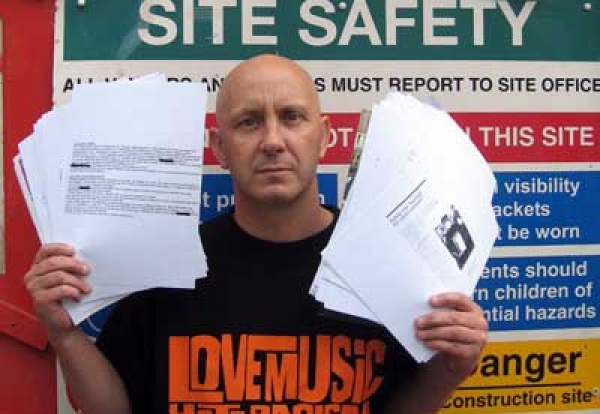
Dave Smith with his blacklist file
It went far beyond blacklisting. Spycops infiltrated and spied on a wide range of trade unions, reporting on their meetings and campaigns, on individual trade union activists and industrial disputes. This issue affects many hundreds of thousands of people, not just the small number granted core participant status in the UCPI.
We know that intelligence gathered by Special Branch and its spycops was sent to MI5 and government departments. Whistleblower officer HN43 Peter Francis ‘Peter Daley/ Johnson/ Black’ has said intelligence he supplied was put in the Consulting Association files.
However to date this Inquiry’s investigation of this matter has been ‘superficial at best’. There is no mention of it at all in the Inquiry’s 2023 interim report. Only a couple of the former spycops have even been asked about it.
Khan is blunt about this failure:
‘Any conclusions based on extrapolating from fragmentary documentary evidence and the failing memories of a small number of police officers would be entirely insufficient.
Sir, the failure to fully investigate blacklisting is either a remarkable lack of curiosity or an intentional self-imposed restriction.’
It is in the public interest to get to the truth of this issue, and crucial if this Inquiry is to fulfil its purpose.
In the coming weeks, the Inquiry will hear from undercover officers HN43 Peter Francis, HN15 Mark Jenner ‘Mark Cassidy’ and HN104 Carlo Soracchi ‘Carlo Neri’, all of who reported on lawful trade union activity.
These three officers alone compiled reports on members of, among others:
• Union of Construction, Allied Trades and Technicians (UCATT)
• Transport and General Workers’ Union (TGWU)
• Communication Workers’ Union (CWU)
• National Union of Journalists (NUJ)
• National Union of Rail, Maritime and Transport Workers (RMT)
• Fire Brigades’ Union (FBU)
• National Union of Teachers (NUT)
• UNISON
• Public and Commercial Services Union (PCS)
They reported on internal union elections and internal union factions. They reported on specific issues such as the Building Workers Group, the Brian Higgins Defence Campaign and the Building Workers Safety Campaign. These were everyday examples of industrial action to save jobs or recover unpaid wages. They could never be equated with attempts at sabotaging the economy or overthrowing parliamentary democracy.
This spying wasn’t just the SDS officers being overzealous, either. Regarding unions as subversive was standard across Special Branch and ongoing spying on union activists was normal. Peter Francis said:
‘In any political grouping, I would expect the members of trade unions to have a political file’
There is no doubt that blacklisted worker Dave Smith is the pre-eminent authority on the subject. He literally wrote the book about it. He was granted core participant status at the Inquiry, solely because of his blacklisting. Yet the Inquiry says it does not intend to call him to give evidence.
Outraged, Smith has initiated legal proceedings to challenge Mitting’s decision to exclude him.
DOREEN LAWRENCE

Baroness Doreen Lawrence OBE
Baroness Casey’s 2023 report into the internal culture of the Met found it to be institutionally racist, misogynist, and homophobic. This came two years after the independent inquiry into the murder of Daniel Morgan found the Met was institutionally corrupt.
Khan notes that current Met chief Mark Rowley has refused to accept Casey’s conclusions.
Since Casey’s findings, the BBC has broadcast shocking footage of current officers exhibiting extreme racism and misogyny; and literally the day after the Inquiry heard Khan’s opening statement, news broke of an independent consultancy’s report finding the Met had racism ‘baked in’ to its recruitment, promotion and grievance processes, affecting Black staff specifically – and that senior officers had suppressed the report, refusing to make it public or even share it with the National Black Police Association.
This all shows nothing has significantly changed since the 1999 Macpherson report into the murder of Stephen Lawrence found that the Met was institutionally racist.
It was a result of a wider racism that is woven into British culture, as Khan elaborated:
‘The history of the UK is clear. Black people have been subjected to centuries of slavery, decades of second-class citizenship, widespread legal discrimination, economic persecution, educational deprivation and cultural stigmatisation.
Black people have been bought, sold, killed, beaten, raped, excluded, exploited, shamed and scorned for a very long time. The word ‘racism’ is hardly an adequate description of that experience. And that experience continues to this day. It was no different in 1993 when Stephen was killed.’
Khan cited the Met’s hostility to those who would hold them to account for their racism, something documented at the very highest levels. He quoted a memo to Commissioner Paul Condon in September 1993 from Deputy Assistant Commissioner David Osland:
‘Our patience is wearing thin on 3 Area [south-east London], not only with the Lawrence family and their representatives, but also with self-appointed public and media commentators.’
Baroness Lawrence asked a lot of questions of this Inquiry at its outset and now, as she prepares to give evidence in person many years later, she is bitterly disappointed at the lack of answers.
Khan notes that far too many officers have been allowed to hide behind the anonymity:
‘Many – indeed, key – police officers such as HN81 Hagan and HN86 who should face the full glare of public scrutiny and who [Baroness Lawrence] wants to confront as she did officers at the Macpherson Inquiry – will be able to hide – in cowardly fashion – behind anonymity, not appear at all or, most shameful of all, take the Inquiry to court for trying to force them to give evidence. This is in her view utterly disgraceful’
Khan has since made submissions challenging the decision to excuse HN81 from giving evidence, and the Inquiry will hold a hearing on 3 November.
The impact of Stephen Lawrence’s murder on his mother has been massive, on her entire family, her marriage and her life ever since.
She now knows that the police were spying on her instead of doing what they should have done.
APPROVED AT THE TOP
The spying suffered by Baroness Lawrence was sanctioned by those at the very top of the Met, and beyond in the Home Office. Shortly after the Undercover Policing Inquiry was announced in 2014, Lawrence was contacted by a former Home Secretary who wanted to emphatically assure her that they had nothing to do with the any of the alleged activities. It was a highly suspicious thing to do.

Imran Khan KC & Baroness Doreen Lawrence OBE
We have already seen how the Home Office, which set up the SDS, directly funded it for decades and received its annual reports, managed to ensure it did not retain a single document about any of it. She is considering whether to name the ex-Home Secretary in question.
Lawrence recently discovered from the phone tapping scandal that she has also been a victim of unlawful spying by the media as well, specifically the Daily Mail, which may well have been perpetrated with the connivance of police officers.
She wants to know why nobody from the Met bothered to contact her personally to let her know about the spying, or to apologise to her. She says that the ‘apology’ made on behalf of the Commissioner during Monday’s hearing was insensitive and impersonal.
In recent weeks, Lawrence and Khan attended the Parole Board hearing of one of Stephen’s killers. What she heard from him has echoes of what she’s heard from the Met; that they’re no longer racist, everything they inflicted was an accident – and she doesn’t believe them. She says Stephens’s killer and the Met are cowardly racist liars.
Lawrence also found the opening statement of whistleblower spycop HN43 Peter Francis jarring. He talked about the impacts on himself, he lacked empathy and understanding of the impact his actions had on others.
Indeed, throughout this inquiry there has been a pattern of the spycops seemingly considering themselves to be the real victims.
Khan concluded his representations for Lawrence with a potent and horrifying litany of loss and injustice:
‘She lost her son. She lost her husband. She lost her privacy. She lost the future she should have had and only last week she was having to hear more lies and fantasy from one of her son’s murderers.
She has been failed repeatedly by the Metropolitan Police Service, when they failed to deliver justice for the murder of Stephen, then when they spied on her and then when they were involved with the press in doing the same.
She has been failed by the press, who have outwardly supported her by publishing sensational headlines, at the same time as spying on her.
She has been failed by the Independent Office for Police Conduct and the Crown Prosecution Service in not taking action against officers, who should have been charged and/or disciplined.
She’s fed up with these failures.During all of this she has had to fight – fight the police and fight sections of the press. She is tired of doing so. For once in her life, she wants to believe that she need not fight and that justice will be delivered.’
Imran Khan’s written Opening Statement
MICHAEL MANSFIELD

Michael Mansfield KC
Khan moves on to speak on behalf of Michael Mansfield KC. It is clear that Khan has a great deal of respect for Mansfield, as a legendary lawyer who has inspired him personally and professionally.
Mansfield has been at the heart of many important, high-profile legal cases, including miscarriages of justice and other cases of state misfeasance or negligence.
Described by spycops as ‘the devil incarnate’, Mansfield was the subject of surveillance for many years. Unsurprisingly, he is quite cynical about the likely outcomes of this Inquiry!
Khan delivers a heartfelt speech on the importance of protecting lawyers and their role in any democracy, which includes challenging the draconian powers of the State.
‘It is beyond perverse for the police to label a lawyer engaged in his professional duties in challenging their unlawful acts as subversive and for them to then go on to unlawfully spy on him. It would be laughable if it were not so serious.’
There was fierce criticism of the Inquiry for not compelling HN81 ‘David Hagan’ to give evidence.
‘It is said that HN81 suffers from mental health. Well, so do many of the core participants in all these other inquiries and indeed at this Inquiry, including many non-state core participants, but also Peter Francis.
In refusing HN81, the Inquiry has failed to consider that an inquiry is almost invariably set up as a result of tragedy, with countless victims having suffered unimaginable loss, and yet in these circumstances the victims do and will give evidence and are and will be deeply affected by reliving their trauma.
HN81 should have been required to give evidence in person. His absence is inexcusable.’
Expecting traumatised victims to testify while excusing a perpetrator is an obscene stain on the Inquiry.
Khan concludes by observing how we look in horror at the new authoritarianism in the USA, but protest here is increasingly criminalised, and spycops are given immunity from prosecution. The legal profession itself is being targeted. Lawyers should never suffer adverse consequences for representing clients. But it’s been happening here for decades.
James Wood KC
Next we heard from James Wood KC, representing Alex Owolade, Karen Doyle, Sukhdev and Tish Reel, and two members of Michael Menson’s family, MSS and MWS.
Wood echoes Khan’s comments about institutional racism within the Met:
‘It permeated the force and all its activities.’
Racism was therefore entrenched in the SDS and its targeting of people like his clients.
Wood says the SDS was a:
‘racist, undemocratic, political policing unit that was wasteful of public resources and should never have existed.’
He moves on to give summaries of each of his clients.
MICHAEL MENSON

Double Trouble, featuring Michael Menson (centre), 1990. Pic: Adam Jones
Michael Tachie-Menson died in horrific circumstances in January 1997, the victim of an extremely violent racist attack which included him being set on fire. The police repeatedly suggested he must have done it to himself.
Michael’s family faced police indifference, and a refusal to investigate his death properly. The media were fed with misinformation, including smears about Michael’s mental health, by officers.
Eventually, an inquest reached a verdict of ‘unlawful killing’. Despite this, senior police officers continued to insist that Michael’s injuries were self-inflicted and that the coroner was wrong.
Menson is described as a gentle, caring man with strong faith and high values. He was a talented and successful musician with Double Trouble who released their own music and produced hits for others such as Rebel MC’s Street Tuff.
Menson had some mental health problems in his late 20s, and received treatment. He was 30 when he was attacked and killed. He told four family members about the attack. The police repeatedly insisted that his injuries were self-inflicted and refused to take evidence from Menson before he died.
The family began a campaign for justice, contacting MPs and the media. They kept finding that the police had contacted the journalists first and spun their false narrative of self-harm and suicide.
As with so many justice campaigns, police resources that should have been spent catching killers were diverted to discrediting bereaved people who only wanted the truth.
At the inquest in September 1998, the Met aggressively asserted that it was suicide. Investigating officers behind the scene passed information to the coroner with this narrative, and said that this was a family of troublemakers.
Nevertheless, the jury ruled it to be an Unlawful Killing. The Met hurriedly issued a statement, saying that they regretted that they had treated his death as self-inflicted in the first 12 hours, but making no mention of their racist failure to investigate and their wilful misleading afterwards.
We were shown a clip from that evening’s Channel 4 News with a Police Federation representative who hadn’t been at the inquest or heard the evidence still insisting that it was suicide and claiming that the family’s supporters had ‘crowded out’ the courtroom and intimidated the jury into delivering a wrong verdict.
It is just one of many instances of the Met doubling down on a narrative to serve their reputational aims at the expense of truth and justice, letting killers walk free rather than admit they got anything wrong.
As the family always knew, it was murder. Three men were later arrested and convicted, two for murder and one for manslaughter.
The family made a formal complaint which was investigated by the Chief Constable of Cambridgeshire. In 2002 it published its findings. The Met investigation was found to be unprofessional, uncoordinated, in part negligent, at best inept. Evidence of racism was abundant, with one officer referring to Menson as ‘a fucking black schizophrenic’.
By coincidence, the investigating Chief Constable, HN143 Dennis ‘Ben’ Gunn, had previously been a Met Special Branch commander. He gave evidence to the Inquiry on 17 October.
RICKY REEL

Sukhdev Reel with a portrait of her son Ricky Reel
Ricky Reel was Sukhdev and Balwant Reel’s second child. He grew up in a happy family with three siblings.
It is now 28 years since Ricky Reel went missing, after a night out, on 14 October 1997. When his parents filed a missing persons report, the officer suggested that he must’ve run away because he was either avoiding an arranged marriage and/or was gay.
His body was found in the Thames a week later. Sukhdev visited her son at the mortuary and was handed his clothing.
When she got home, she noticed a significant tear in the brand new shirt that he had been wearing on the night of his disappearance. She raised this with the police who said that she had done it herself. The family later worked out that the tear corresponded to the location of marks on Ricky’s body, identified at his post-mortem.
He had been the victim of a racist attack. The police spoke to his friends who confirmed it, yet the police failed to investigate this, maintaining that his death must have been accidental. The Met were hostile to the family and secured an open verdict at the inquest.
Wood moves on to talk about the Reel family, and what they went through in the aftermath of Ricky’s death.
They were forced to start campaigning for justice for Ricky, after it became clear that the police were not bothering to look for his killers. Instead, as with the Menson family, the Met put their resources into subjecting the Reels to intrusive surveillance, while telling the family that cost restrictions limited their capacity to investigate Ricky’s death further.
One of the spycops who targeted them was HN81 ‘David Hagan’ who also spied on the Lawrence family. He reported on candlelit vigils, and on Reel family members attending the Lawrence inquiry.
HN81 told investigators in 2014 that he once gave Sukhdev Reel a lift home, after a Movement for Justice meeting, presumably seeking information to discredit family. Yet he did not mention this in his reports. This raises the question: what other inexcusable things did he do that went undocumented?
Wood then went on to speak about missing evidence. We know that many of the spycops’ reports and records have been deliberately destroyed over the years. This continued even after the UCPI was announced and all records should have been retained. This destruction of evidence, coupled with the use of verbal briefings to avoid paper trails, means we will never get the full truth about the SDS.
The Reel family see the Met’s new apology as a merely pragmatic decision in face of new unassailable evidence, and they do not accept it. They are still seeking answers.
MOVEMENT FOR JUSTICE
The Movement for Justice (MFJ) began in the 1995, stemming from the Kingsway College anti-fascist group set up following a vicious racist attack against Kingsway student Shah Alam.
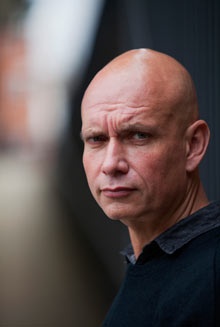
Whistleblower spycop HN43 Peter Francis
They met every week and campaigned tirelessly about issues from immigration and asylum through to countering police racism. MFJ was not a ‘subversive’ organisation, and the spycops’ intrusion cannot be justified, says Wood. He suggests that this was a ‘convenient’ place to plant spycops to monitor feelings about the police in the wider community.
MFJ was spied on by HN43 Peter Francis and HN81 ‘David Hagan’. The officers’ reports were extremely detailed, and the level of intrusion into Alex Olowade’s personal life particularly striking. Francis actually enrolled at Kingsway College as part of his strategy to befriend members and infiltrate the group.
MFJ was a straightforward anti-racist campaign that used marches, campaigned for legislative changes that were harmful to asylum seekers, by marching, petitions and contacting MPs as its tactics. It did not by any measure threaten violence and disorder, nor was it ‘subversive’ and seeking to overthrow parliamentary democracy. But by opposing racism and highlighting police failings, the Met saw it as somehow equivalent to those things.
Wood notes that a spycops report wrongly describes the MFJ as ‘exclusively black’, as if this makes it more of a threat. Peter Francis reports that the n-word was frequently used in the SDS, including by senior managers.
Wood’s clients have been horrified to learn about the spycops’ infiltration of their campaigns, and just how much was spent on these operations, while they were being told that the police lacked the resources to respond to or adequately investigate serious racist attacks, including those that caused the deaths of their relatives.
POLITICAL POLICING
It is clear that the Met used spycops to surveil, undermine and attack those who criticised police actions, most of whom were engaged in using legal channels such as vigils, civil claims, and inquests to campaign for justice, with no suggestion of any criminality or public order issues.
There’s been no suggestion that any criminality or public disorder was being carried out by people like Sukhdev Reel or the Lawrences. As is well established, HN81 ‘David Hagan’ infiltrated their campaigns with the intention of gleaning info that the police could use against them.
The 2014 Ellison Report, which triggered the setting up of the UCPI, found:
‘N81 was, at the time, an MPS [Metropolitan Police Service] spy in the Lawrence family camp during the course of judicial proceedings in which the family was the primary party in opposition to the MPS.’
There are many parallels between the experiences of these different families, all of whom were the victims of police racism and police failings, while grieving the loss of their loved ones at the hands of racist killers.
The Menson campaign’s police complaints investigation found that the police had carried out Special Branch checks on them. It indicates a belief that anyone who questions the police, even about demonstrable failings, is motivated by a subversive ideology.
HN81 reports referred to the Reel family’s activity as a ‘campaign against the police’. They were specifically monitoring the Reel family in case they began to get huge support like the Lawrences. This was not, as they’ve tried to claim, ‘collateral intrusion’, it was direct spying because they feared that the truth might be exposed.
Wood cited a report [MPS-0738094] which records a meeting on 18 August 2014 between HN81 ‘David Hagan’, Assistant Commissioner Martin Hewitt (who was leading the Met’s response to the Undercover Policing Inquiry) and Detective Superintendent Craddock, a senior investigating officer with the police’s own self-investigation into spycops, Operation Herne. This was five months after the Undercover Policing Inquiry had been announced.
At this meeting, they discussed how HN81 had told Herne that he had met Sukhdev Reel and given her a lift home. They realised this was inconsistent with their public denials. They agreed on a line that:
‘no documentation has been identified detailing any targeting or infiltration by the SDS into any family member or any justice campaign or those justice campaigns themselves.’
The senior officers decided not to look any further or change what they told the public. When faced with evidence that cast them in a bad light, they decided, as usual, not to come clean but to ignore the evidence and spin the facts to cast them in the best light, a light they plainly did not deserve.
There is an institutional failing to admit wrongdoing even when they proof is in front of them. This is yet another high-level cover-up, lying until outside investigations force them to admit the truth.
Wood accuses the Met of institutional racism, institutional sexism, and institutional homophobia, and also of denial and defensiveness. It does not tend to accept criticism or own its failures, instead looking for and latching onto small flaws in any criticism as a way to dismiss the whole complaint.
He says this toxic culture has endured, right up to the present day. In comparison, the non-state core participants at the Inquiry (those who were spied upon) have participated fully even though this has meant reliving all sorts of trauma. They deserve the truth.
James Wood’s written opening statement
James Scobie KC

James Scobie KC
Next we heard from James Scobie KC, representing Lois Austin and Hannah Sell, who were part of Youth Against Racism in Europe (YRE), a campaign that stemmed from Militant Labour (now called the Socialist Party), and Militant Labour member Dave Nellist who was Labour MP for Coventry South East from 1983 to 1992.
They were primarily spied on by HN43 Peter Francis ‘Peter Daley/ Johnson/ Black’. Francis’ whistleblowing on the SDS was one of the key moments in the exposure of the spycops scandal. He gave an interview to the Observer in 2010 and then after the scandal drew huge public interest in 2011 he gave a huge amount of information to the Guardian.
After an avalanche of revelations from many sources, it was Francis’s revelation of spying on the Lawrence family that finally caused the Home Secretary to order the Ellison Review and follow that with the full scale public inquiry we now have.
However, Scobie contrasted all this seemingly public-spirited action with a description of a very different Peter Francis: self-serving, troubled, and deeply attached to his identity as a Special Branch spycop.
Scobie says Francis has given differing accounts of his career, some of which must not be true, and we must only accept what can be corroborated.
Francis’s own accounts show he wanted to be respected as among the best ever SDS officers. He wanted to emulate his manager Bob Lambert’s undercover activity, which he had said was:
‘hands down regarded as the best tour of duty ever.’
He had to be, in the unit’s parlance, a ‘deep swimmer’. Scobie explained that depth was judged by risk. The officer must be close to public disorder, violence and/or crime. They must have very close relationships with those they spy on: the greater the deception of their target, the greater their status in the unit.
They should take positions of responsibility in their organisations, the more central the better. And of course, they had to avoid ‘compromise’, never being suspected and ensuring the existence of spycops remained unknown.
Management judged undercover officers on these things, rather than the value of the intelligence that was the supposed purpose of the deployment.
There was one more key aspect – the length of the deployment. Francis failed here. He was withdrawn against his will in September 1993, much earlier than he wanted. A usual deployment was five years, Francis wanted to do seven, yet his job was terminated after only three years.
He was furious. He was signed off sick in October 1999, medically retired in April 2001, and then sued for psychiatric damages in 2003.

Spycop Peter Francis, when undercover in the 1990s
He didn’t just want compensation and support, but also respect and a commendation. His statement in 2003 sought to demonstrate that he had fulfilled all the criteria, and done all that was asked of him. He signed that document for court proceedings yet it contains numerous provable falsehoods. He ignored this statement completely in his opening statement to the Inquiry this week. Such unreliability puts all his other evidence into doubt.
Nevertheless, many of his allegations about tradecraft have been proved. The police wanted to cover up tasking and tradecraft, and the Met settled with him in 2006. Francis admitted misconduct including deceiving women into relationships relationships, yet he got the apology and commendation he sought.
Guests at his presentation included some of the most deplorable spycops such as HN10 Bob Lambert ‘Bob Robinson’ and HN78 Trevor Morris ‘Anthony Lewis’. He said he had protected the unit. He was told he’d be invited to its fortieth anniversary party following year.
But there had been comeback. His 2003 statement meant those at the top of the SDS could no longer deny what the unit really did. Francis was told he was seen as disloyal for having filed the civil claim, and so he wasn’t invited.
He contacted journalist Tony Thompson the very next day, beginning a swathe of bold revelations to the public that exposed the SDS. However, Scobie said, for 11 years after his deployment his whole motivation was to be re-included in the unit and seen as the best spycop.
He had been withdrawn because, although he was dedicated and obedient, he had nothing of value to report. Even by SDS standards, his deployment was pointless. If his targets were – as he still maintains is true – very violent and causing public order problems, he wouldn’t have been withdrawn.
Exaggerating risk is a key feature of SDS reporting, describing a false sense of jeopardy. It not only justifies the unit’s existence, it’s also an effective disguise to cover up deployments that exist for other reasons, such as spying on Stephen Lawrence’s family.
Pretending spycops were doing dangerous things made the undercover officers and their mangers look good, and gave them an excuse for the excessive fear of exposure. That last factor really came from a fear of having their inexcusable targeting and tradecraft exposed (as described in some detail in the Met’s 2009 internal closing report when shutting the unit down).
So when Francis now exaggerates his danger, his managers won’t contradict him, because they need to perpetuate that image too.
Francis was told Youth Against Racism in Europe was a new and violent group. The illusion of risk was central to his deployment and his self image. He has toned it down over the years, though, as a number of his claims are simply not true:
- He spoke of how HN297 Richard Clark ‘Rick Gibson’ had been confronted by the people he spied on who’d found that he had stolen the identity of a dead child. Francis’s claim that Clark had to jump from a second floor window to escape, and thus being exposed might bring instant violent retribution and possibly death, is untrue. Clark simply walked away.
- His claim that he was the first SDS officer to go abroad is untrue – a number had done it before. HN326 ‘Doug Edwards’ and HN340 ‘Andy Bailey’ / ‘Alan Nixon’ had done so in 1970, soon after the SDS was founded. Francis claimed he’d lain awake at the camp in Germany in fear at a camp guarded by people with AK47s, yet we also see that he had time for a sexual relationship and a disco.
- The dawn raids on Nazis that he describes simply did not happen.
His reporting at the time doesn’t support his subsequent claims on violence. He now claims his groups were instigating violence with the British National Party (BNP), but then in the same statement says they were only violent in self-defence. That is lawful, and did happen: Combat 18 and BNP supporters did attack and they fought back.

Hannah Sell, formerly of Youth Against Racism in Europe, protesting with the Socialist Party outside Parliament, 2011.
Yet Francis only actually recalled two instances of violence involving activists, of which he only reported on one at the time. As for the second, the 1993 anti-BNP protest at Welling, he says the only harm he saw was two women injured by police.
Francis wrote reports on people saying they were violent, but gave no evidence. Meanwhile, the SDS desire for risk created actual risk; Lois Austin from YRE was one of a group subjected to a premeditated attacked by uniformed officers at Earls Court.
As at Welling, the police were excessively violent because they were acting on intelligence provided by Francis and others. After Earls Court, Austin and others successfully sued the police for the assault.
In the period 1994-98 there was a decline in fascist violence, correlating with a decline in anti-fascist activity: if they’re not attacking, there is no need for us to defend. Anti-fascist community protection prevents fascist violence and crime.
Many of Francis’ reports concern Militant Labour. Dave Nellist served as an MP for South East Coventry, and despite their claims not to spy on elected officials, we know that Special Branch opened a file on Nellist in 1983, the same year he became an MP. His constituency office was also spied on.
The Security Service continued to take a great deal of interest in Militant and trade unionists even after they decided that many other target groups were no longer considered ‘subversive’ enough to monitor to the same degree.
Many of Francis’ reports would have been of interest to other ‘customers’, i.e. government and private companies. The spycops were anti-democratic rather than ‘counter-subversive’.
Francis has sought to portray his undercover persona ‘Pete Black’ as someone who had casual sexual encounters, and seems to have started a rumour that one of these was with Judy Beishon. In 2013 this came to the attention of Operation Herne, the police’s internal investigation into the spycops scandal. From there, the rumour spread through the Met.
However, Herne made what Scobie terms an ‘appalling decision’ not to bother contacting Beishon to find out if it was true. She only learnt about this false allegation in 2024, and utterly rebuts it.
Peter Francis claimed to have done successful work infiltrating Black family justice campaigns. However it is evident that he only reported on a few such groups, and didn’t actually manage to get that close to them.
He had treated the MFJ group at Kingsway college as a ‘gateway’ to YRE/ Militant. When Special Branch decided that they needed more information about Black justice campaigns, he had moved on from MFJ and was no longer involved. HN81 ‘David Hagan’ was tasked with infiltrating the MFJ instead.
Scobie ends by saying:
‘Far from being the best as he sought portray himself, Francis was emblematic of the worst aspects of the SDS, self-aggrandising and exaggerating his own risk and the intelligence he provided.
Instead of providing meaningful intelligence about the activities of the Youth Against Racism in Europe or Militant Labour, his accounts were so poor and meaningless that they undermined the confidence in the SDS and the unlawful edifice of political policing as a whole.’
The Inquiry’s Chair, Sir John Mitting, responds to say that Beishon has provided a written statement to the Inquiry utterly denying any sexual contact with Peter Francis. He has not invited her to give evidence in person because he has no doubt that she is telling the truth.
James Scobie’s written opening statement
Kirsten Heaven KC
Kirsten Heaven represents the entire ‘co-operating group’ of Non State, Non Police core participants, the people involved because they were significantly spied on. They have collated a joint Opening Statement.
She opened with some key questions:
• Has the Met gone far enough in this inquiry?
• Who exactly, at the highest levels of the police, was directing the spycops operations?
• How much of the spycops activity was led or directed by the Home Office?
• Why are there no admissions or apologies from former or current Met Commissioners?

Kirsten Heaven
Sir Paul Condon, Commissioner 1993-2000, has pretended not to know about the existence of the SDS. However we now know that he personally paid a visit to the spycops’ safe house after the 1993 anti-fascist protest in Welling to individually thank them for their work. HN81 ‘David Hagan’ testifies that his manager told him that his reports went to Condon’s desk, and that the Commissioner was grateful for the information.
We also know that senior figures within the Met were ‘customers’ of the intelligence supplied by the spycops. This is confirmed in spycops’ Annual Performance Reviews.
HN72 told the police’s internal spycops inquiry Operation Herne that it was Deputy Commissioner John Stevens who would have given the go-ahead to HN81 being tasked to report on the Stephen Lawrence campaign.
In addition, Deputy Assistant Commissioner John Grieve is known to have covertly recorded meetings between him and the legal team of Duwayne Brooks, the prime witeness to Stephen Lawrence’s murder.
The Home Secretary has chosen to remain silent on the role of the Home Office in the spycops scandal. It has confirmed that the Inquiry has not asked it for a witness statement. Surely departments of State should now be asked to provide corporate statements?
We have also learnt that the Cabinet Office was interested in the reports being filed by HN104 Carlo Soracchi ‘Carlo Neri’, who was deployed 2000-2006. Will the Inquiry explore this further?
HN26 ‘Christine Green’, who infiltrated animal rights groups 1995-2000, is not giving evidence to the Inquiry as she is ‘out of the jurisdiction’ (the Inquiry is said to have no power to compel witnesses who are outside the United Kingdom, something that’s currently the subject of legal argument).
She is not the only one of the former spycops who appear to have left the country until this Inquiry no longer has an interest in them.
We are concerned about the non-appearance of HN81 ‘David Hagan’ especially in light of his central role in spying on the Stephen Lawrence campaign amongst others.
HN86, who was head of the SDS 1993-1996, is now refusing to give oral evidence. He was the manager who directed spycops to report on justice campaigns, and serious allegations of racism have been made against him by Francis.
NEW RULES TO IGNORE
Two major pieces of relevant legislation were introduced in the Tranche 3 period (1993-2008): the Human Rights Act (HRA) and the Regulation of Investigatory Powers Act (RIPA).
However the SDS continued to operate much as it had before, a secret unit:
‘marred by a culture of exceptionalism and impunity’.
It simply ignored both RIPA and the idea of human rights, and breached them both.
A second major spycops unit, the National Public Order Intelligence Unit (NPOIU), was established in 1999 and did the same. This inquiry should examine how much SDS tradecraft was exported around the country by NPOIU officers. The NPOIU will be the subject of Tranche 4, with hearings expected to start in late 2027 and/or early 2028.
Many SDS managers were former undercover officers, who were probably responsible for the spycops unit’s continuing culture of criminality, institutional racism, misogyny, abuse of women, etc.
New and abhorrent tradecraft was developed by the SDS during this time. There was more use of cover vehicles, including minibuses, and more international travel. The spycops went to new lengths to create their cover identities, e.g. enrolling in college, and there was an expansion of the use of deceitful sexual relationships
We’ve learnt that the spycops were allocated somewhat disturbing codenames at this time for each of their deployments:
• HN104 Carlo Soracchi ‘Carlo Neri’: Craggy Island
• HN81 ‘David Hagan’: Windmill Tilter
• HN5 John Dines ‘John Barker’: Hawke’s Bay
• HN3 ‘Jason Bishop’: Red Herring and Quill Feather
• HN14 Jim Boyling ‘Jim Sutton’: Psycho Dream
• HN15 Mark Jenner ‘Mark Cassidy’: Touchy Subject
• HN16 James Thomson ‘James Straven’/ ‘Kevin Crossland’: Magenta Triangle
Individual officers like HN16 James Thomson ‘James Straven’ / ‘Kevin Crossland’ seem to have taken full advantage of the slack attitudes of the spycops managers, and the complete lack of effective supervision or scrutiny.

Spycop HN16 James Thomson, ‘James Straven’/ ‘Kevin Crossland’
Thomson has a track record of lying to this Inquiry (during the anonymity process) and has now admitted to deceiving two women into sexual relationships. He also lied to his managers and frequently acted without their authorisation.
He made fraudulent expenses claims and got away with doing very little work, producing very little intelligence. It’s impossible to see how his deployment could have been justified in any way, even by the internal standards of the unit.
He managed to extend his time in the field by supplying his managers with false information – claiming that his targets were involved in deals with firearms in France – and they weren’t paying enough attention to notice that this was all a complete fabrication on his part.
HN26 ‘Christine Green’ who infiltrated the animal rights movement. In 1998, she took part in an action at Crow Hill mink farm in Hampshire which released 6,000 mink into the wild. Like Thomson, she failed to gain proper authorisation for her participation in crime. The Met didn’t tell Hampshire police, who investigated but never brought any charges.
The Met only informed Hampshire police in 2014. The Met have now admitted that this was a failure of management, and that they should have informed Hampshire police of her involvement.
By the Tranche 3 period, the infiltration of family justice campaigns was standard SDS practice, and this is obvious from reading the unit’s Annual Reports. The Inquiry should not accept that there was any public order reason for spycops officers like HN15 Mark Jenner ‘Mark Cassidy’ to report on such campaigns. These groups were specifically targeted because they were critical of police failures.
At this time, the SDS was desperately fighting for its survival. There was no way they could keep justifying deployments into the far left. The Inquiry must explore the strategies adopted by the managers at this time. They seem to have been eager to expand their ‘customer’ base and increase their ‘marketability’ at this time. Just who were they promoting SDS intelligence-gathering services to?
The SDS was eventually closed down, between October 2007 and February 2008. The Closing Report, published by the Inquiry this week, was scathing to the point of vitriolic. It described how there was precious little oversight of the SDS, and it sought to insulate itself from any external review. Its budget had become less transparent than ever before, even though the spycops’ expenses grew ever more extravagant.
In addition to Christmas parties, the SDS often took officers on jollies. These included repeated trips to Amsterdam, paint-balling in Birmingham, and ‘team bonding’ in Las Vegas. It appear that ‘overtime’ payments were made automatically whether the officer worked extra hours or not. The police’s Covert Finance Unit’s review in 2007 identified 23 areas of concern when it came to SDS finances.
There were a number of occasions when the SDS was reviewed. Superintendent Peter Finnemore visited as part of a HM Inspectorate of Constabulary inspection in 1999. He was allowed to meet a few specially selected, pre-briefed undercovers.

Paul Condon, Commissioner of the Metropolitan Police 1993-2000 and possessor of a conveniently selective memory.
There was also an ‘internal audit’ and review carried out by DS Crane in 2004. This made a long list of recommendations for the unit. One of them was that the Code of Conduct be updated to meet the new legal requirements of RIPA. However the SDS disregarded Crane’s suggestions, calling his work ‘shoddy’, and stubbornly refused to reform itself.
It is inconceivable that senior Met officers would have been unaware of the outcome of a review that they themselves had commissioned. Why did it take them another three years to close down the unit?
The SDS managers tended to react to problems; they were not proactive about introducing improvements or managing the field officers more effectively.
The scenarios created for the unit’s recruitment process illustrate that their thinking hadn’t changed much from what we heard in Tranche 2 (covering the SDS 1983-1992). The SDS didn’t see any need to conform with legal frameworks or change how they operated.
Undercover officers appear to have had little respect for ‘shallow paddlers’, and managers who hadn’t been deployed themselves. HN52 told Operation Herne that the field officers never let him into their ‘inner circle’. HN67 ‘Alan Bond’ described similar problems with the ‘cliques’ within the SDS.
In comparison, HN10 Bob Lambert ‘Bob Robinson’, the deepest of deep swimmers who personally committed all of the unit’s catalogue of outrages as though it were a bingo card, is described as ‘the lynchpin’ of the SDS.
The unit was always run informally. There was very little ‘discipline’, and serious misconduct went unpunished. The undercovers’ lavish expenses, paid without question, took their salaries up to the same level as Inspectors, making it unsurprising that they had an insubordinate attitude towards their managers and handlers.
The Closing Report criticised inappropriate reporting on justice campaigns. But the Met, ever keen to avoid scrutiny and criticism, did not tell any of the people affected.
Lambert and others have nonetheless insisted that the unit did good work. We reject this.
The SDS was always run by white men, and there was an obvious culture of racism and misogyny – as acknowledged even by James Thomson.
Vulnerable individuals (including minors) were often targeted and interfered with by spycops, and their vulnerability was given very little consideration by anyone in the SDS.
The SDS seemingly had no concerns about the ethics of spycops committing crimes while they were undercover. When speaking to Operation Herne, Chief Superintendent HN84 Ray Parker referred to an SDS document from 1991, which left him with the impression that it provided ‘rules of engagement’ for agent provocateur, activity that was expressly forbidden. He was said to have been ‘amazed’ by this. This document has not come to light. We ask the Inquiry to investigate its disappearance.

Spycop HN81 ‘Dave Hagan’
In his evidence, HN81 ‘David Hagan’ recalls that when he was being recruited he was asked what he would do in a scenario where his targets began racially abusing an inter-racial couple. He told them that he would join in with the abuse, in order to maintain his cover. It is telling that the result of this interview was that he was recruited to the unit and sent to target groups of racial justice campaigns, despite having said that he would commit a hate crime in the hypothetical scenario.
We heard about spycops breaching the rules around ‘legal professional privilege’ in previous tranches, and it is clear that this continued in T3. They routinely spied on lawyers and clients (including Imran Khan KC and Michael Mansfield KC as we heard earlier in the day) and on elected Members of Parliament.
Trade unionists and their activities were reported on as a matter of course, with the spycops continuing to join union branches as part of their ‘cover’. It seems that the gathering and passing on intelligence for vetting and blacklisting purposes may actually have increased during this period.
The impact of this blacklisting cannot be underestimated. This unlawful practice destroyed people’s relationships, families, employment prospects, careers and lives.
The Inquiry must be mindful of the authorities’ ‘duty of candour’. It is hoped that the Metropolitan Police Service, Home Office, Security Service and every other arm of the State involved will fully and candidly account for what happened in the period under examination.
Non State, Non Police core participants’ written opening statement
Wow! What an astonishing web of corruption and deceit. Clearly, the SDS and affiliated departments were rotten, and no doubt that a rot still remains within certain sections of policing and justice.
It goes to show that when there is no accountability and zero transparency, then secrecy is a breeding ground for corruption. Hiding behind ‘national security’ doesn’t cut it. We’re supposed to be a liberal democracy but this reads like it happened in some sort of dictatorship.
So many inquiries over the years but nothing ever changes. And it is difficult to see any genuine change coming out of this inquiry. The rot is too deep for any one inquiry to change; the entire business of policing, including MI5, needs a desperate and drastic overall.