Content tagged with "Public Inquiry"

UCPI – Daily Report: 27 & 28 January 2025 – HN39 Eric Docker

Eric Docker giving evidence at the Undercover Policing Inquiry, 28 January 2025

Eric Docker giving evidence at the Undercover Policing Inquiry, 28 January 2025

On 27 and 28 January 2025 the Undercover Policing Inquiry was awash with a great tide of denials, lies and alleged failures of memory from Special Demonstration Squad officer HN39 Eric Docker, a former Detective Chief Inspector who was the unit’s manager from 1986 to 1988.

Docker is the most uncooperative witness at the spycops inquiry so far. He was angry, sneering, and seemed full of hatred for the process.

Given the accountability-avoidance options of appearing either devious or incompetent, he chose the latter, explaining that he didn’t bother managing his officers, scrutinising their work or even reading the intelligence reports that he signed off.

He claims he never asked the officers he managed any questions about what they were up to. He suggested that if they were involved in any misconduct, they wouldn’t tell him; if asked directly, they would lie as they knew the truth would mean the end of their deployment, or even career.

Docker was in Special Branch for many years before joining the SDS. In the early 1980s he spent two years in C squad, which monitors political groups, before moving to uniform. He was on C Squad’s right-wing desk.

He became an SDS manager in 1986, replacing HN22 Mike Barber. He was the unit’s manager when HN10 Bob Lambert ‘Bob Robinson’ was deployed into the Animal Liberation Front and placed a timed incendiary device in the Harrow branch of Debenhams, causing huge fire damage.

He was also the manager of HN95 Stefan Scutt ‘Stefan Wesalowski’ who infiltrated the Socialist Workers Party and, after persistently defying orders, had to be withdrawn from the squad.

Much of Docker’s two days at the Inquiry were taken up with questioning about Lambert, Scutt, and officers deceiving women into relationships.

He was questioned by David Barr KC, Counsel to the Inquiry.

This is a long report, use the links to jump to specific sections:

SDS Structure and Workings
Recruitment, the preference for married men, and identity theft

Targets
Including the Socialist Workers Party, hunt saboteurs, McLibel, and Black justice campaigns

Securing Wrongful Convictions
Perjury and withholding evidence from courts

Bob Lambert in the Animal Liberation Front
His catalogue of criminal activity, mainly focused on the incendiary devices in Debenhams

SDS Culture, Methods & Activity
Paranoia, persecution and bigotry

Relationships
Mike Chitty and ‘Lizzie’; Bob Lambert and ‘Jacqui’, ‘RLC’, and Belinda Harvey

Stefan Scutt
The secretive officer who went off the rails

Making Changes
Report and legacy: reviewing what went wrong and making recommendations, yet still defending everything that was done


SDS Structure and Workings


SERVING THE SECURITY SERVICE

At the beginning of Docker’s deployment in 1986, a Security Service (MI5) document [UCPI0000029267] described him as:

‘well-disposed towards us but deeper and more devious than his predecessor.’

Asked why the Security Service might have used the word ‘devious’ to describe him, Docker says he would have been very quiet in that introductory meeting with them. He is clearly irked by the assessment.

He had worked with the Security Service before, and says there were no issues then. He went on to say that his predecessor Mike Barber was ‘not devious at all’.

Docker says he wasn’t privy to all of the meetings between Special Branch’s senior officers and the Security Service but they generally worked well together, although he admits that there may have been some ‘mistrust’:

‘We never got any idea what they were doing with our product. We never got very much feedback from them. It didn’t seem to us as if we were on an even playing field a lot of the time.’

Docker says that debriefs of spycops by the Security Service were voluntary for the SDS officers themselves. If they didn’t want one, that was the end of it.

Asked if the close relationship with the Security Service made the SDS feel like an elite unit, Docker emphatically rejects the suggestion, saying it was just another unit in Special Branch. However, he agreed it was exceptional in terms of the work it was doing and was not bound by the ordinary rules:

‘the very nature of the job they were doing could not be done by a police officer observing every single rule and regulation that he or she may have to abide by.’

Docker admits that he never saw any ‘specific authority’ from the Home Office for the spycops undercover operations. He says he was instructed by Special Branch, and knew that an SDS Annual Report was sent to the Home Office in order to be granted permission to continue, so he assumed that what they were doing was allowed.

‘When I went to SDS I had no knowledge of it, I had no understanding of how it worked, and I had to learn on the job.’

However, he is adamant that ‘we did not make it up as we went along’ and says he had a Detective Chief Inspector and Chief Superintendent he could consult.

RECRUITING MARRIED MEN

Docker was responsible for the recruitment of HN87 ‘John Lipscomb’, HN5 John Dines ‘John Barker’, and HN25 ‘Kevin Douglas’. He’s described the process as being done ‘on a wing and a prayer’.

Later on, Docker supposedly made improvements to the spycops recruitment process, but these three were all recruited before that.

He met these officers’ wives before a final decision was made to recruit them. He says this was to:

‘make sure that they were fully supportive of what their partner was proposing to do. And to explain to them how it may affect their whole lifestyle.’

Docker says that being married would help ensure spycops went back home to their families. He says he never talked with his bosses about whether or not it would deter them from having sexual relationships while undercover.

Docker asserts that he didn’t wholly agree with the principle and – against his Commander’s advice – he recruited single men, who he says proved to be good officers.

Given his claim that he had no idea about any of his officers deceiving women into relationships, and presumed they’d hide any involvement in criminal activity from him, it’s hard to see how he feels able to appraise their calibre.

Perhaps he didn’t think abusing women, committing crimes, or being an agent provocateur mattered, so those things had no bearing on his judgement about whether the officer was good.

Docker claims that the topic of sexual relationships whilst undercover never came up when he was with the spycops either. He can’t recall any conversations in the SDS office about this risk, the temptation, or the restraint required:

‘if I had asked any officer to their face, whether they were having any sort of sexual liaison, I would’ve been blanked straight away or there would’ve been a total denial… that sort of information, they would’ve kept to themselves.’

Essentially, he’s asking us (and the Inquiry) to believe that by coincidence half the officers independently did this, while deployed and overseen by managers who’d done the same when they were undercover, without anyone ever mentioning sexual relationships at all.

He says he told recruits that the job involved much more observation than anything else, telling them that they have two eyes, two ears, and one mouth, and these should be used proportionally.

LEGEND BUILDING & IDENTITY THEFT

We move on to hear about ‘legend-building’, the spycops’ development of their undercover persona, something Docker has covered in his witness statement [MPS-0749045].

For the Inquiry, David Barr KC highlighted the fact that some officers – e.g. HN10 Bob Lambert ‘Bob Robinson’ – chose to use identities which would make them appear years younger than their real ages. Docker says he didn’t know about this.

Docker says decisions on how to select a dead child’s identity to steal were left to the individual spycop. He claims not to know any details about how spycops built their legends on dead children’s identities. He is very, very defensive.

He is also contradicting the findings of Operation Herne (a police investigation into spycops). Its first report, published in July 2013, was stark and unequivocal on this point:

‘It is absolutely clear that the use of identities of deceased children was an established practice that new officers were ‘taught’. It was what was expected of them, and was the means by which they could establish a cover identity before they were deployed.

‘Whatever their views are now about this practice, this was not done by the officers in any underhand or salacious manner – it was what they were told to do.’

Docker responds to all questions on the theft of dead children’s identities with non-committal answers like ‘it could be’ and ‘it’s possible’, even when asked if senior officers knew. In fact, as he says, the practice was long-established and a number of the SDS officers who had used it had since been significantly promoted. We can be sure it was known about in the higher echelons of the Met.

Docker’s only definite answers on this topic were that HN5 John Dines’s use of a second fake identity wouldn’t be approved, and nobody mentioned picking an age younger than the real one in order to be more attractive to women (because his story is that nobody mentioned that in any way ever).

Barr asked Docker if he ever thought about whether this identity theft was legal.

‘Sadly I did not.’

He says that he had no reason to question such an established practice, and denies being aware of HN297 Rick Clark ‘Rick Gibson’ being presented with the death certificate of Richard Gibson in the 1970s.

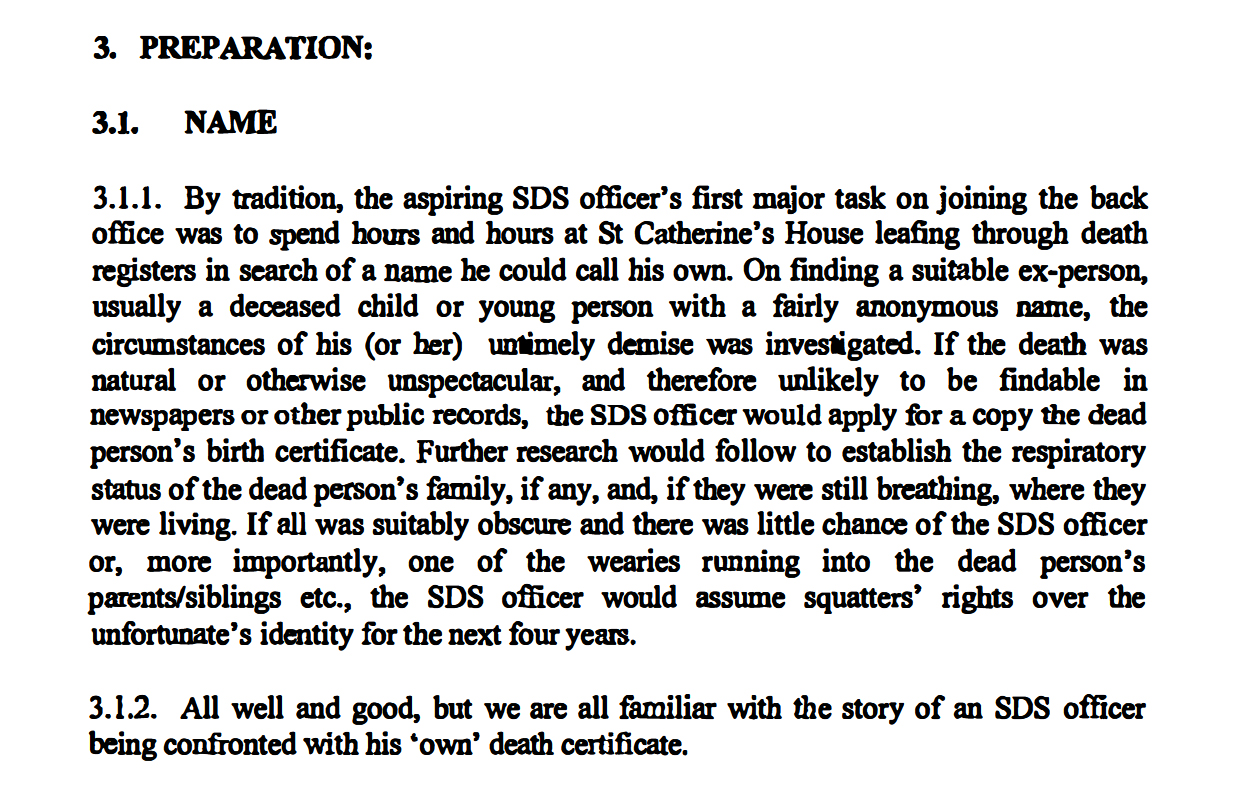
This is another peculiar denial. In 1993, a few years after Docker’s time, an SDS Tradecraft Manual was compiled containing very detailed instructions on committing this kind of identity theft. It included the following warning:

‘we are all familiar with the story of an SDS officer being confronted with his ‘own’ death certificate’

That incident happened in 1976, and was universal knowledge in the unit in 1993, but supposedly it was unknown to its boss Docker in the late 1980s.

Barr reads from the ‘unreserved’ apology made by the Met to the families whose deceased relatives’ names had been stolen by spycops, Docker says that he now does not condone this ghoulish practice but it was a long time ago. He points out he was only there for two and half years and at the end had made some recommendations for changes.


Targets


WHO TO SPY ON?

Docker says that Special Branch squad chiefs (Chief Superintendents) suggested targets, and sometimes the spycops made their own suggestions which these squad chiefs would be asked for agreement on. He says he was just the man in the middle, with very little influence.

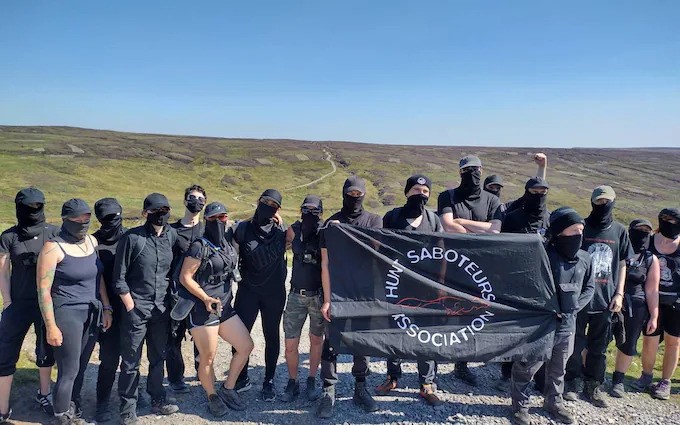
He says that in his opinion both the Socialist Workers Party and the Hunt Saboteurs Association deserved to be targeted by spycops – and refers to the hunt sabs as if they were bombers:

‘animal rights activists were very active in hunt saboteuring, in placing devices, et cetera, and they needed to be targeted.’

Barr asks if he made any distinction between one kind of animal rights and another – between those who leafleted about veganism and those who planted devices?

He said both were important to spy on, even those that just leafleted:

‘they had a propensity to cause minor public disorder… Most of the time it would not really have bothered us, but it’s, as I said, a way in for an SDS officer and therefore it’s important.’

We’re shown a spycops report of 8 December 1987 [UCPI0000023760] about the Brent Campaign against the Prevention of Terrorism Act meeting. Speakers included Labour MPs Ken Livingstone and Clare Short. There are lots of details of Livingstone’s speech (he was a long-term target of Special Branch and is a core participant at the Undercover Policing Inquiry).

Docker admits it’s not public order or subversion, and it is legitimate speech.

He adds that just because someone is a democratically elected Member of Parliament, this doesn’t stop their speech being reported by spycops, and confirms that there was no criticism of that from his senior officers.

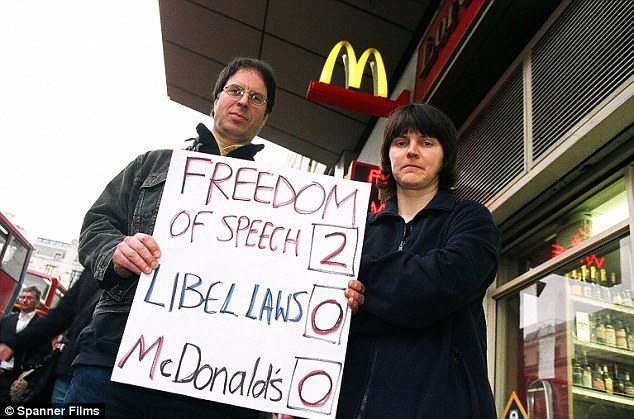
McLIBEL

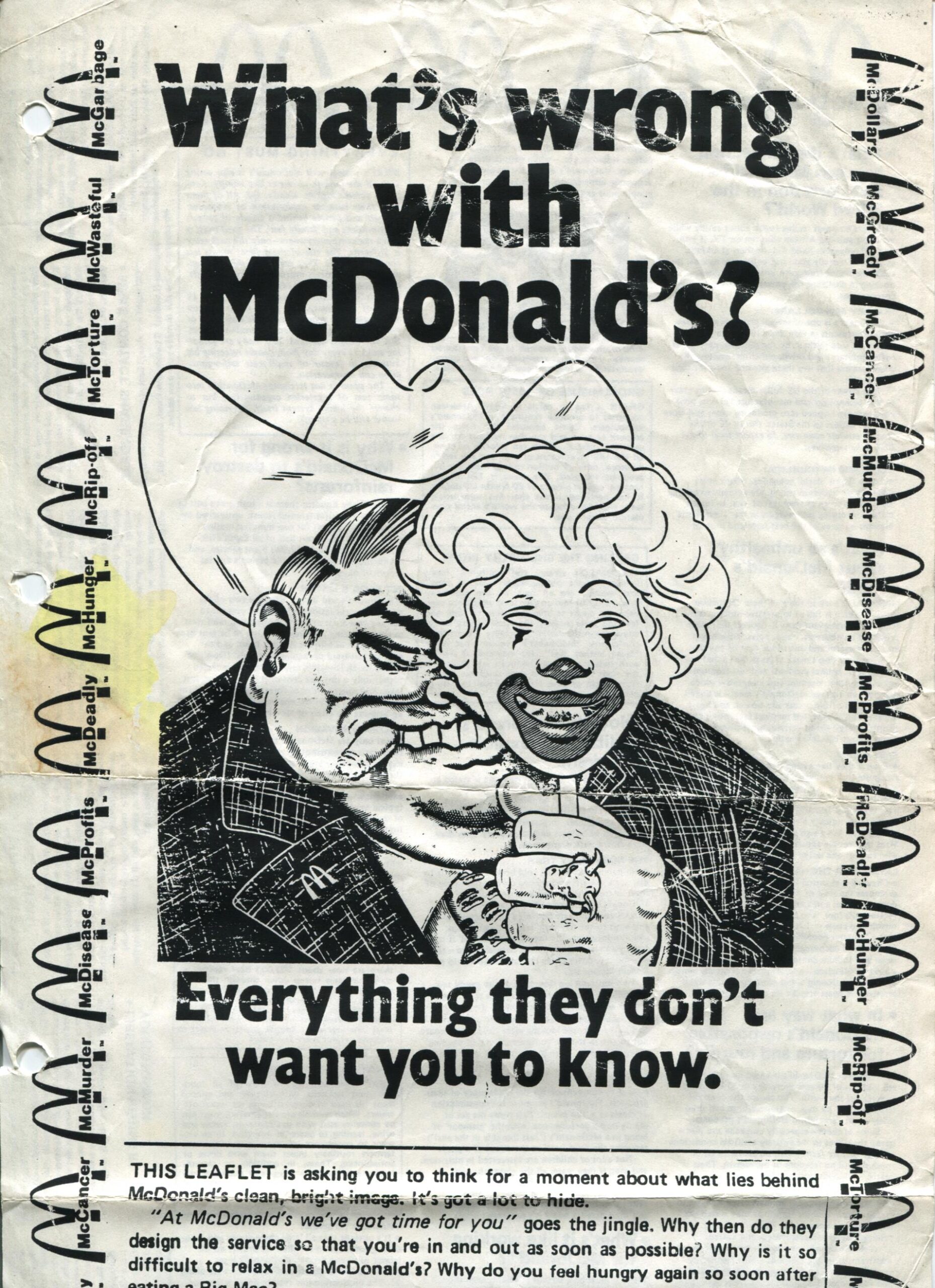
There’s a spycops report from 10 October 1986 [MPS-0742720] about the printing of London Greenpeace’s fact-sheets about McDonald’s which are described as ‘clearly libellous’.

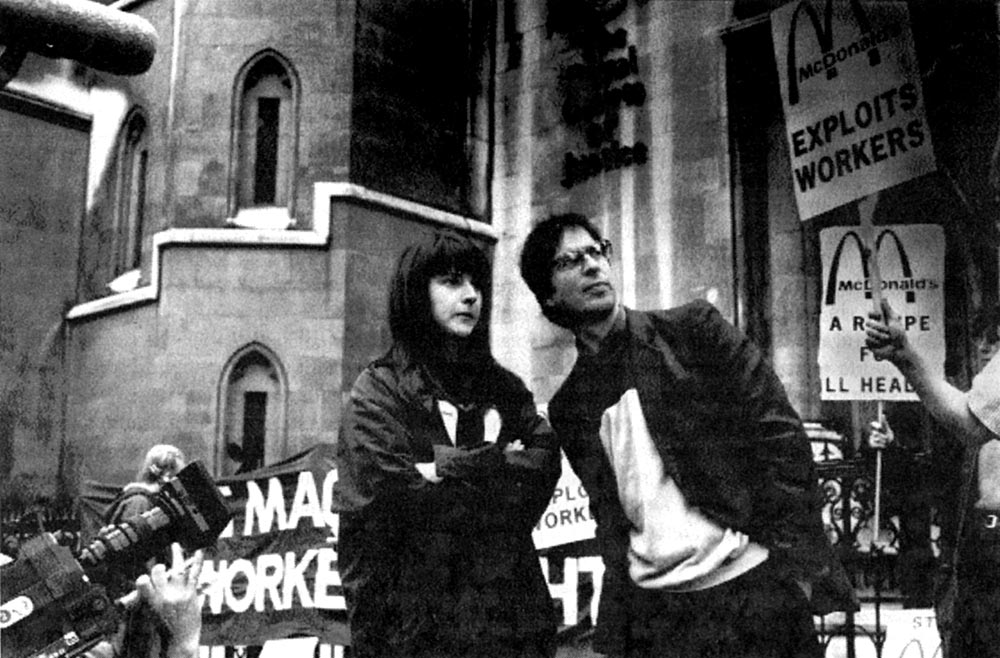
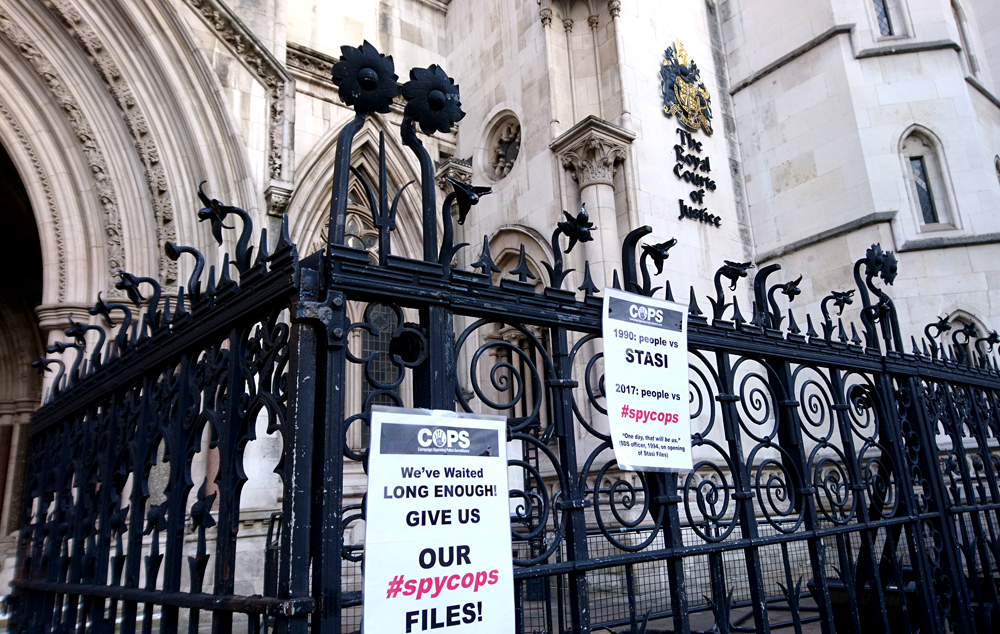
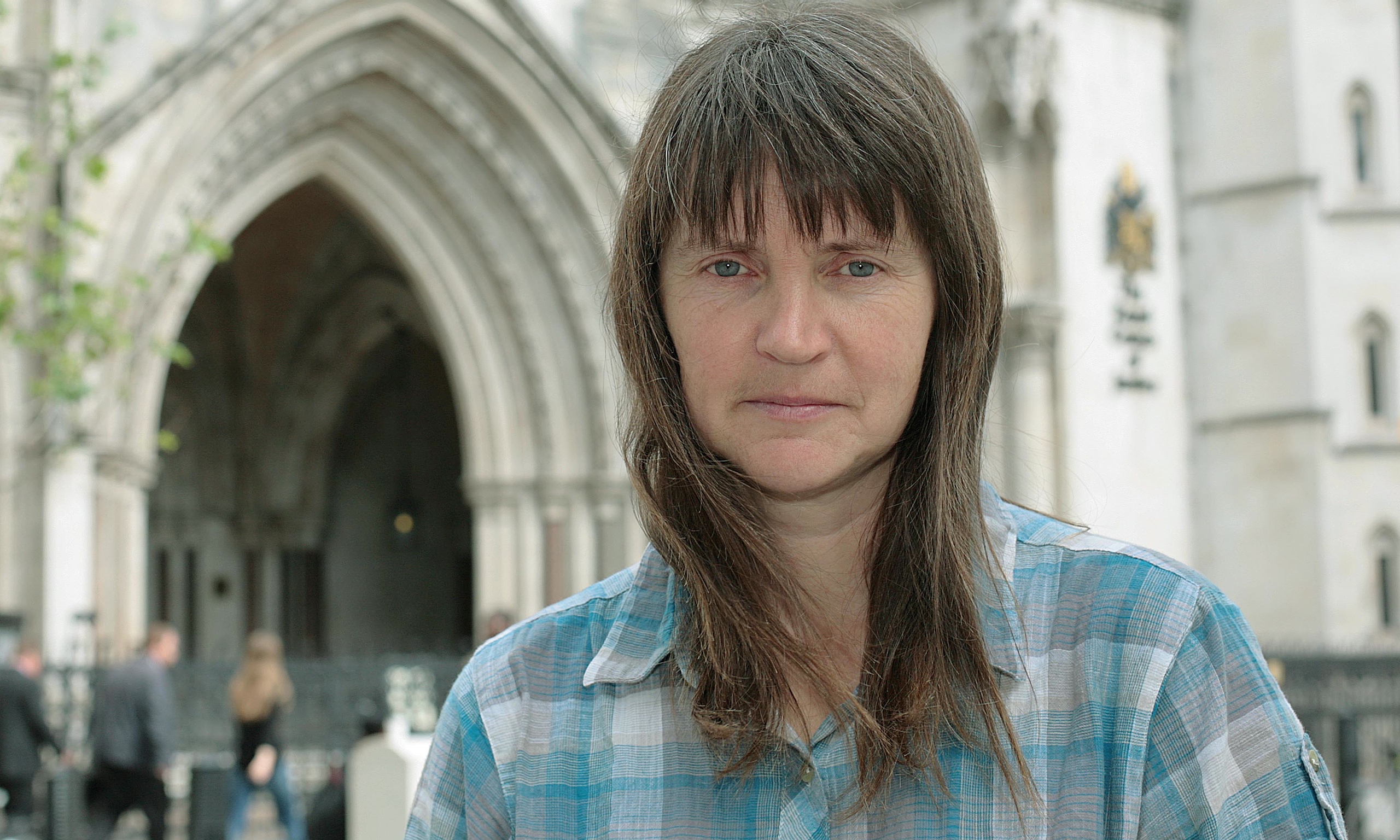
The McLibel 2, Helen Steel and Dave Morris, at the Royal Courts of Justice (Pic: Nick Cobbing)

The McLibel 2, Helen Steel and Dave Morris, at the Royal Courts of Justice (Pic: Nick Cobbing)

Docker says this was fairly early in his time in the SDS, and that he knows nothing about any direct contact between Special Branch and the corporation.

He doesn’t recall paying much attention to the phrase ‘clearly libellous’, or doing anything about this at the time.

He also denies knowledge of spycop Bob Lambert’s role in the production of the fact-sheet that led to the McLibel case, the longest trial in English history. Docker says that this isn’t something he would have known about, six months into his role, as it would have been the responsibility of his DCI, HN115 Tony Wait.

Barr points out that Docker saw, and checked in with, Lambert twice a week. Docker says that he attended many such meetings over his two and a half years, and he can’t remember all the details now.

He says as far as he knows there was no communication between the SDS and McDonald’s. He denies knowing Sid Nicholson or Terry Carroll, former police officers who went on to work for McDonald’s security. Nicholson testified that the entire McDonald’s security department was ex-police, and they would often exchange information with the police.

Docker said he was unaware of the private infiltrators from McDonald’s who were in London Greenpeace, even though HN5 John Dines reported about them. The most he’ll confirm is that, when asked about whether there was even a campaign against McDonald’s at the time:

‘I believe so.’

David Barr KC asks Eric Docker if his memory is going to be this vague the whole time. He answers to say basically yes.

TREVOR MONERVILLE CAMPAIGN

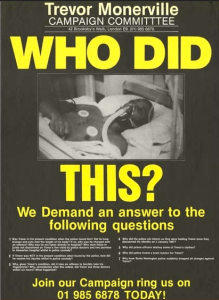
Trevor Monerville campaign poster

Trevor Monerville campaign poster

We see a report [MPS-0740393] with a title saying it’s about the Socialist Workers Party, but with a lot of content about the Trevor Monerville campaign, one of a number of Black justice campaigns that were spied on by the SDS.

In January 1987, 19-year-old Trevor had been held incommunicado at Stoke Newington police station before being rushed to hospital with a head injury. He was left with permanent brain damage. The only reasonable explanation is that the police gave him a very severe beating.

Police refused to even admit they’d had contact with him for some time after. His family campaigned to get the truth about who had caused such horrendous injuries.

Trevor’s father John’s witness statement to the Inquiry refers to the campaign being listed in the 1987 SDS Annual Report [MPS-0728976] as one of those ‘directly penetrated or closely monitored’ (the name isn’t visible in the report online, presumably it’s one of those redacted for public viewing). Reporting on the Justice for Trevor campaign continued for many years afterwards.

Why would the SDS spy on a lawful campaign? Docker says it was because of the Socialist Workers Party’s support of the campaign:

‘which would of course be of interest.’

Barr points out that the report itself explains that one SWP activist has joined the campaign but has little influence and is rather isolated. It’s clear from the report that the SWP hadn’t got anywhere. It’s surely legitimate for the public to campaign about an issue like this.

Q: There’s nothing to suggest that the Socialist Workers Party is doing anything here that is going to interfere with public order or be unlawful, is there?

Docker: Not at that point.

Docker keeps saying that this report was about the SWP, but is forced to admit that spying on groups fighting for racial justice is and was ‘sensitive’.

Barr goes on to say that if anyone had discovered that spycops were reporting on a Black justice campaign it could have damaged community relations and caused public order trouble. Was any thought given to this?

‘my honest answer is no’

Docker admits that the SDS gave no consideration to the Monerville family either. He insists that the SWP had a habit of hijacking campaigns. But even if the SWP did try to hijack the Monerville campaign, couldn’t the family have dealt with it themselves? Was any thought given to them at all?

‘I am sad to say the answer was no’

Securing Wrongful Convictions


Barr next asks about the arrest of Steve Curtis in 1986 at a demo outside the US Embassy in London, at the time of the US bombing of Libya. HN10 Bob Lambert was asked to give evidence in court for Curtis’ defence.

Commander Phelan, one of the senior officers, felt that Lambert should not give evidence in this case. If he did so using a false identity and not telling the whole truth, he would be perjuring himself.

Docker recalls that his immediate boss, HN115 Tony Wait, agreed with Phelan, but says he doesn’t remember what he thought himself at the time. Docker says he remembers Lambert being told not to appear, but has no idea if he did or not. Curtis was convicted.

Docker says that spycops were allowed to commit ‘minor offences’. Asked what severity of offence would be left to run its course through the courts – with spycops appearing in their cover names – he mentions ‘obstructing the footway’ and claims anything beyond that level wouldn’t be allowed.

The Home Office had issued clear and unequivocal guidance as early as 1969 that if the use of any kind of informant might lead to a court being misled, that person should be withdrawn or outed. The SDS and, it seems, the wider Met just ignored this.

This led to an uncharacteristically frank, direct and honest exchange between Docker and David Barr KC:

Docker: He’s been arrested, right, fine, okay. Nothing serious. Let it carry on.

Q: That is a decision, isn’t it, that requires the officer to appear before a court in a false identity?

Docker: Correct.

Q: The court is misled?

Docker: Correct.

Q: That’s wrong, isn’t it?

Docker: Yes.

Q: Did you address your mind to it at the time?

Docker: No.

Q: Should you have done?

Docker: Maybe.

Q: You should’ve done, shouldn’t you?

Docker: Maybe I should’ve done, but we’re talking a long time ago and that was the established practice then.

SPYCOP BOB LAMBERT ARRESTED

A report of 3 March 1987 [MPS-0526789] shows Bob Lambert was arrested hunt sabbing in Horsham during his spycops deployment.

Spycop Bob Lambert while undercover in the 1980s

Spycop HN10 Bob Lambert while undercover in the 1980s

Docker says it was normal to send someone from the SDS office if an undercover officer was going outside the Met Police area.

He was in the police station when Bob Lambert was brought in from being arrested. He says he probably spoke to Sussex Special Branch and told them that he was covering an informant, rather than a spycops officer. When no charges were brought, he says he didn’t tell them any more.

The report says that Lambert’s cover was not compromised by this arrest, and that during his time being held in the cell with other arrested activists, Lambert was able to gain useful intelligence.

Docker insists that this is true, although there is no record of this intelligence and he can’t remember what it was. He rejects the suggestion that he was trying to put a positive spin on a bad situation.

The report was accompanied by a note from Special Branch marked ‘DAC [Deputy Assistant Commissioner] to see, please’. It’s marked with a file number, 588/UNREG/694E.

Docker describes it a ‘policy file’, but then pretty much agrees it was for keeping records of SDS officers’ involvement in adverse events such as arrests and traffic collisions.

He said he never looked at the contents, and they were kept over at Scotland Yard, as if that made them hard to get to. Which is odd, given that he later said that he was in contact with his Chief Superintendent at Scotland Yard ‘almost every day’, and emphasised how close it was:

‘Ten minute walk, maximum.’

He says ‘I wouldn’t have had access’ to the file but admits that he could easily have got access if he had asked. He doesn’t agree with Barr’s suggestion that it would have been good to look at the file when he joined the spycops unit.


Bob Lambert in the Animal Liberation Front


ANIMAL RIGHTS

Lambert formed an Animal Liberation Front (ALF) cell which, amongst other forms of property damage, placed timed incendiary devices in shops that sell fur. The devices were set to go off in the dead of night, producing just enough smoke to set off the sprinkler system which would then douse the stock, making the furs (and other items) worthless.

Barr suggests that during Docker’s time running the SDS, animal rights was top of the agenda.

Docker quickly tells him:

‘I didn’t have the agenda. The agenda was held by the squad chief where animal rights were dealt with, which I suspect was C Squad at the time.’

He then immediately admits that animal rights activists’ activity was indeed ‘top of the list’ for him.

Animal Liberation Front (ALF) actions were carried out by individuals and small groups. Docker agrees that they had a ‘cell structure’, and that anyone wanting to infiltrate these groups had to show they were ‘up for it’ and capable of keeping their mouths shut.

Did he ever discuss how his officer Bob Lambert would inveigle himself into the animal rights movement?

‘He was a very shrewd man and I would not have discussed something like that with him because he would’ve had his own ideas.’

So, Docker left him to get on with things using his own initiative and methods? Docker claims Lambert would definitely have been reminded not to commit crimes. And they would have had one-to-one meetings with him.

PERMISSION FOR CRIME

The next document we see [MPS-0730597] is from January 1993, after Docker’s time. It talks about spycops infiltrating animal rights groups:

‘in order to gain full acceptance and trust, participation in ‘illegal’ activities is essential. This level is progressive from inspections of premises, where no criminal offences are actually committed, through the housing of liberated animals, daubing and other minor damage to premises, through to product contamination, arson and the use of improvised explosive devices.’

This would appear to sanction officers planting incendiary devices as Lambert did (though he and Docker are at pains to deny it).

Docker says ‘you would have to draw the line somewhere’, but it’s hard to see from this document where that line would be. Barr points out that there don’t seem to have been many lines for the spycops.

Barr affirms that spycops’ intelligence could not be used for criminal prosecutions without risking the officer’s cover, and so was not being gathered for evidential purposes:

‘That would not have been their role’

Docker says he didn’t see a problem with this, as the spycops were told not to get ‘heavily involved in criminality’. He goes on to claim that if they did, their posting would be over.

He doesn’t understand the point Barr is making: to have a long-term infiltrator who stays in post after a major criminal act, they would have to be involved in that criminal act in some way.

Docker is asked if he remembers the campaign against the Biorex vivisection laboratory, and he says he doesn’t. Did he know about Lambert’s involvement in an arson attack at a house that belonged to one of this company’s directors? No.

Docker goes on to say that if he had known, Lambert’s deployment would have been ended. He should have come to the spycops managers first to discuss it.

Spycop Bob Lambert (right) at protest against dairy firm Unigate, 1980s.

Spycop HN10 Bob Lambert (right) at protest against dairy firm Unigate, 1980s.

Docker insists that Lambert was intelligent and would never have risked his spycops career by taking this kind of action. He doesn’t say how it was a risk when, according to his description, spycops worked unsupervised and their managers only knew what they were told.

The managers didn’t – indeed, usually couldn’t – check the veracity of what was reported. They wanted reports full of juicy details. The spycops were only judged on whether they supplied them, not on how they got them, nor on how true they were.

The managers, in turn, could not have their reports fact-checked by more senior officers, so they were in a position to know their spycops were committing crimes and safely keep that knowledge to themselves.

Asked about paint stripper being poured on a Biorex director’s car, allegedly by Lambert, Docker repeats that he’s sure Lambert would never have done such criminal acts.

He also denies knowing about Lambert’s use of etching fluid to damage plate glass windows, or his asking activists to buy it for him.

As for whether this kind of action would be acceptable, Docker says the decision would have been up to far more senior officers than him.

INCENDIARY CAMPAIGN

We were shown a report dated 9 June 1987 [MPS-0740088] about a forthcoming Animal Liberation Front (ALF) campaign which might be using incendiary devices. It mentions secret meetings between ALF activists from around the country. Docker says the mention of targets in London was of great interest.

Did Lambert attend any of the ‘secret meetings’ mentioned in this?

‘I don’t know.’

Lambert has said he was at a meeting in Manchester. Any travel outside of London by spycops would surely have been approved by Docker as the unit’s manager.

Docker considered Lambert to occupy a position of trust within the animal rights movement, due to the quality of the intelligence he was delivering. He admits that there was no actual scrutiny of this intelligence, or its accuracy. They just took Lambert’s word for it.

Docker rejects the idea that there was a complete lack of scrutiny of what Bob Lambert was up to in summer 1987. Asked what scrutiny there was, he can’t describe or specify any.

Asked what advice or instructions he gave Lambert, he retorts that ‘he didn’t need me to tell him how to proceed’. It is very clear that Lambert was not being closely supervised by anyone.

Animal rights activist Paul Gravett said in his witness statement that he put on a benefit gig in Slough, and the funds raised were used for ALF actions. Docker says Lambert never told him that he’d been involved in fundraising for ALF actions.

DEBENHAMS: PREPARATION

The cell decided to target Debenhams shops that sold fur. Andrew Clarke and Geoff Sheppard would eventually be convicted for this. However, three shops were targeted simultaneously. Clarke, Sheppard, and numerous other people who knew Lambert at the time say Lambert planted the third incendiary device, in the Harrow shop.

Asked if he knew that Lambert had taken part in the reconnaissance of Debenhams stores which were then targeted in the incendiary device campaign, Docker replied:

‘I really can’t remember.’

It’s very noticeable that the last report filed by Lambert before the Debenhams action on 12 July 1987 was dated 9 June. Why are there no reports from him at all from the month immediately before the incendiary devices were planted? Lambert would normally have been submitting two or three reports a week.

Docker claims he didn’t notice this lack at the time and that he must have assumed that Lambert was consistently busy doing other things and just didn’t have time to write any reports.

However, at the end of his second day of questioning, Docker completely contradicted this and said that it would be extremely odd to go a month without a report and he’d demand an explanation:

‘Unless they were away for some reason for a month, which was very, very unlikely, I would expect to see something from them. Otherwise, I’d be asking them why.’

He insists that he doesn’t believe Lambert was involved in the Debenhams campaign or responsible for planting an incendiary device. He strongly denies that managers would have allowed him to take part in such a serious criminal action.

Docker says he can’t remember anything that Bob Lambert said or did after the Debenhams attacks. He can’t even remember what he thought himself, nor what he asked Lambert.

DEBENHAMS: REACTION

This action was a very big deal, and squarely in the area that Lambert was working in. Whatever his involvement he would surely have phoned in to the SDS office.

‘I can’t remember now.’

Docker says the managers ‘probably would have seen him on the Monday’ at the safe-house meeting (this would have been 13 July 1987) and suggests Lambert would have delivered an oral report to the other spycops. But he says he’s just guessing this as, once again, he doesn’t remember.

Docker says he didn’t task Lambert to find out who’d done it, he wouldn’t have needed to because Lambert would already be on the case and would volunteer the information if and when he had it.

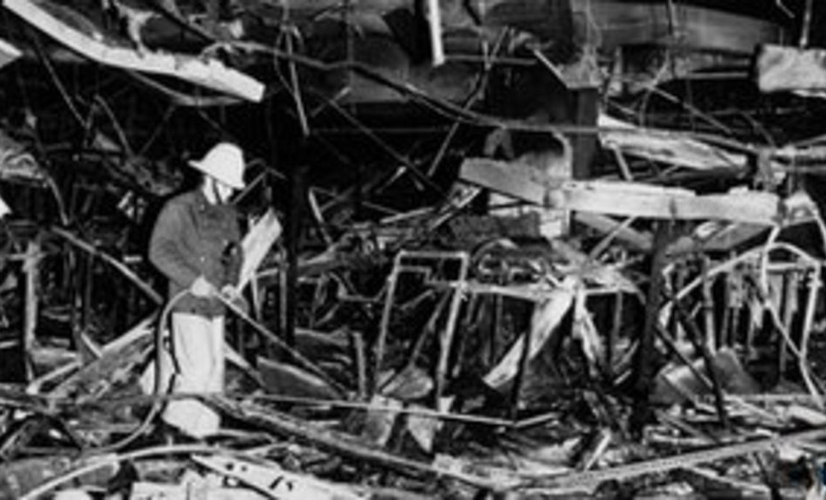
Firefighter in the wreckage of Debenhams Luton store after 1987 incendiary device placed by Bob Lambert's Animal Liberation Front cell

Firefighter in the wreckage of Debenhams Luton store after 1987 incendiary device placed by Bob Lambert’s Animal Liberation Front cell

We now know that Geoff Sheppard was involved in planting one of those devices. However, his name is not in the report that Lambert submitted.

In his evidence to the Inquiry, Lambert said that he suspected Sheppard was involved. Docker claims he can’t remember whether Lambert shared that suspicion with him.

Docker insists that immediately after the attacks, they just told Lambert to remain in post, and not do anything in particular. Docker says Lambert ‘would not have divulged his sources’ to the SDS managers. This is an incredible claim, given that it was basically a spycop’s job to do precisely that – get information from activists and tell their managers who was doing what.

Docker says Lambert didn’t need to tell them as he could put it in a report. But, Barr points out, he didn’t put it in a report. Or if he did, that report has gone missing.

There are audio recordings of someone claiming responsibility for the Debenhams attacks. Did Docker ever hear these? Were they played to Lambert, to see if he could help to identify those involved?

Docker says he wasn’t even aware of these recordings:

‘It’s the first I’ve ever heard of it’.

It was usual for the ALF to phone the police and claim responsibility for an action. A recording should have been anticipated, but Docker appears to be saying it didn’t occur them to find it.

Barr asks outright:

‘Is the reality that you didn’t need Lambert to listen to a recording because he was in the cell and had participated in the attacks?’

Docker, of course, says no.

SUGGESTING CULPRITS

Immediately after the Debenhams incident, the Security Service asked spycops who the culprits might be. A Security Service report listed the names of people suspected [UCPI0000031267]. Docker suggests these could have come from Lambert. So why are Paul Gravett and Geoff Sheppard not on the list, given that Lambert knew they were responsible? Docker says he doesn’t know.

Barr asks if there was a decision for Lambert to only report selectively at this time? Docker says he would ‘never use the word selective’ and insists that he wouldn’t have known that Lambert was doing this.

‘If he misled me I wouldn’t have known about it in the first place.’

He turns and nods to the police lawyer as he says this.

We also see a report which says that the incendiary devices were manufactured by Andrew Clarke at his home address, and that only a very small number of people know this. Why is the source of this info not recorded?

According to the notes of a meeting of very senior officers held on 14 July 1987 [MPS-0735357], it was agreed that Docker be tasked with providing information about which room Clarke occupied in his house. He says he would have spoken with Lambert after this meeting.

Docker says ‘the source is never recorded’ in spycops reports. This seems to be a reference to the fact that the name of the undercover officer is not usually included. Barr points out that he is actually referring to the activist ‘source’ of this intelligence, which would normally be identified (as Lambert claimed in his evidence that this was second-hand information that he’d gained via an activist source, rather than something he had direct knowledge of).

A further report [MPS-0735387] features a list of other suspects whose addresses should also be searched. It includes Lambert’s cover name ‘Bob Robinson’, but still no mention of Geoff Sheppard, the person Lambert said he got the details from.

Docker can’t explain this. He says he doesn’t remember Lambert telling him. However, not only did Lambert tell the Inquiry that he did indeed name Sheppard to Docker, but Docker also admits that he knew Sheppard was someone with a history of this kind of action.

Q: He’s an obvious suspect, isn’t he?

Docker: Yes.

Q: Are you sure you can’t help us as to why he’s not on the document?

Docker: I don’t know. I simply can’t answer your question.

Q: Did you spot the omission at the time?

Docker: Maybe I didn’t.

Asked why this list of suspects is far longer than the one given to the Security Service, Docker says it wasn’t up to him to ensure intelligence was shared with them. He adds with a smirk:

‘That was NOT my responsibility’

NEXT INCENDIARY CAMPAIGN

Another report, from 24 July 1987 [MPS-0735386], suggests a further incendiary campaign was being planned for the autumn. This one would target other retailers including Harrods and C&A. Docker says this issue was something the SDS wanted to keep a ‘firm’ grip on. He says he didn’t ask Lambert how he got the information or where it came from.

A spycops report from 11 August 1987 [MPS-0735383] says Andrew Clarke manufactured the incendiary the devices and planted two in Luton, and:

‘Two close and trusted comrades were responsible for planting devices at the Harrow and Romford branches, their identity is not known at present’

Though unnamed in the report, these two were, of course, Lambert and Sheppard.

It also says that Clarke plans to move the manufacture of devices to a different address.

Docker says he can’t remember talking to Lambert about it. But he agrees it proves:

‘Bob was at the top echelon of the Animal Liberation Front and had access to very, very detailed intelligence of their intentions’

Yet he still refuses to admit that this report shows that Lambert was in the ALF cell.

Docker claims he would have been speaking to Bob Lambert twice a week at the safehouse meetings, and also outside of that. He can’t recall anything about what was said, but is sure he didn’t ask him how he was getting intelligence.

He claims not to remember feeling any inquisitiveness about the precise nature of Lambert’s role at this time. Even though, he admits, he played a part in relaying Lambert’s intelligence back to senior officers during the summer of 1987, so it seems they must not have questioned how they were getting it either.

We see a spycops report [MPS-0735382] about the meetings of an active ALF cell, with just four people present: two are Clarke and Sheppard, one is ‘presumably’ Lambert who was writing the report. Who is the fourth? The exchange was one we heard a lot:

Docker: I don’t know – you’d have to ask Bob.

Q: Did you ask Bob?

Docker: No.

NAMING SHEPPARD, WATCHING CLARKE

According to this report, dated 18 August 1987, Sheppard planted one of the devices. This is the first time Lambert has reported his name – over a month after the action. Docker denies remembering what he said about this at the time.

The report mentions Debenhams being given a ‘deadline’ by which to stop fur sales. Docker says that he doesn’t know of any communication between Debenhams and Special Branch, indignantly saying this wasn’t his ‘remit’.

Geoff Sheppard (left) and Paul Gravett in the 1980s

Geoff Sheppard (left) and Paul Gravett in the 1980s

We hear that the police are keen to start ‘evidential surveillance’ of Andrew Clarke in August 1987 with a view to catching him making devices and securing a conviction. The ‘operational security concerns’ associated with this are going to be discussed with the SDS, in the shape of Docker.

What were these concerns? Rather than answering Barr’s question, Docker first makes the bizarre claim that ‘in my experience, all surveillance is evidential’.

This completely contradicts the general method and purpose of the SDS, and of Special Branch as a whole. They were specifically tasked to gather intelligence rather than evidence. Their material was taken on trust and not for use in court cases.

Barr asks if the ‘operational security concern’ was that he wanted to ensure that Lambert didn’t appear in any surveillance photos, as this might have raised questions about him at any trial.

Docker agrees that they would indeed have preferred to avoid this. He says that he would have told Lambert about the surveillance. He would have wanted to advise Lambert to distance himself from Sheppard. He adds that members of the surveillance team would probably have recognised Lambert.

The next ‘briefing note’ dated 24 August 1987 [MPS-0735381] seems to combine intelligence from Lambert with information gathered through surveillance. Docker says he doesn’t remember this. It recommends that Helen Steel’s address not be searched, ‘for source protection’ reasons.

Docker is asked what this means. He claims not to know what this referred to and says he can’t remember if he discussed this with Lambert at the time or not.

Before the spycops inquiry stops for lunch, Mitting intervenes. He asks Docker to ‘reflect’ on the August meetings of the ALF cell, and exactly what he said to Lambert about his participation in that four-person group. This appears to be Mitting telling Docker ‘you obviously know, so fess up or we’ll assume you’re lying’.

We return from the lunch break to hear Barr ask Docker again what he said to Bob Lambert about his participation in an ALF cell. Docker continues to claim he never spoke to Lambert about this. When asked why not, he says it simply ‘didn’t occur’ to him.

SEARCHING LAMBERT’S FLAT

It’s said that HN51 Martin Gray had been informed about the identity of Lambert as the source, and a plan was hatched for ‘a specifically selected SO13 team’ to conduct a search of his address (SO13 is the Met’s Anti-Terrorist Branch who were investigating the Debenhams incident).

Asked if he’d introduced Gray to Lambert, Docker says Gray ‘would have known him anyway’.

As for the ‘specifically selected’ team, Docker is adamant that the search team would not have been informed that this was an undercover officer whose address they were searching. The search eventually took place in September, accompanied by HN32 Michael Couch, who has told the inquiry that everyone on it knew Lambert’s true identity.

He agrees that if Lambert had been arrested at this time, as a suspect in a terrorist offence, he probably would have been interviewed under caution.

We see a report from the end of August [MPS-0735376] saying that the attack planned on Harrods has been postponed. This was because of a large number of liberated laboratory rats that needed to be moved. Asked if Lambert took part in the reconnaissance of Harrods, Docker says he doesn’t know, and that he never asked Lambert how he’d gained this intelligence.

He says he only vaguely recalls the incident involving the ‘200’ liberated rats. David Barr remarks to Docker that it was surely a memorable thing, and Docker agrees, but then says he only recalls it ‘very, very vaguely’.

Docker obviously remembers a great deal more than he is letting on. He is desperately trying to pretend that he can’t recall events whilst every aspect of his body language shows he knows exactly what happened.

The report explains that the 200 lab rats needed to be moved on from the location near where the devices were being made before the assembly could take place. Barr asks Docker if Lambert was directed to move the rats so that Clarke and Sheppard could be arrested. Docker can’t recall.

He says he doesn’t know how this related to the incendiary attacks being postponed. He doesn’t remember what part Lambert had in transporting the rats, or anything about authorising or prohibiting this involvement.

Barr points out that the longer any delays lasted, the longer any surveillance operation would need to continue, and surveillance isn’t cheap.

‘IN ALL PROBABILITY’

In a bit of a breakthrough, Docker finally admits that Lambert may well have been a member of the ALF cell:

‘In all probability he might well have been. But he never admitted that to me and I’m not sure that I ever asked him about it anyway.’

Barr suggests that this is because if Lambert had admitted that he was in the cell, it would have created a ‘dilemma’ for Docker. He would have had to investigate further and prohibit Lambert from the criminal activity that was producing such high-quality reports.

Docker rejects that this was in any way linked to his obvious reluctance to pull Lambert out of his deployment. He still doesn’t want to blame Lambert for anything, saying that he should perhaps have looked into Lambert’s involvement more at the time:

‘Perhaps that’s my failing, not his.’

He adds that he doesn’t believe that Lambert would do anything that would make him liable to prosecution. Neither Barr nor Docker raise the fact that the culture of exceptionalism in the SDS means Lambert may well have believed himself to be immune.

INCENDIARIES POSTPONED

A Special Branch briefing note of 28 August 1987 [MPS-0735377] says the next incendiary action is said to have been postponed, till 11 September. Again, Lambert is clearly reporting from inside the ALF cell.

Docker says ‘Clarke and Sheppard were always put forward as the main protagonists’, and that he never asked who else would be involved in planting these incendiary devices.

Was there a plan to not arrest certain people? If Lambert was the only one not arrested it would have drawn suspicion upon him. Were others involved in the cell to be omitted from the arrests too? Docker says, again, that it wasn’t his problem to ponder. He says the decision about who to arrest would have been taken by a Chief Superintendent or Commander.

This contradicts other evidence we have seen of the SDS frequently intervening in policing operations and court processes where their number one priority is always protecting the existence of the unit and the secrecy of their ‘source’.

A spycops report of 4 September 1987 [MPS-0735374] claims there will be further intelligence to come over the weekend about the plans of Andrew Clarke and Geoff Sheppard in building more incendiary devices. Docker can’t remember anything about it.

We were then shown a briefing note by Docker’s boss, TN0042, dated Sunday 6 September 1987 [MPS-0735375]. Docker had rung TN0042 on a Sunday morning to tell him about a change of plan for the making and placing of the next set of incendiary devices. Clarke and Sheppard were reported as experimenting with a new design, and there was a date set for placing them.

This was important information – important enough to bother your boss with on a Sunday morning – and yet Docker didn’t seem to have asked who’d joined the conspiracy.

He agreed that the police would want to arrest whoever was involved, but he didn’t ask Lambert who it might be beyond Clarke and Sheppard. He can’t explain why.

‘I don’t recall being inquisitive, no.’

He says he was confident that the ‘two protagonists’ would be arrested and so the action wouldn’t take place, and that was enough.

MAKING ARRESTS

The report mentions Andrew Clarke’s connection to activists in Manchester. Docker can’t remember anything about it. Asked about spare incendiary devices, Docker can’t remember that either.

Docker can magically now remember something, though: there was a plan that Lambert would ring the SDS office after Sheppard and Clarke had been in the flat for two hours, so that it could be raided and they would be caught red-handed.

Operation Herne (a police self-investigation into spycops, 2011-2016) spoke to Docker. Their evidence is proving very useful at the Inquiry as the spycops tended to be a lot more candid when speaking to fellow officers in circumstances that were less open to public view.

According to Herne [MPS-0738106]:

‘N39 [Docker] did recall that on the day of the arrests of Clarke and Sheppard he had a difference of opinion with Dave Short, (C Squad Chief Superintendent) and Short said something like ‘the man’s out of control, you’ve lost him’.

Docker says he is unsure what Short meant and can’t recall anything else. He was confident that Lambert would act as arranged, calling when Clarke and Sheppard had been alone for two hours, then the raid would take place.

‘He didn’t let me down. And the arrests were made.’

He remembers disagreeing with Short’s assessment at the time, and says it’s a shame that Short is now dead so can’t tell the Inquiry what he thought.

Barr asks if he’s sure that Short saying ‘the man’s out of control’ was referring just to the arrangement of that weekend? Was he maybe referring to the situation with the rats? Or Lambert’s conduct more widely? Docker insists that Short was referring only to the events of that weekend.

RAIDING LAMBERT

There is evidence that search warrants were applied for in relation to other addresses, including Lambert’s cover flat. Docker thinks that Lambert was aware that his flat would be searched, but doesn’t know if he knew it would only be ‘cursory’.

He thinks Lambert would have been aware that there was a possibility that he might be arrested. Docker says Michael Couch, a former member of SDS staff, was present during this search, not for Lambert’s welfare but to ‘make sure everything was done properly’. Couch later told the Inquiry he was there as a welfare officer, yet also claimed he didn’t interact with Lambert at all, not even to speak.

Docker says leaving John Player Special cigarette packets in the flat, the kind that had been used in the incendiary devices, was a deliberate ploy to provide a plausible reason as to why Lambert might be arrested. However, the search team didn’t spot these.

Docker says that ‘as far as I know’ the search was carried out normally, and none of the search team knew that Lambert was an undercover officer. Yet Couch, as part of the SDS backroom support team when Lambert was first deployed, will obviously have known him very well.

Barr points out that the court was misled when this search warrant was obtained. Docker says ‘I don’t see this as misleading a court at all’ but blames his senior officers for any failings anyway.

CCTV VIDEO DISAPPEARING

A security CCTV video tape was seized from the Harrow branch of Debenhams in July 1987. This would have shown the person who planted the incendiary device which, it’s abundantly clear, was Bob Lambert.

As James Wood KC has previously told the Inquiry:

‘CCTV from the Harrow store was recorded as having been obtained by police. The original exhibits officer has a clear recollection of Special Branch officers attending and taking custody of the exhibits in the case. After this point the CCTV appears to have gone missing.’

Docker dismisses this as ‘absolute rubbish’.

Police records show the tape was later destroyed without being watched.

‘I have no knowledge at all. It’s nothing we as SDS officers would’ve been involved in.’

Docker remains unconvinced that Lambert did anything wrong, or acted as an agent provocateur.

‘I trusted him. I knew what he was doing. He. Knew. Where. To. Draw. The. Line.’

This stands in stark contrast to his countless claims that he didn’t know what Lambert was doing and never asked. It’s also undermined by the fact that Lambert deceived four women into relationships which, even by Docker’s standards, is well on the far side of the line.

MISLEADING THE COURT

Docker says he appreciated the work that Lambert was doing undercover. He agrees that he wanted to protect the identity of such spycops and so wouldn’t have disclosed their status to the courts. This is withholding evidence, meaning any resulting convictions are a miscarriage of justice. Docker says no thought was given to that fact.

He says that he didn’t have anything to do with the Debenhams trial either – this would have been a matter for C Squad to liaise with the Anti-Terrorist Branch. He concedes that Lambert’s identity and role were not revealed in court. To reveal them would have shown him as an agent provocateur, resulting in his dismissal and a lot of blame falling on Docker and other managers. But to not reveal it meant the court was not dealing with the facts of the case.

Q: The court was misled?

Docker: If you want to put it like that, yes.

Barr immediately brought out a Home Office Circular of 1969 [MPS-0727104]:

‘The police must never commit themselves to a course which, whether to protect an informant or otherwise, will constrain them to mislead a court.’

Docker only concedes that ‘maybe’ the court should have been told that Lambert was an undercover officer, and absolutely denies that any of this was his responsibility.

ANY MEANS NECESSARY

Barr suggests that an alternative course of action could have been to advise Lambert not to become so involved, and thus avoid the need for any disclosure. But the SDS wanted the reports, Docker’s superiors expected them, and they thought nobody would ever check up on them, so there was a strong incentive to commit crime and mislead courts if it got the right results. The ends justified the means.

Docker: He produced the intelligence always under the instruction that he was not to become personally involved. I can’t take it any further than that because I never had any admission from him of any criminality. But he provided the intelligence.

Q: Isn’t that washing your hands – forgive me for putting it so bluntly – of the dilemma that Bob Lambert was in, tasked to infiltrate the Animal Liberation Front without getting too involved?

Docker: Well no, he knew what he was doing, and quite frankly, he produced the information that we needed.

Barr asks Docker if Bob Lambert was involved in any way with the other ‘improvised incendiary device’ attacks that took place in central London in November 1987.

We’re shown several related documents. There’s a briefing note about incendiary device attacks on Debenhams and C&A on Oxford Street in November 1987 [MPS-0748814]. Then a report about attacks on 12 November on Oxford Street department stores DH Evans and Selfridges [MPS-0748795]. Then a spycops report on both [MPS-0740492].

It’s reported that the devices used may have been manufactured outside of London. Docker says with absolute certainty that he is sure that Lambert was not involved at all:

‘He was a highly experienced undercover officer. He knew the limits of his deployment. And I do not think he would’ve compromised himself by putting himself in a position where he had to commit a criminal offence such as this.’

Somehow, he kept a straight face.

A device was left in DH Evans the following summer, in August 1988, but failed to ignite. Docker rejects the suggestion that this was planted in an attempt to bolster Lambert’s cover.

Docker is asked about Bob Lambert’s exfiltration. He says he left the unit before Lambert, but then admits that the exit strategy was already underway while he was still managing the SDS.

Part of Lambert’s plan involved making people think that the police were after him. Docker says:

‘I had no part in formulating or actioning that strategy’

He claims that it’s yet another key part of Lambert’s deployment that they never spoke about. One has to wonder what he ever did see himself as responsible for, and what he ever did speak to Lambert about.

Barr points out that Lambert’s exit strategy was related to his involvement in an ALF cell. Pretending the police were after you would not have worked for someone who wasn’t thought to be involved in serious crime. Docker doesn’t really provide any answers to this.


SDS Culture, Methods and Activity


HELEN STEEL

Docker is asked about Helen Steel, a London Greenpeace activist who was deceived into a long-term relationship by HN5 John Dines ‘John Barker’. He remembers her name, and that she was a ‘very committed activist’. He read spycops reports about her. He admits he got this impression from Lambert’s reports.

Barr displays two reports from 1988. One, by Lambert [MPS-0740518], claims that Helen Steel attended a meeting in a London pub on 13 August. The other, by John Dines [MPS-0744064], says that Steel spent that same weekend in Yorkshire, protesting about grouse-shooting. Docker has signed off on both reports.

Did he not notice that these reports put her in two completely different places at the same time? How closely did he scrutinise Lambert’s reports?

Docker insists that he would check them for grammar, but admits that he didn’t pay ‘great attention’ to the actual content of spycops’ reports.

‘I had so many coming across my desk’.

With around a dozen officers reporting twice a week, that’s 24 reports in total, probably averaging around five paragraphs each. It’s no Herculean workload.

Barr points out that an unscrupulous officer could just lie in their reports and this would never be picked up on. Docker says he was able to ‘trust’ his officers.

This directly contradicts his assertions that there was no point in asking spycops difficult questions because they would only lie.

Steel has highlighted the way that Lambert seems to have frequently substituted activists’ names into his reports to cover for things he did himself. Docker says this would have been unacceptable. He adds that he was not responsible for fact-checking the intelligence reports (in fact, it appears that no one was), so he wasn’t in a position to argue with the spycops officer about what they wrote.

Docker says he has no memory of talking to John Dines about getting close to Helen Steel. He says he doesn’t know if Bob Lambert’s exaggerated reporting of Steel had made her seem more of a lynch-pin in activist circles and thus influenced Dines’ targeting of her. He may have discussed it, but can’t remember.

INTEGRATION WITHIN SPECIAL BRANCH

Docker says he worked closely with the other SDS office staff. He did most of the liaison upwards, with more senior officers, and would be the Acting Chief Inspector on occasion. He was in contact with his Chief Super ‘almost every day’, saying it was a short walk to Scotland Yard. He often saw other Special Branch squad chiefs there. He confirms that they all knew about the SDS and its capabilities, even if they weren’t fully aware of how they operated.

By this time, many Special Branch officers had been involved with the SDS and so knew about it. There were around 400 people within Special Branch at this time.

HN109

HN109 joined the SDS as a Detective Inspector, having previously served as an undercover officer himself in the 1970s.

‘He didn’t suffer fools gladly’

HN109’s prior experience undercover brought advantages; he understood the unique stresses and strains of the work. Asked what the disadvantages of employing someone with this experience were, Docker says he might have understood what the spycops really got up to in the field.

This is a further admission that the officers were not candid with their superiors and were commonly engaged in deeds that would be disapproved of.

Docker insists that the spycops of the day wouldn’t necessarily have shared everything with HN109 as their manager either.

HOME OFFICE APPROVAL REQUIRED

The SDS was directly funded by the Home Office from its formation in 1968 until just after Docker left. Permission to continue was granted annually. The unit would send an Annual Report and ask for renewal.

Docker is sure that he had no contact with the Home Office at all while at the SDS.

We next see a Security Service document [UCPI0000022283] that records Commander Phelan’s concerns about the possibility of the Home Office or Cabinet Office examining more closely the ‘nature of SDS sources’. It mentions a spycops officer’s cover may have been compromised by a colleague with a grudge, and that the Home Office might pose awkward questions about the SDS.

Docker is asked if he remembers these concerns about ‘awkward questions’. He says that the way he reads this document, the Security Service is offering some kind of solution to this but Phelan is unwilling to accept it.

He says that officers had been compromised since the formation of the SDS. He seems reluctant to accept that there was much real risk of the unit being closed down – unless there were ‘extreme’ circumstances.

He points out that the Home Office was sent the SDS Annual Reports every year. Though, as we’ve seen, these were often filled with exaggeration and lies to please the recipients.

EXTREMIST ACTIVITY: PRINTING PLACARDS

In February 1988, Docker wrote a report on the changing nature of ‘extremist activity’ and demonstrations in London [MPS-0730295]. In it, he talks a lot about his favourite bugbear, the Socialist Workers Party.

The Inquiry has already established that the SWP was very heavily infiltrated. Despite much of their activity being selling newspapers and printing placards for ordinary lawful demonstrations, and firmly disavowing violence (members who advocated it were expelled), it was nonetheless the main focus of the SDS.

Docker’s 1988 report talks about how, as Thatcherism bit harder into the fabric of society, more ordinary people are angry. Despite this change, he felt the SDS was still valuable in monitoring ‘extremists’ like the SWP and that, in turn, helped policing.

The Inquiry asked him if this meant the SDS had less purpose:

Q: Did anybody tell you that it was useful to understand the changing nature of demonstrations and to be reassured that the SDS could still provide useful public order intelligence?’

Docker: The only feedback I probably would’ve got is that the Home Office have agreed to another 12 months. That’s about it.’

MULTIPLE FAKE IDENTITIES

Barr asked if there was a limit to how many identities an undercover should use. Docker insists that they were instructed to pick one and stick to it. Asked what would happen if there was an expectation within the group they infiltrated that they should employ a false name in case of arrest, Docker says he doesn’t know.

We then see a file on HN5 John Dines ‘John Barker’ [MPS-0746348], which includes a standard personnel record. Somebody has added a handwritten note:

‘On arrest will use one of his three names as surname’

That makes it clear that the police knew that Dines had an alternative surname, not just his official cover surname, ‘Barker’.

In his witness statement to the Inquiry, Dines has said that having this second fake identity ‘would have been considered a mark of credibility’ amongst his target group. He’s said that he knows that his second fake identity, ‘Wayne Cadogan’, had a driving licence in June 1988, when Docker worked in the SDS office.

Docker denies knowing about this, and insists that the spycops only had one false identity and he wouldn’t have allowed them to have more. He says if he’d known about this Dines would have been investigated, and he’d probably have taken it higher up.

REPORTING ON SEXUALITY

We then see a report from 17 June 1988 [MPS-0740559], about a ‘schoolgirl’ of 16, who is said to be ‘developing into a highly active animal rights campaigner’. Why collect information about her? Docker said this would have been recorded and sent to Special Branch’s C Squad, which monitored political activists.

The report includes information about this girl and her mother, and the sexual relationships the girl has. Docker is only willing to admit that this is ‘possibly’ not relevant to the question of subversion.

The spycops report goes on that the 16-year-old schoolgirl had ‘affairs’ with her lesbian friends. Docker says there were no guidelines on reporting on the sexual activity of children. He claims spycops didn’t have any interest in it. But adds that it was important to have the details on file in case she ever became an active campaigner.

He says they never scrutinised reports or removed anything from spycops intelligence. Even the sex lives of 16-year-old schoolgirls. The spycops report goes on to say that the girl was involved in various activities, but there is nothing about subversion or public order.

Docker attempts to somehow justify spying on her sex life by pointing out she was a member of a local hunt sabs group. He considers the collection and forwarding of such personal information about someone to be the ‘normal course of events’.

In his witness statement to the Inquiry [MPS-0749045], Docker suggested that collecting info about sexual orientation might be useful for the purpose of turning an activist into a police informant, i.e. that people in the closet could be blackmailed into betraying their friends.

He claims not to know much more – as he didn’t recruit informers himself – and claims this information was ‘not actively sought’, just ‘forwarded in the normal way’.

SEXIST REPORTING

Another woman activist is described as ‘attractive’ and it’s reported that she’s popular amongst animal rights activists. Docker has no problems with this.

Can he tell us more about the atmosphere in the spycops unit? Was there sexual banter?

‘There probably was to be perfectly honest. Within the office environment. I don’t know, I can’t recall anything.’

He claims they were ‘too busy’ to ever share any sexual jokes though, and says he doubts they ever discussed women activists.

Docker explained that, while spycops were not actively encouraged to use subjective terms like ‘very attractive’ in their reports, they were nonetheless permitted to include them if they wanted.

Addressing this in his statement, he wrote that because most of the intelligence community were men, if there was a woman who was very attractive it would have been commented on. Docker suggests there was nothing unusual in describing women in this way.

‘The standards of the day in the 1980s are totally different from those of today. And we had a much more, shall we say, male culture then, if I can put it that way. To put a comment in like this, to me, was acceptable’

Barr says if it’s on paper, then it would surely be said out loud too. Docker absurdly rejects this:

Q: Do you not recall anyone ever remarking upon whether female activists were attractive or otherwise?

Docker: No.

Q: In this male environment?

Docker: No.

Q: Applying 1980s standards?

Docker: No.

Q: Are you sure about that?

Docker: I am.

So, yet another officer who reckons the squad were respectful men who mysteriously put judgemental bigotry in official reports despite never saying anything of the kind out loud. He’s plainly lying again.

We hear about some of the spycops ‘jokes’, which Docker is sure spycops were always too busy to ever tell. Papers from Operation Sparkler, the recent police investigation into Lambert’s incendiary device [MPS-0737160], report that SDS manager HN109 had told them:

‘there had been jokes made about high standards of intelligence being gained from ‘horizontal politics’… The other standing joke was that Helen Steel was not very attractive.’

Docker responds that:

‘I do not have perfect recall and I do not remember this’

When pushed, he concedes that HN109 has no reason to be making it up. As for whether it would be particularly hurtful for Steel to hear about these degrading comments, he agrees:

‘It probably would be for the lady, yes.’

Relationships


Docker is next asked about the two occasions that HN12 ‘Mike Hartley’ is said to have had sexual relations with members of the public while undercover. He says he can’t comment:

‘I didn’t have any supervision over him’.

MIKE CHITTY & LIZZIE

Mike Chitty undercover in the 1980s

Spycop HN11 Mike Chitty ‘Mike Blake’ undercover in the 1980s

In his witness statement, Docker has mentioned hearing something about HN11 Mike Chitty ‘Mike Blake’. He explains that he heard that Chitty was still associating with activists he’d met during his deployment, and denies hearing anything about a relationship with a woman.

Barr asks if he heard about his relationship with a woman who is known as ‘Lizzie’? Docker can’t tell us when he heard about this.

We see a 2 December 1986 report [MPS-0747694] about ‘Lizzie’, an animal rights activist, who is said to be buying a flat with her (uniform) ‘policeman boyfriend’. According to the report, animal rights campaigner Robin Lane and his girlfriend socialise there with her.

Did Docker know that Chitty spent time with this couple and ‘Lizzie’? Did he ever have any inkling about Chitty’s relationship with her?

Docker says this was near the end of Chitty’s spycops deployment, and in any case, he wasn’t an easy man to talk to, so no.

BOB LAMBERT & ‘JACQUI’

Did Chief Inspector HN115 Tony Wait talk to you about Bob Lambert getting ‘a girl in trouble’, that is, having a son with a woman known as ‘Jacqui’? Docker flatly denies it.

‘I heard nothing from Tony Wait on that and in fact when I did hear about it I was absolutely horrified.’

He claims not to have learnt about this until long after he’d left the SDS.

Did this mean Lambert was left to handle this situation on his own? Docker insists that Lambert never spoke to the spycops managers about it. This contradicts Lambert’s testimony.

What would Docker have done about telling Jacqui? He says that would have been a matter for more senior officers to deal with.

Lambert made frequent trips to Dagenham to see Jacqui and his son. Would the managers have noticed a pattern of this kind?

‘Very unlikely. Unless he was claiming expenses for travelling, something like that, which would show that sort of pattern.’

Would it not have been a good idea to keep an eye on the spycops expenses claims? Docker once again passes responsibility along the command chain:

‘I’m not sure we’d have had the time to indulge in that type of in-depth analysis. The sergeants in the office dealt with the expenses a lot of the time. I did not concern myself at my level with their expenses claims unless there was a problem.’

He denies knowing that Lambert was making regular maintenance payments to Jacqui. Was this money paid out of expenses claims? Docker says he can’t answer that, as the spycops expenses were paid in cash.

Lambert has said Jacqui was with a new partner who wanted to adopt his son, but this has been refuted – she didn’t meet the new partner until after Lambert’s deployment had ended. Docker can’t recall any talk about a child being adopted.

He denies seeing Lambert in any surveillance photos, or any mention of him in anyone else’s reports.

Barr asks next about ‘RLC’. Docker denies knowing about Lambert’s sexual relationship with her as well.

BOB LAMBERT & BELINDA HARVEY

Barr asks next about Belinda Harvey. Docker denies knowing about Lambert’s sexual relationship with her. Lambert spent a lot of time at Belinda’s home.

Docker says he didn’t know where his spycops were staying overnight and there would be no point asking as they’d be likely to lie to cover up prohibited behaviour.

Bob Lambert and Belinda Harvey by a lake, 1987 or 1988

Bob Lambert and Belinda Harvey by a lake, 1987 or 1988

The ease and frequency with which he uses that explanation fatally undermines the unit’s credibility in a way that Docker does not appear to be aware of. It admits that the spycops did not follow their own rules, and that the supposed ‘tight unit’ full of trust was actually a bunch of dishonest chancers who had no real respect for each other.

If it’s true, then he’s admitting to his role being ineffectual and pointless. If it’s not true, then Docker is at the heart of a vast counter-democratic conspiracy to violate citizens. No wonder he opts for the former.

He denies knowing that Lambert moved in to live with Belinda in a tower block in Hackney. Barr reads an extract from Belinda’s account of discovering that the police had raided that flat, published in the book Deep Deception. She describes the police holding up a pair of her shoes and being told they were hers.

Belinda also wrote about this in her witness statement to the inquiry (still not published by the Inquiry at the time of writing, despite her giving evidence back in November 2024!).

This raid of Belinda’s flat seems to have been arranged by Lambert to make his exfiltration story sound more credible. Docker denies knowing anything about it.

He says it sounds like it was done by the Anti-Terrorist Branch, not Special Branch. He agrees that he would have been informed if a raid had been planned. This took place in November 1988, the same month that Docker left the spycops unit. ‘I can’t help you,’ he repeats.

IGNORANT OF RELATIONSHIPS

Docker has said that he knew nothing about Lambert’s sexual activity, and his deception of four different women, even though it happened on his watch. Does he find it surprising that this happened without his knowledge?

‘I’m not surprised. Because it is very, very difficult to keep effective control over an SDS officer, and they are recruited for their intelligence, their work, their ability to work unsupervised.’

And, of course, their skill at misleading and lying.

He adds that if he had challenged Lambert about it, Lambert would only have lied to him anyway.

It’s amazing that Docker has such a solid presumption that Lambert would have lied about important aspects of his deployment, yet at the same time says Lambert was a great officer who he totally trusted to act with integrity.

When it was suggested that he did nothing to prevent undercover officers under his command deceiving women into sexual relationships because he thought it was futile to try, Docker began by disagreeing and ended up agreeing, apparently without realising.

Docker: No, I disagree with what you’ve said there. You started off by saying words to the effect that I did nothing to prevent it. There obviously would’ve been, at the recruitment process, basically telling them that they were not to indulge in sexual relationships. How and when that would’ve occurred, I can’t remember now. But the point I’m making is that to have challenged the officer, when he is an officer in the field like that, would have not have achieved anything because it would simply be denied.

Q: Subject to the evidence you’ve just given about a warning at the start, at the recruitment stage, did you do anything else to prevent undercover officers under your command entering into sexual relations with members of the public in their undercover identities?

Docker: No.

COMMENDATION THEN, CONDEMNATION NOW

Barr asks Docker if he still thinks that Bob Lambert deserves his commendation. Docker says this police award was based on his work, and his penetration of ‘an extremely disruptive extremist group’. He is adamant that he would still choose to award it now.

Barr asks if this diminishes the gravity of Lambert’s misconduct. Docker insists this is not the case. He would still give him the commendation, and separate it from his sexual misconduct.

Barr next reads from the Met’s apology for this misconduct made at the start of Tranche 2 of the Inquiry. It cites failings of SDS management, the lack of robust oversight and action, including disciplinary measures.

Docker accepts the apology’s intent, but doesn’t accept all of this criticism.

‘We are applying, as I said before, perhaps the standards of today to what occurred in the 1980s.’

He talks about how the SDS faced ‘unique’ problems. The spycops were given a great deal of personal discretion when they were out in the field. Introducing such ‘robust oversight’ would have required significant planning and:

‘may have disrupted in some way the whole focus of an SDS operation.’

Docker says he cannot fully support the words of the Commissioner, and insists that ‘we did the best we could at the time’. He claims that the spycops provided ‘useful and timely’ information which saved police resources.

‘Where do you draw a line? Which is a very, very difficult line to draw.’

He believes that some of the recommendations he made at the end of his time in the SDS to ‘enhance and refine’ the unit were taken up after he left. But he says the more control the managers exercised over the spycops, the more the quality of their intelligence might be affected.

This appears to be an outright admission that the SDS obtained intelligence by nefarious means, and that managers would not seek prevent abuses because that would damage the ‘quality’ of the intelligence.

SENIOR OFFICERS AS INSURANCE

We are shown the SDS Annual Report 1987 [MPS-0728976], and the section on the visit to the SDS safe-house by two very senior Met officers (the Assistant Commissioner Special Operations, John Dellow, and the Deputy Assistant Commissioner Special Branch, Simon Crawshaw).

Docker starts saying that ‘this was before my time,’ but then has to accept that it wasn’t and apologises.

Letter from Hugh Annesley thanking Eric Docker for introducing him to all the spycops

Letter from Assistant Commissioner Hugh Annesley to Eric Docker thanking him for introducing him to all the spycops – quite an achievement given that Docker now claims he didn’t really know what any of the officers were up to.

Another document [MPS-0730311] records a similar visit by Hugh Annesley, the Assistant Commissioner Special Operations, in March 1988. He was to be accompanied to the spycops safe-house by Docker.

Afterwards, Assistant Commissioner Annesley wrote to Docker to personally thank him for facilitating the meeting and going to lunch together afterwards [MPS-0730296].

Docker actually admits to remembering this one. He says he prepared a briefing to explain which groups each officer infiltrated. It was his understanding that it was the Assistant Commissioner Special Operations who wrote to the Home Office every year to ask for renewal of the SDS’s funding.

Annesley met and spoke to each of the spycops. Asked if he spoke to Annesley about training, Docker answers with a blunt ‘no’ and looks at Barr as if is he is stupid for asking.

In his witness statement to the Inquiry, Docker has referred to such visits as an ‘insurance policy’ for the SDS.

Barr suggests – after apologising in advance for his ‘vulgar’ language – that this was in case ‘the shit hit the fan’ at some future point.

Docker confirms it. These interactions ensured that the senior officers couldn’t deny knowing about the spycops unit, if its existence ever became public knowledge and faced the outcry that those on the inside had always anticipated.

This was, nonetheless, exactly the Met’s initial response when the spycops scandal broke in 2010. They told us Mark Kennedy was a rogue officer, but then we proved there were dozens like him. Then they told us the SDS was a rogue unit, so secret that most of Special Branch wouldn’t have known of its existence.

The performance at the Inquiry is further damage limitation. The Met is condemning the abuses as if senior officers hadn’t known full well for decades, and liars like Docker are claiming ignorance so the specific blame rises no higher than is absolutely necessary.

Docker says he believed Annesley was impressed by the ‘calibre’ of the spycops he met during his visit. He got a letter from Annesley afterwards and he was fully supportive, saying he enjoyed the visit.

DISHONESTY

How does Docker account for his high opinion of the spycops’ ‘calibre’ compared to his low opinion of their honesty?

For Docker to be so sure that they’d have lied if asked, he surely has to have had that view of their probity at the time. However, he doesn’t explain why he’s so certain that they’d have lied to him and other managers if he asked about relationships or criminal activity.

Barr checks with Docker that spycops were expected to call the SDS office by phone every day. Twice a day, Docker specifies. This was to ensure they were safe and well – ‘still alive and still working’ he says.

He denies that there was any requirement for them to tell the office where they were or where they intended to sleep. Docker says recording this would have been too much work for the office staff.

He imagines that if he’d asked them, the spycops would have been indignant and questioned why they were being asked to provide this information. Barr points out that knowing where they are is surely essential to securing their safety. Docker has no response to this.


Stefan Scutt


We then examined the peculiar case of a problem officer, HN95 Stefan Scutt ‘Stefan Wesalowski’.

Scutt had travelled to Skegness to attend the 1987 Socialist Workers Party annual conference, and details of all attendees were supplied to the Security Service [UCPI0000029278]. Docker admits that such SDS intelligence was probably more useful to the Security Service, who had a national remit, than it was to the Met.

Did Stefan Scutt put himself at risk to obtain this information? Docker says he doubts it, based on what he knows of this officer.

Asked if the Socialist Workers Party were ever disorderly on demonstrations, Docker speaks through gritted teeth about how the SWP tried to stir up trouble:

‘You’ve only got to look at placards from demonstrations, you can even see them now, and it will have Socialist Workers Party printed on the bottom of them.’

Barr asks Docker if he ever saw SWP members being disorderly.

‘Not particularly’

IDEAL OFFICER

We next see Scutt’s AQR (personnel review) dated 23 April 1987 [MPS-0748500]. The ‘other comments’ section has been filled in by Docker.

Q: It’s a glowing report, isn’t it?

Docker: It is.

Q: Work of the very, very highest quality. Was that your opinion of Scutt in 1987?

Docker: At that time, yes.

Q. And we can see under the “Reliability” part of the grid: “Can always be relied upon to produce excellent work with a bare minimum of supervision.”

We were next shown a Security Service ‘note for file’ on their debrief of Stefan Scutt from 7 July 1987 [UCPI0000022317]. Docker was present. They were both late.

The report records that Scutt:

‘held forth on how boring were the people in the Socialist Workers Party. The women were ugly and there were few individuals who were inclined to make jokes or tell funny stories.’

Docker says he has ‘no recollection whatsoever’ of the conversations at this event but concedes he has no grounds to challenge the Security Service’s accuracy in reporting. You’d think this would have stuck in his memory if, as he’s repeatedly claimed, he was managing a unit where such comments were never made.

He denies that this is representative of the ‘dismissive’ attitudes towards women held by the spycops and the culture of the unit. He says that Scutt was very ‘uncommunicative’ but remembers how badly he wanted to be an SDS officer.

SLACKING OFF

The following year, HN109 also filled in a review of Scutt’s AQR [MPS-0740925], which is less glowing. It suggests that he does the bare minimum of work:

‘and has exhibited a divisive side to his character.’

Docker says he wholeheartedly agreed with these remarks at the time. He clearly remembers being approached by HN109 for guidance about how to approach this appraisal: bland or honest? He told HN109 to go ahead as he saw fit, and he would deal with it.

Docker goes into more detail – he says Scutt was initially a good, hard-working and committed officer, but he became ‘lazy’ after joining the unit.

‘He had achieved what he saw was a level within the SDS with which he was happy. And having got to that level, he would have assumed that he only had to produce a minimum amount of work to maintain that level.’

He recalls repeatedly asking Scutt for details of his home address and vehicle but Scutt refused to tell him.

He goes on to recount how Scutt claimed to have been a lieutenant in the army, and a member of the SAS, both in a written profile when joining the police and verbally while he was in Special Branch.

But, he says, HN109 was suspicious of Scutt’s claims.

‘He didn’t trust him, and I can say this as well, he had one motivation and that was money.’

HN109 contacted the Ministry of Defence and found out that Scutt had lied about his military career.

However, the Inquiry showed a copy of Scutt’s handwritten profile [MPS-0749454]. Having read it, the Inquiry concluded that::

‘our reading of that document is that it does not make particularly spectacular claims about his military career.’

Though Docker spoke with certainty and said he could – for once – recall specific details, we have to remember that he has proven himself to be a liar.

Given Scutt’s document demonstrably not making the claims Docker describes, there has to be at least some measure of doubt as to whether Scutt did ever claim to have been in the SAS. Instead, this may be something invented to enhance Docker and other managers’ desire to discredit and sack Scutt.

‘I had some suspicion that he was not only being unproductive but that quite frankly we didn’t really know who he was at all. And he’d been very, very unforthcoming about his home life, about anything else, other than his work.’

ULTIMATUM

Docker remembers tasking Scutt to produce two reports (one about the SWP’s involvement in the nurses’ dispute), but Scutt didn’t produce anything.

‘I told him that, with his appraisal I had there, I considered that I couldn’t trust him any more. That the trust had broken down between us and in consequence of that I was going to recommend his removal from SDS.’

Scutt blamed HN109 – however Docker says he didn’t react at the time.

In a memo of 20 April 1988 [MPS-0740927], Scutt is said to have ‘good access’ to the Socialist Workers Party hierarchy and HQ. However, he’s been doing the minimum of work; he’s still supplying some intelligence and very short reports, but not at the standard expected of an experienced SDS officer.

Docker agrees that he was ‘completely in lockstep’ with HN109 over this issue.

The memo goes on:

‘This officer is essentially a very private and very intelligent individual, who constantly seeks to manipulate persons and situations to his own advantage. Whilst some of these qualities may be ideal for an SDS officer to have, Scutt does not draw a distinction in this respect between his work, his colleagues, and his supervisory officers.’

Docker stands by this, and says now that Scutt would ‘exploit anything’.

He adds that he always thought this about Scutt, but when he joined the unit, he was already one of the spycops and seemed to be producing good work, so Docker thought he’d ‘mended his ways’.

SACKING

The AQR appraisal form was given to Scutt in person on 19 April 1988, the day before this memo was written. He is said to have reacted with a remark to HN109 before leaving:

‘You have achieved your purpose, well done. Super.’

Docker says he would have made his recommendation for immediate removal to the Chief Superintendent. He accepts that there was always an operational security dilemma in sacking a spycop – disgruntled former officers could blow the lid on the secret police unit if they took umbrage.

Docker says he didn’t trust Scutt. But then again, he has also admitted to not trusting the other spycops. He adds, with some conviction:

‘quite frankly I don’t think he should ever have been recruited.’

It’s notable he’s said nothing like this about the officers who abused women. He says this was very different from the issue of officers having sex while undercover, effectively confirming that managers would not have considered deceiving members of the public into having sex to be beyond the pale.

According to the memo, Scutt was given till 1 May to complete his withdrawal from the field. He would then go on leave (with 50 ‘rest days’ owed to him on top of his annual leave allowance), before returning to work at Special Branch.

This gave him just 12 days to end his deployment – much less time that spycops were usually given for exfiltration. Docker admits he picked the date because he’d booked himself on a course and wanted it over with before then.

Barr listed details of some other officers’ exits: HN33/98 ‘Kathryn “Lee” Bonser’ pretended to emigrate to Australia (and postcards were sent to her target group), HN88 ‘Timothy Spence’ always planned that he’d pretend he was moving to France with his girlfriend. Docker agrees that Scutt was ‘deprived’ of the chance to have such a well-planned, prepared strategy.

Barr suggests that the way Scutt was removed from the unit must have come as a ‘considerable blow’. Docker agrees, adding that this may well have been the first time he’d been challenged or criticised.

He offers some mitigation, saying that Scutt was ‘very intelligent’, and claims such a quick extraction was ‘not without precedent’.

‘I wanted to achieve this exit as quickly as possible. I did not want it to fester and to give him two or three months to leave, it would’ve given him two or three months to think about how he was going to challenge this, what he was going to do about it. I wanted it done as quickly as possible.’

He is unrepentant about this. In the end Scutt’s withdrawal date was extended, twice.

MUTINY

The news of Scutt’s departure didn’t go down well with some of the other spycops. Docker recalls that this situation split the officers ‘down the middle’, and those who supported Scutt did so in ignorance of what had gone on.

Docker didn’t witness the reaction of Lambert and others, because he was away on the training course. He didn’t stay in touch with HN109 while he was on the course, or make any arrangements for him to be supported. He claims that he tried to postpone the course but wasn’t allowed to.

Lambert, Dines and HN8 all supported Scutt.

Barr asks if he would describe them as others have, as ‘a cabal’? Docker says he wouldn’t use that word; he considers them ‘misguided’. He says he got on well with all three.

Barr asks about the incident when HN109 was physically assaulted by Lambert who reportedly pinned him against a wall and said:

‘You leave Stef alone and we’ll leave you alone.’

Docker says he has no recollection of HN109 ever mentioning this to him; he claims he only learnt of it thanks to this Inquiry.

Dines, Lambert and HN8 met with a very senior officer to discuss the issue. It was extremely unusual for SDS officers to see a senior officer to raise personnel matters. Docker says he only learnt about this meeting ‘a long time afterwards’.

He then says that if senior officers had allowed Scutt to stay in the unit, Scutt ‘would have won’. This would have undermined Docker and HN109, and they would both have had to leave the unit.

DEPARTURE & BREAKDOWN

Docker says he probably would have met with HN109 and Chief Superintendent Parker after he returned from his course, in early June, to get ‘up to date’ with things.

Scutt was ‘incommunicado’ from 6 June onwards, having allegedly cried while speaking to DS Sutcliffe on Saturday 4th. Docker can’t remember any other concerns being raised and says he wasn’t told about the crying.

Apparently Scutt was found sleeping rough in York on 12 June. He was uncooperative and possibly intoxicated, so was detained in York police station. The Yorkshire officers searching him found his annual appraisal report. Supposedly he admitted his real identity to them, which was very much against protocol for an SDS officer.

Very senior officers got involved. Commander HN143 Dennis Gunn sent John Dines and two other officers – HN337 and an unnamed female detective constable – to collect Scutt from Yorkshire and take him to a police-run nursing home.

Docker doesn’t remember speaking to John Dines about this at all. As far as he was concerned, Scutt was no longer part of the SDS, and agrees he was ‘just glad to see the back of him’.

Commander Gunn’s views are reported in another document [MPS-0740892]. He thinks Scutt should be dealt with as a welfare / medical issue, rather than a disciplinary one.

Docker says he now realises that he was ‘kept out of the loop’ on these developments. He was disinclined to take it further anyway.

‘You’ve got to look at it in the wider context. If I was to institute discipline enquiries against him, he could throw the whole SDS operation into the spotlight and may result in the SDS operation being totally closed down.’

NO GOOD WITH THE SWP? TRY THE IRA!

The police had two options: either return Scutt to Special Branch or medically discharge him from the force. The original plan was to post him to B Squad, which dealt with Irish matters.

Docker agrees that this was an officer who was dishonest, untrustworthy and resistant to instructions, but points out that B Squad was not his suggestion.

‘there were places there where we would put former SDS officers where they were out of the public view. And he could’ve been put into one place where he could’ve been supervised, he would’ve done a 9 to 5, five days a week job, working in an office all the while. He would’ve had no opportunity to get up to the tricks he got up to on SDS.’

It is clear that Docker thought this was the best course of action. He does not believe Scutt should have been medically discharged (something done in conjunction with a psychiatrist), saying he ‘knew how manipulative he was’. He refuses to accept that Scutt was indeed psychologically harmed in any way by the consequences of his sacking.

He is aware that if an officer was medically discharged from the Met he would have a police pension and an ‘injury award’ (a pension ‘enhancement’ of 30%). He agrees with Barr’s suggestion that it would have been ‘particularly galling’ to see Scutt benefit from this.

According to the same document, another SDS officer has already been awarded this kind of ‘enhancement’ after developing mental health problems and this was an ongoing dilemma. Docker says Gunn didn’t discuss this with him at all.

He can’t remember if he spoke about this with HN109, but remembers that they both agreed that Scutt was ‘pulling the wool over everyone’s eyes’.

Docker says there is no indication that Scutt ever revealed anything about the SDS, its operations or safe-houses after he left.

MI5 KNOW BUT THE HOME OFFICE DON’T

The Security Service was informed of the ‘Scutt affair’ in person by HN109 during a visit to their office, and include a lot more detail in a ‘note for file’ from 15 June 1988 [UCPI0000024605].

‘SDS are preparing a damage assessment but meanwhile are continuing to run their remaining cases. The Home Office has not been briefed to date. Following the fiasco with another undercover officer late last year (serials [blank], and [blank] refer) SDS are very worried about their future.’

Scutt is described as a ‘greedy man’ and ‘conman’, who has misled everyone, committed various types of fraud, and withheld information about his home-life and family from the police.

In July, Commander Gunn wrote [MPS-0740892] that Scutt had behaved ‘reprehensibly’ and broken his cover; it was considered lucky that North Yorkshire police have been so ‘discreet and cooperative’.

He doesn’t see any point in disciplinary action: ‘indeed we have more to lose’.

We then see a medical opinion about Scutt from a consulant psychiatrist [MPS-0740935]:

‘It was hinted by his Commander that he had been having an affair in the group which he had infiltrated, though I have been able to get no hint of this from him…

‘There is obviously a lot going on here that I cannot know about, and I rather feel that the whole thing is now a bit explosive and I will not be available to defuse it.’

Docker denies hearing any rumours of Scutt having a sexual relationship while undercover. But then, this is the man who also denies all knowledge of Bob Lambert’s four relationships and child.

Elsewhere in the medical opinion document, it explains why Scutt feels so hard done by:

‘the way he was withdrawn was unique and hurtful’

As an aside, such sympathy leaves a bitter taste given the way spycops left their partners and comrades. They spent months worrying everybody who cared about them with their feigned breakdowns, then left partners with goodbye notes designed to perpetuate their feelings for the departing officer.

The psychitrist’s letter is copiously annotated in pencil, presmuably by Docker or HN109, underlining parts and adding comments like ‘untrue’, ‘nonsense’ and ‘outrageous’.

Docker still refuses to accept that Scutt’s departure equated to a ‘calculated disgrace’ and insists he was removed from the unit ‘because of his lack of work’.

Barr says it affected Scutt very deeply. Docker says yes, it affected his activities, but not his mental health in the way alleged.

MEDICAL OPTION: ‘TAKE THE MONEY AND KEEP QUIET’

The Security Service recorded that they met with Docker and HN109 on 15 July 1988 [UCPI0000035549]. They discussed Scutt and the probability of him receiving a medical discharge.

‘Docker said that HN95 continued to feign mental instability as a result of his SDS work. The police psychiatrist appeared to be accepting his performance as genuine, however, and talked in terms of his needing to work out his ‘alter ego’ problem…

‘It looked increasingly probable that he would receive a medical discharge from the Police Force. The senior Metropolitan Police Special Branch management had decided that it was best to cut their losses and hope that he took the money and kept quiet.

‘The feeling seemed to be that following on from the [blank] and HN95 cases if any other SDS agent began playing up and seeking a medical discharge the SDS would be folded up.’

In July 1988, Chief Superintendent Parker went to Norfolk to talk to local police about the behaviour of Steffan Scutt in that area. Docker says he wasn’t told any of this until last year.

Docker agrees that Scutt’s ‘personal operational security was very lax’. It appears Scutt had been moving in very dodgy areas and it was so bad that his future in policing was called into question – he would have failed vetting.

Scutt was medically discharged, but without the pension enhancement. Docker can’t remember being told, but says he must have been.

Making Changes


AFTERMATH: WELFARE AND SUPPORT

Docker says he didn’t feel that he or his DI, HN109, had been well-supported by their managers.

‘It was causing me sleepless nights. Yet nobody actually said to me “How are you coping?” I assume it was because I was a Detective Chief Inspector, I’m a manager, get on with it.’

He adds that ‘this taught me a lot about welfare’.

He mentioned that Scutt turned up on his doorstep at 4am one morning, something he goes into more detail about in his written statement [MPS-0749045].

In a memo of 5 July 1988 about Steffan Scutt before the discharge, Docker is asked for a paper on the future of the spycops unit [MPS-0731676]. The most important part was recruitment processes. Docker says the spycops could not go on as they had been, something had to change. Procedures had to be tightened up.

The report – ‘Special Demonstration Squad: Viability’ by Eric Docker – is shown. He remembers speaking to at least three of the Special Branch squad chiefs (his ‘main customers’) before writing this report in 1988. It seeks to justify the continued existence of the SDS, saying that it’s perfectly positioned to gain intelligence to assist with public order and subversion.

Docker says B Squad disagreed, as they didn’t get a lot of ‘product’ from the SDS and didn’t see the need.

He says the report had no concern about the proportionality of the spycops tactic in general. Indeed no consideration was ever given to that at all.

It seems the change in SDS funding – from an annual Home Office direct payment (subject to a good report), to an internal process from within the Met’s budget, without any external oversight – happened at this time.

We hear next about the pre-deployment meetings with the spouses / partners of the spycops. Barr points out that there’s nothing about the risk of sexual relationships in the document, and Docker says that he wasn’t told to discuss this during these visits.

Later on in the same document, Phelan is said to have recommended a series of post-deployment counselling sessions for the spycops. Docker can’t remember ever personally conducting one.

HN33/98 ‘Kathryn “Lee” Bonser’ and HN88 ‘Timothy Spence’ have both said in their evidence that they didn’t receive any formal support from the SDS. Was this system recommended in Docker’s report actually implemented?

Docker says he can’t remember anything other than what he’s put in his report. He says that when one of the spycops was returned to the wider police force, other former undercovers would be asked to ‘keep any eye on this officer, please’.

This was entirely informal, he says, as was the suggestion that an officer could come back and talk to the SDS if they needed to.

Barr says there were surely two types of support that former spycops might need; practical problems such as avoiding public-facing roles, and mental problems from the impact of their deployment.

Docker says spycops usually took 2-3 months of leave after their deployments ended, and spent this time ‘re-assimilating’ with their families.

He adds that there were non-public-facing police roles where these officers could be posted if necessary and appropriate. He also claims that if issues were raised ‘they could be dealt with’ (but not by the SDS, it’s inferred).

DONE DIFFERENTLY?

Barr asks if training would have better equipped Docker and his officers to discharge their responsibilities. Perhaps some clear guidance about boundaries when it came to such things as the criminal justice system and how to avoid misleading courts?

Docker says this is a huge question. Yes, some training might have been helpful. But the SDS was so unique, so different from normal policing, that it would have been very hard to encapsulate all of that in a training manual.

Barr tries again, more overtly suggesting that clear guidance would have been useful. Docker insists that this might have ‘inhibited’ the spycops intelligence gathering. Again, Docker is effectively saying that SDS officers needed to be free to commit abuses or the system wouldn’t work.

What about at least setting out which decisions needed the approval or authorisation of the unit’s managers? Docker seems to admit that when it came to tasking, this could have been useful.

What about some guidelines about what should or shouldn’t be included in reports? ‘It might have done’. Docker says that such guidance ‘probably wouldn’t have been contemplated’ in the 1980s.

Docker then suggests that even squad chiefs could have done with training on legal professional privilege.

SEXUAL ABUSE: NOT BOTHERED

Docker is asked if spycops should have been told that sexual activity with members of the public was strictly unlawful. He says it might have pushed it further underground. Given that his existing methods supposedly resulted in his complete ignorance, there is no ‘further underground’.

Asked if something should have been put into the ‘legends’ of spycops to help avoid sexual activity, Docker rejected it:

‘there would be only so many excuses that could be used.’

Barr points out that there are only so many cover jobs, exit strategies and so on, and yet the unit managed to deal with that.

Barr lays out an alternative way the SDS management could have dealt with this risk of relationships, basically by being more up-front, open and ‘head-on’ with the spycops.

Docker retorted:

‘I’m dealing with experienced police officers. I shouldn’t need to spell it out to them’

This ignores the fact that he has repeatedly said these officers couldn’t be relied upon to act with integrity.

Docker is utterly determined to dismiss any practical suggestion that could have prevented the abuses. If he admitted any of the alternatives were possible, he’d be blamed for it. By pretending it was all impossible, he absolves himself and the unit.

Docker insists that he just worked to the rules that existed when he joined the SDS. He rejects the ideas that Barr proposes for various systems to check on what the spycops were doing. He says some of these might be ‘good thoughts’ but they didn’t happen then – missing the point that they could and should have happened.

He says he wouldn’t have had any proof so he doesn’t think he could have done anything in the event of sexual liaisons

‘unless the person concerned, the lady, had come to us, somehow’

He admits that at the time, he wasn’t bothered about the possibility that women were being deceived into having sex without informed consent.

Nonetheless, Docker says there was no need to change the spycops management approach to sexual relationships. He says he didn’t have hindsight, and refuses to answer the question of what he thinks now. He adds that ‘right or wrong’ he didn’t know about the relationships in the 1980s.

But then he seems to think ‘right or wrong’ apparently shouldn’t include the idea of ‘wrong’ – he is angry about the suggestion that he should consider having done anything different at the time.

Docker says it would be too troublesome to check on spycops whilst they are deployed undercover. It’s not worth the bother to look at photos just to check if officers were having sex with activists. He really will not concede that anything should have been done to discourage spycops from having sex with members of the public.

But then he relents; thinking about it now, it does bother him that his spycops officers were having sex with members of the public.

‘it’s basically not on.’

UCPI – Daily Report: 26 November 2024 – Belinda Harvey

Bob Lambert and Belinda Harvey

Spycop Bob Lambert with Belinda Harvey during their relationship, 1987 or 1988

Belinda Harvey was deceived into a long-term intimate relationship in the late 1980s by undercover officer HN10 Bob Lambert ‘Bob Robinson’.

She is one of the group of eight women who took the first legal action against the Metropolitan Police for spycops’ abuses.

She is also one of the five women who told their stories in the book and documentary series The Undercover Police Scandal: Love and Lies Exposed.

Belinda was questioned by the Undercover Policing Inquiry on Tuesday 26 November 2024.

Hearing Belinda’s evidence was a useful reminder that it wasn’t just ‘activists’ whose human rights were abused by the spycops.

Belinda’s background

She tells the story of being a young woman in London in the 1980s, a recent graduate starting out on her career, who met a man at a party and, in her words, ‘fell head over heels’ in love with him.

She is adamant that she was not an activist at all. She had opinions, and enjoyed talking about politics with her friends. She even went on a few Campaign for Nuclear Disarmament (CND) and anti-apartheid marches, but this kind of thing was not central to her life in the way that it was for many of the other Inquiry witnesses we’ve heard from.

Belinda came from a Northern working class family, and recalls how her life changed when she went to Lancaster University. This was where she first met people with different backgrounds and perspectives from her own.

She found it a stimulating time. She was interested by all the new and different ideas she encountered. She met vegetarians, and having learnt about factory farming, became a vegetarian herself.

She also came across the women’s liberation movement, and says of these women’s groups:

‘They were too radical for me. For instance they used to have parties where like men weren’t allowed, which is to me just, you know, anathema, why would I want to go to a party where there is no men?’

These remarks were greeted with amusement in the hearing room.

She threw herself into university life, with its lively social scene, and made lots of new friends. One of them was a politics student called Simon Turmaine, who became one of her best friends. They both enjoyed discussing political issues and the state of the world.

After graduating, she spent a year working in the United States, and then moved to London. She moved into a large shared house in Margery Park Road, in Stratford/ Forest Gate, with many of her friends from university. Simon was one of these housemates.

They were all working. Belinda was ambitious and focussed on her career. She’d got a job at the Central Electricity Board, and worked her way up a position in its payroll department. Her manager there promoted her and encouraged her to study to become a qualified accountant.

The Party

She was 24 years old when she met ‘Bob Robinson’ at a party in spring 1987. She recounted the chain of events that led to this meeting.

Bob Lambert and Belinda Harvey by a lake, 1987 or 1988

Bob Lambert and Belinda Harvey by a lake, 1987 or 1988

Simon invited her to come to the party with him. It was held at the house of someone they both knew from Lancaster, a woman who Simon was interested in. Belinda was a bit reluctant as it was a Monday night, and she had work the next day. However she was young and single, and enjoyed parties, so he managed to persuade her to go.

She and Simon had planned to catch the bus home, and as it got late, he went off to speak to the woman he was keen on, leaving Belinda alone for a while. She’d noticed a man looking over at her, and remembers thinking he had a ‘really nice smile’. She was pleased that Bob came over to talk to her, says he was ‘tall and good looking’, and also confident and charming. It was clear that they were interested in each other.

They fell into easy conversation – ‘no silences or anything like that’ – about music and political issues, and she says they had ‘real chemistry’ and rapport.

By this time she’d missed the last bus home, but rather than having to get a taxi, she and Simon were given a lift home by Bob. She sat in the front of the van with him. She remembers telling him her age, and finding out that he was 29, the same age as her big sister.

She is surprised to be told by the Inquiry’s lawyer that Lambert was actually 35 years old at this time (both his real age but also his ‘cover age’ used in his fake identity). She says she never realised there was such a big gap between them – adding that this ‘would have been a sort of red flag’.

She still has her diaries from this period, and knows that she wrote Bob’s birthday in one of them, but doesn’t remember them celebrating his 30th.

During that van journey he also told her that he was a vegan, which was still very unusual at the time.

‘I remember being quite taken aback. Because I didn’t really know anyone else who was a vegan.’

When he dropped her off they kissed, and arranged to see each other again soon. She doesn’t think he came in that night, but it was clear that this was potentially the start of an exciting new relationship, something she was very happy, and hopeful, about. She’d suffered heartbreak before this, and was very keen to find a life partner.

The Lies Begin

In his witness statement to the Inquiry, Lambert tells a different story, saying

‘That was the beginning of a friendship that developed into a sexual relationship subsequently’.

Belinda says it was

‘Never a friendship, no way.’

Lambert also claimed in his statement that he met Belinda ‘at a social gathering organised by the squatting community’.

She says ‘it didn’t look like a squat at all’; if it was, she had no idea. She remembers it being ‘quite nice’, and just like other large shared Victorian houses where people like her lived. She didn’t really know anyone at the house party apart from Simon, but says some of the people seemed to be a bit ‘alternative’, and Bob himself was ‘scruffily dressed’.

Lambert also claimed that she was ‘connected to his target group’, meaning London Greenpeace (LGP). He didn’t ask her if she was an activist during that first conversation.

She recalls that she and Simon discussed this before Simon’s death, trying to work out if the woman who held the party was maybe involved in animal rights or LGP, but could never be sure.

In his 2013 interviews with ‘Operation Herne’ (the police’s in-house investigation of the spycops units), Lambert went even further, claiming that when he first met Belinda,

‘She was, you know, perhaps unusual in she was squatting. It turned out she was squatting at a house around Stoke Newington/Hackney, and then she moved to another squat, so she was kind of an established member of that squatting scene.’

He refers to them as forming a ‘kind of anarchist squatting Animal Liberation Front supporting environment’.

She says this is absolutely not true. She lived in a house in Forest Gate, paying rent.

‘I had never even been to Stoke Newington at that time.’

She provided a letter from Bob as an exhibit [MPS-0737136] to ‘Operation Sparkler’ (another internal police inquiry, this time into the allegations of Lambert’s involvement in the use of incendiary devices):

It says ‘Tuesday evening’ at the top (i.e. the day after the party) and although he says ‘I’ll limp downstairs to the letterbox and post this card to you’, she remembers being told by Simon that it had been hand-delivered to the house the next day. She says she was ‘absolutely delighted’ to hear from Bob so soon.

Dinner Date in Stoke Newington

Bob Lambert's first letter to Belinda Harvey

Bob Lambert’s first letter to Belinda Harvey

Lambert rang her up straight after this and they arranged to go out for dinner together. He took her to a Lebanese restaurant in Stoke Newington Church Street that served vegetarian and vegan food. She describes this dinner date as ‘wonderful’ in her statement, and says the evening was romantic; they held hands after leaving the restaurant. She paid for her half of the dinner, as being an independent woman was important to her.

He told her more about his activism during dinner – that he was involved in London Greenpeace (LGP) and explained how it was a bit different from the mainstream ‘Greenpeace’, an organisation which, like CND, she felt broadly supportive of.

Asked by the Inquiry if he’d said he supported the Animal Liberation Front, Belinda said she couldn’t remember. Did he tell you he was an anarchist? She thinks he might have said something about not voting. She had been brought up to believe strongly in the importance of voting, and thought the anarchist habit of not voting was ‘stupid, really’.

However, she wasn’t put off by his politics. She says she was ‘quite impressed’ that he had principles, but also she was ‘quite impressionable’. She sometimes felt guilty about not going to as many marches as she felt she should.

Belinda says ‘he kind of drip fed’ her information about what he did for a living; early on he mentioned sometimes driving someone else’s minicab; later on he told her about casual gardening jobs. According to him, campaigning for animal rights was the most important thing he did.

She talked about how her working class background meant that earning a decent salary was important to her; she didn’t have the middle-class luxury of parental support for an alternative lifestyle.

She didn’t tell him about her job at the electricity board (with its nuclear power stations) at first;

‘It was going so well that I didn’t really want to spoil it.’

She remembers feeling relieved when she finally told him and he didn’t seem to have a problem with it.

She suspected that he, like some of the students she’d met at Lancaster, was pretending to have less money and be more working class than he really was. ‘He seemed fairly middle class and well educated’ she recalls. In some ways, she thought he didn’t mean everything he said – ‘I thought a lot of it’s just bragging’ – and would grow out of it.

She agreed to go home with him, to his flat in Graham Road, Hackney. This was a bedsit above a barber’s shop. She was quite shocked by its grubbiness: ‘It wasn’t very nice’. She recalls a single mattress on the floor, a tiny kitchen shared with someone else, a geyser for hot water, filthy windows.

She says it didn’t match his persona; it seemed ‘poverty stricken’ but he didn’t. She tried not to let him see how shocked and horrified she was. She much preferred spending time at her own house, as it was so much nicer, so didn’t go to the bedsit very often.

McLibel Leaflets

She remembers seeing huge piles of ‘What’s Wrong with McDonald’s?’ leaflets there. She picked up one, and at first glance, thought it ‘a bit far-fetched and quite funny’.

After some research, she realised that it was generally truthful. However she didn’t think McDonald’s were intrinsically worse than any other multinational company.

What's Wrong With McDonalds leaflet

‘What’s Wrong With McDonalds?’ – the leaflet that caused the McLibel trial

He brought some of these leaflets round to her house and she says ‘everyone laughed at them and thought they were funny’. She has heard recently that there were different versions of this leaflet but only remembers that one.

Sometime that summer, whilst walking in the park with her, Bob ‘started laughing’ as he told her that he, along with one other person, had actually written it. She didn’t understand why he thought it was so ‘hilarious’ and he never explained. However she wasn’t surprised, or bothered.

McDonald’s were given copies of the leaflet and sued London Greenpeace for libel. It was the longest trial in English history (see the McLibel documentary for more). The fact of Lambert’s involvement, and of spycops infiltrating London Greenpeace, were kept secret from the court.

In her statement to the Inquiry, Belinda says was quite impressed by him writing the leaflet; at least he wasn’t a ‘shrinking violet’. Lambert also told Simon that he’d been responsible for writing them.

Belinda doesn’t remember him explicitly telling her not to tell people he’d written it, but got the impression that he didn’t want this info shared as it was meant to be a more collective effort and he wasn’t big headed.

Their Relationship

Belinda remembers Bob being very demonstrative, kind and loving. She remembers their relationship as ‘idyllic’, and Bob displaying a lot of empathy and emotional intelligence. He was always interested in her. He never disagreed with her. They never argued. She thought they were soulmates, ‘so well matched’, and that this feeling was mutual.

She now says in her statement that this seemingly ‘idyllic’ relationship gave her warped, completely unrealistic ideas about relationships, that nobody in future could possibly live up to. For years afterwards, she found herself comparing partners to Bob, who was ‘perfect’ in so many ways.

She is asked if she and Bob discussed contraception before becoming intimate. She told him she was using contraception; he never used condoms with her.

There was an incident that occurred early in their relationship in which Bob’s behaviour was not so perfect: he suddenly told her that he needed to have a serious conversation with her, and began insisting that she should be ‘faithful’ to him.

She recalls being surprised by this, because to her it went without saying (she spent so much of her time with him and had no intention of going with anyone else) but she was also offended, because he said he didn’t want to get HIV (the public awareness of which was growing at the time).

Bob told her about the relationship he’d had with the woman known at the Inquiry as ‘CTS’ – who was also much younger than him – and Belinda got the impression that he had ‘proper feelings for her’. That relationship ended when CTS went away to university, and supposedly they planted a tree together to mark its end. Belinda considered this a bit ‘soppy’.

Belinda gave Bob a key to her home, and he spent a lot of time there, four or five nights a week, sometimes disappearing in the evening – she thought he was off driving the cab.

He often hung out with Simon and chatted about politics, without Belinda always being there. Simon liked Bob, and thought he was interesting. She and Simon had a platonic ‘brother-sister relationship’.

Simon wasn’t so happy to come home one day and find Bob using their house to hold an activist meeting, without asking first. Belinda says she wasn’t as bothered about this as Simon and her other housemates, but recalls that there were a lot of people there, and she told Bob it couldn’t happen again.

Bob Meets Her Family

Belinda took Bob to Wales to meet her parents. She recalls that he looked a bit scruffy, and they were concerned to realise that he didn’t have stable employment. However, they accepted him, because it was clear that she really loved him.

‘My mum went out of her way to find vegan recipes for him. It was a joke’.

Belinda really wanted Bob to meet her granny, who was 99 years old and living in an old people’s home by the time, so took him there too.

‘It was really important to me that he met her and she met him, because I thought he was going to be my life partner and I wanted them to meet. You know, because I thought this was my future.’

She’s provided the Inquiry with some photos [UCPI0000037012], including one of Bob with her younger sister, who they stayed with. She got a good impression of Bob at first.

‘Then she said she didn’t really like Bob. Well she was the first person who has ever said that to me, but I should have listened. She said she thought he was a bit false and over jolly.’

There’s also a photo of Lambert at Glastonbury Festival in 1987.

She remembers him smoking roll-ups made with licorice papers, but never smoking weed around her. He told her he didn’t like the effect. He didn’t drink much either.

They also went to Cambridge Folk Festival together, in July 1988. She has some photos of them there with friends but she doesn’t like looking at these images – she recalls him doing something to her that weekend which she hadn’t consented to, and looking back she says:

‘I would almost say it was an assault, actually. I would put it that strongly’.

Bob’s Child with Jacqui

At some point, Bob told her that he had a young son – who’s now known to the Inquiry as ‘TBS’ – but felt guilty that he wasn’t a good dad. TBS lived with his mum, ‘Jacqui’.

Bob Lambert with Belinda Harvey's sister, 1987 or 1988. They stayed at her house together several times.

Bob Lambert with Belinda Harvey’s younger sister, 1987 or 1988. They stayed at her house together several times.

Bob used to go and pick him and take him out for the day. Belinda recalls that he did this often, about three times a week, in the summer of 1987. He often brought TBS, a toddler at the time, to her house, so she spent a lot of time with them both.

The Inquiry say they understand that this level of contact between Bob, Jacqui and their son stopped around October of that year, and Belinda agrees that sounds about right.

She’s not sure whose decision that was, and is unwilling to speculate. By this time he told Belinda that Jacqui had met someone else. Belinda got the impression Bob thought this supposed new man would be a better father figure for TBS, so was ‘quite pleased’.

At the time he told Belinda and Simon that Jacqui had ‘tricked’ him into the pregnancy, and said ‘he wasn’t ready for another one’. She thinks he wanted to discourage her from any ideas of having a child with him herself. She is now aware that he is a ‘total liar’.

Evidence from Jacqui and others has established that Lambert maintained a sexual relationship with her while he was with Belinda.

He used to ask Belinda to wait around the corner from Jacqui’s house if she accompanied him to drop off or pick up TBS, telling her that Jacqui might ‘kick off’ if she saw her. At the time she interpreted this to mean that Jacqui wasn’t entirely comfortable with the idea of her son spending time with another woman.

She and Jacqui have since met. Jacqui says she didn’t know that Bob was with Belinda at all. Belinda says that Bob told her the relationship with Jacqui had ‘only lasted a couple of months’ adding that:

‘It never crossed my mind that they were still having a relationship, in a million years’.

Bob’s Bachelor Lifestyle

Bob also ‘drip fed’ her information about his involvement in direct action. By the time he did this, she was already ‘head over heels in love’ with him, and imagined they’d be together forever. She thinks he mentioned hunt sabbing first. He didn’t mention more serious stuff like criminal damage until later, in 1988.

She thought a lot of what he said as ‘bravado’, so didn’t take it too seriously at first. She recalls that he told her about breaking butchers’ windows, something she considered pointless ‘vandalism’. She got the impression that he was a bit uncomfortable, not really into it, and thought maybe this was something he did in order to impress his activist friends.

She had concerns but thought, or hoped, this was ‘just a phase’ that he would get over, with her help.

‘To me he hadn’t quite grown up yet. Some men are like that, they don’t grow up until they are quite old’.

He told her very little about his family. She got the impression that he didn’t really have one, that one of his parents had died and the other had dementia. There were always excuses or reasons why she couldn’t join him on visits to the care home where his relative (either his dad or his uncle; it wasn’t clear to her which) stayed.

‘I should have been more inquisitive than I was’

She just accepted what he told her, and felt sorry for him. She thought he’d just ‘gone down the wrong path’ and that she could help him sort his life out.

Bob Working Away

Bob claimed to have a casual (and dodgy) arrangement to drive his mate Terry’s minicab sometimes, when Terry wasn’t using it himself, usually at night.

He told her that he wasn’t supposed to be driving it, and if he was ever stopped he would have to pretend to be its licensed owner.

Final page of a letter from Bob Lambert to Belinda Harvey with his map of their significant places

Final page of a letter from Bob Lambert to Belinda Harvey with his map of their significant places

As well as claiming to tout for trade illegally at Heathrow airport, he once told her that he had to go to court, as ‘Terry’, for a case which resulted in a fine (centred on the police stopping him in the cab one day and finding a load of stolen hairdryers in the boot).

It’s unclear how much of this story was true, and why he told her all this. But, as someone who did get prosecuted under a false identity as ‘Bob Robinson’, he had plenty of material to draw this anecdote from.

He also pretended to do gardening and landscaping work, and sometimes these jobs entailed working in other parts of the country. He once sent Belinda a letter [MPS-0737136] from Kings Lynn in Norfolk. His excuse for not phoning was that he’d left her number behind.

The letter included a hand-drawn map of London, with various places highlighted, including the Hammersmith Odeon. Belinda recalls that they went to see lots of live music together; she kept all the ticket stubs. The September 1987 gig referred to on the map was REM, one of her favourite bands at the time.

She really missed him while he was away, and loved receiving this letter, with its in-jokes and pictures, as she thought it showed how much he cared about her.

She missed him the next time he went away, this time for weeks, in the spring of 1988. He told people that he had a job planting trees by the motorway in Cambridgeshire. He sent a chatty letter to fellow London Greenpeace activist Helen Steel at this time, [UCPI0000037425] claiming to be in Ely.

There was one ‘work trip’ which lasted longer – at least a month – in the summer of 1988. Belinda thinks he might have phoned her this time (she doesn’t have any letters from this period). She completely trusted him.

‘I never, ever disbelieved anything he said.’

She found out since that Lambert went away on holiday with his real family on this occasion. She felt

‘So betrayed, just so naive, so stupid and naive’.

How Belinda Feels Now

She says ‘it’s unfathomable’ that he was being paid to work while he was spending time with her. She was utterly shocked that her taxes were being used by the police for this.

She still struggles to understand it now. The personal betrayal ‘is bad enough in itself’ she says, but she recalls that when she first found out who he’d really been she still thought there was some genuine feelings on his part:

‘At first we all thought, well, they did love us really, it was a genuine relationship. You know, it was genuine, they must, they loved, we loved each other. You know, for all of us it was very special relationships and then it was kind of a gradual realisation.’

Like the other women, she has since realised just how cruel and manipulative these men were. It’s only recently that she’s started to understand just how bad Lambert’s behaviour was.

‘I didn’t fully realise what he was capable of and how bad it was, to be honest. And even until just a couple of years ago I still thought there was some genuineness in the relationship’

Bob Amongst the Activists

She didn’t usually go to meetings with him, but did witness how Bob behaved in the company of activists. She saw how influential he was, especially with the younger ones.

‘You got the feeling people looked up to him and wanted to impress him’.

He was personable, articulate and ‘very confident’. He laughed and smiled a lot. She witnessed people ‘hanging on to his every word’ in social situations, and treating him as a ‘leader’.

Spycop Bob Lambert (right) at protest against dairy firm Unigate, 1980s.

Spycop Bob Lambert (right) at protest against dairy firm Unigate, 1980s.

It appears that Bob was keen to portray Belinda as an ‘activist’. In his Operation Herne interviews in 2013, he claimed she attended animal rights meetings with him.

She says he was always trying to persuade her to attend London Greenpeace (LGP) meetings, and there was one time when he essentially tricked into one. It was already underway, she only stayed out out of politeness, and she thinks she was there for less than half an hour. This was more than long enough for her!

He mentioned her in some of his reports, and we saw one example [MPS-0740045], about a big animal rights meeting at Manchester University in September 1987. This was held by the Federation of Local Animal Rights Groups, and as well as this Saturday meeting, there was some kind of party.

Belinda says she had very little interest in the animal rights movement – considering it a ‘waste of time’ – but remembers going to Manchester with him once. She thinks he might have been going to speak at a meeting, and she might have gone along to be supportive, but doesn’t remember what was said at it, or if she was even there.

In his report, Lambert said that local activists hosted the people who’d come from elsewhere, and there were opportunities for ‘experienced animal rights extremists’ to conspire. Belinda remembers the party, but no mention of the Animal Liberation Front or anything like that.

She had an old school friend who lived in Manchester, and thinks she spent time with her that weekend. She and Bob probably both stayed at hers.

She tells us that she also went out once with a hunt sab group, but spent the entire day in the Land Rover and didn’t do any sabbing. She remembers it as ‘social event’ and her motivations for this:

‘I wanted to impress Bob, to be honest’.

What She Knew about Debenhams

Firefighter in the wreckage of Debenhams Luton store after an incendiary device was placed by Bob Lambert's Animal Liberation Front cell, 1987

Firefighter in the wreckage of Debenhams Luton store after an incendiary device was placed by Bob Lambert’s Animal Liberation Front cell, 1987

One of the most serious elements of Lambert’s deployment was his role in an Animal Liberation Front cell. The group placed timed incendiary devices in Debenhams department stores that sold fur.

Belinda says that Lambert told her about the planned action at Debenhams stores about a month beforehand.

Bob explained to her that people he knew had managed to manufacture an incendiary device, and went on to tell her what their plans were, along the names of the other people involved in the ‘cell’. She says she didn’t really know Geoff Sheppard and Andrew Clarke.

She did know Paul Gravett, as Bob had introduced them to each other. However Bob gave her the impression at some point that Paul had been involved in the initial stages, and then had ‘dropped out’ or become less involved. There was something about Paul possibly being a police informer, but Belinda can’t remember exactly what was said about this. She thought there were three of them: Bob, Geoff and Andrew.

She knew that they planned to target four branches of Debenhams, and place one device in each, probably inside the sofas in their fur departments. She was told that these devices would be set off, but thought ‘they weren’t designed to set on fire, they were designed to let off smoke’ and this would set off the sprinklers, damaging the fur coats and rendering them unsellable.

His story was consistent every time he talked about it over the course of that month.

‘I have tried to dissuade him and he’s insisted that it was only going to let off smoke… the whole point was to set off the sprinklers, not start a fire’.

To her it sounded dangerous and she worried that somebody might get hurt. She remembers asking about this, and if there were security guards. Bob was ‘very insistent’ that there was no chance of anything going wrong. She says she was worried about him, and encouraged him to talk to Simon about these plans too, but doesn’t know if he ever did.

‘I didn’t even want to hear about it, but he used to talk about it a lot.’

He told her a lot of detail, far more than she wanted to know, and even showed her sheets with instructions of how these devices were made. She didn’t approve of the idea at all, but at the time thought that his over-sharing was a sign that he really loved her.

She remembers him saying ‘I’m in it too deep’, and now wonders if he was secretly hoping that she would try harder to dissuade him, or report her concerns to someone else. She says she would never have broken his confidence, because she loved him and was a loyal person. She didn’t even talk to her best friend Simon about it.

Bob told her not to let on to Geoff or Andrew that she knew anything about the trio’s plans, saying that they’d be annoyed if they found out that Bob had spilled the beans.

She didn’t know exactly when they planned to do it, but recalls that late one Friday night, as she was getting into bed, Bob suddenly announced that he was going off to meet the other two in a park, and ‘do this thing’. He put on his coat and left her house.

She was shocked, upset and worried. She didn’t sleep well that night, and listened to the radio to see if it came on the news.

The devices were actually planted while the stores were open, on the Saturday afternoon. She still wasn’t sure if anything had actually happened. She didn’t try to contact Bob, and didn’t see him again until almost a week later.

After the Fire

After this weekend, he seemed to be his normal self, but they didn’t talk much about what had taken place.

‘He talked about it more before than he did after.’

Belinda never saw any news reports, so had doubts about whether or not it even happened. It was only when the trial started at the Old Bailey that she realised the action had definitely gone ahead.

At some point Lambert told her that one of the devices hadn’t gone off as it was meant to. She didn’t want to know who had planted the devices in which store. He never mentioned any ‘spare device’.

Mark Robert Robinson's grave

The grave of Mark Robert Robinson whose identity was stolen by spycop Bob Lambert for his undercover persona. Branksome cemetery, Poole, Dorset.

Lambert didn’t tell her that the Luton store had burnt down because the sprinkler system wasn’t working. This is something she only found out about many years later, after finding out that he had been a police officer.

Geoff and Andrew were arrested on 9 September 1987. Belinda remembers Bob telling her about this at a concert (probably the REM gig on the 12 September).

Lambert’s bedsit in Graham Road was also ‘raided’ by the police around this time, to make it look like he was under suspicion (and not an officer himself). Belinda doesn’t remember knowing about the raid.

It is obvious that Belinda found it hard to believe that Bob was serious about using incendiary devices, and that she still feels shame and guilt that she didn’t do more to stop him. She says ‘I’m not proud of it’ and ‘obviously it doesn’t reflect very well on me, at all’.

In his witness statement to the Inquiry, Lambert has denied any involvement in these actions, and denied any discussions of them with Belinda.

Bob’s Relationship with the Cell’s Other Members

In her witness statement Belinda has written about Bob ‘going dewy eyed when he talked about Geoff’.

She thought that he admired Geoff Sheppard, and they were very close friends. She assumed that after Geoff’s arrest, he felt a bit guilty that he hadn’t been imprisoned himself, adding ‘but he didn’t seem as bothered about Andrew for some reason’.

She hadn’t met these two men before their arrests, just heard their names a lot. They were held in police custody at first, and she recalls visiting them inside with Bob one night. She says they were on their way home from a gig (again, maybe the REM one?) when Bob suggested that they try to visit them.

She’d never been in a police station before, and can’t remember which one it was. They didn’t get to see Geoff, but got about five minutes with Andrew: this was the first time she met him. She remembers going with Bob to visit Geoff in prison later, taking vegan food and cigarettes to him. There was no legal discussion while she was there.

She found Bob’s interest in the trial ‘a bit intense’ and thought it was a bit strange of him to spend as much time at it.

Did he talk much about how the trial was going? Not to her, no. She can’t remember if she ever visited them in prison after they were convicted. But she does remember Lambert coming home from a visit acting ‘gloomy’. He was visiting as a friend, not as part of ALF Supporters Group.

Belinda’s Move to Seaton Point

Belinda’ s tenancy in Forest Gate came to an end. Bob told her that he had a friend called ‘Howard’, who lived in a flat in Seaton Point, on Hackney’s Nightingale estate, and suggested she move in there.

Bob was friends with both Howard and ‘Natalie’, who already lived there, and after Belinda moved in, he spent many evenings there. This wasn’t a squat; she paid a third of the rent, and bills.

SDS officer HN5 John Dines 'John Barker', on holiday while undercover

SDS officer HN5 John Dines ‘John Barker’, on holiday while undercover

Howard worked at Housmans bookshop, and is described in Lambert’s report as a ‘leading anarchist’.

Belinda disputes this, but admits she ‘doesn’t really know what an anarchist is’.

She knows Howard was connected to the Peace News collective through his work, and definitely knew anarchists. He was quite a private, secretive person. But she saw him most evenings and knows he wasn’t particularly active, wasn’t going out to meetings, etc.

‘Natalie North’ is another pseudonym (someone known as ‘Greta’ in the book ‘The Undercover Police Scandal: Love and Lies Exposed‘). Belinda found her strange and a bit ‘cold’, and recalls that she often walked around naked in the flat. Natalie got on well with Bob, ‘a bit too well in my opinion’, and Belinda says she never got to know her well.

By this time, Bob had introduced Belinda to many people in the squatting community, and she had friends in the estate and local area. They went to each others’ houses and she often went without Bob (as he was off ‘driving his taxi’).

She remembers meeting another spycops, HN5 John Dines ‘John Barker’, around this time (March 1988). She has a clear memory of him and Bob greeting each other extremely warmly, ‘like brothers’. Bob told her John was an old friend.

She liked John. She found him friendly and good company. They got on well. She was introduced as Bob’s girlfriend so she has no doubt that John knew about their relationship!

Belinda has her diary from June 1988, and was asked if she can explain something like looks like a phone message on one page [UCPI0000037014]. She recalls that it seemed to be very important at the time – it was someone she didn’t know asking that ‘Bob or friend John’ call him back ‘urgently’.

Bob Moves in with Her

Bob moved into the flat in Seaton Point with her in the spring of 1988, maybe May. Belinda had suggested living together a few months earlier but he hadn’t wanted to. She didn’t know why he suddenly changed his mind but was ‘delighted’ when he did.

She helped him move his stuff from Graham Road to the flat. Again, he had a key. She can’t remember if he contributed towards the rent and bills.

There’s also a diary entry from May 1988 [UCPI0000037011], supposedly written the week he was due to move in, in which Belinda wrote about a ‘nagging feeling that Bob is not good for me’. She had doubts about ‘the stuff he was up to’ and was worried that he’d get into trouble.

She added a note addressed to Bob to her journal entry. Did she think he read it? Yes, she certainly thought he might. She used to leave it lying around in their bedroom, and he sometimes wrote things in it.

In his witness statement to the Inquiry, Lambert denies ever living with Belinda. However, in early 1988 (the Inquiry thinks late March), he sent a letter [UCPI0000037262] to Paul Gravett, supposedly from Ely in Cambridgeshire, saying ‘I moved out of Graham Road when I started this job’, and explaining that he was sleeping in his van Monday toThursday, and spending weekends in the flat at Seaton Point.

Bob’s Exfiltration

In October 1988, Bob went to visit Geoff Sheppard in prison, and when he came back he wasn’t his usual ‘jolly’ self.

The next day, he told her that he was in trouble with the police so would have to leave at some point. She doesn’t remember what exactly he said, but she was ‘extremely distraught and upset’ about the idea of him leaving, and them not being together. He acted ‘regretful’, and said he would need to keep a low profile, and that he would need to go abroad.

He gave her the impression that he had to leave Seaton Point as the police might raid the flat, looking for him. He said he didn’t want her ‘getting mixed up in it’, and suggested that she move out, at least for a while.

She doesn’t know what Bob told Natalie and Howard at this time. He rang one of Belinda’s (non-activist) squatting friends, who promptly came round and offered her a room in their house in Sach Road. She thought this would just be a temporary move, so left lots of her stuff in Seaton Point.

In November, less than a fortnight after she’d moved out, she went back to the flat after work and learnt that Special Branch had just raided. She doesn’t know how they got in, but it didn’t look as if the door had been broken down, so thinks Natalie had let them in.

The place wasn’t in excessive disarray and she got the impression they were looking for Bob rather than doing a full search. Natalie told the police she didn’t know where Bob was.

Belinda was shocked to discover that they had been through the room that she and Bob had shared, and come across her shoes in it, and then found out her first name. She remembers how scared she was of the police. She worried that she’d be blacklisted and this would affect her career.

She didn’t have a way of contacting Bob, so went back to the Sach Road squat. She thinks she went back to Seaton Point after this to collect all her stuff. She didn’t stay in touch with Natalie, but saw Howard around for the next few years.

Bob ‘in Hiding’

Belinda doesn’t know what Bob told his activist friends in November 1988 about going on the run – if he mentioned going to Spain or not. He stopped seeing them but continued seeing her through December and into January 1989.

Spycop Bob Lambert whilst undercover, 1987 or 1988

Spycop Bob Lambert whilst undercover, 1987 or 1988

He wrote her another letter about a week after the ‘raid’, supposedly from ‘Graham Road’. This was the first she heard from him after it. It was unclear how he was back in the same bedsit that he’d lived in before. She thought he had left it behind – she has helped him move his stuff – so was a bit surprised. She agrees that it seems strange, as surely the police would have looked there for him too? (They’d done a ‘raid’ there in 1987).

In the letter [MPS-0737136] Bob says he hopes she’s not ‘as dazed and confused’ as him, tells her he loes her and asks her for Simon’s phone number. She thinks she must’ve dropped it round, and might well have driven there.

In his statement, Lambert claims not to know about the Seaton Point ‘raid’.

In late November she heard from Simon, who told her Bob was staying with him in Greenwich, where the police wouldn’t find him. She says Simon was as ‘law-abiding’ and career-orientated as her and didn’t want any trouble either, so wasn’t overjoyed to be housing a ‘fugitive’.

She went there a few times to see him, ‘a bit paranoid’ about being followed. She remembers being ‘angst-ridden’ but Bob being his normal self. She says he was very glad to see her and ‘just wanted to be intimate with me’.

The three of them went to Dorset, where Simon’s mum lived, around December 1988 but she can’t be sure of the exact dates. She describes it as being as passionate as ever. Lambert told her he couldn’t them not being together.

In her statement Belinda said something about Bob telling her the police were after him about ‘hundreds’ of unpaid parking tickets. She never saw him get a single ticket.

She says now that she knew deep down that it was more likely to be related to the Debenhams action, and probably said that because she felt so ‘ashamed and embarrassed’ about it.

Bob ‘on the Run’

Sometime in December, Bob told her that he was heading for Valencia. He mentioned going to see his brother there. She was devastated, and tried to persuade him to let her go with him.

She says she was prepared to give up everything in her life – even her family – in order to go with him. Looking back (and shaking her head in disbelief) she can’t believe she really thought like this.

She recalls getting lots of mixed messages from him when he was talking about going on the run to Spain – and him ‘eventually relenting’ and saying she could go with him. He then said no, he would go alone after all, suggesting she could follow later.

Their final farewell was in Finsbury Park in January 1988. She thought that he’d get in touch with her once he’d settled down in Spain. She didn’t hear from him, but had so much faith in him that in April she gave in her notice at work.

She began worrying that he wouldn’t send for her, but pushed these thoughts away. Then she received another, confusing, letter from him, in which he said it didn’t feel right for her to come to Spain.

In reality he was, of course, back living with his wife and children, working at Scotland Yard. Even then, after his deployment had ended, he made efforts to keep Belinda’s feelings for him alive. In the letter he’d arranged to be sent from Spain he told her he wanted:

‘to thank you with all my heart for being the kindest person in the world to me.’

She found it really hard to accept that he wasn’t coming back, and it was over. She remembers feeling devastated. She went to Bristol to stay with a kind friend.

Belinda also received a letter from her mother. Lambert was the cause of the only argument she ever had with her mum. She’d never kept secrets from her family before, but felt she couldn’t be totally honest with them about Bob and what he did.

Belinda’s Regrets

Belinda Harvey, 2024

Belinda Harvey, 2024

Looking back over it all, Belinda see how Lambert changed the course of her life. She’s stated that some of her old friends were ‘alienated’ by Bob’s political views, and as a result she didn’t see as much of them.

She did make some new friends in the activist circles that he introduced her to, and remains friends with some of them today. She met lots of squatters, including a group of women who she ‘fell for’ as friends, becoming close with one of them in particular.

She’d started thinking about buying a flat. She began house-hunting that summer, having saved up enough for a deposit. By the time Bob came back from his month away, she’d put in an offer on a place and was very excited about the prospect of living there.

He ‘just didn’t like it’. He was so negative – pointing out that there was a fried chicken shop downstairs – that she ended up withdrawing her offer, as she was in love with him and had hoped they’d spend a lot of time together there. She really regrets this now.

She recalls that many of her squatting friends dressed in a ‘punky’ way and lived in a ‘different world’. Conscious that they were opposed to capitalism and house-buying, she changed her priorities.

She remembers talking about having children with Bob, as it was important to her. She was horrified when he told her that this wasn’t something he wanted. According to him, the political struggle was more important. She didn’t feel she could change his mind, and remembers ‘crying and crying’. He made her feel stupid for wanting these things.

In his statement, Lambert says there were no discussions about having children. Belinda is adamant that he’s lying.

‘Why would I make it up?’

She recalls him saying ‘you deserve better than me’ and suggesting that she should meet someone else to settle down with. He said he would come back sometime and look out for her in her new life (which actually made more sense once she’d learnt that he was a cop, as it would have been easier for him to find her).

She hoped that he would return, and for years imagined him turning up again.

As well as giving up her job, she decided not to pursue an accountancy qualification.

‘I didn’t think accountancy was a suitable profession for the partner of an activist, you know. It seemed a bit kind of capitalist and money oriented. Which was probably at odds with my friends who I was living with now and all these people. You know, all my new friends and Bob’s values, and I wanted to be the person he wanted me to be.’

She now wishes she’d done it.

She points out that Lambert had a house, a marriage, family, a career, and thanks to him she didn’t have any of those things. He completely changed the direction of her life.

‘I think I would have done a lot better in my life if I hadn’t met him’.

She feels that she was ‘groomed’ by him, ‘played with like a plaything’, and gets quite upset thinking about it all. She is aware that his deception has held her back in many ways.

She did meet someone else, and had a son in 1992. She then trained to become a midwife. She remained ignorant of Bob’s true identity for many years.

‘Beyond Comprehension’

She learnt about Lambert being a police officer from Helen Steel. It has taken many years for her to truly understand what had happened, and how Lambert used her, and she says every time she participates in this Inquiry she learns more about the way the spycops operated.

For example, just recently she discovered that Lambert spent a full year planning his departure. He knew that he would leave her at the end of it. By continuing with the relationship, he caused a lot more damage than he would otherwise have done.

She was astonished to learn this, and thinks this pre-meditation makes his behaviour much worse:

‘It’s abuse, really, nothing short’

She points out that she is a member of the public, who the police are supposed to protect.

Lambert has said that his relationship with Belinda involved ‘genuine chemistry’ and wasn’t just about gathering information. She responds bitterly:

‘It’s not the same as caring about somebody’s wellbeing is it? He certainly had no integrity or consideration’.

The discovery has affected her self-esteem and her mental health. She knows that if she hadn’t been such a strong person this could have completely broken her. To this day, she doesn’t trust anyone apart from her sister and a very small group of close friends.

Lambert made two ‘apologies’ – one when he was interviewed on Channel 4 News in 2013 and one in his statement to the Inquiry.

Her retort:

‘Well it’s a bit late now isn’t it?’

She points out that if it wasn’t for this Inquiry she still wouldn’t know the truth, which ‘is still unfolding, as far as I concerned’.

‘What have I ever done to deserve this?’

Mitting looked towards Belinda and thanked her with some sincerity for her ‘valuable public service’.

New Spycops Inquiry Timetable

Placards outside the spycops hearing, Royal Courts of Justice

Spycops campaign placards outside the Royal Courts of Justice

The Undercover Policing Inquiry has changed the dates for its hearings. It’s now going to take longer than previously planned.

In many ways, this is to be welcomed. There is a huge amount of evidence to gather and examine, if it is to be done properly it can’t be rushed.

Many public inquiries on for years, even though they’re examining one event. The spycops scandal has half a dozen elements which would be worthy of a full inquiry on their own:

  • deceiving women into long-term relationships
  • spying on Black and other justice campaigns
  • criminally supplying people’s details to illegal employment blacklisting organisations
  • stealing dead children’s identities
  • taking positions of major influence in organisations
  • acting as agents provacateur, committing and encouraging crime
  • lying to courts and fitting up countless activists with wrongful convictions

Announced in March 2014, the Inquiry was originally expected to end in mid 2018. Colossal, deliberate delays by police forced that timescale to be drastically revised.

In May 2018, the Inquiry announced an ‘ambitious’ timeline that planned to deliver the final report to the Home Secretary in late 2023. A redacted version would have been expected to be published some time in 2024.

The Inquiry had already fallen a year behind this schedule before the Covid pandemic added further delays. A new timetable was drawn up in 2021. It was then intended to publish the final report in December 2026. This week’s announcement confirms what’s been clear for some time, that the end will actually be somewhat later.

What Happens Next

Much of the Inquiry’s work is broken into ‘tranches’. It has already had tranches 1 and 2, examining the Special Demonstration Squad (SDS) 1968-82, and 1983-92 respectively.

Tranche 3 will examine the final years of the SDS, 1993-2008. Tranche 4 will look at the parallel unit, the National Public Order Intelligence Unit (NPOIU), which ran from 1999-2011. Tranche 5 will examine undercover policing beyond the main two spycops units.

Tranche 3 was due to run in an epic shift of six months, starting in October this year. Instead, this has been broken into three more manageable chunks. They taking a break for January, and will deal with managers in summer 2027.

When this is done, the Inquiry will go over what it’s learned about the SDS and see what can be said with regard to one of its main tasks, recommending how undercover policing should be conducted in future. Hearings for that are planned for December 2026, with closing statements from the various parties involved in early 2027.

After this, the Inquiry’s Chair, Sir John Mitting, will write a report on the SDS. This is expected to be published in the second half of 2027. Once that’s done, he is stepping down from his role and a new Chair, the Inquiry’s third, will take over. It is not yet known who that will be.

As for the hearings of tranches 4 and 5, there are no dates proposed yet. However, the Inquiry has said this week that it will be asking the people involved in tranche 4 – the officers of the NPOIU and those they spied on – to submit their written statements in early 2027. This suggests that the hearings will be later that year, possibly around the time that the report on the SDS is published.

What Mustn’t Happen Next

Those of us who were spied on are concerned that the publishing of the SDS report and changing the Chair will be used to imply there was some break in continuity between the two units, that the outrages committed by the SDS were somehow unrelated to the NPOIU.

The police may take criticism of deeds 50 years ago if forced to because they can say it’s all different now. They will be much more keen to resist condemnation of the actions of officers who are still serving, ordered by senior officers still in post, and all after legal changes were made that should have prevented such abuses (Human Rights Act 1998, Regulation of Investigatory Powers Act 2000, etc).

But the two units were intertwined. We know that the NPOIU’s officers were trained by old hands from the SDS. Andy Coles has been named already, and there is a notable mysterious gap in Bob Lambert’s CV for the crucial years when the NPOIU was established.

The units ran in parallel, with numerous campaigns and actions spied on by officers from both. Every one of the SDS’s abuses was also committed by the NPOIU. There can be no pretending otherwise.

Undercover Policing Inquiry new timetable

13 October 2025–approx 18 December 2025: Tranche 3 Phase 1 hearings – SDS officers and relevant civilians 1993-2008.

2 February 2026-approx 26 March 2026: Tranche 3 Phase 2 hearings – SDS officers and relevant civilians 1993-2008 continued.

15 June 2026-approx 30 July 2026: Tranche 3, Phase 3 – Managers.

December 2026: ‘Module 3 Part 1’ (lessons from SDS for future policing) hearings.

February 2027: Special Demonstration Squad 1968-2008, closing statements from all parties.

Second half of 2027: SDS Interim Report published, Tranche 4 hearings (NPOIU 1999-2011) probably begin.

We’ve updated our Undercover Policing Inquiry FAQ, and will continue to do so as more announcements are made.

UCPI – Daily Report: 13 December 2024 – ‘AFJ’

Hunt Saboteurs

Hunt Saboteurs

On 13 December 2024 the Undercover Policing Inquiry questioned a witness known as ‘AFJ’.

He was a hunt saboteur and antifascist activist in London in the early 1990s, and was named in numerous secret police reports by Special Demonstration Squad officer HN2 Andy Coles ‘Andy Davey’.

He now holds a senior position in a company and his political opinions have altered, so he wanted to be anonymous. He gave evidence remotely, with his voice modulated to disguise it.

He was questioned by one of the Inquiry’s junior counsel, Joseph Hudson.

Political Background

As a teenager, AFJ was into punk music and had been motivated by the Brighton punk scene to become politically active.

He found himself informed and inspired, meeting others who saw that the system was not set up for fairness or justice, and who wanted to create something better for themselves:

‘I enjoyed the camaraderie, like-minded people. As, you know, a teenager you’re looking for a tribe and I think I found that with that group.’

When he was 16, he dropped out of college to get involved in hunt saboteuring. He liked the direct effect of sabbing:

‘It really felt like a good thing to be able to help save the life of a fox and come away from that feeling that you’ve done something, you’ve changed something even if it was reasonably small.’

AFJ was involved in the Brighton hunt sab group between 1989 and 1991, when he moved to London. There were 15-20 people involved in Brighton hunt sabs at the time.

He went out sabbing every Saturday for six months of the year, and helped with coordination. He saw a lot of violence from hunt supporters in co-ordinated attacks, including people beaten unconscious. He never saw anything similar done by sabs.

AFJ explained the importance of transport and vehicles to sabbing. Hunts are in remote places inaccessible by public transport. The driver is essential and at the heart of any group. Drivers were often organisers too.

This is an important point. One spycop after another has been forced to admit they were involved in sabbing and other kinds of direct action but have said they were ‘only the driver’, as if this makes them peripheral instead of a vital core part of the action without which none of it could happen.

AFJ was arrested outside the Dorchester Hotel in Park Lane, London, protesting against a hunters’ ball held there. He was convicted of disorderly conduct.

AFJ moved out of his parents’ house and got more involved in the coordination of the hunt sabbing. He was already aware of the Brixton hunt sabs before he moved to London. He’d met them at hunts and says they seemed a bit louder and a bit more confrontational than other groups. The word ‘Brixton’ played into this, evoking inner city life, with connotations of the 1981 riots:

‘People there were a bit older, they were living in squats and they seemed to be living this kind of radical lifestyle’

Brixton Hunt Saboteurs

AFJ moved to London in June 1991, to a room in a squat where a friend was already living.
He got involved with Brixton hunt sabs and describes how they were split into two distinct parts:

‘The counterculture group, of which I was a part, were living in squats, part of a broader activist lifestyle which included a lot of different areas of politics’

This contrasted with the others:

‘The people who were I would’ve called animal rights activists, only interested in animal rights, were generally living in rented accommodation, working in jobs, students, and living probably, I would’ve thought at the time, a more conventional lifestyle.’

He confirms that spycop Andy Coles was in this second group. Coles was nicknamed ‘Andy Van’ because, like many other spycops, the police had issued him with a van so that he would take a central role in the activities of the groups he was infiltrating.

We’re shown AFJ’s address book from the time [MPS-0744732] which included Andy Van’s contact details.

AFJ says Andy Coles was a frequent attendee of sabbing activities, and was a driver of what he’d assumed was Coles’s own van. He describes Coles as:

‘Quiet, reserved, softly spoken, an observer. Not a kind of big personality or someone who was kind of leading at the front, more someone who was a driver, maybe a bit of a coordinator.’

He says their relationship was ‘very superficial’, they said hello to each other but not much else.

Spycop HN2 Andy Coles aka 'Andy Davey' while undercover in 1991

Spycop HN2 Andy Coles aka ‘Andy Davey’ while undercover in 1991

Asked about his broader animal rights activity, he says there was a bit of it when he first moved to London, such as leafleting outside Boots’ shops protesting against their vivisection, but nothing much more than that.

Pressed on whether there was any Animal Liberation Front activity, he says that his squat was given a dog they were told had been rescued from a laboratory, but that’s all. He’s clear that Brixton hunt sabs was a poor choice of gateway into the world of ALF activity.

This is another important point, as the spycops who infiltrated the sabs and other lawful London animal rights groups have been trying to justify it by saying it was just that.

AFJ says just because the formal faction was ‘straight’ did not mean they eschewed radical views. They had very, very strong opinions about animals and might have been willing to break the law. But if they were, he wouldn’t have wanted to know; he was more interested in other issues.

AFJ accepts he was an enthusiastic part of Brixton hunt sabs, but had no organisational role.

We are then shown a spycops report of 30 October 1991 by Andy Coles about AFJ [MPS-0744609]:

‘He is currently the equipment officer for Brixton Hunt Saboteurs group.’

AFJ laughs at this:

‘There was no equipment officer and I certainly wouldn’t have been trusted too much with the equipment!’

Yet again, police are inventing formal structures where none exist, making activists out to be more involved than they are, and portraying groups as much more regimented than they actually are. But it sounds good to their superiors who read the report, and nobody could have checked the veracity even if they’d wanted to.

He disputes Coles’s description of Brixton sabs as ‘fearsome’. They were certainly notorious and irreverent but they wouldn’t have struck fear into anyone. They would defend themselves when attacked, but then so did many other sabs. They inspired more annoyance than terror.

AFJ confirms that sabs sometimes wore face coverings. He dismisses the Inquiry’s suggestion that it was to intimidate hunters, saying it was more about not being recognised and photographed – sabs had concerns about being on the receiving end of intimidation themselves, as well as potential impacts on their employment and academic careers.

Hunt saboteur ‘Callum’ said in his evidence that his (different) hunt sab group deliberately wore matching jackets and masks, in part to look intimidating in the hope it would stop them being attacked. AFJ says Brixton never discussed it in those terms nor any others.

AFJ says that the counterculture faction of Brixton hunt sabs was ‘more rowdy, more irreverent’ and also drawing on broader political motivations:

‘It wasn’t a caring for animals motivation all the time. It was also a bit of wanting to protest against the upper class. So those kind of politics were probably more important in that group. And going out, disturbing and disrupting a hunt was equally important to saving a fox’s life.’

He’s asked about his description of this in his witness statement [UCPI36920]:

‘Our thinking was how can we cause disorder? How can we annoy the ruling class and how could we do it in a way that might get media attention?’

He’s clear that they were always focused on stopping the hunt, and that by being chaotic it was more likely that the hunt would pack up and go home early.

South London Action Group

We’re shown a January 1993 report by Coles about what he calls the South London Anarchist Group (actually the South London Action Group) with the charming acronym SLAG.

AFJ says it only ever had one meeting:

‘It was a failed attempt to become more organised. As a group of kind of anarchist squatters who wanted to pool efforts in areas where we thought we could have an impact. So that might be housing, local protests around local anti-racism issues, protesting I think against the local McDonald’s that was opening up at the time.’

AFJ seems to be chuckling as he recalls how people opposed to authority weren’t always good at turning up to meetings on time, respecting the chair, or even agreeing if there should be a chair.

We’re next shown another Coles report, dated 9 January 1993. It says SLAG would meet every Wednesday at the 121 Centre on Railton Road in Brixton, and that meetings were organised by 56A Infoshop.

AFJ says he was working at 56A Infoshop at the time:

‘So the 56A bookshop was a bit like the 121 Bookshop but it was in Elephant and Castle and it was a place where we sold anarchist books, information about protests, punk rock records. And people would stop in and have a cup of tea, chat about politics and music. It was very sedate but a nice place to spend an afternoon and I worked there with a friend one day every week.’

He goes on to talk about Christopher Jones who organised the Infoshop. Andy Coles later used the name Christopher Andrew Jones when he was arrested sabbing alongside AFJ in November 1994. This is a subject the Inquiry would return to in detail at the end of the hearing.

According to Coles’ report of the meeting:

‘The group is comprised almost exclusively of the Brixton ‘crusties’ ie members of the anarchist squatter community and the meetings are coordinated through the 56A Collective.

Areas of interest for the group include squatting issues, anti-fascist activity, international solidarity protests, anti-state demonstrations and radical animal rights issues (hunt sabotage, inspections of animal housing institutions and Animal Liberation Front activity).’

AFJ completely rejects the reference to ALF activity, saying it wasn’t an issue many people there felt strongly enough about to be involved in. It appears that Coles, tasked to infiltrate the ALF, is simply tagging it on to make it look like he’s succeeding in his job when he’s actually failing.

Asked to define ‘crusty’, AFJ says:

‘People who were unemployed, you know, shabbily dressed, part of a counterculture. You know, for a while at that point I had dreadlocks and we would spend a lot of our time going to punk gigs or raves or, yeah, living an alternative lifestyle and not dressing or washing as often as we could…

It’s a bit pejorative but, you know, it’s not the end of the world.’

The report talks about these crusties using ‘false names… even among close friends’. AFJ says this is misleading – people had nicknames which was part of a friendly subculture. Coles is either trying to make them look nefarious or perhaps, due to his own personal disposition, genuinely sees camaraderie as a form of deviousness.

Coles’s report on the SLAG meeting continues:

‘It is possible that the group will become a recruiting ground for the Brixton-based cell of the Animal Liberation Front.’

Again, AFJ bluntly rejects this allegation.

The report concludes:

‘The SLAG has the potential for becoming a significant threat to public order if it continues to develop with enthusiasm and unity.’

AFJ mocks this with a reality check:

‘We couldn’t agree on a chair so I think the chances of us being a threat to public order were quite small.’

Anti-Fascist Activity

Youth Against Racism in Europe protest against the BNP, 1993 (pic: Ged Grebby)

Youth Against Racism in Europe protest against the BNP, 1993 (pic: Ged Grebby)

AFJ also took part in anti-fascist activity, trying to stop the National Front and British National Party from organising on the streets.

He says the far right distributing their literature on the street created a climate where racist attacks could happen, and that direct action was the best way to have an impact on that.

At the time he saw the police as sympathetic to the far right, giving fascists an easier ride than the left wing.

He felt that police handling of racist murders demonstrated that, and subsequent inquiries have proved his perspective right.

AFJ says if the anti-fascists heard of a demonstration against racism they would turn up to protect it from attacks by fascists. If they heard of far-right groups leafleting or selling newspapers they would go and confront them:

‘I’m not a strong or a tough person but I would get myself in the mindset to defend myself if there was a physical confrontation. My ideology at the time was that you need to stand up to fascism, to Nazism, and so that I would be prepared to fight back if attacked, or if there was disruption or disorder I would be prepared to respond if provoked.’

AFJ says there is no way to peacefully confront the far right, but that doesn’t necessarily mean his actions were violent:

‘They were disruptive but they were not violent. I was in the way of them [the far right] leafleting but I never carried out an act of violence or did anything violent myself.’

He agrees with the Inquiry’s suggestion of his area of action:

‘We’ve effectively drawn your line in terms of becoming physically very close to members of the far-right without throwing the first punch.’

He explains that it was similar to hunt sabbing, confronting those he opposed en masse. And, like sabbing, they sometimes wore face coverings. And again, as with the questioning about sabbing, he’s asked if people covered faces to intimidate their opponents:

‘I didn’t want the police to see or, you know, if any of these confrontations erupted or were provoked or whatever, I didn’t want that to follow me for the rest of my life.’

He laughs at the irony of it:

‘It turns out I’m still here talking about it, but I didn’t want it to be something I was always known for. I didn’t want it to disrupt my future life.’

For the Inquiry, Hudson asks AFJ to say more about the organised antifascist groups, starting with the Anti-Nazi League. He recalls the kind of demonstrations they would hold:

‘Well, that was a formal group. Closely tied to the Socialist Workers Party, who I very much rejected but I would go along to their protests if it was a big protest or it was in an area where there had been a racist attack and we felt that the BNP would go after that protest.’

As for Anti-Fascist Action, he says that his group generally wouldn’t be invited to their events, which tended to require people of more conventional appearance.

AFJ says before Anti-Fascist Action events there was generally an understanding that this was not a normal protest, it was two groups confronting each other rather than one trying to protect a march. Even then, altercations weren’t inevitable:

‘A lot of the time it happened the presence of the two groups would mean that the police successfully intervened and both groups went home. That happened a lot. But that would be a successful day for Anti-Fascist Action. Because they weren’t there to promote any ideology themselves, just to stop the far-right. So that was successful.’

When police weren’t present it did sometimes kick off:

‘AFJ: There were times when it did go into confrontation but it would generally be skirmishes where people were running towards each other, and it was slightly comical, almost like West Side Story dancing, you know, but not really – occasionally there would be actual fights, yeah, but they would be quite rare.

Q: Is another way to describe that as violent disorder?

AFJ: I mean, I don’t think so. I don’t know the technical term of law. I’ll defer to you guys on that.’

In July 2024, the Inquiry heard from officer HN56 ‘Alan “Nick” Nicholson’ who briefly infiltrated the Loughton branch of the BNP in 1990. He said that in this role, he saw the real risk of violence being antifascists attacking BNP members.

AFJ disputes this, saying there’s endless evidence of BNP members attacking people.

It’s also worth noting that antifascists would only be violent to fascists, whereas fascists were violent to people in many marginalised groups. This isn’t two even sides, only one of them is threatening the community and seeking out ‘untermensch’ to persecute.

AFJ describes the far right coming into a Troops Out march punching and kicking, but on other occasions antifascists averted trouble simply by visibly being there with low regard for their own personal safety.

He’s asked about a specific incident he described in his witness statement. It was around 1993, when the BNP sold their newspapers in Brick Lane on Sundays. The Anti-Nazi League often held protests against it, with police there separating the sides.

One Sunday there was a large turnout and AFJ and his friend decided to pretend to be fascists so the police would allow them through the line:

‘We’re marching along, seig heiling and the like, the police let us through and we managed to then confront the paper sellers who ran off and I think the paper sale was abandoned.’

Hudson says that AFJ describes running towards the fascists which suggests that he was the aggressor in this situation. He responds saying that the fascists ran away – protected by police – and nobody was actually hit. Ending the fascists’ presence was the aim rather than violence.

He and his comrades didn’t carry weapons as such, but did carry soft drinks in glass bottles (‘something you could fit in your pocket easily’ and isn’t an obvious weapon) in case they needed to defend themselves.

Anti-Fascist Protests: The Battle of Waterloo and Welling

Fascists confronted at the Battle of Waterloo, London, November 1992 (pic: antifascistarchive.net)

Fascists confronted at the Battle of Waterloo, London, November 1992 (pic: antifascistarchive.net)

AFJ is asked about ‘The Battle of Waterloo’. In November 1992 there was a far-right concert with notorious fascist band Skrewdriver supported by Blood & Honour. These bands couldn’t advertise openly so would have meet-up places and redirection points.

Antifascists went to the redirection point at Waterloo Station. AFJ saw violence from both sides, punching and kicking rather than use of weapons. He had felt it was important ‘to do my bit’ to help stop the gig.

AFJ is next asked about the protest at BNP headquarters in Welling, southeast London, in October 1993. He was no longer squatting by this time. He attended the protest with a small group of friends. AFJ was further back from the disorder but saw some missiles being thrown before his group was cleared out of the area by the police.

We’re shown an earlier report [UCPI0000028278] made by HN78 Trevor Morris ‘Anthony “Bobby” Lewis’ on 26 February 1992. It says that on 22 February, the Rolan Adams family campaign held a march and rally at the BNP headquarters in Welling, southeast London.

Rolan’s father Richard Adams has given evidence to the Inquiry about his family’s attempts to seek justice following his son’s murder.

The organisers of the march told the Anti-Nazi League they didn’t want any violence, so the ANL told their supporters to remain peaceful.

Around 2,000 people attended the march and rally, and AFJ is named in the report as one of them.

AFJ doesn’t actually remember doing so but agrees that it’s likely and speaks of his respect for Richard Adams:

‘My purpose in attending would be sort of add my voice to his, back his call at the time for justice, and also if the far-right did intimidate or attack some of these peaceful protests, as did occur – and I remember one occasion, it may have been that one, where there was a group of far-right activists standing, intimidating, by a church, I know that a church was mentioned in the document – that we would be there to hopefully dissuade them from confrontation.’

According to Morris’s report, AFJ was with a contingent of around 30 anarchists at the rear of the march who were ‘somewhat disappointed’ that there wasn’t a fight with the fascists.

AFJ doesn’t know how Morris could possibly claim to know whether he or the others wanted a physical confrontation, and says he would have been happy that the day passed off peacefully. He points out that Rolan Adams’s family were there, the mood would have been solemn. It was important to show due respect.

Hudson tells him that the spycops have sought to justify their intrusion of such family justice groups by saying there was a risk of violence from people such as himself. AFJ is clear that this is the police trying to deflect blame away from themselves:

‘I don’t think my activities or anything I did were in any way central to the organised activity. These campaigns were legitimate campaigns for justice for people who had had their relatives murdered, potentially by the far-right, and then not had their claims fully investigated properly by the police.’

Good Easter Hunt Saboteur Arrests

We move on to hear about the Good Easter hunt sab event where both AFJ and spycop Andy Coles were arrested.

Squatters protest against the Criminal Justice Bill in London, 26 July 1994

Squatters protest against the Criminal Justice Bill in London, 26 July 1994

We’ve heard from earlier witnesses how hunt sabs would sometimes organise a large ‘regional or national hit’, bringing sabs from numerous groups together for a big turnout.

This was usually done in response to incidents of hunt violence against sabs, to show that violence didn’t intimidate the sabs and in fact would make life harder for the hunt. At Good Easter, it was also about defying a new law that criminalised sabbing.

A friend from Brixton hunt sabs rang AFJ and asked if he and some others would ‘come out of retirement’ to help make a hit on the Essex hunt especially large. By this time AFJ had mostly moved on from protesting, but he still supported the cause and readily agreed to go.

It took place on 19 November 1994. AFJ was arrested, charged and convicted for obstructing a police officer and for the brand-new crime of ‘aggravated trespass’, introduced by that month’s Criminal Justice & Public Order Act (CJA).

The CJA was wide-ranging, attacking not just hunt sabbing and other protests but also criminalising Travellers and squatters, while increasing the police’s powers to stop and search, take intimate samples, and draw inference of guilt from people exercising their right to silence on arrest.

AFJ was aware of the Criminal Justice Act and opposed it, attending one of the large protests against it earlier in the year. He was a DJ in the rave scene, and the new law included provisions to ban raves, infamously singling out dance music for criminalisation in section 63 as music:

‘wholly or predominantly characterised by the emission of a succession of repetitive beats.’

AFJ travelled to the hunt from South London, in a van of some kind. He says he would have been with people he knew, from the Brixton hunt sab/squatter milieu. There were probably eight or ten of them, all of whom he would place in the ‘counterculture’ camp:

‘The idea was to do what we had previously done on the hunt sabs, which was to arrive in such numbers that they would hopefully call off the day’s hunting.’

He thinks the hunt was already underway by the time the sabs arrived. The vans stopped in a narrow track and they saw the hunt about 500 metres away.

They went over a stile into the field, and ran towards the hunt. Hudson suggests this was to evade the police but AFJ denies that, saying it was just standard practice on sighting the hunt:

‘If you’re going to have any chance of getting close to it you’d have to move fairly quickly, they’re on horseback.’

Coles says in his witness statement:

‘The intention of the sabs was to cause absolute disruption. The large number of attendees had been organised by the Hunt Saboteurs Association to overwhelm the normal level of policing that was put in place for such events.’

Despite being on opposing sides, AFJ broadly agrees with this:

‘I mean I guess the clue’s in the name, hunt saboteurs, right? You know, that is the aim of the organisation. It’s to sabotage fox hunts by, you know, people arriving en masse peacefully and overwhelming. That was something that had happened over several years previously. This one was a particularly big one and that was because the new law that was being brought in.’

In his witness statement, AFJ says:

‘It was a protest as much about the legislation as about a disruption of the hunt.’

The police had run ahead and were trying to stop the sabs from reaching the hunt:

‘There were not enough police to have a line across the whole field. So at some point a police officer ran in front of me and I stopped…

He struck me with his truncheon and told me to stop going towards the hunt. I was stopped. He struck me several times with his truncheon. It was an extendable truncheon. And then he grabbed me and arrested me.’

AFJ says whilst he was getting hit and arrested, he was aware that someone else near him was getting the same treatment.

Hudson asks about the role of drivers. Coles says he was arrested while running across a field, so Hudson wants to establish whether this rules him out as a driver.

Brixton Hunt Saboteurs in the field, 25 January 1992. Spycop HN2 Andy Coles in foreground, indicated with red arrow.

Brixton Hunt Saboteurs in the field, 25 January 1992. Spycop HN2 Andy Coles in foreground, indicated with red arrow.

AFJ says the drivers would normally have stayed with the vehicles, and tried to get to a place where the sabs could get another lift if they needed it. It wouldn’t make much sense for a driver to run across a field but, that said, he’s sure it has happened on occasion.

In his intelligence report of the day [MPS-0745541], Coles says there were over 350 sabs present. AFJ says ‘it was half that, maximum’. He agrees with the rest of the report’s details, including that 22 Brixton sabs found a different direction than other sabs from which to approach the hunt.

AFJ gave his real name to the police. He had been arrested before, and given several different names, but would never have used someone else’s real name as it would obviously be detrimental to them.

Coles gave his name as Christopher Andrew Jones and an address in Plato Road that was a squat. He was charged but failed to appear in court, leading to an arrest warrant being issued for Christopher Jones.

As there was a real Christopher Jones in South London anarchist circles, this may well have led to him being arrested and charged. It could also lead to the address he gave being visited by police looking to arrest Jones.

Asked about legal advice, AFJ says that activists usually used solicitors who they knew and trusted to advise correctly. If they were arrested together, they often used the same lawyer. They would refuse to use the duty solicitor at the police station as duty solicitors were felt to be more sympathetic to the police and wouldn’t have the specialist knowledge required to defend activists.

Andy Coles says he called the ‘Hunt Saboteurs Association solicitor’. The Inquiry is keen to know if police officers were part of groups that received legal advice together, as this would breach the principle of clients having confidential contact with their lawyers. However, AFJ doesn’t remember Coles being in any meetings with lawyers.

Miscarriage of Justice?

Hunt saboteurs around and on one of their Land Rovers. Pic: Andrew Testa

Hunt saboteurs around and on one of their Land Rovers. Pic: Andrew Testa

AFJ was convicted of aggravated trespass and obstructing a police officer. He was fined £175. AFJ asks the Inquiry to consider whether Coles’s involvement means his conviction should be reviewed.

Hudson establishes that Coles did not encourage AFJ, he may have driven him but if he hadn’t someone else would have. AFJ was an experienced sab who ran at the hunt. Taking all this into account, why would the conviction be unsafe?

But the point of reviewing convictions isn’t just about the person’s guilt, it’s about whether they received a fair trial. If the prosecution fails to give the defence all evidence – and with Coles’s secret reports of the day, they most certainly did – then the court was not following its own processes to ensure a fair trial.

The Inquiry’s Chair, Sir John Mitting asks about AFJ’s actions on the day he was arrested. He seems curious to work out if it was AFJ’s intention not just to demonstrate this opposition to the increased criminalisation of protest and much more, but also to disrupt the fox-hunting. AFJ says it was both. It’s unclear what this means for the safety of his conviction.

AFJ says it’s something he would like ‘further discussion’ about.

The events of 19 November 1994 were AFJ’s final involvement in activism. He had not been involved with anything for a while before that. Despite this, he is recorded in January 1993, April 1993, September 1993 and February 1997 in documents by Operation Wheel Brace, the Met’s investigation into ‘criminally active animal extremists’.

‘I was never an animal extremist. That’s a mischaracterisation of my views and motivations.

I would question whether the amount of criminality justified the amount of resource that was put into monitoring activities of people like myself.’

AFJ says that the spycops deceiving women into relationships is very concerning. They need to abide by strict guidelines. They have to have accountability.

With that, the questioning ends. Mitting thanks AFJ profusely:

‘You have given evidence frankly about what you did. You have also given very helpful evidence about what occurred 30-ish years ago and your participation in it, and you have given me evidence which will go some way to assisting me to determine whether or not the deployment of undercover officers into groups such as the one that you belonged to was justified or not.’

‘Treat Us Fairly’ Demand Spycops Inquiry Participants

Placards outside the spycops hearing, Royal Courts of JusticeThe Undercover Policing Inquiry has postponed its next hearings by seven months, but is not giving those of us who were spied on any more time to sort out our submissions. We simply can’t do it.

Unlike the police who abused us, we don’t get paid to sift through the documents and make our statements, we have to do it in our spare time.

More than 100 people and groups designated ‘core participants’ at the Inquiry – the majority of those given the status – are refusing to hand in any evidence unless they can have a reasonable amount of time to do it.

Today, they published this open letter to the Inquiry.


Monday 10th March, 2025

AN OPEN LETTER TO THE UNDERCOVER POLICING INQUIRY

We, the undersigned witnesses and core participants in the Undercover Policing Inquiry, were victims and survivors of abuses by the Metropolitan Police’s political undercover unit, the ‘Special Demonstration Squad’ (SDS), between 1993 and 2008, and the ‘National Public Order Intelligence Unit’ (NPOIU) and its successors between 1999 and 2014 (i.e. the period covered by Tranches 3 and 4, or T3 and T4, of the Inquiry).

We write this open letter to express our collective position, outline the grave concerns we have about the Inquiry’s process, and demand immediate changes to ensure a fair, transparent, and effective investigation.

We have collectively decided not to submit our evidence until the Inquiry engages substantively and meaningfully with Non-State Core Participants’ concerns to ensure fairness for all:

1. All core participants need full disclosure and reasonable timetables.
2. Witnesses must not be excluded as a result of insufficient time to prepare – we seek assurances our evidence will be heard.

Background

The Undercover Policing Inquiry is one of the most secretive ‘public’ inquiries ever conducted. For over eight years, it operated largely behind closed doors, working with the State to establish redaction protocols for classified documents and ensure protection and anonymity for many perpetrators. These processes are not explained and we are not given proper opportunity to challenge them.

Despite our willingness to engage since the Inquiry’s announcement in 2014, seeking truth about Britain’s undercover and secret political policing, disclosure to civilian witnesses and public hearings didn’t begin until 2020.

To date, the Inquiry has only completed the first two tranches (T1 and T2), examining evidence about one police unit, the SDS, for the period 1968 to 1992. Nevertheless, evidence heard in these earlier tranches revealed extensive wrongdoing and has led to numerous serious apologies from the Metropolitan Police: to the women targeted for abusive sexual relationships; for the targeting of anti-racist organisations and family justice campaigns; for the use of deceased children’s identities; and for chronic failures of supervision and management. The Metropolitan Police admitted in early 2023 that the evidence from T1 had shown that SDS tactics were ‘unjustifiable’.

The Chair’s interim report for the Inquiry published in June 2023 concluded that the SDS should have been ‘brought to a rapid end’ in the early 1970s. Since then, the evidence of the SDS operations during the T2 period has shown that the tactics deployed only got worse and increased in scale.

Home Secretary, Yvette Cooper, following lobbying by Core Participants, explicitly and publicly stated last September that it was vital that the Inquiry was conducted fairly. As we prepare for the longest set of hearings so far the Inquiry should be doing its utmost to ensure we can provide the best evidence possible.

More than two decades of undercover operations remain to be investigated. As we come to deal with more recent events, it becomes harder for the police to dismiss such abuses as ‘historic’, and the Inquiry’s investigations will have increasing relevance for current policing practice.

However, many documents are missing from these later tranches, some may be lost but others are known to have been intentionally destroyed by the police. Our evidence is therefore crucial for a comprehensive investigation. We need time to seek our own sources and corroborate or contrast the information in the police files – the T1 and T2 hearings clearly demonstrated that police evidence can often be highly unreliable.

Witness evidence for the next round of hearings

Core Participants only began receiving T3 files at the end of 2024. We are given just 48 hours notice by the Inquiry of when the files will arrive and many have yet to receive any. We have waited over a decade to receive disclosure about the spying operations against us and our groups.

Our lawyers have been denied funding to work on statements in advance, so it was with some shock that we received the news that our witness statements have to be completed in just six weeks.

We told the Inquiry it was an impossible task, and deeply unfair when you consider that the police have had years to prepare. For witnesses who have already received requests for statements, we consider most will need until at least the end of April to complete them. Core participants yet to receive disclosure are likely to need 12 weeks.

On 7 February, the Inquiry publicly announced it was postponing the next round of hearings from April to October 2025, proclaiming on its website that this was “to allow adequate time for witnesses, core participants, recognised legal representatives and the Inquiry team to prepare their evidence”.

However, just seven days later, on 12 February, they informed us by letter that “the deadline for the return of witness evidence will remain unchanged at 6 weeks. Again, any applications for an extension of time must be submitted before the deadline with detailed reasons. Extensions of time will be granted only in exceptional circumstances.”

It seems the seven-month extension was intended solely for the convenience of the Inquiry legal team. This position was reiterated on Friday 7 March with the added threat that if we miss a deadline, our evidence “may not be considered by the Inquiry and the Chairman may decide to de-designate and/ or withdraw funding.”

We need more time

Our legal representatives have repeatedly explained why we need more time: we all have employment, family commitments, personal health issues, or other responsibilities. We must work on this evidence in our free time, without compensation from the Inquiry.

Now having denied our requests to expand the six-week deadline, the Inquiry are asking us to individually account for our health conditions and personal circumstances to beg for extensions. It is deeply intrusive, and is adding to our workload and distress. Individual applications also add an extra layer of work for the Inquiry staff and solicitors (and our own overstretched legal teams).

Producing witness statements for this inquiry is a difficult and often painful process. Reading these documents forces us to relive traumatic experiences and confront painful truths: we are discovering new information about the extent of the deceit, betrayal, and abuses perpetrated against us by the State; we must face the sexist, racist, cruel, and prejudiced attitudes of people we once believed were our comrades; some of us have to confront unexpected and unfounded allegations made against us to justify these spying operations, which were never raised at the time but remained in secret police documents for decades; and we are all finding that vital material is missing or being withheld from us in a disclosure process that is not fit for purpose.

Much information about spying on the groups and campaigns we were involved in is not being included in our witness packs, and the Inquiry is mostly limiting civilian disclosure to files that specifically mentioned us by name.

After waiting for many years to contribute to this Inquiry, our evidence is being sabotaged by inadequate disclosure and insufficient time. If this continues, the Inquiry’s investigation of much of the spying will be based only on the partial and partisan evidence provided by the police, while we are denied any real right to challenge their evidence or reply to allegations at the witness evidence stage.

Despite claiming to take a ‘trauma-informed approach’, the Inquiry has rejected numerous collective submissions asking for more time. Meanwhile, our questions and correspondence often go unanswered.

Experiences from Tranche 2 saw some individual core participants singled out, with legal funding limited or withdrawn and witnesses being denied access to hearing bundles because statements were not submitted on time. This approach feels intimidating, punitive and disrespectful. It goes against the spirit of participation and disregards the efforts we have put in.

We refuse to allow this unfairness to happen again and are taking a collective stand to protect the most vulnerable among us. We will not submit our evidence until the Inquiry engages substantively and meaningfully with these concerns.

We urge the Inquiry to work with us to ensure a fair, thorough, and transparent process. We ask for the meeting with the Inquiry chair (which has been agreed) to be scheduled as soon as possible so we can discuss these issues and find a way forward that serves the interests of justice and truth.

Signed,

  1. Alex Hodson
  2. Alex Owolade
  3. Alice Cutler Clarke
  4. Alice Jelinek
  5. ‘Alison’
  6. Alistair Alexander
  7. Andrew Robertson
  8. ‘ARB’
  9. Ben Leamy
  10. Ben Stewart
  11. Brendan Delaney
  12. Brendan Mee
  13. Brian Healy
  14. Carolyn Wilson
  15. ‘Callum’
  16. Ceri Gibbons
  17. Chris Brian
  18. Claire Hildreth
  19. Claire Fauset
  20. Dan Gilman
  21. Danny Chivers
  22. Dave Morris
  23. Dave Smith
  24. Debbie Vincent
  25. Denise Fuller
  26. Donal O’Driscoll
  27. Donna McLean
  28. Duwayne Brooks
  29. Eleanor Fairbraida (‘Jane’)
  30. ‘Ellie’
  31. Emily Apple
  32. Frances Wright
  33. Frank Bennett
  34. Frank Smith
  35. Gerrah Selby
  36. ‘GRD’
  37. Grainne Gannon
  38. Dr Harry Halpin
  39. Helen Steel
  40. Honor Robson
  41. Indra Donafresco
  42. Jane Laporte
  43. Jason Kirkpatrick
  44. Jason Mahoney (Mullen)
  45. Jay Jordan
  46. Jesse Schust
  47. ‘Jessica’
  48. John Jones
  49. Juliet McBride
  50. Karen Doyle
  51. Kate Holcombe
  52. Kate Wilson
  53. Kirk Jackson
  54. Leila Deen
  55. ‘Lindsey’
  56. Lindsey German
  57. ‘Lisa’
  58. Lisa Teuscher
  59. Lois Austin
  60. Malcolm Carroll
  61. Martin Shaw
  62. Matt Salusbury
  63. Merrick Cork
  64. Morgana Donafresco
  65. Myk Zeitlin
  66. ‘Monica’
  67. ‘Naomi’
  68. Nicola Harris (Tapping)
  69. Norman Blair
  70. Olaf Bayer
  71. Patrick Gillett
  72. Paul Chatterton
  73. Paul Gravett
  74. Robert Banbury
  75. Robin Lane
  76. Roger Geffen
  77. ‘Sara’
  78. Shane Collins
  79. Sian Jones
  80. Simon Lewis
  81. Simon Taylor
  82. Spencer Cooke
  83. Steve Acheson
  84. Steve Hedley
  85. Sukhdev Reel
  86. Suresh Grover
  87. Tina Miller
  88. Tish Reel
  89. Tom Fowler
  90. Tom Harris
  91. ‘Wendy’
  92. Zoe Young

Advisory Service for Squatters
Blacklist Support Group
Cardiff Anarchist Network
C.I.R.C.A.
Climate Camp Legal Team
Disarm DSEi
Dissent!
Earth First!
Genetic Engineering Network
Good Easter Hunt Sab Cohort
Hunt Saboteurs Association
London Greenpeace
McLibel Support Campaign
Movement For Justice
Reclaim The Streets
Rhythms of Resistance
SHAC
Smash EDO
The Monitoring Group
The Social Centres Network (1993-2014)

UCPI – Daily Report: 23 January 2025 – HN32 Michael Couch

Undercover Policing Inquiry stickersSpecial Demonstration Squad officer HN32 Michael Couch gave evidence to the Undercover Policing Inquiry on 23 January 2025.
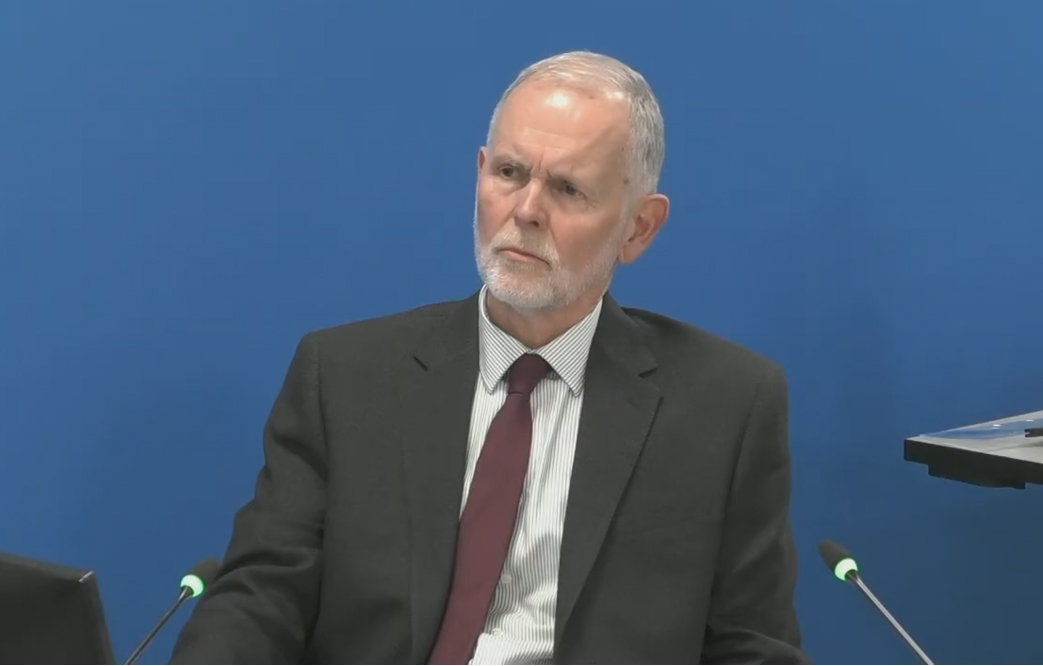
He had never been an undercover officer himself (in fact he turned down the offer), but he was in a key admin role close to the spycops in the mid-1980s.

At that time, HN10 Bob Lambert ‘Bob Robinson’ was infiltrating an Animal Liberation Front cell and planting an incendiary device in a Debenhams department store.

RECAP

This was the Monday of the ninth week of ‘Tranche 2 Phase 2’, the new round of hearings of the Undercover Policing Inquiry (UCPI). This Phase mainly concentrates on examining the animal rights-focused activities of the Metropolitan Police’s secret political unit, the Special Demonstration Squad, from 1983-92.

The UCPI is an independent, judge-led inquiry into undercover policing in England and Wales. Its main focus is the activity of two units who deployed long-term undercover officers into a variety of political groups; the Special Demonstration Squad (SDS, 1968-2008) and the National Public Order Intelligence Unit (NPOIU, 1999-2011). Spycops from these units lived as activists for years at a time, spying on more than 1,000 groups.

Click here for the day’s page on the Inquiry website which should have video, transcripts and written evidence.

OFFICER WHO SAID NO TO BEING A SPYCOP

Couch joined the police in 1967, and Special Branch in 1973. He knew that there were undercover officers who reported on political campaigners because he was asked by one of the Special Demonstration Squad (SDS) managers, HN294, if he fancied going undercover himself. He says this was an informal chat, rather than a definite invitation. He declined, in part because he was going through a divorce at the time.

He also says he didn’t feel this work would suit him. He knew it was a time-consuming role that would drastically impact upon his social life. Specifically, at that time he was on the Met rugby team and didn’t want to give it up!

He saw many of the reports produced by undercover officers during his time in Special Branch, and says he understood the types of groups that they infiltrated.

THE BACK OFFICE ROLE

He finally joined the Squad in April 1983, as its ‘admin sergeant’, after being asked by HN99 Nigel David Short. Short explained the role to him: tidying undercover officers’ reports and making sure this intelligence was passed on. He thought it sounded interesting, so accepted, and ended up staying in the unit till July 1987.

There were always two sergeants in the SDS back-office, and the other handled the unit’s finances (mostly vehicles and expenses claims). In 1983, this was HN45 ‘David Robertson’. Couch was given the finance role in 1985, when Robertson left, and HN61 Chris Hyde joined the unit as its new admin sergeant.

These back-office sergeants attended the meetings that took place every week in the spycops’ safe-house. They answered the phones in the office when the undercovers rang in every day.

Couch would pass on requests from any of the main squads within Special Branch to spycops managers and field officers. He also accompanied the Detective Inspector on trips outside the Met police area.

The two back-office sergeants did not consider themselves as ‘managers’ but rather as ‘close colleagues’ of the undercovers, as they usually had the same rank.

‘The whole dynamic was fairly informal and relaxed’

He says there ‘was a little bit’ of socialising at the safe house, ‘but not a lot’ because the spycops tended to have activist meetings and events to get to.

He says they didn’t generally talk about the groups and individuals they were spying on, but talked about everything else.

HN25 ‘Kevin Douglas’ criticised Couch’s admin sergeant colleague HN61 Chris Hyde, saying he was ‘too close to members of the field’ and ‘liked to be one of the chaps, one of the boys’. Couch rejects this description. He says there was a clear distinction between the undercovers and the backroom staff.

WELFARE AND CAMARADERIE

Couch’s role also included a pastoral, welfare element. He would mix socially with spycops on days off, go running with them, sometimes play badminton or squash before and after work, and go out drinking with them.

He recalls that unit manager HN115 Tony Wait often went swimming at lunchtimes. Some of the unit went running together at the track in Battersea Park. He agrees that these shared sports contributed towards a feeling of camaraderie in the unit.

There would also be away days when the whole squad would go off to the races, the beach or Boulogne.

‘Just general good fun and being human, if you like’

Couch remembers that the SDS held Christmas dinners for the spycops officers and their wives – he took his along.

It’s clear that Couch considered his relationship with the other spycops was a good one. He says he was friendly, and if spycops had any worries they could come to him and he would pass it on to management, if they didn’t want to go directly to their superiors. He claims not to remember the specifics of any instances of this.

WRITING THE REPORTS

The spycops didn’t get any formal training about how to write their reports after joining the SDS. Prior to deployment they would read the reports of officers already in the field to get an idea of the style and tone of SDS reports.

No formal minutes or notes were taken at the meetings in the spycops safe-house, but Couch says he sometimes took notes for himself.

He would look at the notes submitted by the spycops and try to speak to them in person if anything wasn’t clear. He says he would read through draft reports and check them to ensure they made sense before sending them off to the Special Branch typing pool.

He says this typing was done by the ‘woman in charge’ of the typing pool and not shown to anyone else there. He would check it again when the typed version came back. It was then handed up to the spycops managers to review and sign.

Couch says he can’t remember any instances of a senior officer criticising a report’s value, or refusing to sign off on one.

Every hand-written spycops report would be typed up and disseminated – delivered to a Squad Chief, with a copy going to the Security Service too. He says that, while it’s possible that some that wouldn’t have gone out, he can’t remember that ever happening at all.

This means that pretty much every single hand-written report he ever received would automatically be disseminated. This is extraordinary, given the amount of personal and pointless information we’ve seen in reports. One officer after another has told the Inquiry their job was to hoover up all information possible so that their superiors could sift through and decide what was important, yet it appears that those above them didn’t have any discernment and just swept up and filed everything that was given to them.

SCANT SUPERVISION

Couch said he didn’t have any direct dealings with the Security Service (aka MI5) during his time in the SDS. Instead, it was the Detective Inspectors who liaised with them, rather than the Sergeants or Constables.

Bob Lambert giving evidence to the Undercover Policing Inquiry, 2 December 2024

Bob Lambert giving evidence to the Undercover Policing Inquiry, December 2024

In his evidence, HN10 Bob Lambert claimed that the SDS reports went through a ‘sanitisation process’, and were routinely edited and altered by the managers. However, Couch says he doesn’t recall this ever happening.

He admits to sometimes suggesting improvements – mostly trivial points, such as spelling or other obvious mistakes – and says he always checked in with the officer before removing anything which he considered irrelevant from their reports, or changing the wording. He insists that it was very important not to change their meaning.

The spycops were expected to phone the office twice a day, primarily for welfare reasons but also to report any urgent intelligence.

Whoever was in the office would hear these phone conversations taking place, and would usually be aware of any important issues that were reported during them.

Field officers weren’t supervised closely. In those days, backroom officers never actually visited the spycops’ cover addresses. Couch says they might let the office staff know if they were going to be away from the cover flat for any reason, but not always.

He doesn’t remember many problems being raised, and says if any of the undercovers had a problem, they could always arrange to meet up with one of the managers to discuss it. He wasn’t privy to the discussions that took place at these meetings.

MARRIED MEN DECEIVING WOMEN

Couch says his understanding of why spycops had to be married came from HN99 Nigel ‘Dave’ Short. It was so they could get back to their usual selves during time off. He firmly agrees that there was a clear idea that the spycops needed an ‘anchor’ back to their real lives.

‘I think it was generally thought by those in charge of the unit… that it was a difficult role’.

He says the office staff had a role to play in keeping an eye on them and making sure their undercover role didn’t take over.

Asked why wives were given such a key role in being an anchor for spycops real lives, and yet apparently got no support for it at all, Couch can’t recall it ever being discussed.

The Inquiry was shown notes taken at a 2015 interview with undercover officer HN88 ‘Timothy Spence’ for Operation Herne, a previous police investigation into spycops. There is a subheading where the word ‘Sex’ is underlined. Below that, there is a note saying ‘Single men – with groups’. This is followed by ‘Only married people – for a reason’.

The Inquiry suggests this means there was an awareness of the risk of sexual relationships and so they recruited married officers to counter that.

Couch rejects that entirely.

‘No, I don’t think so. I think it would just be about having a stable life at home, whether their partners or married or – I don’t think we knew of any sexual activity with undercover officers and the people, groups that they were infiltrating at the time.’

He says this despite the fact that, during his four years supporting spycops, at least five officers he worked with – around half those in the field – are known to have had such relationships with women they spied on:

HN10 Bob Lambert ‘Bob Robinson’
HN11 Mike Chitty ‘Mike Blake’
HN12 ‘Mike Hartley’
HN106 ‘Barry Tompkins’
HN155 ‘Phil Cooper’

There is also the significant suggestion that HN95 Stefan Scutt ‘Stefan Wesalowski’ did too (it’s in a  document the Inquiry has referred to but, at the time of writing, has yet to publish: reference number MPS-0740935).

And all this, of course, followed a huge proportion of earlier spycops having done the same. This abuse of women is well established as part of the culture of the squad. As their later Tradecraft Manual shows, spycops were given tips by forebears on how to conduct these relationships that they now say they never mentioned to one another.

Couch says he remembers that some of the spycops were in ‘happy marriages’ which they spoke to him about, which would have been a positive influence on them, but admits that this wasn’t always the case.

He agrees with that more should have been done at the time because their undercover life was going to be so different to their conventional married life.

‘It would be very difficult for the officers to turn down an invitation if a member of the opposite sex was keen, I suppose’

Bob Lambert says he was told on a trip to Boulogne that sexual relationships were going to happen, and when they did spycops should keep it casual. Couch went on these trips but says he doesn’t recall this.

Couch’s boss, HN115 Tony Wait, has told the Inquiry there may have been an attitude in the unit that sexual relationships were inevitable. Couch still says it was never even discussed. He describes how the spycops were a tight knit unit, but says it would be very difficult to know what the officers were doing as supervision was so lax.

Couch is specifically asked about each of the four women Bob Lambert deceived into relationships, the son he fathered with one of them, and Lambert’s claim that he told Couch’s immediate superior HN22 Mike Barber. Couch claims to know nothing about any of it, at all.

He says he is now disappointed in Bob Lambert because of the relationships he had undercover.

Couch was very quick to answer questions about Bob Lambert’s sexual deception to say he doesn’t know anything. Too quick, really.

NEW RECRUITS

The two Detective Sergeants usually shared their office with the unit’s latest recruit, who spent around six months learning about the squad prior to their deployment in the field.

On a normal day, Couch would be working on reports, the other sergeant on finance, and the rookie spycop on his ‘legend’. The new recruits would have to arrange for a vehicle and some story of fake employment – ‘generally they would sort that out for themselves’. The SDS arranged for driving licences in their cover names.

Bob Lambert has described helping with reports, adding file numbers to them, and Couch agrees that they would do things like this, adding that he and Lambert would be the ones sent over to Scotland Yard to collect things.

In an appraisal, HN113 Raymond Tucker mentioned Couch’s ‘close supervision of young officers’. He admits that this was true, and says the older officers were ‘more than capable of sorting out their own problems’.

There was no formal training. The new recruits learned from their time in the office (and the weekly meetings). Couch doesn’t think there was a tradecraft manual or equivalent ring binder in his day.

How did they learn how to create their cover identities? He says they mostly learned their tradecraft from those with undercover experience, and this wasn’t something that he had. The existing field officers would share information with the new ones about how to successfully infiltrate a group.

Once they knew which groups they were being tasked to infiltrate, they could read reports about them, and request more files from Scotland Yard.

Although Couch wasn’t directly involved in teaching them about ‘legend-building’, he was around when this was happening. He says he didn’t take part in ‘testing’ the spycops’ cover stories.

Yet in the SDS Annual Report of 1986 [MPS-0728977], it’s claimed that the office staff ensure that the cover identity’s ‘background is thoroughly checked’ before each of the spycops was deployed. Couch admits that he can’t recall ever doing this.

Perhaps his memory is at fault, or perhaps this is another instance of the Annual Report being contrived to tell the Home Office things that sound good so the unit would get its funding renewed.

IDENTITY THEFT

Couch also says he can’t recall helping anyone research the family of the deceased child whose identity they planned to steal.

He doesn’t think they ever considered using a different method – such as concocting an entirely fictional cover identity – and says it would have been ‘a lot easier to expose the officer’ if there was no birth certificate in their name. This is simply not true.

When the SDS was founded in 1968, officers made up their cover names. The unit’s theft of dead children’s identities only started in the early 1970s when the method was described in the novel and film Day of the Jackal.

SDS Tradecraft Manual section on stealing dead children's identity, including mention of them all knowing about an officer being confronted with the death certificate

SDS Tradecraft Manual instructions for stealing dead children’s identities, including a mention of the spycops all knowing about an officer being confronted with the death certificate

Since the mid-1990s, when personal data became easy to find online, officers have returned to making up names. The lack of a birth certificate doesn’t appear to have been a problem for any of them.

There are many reasons why someone might not have a birth certificate in the records. For example, if they were adopted, if they were born abroad, if they had changed surname (e.g. if their mother had remarried), or if there was an error in the filing system.

Whereas there is absolutely no excuse for a living person having a death certificate. It is the death certificates that were the final proof for activists exposing numerous officers such as HN297 Rick Clark ‘Rick Gibson’, HN5 John Dines ‘John Barker’, and HN596/EN32 ‘Rod Richardson’.

The Inquiry pointed that out to Couch. He said he knew Rick Clark ‘left the unit early’ but says he didn’t know that he was pulled out of the field after his death certificate was presented to him by activists.

This is also odd, given that the SDS Tradecraft Manual of 1993 talks about that incident as a notorious piece of unit lore.

BIGOTRY AND DISCRIMINATION

Next, we see a report [UCPI019617] written by HN67 ‘Alan Bond’ in October 1983, when Couch was processing the unit’s reports. It’s about someone who works in the Socialist Workers Party print shop, who is described as a ‘homosexual’. According to the report he is

‘regarded in gay circles as an unstable and over-emotional partner’.

Couch tried to claim it was worthwhile intelligence, but the Inquiry quickly made him concede it was nothing of the sort.

Q: That’s irrelevant information, isn’t it?

Couch: Well, I – he’s not trusted with his own party. I’d say that that was relevant.

Q: It doesn’t say any words to that effect…. It’s gossip, isn’t it?

Couch: Yes.

Q. There’s no intelligence value in the entirety of what is being reported in paragraph 3, is there?

Couch: I’d say not.

With his defence having failed, Couch then tried to avoid responsibility by suggesting the report had been processed by others.

‘It’s gone, it’s been put through, so nothing we could do about that…

‘I can’t recall reading it in the first place, erm, but it might, I mean just, Mike Barber might well have submitted that because he used to check reports as well, before they were typed up.’

He did admit that if he had seen this report at the time, he probably wouldn’t have challenged it.

He says it was important that spycops reported on private lives. He has no suggestion about who it was important to, though.

He denies Bond’s report is indicative of the spycops’ attitudes towards gay people, saying he never heard any homophobic language from any spycops officers, field or office, whatsoever.

It’s amazing that pretty much every spycop says there was no bigoted language used when talking to one another, even though it’s there in their reports. They expect us to believe that they were upstanding egalitarian chaps who would somehow lapse into bigotry when writing official documents even though it was never part of their thought or speech.

We see a report by HN85 Roger Pearce ‘Roger Thorley’ of 4 October 1983 [UCPI019565], about a meeting attended by about 25 people. It refers to ‘bulky impassioned feminists’, a term which Pearce has agreed (when he gave evidence) was inappropriate.

Couch agrees there is no justification for the use of this term, and also that it was not challenged. He accepts it is indicative of the unit’s attitude towards women.

Looking at it now, Couch says, Roger Pearce

‘tended to put some sort of humour into his reports.’

Realising his implication, he backpedals and says that he wouldn’t have found this phrase amusing, even back then.

Again, they say they didn’t make bigoted jokes among themselves and none of them would have found it funny. Yet, for some reason, numerous officers thought it appropriate to put such content into official reports. They’re lying to us.

Turning to other irrelevant reporting, Couch says he could remember spycops reporting on the women’s peace movement. He says he wasn’t told the justification for reporting on Greenham Common camp, and never questioned the relevance.

As for spycops reporting on MPs and other elected officials, Couch claims he never saw any of it and reckons he would have raised it if he had, as it would have affected vetting.

MONEY MONEY MONEY

Even though he became the unit’s ‘finance sergeant’, dealing with the spycops expenses, Couch says he never had anything to do with overtime payments. He explains that this was always authorised by the managers.

He’s said in his statement that this extra pay was a ‘significant component’ in how much the spycops took home financially. He knew this because spycops openly discussed how overtime was a huge part of the job.

There was a cap, which they were expected to stay within. If they wanted to claim any more than this, they had to provide a good reason to the managers.

According to the SDS Annual Report of 1986, due to changes across Special Branch, the average overtime paid to undercover officers was reduced from 160 hours a month to 120 hours. Couch says that, although this affected the spycops’ morale, there was a ‘general degree of willingness’.

Couch says he never had any concerns about how much the spycops were being paid:

‘they were doing a very dangerous and very difficult job and they deserved everything they got’

He didn’t specify what any of these dangers might be.

He noted all their expenses claims in a book, after the first meeting of the week, and these were signed off by one of the managers. He then submitted this to the police finance department, and distributed the cash to the spycops at the Thursday meetings.

They would supply receipts for things like petrol, or vehicle repairs. However, for lots of other items, such as publications and subscriptions, it would have been very difficult to provide any proof, and they were taken on trust.

It would have been very difficult to know if a spycops officer was claiming for something they shouldn’t have been. But Couch says he never had any suspicions of false claims. At the end of the financial year, a senior officer from the finance department would come and check the books, and he never said there were any issues.

A LIFE OF CRIME

Couch describes how he and the spycops managers sometimes travelled outside of London to act as ‘cover officers’ for undercovers who were engaged in activities like hunt sabbing.

Couch says ‘the main reason’ for this was in case any of the spycops were arrested. He claims he doesn’t recall any instances of ever having to deal with such problems though.

In another claim of blanket ignorance that strains credulity, Couch says he’s not aware of any spycops committing any criminal offences in their undercover identities.

We were shown a report of 14 September 1984 about the arrest of the SDS officer HN19 ‘Malcolm Shearing’ [MPS-0526786]. Couch claims not to remember the report, but accepts it probably came across his desk.

At the top of the report there is a handwritten note: ‘place a copy on the arrests file’. It’s signed by squad manager HN115 Tony Wait. As we’ve been told in previous hearings, there was apparently an SDS file logging officers’ arrests. Asked if the note was directed to him, Couch claims not to recall. He also claims not to recall the arrest file’s existence.

He’s also said in his statement that he’s not aware of any spycops appearing in court as either a defendant or a witness. This is despite the fact that during his time in the squad, HN10 Bob Lambert and HN12 ‘Mike Hartley’ were not only arrested but charged and convicted under their false identities.

HN19 ‘Malcolm Shearing’, in his written statement to the Inquiry, says he reported seeing someone throw a brick at a coach being used by a far-right group. He named them in his report. His statement claimed that Couch told him the name had been edited out (because the SDS office was careful to ensure that none of the spycops was asked to appear as a witness in court, in case this risked their cover).

Couch says this editing must have been done by one of the managers and claims not to remember saying this to Shearing.

NO CARE FOR ERRANT OFFICERS

Couch has said in his statement that there should have been more processes in place to protect the welfare of the spycops, because of the ‘prolonged time’ they were being asked to stay undercover.

‘You can never get too much care when you’re doing a difficult job that they were doing, and so any more assistance they could be given should’ve been considered…

‘It was a different world, I suppose, then. You just get on with it. There wasn’t the huge backup that they’ve got these days.’

HN12 ‘Mike Hartley’ has said in his statement that he had ‘a nervous breakdown and drink-related health problem’ due to the stresses of his deployment. Couch says Hartley never spoke to him about these issues, and ‘it wasn’t obvious’.

However, we next see a report that Hartley filed in September 1984 [MPS-0726910], making it clear that members of his target group had suspicions that he was a police informer.

‘It was considered that I drank too much, as other members had smelled alcohol on my breath when I arrived for meetings. Since I am employed as a van driver, they felt that this made me liable to blackmail or coercion by the police.’

Couch says he can’t recollect this at all.

The squad’s manager HN115 Tony Wait responded to Hartley’s predicament with a memo reporting:

‘He is in need of support and this is being provided by meeting with individual SDS officers mainly from the office, on a daily basis.’

Given that Couch was one of two people doing most of the office work, he is asked if ‘individual SDS officers mainly from the office’ refers to him and HN45 ‘David Robertson’. He says he’s certain it doesn’t.

Pushed further on the Hartley problem, Couch keeps saying he can’t recall. He then comes out with:

‘I knew he had problems.’

This contradicts what he said a couple of minutes earlier.

LAMBERT AND THE INCENDIARY DEVICES

Finally, we move on to talk about ‘Operation Sparkler’, the police investigation into the role Lambert played in the 1987 incendiary device campaign that targeted Debenhams.

Couch left the SDS in July 1987, he thinks shortly before the incendiary devices were planted.

Lambert had spent a longer-than-usual period of time in the back office before deployment.

‘I thought he was a decent guy, a good cop and quite a successful undercover officer.’

He agrees that Lambert was sociable and charismatic, and says he was popular.

Couch told the Operation Sparkler investigators that he was friendly with Lambert, ‘but not socially’, and that he was a ‘productive’ officer, in terms of both the quality and quantity of reports he submitted. He is asked how the SDS assessed the quality of reports, and says he can’t remember them ever doing this; however, he does remember Lambert being thanked a lot for his ‘very useful’ work.

Couch claims not to recollect any details of the intelligence Lambert was supplying in 1987. He doesn’t recall any changes in the frequency or volume of reports, phone calls or meetings with the managers.

Mark Robert Robinson's grave

The grave of Mark Robert Robinson, who died aged 7 of a heart defect, and whose identity was stolen by spycop HN10 Bob Lambert.

This too is odd, because the records have a sudden absence immediately prior to Lambert’s Animal Liberation Front cell planting incendiary devices. Either Lambert made no reports for over a month and somehow nobody noticed or minded, or else he made reports that have since gone missing.

By September 1987, Couch was working in Special Branch’s E Squad, and spent a period of time working with the Anti-Terrorist Branch (ATB) – a branch he’d worked in before his time in the SDS.

His role in 1987 entailed liaison between ATB and Special Branch. He was asked by SDS manager HN39 Eric Docker to accompany the officers who were sent to conduct a search of Lambert’s cover flat, supposedly ‘for welfare reasons’ which were never fully explained.

This ‘search’ was organised purely to protect Lambert’s cover. It was done around the same time as searches of the home addresses of various activists on whom Lambert was reporting.

Couch concedes it’s likely that Docker mentioned the incendiary attacks to him before this search.

Couch says that all of the officers involved in this search were aware that ‘Bob Robinson’ was in fact an undercover police officer, and this was a ‘fake search’. Although Lambert was there when they knocked on the door, he didn’t answer, so they broke the door down.

Despite this being planned, he recalls that Lambert looked ‘intimidated’.

‘He looked to me to be in shock; whether he was or not I don’t know’

Lambert remained silent while his bedsit was searched.

Asked if he considered taking steps of any kind, bearing in mind that said he was there as a ‘welfare officer’, Couch claims he didn’t actually interact with Lambert at all.

‘I didn’t exchange any words with him.’

If this is true then it’s still unclear why he was there in the first place.

He confirms that the search was a ‘cursory’ one, done in order to make the entire thing look convincing if anyone from Lambert’s target group turned up. He insists that there was no operational security risk at all in him, as someone known to Lambert, being present.

Spycop Bob Lambert 'Bob Robinson' and Belinda Harvey

Spycop Bob Lambert and Belinda Harvey

According to notes from the interview that Operation Sparkler carried out with SDS manager HN39 Eric Docker, there were cigarettes in the flat similar to those used to construct the incendiary devices. Couch said he doesn’t remember anything about that.

Bob Lambert says that during the raid Couch picked up the photograph of Lambert and Belinda Harvey, a woman he had deceived into an intense relationship at the time. Couch firmly denies it with an absolute certainty that stands out among the wash of ignorance and fuzzy memory of the rest his questioning. If he didn’t deny this, it would fatally undermine his earlier claim that he had no idea such relationships were going on.

Michael Couch. Another spycop, another implausibly selective memory, but we nonetheless gained some significant insight into the SDS at the hearing, both overtly and between the lines.

What We’ve Learnt from Spycop HN1 ‘Matt Rayner’

Spycop 'Matt Rayner' on a farewell visit to people he knew in northwest England with Claire Hiildreth, 1996

Spycop HN1 ‘Matt Rayner’ on a farewell visit to people he knew in northwest England, 1996

Special Demonstration Squad officer HN1 ‘Matt Rayner’ gave evidence to the Undercover Policing Inquiry for three days in January. Tomorrow he returns for a further two days. As a prelude to that, here are some key points from his January testimony.

Spycops weren’t always tasked to infiltrate groups but instead given the names of individual activists and told to befriend them and report on their activities, whatever they were.

People were often the subject of spycops’ reports because of what they thought, rather than what they actually did. HN1 believed that having a certain ‘ideology’ or way of thinking was an indication that you might be drawn into taking more serious action at some later date, and so it was worth watching you.

HN1 admitted that the police were selective in who they targeted, betraying their prejudice and political allegiances. They didn’t bother recording information about some groups who regularly committed violent criminal acts – e.g. hunt supporters – but instead focused their energy and resources on the non-violent people who were opposed to hunting, even when they committed no crime.

POSH HUNT SAB – AN UPPER CRUSTY

HN1 was very unwilling to be drawn into any criticism of either hunt supporters or the police, suggesting that he likely has links with the Establishment and people who take part in hunting.

Spycop HN1 'Matt Rayner' while undercover, February 1994

Spycop HN1 ‘Matt Rayner’ while undercover, February 1994

He displayed an ‘upper class’ accent, especially on the first day of his evidence, and words you’d expect to hear from a public-school boy.

Was this as example of him ‘mirroring’ the Inquiry’s Chair or trying to establish his credentials as someone with a certain type of influential friend? He sounded noticeably less posh as the days wore on.

HN1’s conduct during the hearings annoyed everyone. This included his repeated references to the Inquiry’s barrister of 20 years’ experience, Emma Gargitter, as ‘Emma’. It was in marked contrast to him unfailingly addressing the Inquiry’s Chair, Sir John Mitting, as ‘Sir’.

He has been afforded an extraordinary level of privacy, and ‘special measures’ designed to prevent anyone from identifying him and his current role. This has led to a great deal of speculation but, contrary to the bare-faced lies of the police’s ‘designated lawyer’ Oliver Sanders, nobody has gone as far as creating an AI image to show what he might look like nowadays.

DEFENDING DECEIT

HN1 deceived activist Liz Fuller into a relationship. We don’t even know if he is still married to the same woman he was with when he cheated on her with Fuller. He continues to claim that what he had with Liz was both ‘genuine’ and ‘monogamous’, and often spoke about how ‘Matt Rayner’ and his real persona were two separate men.

When Gargitter read out the words of the Met Police’s official apology to the women affected by these deceitful relationships – not just those they deceived in their cover identities but also these police officers’ wives – he insisted that his wife didn’t need this apology, and suggested that they had reached a private understanding of their own.

Despite the Met’s use of the word to describe what he did, he refused to accept his actions had been ‘manipulative’ in any way.

‘RAYNER’ AND COLES SIMILARITIES

Spycop HN2 Andy Coles aka 'Andy Davey' while undercover in 1991

Spycop HN2 Andy Coles ‘Andy Davey’ while undercover in 1991

He seems to have had a lot in common with HN2 Andy Coles ‘Andy Davey’, who was deployed at the same time as him into many of the same groups, although there is obviously no love lost between these two.

They both appear to have over-inflated opinions of their own abilities and intelligence. Both seem convinced that anyone who hears them will be convinced that they did a great job, instead of viewing them as responsible for abhorrent human rights abuses.

They both use long words to say very little (HN1’s favourites included ‘intellectual’ and ‘cerebral’).

They both lie (a lot – as you’d expect from professional liars, who were paid and trained to do this by the Met).

They both over-state their achievements.

Like Coles, HN1 had obviously rehearsed some answers before his appearance, and was ready and willing to reel off obvious lies about those he spied on.

Though he had a lot to say at times, he noticeably clammed up whenever Gargitter pointed out contradictions and discrepancies between what he was saying and what he had put in his various earlier statements to the Inquiry, its risk assessors, the Herne inquiry which preceded it, and his the Special Demonstration Squad (SDS) reports of the time. His verbose manner suddenly deflated to ‘I can’t explain’ or ‘I can’t help’.

TACTICAL IGNORANCE

He often claimed ‘I didn’t write that’ – especially in regards to reports that were found on an SDS hard-drive in a file bearing his name – and sought to blame his managers for their contents.

Helen Steel at the Royal Courts of Justice

Helen Steel at the Royal Courts of Justice

There was general ridicule of many of his excuses, and his references to some mythical ‘grey area’ when it came to the morality and ethics of his operations.

Despite portraying himself as a pro-active, motivated and highly effective spy, he insisted that he knew nothing at all about Helen Steel, the McLibel case or her intimate long-term relationship with his colleague, HN5 John Dines ‘John Barker’.

He kept saying that he had ‘no interest’ in Steel, or the groups she was part of, including London Greenpeace (LGP), even though there was lots of overlap between her life and many of the activists he deliberately befriended.

For example, Paul Gravett, who was a friend of Steel’s for many years, visited her home and was part of LGP too. Liz Fuller lived next door to Dave Morris who was an LGP activist and the other half of ‘the McLibel Two’. She regularly looked after his young son, and as a result HN1 spent many hours in Morris’s home while he was out.

We also heard evidence about his influencing HN14 Jim Boyling, who was recruited to the SDS after him and was mentored by him. Boyling went on to form a number of abusive relationships with female activists, and went so far as to marry one and have children with her.

LOWER THAN THE LOWEST

Each time another of these men gives evidence, we think he can’t be any worse than the last one. However it’s fair to say that HN1 managed to hit new lows, even for a discredited squad that contained the likes of Andy Coles, Bob Lambert and Trevor Morris.

One of the most glaring concerns is that each one of these abusive men paved the way for those that followed them, often mentoring and/or holding management roles.

Through the years of its existence, the culture of the SDS can be seen to have become more depraved – the inevitable result of their misconduct going unchecked and the impunity they enjoyed as part of a secret, extra-special, ‘elite’ unit within Special Branch.

HN1 has been given a set of ‘special measures’ to protect his anonymity – implying that he currently holds some significant role that would be adversely affected if people knew the truth about who he was.

We will publish a more in-depth report of HN1’s evidence once he has finished giving it and the Inquiry has uploaded transcripts of all three days.

Spycop Gets Special Treatment – and Inquiry Won’t Say Why

Spycop HN1 'Matt Rayner' at a summer party in London, 30 July 1995

Spycop HN1 ‘Matt Rayner’ at a summer party in London, 30 July 1995

Spycop HN1 ‘Matt Rayner’ is back at the Undercover Policing Inquiry this coming week. He’s been given a set of last-minute ‘special measures’ for his questioning in quite extraordinary circumstances.

HN1 is a key figure in the spycops scandal. Deployed into London animal rights groups 1991-1996, he personally committed most of the worst abuses for which the Special Demonstration Squad is infamous.

He stole the identity of a dead child, he deceived a woman – Liz Fuller – into an intimate relationship, he was arrested in his fake identity, and he was an agent provocateur.

The Inquiry’s original Chair, Lord Justice Pitchford, assured us that women deceived into relationships would be given the fullest possible account about what was done to them and that this included, at a minimum, the man’s real name.

Pitchford’s successor, Sir John Mitting, has broken this promise. He says that the right of Liz Fuller to know the real name:

‘is outweighed by an even more compelling reason of public interest which cannot be stated openly.’

The most obvious implication is that HN1 currently has some role that would be adversely affected if people knew the truth about who he really is. Which is all the more reason for his name to be made public.

Andy Coles promoting the Children's Socety's Seriously Awkward campaign

Andy Coles promoting the Children’s Society’s Seriously Awkward campaign to protect older teenagers from sexual exploitation by men like him

We’ve already seen how HN2 Andy Coles had become a pillar of the community in Peterborough before he was unmasked by activists.

He was a school governor, endorsing a campaign to protect older teenagers from abuse and sexual exploitation (despite being a perpetrator of it himself when he was a spycop), and Deputy Police and Crime Commissioner for Cambridgeshire (despite playing a key role in one of the greatest scandals in Metropolitan Police history).

He too would surely have had a ‘compelling reason of public interest’ to be anonymous if we hadn’t exposed him first.

So we have to wonder what undeserved position of civic trust or public respect HN1 is currently in that the Inquiry is so depserate to protect.

SUDDEN CHANGES

On 13 January 2025, the very end of the Inquiry’s hearing was devoted to hearing submissions made to the Chair on the subject of HN1 ‘Matt Rayner’ and the extra ‘special measures’ that had been announced on 23 December, immediately before everything stopped for Christmas. The full details were not properly shared or confirmed until after the holidays, on 8 January.

We were shocked to learn that this officer, whose real name is still being kept secret, would no longer be appearing in person. Instead, he would just participate remotely, and would not be visible to anyone other than the Chair and the Inquiry team.

The Chair, Sir John Mitting, had already reached this decision without any consultation with the victims of these police officers’ abuses.

The hearing on 13 January was the first opportunity for ‘non-state core participants’ (the people who were spied on) to respond to this news, and put forward their views for consideration.

First, we heard from Tom Lowenthal, acting on behalf of the ‘Category H’ core participants (individuals in relationships with undercover officers)

Spycop 'Matt Rayner' (left with Paul Gravett, leafleting outside a branch of Boots

Spycop HN1 (left) with Paul Gravett, leafleting outside a branch of Boots

He started by saying that some of the women who were deceived into relationships by undercovers had applied to be able to see HN1 give evidence.

He was immediately interrupted by Mitting, who said there had already been some discussions, and agreement reached ‘on all relevant sides’ that one of these women, Liz Fuller, would be allowed to see and hear his evidence live.

Despite the Inquiry’s previous assurances that women deceived into relationships by spycops will be given the real name, Fuller still isn’t being told. Not only is there the overwhelming ‘public interest’ reason for this, but the nature of this reason is being kept secret too.

Several other women deceived into relationships by spycops – ‘Jessica’, Helen Steel, ‘Alison’ and ‘Lindsey’ – have also applied to see his evidence, and their submissions were read out.

They didn’t have an intimate relationship with HN1, but emphasised that none of these relationships were isolated events, taking place in a vacuum:

‘SDS officers advised, supported and covered for each other in perpetrating these abuses’.

HN1 has said he knew that women activists considered HN2 Andy Coles ‘creepy’. It’s vitally important that Jessica, who was deceived into a relationship by Coles, is given maximum chance to understand what HN1 knew and when about that relationship.

Similarly, Helen Steel would like to better understand the way that HN5 John Dines treated her, and the callous exit strategy that he adopted. She knows that HN1 was with Dines (who was his Special Demonstration Squad ‘mentor’) when her relationship with him ended, and she wants to know how much he knew about this.


Mark Jenner in Vietnam

HN15 Mark Jenner on holiday/paid overtime in Vietnam with Alison

‘Alison’ was deceived into a five-year relationship with HN15 Mark Jenner, and ‘Lindsey’ was deceived into a year-long relationship with HN104 Carlo Sorrachi. These both took place after HN1’s deployment, and it is likely that his behaviour ‘set the stage’ for those who came later.

The police have already admitted that these relationships were a violation of the women’s Article 3 human rights – ‘no one shall be subjected to torture or to inhuman or degrading treatment or punishment’, an absolute right that no circumstances can ever justify breaching.

In order to recover from these relationships and make sense of their experiences, the women need to understand more about them. Seeing HN1’s demeanour and facial expressions would provide them with far more insight than an audio-only feed.

The Inquiry has to balance their Article 3 rights against HN1’s own Article 8 rights (respect for his privacy), and Lowenthal believes it would be disproportionate to put his rights above theirs.

Mitting interrupted again to claim that there’s been a ‘misapprehension’, and that it’s actually HN1’s ‘safety’ that is the primary issue.

It’s pointed out that Jessica and Helen have both met HN1 in the past when he was undercover, and the others have seen contemporaneous pictures and videos of him (such as his role as ‘Watery Ophelia’).

All four women have followed all of the Inquiry’s privacy restrictions up till now, at ‘significant personal cost’.

They asked that if their application is rejected that they are supplied with gisted reasons for it. Mitting said he will reflect after he’s heard everyone’s submissions, and then state his reasons.

Next, we heard from Owen Greenhall, representing a number of Hodge Jones & Allen clients

There was also an application made on behalf of three of the non-state core participants and Geoff Sheppard’s Recognised Legal Representatives.

There is supposed to be a ‘presumption of openness’ in any public inquiry, and the burden is supposed to fall on those who seek privacy to prove why this is necessary.

Dave Morris and Helen Steel outside McDonald's

The ‘McLibel 2’: Dave Morris & Helen Steel outside McDonald’s. HN1 was mentored by HN2 John Dines who’d deceived Steel into a relationship, & babysat for Morris’s son thus gaining access to McLibel trial strategy

In other legal cases, it has been felt that the use of a cipher and a ban on photography has removed any risk of an individual being identified. Why isn’t that enough here?

Geoff Sheppard is unable to attend the Inquiry venue but asked that his lawyers be allowed to view the evidence of HN1 – due to his involvement in Sheppard’s conviction and imprisonment, and the disputed facts around these issues – so they would be in the same position as the lawyers representing HN1 himself, rather than being disadvantaged.

What possible risk is there in allowing legal representatives to see him give evidence?

It was noted that there are explicit statutory restrictions to ensure that lawyers are able to see defendants in serious criminal cases.

It was also noted that there are multiple images of HN1 in his undercover role available online, and many of those he spied on saw him a lot and knew very well what he looked like.

Paul Gravett is one of those who saw a great deal of HN1 over those years, and had a fairly close relationship with him. Claire Hildreth has also given very moving evidence about the very close relationship she had with him.

Finally for this group, Dave Morris is concerned that HN1 abused his position (as babysitter to Dave’s child) to gain intelligence about the McLibel case.

Kirsten Heaven appeared next, on behalf of the entire ‘cooperating group’ of Non-State, Non-Police Core Participants

A group application had been submitted in writing asking that those with a ‘direct interest’ in this Tranche of hearings be given access to HN1’s evidence.

There was no reference to HN1’s ‘safety’ when this issue was first raised, or even the week before the hearing.

There has been no sight of any evidence (not even a ‘gisted’ version) to support his seemingly late application for these new ‘special measures’.

Kaden Blake had already given evidence about how she felt learning that he had stolen the identity of her deceased brother, and gathered personal information about her family in order to build his cover identity.

She said:

‘it is a further insult to us that HN1 applied for anonymity on the basis of his right to a private life.’

Matthew Rayner, whose identity was stolen by a spycop

Matthew Rayner, who died of leukaemia aged 4 and whose identity was stolen by HN1, in his father’s arms

Heaven pointed out that HN1 misled the police and the courts during his deployment, and has not been entirely candid with the Inquiry itself up till now. He didn’t even admit to his sexual relationship with Liz Fuller until December 2017.

There is footage of HN1 performing in a play in the garden of someone’s private home in the presence of young children, showing his physical appearance, height, mannerisms and demeanour, and raising the bizarre possibility that he will be questioned about this incident (and the video shown) in a hearing where he himself cannot be seen.

Core participants are extremely disappointed that HN1’s human rights are being given precedence, given the way he which he violated their rights. Granting these special measures would only serve to further insulate him from public scrutiny.

The non-state core participant group was applying for permission to see him on screen. This would be critical to ensure equal treatment, to maintain public confidence in the Inquiry, and to allow those who view his evidence to assess his credibility for themselves.

Mitting brushed aside what was said about the lateness of the application for special measures, declaring:

‘I am not troubled about timing matters. This Inquiry must proceed, difficult decisions have to be made from time to time.’

Oliver Sanders, HN1’s lawyer responded

Sanders countered all of these arguments by telling Mitting that he and his Counsel will be able to assess HN1’s demeanour for themselves, and the rest of us don’t matter.

Someone’s demeanour is ‘always a somewhat subjective manner’ he said, standing with his arms crossed in front of him.

He pointed out that Mitting will be hearing from some other officers in entirely closed hearings (as if that makes it acceptable for HN1 to be granted this level of secrecy).

Spycop HN1 'Matt Rayner' while undercover, February 1994

Spycop HN1 ‘Matt Rayner’ while undercover, February 1994

Sanders then suggested that HN1 has only been proceeding on the basis that special measures would be granted, and added that it would be ‘unfair to him and unsettling for him’ to change arrangements at the last minute.

He talked about how concerned his client is about his identity being revealed, then made the extraordinary claim that ‘there’s been an AI-generated image circulated on Twitter or X today’ showing how HN1 might look nowadays.

This is obviously nonsense. If the possibility of AI images derived from old photos were enough of a problem to warrant withholding someone’s current appearance, it would surely apply to everyone else who’s been granted a similar level of anonymity.

More to the point, we have been scouring the internet ever since and can find no evidence of such an image to back up Sanders’s allegation. His Chambers have not responded or commented on this. It appears that he just made it up and lied to the Inquiry.

Mitting responded to this, saying he wanted a ‘closed private submission’ from Sanders. Off they went to discuss it all in secret.

Twenty-five minutes later they returned, and he asked Sanders to respond ‘in open’ to one particular submission: the one made by Geoff Sheppard’s legal team (Owen Greenhall and James Wood KC).

Sanders argued that there was no basis for allowing Sheppard’s lawyers to see HN1 give evidence, and it wouldn’t ‘add anything’ to Sheppard’s pending appeal case.

James Wood KC responds

Given the opportunity to respond to this, Wood re-stated what Greenhall had already said: that this is a ‘wholly exceptional step to take’, and one that would not be permitted in any criminal proceedings.

The final decision

Mitting said there has been a risk assessment of some kind into the ‘safety’ of HN1.

He told us something we already know: that even HN1 has conceded that Liz Fuller and her lawyers should be allowed to see and hear his evidence, and this would not constitute too much ‘risk’ to him.

However, in response to the rest of the day’s submissions – from core participants with a real interest in HN1 (such as Paul Gravett) and several deceived women – he had decided that they and their lawyers would not be allowed to see him, only hear him.

Mitting gave his reasons:

• Giving evidence is unlikely to be an easy task for HN1.

• Mitting has to elicit the ‘best evidence’ he can get from each witness.

• He’s therefore very reluctant to do anything which might ‘disturb’ a witness.

• He says that ‘widening’ the group that can see the witness will ‘inevitably pose perceived risks’.

• He thinks he can assess HN1’s truthfulness and accuracy without anyone else’s assistance.

He does not say why these things don’t apply to all other witnesses.

In Mitting’s view, Geoff Sheppard’s pending Court of Appeal case engages criminal law so he had decided it was desirable to allow James Wood KC to see this ‘critical witness’ in order to assess his credibility.

In saying this, he accepted the deceived women’s point that seeing is very different to just hearing, but he implicitly believes Sheppard’s appeal against a criminal conviction is a far more serious thing than what officers did to the women.

Mitting added that someone’s demeanour is often said to play an overstated part but cannot be discounted entirely.

As Doreen Lawrence once said about spycops:

‘They were doing the deception. Why should they be allowed to be anonymous while people like me had their faces all over the newspapers? These people were not innocent. They knew what they were doing.’

TL;DR:

Liz Fuller can watch ‘Matt Rayner’, the man who deceived her into a relationship, give evidence.
So can James Wood KC.
Everyone else can just listen to his voice, and be glad that it’s not a ‘closed’ (private) hearing.
Once Mitting’s made his mind up, he doesn’t like changing it. And he doesn’t like asking anyone else what they think first.


UCPI – Daily Report: 13 January 2025 – Paul Gravett day 2

Paul Gravett

Paul Gravett

Animal rights activist Paul Gravett returned for a second appearance at the Inquiry. He previously appeared on 13 November 2024, but was only asked to give evidence about HN10 Bob Lambert’s infiltration of London Greenpeace and involvement in an incendiary device campaign that aimed to dissuade Debenhams department stores from selling fur.

Gravett was also reported on by a number of other Special Demonstration Squad officers, including HN5 John Dines ‘John Barker’, HN2 Andy Coles ‘Andy Davey’, and HN1 ‘Matt Rayner’ who stole the identity of Kaden Blake’s brother, Matthew Rayner, to create his undercover persona.

The real name of HN1 is not being disclosed to any of his victims, not even the woman he deceived into a sexual relationship during his deployment. This is despite the Inquiry’s earlier promises that these women would always be given the real name of the spycops who abused their rights in this way.

Although Gravett provided a witness statement and over 40 exhibits to the Inquiry last year, but despite the Inquiry’s policies and assurances, at the tmie of writng these still have not been published. However, you can read the transcript of this second hearing.

He was questioned by John Warrington, Deputy First Junior Counsel to the Inquiry.

RECAP

This was the Monday of the ninth week of ‘Tranche 2 Phase 2’, the new round of hearings of the Undercover Policing Inquiry (UCPI). This Phase mainly concentrates on examining the animal rights-focused activities of the Metropolitan Police’s secret political unit, the Special Demonstration Squad, from 1983-92.

The UCPI is an independent, judge-led inquiry into undercover policing in England and Wales. Its main focus is the activity of two units who deployed long-term undercover officers into a variety of political groups; the Special Demonstration Squad (SDS, 1968-2008) and the National Public Order Intelligence Unit (NPOIU, 1999-2011). Spycops from these units lived as activists for years at a time, spying on more than 1,000 groups.

Click here for the day’s page on the Inquiry website which should have video, transcripts and written evidence.

ISLINGTON ANIMAL RIGHTS

Spycop HN5 John Dines 'John Barker' while undercover

Spycop HN5 John Dines ‘John Barker’ while undercover

Gravett was involved in the Islington Animal Rights group, later known as the Hackney and Islington Animal Rights campaign (HIARC), from its formation in 1982 until its disbanding in 1993.

HN5 John Dines described Gravett and Denise Bennett as two of the ‘leading members’ of the group in a 1990 report, a description which Gravett accepts. He says he got more involved in things like producing the group’s newsletter towards the end of the 1980s.

All of HIARC’s activities were lawful. They did a lot of leafleting locally, and attended animal rights demos together. They held monthly public meetings, and also planning meetings (sometimes at the same venue, sometimes at people’s homes). Gravett recalls that most of the group had jobs. He and other members took part in various kinds of direct action, but as individuals, not as HIARC.

The Inquiry heard about some of the demos the group organised. HN10 Bob Lambert had reported that the group organised an entirely peaceful demo outside a central London hotel in September 1986 following reports of mistreatment of a cat. In his report, Lambert said that although most of those who attended were supporters of Animal Aid, ‘a handful of ALF activists were also in attendance’.

In this first report, Lambert claimed that they discussed committing criminal damage at the hotel. Gravett says he does not remember this.

In another report, detailing a HIARC meeting held shortly after this demo, Lambert claimed that Bennett asked everyone else to write letters of complaint and phone the hotel to jam its switchboard. Gravett remembers that they often wrote letters of complaint, but doesn’t recall anything about jamming the switchboard.

He points out that Lambert lied a lot in his reports, and did in fact invite people like Bennett to go out fly-posting with him.

A third Lambert report, dated 1988, lists five pickets planned by the group over the following month. Gravett points out that none of these resulted in arrests.

By 1988, the group was demonstrating at a variety of places, including fur shops, fried chicken outlets and butchers’ shops. The only trouble that ever occurred was when the activists were attacked – for example a woman was head-butted by one of the butchers.

Gravett has a clear memory of another incident, which took place at the same location in May 1988:

‘someone trying to chuck a bucket of blood over you is not something you really forget, even 30 or 40 years later’

HN5 John Dines wrote in his reports about protestors from HIARC repeatedly being on the ‘receiving end of physical attack’ from members of staff at Maldor Furs in Hackney. Gravett remembers that the police were generally very unsympathetic when animal rights activists reported such attacks, and didn’t usually take action against those responsible.

Spycop Bob Lambert while undercover in the 1980s

Spycop HN10 Bob Lambert ‘Bob Robinson’ while undercover in the 1980s

In his reports, Lambert seems to have been keen to highlight any disagreements within groups. He claimed that Gravett was often ‘out on a limb’ because of his ‘uncompromising stance on direct action’, and that one couple of ‘former ALF activists’, disillusioned with the type of actions being taken against the fur trade, resigned from HIARC in early 1988 as a result.

Gravett is clear that there were a ‘variety of opinions’ within HIARC, but says they tended to try to work together on the local issues they could agree on. He says the two individuals named in Lambert’s reports were only part of the group for a short time, and moved on to a different group.

He denies that there was a push to make the group more supportive of, or involved in, direct action at this time. He does remember the group discussing (and agreeing to support) animal rights prisoners. One such prisoner was Geoff Sheppard, a good friend of Gravett’s who was imprisoned thanks to a wrongful conviction secured by Lambert.

Gravett explained that local laboratory Biorex, infamous for carrying out animal experimentation, closed down in 1989. It had been a focus for the group’s campaigning efforts, and after it closed ‘the group started to lose its direction a bit’.

LONDON BOOTS ACTION GROUP

Spycop 'Matt Rayner' (left with Paul Gravett, leafleting outside a branch of Boots

Spycop HN1 ‘Matt Rayner’ (left) with Paul Gravett, leafleting outside a branch of Boots

In 1991, HN5 John Dines reported that Gravett was planning to set up a new grass-roots campaigning group, with a focus: London Boots Action Group (LBAG). HN2 Andy Coles attended the inaugural meeting that November. HN1 ‘Matt Rayner’ was also involved from the outset.

Gravett explains that this group used ‘civil disobedience’ tactics with the aim of persuading the public not to buy from Boots and therefore reducing the company’s profits.

They held pickets outside the Camden Town branch of Boots every single Sunday, and at other branches mosrt Saturdays, handing out leaflets. These were usually entirely peaceful demos. Arrests were uncommon, but sometimes happened for things like obstruction of the highway.

Those who were part of LBAG sometimes went to other animal rights demos together – the Inquiry was given the example of a demo against live exports at Dover in 1992.

LBAG’s July-August 1992 newsletter was attached to a report by Rayner. On the front page are photographs of six named Boots directors. Gravett cheerfully admits ‘that’s my work’, and points out that these details were publicly available.

John Warrington, the Inquiry’s barrister, asked why these men’s details were included in the group’s newsletter. Gravett explained that these were the men responsible for running Boots, and therefore for the way animals were being abused. He says it was:

‘important to know who is responsible for the company’s actions. There are people behind it. It’s not a faceless, vast faceless corporation. There are real people there. But also you have to put it in context that this was to publicise a picket of the Boots Annual General Meeting.’

Warrington asks if publishing these individual senior directors’ details was done in order to enable people to take personal action against them. Gravett rejects this suggestion and says if LBAG had intended to ‘take it to that level’ they would have found out and published their addresses as well, but never did.

Rayner claimed that the Boots AGM would be ‘a golden opportunity for animal liberationists to express their anger and revulsion’. His next report said that 100 protestors turned up on the day.

Spycop HN1 'Matt Rayner' while undercover, February 1994

Spycop HN1 ‘Matt Rayner’ while undercover, February 1994

They were described as spending two hours hurling abuse outside the meeting. One activist, Brendan McNally, as a Boots shareholder, was able to get inside to ask the company awkward questions.

In 1994, Rayner reported that McNally had now acquired 50 shares in Boots and distributed them so that around 20 activists were able to get inside the AGM that year and disrupt it with a ‘continuous barrage of questions’, despite Boots’ efforts to prevent this.

However, there seems to be no SDS report of the 1993 Boots AGM, even though there was more disruption at this one than at the other two in the years either side of it. Gravett remembers that AGM well, and recalls that ‘tensions were running high’.

Boots had just been forced to withdraw a new drug, Manoplax, due to its side-effects including ‘a significantly increased risk of death’, proving the unreliability of animal testing when it came to safety. The company was having financial difficulties as a result. It wasn’t just the animal rights shareholders who were unhappy with the company and heckling at the meeting.

Gravett remembers that 12-15 LBAG activists were ejected from the meeting, including him. The AGM received a lot of press coverage, and it’s strange that there is no Special Demonstration Squad report of the event. Weren’t ‘Andy Davey’ and ‘Matt Rayner’ there? Gravett says ‘it would be remarkable if they weren’t there’ – this annual demo was the main focus of LBAG.

Anti-Boots demos also took place outside of London. The Inquiry was told about a march and rally in Nottingham which included a visit to the company’s laboratories, where some campaigners reported climbed up to the roof and got inside through a first floor window. Gravett says this wasn’t something that happened at LBAG’s demos in London and was ‘very rare’.

In May 1993, Rayner reported that LBAG were planning a demo at the home of one the Boots directors. Gravett disputes this. ‘Home visits’ were a perfectly lawful style of demonstration in those days, but he says LBAG did not adopt this tactic till much later, when it was part of ‘London Animal Action’ (LAA).

Gravett reminded the Inquiry that ‘Matt Rayner’ did take part in a ‘home visit’ to a director of Selfridges, and Bob Lambert is also known to have attended such demos.

Gravett explained LBAG’s ethos and aims, and what were considered appropriate tactics for the group to discuss and use. The group held lawful demonstrations against Boots, and their policy was to only discuss lawful or ‘low-level unlawful’ activities at LBAG meetings which were after all open to the public, and often included new people.

If any individuals wanted to take other forms of direct action, the expectation was that they would only discuss these with people they knew and trusted, outside of the group’s meetings.

Gravett goes on to explain that LBAG’s ethos was to support ‘ALF-style direct action’ but not carry it out. He explains that this ‘support’ might take the form of carrying reports of ALF actions in the newsletter, putting ALF Supporters Group leaflets on a stall or inviting people like Robin Webb, the ALF press officer, to speak at meetings.

LONDON ANIMAL RIGHTS COALITION

Another new group, the London Animal Rights Coalition (LARC), held at least three meetings in 1994. A police report says 75-100 people attended its inaugural meeting on 13 February of that year.

Robin Lane, ‘EAB’, ‘Andy Davey’ and others are described in reports as ‘organisers’ of LARC. Gravett confirms that ‘Andy Davey’ – now known to be spycop HN2 Andy Coles – was indeed one of the founders of the group.

LARC met in May 1994, then again in August. According to the SDS reports of that month, there was lots of discussion (and some unresolved disagreement) within the animal rights movement about the future of LARC and LBAG. Some people, including Gravett, had suggested amalgamating them, rather than having two separate groups doing pretty much the same thing.

According to one of these reports, someone called ‘Andy’ was said to be responsible for producing both groups’ newsletters, and the proposal to merge the two. Although it described him as ‘SNU’, meaning ‘surname unknown’, the report later suggested that this was in fact ‘Andy Davey’.

LONDON ANIMAL ACTION

Following an LBAG planning meeting in September, Rayner reported that the group had decided to adopt a new name which more accurately reflected their activities and aims: ‘London Animal Action’ (LAA). This enabled them to incorporate the London Anti Fur Campaign (LAFC). The first LAA demo would be a picket of Noble Furs on 3 October.

Like LBAG, LAA held open, public meetings every month. Gravett helped find a venue for these meetings after the Endsleigh Street building was sold off. He also arranged for the group to use the same Caledonian Road office as London Greenpeace.

World Day for Laboratory Animals march, London, 25 April 1992

More than 20,000 people marched in London on World Day for Laboratory Animals, 25 April 1992

A year later, LAA was described in a police report as remaining ‘a motivated and coherent group’, with ‘30-50 regular activists’ (and 150 members ‘on paper’).

According to Rayner’s report, the group is well-equipped, and still has over £1000 in the bank thanks to subscriptions and donations at stalls. It goes on to describe LAA as a ‘potent and effective force’ in the national animal rights movement.

Boots sold off its pharmaceutical division to another company in 1995, which meant the end of its direct involvement in vivisection. Gravett attended the AGM that year, to check that this was actually the case. He confirms that on that day, he was approached personally by the Chairman of Boots, James Blyth, who was keen to make sure that this move would signal the end of the animal rights campaigning against the company.

Gravett was LAA’s treasurer. The group’s finances were described in a December 1994 police report as ‘remarkably healthy’. After making a donation to the ALF Supporters Group (ALF-SG) they still had £3000, £1000 of which would be ‘returned to LAFC’.Up to £1000 was to be used for printing and computer equipment (something that many grassroots groups didn’t have in those days).

It is clear that the Inquiry wishes to explore the issue of the ALF-SG’s funding. Gravett is adamant that by the 1990s, there was a very clear policy of keeping the ALF-SG and its funds completely separate from the ALF’s actions.

The donations given by LAA would have been used primarily to support prisoners, and also for the production of the ALF-SG newsletter and promotional materials.

Lots of different people were involved in LAA, and Gravett says that although the group never carried out ‘ALF style direct action’ itself, there was broad support for such activity.
LAA did organise ‘home visits’.

Gravett is then asked about another action, reportedly carried out by two ‘ALF activists’ who poured paint stripper on a car owned by a fur dealer in 1996. Supposedly they saw his address listed in an LAA newsletter. He is asked if LAA ‘appreciated’ that publishing such details meant there was a risk of such actions. Gravett responded by saying that this was someone who made a living out of the ‘torture and murder of millions of animals’.

TARGETING THE ANIMAL RIGHTS MOVEMENT

In his witness statement, Gravett lists the various animal rights groups that he was involved in, all of which were infiltrated by undercovers. He said:

‘I’m not surprised the State took an interest in the animal rights movement…

‘There were huge vested interests in animal exploitation, in its continuation, and we were a threat to that. I don’t mean a threat in terms of violence; I mean the ideas of animal liberation’

He stood for the idea that animals have inherent worth, and are not merely objects to be used, and pointed out that this species-ist ideology ‘underpins our society’.

Gravett says he was not prepared for the extent to which these groups were infiltrated, spied upon and reported on. He conceded:

‘Maybe I was a little bit naive’

The undercover officers that he knew personally all carried out unlawful actions.

‘These people lived with us and amongst us for years.’

Gravett was involved in organising and setting up many of these groups, and so feels guilty that he therefore played a part in enabling the spycops to make contact with genuine activists.

He is aware of the horrendous impact that both HN1 ‘Matt Rayner’ and HN2 Andy Coles had on such people as ‘Jessica’, Geoff Sheppard and Liz Fuller, and says this continues to ‘weigh heavily’ on him.

HN5 JOHN DINES & LONDON GREENPEACE

In the afternoon, the hearing learned more about HN5 John Dines, who stole the identity of John Barker, an eight year old child who died of leukaemia, as the basis of his undercover persona.

Like the other spycops Gravett encountered, Dines formed a sexual relationship with a woman while undercover.

Gravett thinks he first met Dines around 1987 when they were both active in London Greenpeace as well as animal rights and the wider anarchist scene.

Poll Tax Riot poster - Disarm Authority Arm Your Desires

‘Disarm Authority Arm Your Desires’ – 1990 Poll Tax riot poster designed & distributed by spycop John Dines to raise funds for those who, like him, were arrested at Trafalgar Square

In May 1991, Dines reported the details of London Greenpeace’s bank accounts. At the time, Gravett was responsible for the group’s finances – he recalls that Dines was also a signatory on one of these accounts.

Though it’s alarming to think of spycops taking on such a pivotal active position in a group, it had long been standard tradecraft to be treasurer. A few years later, in 1995, a Matt Rayner report (MPS-0741078) gives details of a London Animal Action account on which he and Gravett are signatories.

Gravett remembers that Dines was ‘one of the more active members’ of London Greenpeace. He attended their regular meetings, helped run stalls at events and even organised two benefit gigs for the group in November 1989.

The first-ever Anti-McDonalds Fayre took place in 1988, at Conway Hall. John Dines put his name down on the venue’s ‘contract hire form’ as a contact for the group. Gravett says this illustrates how quickly he had risen to a position of trust.

Gravett did most of the work to organise this first Fayre, but other people helped on the day.

Another exhibit is a list of key tasks, and the names of those responsible for them. Gravett points out that of these six people, two are spies (Dines and a private spy employed by McDonald’s); two are in relationships with spies; and only two (himself and one other activist) are not.

Dines dabbled in graphic design, and it’s possible that he helped produce publicity for the 1989 Fayre.

He produced a flyer for an anti-poll tax demo which took place at Scotland Yard in October 1990, but his most famous poster was the one he made after the 1990 poll tax riot, with the words ‘Disarm Authority – Arm Your Desires’.

How much influence did Dines have in the group? Gravett said Dines was definitely someone whose views would have been listened to:

‘I respected him.’

He recounts how Dines visited him at his home (when he still lived with his parents, and again later), and says they were quite close. Dines entered into a relationship with a friend of Gravett’s, Helen Steel, and socialised with activists.

‘I’d say he was a popular guy. People seemed to like him. He was level-headed, for an anarchist’

Dines often spoke in favour of direct action. He used his van to give people lifts to actions, like grouse shooting in Yorkshire, as well as helping people move house.

SDS officer John Dines whilst undercover as John Barker

SDS officer HN5 John Dines ‘John Barker’ whilst undercover

In 1989, Dines reported that a booklet called ‘Business as Usual’ was being put together by Gravett and others. This would be similar to the ‘Diary of Action’ that the ALF-SG had previously published, but listing all kinds of direct action rather than being limited to animal rights, and with more incitement than the ALF-SG ever included.

In his witness statement to the Inquiry, Dines has described it as a ‘crude’ and ‘pretty basic’ publication, and claimed his only contribution towards it was the supply of press cuttings relating to animal rights actions. He added that he felt his role was so ‘trivial’ that he didn’t bother telling his SDS managers about it.

This is another example of the now-familiar pattern – spycops who exaggerated things in their police reports because they thought nobody outside the Squad would ever see it, and then understate things in their statements to the Inquiry in order to try to wriggle out of being accountable as liars and agents provocateur.

At the time, the ALF-SG paid for a press cuttings service (which would regularly send press cuttings related to ALF-style actions all over the UK) and Gravett had access to these.

He remembers Dines asking him for this information, and says that as far as he knew, Dines was entirely responsible for the publication – there wasn’t anyone else involved in producing ‘Business As Usual’.

‘He’s underplaying it. As far as I remember, it was his brainchild’

There are other examples of Dines reporting on what Gravett and other activists were doing in those days. Gravett rejects the allegation that he was promoting the use of etching fluid on windows in 1989:

‘He was doing it to make stuff up, wasn’t he? He was just making things up to present people as more threatening or dangerous than they really were. In that case it was me. It could be someone else another time’.

We moved on to hear about the McLibel case, in which the burger corporation sued London Greenpeace for their leaflet ‘What’s Wrong With McDonald’s?’.

What's Wrong With McDonalds leaflet

London Greenpeace’s ‘What’s Wrong With McDonalds?’ leaflet, co-wrtten by spycop Bob Lambert

Spycop Bob Lambert had helped to write the leaflet, Dines had distributed it, yet neither was named in the writs.

Gravett was served with a writ, but eventually made the decision to back down and apologise to the corporation rather than trying to fight them legally.

Having done this, he was forced to take a deliberate step back from any overt involvement in the campaign, so he is certain that he was not involved in organising public demos in support of the ‘McLibel Two’ (Helen Steel and Dave Morris) in April 1991 – something Dines claimed in his reports.

He believes that it may well have been Dines who organised the demos. Certainly, we’ve seen that Lambert frequently organised things and then wrote police reports attributing his actions to other activists.

Gravett recalls that John Dines was a ‘trusted comrade’, present at many of the conversations and early court hearings. This explains why he was able to report on the legal advice they received and other developments in the case. He had deceived Helen Steel into a relationship and was soon living with her, giving him the closest possible insight into her thinking and strategy for the case.

Later in 1991, some animal rights activists had their homes raided by the police following allegations that there was a plan to contaminate bottles of Lucozade (which was made by pharmaceutical firm SmithKline Beecham in those days).

Gravett remembers that nobody was prosecuted for this. Charges were dropped and some people received compensation as a result. Was it a genuine plan or was it a hoax?

Gravett says he thinks there was ‘some sort of hoax involved’ and believes it’s possible that the whole story was invented by Dines.

Paul Gravett (centre) & spycop HN10 Bob Lambert 'Bob Robinson' (right) handing out the McLibel leaflet Lambert co-wrote, McDonald's Oxford St, London, 1986

Paul Gravett (centre) & spycop HN10 Bob Lambert ‘Bob Robinson’ (right) handing out the McLibel leaflet Lambert co-wrote, McDonald’s Oxford St, London, 1986

Also in 1991, Geoff Sheppard was arrested at a demo outside the Horse and Hound Ball. He was accused of throwing a bag of flour at one of the ball’s attendees, and convicted for this. Gravett knew that he was innocent – the flour had actually been thrown by Dines.
He watched Dines give evidence in court as ‘John Barker’, stating in Sheppard’s defence that someone else had thrown the flour, but not admitting to doing it himself.

Gravett was asked why he and Sheppard didn’t tell the police or Crown Prosecution Service who had actually been responsible. He makes it very clear that neither of them would ever have grassed up a fellow activist.

Like other spycops, Dines included all kinds of sensitive information about people’s personal lives in his reports. One example provided by the Inquiry relates to the accidental death of an animal rights campaigner in 1991. His report lists the names of those who attended her cremation and funeral. This was someone Gravett knew well, and he condemns the reporting as ‘disgusting’.

Dines also reported on Gravett’s personal relationships. Asked how it feels to know that details of his private life had been reported, Gravett says it feels ‘a bit uncomfortable, and ‘a bit invasive’, but points out that

‘what’s happened to me is nothing compared to some of the other people targeted’.

As already mentioned, one of those people was his long-time friend and comrade, Helen Steel, who Dines deceived into a relationship.

Gravett remembers them living together as a couple, happy, affectionate and ‘at ease with each other’. He and his girlfriend went round for dinner at their place.

He also remembers Dines and Steel saying they were going to live in Yorkshire (maybe in late 1991) and going up there to visit them in 1992. However, John wasn’t there. He’d supposedly gone off somewhere, suffering from ‘mental health issues’.

Gravett says he was concerned to hear about this ‘breakdown’, and felt sorry for him. This was someone he liked, trusted and considered a friend.

Dines had presented himself as someone with radical politics, who wanted to change society and take direct action, who got very involved in organising campaigns, and then suddenly vanished.

HN2 ANDY COLES ‘ANDY DAVEY’

Gravett says that in LBAG’s early days he was responsible for running the group and producing its newsletter himself. However, by the summer of 1993, he had a part-time job and was planning to start a university course so decided it would be good to get more people involved. He remembers that Coles offered to help at this time.

He’s recently come across a copy of one of the issues produced by Coles (having lent his own set to a journalist who never returned them). He says it’s noticeable how different it is to the ones he’d made himself in the past. Though it looked a bit more ‘professional’, having been produced on Coles’ computer, Gravett described the content as ‘fairly dull’ and ‘pedestrian’, lacking the ‘buzz’ and ‘excitement’ of earlier issues.

‘If you want to put it in a musical analogy, my newsletter would be more Chumbawamba, his would be more Coldplay!’

In his statement to the Inquiry, Coles has claimed that he didn’t produce this newsletter, but just wrote a couple of articles for it. He says he tried to make them as ‘boring as possible’.

Spycop HN2 Andy Coles aka 'Andy Davey' while undercover in 1991

Spycop HN2 Andy Coles ‘Andy Davey’ while undercover in 1991

Gravett insists that after the last issue he put out (July-August 1993) Coles was responsible for producing at least four or five issues, and points out that they weren’t well-designed, using an illegibly small font size. But he doesn’t disagree about the content being ‘boring’!

Coles owned a personal computer, and kept it in his bedsit. Gravett recalls spending ‘most of a day’ there in 1994, computerising the LBAG membership list. He says he can’t remember whether Coles suggested doing this, or if he asked Coles to help do it. Either way, the entire list (with everyone’s joining dates as well as their contact info) made it into an SDS report that August.

Coles has also claimed to have been involved in London Animal Action, in producing its newsletter, helping with its membership list, and even organising its meetings. However, his deployment ended soon after LAA began, so Gravett thinks he’s mixed the two groups up.

Coles even produced a report about his alter ego, ‘Andy Davey’, at the end of 1992. Gravett is asked if it’s accurate. He says he was ‘quietish’ in meetings but more talkative outside of them, giving the impression of being ‘too eager to please’.

Also known as ‘Andy Van’, because he had a vehicle, Coles once helped Gravett move house, and so visited two of his homes. He also gave people lifts to protests and actions, which was useful, but the only one Gravett can remember attending was a ‘low level’ action at London Zoo, carried out under the banner of the ‘Animal Liberation Investigation Unit’.

Gravett didn’t particularly like Coles. He remembers feeling sorry for him, and says they weren’t all that close. He didn’t go to the cinema with him or socialise with him in the way that he did with other undercovers that spied on him, and says that, in contrast to HN1 ‘Matt Rayner’, Coles was distinctly unpopular.

When Coles announced his departure from the animal rights scene, he invited people to join him for a farewell dinner in a restaurant. Gravett was the only one who turned up.

THE CREEPY REPUTATION OF ANDY COLES

Gravett remembers meeting ‘Jessica’ when she and a friend came along to a meeting – this was probably in late 1990 or early 1991, he thinks. She was around 18 at the time, and quite shy, but he got to know her and they became friends; he liked her. (Jessica gave evidence to the Inquiry in December.)

Gravett wasn’t aware of her being in a relationship with ‘Andy Van’. However, Geoff Sheppard knew about it because of a letter she’d sent him while he was in prison.

After the undercover policing scandal broke in 2010, activists uncovered more and more spycops. Coles was unmasked in 2017 and Gravett made contact with Jessica via social media. They met up in person to talk more.

He remembers her being in a state of shock, saying ‘he was my first proper boyfriend’ (something he hadn’t realised) and her being ‘very, very, very upset’.

Back in the 1990s, another woman activist had confided in him about an experience that she had with Coles. She’d described him turning up at her flat one night and trying to sexually assault her. This was shocking to Gravett at the time, this kind of behaviour was not normal in the circles they moved in.

‘I regret not knowing more about him at the time’

He says if he’d known about this incident before Coles left, he wouldn’t have gone to the farewell meal, or felt sorry for him at all. As it was, at the time he didn’t feel like he was losing a ‘friend, or anyone who was important to me in that sense’.

He adds that the way Coles has conducted himself

‘since he was outed, has just been totally reprehensible. It’s disgusting’.

HN1 ‘MATT RAYNER’

HN1 ‘Matt Rayner’ was deployed from 1992-96, and infiltrated all of the groups that Gravett has spoken about at this hearing.

Gravett remembers exactly when he first encountered HN1. This was 19 November 1991, the very first meeting of LBAG. Gravett has a very clear memory of ‘Matt Rayner’ writing his name down on the attendance sheet along with an unusual location (Salisbury).

He also recalls the same ‘Matt’ turning up to help at an animal rights stall that Gravett was running in Brixton Town Hall, on 7 December 1991.

For the Inquiry, John Warrington asks if he is sure about this, as the Inquiry has some documents which suggest his deployment didn’t start until January 1992. Gravett is extremely clear about the dates.

‘Absolutely, 100%. No doubt.’

When a bank account was opened for London Animal Action in the autumn of 1994 Gravett asked Rayner to be a signatory on it. He continued acting as a signatory until he left the group ‘to go abroad’ in 1996.

‘I got along well with him, I liked him, trusted him. You know, I think we were close friends and we did socialise outside the group as well’.

Gravett recalls trips to the cinema, theatre, and a football match, as well as going to the pub together.

He remembers the farewell party the group held when he left London. They chipped in to buy him a camera, which Gravett presented. He made a speech, and hosted an after-party at his flat. Rayner was there till the morning.

Rayner had a vehicle, and would give people lifts to demos and meetings across the country. Gravett remembers an animal rights meeting in Bristol and a circus protest in Kent.

There was also a trip to Liverpool in 1993, for the Grand National in Aintree. Gravett had talked about this at an LBAG meeting a month earlier, saying there had been a national call-out. He recalls that Rayner’s hand ‘shot up’ to volunteer to go, and a group of eight or nine activists travelled there together in his van.

‘By then he’d been around a long time, one of those people you sort of trusted’.

There was a lot of discussion during the journey about the group’s plans to take direct action in order to disrupt the race. They planned to get inside and run onto the course.

In his witness statement to the Inquiry, Rayner has denied knowing that activists planned to disrupt the race. Gravett says he’s lying. Why else would they be going there?!

Gravett decided he didn’t want to get arrested, and Rayner said he also wanted to avoid arrest as he was driving, so they both stayed outside the track, at the entrance.

There were a number of false starts, then the race was eventually abandoned completely. It’s the only time this has happened due to animal rights protests. It’s been estimated that this action cost the racing / betting industry around £75 million. This was due to the presence of activists from London, who had travelled there in a van provided and paid for by the Special Demonstration Squad.

Those who invaded the course were arrested, but not charged, as what they’d done was only a civil offence. Gravett remembers being in the van with Rayner and another activist, listening to the radio reports and laughing with glee. Gravett has written about the day on his blog.

Gravett didn’t go to demonstrate against the Grand National the following year, but knows that two SDS officers, Rayner and Coles, drove people there. This has been confirmed to him by some of those they drove, and by a woman activist who hosted them locally.

Protests against the Grand National continue - these people were at the 2023 race where a horse was killed & more than 100 protesters arrested

Protests against the Grand National continue – these people were at the 2023 race where a horse was killed & more than 100 protesters arrested

In his witness statement to the Inquiry, Rayner lies about this too, claiming he only went there in 1993.

In 1995, Rayner was arrested in Yorkshire, having travelled there to disrupt grouse-shooting on the ‘Glorious 12th’ of August when the season starts. This time he was driving a car, and its passengers included Gravett and three others from London. They were part of a convoy of dozens of hunt sabs from all over the south of England. Sabs from the north of England were simultaneously targeting grouse-shooting in Cumbria.

Gravett witnessed this arrest, out on the moors. He remembers Rayner getting very involved in ‘a sort of melee’ between the sabs and the local police, quite late in the day. Gravett was the only one of the remaining four who could drive, but he’d never driven this car before. He recalls that it wasn’t easy to reverse off the moor back onto the road, but he managed and drove it to the police station to wait for Rayner’s release.

In his written statement to the Inquiry, Rayner claims that:

(a) because he was the driver, he did not ‘decamp’ from the car
(b) he didn’t get involved in any ‘physical or violent confrontation’
(c) he got ‘caught up in a crowd’, and that everyone present was arrested
(d) he thinks the local police must have driven his car off the moor
(e) he doesn’t know where the activists who he’d given a lift to ended up, or how they got back home to London.

Gravett almost laughs at this series of obvious lies.

He remembers that there was pushing and shoving going on, that Rayner was an active participant in this and it most certainly was a ‘physical’ confrontation. Only a small number of sabs were arrested. He is adamant that they waited for Rayner at the police station and then he drove them back to London very late that night.

GEOFF SHEPPARD’S ARREST

Gravett confirms that he knew fellow animal rights activist Geoff Sheppard well (Sheppard gave evidence to the Inquiry in November 2024, covered in these two reports).

The two had been friends for many years, but Gravett knew nothing about him being in possession of a shotgun or ammunition before he was arrested for this in 1995.

He adds that he wasn’t surprised that Sheppard hadn’t told him about this:

‘He wouldn’t think it right to tell me anything unless I needed to know it’.

He remembers a conversation they’d had years earlier, soon after Sheppard was released from prison in 1990 for his involvement in the Debenhams incendiary device campaign. He said something about being offered a shotgun by someone he’d met inside, but it was a very theoretical conversation; neither of them had any plans to use such an item.

Geoff Sheppard (left) and Paul Gravett in the 1980s

Geoff Sheppard (left) and Paul Gravett in the 1980s

In his statement, Rayner claims that he found out about this shotgun in 1995, and tried (unsuccessfully) to persuade Sheppard to get rid of it. Gravett doesn’t believe this is true.

He points out that Rayner knew what close friends he and Sheppard were, so if he was truly serious about persuading him, he would have spoken to Gravett and asked him to help.

It was Rayner who told Gravett in the summer of 1995 that Sheppard had been arrested. Sheppard was sentenced to a further seven years in prison as a result of this arrest.

Gravett visited him on remand and after sentencing. He thinks Rayner probably visited him too – pointing out that it ‘would have been odd’ if he hadn’t – but they didn’t go to the prison together.

Rayner’s reports also go into detail about Gravett’s love life in 1995. He comments now that the spycops didn’t just report on activists’ personal lives but sometimes interfered in them, including his own.

Gravett first met Liz Fuller in the early days of LBAG. She was quite involved in the group.
He remembers seeing her and Rayner together at a Boots demo in October 1992. He knew for sure that they were a couple in early 1993.

He wasn’t close to them so didn’t know if they lived together or not. Liz has told him they were still together in May 1995, so he believes this sexual relationship with her lasted for more than two years, not the one year Rayner eventually admitted to.

RAYNER’S DEPARTURE WASN’T THE END

The ending of Rayner’s deployment was extremely elaborate and took about 18 months to execute. It began in the summer of 1995 when he said he’d changed jobs and started working for a wine company. A year later, he told a few close friends of his growing disillusionment with activism after being raided by the police and the breakdown of the relationship with his girlfriend.

Then in the autumn of 1996 he said he was moving to Bordeaux, France where his supposed employer had a branch. He undertook a tour of the country saying goodbye to comrades.

After he left, letters arrived from him, postmarked Bordeaux. He suggested to Gravett that he could visit him in France (a possibility noted at the time by Bob Lambert, who by then was an SDS manager) and wrote to him at least three times after leaving London.

Some time later he pretended to move again for work, to Argentina. The letters kept coming.

Gravett says now that he believes these letters, sent from both countries in 1996 and 1997, served various purposes.

‘He was writing to me obviously for the reason that we were close, and he felt he had to do it because it might have seemed strange if he hadn’t. But at the same time those letters were also a method of keeping me under surveillance from afar. And they were also, in them, hints that Special Branch was still watching me.

‘One of them, I think it’s the final one, makes reference to an arrest of some matter with me, non-animal rights’

In that letter posted from Argentina, Rayner said:

‘I was pretty shocked especially when I heard that both you and I think Brendan had been arrested. I haven’t yet heard about what happened at court but obviously I hope you all got off…

‘And what’s this about you being arrested for GBH and mistaken identity? Sounds like you’re becoming a really dangerous person Paul – best you come out here and cool down in Argentina!’

This was a year after Rayner had left London. It’s a lot of effort for the police to go to. Knowing that Rayner was actually a spycop, the details about other arrests do indeed take on a sinister tone and show he was still being watched.

Spycop 'Matt Rayner' on a farewell visit to people he knew in northwest England with Claire Hiildreth, 1996

Spycop HN1 ‘Matt Rayner’ on a farewell visit to people he knew in northwest England, 1996

When Gravett first learnt about the existence of the SDS, he wondered about ‘Matt Rayner’. He still had his diaries from that era, which included the dates of his birthday parties, so was able to search for him using this date of birth.

After finding a death certificate for the real Matthew Rayner, he made contact with Liz in 2013 or 2014.

He remembers that ‘she was surprised’.

He had previously found Rayner ‘a very credible person’ and he even stood up for him once, when another activist voiced suspicions about him. He says this person (‘George’) was someone he ‘was inclined not to believe’, who couldn’t provide any evidence to back up their claim that Matt was ‘dodgy’.

Gravett talked about how the impact of finding out that someone he liked and considered a good friend for such a long time was in fact spying on him. He points out that although he now knows the real names of the other undercovers who reported on him, he still doesn’t know the real name of ‘Matt Rayner’. He strongly believes that this should be made public.

HN26 ‘CHRISTINE GREEN’

Spycop Christine Green (with hood up) hunt sabbing

Spycop HN26 Christine Green (with hood up) hunt sabbing while undercover

HN26 used the cover name ‘Christine Green’. Gravett knew her too. She was also very active in LAA, going to demos and meetings. After Rayner left London, Gravett actually asked her to become a signatory on the group’s bank account. He points out that of the five signatories the group had, two were police officers and a third was a private spy.

Green also had a relationship with an activist, albeit one that didn’t follow the trajectory of those of her male colleagues. Thomas Frampton was a hunt sab and, around 1998, drove a coach load of activists to a demo at Hillgrove Farm, a notorious breeder of cats for vivisection.

Gravett knew him, and that he also used the name Joe Tax. He knew that he was in love with Christine, and says ‘it was common knowledge that they were a couple’, and that they often attended LAA meetings together.

Green left the police and is understood to have continued her relationship with Joe as ongoing life partners.

HATEMAIL

There were a few more questions for Gravett before the hearing ended.

Asked how he’d have reacted if he’d discovered at the time that his comrades in the animal rights movement were police officers, he responded:

‘Good question. We’d have thrown them out. I don’t think there would’ve been violence, but they would’ve been excluded’.

He says he obviously can’t speak for everyone, and points out that people’s lives were ‘ruined’ by these undercovers’ actions so it’s impossible to say how everyone would have reacted.

Gravett adds that it’s obvious from the evidence he’s given that he was in routine contact with spycops for most of his adult life, and that their infiltration extended to his private life, not just his public, campaigning life.

He goes on to add that there’s one more issue he raised in his statement, to do with SDS management. In 1994 he had a relationship with a woman activist, which they kept secret, and didn’t tell anyone about. She received an envelope containing a second envelope addressed to him – this contained an anonymous letter signed ‘Friends of the Burger’.

At the time he was nonplussed and had no idea where or who this might have come from. He almost threw it away but is now glad that he didn’t.

He points out that the tone is ‘mocking’, it says ‘long time, no see’ and this, along with the burger reference, has convinced him that it was sent ‘as some sort of sick joke’ by Bob Lambert, who was by then an SDS manager.

He and his partner were both very upset by it at the time.

With his questioning over, Gravett was given the opportunity by his own barrister to add anything else. He urged the Inquiry’s Chair, Sir John Mitting, to allow core participants to see HN1 ‘Matt Rayner’ give evidence. He added that even if nobody else is allowed to see him then Liz Fuller, as someone so personally deceived into a relationship by him, should be allowed to.

Mitting says that he will be hearing submissions about it afterwards.

It is as yet still unclear if Gravett will be invited back to give more evidence in Tranche 3 (examining the Special Demonstration Squad 1993-2008), even though he was spied on during this time.

UCPI – Daily Report: 9 December 2024 – ‘Walter’

Hunt saboteurs running among fox hounds. Pic: Andrew Testa

Hunt saboteurs running among fox hounds. Pic: Andrew Testa

At the Undercover Policing Inquiry, Monday 9 December 2024 was devoted to the evidence of two witnesses, ‘Callum’ and ‘Walter’, who had been involved in hunt saboteur activity in the 1980s.

There were a lot of restrictions on what could be reported in order to protect the identity of the witnesses. They were in the hearing room behind a screen. We’re doing separate reports for them.

RECAP

This was the Monday of the seventh week of ‘Tranche 2 Phase 2’, the new round of hearings of the Undercover Policing Inquiry (UCPI). This Phase mainly concentrates on examining the animal rights-focused activities of the Metropolitan Police’s secret political unit, the Special Demonstration Squad, from 1983-92.

The UCPI is an independent, judge-led inquiry into undercover policing in England and Wales. Its main focus is the activity of two units who deployed long-term undercover officers into a variety of political groups; the Special Demonstration Squad (SDS, 1968-2008) and the National Public Order Intelligence Unit (NPOIU, 1999-2011). Spycops from these units lived as activists for years at a time, spying on more than 1,000 groups.

Click here for the day’s page on the Inquiry website which should have video, transcripts and written evidence.

‘WALTER’

Hunt Saboteurs Association commemorative patch: '60 years saving wildlife 1963-2023'.

Hunt Saboteurs Association commemorative patch: ’60 years saving wildlife 1963-2023′.

After hearing from ‘Callum’ in the morning, the Inquiry took evidence from another hunt saboteur, ‘Walter’, in the afternoon. His voice was modulated to disguise it.

Walter has provided the Inquiry with a lengthy witness statement and 60 exhibits. Despite the Inquiry’s stated policy of publishing documents as soon as a witness gives evidence, and despite it being months since he gave evidence, at the time of writing Walter’s documents are still unpublished.

Junior Counsel Rachel Naylor asked him questions on behalf of the Inquiry.

Walter said he was brought up to care about animals, and to side with the underdog. He recalls attending some meetings in Brighton and learning about the cruelty being done to wild animals by hunting them.

He first went hunt sabbing in 1984 and moved to Lewisham, in South London, the following year. He has been active in a number of different local hunt sab groups over the years, including the Brixton hunt sab group.

Asked about ‘non-violent direct action’, he explained that he means intervening in some way to keep the dogs away from whichever wild animal is being hunted at the time, and help it to escape. He emphasised that sabs would avoid physical confrontation whenever possible. They would use self-defence when it was the ‘only option’.

THE HUNT SABOTEURS ASSOCIATION

As well as local sab groups, he also played an active part in the Hunt Saboteurs Association (HSA), a national organisation that has existed since 1963. It has always held Annual General Meetings, had an (unpaid) executive committee, and – as even spycop Bob Lambert admitted – had been ‘entirely lawful’ in pursuit of its aims: to promote the use of non-violent direct action to protect wildlife, and lobby for legal change.

The HSA relies on donations from the public, and most local sab groups are self-funded. The HSA’s magazine, Howl, comes out several times a year and is sent to individual subscribers and local groups. HSA membership was and is open to everyone opposed to hunting, not just those actively engaged in sabbing.

TACTICS

Cover of 'The Traditional Art of Hunt Sabotage: A Tactics Manual'

Cover of ‘The Traditional Art of Hunt Sabotage: A Tactics Manual’

The HSA have always published booklets of tactics that could be used to sabotage different types of hunting. Walter provided the Inquiry with a copy of the 1988 edition [UCPI 0000037140].

Many of these tactics involved using things that would put the hounds off the scent of the animal they were chasing – for example: spray bottles of diluted citronella essential oil, things like ‘Anti-Mate’ (an aerosol spray designed to deter the unwanted attention of male dogs), and ‘scent dullers’.

In the early 1980s some sabs experimented with using dried blood to set false trails, or ‘drags’. Sabs also carried hunting horns and whistles, and used calls to distract or misdirect the hounds.

Walter listed some other items that would be used – for example things to tie up gates and slow down the hunters, CB radios (so the sabs could communicate with each other – there were no mobile phones!).

He explained that some of the tools listed – including ‘rookies’, rook scarers – would only be used in limited circumstances. The sabs took care not to do anything that would scare or harm the horses and hounds. The booklet advised hunt sabs to follow the Countryside Code at all times.

It also recommended that sabs:

‘chat to supporters – do not antagonise them… Avoid tactics which do not directly help the hunted animal, such as interfering with the supporters’ cars, etc’.

Walter thinks that was to avoid any ‘flashpoints’ being created, recalling that:

‘sometimes just our presence could be seen as provocative to the hunt’s people’.

The booklet suggests that it’s best to be polite towards the police – ‘annoying them does not help’ – but always take a note of their numbers.

It advises keeping together and walking away if confronted by the hunt’s heavies:

‘running only encourages them (it probably reminds them of the chase!)’

He considered self defence to be acceptable, and believed that you should do whatever you needed to do to get out of a situation safely.

We learnt that ‘pre-beating’ and ‘pre-spraying’ referred to other tactics adopted by sabs, to either encourage wild animals to leave an area before the hunt began, or to lay scents that would distract the dogs when they showed up.

According to Walter, sometimes a press release would go out, for example before the start of the hunting season or before a big event in the calendar (like the Boxing Day meets), but sab groups didn’t usually advertise their regular actions, just report on them afterwards.

As a broad and lawful organisation, there was little in the way of security precautions. In those days the office was usually in someone’s house. Walter admitted:

‘It was very lax, to be honest’

REPORTING ON THE SABS

Much of the hearing was spent examining secret police reports. As we’ve seen in so many other hearings, undercover officers frequently exaggerated activity in order to make it sound like they were spying on serious criminal plotting.

Walter had been reported on by several spycops. One them, HN87 ‘John Lipscomb’ (known as ‘Hippy John’), said that Walter was wary of speaking openly on the phone, and often used public phone boxes. Walter explained that this wasn’t just to protect him, it was sometimes because of the risks faced by people in the hunting community who shared information with him.

Spycop Bob Lambert whilst undercover

Spycop HN10 Bob Lambert aka ‘Bob Robinson’ whilr undercover

Another of the spycops, HN10 Bob Lambert, reported [MPS-0740065] in 1987 that ‘sixteen Animal Liberation Front (ALF) activists’ had met at someone’s home in Kent on 25 January. This report claimed that ‘all present enjoy a dual role’, and that as well as being ‘leading members’ of various local sab groups, are involved in a ‘criminal campaign’.

Walter flatly rejected the suggestion that he was an ALF activist.

According to Lambert’s report, the HSA was virtually bankrupt at this time and those present agreed that its only useful purpose was ‘in terms of publicity’. Walter says that in those (pre-internet) days the organisation served a vital function in terms of communication between the different local groups.

There was mention of a new ‘South East Anti-Hunt Alliance’ being formed. Why was a ‘regional alliance’ needed? Walter said maybe there were ‘some local politics at play there’.

It’s reported that the sabs were planning to combine forces for a ‘joint hit’ on the ‘infamous Crawley and Horsham Hunt’, as a way to counter the increasing violence of its hired heavies. The date of this coordinated action (28 February 1987) would only be communicated by word of mouth, so the hunt and police were taken by surprise.

Walter is clear that entering into pitched battles is not what sabbing was about, although in the case of this, known as ‘the most volatile hunt in the South’, sabs had to be ready to defend themselves.

In this report Lambert admitted that however ‘determined’ the sabs are, they

‘are unlikely ever to initiate violence, and, secretly, would be extremely pleased to encounter no opposition on the day in question’

In the report Lambert submitted after the event it is clear that there was no violence on the day. Walter recalls that the sabs were all kept away from the hunt by the police (who deployed a roadblock and even a helicopter against the sabs’ convoy of vehicles).

In another report [MPS-0740567], HN87 John Lipscomb alleges that Walter has drawn up a list of names and phone numbers of three individuals attached to the British Field Sports Society and distributed this to other animal rights activists ‘for special attention’. Walter says this is simply not true. He was ‘surprised’ to see this allegation amongst the material disclosed to him by the Inquiry.

The report specifies what is meant by ‘special attention’:

‘making abusive telephone calls, sending unsolicited mail and in some instances, causing criminal damage to property’

Walter recalls that this went both ways – hunt supporters often did these things to hunt sab groups.

THE LEGENDARY BRIXTON HUNT SABS

Hunt saboteurs around and on one of their Land Rovers. Pic: Andrew Testa

Hunt saboteurs around and on one of their Land Rovers. Pic: Andrew Testa

Walter was involved with the Brixton hunt sab group from 1992-1997. He remembers them as ‘legendary’.

It’s clear that they successfully created a legend about themselves and their reputation often went before them. He says they were effective and ‘tactically aware’ – they tried to get to the hounds – rather than just trouble-makers.

The Inquiry has already heard from Brixton hunt sab ‘AFJ’ that the group didn’t ‘proactively pursue’ violence, but were prepared to deal with it if it erupted. Walter says that’s a fair description, the Brixton sabs were ‘robust’.

According to another of the spycops, HN2 Andy Coles, the Brixton group had a ‘fearsome reputation for being violent’. Walter says they weren’t necessarily violent but they did have ‘a fearsome reputation’ and that was that they were ‘not to be messed with’.

Coles has also accused the HSA of being a public order problem and involved in criminality. Walter strongly rejected this suggestion.

(We have illustrated this report with photographs by renowned documentary photographer Andrew Testa, who spent time in the field with the Brixton sab group.)

HN1 ‘Matt Rayner’ also reported on hunt sabs in this period, and mentioned confrontations taking place between the ‘harder end’ of the movement and terriermen.

Walter says that there was a mixture of people involved in hunt sabbing. Terriermen considered that they had a ‘carte blanche’ to do what they liked to sabs (and foxes) and the police used to turn a blind eye.

Walter says that the people he knew were prepared to defend themselves, but did not go out looking for violence:

‘at the end of the day they’re there to save the fox’

He recalls ‘running around in fields all day’, getting wet and covered in mud, and points out that nobody joined hunt sab groups and went through all that just in the hope of a punch-up.

DID HUNT SABBING OFFER A ‘GATEWAY’ TO THE ALF?

The Inquiry moved on to examine the relationship between hunt sabs and the Animal Liberation Front (ALF) in more detail.

Hunt saboteurs and hunt supporters face to face. Pic: Andrew Testa

Hunt saboteur face to face with hunt supporters. Pic: Andrew Testa

In one report [MPS-0742170] Lambert has written about an incendiary attack on the home of a prominent member of the Crawley and Horsham hunt, and claimed that all such criminal actions against hunters were the work of hunt sabs, even if carried out under the name of the ALF or the ‘Anti Hunt Militia’.

Walter remembers seeing this attack reported in the media at the time (December 1986). He had no idea who was responsible, and doesn’t see how Bob Lambert could have known either.

This same incident is also mentioned in the other 1987 Lambert report we saw earlier [MPS-0740065]. It contains the names of two individuals who Lambert suspects of being involved. According to him, they were keen to see more actions of this kind, and circulated the addresses of other possible targets. One of the hunt’s heavies is said to be considered a ‘prime target for some form of criminal damage’.

However, Walter was at this meeting, and says he was not aware of people talking about targeting this man’s home address, and if he had, ‘would not have been comfortable’ it.

He goes on to say that he doesn’t remember such addresses and details being circulated at any meeting he attended, or any discussion of committing criminal damage at the Parham racecourse used by the hunt for their ‘point to point’ races. He doesn’t know of anyone operating under the banner of the ALF.

WALTER’S HOUSE

HN87 John Lipscomb had provided a ‘pen portrait’ of Walter in an August 1988 report [MPS-0742609].

Hunt saboteurs indise a Land Rover with grilled windows and CB rado (and furry dice!). Pic: Andrew Testa

Brixton hunt saboteurs inside their Land Rover with grilled windows and CB radio (and furry dice!). Pic: Andrew Testa

This describes him as ‘one of the most respected animal rights activists in South East London’, and claims he is involved in various other movements, ‘notably squatting’.

Walter isn’t sure why it says this. His house had been a squat in the past, but when he lived there it was managed by a housing association. He knew a fair few squatters, but wasn’t one himself. Again, this seems like a spycop’s exaggeration and lies to make activists seem more detached from mainstream society and acting on the fringes of the law.

Lipscomb’s report also claims that his house is ‘regarded as an open house to activists requiring accommodation’, and ‘has the potential for operating as an ALF cell on its own, as three of its occupants are active campaigners’.

Walter rejects this allegation – yes, it was a vegan household, and they sometimes hosted activists from overseas, but nobody was doing ALF actions from there.

Lipscomb also claimed [MPS-0744157] that it was ‘common practice’ for hunt sabs to give false details to the police if they were stopped or arrested, and they would often use the addresses of Walter’s house and a squat in Sudbourne Road, Brixton for this. Walter says they were generally happy for people to use their address in order to get bail, but this wasn’t as organised (with lists of names being provided to the houses) as Lipscomb alleged.

In the SDS Annual Report of 1995-96 [MPS-0728967], there’s a mention of ‘organised hunt sabotage’ and a special police unit called the Animal Rights National Index. It says the ‘penetration’ of hunt sab groups ‘continues to pay dividends’ and suggests that the intelligence gathered is useful for other police forces, as well as for identifying ALF activists.

Walter says he is aware that the SDS used these reports to try to justify their funding for the following year – this is one of the main reasons they were written. He says it was no secret that the police took an interest in hunt sabs.

HORSE AND HOUND BALL

Brixton Hunt Saboteurs in the field, 25 January 1992. Spycop HN2 Andy Coles in foreground, indicated with red arrow.

Brixton Hunt Saboteurs in the field, 25 January 1992. Spycop HN2 Andy Coles aka ‘Andy Davey’ in foreground, indicated with red arrow

The Inquiry was then told about a demo at the Grosvenor House Hotel in London, where the annual Horse and Hound Ball was being held, on 5 March 1992.

According to a report by HN2 Andy Coles [MPS-0730957], 80-100 people turned up to demonstrate their opposition to hunting. He claimed the demo had been organised by the HSA. Walter says it definitely wasn’t, as they focussed on direct action, i.e. hunt sabbing, not this kind of demo.

He says he took part in some demos at these balls but is not sure if he was at this particular one. He is surprised at the high number of people who are said to have attended. According to the report, several bags of flour were thrown towards attendees of the ball. There were some scuffles and some of the activists (including ‘Jessica’ and Andrea McGann) were arrested.

The next Coles report [MPS-0742251] is of a meeting held at the end of April to prepare for the forthcoming trial of Jessica and one other person. Besides these two defendants, another five people are listed as attending, including Walter, although he doesn’t remember being there then.

In his witness statement [UCPI 0000035074] Coles claims that the group ‘spent the evening working out how best to prepare a defence’ and discussed:

‘how to concoct matching stories of what they could claim to be eye witness testimony where they could contradict police evidence and establish both activists’ innocence of the charges’

Coles says he told the group that he hadn’t seen anything, as he’d been injured himself (hit with a police radio) so was able to avoid acting as a defence witness in the court case.

Walter points out the inconsistencies in Coles’s story – for example, if there had been a lawyer present, it’s highly unlikely that anyone would have talked about concocting false evidence, and in any case this wasn’t commonly done.

CRIMINAL INJUSTICE ACT

Spycop HN2 Andy Coles aka 'Andy Davey' while undercover in 1991

Spycop HN2 Andy Coles aka ‘Andy Davey’ while undercover in 1991

Andy Coles was arrested at a hunt sab at Good Easter in Essex, just a few weeks after the enactment of the Criminal Justice Act & Public Order Act in November 1994.

This new law criminalised a lot of sab activity – it became a criminal offence to trespass if interfering with a landowner’s activity, and an offence to fail to leave land when directed to do so.

Walter recalls that the Essex police had a reputation for being particularly ‘anti-sab’ so it was assumed that they would be keen to enforce the new Act at the earliest opportunity.

The sabs wanted to show that they planned to continue sabbing and would not be deterred by the introduction of the new crime of ‘aggravated trespass’. They anticipated violence from the hunt and obstruction from the police, and wanted to turn up in mass numbers.

We saw the ‘intelligence’ submitted by Coles after the event [MPS-0745541]. Walter doesn’t agree entirely with its contents: he says the mood was ‘expectant’ rather than ‘confrontational’, and thinks the number of sabs reported as attending (22 from Brixton plus another 350) is inaccurate.

According to the report, Walter was driving one of the Brixton sabs’ vehicles that day. Coles has also claimed that he was driving a Land Rover belonging to the group. Walter says they had a number of Land Rovers, so this is possibly true.

Walter recalls that the Brixton sabs covered their vehicles’ windows with grilles to stop them being broken by hunt supporters. Despite having this small fleet, they often had more people wanting to go out than they had spaces for.

According to the report, the Brixton sabs got out of their vehicle at some point and were arrested almost immediately, among them ‘AFJ’ (who gave evidence to the Inquiry the week after Walter). Walter says on the day ‘it was just ridiculous’, with people getting nicked as soon as they left the highway.

The report claims that two of the sabs had beaten a police officer and taken his telescopic truncheon off him. Walter says that this doesn’t sound accurate and he remembers things differently:

‘People were very much thrown by the level of aggression from the police. There wasn’t any pretence of warning going on. They had their truncheons out straight away and were hitting people all over the legs and upper body all the time. It certainly wasn’t my experience that people were singling officers out. Because ultimately they are the police. They are always going to win in those sorts of situations.’

Spycop Andy Coles was arrested that day under his false name of Andy Davey. He gave a false address (Plato Road) as well as a false false name (Chris Jones)!

Walter is asked if he knew the real Chris Jones (who worked at 56a Info-shop) at the time?

‘I may have known them but I wouldn’t have known necessarily their surname’

He recalls that the Brixton sabs faced ‘relentless police interest’, and arrests were almost a ‘daily occurrence’.

‘HIPPY JOHN’ THE SPYCOP

HN87 John Lipscomb was deployed from June 1987 to November 1990. Most of those he spied on knew him as ‘Hippy John’. He went out sabbing with Walter’s local group, and sometimes was among those from the group who slept over at Walter’s house the night before. Walter says most of those involved were in their late teens to early 20s (HN87 was in his 30s).

Asked about the impact this undercover had on his sab group, Walter recalls him putting a vehicle out of action, ‘either by ineptitude or by design’, by borrowing it to take to Cropredy Folk Festival and not topping up its oil and water.

Walter explains that ‘it was useful to have drivers’. It tended to be the older members of the group who drove, as they were more likely to have licences, and the insurance only covered over-25s.

Asked if Lipscomb just drove or also took part in sabbing, Walter replied that he thinks it was both.

The undercover boasted of sitting in a fox-hole and blocking the terriermen from reaching the fox, in order to impress Walter. It seems to have worked – Walter agrees this was a brave thing to do.

Hunt saboteur being carried face down by police. Pic: Andrew Testa

Hunt saboteur being carried face down by police. Pic: Andrew Testa

He says that another sab, someone from Dartford, had a very close, platonic, friendship with ‘Hippy John’ and was ‘devastated’ to discover that this man had in fact been spying on him. According to Walter, that person is now far less ‘easy going’ than he used to be, and far more suspicious of people.

Walter isn’t sure about how much time ‘Hippy John’ spent at the Sudbourne Road squat in Brixton, or how often he slept there.

Asked if he knows of Lipscomb having sexual relationships while undercover, he mentions ‘ELQ’, a woman who was in her early 20s back then. Walter says she was a ‘positive member of the group’, and a good friend of ‘Hippy John’.

Walter reached out to her in the last year for what he describes as ‘a very awkward conversation’. He was concerned that she might still have been unaware of Lipscomb’s true identity, and suspected that they may have been more than just friends. She confirmed that Lipscomb slept over at her house, but he still doesn’t know if anything more happened between them.

Walter says there were various social situations when Lipscomb ‘seemed to be with certain individuals in the group’ – mostly young women – but he doesn’t know for sure what happened between them.

He goes on to add that there were rumours about John and one particularly young woman, but he never spoke to her about these at the time. He recalls that she was very young, maybe under 16, and there were issues around taking her out sabbing, and the need for some form of parental consent.

CREEPY COLES

Spycop HN2 Andy Coles 'Andy Davey' (2nd from left) on a peace march at RAF Fairford, 1991

Spycop HN2 Andy Coles ‘Andy Davey’ (2nd from left) on a peace march at RAF Fairford, 1991

Then there’s HN2 Andy Coles, undercover as ‘Andy Davey’ but known as ‘Andy Van’ by most of the sabs.

Coles claims that he was ‘close friends’ with Walter. Walter says he struggles to recognise him from any of the numerous published pictures.

He’s aware that ‘Andy Van’ existed but only has a ‘sketchy’ recollection of him and finds it hard to think of any memories. He says the Brixton sabs were quite cliquey, and Andy was not in their clique.

He recalls hearing about Coles driving when some chickens were liberated, and the van being stopped by the police but then let go. This prompted some discussion about how lucky the activists involved were.

He says it was very rare that they ever heard about illegal activity committed by activists. He knew that Andy was the driver but not much else about his role in it. He didn’t realise that Jessica was involved in that liberation action until more recently.

He knew Jessica from around 1991 onwards. He remembers that she was friends with someone that he knew well.

Walter was asked how well he knew her in 1992-1993, and if he knew about her being in a relationship with ‘Andy Van’.

He repeated that he wasn’t in the habit of discussing people’s relationships. His clique was ‘rather insular’ and he didn’t tend to socialise much outside of it. He says he was a ‘bit aloof’ and didn’t tend to know much about anyone’s relationship status.

About Coles, he recalls that there were:

‘a number of people who basically thought he was a bit creepy and were uncomfortable around him’.

One of these was Andrea McGann.

After the Inquiry finished asking him questions, his own lawyer, James Wood KC, had a few more. In response, Walter was able to confirm that ‘Andy Van’ also used his own van for sabbing, and took other people in it. But on 19 November 1994, the date when ‘AFJ’ and Coles were both arrested, he drove a vehicle belonging to the Brixton hunt sab group.

OTHER UNDERCOVERS

Spycop John Dines in the early 1990s when he was an undercover sergeant in the Special Demonstration Squad

Spycop HN5 John Dines aka ‘John Barker’ in the early 1990s when he was an undercover sergeant in the Special Demonstration Squad

The Inquiry also heard about HN5 John Dines, who used the cover name ‘John Barker’ (deployed 1987-1991). Walter has provided a photo that shows him at a hunt. He is able to describe his physical build and ‘statement’ haircut.

Walter doesn’t remember seeing Dines defend himself physically, but remembers that hunt supporters tended to avoid him ‘because he looked like he could defend himself’.

Walter also remembers HN1 ‘Matt Rayner’ (deployed 1991-1996). He doesn’t know if Rayner or Dines drove sabs around as they were involved in other groups, not his.

Finally, he also remembers HN26 ‘Christine Green’ (deployed 1995-1999), both as a ‘fellow sab’ and as the partner of a hunt sab who was a friend of his.

He knew that she was in a relationship with Thomas Frampton (also known as Joe Tax) and recalls them turning up together. He thinks this may have been in late 1996, but isn’t certain. He remembers her asking people lots of questions:

‘She was always inquisitive.’

He described her taking an active part in sabbing as part of the West London sab group, and doesn’t think she stood out much or would have had much impact on the actions of this group.

Spycop Christine Green (with hood up) hunt sabbing

Spycop HN26 ‘Christine Green’ (with hood up) hunt sabbing while undercover

‘Christine Green’ was involved in a controversial raid at Cross Hill mink farm in the New Forest in August 1998. In 2018, the Met apologised to Hampshire police for letting it go ahead and withholding details of those responsible in order to protect Green. Green, in turn, says it’s ‘scandalous’ of the Met to identify her but not the superior officers who did the things they’re apologising for.

Walter heard about ‘Bob Robinson’ – spycop HN10 Bob Lambert – many years ago, and recognised him as someone who had been sabbing. Once he’d been made aware of Lambert’s true identity, he and others quickly realised that there were likely to be other officers from the spycops units who’d infiltrated hunt sab groups.

He was surprised to learn of the extent of this police operation. He has now seen how much information about him (including details of his employment, his shift patterns etc) was collected and recorded.

He believes that he was ‘on the right side of history’ and this is ‘an outrage’; he’s angrier now than he was before.

THE BRITISH ESTABLISHMENT

The Inquiry has heard a lot about the Crawley and Horsham Hunt and how it operated, and how violent it was towards hunt sabs. Walter recalls them hiring thugs from the local rugby club to act as ‘security’ for them. He wryly noted:

‘It was open season on saboteurs’

He recalls that the senior Master of this hunt was an extremely influential member of the Establishment, a personal friend of Prime Minister Margaret Thatcher, and a senior member of the Freemasons.

Journalist Paul Foot who exposed the Economic League's industrial blacklist

Journalist Paul Foot who exposed the Economic League’s industrial blacklist

He knows that Thatcher took a great deal of interest in the work of Special Branch and he wants to know if she was involved in the tasking of the spycops at all. It strikes him that the hunt sabs were disrupting a favourite hobby of many of her friends.

The spying also affected Walter personally. It’s long been established that every constabulary’s Special Branch passed personal details of ‘subversives’ to secret employment blacklisting organisations. This wasn’t police upholding the law, it was police breaking the law to maximise corporate profit.

When the largest such organisation, the Economic League, was uncovered in the early 1990s, the list of people that had been blacklisted became known. Walter was shown the list by investigative journalist Paul Foot – his name was on it.

He recalls going for an interview for a librarian role in the 1980s and being asked about his views on hunting. This seemed suspicious at the time, and he has wondered since about Special Branch’s links with the hunting fraternity and their involvement in blacklisting.

He wasn’t offered the job – he says there ‘was a breakdown in trust’ and he walked out of the interview.

He goes on to say that as hunt saboteurs, they always knew that ‘two tier policing’ existed. Hunt sabs were ‘vilified by the Establishment’, frequently attacked, and routinely arrested by the police. The spycops witnessed a great deal of violence suffered by sabs and other activists and did nothing to challenge it.

He talked about the ‘disgusting’ behaviour of the police, and pays tribute to all his fellow hunt sabs, who he calls ‘the bravest, most ingenious, genuine people’.

He went on, even more strongly:

‘The injustice, the rape, and the abuse that the police carried out undercover is a disgrace, one they never thought they would have to answer for.’