Metropolitan Police’s secret political spying operations face further condemnation for their racist targeting of family justice campaigns, including the family of Stephen Lawrence
On Monday 13 October 2025, the Undercover Policing Inquiry (UCPI) will start its Tranche 3 (Phase 1) hearings – covering Special Demonstration Squad (SDS) operations from the early 1990s to 2008.
The first three days will consist of online Opening Statements by the Metropolitan Police and Core Participants outlining the shocking evidence to come over the next weeks and months. The ‘live witness’ evidence hearings will be in person at the International Dispute Resolution Centre, starting Friday 17 October.
A timetable of those due to give evidence is here.
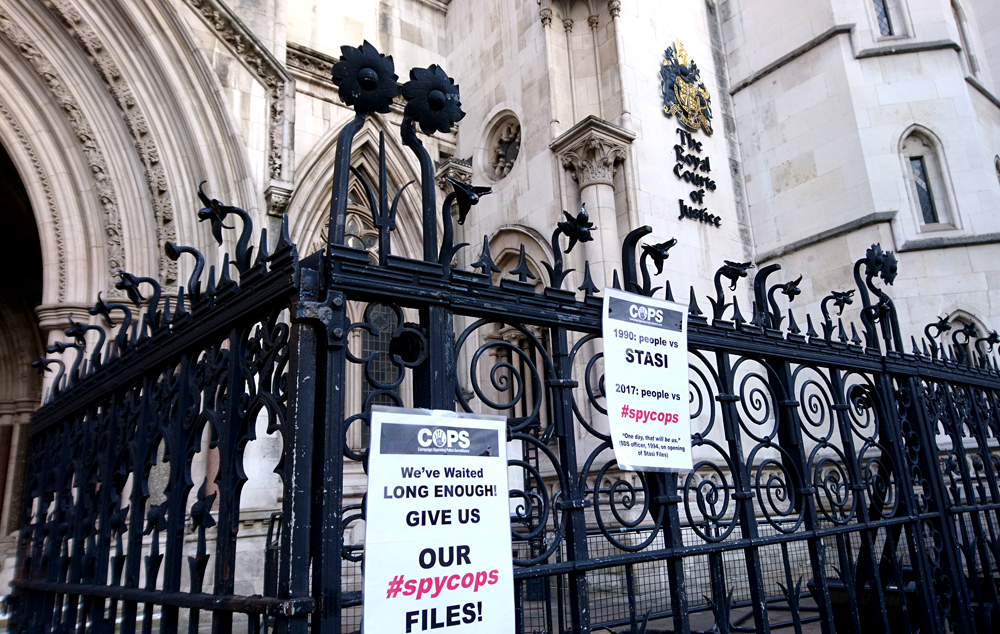
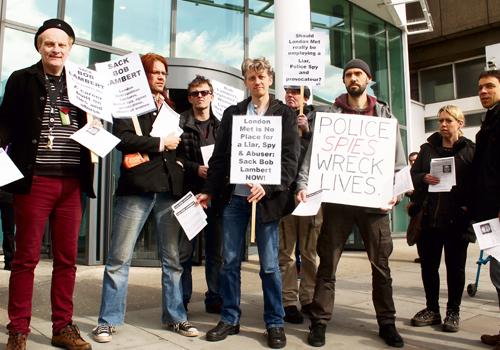
On Friday 17 October at 9am, the Campaign Opposing Police Surveillance will hold a protest outside the Inquiry at the International Dispute Resolution Centre, St Paul’s Churchyard, London EC4M 7BQ.
Core Participants will be present to respond to media inquiries (see details below).
At these Tranche 3 (Phase 1) hearings from October to December, the Inquiry will hear oral evidence from 26 witnesses, including:
Three former SDS undercover officers
Two former Metropolitan Police Service senior managers; and
21 non-state witnesses
Shocking Evidence Revealed
The Inquiry has revealed the staggering scale of abuses carried out by Britain’s secret political policing units and their long-term infiltration deployments. The Special Demonstration Squad (SDS) was formed in 1968 and continued its activities for 40 years.
The SDS operated in secret, targeting social justice campaigners, peace groups, socialist and anarchist organisations, environmental campaigners, trade unionists, left-wing MPs, and a range of progressive organisations. The spies’ abuses included:
Deceiving women into long-term intimate relationships, even fathering children.
Spying on grieving families of those killed by racists or police. This included the Lawrence family, who were campaigning for justice for their murdered son Stephen, and police infiltration of other family justice campaigns
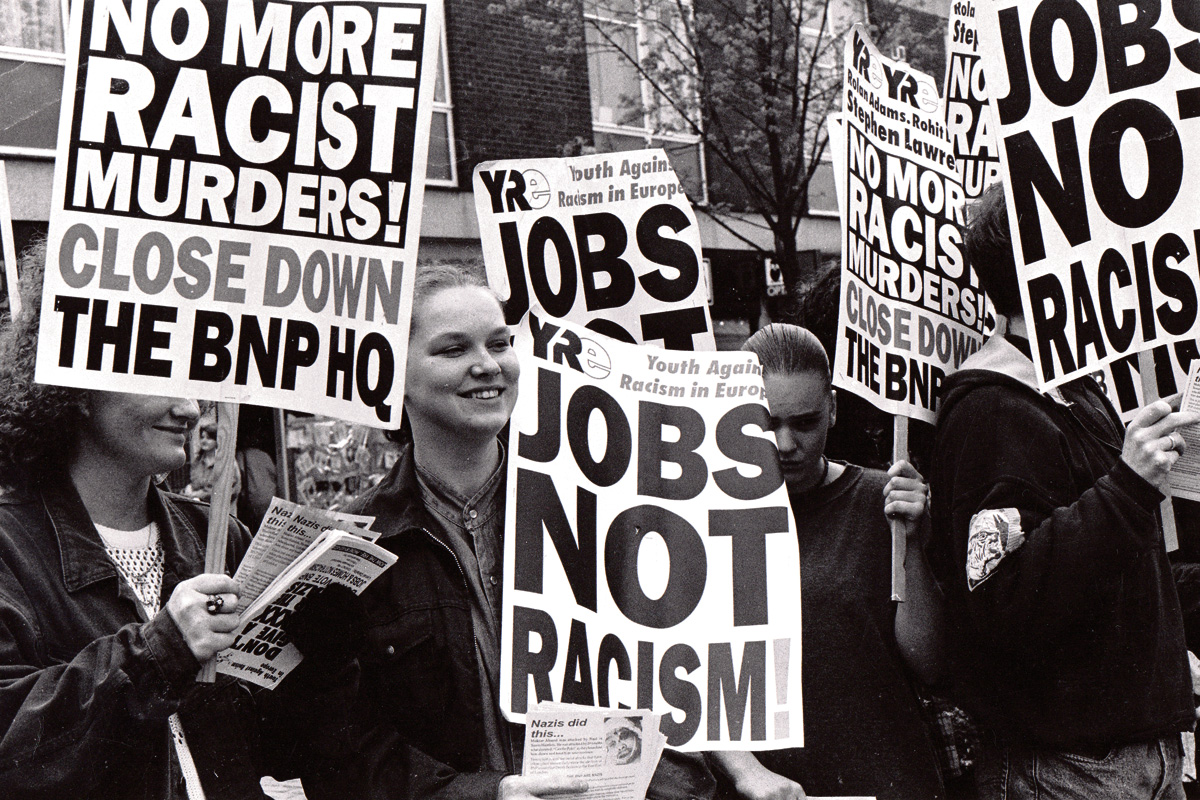
Infiltrating anti-racist, socialist and progressive campaigns, including Youth Against Racism in Europe (YRE), the Anti-Nazi League, and multiple environmental campaigns – with the aim of monitoring, reporting on and disrupting them.
Hoovering up personal details on thousands of people involved with or supporting the campaigns targeted, passed on to MI5
Despite some serious shortcomings, the Inquiry has shone a light on the hidden machinery of such ‘stasi-like’ political policing. In Tranche 1 and 2 the MPS argued that the SDS was was dealing with ‘public disorder’ and ‘subversion.’
However, in his 2023 interim report, the UCPI Chair Sir John Mitting concluded that the SDS should have been ‘brought to a rapid end’ just a few years after it was set up. Yet it continued for decades, its activities signed off by successive Home Secretaries despite its unethical tactics getting progressively worse.
Further Powerful Evidence Expected
Sukhdev Reel with portrait of her son Ricky
The Tranche 3 period covers up to fairly modern times. It saw the introduction of the Human Rights Act, and a supposed new ’regulatory’ regime (RIPA) in 2000.
But new laws apparently did nothing to curb the corruption and abuse, and the SDS was not shut down until 2007, superseded by the equally controversial National Public Order Intelligence Unit (which will be dealt with in Tranche 4 at the end of 2027). Lessons that should have been obvious were not learnt, and the Inquiry will investigate why.
Thousands of secret documents will be examined and published as the hearings offer a unique chance for the public to see the secret state exposed in its own words.
Among those giving evidence for the first time will be:
Lois Austin and Hannah Sell will describe how undercover officers infiltrated Youth Against Racism in Europe and other anti-racist movements. Suresh Grover, a central campaigner in the Lawrence family campaign and the Reel family campaign, will also give evidence.
Whistleblower Peter Francis, an SDS officer from 1993 to 1997, will talk about spying on anti-racist groups and the Lawrence family, and what went on behind the scenes.
Women who were deceived into intimate relationships will also be providing crucial evidence to the Inquiry and how they were targeted as political activists by SDS officers, including Mark ‘Cassidy’ Jenner and James ‘Straven’ Thompson – who will also have to give evidence.
Core Participants continue to demand to be given the personal files held on them, and demand further apologies from the police, MI5 and the Government for their authorisation of the spying operations.
Protest details:
Friday 17 October, 9am The International Dispute Resolution Centre, St Paul’s Churchyard, London, EC4M 7BQ
Core Participants testifying in the coming hearings will be available for comment at the protest, including:
It is investigating undercover policing operations including secret political policing by the SDS and NPOIU, spying on 1000 left-wing political groups and campaigns between 1968 and 2014.
The public can view live proceedings online from 13 October at 10am.
This Inquiry has already cost £114.3 million (up to June 2025). Only a fifth of that represents victims’ legal costs.
The Metropolitan police have spent an additional £70m of taxpayers money on secrecy, redactions and their own defence. [See 11 June 2024 MPS response to Freedom of Information request FO1-8602-24-0100-000]
The UCPI Interim Report, 29 June 2023. On page 96, para 28, the Chair concludes:
“The question is whether or not the end justified the means set out above. I have come to the firm conclusion that, for a unit of a police force, it did not; and that had the use of these means been publicly known at the time [the early 1970s], the SDS would have been brought to a rapid end.”
In the last 18 months the Met have also had to make a series of major public apologies, including for the targeting of women for abusive sexual relationships, for spying on Black and anti-racist organisations and family justice campaigns, for the spycops routinely stealing the identities of deceased children, and for shocking failures of supervision of the covert operations. See eg. paras 24, 29, 38, 71, and 80 in this Met statement of June 2024.
Tranche 3 Phases 2 and 3 hearings are scheduled for 2026. The Inquiry Chair, Sir John Mitting will then retire to produce his second Interim Report by 2027. Meanwhile a new Chair will be appointed to oversee the remaining Tranches 4 and 5.
For more on what the Undercover Policing Inquiry is and how it’s organised, see our UCPI FAQ.
Spycop manager HN69 Malcolm MacLeod giving evidence at the Undercover Policing Inquiry, February 2025
Special Demonstration Squad manager HN69 Malcolm MacLeod gave two days of evidence to the Undercover Policing Inquiry on Monday 10 and Tuesday 11 February 2025.
MacLeod spent just under a year in charge of the Special Demonstration Squad (SDS), between November 1986 and September 1987. He was a newly-promoted Detective Chief Inspector who was the overall boss of the spycops unit, with Detective Inspectors under him running the day-to-day details of deployments.
Prior to joining the SDS, MacLeod worked on Special Branch C Squad’s ‘alternatives’ desk which monitored animal rights and anarchist groups like London Greenpeace. Although his tenure was short, it was at a time of special interest to the Inquiry. This was the period when HN10 Bob Lambert ‘Bob Robinson’ was infiltrating an Animal Liberation Front cell that planted timed incendiary devices in shops that sold fur.
Lambert has strenuously denied planting any devices, but numerous witnesses and all the circumstantial evidence shows he was responsible for the one in the Harrow branch of Debenhams department store.
Lambert’s managers – not just MacLeod but others who testified like HN32 Michael Couch and HN39 Eric Docker – have all claimed to have been so useless at management that they didn’t know what Lambert was doing. Nor did they notice the mysterious long gap in Lambert’s reports to them during the weeks leading up to the Harrow store being targeted.
There’s more to this than Lambert, too. The managers all give significant insight into how the SDS was organised, and how its lack of oversight and accountability led to horrendous abuses such as sexual violation of women and the engineering of miscarriages of justice.
MacLeod was questioned for the Inquiry by Emma Gargitter.
This is a long report, use the links to jump to specific sections:
Joining the SDS
MacLeod’s background and what he found in the SDS
Recruitment and training
‘Pretty piss poor’ system for hiring, stealing identities of dead children, what to do undercover.
Pitfalls and problems
Breaching judicial principles, no personal support, officers going awry, MI5 muscling in
Relationships in principle
A range of responses to the idea of whether officers could and should have been prevented from deceiving women into relationships
Targets
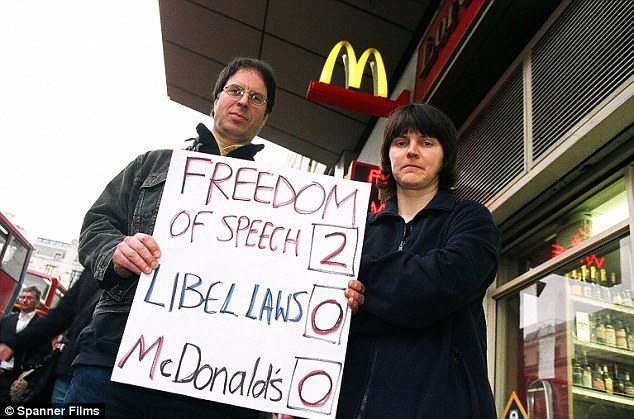
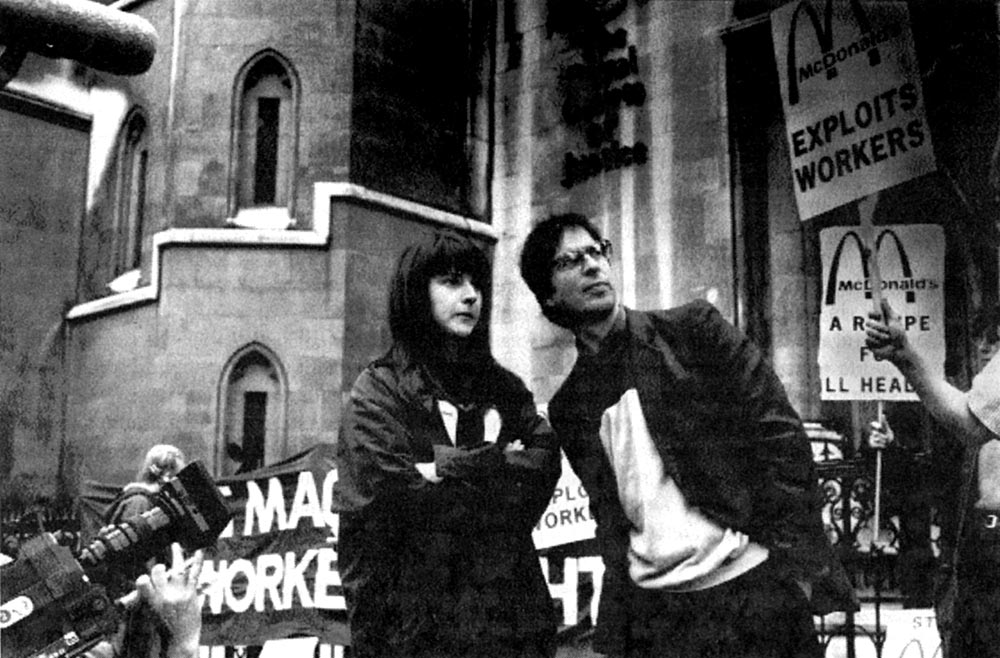
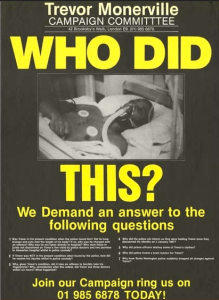
Why were spycops spying on the Trevor Monerville justice campaign, MPs, the McLibel campaign, and the women’s peace movement?
The UCPI is an independent, judge-led inquiry into undercover policing in England and Wales. Its main focus is the activity of two units who deployed long-term undercover officers into a variety of political groups: the Special Demonstration Squad (SDS, 1968-2008) and the National Public Order Intelligence Unit (NPOIU, 1999-2011). Spycops from these units lived as activists for years at a time, spying on more than 1,000 groups.
This hearing was part of the Inquiry’s ‘Tranche 2 Phase 2’, which mainly concentrated on examining the animal rights-focused activities of the SDS from 1983-92.
MacLeod joined the Met’s Special Branch in 1969, and had learned of the SDS’s existence from his Branch colleagues. He says he was aware this was a covert operation funded by the Home Office to obtain intelligence about political activists.
Eric Docker giving evidence at the Undercover Policing Inquiry, 28 January 2025. He served under Malcolm MacLeod running the Special Demonstration Squad.
He knew that many of the intelligence reports that he saw on the ‘alternatives’ desk at C Squad came from the SDS spycops. C Squad was one of the main ‘customers’ for SDS reports. We see an example of an SDS report, dated 27 August 1986 [MPS-0742828]. It’s been annotated by MacLeod at C Squad, showing who he wanted it disseminating to.
MacLeod says that ‘the majority of the reports went to ARNI’ (the Animal Rights National Index). He goes on to explain that this unit was begun by the Essex police, who collated information about animal rights activists. The Home Office then established a national organisation so that intelligence could be shared between different constabularies.
MacLeod says this was the first time that police forces around the country effectively shared intelligence of this kind with each other. There was an ARNI office in Scotland Yard. Those who saw the spycops’ intelligence wouldn’t always have been aware of how it had been gathered.
In his witness statement to the Inquiry [MPS-0748808], MacLeod recalls that while he was at C Squad he had at least one phone conversation with an SDS manager. He additionally had a meeting with SDS staff HN39 Eric Docker, HN10 Bob Lambert and HN11 Mike Chitty in a pub so they could brief him on animal rights campaigners.
MacLeod’s statement describes the relationship between ARNI and the SDS as ‘excellent’ and said that information flowed both ways. He explains that after he took charge of the SDS, he was ‘routinely provided’ with information about animal rights activism and would pass it on to the rest of the spycops unit.
After about 10 months in charge of the SDS, MacLeod returned to C Squad around September 1987. He became a Detective Superintendent. He says he remained aware of the work being done by the spycops. It’s extraordinarily rapid promotion, two ranks in the space of a year. Senior officers must surely have felt his time at the SDS was a great success.
GETTING STARTED
MacLeod had never been an undercover officer, and had no first-hand experience of the deployment of undercover officers when he became Detective Chief Inspector of the spycops unit. His DI, Eric Docker, had only been in his role for seven months and says he’d had no handover from his predecessor. Despite this, MacLeod says of Docker:
‘He seemed to me at the time to be fairly bedded in.’
In contrast to Docker, MacLeod says he did have a handover from his predecessor, HN115 Tony Wait. Wait provided him with a pen portrait of each of the spycops officers and their performance, but he doesn’t remember Bob Lambert being singled out.
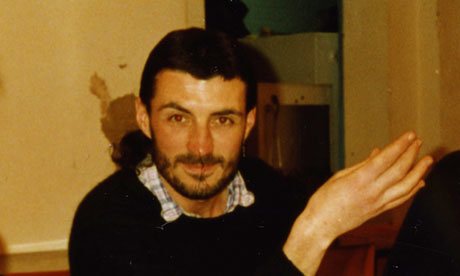
Tony Wait told the Inquiry that Lambert had told him that he’d ‘got a girl into trouble’ while undercover. He had deceived four women into intimate relationships and had deliberately had a child with one of them.
MacLeod says that Wait definitely didn’t mention this to him, and had he known he’d have been concerned it could significantly affect Lambert’s deployment and the whole squad:
‘I would have to take into account the possible repercussions it would have, not just for the individual but for the operation… I would almost certainly have raised it with the Commander…
Common sense would tell you that something would have to be done if you have an officer who has erred and it’s something that could impact on the operation itself.’
In his statement, MacLeod said it ‘was an honour’ to be asked to head up the spycops unit, a point he elaborated on at the Inquiry:
‘it was quite a unique group of people, who volunteered to serve undercover. They were making great sacrifices in being away from their family for various lengths of time. They chose to do this job out of a sense of duty.
I felt they were an admirable bunch of guys and girls, and to me it was quite an insight, having been for the best part of my career involved in general Special Branch work, this was quite a different ball game altogether.
From Day 1, and from talking to them during the weekly briefings, meetings, you do get a sense of what the sorts of characters are, and why they are doing what they are doing. It is quite a sacrifice of these officers. So, yes it was an honour for me to have been their boss.’
After this effusive praise, he confirms that his view was changed by the knowledge that his officers had deceived women into intimate relationships:
‘It was totally unacceptable behaviour, to the point of being disreputable.’
The SDS Annual Report 1987 [MPS-0728976] describes a visit to the spycops’ safe-house by two senior officers: John Dellow, Assistant Commissioner of Specialist Operations, and Simon Crawshaw, Deputy Assistant of Special Branch.
MacLeod says this was a chance for them to hear directly from the undercovers and learn more about the work they were doing, and appreciate its value. Officers would have said what groups they spied on and mention perceived successes, but not gone into detail about their methods to the illustrious visitors.
‘They sent a very gracious note, a memo, afterwards thanking us for the opportunity to address the meeting.’
This tallies with numerous reports we’ve heard at the Inquiry of extremely high-ranking officers visiting and congratulating the spycops. It demolishes the Met’s desperate claims that the SDS was a super-secret unit practically unknown to the rest of the force.
RECRUITMENT AND TRAINING
MacLeod chaired the SDS selection panel that appointed new recruits.
In his statement to the Inquiry, MacLeod said that SDS spycops were recruited by DCIs of various Special Branch squads putting forward candidates. Gargitter asks him, if the work of the SDS was not widely known, how would they know to put people forward to join it?
MacLeod floundered around, stopping and starting, before arriving at the idea that the managers could give their personal opinion on someone’s suitability to gather intelligence.
But, Gargitter says, if they didn’t know about the role then they couldn’t know about someone’s suitability for it. MacLeod replied:
‘Well, I mean, yes, that has to be said, yes. That is true.’
Either this obvious conundrum didn’t occur to MacLeod and his colleagues at the time, or else he’s lying and the bosses of other squads were much more aware of what an SDS undercover’s work involved.
In his statement, MacLeod says the ignorance extended beyond the squad’s managers, and even claims that applicants themselves weren’t really aware of what they were applying for:
‘the candidates were asked what they believed the role to entail, its disadvantages and advantages.’
FAMILY INVOLVEMENT – MARRIED MEN PREFERRED
He said that, before deployment, it was imperative to meet the new officer’s spouse and talk about the pressures that would come with the role:
‘It’s a long time, four and a half years, working in circumstances that the families would be unacquainted with, and the pressures that brings on the individual officer.
So the families can only have a sort of brief understanding of what the work is going to entail. It’s only when they get into the job they realise the length of time they are going to be spending away from the family home.’
There were no checks made with families to monitor their welfare, and it would be up to the officers themselves to sort such problems out.
Asked if there were any provisions in place that the families could access or use if they had any concerns whilst their family member was deployed undercover, MacLeod says:
‘Sadly not.’
Why ‘sadly’? MacLeod flounders once more, eventually saying:
‘It’s very difficult to give an answer to that’
He confirms that there was no way for a family to check if their spycop was safe.
MacLeod clearly remembers that at the time it was thought that married officers would make better undercovers:
‘I do believe it does help to form, if you like, an anchor with their real lives. And I think that probably holds a lot of sway when you compare it with, perhaps, a single officer, who doesn’t have that home life or that stability, if you like, to keep him on the straight and narrow.’
Why would that apply to spouses but not parents or siblings, though? Was the difference that a married man was believed to be less likely to enter into a sexual relationship while undercover?
‘That was the received wisdom at the time.’
It is clear that Malcolm MacLeod is finding it difficult to give evidence. He is perhaps the most believable user of forgetful mannerisms among former spycops and managers, occasionally losing his way on what the question was as he answers.
‘PRETTY PISS POOR’
Spycop HN5 John Dines ‘John Barker’ while undercover. He was hired by MacLeod’s ‘piss poor’ selection process.
In 2012, MacLeod was interviewed by Operation Herne, an internal police investigation into spycops. In his statement to them [MPS-0726640] he described the SDS selection process as ‘pretty piss poor’.
Do you stand by that description now? After apologising for the language he used, he agrees that yes, he does.
MacLeod’s view is that some kind of aptitude test could have been used to weed out the likes of HN11 Mike Chitty ‘Mike Blake’ from becoming a spycop in the first place. After his deployment ended, Chitty secretly returned to his social life among the people he had spied on.
MacLeod says they could have used some form of psychometric or aptitude testing, as has subsequently been implemented. He didn’t actually recommend it to his superiors at the time though, nor any other improvements.
‘You know, with a bit of a hindsight, perhaps something should have been done…
If somebody is so minded to stray like that, it’s pretty abhorrent, but I am not really sure there would be an effective way of preventing that, apart from warning them and making sure that this is just totally unacceptable.’
This answer set a pattern we see throughout MacLeod’s evidence – conceding abuses were wrong yet not only admitting he didn’t do anything to prevent them, but claiming that there was nothing he could have done.
In his statement, he mentioned a binder kept in the SDS office. This was an internal binder, which he read through, full of advice and guidance for members of the spycops unit, about how to build up their ‘legends’ (cover identities and back stories).
He says it wasn’t formally composed but ‘was more organic’, with officers adding advice from their own experiences.
Other officers who were his contemporaries, such as Michael Couch, have testified that there was no such binder.
MacLeod says the advice was mostly about how to build a cover identity, and that new recruits would certainly have been shown it:
‘This is information that’s critical to their deployment.’
MacLeod told the Operation Herne team that the spycops ‘all knew the boundaries’. Asked to explain what he meant by this, he said in his written statement:
‘They were adults and they should know the dictates of moral and common sense: there are certain things you do and do not do. There are fundamental principles that you adhere to whatever role you are in. These include moral principles – decency and probity were qualities we looked for in officers.’
‘I did not satisfy myself in the case of every individual officer that they knew all the boundaries, but felt that I could safely assume it to be true.’
If you didn’t discuss lines or boundaries with the spycops officers, how would they have known where these lay? MacLeod accepts that in the absence of any clear guidance, officers would be left to make their own personal and subjective judgement.
He admits that he didn’t sit them down and spell out such guidance when they first joined the spycops unit:
‘I keep coming back to this 20/20 hindsight. Had I known then what I know now, yes, should have done.’
It’s amazing how many of these officers say that with hindsight their actions weren’t justifiable, but then they still try to justify it all.
And on the occasions when, as with this question, they admit to it being unjustifiable, they use phrases like ‘20/20 hindsight’ to imply that only unattainable perfection could have moved them to act any differently at the time.
DRINK-DRIVER SPYCOPS
In his statement, MacLeod described what he learned from his time running the SDS:
‘It opened my eyes to the risks associated with undercover work, such as risk of compromise and risk of abhorrent behaviour (eg with alcohol). It was a salutary lesson in terms of human frailty.’
MacLeod clarifies that he’s only referring to one officer who had an alcohol problem and was arrested for drink-driving.
MacLeod claims that he learned about the ‘root causes’ which led the officer to drink to excess, and the ways in which he could have perhaps have picked up on clues about their officer’s state of mind.
He then, again, goes on to contradict himself and say he doesn’t see how he could have done anything differently, so absolving himself of any blame:
‘I don’t think there’s very much more that really I could have done, if you like, to ameliorate or to prevent this sort of thing happening… No, I am quite relaxed about it.’
As generations of spied-on activists can attest, many other spycops were problem drinkers too. And, just like the officer MacLeod knew, an earlier spycop HN339 ‘Stewart Goodman’ crashed his car while drunk and was arrested. Goodman broke protocol by admitting his real identity and job to the uniformed officers who attended, and was convicted for drink-driving under his false name.
MacLeod refuses to accept that he should have provided more guidance to the spycops:
‘They are grown men, they should know better. They know right from wrong. You know, there is only so much you can do to sort of wet nurse them’
It’s horrendous that he can admit to gross failings of officers, and then dismiss any suggestion that he should have properly acted as their manager, speaking as if doing so would have been somehow infantilising them.
Emma Gargitter challenges him on his claim that ‘they know right from wrong’ and, not for the first time, MacLeod crumbles and contradicts himself:
Q: A number of the officers under your command don’t appear to have been able to identify right from wrong or if they did, were willing to do the wrong thing?
MacLeod: Yes, I am afraid, sadly.
He is very clear that he does not consider the sexual deceit to be a result of any ‘human frailty’ under discussion, and those abuses were instead a case of the spycops exploiting an opportunity.
IDENTITY THEFT
We hear about the method used by spycops to create their cover identities: stealing the name of a deceased child. New recruits would spend six to eight months working in the unit’s back office, during which time they would find the birth and death certificates of a child whose identity they would steal.
MacLeod says he only learned about this practice after he joined the unit.
He says it never occurred to him to question whether this identity theft was legal, and he says he didn’t ask any superiors about it. He says he felt uncomfortable with ‘the very idea’, but:
‘It was designed to provide maximum protection for the undercover officers in building up their legend. So, no, although I had some personal qualms about it, I just accepted that that was how things were done.’
It wasn’t the most secure tactic though. If they simply made up an identity and someone in the officer’s target group became suspicious and investigated, there would be no birth certificate to find. However, that could be explained away (born abroad, adopted, etc). Whereas with a stolen identity there would be a death certificate that cannot be explained for someone who isn’t actually dead. It would prove the person was some sort of spy.
This is exactly what happened to HN297 Rick Clark ‘Rick Gibson’ in 1976, only a couple of years after the spycops started the identity theft method.
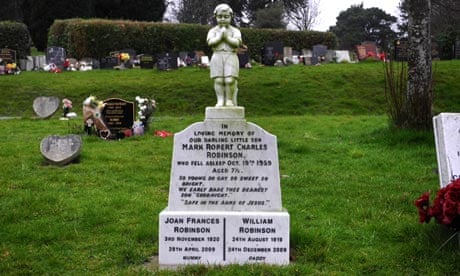
The grave of Mark Robert Robinson whose identity was stolen by spycop Bob Lambert. Branksome cemetery, Poole, Dorset.
MacLeod says he knew Clark later. He knew Clark had been an SDS officer in the 1970s, and that he was known as ‘a ladies’ man’. However, MacLeod claims it wasn’t until long after he left the police that he heard about the incident that ended Clark’s deployment when he’d been confronted with ‘his’ death certificate.
He says he only realised how ‘abhorrent’ the situation was when the spycops story ‘hit the media’ and he learned how the families of these deceased children felt about this identity theft. He says it didn’t occur to him at the time.
This is the man who just said how officers knew right from wrong, yet not only admits they all did something wrong, but that at the time he was essentially oblivious to the fact that it was wrong.
Neither did the possibility of any impacts on the families occur to him (e.g. the spycops getting a criminal record and violating citizens in their loved ones’ name, or people investigating the spycop and turning up at the family’s home looking for their dead relative).
He doesn’t remember any officer checking to see where the remaining family were, or visiting the area where they lived. However, numerous officers have testified that they did this, and MacLeod says he would have viewed that as legitimate and necessary at the time.
WRITING THE REPORTS
In his statement to the Inquiry, MacLeod said that SDS officers were given no instructions about what to include – and what to omit – in their intelligence reports.
He says it was something they should have picked up on the job based on what they had learned during their time in Special Branch; they didn’t need any specific instruction when they became spycops, and would get six to eight months in the SDS back office processing other officers’ reports before making any of their own.
It’s pointed out that full-time undercover officers would come across a huge amount of information about the people and groups they spied on, far too much to report, and so would inevitably have to decide what to include. MacLeod says this was entirely left up to the officer and they were never given any guidance.
He says he cannot remember ever telling an officer that something they reported was unhelpful, irrelevant or inappropriate in any way.
In his witness statement, MacLeod says he took a keen interest in the form and contents of the reports:
‘I made a conscious effort to read as much of the reporting as I could, though I could not read all the reports. Obviously the team would flag anything of particular significance as a priority for me.
It is not only useful to get an insight into what was happening but also some sense of the effort that each undercover officer put into their report-writing, style, credibility, et cetera.’
MacLeod says it was Eric Docker who would read all the reports and pass on the important ones.
This squarely contradicts what Docker told the Inquiry. He tried to dodge accountability by saying that he only gave reports a cursory check for grammar and spelling, and didn’t pay ‘great attention’ to the actual contents of the reports that he signed off.
It’s also something MacLeod himself contradicts later on, claiming not to have seen reports on important events he claims to be unaware of.
MacLeod’s written statement also says that spycops reports were typed up by Detective Sergeants. He is unaware of any editorial control taking place at this stage and wouldn’t have expected any, apart from alterations to grammar rather than the substance.
This is an important point. The managers all say this, and reports do seem to have distinctive voices of the authors, yet numerous undercovers have tried to avoid culpability for particular parts of their reports by suggesting that managers had inserted or omitted certain details at the typing-up stage.
MISOGYNY
We were shown a report by spycop HN95 Stefan Scutt ‘Stefan Wesalowski’ [UCPI0000020148] dated 22 April 1987. It had been written in response to a request from the Security Service (aka MI5) about the Hackney South branch of the Socialist Workers Party.
Scutt refers to a woman as ‘plump build, pretty face’. MacLeod denies that this is offensive or misogynistic. He does, however, accept that it’s derogatory, subjective, and unnecessary.
Asked if it’s indicative of the culture of the SDS, MacLeod replies:
‘It’s more of a comment on the time, in the 1980s when language like this was probably seen to be acceptable.’
He goes on to claim it wasn’t common to hear SDS officers comment on women’s attractiveness and in fact he never heard any other officers do so.
In his written statement, MacLeod said:
‘People today have got higher expectations of public bodies and the police are open to greater public scrutiny than they were.’
Gargitter draws this point out. If public scrutiny keeps the police on the straight and narrow, then the high levels of secrecy around the SDS effectively gave them a cloak for behaviour that, in more public areas of work, might have been called out.
MacLeod agrees with this. He admits that at the time he wasn’t concerned about the level of intrusion, or the kind of reports the spycops produced.
PITFALLS AND PROBLEMS
LEGAL PROFESSIONAL PRIVILEGE
Spycops reported on people’s legal strategies and were in meetings that activists held with their lawyers, often because they themselves had been arrested and were defendants in cases. This breached the principle of ‘legal professional privilege’, a fundamental part of the judicial system where lawyers and clients should be able to discuss matters in confidence.
Beyond this, many spycops went to court under false identities, swore to tell ‘the truth, the whole truth and nothing but the truth’ and then from the very first question asking their name, they lied. This is perjury.
Additionally, courts have a duty to ensure all material is available to the defence. By withholding the truth about spycops and their reports, the SDS misled courts. This means the trials were unfair and any resulting convictions were miscarriages of justice.
MacLeod says he was aware of legal professional privilege from courses he’d been on before he was in the SDS:
‘I would be uncomfortable with sanctioning anything that troubled me as being legally privileged. I would prefer to have it removed from the report. If it smacked of breach of legal privilege, I would have been very uneasy. There would be reputational repercussions if it became known…
It would be fundamentally wrong. In fact, it would be breaking the law.’
Spycops routinely committed crimes like identity theft and perjury, as well as encouraging and participating in criminal acts among the groups they spied on. The entire SDS operation was unlawful. The idea of ‘reputational repercussions if it became known’ should have set alarm bells ringing long before this point.
Despite his current assertion that he would have removed any privileged information from reports, MacLeod can’t remember ever actually doing so:
‘There was no policy, instruction or guidance concerning officers coming into possession of legally privileged information.’
SPYCOPS MEETINGS
The spycops met twice a week at their safe-houses. The whole unit would meet, including Eric Docker and the sergeants who did the admin work. MacLeod would brief them on issues and events in the wider policing world. Each officer would speak in turn about their deployment. It would be detailed, naming individuals who were spied on and discussing what they’d done.
MacLeod explains the value of these meetings for the unit:
‘Just the camaraderie alone, and talking with colleagues, talking in police language…
Because bear in mind they are away from their place of work. They are not mixing with police officers, their colleagues. And it’s a safety valve for them. So it was a very valuable sort of exercise, and that’s why we had meetings twice a week.’
After the communal go-round there would be ‘side meetings’, and MacLeod confirms that he and Docker had more of these with Bob Lambert than with other officers.
MacLeod’s 2012 written statement to Operation Herne is shown [MPS-0726827], in which he says that spycops officers would drink alcohol and play pool and darts after the safe house meetings. He would usually stay with them for a few hours, drinking beers:
‘It was a great opportunity for these guys and girls to actually sort of find some space, because living cheek by jowl with the activists can be a bit tiresome and a bit tedious’
Asked if any of the banter during the social sessions was sexist, MacLeod admits:
‘It may have been.. you have to turn the clock back all those years, living in a different age. Being brutally frank, there wasn’t the same awareness at the time about sexism and so forth.’
He denies that there was any discussion of the attractiveness of women, or that anything racist was ever said.
NO PERSONAL SUPPORT
The spycops were ‘a very difficult bunch of officers’ because of the strains they were living under as part of their role, especially concerning their real lives away from deployment.
MacLeod says he felt strongly about their welfare while undercover, but again admits these meetings were the only way to monitor it, that it was reliant on the officers, and – using his ‘20/20 hindsight’ phrase again to absolve himself – says he did nothing to improve the arrangement.
Managers had no other sources of insight, and there was no professional mental health support in those days. He says that the spycops would have benefited from having access to a military psychiatrist, as did happen later.
MacLeod says in his statement that if proper post-deployment counselling had been available:
‘I’d have jumped on it.’
INFORMAL MENTOR FOR EX-SPYCOPS
Shortly before MacLeod’s arrival at the SDS, HN115 Tony Wait had set up a spycops ‘buddy-buddy’ informal mentoring scheme, in which an experienced ex-undercover officer would keep in touch with an SDS officer for around six months after their deployment ended and they adjusted back into their old life.
MacLeod says only one officer did this while he was running the unit. In his statement he has written in glowing terms about HN68 ‘Sean Lynch’, who provided a sympathetic ear to other spycops.
HN68 ‘Sean Lynch’ had been undercover 1968-1974 infiltrating the Vietnam Solidarity Campaign, Northern Ireland Civil Rights Association, Irish Civil Rights Solidarity Campaign and Sinn Féin (London), then returned to the SDS as a manager from 1982 to 1984.
MacLeod confirms that the buddy-buddy system didn’t amount to much beyond having the phone number for Lynch, but says he ‘would expect’ other officers to have done it afterwards.
Asked if there was any consideration of the suitability of a former spycops officer for taking on a mentor role for current SDS officers, MacLeod confirms that there were no checks or assessments.
He concedes that it would have been problematic for someone like Bob Lambert to do it. Yet, at the time, Lambert was feted and decorated, then put in charge of the unit. Officers he oversaw were told that his had been ‘hands down the best tour of duty ever’. He would surely have been seen as ideal.
MacLeod says he felt it was part of his role to detect when officers were under stress. But under questioning, he admits that his only opportunity to look was at the twice-weekly group meetings:
‘The thing is, it’s not that easy to detect, unless there’s some manifestly obvious behaviour. There’s no way of knowing.’
He also admitted that he wasn’t at the SDS long enough to get to know spycops to sufficiently assess their stress or competence.
ERRANT OFFICER MIKE CHITTY
A post-deployment psychiatric report of HN11 Mike Chitty ‘Mike Blake’ said he was ‘psychologically unsuited to this type of work’.
MacLeod said in his witness statement that both he and Docker agreed with that assessment:
‘We had some concerns but I cannot now recall the substance. I did not trust him but cannot tell you [now] why that was. I did not provide him with any emotional supervision and/or support during his deployment…
It’s not something you can easily pinpoint. The word ‘shifty’ comes to mind. There are some people who you take a liking to and others you do not. Perhaps we can call this a copper’s instinct.’
Chitty’s spycops deployment was due to end soon. MacLeod didn’t take any action to speed up his withdrawal, saying it didn’t occur to him that he could do this.
But once again, his position crumbled under questioning. Asked why he didn’t do anything to monitor what Chitty was up to, he admitted:
MacLeod: I suppose my comments are based on what I was told about his behaviour.
Q: Do you mean told at the time or told subsequently?
MacLeod: Subsequently, yes.
Q: So there is an element of retrospective analysis, is there?
MacLeod: There is.
Chitty is known to have kept and continued using his fake cover identity documents after leaving the SDS. He returned to the people he’d been spying on and continued his social life with them, deceiving a woman there into a relationship.
Hewas only caught because he was claiming petrol expenses from the place he’d been spying, which he had no reason to visit on duty.
MacLeod says he’s shocked that Chitty retained his fake identity documents, but that there was no rigid process in place to collect them from spycops at the end of deployments. Not even ones who had a negative response from their manager’s intuition.
In his written statement, MacLeod said of Chitty:
‘I cannot honestly remember if he got any counseling. If he did not, he should have.’
But, once more, when questioned he admits that’s a retrospective opinion, and when he was Chitty’s manager he did not do anything to make it happen.
ERRANT OFFICER STEFAN SCUTT
We moved on to discuss HN95 Stefan Scutt ‘Stefan Wesalowski’, an officer under MacLeod’s command whose deployment went awry and had to be withdrawn.
We’re shown an Annual Qualification Review (AQR, the personal appraisal) written by Eric Docker in April 1987 [MPS-0746943], praising Scutt’s work:
‘A thoroughly sound and practical officer, ideally suited to his present duty where his quantities of initiative, self-discipline and experience are put to excellent use. Consistently produces work of the very highest quality.’
It concludes with a recommendation that Scutt be promoted.
Asked if he agreed with the sentiments, MacLeod replied:
‘I am not sure. I would say no.’
But, yet again, when questioned he admits that he’s backcasting his current opinion on to his past. He says he can’t remember what he thought of it at the time. When offered the explanation of Docker writing it without MacLeod ever seeing it, he grasps it with both hands and says that’s the most likely thing.
Next, we see at note to MacLeod from the Security Service dated 16 July 1987, thanking him for a meeting with Scutt [UCPI0000024603]. MacLeod says he can’t remember it. He is asked if he is surprised by it, and says he doesn’t know.
We are shown a report about a Security Service visit to the SDS on 16 September 1987 [UCPI0000022281]. Docker was there, MacLeod wasn’t. It says Scutt has:
‘Two years to go and continues to do very well.’
MacLeod doesn’t agree with this description either, but once again admits this is based on what he knows now. He says he can’t remember what he thought at the time, though:
‘I remember there were issues, but I can’t remember specifically what these issues were.’
It is pointed out there is nothing to suggest any dissatisfaction from him about Scutt in the paperwork from the time. Asked if he agrees with that, he oddly responds:
‘No, I can’t comment.’
Gargitter asks for more documents to be shown, saying to MacLeod:
‘Let’s see if we can jog any memory that you might have.’
THE SECURITY SERVICE
Next, we see a Security Service note of a meeting they held with MacLeod and Scutt on 13 February 1987 [UCPI0000024630].
It details Scutt being invited to work inside the headquarters of the Socialist Workers Party (SWP). This is described by the Security Service as a ‘unique honour’ for someone who hasn’t been a member of the Party for very long.
MacLeod says he cannot recall it.
The Security Service think Scutt taking up the role could provide them with lots of valuable intelligence, but the Met veto the idea, and give multiple reasons.
MacLeod says he agrees that ‘this is a police operation’ and that he would not be comfortable with letting the Security Service have too much say. He can’t recall any discussion of this with anyone further up the chain.
He agrees that there would have been a concern about SDS officers straying too far from their role. The note also reports that:
‘HN 95 arrived before MacLeod and was able to share with us the disappointment raised by the refusal of his masters to allow him to take up the job in Socialist Workers Party administration which he has been offered.’
MacLeod doesn’t recall this either. He says it wasn’t normal for such direct communication to take place between the Security Service and individual spycops – he says if he’d known, he would have reminded them to go through the management.
About a year later, Scutt had his deployment prematurely terminated. MacLeod says he cannot remember anything about concerns over losing control of Scutt. He doesn’t admit to remembering very much about Scutt at all.
MacLeod reported to Chief Superintendent HN84 Ray Parker. It seems that, shortly after Scutt’s interactions, in the summer of 1987 Parker reiterated to the Security Service that any arrangements to meet with SDS officers had go through him, and be requested in writing.
In his statement, MacLeod has written about the influence the Security Service sought to exert over the SDS, saying it ‘bordered on control’, as well as its ‘informal influence’:
‘The Security Service actively tried to maintain good relations with the SDS management, including by providing corporate hospitality.’
Another document shows that Docker and Scutt had a further meeting with the Security Service in July 1987 – complete with a sandwich lunch – at which Scutt complained about the Socialist Workers Party [UCPI0000022317].
He called the women ‘ugly’ and described the Party members as ‘boring’ and too ideological (i.e. they weren’t interested in football and didn’t tell funny stories).
In another of Scutt’s reports [UCPI0000022350], a woman SWP activist is described as ‘fat and ugly’.
MacLeod doesn’t remember Scutt using this type of language verbally. But, yet again at the Inquiry, we either have to think that these men weren’t bigoted in casual company but somehow turned it on when writing official reports, or else they did in fact talk like this.
Q: Is it possible, Mr MacLeod, that that sort of language to describe women was commonplace at the time, and so it didn’t stand out to you? … Did you hear it with some level of frequency within the SDS?
MacLeod: Well, that’s the thing. I may have done, may not have done. I am inclined to err on the side not to have done. Just, I mean, that kind of language is just unnecessary apart from anything else.
Given the instances of this type of language in the reports, alongside all manner of reporting that was unnecessary, this really isn’t the defence that MacLeod thinks it is.
RELATIONSHIPS IN PRINCIPLE
In his witness statement, MacLeod has been very clear about his context for spycops deceiving women into intimate relationships:
‘The majority of officers were stalwart professionals, and I feel strongly that their achievements should not be retrospectively underappreciated or overshadowed by the misconduct of a few.’
He says that such relationships did constitute misconduct. Specifically questioned, he confirms that in his witness statement, he said if he were asked to make a moral judgement, he would be disapproving of such conduct.
Gargitter then reads from the notes made by Operation Herne, a police investigation into spycops, when they interviewed MacLeod in 2012:
‘Although MacLeod did not specifically say that sexual relationships between field officers and their targets were permitted, he made it quite clear that they went on, and to some degree were a part of the job.
In summary, he stated that if a field officer had a close relationship with a target and a sexual relationship was a likely progression of that relationship, and the officer refused or made excuses, then this could have caused unwanted attention and possibly lead to the officer being identified as a police officer.
“The closer a field officer got the better.” MacLeod said that his objective was to get the intelligence, not to make moral judgments.’
It’s clear he’s been lying to the Inquiry all day long. This bluntly says that the relationships were good for getting intelligence which, after all, was the entire purpose of the SDS. They didn’t care, and thought they’d never get caught. He’s been exposed by his own words.
MacLeod: Yes, that’s regrettable. I withdraw that.
Q: Sorry, did you say you withdraw that?
MacLeod: Yes.
Q: And what part, precisely, do you withdraw?
MacLeod: All of it.
MacLeod then interrupts the next question to claim that he did not actually know that spycops officers had deceived women into sexual relationships when he spoke to Operation Herne in 2012 and told them it was part of the job:
‘I had no knowledge of it going on. Hypothetically, I said that, and it’s not right.’
He is flapping wildly in his answers.
Q: So you may have said that to Operation Herne, but it was inaccurate when you said it?
MacLeod: Yes.
Q: Can you think of why you might have told Operation Herne that relationships went on and to some degree were part of the job if that was not your state of knowledge when you managed the unit?
MacLeod: That’s not the state of knowledge that I had.
Q: Why would you have said that to Operation Herne then?
MacLeod: No. I can’t be, I can’t be sure.
‘IT HAS TO BE ACCEPTED’
Gargitter is in full ‘skewering’ mode with MacLeod. She shows him his signed statement to Operation Herne in November 2012 [MPS-0726827]. In it, he said:
‘In terms of relationships between a field officer and their compatriots within their target groups, it is obvious that the closer a field officer got to the key people, the better the intelligence was likely to be.
There may be occasions where relationships formed with women within the group and sexual relationships followed. This is not something a field officer would discuss with his supervising officers, but it has to be accepted that such liaisons will form.’
Further exposed as a liar by his own words, MacLeod desperately grabs on to anything other than the truth. It’s like watching a five year old with chocolate all over their face and hands saying they don’t know where the Maltesers went:
‘It doesn’t mean to say that I am approving of it. Not at all. I think it’s a question of facing up to reality that these things do happen in the world.’
But if the situation is that it wasn’t something that you approved of, and you appreciated there was a risk of it happening, surely it was part of your role as a Detective Chief Inspector to take steps to try to prevent it.
It was at this point that MacLeod could no longer conceal the resentment spycops feel at being exposed, blaming those who seek to bring the truth to light rather than themselves for having such despicable secrets:
‘Well, up until that point, and until the exposé occurred in whenever it is, when Caroline Lucas made a statement to the Commons and exposed everything, until then it hadn’t been an issue. Was I surprised? Perhaps we shouldn’t have been surprised that something like this would happen.’
As with other managers at the Inquiry before him, he says that if he’d asked undercovers about intimate relationships they’d only have lied to him.
Not long before this, he told us that these were men of integrity and probity who always knew right from wrong without needing any discussion or guidance. Now he’s saying that a significant proportion of them were sexually abusing women and would have lied to colleagues and management about it. This doesn’t add up. It seems clear that management knew full well and saw it as part of the deployment.
MacLeod goes on:
‘I think we just have to face up to it. It’s an unpalatable fact but this is what happens when you put people in this kind of proximity to each other.’
That perspective portrays it as if it’s a both-sides fault, rather than the truth: this is what happens when you put misogynist liars in proximity to women they can abuse.
‘Maybe, in retrospect, looking back, there should have been ways in which we might have been able to maybe prevent or counter that from happening. We didn’t.’
He says it was made clear to the spycops at the start of their deployments that such relationships were unacceptable. This isn’t the get-out he thinks it is; it’s an admission that he knew of the likelihood and risk yet he claims he did nothing at all to monitor it.
MacLeod’s next graphene-slender excuse for not raising the subject of relationships with officers is that most of them had been recruited by someone else.
He adds that he was only in the spycops unit a short time and that most SDS officers had been serving for years before he joined the unit, as if this somehow absolves him from running the unit, or from setting and enforcing rules as its manager.
He suddenly claims that the ring-binder of informal tips from previous officers included material saying sexual relationships were prohibited:
‘It was in the manual. I mean it’s how much do you – how far do you go in trying to preach to individuals what they should and shouldn’t do?’
‘Preach’, like his earlier use of ‘wet-nurse’, is a way to make it sound as if managers shouldn’t actually manage, and that doing so would be excessive and pompous.
‘All of this has just come about as a result of the 2015 – or whatever it was – exposé.’
This makes no sense on any level. Lucas naming Lambert as the planter of an incendiary device was well after the spycops scandal broke in January 2011. She did so in June 2012. MacLeod then told Operation Herne these relationships were inevitable and useful five months later.
More to the point, it doesn’t matter what date you get discovered violating fundamental human rights. The violation is the thing that should draw anger, not the exposure of it. But, as one who was handsomely paid for facilitating the perpetrators, MacLeod is desperate not to see it that way:
‘Let’s not forget that these behaviours were of a minority when you look at the size of the unit over the years. So it is relatively small.’
In fact, it was endemic and continuous. For almost the entire lifespan of the SDS, there were multiple officers deceiving women into relationships.
Before the afternoon break, we hear the most honest thing MacLeod says all day:
‘You know, it’s in circumstances like this, it’s really, really difficult to defend the indefensible.’
He doesn’t explain why he feels compelled to try.
HN25 ‘Kevin Douglas’ joined the SDS in May 1987, recruited by MacLeod. He told Operation Herne that the spycops were ‘under pressure’ to deliver intelligence, and there were only loose guidelines before the Regulation of Investigatory Powers Act 2000 (RIPA), and no clear directions about whether they should form sexual relationships with those they spied on.
MacLeod accepts that:
‘In retrospect they should have found another way around it’.
He says that things have changed since the introduction of RIPA (which is odd, because every one of the spycops’ abuses continued unabated after RIPA).
‘I DO NOT BELIEVE THAT WE SHOULD BE SETTING A MORAL CODE’
MacLeod says his style of management wasn’t about turning a blind eye, but that the sexual relationships by spycops weren’t known about in the management team.
His 2012 Operation Herne statement is shown again, with a section that wasn’t read out earlier:
‘The field officers all knew the boundaries and were left to use their common sense when deployed. Extra-marital relations occur in all walks of life and field officers are no exception. I do not believe that we should be setting a moral code for one specific group of police officers to the exclusion of others. This has to be a personal judgment by the officers.’
Gargitter walks him through his statement. He says it’s ‘not a good choice of words’, twice.
These were not extra-marital affairs. They were calculated abuse of women, deceiving them into sex for which they did not give informed consent. The word for that, as many of the women themselves have said, is rape.
‘abusive, deceitful, manipulative and wrong… a violation of the women’s human rights, an abuse of police power and caused significant trauma.’
Gargitter asks MacLeod if he can see the difference between a police officer conducting an affair in their real identity, and an undercover officer forming a sexual relationship with a target using their cover identity? It appears that he now can.
MacLeod says there was no point in him trying to find out because the spycops would never tell management.
But Bob Lambert has told the Inquiry that he told Detective Inspector HN22 Mike Barber about a relationship he had while undercover. Detective Chief Inspector HN115 Tony Wait recalls hearing from Lambert that he’d had sex with ‘Jacqui’ and thought she was pregnant.
MacLeod absolutely insists that there is nothing more he could have done to prevent his officers deceiving women into relationships. He is asked about his written statement in which he says:
‘There was certainly wrongdoing within the SDS, but it should be seen in the wider context of serious wrongdoing in the target organisations and in the context of the public benefit the SDS provided.’
Asked if he means the sexual relationships here, he’s flummoxed and wants to avoid the obvious answer but can’t think of an alternative that gets him off the hook:
‘I can’t remember. Well, I see it here but “wrongdoing,” I don’t know what I am drawing from that.’
So Gargitter just asks him the same question again. Does it mean it was OK for spycops to do bad things to those who were deemed to be bad people?
‘No, I don’t think I meant that at all. But that’s how it reads.’
SPECIFIC RELATIONSHIPS
HN5 John Dines ‘John Barker’ has made a witness statement in which he has told the Inquiry he made it clear from the outset of his deployment that he intended to get close to Helen Steel, who he did deceive into a relationship.
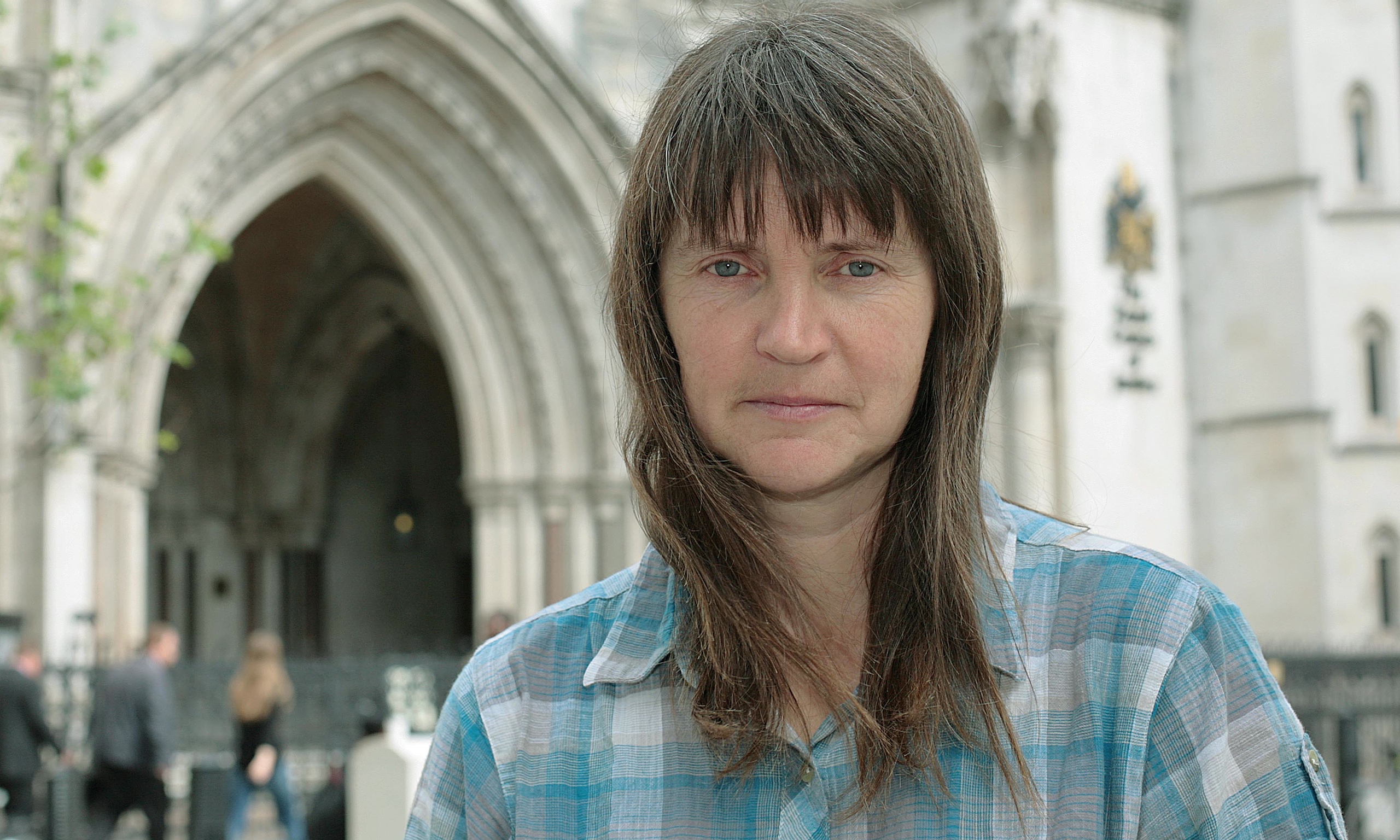
Helen Steel at the Royal Courts of Justice
Dines was recruited by MacLeod and working in the SDS back office while MacLeod was in charge, deploying just after he left. MacLeod says he simply doesn’t remember him in the back office or ever mentioning Steel.
MacLeod says he was aware of Mike Chitty having a sexual relationship with ‘Lizzie’. He confirms that it was probably Eric Docker who told him, after his time in charge of the SDS. But clearly, that means Docker had been told. So managers did know, then. He’s contradicting himself (and Docker) again.
John Dines feigned a mental breakdown at the end of his deployment and disappeared from Helen Steel’s life. Bob Lambert, who’d risen to be one of the spycops unit’s DIs in the early 1990s, has said that he was aware of Steel’s efforts to look for Dines after he left her.
MacLeod was back in C Squad at the time, one of the main recipients of SDS reports. However, he doesn’t seem to have heard about Steel visiting Dines’s parents’ address.
MacLeod says he remembers hearing about Steel tracking Dines down in Australia, maybe from Eric Docker. He says he is certain that there was no discussion about why Steel might be doing all this.
JOHN LIPSCOMB
HN87 ‘John Lipscomb’ (aka ‘Hippy John’) was deployed in May 1987, under MacLeod’s management, until December 1990. He said in his witness statement that he didn’t think he needed to tell the spycops unit’s managers about the sexual activity he took part in while undercover, unless it became ‘serious’ in some way:
‘I do not think that I told management at the time about any of the above incidents. I managed the situations as well as I could in the circumstances… I did not think it was necessary to tell them. I would have informed them if anything had become more serious.’
MacLeod addressed this claim in his own statement, saying that he didn’t know anything about Lipscomb’s sexual activity. In his view the managers should have been informed of any such behaviour in an undercover identity.
MacLeod has also said in his witness statement that he wasn’t aware of Lipscomb’s habit of staying overnight in activists’ homes, and that managers should have been informed of spycops doing this too. When asked, he says he can’t remember why he said that now.
MacLeod is so desperate to distance himself from all this, he can’t keep up with his own lies, let along gauge whether they’re plausible. He flip-flops again.
Q: You were aware, weren’t you, that officers, including HN87, might be drinking alcohol whilst in their cover identities?
MacLeod: No, I wasn’t aware.
Q: You said in your witness statement that you were “aware that HN87 would drink with the members of his target group. This was, and is, a common way to socialise.” So that suggests you had some awareness that HN87 and perhaps other undercover officers would drink alcohol commonly whilst deployed, is that right?
Q: Yes.
MacLeod accepts there’s an increased likelihood of spycops engaging in sexual activity when drinking with activists and staying the night, but says spycops couldn’t leave such circumstances without risking being exposed as police officers. It apparently:
‘possibly could affect their cover story if they all of a sudden disappeared at an earlier hour and whatever the activist might think, if it’s a female, about leaving a party early. And if there was a relationship.
No, I just, once again we come back to this. I mean this really is something that should be left to the individual’s judgment.’
Wouldn’t it have been a good idea to warn them not to get into situations which might lead to sex?
‘You could but what’s to say they are going to obey it? You wouldn’t know.’
This is the case with any guidance on any other subject though. MacLeod accepts that fact, and pivots from saying there was no point in doing it to saying there was a point after all, but it never occurred to him to give such guidance.
MacLeod: It would be something you would pick up at the next meeting.
Q: But did you ever pick it up at the next meeting?
MacLeod: No, I didn’t.
BOB LAMBERT AND JACQUI
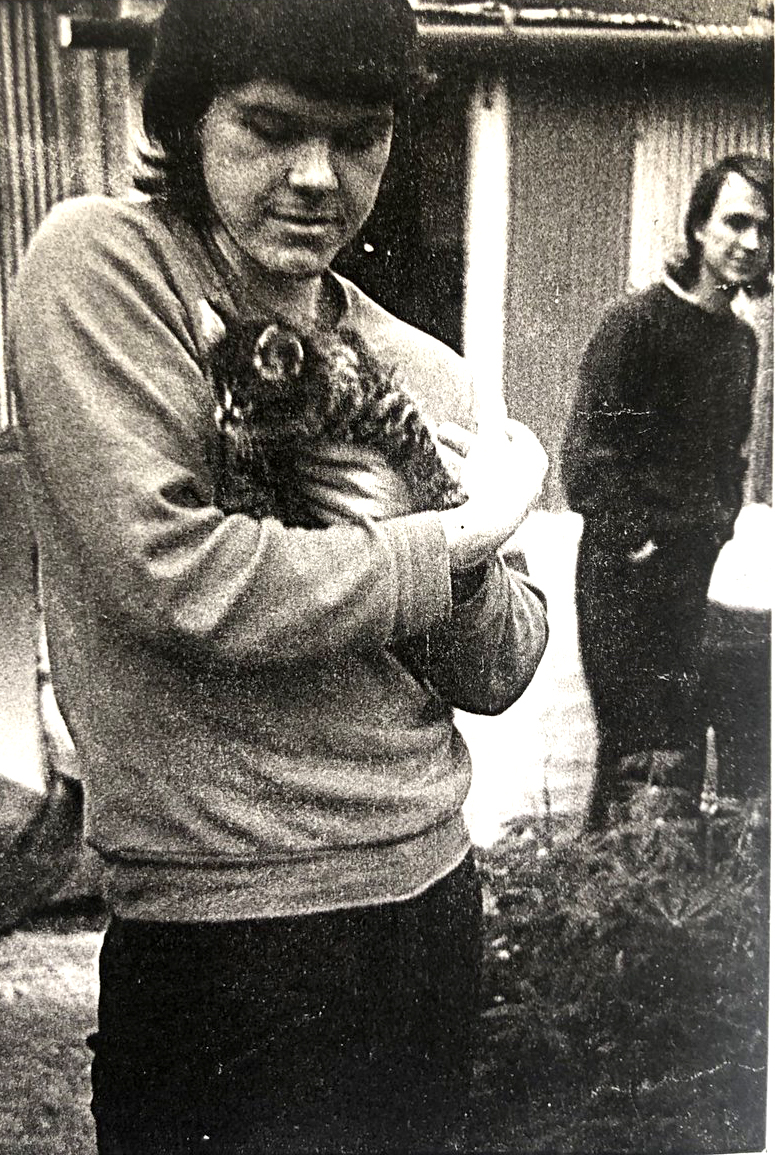
Bob Lambert (far left) with baby TBS at Hopefield animal sanctuary
Next, Gargitter brings up the case of ‘Jacqui’. Bob Lambert, in his undercover identity ‘Bob Robinson’, fathered a child with Jacqui.
The son is known as TBS, born in the autumn of 1985. Lambert continued to act as father to the boy throughout the time that MacLeod was the Detective Chief Inspector of the unit.
MacLeod says he had no knowledge of the relationship or the pregnancy. He says he didn’t hear about Lambert ‘bragging’ about this, as spycop Mike Chitty has described. He says he didn’t know that Lambert was frequently visiting Jacqui in Dagenham and giving her money, seemingly from SDS expenses.
He seems a bit shocked to hear about Lambert taking ‘TBS’ along to activist events, uttering the word ‘extraordinary’ at this point.
In his November 2012 interview with the Operation Herne officers, MacLeod spoke about how Lambert:
‘“outed himself” as a UCO [undercover officer] due to the fact that he lost two children to a rare congenital condition, and as he [Bob Lambert] bore a child from a relationship whilst a field officer, he wanted to contact the mother of the child in order that the child could have tests for the condition.’
MacLeod is wholly wrong about this. Lambert’s children had died but he made no attempt to contact Jacqui. He was outed on 15 October 2011 and it was in the national media the next day. Even then, despite no longer having the secrecy of the SDS to protect, he made no attempt to contact Jacqui.
She came across the truth by chance in a Daily Mail article in June 2012. She tracked Lambert down and his wife later told her about the medical condition.
MacLeod is adamant that he didn’t know about this child when he last saw Lambert in person, at the latter’s retirement party in 2007.
MacLeod says in his Operation Herne statement [MPS-0736832] that he was hugely disappointed that Bob Lambert, unlike other spycops officers, had chosen to speak out. He repeats that he is more disappointed in Lambert speaking publicly about his deceptions of women than in his actually doing it.
LAMBERT AND BELINDA
Bob Lambert and Belinda Harvey
Lambert met Belinda Harvey in April 1987 – again, while MacLeod was running the unit. Like other spycops, he was using a cover identity much younger than his real age. As a result, she didn’t know the age-gap between them was as big as it was.
MacLeod claims not to have realised that many spycops pretended to be much younger than they really were.
The Inquiry has heard that Lambert spent most nights at Belinda’s house in Forest Gate. MacLeod says he didn’t know this, but that Lambert should have told them that he was not staying in his cover flat.
MacLeod says that, due to this Inquiry, he has recently heard that a photo of Lambert and a woman may have been uncovered during a police search of this cover flat.
He is asked if he should have done more at the time:
‘We perhaps could have been a bit more vigilant and proactive.’
HN19 ‘Malcolm Shearing’ gave his evidence to the Inquiry last summer. He said that he accompanied SDS manager HN115 Tony Wait to an event (hosted by the Security Service) back in 1985 and witnessed Wait making a ‘joke in poor taste’ about one of the spycops fathering a child. MacLeod denies hearing about this, or anything similar, ever.
MacLeod’s evidence continued on Tuesday 11 February 2025.
In his witness statement to the Inquiry, MacLeod defined ‘discreditable conduct’ as an officer:
‘behaving in a way that is morally wrong or generally regarded as bad behaviour and where the undercover officer could not show that the conduct was a necessary part of their behaviour in role.’
He cites an officer arrested for drink-driving but says it is also clear that, to him, deceitful relationships, fathering children and committing crimes fall into this category.
Asked about the commission of crimes, he readily affirms his position. But then he backtracks a bit:
‘There may be extenuating circumstances on occasions where it may not be applicable.’
SPYCOPS COMMITTING CRIMES
In his witness statement, MacLeod said:
‘Public order offences were an occupational hazard for undercover officers. They often got caught up in arrests for such offences although I know of no convictions. Public order offences were low level offences, like obstructing the street in demonstrations.
However, there is a distinction to be drawn between low-level public order offences and other acts of criminality, e.g. damage to property (common in the Animal Liberation Front). The latter is a step too far.’
He confirms that this is still his clear, well-defined line about what is and isn’t acceptable for a spycop. He also claims he never told any of his officers about it.
He’s described how different the SDS was to other policing, and how officers applying for the job wouldn’t have known what it actually entailed until after they were chosen. Despite this, he says it was up to them to magically know about his simple rule about which crimes were allowed:
‘Well, I suppose a lot of that is just by intuition. I can’t foresee how one could sit down and have a discussion of what is permissible and what is not. I mean, they are trained police officers. They know right from wrong. There is a limit to how far one can go in terms of wet-nursing mature officers.’
There he is again with ‘wet-nursing’ – any instruction to officers would somehow be demeaning to all parties. And yet yesterday he said he accepted that some of the spycops weren’t very good at knowing right from wrong, or deliberately chose to do wrong. It’s absolutely bizarre that a manager claims that he cannot imagine how one could get officers together and tell them what the rules are.
Gargitter examines the distinction MacLeod makes about spycops being able to break the law in some situations but not others. She says a normal police officer wouldn’t be arrested at all, whereas the spycops might be arrested for public order offences. As they’re going to cross the line into criminality, this surely makes it important to specify how far they should go.
MacLeod blusters a lot of stuff about being caught up in the unplanned moment of a public order situation. Gargitter brings him back to the actual topic, premeditated crimes that he’s said are wrong.
He veers back to saying that managers can’t call workers together to explain how their job works and what the rules are:
‘They have to live by their wits. Once again, it’s perhaps easy to, in hindsight, to state that something should be done to prevent this from happening.’
It would also have been easy to do something at the time, if managers had actually wanted to prevent it. It’s clear that they didn’t.
MacLeod says in his witness statement that animal rights infiltration carried a higher risk of arrest than other deployments.
He says that HN5 John Dines and HN87 ‘John Lipscomb’, officers he hired to be deployed into animal rights, ‘ought to have been’ told about the risk of arrest and what to do. But he claims he can’t remember ‘minutiae’ such as whether he actually did tell them.
He confirms that the arresting officers would not be made aware that they had an undercover police officer in custody. He explains that if the spycops’ identities were disclosed they would need to be withdrawn from the field, at huge expense to the police. Never mind perverting the course of justice, think about the money.
If an officer came to court, MacLeod said he thinks the court should be informed of the spycops’ real identity. He clarifies that he thinks a court is more likely to keep the truth secret, whereas uniformed police are more likely to give the identity away. Not a lot of faith in his uniformed colleagues, there.
SPYCOP JOHN DINES ARRESTED
We’re shown a report of 14 March 1989, after MacLeod had returned to C Squad, which he signed off [MPS-0526792].
SDS officer John Dines was one of a group of people arrested in December 1988 at a protest outside a poultry processing plant in Hereford. They were all released without charge, and a number of them brought a complaint against the police for wrongful arrest.
The report says:
‘It is Detective Sergeant Dines’s intention to keep the details surrounding the incident sufficiently vague as to reduce the likelihood of further action against the West Mercia Constabulary.’
There then followed another MacLeod flip-flop.
Q: Would that course of action, if followed by John Dines, not have had the effect at least potentially of frustrating a legitimate complaint against the arresting force?
MacLeod: No, I am not sure.
Then, after one minute of being shown that it was a document he was involved with and signed, he reversed his opinion:
Q: Does it trouble you at all that an SDS officer was being advised to take a course of action which could have the effect of thwarting a legitimate complaint against the police?
MacLeod: Yes, I think it would, yes. Yes. I have to agree with that.
SPYCOP BOB LAMBERT’S ARREST
We’re shown a report dated March 1987 [MPS-0526789] about another specific arrest, one which happened while MacLeod was in charge of the SDS. Bob Lambert was arrested hunt saboteuring in Crawley on 28 February 1987. The report is written by Docker, who had gone along on the day seemingly in readiness for Lambert’s arrest.
MacLeod claims he doesn’t remember it, but says ‘there is always a risk of a fracas occurring’ with hunt sabs.
He is yet another cop who sees hunt sabs as instigators of violence. But Docker’s report of the day describes how the sabs came across a police roadblock, and decamped into fields. They were all chased and arrested despite not having committed any crime:
‘However, it soon became apparent that most of those arrested (including Detective Sergeant Lambert) had not committed any substantive offence and therefore, after about two hours in police custody, Detective Sergeant Lambert was released without charge.’
Docker goes on to say that it was seen as being positive for Lambert:
‘Although the arrest of an SDS officer is always an unwelcome experience, I consider that, on this occasion, the matter has proved beneficial. Detective Sergeant Lambert’s standing within his group has been enhanced, further useful intelligence has been obtained and, above all, our operation has not been compromised in any way at all.’
It’s unclear whether this means that getting arrested was a premeditated plan for the day, or whether Docker is trying to spin a negative event as something good. It is perhaps the latter, as there’s no indication of what the ‘further useful intelligence’ might have been.
MacLeod agrees the arrest was good. He says that gathering intelligence was the top priority. Being arrested and deceiving uniformed officers was merely an ‘occupational hazard’.
He explains that, though arrest might bolster an officer’s standing in a group, he’s certain they should never get arrested deliberately.
Gargitter asks him about the dilemma faced by the spycops who tried to infiltrate the Animal Liberation Front (ALF). How could they possibly get close enough to criminals to gather useful intelligence about them unless they took part in crimes with them?
‘Well, from my recollection, and I am quite clear on this, they were aware of the provisions of agent provocateur and they would not be encouraged to take this one step further. It would be crossing the line between what’s acceptable and what is not.’
He’s saying they were told that it was OK to cross a first line of spontaneous public disorder and get arrested, but not a second line of premeditated criminal damage. It’s only 20 minutes since he told the Inquiry that he didn’t tell them this, couldn’t imagine how it would even have been possible to tell them, and that doing so would be ‘wet-nursing’ them.
He insists that he would never have encouraged spycops to commit criminal acts. He sees the quandary they were in, but says he expected the spycops to find a way around that, to somehow observe without taking part.
Gargitter points out that always standing by the sidelines of very secretive groups committing criminal acts probably means never actually getting to observe.
BOB LAMBERT IN THE ANIMAL LIBERATION FRONT
We moved on specifically to Lambert’s infiltration of an Animal Liberation Front cell and his part in placing timed incendiary devices in branches of Debenhams department store that sold fur.
In 2016, MacLeod was interviewed by Operation Sparkler, the internal police investigation into the Debenhams attacks. He told them that Lambert could not have known about the incendiary device incident in advance as there’s no way he could have got inside a small ALF cell:
‘It would be entirely out of character for him and it would carry an enormous risk with no conceivable benefit.’
Except that:
• it’s already established that Lambert had participated in crimes before this one
• there’s no way he could have got the intelligence he reported without being in the ALF cell
• the ‘conceivable benefit’ is that he supplied the kind of reports his bosses wanted to see, secured convictions for the incendiary devices, got a commendation, and was promoted
MacLeod is surely aware of all this.
MacLeod agrees that ALF cells were very secretive and didn’t share information with those outside. He claims that he never had any discussions with Lambert about how he would actually be able to obtain intelligence without being part of it.
Asked if he was ever concerned that Lambert was getting too involved, he was blunt:
‘No. His role, after all, is to obtain intelligence and to prevent crime.’
In his witness statement, he is clear about Lambert:
‘His tasking was precisely to insinuate himself as close as possible to the cell.’
What could this mean if not participating? MacLeod says it meant being popular and hearing about ALF plans in ‘casual conversations’. Gargitter points out what MacLeod had just said, that there was no casual talk with anyone outside the cells.
MacLeod agrees it was clear that Lambert was privy to what was said within the ALF cell, and that the ALF cells didn’t talk to outsiders, but still refuses to admit the obvious conclusion.
We see a 13 January 1993 document [MPS-0730597] which discusses the issue of participation in crime. This is several years after MacLeod left the SDS. It says:
‘The higher risk ‘fields’ for involvement in crime are anti-fascist activity, anarchism and animal rights. In the last mentioned field, in order to gain full acceptance and trust, participation in ‘illegal’ activities is essential.’
MacLeod is asked if he agreed with this when he was in charge. He waffles a lot about moral dilemmas and fine lines. He is asked the same question again and eventually says that yes, he would have agreed with it as a manager:
‘It’s the lesser of two evils.’
Gargitter gets him to specifically say that, although the document post-dates his time, in his era he held the same view. There are circumstances in which he would have balanced considerations and come to the conclusion that a spycop’s criminal activity was in fact essential:
‘Well, I have to stand by that. Yes.’
This is a few minutes after he said that officers were told never to do it, which in turn was a few minutes after he said it was impossible to tell officers never to do it. His contradictions are really stacking up on each other here.
The document lays out an escalating scale of criminal activities, from visiting premises without actually committing an offence, all the way up to arson and incendiary devices. MacLeod says he would draw the line at arson or a threat to life.
LAMBERT’S CRIMINAL DAMAGE
We next see a document [MPS-0742726] detailing how, on 28 November 1986 (just after MacLeod joined the SDS), a vehicle belonging to a director of vivisection company Biorex was damaged with paint-stripper in North London.
The Inquiry has heard that Lambert was responsible for this action. Might Lambert have been authorised to do this? MacLeod retorts:
‘He shouldn’t have been… Robert Lambert is well familiar with the law, and would know that that is going one step too far’
This is just after MacLeod had confirmed that property damage with no fire or threat to life was not, in fact, a step too far for spycops infiltrating animal rights campaigns. The contradiction is put to him and he replies:
‘It is indeed a very fine line, I accept that. No, this is acts of vandalism against property… I think we have to draw a line here. I think we draw the line at that.’
This is another flip-flop on whether it was justified to be involved in more serious crime. It seems clear that MacLeod thought it was justified at the time and still thinks so now, but knows that he shouldn’t admit that.
He desperately tries to add a few more layers of insulation between himself and accountability:
‘I wouldn’t have known about it. In fact, this is the first I have become aware of this. Of course it is outside my time period anyway.’
It’s pointed out that no, it actually was during the time when he was running the SDS.
INCENDIARY PLAN
The next report we see is dated 9 June 1987 [MPS-0740088], about secret meetings of ALF activists from across the UK. It says that the ALF plans to carry out attacks on London department stores which still sell fur. They will use timed incendiary devices to set off the shops’ sprinkler systems in the dead of night and cause damage by flooding. Lambert has told the Inquiry he was at one of the meetings in Manchester.
MacLeod says he is certain Lambert didn’t tell him about going, even though it’s the kind of thing he should have reported. Asked if it shows that Lambert was ‘inappropriately close’ to those who were planning these attacks, MacLeod once more washes his own hands of it and dodges condemnation of Lambert:
‘Field officers are expected to use their initiative. Once again, we have to allow a certain degree of latitude. They are mature officers, they know what they are doing.’
The irony of saying this in response to a question about Lambert not doing what he’s supposed to was apparently unintentional.
MacLeod starting waxing lyrical about Lambert again, about what a successful spycop he was, how he is a very intelligent man, full of common sense. It is pointed out that Lambert was deceptive towards Jacqui and the SDS, so perhaps his judgement on committing crimes was equally poor.
MacLeod is clear that pouring paint stripper on a car is far worse than sexually abusing women and having a son he knew he’d abandon when his deployment ended:
‘I am not sure you can compare the two. These are moral judgments only he can make. I don’t think we can conflate the two, between the illicit relationship with this lady and the planting of devices.’
Returning to Lambert’s report, it mentions the long custodial sentences meted out to those who’d been convicted of planting incendiary devices:
‘Accordingly, the use of incendiary devices is restricted to the most dedicated activists, who are forced to observe strict security even amongst their comrades in the animal rights movement. Such activists always pay due regard to the prospect of surveillance and infiltration even though they may not always be expert at countering it.’
MacLeod says he never knew about any of this.
The report is dated 9 June 1987. The incendiary devices in Debenhams stores went off on the night of 11 July 1987. The Inquiry has not been able to find any further reporting from Lambert in the intervening five weeks, even though he was spying on an active ALF cell about to plant devices.
WHY AREN’T THERE ANY REPORTS?
MacLeod says that Lambert was a ‘prolific reporter’, but claims that he never noticed at the time that Lambert had suddenly stopped producing any reports at all for more than a month before the Debenhams attacks.
He’s not the first of Lambert’s managers to make this claim. Perhaps we believe that they wouldn’t notice Lambert just stopping his reporting for five weeks straight. Or perhaps they’re lying and they either agreed to him not giving written reports because they didn’t want a paper trail about what he was doing, or else he made reports but they’ve been destroyed.
In his witness statement, MacLeod said:
‘There were no changes in the pattern and focus of Lambert’s reporting in the six months preceding the Debenhams attack such that I had reason to doubt whether he was reporting all of the information/intelligence that he obtained during this period.
I would point out that in paragraph 6 of his report dated 9 June 1987 he promises to report any planned attacks. I would have had faith that he would do so.’
This indeed sounds a lot like there were reports but they’ve subsequently gone missing, or else there were reports only made orally.
MacLeod’s witness statement also says that ‘hot intelligence’ shared by Lambert in one-to-one meetings with the managers would ‘most certainly have been documented’. Lambert, on the other hand, claims he had lots of his conversations with spycops managers in the five-week period, and much of the content did not result in any kind of written report.
MacLeod says he doesn’t remember that. However, he has no suggestion as to why there’s a huge gap in reporting at such a key time. He specifically rejects Eric Docker’s claim that Lambert was simply so busy for five weeks that he didn’t have time to make any reports.
In his statement, MacLeod said he was not surprised to learn that during this period Lambert had regular outdoor meetings with Geoff Sheppard, a fellow member of the ALF cell. Surely that shows Lambert was part of the cell. MacLeod halfway agrees:
‘He was certainly close to the centre.’
MacLeod’s witness statement also addresses a claim Lambert made to Operation Herne, that he saw Special Branch surveillance teams watching him and his target group over the two months before the Debenhams attacks.
MacLeod says that, from his experience working in Special Branch’s S Squad, he is very aware of how much demand there is for surveillance team time. He says it’s ‘slightly implausible’ that a team would have been allocated to this for such a long period unless there was going to be action to thwart a planned crime.
Animal rights activist Paul Gravett says he and Lambert organised a fundraising gig for the Debenhams incendiary devices. MacLeod says he was unaware of that, but adds that he didn’t see a problem with a spycop raising funds for the ALF to make incendiary devices. Again, he seems to veer wildly about what he thinks was acceptable activity for an undercover officer.
AFTER THE ATTACKS
Conveniently, MacLeod was off on annual leave for two weeks in the summer of 1987, so wasn’t at work when the Debenhams attacks took place. He says Eric Docker would have dealt with things in his absence.
We see notes [MPS-0735357] from a meeting on 14 July, just a few days after the Debenhams attacks. Andrew Clarke’s name is reported prominently as being responsible for the incendiary devices. It says that Anti-Terrorist Branch police will be gathering evidence to be used in prosecution. This is something of a departure for the SDS to be around, they usually deal in intelligence rather than evidence.
Lambert’s report of 17 July [MPS-0735387] says the devices were assembled at Clarke’s home address, and this is:
‘information which is currently known to only a few activists.’
MacLeod agrees that it is very swift of Lambert to already have the name of the culprit, and to be stating it with utter certainty. But he says it never occurred to them to ask how he managed to achieve this:
‘I think we just accepted Bob Lambert’s assessment. We didn’t see any reason to question it any further.’
Gargitter reminds him that he’s described how secretive and security-conscious the ALF’s cells were. How could Lambert have known if he wasn’t personally involved?
‘Well, it’s only in recent times that you begin to question whether in fact that was the case.’
We see a list of names and addresses of possible suspects, drawn up for the Met’s Anti-Terrorist Branch to investigate. MacLeod says Lambert will have compiled the list. ‘Bob Robinson’ – Lambert’s own cover name – is on it.
MacLeod insists that this doesn’t prove that Lambert was involved in planting any devices, just that leaving him off might make people suspect he was an infiltrator. But surely nobody would think he should have his house searched unless they also thought he was likely to have been part of the plan.
MacLeod admits that ‘it’s odd’ that the name of Geoff Sheppard – who was actually one of those responsible, and was very well known to Lambert – is not on the list.
We next see a Security Service ‘loose minute’ of 14 July 1987 [UCPI0000031267] about possible culprits for the Debenhams attacks. It’s based on intelligence that seems to have been sent to them from officer TN67 of Special Branch’s C Squad, one of the main recipients of SDS reports. It names just four suspects, including Andrew Clarke, but still not Geoff Sheppard.
It would seem that they were aware which names on Lambert’s long list given to the Anti-Terrorist Branch were extraneous, and also that there was a deliberate ploy by Lambert not to name Sheppard.
The next report from Lambert is dated 24 July 1987 [MPS-0735386]:
‘Clarke and his trusted comrades are agreed that Debenhams should be given until 1st October 1987 to remove furs from all their stores. In the meantime, he plans to have devices ready for use against other retail outlets for the fur trade. Provisionally, it would appear that the most likely targets will be Harrods of Knightsbridge and C&A in Oxford Street, W1.’
MacLeod, as usual, says he has no memory of any of this. He says he would remember it if he had seen it at the time. He has no suggestion as to why the ‘trusted comrades’ weren’t named, and he is certain that they never discussed how Lambert was positioned to get such inside information.
He agrees that the absence of Sheppard’s name on these reports suggests that Lambert had not shared it with his managers at this point.
CLOSING IN ON CLARKE
Also on 24 July, a ‘briefing note’ was sent to Commander Ops [MPS-0735358]. It is reported that Andrew Clarke is responsible for manufacturing these devices, and that agreement has been reached not to search his or any other addresses until more investigations have been carried out and evidence gathered.
Firefighter in the wreckage of Debenhams Luton store after 1987 incendiary device placed by Bob Lambert’s Animal Liberation Front cell
It includes an assurance that as soon as Clarke has found a new address the ‘source’ – Lambert – will be able to establish it ‘at an early stage’. MacLeod says he doesn’t know who provided this assurance, but accepts it could have been Lambert.
A note recording a meeting of senior officers on 7 August 1987 [MPS-0735360] says police have launched a surveillance operation in order to ‘pin point’ Clarke’s new address. MacLeod says he has no memory of this, but the minutes show he was at the meeting.
Why would they use surveillance if Lambert could provide this intelligence? MacLeod says he can remember some discussions about this and had the impression that Lambert was ‘quite confident’ he’d get it. But the investigation would be carried out by the Anti-Terrorist Branch.
An SDS intelligence report of Lambert’s from four days later, 11 August 1987 [MPS-0735383], provides more detail. Clarke is reported to have planted the devices in the Luton store (where, because the sprinkler system was not turned on, fire spread and caused millions of pounds worth of damage).
MacLeod reiterates that it didn’t occur to him to ask how Lambert could be so trusted by those responsible. Asked what he now thinks it indicates, he dodges the question entirely, going on an extended ramble about how his memory is faint – ‘genuinely so’ – and that at the time he just didn’t think about it.
The report says that Clarke has read a publication called ‘Without a Trace’ and so understands the forensic science methods police use in the investigation of serious crime:
‘In his own judgment, a minute search of his bedroom might still reveal sufficient traces of manufacture to link him to the crime. In particular he is aware that testing devices in his fireplace may well have left indelible marks.
However, in relation to the devices recovered by police – intact or in part – at the three department stores, he is confident that they will not provide any clues.
He is also aware that the next action carried out by his small cell will have to be planned and executed with an even greater regard for security.’
MacLeod agrees that this information has been reported to help the team who would search Clarke’s address. Despite this wealth of fine detail about Clarke, the report says:
‘Two close and trusted comrades were responsible for planting devices at the Harrow and Romford branches. Their identity is not known at present.’
These comrades were Lambert and Sheppard respectively. Asked if it was odd that Lambert didn’t name either of the two other culprits, MacLeod admits:
‘Yes, I guess it probably is a bit surprising.’
We’ve lost count of the times that Gargitter has put it to MacLeod that the document in front of him essentially shows Lambert was an active part of the ALF cell. She does it once again and MacLeod admits for a second time that it’s possible:
‘Whether he was part of the cell or just an insider who just happens to be in a position to obtain this kind of – he’s gained the confidence of the activist. Yes, he probably was very close. I don’t think there is any doubt about that. But whether or not he went one step further, I am – I can’t be certain in that.’
NEXT ATTACK PLAN
The report goes on to give a date for the next attack. The target won’t be Debenhams, and Clarke is looking into experimenting with a new kind of device described as a ‘lethal fireball’.
MacLeod once again says it didn’t make him wonder if Lambert was actively involved:
‘No, I didn’t. Because at that point there was no reason to… Whether he participated in it or not is a moot point… he might have been an onlooker’
Gargitter points out that, over a month after the Debenhams attacks, there is still no mention of Geoff Sheppard in any of Bob Lambert’s spycops reports. Sheppard was part of the cell, and Lambert has testified to the Inquiry that Sheppard was his main source of information, so why wasn’t he named?
Next we see a report of 18 August 1987 [MPS-0735382] about secret meetings of an active ALF cell:
‘An active London cell of the Animal Liberation Front held secret meetings in North and East London. Only four people were present.’
It gives a huge level of detail about forthcoming incendiary device plans. The four are not named, only Clarke. Lambert clearly has to be one of the four people in the cell in order to have written the report. Right, Malcolm?
‘Yes, I – yes, I guess so.’
Gargitter, having finally won this level of admission, continues:
Q: It appears, doesn’t it, from this report – if not the earlier ones – that he is part of a small cell making plans for planting incendiary devices?
MacLeod: That’s what it looks like, yes.
This late admission is suspect, though – it implies he didn’t know at the time. How on earth could he have thought Lambert was getting the information any other way? By far the most plausible explanation is that the managers knew full well. Claiming ignorance and incompetence now is the way to ensure they don’t get held accountable.
BELATEDLY NAMING SHEPPARD
The report describes new security measures. It says that although Clarke had planted the device in Luton last time, this time he would only manufacture. The planting would be left to others, some of whom would have no knowledge of him.
‘It was also agreed that he would be assisted in the process of manufacture by Geoff Sheppard… Sheppard was responsible for planting two devices at the Romford branch of Debenhams’
This is the first time Sheppard’s mentioned in connection with the whole affair. MacLeod is asked why this was. He desperately flaps about looking for something that might sound halfway plausible before failing and giving up:
‘I can’t explain why. But I can see where you are coming from. It would be speculation on my part to suggest that there was something untoward in this. It might have been that – again, he might have got so close – no, I can’t – you know, I can’t add any more to it than that.’
Gargitter points out that Lambert has told the Inquiry that Sheppard was his source of information from mid July, so there really is no credible excuse for him not mentioning it until late August.
We move on to see a Special Branch minute of 18 August 1987 by Chief Superintendent HN99 Nigel ‘Dave’ Short [MPS-0735361]. He wants to start surveillance on Sheppard in order to be led to Clarke’s address. He also wants to meet with Eric Docker from the SDS in order to ensure the surveillance protects Lambert, ensuring his presence is not recorded.
In the same document, a minute from 24 August, six days later, shows Special Branch officer TN42 reporting to the Assistant Commander of Operations. He’s learned from Lambert’s intelligence about new plans, as Gargitter explains:
‘Despite what was said in earlier reports about Clarke and Sheppard discussing detailed arrangements only between themselves, that Mr Lambert is able to report that the target has changed and that the arrangements for manufacture have also changed’
The information is being used to prepare an Anti-Terrorist Branch team to raid the address where the devices will be made and make arrests.
MacLeod says he can’t remember any of this, and is pretty sure he didn’t know at the time either. But why on earth would he not have been told?
‘There may have been a good reason but I can’t think of [one].’
We hear about another briefing note from Special Branch officer TN42 [MPS-0735381], written on the same day as the last one, 24 August 1987.
He records what he’s told DI Gray, the Anti-Terrorist Branch officer leading the investigation and the raids. The plans have changed again. There will now be three separate targets. Clarke has collected components from an address in Hackney and taken them to Sheppard’s address.
There was a plan in place for a specially selected team to ‘search’ Lambert’s cover address. MacLeod says that would be to allay any suspicions and maintain Lambert’s credibility. But, it’s pointed out, he would only need that if he were considered to be an integral part of the plot and not an ‘onlooker’ as MacLeod keeps trying to suggest. MacLeod accepts that.
NEW MANUFACTURE PLANS
The next Special Branch ‘minute’ by TN42 [MPS-0735362] is from two days later, 26 August. It goes into more detail about the activists involved and their abilities, saying that Sheppard would be unable to manufacture any devices by himself. MacLeod admits that this shows Lambert had a deep knowledge of the cell’s members and their skills.
This information from Lambert doesn’t appear in any SDS report. MacLeod has no explanation for this, and once again says he can’t remember anything about it or even whether he knew it at the time. It’s another indicator that the SDS knew and any report Lambert made to them was either oral or destroyed.
A spycops report by Lambert on 28 August 1987 [MPS-0735376] has more changes of plans:
‘It has also transpired that Clarke’s girlfriend, Helen Steel, has recently taken delivery of 200 ‘liberated’ rats at her home address; Clarke has therefore decided that these animals should be found safe homes before his next campaign commences, and he has therefore decided that the earliest date for his next action will be Friday, 11th September 1987.’
MacLeod says he’s absolutely certain he knew nothing of this at the time. Gargitter shows him several internal spycops documents with the details that he might have seen, but MacLeod is steadfast he didn’t know at all.
MacLeod is asked if he remembers the importance of removing the rats from Steel’s address so that the cell could continue with its plans. Asked about Lambert’s involvement – he drove the rats away somewhere in his van, thus triggering the manufacture, making it happen sooner and to a schedule of the police’s choosing – MacLeod claims not to know about it.
On 4 September, TN42 sent another Special Branch ‘minute’ to Commander Ops [MPS-0735364] following a conversation with MacLeod. He reports that the attacks have now been scheduled for 11 September, and the activists will be engaged in manufacturing five new devices on 9-10 September.
This detail is another one that doesn’t appear in any SDS report. MacLeod says it should have done and offers no explanation for why it didn’t. This further shows Lambert was reporting his activity but that the SDS was either not typing up reports, or else they have gone missing.
MacLeod says he doesn’t remember this new higher number of devices either. It’s now five, previously it was meant to be four. He does admit that this document proves he was talking to Lambert about it all.
Gargitter, sounding weary from making this point so often, asks if any of this made him wonder about how Lambert was getting such intricately detailed secret information:
‘Well, frankly, it never occurred to me to question it. Perhaps I should have. But it didn’t.’
The briefing note explains the exact days of the manufacture of the incendiary devices. MacLeod says he doesn’t recall. The same information is in a spycops report the next day though, which MacLeod has signed.
An even higher level of detail appears in the next TN42 briefing note, dated Sunday 6 September 1987 [MPS-0735375].
Docker had rung TN42 on a Sunday morning to tell him about a change of plan for the making and placing of the next set of incendiary devices. Clarke and Sheppard were reported as experimenting with a new design, and there was a date set for testing. This includes details of the ‘ignition chemical’ the cell plan to use and the location in which they’ll test it out.
This was important information – important enough for Docker to ring TN42 on a Sunday morning. MacLeod says he doesn’t remember any of this. It’s pointed out to him that the information was put into an SDS report the next day which he signed [MPS-0735373].
That report of Lambert’s contains a huge amount of detail about the cell’s internal discussions and their exact plans for the time and place of manufacture. He says it came from private conversations which took place between Clarke and Sheppard at a noisy benefit gig on 5 September. It is obvious that, to hear it all, Lambert must have been part of the conversation.
Asked, yet again, if it bothered him that Lambert was so involved, MacLeod gives yet another different answer:
‘Well, obviously it didn’t concern me then – and I don’t think it would have concerned me now… if that’s the only option he had to get that information, to get that intelligence’
Would he have expected Lambert to have had to present himself as someone willing to take part in the planning?
‘Well, that’s taking a step too far. I am not so sure I would want to comment to that. Because I simply don’t know.’
He’s had more flip-flops than a Brazilian beach. He is simply not a credible witness. Primarily, he is desperate not to be accountable for Lambert’s deeds, and secondarily he wants to avoid making Lambert himself responsible.
ALWAYS IN THE KNOW
The report includes a list of components currently at the manufacturing address. Lambert must have seen them there, or else been told in enormous detail by Clarke or Sheppard.
Lambert has been providing updates over time. This isn’t one piece of knowledge – he’s reported on changes in plans for the date, the types of devices, who had the components, where the manufacture would take place. To keep so updated can only mean he was considered part of the cell.
MacLeod still refuses to say he even considered it:
‘No, it didn’t occur to me. I thought at the time the most important thing was to disrupt the operation and carry out the arrests. That was the main focus. I am afraid, a surprise it may be to you, but, I mean, that wasn’t the primary focus.’
But looking back now, it must surely seem likely that Lambert was considered part of the cell:
‘It doesn’t seem likely to me, no.’
Gargitter brings up what Eric Docker told Operation Herne in July 2014 [MPS-0738106]. Lambert arranged with Docker that he would call the SDS office once Clarke and Sheppard had been in the house for a few hours, so they could be caught red-handed.
Docker told Herne of a difference of opinion about Lambert with CI Short, who allegedly told Docker that ‘the man’s out of control, you’ve lost him’. MacLeod denies hearing anything about this from anyone. He describes Lambert as:
‘a hard-working undercover officer who produced intelligence reports in a timely fashion.’
And yet he’d supposedly gone five weeks without making a report and nobody noticed.
ARREST AND WRONGFUL CONVICTIONS
We’re shown a note from 9 September 1987 [MPS-0735371] describing the arrests of Clarke and Sheppard. MacLeod claims he can’t remember where he was or whether he even spoke to Lambert about this monumental event.
Helen Steel’s address was later raided by the search team. So was the cover flat of ‘Bob Robinson’. MacLeod claims not to know any details about the raid at all.
Spycop Bob Lambert while undercover in the 1980s
He says he doesn’t know who applied for the search warrant or what they told the issuing court, nor whether they misled the court about the true reason for this search.
Hearing that ex-SDS officer Michael Couch was present at the search of Lambert’s bedsit, MacLeod says he doesn’t understand what he was doing there. In his witness statement he said he didn’t believe it had happened. However, there’s clear evidence that Couch was indeed present.
Couch himself told the Inquiry he was appointed to be a welfare officer, yet also says didn’t communicate with Lambert in any way during the raid. Once again, spycops’ excuses and stories at the Inquiry aren’t just implausible, they often actually make no sense.
Clarke and Sheppard were prosecuted and convicted. MacLeod agrees this was, in large part, due to Lambert’s actions. He says he was not privy to any discussions about making the trial’s prosecution aware of Lambert’s involvement. This was never disclosed to the defence either.
This is a severe violation of a fundamental judicial principle, that the defence must see all evidence. It seems clear that the convictions were a miscarriage of justice. They are currently being appealed. There have already been more than 50 other convictions quashed due to the involvement of spycops.
MacLeod says the courts should have been informed about Lambert. He accepts that it was part of his role as Detective Chief Superintendent of the SDS to ensure it happened, and yet for some reason he didn’t do it. Instead, he orchestrated wrongful convictions.
A LAW UNTO THEMSELVES
In his witness statement, MacLeod says he can’t recall whether there were ever any discussions about whether Lambert’s actions amounted to agent provocateur, because it wasn’t up to them to decide, only the individual spycops:
MacLeod: I would have expected him to be knowledgeable about the agent provocateur.
Q: So you would have expected Bob Lambert to consider it for himself?
MacLeod: Well, yes.
This is such obvious nonsense that it doesn’t even warrant dissection. It’s plain that the SDS was a law unto itself – including in the judicial sense – and believed their achieving of results and continuation trumped all considerations of legality and due process. In this, they were supported by the wider Special Branch and the Met’s top brass.
In his statement, MacLeod has said that according to Geoff Sheppard’s evidence, Bob Lambert’s actions did amount to acting as an agent provocateur. And even when we just look at all the other evidence, a clear picture is there too.
MacLeod can see it but really doesn’t want to:
‘Well, clearly he put himself at peril in order to achieve a result. Perhaps he did get too close. That will be for others to decide. There is a point where you have to believe in their judgement. I’ve said this before here. But you know, they are grown adults. They don’t need to be wet nursed.’
There he is once again with ‘wet nurse’. To take any responsibility for monitoring and managing an officer would be to emasculate them. Once again, a spycop manager is making it sound like he never spoke to his undercover officers or thought about what they did. He is lying.
To declare total faith in the judgement of officers who, he claims, didn’t tell him the truth of what was going on is a patently ludicrous position for MacLeod to take. It cannot be what he actually did.
LAMBERT ‘OF REAL CONCERN’
Chief Superintendent Ray Parker was MacLeod’s superior. MacLeod said in his witness statement:
‘I would only trouble Ray if there was anything of real concern. The incident with the incendiary attacks on department stores, of course that would be the subject of consideration, discussed.’
Was this because you had concerns about Lambert?
‘I suppose in my – probably, to be honest, I think there was probably an element of truth in that. But
I couldn’t be certain… Well, just that circumstantially, his position within the target group might have got again perilously close to the borderline of crossing that line, agent provocateur.’
Realising that what he’s saying undermines his stance and points the finger at Lambert, MacLeod hastily backtracks and says he didn’t talk to Parker about Lambert’s involvement after all. He claims it was just general chat about the incendiary devices. He says that if there had been any concerns it would’ve been Parker that raised them.
But this makes no sense – how would Parker have known there were concerns to raise?
MacLeod flaps around like a fish out of water. Despite having seen two days of evidence about Lambert’s part in the ALF cell, he says there is no evidence:
‘If there was a hint that there might have been some wrongdoing, yes. But there was no evidence that that was the case. It’s only just individual surmising that he may have been more involved in the execution of that attack. So it’s a question of who knew what when. I think if he acted – he probably acted in very good faith.’
What does ‘good faith’ even mean in this context? It’s blatantly one of the incidents of an officer knowing right from wrong and choosing wrong. There’s no other analysis that makes any sense here. Yet still, MacLeod feels compelled to say Lambert and the SDS were all somehow on the side of what is right and good. His ability to avoid self-examination is quite incredible, he’s a psychiatrist’s thesis in waiting.
In his witness statement, MacLeod said he and Parker would only talk if there was something of real concern, then says ‘examples were’ but only gives one example: ‘the incendiary attacks on department stores.’
Though the solitary example is there in his own words, in front of him in black and white, MacLeod is desperate to reimagine it:
MacLeod: Yes, well, perhaps it’s wrongly worded. As things go, it was a major event. It was a major crime. And the way it’s written here, it sounds like it’s because of that that I had concerns about Bob Lambert.
Q: I was simply asking the question whether the concern that you might have had was connected to Bob Lambert’s conduct and that might have been why you troubled Ray Parker about that event.
MacLeod: It is not a question of troubling Ray Parker about it… We never did discuss specifically whether Bob Lambert may have crossed the line or not. That wasn’t discussed.
WHO BURNED HARROW?
Gargitter points out that we now know the identity of the two people who planted simultaneous devices at the Debenhams stores in Luton and Romford, but not the third one in Harrow. It’s a glaring omission.
This person was never found. There’s no other likely explanation apart from: it was Lambert.
Did he ever ask Lambert who was responsible for that one?
‘I never asked him that’
We now know that there was CCTV footage seized from the Harrow store after the incendiary device action. That footage was then seized by Special Branch. It’s never been found either. Records indicate it was destroyed without being watched.
MacLeod agrees that the footage should have been shown to the SDS and Lambert to assist the investigation. He has no suggestions as to why this didn’t happen.
It was usual for the ALF to claim responsibility for their actions. Sure enough, a phone call was made to police about the Debenhams devices. But there are no records of Lambert ever being asked to listen to the recording, and MacLeod says he has no memory of it happening either.
WHO BURNED PLYMOUTH?
We see a handwritten statement MacLeod provided to Operation Sparkler in 2018 [MPS-0736884]. In it he mentions a fourth Debenhams store being targeted ‘in the West Country’. He says he’s ‘pretty certain’ that this was on the same date as the other three:
‘I can’t remember whether it was in Plymouth, Exeter – it was certainly in the West Country. And we had Special Branch officers come up to the Yard to discuss it with us. So we were looking at multiple attacks. Three in the Home Counties and one in Plymouth.’
There was indeed an attack on Dingles, a Plymouth department store that sold fur, albeit some time later – 20 December 1988. A journalist suggested in 2017 that it might have been the work of spycops.
During these Inquiry hearings we’ve learned that one of Lambert’s ALF cell’s incendiary devices was unaccounted for. We’ve also learned that Lambert was in Dorset at the time the Plymouth store was burned.
It’s odd that Plymouth sticks in the memory of his managers, given that it wasn’t actually part of the reported campaign. Why else would they link it in their minds, unless they knew that Lambert intended to go there later and do it?
TARGETS
Finally, MacLeod was asked about several specific groups targeted by the SDS.
TREVOR MONERVILLE
It was reported on 13 March 1987 [MPS-0740393] that a Socialist Workers Party (SWP) member, Honey Rosenberg, had joined the Trevor Monerville campaign’s organising committee. This was a family campaigning for justice for their son who had been left brain damaged by a police assault. They were using lawful means to highlight the problems of racist policing and to take legal action.
MacLeod says he doesn’t know anything about it and has never heard of the Monervilles before. He says that if it was a peaceful organisation then it presented no public order issues.
So was it legitimate for the SDS to spy on them?
‘Well, my question before I answer that is to ask: is this a legitimate campaign? Or does it form part of the Socialist Workers Party, for whom the Branch had a remit to monitor? So if they were Socialist Workers Party, whatever the cause might be on the day, if we are talking about the trust gates then whatever the cause might be, there is a legitimate interest of peace.’
The report makes it very clear that this is an independent campaign set up by Trevor’s parents, and it says that it has one SWP member who has no real sway:
‘The Socialist Workers Party has little influence over the policy or direction of the campaign. Indeed, Rosenberg has already become somewhat isolated on the committee; the SWP has very little influence over what they do.’
Once again, MacLeod seems to start from the premise that the SDS are right, and that anything near the SWP is wrong, and then tries to figure if the facts can be bent to fit around that:
‘Well, it’s a difficult one, because there is the Socialist Workers Party – although it has little influence, they are always on the wing looking for new members and – I am talking aloud here, trying to rationalise why.’
Eventually he concedes:
‘I don’t think that the Branch remit for the monitoring the Socialist Workers Party would necessarily kick in there, because they were clearly not approved or supported by the family.’
SPYING ON MPs
MacLeod is next asked about reporting on elected politicians. He remembers that the police were not supposed to record information about them – he would have condemned any officer who did it, and remembers an edict coming round warning them not to do it.
This contradicts what Eric Docker told the Inquiry, who defended the SDS’ extensive reporting on MPs, and said there had been no criticism of it by his superior officers.
MacLeod says it didn’t happen during his time in the spycops unit. But the example that was shown to Docker [UCPI0000023760] was from December 1987, only two months after MacLeod left.
McLIBEL
Gargitter shows a report from October 1986 [MPS-0742720] – so just before MacLeod joined the SDS – ostensibly about the Animal Liberation Front. It mentions the printer of the London Greenpeace fact-sheet about McDonald’s, which is described as ‘clearly libellous’.
‘One of his first orders is from London Greenpeace for the printing of a new ‘McDonald fact sheet’, a clearly libellous publication certain to be of interest to the lawyers of this worldwide hamburger chain.’
Whether it is actually libellous is not for the police to say, it’s a matter for the civil courts to decide (and, after the longest trial in English history, they found that parts of it were but other parts weren’t). More to the point, Bob Lambert encouraged and part-wrote the fact-sheet, so Lambert is also responsible for any unlawful results.
Paul Gravett (centre) & spycop HN10 Bob Lambert ‘Bob Robinson’ (right) handing out the McLibel leaflet Lambert co-wrote, McDonald’s Oxford St, London, 1986
It looks a lot like Lambert made sure this was written in a certain way, then passed to McDonald’s. As with the incendiary devices he was later involved in planting, he’s drumming up business for his unit, like a glazier sneaking round bricking windows then coming over the next day to see if anyone wants them fixing.
MacLeod goes on an uncharacteristic run of definite answers, denying all knowledge of this topic. He says he had no contact with McDonald’s.
He claims he wasn’t aware of Lambert’s contributions to the fact-sheet. He doesn’t know the names Sid Nicholson or Terry Carroll, former Met officers who’d gone on to work as security for McDonald’s. At the McLibel trial they told the court that the McDonald’s security department was entirely staffed by former police officers who readily exchanged information with friends who were still on the force.
MacLeod says he’s certain that he didn’t know that McDonald’s had put private spies into London Greenpeace (even though the SDS knew full well and John Dines mentioned it in reports). He has no problem with this, though:
‘McDonald’s are entitled to do what they see fit to do. Provided that there was no sort of collusion with Lambert.’
MacLeod’s written in his statement about the ‘maverick side’ of the peace movement, and referred to the threat that peace camps and activism posed to the Establishment and the US military. He says it would have affected relations between Britain and the United States.
Asked how much the American factor was involved in the decision to target the Greenham Common women, MacLeod ignores the question and talks about the public order issues.
He continues:
‘There was a body of opinion that the CND should not be monitored. And I think most sensible people would agree with that. But as far as the monitoring the activities of the activists at Greenham Common, I think it was perfectly legitimate.’
Asked the same question about hunt saboteurs, he says the police didn’t take instructions from the government.
As for hunt sabs:
‘They created a lot of harm and injury – physical, mental – to people who got in their way. So they were a nasty bunch of people that had to be monitored.’
With that, the questioning ended.
The Inquiry’s Chair, Sir John Mitting, thanked MacLeod for his evidence.
MacLeod: I see that as part of my duty to do so.
Mitting: What a very pleasing and I fear now old-fashioned view about duty.
This was sickening, given that MacLeod just spent two days relentlessly ignoring his duty to be candid and honest, as well as his oath to tell the whole truth.
There then followed a short hearing for the Non State Core Participants’ lawyers to make some submissions to Mitting about the arrangements for closing statements to be made at the end of the current ‘Tranche’ of hearings.
With the Undercover Policing Inquiry about to resume its hearings, covering the Special Demonstration Squad 1993-2008, Campaign Opposing Police Surveillance is holding an introduction to the Inquiry.
It will take place at MayDay Rooms, Fleet Street, central London on Sunday 19th October from 2pm to 4pm.
This event will be an introduction for people who know about the spycops scandal but want to learn more about the Inquiry itself or are thinking of attending the hearings.
Political police systematically targeted left wing groups to undermine their ability to organise and their effectiveness, and went after those family justice campaigns seeking to hold the police to account.
The Inquiry has been a unique moment in British history to witness the secret state in action, and what we’ve learned has been worse than we imagined.
The lessons learned, and the Inquiry’s own recommendations will impact on political policing going forward.
The first part of the talk will be a practical session on the Inquiry’s set-up, how it works, what to expect and how to register.
It will also cover what we’ve learned in the Inquiry so far about the scandal, and what to expect in the coming sets of hearings.
With fifty years of scandal, it’s been a lot, and we’ve had some victories along the way, but there is much more to come.
Spycop Bob Lambert whilst undercover, 1987 or 1988
On Thursday 28 November 2024 the Undercover Policing Inquiry took evidence from a woman known as ‘Jacqui’.
She was an animal rights activist in the 1980s and was deceived into a relationship by undercover officer HN10 Bob Lambert ‘Bob Robinson’. They had a child together, even though Lambert knew he’d abandon them both when his deployment ended a couple of years later.
Jacqui was questioned by Daisy Monahan for the Inquiry.
This is a long report. You can use the links below to jump to specific sections:
Activism
Leafleting and hunt sabbing, the ALF’s Wickham raid, Lambert creating division and suspicion
Meeting Lambert
Lambert’s activism and undercover persona, their relationship, his other secret relationships, Jacqui’s employment
Parenthood
Their planned baby, the birth, Lambert avoiding being named as father, their move to Dagenham, and the relationship’s end
Impact
The effects of Lambert’s desertion, hardship, discovery of the truth and untold ire for the Met
The UCPI is an independent, judge-led inquiry into undercover policing in England and Wales. Its main focus is the activity of two units who deployed long-term undercover officers into a variety of political groups: the Special Demonstration Squad (SDS, 1968-2008) and the National Public Order Intelligence Unit (NPOIU, 1999-2011). Spycops from these units lived as activists for years at a time, spying on more than 1,000 groups.
This hearing was part of the Inquiry’s ‘Tranche 2 Phase 2’, which mainly concentrated on examining the animal rights-focused activities of the SDS from 1983-92.
Jacqui was inspired to become active in animal rights campaigning when she saw The Animals Film on Channel 4 in 1982. She was 20 years old and living alone in Hackney, East London.
The Animals Film cinema poster
The animal rights movement was growing at the time, with lots of young people getting involved. Jacqui recalls going to protests at several places around London.
One was an open market in Club Row, off Petticoat Lane, where puppies and kittens were sold. There was also the Leyden Street chicken slaughterhouse nearby, where customers selected their own bird and watched it being killed.
She met people who had been campaigning for years, and one of them told her about East London Animal Rights (ELAR) and hunt sabbing.
EAST LONDON ANIMAL RIGHTS
ELAR was a small, informal group. Meetings were ad-hoc and held at people’s homes. They would usually be attended by fewer than ten people, mostly women. Those involved understood that their aims were to let people know about how animals were treated. They often gave out leaflets in shopping centres.
Asked about her membership of these groups she explained that it wasn’t so formal – ‘you didn’t sign in!’ -they were loose aggregations of people who did different things together.
Jacqui stresses that she went to numerous meetings, and they were so informal that they often didn’t have a group name. This runs contrary to the police reports in which officers, from their uniquely regimented perspective, named and described groups and the supposed hierarchies within.
In his witness statement to the Inquiry, Lambert described Jacqui as ‘a leading member of ELAR’, but she says this isn’t true at all:
‘I was one of six or whatever that turned up. No. There wasn’t an East London Animal Rights to be a leading member [of]…
It’s like they are trying to put a square peg into round holes and they are forcing it in to make it fit their narrative. Because, yes, news to me. This is all news to me, that we belonged to East London Animal Rights.’
Asked if there was any sort of group mission statement she scoffs:
‘Mission statement? It was more like Carry On Animal Rights.’
As well as her day job in the City, Jacqui worked in pubs a few nights a week in order to make ends meet:
‘Different pubs I have worked in. I got sacked from every single one of them. I am not good at customer service.
And, yes, so I used to do two or three nights in a pub. Because working in a pub, you could usually get someone to buy you – this is how bad, this is what I am talking about – is that you could usually get somebody to take you out. That means you get to eat that night. And yes, that was the point.’
Jacqui became very committed to animal rights, and would prioritise hunt sabs and demos over casual shifts in the pub, even if it meant she got sacked for refusing work.
Asked to describe the demos outside Leyden Street slaughterhouse, Jacqui recalls that by the time she joined in, these protests had been going on for years – she says there were maybe 10-20 protesters there. They would be chanting and shouting slogans at customers.
She found the slaughterhouse profoundly distressing:
‘I used to end up in bits – really, really upset’
There was no violence or police presence, although the slaughterhouse staff would wave their knives and threaten them for putting off customers.
They were usually there on Sunday mornings for a few hours until the market closed at lunchtime.
This controversial slaughterhouse was eventually closed down. The council shut down the sale of puppies and kittens in Club Row too.
Asked if ELAR ever did ‘oversee or organise any sort of direct action’ – the Inquiry still not grasping the nature of these activists – Jacqui was clear that there was no liberating of animals, nor serious criminal damage.
She did admit she ‘might’ have sprayed graffiti on occasion, recounting one time she was passing a railway line in Hornsey:
‘Lots of advertising hoardings on it, but then there was a great big blank space where they had not renewed the advertising thing. And I thought, blank space. So I must have had, or someone must have had spray, I really can’t remember…
We would have done the A with the circle, something like that. I have only recently found out that the A means anarchist. I used to think it meant animals.’
In her statement to the Inquiry, Jacqui describes the animal rights activist movement she worked with:
‘It comprised compassionate tender-hearted people who simply had a deep fondness for animals. They would take in stray dogs or do other animal rescue work. Some were middle-aged or elderly women who would get together for tea and cake. Others were harmless eccentrics. None of them posed any threat to the state.’
Sylvia Martin used to host some of the meetings. She was older, around her 60s. An ex-actress and model, Jacqui remembers her as glamorous, flamboyant, posh, outspoken, and absolutely no danger to anyone.
Jacqui laughs at the description of Sylvia’s Fur Action Group as an ‘offshoot’ of ELAR:
‘You are talking as if we were a corporation, you know, with a financial officer and – alright, call it an offshoot. Or a cell. Sometimes you call them cells, don’t you? We were a cell.’
This drew much laughter from the public gallery.
FUR ACTION GROUP
Spycop HN11 Mike Chitty ‘Mike Blake’ undercover in the 1980s
We’re shown a spycops report written by HN11 Mike Chitty ‘Mike Blake’, dated 12 December 1984 [UCPI0000014820] about the activities of the Fur Action Group.
It names Jacqui as one of a number of people who had protested at the Leyden Street market and then, having seen a newspaper article about a fur fashion show at the Cafe Royal, went there and held a sit-in.
Asked if it was peaceful, she says she can’t clearly remember it so, given that disorder would have stuck in her mind, she’s confident it won’t have gone beyond ‘a bit of verbal’.
Chitty reported on Jacqui numerous times. Despite her now seeing contemporaneous photos, she doesn’t remember him at all.
He’s described one of the women on the demo as ‘attractive’.
Jacqui mentions that she herself is described as ‘reasonably attractive’ in another report and, after an aside to say she was actually gorgeous at the time, she is blunt:
‘I am angry that women are described by the way they look. And when they get to a certain age they are invisible. So you are either a bit of totty or you are invisible. Otherwise, you have no role.’
HUNT SABOTEURS
Like many young animal rights activists, Jacqui became a hunt saboteur:
‘You can do something direct, and obviously I am on the right side of history because hunting is illegal now, or it is supposed to be.’
Her prime motivation was to save foxes, but she also highlighted the mistreatment of hunting hounds.
She was part of a group that targeted the Surrey Union hunts which she said rarely caught foxes. It seemed that trying to fight hunt sabs was more of a sport to its supporters and terriermen:
‘It come as a shock to me how physical it is. How you are running really, really, round big swathes of land and those swathes of land might have posts, they might have hedges.
You have to get across those, and obviously you have loads of horses coming towards you, which is quite scary and therefore, yes, you got to be fit – and I quite liked that out in the countryside. Yes, I really liked it.’
SOUTH EAST ANIMAL LIBERATION LEAGUE
She went out sabbing with South East Animal Liberation League (SEALL), and says that they – another loose group of about ten people who were good friends, not ‘members’ as such – were more focussed on direct action than ELAR. As well as sabbing they would liberate animals:
‘I didn’t consider myself a member of any group. It’s the way you have structured it in terms of for the Inquiry is to put them into groups. But I would never have described myself as I am sort of a ‘member of’ this – it’s not like being member of a knitting circle or a member of the Women’s Institute or something like that. It wasn’t like that.’
Jacqui went sabbing most Saturdays from 1982 to 1985, until she was heavily pregnant.
She was wholeheartedly committed to helping the animals, but she also spoke movingly about how the social aspect was meaningful too, especially for someone who had been estranged from her family since she was 17:
‘Suddenly I had a group, and a group of friends who cared about and had the same values as me. So, when you sort of feel like you’re the only person who thinks like that, so there must be something wrong with you, because no one else seems to care, you give out these leaflets and they just get dropped on the floor. No one seems to really care. You try to make them aware of what’s going on and they are not interested.
And then you meet a group of friends, of like-minded people, similar age, and from that it’s going to be a social life attached to it.
So I was like this little urchin, sort of – I was completely solo from 17, with no education whatsoever. I didn’t go to school when I was after 15… I didn’t have any education to back me up, to progress in any way. And they filled a void for me, yes. They were friends.’
She says there was little in the way of security precautions among the group. There wasn’t much to hide – and they couldn’t bug her phone because she didn’t have one. Anyway, hunt sabbing was public and lawful:
‘I hadn’t been to law school at that time, like I have now… I think we all sort of assumed it was legal. You wouldn’t believe it by the way we were treated by the police, even when we were assaulted.’
She remembers the sabs making up spray bottles of citronella and using this to put the hounds off the scent of the fox.
She says the hunts’ terriermen were the ‘real muscle’ – intimidating, violent ‘meat-heads’ whose role was to send dogs down holes after foxes (and sometimes badgers, which were supposed to be a protected species) and ‘tear them to pieces’.
Jacqui described with revulsion the hunting tradition of ‘blooding’ – when a child first goes on a hunt, the blood of the killed animal is wiped on the child’s face.
Sabs were ‘seen as the plebs, scumbags’ whereas the hunters were part of the Establishment, which succeeded in delaying the hunting ban for years.
VIOLENCE AGAINST HUNT SABS
Hunt saboteurs and hunt supporters face to face. Pic: Andrew Testa
The hunt sabs were frequently threatened by hunt supporters. Women hunt sabs were threatened with sexual assault – she recalls that this always ‘loomed over you’. Supporters would also drive vehicles directly at hunt sabs.
She recalls one incident when she was caught. One of the hunters fell from his horse. The sabs saw hunt supporters pointing at them, and ran away. Jacqui was separated from the others and caught by at least four of these men. There was more than one on each limb and they threw her into a lake.
It was a freezing winter’s day, the deep water was so cold that it stung on contact, and the men who threw her didn’t even know if she could swim. She couldn’t get out and the men just walked off laughing.
She was rescued by other sabs. Soaking wet, she walked with them back to the pub where the hunt had started from. The landlord told her that she deserved it, so they had to walk on to find somewhere to shelter. It was a long journey home to London.
‘It was part of a game to them… there was quite a few times that they never killed a fox. But sometimes that was because they was concentrating on hunting us. So it is almost like they sort of enjoyed it. They used to have a big smile on their face when we turned up.
She said sabs were constantly attacked, frequently with horse whips that left physical injuries. She notes that almost every attack she can think of happened to a woman sab.
‘I was whipped loads of times. They got a thing about whipping, those sorts of people. Strange, isn’t it? Public schoolboys and their whips.’
Asked if she reported it to the police, she patiently explained that police were never interested in violence against sabs:
‘We were the baddies, according to them.’
She explained that the police would be on good terms with their local well-to-do hunters. She would see police mingling with hunters as they convened. It was plain that they were firmly on one side:
Q: The police didn’t come to your aid, is that right?
Jacqui: Well, Bob did. But I didn’t know he was a policeman until 2012.
Asked if sabs were ever violent to hunters, Jacqui points out the impracticality of taking on mounted shotgun owners:
‘They were on great big hunting horses that are bred especially for that! Have you seen the size of them? They are on those and we are not.’
THE SECRET ORGANISER
As to whether the sabs ever brought weapons or organising violence, she refers to ‘He Who Can’t Be Named’ (someone who came to sab the Surrey Union Hunt, whose identity is protected by the Inquiry) getting hold of walkie talkies for the sabs to communicate with each other. Those and the bottles of citronella, that was as organised as they got.
She got to know ‘He Who Cannot Be Named’. She describes him as intelligent, charismatic, and with an air of authority.
He gave evidence to the Inquiry and said he only went to the Surrey Union hunt two or three times. Jacqui incredulously dismisses his claim:
Jacqui: Sorry, I was going to swear then. Rubbish.
Q: How many times did you see him?
Jacqui: Every time. He’s the one that got the walkie-talkies and everything. As if we’d be organised enough to do that!
She says he was the ‘self-appointed’ press officer of SEALL, arranging their demonstrations, sabs, and raids to liberate animals:
‘If you wanted to have arrangements for something then he was the person who had all the arrangements and he’d be the one organising it. So if you had a question about it, he was the person you would go to.’
Jacqui was friends with his girlfriend, and they tended to each have one of the group’s walkie talkies. As an illustration of how seriously he took everything, she recalled him angrily telling her off for not saying ‘roger and out’ when ending a walkie-talkie conversation.
She remembers Ronnie Lee – an animal rights activist who’d received a long jail sentence – wasn’t around at this time, and He Who Cannot Be Named said he wanted to ‘take it further than what Ronnie Lee did’.
In his evidence to the Inquiry, He Who Cannot Be Named said his role spearheading SEALL’s actions was earlier, in 1983 and early 1984. However, Jacqui remembers introducing him to Bob Lambert, and she only met Lambert in the summer of 1984.
At the time, Lambert was in a relationship with a woman known as CTS, which ended when CTS went to university in September 1984.
Just like He Who Cannot Be Named, Lambert has his own version of the timing too – he says he first met Jacqui later, at a demo in the winter at the end of 1984! She’s absolutely certain this isn’t true either. Not only was CTS gone in September, but she can remember she was wearing summer clothes when they met.
As for He Who Cannot Be Named, Jacqui is confident he was sabbing much later than he claims:
‘I would put him there until I stopped going, which would have been some time in mid-1985’
She can pinpoint that date as she stopped due to being pregnant with Lambert’s child, known as TBS.
Jacqui is sure that she introduced He Who Cannot Be Named to Lambert, but says the two men didn’t become friends. He knew she and Lambert were a couple, and he regarded her as a friend.
In both his written statement and his live evidence, He Who Cannot Be Named says he has no recollection of Jacqui whatsoever. Is she surprised about this?
‘Oh, no, no, no! I am not surprised. Because he says he doesn’t remember anything about anything about anything!’
THE WICKHAM RAID
Though she’s confident she introduced Lambert to He Who Cannot Be Named, there’s an element of doubting her own memory because of the extent of Lambert’s deceit and abuse:
‘That’s what I have always believed. But remember there is a lot of things I believed and they are complete and utter bollocks.’
She elaborates that the fact of having TBS and, since they discovered Lambert’s true identity in 2012, supporting TBS in his desire to get to know Lambert means that she’s had her memory altered by more recent discussions:
‘I still see Bob Lambert now. And I have seen him since 2012. So obviously we have had lots and lots and lots and lots, hours and hours and hours of conversations about things then. So that can mean sometimes your memory – there is the memory of what I have from back in the 1980s but then that is obviously going to be tainted…
So sometimes it can be almost like a false memory, because what you are remembering is what you know now, really.’
Jacqui was approached on a hunt sab by someone who was recruiting for a raid on Wickham Laboratories, an animal research and testing facility in Hampshire. It was what she’d yearned to do all along:
‘I wanted to rescue animals. That’s it. You know, I am completely non-violent and I’ve just got this empathy for children and animals that are just like, yes, vulnerable. So, yes, I would have been up for it.’
We’re shown a Lambert police report, dated 23 October 1984 [UCPI0000014858]. It says that He Who Cannot Be Named is organising an unspecified action for 28 October, and Jacqui will be participating. This is the Wickham raid, which became notorious for the severity of sentences meted out to its participants.
He Who Cannot Be Named has told the Inquiry he may have known that an action would happen at Wickham, but he had no part in organising it. Jacqui says that on the contrary, this is nonsense and the information in Lambert’s report is correct.
As for He Who Cannot Be Named, she says:
‘I am a bit scared of him actually… If anything happens to me from now on, you all know
where to look. If something happens to me.’
Lambert’s police report says that Jacqui planned to travel with a friend who had a car, after further briefing from He Who Cannot Be Named. She was invited to a meeting point, but she wouldn’t have known the target location, and wouldn’t have asked, and knew not to tell anyone. This security culture was well established. As a ‘foot soldier’ she wouldn’t expect to know where she was going until she actually got there.
It seems that Lambert’s report may have been based on information Jacqui had given him. She’s distraught at the possibility that she might have inadvertently aided the imprisonment of people she cared about, who were taking action she supported.
She says she has talked with Lambert about it and he’s told her this is not the case:
‘He assured me that there was so many spycops out there. He said it was the sort of leakiest operation ever. There were so many reports that this was going to happen, that he didn’t need to be the person. But he might have been saying that to try to make me feel better…
It is the reason why they were with us, was to get information, and unknowingly we were giving information because we were in intimate relationships with them.’
She explains that Lambert was older than her. He was manipulating her trust and therefore she wanted to share things with him. She feels that she probably did give him the information about Wickham. She says sorry. Monahan, the lawyer representing the Inquiry, tells her not to worry, but she replies:
‘No, I meant sorry to all the activists.’
LAMBERT’S REACTION AND ESCALATION
Asked about Lambert’s reaction at the time to her telling him about the plan, she gives significant insight into his undercover persona:
‘Well, he didn’t go “Ooh, I am a cop”. Obviously, he reacted how he had been trained to react…
He would have wanted to get involved. He would have liked all that stuff. Because he used to mock that all I did was going to those meetings… that, you know, bunny hugging wasn’t going to get anywhere. And also he said he was an anarchist and, therefore, he didn’t believe in the system.’
At the time, she countered by highlighting to him the Labour Party’s promise to ban fox hunting (which it eventually did). But Lambert retorted that it wouldn’t affect vivisection or other forms of animal abuse:
‘I thought he lived off the grid and at that sort of time I would have been passionate about him then. I thought he was wonderful. Especially as he was that much older than me. And I have never had a good father/daughter relationship.’
This dynamic, combined with Lambert’s overt exhortations, encouraged her to feel she was ready to participate in more radical action. She says He Who Cannot Be Named had a similar effect on her too.
We’re shown a police note of a phone message from Lambert on the morning 26 October 1984 [MPS-0746925], two days before the raid, saying Jacqui and her friend were withdrawing from the action.
RAID CONFUSION
Jacqui says that she’d long believed she was on the Wickham raid:
‘I always thought I was on Wickham, you know. I always, in my memory, until 2012, I thought I was on Wickham. And I obviously was getting that mixed up with something else that I was on. Because Bob assures me he made sure I didn’t go on Wickham.
He said he can’t remember what, but he made sure that he distracted me with something else so that I didn’t go near Wickham because he knew that it was going to be – the police knew about it…
‘And I did ask him what – how did you manage to do that? Because I was passionate about it. And it would have been my first proper action, apart from sabbing. So, yes, I asked him what and obviously he can’t remember. Bob’s got a lot of plates to spin as we now know.’
It does sound like it might be Lambert rewriting her memories but, as she describes the event, it becomes clear that she is confusing Wickham with an abortive raid she went on:
‘I was on an action where you meet and then you go to one place and then you go to another place and all that. And I was. And we finally got to our final destination. I can’t even remember what part of the country. As I have said, I have gone all these years thinking it was Wickham…
We got to this place which was apparently a laboratory. I thought I would rescue animals but there was no animals in there. But what there was, was some sort of equipment that like that scientists use where they put their hands in like gloves and I suppose handle the animals. It was like a glass thing where I suppose you would have animals in there and you do your procedures on it…
I found it really chilling, just seeing the equipment even though there was not any animals there. And I think we damaged the equipment. But an alarm went off… then we all had to leg it’
This description of an empty lab cannot be Wickham, which was very much an active vivisection laboratory at the time.
We’re next shown a Lambert report dated 20 November 1984 [UCPI0000014769]. It encloses a SEALL leaflet asking people to donate to the Wickham defence fund, helping families to visit imprisoned activists and to buy them vegan food.
Jacqui remembers fund-raising by going around the pubs collecting:
‘Men would say I’ll give you money for a kiss’.
OSTRACISING AN ACTIVIST
Lambert’s report goes on to say that several activists think there was a security problem, and that one person is accused of giving names to the police:
‘A hitherto energetic and respected campaigner is now shunned by the whole animal rights movement.’
Regarding the same person, a further Lambert report dated 3 December 1984 [UCPI0000014790] says:
‘Defending himself against the charge of giving names to the police, he claims that police officers obtained names of animal rights activists from private correspondence seized at his home address at the time of his arrest.
However, he is a demoralised man, much frightened by the prospect of a prison sentence, unlikely to return to the position of trust and respect with which he was once held.’
Jacqui is still really distraught by the man’s plight:
‘This is shameful… he was just the loveliest gentlest man. He probably wasn’t very bright. Very vulnerable. And he was just a really lovely empathetic man and he wanted to please and he certainly thought Bob was wonderful.
I was just quite close to him because he was so gentle and such a sort of honest soul, you know. A beautiful soul.’
She says that Lambert told her at the time this man’s address book had got everyone arrested, that he was an informer and that she wasn’t to speak to him anymore. She then told others the same story.
Now she wonders whether there even was an address book, or whether it was Lambert covering his tracks as the mole, and sowing discord among a group the spycops didn’t like:
‘We were served up a patsy’
She really liked the man and didn’t think he would have spoken to the police. She trusted him with a key to her flat, and the feeding of her cats – ‘they were like my babies at the time’ – and she also saw that his compassion for animals, shared with the group, was his social life as well as his moral concern.
She says that when she found out the truth about Lambert in 2012, concern for this man was among her first thoughts.
Jacqui says he was a broken man, completely devastated. People were horrible to him, it was the worst accusation possible. Lambert would have known all this. She is very, very angry.
CREATING DIVISION
In her witness statement she says it’s just one example of Lambert fostering division among the activists. Asked about other instances of him sowing such discord, she says:
‘He was always telling me that some people couldn’t be trusted. So he sort of made me paranoid. He would always tell me that this person was a wrong ‘un, and this person wasn’t right, and you are too trusting, and you know – he was always stirring the pot.
It’s why loads of groups broke up, because when you get to the root of it, these cops were there and they were making us paranoid that people that we thought could be trusted couldn’t be trusted, and no one could be trusted.’
She reflects on the extent of the spying on her, and the exaggeration and tone of the police reports:
‘You read some of this stuff, it makes me sound like I am Mr Big on top of a big cocaine ring, you know, organised crime group. You know, I am second in line in ISIS or something. I was just a dopey bird, right? A dopey bird who was doing her best and trying to survive in a world full of sharks. Full of male sharks.’
MEETING LAMBERT
We’re shown the first Lambert report that mentions Jacqui, dated 19 October 1984 [UCPI0000020318]. Jacqui confirms she was in a relationship with Lambert by this time (though he claims it happened later).
He says that through her work at a financial company she got hold of secret financial information about multinational chemical firm ICI and passed it to the Animal Liberation Front, enabling a raid on an ICI research centre.
Jacqui dismisses the claim as ‘ridiculous’:
‘Look at my age and what a junior position I would have had! I worked for temp agencies, so if I was there at this place I was there as a temp. You know, they didn’t invite me in and start showing me all their financial documents.’
She says she might have said something like it to try to impress Lambert but if she did, he should have known full well that she wasn’t going to be privy to such information.
As for passing it on, the Inquiry asks whether it has anything to do with an April 1984 raid on an ICI facility in Alderley Edge, Cheshire, claimed by the Northern Animal Rights League:
‘Never heard of them.’
She points out that she didn’t even have a phone at the time. When Monahan inquires further about whether she would have been in communication with the group, Jacqui interrupts:
‘What would I have had? Crystal balls?’
LAMBERT’S TWO PARTNERS
‘CTS’ and Jacqui were around the same age as each other at the time, 19 or 20. Lambert didn’t tell Jacqui he was in a relationship with CTS:
‘Well, he’s not going to tell me the truth, is he? Because he was sniffing around me at the time. So he’s not going to be telling me that.’
Lambert says there was no overlap and he met Jacqui later, at a demo outside Hackney Town Hall, and describes Jacqui wearing an Avis car rental worker’s outfit. She says that happened, but wasn’t their first meeting.
‘I met him on the Essex hunt sabbing. But he tells me, no, it was that. And you know how truthful he is’
We are shown a Lambert report dated 20 November 1984 [UCPI0000014938] about a planned protest at the Hackney Town Hall, where Jacqui is reported to have told people to bring banners about the fur trade. Jacqui says that was a different event.
There is also a Lambert report of 3 December 1984 [UCPI0000014790] about demo outside a full council meeting at Hackney Town Hall, about the proposal that they adopt an ‘animal charter’ bringing in a number of measures such as a ban on animal circuses. Islington councillor Jeremy Corbyn had worked hard to get that passed in his borough, and they were hoping to get it replicated in Hackney – which indeed it was.
Jacqui is certain this is the one Lambert’s referring to. And she’s just as certain that she already knew him well before that.
She says that she only knew about his simultaneous relationship with CTS via other people.
LAMBERT AND BELINDA HARVEY
She hadn’t even known about the existence of Belinda Harvey, with whom Lambert had an additional relationship, until after the whole scandal came to light in 2012:
‘Never heard of her, nothing. Never mentioned it. Even though she had been to my house and I didn’t know, even though she had been with my son and I didn’t know.’
Once the spycops scandal was exposed, CTS came forward and made herself known to the lawyers representing women deceived into relationships. However, she has not taken any legal action, nor participated in the Inquiry.
‘She didn’t want to join the other women as an action, because obviously years ago, she’s got on with her life. She lives abroad now, she has a family and all the rest of it. She doesn’t want anything to do with it.
To tell you the truth, if I didn’t have TBS nor would I. I wouldn’t have put myself through all this for nothing. Because it certainly isn’t for money. The only reason I thought was because I have six foot of Bob Lambert’s DNA walking around who wants to be reunited with him.’
We break for lunch. Jacqui has been giving it both barrels all morning. It’s been impressive to hear her, she has no filter and is not holding back anything as she speaks very frankly and directly. And despite the horrendous subject matter, she’s introduced numerous notes of wit and humour too.
FIRST DATES
Jacqui is very clear when she went on her first dates with Lambert, and it was not in the winter as he claims:
‘I remember seeing him dressed for the summer… Not the first time, but like a date that I went on to a restaurant with him and things like that. I was definitely dressed for the summer’
Monahan points out that Jacqui’s witness statement says that, since speaking to Lambert in recent years, she’s come to believe they did meet that day in November outside Hackney Town Hall.
Monahan asks if Lambert has influenced her memory of when they first met.
Jacqui responds, very slowly saying:
‘I suspect he’s influenced me more than I will ever know about things, but yes… He still influences me. But yes. He still influences me.’
Lambert has told the Inquiry he became an active hunt sab in 1985, but Jacqui is certain he was involved before that:
‘He just suddenly started appearing everywhere. So I don’t know whether that was because of me or whatever.’
Monahan asks if Lambert was enthusiastic:
‘About sabbing or about me?’
Monahan is amused and says ‘good question’. Jacqui clarifies that it was both.
She never saw him get assaulted while sabbing, but he was a big man and hunters tended to go for women – and indeed, Lambert saw Jacqui being assaulted by hunters.
LAMBERT’S ACTIVISM
Paul Gravett (centre) & spycop HN10 Bob Lambert ‘Bob Robinson’ (right) handing out the McLibel leaflet Lambert co-wrote. McDonald’s Oxford Street, London, 1986
Lambert seemed to be very knowledgeable about London Greenpeace.
Jacqui knew that he wrote some of the group’s leaflets and she thought he was very well-read about anarchism and the civil war in Spain, and ‘he seemed to be all up on the theory’.
She got the impression he was the brains of the group, though this was purely based on what he told her. She found him eloquent and persuasive.
She remembers being in awe of Helen Steel. She had heard about her reputation before meeting her, and saw her as some kind of ‘senior figure’ in the movement.
She went out leafleting with Lambert a number of times, outside the McDonald’s in the Strand. She recalls that Lambert didn’t just co-write the anti-McDonald’s leaflet, he wrote other animal rights leaflets too. She has a clear memory of one of these: the leaflet used for the demo at Murray’s Meat Market in Brixton, which featured an image of a human baby in a butcher’s shop.
She says that Lambert produced printed material for a number of Animal Liberation Front type of things.
Established animal welfare organisation British Union for the Abolition of Vivisection (now called Cruelty Free International) had a printer and would let other activists use it. Jacqui remembers that in return they used to help with the group’s admin and office tasks.
Much later, she followed the McLibel case from a very unlikely perspective:
‘I ended up working for the solicitors that were the lawyers for McDonald’s…
So I knew, it wasn’t just the McLibel case; anybody, no matter how famous they were, if they said something – obviously I know the names of people, really famous people, pop stars or whatever – if they basically said anything about McDonald’s, that’s it, you would get a desist letter straight away.
And I remember that everybody, no matter how wealthy they were, they would say sorry and desist. So they were really powerful.’
She has no idea how she managed to get that job – it may have been He Who Cannot Be Named or Lambert using their influence to ease her path.
Jacqui only went to one London Greenpeace meeting with Lambert, in 1984. He told her she’d find it interesting because there was lots of animal rights discussion:
‘That’s when he said the bunny-hugging thing. And he said if you come along to London Greenpeace, you can get properly involved because there’s a lot goes down there.’
She knew of London Greenpeace but hadn’t felt any affinity with it, and the meeting didn’t change that:
‘I had seen all that anarchist scene and it wasn’t for me. They were mainly quite sort of upper class. Well, they weren’t upper class. You got to remember, my mum and dad, underclass, right. So to me they seemed like they were just playing at it a bit.’
It was clear to her that Lambert was very involved and respected among the group.
RELATIONSHIP
Asked about her sexual relationship with Lambert, Jacqui is not able to pin down the exact date it started. He used to ‘make a beeline for me’ at events, she says.
Asked if she was a vulnerable person when Lambert targeted her, Jacqui deftly makes the distinction between how she felt then and a clearer, more objective view she has now:
Q: Would you have described yourself as vulnerable at that time?
Jacqui: No. I thought I had it all sussed. Like most young people do, I thought I had it all sussed.
Q: Looking back now, would you describe yourself as vulnerable then?
Jacqui: Yes.
She explains that she left home at 17 and was estranged from her family, with no support network. She lived in bedsits, lying about her age as she could only sign tenancies and get jobs if she said she was 18.
She said Lambert’s advances were appealing to her:
‘Because he was older. And because he seemed quite educated. I found that really attractive. It didn’t bother me about the money thing until later on.
And also, I thought I could change him. I thought, once he has a baby, he’ll settle down and he’ll get a proper job. And the amount of times I told him about getting a proper job.’
She points out the irony of her being unaware that he had the proper job of being a detective sergeant spying on her.
She doesn’t remember the chemistry between them, but says starting a sexual relationship felt mutual.
Jacqui describes Lambert as captivating when he talked to her about anarchism. He came across as an intellectual, and was different from other men she knew, who were only interested in making money.
Lambert dropped Jacqui off last when giving lifts home to a group of people. He might have asked her out then, it was all very quick, it might have been a day or two later at most.
They went to a Lebanese restaurant in Stoke Newington High Street which served vegan food (the same place Belinda describes him taking her, presumably). He was friendly with the owner.
Jacqui says that Lambert was a committed vegan, and she is repulsed at the idea of a relationship with a meat eater:
‘God, no! They sweat it and everything. No!’
In his witness statement, Lambert says the sexual relationship began after she invited him back to hers.
She confirms ‘might have done,’ with a smile.
Interviewed in 2013 by Operation Herne [MPS-0722577], an internal police investigation into spycops, Lambert is very cagey indeed and fumbles his language about the first date:
‘I think that people that knew me at the time say if anything I was probably a little bit reticent, you know. But again, you know, one thing leads to another, you know, you go to the pub and then oh well, erm, you know, especially the things like, you know, having a lift home’
Jacqui guffaws:
‘I take back what I said about he’s articulate and educated! I think my bulldog could have written that if you sat him at a computer for long enough!’
As for the substance of his rambling, that it was Jacqui who initiated the relationship:
‘I was such a scarlet woman, I was… No, he was like a rat up a drainpipe!’
LAMBERT’S LIFESTYLE
He told her about doing cash-in-hand work as a gardener and tree surgeon, working for rich people in Hampstead. He said he did enough to run his van and not much more because a frugal lifestyle fitted with his unmaterialistic ethos and left him more time to devote to activism.
She knew he was 32 years old. She visited his (cover) address in Highgate. She found his flat sparse, but not suspiciously so. He had a sizeable record collection, all of it at variance with her soul preferences:
‘He liked Leonard Cohen, which I used to call music to commit suicide by. He used to like all that.
And he also saw himself as Van Morrison. He loved Van Morrison. And if you look at what he looked like back in the day, there is a similarity. That’s kind of what he thought he was, cool and all that. So he had all his music there. He played The Doors. Not my sort of music.’
She asked about his name – why would your parents call you Robert Robinson?
He explained that Robert was his middle name, he was actually Mark Robert Robinson. In truth, Mark Robert Charles Robinson had died aged seven of a heart condition, and Lambert had stolen his identity.
Shortly afterwards, she saw his driving license in the name of Mark R Robinson:
‘Probably in hindsight he left it out for me to see. I didn’t think at the time, I thought I was a right secret squirrel and I found it…
I didn’t mention that I had seen it. I thought oh, he was telling me the truth. He already said to me that was his real name and I thought, having seen the driving licence.’
She now realises it was him dealing with her querying his name.
The grave of Mark Robert Robinson whose identity was stolen by spycop Bob Lambert. Branksome cemetery, Poole, Dorset
Lambert told her that he already had another child, living in Australia. This was one of a number of lies he told that made her feel sorry for him. He also told her that his mother had died of cancer when he was seven years old.
This story of a troubled upbringing is common among spycops. It not only gives them a reason why their partners can’t meet their parents, it also makes their partners feel trusted and intimate.
Jacqui later learned that Lambert’s mother actually lived till old age.
Additionally, Lambert told her that his dad had dementia and wouldn’t recognise him, and that he was in a care home in Cumbria:
‘I don’t know if there was anything in Cumbria or that was just him disappearing to his family. I have no idea.’
The dementia was later used as an excuse to refuse Jacqui’s requests to meet her son’s grandfather, as his condition was supposedly too advanced and meeting her and TBS would only confuse him.
Jacqui offers a bit of advice to make sure you meet someone’s family and friends before you have a baby with them:
‘If they have no friends and they have no roots, there is a reason for that.’
Jacqui says that when she would nag Lambert for money or other things, he would look sad and defeated like a scolded puppy. Her mum told her this was because he’d never had a mother figure, and that she should go easy on him.
Lambert is ten years older than Jacqui, and Jacqui’s mum wasn’t much older than that, so they were close in age and would talk and connect. She told Jacqui to make allowances for him. It’s easy to imagine this is what Lambert intended from the conversations.
RELATIONSHIP ESCALATION
When it’s suggested that the relationship got intense quite quickly, Jacqui disagrees:
‘I wouldn’t say that. I always thought that he was more into me than I was him. You know there is always like an imbalance, even if people won’t admit it. And I always thought that I had the upper hand. I know that is odd now, but I always thought that I held that balance of power.’
They spent about half their nights together, and they were openly a couple among friends, displaying affection. He declared love for her and she reciprocated.
She believed they were in an exclusive relationship. She didn’t think he had the time to see someone else because they spent so much time together:
‘You didn’t keep track on people remember, like you do now. You didn’t have apps where you could see where someone was and things like that. I wish I did. I so much wish. I wish I hired a cab and said follow that car, follow that van, and found out where he went. But I didn’t.’
She recalls being a little envious of Lambert’s good friend and fellow London Greenpeace activist CTS. She believed that the pair were very bonded intellectually and didn’t want to believe they were in a sexual relationship. Lambert also downplayed any indications of the truth.
He told her that CTS returned to London some time later and met up with him, ‘to say goodbye’. It was when Jacqui was pregnant, and they had just been to an antenatal clinic. He told her ‘I want to be totally honest with you’ – Jacqui cracks up laughing at this, incredulously repeating the phrase twice.
Even then, he assured her it wasn’t sexual with CTS. Jacqui remembers feeling insecure, and him being very emphatic about it.
PICKING A PET TOGETHER
Lambert said he knew the person who was running a local cat rescue. They went there together and got Winston:
‘I picked him out, because he only had one eye and I felt a bit sorry for him. And also I thought she was going to have real trouble homing him because he wasn’t really friendly or anything like that. And he was really skittish, because I don’t know what had happened, I don’t know if he was semi feral or whatever.
I said which one, and Bob said as well, pick the one that no one else is going to want, because, you know, we will be all right. And that’s what we did… so we got Winnie Woo. Winston was his name, but Winnie Woo, we used to call him.’
A while later, Winston was hit by a car. The vet said the necessary surgery would cost £350.
‘He might have said it was going to be a million. I had no chance.’
But Lambert said he would pay the bill:
‘I was really worried because I thought if he’s finding that, that’s going to come out of something else we are going to need… I asked him loads of times where it was, but he said, just going “don’t worry about it, look just don’t worry about it”, and he wanted the conversation to finish. He didn’t want me to keep on about it.’
In hindsight, Jacqui realises that Lambert was never short of money.
JACQUI’S EMPLOYMENT
Jacqui worked as a waitress at a restaurant called School Dinners in Chancery Lane:
‘They had on the menu things like jam roly-poly, things that posh boys would have got at boarding school… around that time in the 80s, there was a lot of judges and everything – sorry! – ‘
She interjects the apology, realising the hearing is chaired by a former High Court judge, Sir John Mitting.
‘I did all sorts of jobs like that. I was a hostess at one point. I have done all sorts of jobs. I have been horribly exploited by old white rich men since I was 17. How do you think I survived? It wasn’t sex work. Never ever. I was a waitress’
She says Lambert knew about this work and seemed to find it titillating:
‘At the time I would never have said I was being exploited. I thought I had the upper hand. I thought, god, these blokes! The amount of tips I was getting and things like that, this is brilliant. These stupid fools giving me all this money just for caning them. My thinking has now been turned round and I can see that I was being exploited.’
This is especially distressing to hear, coming so soon after her comments about how she thought she held the power when Lambert deceived her into a relationship.
As the hearing takes a break, Mitting, has a brief word with Jacqui about her job caning men of his profession, assuring her that he hadn’t been one of her clients:
‘Don’t worry about legal London in the 1980s, I wasn’t here then.’
PARENTHOOD
In her witness statement, Jacqui has said that she talked to Lambert many times in detail about how much she wanted to have a baby, and how worried she was about not being able to conceive.
Bob Lambert and Belinda Harvey
She didn’t use any contraception until after TBS was born, and Lambert never suggested doing so either.
TBS was not a mistake and Jacqui was elated when she found out she was pregnant.
Jacqui now knows that Lambert told Belinda that he’d been tricked into this pregnancy by Jacqui. Belinda says he claimed Jacqui had lied and told him she was on the pill.
Belinda’s friend Simon Turmaine has given a witness statement to the Inquiry [MPS-0723092] testifying that Lambert told him the same thing.
Additionally, whistleblower spycop Peter Francis – one of the officers Lambert oversaw as a manager – also says Lambert would refer to a prior instance of an undercover officer being tricked into fatherhood.
In his witness statement to the Inquiry, Lambert denies ever saying this. However, Jacqui believes Belinda and seems angry with Lambert:
‘He said to me he would never say anything like that about me.’
She also says Lambert wasn’t unique in this abdication of responsibility:
‘It’s something men say sometimes. They will say that, you know. They just do, to excuse what – to make the girlfriend they are with, I don’t know, feel better. So even in normal life, not spycops life, that sort of happens.’
Jacqui says that Lambert appeared to share her joy at becoming pregnant.
Lambert told Jacqui he didn’t believe in marriage and that married people were conforming to a patriarchal society. This hadn’t been as part of any discussion about them, just him holding forth on his supposed views.
He’d also said that he didn’t believe in having pets, despite taking Jacqui to get a cat. And indeed, having another cat with the woman he was patriarchy-conformingly married to.
Jacqui says that she shared his view on marriage, but then reconsiders and speaks movingly of her journey and her shifts in perspective:
‘Nor did I, really, though – well, I don’t know. Perhaps I did. Perhaps I did want that security, perhaps I did really, but obviously I wanted to please him. I was pregnant with his child and therefore, yes.
You have to remember a completely different person sits here… I absolutely see things completely different. Because for a while, I would have preferred to have believed his version than Belinda’s. And I have done a complete 180 on that…
I did think “he must have loved me, there must have been something there”. Almost like he was forced into this situation that he found himself in… I was proper angry with him. Like I proper wanted to tie him to something and torture him until he told me the truth.
But that is so negative. All it does is sort of like poisons me. So I don’t feel anything like that any more. But I am really angry about this whole situation, the whole situation. Especially when an innocent child was involved.’
Although she wasn’t seeking marriage, she did want TBS to have his father’s supposed surname ‘Robinson’. She squirms as she says this. She thought she would be with them both long-term as a family.
We are shown Lambert’s 2013 statement to Operation Herne about Jacqui [MPS-0722588]. He claims he told Jacqui on learning of her pregnancy that, while he would provide support, he would not ‘be with her in any sense as a partner’.
‘News to me,’ says Jacqui, who then detailed how Lambert came with her to all her antenatal appointments.
She also recounted how he’d lovingly reassured her that he’d told CTS he wasn’t single any more because he’d made his choice, he’d been clear that he was with Jacqui and she was pregnant with his child. He acted in every way like he was a committed partner ready to be a father.
BIRTH
Just before Jacqui’s due date, Lambert suddenly announced that he had to go away to Cumbria where his father was supposedly in care. She believed him, but didn’t understand why – given that he said his dad didn’t recognise him anymore, what could be so urgent?
Also, not having given birth before, she didn’t realise how intense an experience it was and thought she’d breeze through it, so didn’t mind him leaving.
Jacqui says she got back in contact with her parents once she was pregnant with TBS, and her mum was excited at the prospect of being a grandmother. When Lambert decided to go away suddenly, he called Jacqui’s mum to come down in case she went into labour. Jacqui remembers that her parents were unimpressed about him going off like this.
Lambert had told Jacqui that he would be back on the Sunday night, so her mum left during the daytime on Sunday. She could see Jacqui wasn’t alright and wanted to stay, but Jacqui’s father pressurised her to go. Jacqui went into labour when she was alone.
She wasn’t too worried; she had her friend Sylvia nearby, who hadn’t had children but did have lots of experience of helping cats give birth to kittens, so thought she’d know what to do!
‘I have never known pain like it. I thought I was dying. Everyone told me it would be bad period pain. It’s not. I thought I was dying. I thought why didn’t anyone tell me the truth?’
She got to Sylvia’s house and the two of them went to hospital in an ambulance. Sylvia ensured there was a message left at Jacqui’s for Lambert. Somewhere in her fourteen and a half hour labour, Lambert arrived at the hospital.
He held Jacqui’s hand and was supportive through the difficult birth. He cut the umbilical cord himself:
‘He was there for it all. When you go to have a baby, you leave your dignity on the doorstep and you pick it up on the way out, don’t you? You don’t expect a man there sharing that really important part of womanhood, especially your first, and there is all that yuck all over the place.’
Jacqui lost so much blood that she was given a transfusion.
She gave birth at lunchtime on the Monday. Her parents visited that evening. Lambert stayed throughout:
‘I thought he had a child that had gone to Australia and that he thought this was his next chance at fatherhood and he was absolutely [there], yes. Shaking the hands of the obstetricians afterwards and all that, afterwards, they were saying to him “well done”.’
The Inquiry have a photo her mum took of Lambert holding TBS. Jacqui asks them not to show it. She gave it to the Guardian to use and is upset that it has since then been reused in so many media articles. In the photo, Lambert is holding TBS and looking very happy:
‘I was obviously trying to get some sleep and all the rest of it. And, you know, all the time I was like that, he was holding TBS, alright. And bonding with TBS. Because I was like out of it. He was bonding with TBS. Cuddling him. Swaddling him, doing all the things that you do.’
Later on, Lambert told her he told her he was going off to meet some London Greenpeace friends to ‘wet the baby’s head’ with a few pints, then feed their cats, and would come back the next day. He was every inch the devoted new father.
NAMING THE FATHER
It was important to Jacqui that TBS’s birth certificate listed the names of both parents – she didn’t want the father part being left blank. At first Lambert acted like this was not a problem, but when the registrar came round, he disappeared.
She found out that, as they weren’t married, she couldn’t put his name down without him being present.
They had 42 days to get TBS registered, so she tried to arrange this. Lambert agreed to meet at the registry. It was quite a mission for Jacqui:
‘I had to get ready, get baby ready, get on the bus, get all the stuff. Make sure I have the bag with the nappy change and everything in it, and all the rest of it. And I was breast feeding and in those days you didn’t just get it out anywhere’
She waited outside the office for over an hour in the cold. Lambert didn’t show up.
She was furious. Lambert gave an excuse – she can’t remember but thinks it was something about rescuing some animals so she’d empathise – and they set a new date. He did it again.
Jacqui was livid. She pushed for them to go together in his van but he made excuses.
On the 42nd day’s deadline, she went and registered TBS by herself. The people at the office told her not to worry – it could be changed later if she came back with the father:
‘And then that is when he sort of made me feel like I was the one making a big fuss over a piece of paper. He didn’t agree with all that, people registered and things like that. That wasn’t the way he lived.’
He pointed out that, as the registrar had said, he could go back any time and sort it out. But he never did.
She says he was a good father to TBS, before he left. He was hands-on and confident with the baby, readily changing nappies. She now knows it was because he already had children with his wife.
He brought thoughtful gifts, and got someone from London Greenpeace to do an extensive astrological chart for the boy.
When she became a mother, her life completely changed. She wanted the best for her baby son. She decided that, though she couldn’t have weekends free or risk arrest, she could contribute to the animal rights movement in other ways. From mid-1985 to around 1987 she helped the Animal Liberation Front Supporters Group (ALFSG).
She understood it to be raising money for rehoming liberated animals, supporting prisoners, and for direct action. On that last point Jacqui is clear she doesn’t mean hurting people but, in line with the Animal Liberation Front principles, of committing criminal damage as economic sabotage:
‘Get them where it hurts, in their pockets! They love money so much they would stoop to that level, let them! Let them pay for it!’
She’s unsure whether the work the ALFSG did was legal or illegal.
MOVE TO DAGENHAM
In the spring of 1986, when their son was about six months old, Lambert took Jacqui and her possessions to move into her nan’s house in Dagenham. Her nan had moved out, Jacqui would claim housing benefit and pay it to her dad, but not have to pay any rent of her own.
The plan was that the young family would live there together. Lambert was supposedly a poor cash-in-hand gardener. The arrangement seemed ideal.
She says the house was quite basic and unmodernised, but far better than where she’d been living. It had a garden and seemed a much more secure place to bring up their son.
Lambert gave Jacqui frequent payments. There was no set amount, there would occasionally be more if she had a particular bill to pay.
Lambert says these payments were made by cheque but Jacqui scoffs at the very notion of it:
‘He didn’t even believe in birth certificates! How about chequebooks? Chequebooks? …
It doesn’t fit in, does it, with the anarchists. But anyway, no. Absolutely I would have fallen over in shock if he had said, I have a cheque, with a bank. Because he was so against all that.’
She is certain that he gave her regular payments in cash. It’s notable that the Special
Demonstration Squad expenses were paid out to officers in cash, and this may be the source of the money.
Bob Lambert (far left) with baby TBS at Hopefield animal sanctuary
She thought he was a loving, present and committed father. She trusted him to take TBS out to animal sanctuaries and other places. She trusted Lambert not to take him anywhere risky, and that the people at animal sanctuaries were compassionate and loving.
There are photos showing TBS with Lambert and other activists at Hopefield Animal Sanctuary. Jacqui describes one Lambert had taken for her of TBS on a Shetland pony.
Jacqui went away to Italy for a week with a friend, and left TBS with Lambert. She is still mystified about how this worked – he had a child for a week, he surely must have stayed away from work and his family the whole time, presumably being paid overtime.
She was increasingly bothered by his apparent immaturity and deliberately living in poverty, something she’d had no choice about growing up in:
‘I thought he needed to get a proper job. You know, I thought, God, you’re like 30 – how long is this going to go on for, you living like this? And things that I found romantic and this like Van Morrison thing, I found irritating.’
As their relationship they deteriorated, they argued more. Lambert would tend to walk away and Jacqui would feel very guilty, as it seemed like she was letting her son down by pushing his father away.
Jacqui would get annoyed by Lambert’s apparent aimlessness. They would argue and he would leave. She would go back to him, and the cycle would then repeat.
ENDING
She ended their relationship at the start of 1987, or possibly earlier:
‘It didn’t suddenly stop. There was no big row or anything like that. It was like a damp squib really.’
She was keenly aware of the difficulties and stigma faced by single mothers – they were a favourite tabloid bogeyman at the time, relentlessly portrayed as a feckless drain on society – and this is why she didn’t end it sooner.
Jacqui says Lambert seemed very distraught by it ending and yet also resigned to it. He said ‘it had happened again’, a reference to his story about having another ex-partner and child living in Australia.
Jacqui was very clear that she wanted him to stay in his child’s life, and that he was always welcome to be in contact, whatever else happened in future.
Lambert would pick TBS up from nursery or Jacqui’s parents and take care of him.
Lambert and Jacqui still had a sexual relationship after this split. He would offer to babysit TBS while she went out with friends:
‘And then, obviously, I had had a drink, there was one double bed. I would get in the bed and, well, you can make up your own – it just sort of happened. And I might regret it the next day, but that’s how it happened.’
Other times, Lambert would offer to bring round a takeaway and she understood this to mean that he would turn up with an Indian meal and a bottle of wine, then stay overnight.
LAMBERT AND BELINDA
Lambert met Belinda Harvey in April 1987 and they soon began a sexual relationship.
Jacqui assumed that he was seeing other people by this time:
‘I sort of guessed. I was as well.’
However, she didn’t know of Belinda’s existence until the truth all came out in 2012. She says she wouldn’t have been jealous of Belinda at all:
‘I wouldn’t have been angry that my son’s father was seeing another woman. I have had other children since and I have split up, and those men have gone on to make new relationships and I have always been happy – I have always tried to love my children more than I hate whatever it is with their dad.’
Beyond her personal feeling, she wouldn’t have had any jealousy about Belinda spending time with TBS, either:
‘I would have been more relieved with that than that he was with some of the activists!’
We move on to the subject of the Debenhams attacks. In July 1987, an Animal Liberation Front cell that Lambert was infiltrating planted three timed incendiary devices in Debenhams department stores in protest at their sale of fur. They were designed to go off late at night and cause just enough smoke to set off the sprinkler systems, and ruin stock with the water damage.
At one store, in Luton, the sprinkler system wasn’t working so the fire took hold and caused extensive damage.
Before we even start discussing it, Jacqui is weary of the topic:
‘Bloody Debenhams. Debenhams is used as an excuse for all this. Never has so much been discussed and money spent on so much to do with something that nobody was hurt.’
By this time, Lambert and Jacqui were no longer a couple but they were still co-parenting their son:
‘Looking back now I think Bob was keeping me out the way. For obvious reasons. Because things that I know about, that – he doesn’t seem to have reported on me. I mean there is no reports on me after TBS is born.’
This is true even when she was with him at events he reported on, such as a picket in the Wapping printers’ dispute. She assumes this is because if she was arrested and imprisoned like other activists there wouldn’t have been anyone to look after their son.
He occasionally brought activists to the house, mostly when she was out at work. He had always had a key.
She knew some of them – she saw Geoff Sheppard and Paul Gravett there, who are confirmed as being part of the cell. She remembers that Lambert really liked Sheppard and spent a lot of time with him, but she found this ‘bromance’ puzzling.
She thought that Sheppard and Gravett both looked up to Lambert, who appeared to ‘be the brains’ of the group.
SHE KNEW THE PLAN
Jacqui knew that Debenhams had been given a warning not to sell furs, and she knew that the plan was to set incendiary devices in the shops to set the sprinkler systems off.
Asked who she heard it from, she goes uncharacteristically quiet, and says she helped the ALF Supporters Group, and also heard things from activists back in Hackney via Lambert who was still living among the activists.
Though Jacqui approved of the Debenhams campaign, she wasn’t happy about the cell having meetings in her house. She was worried, partly because of the prison sentences being given to animal rights activists and partly because she didn’t want her son to be anywhere near where devices were being manufactured:
‘I didn’t want TBS around them, because he was a toddler, yes, and he was coming up to two. And I didn’t want him around where things like that were being made. Because he’s a toddler. He could just grab something, right. They can just grab a hot cup of tea and that is it, they are scalded for the rest of their life.
So although I was supportive, I didn’t want TBS around it. And I didn’t want Bob, the risk of Bob, and he assured me that he wouldn’t be. Although Bob was helping with the organisation and things like that, he wouldn’t do it and he says he didn’t do it.’
So if she was insisting on such assurances from Lambert, it means she knew that he was involved in making these devices?
‘I must have done.’
SUPPORTING THE ACTION
Jacqui makes it clear that she is ‘proper anti-violence’ and would never have been supportive of any action that would harm anyone. She supported the action against Debenhams because it was an attempt to stop them selling fur coats. And it worked!
Lambert told her he was significantly involved in organising the campaign but assured her that he wasn’t ‘stupid enough to get nicked’. She presumed that he would just be driving, and points out that she wasn’t aware at the time that he would still be guilty of conspiracy.
Pushed on this point by Monahan, Jacqui pushes back because Lambert has subsequently told his account to her and may have altered her memory:
‘I can’t force a memory because I now have all my “2012 memories” where obviously I have had this discussion.’
Asked why she never tried to talk Lambert out of it, Jacqui bluntly says she supported the action. Responding to whether she was impressed by Lambert, she considers her later career and elaborates:
‘I admire all the animal rights people that have done prison sentences for what they did. Because the prison sentence is completely disproportionate to the sort of sentences that I was dealing with when I was doing child protection and child abusers. Completely disproportionate. So I am impressed with them and I would try to do my best to send money to supporters’ funds and everything like that’
Asked who was in the cell, she confirms the names Lambert told her – Sheppard, Gravett, Andrew Clarke and Helen Steel, who Lambert frequently reported as being involved in things she had nothing to do with. She says she saw all of them meeting at her house except Steel.
She’s said that people didn’t usually talk about their involvement in ALF actions:
‘But I was the mother of his child and I thought I was trusted.’
She knew the three stores that would be targeted, but says she only heard about the fourth one more recently (Paul Gravett told the Inquiry that he was assigned to Debenhams in Reading but, due to train delays, had been unable to get there before closing time so dumped his devices in a canal).
Firefighter in the wreckage of Debenhams Luton store after 1987 incendiary device placed by Bob Lambert’s Animal Liberation Front cell
On the day of the attacks, Jacqui remembers that Sylvia Martin rang and told her to turn on her ‘wireless’, saying ‘it’s happened’. This implies Sylvia knew about it in advance too.
One of the stores was Jacqui’s local Debenhams, in Romford, only ten minutes away from her house. She raises the possibility that perhaps that’s why it was chosen, because it was convenient for Lambert to evaluate.
As soon as she learned that the Luton store had been seriously damaged because the sprinklers weren’t working and the fire had spread, she feared there might be serious repercussions for the activists.
She says she was ‘frantic’ and ‘desperate’ to get hold of Lambert, but couldn’t. He eventually arrived at Jacqui’s:
‘It was weird. He was sort of cool really. He wasn’t like flustered. He was sort of confident.’
Asked what Lambert specifically said to her, Jacqui responds haltingly:
‘That he, that, that – that it wasn’t him.
He just assured me that I had nothing to worry about. Nothing was going to come back to me or TBS. We weren’t in the thick of it where the police might start knocking down doors and things like that… he said it in such a way that I just assumed it was the truth.’
AFTERMATH – PREPARING TO LEAVE
Jacqui says Lambert wasn’t the same man after Debenhams. It seems he moved into the phase near the end of a spycops’ deployment where they feign a breakdown as a prelude to having a plausible reason to move away forever:
‘He was having a breakdown and I weren’t noticing it, that’s how I would have said it now. Obviously he had to make me more aware to get my attention.’
He was always telling her that he was troubled, and he’d never do anything to put her or TBS at risk. He’d suddenly look off into the distance, and when asked what was wrong, he’d talk in a very slow and stuttery way, saying his head was all over the place.
He told her about doors being kicked down in police raids. But never his own, she didn’t even know about his Graham Road address that was raided.
He still came round two or three times a week to take care of TBS. However, there was a period when he didn’t show up for a couple of weeks. She remembers her mother – usually a meek person – having a go at him for this, saying it was a very long time in the life of a toddler. But TBS was very pleased to see his dad and ran over for a cuddle.
She notes that TBS wasn’t talking yet, and that will have made things easier for Lambert:
‘I expect now in hindsight it was getting to the stage where that was going to change. TBS would like start telling me he had been to Belinda’s, or he had been there. He would start telling me things he [Lambert] didn’t want me to know.’
The Inquiry Chair, Sir John Mitting, asks Jacqui to be specific about how she knew Lambert was involved in the incendiary device campaign:
‘Because he told me.’
Mitting wants her to explain how she can be so certain:
‘That is what we would talk about, when we finished talking about TBS or whatever else was going on. I still saw it as his – obviously I didn’t know he was a police officer – but I used to see it as that was sort of his job.
It was the reason why everything that had happened in our relationship, including not being there to register our son’s birth, was because he was so committed to activism, namely anarchism and animal rights.
So therefore, it would have been – I mean, to me he seemed to have given up me and almost his son for it. So I just knew that was something he was passionate about. So I would ask him about it. Like partners ask each other about hobbies or whatever, and I was interested to know. And he knew that.’
Speaking about Lambert’s role, Jacqui once again stumbles to say it to the end:
‘He did lead me to believe that he was not – not – because he named who was. He was not – that it was going to be three shops.’
Mitting draws her back and asks her to say it in full, which she does:
‘He was not going to be the person planting the devices…
And I, you know, it’s irrelevant, but I still sort of, I still believe that. But then obviously I could have been gaslit.’
Monahan picks up this point, asking Jacqui about her discussions with Lambert since finding out the truth in 2012:
‘I can only say what he told me. And you know, we are talking about a professional liar.
Since 2012, he has promised me over and over again, and in the presence of his wife, with both of us interrogating him, right… But he’s said he’s been truthful. And that’s it. But I do know he’s a very skilful liar. Obviously, I am not that stupid…
I am no good judge of character, look what has happened to me… But things that he said and the way he said it, I believe him.’
She says Lambert has not rowed back on admitting his organisational involvement in the Debenhams attacks.
But if he didn’t plant the Harrow device, who did? There would have to be another mystery member of the cell that nobody has mentioned at all.
AFTER THE ARRESTS, ABANDONMENT
Geoff Sheppard and Andrew Clarke were arrested for the Debenhams attacks on 9 September 1987.
Jacqui recalls that, in mid-October, Lambert had taken TBS out and said he wanted to talk to Jacqui when he got back. He told her he was leaving because people were being arrested for the Debenhams campaign and it was only a matter of time before they came for him. She said that he shouldn’t worry because he hadn’t planted the devices, but he said ‘the police will fit you up’.
Lambert told Jacqui that he had lots of anarchist contacts in Spain. She got the impression it was Barcelona, though a letter later arrived from Valencia. He told her he was going on the run immediately:
‘My mindset was everyone was making a big fuss over nothing. Right. It wasn’t their fault that the store burnt down. Their sprinkler system should have been working…
I never thought for one second he would cut himself off from TBS. I never, ever thought. If he distanced himself from me a bit, it almost like at that point was sort of oh, that’s good, I wouldn’t have him bothering me. I honestly thought that he would, because that’s what he told me, he would lay low for a little while and then he would appear.’
She says this would only be an extension of what was already happening:
‘I could never get in contact with him anyway. He was always missing. He was always missing, by that time. Because he was a busy boy, wasn’t he? He had all these others. He had Belinda.’
When he last saw Jacqui, he left her a contact address:
‘He gave me an address where, if there was an emergency – and I expect he meant an emergency with TBS – that someone from there would be able to contact him and obviously if it was like a life and death emergency, I assume he would appear. But I always thought he was going to appear anyway. But, yes, he gave me this address.’
It was the Seaton Point flat, where he lived with Belinda Harvey for several more months.
Lambert’s witness statement to the Inquiry says:
‘The payment, ie the regular contributions, continued until about October 1987. In October 1987 I received a letter from ‘Jacqui’ in which she told me that she was getting married and that she and her husband-to-be wanted to bring up the child as their own. I was asked if I would consent to her husband adopting the child and I agreed. It was after this that I stopped making the monthly payment with ‘Jacqui’s’ agreement.’
Jacqui says it’s total nonsense. She didn’t even meet her future husband until February 1988.
She also describes how the adoption took a lot of time and effort because the biological father had not given permission and a huge investigation took place to try to find him.
Mitting interjects to assure her that there’s no dispute over who’s telling the truth here:
‘Plainly you know the details of your own life. Of course you do.’
IMPACT
It was devastating for her and TBS. She tried hard to find ‘Bob Robinson’ over the years. Some while later, after her husband died and TBS lost a second father figure, the boy developed a deep yearning to find his biological father.
The law firm she worked for used ex-cop private detectives in personal injury claims, and she got one of them to look for ‘Robinson’, believed to be among Barcelona anarchists.
The detective told her there was a European arrest warrant out for ‘Robinson’ which made it impossible to track him down.
Monahan pushes on this point, confirming Jacqui’s certainty, as it seems to be the first anyone’s heard of such a thing and it would have meant the police misleading the warrant’s authorities about the identity of ‘Robinson’. Perhaps they did that, or perhaps it’s just something Special Branch told the detective to keep him from looking further.
DISCOVERY
Helen Steel was one of those who’d exposed Lambert in October 2011. She tried to find Jacqui to tell her, but found no leads. Shortly after his exposure, Lambert made a public apology to London Greenpeace and a woman he had a relationship with, but not to Jacqui. He did not contact her himself.
By 2012, Jacqui had long since graduated from law school and was teaching. She was approaching her 50th birthday, her kids were more or less grown up, she saw some peace coming. Then everything was shattered again:
‘14 June 2012 at about 4 o’clock when I got home from work. As it was June, it was nice, and I saw his picture in the paper and that was him. And that’s the first I heard.
Nobody from the police had contacted me to say this was out there and this was going to happen, and everything. No one let me down gently.’
She was on her own. She rang her parents who got the same newspaper. They dug out their photos of TBS and found the ones with TBS and Lambert, and confirmed it was him.
Protest against Bob Lambert’s employment at London Metropolitan University, March 2015
The newspaper article had been prompted by Caroline Lucas MP naming Lambert as being behind the burning of Harrow Debenhams.
Jacqui tried to phone Lucas at the Houses of Parliament.
She googled Lambert and saw he was a lecturer at London Metropolitan and St Andrews universities. She watched videos of his recent talks on Islamophobia. It was undeniably her man.
Jacqui didn’t sleep the night she found out.
The next morning, she rang the University of St Andrews and spoke to Lambert’s office. Ten minutes later he rang her back. ‘How’s it going?’ was his opening gambit.
Asked how finding out the truth about Lambert affected her, Jacqui describes:
‘A big boot coming down from heaven and just destroying everything. Because I had been through the trauma of being widowed so young.’
Though she knows rationally she did nothing wrong, emotionally she feels like she’s failed her kids by choosing fathers who didn’t stay around.
WHY DIDN’T THEY ADMIT IT?
Jacqui is furious with the Met for trying to have TBS’s claim against them struck out, adding further distress at huge public expense to try to deny what everyone knew was true. The physical similarity of TBS and Lambert was so plain to see in court:
‘All the times we have been dragged through courts because the Metropolitan Police had tried to get it struck out, and even though my son was on Legal Aid, because he was a student, the Metropolitan Police brought the big guns in, the KCs to try to say we were talking rubbish.
To get it struck out twice before the High Court and then they appealed. So we were dragged along. But all the lawyers in the court could see, looking at him, people were going “Bloody hell, don’t they – they do, they really, really look alike”.’
At this point the hearing was reminded that the building was about to close. Mitting says that Jacqui had already written eloquently about the impact of finding out the truth in her witness statement, so needn’t continue.
But Jacqui isn’t finished. She wants to know how long she was spied on after Lambert disappeared from her life. She said Lambert knew things from after his deployment ended. He knew her married name, and that her husband had died, which didn’t happen until 1993. It seems he hasn’t told Jacqui how he knew these things.
She saw this in emails he’d sent to Guardian journalists who were covering the spycops scandal. Lambert’s son had died six months earlier of a genetic condition and he was asking the journalists to help trace TBS to warn him to get tested for the condition.
It’s worth mentioning that Lambert could have hired a private detective who would do a better job than newspaper reporters, and that he’d had six months to do so.
WHY DIDN’T THEY EVEN TELL HER?
Jacqui launches into an electrifying impassioned plea for truth:
‘But no one bothered to come and find me. This was out for months and months and months and nobody – it really wasn’t the journalist’s job to do that. At no time. It was the Metropolitan Police’s job to do that and not to let me find out and to let TBS find out that way as well. It wasn’t just me…
Everything about my life has just been absolutely ruined. I will never get over it. I don’t really have a life any more…
I want to know who knew at the Metropolitan Police, and who was organising this. Now I have asked Bob and he always says nothing – everything he did was authorised. And all he will say, he won’t obviously give me names because he’s signed the Official Secrets Act or whatever. He said it went to the highest level. And I can work out for myself what that, but, he knew. He just knew.
He was spying on me. He must have. Because how does he know these things? He may not have been doing it himself, but someone was in the Metropolitan Police. So why couldn’t someone have contacted me when this all started to hit the press in 2011 and allow me to find out the way I did? That’s my question.’
Sir John Mitting points out a representative of the Metropolitan Police is in the room. He tells her to answer Jacqui’s question. The lawyer says it will take some time.
This wasn’t enough to placate Jacqui:
‘Why didn’t they bring it out in the high court then? Why did they try to strike it off? Why didn’t your KC -’
But Mitting interrupts her, saying ‘we can’t conduct an exchange of this kind’. He assures Jacqui that he knows the Met lawyer is a person of integrity and that answers will be forthcoming.
He thanks Jacqui for her long day of evidence and the hearing is over.
Lambert’s undercover deployment was regarded very highly by the Metropolitan Police. After it ended, he was promoted to running the SDS. One of the officers he deployed, HN43 Peter Francis, said Lambert ‘did what is hands down regarded as the best tour of duty ever’.
Lambert received a commendation, and an MBE for ‘services to policing’. He then went on to hold academic positions at two universities. After the truth about his role as a spycop was revealed, he resigned both posts in 2015.
Spycop HN1 ‘Matt Rayner’ while undercover, February 1994
Liz Fuller (known as Denise Fuller to the Undercover Policing Inquiry) was an animal rights activist in London in the early 1990s. She was deceived into a relationship by Special Demonstration Squad officer HN1 ‘Matt Rayner’.
Despite the Inquiry’s earlier assurances that women deceived into relationships by spycops will be given the fullest possible account, including their abuser’s real name, they have broken their promise. We only know HN1’s cover name, ‘Matt Rayner’, which he stole from a boy who died of leukaemia.
We’ve already heard heartbreaking evidence from Kaden Blake, the real Matthew Rayner’s sister. His family also deserves the full truth and to see the man who stole their boy’s identity held to account.
The Inquiry won’t even say why it won’t publish HN1’s real name. The most obvious reason is that he currently has some role that would be adversely affected if people knew the truth about who he really is. Which is all the more reason for his name to be made public.
Liz Fuller and the Rayner family have done nothing wrong. HN1 has, yet is being protected from scrutiny and accountability. People who know him now continue to remain unaware of his abuses, which leaves them vulnerable to more.
Liz Fuller gave evidence to the Undercover Policing Inquiry on Tuesday 14 January 2025. Rachel Naylor asked questions on behalf of the Inquiry.
Liz’s Early Activism
Fuller explains that she became a vegetarian as a teenager, then saw an advert for London Boots Action Group (LBAG) in ‘Time Out’ magazine, and first went along to a meeting of the group in 1991 or 1992.
She spent her Sundays handing out leaflets outside Boots’ chemists shops (usually in Camden) informing the public about the company’s involvement in vivisection. She attended other animal rights demos and marches, and sometimes went hunt sabbing.
She started a university course in 1994. She explains that between her course and work, she didn’t have as much time for protests, and so was less involved with LBAG and the other groups.
‘I probably became less ardent and a less frequent attender’
She always demonstrated non-violently. She says they recognised that the Boots staff were retail workers, so didn’t harass them in any way.
Fuller is asked about non-violence. She provides a very clear definition, and explains that for her this went beyond not hitting people. It included not touching them at all, not throwing things and not calling anyone rude names.
It was peaceful protest. Fuller says she had no problem with economic sabotage (smashing windows and other forms of criminal damage) and forms of action that would potentially increase a company’s insurance premiums and affect the profits of those who abused animals.
Fuller attended LBAG’s meetings. These were open and publicised. They tried to educate the public about what Boots did, but never prevented people from entering the stores. Fuller tells an anecdote of leafleting someone going into Boots who said ‘I just need a bottle of Calpol for my child’ and she replied ‘go and get it!’.
She remembers going to Boots HQ in Nottingham once, but doesn’t remember any demos at people’s houses.
‘We were a legal protest group, we didn’t have any need for security measures as such’.
She thinks people within LBAG may well have supported what the Animal Liberation Front (ALF) did, but doesn’t know of anyone who was an ‘ALF activist’ as such.
She remembers ‘Andy Van’ (spycop HN2 Andy Coles ‘Andy Davey’). She didn’t like him much. She says she found him ‘a bit arrogant, and condescending’ so didn’t engage much with him. She only recalls one conversation with him, about geranium oil.
She knows ‘Jessica’, who Coles deceived into a relationship while undercover, but didn’t know her very well in those days. She didn’t know who ‘Jessica’ was having a relationship with.
Trusting the Spycop
Fuller confirms that HN1 was treasurer of LBAG, a position of trust in the group.
Matthew Rayner, whose identity was stolen by spycop HN1, in his father’s arms
This is a pattern we’ve seen emerge during the Inquiry. Spycops often took formal positions in the groups they infiltrated, and treasurer was a very common one. It tended to give the spycop people’s bank details to report, and was also a practical rather than political role so didn’t need any grounding in the ethos of the group.
Naylor asks Fuller how involved she was in London Animal Action. She says not very, she went to a few meetings.
She went along to monthly protests at Leyden Street slaughterhouse. She says they were ‘pretty chaotic’ and rowdy. There was lots of shouting. The slaughtermen threatened her with a knife, and the police told her she deserved it. She remembers that HN1 was quite vocal, but doesn’t remember if he liberated any chickens.
Asked about the organiser, an activist called ‘George’, she recalls that he was ‘erratic’ and ‘unstable’, yet also ‘kind’ and ‘forgiving’.
Naylor asks her if she remembers a group called ‘Anarchists for Animals’? Fuller doesn’t seem to. Naylor explains that this was supposedly organised by ‘George’: ‘That’s probably why it didn’t last very long’ says Fuller. Then she asks not to talk about Leyton Street Slaughterhouse any more, and questions move on.
What about ‘London Animal Protection League’? Fuller thinks they might have gone sabbing anglers. She adds that it may well have been quite short-lived. She went along because she had some sympathy for ‘George’.
Hunt Saboteurs
Fuller says she was never part of a hunt saboteur group, but occasionally went along.
‘I wasn’t very good at it!’
She describes the usual tactics used by the hunt sabs: spraying citronella to cover the scent of a fox’s trail, running, blowing hunting horns to distract hounds, etc, and talks about how good some of the other sabs were. She would just follow their lead.
She remembers the terriermen would start violence with sabs: they were ‘nasty pieces of work, they were best avoided’.
This is a sentiment echoed by HN2 Andy Coles when, at the end of his deployment, he rewrote the Special Demonstration Squad’s Tradecraft Manual [MPS-0527597]:
‘I know that in the future I will have nothing but contempt for fox hunters and in particular their terriermen.’
Spycop HN2 Andy Coles describing his contempt for foxhunters and uniformed police in the SDS Tradecraft Manual, 1993
Six months after his deployment ended, Coles had a debrief [MPS-0743479] in which he was asked about his concerns and fears, to which he replied:
‘I feared serious assault from terriermen or being shot by irate farmers more than anything else during my tour.’
In his evidence to the Inquiry in December 2024, Coles reaffirmed that fact.
Fuller explains she went sabbing with HN1 and suggests that he was well suited to infiltrating hunt sab groups because he was physically fit and good at running (very useful for sabbing). Fuller is asked about ‘Walter’‘s comment that HN1 was the most keen to get involved in confrontation. She says that sounds right.
LBAG’s main focus was on vivisection (animal testing) and there were other anti-vivisection groups based in other parts of the country.
Asked about her involvement in animal liberation, Fuller points out that this is meant to be an inquiry into the police’s conduct, not hers, she says she isn’t going to answer that question and we move on.
The Spycop Comes Closer
We see a report written by HN1, dated January 1993. which describes Fuller and says she is ‘probably’ involved in direct action. She scoffs at the use of ‘probably’, pointing out that she and HN1 were doing the same things together.
The report includes huge amounts of personal details about Fuller: her appearance, associates and so on. She points out it is unnecessary and unbelievable that they reported on her O-levels, or her parents’ names and salaries:
‘I find it really intrusive’.
She says she and Claire Hildreth never had any serious intention of moving in to a flat together; they didn’t go and look at any flats, despite what it says in one report.
She says she and ‘Matt’ became friendly in 1992, after she’d joined LBAG. She is asked if she can remember when she first met him. She says it’s difficult:
‘it’s such a long time ago’.
She thinks he initiated a conversation with her outside Boots, and says it was ‘a pleasant interaction’. He said that they met up for coffee and he began giving her lifts home after meetings.
Naylor asks if this was normal. Fuller says she met other male activists for coffee. He came round to her house uninvited, but she didn’t mind him being there. She says she started enjoying the company of ‘Matt’.
She moved out of her home in Burnt Oak and into a squat in Tottenham in 1993. After that the relationship became intimate.
She never felt like she knew a lot about HN1’s background. But it didn’t matter to her, he painted a picture of it all being very dull. Once they were in a relationship he would tell her things about his childhood and how he wasn’t close to his parents. She says it wasn’t unusual for an animal rights activist not to be close to their families – they were often seen as ‘weird’ for being vegan.
Unlike other spycops, he didn’t describe a particularly traumatic childhood. He knew how to play the piano. She says he seemed to be ‘very stable’ and ‘somebody you could depend on’.
She recalls how suspicious ‘George’ was but ‘he was a crackpot’. She says ‘George’ was very suspicious of everyone, and had a ‘very vivid imagination’. She recalls that he often said he was convinced that ‘Matt’ was a cop, and on one occasion even asked her to search Matt’s room. However she refused to do this for him, and told him she didn’t agree with his theory. She didn’t take his, or other people’s, suspicions seriously.
She goes on to say that ‘George’ has since told her that ‘Matt’ openly admitted to him that he was an undercover police officer, and told him to go ahead and tell anyone he wanted, as nobody would ever believe him, and he should get out of animal rights because no one liked him.
Fuller believes that HN1 found it easier to target her once ‘George’ was in prison, and therefore out of the way.
Tactical Friendships
She reckons HN1 probably ‘knew exactly what he was doing’ when he befriended Geoff Sheppard and as a result was taken ‘under his wing’ to some extent. Because Sheppard was ‘so well trusted’ and widely respected, activists would assume that HN1 could also be trusted.
It’s a similar tactic to the one employed by some of the spycops who formed deceitful sexual relationships. They deliberately targeted established, well-loved, activist women so that everyone in that woman’s social group would be more accepting and positive about them.
Fuller hopes that HN1’s relationship with her didn’t have the effect of allaying people’s suspicions of him (and she doubts that it would have, on its own).
However she can see how he may well have deliberately chosen the activists that he befriended (people like Paul Gravett, Claire Hildreth, and Geoff Sheppard, as well as herself) and this may have had a cumulative effect.
Fuller would never have entered into a relationship with HN1 had she ever suspected him to be an undercover police officer. She did not give informed consent.
There was a ‘closed’ (i.e. secret) session after the morning break and then we heard more about Fuller’s personal relationship with HN1.
Intimate Relationship Begins
We were shown a report by HN1, dated 18 May 1993, about Fuller moving house to live with two other people. She says HN1 helped her move.
He knew that she was having problems with someone at her old house. He brought his van round and helped her load her stuff into it. He came round soon after this to hang out with her and her new housemates, they had a few drinks.
Spycop HN1 ‘Matt Rayner’ at a summer party in London, 30 July 1995
Fuller says that was the evening when HN1 started a sexual relationship with her. She rejects his version of what was said.
She remembers sitting on his lap, ‘cuddled up on the sofa’. He ended up staying with her that night, and their relationship became sexual. She said it ‘naturally evolved’ and there wasn’t necessarily a conversation. She thinks she probably invited him to stay as it was her house. She had to ask her housemate for some condoms.
We are shown HN1’s witness statement, and what he says in it about the evening when he first had sex with Fuller. She rejects it and calls it rude.
HN1 claims he dropped her off after a meeting, there was a conversation, and that he ‘responded positively’ when she ‘made the first move’. He says he doesn’t remember if he stayed over that night, but admits that they did start having sex soon after that evening.
Fuller says that is not true: he had come round to spend the evening with her and her housemates. She is definite that they had sex that night, not at some later time. She rejects his claim that she made the first move, and says there is no way. She talks about how she held him in high regard at the time and had low self esteem. He was always ‘quite flirtatious’ and even flirted with her friends, and she wasn’t like that.
HN1 says that he told his manager, Bob Lambert, about Fuller’s ‘initial overture’. Lambert told him this was a ‘test’, and ‘there was only one way to pass it’. Fuller is baffled by this characterisation.
HN1 has stated that the relationship didn’t begin until ‘the second half of 1993’. Fuller is very confident that the relationship started in mid-May, about a week after she moved house.
He stayed over 3 or 4 times a week, according to her. He claims he only stayed with her once a week.
Fuller points out that she even had keys to his (cover) flat and sometimes went there when he was out. She confirms that they always used condoms, and doesn’t remember any discussions about them not being vegan.
This last point is relevant because part of HN2 Andy Coles’s elaborate denials of having a sexual relationship with ‘Jessica’ is his ridiculous assertion that they were both keen to have a relationship but because condoms weren’t vegan they had no sexual activity at all. Some of the most popular brands of condoms used a lubricant containing casein, a protein derived from cows’ milk. However, there were other readily available brands at the time which were vegan. Andy Coles is a liar.
The Relationship Settles In
Fuller believed her and HN1’s relationship to be monogamous. She only had one open relationship in her life, and this was something consciously agreed with that person.
Spycop HN1 ‘Matt Rayner’ (left) with Paul Gravett, leafleting outside a branch of Boots
They sometimes stayed together at his place in West London. She says it was ‘nicer’ than hers. Sometimes she had to go home to feed her cat, but on other occasions it was more convenient to go back to his.
She says that there was a time in the summer of 1994 when she didn’t have her own home, when she lived at his for a few weeks. They hadn’t agreed to live together so this was only a short term arrangement while she looked for a new home.
HN1 went away to France, supposedly ‘for work’, for a week in 1993, and she stayed at his place for this time, again because she thought it was nicer than hers.
She says he was often away. She thought he was moving musical instruments across the country, and she never questioned it at the time. Her granddad worked as a long distance lorry driver, so it didn’t seem that odd to her.
She recalls that he had a pager and she would contact him using that. He sometimes called her when she was at work (in a hospital). She says neither of them was overly ‘flowery’ or romantic, but they checked in on each other.
They went for walks on Hampstead Heath together. They went to the theatre and the cinema (‘he liked Ken Loach’). She bought him gifts – for example for his birthday – she recalls a copy of van Gogh’s Sunflowers painting. He met her brother once.
She says they didn’t discuss their future together, and they didn’t ever go on holiday together. However, apart from being flirtatious with other women, he was ‘good company’, ‘attentive’; he seemed to be ‘kind’, ‘trustworthy’ and ‘quite solid, reliable, dependable and easy-going’. He sometimes picked her up after her late shifts at work.
She doesn’t think they ever said ‘I love you’ to each other but she felt a ‘close emotional bond’ with him – she says he’d be the first person she’d tell about things.
Their relationship wasn’t a secret at all. Asked specifically whether HN1’s contemporaries HN2 Andy Coles and HN26 ‘Christine Green’ knew about it, she can’t be certain. However, people in the movement knew about it. Anyone involved in their activist circles, spycop or otherwise, would have been aware.
Direct Action
Fuller said that due to her relationship with HN1, she did a great deal more activism than she would have done otherwise. It was often him who suggested doing things. She didn’t need much persuasion though.
She is asked what kind of things she did with him. She says she wasn’t involved in the Grand National protests at all (HN1 drove a van-load of activists to the 1993 Grand National, enabling the only instance of the race being abandoned).
Geoff Sheppard (left) and Paul Gravett in the 1980s
She got to know Geoff Sheppard in 1991-92. They were arrested together for causing an obstruction outside Boots. She always found him to be very guarded, but it seemed to her that HN1 was close to Geoff and persuaded him to do things he had previously said he wouldn’t. Sheppard was quite quiet, but they got closer as they got to know each other better. She later went out with him for about six months, so got to know him fairly well.
She says Sheppard was a very determined single-minded person who wasn’t easily swayed by others. HN1 was one of the few people who seemed to be able to persuade him to do things.
HN1 has said in a statement (in 2015) that he ‘was in Sheppard’s shadow’ and acted as his ‘acolyte’, a follower rather than encourager. Fuller rejects this idea. She says it was ‘far more reciprocal’ than that, and she didn’t consider HN1 to be in Sheppard’s shadow at all.
She remembers that Sheppard was very clear that he intended to stick to legal activities. He didn’t want to go back to prison, but HN1 encouraged him to break the law. She says this manipulation was subtle and she didn’t see it at the time, but understands it better now.
The Inquiry has heard that between 1993 and 1995, HN1 was part of a group of four people who carried out criminal damage actions together. Fuller is shown the names (which are under redactions in HN1’s report from the time). She rejects the idea that these people were gathered together by Geoff Sheppard, and says it was all HN1’s plan.
Fuller didn’t realise that HN1 was also carrying out similar actions with other groups of activists, until she met another activist on the tube, who told her he was also doing direct action with HN1. Shocked by this, she asked HN1 about it. He denied it, and claimed that all he’d done was help them out a few times with lifts in his van.
Fuller’s written statement is shown again. It says that she saw HN1 break windows, break into Boots in Stamford Hill and cover it in red paint, and break butchers’ shop windows. She says he loved taking direct action:
‘He really got a buzz from this. It was almost as if he was on drugs – dilated pupils, great big smile.’
Fuller talks about how jubilant he was after smashing the glass doors of a Boots shop and throwing red paint over the cash register. This is something that HN1 has denied doing. Fuller says she is ‘100%’ sure that he did this.
She says he often went out at night to break windows, usually with a brick. She witnessed him doing this multiple times, but when asked to estimate how many she says it was too long ago to be specific. She says it was ‘sporadic’ and she can’t honestly remember.
HN1 had admitted to a number of occasions when he was part of a group who carried out some form of damage – at the Institute of Psychiatry and some other hospital buildings. Fuller has some memories of one such action, at a ‘fancy’ building.
HN1 claims that he drove for protests but not for direct action. Fuller says he’s lying. He was a very good driver, and she assumes now that he had done an advanced driving course. Sometimes he just drove to do direct action, but he also loved to get involved in the action himself. In her statement, Fuller has said that he often came up with ideas of things they could do, things that other people didn’t think of.
She is very, very clear: HN1 was the driving force behind a criminal damage direct action campaign. He selected targets, drove other activists and took part himself. And he absolutely loved it. She talks about numerous acts of criminal damage that HN1 took great glee in participating in. There are so many incidences that she can’t remember the details of them all.
Fuller is asked if she considered these incidents of criminal damage to be ‘ALF actions’. She points out that they didn’t entail the liberation of any animals, but did result in economic damage.
The Social Bonds
After this, the Inquiry went back into ‘closed’ hearing. When the open hearing recommenced, we heard that Fuller lived next door to Dave Morris for much of 1993. Morris was a London Greenpeace activist who was in the pre-trial phase of the McLibel case at the time, so was very much on the spycops’ radar.
The ‘McLibel Two’, Dave Morris & Helen Steel, outside a branch of McDonald’s
Fuller often babysat for Morris’ young son, and HN1 would turn up, ostensibly to see her. HN1 would sometimes be left alone downstairs while she put the child to bed or gave him a bath. All the McLibel papers were there.
She describes how HN1 was trusted by a number of ‘sensible, rational people’ and that in each case, their trusting him may have encouraged and reinforced other people’s trust in him.
Fuller is asked if her relationship with HN1 gave him increased access to Geoff Sheppard and Paul Gravett. She says she hopes it didn’t, but she feels terribly guilty about it; it keeps her awake at night.
She doesn’t feel guilty about any of the actions, but she does feel guilty about the time that Geoff Sheppard spent in prison.
Fuller is asked what HN1 might mean when he says he sat at a ‘top table’ in the pub? She says she doesn’t know – there was no ‘top table’ and they often swapped seats and tables. She thinks it must be a reference to sitting with Paul Gravett and Geoff Sheppard, two experienced activists. The spycops tended to project hierarchies and command structures on to the groups of people they spied on.
We see a report by HN1 from 21 June 1994 about Fuller. It includes lots of personal details about her appearance and claims she was very ‘anti police’ with a ‘volatile temper’. She takes issue with that, saying she wasn’t either. In her job in a hospital, she often worked alongside the police, and encountered some decent behaviour on their part.
If she had such a volatile temper, surely there would be instances mentioned in HN1’s reports? She asks where there is any evidence of her exhibiting any ‘volatile’ behaviour. There doesn’t appear to be any. The report was written after she had spent two weeks living with HN1.
Fuller says HN1’s statement admits he knew she wouldn’t have had sex with him if she had known he was a police officer. Coupled with his description of her as ‘very anti police’, she asks what this is about: was this ‘revenge sex’? She is very angry about it.
The Relationship Declines
Fuller was still seeing HN1 when she began her university course in 1994, but she saw a lot less of him after that as she was focused on her studies.
Spycop HN1 ‘Matt Rayner’ on a farewell visit to people he knew in northwest England with Claire Hildreth, 1996
She remembers that things ‘fizzled out’ between them and it didn’t seem worth the effort to continue seeing him.
She is absolutely certain that they were still together in December 1994, when she met up with him in a cafe and they had smashed avocado (not a common menu item in those days).
He gave her £50 that day. At the time she thought this was his personal money; she now assumes it was Metropolitan Police money.
Fuller says she ended the relationship in early 1995 because she started to develop feelings for someone she met in university.
HN1 says that they split up earlier. Fuller says that is absolute rubbish and a complete lie.
She recalls that he didn’t seem to take her seriously when she broke up with him, and tried to get back together (something he’s since denied doing). He phoned her several times.
Later he told her he was really depressed and was drinking wine from the bottle. He tried to rekindle it when they met in a bar.
She did feel a bit sorry for him, she knew what is was like to be depressed, but she couldn’t stay with him and it wasn’t enough to change her mind.
He seemed frustrated that she had broken up with him, he couldn’t understand it. She had to tell him she had met someone else. They were there less than an hour. She felt awful about it.
It does indeed seem to have had an effect on his ego. The other spycops tended to be the ones who left or otherwise ended things with their partners, after all.
Fuller then talks about why she finds guilt such a difficult emotion. She talks about a family tragedy and some unbearably horrific abuse that we will not repeat.
After that there is a break so Fuller can collect herself. The Inquiry’s Chair, Sir John Mitting, wants to ask a question of her lawyers. It relates to a matter from the closed session, but Mitting says HN1 needs to answer it in the open, so the issue needs addressing.
HN1 wrote to Geoff Sheppard – supposedly from Argentina – and we hear about one such letter, dated 14th February 1998. Naylor reads out a few excerpts, including:
‘I often imagine the good times that you, me, {xxx} and Liz used to have’
HN1 goes on to complain that Liz hasn’t written to him since he left London. He says he misses her and asks Geoff to say hello to her from him. Fuller doesn’t know of any other ‘Liz’ who he might be referring to here.
She points out that she was no longer in contact with him by then, two and a half years after she broke up with him! She didn’t even know he’d supposedly gone to France or Argentina. She wasn’t invited to his leaving party.
Sheppard has said that HN1 seemed to be ‘overplaying’ the relationship with Liz and she agrees with this.
‘He’s some kind of real fantasist, isn’t he?’
Fuller is asked about how she feels discovering that he maintained this fiction as late as 1998. She says he has a devious mind:
‘He should be a writer, he’s wasted in the police force.’
Please don’t give him ideas, Liz! We’ve already seen other former spycops’ creative writing attempts – HN85’s Roger Pearce’s novels and HN2 Andy Coles’s poetry are more than enough for this cursed subgenre.
With all we now know, we can see why a spycop would want to keep talking to Sheppard about Fuller, as it maintained the idea that they were all still close, bonded by their shared experience years earlier.
Finding the Truth
Fuller found out the truth about HN1 ‘Matt Rayner’ over ten years ago. She says she and Geoff Sheppard both knew about him being one of the spycops in around 2013. She is now well aware that by 1998 HN1, a married police officer, had had a child with his wife.
She talks about how she felt after discovering that he was one of the spycops:
‘It’s a horrible feeling, I can’t describe it to you’.
She has cried a lot, and felt exploited, angry and confused. She is still hurt. She feels degraded, and really disappointed. She says she hasn’t been able to trust anyone since.
She has written about the impact of the discovery in her witness statement. Asked if there’s anything else she wants to say about it today, she responds:
‘I feel used, abused, degraded.’
She sincerely hopes that her having a relationship with him didn’t make anyone else trust him, or have any effect on the McLibel case.
Fuller reflects on how the whole episode is all so totally negative. She used to think some of the relationship might have been real, and talks about lots of the good things she thought about that HN1 did for her and finds it hard to reconcile that man with who he really was.
She mentions the fact that nobody else has been allowed to see him giving evidence and asks the Inquiry that Paul Gravett be made an exception and be allowed to watch HN1 giving testimony to the Inquiry.
She wants to know why he picked her; why he tried to rekindle the relationship when he knew about her mental health; and why she was still being spied on when she wasn’t involved in activism any more.
She was spied on, had sex with someone against her knowledge and then he was rude and sarcastic about her, trivialising her mental state.
She wants a restorative justice meeting with HN1, but even if he agrees she expects she will just get a pack of lies.
She talks about the gross invasion of privacy of all the people around her too. She points out she never hurt anyone and yet she’s been abused while he’s been protected. She wants to know why he gets such anonymity.
Fuller wants to put her questions put to HN1 herself, but if she isn’t allowed, she wants the Inquiry to ask. She challenges the lies HN1 put in his reports. She wants to contest all these points.
At the end, Mitting thanked Liz Fuller for her evidence.
Eric Docker giving evidence at the Undercover Policing Inquiry, 28 January 2025
On 27 and 28 January 2025 the Undercover Policing Inquiry was awash with a great tide of denials, lies and alleged failures of memory from Special Demonstration Squad officer HN39 Eric Docker, a former Detective Chief Inspector who was the unit’s manager from 1986 to 1988.
Docker is the most uncooperative witness at the spycops inquiry so far. He was angry, sneering, and seemed full of hatred for the process.
Given the accountability-avoidance options of appearing either devious or incompetent, he chose the latter, explaining that he didn’t bother managing his officers, scrutinising their work or even reading the intelligence reports that he signed off.
He claims he never asked the officers he managed any questions about what they were up to. He suggested that if they were involved in any misconduct, they wouldn’t tell him; if asked directly, they would lie as they knew the truth would mean the end of their deployment, or even career.
Docker was in Special Branch for many years before joining the SDS. In the early 1980s he spent two years in C squad, which monitors political groups, before moving to uniform. He was on C Squad’s right-wing desk.
He became an SDS manager in 1986, replacing HN22 Mike Barber. He was the unit’s manager when HN10 Bob Lambert ‘Bob Robinson’ was deployed into the Animal Liberation Front and placed a timed incendiary device in the Harrow branch of Debenhams, causing huge fire damage.
He was also the manager of HN95 Stefan Scutt ‘Stefan Wesalowski’ who infiltrated the Socialist Workers Party and, after persistently defying orders, had to be withdrawn from the squad.
Much of Docker’s two days at the Inquiry were taken up with questioning about Lambert, Scutt, and officers deceiving women into relationships.
He was questioned by David Barr KC, Counsel to the Inquiry.
This is a long report, use the links to jump to specific sections:
Relationships
Mike Chitty and ‘Lizzie’; Bob Lambert and ‘Jacqui’, ‘RLC’, and Belinda Harvey
Stefan Scutt
The secretive officer who went off the rails
Making Changes
Report and legacy: reviewing what went wrong and making recommendations, yet still defending everything that was done
SDS Structure and Workings
SERVING THE SECURITY SERVICE
At the beginning of Docker’s deployment in 1986, a Security Service (MI5) document [UCPI0000029267] described him as:
‘well-disposed towards us but deeper and more devious than his predecessor.’
Asked why the Security Service might have used the word ‘devious’ to describe him, Docker says he would have been very quiet in that introductory meeting with them. He is clearly irked by the assessment.
He had worked with the Security Service before, and says there were no issues then. He went on to say that his predecessor Mike Barber was ‘not devious at all’.
Docker says he wasn’t privy to all of the meetings between Special Branch’s senior officers and the Security Service but they generally worked well together, although he admits that there may have been some ‘mistrust’:
‘We never got any idea what they were doing with our product. We never got very much feedback from them. It didn’t seem to us as if we were on an even playing field a lot of the time.’
Docker says that debriefs of spycops by the Security Service were voluntary for the SDS officers themselves. If they didn’t want one, that was the end of it.
Asked if the close relationship with the Security Service made the SDS feel like an elite unit, Docker emphatically rejects the suggestion, saying it was just another unit in Special Branch. However, he agreed it was exceptional in terms of the work it was doing and was not bound by the ordinary rules:
‘the very nature of the job they were doing could not be done by a police officer observing every single rule and regulation that he or she may have to abide by.’
Docker admits that he never saw any ‘specific authority’ from the Home Office for the spycops undercover operations. He says he was instructed by Special Branch, and knew that an SDS Annual Report was sent to the Home Office in order to be granted permission to continue, so he assumed that what they were doing was allowed.
‘When I went to SDS I had no knowledge of it, I had no understanding of how it worked, and I had to learn on the job.’
However, he is adamant that ‘we did not make it up as we went along’ and says he had a Detective Chief Inspector and Chief Superintendent he could consult.
Later on, Docker supposedly made improvements to the spycops recruitment process, but these three were all recruited before that.
He met these officers’ wives before a final decision was made to recruit them. He says this was to:
‘make sure that they were fully supportive of what their partner was proposing to do. And to explain to them how it may affect their whole lifestyle.’
Docker says that being married would help ensure spycops went back home to their families. He says he never talked with his bosses about whether or not it would deter them from having sexual relationships while undercover.
Docker asserts that he didn’t wholly agree with the principle and – against his Commander’s advice – he recruited single men, who he says proved to be good officers.
Given his claim that he had no idea about any of his officers deceiving women into relationships, and presumed they’d hide any involvement in criminal activity from him, it’s hard to see how he feels able to appraise their calibre.
Perhaps he didn’t think abusing women, committing crimes, or being an agent provocateur mattered, so those things had no bearing on his judgement about whether the officer was good.
Docker claims that the topic of sexual relationships whilst undercover never came up when he was with the spycops either. He can’t recall any conversations in the SDS office about this risk, the temptation, or the restraint required:
‘if I had asked any officer to their face, whether they were having any sort of sexual liaison, I would’ve been blanked straight away or there would’ve been a total denial… that sort of information, they would’ve kept to themselves.’
Essentially, he’s asking us (and the Inquiry) to believe that by coincidence half the officers independently did this, while deployed and overseen by managers who’d done the same when they were undercover, without anyone ever mentioning sexual relationships at all.
He says he told recruits that the job involved much more observation than anything else, telling them that they have two eyes, two ears, and one mouth, and these should be used proportionally.
LEGEND BUILDING & IDENTITY THEFT
We move on to hear about ‘legend-building’, the spycops’ development of their undercover persona, something Docker has covered in his witness statement [MPS-0749045].
For the Inquiry, David Barr KC highlighted the fact that some officers – e.g. HN10 Bob Lambert ‘Bob Robinson’ – chose to use identities which would make them appear years younger than their real ages. Docker says he didn’t know about this.
Docker says decisions on how to select a dead child’s identity to steal were left to the individual spycop. He claims not to know any details about how spycops built their legends on dead children’s identities. He is very, very defensive.
He is also contradicting the findings of Operation Herne (a police investigation into spycops). Its first report, published in July 2013, was stark and unequivocal on this point:
‘It is absolutely clear that the use of identities of deceased children was an established practice that new officers were ‘taught’. It was what was expected of them, and was the means by which they could establish a cover identity before they were deployed.
‘Whatever their views are now about this practice, this was not done by the officers in any underhand or salacious manner – it was what they were told to do.’
Docker responds to all questions on the theft of dead children’s identities with non-committal answers like ‘it could be’ and ‘it’s possible’, even when asked if senior officers knew. In fact, as he says, the practice was long-established and a number of the SDS officers who had used it had since been significantly promoted. We can be sure it was known about in the higher echelons of the Met.
Docker’s only definite answers on this topic were that HN5 John Dines’s use of a second fake identity wouldn’t be approved, and nobody mentioned picking an age younger than the real one in order to be more attractive to women (because his story is that nobody mentioned that in any way ever).
Barr asked Docker if he ever thought about whether this identity theft was legal.
‘Sadly I did not.’
He says that he had no reason to question such an established practice, and denies being aware of HN297 Rick Clark ‘Rick Gibson’ being presented with the death certificate of Richard Gibson in the 1970s.
This is another peculiar denial. In 1993, a few years after Docker’s time, an SDS Tradecraft Manual was compiled containing very detailed instructions on committing this kind of identity theft. It included the following warning:
‘we are all familiar with the story of an SDS officer being confronted with his ‘own’ death certificate’
That incident happened in 1976, and was universal knowledge in the unit in 1993, but supposedly it was unknown to its boss Docker in the late 1980s.
Barr reads from the ‘unreserved’ apology made by the Met to the families whose deceased relatives’ names had been stolen by spycops, Docker says that he now does not condone this ghoulish practice but it was a long time ago. He points out he was only there for two and half years and at the end had made some recommendations for changes.
Targets
WHO TO SPY ON?
Docker says that Special Branch squad chiefs (Chief Superintendents) suggested targets, and sometimes the spycops made their own suggestions which these squad chiefs would be asked for agreement on. He says he was just the man in the middle, with very little influence.
‘animal rights activists were very active in hunt saboteuring, in placing devices, et cetera, and they needed to be targeted.’
Barr asks if he made any distinction between one kind of animal rights and another – between those who leafleted about veganism and those who planted devices?
He said both were important to spy on, even those that just leafleted:
‘they had a propensity to cause minor public disorder… Most of the time it would not really have bothered us, but it’s, as I said, a way in for an SDS officer and therefore it’s important.’
We’re shown a spycops report of 8 December 1987 [UCPI0000023760] about the Brent Campaign against the Prevention of Terrorism Act meeting. Speakers included Labour MPs Ken Livingstone and Clare Short. There are lots of details of Livingstone’s speech (he was a long-term target of Special Branch and is a core participant at the Undercover Policing Inquiry).
Docker admits it’s not public order or subversion, and it is legitimate speech.
He adds that just because someone is a democratically elected Member of Parliament, this doesn’t stop their speech being reported by spycops, and confirms that there was no criticism of that from his senior officers.
McLIBEL
There’s a spycops report from 10 October 1986 [MPS-0742720] about the printing of London Greenpeace’s fact-sheets about McDonald’s which are described as ‘clearly libellous’.
The McLibel 2, Helen Steel and Dave Morris, at the Royal Courts of Justice (Pic: Nick Cobbing)
Docker says this was fairly early in his time in the SDS, and that he knows nothing about any direct contact between Special Branch and the corporation.
He doesn’t recall paying much attention to the phrase ‘clearly libellous’, or doing anything about this at the time.
Barr points out that Docker saw, and checked in with, Lambert twice a week. Docker says that he attended many such meetings over his two and a half years, and he can’t remember all the details now.
He says as far as he knows there was no communication between the SDS and McDonald’s. He denies knowing Sid Nicholson or Terry Carroll, former police officers who went on to work for McDonald’s security. Nicholson testified that the entire McDonald’s security department was ex-police, and they would often exchange information with the police.
Docker said he was unaware of the private infiltrators from McDonald’s who were in London Greenpeace, even though HN5 John Dines reported about them. The most he’ll confirm is that, when asked about whether there was even a campaign against McDonald’s at the time:
‘I believe so.’
David Barr KC asks Eric Docker if his memory is going to be this vague the whole time. He answers to say basically yes.
TREVOR MONERVILLE CAMPAIGN
Trevor Monerville campaign poster
We see a report [MPS-0740393] with a title saying it’s about the Socialist Workers Party, but with a lot of content about the Trevor Monerville campaign, one of a number of Black justice campaigns that were spied on by the SDS.
In January 1987, 19-year-old Trevor had been held incommunicado at Stoke Newington police station before being rushed to hospital with a head injury. He was left with permanent brain damage. The only reasonable explanation is that the police gave him a very severe beating.
Police refused to even admit they’d had contact with him for some time after. His family campaigned to get the truth about who had caused such horrendous injuries.
Trevor’s father John’s witness statement to the Inquiry refers to the campaign being listed in the 1987 SDS Annual Report [MPS-0728976] as one of those ‘directly penetrated or closely monitored’ (the name isn’t visible in the report online, presumably it’s one of those redacted for public viewing). Reporting on the Justice for Trevor campaign continued for many years afterwards.
Why would the SDS spy on a lawful campaign? Docker says it was because of the Socialist Workers Party’s support of the campaign:
‘which would of course be of interest.’
Barr points out that the report itself explains that one SWP activist has joined the campaign but has little influence and is rather isolated. It’s clear from the report that the SWP hadn’t got anywhere. It’s surely legitimate for the public to campaign about an issue like this.
Q: There’s nothing to suggest that the Socialist Workers Party is doing anything here that is going to interfere with public order or be unlawful, is there?
Docker: Not at that point.
Docker keeps saying that this report was about the SWP, but is forced to admit that spying on groups fighting for racial justice is and was ‘sensitive’.
Barr goes on to say that if anyone had discovered that spycops were reporting on a Black justice campaign it could have damaged community relations and caused public order trouble. Was any thought given to this?
‘my honest answer is no’
Docker admits that the SDS gave no consideration to the Monerville family either. He insists that the SWP had a habit of hijacking campaigns. But even if the SWP did try to hijack the Monerville campaign, couldn’t the family have dealt with it themselves? Was any thought given to them at all?
‘I am sad to say the answer was no’
Securing Wrongful Convictions
Barr next asks about the arrest of Steve Curtis in 1986 at a demo outside the US Embassy in London, at the time of the US bombing of Libya. HN10 Bob Lambert was asked to give evidence in court for Curtis’ defence.
Commander Phelan, one of the senior officers, felt that Lambert should not give evidence in this case. If he did so using a false identity and not telling the whole truth, he would be perjuring himself.
Docker recalls that his immediate boss, HN115 Tony Wait, agreed with Phelan, but says he doesn’t remember what he thought himself at the time. Docker says he remembers Lambert being told not to appear, but has no idea if he did or not. Curtis was convicted.
Docker says that spycops were allowed to commit ‘minor offences’. Asked what severity of offence would be left to run its course through the courts – with spycops appearing in their cover names – he mentions ‘obstructing the footway’ and claims anything beyond that level wouldn’t be allowed.
The Home Office had issued clear and unequivocal guidance as early as 1969 that if the use of any kind of informant might lead to a court being misled, that person should be withdrawn or outed. The SDS and, it seems, the wider Met just ignored this.
This led to an uncharacteristically frank, direct and honest exchange between Docker and David Barr KC:
Docker: He’s been arrested, right, fine, okay. Nothing serious. Let it carry on.
Q: That is a decision, isn’t it, that requires the officer to appear before a court in a false identity?
Docker: Correct.
Q: The court is misled?
Docker: Correct.
Q: That’s wrong, isn’t it?
Docker: Yes.
Q: Did you address your mind to it at the time?
Docker: No.
Q: Should you have done?
Docker: Maybe.
Q: You should’ve done, shouldn’t you?
Docker: Maybe I should’ve done, but we’re talking a long time ago and that was the established practice then.
SPYCOP BOB LAMBERT ARRESTED
A report of 3 March 1987 [MPS-0526789] shows Bob Lambert was arrested hunt sabbing in Horsham during his spycops deployment.
Spycop HN10 Bob Lambert while undercover in the 1980s
Docker says it was normal to send someone from the SDS office if an undercover officer was going outside the Met Police area.
He was in the police station when Bob Lambert was brought in from being arrested. He says he probably spoke to Sussex Special Branch and told them that he was covering an informant, rather than a spycops officer. When no charges were brought, he says he didn’t tell them any more.
The report says that Lambert’s cover was not compromised by this arrest, and that during his time being held in the cell with other arrested activists, Lambert was able to gain useful intelligence.
Docker insists that this is true, although there is no record of this intelligence and he can’t remember what it was. He rejects the suggestion that he was trying to put a positive spin on a bad situation.
The report was accompanied by a note from Special Branch marked ‘DAC [Deputy Assistant Commissioner] to see, please’. It’s marked with a file number, 588/UNREG/694E.
Docker describes it a ‘policy file’, but then pretty much agrees it was for keeping records of SDS officers’ involvement in adverse events such as arrests and traffic collisions.
He said he never looked at the contents, and they were kept over at Scotland Yard, as if that made them hard to get to. Which is odd, given that he later said that he was in contact with his Chief Superintendent at Scotland Yard ‘almost every day’, and emphasised how close it was:
‘Ten minute walk, maximum.’
He says ‘I wouldn’t have had access’ to the file but admits that he could easily have got access if he had asked. He doesn’t agree with Barr’s suggestion that it would have been good to look at the file when he joined the spycops unit.
Bob Lambert in the Animal Liberation Front
ANIMAL RIGHTS
Lambert formed an Animal Liberation Front (ALF) cell which, amongst other forms of property damage, placed timed incendiary devices in shops that sell fur. The devices were set to go off in the dead of night, producing just enough smoke to set off the sprinkler system which would then douse the stock, making the furs (and other items) worthless.
Barr suggests that during Docker’s time running the SDS, animal rights was top of the agenda.
Docker quickly tells him:
‘I didn’t have the agenda. The agenda was held by the squad chief where animal rights were dealt with, which I suspect was C Squad at the time.’
He then immediately admits that animal rights activists’ activity was indeed ‘top of the list’ for him.
Animal Liberation Front (ALF) actions were carried out by individuals and small groups. Docker agrees that they had a ‘cell structure’, and that anyone wanting to infiltrate these groups had to show they were ‘up for it’ and capable of keeping their mouths shut.
Did he ever discuss how his officer Bob Lambert would inveigle himself into the animal rights movement?
‘He was a very shrewd man and I would not have discussed something like that with him because he would’ve had his own ideas.’
So, Docker left him to get on with things using his own initiative and methods? Docker claims Lambert would definitely have been reminded not to commit crimes. And they would have had one-to-one meetings with him.
PERMISSION FOR CRIME
The next document we see [MPS-0730597] is from January 1993, after Docker’s time. It talks about spycops infiltrating animal rights groups:
‘in order to gain full acceptance and trust, participation in ‘illegal’ activities is essential. This level is progressive from inspections of premises, where no criminal offences are actually committed, through the housing of liberated animals, daubing and other minor damage to premises, through to product contamination, arson and the use of improvised explosive devices.’
This would appear to sanction officers planting incendiary devices as Lambert did (though he and Docker are at pains to deny it).
Docker says ‘you would have to draw the line somewhere’, but it’s hard to see from this document where that line would be. Barr points out that there don’t seem to have been many lines for the spycops.
Barr affirms that spycops’ intelligence could not be used for criminal prosecutions without risking the officer’s cover, and so was not being gathered for evidential purposes:
‘That would not have been their role’
Docker says he didn’t see a problem with this, as the spycops were told not to get ‘heavily involved in criminality’. He goes on to claim that if they did, their posting would be over.
He doesn’t understand the point Barr is making: to have a long-term infiltrator who stays in post after a major criminal act, they would have to be involved in that criminal act in some way.
Docker is asked if he remembers the campaign against the Biorex vivisection laboratory, and he says he doesn’t. Did he know about Lambert’s involvement in an arson attack at a house that belonged to one of this company’s directors? No.
Docker goes on to say that if he had known, Lambert’s deployment would have been ended. He should have come to the spycops managers first to discuss it.
Spycop HN10 Bob Lambert (right) at protest against dairy firm Unigate, 1980s.
Docker insists that Lambert was intelligent and would never have risked his spycops career by taking this kind of action. He doesn’t say how it was a risk when, according to his description, spycops worked unsupervised and their managers only knew what they were told.
The managers didn’t – indeed, usually couldn’t – check the veracity of what was reported. They wanted reports full of juicy details. The spycops were only judged on whether they supplied them, not on how they got them, nor on how true they were.
The managers, in turn, could not have their reports fact-checked by more senior officers, so they were in a position to know their spycops were committing crimes and safely keep that knowledge to themselves.
Asked about paint stripper being poured on a Biorex director’s car, allegedly by Lambert, Docker repeats that he’s sure Lambert would never have done such criminal acts.
He also denies knowing about Lambert’s use of etching fluid to damage plate glass windows, or his asking activists to buy it for him.
As for whether this kind of action would be acceptable, Docker says the decision would have been up to far more senior officers than him.
INCENDIARY CAMPAIGN
We were shown a report dated 9 June 1987 [MPS-0740088] about a forthcoming Animal Liberation Front (ALF) campaign which might be using incendiary devices. It mentions secret meetings between ALF activists from around the country. Docker says the mention of targets in London was of great interest.
Did Lambert attend any of the ‘secret meetings’ mentioned in this?
‘I don’t know.’
Lambert has said he was at a meeting in Manchester. Any travel outside of London by spycops would surely have been approved by Docker as the unit’s manager.
Docker considered Lambert to occupy a position of trust within the animal rights movement, due to the quality of the intelligence he was delivering. He admits that there was no actual scrutiny of this intelligence, or its accuracy. They just took Lambert’s word for it.
Docker rejects the idea that there was a complete lack of scrutiny of what Bob Lambert was up to in summer 1987. Asked what scrutiny there was, he can’t describe or specify any.
Asked what advice or instructions he gave Lambert, he retorts that ‘he didn’t need me to tell him how to proceed’. It is very clear that Lambert was not being closely supervised by anyone.
Animal rights activist Paul Gravett said in his witness statement that he put on a benefit gig in Slough, and the funds raised were used for ALF actions. Docker says Lambert never told him that he’d been involved in fundraising for ALF actions.
DEBENHAMS: PREPARATION
The cell decided to target Debenhams shops that sold fur. Andrew Clarke and Geoff Sheppard would eventually be convicted for this. However, three shops were targeted simultaneously. Clarke, Sheppard, and numerous other people who knew Lambert at the time say Lambert planted the third incendiary device, in the Harrow shop.
Asked if he knew that Lambert had taken part in the reconnaissance of Debenhams stores which were then targeted in the incendiary device campaign, Docker replied:
‘I really can’t remember.’
It’s very noticeable that the last report filed by Lambert before the Debenhams action on 12 July 1987 was dated 9 June. Why are there no reports from him at all from the month immediately before the incendiary devices were planted? Lambert would normally have been submitting two or three reports a week.
Docker claims he didn’t notice this lack at the time and that he must have assumed that Lambert was consistently busy doing other things and just didn’t have time to write any reports.
However, at the end of his second day of questioning, Docker completely contradicted this and said that it would be extremely odd to go a month without a report and he’d demand an explanation:
‘Unless they were away for some reason for a month, which was very, very unlikely, I would expect to see something from them. Otherwise, I’d be asking them why.’
He insists that he doesn’t believe Lambert was involved in the Debenhams campaign or responsible for planting an incendiary device. He strongly denies that managers would have allowed him to take part in such a serious criminal action.
Docker says he can’t remember anything that Bob Lambert said or did after the Debenhams attacks. He can’t even remember what he thought himself, nor what he asked Lambert.
DEBENHAMS: REACTION
This action was a very big deal, and squarely in the area that Lambert was working in. Whatever his involvement he would surely have phoned in to the SDS office.
‘I can’t remember now.’
Docker says the managers ‘probably would have seen him on the Monday’ at the safe-house meeting (this would have been 13 July 1987) and suggests Lambert would have delivered an oral report to the other spycops. But he says he’s just guessing this as, once again, he doesn’t remember.
Docker says he didn’t task Lambert to find out who’d done it, he wouldn’t have needed to because Lambert would already be on the case and would volunteer the information if and when he had it.
Firefighter in the wreckage of Debenhams Luton store after 1987 incendiary device placed by Bob Lambert’s Animal Liberation Front cell
We now know that Geoff Sheppard was involved in planting one of those devices. However, his name is not in the report that Lambert submitted.
In his evidence to the Inquiry, Lambert said that he suspected Sheppard was involved. Docker claims he can’t remember whether Lambert shared that suspicion with him.
Docker insists that immediately after the attacks, they just told Lambert to remain in post, and not do anything in particular. Docker says Lambert ‘would not have divulged his sources’ to the SDS managers. This is an incredible claim, given that it was basically a spycop’s job to do precisely that – get information from activists and tell their managers who was doing what.
Docker says Lambert didn’t need to tell them as he could put it in a report. But, Barr points out, he didn’t put it in a report. Or if he did, that report has gone missing.
There are audio recordings of someone claiming responsibility for the Debenhams attacks. Did Docker ever hear these? Were they played to Lambert, to see if he could help to identify those involved?
Docker says he wasn’t even aware of these recordings:
‘It’s the first I’ve ever heard of it’.
It was usual for the ALF to phone the police and claim responsibility for an action. A recording should have been anticipated, but Docker appears to be saying it didn’t occur them to find it.
Barr asks outright:
‘Is the reality that you didn’t need Lambert to listen to a recording because he was in the cell and had participated in the attacks?’
Docker, of course, says no.
SUGGESTING CULPRITS
Immediately after the Debenhams incident, the Security Service asked spycops who the culprits might be. A Security Service report listed the names of people suspected [UCPI0000031267]. Docker suggests these could have come from Lambert. So why are Paul Gravett and Geoff Sheppard not on the list, given that Lambert knew they were responsible? Docker says he doesn’t know.
Barr asks if there was a decision for Lambert to only report selectively at this time? Docker says he would ‘never use the word selective’ and insists that he wouldn’t have known that Lambert was doing this.
‘If he misled me I wouldn’t have known about it in the first place.’
He turns and nods to the police lawyer as he says this.
We also see a report which says that the incendiary devices were manufactured by Andrew Clarke at his home address, and that only a very small number of people know this. Why is the source of this info not recorded?
According to the notes of a meeting of very senior officers held on 14 July 1987 [MPS-0735357], it was agreed that Docker be tasked with providing information about which room Clarke occupied in his house. He says he would have spoken with Lambert after this meeting.
Docker says ‘the source is never recorded’ in spycops reports. This seems to be a reference to the fact that the name of the undercover officer is not usually included. Barr points out that he is actually referring to the activist ‘source’ of this intelligence, which would normally be identified (as Lambert claimed in his evidence that this was second-hand information that he’d gained via an activist source, rather than something he had direct knowledge of).
A further report [MPS-0735387] features a list of other suspects whose addresses should also be searched. It includes Lambert’s cover name ‘Bob Robinson’, but still no mention of Geoff Sheppard, the person Lambert said he got the details from.
Docker can’t explain this. He says he doesn’t remember Lambert telling him. However, not only did Lambert tell the Inquiry that he did indeed name Sheppard to Docker, but Docker also admits that he knew Sheppard was someone with a history of this kind of action.
Q: He’s an obvious suspect, isn’t he?
Docker: Yes.
Q: Are you sure you can’t help us as to why he’s not on the document?
Docker: I don’t know. I simply can’t answer your question.
Q: Did you spot the omission at the time?
Docker: Maybe I didn’t.
Asked why this list of suspects is far longer than the one given to the Security Service, Docker says it wasn’t up to him to ensure intelligence was shared with them. He adds with a smirk:
‘That was NOT my responsibility’
NEXT INCENDIARY CAMPAIGN
Another report, from 24 July 1987 [MPS-0735386], suggests a further incendiary campaign was being planned for the autumn. This one would target other retailers including Harrods and C&A. Docker says this issue was something the SDS wanted to keep a ‘firm’ grip on. He says he didn’t ask Lambert how he got the information or where it came from.
A spycops report from 11 August 1987 [MPS-0735383] says Andrew Clarke manufactured the incendiary the devices and planted two in Luton, and:
‘Two close and trusted comrades were responsible for planting devices at the Harrow and Romford branches, their identity is not known at present’
Though unnamed in the report, these two were, of course, Lambert and Sheppard.
It also says that Clarke plans to move the manufacture of devices to a different address.
Docker says he can’t remember talking to Lambert about it. But he agrees it proves:
‘Bob was at the top echelon of the Animal Liberation Front and had access to very, very detailed intelligence of their intentions’
Yet he still refuses to admit that this report shows that Lambert was in the ALF cell.
Docker claims he would have been speaking to Bob Lambert twice a week at the safehouse meetings, and also outside of that. He can’t recall anything about what was said, but is sure he didn’t ask him how he was getting intelligence.
He claims not to remember feeling any inquisitiveness about the precise nature of Lambert’s role at this time. Even though, he admits, he played a part in relaying Lambert’s intelligence back to senior officers during the summer of 1987, so it seems they must not have questioned how they were getting it either.
We see a spycops report [MPS-0735382] about the meetings of an active ALF cell, with just four people present: two are Clarke and Sheppard, one is ‘presumably’ Lambert who was writing the report. Who is the fourth? The exchange was one we heard a lot:
Docker: I don’t know – you’d have to ask Bob.
Q: Did you ask Bob?
Docker: No.
NAMING SHEPPARD, WATCHING CLARKE
According to this report, dated 18 August 1987, Sheppard planted one of the devices. This is the first time Lambert has reported his name – over a month after the action. Docker denies remembering what he said about this at the time.
The report mentions Debenhams being given a ‘deadline’ by which to stop fur sales. Docker says that he doesn’t know of any communication between Debenhams and Special Branch, indignantly saying this wasn’t his ‘remit’.
Geoff Sheppard (left) and Paul Gravett in the 1980s
We hear that the police are keen to start ‘evidential surveillance’ of Andrew Clarke in August 1987 with a view to catching him making devices and securing a conviction. The ‘operational security concerns’ associated with this are going to be discussed with the SDS, in the shape of Docker.
What were these concerns? Rather than answering Barr’s question, Docker first makes the bizarre claim that ‘in my experience, all surveillance is evidential’.
This completely contradicts the general method and purpose of the SDS, and of Special Branch as a whole. They were specifically tasked to gather intelligence rather than evidence. Their material was taken on trust and not for use in court cases.
Barr asks if the ‘operational security concern’ was that he wanted to ensure that Lambert didn’t appear in any surveillance photos, as this might have raised questions about him at any trial.
Docker agrees that they would indeed have preferred to avoid this. He says that he would have told Lambert about the surveillance. He would have wanted to advise Lambert to distance himself from Sheppard. He adds that members of the surveillance team would probably have recognised Lambert.
The next ‘briefing note’ dated 24 August 1987 [MPS-0735381] seems to combine intelligence from Lambert with information gathered through surveillance. Docker says he doesn’t remember this. It recommends that Helen Steel’s address not be searched, ‘for source protection’ reasons.
Docker is asked what this means. He claims not to know what this referred to and says he can’t remember if he discussed this with Lambert at the time or not.
Before the spycops inquiry stops for lunch, Mitting intervenes. He asks Docker to ‘reflect’ on the August meetings of the ALF cell, and exactly what he said to Lambert about his participation in that four-person group. This appears to be Mitting telling Docker ‘you obviously know, so fess up or we’ll assume you’re lying’.
We return from the lunch break to hear Barr ask Docker again what he said to Bob Lambert about his participation in an ALF cell. Docker continues to claim he never spoke to Lambert about this. When asked why not, he says it simply ‘didn’t occur’ to him.
SEARCHING LAMBERT’S FLAT
It’s said that HN51 Martin Gray had been informed about the identity of Lambert as the source, and a plan was hatched for ‘a specifically selected SO13 team’ to conduct a search of his address (SO13 is the Met’s Anti-Terrorist Branch who were investigating the Debenhams incident).
Asked if he’d introduced Gray to Lambert, Docker says Gray ‘would have known him anyway’.
As for the ‘specifically selected’ team, Docker is adamant that the search team would not have been informed that this was an undercover officer whose address they were searching. The search eventually took place in September, accompanied by HN32 Michael Couch, who has told the inquiry that everyone on it knew Lambert’s true identity.
He agrees that if Lambert had been arrested at this time, as a suspect in a terrorist offence, he probably would have been interviewed under caution.
We see a report from the end of August [MPS-0735376] saying that the attack planned on Harrods has been postponed. This was because of a large number of liberated laboratory rats that needed to be moved. Asked if Lambert took part in the reconnaissance of Harrods, Docker says he doesn’t know, and that he never asked Lambert how he’d gained this intelligence.
He says he only vaguely recalls the incident involving the ‘200’ liberated rats. David Barr remarks to Docker that it was surely a memorable thing, and Docker agrees, but then says he only recalls it ‘very, very vaguely’.
Docker obviously remembers a great deal more than he is letting on. He is desperately trying to pretend that he can’t recall events whilst every aspect of his body language shows he knows exactly what happened.
The report explains that the 200 lab rats needed to be moved on from the location near where the devices were being made before the assembly could take place. Barr asks Docker if Lambert was directed to move the rats so that Clarke and Sheppard could be arrested. Docker can’t recall.
He says he doesn’t know how this related to the incendiary attacks being postponed. He doesn’t remember what part Lambert had in transporting the rats, or anything about authorising or prohibiting this involvement.
Barr points out that the longer any delays lasted, the longer any surveillance operation would need to continue, and surveillance isn’t cheap.
‘IN ALL PROBABILITY’
In a bit of a breakthrough, Docker finally admits that Lambert may well have been a member of the ALF cell:
‘In all probability he might well have been. But he never admitted that to me and I’m not sure that I ever asked him about it anyway.’
Barr suggests that this is because if Lambert had admitted that he was in the cell, it would have created a ‘dilemma’ for Docker. He would have had to investigate further and prohibit Lambert from the criminal activity that was producing such high-quality reports.
Docker rejects that this was in any way linked to his obvious reluctance to pull Lambert out of his deployment. He still doesn’t want to blame Lambert for anything, saying that he should perhaps have looked into Lambert’s involvement more at the time:
‘Perhaps that’s my failing, not his.’
He adds that he doesn’t believe that Lambert would do anything that would make him liable to prosecution. Neither Barr nor Docker raise the fact that the culture of exceptionalism in the SDS means Lambert may well have believed himself to be immune.
INCENDIARIES POSTPONED
A Special Branch briefing note of 28 August 1987 [MPS-0735377] says the next incendiary action is said to have been postponed, till 11 September. Again, Lambert is clearly reporting from inside the ALF cell.
Docker says ‘Clarke and Sheppard were always put forward as the main protagonists’, and that he never asked who else would be involved in planting these incendiary devices.
Was there a plan to not arrest certain people? If Lambert was the only one not arrested it would have drawn suspicion upon him. Were others involved in the cell to be omitted from the arrests too? Docker says, again, that it wasn’t his problem to ponder. He says the decision about who to arrest would have been taken by a Chief Superintendent or Commander.
This contradicts other evidence we have seen of the SDS frequently intervening in policing operations and court processes where their number one priority is always protecting the existence of the unit and the secrecy of their ‘source’.
A spycops report of 4 September 1987 [MPS-0735374] claims there will be further intelligence to come over the weekend about the plans of Andrew Clarke and Geoff Sheppard in building more incendiary devices. Docker can’t remember anything about it.
We were then shown a briefing note by Docker’s boss, TN0042, dated Sunday 6 September 1987 [MPS-0735375]. Docker had rung TN0042 on a Sunday morning to tell him about a change of plan for the making and placing of the next set of incendiary devices. Clarke and Sheppard were reported as experimenting with a new design, and there was a date set for placing them.
This was important information – important enough to bother your boss with on a Sunday morning – and yet Docker didn’t seem to have asked who’d joined the conspiracy.
He agreed that the police would want to arrest whoever was involved, but he didn’t ask Lambert who it might be beyond Clarke and Sheppard. He can’t explain why.
‘I don’t recall being inquisitive, no.’
He says he was confident that the ‘two protagonists’ would be arrested and so the action wouldn’t take place, and that was enough.
MAKING ARRESTS
The report mentions Andrew Clarke’s connection to activists in Manchester. Docker can’t remember anything about it. Asked about spare incendiary devices, Docker can’t remember that either.
Docker can magically now remember something, though: there was a plan that Lambert would ring the SDS office after Sheppard and Clarke had been in the flat for two hours, so that it could be raided and they would be caught red-handed.
Operation Herne (a police self-investigation into spycops, 2011-2016) spoke to Docker. Their evidence is proving very useful at the Inquiry as the spycops tended to be a lot more candid when speaking to fellow officers in circumstances that were less open to public view.
According to Herne [MPS-0738106]:
‘N39 [Docker] did recall that on the day of the arrests of Clarke and Sheppard he had a difference of opinion with Dave Short, (C Squad Chief Superintendent) and Short said something like ‘the man’s out of control, you’ve lost him’.
Docker says he is unsure what Short meant and can’t recall anything else. He was confident that Lambert would act as arranged, calling when Clarke and Sheppard had been alone for two hours, then the raid would take place.
‘He didn’t let me down. And the arrests were made.’
He remembers disagreeing with Short’s assessment at the time, and says it’s a shame that Short is now dead so can’t tell the Inquiry what he thought.
Barr asks if he’s sure that Short saying ‘the man’s out of control’ was referring just to the arrangement of that weekend? Was he maybe referring to the situation with the rats? Or Lambert’s conduct more widely? Docker insists that Short was referring only to the events of that weekend.
RAIDING LAMBERT
There is evidence that search warrants were applied for in relation to other addresses, including Lambert’s cover flat. Docker thinks that Lambert was aware that his flat would be searched, but doesn’t know if he knew it would only be ‘cursory’.
He thinks Lambert would have been aware that there was a possibility that he might be arrested. Docker says Michael Couch, a former member of SDS staff, was present during this search, not for Lambert’s welfare but to ‘make sure everything was done properly’. Couch later told the Inquiry he was there as a welfare officer, yet also claimed he didn’t interact with Lambert at all, not even to speak.
Docker says leaving John Player Special cigarette packets in the flat, the kind that had been used in the incendiary devices, was a deliberate ploy to provide a plausible reason as to why Lambert might be arrested. However, the search team didn’t spot these.
Docker says that ‘as far as I know’ the search was carried out normally, and none of the search team knew that Lambert was an undercover officer. Yet Couch, as part of the SDS backroom support team when Lambert was first deployed, will obviously have known him very well.
Barr points out that the court was misled when this search warrant was obtained. Docker says ‘I don’t see this as misleading a court at all’ but blames his senior officers for any failings anyway.
CCTV VIDEO DISAPPEARING
A security CCTV video tape was seized from the Harrow branch of Debenhams in July 1987. This would have shown the person who planted the incendiary device which, it’s abundantly clear, was Bob Lambert.
As James Wood KC has previously told the Inquiry:
‘CCTV from the Harrow store was recorded as having been obtained by police. The original exhibits officer has a clear recollection of Special Branch officers attending and taking custody of the exhibits in the case. After this point the CCTV appears to have gone missing.’
Docker dismisses this as ‘absolute rubbish’.
Police records show the tape was later destroyed without being watched.
‘I have no knowledge at all. It’s nothing we as SDS officers would’ve been involved in.’
Docker remains unconvinced that Lambert did anything wrong, or acted as an agent provocateur.
‘I trusted him. I knew what he was doing. He. Knew. Where. To. Draw. The. Line.’
This stands in stark contrast to his countless claims that he didn’t know what Lambert was doing and never asked. It’s also undermined by the fact that Lambert deceived four women into relationships which, even by Docker’s standards, is well on the far side of the line.
MISLEADING THE COURT
Docker says he appreciated the work that Lambert was doing undercover. He agrees that he wanted to protect the identity of such spycops and so wouldn’t have disclosed their status to the courts. This is withholding evidence, meaning any resulting convictions are a miscarriage of justice. Docker says no thought was given to that fact.
He says that he didn’t have anything to do with the Debenhams trial either – this would have been a matter for C Squad to liaise with the Anti-Terrorist Branch. He concedes that Lambert’s identity and role were not revealed in court. To reveal them would have shown him as an agent provocateur, resulting in his dismissal and a lot of blame falling on Docker and other managers. But to not reveal it meant the court was not dealing with the facts of the case.
Q: The court was misled?
Docker: If you want to put it like that, yes.
Barr immediately brought out a Home Office Circular of 1969 [MPS-0727104]:
‘The police must never commit themselves to a course which, whether to protect an informant or otherwise, will constrain them to mislead a court.’
Docker only concedes that ‘maybe’ the court should have been told that Lambert was an undercover officer, and absolutely denies that any of this was his responsibility.
ANY MEANS NECESSARY
Barr suggests that an alternative course of action could have been to advise Lambert not to become so involved, and thus avoid the need for any disclosure. But the SDS wanted the reports, Docker’s superiors expected them, and they thought nobody would ever check up on them, so there was a strong incentive to commit crime and mislead courts if it got the right results. The ends justified the means.
Docker: He produced the intelligence always under the instruction that he was not to become personally involved. I can’t take it any further than that because I never had any admission from him of any criminality. But he provided the intelligence.
Q: Isn’t that washing your hands – forgive me for putting it so bluntly – of the dilemma that Bob Lambert was in, tasked to infiltrate the Animal Liberation Front without getting too involved?
Docker: Well no, he knew what he was doing, and quite frankly, he produced the information that we needed.
Barr asks Docker if Bob Lambert was involved in any way with the other ‘improvised incendiary device’ attacks that took place in central London in November 1987.
We’re shown several related documents. There’s a briefing note about incendiary device attacks on Debenhams and C&A on Oxford Street in November 1987 [MPS-0748814]. Then a report about attacks on 12 November on Oxford Street department stores DH Evans and Selfridges [MPS-0748795]. Then a spycops report on both [MPS-0740492].
It’s reported that the devices used may have been manufactured outside of London. Docker says with absolute certainty that he is sure that Lambert was not involved at all:
‘He was a highly experienced undercover officer. He knew the limits of his deployment. And I do not think he would’ve compromised himself by putting himself in a position where he had to commit a criminal offence such as this.’
Somehow, he kept a straight face.
A device was left in DH Evans the following summer, in August 1988, but failed to ignite. Docker rejects the suggestion that this was planted in an attempt to bolster Lambert’s cover.
Docker is asked about Bob Lambert’s exfiltration. He says he left the unit before Lambert, but then admits that the exit strategy was already underway while he was still managing the SDS.
Part of Lambert’s plan involved making people think that the police were after him. Docker says:
‘I had no part in formulating or actioning that strategy’
He claims that it’s yet another key part of Lambert’s deployment that they never spoke about. One has to wonder what he ever did see himself as responsible for, and what he ever did speak to Lambert about.
Barr points out that Lambert’s exit strategy was related to his involvement in an ALF cell. Pretending the police were after you would not have worked for someone who wasn’t thought to be involved in serious crime. Docker doesn’t really provide any answers to this.
SDS Culture, Methods and Activity
HELEN STEEL
Docker is asked about Helen Steel, a London Greenpeace activist who was deceived into a long-term relationship by HN5 John Dines ‘John Barker’. He remembers her name, and that she was a ‘very committed activist’. He read spycops reports about her. He admits he got this impression from Lambert’s reports.
Barr displays two reports from 1988. One, by Lambert [MPS-0740518], claims that Helen Steel attended a meeting in a London pub on 13 August. The other, by John Dines [MPS-0744064], says that Steel spent that same weekend in Yorkshire, protesting about grouse-shooting. Docker has signed off on both reports.
Did he not notice that these reports put her in two completely different places at the same time? How closely did he scrutinise Lambert’s reports?
Docker insists that he would check them for grammar, but admits that he didn’t pay ‘great attention’ to the actual content of spycops’ reports.
‘I had so many coming across my desk’.
With around a dozen officers reporting twice a week, that’s 24 reports in total, probably averaging around five paragraphs each. It’s no Herculean workload.
Barr points out that an unscrupulous officer could just lie in their reports and this would never be picked up on. Docker says he was able to ‘trust’ his officers.
This directly contradicts his assertions that there was no point in asking spycops difficult questions because they would only lie.
Steel has highlighted the way that Lambert seems to have frequently substituted activists’ names into his reports to cover for things he did himself. Docker says this would have been unacceptable. He adds that he was not responsible for fact-checking the intelligence reports (in fact, it appears that no one was), so he wasn’t in a position to argue with the spycops officer about what they wrote.
Docker says he has no memory of talking to John Dines about getting close to Helen Steel. He says he doesn’t know if Bob Lambert’s exaggerated reporting of Steel had made her seem more of a lynch-pin in activist circles and thus influenced Dines’ targeting of her. He may have discussed it, but can’t remember.
INTEGRATION WITHIN SPECIAL BRANCH
Docker says he worked closely with the other SDS office staff. He did most of the liaison upwards, with more senior officers, and would be the Acting Chief Inspector on occasion. He was in contact with his Chief Super ‘almost every day’, saying it was a short walk to Scotland Yard. He often saw other Special Branch squad chiefs there. He confirms that they all knew about the SDS and its capabilities, even if they weren’t fully aware of how they operated.
By this time, many Special Branch officers had been involved with the SDS and so knew about it. There were around 400 people within Special Branch at this time.
HN109
HN109 joined the SDS as a Detective Inspector, having previously served as an undercover officer himself in the 1970s.
‘He didn’t suffer fools gladly’
HN109’s prior experience undercover brought advantages; he understood the unique stresses and strains of the work. Asked what the disadvantages of employing someone with this experience were, Docker says he might have understood what the spycops really got up to in the field.
This is a further admission that the officers were not candid with their superiors and were commonly engaged in deeds that would be disapproved of.
Docker insists that the spycops of the day wouldn’t necessarily have shared everything with HN109 as their manager either.
HOME OFFICE APPROVAL REQUIRED
The SDS was directly funded by the Home Office from its formation in 1968 until just after Docker left. Permission to continue was granted annually. The unit would send an Annual Report and ask for renewal.
Docker is sure that he had no contact with the Home Office at all while at the SDS.
We next see a Security Service document [UCPI0000022283] that records Commander Phelan’s concerns about the possibility of the Home Office or Cabinet Office examining more closely the ‘nature of SDS sources’. It mentions a spycops officer’s cover may have been compromised by a colleague with a grudge, and that the Home Office might pose awkward questions about the SDS.
Docker is asked if he remembers these concerns about ‘awkward questions’. He says that the way he reads this document, the Security Service is offering some kind of solution to this but Phelan is unwilling to accept it.
He says that officers had been compromised since the formation of the SDS. He seems reluctant to accept that there was much real risk of the unit being closed down – unless there were ‘extreme’ circumstances.
He points out that the Home Office was sent the SDS Annual Reports every year. Though, as we’ve seen, these were often filled with exaggeration and lies to please the recipients.
EXTREMIST ACTIVITY: PRINTING PLACARDS
In February 1988, Docker wrote a report on the changing nature of ‘extremist activity’ and demonstrations in London [MPS-0730295]. In it, he talks a lot about his favourite bugbear, the Socialist Workers Party.
The Inquiry has already established that the SWP was very heavily infiltrated. Despite much of their activity being selling newspapers and printing placards for ordinary lawful demonstrations, and firmly disavowing violence (members who advocated it were expelled), it was nonetheless the main focus of the SDS.
Docker’s 1988 report talks about how, as Thatcherism bit harder into the fabric of society, more ordinary people are angry. Despite this change, he felt the SDS was still valuable in monitoring ‘extremists’ like the SWP and that, in turn, helped policing.
The Inquiry asked him if this meant the SDS had less purpose:
Q: Did anybody tell you that it was useful to understand the changing nature of demonstrations and to be reassured that the SDS could still provide useful public order intelligence?’
Docker: The only feedback I probably would’ve got is that the Home Office have agreed to another 12 months. That’s about it.’
MULTIPLE FAKE IDENTITIES
Barr asked if there was a limit to how many identities an undercover should use. Docker insists that they were instructed to pick one and stick to it. Asked what would happen if there was an expectation within the group they infiltrated that they should employ a false name in case of arrest, Docker says he doesn’t know.
We then see a file on HN5 John Dines ‘John Barker’ [MPS-0746348], which includes a standard personnel record. Somebody has added a handwritten note:
‘On arrest will use one of his three names as surname’
That makes it clear that the police knew that Dines had an alternative surname, not just his official cover surname, ‘Barker’.
In his witness statement to the Inquiry, Dines has said that having this second fake identity ‘would have been considered a mark of credibility’ amongst his target group. He’s said that he knows that his second fake identity, ‘Wayne Cadogan’, had a driving licence in June 1988, when Docker worked in the SDS office.
Docker denies knowing about this, and insists that the spycops only had one false identity and he wouldn’t have allowed them to have more. He says if he’d known about this Dines would have been investigated, and he’d probably have taken it higher up.
REPORTING ON SEXUALITY
We then see a report from 17 June 1988 [MPS-0740559], about a ‘schoolgirl’ of 16, who is said to be ‘developing into a highly active animal rights campaigner’. Why collect information about her? Docker said this would have been recorded and sent to Special Branch’s C Squad, which monitored political activists.
The report includes information about this girl and her mother, and the sexual relationships the girl has. Docker is only willing to admit that this is ‘possibly’ not relevant to the question of subversion.
The spycops report goes on that the 16-year-old schoolgirl had ‘affairs’ with her lesbian friends. Docker says there were no guidelines on reporting on the sexual activity of children. He claims spycops didn’t have any interest in it. But adds that it was important to have the details on file in case she ever became an active campaigner.
He says they never scrutinised reports or removed anything from spycops intelligence. Even the sex lives of 16-year-old schoolgirls. The spycops report goes on to say that the girl was involved in various activities, but there is nothing about subversion or public order.
Docker attempts to somehow justify spying on her sex life by pointing out she was a member of a local hunt sabs group. He considers the collection and forwarding of such personal information about someone to be the ‘normal course of events’.
In his witness statement to the Inquiry [MPS-0749045], Docker suggested that collecting info about sexual orientation might be useful for the purpose of turning an activist into a police informant, i.e. that people in the closet could be blackmailed into betraying their friends.
He claims not to know much more – as he didn’t recruit informers himself – and claims this information was ‘not actively sought’, just ‘forwarded in the normal way’.
SEXIST REPORTING
Another woman activist is described as ‘attractive’ and it’s reported that she’s popular amongst animal rights activists. Docker has no problems with this.
Can he tell us more about the atmosphere in the spycops unit? Was there sexual banter?
‘There probably was to be perfectly honest. Within the office environment. I don’t know, I can’t recall anything.’
He claims they were ‘too busy’ to ever share any sexual jokes though, and says he doubts they ever discussed women activists.
Docker explained that, while spycops were not actively encouraged to use subjective terms like ‘very attractive’ in their reports, they were nonetheless permitted to include them if they wanted.
Addressing this in his statement, he wrote that because most of the intelligence community were men, if there was a woman who was very attractive it would have been commented on. Docker suggests there was nothing unusual in describing women in this way.
‘The standards of the day in the 1980s are totally different from those of today. And we had a much more, shall we say, male culture then, if I can put it that way. To put a comment in like this, to me, was acceptable’
Barr says if it’s on paper, then it would surely be said out loud too. Docker absurdly rejects this:
Q: Do you not recall anyone ever remarking upon whether female activists were attractive or otherwise?
Docker: No.
Q: In this male environment?
Docker: No.
Q: Applying 1980s standards?
Docker: No.
Q: Are you sure about that?
Docker: I am.
So, yet another officer who reckons the squad were respectful men who mysteriously put judgemental bigotry in official reports despite never saying anything of the kind out loud. He’s plainly lying again.
We hear about some of the spycops ‘jokes’, which Docker is sure spycops were always too busy to ever tell. Papers from Operation Sparkler, the recent police investigation into Lambert’s incendiary device [MPS-0737160], report that SDS manager HN109 had told them:
‘there had been jokes made about high standards of intelligence being gained from ‘horizontal politics’… The other standing joke was that Helen Steel was not very attractive.’
Docker responds that:
‘I do not have perfect recall and I do not remember this’
When pushed, he concedes that HN109 has no reason to be making it up. As for whether it would be particularly hurtful for Steel to hear about these degrading comments, he agrees:
‘It probably would be for the lady, yes.’
Relationships
Docker is next asked about the two occasions that HN12 ‘Mike Hartley’ is said to have had sexual relations with members of the public while undercover. He says he can’t comment:
‘I didn’t have any supervision over him’.
MIKE CHITTY & LIZZIE
Spycop HN11 Mike Chitty ‘Mike Blake’ undercover in the 1980s
In his witness statement, Docker has mentioned hearing something about HN11 Mike Chitty ‘Mike Blake’. He explains that he heard that Chitty was still associating with activists he’d met during his deployment, and denies hearing anything about a relationship with a woman.
Barr asks if he heard about his relationship with a woman who is known as ‘Lizzie’? Docker can’t tell us when he heard about this.
We see a 2 December 1986 report [MPS-0747694] about ‘Lizzie’, an animal rights activist, who is said to be buying a flat with her (uniform) ‘policeman boyfriend’. According to the report, animal rights campaigner Robin Lane and his girlfriend socialise there with her.
Did Docker know that Chitty spent time with this couple and ‘Lizzie’? Did he ever have any inkling about Chitty’s relationship with her?
Docker says this was near the end of Chitty’s spycops deployment, and in any case, he wasn’t an easy man to talk to, so no.
BOB LAMBERT & ‘JACQUI’
Did Chief Inspector HN115 Tony Wait talk to you about Bob Lambert getting ‘a girl in trouble’, that is, having a son with a woman known as ‘Jacqui’? Docker flatly denies it.
‘I heard nothing from Tony Wait on that and in fact when I did hear about it I was absolutely horrified.’
He claims not to have learnt about this until long after he’d left the SDS.
Did this mean Lambert was left to handle this situation on his own? Docker insists that Lambert never spoke to the spycops managers about it. This contradicts Lambert’s testimony.
What would Docker have done about telling Jacqui? He says that would have been a matter for more senior officers to deal with.
Lambert made frequent trips to Dagenham to see Jacqui and his son. Would the managers have noticed a pattern of this kind?
‘Very unlikely. Unless he was claiming expenses for travelling, something like that, which would show that sort of pattern.’
Would it not have been a good idea to keep an eye on the spycops expenses claims? Docker once again passes responsibility along the command chain:
‘I’m not sure we’d have had the time to indulge in that type of in-depth analysis. The sergeants in the office dealt with the expenses a lot of the time. I did not concern myself at my level with their expenses claims unless there was a problem.’
He denies knowing that Lambert was making regular maintenance payments to Jacqui. Was this money paid out of expenses claims? Docker says he can’t answer that, as the spycops expenses were paid in cash.
Lambert has said Jacqui was with a new partner who wanted to adopt his son, but this has been refuted – she didn’t meet the new partner until after Lambert’s deployment had ended. Docker can’t recall any talk about a child being adopted.
He denies seeing Lambert in any surveillance photos, or any mention of him in anyone else’s reports.
Barr asks next about ‘RLC’. Docker denies knowing about Lambert’s sexual relationship with her as well.
BOB LAMBERT & BELINDA HARVEY
Barr asks next about Belinda Harvey. Docker denies knowing about Lambert’s sexual relationship with her. Lambert spent a lot of time at Belinda’s home.
Docker says he didn’t know where his spycops were staying overnight and there would be no point asking as they’d be likely to lie to cover up prohibited behaviour.
Bob Lambert and Belinda Harvey by a lake, 1987 or 1988
The ease and frequency with which he uses that explanation fatally undermines the unit’s credibility in a way that Docker does not appear to be aware of. It admits that the spycops did not follow their own rules, and that the supposed ‘tight unit’ full of trust was actually a bunch of dishonest chancers who had no real respect for each other.
If it’s true, then he’s admitting to his role being ineffectual and pointless. If it’s not true, then Docker is at the heart of a vast counter-democratic conspiracy to violate citizens. No wonder he opts for the former.
He denies knowing that Lambert moved in to live with Belinda in a tower block in Hackney. Barr reads an extract from Belinda’s account of discovering that the police had raided that flat, published in the book Deep Deception. She describes the police holding up a pair of her shoes and being told they were hers.
Belinda also wrote about this in her witness statement to the inquiry (still not published by the Inquiry at the time of writing, despite her giving evidence back in November 2024!).
This raid of Belinda’s flat seems to have been arranged by Lambert to make his exfiltration story sound more credible. Docker denies knowing anything about it.
He says it sounds like it was done by the Anti-Terrorist Branch, not Special Branch. He agrees that he would have been informed if a raid had been planned. This took place in November 1988, the same month that Docker left the spycops unit. ‘I can’t help you,’ he repeats.
IGNORANT OF RELATIONSHIPS
Docker has said that he knew nothing about Lambert’s sexual activity, and his deception of four different women, even though it happened on his watch. Does he find it surprising that this happened without his knowledge?
‘I’m not surprised. Because it is very, very difficult to keep effective control over an SDS officer, and they are recruited for their intelligence, their work, their ability to work unsupervised.’
And, of course, their skill at misleading and lying.
He adds that if he had challenged Lambert about it, Lambert would only have lied to him anyway.
It’s amazing that Docker has such a solid presumption that Lambert would have lied about important aspects of his deployment, yet at the same time says Lambert was a great officer who he totally trusted to act with integrity.
When it was suggested that he did nothing to prevent undercover officers under his command deceiving women into sexual relationships because he thought it was futile to try, Docker began by disagreeing and ended up agreeing, apparently without realising.
Docker: No, I disagree with what you’ve said there. You started off by saying words to the effect that I did nothing to prevent it. There obviously would’ve been, at the recruitment process, basically telling them that they were not to indulge in sexual relationships. How and when that would’ve occurred, I can’t remember now. But the point I’m making is that to have challenged the officer, when he is an officer in the field like that, would have not have achieved anything because it would simply be denied.
Q: Subject to the evidence you’ve just given about a warning at the start, at the recruitment stage, did you do anything else to prevent undercover officers under your command entering into sexual relations with members of the public in their undercover identities?
Docker: No.
COMMENDATION THEN, CONDEMNATION NOW
Barr asks Docker if he still thinks that Bob Lambert deserves his commendation. Docker says this police award was based on his work, and his penetration of ‘an extremely disruptive extremist group’. He is adamant that he would still choose to award it now.
Barr asks if this diminishes the gravity of Lambert’s misconduct. Docker insists this is not the case. He would still give him the commendation, and separate it from his sexual misconduct.
Barr next reads from the Met’s apology for this misconduct made at the start of Tranche 2 of the Inquiry. It cites failings of SDS management, the lack of robust oversight and action, including disciplinary measures.
Docker accepts the apology’s intent, but doesn’t accept all of this criticism.
‘We are applying, as I said before, perhaps the standards of today to what occurred in the 1980s.’
He talks about how the SDS faced ‘unique’ problems. The spycops were given a great deal of personal discretion when they were out in the field. Introducing such ‘robust oversight’ would have required significant planning and:
‘may have disrupted in some way the whole focus of an SDS operation.’
Docker says he cannot fully support the words of the Commissioner, and insists that ‘we did the best we could at the time’. He claims that the spycops provided ‘useful and timely’ information which saved police resources.
‘Where do you draw a line? Which is a very, very difficult line to draw.’
He believes that some of the recommendations he made at the end of his time in the SDS to ‘enhance and refine’ the unit were taken up after he left. But he says the more control the managers exercised over the spycops, the more the quality of their intelligence might be affected.
This appears to be an outright admission that the SDS obtained intelligence by nefarious means, and that managers would not seek prevent abuses because that would damage the ‘quality’ of the intelligence.
SENIOR OFFICERS AS INSURANCE
We are shown the SDS Annual Report 1987 [MPS-0728976], and the section on the visit to the SDS safe-house by two very senior Met officers (the Assistant Commissioner Special Operations, John Dellow, and the Deputy Assistant Commissioner Special Branch, Simon Crawshaw).
Docker starts saying that ‘this was before my time,’ but then has to accept that it wasn’t and apologises.
Letter from Assistant Commissioner Hugh Annesley to Eric Docker thanking him for introducing him to all the spycops – quite an achievement given that Docker now claims he didn’t really know what any of the officers were up to.
Another document [MPS-0730311] records a similar visit by Hugh Annesley, the Assistant Commissioner Special Operations, in March 1988. He was to be accompanied to the spycops safe-house by Docker.
Afterwards, Assistant Commissioner Annesley wrote to Docker to personally thank him for facilitating the meeting and going to lunch together afterwards [MPS-0730296].
Docker actually admits to remembering this one. He says he prepared a briefing to explain which groups each officer infiltrated. It was his understanding that it was the Assistant Commissioner Special Operations who wrote to the Home Office every year to ask for renewal of the SDS’s funding.
Annesley met and spoke to each of the spycops. Asked if he spoke to Annesley about training, Docker answers with a blunt ‘no’ and looks at Barr as if is he is stupid for asking.
In his witness statement to the Inquiry, Docker has referred to such visits as an ‘insurance policy’ for the SDS.
Barr suggests – after apologising in advance for his ‘vulgar’ language – that this was in case ‘the shit hit the fan’ at some future point.
Docker confirms it. These interactions ensured that the senior officers couldn’t deny knowing about the spycops unit, if its existence ever became public knowledge and faced the outcry that those on the inside had always anticipated.
This was, nonetheless, exactly the Met’s initial response when the spycops scandal broke in 2010. They told us Mark Kennedy was a rogue officer, but then we proved there were dozens like him. Then they told us the SDS was a rogue unit, so secret that most of Special Branch wouldn’t have known of its existence.
The performance at the Inquiry is further damage limitation. The Met is condemning the abuses as if senior officers hadn’t known full well for decades, and liars like Docker are claiming ignorance so the specific blame rises no higher than is absolutely necessary.
Docker says he believed Annesley was impressed by the ‘calibre’ of the spycops he met during his visit. He got a letter from Annesley afterwards and he was fully supportive, saying he enjoyed the visit.
DISHONESTY
How does Docker account for his high opinion of the spycops’ ‘calibre’ compared to his low opinion of their honesty?
For Docker to be so sure that they’d have lied if asked, he surely has to have had that view of their probity at the time. However, he doesn’t explain why he’s so certain that they’d have lied to him and other managers if he asked about relationships or criminal activity.
Barr checks with Docker that spycops were expected to call the SDS office by phone every day. Twice a day, Docker specifies. This was to ensure they were safe and well – ‘still alive and still working’ he says.
He denies that there was any requirement for them to tell the office where they were or where they intended to sleep. Docker says recording this would have been too much work for the office staff.
He imagines that if he’d asked them, the spycops would have been indignant and questioned why they were being asked to provide this information. Barr points out that knowing where they are is surely essential to securing their safety. Docker has no response to this.
Scutt had travelled to Skegness to attend the 1987 Socialist Workers Party annual conference, and details of all attendees were supplied to the Security Service [UCPI0000029278]. Docker admits that such SDS intelligence was probably more useful to the Security Service, who had a national remit, than it was to the Met.
Did Stefan Scutt put himself at risk to obtain this information? Docker says he doubts it, based on what he knows of this officer.
Asked if the Socialist Workers Party were ever disorderly on demonstrations, Docker speaks through gritted teeth about how the SWP tried to stir up trouble:
‘You’ve only got to look at placards from demonstrations, you can even see them now, and it will have Socialist Workers Party printed on the bottom of them.’
Barr asks Docker if he ever saw SWP members being disorderly.
‘Not particularly’
IDEAL OFFICER
We next see Scutt’s AQR (personnel review) dated 23 April 1987 [MPS-0748500]. The ‘other comments’ section has been filled in by Docker.
Q: It’s a glowing report, isn’t it?
Docker: It is.
Q: Work of the very, very highest quality. Was that your opinion of Scutt in 1987?
Docker: At that time, yes.
Q. And we can see under the “Reliability” part of the grid: “Can always be relied upon to produce excellent work with a bare minimum of supervision.”
We were next shown a Security Service ‘note for file’ on their debrief of Stefan Scutt from 7 July 1987 [UCPI0000022317]. Docker was present. They were both late.
The report records that Scutt:
‘held forth on how boring were the people in the Socialist Workers Party. The women were ugly and there were few individuals who were inclined to make jokes or tell funny stories.’
Docker says he has ‘no recollection whatsoever’ of the conversations at this event but concedes he has no grounds to challenge the Security Service’s accuracy in reporting. You’d think this would have stuck in his memory if, as he’s repeatedly claimed, he was managing a unit where such comments were never made.
He denies that this is representative of the ‘dismissive’ attitudes towards women held by the spycops and the culture of the unit. He says that Scutt was very ‘uncommunicative’ but remembers how badly he wanted to be an SDS officer.
SLACKING OFF
The following year, HN109 also filled in a review of Scutt’s AQR [MPS-0740925], which is less glowing. It suggests that he does the bare minimum of work:
‘and has exhibited a divisive side to his character.’
Docker says he wholeheartedly agreed with these remarks at the time. He clearly remembers being approached by HN109 for guidance about how to approach this appraisal: bland or honest? He told HN109 to go ahead as he saw fit, and he would deal with it.
Docker goes into more detail – he says Scutt was initially a good, hard-working and committed officer, but he became ‘lazy’ after joining the unit.
‘He had achieved what he saw was a level within the SDS with which he was happy. And having got to that level, he would have assumed that he only had to produce a minimum amount of work to maintain that level.’
He recalls repeatedly asking Scutt for details of his home address and vehicle but Scutt refused to tell him.
He goes on to recount how Scutt claimed to have been a lieutenant in the army, and a member of the SAS, both in a written profile when joining the police and verbally while he was in Special Branch.
But, he says, HN109 was suspicious of Scutt’s claims.
‘He didn’t trust him, and I can say this as well, he had one motivation and that was money.’
HN109 contacted the Ministry of Defence and found out that Scutt had lied about his military career.
However, the Inquiry showed a copy of Scutt’s handwritten profile [MPS-0749454]. Having read it, the Inquiry concluded that::
‘our reading of that document is that it does not make particularly spectacular claims about his military career.’
Though Docker spoke with certainty and said he could – for once – recall specific details, we have to remember that he has proven himself to be a liar.
Given Scutt’s document demonstrably not making the claims Docker describes, there has to be at least some measure of doubt as to whether Scutt did ever claim to have been in the SAS. Instead, this may be something invented to enhance Docker and other managers’ desire to discredit and sack Scutt.
‘I had some suspicion that he was not only being unproductive but that quite frankly we didn’t really know who he was at all. And he’d been very, very unforthcoming about his home life, about anything else, other than his work.’
ULTIMATUM
Docker remembers tasking Scutt to produce two reports (one about the SWP’s involvement in the nurses’ dispute), but Scutt didn’t produce anything.
‘I told him that, with his appraisal I had there, I considered that I couldn’t trust him any more. That the trust had broken down between us and in consequence of that I was going to recommend his removal from SDS.’
Scutt blamed HN109 – however Docker says he didn’t react at the time.
In a memo of 20 April 1988 [MPS-0740927], Scutt is said to have ‘good access’ to the Socialist Workers Party hierarchy and HQ. However, he’s been doing the minimum of work; he’s still supplying some intelligence and very short reports, but not at the standard expected of an experienced SDS officer.
Docker agrees that he was ‘completely in lockstep’ with HN109 over this issue.
The memo goes on:
‘This officer is essentially a very private and very intelligent individual, who constantly seeks to manipulate persons and situations to his own advantage. Whilst some of these qualities may be ideal for an SDS officer to have, Scutt does not draw a distinction in this respect between his work, his colleagues, and his supervisory officers.’
Docker stands by this, and says now that Scutt would ‘exploit anything’.
He adds that he always thought this about Scutt, but when he joined the unit, he was already one of the spycops and seemed to be producing good work, so Docker thought he’d ‘mended his ways’.
SACKING
The AQR appraisal form was given to Scutt in person on 19 April 1988, the day before this memo was written. He is said to have reacted with a remark to HN109 before leaving:
‘You have achieved your purpose, well done. Super.’
Docker says he would have made his recommendation for immediate removal to the Chief Superintendent. He accepts that there was always an operational security dilemma in sacking a spycop – disgruntled former officers could blow the lid on the secret police unit if they took umbrage.
Docker says he didn’t trust Scutt. But then again, he has also admitted to not trusting the other spycops. He adds, with some conviction:
‘quite frankly I don’t think he should ever have been recruited.’
It’s notable he’s said nothing like this about the officers who abused women. He says this was very different from the issue of officers having sex while undercover, effectively confirming that managers would not have considered deceiving members of the public into having sex to be beyond the pale.
According to the memo, Scutt was given till 1 May to complete his withdrawal from the field. He would then go on leave (with 50 ‘rest days’ owed to him on top of his annual leave allowance), before returning to work at Special Branch.
This gave him just 12 days to end his deployment – much less time that spycops were usually given for exfiltration. Docker admits he picked the date because he’d booked himself on a course and wanted it over with before then.
Barr listed details of some other officers’ exits: HN33/98 ‘Kathryn “Lee” Bonser’ pretended to emigrate to Australia (and postcards were sent to her target group), HN88 ‘Timothy Spence’ always planned that he’d pretend he was moving to France with his girlfriend. Docker agrees that Scutt was ‘deprived’ of the chance to have such a well-planned, prepared strategy.
Barr suggests that the way Scutt was removed from the unit must have come as a ‘considerable blow’. Docker agrees, adding that this may well have been the first time he’d been challenged or criticised.
He offers some mitigation, saying that Scutt was ‘very intelligent’, and claims such a quick extraction was ‘not without precedent’.
‘I wanted to achieve this exit as quickly as possible. I did not want it to fester and to give him two or three months to leave, it would’ve given him two or three months to think about how he was going to challenge this, what he was going to do about it. I wanted it done as quickly as possible.’
He is unrepentant about this. In the end Scutt’s withdrawal date was extended, twice.
MUTINY
The news of Scutt’s departure didn’t go down well with some of the other spycops. Docker recalls that this situation split the officers ‘down the middle’, and those who supported Scutt did so in ignorance of what had gone on.
Docker didn’t witness the reaction of Lambert and others, because he was away on the training course. He didn’t stay in touch with HN109 while he was on the course, or make any arrangements for him to be supported. He claims that he tried to postpone the course but wasn’t allowed to.
Lambert, Dines and HN8 all supported Scutt.
Barr asks if he would describe them as others have, as ‘a cabal’? Docker says he wouldn’t use that word; he considers them ‘misguided’. He says he got on well with all three.
Barr asks about the incident when HN109 was physically assaulted by Lambert who reportedly pinned him against a wall and said:
‘You leave Stef alone and we’ll leave you alone.’
Docker says he has no recollection of HN109 ever mentioning this to him; he claims he only learnt of it thanks to this Inquiry.
Dines, Lambert and HN8 met with a very senior officer to discuss the issue. It was extremely unusual for SDS officers to see a senior officer to raise personnel matters. Docker says he only learnt about this meeting ‘a long time afterwards’.
He then says that if senior officers had allowed Scutt to stay in the unit, Scutt ‘would have won’. This would have undermined Docker and HN109, and they would both have had to leave the unit.
DEPARTURE & BREAKDOWN
Docker says he probably would have met with HN109 and Chief Superintendent Parker after he returned from his course, in early June, to get ‘up to date’ with things.
Scutt was ‘incommunicado’ from 6 June onwards, having allegedly cried while speaking to DS Sutcliffe on Saturday 4th. Docker can’t remember any other concerns being raised and says he wasn’t told about the crying.
Apparently Scutt was found sleeping rough in York on 12 June. He was uncooperative and possibly intoxicated, so was detained in York police station. The Yorkshire officers searching him found his annual appraisal report. Supposedly he admitted his real identity to them, which was very much against protocol for an SDS officer.
Very senior officers got involved. Commander HN143 Dennis Gunn sent John Dines and two other officers – HN337 and an unnamed female detective constable – to collect Scutt from Yorkshire and take him to a police-run nursing home.
Docker doesn’t remember speaking to John Dines about this at all. As far as he was concerned, Scutt was no longer part of the SDS, and agrees he was ‘just glad to see the back of him’.
Commander Gunn’s views are reported in another document [MPS-0740892]. He thinks Scutt should be dealt with as a welfare / medical issue, rather than a disciplinary one.
Docker says he now realises that he was ‘kept out of the loop’ on these developments. He was disinclined to take it further anyway.
‘You’ve got to look at it in the wider context. If I was to institute discipline enquiries against him, he could throw the whole SDS operation into the spotlight and may result in the SDS operation being totally closed down.’
NO GOOD WITH THE SWP? TRY THE IRA!
The police had two options: either return Scutt to Special Branch or medically discharge him from the force. The original plan was to post him to B Squad, which dealt with Irish matters.
Docker agrees that this was an officer who was dishonest, untrustworthy and resistant to instructions, but points out that B Squad was not his suggestion.
‘there were places there where we would put former SDS officers where they were out of the public view. And he could’ve been put into one place where he could’ve been supervised, he would’ve done a 9 to 5, five days a week job, working in an office all the while. He would’ve had no opportunity to get up to the tricks he got up to on SDS.’
It is clear that Docker thought this was the best course of action. He does not believe Scutt should have been medically discharged (something done in conjunction with a psychiatrist), saying he ‘knew how manipulative he was’. He refuses to accept that Scutt was indeed psychologically harmed in any way by the consequences of his sacking.
He is aware that if an officer was medically discharged from the Met he would have a police pension and an ‘injury award’ (a pension ‘enhancement’ of 30%). He agrees with Barr’s suggestion that it would have been ‘particularly galling’ to see Scutt benefit from this.
According to the same document, another SDS officer has already been awarded this kind of ‘enhancement’ after developing mental health problems and this was an ongoing dilemma. Docker says Gunn didn’t discuss this with him at all.
He can’t remember if he spoke about this with HN109, but remembers that they both agreed that Scutt was ‘pulling the wool over everyone’s eyes’.
Docker says there is no indication that Scutt ever revealed anything about the SDS, its operations or safe-houses after he left.
MI5 KNOW BUT THE HOME OFFICE DON’T
The Security Service was informed of the ‘Scutt affair’ in person by HN109 during a visit to their office, and include a lot more detail in a ‘note for file’ from 15 June 1988 [UCPI0000024605].
‘SDS are preparing a damage assessment but meanwhile are continuing to run their remaining cases. The Home Office has not been briefed to date. Following the fiasco with another undercover officer late last year (serials [blank], and [blank] refer) SDS are very worried about their future.’
Scutt is described as a ‘greedy man’ and ‘conman’, who has misled everyone, committed various types of fraud, and withheld information about his home-life and family from the police.
In July, Commander Gunn wrote [MPS-0740892] that Scutt had behaved ‘reprehensibly’ and broken his cover; it was considered lucky that North Yorkshire police have been so ‘discreet and cooperative’.
He doesn’t see any point in disciplinary action: ‘indeed we have more to lose’.
We then see a medical opinion about Scutt from a consulant psychiatrist [MPS-0740935]:
‘It was hinted by his Commander that he had been having an affair in the group which he had infiltrated, though I have been able to get no hint of this from him…
‘There is obviously a lot going on here that I cannot know about, and I rather feel that the whole thing is now a bit explosive and I will not be available to defuse it.’
Docker denies hearing any rumours of Scutt having a sexual relationship while undercover. But then, this is the man who also denies all knowledge of Bob Lambert’s four relationships and child.
Elsewhere in the medical opinion document, it explains why Scutt feels so hard done by:
‘the way he was withdrawn was unique and hurtful’
As an aside, such sympathy leaves a bitter taste given the way spycops left their partners and comrades. They spent months worrying everybody who cared about them with their feigned breakdowns, then left partners with goodbye notes designed to perpetuate their feelings for the departing officer.
The psychitrist’s letter is copiously annotated in pencil, presmuably by Docker or HN109, underlining parts and adding comments like ‘untrue’, ‘nonsense’ and ‘outrageous’.
Docker still refuses to accept that Scutt’s departure equated to a ‘calculated disgrace’ and insists he was removed from the unit ‘because of his lack of work’.
Barr says it affected Scutt very deeply. Docker says yes, it affected his activities, but not his mental health in the way alleged.
MEDICAL OPTION: ‘TAKE THE MONEY AND KEEP QUIET’
The Security Service recorded that they met with Docker and HN109 on 15 July 1988 [UCPI0000035549]. They discussed Scutt and the probability of him receiving a medical discharge.
‘Docker said that HN95 continued to feign mental instability as a result of his SDS work. The police psychiatrist appeared to be accepting his performance as genuine, however, and talked in terms of his needing to work out his ‘alter ego’ problem…
‘It looked increasingly probable that he would receive a medical discharge from the Police Force. The senior Metropolitan Police Special Branch management had decided that it was best to cut their losses and hope that he took the money and kept quiet.
‘The feeling seemed to be that following on from the [blank] and HN95 cases if any other SDS agent began playing up and seeking a medical discharge the SDS would be folded up.’
In July 1988, Chief Superintendent Parker went to Norfolk to talk to local police about the behaviour of Steffan Scutt in that area. Docker says he wasn’t told any of this until last year.
Docker agrees that Scutt’s ‘personal operational security was very lax’. It appears Scutt had been moving in very dodgy areas and it was so bad that his future in policing was called into question – he would have failed vetting.
Scutt was medically discharged, but without the pension enhancement. Docker can’t remember being told, but says he must have been.
Making Changes
AFTERMATH: WELFARE AND SUPPORT
Docker says he didn’t feel that he or his DI, HN109, had been well-supported by their managers.
‘It was causing me sleepless nights. Yet nobody actually said to me “How are you coping?” I assume it was because I was a Detective Chief Inspector, I’m a manager, get on with it.’
He adds that ‘this taught me a lot about welfare’.
He mentioned that Scutt turned up on his doorstep at 4am one morning, something he goes into more detail about in his written statement [MPS-0749045].
In a memo of 5 July 1988 about Steffan Scutt before the discharge, Docker is asked for a paper on the future of the spycops unit [MPS-0731676]. The most important part was recruitment processes. Docker says the spycops could not go on as they had been, something had to change. Procedures had to be tightened up.
The report – ‘Special Demonstration Squad: Viability’ by Eric Docker – is shown. He remembers speaking to at least three of the Special Branch squad chiefs (his ‘main customers’) before writing this report in 1988. It seeks to justify the continued existence of the SDS, saying that it’s perfectly positioned to gain intelligence to assist with public order and subversion.
Docker says B Squad disagreed, as they didn’t get a lot of ‘product’ from the SDS and didn’t see the need.
He says the report had no concern about the proportionality of the spycops tactic in general. Indeed no consideration was ever given to that at all.
It seems the change in SDS funding – from an annual Home Office direct payment (subject to a good report), to an internal process from within the Met’s budget, without any external oversight – happened at this time.
We hear next about the pre-deployment meetings with the spouses / partners of the spycops. Barr points out that there’s nothing about the risk of sexual relationships in the document, and Docker says that he wasn’t told to discuss this during these visits.
Later on in the same document, Phelan is said to have recommended a series of post-deployment counselling sessions for the spycops. Docker can’t remember ever personally conducting one.
HN33/98 ‘Kathryn “Lee” Bonser’ and HN88 ‘Timothy Spence’ have both said in their evidence that they didn’t receive any formal support from the SDS. Was this system recommended in Docker’s report actually implemented?
Docker says he can’t remember anything other than what he’s put in his report. He says that when one of the spycops was returned to the wider police force, other former undercovers would be asked to ‘keep any eye on this officer, please’.
This was entirely informal, he says, as was the suggestion that an officer could come back and talk to the SDS if they needed to.
Barr says there were surely two types of support that former spycops might need; practical problems such as avoiding public-facing roles, and mental problems from the impact of their deployment.
Docker says spycops usually took 2-3 months of leave after their deployments ended, and spent this time ‘re-assimilating’ with their families.
He adds that there were non-public-facing police roles where these officers could be posted if necessary and appropriate. He also claims that if issues were raised ‘they could be dealt with’ (but not by the SDS, it’s inferred).
DONE DIFFERENTLY?
Barr asks if training would have better equipped Docker and his officers to discharge their responsibilities. Perhaps some clear guidance about boundaries when it came to such things as the criminal justice system and how to avoid misleading courts?
Docker says this is a huge question. Yes, some training might have been helpful. But the SDS was so unique, so different from normal policing, that it would have been very hard to encapsulate all of that in a training manual.
Barr tries again, more overtly suggesting that clear guidance would have been useful. Docker insists that this might have ‘inhibited’ the spycops intelligence gathering. Again, Docker is effectively saying that SDS officers needed to be free to commit abuses or the system wouldn’t work.
What about at least setting out which decisions needed the approval or authorisation of the unit’s managers? Docker seems to admit that when it came to tasking, this could have been useful.
What about some guidelines about what should or shouldn’t be included in reports? ‘It might have done’. Docker says that such guidance ‘probably wouldn’t have been contemplated’ in the 1980s.
Docker then suggests that even squad chiefs could have done with training on legal professional privilege.
SEXUAL ABUSE: NOT BOTHERED
Docker is asked if spycops should have been told that sexual activity with members of the public was strictly unlawful. He says it might have pushed it further underground. Given that his existing methods supposedly resulted in his complete ignorance, there is no ‘further underground’.
Asked if something should have been put into the ‘legends’ of spycops to help avoid sexual activity, Docker rejected it:
‘there would be only so many excuses that could be used.’
Barr points out that there are only so many cover jobs, exit strategies and so on, and yet the unit managed to deal with that.
Barr lays out an alternative way the SDS management could have dealt with this risk of relationships, basically by being more up-front, open and ‘head-on’ with the spycops.
Docker retorted:
‘I’m dealing with experienced police officers. I shouldn’t need to spell it out to them’
This ignores the fact that he has repeatedly said these officers couldn’t be relied upon to act with integrity.
Docker is utterly determined to dismiss any practical suggestion that could have prevented the abuses. If he admitted any of the alternatives were possible, he’d be blamed for it. By pretending it was all impossible, he absolves himself and the unit.
Docker insists that he just worked to the rules that existed when he joined the SDS. He rejects the ideas that Barr proposes for various systems to check on what the spycops were doing. He says some of these might be ‘good thoughts’ but they didn’t happen then – missing the point that they could and should have happened.
He says he wouldn’t have had any proof so he doesn’t think he could have done anything in the event of sexual liaisons
‘unless the person concerned, the lady, had come to us, somehow’
He admits that at the time, he wasn’t bothered about the possibility that women were being deceived into having sex without informed consent.
Nonetheless, Docker says there was no need to change the spycops management approach to sexual relationships. He says he didn’t have hindsight, and refuses to answer the question of what he thinks now. He adds that ‘right or wrong’ he didn’t know about the relationships in the 1980s.
But then he seems to think ‘right or wrong’ apparently shouldn’t include the idea of ‘wrong’ – he is angry about the suggestion that he should consider having done anything different at the time.
Docker says it would be too troublesome to check on spycops whilst they are deployed undercover. It’s not worth the bother to look at photos just to check if officers were having sex with activists. He really will not concede that anything should have been done to discourage spycops from having sex with members of the public.
But then he relents; thinking about it now, it does bother him that his spycops officers were having sex with members of the public.
Hearing Belinda’s evidence was a useful reminder that it wasn’t just ‘activists’ whose human rights were abused by the spycops.
Belinda’s background
She tells the story of being a young woman in London in the 1980s, a recent graduate starting out on her career, who met a man at a party and, in her words, ‘fell head over heels’ in love with him.
She is adamant that she was not an activist at all. She had opinions, and enjoyed talking about politics with her friends. She even went on a few Campaign for Nuclear Disarmament (CND) and anti-apartheid marches, but this kind of thing was not central to her life in the way that it was for many of the other Inquiry witnesses we’ve heard from.
Belinda came from a Northern working class family, and recalls how her life changed when she went to Lancaster University. This was where she first met people with different backgrounds and perspectives from her own.
She found it a stimulating time. She was interested by all the new and different ideas she encountered. She met vegetarians, and having learnt about factory farming, became a vegetarian herself.
She also came across the women’s liberation movement, and says of these women’s groups:
‘They were too radical for me. For instance they used to have parties where like men weren’t allowed, which is to me just, you know, anathema, why would I want to go to a party where there is no men?’
These remarks were greeted with amusement in the hearing room.
She threw herself into university life, with its lively social scene, and made lots of new friends. One of them was a politics student called Simon Turmaine, who became one of her best friends. They both enjoyed discussing political issues and the state of the world.
After graduating, she spent a year working in the United States, and then moved to London. She moved into a large shared house in Margery Park Road, in Stratford/ Forest Gate, with many of her friends from university. Simon was one of these housemates.
They were all working. Belinda was ambitious and focussed on her career. She’d got a job at the Central Electricity Board, and worked her way up a position in its payroll department. Her manager there promoted her and encouraged her to study to become a qualified accountant.
The Party
She was 24 years old when she met ‘Bob Robinson’ at a party in spring 1987. She recounted the chain of events that led to this meeting.
Bob Lambert and Belinda Harvey by a lake, 1987 or 1988
Simon invited her to come to the party with him. It was held at the house of someone they both knew from Lancaster, a woman who Simon was interested in. Belinda was a bit reluctant as it was a Monday night, and she had work the next day. However she was young and single, and enjoyed parties, so he managed to persuade her to go.
She and Simon had planned to catch the bus home, and as it got late, he went off to speak to the woman he was keen on, leaving Belinda alone for a while. She’d noticed a man looking over at her, and remembers thinking he had a ‘really nice smile’. She was pleased that Bob came over to talk to her, says he was ‘tall and good looking’, and also confident and charming. It was clear that they were interested in each other.
They fell into easy conversation – ‘no silences or anything like that’ – about music and political issues, and she says they had ‘real chemistry’ and rapport.
By this time she’d missed the last bus home, but rather than having to get a taxi, she and Simon were given a lift home by Bob. She sat in the front of the van with him. She remembers telling him her age, and finding out that he was 29, the same age as her big sister.
She is surprised to be told by the Inquiry’s lawyer that Lambert was actually 35 years old at this time (both his real age but also his ‘cover age’ used in his fake identity). She says she never realised there was such a big gap between them – adding that this ‘would have been a sort of red flag’.
She still has her diaries from this period, and knows that she wrote Bob’s birthday in one of them, but doesn’t remember them celebrating his 30th.
During that van journey he also told her that he was a vegan, which was still very unusual at the time.
‘I remember being quite taken aback. Because I didn’t really know anyone else who was a vegan.’
When he dropped her off they kissed, and arranged to see each other again soon. She doesn’t think he came in that night, but it was clear that this was potentially the start of an exciting new relationship, something she was very happy, and hopeful, about. She’d suffered heartbreak before this, and was very keen to find a life partner.
The Lies Begin
In his witness statement to the Inquiry, Lambert tells a different story, saying
‘That was the beginning of a friendship that developed into a sexual relationship subsequently’.
Belinda says it was
‘Never a friendship, no way.’
Lambert also claimed in his statement that he met Belinda ‘at a social gathering organised by the squatting community’.
She says ‘it didn’t look like a squat at all’; if it was, she had no idea. She remembers it being ‘quite nice’, and just like other large shared Victorian houses where people like her lived. She didn’t really know anyone at the house party apart from Simon, but says some of the people seemed to be a bit ‘alternative’, and Bob himself was ‘scruffily dressed’.
Lambert also claimed that she was ‘connected to his target group’, meaning London Greenpeace (LGP). He didn’t ask her if she was an activist during that first conversation.
She recalls that she and Simon discussed this before Simon’s death, trying to work out if the woman who held the party was maybe involved in animal rights or LGP, but could never be sure.
In his 2013 interviews with ‘Operation Herne’ (the police’s in-house investigation of the spycops units), Lambert went even further, claiming that when he first met Belinda,
‘She was, you know, perhaps unusual in she was squatting. It turned out she was squatting at a house around Stoke Newington/Hackney, and then she moved to another squat, so she was kind of an established member of that squatting scene.’
He refers to them as forming a ‘kind of anarchist squatting Animal Liberation Front supporting environment’.
She says this is absolutely not true. She lived in a house in Forest Gate, paying rent.
‘I had never even been to Stoke Newington at that time.’
She provided a letter from Bob as an exhibit [MPS-0737136] to ‘Operation Sparkler’ (another internal police inquiry, this time into the allegations of Lambert’s involvement in the use of incendiary devices):
It says ‘Tuesday evening’ at the top (i.e. the day after the party) and although he says ‘I’ll limp downstairs to the letterbox and post this card to you’, she remembers being told by Simon that it had been hand-delivered to the house the next day. She says she was ‘absolutely delighted’ to hear from Bob so soon.
Dinner Date in Stoke Newington
Bob Lambert’s first letter to Belinda Harvey
Lambert rang her up straight after this and they arranged to go out for dinner together. He took her to a Lebanese restaurant in Stoke Newington Church Street that served vegetarian and vegan food. She describes this dinner date as ‘wonderful’ in her statement, and says the evening was romantic; they held hands after leaving the restaurant. She paid for her half of the dinner, as being an independent woman was important to her.
He told her more about his activism during dinner – that he was involved in London Greenpeace (LGP) and explained how it was a bit different from the mainstream ‘Greenpeace’, an organisation which, like CND, she felt broadly supportive of.
Asked by the Inquiry if he’d said he supported the Animal Liberation Front, Belinda said she couldn’t remember. Did he tell you he was an anarchist? She thinks he might have said something about not voting. She had been brought up to believe strongly in the importance of voting, and thought the anarchist habit of not voting was ‘stupid, really’.
However, she wasn’t put off by his politics. She says she was ‘quite impressed’ that he had principles, but also she was ‘quite impressionable’. She sometimes felt guilty about not going to as many marches as she felt she should.
Belinda says ‘he kind of drip fed’ her information about what he did for a living; early on he mentioned sometimes driving someone else’s minicab; later on he told her about casual gardening jobs. According to him, campaigning for animal rights was the most important thing he did.
She talked about how her working class background meant that earning a decent salary was important to her; she didn’t have the middle-class luxury of parental support for an alternative lifestyle.
She didn’t tell him about her job at the electricity board (with its nuclear power stations) at first;
‘It was going so well that I didn’t really want to spoil it.’
She remembers feeling relieved when she finally told him and he didn’t seem to have a problem with it.
She suspected that he, like some of the students she’d met at Lancaster, was pretending to have less money and be more working class than he really was. ‘He seemed fairly middle class and well educated’ she recalls. In some ways, she thought he didn’t mean everything he said – ‘I thought a lot of it’s just bragging’ – and would grow out of it.
She agreed to go home with him, to his flat in Graham Road, Hackney. This was a bedsit above a barber’s shop. She was quite shocked by its grubbiness: ‘It wasn’t very nice’. She recalls a single mattress on the floor, a tiny kitchen shared with someone else, a geyser for hot water, filthy windows.
She says it didn’t match his persona; it seemed ‘poverty stricken’ but he didn’t. She tried not to let him see how shocked and horrified she was. She much preferred spending time at her own house, as it was so much nicer, so didn’t go to the bedsit very often.
McLibel Leaflets
She remembers seeing huge piles of ‘What’s Wrong with McDonald’s?’ leaflets there. She picked up one, and at first glance, thought it ‘a bit far-fetched and quite funny’.
After some research, she realised that it was generally truthful. However she didn’t think McDonald’s were intrinsically worse than any other multinational company.
‘What’s Wrong With McDonalds?’ – the leaflet that caused the McLibel trial
He brought some of these leaflets round to her house and she says ‘everyone laughed at them and thought they were funny’. She has heard recently that there were different versions of this leaflet but only remembers that one.
Sometime that summer, whilst walking in the park with her, Bob ‘started laughing’ as he told her that he, along with one other person, had actually written it. She didn’t understand why he thought it was so ‘hilarious’ and he never explained. However she wasn’t surprised, or bothered.
McDonald’s were given copies of the leaflet and sued London Greenpeace for libel. It was the longest trial in English history (see the McLibel documentary for more). The fact of Lambert’s involvement, and of spycops infiltrating London Greenpeace, were kept secret from the court.
In her statement to the Inquiry, Belinda says was quite impressed by him writing the leaflet; at least he wasn’t a ‘shrinking violet’. Lambert also told Simon that he’d been responsible for writing them.
Belinda doesn’t remember him explicitly telling her not to tell people he’d written it, but got the impression that he didn’t want this info shared as it was meant to be a more collective effort and he wasn’t big headed.
Their Relationship
Belinda remembers Bob being very demonstrative, kind and loving. She remembers their relationship as ‘idyllic’, and Bob displaying a lot of empathy and emotional intelligence. He was always interested in her. He never disagreed with her. They never argued. She thought they were soulmates, ‘so well matched’, and that this feeling was mutual.
She now says in her statement that this seemingly ‘idyllic’ relationship gave her warped, completely unrealistic ideas about relationships, that nobody in future could possibly live up to. For years afterwards, she found herself comparing partners to Bob, who was ‘perfect’ in so many ways.
She is asked if she and Bob discussed contraception before becoming intimate. She told him she was using contraception; he never used condoms with her.
There was an incident that occurred early in their relationship in which Bob’s behaviour was not so perfect: he suddenly told her that he needed to have a serious conversation with her, and began insisting that she should be ‘faithful’ to him.
She recalls being surprised by this, because to her it went without saying (she spent so much of her time with him and had no intention of going with anyone else) but she was also offended, because he said he didn’t want to get HIV (the public awareness of which was growing at the time).
Bob told her about the relationship he’d had with the woman known at the Inquiry as ‘CTS’ – who was also much younger than him – and Belinda got the impression that he had ‘proper feelings for her’. That relationship ended when CTS went away to university, and supposedly they planted a tree together to mark its end. Belinda considered this a bit ‘soppy’.
Belinda gave Bob a key to her home, and he spent a lot of time there, four or five nights a week, sometimes disappearing in the evening – she thought he was off driving the cab.
He often hung out with Simon and chatted about politics, without Belinda always being there. Simon liked Bob, and thought he was interesting. She and Simon had a platonic ‘brother-sister relationship’.
Simon wasn’t so happy to come home one day and find Bob using their house to hold an activist meeting, without asking first. Belinda says she wasn’t as bothered about this as Simon and her other housemates, but recalls that there were a lot of people there, and she told Bob it couldn’t happen again.
Bob Meets Her Family
Belinda took Bob to Wales to meet her parents. She recalls that he looked a bit scruffy, and they were concerned to realise that he didn’t have stable employment. However, they accepted him, because it was clear that she really loved him.
‘My mum went out of her way to find vegan recipes for him. It was a joke’.
Belinda really wanted Bob to meet her granny, who was 99 years old and living in an old people’s home by the time, so took him there too.
‘It was really important to me that he met her and she met him, because I thought he was going to be my life partner and I wanted them to meet. You know, because I thought this was my future.’
She’s provided the Inquiry with some photos [UCPI0000037012], including one of Bob with her younger sister, who they stayed with. She got a good impression of Bob at first.
‘Then she said she didn’t really like Bob. Well she was the first person who has ever said that to me, but I should have listened. She said she thought he was a bit false and over jolly.’
There’s also a photo of Lambert at Glastonbury Festival in 1987.
She remembers him smoking roll-ups made with licorice papers, but never smoking weed around her. He told her he didn’t like the effect. He didn’t drink much either.
They also went to Cambridge Folk Festival together, in July 1988. She has some photos of them there with friends but she doesn’t like looking at these images – she recalls him doing something to her that weekend which she hadn’t consented to, and looking back she says:
‘I would almost say it was an assault, actually. I would put it that strongly’.
Bob’s Child with Jacqui
At some point, Bob told her that he had a young son – who’s now known to the Inquiry as ‘TBS’ – but felt guilty that he wasn’t a good dad. TBS lived with his mum, ‘Jacqui’.
Bob Lambert with Belinda Harvey’s younger sister, 1987 or 1988. They stayed at her house together several times.
Bob used to go and pick him and take him out for the day. Belinda recalls that he did this often, about three times a week, in the summer of 1987. He often brought TBS, a toddler at the time, to her house, so she spent a lot of time with them both.
The Inquiry say they understand that this level of contact between Bob, Jacqui and their son stopped around October of that year, and Belinda agrees that sounds about right.
She’s not sure whose decision that was, and is unwilling to speculate. By this time he told Belinda that Jacqui had met someone else. Belinda got the impression Bob thought this supposed new man would be a better father figure for TBS, so was ‘quite pleased’.
At the time he told Belinda and Simon that Jacqui had ‘tricked’ him into the pregnancy, and said ‘he wasn’t ready for another one’. She thinks he wanted to discourage her from any ideas of having a child with him herself. She is now aware that he is a ‘total liar’.
Evidence from Jacqui and others has established that Lambert maintained a sexual relationship with her while he was with Belinda.
He used to ask Belinda to wait around the corner from Jacqui’s house if she accompanied him to drop off or pick up TBS, telling her that Jacqui might ‘kick off’ if she saw her. At the time she interpreted this to mean that Jacqui wasn’t entirely comfortable with the idea of her son spending time with another woman.
She and Jacqui have since met. Jacqui says she didn’t know that Bob was with Belinda at all. Belinda says that Bob told her the relationship with Jacqui had ‘only lasted a couple of months’ adding that:
‘It never crossed my mind that they were still having a relationship, in a million years’.
Bob’s Bachelor Lifestyle
Bob also ‘drip fed’ her information about his involvement in direct action. By the time he did this, she was already ‘head over heels in love’ with him, and imagined they’d be together forever. She thinks he mentioned hunt sabbing first. He didn’t mention more serious stuff like criminal damage until later, in 1988.
She thought a lot of what he said as ‘bravado’, so didn’t take it too seriously at first. She recalls that he told her about breaking butchers’ windows, something she considered pointless ‘vandalism’. She got the impression that he was a bit uncomfortable, not really into it, and thought maybe this was something he did in order to impress his activist friends.
She had concerns but thought, or hoped, this was ‘just a phase’ that he would get over, with her help.
‘To me he hadn’t quite grown up yet. Some men are like that, they don’t grow up until they are quite old’.
He told her very little about his family. She got the impression that he didn’t really have one, that one of his parents had died and the other had dementia. There were always excuses or reasons why she couldn’t join him on visits to the care home where his relative (either his dad or his uncle; it wasn’t clear to her which) stayed.
‘I should have been more inquisitive than I was’
She just accepted what he told her, and felt sorry for him. She thought he’d just ‘gone down the wrong path’ and that she could help him sort his life out.
Bob Working Away
Bob claimed to have a casual (and dodgy) arrangement to drive his mate Terry’s minicab sometimes, when Terry wasn’t using it himself, usually at night.
He told her that he wasn’t supposed to be driving it, and if he was ever stopped he would have to pretend to be its licensed owner.
Final page of a letter from Bob Lambert to Belinda Harvey with his map of their significant places
As well as claiming to tout for trade illegally at Heathrow airport, he once told her that he had to go to court, as ‘Terry’, for a case which resulted in a fine (centred on the police stopping him in the cab one day and finding a load of stolen hairdryers in the boot).
It’s unclear how much of this story was true, and why he told her all this. But, as someone who did get prosecuted under a false identity as ‘Bob Robinson’, he had plenty of material to draw this anecdote from.
He also pretended to do gardening and landscaping work, and sometimes these jobs entailed working in other parts of the country. He once sent Belinda a letter [MPS-0737136] from Kings Lynn in Norfolk. His excuse for not phoning was that he’d left her number behind.
The letter included a hand-drawn map of London, with various places highlighted, including the Hammersmith Odeon. Belinda recalls that they went to see lots of live music together; she kept all the ticket stubs. The September 1987 gig referred to on the map was REM, one of her favourite bands at the time.
She really missed him while he was away, and loved receiving this letter, with its in-jokes and pictures, as she thought it showed how much he cared about her.
She missed him the next time he went away, this time for weeks, in the spring of 1988. He told people that he had a job planting trees by the motorway in Cambridgeshire. He sent a chatty letter to fellow London Greenpeace activist Helen Steel at this time, [UCPI0000037425] claiming to be in Ely.
There was one ‘work trip’ which lasted longer – at least a month – in the summer of 1988. Belinda thinks he might have phoned her this time (she doesn’t have any letters from this period). She completely trusted him.
‘I never, ever disbelieved anything he said.’
She found out since that Lambert went away on holiday with his real family on this occasion. She felt
‘So betrayed, just so naive, so stupid and naive’.
How Belinda Feels Now
She says ‘it’s unfathomable’ that he was being paid to work while he was spending time with her. She was utterly shocked that her taxes were being used by the police for this.
She still struggles to understand it now. The personal betrayal ‘is bad enough in itself’ she says, but she recalls that when she first found out who he’d really been she still thought there was some genuine feelings on his part:
‘At first we all thought, well, they did love us really, it was a genuine relationship. You know, it was genuine, they must, they loved, we loved each other. You know, for all of us it was very special relationships and then it was kind of a gradual realisation.’
Like the other women, she has since realised just how cruel and manipulative these men were. It’s only recently that she’s started to understand just how bad Lambert’s behaviour was.
‘I didn’t fully realise what he was capable of and how bad it was, to be honest. And even until just a couple of years ago I still thought there was some genuineness in the relationship’
Bob Amongst the Activists
She didn’t usually go to meetings with him, but did witness how Bob behaved in the company of activists. She saw how influential he was, especially with the younger ones.
‘You got the feeling people looked up to him and wanted to impress him’.
He was personable, articulate and ‘very confident’. He laughed and smiled a lot. She witnessed people ‘hanging on to his every word’ in social situations, and treating him as a ‘leader’.
Spycop Bob Lambert (right) at protest against dairy firm Unigate, 1980s.
It appears that Bob was keen to portray Belinda as an ‘activist’. In his Operation Herne interviews in 2013, he claimed she attended animal rights meetings with him.
She says he was always trying to persuade her to attend London Greenpeace (LGP) meetings, and there was one time when he essentially tricked into one. It was already underway, she only stayed out out of politeness, and she thinks she was there for less than half an hour. This was more than long enough for her!
He mentioned her in some of his reports, and we saw one example [MPS-0740045], about a big animal rights meeting at Manchester University in September 1987. This was held by the Federation of Local Animal Rights Groups, and as well as this Saturday meeting, there was some kind of party.
Belinda says she had very little interest in the animal rights movement – considering it a ‘waste of time’ – but remembers going to Manchester with him once. She thinks he might have been going to speak at a meeting, and she might have gone along to be supportive, but doesn’t remember what was said at it, or if she was even there.
In his report, Lambert said that local activists hosted the people who’d come from elsewhere, and there were opportunities for ‘experienced animal rights extremists’ to conspire. Belinda remembers the party, but no mention of the Animal Liberation Front or anything like that.
She had an old school friend who lived in Manchester, and thinks she spent time with her that weekend. She and Bob probably both stayed at hers.
She tells us that she also went out once with a hunt sab group, but spent the entire day in the Land Rover and didn’t do any sabbing. She remembers it as ‘social event’ and her motivations for this:
‘I wanted to impress Bob, to be honest’.
What She Knew about Debenhams
Firefighter in the wreckage of Debenhams Luton store after an incendiary device was placed by Bob Lambert’s Animal Liberation Front cell, 1987
One of the most serious elements of Lambert’s deployment was his role in an Animal Liberation Front cell. The group placed timed incendiary devices in Debenhams department stores that sold fur.
Belinda says that Lambert told her about the planned action at Debenhams stores about a month beforehand.
Bob explained to her that people he knew had managed to manufacture an incendiary device, and went on to tell her what their plans were, along the names of the other people involved in the ‘cell’. She says she didn’t really know Geoff Sheppard and Andrew Clarke.
She did know Paul Gravett, as Bob had introduced them to each other. However Bob gave her the impression at some point that Paul had been involved in the initial stages, and then had ‘dropped out’ or become less involved. There was something about Paul possibly being a police informer, but Belinda can’t remember exactly what was said about this. She thought there were three of them: Bob, Geoff and Andrew.
She knew that they planned to target four branches of Debenhams, and place one device in each, probably inside the sofas in their fur departments. She was told that these devices would be set off, but thought ‘they weren’t designed to set on fire, they were designed to let off smoke’ and this would set off the sprinklers, damaging the fur coats and rendering them unsellable.
His story was consistent every time he talked about it over the course of that month.
‘I have tried to dissuade him and he’s insisted that it was only going to let off smoke… the whole point was to set off the sprinklers, not start a fire’.
To her it sounded dangerous and she worried that somebody might get hurt. She remembers asking about this, and if there were security guards. Bob was ‘very insistent’ that there was no chance of anything going wrong. She says she was worried about him, and encouraged him to talk to Simon about these plans too, but doesn’t know if he ever did.
‘I didn’t even want to hear about it, but he used to talk about it a lot.’
He told her a lot of detail, far more than she wanted to know, and even showed her sheets with instructions of how these devices were made. She didn’t approve of the idea at all, but at the time thought that his over-sharing was a sign that he really loved her.
She remembers him saying ‘I’m in it too deep’, and now wonders if he was secretly hoping that she would try harder to dissuade him, or report her concerns to someone else. She says she would never have broken his confidence, because she loved him and was a loyal person. She didn’t even talk to her best friend Simon about it.
Bob told her not to let on to Geoff or Andrew that she knew anything about the trio’s plans, saying that they’d be annoyed if they found out that Bob had spilled the beans.
She didn’t know exactly when they planned to do it, but recalls that late one Friday night, as she was getting into bed, Bob suddenly announced that he was going off to meet the other two in a park, and ‘do this thing’. He put on his coat and left her house.
She was shocked, upset and worried. She didn’t sleep well that night, and listened to the radio to see if it came on the news.
The devices were actually planted while the stores were open, on the Saturday afternoon. She still wasn’t sure if anything had actually happened. She didn’t try to contact Bob, and didn’t see him again until almost a week later.
After the Fire
After this weekend, he seemed to be his normal self, but they didn’t talk much about what had taken place.
‘He talked about it more before than he did after.’
Belinda never saw any news reports, so had doubts about whether or not it even happened. It was only when the trial started at the Old Bailey that she realised the action had definitely gone ahead.
At some point Lambert told her that one of the devices hadn’t gone off as it was meant to. She didn’t want to know who had planted the devices in which store. He never mentioned any ‘spare device’.
The grave of Mark Robert Robinson whose identity was stolen by spycop Bob Lambert for his undercover persona. Branksome cemetery, Poole, Dorset.
Lambert didn’t tell her that the Luton store had burnt down because the sprinkler system wasn’t working. This is something she only found out about many years later, after finding out that he had been a police officer.
Geoff and Andrew were arrested on 9 September 1987. Belinda remembers Bob telling her about this at a concert (probably the REM gig on the 12 September).
Lambert’s bedsit in Graham Road was also ‘raided’ by the police around this time, to make it look like he was under suspicion (and not an officer himself). Belinda doesn’t remember knowing about the raid.
It is obvious that Belinda found it hard to believe that Bob was serious about using incendiary devices, and that she still feels shame and guilt that she didn’t do more to stop him. She says ‘I’m not proud of it’ and ‘obviously it doesn’t reflect very well on me, at all’.
In his witness statement to the Inquiry, Lambert has denied any involvement in these actions, and denied any discussions of them with Belinda.
Bob’s Relationship with the Cell’s Other Members
In her witness statement Belinda has written about Bob ‘going dewy eyed when he talked about Geoff’.
She thought that he admired Geoff Sheppard, and they were very close friends. She assumed that after Geoff’s arrest, he felt a bit guilty that he hadn’t been imprisoned himself, adding ‘but he didn’t seem as bothered about Andrew for some reason’.
She hadn’t met these two men before their arrests, just heard their names a lot. They were held in police custody at first, and she recalls visiting them inside with Bob one night. She says they were on their way home from a gig (again, maybe the REM one?) when Bob suggested that they try to visit them.
She’d never been in a police station before, and can’t remember which one it was. They didn’t get to see Geoff, but got about five minutes with Andrew: this was the first time she met him. She remembers going with Bob to visit Geoff in prison later, taking vegan food and cigarettes to him. There was no legal discussion while she was there.
She found Bob’s interest in the trial ‘a bit intense’ and thought it was a bit strange of him to spend as much time at it.
Did he talk much about how the trial was going? Not to her, no. She can’t remember if she ever visited them in prison after they were convicted. But she does remember Lambert coming home from a visit acting ‘gloomy’. He was visiting as a friend, not as part of ALF Supporters Group.
Belinda’s Move to Seaton Point
Belinda’ s tenancy in Forest Gate came to an end. Bob told her that he had a friend called ‘Howard’, who lived in a flat in Seaton Point, on Hackney’s Nightingale estate, and suggested she move in there.
Bob was friends with both Howard and ‘Natalie’, who already lived there, and after Belinda moved in, he spent many evenings there. This wasn’t a squat; she paid a third of the rent, and bills.
SDS officer HN5 John Dines ‘John Barker’, on holiday while undercover
Howard worked at Housmans bookshop, and is described in Lambert’s report as a ‘leading anarchist’.
Belinda disputes this, but admits she ‘doesn’t really know what an anarchist is’.
She knows Howard was connected to the Peace News collective through his work, and definitely knew anarchists. He was quite a private, secretive person. But she saw him most evenings and knows he wasn’t particularly active, wasn’t going out to meetings, etc.
‘Natalie North’ is another pseudonym (someone known as ‘Greta’ in the book ‘The Undercover Police Scandal: Love and Lies Exposed‘). Belinda found her strange and a bit ‘cold’, and recalls that she often walked around naked in the flat. Natalie got on well with Bob, ‘a bit too well in my opinion’, and Belinda says she never got to know her well.
By this time, Bob had introduced Belinda to many people in the squatting community, and she had friends in the estate and local area. They went to each others’ houses and she often went without Bob (as he was off ‘driving his taxi’).
She remembers meeting another spycops, HN5 John Dines ‘John Barker’, around this time (March 1988). She has a clear memory of him and Bob greeting each other extremely warmly, ‘like brothers’. Bob told her John was an old friend.
She liked John. She found him friendly and good company. They got on well. She was introduced as Bob’s girlfriend so she has no doubt that John knew about their relationship!
Belinda has her diary from June 1988, and was asked if she can explain something like looks like a phone message on one page [UCPI0000037014]. She recalls that it seemed to be very important at the time – it was someone she didn’t know asking that ‘Bob or friend John’ call him back ‘urgently’.
Bob Moves in with Her
Bob moved into the flat in Seaton Point with her in the spring of 1988, maybe May. Belinda had suggested living together a few months earlier but he hadn’t wanted to. She didn’t know why he suddenly changed his mind but was ‘delighted’ when he did.
She helped him move his stuff from Graham Road to the flat. Again, he had a key. She can’t remember if he contributed towards the rent and bills.
There’s also a diary entry from May 1988 [UCPI0000037011], supposedly written the week he was due to move in, in which Belinda wrote about a ‘nagging feeling that Bob is not good for me’. She had doubts about ‘the stuff he was up to’ and was worried that he’d get into trouble.
She added a note addressed to Bob to her journal entry. Did she think he read it? Yes, she certainly thought he might. She used to leave it lying around in their bedroom, and he sometimes wrote things in it.
In his witness statement to the Inquiry, Lambert denies ever living with Belinda. However, in early 1988 (the Inquiry thinks late March), he sent a letter [UCPI0000037262] to Paul Gravett, supposedly from Ely in Cambridgeshire, saying ‘I moved out of Graham Road when I started this job’, and explaining that he was sleeping in his van Monday toThursday, and spending weekends in the flat at Seaton Point.
Bob’s Exfiltration
In October 1988, Bob went to visit Geoff Sheppard in prison, and when he came back he wasn’t his usual ‘jolly’ self.
The next day, he told her that he was in trouble with the police so would have to leave at some point. She doesn’t remember what exactly he said, but she was ‘extremely distraught and upset’ about the idea of him leaving, and them not being together. He acted ‘regretful’, and said he would need to keep a low profile, and that he would need to go abroad.
He gave her the impression that he had to leave Seaton Point as the police might raid the flat, looking for him. He said he didn’t want her ‘getting mixed up in it’, and suggested that she move out, at least for a while.
She doesn’t know what Bob told Natalie and Howard at this time. He rang one of Belinda’s (non-activist) squatting friends, who promptly came round and offered her a room in their house in Sach Road. She thought this would just be a temporary move, so left lots of her stuff in Seaton Point.
In November, less than a fortnight after she’d moved out, she went back to the flat after work and learnt that Special Branch had just raided. She doesn’t know how they got in, but it didn’t look as if the door had been broken down, so thinks Natalie had let them in.
The place wasn’t in excessive disarray and she got the impression they were looking for Bob rather than doing a full search. Natalie told the police she didn’t know where Bob was.
Belinda was shocked to discover that they had been through the room that she and Bob had shared, and come across her shoes in it, and then found out her first name. She remembers how scared she was of the police. She worried that she’d be blacklisted and this would affect her career.
She didn’t have a way of contacting Bob, so went back to the Sach Road squat. She thinks she went back to Seaton Point after this to collect all her stuff. She didn’t stay in touch with Natalie, but saw Howard around for the next few years.
Bob ‘in Hiding’
Belinda doesn’t know what Bob told his activist friends in November 1988 about going on the run – if he mentioned going to Spain or not. He stopped seeing them but continued seeing her through December and into January 1989.
Spycop Bob Lambert whilst undercover, 1987 or 1988
He wrote her another letter about a week after the ‘raid’, supposedly from ‘Graham Road’. This was the first she heard from him after it. It was unclear how he was back in the same bedsit that he’d lived in before. She thought he had left it behind – she has helped him move his stuff – so was a bit surprised. She agrees that it seems strange, as surely the police would have looked there for him too? (They’d done a ‘raid’ there in 1987).
In the letter [MPS-0737136] Bob says he hopes she’s not ‘as dazed and confused’ as him, tells her he loes her and asks her for Simon’s phone number. She thinks she must’ve dropped it round, and might well have driven there.
In his statement, Lambert claims not to know about the Seaton Point ‘raid’.
In late November she heard from Simon, who told her Bob was staying with him in Greenwich, where the police wouldn’t find him. She says Simon was as ‘law-abiding’ and career-orientated as her and didn’t want any trouble either, so wasn’t overjoyed to be housing a ‘fugitive’.
She went there a few times to see him, ‘a bit paranoid’ about being followed. She remembers being ‘angst-ridden’ but Bob being his normal self. She says he was very glad to see her and ‘just wanted to be intimate with me’.
The three of them went to Dorset, where Simon’s mum lived, around December 1988 but she can’t be sure of the exact dates. She describes it as being as passionate as ever. Lambert told her he couldn’t them not being together.
In her statement Belinda said something about Bob telling her the police were after him about ‘hundreds’ of unpaid parking tickets. She never saw him get a single ticket.
She says now that she knew deep down that it was more likely to be related to the Debenhams action, and probably said that because she felt so ‘ashamed and embarrassed’ about it.
Bob ‘on the Run’
Sometime in December, Bob told her that he was heading for Valencia. He mentioned going to see his brother there. She was devastated, and tried to persuade him to let her go with him.
She says she was prepared to give up everything in her life – even her family – in order to go with him. Looking back (and shaking her head in disbelief) she can’t believe she really thought like this.
She recalls getting lots of mixed messages from him when he was talking about going on the run to Spain – and him ‘eventually relenting’ and saying she could go with him. He then said no, he would go alone after all, suggesting she could follow later.
Their final farewell was in Finsbury Park in January 1988. She thought that he’d get in touch with her once he’d settled down in Spain. She didn’t hear from him, but had so much faith in him that in April she gave in her notice at work.
She began worrying that he wouldn’t send for her, but pushed these thoughts away. Then she received another, confusing, letter from him, in which he said it didn’t feel right for her to come to Spain.
In reality he was, of course, back living with his wife and children, working at Scotland Yard. Even then, after his deployment had ended, he made efforts to keep Belinda’s feelings for him alive. In the letter he’d arranged to be sent from Spain he told her he wanted:
‘to thank you with all my heart for being the kindest person in the world to me.’
She found it really hard to accept that he wasn’t coming back, and it was over. She remembers feeling devastated. She went to Bristol to stay with a kind friend.
Belinda also received a letter from her mother. Lambert was the cause of the only argument she ever had with her mum. She’d never kept secrets from her family before, but felt she couldn’t be totally honest with them about Bob and what he did.
Belinda’s Regrets
Belinda Harvey, 2024
Looking back over it all, Belinda see how Lambert changed the course of her life. She’s stated that some of her old friends were ‘alienated’ by Bob’s political views, and as a result she didn’t see as much of them.
She did make some new friends in the activist circles that he introduced her to, and remains friends with some of them today. She met lots of squatters, including a group of women who she ‘fell for’ as friends, becoming close with one of them in particular.
She’d started thinking about buying a flat. She began house-hunting that summer, having saved up enough for a deposit. By the time Bob came back from his month away, she’d put in an offer on a place and was very excited about the prospect of living there.
He ‘just didn’t like it’. He was so negative – pointing out that there was a fried chicken shop downstairs – that she ended up withdrawing her offer, as she was in love with him and had hoped they’d spend a lot of time together there. She really regrets this now.
She recalls that many of her squatting friends dressed in a ‘punky’ way and lived in a ‘different world’. Conscious that they were opposed to capitalism and house-buying, she changed her priorities.
She remembers talking about having children with Bob, as it was important to her. She was horrified when he told her that this wasn’t something he wanted. According to him, the political struggle was more important. She didn’t feel she could change his mind, and remembers ‘crying and crying’. He made her feel stupid for wanting these things.
In his statement, Lambert says there were no discussions about having children. Belinda is adamant that he’s lying.
‘Why would I make it up?’
She recalls him saying ‘you deserve better than me’ and suggesting that she should meet someone else to settle down with. He said he would come back sometime and look out for her in her new life (which actually made more sense once she’d learnt that he was a cop, as it would have been easier for him to find her).
She hoped that he would return, and for years imagined him turning up again.
As well as giving up her job, she decided not to pursue an accountancy qualification.
‘I didn’t think accountancy was a suitable profession for the partner of an activist, you know. It seemed a bit kind of capitalist and money oriented. Which was probably at odds with my friends who I was living with now and all these people. You know, all my new friends and Bob’s values, and I wanted to be the person he wanted me to be.’
She now wishes she’d done it.
She points out that Lambert had a house, a marriage, family, a career, and thanks to him she didn’t have any of those things. He completely changed the direction of her life.
‘I think I would have done a lot better in my life if I hadn’t met him’.
She feels that she was ‘groomed’ by him, ‘played with like a plaything’, and gets quite upset thinking about it all. She is aware that his deception has held her back in many ways.
She did meet someone else, and had a son in 1992. She then trained to become a midwife. She remained ignorant of Bob’s true identity for many years.
‘Beyond Comprehension’
She learnt about Lambert being a police officer from Helen Steel. It has taken many years for her to truly understand what had happened, and how Lambert used her, and she says every time she participates in this Inquiry she learns more about the way the spycops operated.
For example, just recently she discovered that Lambert spent a full year planning his departure. He knew that he would leave her at the end of it. By continuing with the relationship, he caused a lot more damage than he would otherwise have done.
She was astonished to learn this, and thinks this pre-meditation makes his behaviour much worse:
‘It’s abuse, really, nothing short’
She points out that she is a member of the public, who the police are supposed to protect.
Lambert has said that his relationship with Belinda involved ‘genuine chemistry’ and wasn’t just about gathering information. She responds bitterly:
‘It’s not the same as caring about somebody’s wellbeing is it? He certainly had no integrity or consideration’.
The discovery has affected her self-esteem and her mental health. She knows that if she hadn’t been such a strong person this could have completely broken her. To this day, she doesn’t trust anyone apart from her sister and a very small group of close friends.
Lambert made two ‘apologies’ – one when he was interviewed on Channel 4 News in 2013 and one in his statement to the Inquiry.
Her retort:
‘Well it’s a bit late now isn’t it?’
She points out that if it wasn’t for this Inquiry she still wouldn’t know the truth, which ‘is still unfolding, as far as I concerned’.
‘What have I ever done to deserve this?’
Mitting looked towards Belinda and thanked her with some sincerity for her ‘valuable public service’.
Spycops campaign placards outside the Royal Courts of Justice
The Undercover Policing Inquiry has changed the dates for its hearings. It’s now going to take longer than previously planned.
In many ways, this is to be welcomed. There is a huge amount of evidence to gather and examine, if it is to be done properly it can’t be rushed.
Many public inquiries on for years, even though they’re examining one event. The spycops scandal has half a dozen elements which would be worthy of a full inquiry on their own:
deceiving women into long-term relationships
spying on Black and other justice campaigns
criminally supplying people’s details to illegal employment blacklisting organisations
stealing dead children’s identities
taking positions of major influence in organisations
acting as agents provacateur, committing and encouraging crime
lying to courts and fitting up countless activists with wrongful convictions
Announced in March 2014, the Inquiry was originally expected to end in mid 2018. Colossal, deliberate delays by police forced that timescale to be drastically revised.
In May 2018, the Inquiry announced an ‘ambitious’ timeline that planned to deliver the final report to the Home Secretary in late 2023. A redacted version would have been expected to be published some time in 2024.
The Inquiry had already fallen a year behind this schedule before the Covid pandemic added further delays. A new timetable was drawn up in 2021. It was then intended to publish the final report in December 2026. This week’s announcement confirms what’s been clear for some time, that the end will actually be somewhat later.
What Happens Next
Much of the Inquiry’s work is broken into ‘tranches’. It has already had tranches 1 and 2, examining the Special Demonstration Squad (SDS) 1968-82, and 1983-92 respectively.
Tranche 3 will examine the final years of the SDS, 1993-2008. Tranche 4 will look at the parallel unit, the National Public Order Intelligence Unit (NPOIU), which ran from 1999-2011. Tranche 5 will examine undercover policing beyond the main two spycops units.
Tranche 3 was due to run in an epic shift of six months, starting in October this year. Instead, this has been broken into three more manageable chunks. They taking a break for January, and will deal with managers in summer 2027.
When this is done, the Inquiry will go over what it’s learned about the SDS and see what can be said with regard to one of its main tasks, recommending how undercover policing should be conducted in future. Hearings for that are planned for December 2026, with closing statements from the various parties involved in early 2027.
After this, the Inquiry’s Chair, Sir John Mitting, will write a report on the SDS. This is expected to be published in the second half of 2027. Once that’s done, he is stepping down from his role and a new Chair, the Inquiry’s third, will take over. It is not yet known who that will be.
As for the hearings of tranches 4 and 5, there are no dates proposed yet. However, the Inquiry has said this week that it will be asking the people involved in tranche 4 – the officers of the NPOIU and those they spied on – to submit their written statements in early 2027. This suggests that the hearings will be later that year, possibly around the time that the report on the SDS is published.
What Mustn’t Happen Next
Those of us who were spied on are concerned that the publishing of the SDS report and changing the Chair will be used to imply there was some break in continuity between the two units, that the outrages committed by the SDS were somehow unrelated to the NPOIU.
The police may take criticism of deeds 50 years ago if forced to because they can say it’s all different now. They will be much more keen to resist condemnation of the actions of officers who are still serving, ordered by senior officers still in post, and all after legal changes were made that should have prevented such abuses (Human Rights Act 1998, Regulation of Investigatory Powers Act 2000, etc).
But the two units were intertwined. We know that the NPOIU’s officers were trained by old hands from the SDS. Andy Coles has been named already, and there is a notable mysterious gap in Bob Lambert’s CV for the crucial years when the NPOIU was established.
The units ran in parallel, with numerous campaigns and actions spied on by officers from both. Every one of the SDS’s abuses was also committed by the NPOIU. There can be no pretending otherwise.
Undercover Policing Inquiry new timetable
13 October 2025–approx 18 December 2025: Tranche 3 Phase 1 hearings – SDS officers and relevant civilians 1993-2008.
2 February 2026-approx 26 March 2026: Tranche 3 Phase 2 hearings – SDS officers and relevant civilians 1993-2008 continued.
15 June 2026-approx 30 July 2026: Tranche 3, Phase 3 – Managers.
December 2026: ‘Module 3 Part 1’ (lessons from SDS for future policing) hearings.
February 2027: Special Demonstration Squad 1968-2008, closing statements from all parties.
Second half of 2027: SDS Interim Report published, Tranche 4 hearings (NPOIU 1999-2011) probably begin.
On 13 December 2024 the Undercover Policing Inquiry questioned a witness known as ‘AFJ’.
He was a hunt saboteur and antifascist activist in London in the early 1990s, and was named in numerous secret police reports by Special Demonstration Squad officer HN2 Andy Coles ‘Andy Davey’.
He now holds a senior position in a company and his political opinions have altered, so he wanted to be anonymous. He gave evidence remotely, with his voice modulated to disguise it.
He was questioned by one of the Inquiry’s junior counsel, Joseph Hudson.
Political Background
As a teenager, AFJ was into punk music and had been motivated by the Brighton punk scene to become politically active.
He found himself informed and inspired, meeting others who saw that the system was not set up for fairness or justice, and who wanted to create something better for themselves:
‘I enjoyed the camaraderie, like-minded people. As, you know, a teenager you’re looking for a tribe and I think I found that with that group.’
When he was 16, he dropped out of college to get involved in hunt saboteuring. He liked the direct effect of sabbing:
‘It really felt like a good thing to be able to help save the life of a fox and come away from that feeling that you’ve done something, you’ve changed something even if it was reasonably small.’
AFJ was involved in the Brighton hunt sab group between 1989 and 1991, when he moved to London. There were 15-20 people involved in Brighton hunt sabs at the time.
He went out sabbing every Saturday for six months of the year, and helped with coordination. He saw a lot of violence from hunt supporters in co-ordinated attacks, including people beaten unconscious. He never saw anything similar done by sabs.
AFJ explained the importance of transport and vehicles to sabbing. Hunts are in remote places inaccessible by public transport. The driver is essential and at the heart of any group. Drivers were often organisers too.
This is an important point. One spycop after another has been forced to admit they were involved in sabbing and other kinds of direct action but have said they were ‘only the driver’, as if this makes them peripheral instead of a vital core part of the action without which none of it could happen.
AFJ was arrested outside the Dorchester Hotel in Park Lane, London, protesting against a hunters’ ball held there. He was convicted of disorderly conduct.
AFJ moved out of his parents’ house and got more involved in the coordination of the hunt sabbing. He was already aware of the Brixton hunt sabs before he moved to London. He’d met them at hunts and says they seemed a bit louder and a bit more confrontational than other groups. The word ‘Brixton’ played into this, evoking inner city life, with connotations of the 1981 riots:
‘People there were a bit older, they were living in squats and they seemed to be living this kind of radical lifestyle’
Brixton Hunt Saboteurs
AFJ moved to London in June 1991, to a room in a squat where a friend was already living.
He got involved with Brixton hunt sabs and describes how they were split into two distinct parts:
‘The counterculture group, of which I was a part, were living in squats, part of a broader activist lifestyle which included a lot of different areas of politics’
This contrasted with the others:
‘The people who were I would’ve called animal rights activists, only interested in animal rights, were generally living in rented accommodation, working in jobs, students, and living probably, I would’ve thought at the time, a more conventional lifestyle.’
He confirms that spycop Andy Coles was in this second group. Coles was nicknamed ‘Andy Van’ because, like many other spycops, the police had issued him with a van so that he would take a central role in the activities of the groups he was infiltrating.
We’re shown AFJ’s address book from the time [MPS-0744732] which included Andy Van’s contact details.
AFJ says Andy Coles was a frequent attendee of sabbing activities, and was a driver of what he’d assumed was Coles’s own van. He describes Coles as:
‘Quiet, reserved, softly spoken, an observer. Not a kind of big personality or someone who was kind of leading at the front, more someone who was a driver, maybe a bit of a coordinator.’
He says their relationship was ‘very superficial’, they said hello to each other but not much else.
Spycop HN2 Andy Coles aka ‘Andy Davey’ while undercover in 1991
Asked about his broader animal rights activity, he says there was a bit of it when he first moved to London, such as leafleting outside Boots’ shops protesting against their vivisection, but nothing much more than that.
Pressed on whether there was any Animal Liberation Front activity, he says that his squat was given a dog they were told had been rescued from a laboratory, but that’s all. He’s clear that Brixton hunt sabs was a poor choice of gateway into the world of ALF activity.
This is another important point, as the spycops who infiltrated the sabs and other lawful London animal rights groups have been trying to justify it by saying it was just that.
AFJ says just because the formal faction was ‘straight’ did not mean they eschewed radical views. They had very, very strong opinions about animals and might have been willing to break the law. But if they were, he wouldn’t have wanted to know; he was more interested in other issues.
AFJ accepts he was an enthusiastic part of Brixton hunt sabs, but had no organisational role.
We are then shown a spycops report of 30 October 1991 by Andy Coles about AFJ [MPS-0744609]:
‘He is currently the equipment officer for Brixton Hunt Saboteurs group.’
AFJ laughs at this:
‘There was no equipment officer and I certainly wouldn’t have been trusted too much with the equipment!’
Yet again, police are inventing formal structures where none exist, making activists out to be more involved than they are, and portraying groups as much more regimented than they actually are. But it sounds good to their superiors who read the report, and nobody could have checked the veracity even if they’d wanted to.
He disputes Coles’s description of Brixton sabs as ‘fearsome’. They were certainly notorious and irreverent but they wouldn’t have struck fear into anyone. They would defend themselves when attacked, but then so did many other sabs. They inspired more annoyance than terror.
AFJ confirms that sabs sometimes wore face coverings. He dismisses the Inquiry’s suggestion that it was to intimidate hunters, saying it was more about not being recognised and photographed – sabs had concerns about being on the receiving end of intimidation themselves, as well as potential impacts on their employment and academic careers.
Hunt saboteur ‘Callum’ said in his evidence that his (different) hunt sab group deliberately wore matching jackets and masks, in part to look intimidating in the hope it would stop them being attacked. AFJ says Brixton never discussed it in those terms nor any others.
AFJ says that the counterculture faction of Brixton hunt sabs was ‘more rowdy, more irreverent’ and also drawing on broader political motivations:
‘It wasn’t a caring for animals motivation all the time. It was also a bit of wanting to protest against the upper class. So those kind of politics were probably more important in that group. And going out, disturbing and disrupting a hunt was equally important to saving a fox’s life.’
He’s asked about his description of this in his witness statement [UCPI36920]:
‘Our thinking was how can we cause disorder? How can we annoy the ruling class and how could we do it in a way that might get media attention?’
He’s clear that they were always focused on stopping the hunt, and that by being chaotic it was more likely that the hunt would pack up and go home early.
South London Action Group
We’re shown a January 1993 report by Coles about what he calls the South London Anarchist Group (actually the South London Action Group) with the charming acronym SLAG.
AFJ says it only ever had one meeting:
‘It was a failed attempt to become more organised. As a group of kind of anarchist squatters who wanted to pool efforts in areas where we thought we could have an impact. So that might be housing, local protests around local anti-racism issues, protesting I think against the local McDonald’s that was opening up at the time.’
AFJ seems to be chuckling as he recalls how people opposed to authority weren’t always good at turning up to meetings on time, respecting the chair, or even agreeing if there should be a chair.
We’re next shown another Coles report, dated 9 January 1993. It says SLAG would meet every Wednesday at the 121 Centre on Railton Road in Brixton, and that meetings were organised by 56A Infoshop.
AFJ says he was working at 56A Infoshop at the time:
‘So the 56A bookshop was a bit like the 121 Bookshop but it was in Elephant and Castle and it was a place where we sold anarchist books, information about protests, punk rock records. And people would stop in and have a cup of tea, chat about politics and music. It was very sedate but a nice place to spend an afternoon and I worked there with a friend one day every week.’
He goes on to talk about Christopher Jones who organised the Infoshop. Andy Coles later used the name Christopher Andrew Jones when he was arrested sabbing alongside AFJ in November 1994. This is a subject the Inquiry would return to in detail at the end of the hearing.
According to Coles’ report of the meeting:
‘The group is comprised almost exclusively of the Brixton ‘crusties’ ie members of the anarchist squatter community and the meetings are coordinated through the 56A Collective.
Areas of interest for the group include squatting issues, anti-fascist activity, international solidarity protests, anti-state demonstrations and radical animal rights issues (hunt sabotage, inspections of animal housing institutions and Animal Liberation Front activity).’
AFJ completely rejects the reference to ALF activity, saying it wasn’t an issue many people there felt strongly enough about to be involved in. It appears that Coles, tasked to infiltrate the ALF, is simply tagging it on to make it look like he’s succeeding in his job when he’s actually failing.
Asked to define ‘crusty’, AFJ says:
‘People who were unemployed, you know, shabbily dressed, part of a counterculture. You know, for a while at that point I had dreadlocks and we would spend a lot of our time going to punk gigs or raves or, yeah, living an alternative lifestyle and not dressing or washing as often as we could…
It’s a bit pejorative but, you know, it’s not the end of the world.’
The report talks about these crusties using ‘false names… even among close friends’. AFJ says this is misleading – people had nicknames which was part of a friendly subculture. Coles is either trying to make them look nefarious or perhaps, due to his own personal disposition, genuinely sees camaraderie as a form of deviousness.
Coles’s report on the SLAG meeting continues:
‘It is possible that the group will become a recruiting ground for the Brixton-based cell of the Animal Liberation Front.’
Again, AFJ bluntly rejects this allegation.
The report concludes:
‘The SLAG has the potential for becoming a significant threat to public order if it continues to develop with enthusiasm and unity.’
AFJ mocks this with a reality check:
‘We couldn’t agree on a chair so I think the chances of us being a threat to public order were quite small.’
Anti-Fascist Activity
Youth Against Racism in Europe protest against the BNP, 1993 (pic: Ged Grebby)
AFJ also took part in anti-fascist activity, trying to stop the National Front and British National Party from organising on the streets.
He says the far right distributing their literature on the street created a climate where racist attacks could happen, and that direct action was the best way to have an impact on that.
At the time he saw the police as sympathetic to the far right, giving fascists an easier ride than the left wing.
He felt that police handling of racist murders demonstrated that, and subsequent inquiries have proved his perspective right.
AFJ says if the anti-fascists heard of a demonstration against racism they would turn up to protect it from attacks by fascists. If they heard of far-right groups leafleting or selling newspapers they would go and confront them:
‘I’m not a strong or a tough person but I would get myself in the mindset to defend myself if there was a physical confrontation. My ideology at the time was that you need to stand up to fascism, to Nazism, and so that I would be prepared to fight back if attacked, or if there was disruption or disorder I would be prepared to respond if provoked.’
AFJ says there is no way to peacefully confront the far right, but that doesn’t necessarily mean his actions were violent:
‘They were disruptive but they were not violent. I was in the way of them [the far right] leafleting but I never carried out an act of violence or did anything violent myself.’
He agrees with the Inquiry’s suggestion of his area of action:
‘We’ve effectively drawn your line in terms of becoming physically very close to members of the far-right without throwing the first punch.’
He explains that it was similar to hunt sabbing, confronting those he opposed en masse. And, like sabbing, they sometimes wore face coverings. And again, as with the questioning about sabbing, he’s asked if people covered faces to intimidate their opponents:
‘I didn’t want the police to see or, you know, if any of these confrontations erupted or were provoked or whatever, I didn’t want that to follow me for the rest of my life.’
He laughs at the irony of it:
‘It turns out I’m still here talking about it, but I didn’t want it to be something I was always known for. I didn’t want it to disrupt my future life.’
For the Inquiry, Hudson asks AFJ to say more about the organised antifascist groups, starting with the Anti-Nazi League. He recalls the kind of demonstrations they would hold:
‘Well, that was a formal group. Closely tied to the Socialist Workers Party, who I very much rejected but I would go along to their protests if it was a big protest or it was in an area where there had been a racist attack and we felt that the BNP would go after that protest.’
As for Anti-Fascist Action, he says that his group generally wouldn’t be invited to their events, which tended to require people of more conventional appearance.
AFJ says before Anti-Fascist Action events there was generally an understanding that this was not a normal protest, it was two groups confronting each other rather than one trying to protect a march. Even then, altercations weren’t inevitable:
‘A lot of the time it happened the presence of the two groups would mean that the police successfully intervened and both groups went home. That happened a lot. But that would be a successful day for Anti-Fascist Action. Because they weren’t there to promote any ideology themselves, just to stop the far-right. So that was successful.’
When police weren’t present it did sometimes kick off:
‘AFJ: There were times when it did go into confrontation but it would generally be skirmishes where people were running towards each other, and it was slightly comical, almost like West Side Story dancing, you know, but not really – occasionally there would be actual fights, yeah, but they would be quite rare.
Q: Is another way to describe that as violent disorder?
AFJ: I mean, I don’t think so. I don’t know the technical term of law. I’ll defer to you guys on that.’
In July 2024, the Inquiry heard from officer HN56 ‘Alan “Nick” Nicholson’ who briefly infiltrated the Loughton branch of the BNP in 1990. He said that in this role, he saw the real risk of violence being antifascists attacking BNP members.
AFJ disputes this, saying there’s endless evidence of BNP members attacking people.
It’s also worth noting that antifascists would only be violent to fascists, whereas fascists were violent to people in many marginalised groups. This isn’t two even sides, only one of them is threatening the community and seeking out ‘untermensch’ to persecute.
AFJ describes the far right coming into a Troops Out march punching and kicking, but on other occasions antifascists averted trouble simply by visibly being there with low regard for their own personal safety.
He’s asked about a specific incident he described in his witness statement. It was around 1993, when the BNP sold their newspapers in Brick Lane on Sundays. The Anti-Nazi League often held protests against it, with police there separating the sides.
One Sunday there was a large turnout and AFJ and his friend decided to pretend to be fascists so the police would allow them through the line:
‘We’re marching along, seig heiling and the like, the police let us through and we managed to then confront the paper sellers who ran off and I think the paper sale was abandoned.’
Hudson says that AFJ describes running towards the fascists which suggests that he was the aggressor in this situation. He responds saying that the fascists ran away – protected by police – and nobody was actually hit. Ending the fascists’ presence was the aim rather than violence.
He and his comrades didn’t carry weapons as such, but did carry soft drinks in glass bottles (‘something you could fit in your pocket easily’ and isn’t an obvious weapon) in case they needed to defend themselves.
Anti-Fascist Protests: The Battle of Waterloo and Welling
Fascists confronted at the Battle of Waterloo, London, November 1992 (pic: antifascistarchive.net)
AFJ is asked about ‘The Battle of Waterloo’. In November 1992 there was a far-right concert with notorious fascist band Skrewdriver supported by Blood & Honour. These bands couldn’t advertise openly so would have meet-up places and redirection points.
Antifascists went to the redirection point at Waterloo Station. AFJ saw violence from both sides, punching and kicking rather than use of weapons. He had felt it was important ‘to do my bit’ to help stop the gig.
AFJ is next asked about the protest at BNP headquarters in Welling, southeast London, in October 1993. He was no longer squatting by this time. He attended the protest with a small group of friends. AFJ was further back from the disorder but saw some missiles being thrown before his group was cleared out of the area by the police.
We’re shown an earlier report [UCPI0000028278] made by HN78 Trevor Morris ‘Anthony “Bobby” Lewis’ on 26 February 1992. It says that on 22 February, the Rolan Adams family campaign held a march and rally at the BNP headquarters in Welling, southeast London.
The organisers of the march told the Anti-Nazi League they didn’t want any violence, so the ANL told their supporters to remain peaceful.
Around 2,000 people attended the march and rally, and AFJ is named in the report as one of them.
AFJ doesn’t actually remember doing so but agrees that it’s likely and speaks of his respect for Richard Adams:
‘My purpose in attending would be sort of add my voice to his, back his call at the time for justice, and also if the far-right did intimidate or attack some of these peaceful protests, as did occur – and I remember one occasion, it may have been that one, where there was a group of far-right activists standing, intimidating, by a church, I know that a church was mentioned in the document – that we would be there to hopefully dissuade them from confrontation.’
According to Morris’s report, AFJ was with a contingent of around 30 anarchists at the rear of the march who were ‘somewhat disappointed’ that there wasn’t a fight with the fascists.
AFJ doesn’t know how Morris could possibly claim to know whether he or the others wanted a physical confrontation, and says he would have been happy that the day passed off peacefully. He points out that Rolan Adams’s family were there, the mood would have been solemn. It was important to show due respect.
Hudson tells him that the spycops have sought to justify their intrusion of such family justice groups by saying there was a risk of violence from people such as himself. AFJ is clear that this is the police trying to deflect blame away from themselves:
‘I don’t think my activities or anything I did were in any way central to the organised activity. These campaigns were legitimate campaigns for justice for people who had had their relatives murdered, potentially by the far-right, and then not had their claims fully investigated properly by the police.’
Good Easter Hunt Saboteur Arrests
We move on to hear about the Good Easter hunt sab event where both AFJ and spycop Andy Coles were arrested.
Squatters protest against the Criminal Justice Bill in London, 26 July 1994
We’ve heard from earlier witnesses how hunt sabs would sometimes organise a large ‘regional or national hit’, bringing sabs from numerous groups together for a big turnout.
This was usually done in response to incidents of hunt violence against sabs, to show that violence didn’t intimidate the sabs and in fact would make life harder for the hunt. At Good Easter, it was also about defying a new law that criminalised sabbing.
A friend from Brixton hunt sabs rang AFJ and asked if he and some others would ‘come out of retirement’ to help make a hit on the Essex hunt especially large. By this time AFJ had mostly moved on from protesting, but he still supported the cause and readily agreed to go.
It took place on 19 November 1994. AFJ was arrested, charged and convicted for obstructing a police officer and for the brand-new crime of ‘aggravated trespass’, introduced by that month’s Criminal Justice & Public Order Act (CJA).
The CJA was wide-ranging, attacking not just hunt sabbing and other protests but also criminalising Travellers and squatters, while increasing the police’s powers to stop and search, take intimate samples, and draw inference of guilt from people exercising their right to silence on arrest.
AFJ was aware of the Criminal Justice Act and opposed it, attending one of the large protests against it earlier in the year. He was a DJ in the rave scene, and the new law included provisions to ban raves, infamously singling out dance music for criminalisation in section 63 as music:
‘wholly or predominantly characterised by the emission of a succession of repetitive beats.’
AFJ travelled to the hunt from South London, in a van of some kind. He says he would have been with people he knew, from the Brixton hunt sab/squatter milieu. There were probably eight or ten of them, all of whom he would place in the ‘counterculture’ camp:
‘The idea was to do what we had previously done on the hunt sabs, which was to arrive in such numbers that they would hopefully call off the day’s hunting.’
He thinks the hunt was already underway by the time the sabs arrived. The vans stopped in a narrow track and they saw the hunt about 500 metres away.
They went over a stile into the field, and ran towards the hunt. Hudson suggests this was to evade the police but AFJ denies that, saying it was just standard practice on sighting the hunt:
‘If you’re going to have any chance of getting close to it you’d have to move fairly quickly, they’re on horseback.’
Coles says in his witness statement:
‘The intention of the sabs was to cause absolute disruption. The large number of attendees had been organised by the Hunt Saboteurs Association to overwhelm the normal level of policing that was put in place for such events.’
Despite being on opposing sides, AFJ broadly agrees with this:
‘I mean I guess the clue’s in the name, hunt saboteurs, right? You know, that is the aim of the organisation. It’s to sabotage fox hunts by, you know, people arriving en masse peacefully and overwhelming. That was something that had happened over several years previously. This one was a particularly big one and that was because the new law that was being brought in.’
In his witness statement, AFJ says:
‘It was a protest as much about the legislation as about a disruption of the hunt.’
The police had run ahead and were trying to stop the sabs from reaching the hunt:
‘There were not enough police to have a line across the whole field. So at some point a police officer ran in front of me and I stopped…
He struck me with his truncheon and told me to stop going towards the hunt. I was stopped. He struck me several times with his truncheon. It was an extendable truncheon. And then he grabbed me and arrested me.’
AFJ says whilst he was getting hit and arrested, he was aware that someone else near him was getting the same treatment.
Hudson asks about the role of drivers. Coles says he was arrested while running across a field, so Hudson wants to establish whether this rules him out as a driver.
Brixton Hunt Saboteurs in the field, 25 January 1992. Spycop HN2 Andy Coles in foreground, indicated with red arrow.
AFJ says the drivers would normally have stayed with the vehicles, and tried to get to a place where the sabs could get another lift if they needed it. It wouldn’t make much sense for a driver to run across a field but, that said, he’s sure it has happened on occasion.
In his intelligence report of the day [MPS-0745541], Coles says there were over 350 sabs present. AFJ says ‘it was half that, maximum’. He agrees with the rest of the report’s details, including that 22 Brixton sabs found a different direction than other sabs from which to approach the hunt.
AFJ gave his real name to the police. He had been arrested before, and given several different names, but would never have used someone else’s real name as it would obviously be detrimental to them.
Coles gave his name as Christopher Andrew Jones and an address in Plato Road that was a squat. He was charged but failed to appear in court, leading to an arrest warrant being issued for Christopher Jones.
As there was a real Christopher Jones in South London anarchist circles, this may well have led to him being arrested and charged. It could also lead to the address he gave being visited by police looking to arrest Jones.
Asked about legal advice, AFJ says that activists usually used solicitors who they knew and trusted to advise correctly. If they were arrested together, they often used the same lawyer. They would refuse to use the duty solicitor at the police station as duty solicitors were felt to be more sympathetic to the police and wouldn’t have the specialist knowledge required to defend activists.
Andy Coles says he called the ‘Hunt Saboteurs Association solicitor’. The Inquiry is keen to know if police officers were part of groups that received legal advice together, as this would breach the principle of clients having confidential contact with their lawyers. However, AFJ doesn’t remember Coles being in any meetings with lawyers.
Miscarriage of Justice?
Hunt saboteurs around and on one of their Land Rovers. Pic: Andrew Testa
AFJ was convicted of aggravated trespass and obstructing a police officer. He was fined £175. AFJ asks the Inquiry to consider whether Coles’s involvement means his conviction should be reviewed.
Hudson establishes that Coles did not encourage AFJ, he may have driven him but if he hadn’t someone else would have. AFJ was an experienced sab who ran at the hunt. Taking all this into account, why would the conviction be unsafe?
But the point of reviewing convictions isn’t just about the person’s guilt, it’s about whether they received a fair trial. If the prosecution fails to give the defence all evidence – and with Coles’s secret reports of the day, they most certainly did – then the court was not following its own processes to ensure a fair trial.
The Inquiry’s Chair, Sir John Mitting asks about AFJ’s actions on the day he was arrested. He seems curious to work out if it was AFJ’s intention not just to demonstrate this opposition to the increased criminalisation of protest and much more, but also to disrupt the fox-hunting. AFJ says it was both. It’s unclear what this means for the safety of his conviction.
AFJ says it’s something he would like ‘further discussion’ about.
The events of 19 November 1994 were AFJ’s final involvement in activism. He had not been involved with anything for a while before that. Despite this, he is recorded in January 1993, April 1993, September 1993 and February 1997 in documents by Operation Wheel Brace, the Met’s investigation into ‘criminally active animal extremists’.
‘I was never an animal extremist. That’s a mischaracterisation of my views and motivations.
I would question whether the amount of criminality justified the amount of resource that was put into monitoring activities of people like myself.’
AFJ says that the spycops deceiving women into relationships is very concerning. They need to abide by strict guidelines. They have to have accountability.
With that, the questioning ends. Mitting thanks AFJ profusely:
‘You have given evidence frankly about what you did. You have also given very helpful evidence about what occurred 30-ish years ago and your participation in it, and you have given me evidence which will go some way to assisting me to determine whether or not the deployment of undercover officers into groups such as the one that you belonged to was justified or not.’
The Undercover Policing Inquiry has postponed its next hearings by seven months, but is not giving those of us who were spied on any more time to sort out our submissions. We simply can’t do it.
Unlike the police who abused us, we don’t get paid to sift through the documents and make our statements, we have to do it in our spare time.
More than 100 people and groups designated ‘core participants’ at the Inquiry – the majority of those given the status – are refusing to hand in any evidence unless they can have a reasonable amount of time to do it.
Today, they published this open letter to the Inquiry.
Monday 10th March, 2025
AN OPEN LETTER TO THE UNDERCOVER POLICING INQUIRY
We, the undersigned witnesses and core participants in the Undercover Policing Inquiry, were victims and survivors of abuses by the Metropolitan Police’s political undercover unit, the ‘Special Demonstration Squad’ (SDS), between 1993 and 2008, and the ‘National Public Order Intelligence Unit’ (NPOIU) and its successors between 1999 and 2014 (i.e. the period covered by Tranches 3 and 4, or T3 and T4, of the Inquiry).
We write this open letter to express our collective position, outline the grave concerns we have about the Inquiry’s process, and demand immediate changes to ensure a fair, transparent, and effective investigation.
We have collectively decided not to submit our evidence until the Inquiry engages substantively and meaningfully with Non-State Core Participants’ concerns to ensure fairness for all:
1. All core participants need full disclosure and reasonable timetables.
2. Witnesses must not be excluded as a result of insufficient time to prepare – we seek assurances our evidence will be heard.
Background
The Undercover Policing Inquiry is one of the most secretive ‘public’ inquiries ever conducted. For over eight years, it operated largely behind closed doors, working with the State to establish redaction protocols for classified documents and ensure protection and anonymity for many perpetrators. These processes are not explained and we are not given proper opportunity to challenge them.
Despite our willingness to engage since the Inquiry’s announcement in 2014, seeking truth about Britain’s undercover and secret political policing, disclosure to civilian witnesses and public hearings didn’t begin until 2020.
To date, the Inquiry has only completed the first two tranches (T1 and T2), examining evidence about one police unit, the SDS, for the period 1968 to 1992. Nevertheless, evidence heard in these earlier tranches revealed extensive wrongdoing and has led to numerous serious apologies from the Metropolitan Police: to the women targeted for abusive sexual relationships; for the targeting of anti-racist organisations and family justice campaigns; for the use of deceased children’s identities; and for chronic failures of supervision and management. The Metropolitan Police admitted in early 2023 that the evidence from T1 had shown that SDS tactics were ‘unjustifiable’.
The Chair’s interim report for the Inquiry published in June 2023 concluded that the SDS should have been ‘brought to a rapid end’ in the early 1970s. Since then, the evidence of the SDS operations during the T2 period has shown that the tactics deployed only got worse and increased in scale.
Home Secretary, Yvette Cooper, following lobbying by Core Participants, explicitly and publicly stated last September that it was vital that the Inquiry was conducted fairly. As we prepare for the longest set of hearings so far the Inquiry should be doing its utmost to ensure we can provide the best evidence possible.
More than two decades of undercover operations remain to be investigated. As we come to deal with more recent events, it becomes harder for the police to dismiss such abuses as ‘historic’, and the Inquiry’s investigations will have increasing relevance for current policing practice.
However, many documents are missing from these later tranches, some may be lost but others are known to have been intentionally destroyed by the police. Our evidence is therefore crucial for a comprehensive investigation. We need time to seek our own sources and corroborate or contrast the information in the police files – the T1 and T2 hearings clearly demonstrated that police evidence can often be highly unreliable.
Witness evidence for the next round of hearings
Core Participants only began receiving T3 files at the end of 2024. We are given just 48 hours notice by the Inquiry of when the files will arrive and many have yet to receive any. We have waited over a decade to receive disclosure about the spying operations against us and our groups.
Our lawyers have been denied funding to work on statements in advance, so it was with some shock that we received the news that our witness statements have to be completed in just six weeks.
We told the Inquiry it was an impossible task, and deeply unfair when you consider that the police have had years to prepare. For witnesses who have already received requests for statements, we consider most will need until at least the end of April to complete them. Core participants yet to receive disclosure are likely to need 12 weeks.
On 7 February, the Inquiry publicly announced it was postponing the next round of hearings from April to October 2025, proclaiming on its website that this was “to allow adequate time for witnesses, core participants, recognised legal representatives and the Inquiry team to prepare their evidence”.
However, just seven days later, on 12 February, they informed us by letter that “the deadline for the return of witness evidence will remain unchanged at 6 weeks. Again, any applications for an extension of time must be submitted before the deadline with detailed reasons. Extensions of time will be granted only in exceptional circumstances.”
It seems the seven-month extension was intended solely for the convenience of the Inquiry legal team. This position was reiterated on Friday 7 March with the added threat that if we miss a deadline, our evidence “may not be considered by the Inquiry and the Chairman may decide to de-designate and/ or withdraw funding.”
We need more time
Our legal representatives have repeatedly explained why we need more time: we all have employment, family commitments, personal health issues, or other responsibilities. We must work on this evidence in our free time, without compensation from the Inquiry.
Now having denied our requests to expand the six-week deadline, the Inquiry are asking us to individually account for our health conditions and personal circumstances to beg for extensions. It is deeply intrusive, and is adding to our workload and distress. Individual applications also add an extra layer of work for the Inquiry staff and solicitors (and our own overstretched legal teams).
Producing witness statements for this inquiry is a difficult and often painful process. Reading these documents forces us to relive traumatic experiences and confront painful truths: we are discovering new information about the extent of the deceit, betrayal, and abuses perpetrated against us by the State; we must face the sexist, racist, cruel, and prejudiced attitudes of people we once believed were our comrades; some of us have to confront unexpected and unfounded allegations made against us to justify these spying operations, which were never raised at the time but remained in secret police documents for decades; and we are all finding that vital material is missing or being withheld from us in a disclosure process that is not fit for purpose.
Much information about spying on the groups and campaigns we were involved in is not being included in our witness packs, and the Inquiry is mostly limiting civilian disclosure to files that specifically mentioned us by name.
After waiting for many years to contribute to this Inquiry, our evidence is being sabotaged by inadequate disclosure and insufficient time. If this continues, the Inquiry’s investigation of much of the spying will be based only on the partial and partisan evidence provided by the police, while we are denied any real right to challenge their evidence or reply to allegations at the witness evidence stage.
Despite claiming to take a ‘trauma-informed approach’, the Inquiry has rejected numerous collective submissions asking for more time. Meanwhile, our questions and correspondence often go unanswered.
Experiences from Tranche 2 saw some individual core participants singled out, with legal funding limited or withdrawn and witnesses being denied access to hearing bundles because statements were not submitted on time. This approach feels intimidating, punitive and disrespectful. It goes against the spirit of participation and disregards the efforts we have put in.
We refuse to allow this unfairness to happen again and are taking a collective stand to protect the most vulnerable among us. We will not submit our evidence until the Inquiry engages substantively and meaningfully with these concerns.
We urge the Inquiry to work with us to ensure a fair, thorough, and transparent process. We ask for the meeting with the Inquiry chair (which has been agreed) to be scheduled as soon as possible so we can discuss these issues and find a way forward that serves the interests of justice and truth.
Signed,
Alex Hodson
Alex Owolade
Alice Cutler Clarke
Alice Jelinek
‘Alison’
Alistair Alexander
Andrew Robertson
‘ARB’
Ben Leamy
Ben Stewart
Brendan Delaney
Brendan Mee
Brian Healy
Carolyn Wilson
‘Callum’
Ceri Gibbons
Chris Brian
Claire Hildreth
Claire Fauset
Dan Gilman
Danny Chivers
Dave Morris
Dave Smith
Debbie Vincent
Denise Fuller
Donal O’Driscoll
Donna McLean
Duwayne Brooks
Eleanor Fairbraida (‘Jane’)
‘Ellie’
Emily Apple
Frances Wright
Frank Bennett
Frank Smith
Gerrah Selby
‘GRD’
Grainne Gannon
Dr Harry Halpin
Helen Steel
Honor Robson
Indra Donafresco
Jane Laporte
Jason Kirkpatrick
Jason Mahoney (Mullen)
Jay Jordan
Jesse Schust
‘Jessica’
John Jones
Juliet McBride
Karen Doyle
Kate Holcombe
Kate Wilson
Kirk Jackson
Leila Deen
‘Lindsey’
Lindsey German
‘Lisa’
Lisa Teuscher
Lois Austin
Malcolm Carroll
Martin Shaw
Matt Salusbury
Merrick Cork
Morgana Donafresco
Myk Zeitlin
‘Monica’
‘Naomi’
Nicola Harris (Tapping)
Norman Blair
Olaf Bayer
Patrick Gillett
Paul Chatterton
Paul Gravett
Robert Banbury
Robin Lane
Roger Geffen
‘Sara’
Shane Collins
Sian Jones
Simon Lewis
Simon Taylor
Spencer Cooke
Steve Acheson
Steve Hedley
Sukhdev Reel
Suresh Grover
Tina Miller
Tish Reel
Tom Fowler
Tom Harris
‘Wendy’
Zoe Young
Advisory Service for Squatters
Blacklist Support Group
Cardiff Anarchist Network
C.I.R.C.A.
Climate Camp Legal Team
Disarm DSEi
Dissent!
Earth First!
Genetic Engineering Network
Good Easter Hunt Sab Cohort
Hunt Saboteurs Association
London Greenpeace
McLibel Support Campaign
Movement For Justice
Reclaim The Streets
Rhythms of Resistance
SHAC
Smash EDO
The Monitoring Group
The Social Centres Network (1993-2014)
This website uses cookies to improve your experience. We'll assume you're ok with this, but you can opt-out if you wish.AcceptRejectRead More
Privacy & Cookies Policy
Privacy Overview
This website uses cookies to improve your experience while you navigate through the website. Out of these, the cookies that are categorized as necessary are stored on your browser as they are essential for the working of basic functionalities of the website. We also use third-party cookies that help us analyze and understand how you use this website. These cookies will be stored in your browser only with your consent. You also have the option to opt-out of these cookies. But opting out of some of these cookies may affect your browsing experience.
Necessary cookies are absolutely essential for the website to function properly. This category only includes cookies that ensures basic functionalities and security features of the website. These cookies do not store any personal information.
Any cookies that may not be particularly necessary for the website to function and is used specifically to collect user personal data via analytics, ads, other embedded contents are termed as non-necessary cookies. It is mandatory to procure user consent prior to running these cookies on your website.