
UCPI Daily Report, 26 Nov 2025: Sukhdev & Tish Reel evidence
Tranche 3 Phase 1, Day 19
26 November 2025

Tish and Sukhdev Reel giving evidence to the Undercover Policing Inquiry, 26 November 2025
On Wednesday 26 November 2025, the Undercover Policing Inquiry heard evidence from Sukhdev and Tish Reel. They are the mother and sister of Ricky Reel who died in 1997 following a racist attack.
The police did not take Ricky’s death seriously, and treated the family in a callous and overtly racist manner. The Reel family’s campaign for justice was spied on by the Special Demonstration Squad, notably officer HN81 ‘David Hagan’.
The Undercover Policing Inquiry (UCPI) is an independent, judge-led inquiry into undercover policing in England and Wales. Its main focus is the activity of two units who deployed long-term undercover officers into a variety of political groups: the Special Demonstration Squad (SDS, 1968-2008) and the National Public Order Intelligence Unit (NPOIU, 1999-2011). Spycops from these units lived as activists for years at a time, spying on more than 1,000 groups.
The Reels’ questioning is part of the Inquiry’s Tranche 3, examining the final 15 years of the Special Demonstration Squad, 1993-2008.
Sukhdev has given the Inquiry three written statements, and Tish has given one written statement.
The Inquiry’s page for the day has a transcript of the live session.
The Reels gave evidence together. They were questioned for the Inquiry by Nazmeen Imambaccus.
RICKY REEL AND HIS FAMILY
The Inquiry started by establishing who Ricky was as a person.
Lakhvinder ‘Ricky’ Reel was born on 11 July 1977, the second of four children. The family lived in West London, where his mother Sukhdev was a housing officer for the Borough of Hounslow.
We’re shown a picture of him aged 20, shortly before he died, then one of him much younger with two of his siblings. Sukhdev is near to tears as she says the photo shows the cheeky grin he always had.

Ricky Reel aged 20, and as a child with his siblings
Sukhdev describes Ricky as a son any mother would be proud of. At primary school, instead of going out to play during breaks, he would often be found inside assisting kids who needed help.
In secondary school, Ricky developed skills with computers and taught Sukhdev how to use one. He was the first of his siblings to pass a driving test and so would help the family out with errands.
Despite his academic commitment, education wasn’t his highest priority. When Sukhdev became ill he drove her to hospital. She told him to leave her there as he had exams the next day. He refused, telling her:
‘No, mum. I can always take exams the next year but I won’t get another mum like you.’
He enrolled at Loughborough University in the Midlands, but found he disliked being away from home so transferred to study computer science at Brunel University in Uxbridge.
Ricky’s generous disposition extended well beyond his family. After he died, Sukhdev heard from many people who described him helping others. His work placement employer realised he’d been doing more work than he needed to. A neighbour who worked nights said that Ricky would see her coming home when he was out jogging and say ‘auntie, give me your bags, I’ll walk you home’.
Sukhdev said:
‘He was a responsible child I could rely on… he had a cheeky smile that attracted everyone… but at the same time he was very shy, he wasn’t the sort of person who was going out every time.
The one day he did come out – and I encouraged him to go out, I was pleased that he was finally going out – is the day he never came back, and I carry this guilt with me that I didn’t stop him going out that night. That guilt stays with me throughout my life.’
Before Ricky went missing the family had had no dealings with the police. Sukhdev had some interactions with police in her role as a senior homelessness officer, helping clients facing great distress and sometimes violence. She thought the police were there to help and support people in trouble.
DISAPPEARANCE

Sukhdev Reel with a portrait of Ricky Reel
Ricky went missing on 14 October 1997. He had gone out with three Asian friends to Kingston Upon Thames. They intended to go to a Diwali gig at Options nightclub. Ricky told his family he would be home by 1am.
He had never been late home before. Sukhdev spent the night waiting on the stairs. Fearing he may have been in a car accident, she rang hospitals to check if he’d been admitted.
The next morning, Sukhdev rang her local police station at West Drayton but was told that because Ricky was over the age of 18 he had to be gone for 24 hours before she could make a missing persons report.
When he still didn’t arrive home, Sukhdev contacted the police again, who sent an officer round. Sukhdev gave him the contact details for one of Ricky’s friends.
The officer spoke to the friend and was told that the group had been attacked. After they’d parked their car and were walking into Richmond town centre, two white men started shouting racial abuse at them. The men physically assaulted and punched them.
At this point, Ricky and his friends ran away, but in different directions. It was the last time Ricky’s friends saw him.
The officer then told Sukhdev what he’d heard. She asked him to investigate:
‘It’s common sense if four people are attacked, three are back at home, one’s missing, so that person is in danger.’
The officer refused to take it further, reiterating that he had to wait 24 hours to file a missing persons report.
As their local police station weren’t helping, Sukhdev’s husband and brother took Ricky’s friends to Kingston police station, as that was the nearest to the location of the attack.
Even though Ricky’s friends had visible facial injuries, they were waved away. The officer at the desk said that perhaps Ricky was running away from an arranged marriage, because that’s what Asian people do. Or perhaps he ran away because he was gay and doesn’t want his inevitably homophobic Asian family to know.
The officer then winked and suggested Ricky had a secret girlfriend that his Asian family wouldn’t approve of.
Sukhdev said the situation could not have been clearer:
‘From then on we knew a racist label was placed on our forehead. They were not interested in looking for Ricky, because Asian families in their opinion do not deserve justice, do not deserve the equal amount of investigation like anybody else.’
Realising they were on their own, the family created leaflets on Ricky’s computer and went to Kingston every day to hand them out.
They also contacted Suresh Grover of The Monitoring Group which assists families facing racial discrimination, especially those who’ve lost a loved one (Grover gave evidence to the Inquiry a week before the Reels).
‘Suresh came in, listened to us, and then he went and spoke to my MP John McDonnell. They both came in and they have been by my side ever since, and without their support I don’t think I would be sitting here today.’
This is in complete contrast to the spycop reports of the officer who spied on the Reels’ campaign, HN81 ‘Dave Hagan’, who falsely claimed that Grover’s support was inconsistent [MPS-0001370], and that Asian people didn’t like him supporting Black families [MPS-0748392].
The police appointed Family Liaison Officers who visited the family at their home. Sukhdev expected them to keep the family updated about the investigation but they never knew anything. Instead, they asked questions about exactly who else had been visiting.
In retrospect, they were spying on the family, just as the Family Liaison Officers had with Stephen Lawrence’s family a few years earlier.
Sukhdev noted that the officers had asked if they needed to take their shoes off entering an Asian household. She says it was part of the ‘othering’ that they experienced which underpinned all their dealings with the police.
‘So from very the beginning an ‘Asian woman, Asian family’ label was put on our heads, and that’s how they treated us.’
The police refused to treat the racist attack and Ricky’s disappearance as linked.
Two days later, a van of police arrived at the Reels’ house. Officers ran in and took Sukhdev’s husband Balwant into the garage to keep him out of the way while the rest of the house was searched.
Sukhdev was angry:
‘They thought we’ve hurt Ricky, we’re hiding him in our house. And then they searched the house, they searched the garage and they said “that’s fine, we’ve done our job”.’
The family were spending a lot of time leafleting in Kingston, but Sukhdev still couldn’t get officers there or at home to engage:
‘Whenever I contacted West Drayton I was told to ring Kingston, and when I rang Kingston they said, “No, it’s at West Drayton”, because each one were trying to save their resources.
And with Ricky missing, within 24 hours I was told by Kingston police that they have closed the investigation and I said, “Why? He’s still missing”. And they said, “We don’t have resources to investigate your son’s disappearance”.’
It was left to the family to get CCTV footage and search the streets. With their amateur lack of resources and equipment, the one place they couldn’t search was the river. They asked the police to do it several times, but nothing happened.
DISCOVERY
The police relented on 21 October 1997, a week after Ricky went missing, and undertook a search of the river Thames. Ricky’s body was found six minutes after the search began. Had they searched sooner, it would not only have saved a lot of anguish and effort for the Reel family, it would also have allowed police to secure better forensic evidence.
Sukhdev was with Suresh Grover at the Monitoring Group office, preparing a press release. She received a phone call saying the police had some news and were on their way. She hoped Ricky had been located in a hospital. She rang her home and spoke to her daughter, but then the line went dead.
Two police officers had entered the house and seen the children there, without their parents. Tish Reel, who was 17 at the time, recalled it:
‘The police officer pulled out the phone cord from the wall, which meant I hung up abruptly. The call was ended abruptly to my mum, which was quite distressing for both of us.
And then she turned to my siblings and I and said, quite callously and coldly without any emotion, using the exact words: “We found your brother’s body at the bottom of the river”…
Then she went to the corner of the room where I’d been sitting where the phone was, and her and the police constable were cracking jokes in the corner and laughing. I don’t know what was so humorous.
And whilst they did that I had an asthma attack, they didn’t bother to help me, I had to crawl up the stairs to go and get my asthma inhaler. My sister went into shock and my little brother was just walking around, didn’t know what to do, and my parents weren’t there.’
Back at The Monitoring Group office, the police arrived and told Sukhdev they’d found Ricky’s body. She passed out.
‘When I came round, I think it was my husband pulling me from under the table and his hands and his arms were shaking.
I was put in the car and all throughout the journey I was thinking about how I was going to break this news to my children, because I had been promising them that I will bring their brother home.
And when I got home, one look at their faces showed me that there was something wrong there.’
When Sukhdev arrived home she found the children devastated and the police inhuman:
‘The children told me what had happened, they couldn’t relate to the words used by the police to an 11-year-old child that, “The body of your brother”. “Body”…
[My son] just stood there and I went near him, he flinched, he was just like a stone standing there. My other daughter, elder daughter, was just standing there with a tray, glasses of water on a tray, didn’t know what she was doing.
And the two police officers laughing and joking as Tish told me that she had to crawl on the stairs like a dog to get her inhaler. She told the police officers where the inhaler was in her bedroom, could someone please get it, they didn’t. She would have died that day as well.
So I told them to get out of my house.’
Detective Superintendent Bob Moffat, the officer in charge of the investigation, told the press that Ricky had been found. He said the death was a tragic accident, that Ricky had unfortunately fallen into the river while urinating, and the case would be closed.
There had been no forensic examination of the scene or of Ricky’s body. Moffat told the pathologist that it had been an accident. The post-mortem did not examine Ricky’s body for signs of defensive injuries.
INVESTIGATIONS
The first investigation into Ricky’s death was performed by West Drayton and Kingston Upon Thames police stations. The police did not look at the CCTV footage from Richmond that contained clues. They took months to speak to witnesses.
On 20 November 1997, Sukhdev made a formal complaint to the Police Complaints Authority (PCA). Surrey police looked into the Met’s handling of the investigation. They also tried to do an investigation themselves but the Met refused to hand it over to them.
The PCA sent Sukhdev a letter on 15 February 1999 [UCPI0000038555] which upheld the family’s complaints:
‘There were weaknesses and flaws within the organisational structure… the investigation has found your allegations of neglect of duty in respect of Police Constable D, Police Constable H, and Detective Superintendent Moffat to be substantiated.’
Under a subheading ‘racial issues’, in classic ‘protect the guilty’ style, the letter said the failings were:
‘for the most part attributable to organisational failings, rather than to neglect on the part of any particular officer.’
Tish says the family were disgusted. Having spent over a year reliving experiences and believing they’d get redress, they were fobbed off with a letter, and were not allowed to see the PCA’s report.
Sukhdev condemns the fact that the PCA report is still under lock and key today, 28 years later. She herself has belatedly been shown a copy, but on strict condition that she does not discuss its contents with anyone, not even Tish or Balwant.

The Justice for Ricky Reel campaign attracted considerable support
The second main investigation into Ricky’s death overlapped with the PCA complaint. It was carried out by the Met’s Racial and Violent Crime Task Force, headed by Deputy Assistant Commissioner John Grieve, and it ran from 1 November 1998 to 12 March 1999. It found that all lines of enquiry had been exhausted, with no fresh leads or investigations to pursue. Sukhdev dismisses it as ‘a paper exercise’.
Grieve and the Racial and Violent Crime Task Force also eventually handled the investigation into the death of Michael Menson, after the original investigation was condemned by the PCA. Menson’s family were also spied on.
We have seen evidence [MPS-0748390] that Grieve was kept in the loop about spying on family justice campaigns, and he was closely linked to the Met’s handling of the Macpherson Inquiry at this time.
On 8 February 2000, Sukhdev made a complaint to the PCA about that second investigation, specifically the officer in charge, Detective Chief Inspector Sue Hill. This time the PCA found that misconduct proceedings were not justified.
With the first PCA complaint against him upheld, the detective in charge of the first investigation, Detective Superintendent Bob Moffat, was now facing disciplinary proceedings. In the time-honoured manner of guilty police officers, he promptly retired from the police to avoid any charges.
RACIST TREATMENT
Sukhdev recounts some of the discouragement and racism she was subjected to by the police:
‘I took six months off and I travelled all over the country attending meetings, conferences and everything, speaking about Ricky’s case.
And I was told by the police to return to work, look after my children. Because in their view they saw an Asian woman confronting them, and in their opinion Asian woman should be tied to the kitchen.’
She refers back to Ricky’s brother being so cruelly told about Ricky’s death, and points out that we never hear of white kids being treated that way.
Tish adds:
‘My dad speaks limited English, English is very much a second language for him. My mum was the one who was communicating to the police officers, talking to them.
But whenever they spoke to my parents they always addressed my dad and it was clear that they assumed that in Asian families you address the male, because the male is the head of the family.
They would look past my mum, speak over her, literally speak over because she’s so short, and it was clear that that was because they assumed this is how Asian families operate.’
The family’s leaflets and outreach started to pay off. They got support from some local groups, including the Socialist Workers Party (SWP). Sukhdev got a phone call from someone who said she’d given the SWP a piece of paper with an address on it of racists who may be connected with Ricky’s murder.
Sukhdev told the police who went and collected the paper and said they’d investigate:
‘So when we asked them what was the outcome of this investigation, they told us – honestly, I don’t know whether to laugh or cry – they told us, “yes, we visited the address, these are white educated people, their house is clean, they can’t be racist”.
So we were dealing with this type of behaviour, which has continued even after 28 years. So that’s the reason we are here. To find out why we are here.’
CAMPAIGNING
Two weeks after Ricky died, the family set up a campaign for to find out the truth about what had happened.
Sukhdev stresses that it’s not something done on a whim, it was a commitment to a lot of work. There would be meetings, petitions, research, vigils, working with other justice campaigns. It was done out of necessity, because it had already become clear that the police were uninterested and what little information they gave couldn’t be relied upon.
Tish expands on the point:
‘We knew that the police weren’t going to investigate this beyond assuming, as Moffat did, that it was a tragic accident. We were treated in a racist way, we were treated as if we weren’t people just because we had brown skin. Just because mum was a woman.
They didn’t want to give us information. Every time we asked them to do something it was too much trouble, there was an obstacle in the way, there wasn’t enough resources to do certain lines of investigation, to carry those out.’
The police were reluctant to share information, or to receive it. They were wholly avoidant of the issue of racism, whether it be acknowledging that it was a racist murder, or the fact that the family were being treated in an overtly racist manner.
The family realised that the police were not going to properly investigate and find out what had happened to Ricky, let alone bring the people responsible to account. The investigation was only interested in portraying it as an accident and was refusing to consider the evidence to the contrary.
After the post-mortem, the family were given Ricky’s clothes. Sukhdev noticed a rip in his shirt. On the advice of Grover, McDonnell and lawyers, the family commissioned a second post-mortem, which found the rip matched injuries on Ricky’s body.
Tish explains how vital it was to have a team to find the truth:
‘Without that co-ordinated approach from other people outside of the family, which would eventually turn into what is now called the Justice for Ricky Reel campaign, we wouldn’t have that evidence, and the police wouldn’t have benefited from that evidence, and we as a family wouldn’t have benefited from that evidence.’
Sukhdev received early support from Neville Lawrence, father of murdered teenager Stephen Lawrence, whose campaign had achieved national attention by that time. They’ve shared a platform innumerable times and support each other’s campaigns to this day. They were sat together at the first hearing of the Undercover Policing Inquiry.
‘Whenever we meet we don’t ask how you are, because we know how we are. He always said to me, “I’m here for you if you need support”, and I’ve always said the same.’
At Neville’s request, Sukhdev attended almost every day of the 1998 public inquiry into Stephen’s death. She was there to support the Lawrence family, and as the evidence was heard she was astonished at the similarities in the police’s treatment of Stephen and Ricky’s murders. It was literally agonising for her and there were times that she had to leave the room to be physically sick.
She was one of several representatives of family justice campaigns who gave evidence to the second part of the Lawrence inquiry as it examined wider issues of racism and policing.
This clearly didn’t sit well with police, who expended yet more resources in the wrong place. Sukhdev noticed an audible click at the end of phone calls. It was a common experience for activists in the 1990s, seemingly part of police phone-tapping operations. Police resources that should have been spent catching killers were instead being used to spy on victims.
POLICE SPYING
The Inquiry then went through a number of secret police reports made by Special Demonstration Squad officer HN81 ‘Dave Hagan’. He had infiltrated Movement For Justice which supported a number of causes including several family justice campaigns. From this position, he reported on the Reels and the Lawrences.
By his own recent admission, he exaggerated his involvement and influence in order to impress his bosses.
On 25 June 1998, Hagan filed a report [MPS-0001147]. Though primarily about a Newham Monitoring Group meeting about the Stephen Lawrence Inquiry, he also said that Movement For Justice may be turning their attention to the Reel campaign:
‘The case is still not recognised by the police either as murder or a racial killing… [despite] the fact that there appears to be good evidence of police mismanagement and racism in it.’
Hagan is on the ground, hearing the evidence. Surely this is the stuff that intelligence should be useful for. And yet he still styles the Reels’ campaign as a ‘campaign against the police’. This is a problem endemic to the police, and beyond into their satellite bodies and supporters.
An organisation interested in justice would want to find the truth, and to root out racism in its personnel and procedures. Instead, they close ranks around proven wrongdoers and portray any complaint, no matter how valid, as an objection to policing in general and every police officer as an individual. Then they wonder why people don’t trust them.

Spycop HN81 ‘Dave Hagan’ (left) undercover with Movement For Justice. A lot to answer for, but the Inquiry has excused him from giving evidence
Hagan submitted another report on 3 September 1998 [MPS-0001288]. It describes a meeting in Hackney organised by the Socialist Workers Party.
Sukhdev shared the platform with people from two other justice campaigns, Myrna Simpson (mother of Joy Gardner who had been killed by police), and George Silcott (brother of Winston Silcott who had been framed for the murder of a police officer).
The report describes Alex Owolade from Movement For Justice (MFJ) talking to Sukhdev, and the fact that she gave Owolade her mobile phone number.
Sukhdev describes the anger she felt, finding out she was being watched so closely. She says that Owolade getting her number was no accolade, she was giving it to anyone who may be able to help the campaign. She wonders if Hagan had it too.
The Inquiry turns to Sukhdev’s second, most substantial written statement [UCPI0000038548] in which she says she was wary of MFJ.
Asked about this, she recounts a public meeting with Neville Lawrence where Owolade made a contribution from the floor and Neville disliked it, saying that he could speak for himself. Like Neville, she strongly believes that family justice campaigns must be run and directed by the people at the centre.
WHO’S IN CONTROL
The Inquiry then showed a document from the same month titled ‘SDS intelligence update September 1998’ [MPS-0720946]. It was written by HN10 Bob Lambert, who was running the SDS at the time.
Lambert describes:
‘Another significant breakthrough for Movement for Justice: on Wednesday evening, 2 September they cemented good liaison contact with Sukhev Reels [sic], Ricky Reel’s mother, and are now planning to assist her in mounting a large-scale campaign against the police.
It is important to emphasise here the extent to which the Reels’s case has potential to cause police embarrassment on the same scale as the Lawrence case. Certainly, so far as Mrs Reel and the activists are concerned there are glaringly similar racist overtones between the police handling of both investigations.’
This is a thinly veiled admission of police culpability, like Hagan’s, and yet they’re trying to defend it. Like Hagan himself, Lambert characterises objection to police malpractice as ‘a campaign against the police’.
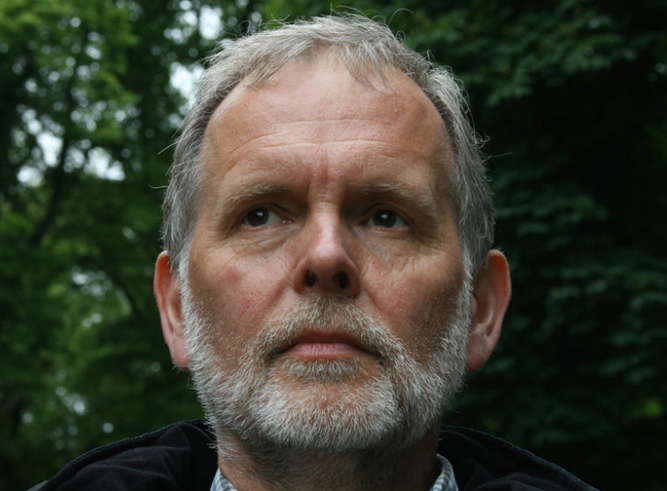
Bob Lambert ran the SDS in the late 1990s, overseeing spying on numerous family justice campaigns
Lambert’s report talks about Suresh Grover supporting the Reel campaign, and says the campaign is putting itself under ‘the Grover banner’. It shows the police believing that their regimented and hierarchical way of organising is the only way. They see everything in terms of factions, subterfuge, power struggles, and division.
Tish condemns the entire paradigm as dehumanising. It’s not how the campaigns were at all. It’s also nothing to do with public order problems that were supposedly the reason for the spying. Instead, Tish notes, it’s a management strategy attempting to steer the campaigns.
It’s notable that Lambert spells Sukhdev Reel as ‘Sukhev Reels’. Doreen Lawrence pointed out in her evidence to the Inquiry that police reports consistently spelt Stephen’s name wrong.
The misspelling of names of people and groups happens so frequently in spycops reports that it raises questions about how they could be searched as useful intelligence, and gives rise to a suspicion that it wasn’t an accident but was an in-joke among officers, another way to denigrate their targets.
It wasn’t just MFJ that the SDS viewed with suspicion. The Inquiry shows a report of Hagan’s dated 26 October 1998 which describes a march for Ricky in Kingston [MPS-0001462]. Hagan once again insinuates that a left-wing group is trying to get control of the campaign for nefarious purposes:
‘Socialist Workers Party are attempting to court Mrs Reel. However, their efforts are meeting with little success as Mrs Reel has indicated that she has concerns over the objectives of some political groups and she has been warned specifically about the Socialist Workers Party.’
Sukhdev is affronted at the very suggestion:
‘Nobody courted me. I’m a woman who speaks my mind.’
She says it’s untrue for Hagan to say she’d been warned about the SWP, and adds that she never had concerns about any group trying to exploit her campaign for another agenda. The family knew what they were campaigning for and wouldn’t have let anyone hijack the campaign, not that anyone tried.
The report claims that Grover’s address to the march was met with a lack of interest.
‘The Movement for Justice viewpoint was that the demonstration was a pitiful reflection of a year’s campaigning and how Mrs Reel’s case is being squandered by her reliance on Grover, whose main attention lies elsewhere.’
Tish says Grover was fully committed to the campaign at the time, as he has been continually from 1997. She says if the spycop was reporting that the campaign was dwindling to negligibility, there was no reason for the surveillance to continue. And yet it did.
Hagan’s report concluded:
‘Movement For Justice have grown weary of Mrs Reel’s fear of being seen to cause trouble so do not intend to waste too much time on this case.’
This is another slur on MFJ, implying that they were agitating for gratuitous confrontation and disorder.
Tish points out that it also confirms that the campaign was entirely peaceable, using law-abiding methods. There was no reason to be spying on them, apart from the fact that they were challenging the police’s lack of investigation and racism, and challenging police activity is seen as subversive.
Asked why Hagan spoke about the campaign in such terms, Sukhdev pointedly replies:
‘I don’t know why he wrote that. No, I don’t know. I think he needs to be here and you need to ask him.’
This is a dig at the Inquiry, which is refusing to compel Hagan to give evidence because he was diagnosed with PTSD in 2015 and says testifying would make him feel worse. Many victims of spycops suffer from PTSD and other psychological impacts of the abuse they received and are attending the Inquiry and reliving their trauma, yet this perpetrator is allowed to be absent.
INQUEST
On 1 November 1999, the inquest into Ricky’s death opened. It lasted six days. The family had been denied Legal Aid and had to fund their own representation.
Sukhdev and Balwant Reel arrived with Suresh Grover and Sukhdev’s brother, who had been supporting them throughout. Grover was familiar with the process of inquests. But he and Sukhdev’s brother were told to wait in another room. Sukhdev and her husband Balwant were alone in the middle of an unfamiliar procedure.
The coroner told her that he knew she’d attended the Stephen Lawrence inquiry a year earlier, and asked her who it was there that had put the idea in her head that Ricky had been murdered. He then joked that as Ricky’s friends had gone and got kebabs in Richmond they obviously couldn’t have been significantly hurt.
Tish Reel says they’d seen the bias coming and managed to mitigate:
‘We had to lobby extremely hard to get a jury inquest and to get funding for representation at that inquest, because jury inquests were not the norm.
And the reason we lobbied so hard is because we knew already, and by this time Grieve and his team were already on board and the signs were there that even the second investigation, like the first, was flawed and was racist in its approach.’
It became obvious at the inquest that the police investigation had been dire.
The family had gone to great lengths to supply the police with all relevant material. But at the inquest, investigative officer Bob Moffat – called to give evidence even though he’d retired – kept saying that he hadn’t seen certain pertinent documents, or that the Reels hadn’t told him specific facts that were contained in the documents.
It was clear from the police’s testimony that the second investigation under the Racial and Violent Crime Task Force was actually being directed by Moffat from the first investigation, and by his narrative that Ricky’s death had been a tragic accident as he tried to urinate in the river. The police wanted a verdict of accidental death.
It was also clear that there were lines of enquiry that hadn’t been followed, potential witnesses who had been ignored. The police had simply sat on the information for two years.
Moffat had arranged for a third post-mortem to be carried out on Ricky’s body, without the family’s knowledge. He had ordered that the entirety of Ricky’s skin be removed.
The family only became aware of this third post-mortem at the inquest. Although utterly horrified and astonished, Tish said it finally made one thing make sense:
‘We always wondered why, at Ricky’s funeral, which was only three weeks after he was found, when we went to go and see him, because he’d been in cold water he looked like Ricky, but when we saw him at the open casket funeral he was unrecognisable.
I couldn’t watch, I couldn’t stand by his – I promised myself I’d stay with him and I couldn’t, because I couldn’t look at what happened. I couldn’t understand the deterioration of his body.’
Witnesses had told the inquest that they and their families had been threatened and pressured not to testify. The three friends who were with Ricky on the evening of the racial attack said they had received death threats, and one had been kidnapped and assaulted on 3 November, the day of Ricky’s funeral. This is not what anyone would expect from an accidental death involving nobody else.
Tish says:
‘We had no confidence whatsoever in the police before we went into the inquest, we had even less when we left and they asked the jury to find accidental death verdict. But fortunately, because we had a jury, that was rejected.’
The jury returned an open verdict, meaning that the death is suspicious but the jury cannot conclusively reach any of the other available verdicts.
The inquest had a lot of publicity. There was a candlelit vigil on the first day, the public gallery was packed. And yet we haven’t seen a single spycop report mentioning it. Tish draws the obvious conclusion:
‘That, to me, speaks volumes – that there are documents that existed and have been shredded or haven’t been disclosed.’
AFTER THE INQUEST
After the open verdict, the family met with the Metropolitan Police on 4 February 2000. The police said they were prepared to investigate, but only if information was brought to them. They wouldn’t be proactive. This left it to the family to find leads, despite not having the skills or technology that the police are provided with.
The head of the first investigation, Bob Moffat, took it personally that the jury had rejected his theory of Ricky’s accidental death.
Some time later, Sukhdev was contacted by a reporter asking why she had given permission for Bob Moffat to print pictures of Ricky’s body in the third post-mortem. This was the first she’d heard of it.
Tish is incensed:
‘He had taken those photographs, stripping Ricky of his dignity completely, into his retirement, kept them at home with his personal belongings, where he and his family live. And he had contacted the reporter asking her to publish those photographs.’
Moffat had gone to the Mail on Sunday with a sense of grievance.

Mail on Sunday article of Bob Moffat’s claim that Ricky’s death was an accident
He told them that he had been hounded out of his job because he insisted Ricky’s death was an accident, and the family just couldn’t face the truth but were being indulged because they were Asian.
It was published under the headline ‘It is political correctness gone mad’.
Despite the jury disagreeing with Moffat’s theory, the Mail published the story sympathetically to Moffat.
On seeing the article, Sukhdev had suicidal impulses. She was intensely fearful of the impacts on her children if they saw it, or if people they knew saw it.
She couldn’t believe this was being done by the people who should have been finding Ricky’s attackers, but were instead carrying out a vendetta against victims:
‘If this the type of policing in this country, then who needs police officers?’
Suresh Grover saw the photos and contacted lawyers. Police then went to Moffat’s house and found the photos, yet no charges were ever brought against him.
During the hearing’s morning break, Tom Fowler discussed the evidence so far with ‘Alison’ from Police Spies Out of Lives:
FINDING OUT ABOUT THE SPYING
On 18 July 2014, the Reels met with officers from Operation Herne, the police’s internal investigation into spycops, at the office of the Reels’ MP and ally, John McDonnell [MPS-0738102].
The family are especially angry, not just about the spying but also about the false assurances they were given at the meeting.
They were told they weren’t directly spied upon, but officers infiltrating subversive organisations such as MFJ and the SWP had incidentally reported on the Reels in about ten reports. The family later found out that was all lies: they had been directly spied on and there were many reports that proved it.
Tish says the emotional impact was colossal:
‘It was re-traumatising, it just felt like we weren’t people. The way the police treated us during the initial two investigations completely dehumanised us because we had brown skin. It felt like that was happening all over again.
We couldn’t understand why it had taken so long for this information to come out. And we felt humiliated, we felt stripped yet again of our dignity, of whatever miniscule pieces of peace we’d managed to put back together in our lives, it completely derailed all of that.
I can’t, I can’t, it’s too – it’s so difficult to put into words the impact that that had.’
The impact on Sukhdev broke something inside her; she says the room went black. When she came to, she was repeatedly assured that it was only ‘collateral intrusion’, she wasn’t spied on personally.
‘I remember there sitting with my daughter and pulling my cardigan, I thought they could see through to me, I thought I was sitting there naked because of their spying, and since that day I keep on seeing eyes everywhere. I don’t know how I got home…
I didn’t think that things like this could happen. Especially to a family who has lost a child, who has never been given a time to grieve. 28 years I’ve been sitting here attending meetings, one after another, dealing with the paperwork, hell of a paperwork this Inquiry has produced and the case and everything.
I haven’t sat down for one day in the 28 years since then, I still put his dinner plate on the table thinking he will come and eat his dinner.’
She is near to tears as she says this.
Tish said that it made it even harder to reconcile the two sides of the police’s actions. The police were the only people with the financial resources, technology, training and skills to do a proper investigation.
On the one hand, the police were saying that they didn’t investigate certain elements because of a lack of resources. On the other, they were putting teams into spying on the family and analysing what they found.
DIRECT TARGETING, FOR A WIDE AUDIENCE
When they were told about the spying in 2014, the Reels asked to see the secret reports that mentioned them. The police refused, saying they concerned secret matters regarding public disorder.

September 1998 note from Colin Black, Special Branch’s Commander of Operations, saying the SDS’s spying on family justice campaigns and briefing other parts of the Met should be kept secret and unwritten
Now that the Undercover Policing Inquiry has disclosed them, it’s plain to see that they contain nothing of the sort. Mentions of public disorder are conspicuous by their complete absence. It was just another lie the police told the family in 2014, hoping that the truth wouldn’t come out. Even as they pretended to come clean, they were merely enacting the next stage of an exercise in damage limitation and reputation management.
Despite assuring the family that there was nothing personal in the reports – which Tish describes as being done ‘as if it was a professional courtesy to us, hand-holding, reassuring’ – the documents actually describe Sukhdev being very emotional and crying, and details about her personal health.
At the meeting in 2014, the family were also assured that the information was kept within Special Branch, that there were rigid barriers between them and the wider Met. That was another lie.
We now see documentation [MPS-0748390] proving that a line of communication was specifically made between Special Branch and Grieve, at the Met’s Racial and Violent Crime Task Force while the latter was conducting the second investigation into Ricky’s death.
A document from September 1998 [MPS-0720946] has a handwritten note from Colin Black, Commander of Operations for all of Special Branch including the SDS, talking about the SDS’s off-the-record briefings to Richard Walton of the Racial and Violent Crime Task Force. These briefings included details of family justice campaigns that were being spied on:
‘I have reiterated to him that it is essential that knowledge of the operation goes no further. I would not wish him to receive anything on paper.’
Tish says the deliberate avoidance of writing it down is proof of guilt:
‘They knew that their actions were not justified, they knew that this was not collateral damage, that this was a very deliberate, orchestrated chain of decision-making here, and they knew it wasn’t justified, they knew it wasn’t lawful, they knew we weren’t any threat to public disorder.’
The SDS prepared a document on 10 September 1998 [MPS-0748392] containing extensive profiles of the Stephen Lawrence and Ricky Reel campaigns. It detailed their history, personnel, allies and plans.
It stated that it was produced for the Commissioner, Deputy Assistant Commissioner Grieve, and Superintendent Thornton. This is the proof that it all went well beyond Special Branch and right to the top of the Met.
Unit manager Bob Lambert’s ‘SDS intelligence update September 1998’, mentioned earlier [MPS-0720946], not only contained details of spying on the Reels, it also said Hagan would be spying on the Reel campaign for months to come. The family definitely were directly targeted.
Sukhdev summarises the conclusion of Lambert’s report as saying to Hagan:
‘Here it is, the budget. You do what you want, make sure you destroy that campaign, make sure you do whatever you can, do whatever you want to destroy that campaign and cause as much damage as you can to the family.
That’s how it came across to me.’
THE DRIVE HOME
More than that, Hagan drove Sukhdev home from a meeting – just the two of them, alone in a car. It wasn’t necessary for him to do that, but a conscious and deliberate decision. It could scarcely be more personal and direct.
In 2013, the nation was shocked to learn that the Stephen Lawrence campaign had been spied on. The Home Secretary commissioned Mark Ellison KC to investigate. The Ellison team met with Hagan [MPS-0738122], who had spied on the Lawrences. He told them about his spying on the Reels, notably about the occasion when he drove Sukhdev home.
Hagan said that the leaders of MFJ met with Sukhdev, and he gave her a lift home afterwards. As with the rest of his description of his deployment in the interview, Hagan downplays this incident a lot.
He says he didn’t offer but was asked to do it (he doesn’t specify by who), that he ‘didn’t exploit the situation’, and that he refused her offer to come into the house because he knew that if she knew his real identity she wouldn’t want it.
Sukhdev is dismissive of this mitigated version of events. She is certain that she didn’t ask Hagan for a lift, and that he must have grasped the opportunity to get information from her.
It’s a perspective supported by Hagan’s own admissions. In another interview with Ellison in 2013 [MPS-0721973], Hagan defended reporting deeply personal information:
‘All intelligence is good.’
In his written witness statement to the Inquiry [MPS-0748738], Hagan reiterates his belief that ‘all intelligence is good’ and says he would have discussed the drive with his handler officer at the time. Yet no record of this has been located by the Inquiry.
If we don’t have a report about an event as significant as Hagan’s one-on-one conversation in the car with Sukhdev, it’s highly likely that the evidence of other key incidents is also missing.
Sukhdev talks about seeing Hagan’s admission of driving her home:
‘I don’t have the words to describe it, I really don’t. I felt sick. Humiliated. He took advantage of my vulnerability. He was writing reports that was no use to the inquiry, in the reports it was mentioned that I was relatively stressed, I had health problems, that my health was deteriorating. So he clearly knew I was vulnerable at the time…
Every time I think of this I see Sarah Everard in front of my eyes, and that’s the one thing that doesn’t let me sleep at night. She was in a police car, unmarked police car, and I think I was in a police car with a police officer who pretended to be a supporter of this campaign. Why did he not tell me who he was?’
Overcome by emotion, Sukhdev asks Tish to take over.
Tish talks of the imbalance of power, with only Hagan knowing what was really going on, and that we only have his word for it that he didn’t come into the family home that night.
Whatever the specifics, he took advantage of a vulnerable woman who was upset from talking about the death of her son and how the police had failed her. Hagan, from that same police force, chose to get Sukhdev on her own and spend time with her. They obviously will have talked about the family and the campaign. These were conscious choices on his part. It is targeted surveillance.
Finding this out has had devastating consequences for Sukhdev:
‘I invited him in. That’s what I was like before. I trusted everyone and I would say come home, and talk to people. I don’t trust anyone any more. He’s destroyed me, this Inquiry, all the revelations of what was going on, has destroyed my life, I’m not the same person anymore.’
Tish describes the horrendous damage that the spying has done to her mother:
‘I lived with her for many years after this, and I stay at her house sometimes with my children. She wakes up in her sleep screaming, and it’s kind of blood curdling and it wakes my nephew up, he lives with her and he’s seven, eight now. She screams in her sleep, but she doesn’t know she’s doing it. And one of us has to run in and wake her up.
You can hear in her sleep she’s saying, she’s talking about eyes, and when I wake her up she’s still half asleep and she’s talking about eyes following her.
And that’s the impact of this, it’s enduring, it’s not going to go away. It doesn’t impact just her, it has impacted generations – her, me, her grandson, are being impacted, still being impacted by the actions of those officers almost 25 years ago.’
If it hadn’t been for the Undercover Policing Inquiry, the Reels would have taken the ‘only incidental collateral reporting’ assurances in 2014 at face value. For 28 years, every time they’ve been told something conclusive, it’s turned out there was more to it. It makes them wonder what else there is that’s still not been disclosed.
Sukhdev’s brother remembers meeting Hagan at one of Ricky’s memorial lectures. Hagan was asking lots of questions about Ricky, the Reel family and the campaign. This is plainly direct targeting. There is no risk of public disorder. The incident is not recorded in any of the documents that the Inquiry has shown the family. What else is missing? How much more spying was there?
During the hearing’s lunchtime break, Tom Fowler discussed the eivdence so far with Dave Morris:
DESIGNED TO DECEIVE
The Operation Herne officers who met the Reels in July 2014 spoke to several families similarly spied upon. Soon afterward, Operation Herne published a report and made a public statement. It claimed that neither the Reels nor any of the other families were directly targeted.
On 18 August 2014, a month after they’d met the Reels, Operation Herne officers met Hagan [MPS-0738094]. Hagan told them that the public claim not to have directly targeted families was untrue, not least because of his drive with Sukhdev. It was something he’d already told the Ellison Review team in 2013 [MPS-0738122].
Assistant Commissioner Martin Hewitt, who would later issue the apology to women deceived into relationships by spycops, explained to Hagan that he was already aware of the driving incident, and had been careful not to make particular suggestions. The Herne officers had meticulously phrased it, saying they hadn’t seen any SDS documents about direct targeting of families.
As Hagan’s admission to Ellison was only oral, the statement was technically true. Clearly, the police were deliberately misleading the families and the public.
The Reels themselves remained unaware of Hagan’s drive with Sukhdev until they recently received documents from the Undercover Policing Inquiry.
‘For 11 years they kept us in dark, not only us but the whole public. So their lies have continued, they started lying to us in 1997 and to this day they have been lying…
We had a meeting with the police only last year, Assistant Police Commissioner, and he lied to us as well, in Scotland Yard, saying “we don’t have the files”.
So this culture of the police lying, especially to Black families, not giving them justice, it just continues and I don’t think there is a police officer in the Met Police good enough, qualified enough, decent enough to give Ricky justice. I don’t think there is.’
Sukhdev is once more welling up as she concludes:
‘And I hold my head high now to say yes, my son, I can finally look in the mirror which I haven’t been able to do for the last 28 years, I can look in the mirror and say I’ve done all I can to get you justice, but the justice has been denied to you by the police.’
APOLOGIES FROM POLICE
On 2 January 2016, the Met sent the Reels an apology for the spying. Sukhdev dismisses it as inadequate.
On 31 October 2025, the Met sent another one [UCPI0000039435]. It sets out the apology that was detailed by the Met’s lawyer at the start of this Phase of the Undercover Policing Inquiry. It added that, without having heard what was coming at this set of Inquiry hearings, ‘it was considered premature to issue a full and personal apology at this stage.’
This apology turned out to be identical to one sent the same day to Michael Menson’s family, which his sister described as a ‘cut and paste job’.
Tish and Sukhdev agree that both letters are worthless, merely a private formality issued when the police had been caught out. Tish explains:
‘An apology is meaningless; it’s the action, it’s the lessons that are learnt, it’s the change in behaviour that matters to us, and to all the people that still contact us to say that what happened to us is still happening.’
TISH’S CLOSING SPEECH
With questioning over, Tish and Sukhdev were invited to make some concluding remarks. It was as powerful as anything we’ve heard in the long history of the Undercover Policing Inquiry.
This video has Tish’s closing statement in full:
She summarised the whole story. The family’s campaign was gruelling work, and has passed trauma down generations to kids who weren’t even born when Ricky was killed. But the family need and deserve the answers that the police are so determined not to give. It has meant retelling the story over and over again, reliving the trauma.
Tish dismissed the spycops’ suggestions that the campaign was somehow secretly controlled by devious subversives. She pulls attention back to the real point. The police spied on a grieving family because they feared the truth.
The police subjected the family to racism from the day Ricky went missing, and it runs through everything right up to today.
After the police’s first post-mortem, Tish and her sister washed Ricky’s clothes and found ripping that turned out to match his injuries.
‘We were just a normal family, we didn’t know anything about forensics, nothing at all. We didn’t even know to ask the question ‘have you done forensics on these clothes?’ Why should we?…
So we washed his clothes. All the forensic evidence was lost. That was the police’s job not ours, and that’s why campaigns like ours are set up.’
Sukhdev is in tears as Tish talks of apologising to Ricky for putting him through the indignity of a second post-mortem.
The Reels discovered that anti-terrorism police had collated a map of CCTV coverage in Kingston. The family used it to secure the CCTV footage. The police they dealt with apparently didn’t know about their own map. Footage seized at the family’s behest was destroyed without being viewed.
‘We had no control over the fact that someone took Ricky’s life, but the control we could and should have had in ensuring that Ricky’s killers were brought to justice was taken away from us by police officers who were racist, incompetent, and more interested in spying on us than actually looking at who did this and will they do it again.’
She is emphatic that the police targeted them because they stood up and were a threat to police credibility. The police were particularly worried that they were being supported by others, and that similarly affected families were working together. The SDS wanted to see division between the families.
The Met claimed to have learned lessons from the Stephen Lawrence case, but they absolutely had not. Instead, they doubled down on efforts to shut down any family who called them out for being racist or incompetent.
Tish says that the victims of police spying are coming to the Inquiry at great personal cost. She isn’t here for the campaign for the truth about what happened to Ricky. This Inquiry won’t help with that at all.
But she has a responsibility to find out why it happened, to show that it wasn’t incidental collateral spying but a direct attack on a family at its lowest ebb. She’s here to try to ensure it doesn’t happen to others in future.
She points the finger at Hagan. He has refused to attend the Inquiry as he has PTSD. Tish says that many of the witnesses have severe trauma. Sukhdev lost her son, forever, and reliving it is clearly excruciating, yet she’s on the stand. If she’s at the Inquiry then Hagan should be too.
The public gallery applauded.
SUKHDEV’S CLOSING STATEMENT
After this, Sukhdev read a prepared concluding statement. This video has it in full:
She opens with a description of how the loss and the police’s actions have devastated her daily life:
‘For nearly two decades, I have lived with grief, near and constant stress. I suffer from nightmares in which I see eyes watching me all the time.
I have insomnia, panic attacks and constant anxiety. The stress contributed to serious health problems and I’m not the same person I was before 1997.’
The police targeted her because they feared the way she challenged their failures. They lied to her when the fact that she’d been spied upon was revealed. Their actions were shaped by institutional racism and institutional sexism.
She lists the others who were spied upon, not just the family justice campaigns but women deceived into relationships and social justice campaigners, all of them treated as enemies of the state. Bereaved families should have been supported; instead they were targeted and undermined.
‘I want this Inquiry to do what the police have failed to do. Tell us the truth. I want it to acknowledge that my family was targeted and infiltrated. I want it to name the officers involved and explain what happened to all the documents which are missing.
I want to know whether intelligence about us was shared with the coroner or any other bodies and I want to see those reports, please.’
She says we won’t get the change that’s so desperately needed unless the truth is established, and the Inquiry has the courage to make bold decisions, conclusions, and recommendations.
But if the Inquiry minimises the profound wrongdoing, shields those responsible, or produces a report that just gathers dust, then a dangerous message will be sent. It will tell the public that even when the police gravely abuse their power, they get away with it. It will deepen the cynicism and disillusionment that many already feel, and will be yet another betrayal.
We are at a key moment when we decide what we will tolerate from those who police us. It is time to expose the cruelties and then consign them to the past.
There were tears in the public gallery as she finished her speech:
‘Above all, I want justice for Ricky. My son was a kind young man, he deserved to live, he deserved a proper investigation, he deserved respect. So did we.
I am speaking out not only for Ricky but all the families who have been spied upon and misled. We deserve accountability and we deserve change.
I ask this Inquiry to ensure that no other parent has to carry their child’s coffin, simply when he was killed because of his colour. And no parents stand where I’m standing today.’
There was an emotional ovation from the public gallery.
When it subsided, there was a shout of ‘call Dave Hagan’. The Inquiry’s Chair, Sir John Mitting, was flummoxed by this. Then he adjourned the hearing.
It had been a hugely emotional experience for those watching.
The next day, the Inquiry heard evidence from Bernard Renwick, brother of Roger Sylvester who was killed by police in 1999, and whose campaign for justice was also spied on.
At the end of the session, Mitting commended Renwick in terms that can only be seen as a conscious insult to Sukhdev and Tish Reel:
‘Mr Renwick, thank you for taking the trouble to make a witness statement and to attend the hearing, and to give oral evidence in the calm and reasonable manner that you have.
It is invariably impressive to hear people who have gone through great personal tragedies, like you and your family, be able to speak about them in a manner that doesn’t betray bitterness and rancour and excessive emotion, but calmness and reasonableness.’
At the end of the hearing, Tom Fowler discussed the day with Suresh Grover of The Monitoring Group: