Content tagged with "Peter Francis"

Helen Steel Demolishes “Neither Confirm Nor Deny”
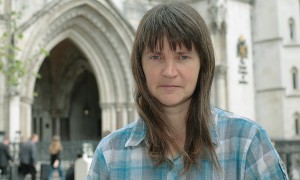
Helen Steel at the Royal Courts of Justice

Helen Steel at the Royal Courts of Justice

Last week’s preliminary hearing of the Pitchford inquiry into undercover policing was concerned with issues of disclosure and secrecy.

Helen Steel is a lifelong activist and no stranger to the Royal Courts of Justice. She has just finished a four-year legal case against the police after she discovered her former partner John Barker was in fact undercover police officer John Dines. It was a fight characterised by Metropolitan police attempts to use any tactic to obstruct accountability and justice. At the end the Met conceded “these legal proceedings have been painful, distressing and intrusive and added to the damage and distress”.

The same Met lawyers are now wheeling out the same tactics for the Pitchford inquiry, claiming they can’t talk about officers as there is a long-standing policy of ‘Neither Confirm Nor Deny’. Helen Steel told last week’s hearing there is no such thing. Clear, comprehensive and authoritative, her speech ended with a round of applause from the court.

===

Throughout all the legal proceedings that I have been involved with where the police have asserted “Neither Confirm Nor Deny”, they have never offered any documentary evidence of their so-called policy, of how it is applied or how any exceptions to it are decided. That is actually despite an order from Master Leslie in August 2013 that they should provide that documentary evidence. Instead, they provided statements, but there are no documents that have ever been provided about this so-called “Neither Confirm Nor Deny” policy.

So I just wanted to start really with a brief history about what I know of neither confirm nor deny in relation to the Special Demonstration Squad and other political policing units. I will not comment on what the situation is with the wider Security Services or with the National Crime Agency position, except to say that I have seen newspaper reports of undercover officers giving evidence in criminal trials which are open to the public, so it does seem that it is only the political policing units which are seeking total secrecy about everything they do.

I think it is also worth bearing in mind in relation to the issues raised that the main concern of this Inquiry is political undercover policing, which is different to general undercover policing in that the intention is not to obtain evidence for prosecution; it is to obtain intelligence on political movements. The result of that is that, while general undercover operations are subject to a certain amount of outside legal scrutiny as a result of the requirements for due process and fair trials, political undercover policing has never been subjected to outside scrutiny until now.

I want to start with why we are here at all. We are not here because the police unearthed evidence of bad practice within these political policing units and were so concerned that they brought it to the attention of the Home Secretary.

We are here because of the bravery of Peter Francis coming forward to blow the whistle on the deeply alarming, abusive and undemocratic practice of the Special Demonstration Squad. We are here because of the detective work of women who were deceived into relationships with undercover police officers and who, despite the wall of secrecy around these secretive political policing units, managed to reveal the true identities of our former partners and expose these and other abusive practices to the wider world.

I think it is important to bear that context in mind when listening to the police assert that you can hear their evidence in secret and still get to the truth.

CONFIRMED BY POLICE IN THE MEDIA

So going back to the history of political undercover policing and neither confirm nor deny, these revelations started to unravel, really, on 19 December 2010, when The Times newspaper wrote an article about Mark Kennedy’s seven years’ undercover in the environmental movement.

The story had already broken on the internet, on alternative news websites, including Indymedia, and The Times reported on his involvement in the planned invasion of Ratcliffe-on-Soar Power Station, which had resulted in a number of protesters being convicted.

It was reported that his real identity was Mark Kennedy, but that he was known while undercover as Mark Stone. The article then continued:

“Last week two police forces confirmed Stone’s status to the Sunday Times. ‘The individual is a Met officer,’ said Nottinghamshire Police. ‘He is an undercover officer,’ said the Metropolitan Police, ‘so we can’t say more’.”

So, on the face of it, it took nothing more than Mark Kennedy’s identity being revealed on the internet for the Metropolitan Police to confirm that he was an undercover police officer. The police actually confirmed his identity long before he was officially named in the appeal judgment in July 2011 or in the HMRC report in 2012.

The police also publicly confirmed Jim Boyling as a police officer via the media on 21 January 2011. The week after the DIL story of her relationship with Jim Boyling first appeared in the national press, the Guardian newspaper reported that Jim Boyling had been suspended from duty pending an investigation into his professional conduct.

It said that,

“In a statement the Metropolitan Police said a serving specialist operations detective constable has been restricted from duty as part of an investigation following allegations reported in a national newspaper”

A similar report was carried on the BBC.

CONFIRMED BY POLICE IN PERSON

There was not just the confirmation in the media. DIL or, as she’s known in this Inquiry, Rosa got in contact with me in late 2010 in relation to her former partner, Jim Boyling, who I had known as “Jim Sutton”, when he was infiltrating Reclaim the Streets. I was with her when she was interviewed in March 2011 by the Department of Professional Standards, who were investigating the conduct of Jim Boyling.

Her account was absolutely harrowing and, at the end of it, the police officers apologised on behalf of the Metropolitan Police. At no point in that interview did they mention “neither confirm nor deny”. On the contrary, they confirmed that Jim was a serving police officer.

CONFIRMED BY POLICE IN WRITING
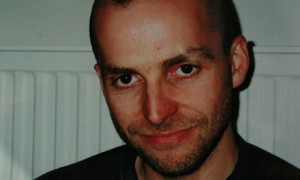
Jim Boyling whilst undercover in the 1990s

Jim Boyling whilst undercover in the 1990s

They also named Jim Boyling and referred to him as a serving officer in correspondence sent relating to that interview and potential disciplinary issues arising from it from February 2011 until June 2012.

If you want to see any of that correspondence, it can be made available to show that he was named and they were not applying neither confirm nor deny.

They also provided a copy of their terms of reference to their investigation, which clearly states that they were investigating DC Jim Boyling.

Then moving on to our court case, with DIL and six other women I went on to bring a case against the Metropolitan Police Service, arising from having been deceived into relationships with these undercover officers. That case involved eight women and relationships with five different undercover police officers, spanning a period of around about 25 years, and the case incorporates both the AKJ and the DIL judgments that have been referred to at this hearing.

In that case, the first time the police asserted a policy of neither confirm nor deny was in a letter dated 25 June 2012, some six months after the initial letter before claim, and only after considerable correspondence between the parties, which had included admitting that Mark Kennedy was an undercover officer and making a series of conflicting statements about sexual relationships while undercover.

If there really was a longstanding and active Metropolitan Police Service policy of neither confirm nor deny, you would assume that the immediate response on receipt of the letter before claim in December 2011 would have been to assert such a policy straight away.

In fact, in relation to the Mark Kennedy claims, the Metropolitan Police letters had absolutely no hint of a policy of “Neither Confirm Nor Deny”. In a letter dated 10 February 2012, they stated:

“If it assists, I can confirm Mark Kennedy was a Metropolitan Police officer and did not serve with any other force. He left the Metropolitan Police Service in March 2010.”

It then goes on to state that the Commissioner is not vicariously liable in respect of Mr Kennedy’s sexual conduct, as described in the letters of claim.

In a letter of 14 March 2012, the force solicitor stated:

“I confirm that during most of the entire period from July 2003 to February 2010, Mark Kennedy was authorised under Regulation of Investigatory Powers Act to engage in conduct of the sort described in section 26(8) of Regulation of Investigatory Powers Act.

“He was lawfully deployed in relation to certain groups to provide timely and good-quality pre-emptive intelligence in relation to pre-planned activities of those groups. The authorisation extended to participation in minor criminal activity.”

There was then further correspondence in which the Metropolitan Police Service was quite open about Mark Kennedy’s identity as an undercover police officer.

It was not actually until November 2012 that the Metropolitan Police Service first raised “Neither Confirm Nor Deny” in relation to the AKJ case in their application to strike out the claim on the basis that “Neither Confirm Nor Deny” meant that they could not defend themselves. That is the Carnduff argument. By that time they had obviously confirmed his identity so it was all a bit late.

CONFIRMED BY POLICE INTERNAL STANDARDS WATCHDOG

Then, moving on to how the so-called “Neither Confirm Nor Deny” policy relates to the Department of Professional Standards, as I mentioned, the first time that the police asserted a policy of neither confirm nor deny in relation to the DIL claims was in June 2012. That came two weeks after the first mention of “Neither Confirm Nor Deny” at all from any police source which was in a letter from the Directorate of Professional Standards (Police).

Until that point, the Directorate of Professional Standards (Police) had openly discussed the investigation against Jim Boyling, but they were also asking for statements from myself and the other women in relation to the issues raised in the particulars of our claim. That included issues relating to the McLibel Support Campaign.

A letter that was from them, dated 16 April 2012, confirmed progress in relation to the investigation into DC Boyling and then went on to seek clarification relating to whether or not I wanted to make a formal complaint to the Directorate of Professional Standards (Police) of matters that were outlined in our letters before claim regarding the involvement of undercover officers in the McLibel case.

THREE OFFICERS ARE ENOUGH – TIME TO INVENT A LONG-STANDING POLICY
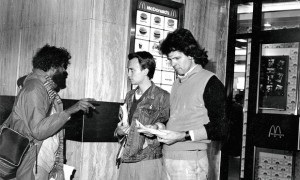
Bob Lambert distributes anti McDonald's leaflets, 1986

Bob Lambert distributes anti McDonald’s leaflets, 1986

During previous discussions we had requested information relating to what action the Directorate of Professional Standards (Police) was able to take if undercover officers were no longer employed by the Metropolitan Police Service and, as a result, we had requested confirmation as to whether John Barker and Mark Cassidy were still serving police officers.

The letter of 16 April explains that the Directorate of Professional Standards (Police) was seeking legal advice as to whether or not they could disclose that information to us.

On 11 June 2012, the Directorate of Professional Standards (Police) sent an email regarding the progression of my complaint and asking to interview me in relation to the allegations about breaches of legal privilege and Bob Lambert’s involvement in the creation of the leaflet that resulted in the McLibel action.

In that same letter, even though they have named Bob Lambert and asked me to give a statement in relation to him, they state:

“In answer to your questions surrounding John Barker and Mark Cassidy, the current position of the Metropolitan Police Service is to maintain its neither confirm nor deny stance in accordance with established policy.”

That letter on 11 June 2012 was the first time that the police mentioned “Neither Confirm Nor Deny” to us. At that point, though, since Bob Lambert was named in that same letter, it appeared that it was only in relation to John Barker and Mark Cassidy that they were asserting neither confirm nor deny.

It was only two weeks later on 25 June, when they extended that to all the officers in the DIL case, that “Neither Confirm Nor Deny” became the standard response to every request for information or compliance with the court proceedings, even though there had already been official acknowledgement that both Lambert and Boyling had been undercover officers. It was absolutely clear at that point that they were going to use “Neither Confirm Nor Deny” to create a wall of silence about these relationships.

CONFIRMED BY THE HEAD OF THE UNIT

Moving on to other evidence relevant to neither confirm nor deny about Bob Lambert. When I originally met with DIL, she informed me that while she was married to Jim Boyling, he had revealed that Bob Lambert and my former partner, John, had both been police spies in the groups that I had been involved with.

It took some time to identify that Bob Lambert had been Bob Robinson, who infiltrated London Greenpeace in the mid-1980s. But after that we felt it was important to expose his past role, which we did when he spoke at a public meeting about racism in the headquarters of the Trade Union Congress on 15 October 2011. If necessary, footage is available of that incident which confirms that no violence either took place or was threatened and that Bob Lambert hurried away, refusing to make any comment.

But two weeks later, on 24 October 2011, he issued a public statement to Spinwatch, which was an organisation which he had worked with in the past, and to the Guardian, in which he admitted,

“As part of my cover story so as to gain the necessary credibility to become involved in serious crime, I first built a reputation as a committed member of London Greenpeace, a peaceful campaigning group”

That statement contrasts sharply with the attempt to smear the group that is made in his current statement for the purposes of applying for a restriction order in connection with this Inquiry, but it also confirms his role as an undercover officer.

He has subsequently gone on to comment extensively in the media about his time in the Special Demonstration Squad, the relationships that he had, the fact that a child was born as a result of one of those relationships and the fact that he was involved in writing the London Greenpeace anti-McDonalds leaflet that became the subject of the McLibel case.

Now you would think that, if “Neither Confirm Nor Deny” had always been a Metropolitan Police Service policy, that Bob Lambert, who had supervised Special Demonstration Squad officers at one point, would have known about that and adhered to it.

CONFIRMED BY THE COUNTRY’S TOP COP

It is not just Bob Lambert. We then go on to the Commissioner of the Metropolitan Police, Bernard Hogan-Howe. You would think that this is someone who would stick to “Neither Confirm Nor Deny” if it truly was a policy adopted by the Metropolitan Police. But, no, at a public meeting of the Metropolitan Police Authority on 27 October 2011, he confirmed that ‘Jim Sutton’ was under investigation as a serving officer.

Is it really credible that, if there was a “Neither Confirm Nor Deny” policy in place, the Commissioner himself would not know about it and not adhere to it?

The transcript of those proceedings is available, it can be checked, and you will see that he answers questions about Jim Boyling.

So is it really credible that there was an “Neither Confirm Nor Deny” policy in place at that point or is it more likely, as I would submit, that “Neither Confirm Nor Deny” was suddenly adopted in June 2012, when the Metropolitan Police Service wanted a wall to hide behind after they realised that they could no longer write these relationships off as a result of rogue officers and that, in fact, there was clear evidence of multiple abusive relationships that could only have arisen through systemic failings and institutional sexism?

CONFIRMED TO THE BBC

The final and key piece of the jigsaw concerning the truth about neither confirm nor deny, which I know has already been referred to so I’m not going to say anything at length, is the True Spies television series.

In 2002, the BBC broadcasted three programmes as part of a series called “True Spies” which were entirely focused on the work of the Special Demonstration Squad. As I am sure you have heard, the programme was made with the support and assistance of the Metropolitan Police Service. While no individual officer’s identity is disclosed, undercover officers speak extensively to the camera about their work. They talk about the groups they infiltrated and the methods used. There are significant details of the undercover operations actually carried out.

I would urge you to watch True Spies so that you can see just how much of their tactics they discussed and yet how the Metropolitan Police now claim they can’t talk about those same tactics.

NEITHER CONSISTENT NOR A POLICY
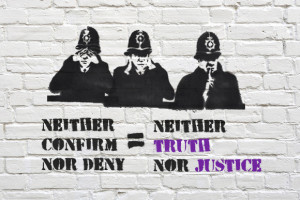
Neither Confirm Nor Deny = Neither Truth Nor JusticeI submit that they were perfectly happy to reveal their methods and the groups that they were spying on when it suited them for PR purposes and that the reason they want to bring in “Neither Confirm Nor Deny” is that actually just to cover up serious human rights abuses.

It is being used as a shield for the police from any form of accountability and to avoid any proper scrutiny of their actions to cover up illegal and immoral activities of political undercover police officers and prevent them coming to light.

There was a lot of talk yesterday about the police rights to privacy, but there was nothing at all from the police about the rights of core participants who were spied on. It took me 24 years to get acknowledgment of wrongdoing from the Metropolitan Police and from John Barker, my former partner. Other core participants should not have to wait that long, nor should they have to risk never finding out the truth and being left with permanent doubt about who people really were in their lives.

We know that the McLibel Support Campaign was infiltrated by John Dines and indeed that Bob Lambert was involved in writing the leaflet that led to the case and we know that information was shared between the Metropolitan Police and private corporations, private investigators and McDonalds that enabled the writs to be served, but what we don’t know is any of the detail
behind that. We need to know how and why that was allowed to happen in order to prevent those kind of abuses from happening again.

It is insulting in the extreme that, despite the apology, the police are still seeking to neither confirm nor deny John Dines. It is also farcical in light of my meeting with him last week and his apology to me. But it was not just insulting to me. It is insulting for everybody who has had their privacy invaded to be told that they can’t know the truth about the wrongdoing that was done against them because the privacy of those who carried out that abuse has to be protected.

NEITHER BASIS NOR JUSTIFICATION

I just also wanted to say that they seem to also be seeking unique rights in that they seem to think that they should have the right to no social ostracisation, which is something that nobody else who is accused of wrongdoing gets any form of protection from. Nobody else who is accused of something has their name covered up on the grounds that they might be socially ostracised.

So finally, I wanted to submit that, even if there had been a genuine “Neither Confirm Nor Deny” policy, there is absolutely no justification for a blanket protection of all officers, given the level of human rights abuses that we have been subjected to as core participants. I cannot see why officers who have grossly abused the fundamental human rights of others should have a permanent shield preventing scrutiny of their actions and I would say that it is not in the public interest for officers to think that they will be protected no matter what they do.

RELEASE THE NAMES
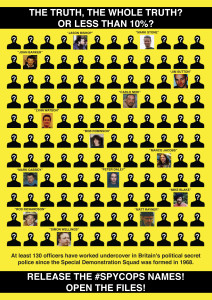
Poster of 14 exposed spycops among 140 silhouettesThe McLibel Support Campaign supports the core participants’ call for all the cover names to be released so that the truth can be heard. We have not called for all the real names of officers to be released, although I think that there may be individual circumstances where that is appropriate, especially where those officers went on to become supervisors or line managers or are now in positions of responsibility, but I’m assuming that that would be done on a more individualised basis. However, I do believe that all of the cover names should be disclosed so that the truth can be achieved.

I also believe that to ensure the Inquiry is as comprehensive as possible, the police need to release a full list of all the organisations that were targeted. There is no reason for secrecy on this. Various groups were named in True Spies, so why is it that they can’t be named now?

The reason for wanting maximum transparency and disclosure is a political one. Without the names of undercover officers who targeted each group, it is impossible to start to assess the whole impact of their surveillance or the extent of the abuses committed. Without full disclosure, we won’t get to the full truth and we can’t ensure that preventative measures are put in place to stop these abuses happening again.

These were very, very serious human rights abuses committed by this unit, including article 3 abuses [“no one shall be subjected to torture or to inhuman or degrading treatment or punishment”]. We want to stop them happening again. That is our purpose in taking part in this Inquiry and that is the real public interest that requires that there must be openness and transparency.
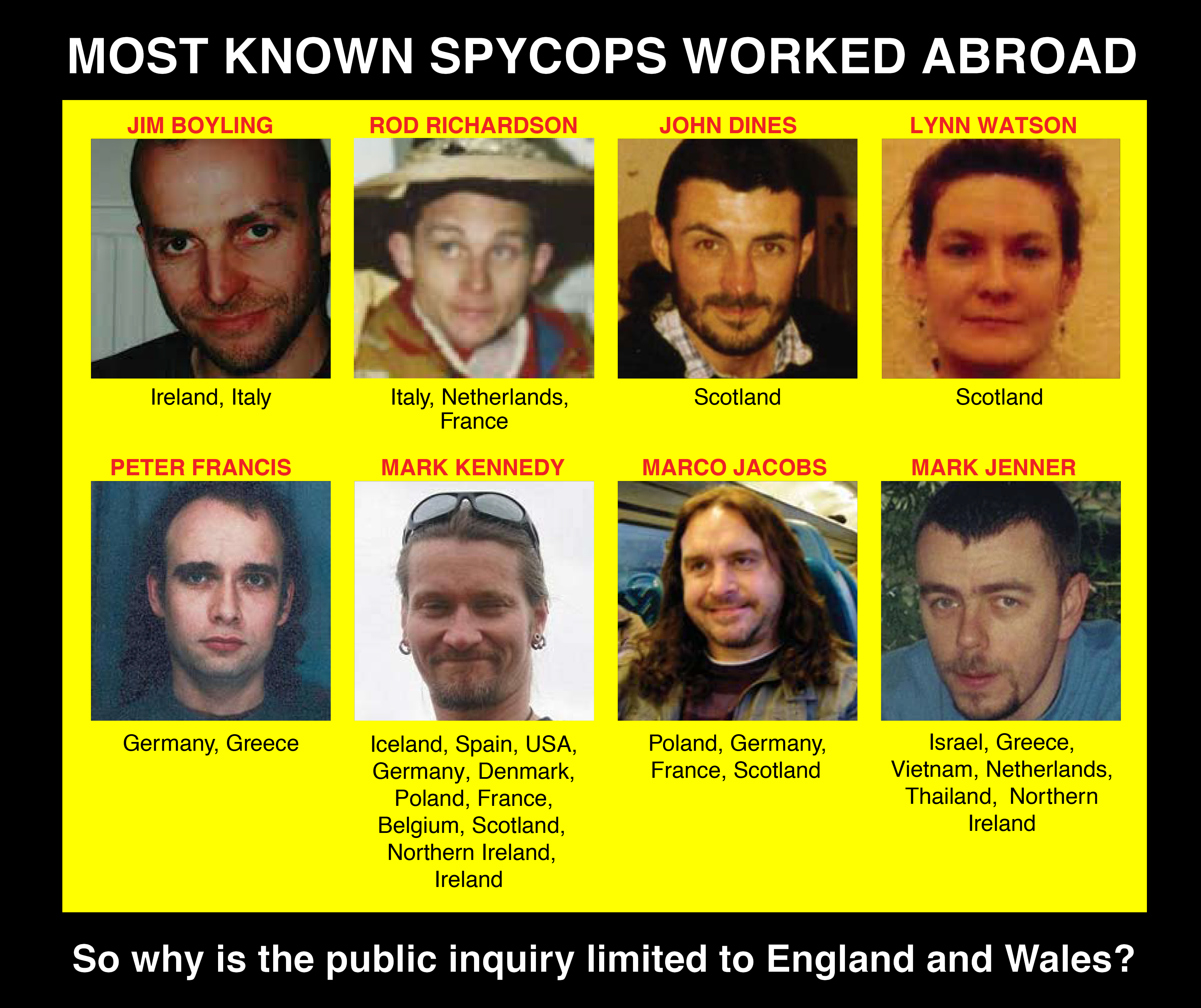
The Pitchford Inquiry’s Geographical Blinkers


Most Known Spycops Worked Outside England & Wales

The public inquiry into undercover policing is in a stage of active preparation, with the hearings expected to start properly next summer.

We’ve already had the inquiry’s Terms of Reference set out by the Home Secretary. It will


inquire into and report on undercover police operations conducted by English and Welsh police forces in England and Wales since 1968.


This


will include, but not be limited to, the undercover operations of the Special Demonstration Squad and the National Public Order Intelligence Unit.


More than half the exposed officers from those units worked outside England and Wales. They spied in at least seventeen different countries over a period of 25 years (the Undercover Research Group has produced a detailed list of dozens of instances). If this is the case with the known officers, it’s safe to presume many of their colleagues did it too.

Some officers are known to have committed crimes whilst working undercover abroad. It’s more than two years since German MP Andrej Hunko told the UK parliament.


Mark Kennedy was accused and found guilty of an arson attack in Berlin. But he was giving evidence in court under his false name to escape legal proceeding under his real name.


This is exactly the sort of thing that is the subject of the inquiry – if it’s in England and Wales. If the British police are farming these activities out on a large scale to dozens of countries it surely warrants proper investigation.

Conversely, Hunko has discovered that German police sent numerous undercover officers to the anti-G8 protests in Scotland in 2005. It is hardly likely to have been a one-off.

If an officer’s actions are an outrage in England and Wales, the same deed is equally an outrage if committed elsewhere. Who is responsible if an English undercover officer commits crimes whilst working abroad? What protects the public from foreign spies here? What deals are done between governments? If these officers aren’t reined in when working in the UK, are they even more cavalier toward citizens, laws and rights when away from their overseers?

As it stands, the Pitchford Inquiry appears uninterested in the answers. Its stated aim is to explore “the motivation for and scope of, undercover policing operations in practice and their effect upon individuals in particular and the public in general”. The geographical blinkers are a barrier to this. If it refuses to look at a significant element of the work of many officers, the inquiry cannot get a thorough overview and so undermines its very purpose.

This restriction in the Terms of Reference was handed to Pitchford and his team by the Home Secretary. It’s time for the inquiry, and others, to insist that she drops this clause.

If it is to be credible, the Pitchford Inquiry must give equal weight to equivalent actions and experiences of undercover officers and their victims, wherever they happened to be. The limit of England and Wales has to go.

= = = = = = = = = = =

British undercover officers and the countries they worked in

Mark Kennedy

A 2012 report by Her Majesty’s Inspectorate of Constabulary refers to Kennedy professionally visiting 11 countries on more than 40 occasions, including 14 visits to Scotland. As with so much else, officialdom has not been forthcoming and the real work has been done by spied-on activists and allied journalists. It appears these countries included:

1. Scotland
2. Northern Ireland
3. Ireland
4. Iceland
5. Spain
6. Germany
7. Denmark
8. Poland
9. USA
10. France
11. Belgium

Mark Jenner
1. Israel
2. Greece
3. Netherlands
4. Thailand
5. Vietnam
6.Ireland
7. Northern Ireland
8. Scotland

In Northern Ireland, Jenner took campaigners on a trip to republican West Belfast and Derry which included meeting Sinn Fein councillors. He also took part in fighting when nationalists clashed with a loyalist Apprentice Boys of Derry march.

Marco Jacobs
1. Poland
2. Germany
3. France
4. Scotland

Rod Richardson
1. Italy
2. Netherlands
3. France

Peter Francis
1. Germany
2. Greece

Jim Boyling
1. Ireland
2. Italy

John Dines
1. Scotland
2. Ireland

Lynn Watson
1. Scotland

Jason Bishop
1. Scotland

New video: The Public Inquiry Begins

New on our Youtube channel – a short film made by Reel News, shot outside the Royal Courts of Justice on 7 October, just before the first hearing of the public inquiry. Numerous people who were spied on outline their experiences and what they hope to get out of the inquiry.

The hearing [transcript] was to decide on some cases of ‘core participants’ – those ruled to have been so involved in the political policing scandal that they get greater access and representation at the inquiry. Around 400 people have applied of whom around half have been granted core participant status – mostly activists, some campaigns as bodies, a couple of dozen police officers and some state agencies too.

The Undercover Research Group noted its qualms afterwards.

Yet More Spying on the Lawrence Campaign

Stephen Lawrence

Stephen Lawrence

Greater Manchester Police has admitted that it spied on people attending the Inquiry into the murder of Stephen Lawrence, making it the fourth constabulary known to be involved.

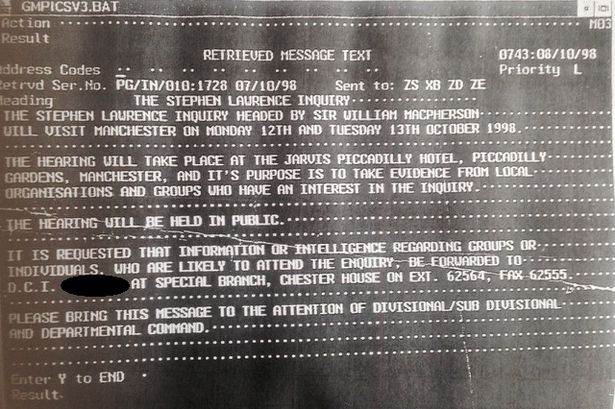
When the MacPherson Inquiry took place in 1998, it held a number of hearings outside London. A GMP memo was issued on 8 October asking for ‘information or intelligence on groups or individuals who are likely to be attending’ to be given to a Detective Chief Inspector in Special Branch.

The spying appears to have been motivated by wholly political concerns. There was no anticipation of any threat to public order, there is no suggestion of anything criminal, and the memo makes no mention of anything untoward.

GMP memo, 8 October 1998GMP’s Operation Kerry report into spying on Lawrence campaigners is due to be published shortly. However, not only is it another self-investigation, but it only covers the Manchester element. The spying on Lawrence activists was much larger and more systematic than that. Yet again, official inquiries are parcelling off a small question and giving it to police to mark their own homework. As such, it is an obstruction to the truth rather than its vehicle.

Last year it was revealed that spying also took place when the Inquiry went to Bradford in the same month as it visited Manchester. West Yorkshire’s Assistant Chief Constable, Norman Bettison, ordered his Special Branch to produce a full report on one of the witnesses at the Bradford hearing, Mohammed Amran. Bettison was referred to the Independent Police Complaints Commission for this, and they began investigating last July. It was reported earlier this year that he has been interviewed under caution as part of the inquiry.

Sir Norman Bettison

Sir Norman Bettison

Bettison is already a thoroughly disgraced figure. Widely believed to be one of the chief architects of the Hillsborough cover up and the smear campaign against Liverpool fans, he was forced to resign as Chief Constable of West Yorkshire over his response to the Hillsborough Independent Panel, in which he tried to manipulate the West Yorkshire Police Authority and contradicted the established fact that the fans were not to blame. An IPCC report concluded that, had he not resigned, he would have been dismissed for gross misconduct.

He is one of several senior police officers, including Bernard Hogan-Howe, who are tainted by their involvement in both the Hillsborough and spycops scandals.

But for all his extensive personal failings and corrupt dealings, Bettison’s spying on the MacPherson Inquiry in West Yorkshire was not a rogue act. South Yorkshire police also admitted spying on ‘extreme leftwing groups’ attending events indirectly linked to the Inquiry.

When the Inquiry’s main hearings took place in London, Peter Francis – the undercover officer who has described how he was earlier tasked to ‘find dirt’ to discredit the Lawrence family – said that there was intensive surveillance from plain clothes officers.

I am 100% aware that the Metropolitan Police Special Branch had a Special Branch officer regularly, if not daily, in both parts of the Macpherson inquiry.

This means that at least four constabularies’ Special Branches spied on people attending the Inquiry as it toured the country (so we may safely surmise that people at the Birmingham and Bristol hearings were similarly spied on).

There can be no excuse for this. The usual fob-offs about shady volatile people trying to hijack a campaign, flimsy at the best of times, cannot apply at all. This wasn’t an angry crowd in the streets on the day of a killing, this was a formal judge-led inquiry five years later. The Met still had ‘a spy in the Lawrence family’s camp’ at that time.

Peter Francis says he advocated telling MacPherson about the earlier spying, but that he was overruled by his superiors.

The Met’s claim that they came clean at MacPherson is a cruel joke, another decoy to keep us from realising both the depths that spycops will sink to and the depths that they will involve themselves in the lives of citizens.

If this level of spying is revealed by police self-examination, how much more would be revealed by a proper Hillsborough style independent inquiry?

Release MPs’ Spycops Files – and All The Rest Too

Jeremy Corbyn, MP spied on by the SDS

Jeremy Corbyn, MP spied on by the SDS

And still they come. The tide of revelations about the extent of spying by Britain’s political secret police is still flooding in.

When the scandal first broke four years ago, the breadth of groups spied on astonished us. It appeared that the units regarded any political activity outside the sliver of the spectrum represented in parliament as a threat. But we now know it was even broader than that.

In June last year we learned that the Green Party’s Jenny Jones had a file opened on her after she was elected to the Greater London Assembly, and it ran for at least eleven years. A fellow Green, councillor Ian Driver, was also spied on, with his file noting his support for such subversive terrorist causes as equal marriage.

Two weeks ago it went further with whistleblower Special Demonstration Squad officer Peter Francis naming ten MPs who he saw files on, including three that he personally spied on.

The list includes Tony Benn, Ken Livingstone, Dennis Skinner, Joan Ruddock, Peter Hain, Diane Abbott, Bernie Grant and Labour’s current deputy leader Harriet Harman.

The two other targets have particular resonance. One is Jack Straw who, as Home Secretary, was ultimately in charge of the police. The other is Jeremy Corbyn who was spied on by Francis in the 1990s. Francis was deployed by his manager at the Special Demonstration Squad, Bob Lambert.

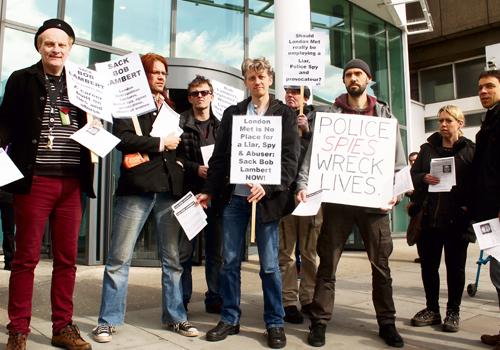
Protest against Bob Lambert's employment at London Metropolitan University, March 2015

Protest against Bob Lambert’s employment at London Metropolitan University, March 2015

Ten years later Lambert was running the Muslim Contact Unit (quite why the intelligence-gathering Special Branch would send its most experienced infiltrators and spies into an outreach project is a question for another time).

Shortly after leaving the police he published a book on police efforts to deal with Muslim extremism in London. His parliamentary booklaunch was hosted by Jeremy Corbyn MP, the man Lambert had sent spies to watch, in September 2011, a month before Lambert was exposed by activists.

In a further twist, Lambert is now controversially employed as a lecturer at London Metropolitan University in Corbyn’s constituency of Islington North.

A furious Corbyn told this week’s Islington Tribune


I was interested in his book at the time and I was involved in the launch. But for all I know he could have had me under surveillance.


Like so many corrupt state officials around the world who’ve been caught and are facing an inquiry, Lambert’s memory has become conveniently selective. He does not deny tasking Francis to spy on Corbyn but says he can’t remember.

The MPs attended parliament the day after the revelations and had a forty minute debate (full transcript here). The Home Secretary wasn’t there, so the government spoke in the form of the Minister for Policing, Criminal Justice and Victims, Mike Penning.

The one bit of positive new information was the assurance that Peter Francis, and any other whistleblowers, will be given immunity under the Official Secrets Act at the public inquiry. It’s notable that the inquiry was singled out – the long standing threat against Francis and, by extension, others who speak elsewhere still stands, apparently.

Challenged on the sexual relationships that officers deceived women into, Penning said that

the Met police apologised

Perhaps he knows a different Met to the rest of us. The Met who deployed all the spies have only admitted that three out of an estimated 200 were actually police officers.

They are still spending huge amounts of public money resisting the plain, established truth in court. The partner of John Dines, Helen Steel, is back in court next month trying to get the Met to drop their absurd, insulting obstruction tactics.

Back in parliament, Jack Dromey made the bold claim that

Labour has for years pressed for much stronger oversight of undercover policing

This flies in the face of the fact that every one of the political police spy units was set up under Labour who, in the early 2000s, handed control of three of them to the Association of Chief Police Officers, a private company exempt from Freedom of Information legislation.

Peter Hain led the targeted MPs’ charge and was the first of several who demanded to see their full files. Penning steadfastly refused.

Neither Confirm Nor Deny = Neither Truth Nor JusticePenning did say more than once that there would be a release of whatever wasn’t needed to be redacted for reasons of security. One of the affected MPs, Joan Ruddock, immediately put in a request to the Met for her file. In the days that followed, the Speaker of the House of Commons John Bercow underlined the seriousness of the scandal. The following week Ruddock was told that the Met would ‘neither confirm nor deny’ that there was any file on her.

The MPs should certainly get to see the information that was collected about them, but they should not have it as a privilege. It is clearly established that the spy units were extraordinarily intrusive, with a paranoid vision of political activism and scant regard for the rights and wellbeing of citizens.

Most of the official reports such as Operation Herne are self-investigations and have thus been self-discrediting. We cannot trust the words of proven liars. Everyone who was spied on by these units should be told and given proper access to their file to judge for themselves what was recorded and why.

Petition: Protection for Spycops Whistleblowers

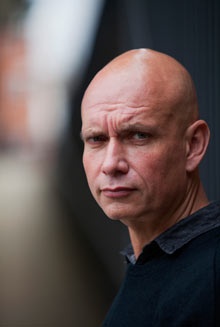
Peter Francis

Peter Francis

The undercover political police units did not write much down. Training in the Special Demonstration Squad was in-house, on the job, with someone who’d done it before. Of course, much of what did actually get documented has been shredded. The only way we’ll ever get the truth is by the testimony of those who were there.

Peter Francis was an SDS officer in the 1990s under the management of Bob Lambert. He spied on the family of Stephen Lawrence and has described how he was tasked to ‘find dirt’ to discredit them. When the MacPherson Inquiry into the Lawrence case took place in 1998, Francis advocated testifying about the SDS spying but was overruled by his superiors.

Peter Francis is unique among former officers of Britain’s political secret police. He is the only one to come forward unbidden, rather than after being exposed by other people (his first interview was in 2010, even before the exposure of Mark Kennedy started the slew of revelations). He has volunteered a whole lot of information that has made life harder for the Met as it tries to hide the truth, doing so has made life harder for himself too. This is in stark contrast to other officers who have either lied in self-protecting interviews or not spoken up at all.

The police responded to Francis’ revelations by getting a smear piece in the Mail alleging he was making stuff up to sell the Guardian’s Undercover book (which, back on earth, neither Francis nor any other source got paid for).

The police’s self-investigation into undercovers, Operation Herne, asked him to talk to them but refused to give him immunity from prosecution under the Official Secrets Act. So, mindful of the fact that any divulging of his work is a breach of the Act – and presumably also aware of Herne’s cover-up nature – he didn’t co-operate.

The resulting 84 page Herne report about his allegations was such a whitewash that it

will not confirm or deny if Peter Francis was ever an undercover police officer.

He’s continued to speak out and assist those who were spied on to agitate for disclosure and justice. So far, he’s still the only one. Without dispensation from the Home Secretary or the Metropolitan Police, every time he does so, he is committing a criminal offence.

Speaking through his lawyer Rosa Curling, Francis told a recent conference on political policing

I will appear before the new Home Secretary’s public inquiry and I will tell them everything I should have done in 1998 no matter what the legal and personal consequences are to me this time.


It’s certainly a brave stance, but he should not have to face the threat of prosecution for whistleblowing out about universally acknowledged wrongdoing. Beyond that, others need to be encouraged to come forward and speak up too instead of seeing the sword over Francis’ head and deciding not to step into the same spot.

Two of the organisers of that conference that Curling addresses, Suresh Grover and Stafford Scott of the Monitoring Group, have launched an online petition to the Home Secretary to give Francis permission to speak under the Official Secrets Act.

This is not asking for immunity from prosecution for anything Francis or others did as undercover police officers. This is about allowing them to talk openly about what they saw and did so that we can get the fullest picture and those responsible can be held accountable.

The threat of the Official Secrets Act is an institutional gagging tool to suppress the facts about undercover policing, like throwing the blanket ‘neither confirm nor deny‘ policy over court cases. Far from protecting the nation, it exacerbates the damage done to it by these counter-democratic secret police units.

If you want truth and justice for those targeted by Britain’s political secret police, please sign this petition and share it widely.

Did Spycops Commit Other Crimes?

CPS logo

The attention paid to the decision of the Crown Prosecution Service not to prosecute undercover police officers focused, rightly, on the invasion of privacy and bodily integrity in their sexual contact with women they spied on.

But in the same statement, the CPS ruled out several other charges.

MISCONDUCT IN PUBLIC OFFICE

In order to prosecute misconduct in public office, the prosecution would have to show that an officer knowingly abused their position in order to bring a sexual relationship about

The police have readily and unequivocally admitted such relationships are abhorrent and an abuse of their position. Speaking for the Association of Chief Police Officers, a body that ran several of the political policing units, Jon Murphy said

It is grossly unprofessional. It is a diversion from what they are there to do. It is morally wrong because people have been put there to do a particular task and people have got trust in them. It is never acceptable under any circumstances … for them to engage in sex with any subject they come into contact with.

In March this year the second Operation Herne internal report into undercover policing declared

there are and never have been any circumstances where it would be appropriate… Such an activity can only be seen as an abject failure of the deployment, a gross abuse of their role and their position as a police officer and an individual and organisational failing

So there we have a police report saying it’s a gross abuse of the officer’s position, but the CPS said there’s insufficient evidence that any officer knowingly abused their position.

Everyone admits the relationships happened and they were a gross abuse. If it is a gross abuse then there is a gross abuser. That must be either the manager who authorised it or the individual undercover officer who did it.

Whichever one it is, former officer Bob Lambert is culpable. He was an undercover officer who had a prolonged relationship including fathering a child with a woman he targeted. After he was promoted to running the squad he mentored Jim Boyling who did the same thing.

If Operation Herne is right and it is both an individual and organisational failing then we should see several officers held responsible for each relationship. Even if they blame the individual officer and claim they disobeyed their guidance, it is negligence on the part of the managers.

But if this came to court, we could expect to see officers from both roles blaming each other. That would be a whole lot of dirty laundry being done in public, and would be likely to point to further abuses. This scandal has already become far too large for establishment comfort. It’s no surprise that the CPS – who helped ensure Mark Kennedy’s evidence was kept from court in the Ratcliffe case, leading to a miscarriage of justice and 20 wrongful convictions – has decided to defy the police’s own admissions of misconduct and keep these officers away from court as well.

BREACH OF THE OFFICIAL SECRETS ACT

The CPS also said that

In order to prosecute a breach of the Official Secrets Act the prosecution would have to prove that the suspect in question disclosed information that would, or would be likely to, damage the work of the security and intelligence services

This is thought to be because officers have named colleagues to civilians. Jim Boyling told the activist he married about several other officers’ identities. This led her to tell Helen Steel that her partner John Barker had in fact been police officer John Dines.

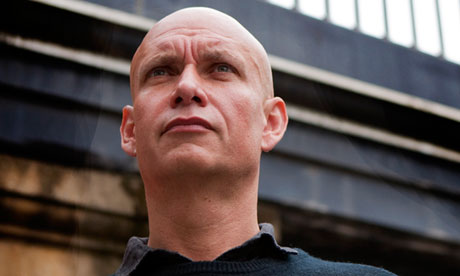
Peter Francis

Peter Francis

Additionally, when Mark Kennedy was confronted by activists who had discovered his true identity, he confirmed activist Lynn Watson had actually been a fellow police officer.

Whistleblower officer Peter Francis has been threatened with prosecution under the Official Secrets Act. The fact that neither Boyling nor Kennedy are to face charges for naming colleagues to the activists they targeted implies Francis faces something of an empty threat. The CPS appear to have declared it’s open season for him, and for any other officers who want to right some of their wrongs, to step forward and name names.

Operation Herne’s Third Decoy

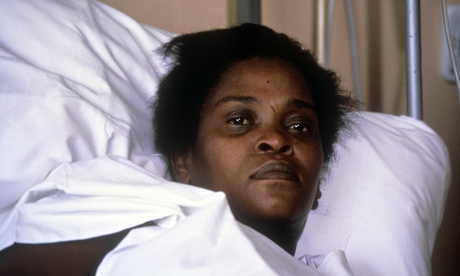
Cherry Groce in hospital after she was shot by police

Cherry Groce in hospital after being shot by police

Once again Operation Herne – the police’s self-investigation into the political secret police units – proves its irrelevance.

After the admission earlier this year that police spied on the Stephen Lawrence family campaign, the new report, the third from the Herne team, concedes that for at least 20 years police gathered intelligence on 18 more families who had justice campaigns for their loved ones, including Jean Charles de Menezes and Cherry Groce.

The report (PDF here) plainly says this had no operational purpose in preventing crime. Clearly, then, it is about undermining people who might embarrass the police by exposing what they have done.

The report’s author, Chief Constable Mick Creedon, claims that the intelligence was not searched for, it was incidentally gathered by officers infiltrating other campaigns and then kept for no particular reason. This accident happened to one campaign after another over a span of decades. He acknowledges that even he knows this is an unlikely explanation, admitting it ‘must seem inexplicable’.

Equally implausibly, he says that it appears the Special Demonstration Squad were just amassing information and there is no solid documented evidence of sending infiltrators into the families.

Firstly, much of the secret police’s information was never written down. Secondly, a great deal of the material that did make it onto paper has been shredded. Indeed Creedon concedes that, had proper procedures been followed, the evidence of spying on the families would have been shredded.

It leaves a simple question – why would the infiltrator unit be gathering information on people who weren’t targets for infiltration?

The whistleblower Special Demonstration Squad officer Peter Francis has described his infiltration of justice campaigns. After his revelations, police threatened him with prosecution under the Official Secrets Act. Most of the information is not on paper, only in the minds of the people who did it. The truth can only come out if former officers are compelled to give evidence under oath without fear of self-incrimination.

We know that these 18 families are not the only ones. It also raises the question of how many other bereaved families seeking justice have been spied on. Police have already released details of their surveillance of on Janet Alder whose brother was unlawfully killed by police officers. Several Hillsborough families are certain they were spied on. When it’s happening on this scale over such a prolonged period it’s hard to see it as anything other than an active policy.

For Operation Herne to once again rely solely on what surviving papers it can find proves that it is little more than a police damage control exercise, admitting a few of the smaller outrages in order to shore up the denial of the larger ones. The forthcoming public inquiry is clearly a more serious and rigorous proposition. The public inquiry supercedes Herne, leaving it without any purpose apart from perpetuating the extra injustice of focusing on reputation protection instead of facing the facts.

Statement from Peter Francis on the public inquiry into undercover police

Peter Francis, former Special Demonstration Squad (“SDS”) officer has welcomed the announcement of a judge-led public inquiry into undercover policing

6 March 2014

A former Special Demonstration Squad (SDS) officer has welcomed the announcement of a judge-led public inquiry into undercover policing.

Theresa May announced the public inquiry, in the wake of Mr Ellison QC’s “profoundly shocking” findings, published today in his review into police corruption and undercover surveillance associated with the original Stephen Lawrence investigation.

Peter Francis, a former SDS officer, said: “I am delighted by the Home Secretary’s announcement to set up a public inquiry into the work of undercover police officers. I have been calling for such an inquiry since October 2011.

“When the full truth comes out about the Police’s work and activities against political campaigns and protests, across the UK since 1968, I think the public will be very shocked.”

“The public inquiry must investigate the work undertaken by police’s Special Demonstration Squad and its undercover surveillance of political campaigns in general.

“It should not be limited in relation to time or particular issues. The truth about the tactics of undercover policing will only be revealed by way of a truly independent, public inquiry, which will require those involved to provide evidence under oath.”

Information was correct at time of publishing.